Categories
Australia

Mandurah’s homelessness, high unemployment, and mental health battles highlighted in reports

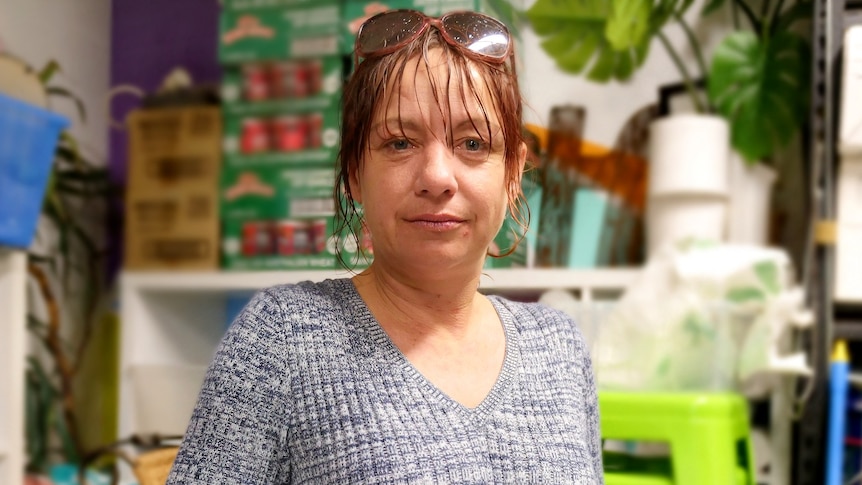
As wet weather lashes Perth’s southern regions Kirsty Buchanan is spending her nights on the cold, rainy, streets of Mandurah — one of many in the Western Australian seaside city doing it tough.

Mental health issues, brought on by family tragedies, prompted Ms Buchanan to leave her home of 26 years and her stable job when her life took a turn.

“I just ended up with nowhere to stay,” she said.

“I’m on the priority list [for housing]. I have been about eight months.”

She has relied on homeless support services for food, dry clothes, and sleeping bags during the harsh winter.

“Being winter, this week out of all the weeks has been the coldest. [It’s] cold. But it’s the boredom as well,” she said.

She is not the only one struggling.

Timothy Tonkin spent six years living on the streets in the Peel region and now shared a motorhome with his friend while he tried to find a house and a job.

A man stands in front of a wall with a coffee
Timothy Tonkin is living in a van and struggling to find work, and says the cost of living has hit him hard.(ABC Radio Perth: Jacqueline Lynch)

“We’re actually arguing now as we speak because of the cost of living, the cost of everything. I haven’t got a cent to my name and neither does she,” he said.

“I would love to go back to work but work is hard to find in my situation – no license and no proper qualifications.

“It’s not easy living day-to-day.”

Unemployment high and many sleeping rough

A recent Deloitte Access Economics report, adopted by the City of Mandurah, outlined unemployment rates in Mandurah as “stubbornly higher” than Perth with a “nationally significant” level of people dependent on rent assistance payments.

A woman hands a hot meal to someone in need at the Peel Community Kitchen
Community organizations are playing a big role in helping the homeless.(ABC Radio Perth: Jacqueline Lynch)

It also highlighted a great deal of housing stress among residents, high illicit drug use, and a rising number of people living with mental health issues in the city.

The local council has vowed to look at what can be done to address the issues.

Meanwhile, a recent University of WA Center for Social Impact report found while the rate of homelessness in Mandurah was lower than other parts of Western Australia, the region had the highest proportion of homeless people sleeping rough in the state.

It showed that almost 25 per cent of those without a home were staying on the street or in improvised dwellings as opposed to staying with friends or in crowded houses.

More broadly, the UWA report highlighted a 39 per cent increase in the number of people accessing government-funded homeless services over the past five years in Western Australia.

Significantly, it outlined an over-representation of Aboriginal and Torres Strait Islander people among the state’s homeless population.

‘We’re all struggling to eat’

Vanessa Nelson is a proud Whadjuk Ballardong Bibbullmun woman who spent years on the streets.

She secured a house in Mandurah earlier this year but said her struggle was not over.

A woman sits with hot meals and clothes
Vanessa Nelson struggles to pay bills and fill her refrigerator, but her greatest worry is for others.(ABC Radio Perth: Jacqueline Lynch)

“I’m empty, I have got a loaf of bread, no butter … my cupboard’s empty,” she said.

“I come down to the soup kitchen along with many other family members and non-family members. We’re all in the same boat.

“We’re all suffering, we’re all struggling to eat. We’re all struggling to pay our bills. We are not getting jobs and we are not moving forward,” she said.

But her concern was not for herself, it was for others.

“I sit and I worry every day for the hundreds and thousands of people who are still out there that are living rough, living cold, living sick,” she said.

Fed for free but no place to sleep

There are many community-led organizations, businesses, and individuals lending a hand in Mandurah.

As a city also harboring great wealth, coordinator of the Peel Community Kitchen, Tracey Bain, said there was a drive within the community to help the homeless.

“[The wealthy] donate clothes, a lot of come in and donate money at tax time. So I think there wouldn’t be so much help for the homeless if there wasn’t that much wealth here,” Ms Bain said.

A woman surrounded by shelves with food.
Tracey Bain said there was plenty of support for the homeless, but a lack of services to help them transition into stable housing.(ABC Radio Perth: Jacqueline Lynch)

But she said the city lacked what was needed to help combat long-term homelessness, such as affordable housing, more mental health services, and support to help people break drug and alcohol addictions.

“In Mandurah you can get fed every day of the week for free, you can get clothes, you can get shower. The only place it doesn’t offer is somewhere to live,” she said.

“I have been here eight years and I’m still seeing the same people on the streets that were on the streets eight years ago.”

Advocates say housing the key

The state government is set to spend more than $28 million setting up a Common Ground-supported housing facility in Mandurah which will provide up to 50 self-contained apartments and wraparound support to rough sleepers.

But the site is not expected to open to residents until 2024.

Ms Bain said the facility was a step in the right direction.

The CEO of Halo, Dee Freitag, agreed to housing in Mandurah was a key issue that needed to be addressed.

Halo provides food, clothing, household items, furniture, transitional accommodation, and outreach support assisting with welfare services.

A woman in a black jumper leans on a bench
Halo CEO Dee Freitag said a lack of housing was a key problem in Mandurah that needed to be addressed. (ABC Radio Perth: Jacqueline Lynch)

Ms Freitag said the rental crisis in Western Australia had prompted an increasing number of new people to reach out for help.

“We are also seeing a lot of families because of the housing crisis … and the elderly,” she said.

“We are seeing a major increase in people who are not eating because they’re trying to keep a roof over their head.

“And then there are the ones, in this bucketing down rain, who are sleeping on pathways and verandahs because they don’t have cars.”

Whether it be social housing or private rentals, Ms Freitag said any offering would be welcome to get people off the streets.

“Any house that goes up for rent is a bonus,” she said.

.
Categories
US

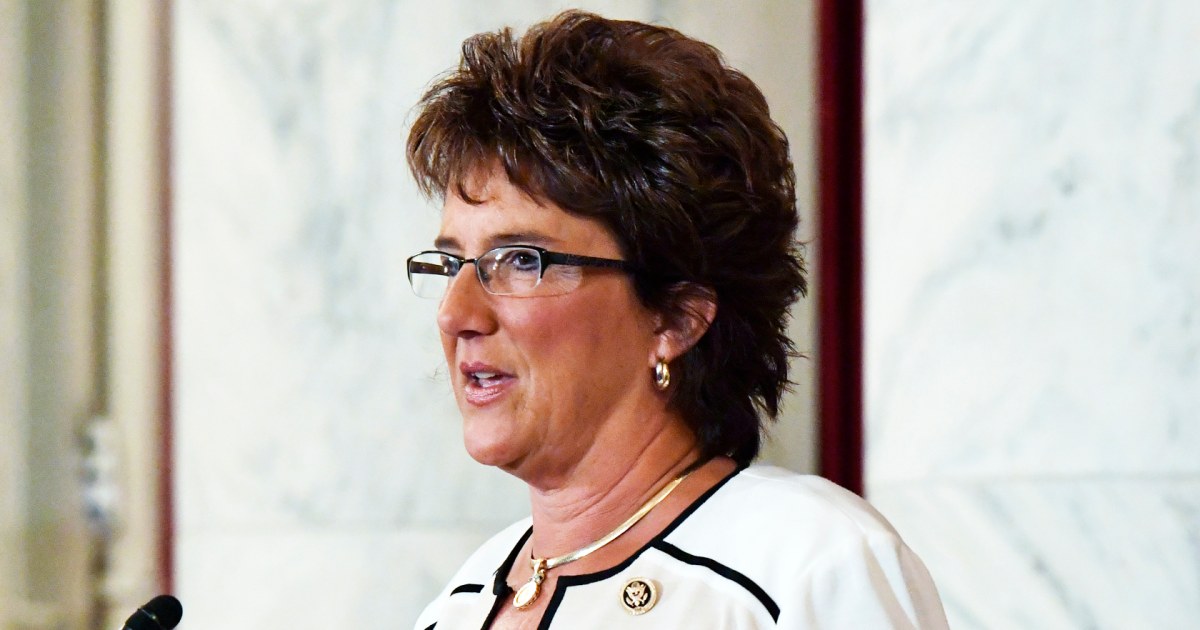
Indiana Rep. Jackie Walorski and two staffers killed in car crash

WASHINGTON — Rep. Jackie Walorski, R-Ind., and two of her staffers were killed in a car crash on Wednesday, authorities said. Walorski was 58.

House Minority Leader Kevin McCarthy first confirmed Walorski’s death in a tweet earlier Wednesday.

McCarthy said he spoke to Walorski’s husband, Dean Swihart, who was informed of her death by the Elkhart County Sheriff’s office on Wednesday afternoon.

“This news is absolutely devastating,” McCarthy said in a statement. “Jackie was a dear friend, trusted advisor, and the embodiment of integrity who achieved the admiration and respect of all her colleagues in the House.”

Walorski District Director Zachery Potts, 27, and her Communications Director Emma Thomson, 28, also died in the two-car collision. Their deaths were confirmed by the sheriff’s office in a Facebook post. “A northbound passenger car traveled left of center and collided head on” with Walorski’s vehicle, the sheriff’s office wrote. The driver of that car was also killed.

“Devastated to hear the horrible news of the passing of Jackie Walorski and her two staffers,” House Minority Whip Steve Scalise, R-La., tweeted. “She was a dear friend who loved serving the people of Indiana in Congress.”

Speaker Nancy Pelosi, who was traveling in Asia, ordered the flags at the Capitol to be flown at half-staff in honor of Walorski and her staffers, her spokesman said.

“A lifelong Hoosier, Congresswoman Walorski lived a life of service: whether caring for impoverished children in Romania, representing her community in the Indiana Statehouse or serving nearly a decade in the House,” Pelosi said in a statement. “She passionately brought the voices of her north Indiana constituents to the Congress, and she was admired by colleagues on both sides of the aisle for her personal kindness.”

The White House said it will fly flags at half-staff on Wednesday and Thursday in memory of Walorski.

A former Indiana state lawmaker, Walorski was first elected to Congress in 2012 and was running for her sixth term this fall. She was well-liked by her Republican and Democratic colleagues in the House, where she was close to McCarthy and his leadership team.

McCarthy named her the top Republican on the House Ethics Committee, and she was set to be chairman of the bipartisan committee if Republicans won the majority in November.

“When there was a vacancy for Republican leader of the Ethics Committee, she was my first call,” McCarthy said in a statement. “Everyone who knew Jackie knows she was tough, but fair — a no nonsense, straight shooter who knew that Congress must reflect the will of the people with decency and honesty.”

Ethics Committee Chairman Ted Deutch, D-Fla., worked closely with Walorski on a weekly basis, as their panel met to provide ethics training and investigate any violations of House rules by lawmakers or their aides.

“As partisans as Congress has become, it is still a family, and this loss hits close to home,” Deutch said in a statement. “Jackie Walorski was a colleague and a friend. She cared deeply about the House and about her constituents, and she will be dearly missed by all of us.”

Many of her colleagues in the Indiana delegation also tweeted their sympathies shortly after her death was announced.

“I’m truly devastated. Jackie loved Hoosiers and devoted her life to fighting for them,” tweeted Sen. Todd Young, R-Ind., who had served with Walorski in the House. “I’ll never forget her spirit from her, her positive attitude from her, and most importantly her friendship from her.”

“My heart is heavy with the news from northern Indiana. Jackie was a true friend & an incredible colleague,” tweeted Rep. Jim Baird, R-Ind. “Hoosiers have lost a champion & dedicated public servant.”

Categories
Business

Regional towns look to community batteries as renewable energy solution

Small regional communities are working to secure their own energy futures amid electricity price rises and widespread fears of blackouts.

A new report from the Australian Energy Market Operator shows electricity prices rose to their highest levels on record in the three months to June 30, leading to increasing energy bills across the east coast.

Communities like Ballan, 80 kilometers north-west of Melbourne, are driving their own renewable energy projects as they seek reliability, lower costs, and reduced environmental impact.

The volunteer-run Moorabool Environment Group is working with residents on the first steps of a project to bring a community battery to the town of almost 3,400 people.

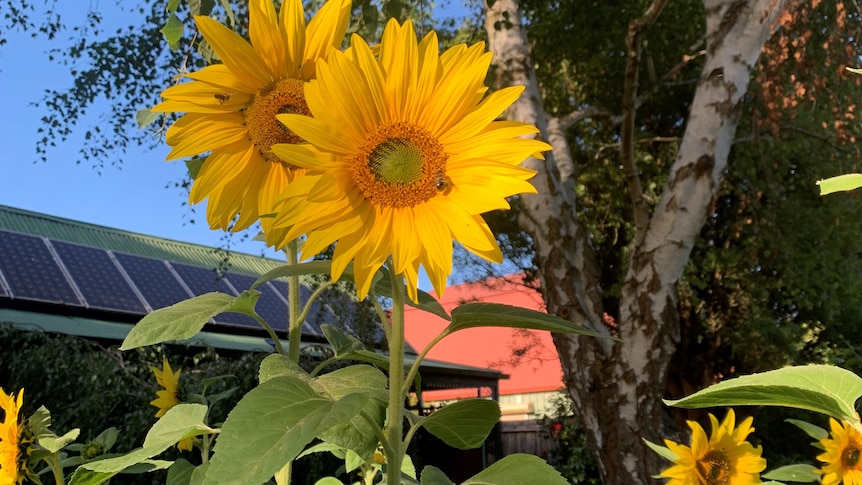
Sunflowers in front of a rooftop with solar panels.
Rose De la Cruz has solar panels on her home in Ballan and would like to link to a community battery.(Supplied: Rose De la Cruz)

Resident and group member Rose De la Cruz said Ballan was a “good candidate” for the technology.

“We do suffer from power outages quite a lot here and we have a growing lot of residential houses with solar on their roofs,” she said.

“At the moment everybody is talking about the cost of electricity, so people are interested in anything that will bring down the cost.”

The basic concept was for households and organizations with rooftop solar to feed into a shared battery and draw out electricity when needed.

Indigo Power director Ben McGowan stands next to a large square, a community battery.
Ben McGowan inspects a mid-sized battery at Yackandandah.(ABC News: Emilia Terzon)

Increasing take-up

Community batteries are becoming an increasingly popular option for regional communities.

The first community battery in Yackandandah, a small tourist town in north-east Victoria, was launched in July 2021 after two years of planning and fundraising.

The 274-kilowatt-hour battery that supplies electricity to 40 homes from solar panels on the roof of an old sawmill is part of a bigger mission to have the entire town powered by renewable energy.

It also serves as a backup power supply.

Residents in the western Victorian town of Pomonal, on the edge of the power grid, are also looking for solutions to eliminate blackout concerns.

Pomonal Power People member Dee-Ann Kelly said more people had become interested in the idea of ​​a community battery.

A group of people sit on chairs in a community hall.
Grampians Community Power Hub hosted a community meeting at Pomonal.(Supplied)

“I am interested in the idea that not everyone needs to have solar,” she said.

“Down the track I am willing to do get solar, but for now I want to be able to utilize where we have got solar and where we may have solar in the future.”

She said the project was also about supporting people who did not have the ability to put solar panels on their properties.

“We have talked about not leaving people behind,” she said.

The town is part of a community battery feasibility study and is waiting for a report before deciding on the next steps.

Ms Kelly said sustaining interest and driving the project could be a challenge, given it could take many years and was not an “overnight solution”.

A Tesla battery standing on a streetside kerb.
A community battery in Meadow Springs, Western Australia, is accessed by 52 homes.(Supplied: Western Power)

But she said she was confident the community’s desire for power reliability during disasters, such as bushfires, and broad focus on sustainability would drive continued support.

“We live in the beautiful Grampians and have nature all around us. This is what drives people to want to have a future and be involved in making really important decisions,” she said.

clean energy future

Australia Institute energy advisor Dan Cass said Australia had been over-reliant on “risky and expensive” coal and “increasingly expensive” gas.

Mr Cass said the community battery model would be part of the move to build clean energy resources quickly to avoid another energy crisis.

Aerial shot of a community battery in parkland near a suburb
A community battery in the Perth suburb of Port Kennedy.(Supplied: Western Power)

He said the Australian Energy Market Operator modeling showed a need to build thousands of gigawatts worth of battery storage over the next several years.

“We need a lot more batteries on the grid and we need them urgently,” he said.

“The question is who owns the batteries and what is the scale at which they are built?”

Mr Cass said it was likely large batteries, mid-scale community batteries, and small household batteries would be part of the solution.

“I think we will find eventually every freestanding roof in the country will be able to have solar panels and in some cases that will be backed up by batteries,” he said.

“It will give enormous power and control back to energy consumers and communities as well as being more resilient and zero emissions.

“Australia is in a great position … it is just a matter of planning this out well and this will be the last energy crisis Australia will ever need to face.”

.

Categories
Sports

F1 news 2022: Alex Albon takes dig at Oscar Piastri amid Alpine drama, Instagram post

Thai driver Alex Albon confirmed he has agreed to continue with Williams in 2023 amid the fallout over fellow F1 hopeful Oscar Piastri’s denial he will be racing for Alpine.

“I understand that, with my agreement, Williams Racing have put out a press release this afternoon that I am driving for them next year,” Albon said in a Twitter post, ironically referencing Piastri.

“This is right and I have signed a contract with Williams for 2023. I will be driving for Williams next year. Let’s go @williamsracing.”

Watch Every Practice, Qualifying & Race of the 2022 FIA Formula One World Championship™ Live on Kayo. New to Kayo? Start your free trial now >

On Wednesday, Australian young gun Piastri refuted an announcement made earlier in the day by the French team Alpine that he had signed for them next season.

“I understand that, without my agreement, Alpine F1 have put out a press release late this afternoon that I am driving for them next year,” Piastri tweeted.

“This is wrong and I have not signed a contract with Alpine for 2023. I will not be driving for Alpine next year.”

Williams are one of the teams which, according to unconfirmed reports, are in talks to sign Piastri, Formula 2 champion in 2021 and currently a reserve driver at Alpine.

Williams, however, made no mention on Wednesday of their other driver, Canadian Nicholas Latifi, whose contract expires at the end of this year.

The confusion follows last week’s announcement by four-time world champion Sebastian Vettel that he would retire at the end of 2022.

His Aston Martin team announced a few days later they had concluded an agreement with Alpine driver Fernando Alonso, a double world champion, to replace Vettel from next year.

This precipitated the decision of the French team to announce Piastri as his replacement when the Australian seems to have entered into negotiations to sign for another team.

Rumors are raging Piastri is eyeing a seat at McLaren, with plenty of doubt about Daniel Ricciardo’s place at the team after two underwhelming seasons.

Albon, 26, whose mother is Thai and father British, debuted in Formula 1 in 2019 with Red Bull and joined Williams for this season.

During his time at Red Bull he had two third places before being replaced in 2021 within the Austrian team by Sergio Perez.

He currently sits 19th place in the championship with three points.

.

Categories
Australia

Indigenous leaders bring their ancestors home after 90 years at the Smithsonian National Museum of Natural History

Millions of people pass through the doors of one of America’s most popular museums each year.

But few come with a purpose as deeply personal as the group of Indigenous South Australians who recently arrived at the front steps.

WARNING: Aboriginal and Torres Strait Islander readers are advised that the following story contains images and voices of people who have died.

For decades, the Smithsonian National Museum of Natural History has held the remains of Aboriginal and Torres Strait Islander people whose bones were taken from Australia in order to be studied in the United States.

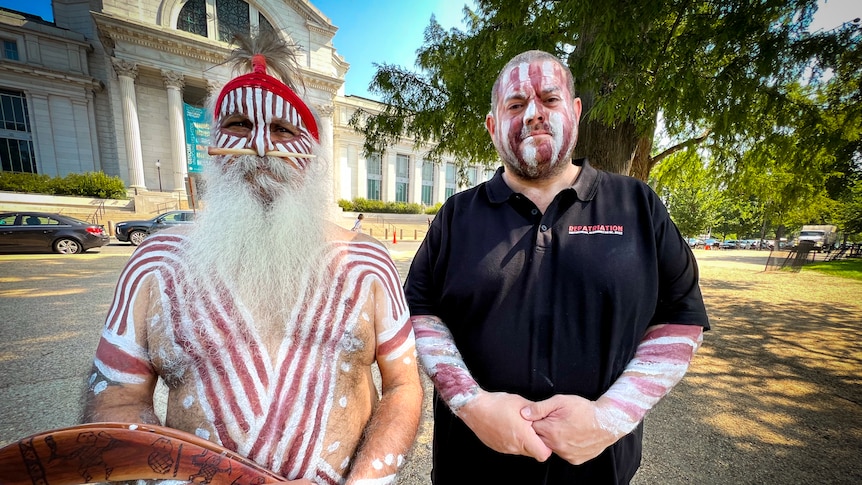
Major Sumner was one of several representatives from the Narungga and Kaurna nations who made the long journey to the US capital to take their ancestors home.

Two Indigenous men, one in a black polo shirt and the other in traditional dress, stand next to a white an in a suit
The repatriations to Australia are the result of years of lobbying by Indigenous leaders, with the Smithsonian initially resisting the return.(ABC News: Jade Macmillan)

“Let the world know this is what happened to our people, to the people that passed on,” he said.

“They were taken away, they were put in boxes and kept in museums and poked.

“Once we rebury them, they [will] no longer be touched.”

A long history of ancestral remains taken from Indigenous land

The repatriation from Washington was the third time the Smithsonian Institution had returned ancestral remains to Australia.

It earlier repatriated bones taken from the Northern Territory during a major scientific expedition to Arnhem Land in 1948.

A black and white photo of tents in the outback with Australian and American flags hanging from a tree
Thousands of plant and animal specimens, as well as Indigenous artefacts and paintings, were taken during a major scientific expedition in the 1940s.(Supplied: Frank Maryl Setzler, NAA Photo Lot 36, Department of Anthropology, Smithsonian Institution)

Co-sponsored by the Smithsonian, National Geographic and the Australian government, the months-long trip was carried out by a team of scientists, anthropologists and photographers from both Australia and the US.

Martin Thomas, a professor of history at the Australian National University, said the researchers collected thousands of plant and animal specimens, as well as Indigenous artifacts and paintings.

But they also took human remains, without the permission of traditional owners.

“With travel time, they were away for the better part of a year,” he said.

“And so the understanding was that they would come back with collections that would be the dividends on that investment.”

A black and white photo showing men loading boxes onto a boat as others look on
ANU history professor Martin Thomas says researchers took remains without the knowledge or permission of Indigenous people.(Supplied: Frank Maryl Setzler, NAA Photo Lot 36, Department of Anthropology, Smithsonian Institution)

In his 2018 documentary Etched in Bone, Professor Thomas showcased footage taken during the expedition of American Frank Setzler removing remains from a cave at Gunbalanya.

The film cites Setzler’s diary entries to argue he deliberately hid what he was doing from the local Indigenous people.

“I paid no attention to these bones as long as the native was with me,” he wrote on October 7, 1948.

“During the lunch period, while the two native boys were asleep, I gathered the two skeletons which had been placed in crevices outside the caves.”

The remains stolen during the expedition were finally returned in 2008 and 2010.

“He was more an archaeologist than an anthropologist, so more interested in past eras, than contemporary cultures,” Professor Thomas said.

“And he wasn’t really somebody who was interested in documenting culture, particularly, even in his own field of specialisation, which was North American anthropology.

“He was much more of an excavator.”

Museum acknowledges long wait for Indigenous communities

The remains repatriated in July 2022 entered the Smithsonian’s collections between 1904 and 1931, before the expedition to Arnhem Land began.

The institution would not detail how it acquired them, referring only to “accessions” and “exchanges” with other museums.

The remains of two people have been returned to the Narungga and Kaurna nations in South Australia, while a further 23 will be held by the Australian Government until traditional custodians are determined.

“We realize as museums that we have to be part of the 21st century,” the National Museum of Natural History’s director Kirk Johnson said.

“And move towards repatriation of human remains and funerary objects, and with much more respect to the source communities from which these objects came.”

A man with glasses in a white shirt and gray jacket stands in front of the Smithsonian
Kirk Johnson, the director of the Smithsonian National Museum of Natural History, acknowledged the long wait of Australian Indigenous communities.(ABC News: Jade Macmillan)

The repatriations to Australia are the result of years of lobbying from Indigenous leaders, with the Smithsonian having initially resisted the return.

That was despite laws being passed in the US in the 1990s requiring the repatriation, on request, of human remains and ancestral objects belonging to Native American people.

“When you take people off Country, you’re taking away their spirit,” Narungga man Cyril Kartinyeri said.

“And bringing them back to Country, then that’s their resting place.”

Four Indigenous men, one in traditional dress, stand side by side
Indigenous leaders Douglas Milera, Cyril Kartinyeri, Major Sumner and Allan Sumner in Washington DC.(ABC News: Jade Macmillan)

Mr Johnson acknowledged the long wait of Australian Indigenous communities, with one collection of ancestral remains still to be returned at an undecided date.

“We’re in communication with the Australian government and with the communities to make sure that we get these things going,” he said.

“Fast enough I’m sure is not fast enough for the communities, but we really want to be as responsive as possible.”

Remains to be reburied on Country

On a hot Washington summer’s day, the visiting Indigenous leaders carried two boxes containing ancestral remains, draped in the Aboriginal flag, into the gardens outside the museum.

Under the shade of a large tree, they performed a smoking ceremony and reflected on the significance of the task they were about to undertake.

Four Indigenous men wearing traditional white and red paint stand around boxes draped in an Aboriginal flag
Allan Sumner, Major Sumner, Douglas Milera and Cyril Kartinyeri perform a traditional smoking ceremony at the Smithsonian museum in Washingon DC.(ABC News: Supplied)

“It’s an honor and a privilege to be here today, as we represent our nation groups,” Allan Sumner said.

“And to write our histories, according to us.”

The Kaurna, Ngarrindjeri and Yankunytjatjara man said the group had experienced mixed emotions while in the US but was hopeful of making a positive impact by taking the remains back for reburial.

“It’s not the most pleasant thing to do but it’s the right thing to do for us.

“This is about healing for ourselves, healing for our Country, and our people.”

Major Sumner had not been in Washington for long but was already looking ahead to the trip home.

“It’s going to be a joyful one. Because it’s their spirit, you can feel their spirits and feel them,” he said.

“I talk to them and tell them you’re going home now.

“We’ll get you there as fast as possible and get you back to where you came from.”

Packing crates with black, yellow and red Aboriginal flags draped over them
The remains of two people have been returned to the Narungga and Kaurna nations, and 23 will be held by the Australian government until traditional custodians are determined.(ABC News: Supplied)

.

Categories
US

New WH Task Force Aims to Clear Confusion After Roe Decision

Idaho Supreme Court to Decide on Abortion Bans

The Idaho Supreme Court will hear arguments today to decide whether two strict abortion laws will go into effect this month.

The court will consider Idaho’s total abortion ban law that was triggered after the Supreme Court overturned Roe v. Wade and a “heartbeat bill” that allows families to sue medical providers who perform abortions.

The trigger law prohibits abortion in nearly all cases. While there is an exception for rape and incest, the law requires victims to file a police report and provide that report to a medical provider.

Medical providers could be convicted of a felony and face up to five years in prison if they violate this law. This law was passed in March 2020 and would go into effect Aug. 25.

The court will also consider whether to lift the temporary pause placed on a heartbeat bill. The bill does include exceptions for rape, incest or a medical emergency that would cause death or create serious risk of substantial harm to the mother.

This law allows civil lawsuits to be filed against medical providers who provide abortions after fetal cardiac activity is detected, at about six weeks.

The families of the fetus or embryo who sue medical providers could be awarded at least $20,000 if they win.

Planned Parenthood and one of its abortion providers will argue that both of these laws violate Article 1 of the state’s constitution. Their argument is based on decades of case law in which the Idaho Supreme court upheld the right to decide “whether to procreate” is a fundamental right in the state’s constitution.

During Wednesday’s arguments, lawyers from the state and Planned Parenthood will argue to the court whether to pause the enforcement on the near-total abortion ban and whether to lift the existing pause on the heartbeat bill, set to go into effect immediately.

The court will also decide if the two lawsuits should be consolidated into one case and whether those cases should be transferred to a lower district court for further review.

Planned Parenthood also filed another lawsuit against a “six-week trigger ban” that is set to go into effect Aug. 19. This bill criminalizes abortion after six weeks of pregnancy and would issue a two to five year felony sentence to any person who violates this statute.

The US Department of Justice has also filed its own lawsuit against the state’s trigger law. It argues that the total abortion ban violates the federal Emergency Medical Treatment and Labor Act (EMTLA) that states hospitals that receive Medicare funds are required to provide necessary emergency medical treatment.

“The suit seeks to hold invalid the state’s criminal prohibition on providing abortions, as applied to women who are suffering medical emergencies,” Garland said in a press conference Tuesday. “Idaho’s law would make it a criminal offense for doctors to provide emergency medical treatment that federal law requires.”

While the law provides an exception in order to prevent the death of a pregnant woman, Garland said “it includes no exception for cases in which the abortion is necessary to prevent serious jeopardy to the woman’s health.”

The Idaho Attorney General called this lawsuit “politically motivated.”

“It’s unfortunate that, instead of sitting down with the State of Idaho to discuss the interplay between its abortion laws and EMTALA, the US Department of Justice has chosen to file a politically motivated lawsuit,” Attorney General Lawrence Wasden said in a statement.

“Instead of complying with the requirements of this provision and reconciling Idaho’s law with EMTALA, or even attempting to engage Idaho in a meaningful dialogue on the issue, the federal government has chosen to waste taxpayer dollars on an unnecessary lawsuit.”

Categories
Business

Home prices in ‘affordable’ regional Queensland towns continue to rise as national housing market drops

A 25-year-old buying a two-storey house with a picturesque garden for just over $300,000 harks back to the early 1990s.

But in outback Queensland towns such as Longreach, it’s the norm.

The Reserve Bank of Australia yesterday raised interest rates for the fourth consecutive month, but Longreach resident Ben Galea said he was not stressed.

“When it comes time for my fixed interest rate to change … I don’t have to change my lifestyle,” Mr Galea said.

“It’s a great town. It’s buzzing. There are a lot of young people here. There are lots to do, lots of sports. It’s brilliant.

“There are things that we don’t have out here. It costs money to fly back to the coast. You don’t see family as often. These are the things you give up.”

As interest rates rise, home values ​​in Australia are dropping at their fastest pace since the global financial crisis, with the latest data showing that the nation’s median property value has dropped by 2 per cent since the beginning of May, to $747,182.

Lush green backyard with smoke rising from a pizza oven.
Mr Galea purchased his home last year for $310,000 at a “beautiful” fixed rate of 1.9 per cent.(Supplied)

But parts of regional Queensland are tipped to be more insulated from price drops than cities, and some regions have continued to see property prices increase in the last month.

Regional Australia Institute chief executive Liz Ritchie said it was mostly due to housing affordability in the regions.

“What we won’t see is the markets in regional Australia and regional Queensland fall as sharply,” she said.

“In the past couple of years, regions have seen significant price growth… but this is off years of just having steady incremental growth.

“The shocks that we’re seeing with interest rate hikes just won’t be felt in the same way, particularly in Queensland’s more rural and remote communities.”

Regional buyers ‘not overly worried’

Toowoomba-based Heritage Bank’s chief operating officer Dan Dredge said recent hikes to interest rates had not affected the number of people applying for home loans in regional Queensland through his bank.

Young man lighting a fire with a circle of friends.
Mr Galea says he loves the lifestyle and community in western Queensland.(ABC Western Qld: Victoria Pengilley)

“We’re not seeing people being overly worried about interest rate rises,” Mr Dredge said.

“What we’re seeing is people budgeting and setting their expectations on higher interest rates, moving forward.”

Data from CoreLogic found dwelling values ​​in regional Queensland fell by 0.8 per cent in July, compared to larger falls of 2.2 per cent in Sydney and 1.5 per cent in Melbourne.

.

Categories
Technology

‘Apex Legends’ wants cross-progress “sooner than later”

Respawn Entertainment has revealed the details for apex legends season 14, as well as the long-term goals the studio has for the battle royale.

During the season 14 press event, the developer talked about its future plans for the free-to-play first-person shooter in a Q&A. It touched on ranked updates and in-game gifting and most notably the long-awaited cross-progression. According to the design director Evan Nikolich, this is something the development team wants “sooner than later.” (via VG247).

“We’re actively working on cross progression, but there’s no release date on it,” Nikolich said. “The game wasn’t built with it in mind, which makes it complicated. But I hear you, and I want cross progression too. It’s something we’re definitely working on – we want it sooner than later.”

Cross-progression would allow players to keep their progress and rewards when playing apex legends on multiple platforms, whether it be PC or console.

Apex Legends. Credit: Respawn Entertainment.

“It is a very technically complex problem,” he added. “Our game wasn’t built, from the foundation, to address cross-progression. But I hear you – I want cross-progression… it’s something that we definitely are working on and want to get in sooner than later” (via PCGamesN).

In terms of in-game gifting, senior game designer Eric Canavese explained that this is something Respawn is “actively working on” but “we want to make sure it’s something people enjoy, something that doesn’t feel grindy”.

Season 14, entitled Apex Legends: Hunted is set to launch on August 9 and will introduce a brand-new champion named Vantage, as well as an increased level cap. Respawn has already provided new details on season 14’s reorganized Kings Canyon map.

In other news, the Russo Brothers have called The Last of Us Part 2 one of the greatest games ever made.

Categories
Sports

Many footballers are not ready when the tap on the shoulder comes

Geelong told me my time was up about three games before the end of 2015. I had asked whether I could go another year, play VFL and get to 200 games, but I was, as every former player will understand, starting to get a feeling the club had made the decision to finish me up.

David Mundy announced his retirement this week.

David Mundy announced his retirement this week.Credit:Getty Images

Looking back I don’t begrudge them at all. I was over 30 and couldn’t kick further than 35 meters. I would have done the same if I was in their shoes but at the moment it was hard. Eventually, after some sleepless nights where I wrestled with the sense I had unfinished business, I decided to confront the reality. I went into football manager Steve Hocking’s office and said, “let’s hug it out, I understand”.

My former teammate Cam Mooney was a great mentor through that time. We’d speak weekly and he said “even if you don’t like the decisions, the only thing that will reflect on you is the way you deal with the news”. I wasn’t perfect, but I tried, and I realized now everyone else was also doing their best to handle an uncomfortable period too.

I decided to focus on the 98 per cent that was positive about my time at the club: the friendships, the fun, the opportunities, the networks and the financial reward rather than the part that made me feel horrible at the end.

The fortunate part for me when Geelong’s door shut is that I was as prepared as I could be because I had managed to take advantage of enough of the opportunities the club and the game provided to set up the life I wanted to live post playing.

Neville Jetta retired at the end of 2021 and joined Collingwood as an assistant coach.

Neville Jetta retired at the end of 2021 and joined Collingwood as an assistant coach.Credit:eddie jim

Being drafted at 21 helped because I understood the real world’s reality better than many who had gone straight from school to the club. The whole time I was playing I studied or did work experience. My work experience was at Cotton On, Werribee, and Melbourne Zoo. For most of the back end of my career I worked in the Geelong community department on my days off and then during my last year as a player, spent my day off working with the AFL. They employed me full time four weeks after my last game at Geelong.

I was probably at the peak of my career when I worked at Cotton On alongside Max Rooke, but I was there to do the job they wanted me to do. It was humbling, and important.

My manager, Tom Petroro, was critical to that because he was always honest about where I was at and set up ways for me to stay connected to the real world and learn skills that were essential to live life as I matured. He was never afraid to question me and for that, I’m forever grateful.

I think most of our clubs and the AFL Players Association do more than enough to educate players on the importance of using their time productively, but from what I have seen not enough players take the opportunity time in the game gives them to establish the path their life takes until it is potentially too late.

Most playing careers don’t last long. It’s important to network, talk and engage with sponsors, board members, influential people at the club and people who work at the club and not just people in the football department because it will help when the tap comes. It might set you up or, at least, give you a place to start your next chapter.

The key is to find passions outside football and see whether you can leverage that into a career. Mine was always to help better my people and my connections to people in the First Nations community locally was so vital in learning about life and keeping a perspective on what working in that space was like.

Looking back, the best years of my career were 2008, 2013 and 2014 when I was doing work outside the club. Don’t stress about the time not spent on football because the break will ensure you are switched on when you arrive at the club to work on football.

loading

Some players can expect too much to be done for us while we are playing. I sometimes cringe when I hear former players complaining about the lack of support they received during and after their careers.

Our player development managers were brutal if I did not conduct myself well in doing basic things such as returning a call or replying courteously to an email.

But you need to realize that the responsibility is on you, while you are playing.

Otherwise, unhappily wearing tracky dacks on the couch could become your refuge after it’s all finished.

loading

. One of the greatest, Joel Selwood, played game No.350 on the weekend. My definition of greatness is making players around you better. He not only improved other players, but they walked taller when playing with him (I needed any help I could get in this area). I’ve never seen a player come up big in the biggest moment more often than “Selsy” but it’s the man himself and the human he is, that makes me so proud to call this man a great teammate and a brother for life.

Mathew Stokes is a Larrakia man who played 200 games with Geelong and Essendon. I have played in Geelong’s 2007 and 2011 premiership teams.

Categories
Australia

Iranian asylum seeker on bridging visa wants permanency in Australia to care for her sick daughter

Elham Amareh is used to feeling fear and uncertainty, having fled Iran with her husband, son and daughter and making the treacherous journey to Australia by boat in 2013.

“My family is very strict with religion, and I didn’t follow my religion, and because I lose my hijab and lose my religion [sic]I cannot go back,” she said.

“If I return to my country, they will kill me straight away, and they will kill my daughter as well.”

Ms Amareh has lived in Australia for a decade now, but her attempts to secure a protection visa have been denied.

Instead, her family has lived on six-month bridging visas for most of that time.

Life’s uncertainties became too much to bear in January this year, when her 16-year-old daughter was diagnosed with T-cell lymphoma – a type of blood cancer.

A woman stands next to a teenage girl in a hospital bed whose hair has fallen out from cancer treatment
Elham Amareh’s 16-year-old daughter, Areezo, is undergoing treatment in hospital for T-cell lymphoma. (Supplied)

“I am depressed [and] I can’t sleep,” she said.

“My whole family is depressed about [my daughter].

“As a mum, it’s hard when I see my child sick.

“I can’t go back to my country [because] it is hard to find her treatment in my country, and very expensive.”

People in limbo for years

Ms Amareh gradually reduced her work hours after her daughter’s diagnosis, and eventually quit, to spend more time at the hospital.

She said her husband was too depressed to work more than a few days each week, and her family was currently living in a house offered up as a short-term option by a friend.

While her visa arrangements include Medicare access, other supports such as those available through Centrelink are not included.

“I’ve been here a long time, we pay taxes, and we have children here,” she said.

“I just want a good life for my kids.”

A man sits next to a woman who is affectionately holding the shoulders of a teenage girl, they are sitting in a restaurant
The Amareh family has been living on six-month bridging visas for most of the last decade.(Supplied)

Immigration lawyer Chris Johnston said there were many others across the country struggling to find stability under current visa arrangements.

He said some were asylum seekers, like Ms Amareh, who had been denied refugee status, but were unable to return safely to their home country – creating a state of limbo.

“The system is messy, and it leaves many people in limbo for long periods of time,” he said.

“People are on bridging visas for up to a decade, and their life goes on [and] their children grow up and they’re still on bridging visas.

“There’s the uncertainty of, ‘If I get this visa refused, am I going to be put into detention? If I get put into detention, am I going to be deported?’

“It’s very stressful.”

Mr Johnston said the six-monthly renewal requirement, as well as some restrictions on access to healthcare, welfare, and education, made it extremely difficult for traumatized people to move on with their lives.

“They’re spending a lot of time just trying to access things, and get the basics for life,” he said.

Mr Johnston suggested a longer time frame between renewal could be applied, to reduce the pressure of six-monthly applications.

Giving refugees permanency

Around the same time Ms Amareh arrived in Australia, the number of asylum seekers traveling to the country by boat was increasing dramatically.

Successive Labor and Coalition governments brought in a range of policies designed to stop the arrival of boats carrying asylum seekers and deter people smuggling.

When the last Labor government was defeated in 2013, the Coalition reintroduced Temporary Protection Visas, available for a period of three years for people who arrive in Australia without a visa and were found to be owed international protection obligations.

Female hands holding two photographs
Elham Amareh fled Iran with her husband and two children in 2012.(ABC News: Trent Murphy)

In the lead up to this year’s federal election, Labor promised to abolish that scheme, along with the Safe Haven Enterprise Visas (SHEVs), and “transition eligible refugees onto permanent visa arrangements.”

About 19,000 refugees on TPVs and SHEVs could be “eligible” under the changes.

Mr Johnston said the government had a “difficult challenge ahead” to develop the details of that “transition” in a timely fashion.

“Immigration policy is not an easy thing to do,” he said.

“But this is the time to do it, in the first year of their term.

“We don’t want to see this go on for another three years, or another six years.

“The time to act is now.”

Immigration Minister Andrew Giles said he was “currently considering options on how best to resolve the current cohort’s visa status.”

“This Government will stop wasting taxpayer money reassessing their visas every three or five years … [and] will deliver on our commitment to convert those on temporary protection visas and safe haven enterprise visas to permanent protection visas,” he said.

A woman stirring a pot in a kitchen
Elham Amareh wants to live in Australia to care for her daughter.(ABC News: Trent Murphy)

What about bridging visas?

While the new Labor Government’s plan is a source of hope to certain visa-holders, the changes won’t help others stuck on bridging visas, like Ms Amareh and her family.

She said her family was desperate to stay in the country permanently, and focus on her daughter’s treatment.

“I want to be treated like an Australian citizen,” she said.

“Please — I want this government to look after us.”

The Minister for Immigration, Andrew Giles, has the power to intervene in migration matters.

A spokesperson for the Minister said he was unable to comment on individual cases, but that “every case was assessed on its individual merits.”

The Federal Government declined to comment on whether any policy changes were being considered around bridging visas held by asylum seekers, specifically Bridging Visa E (050).

.