Categories
Business

Ministers to put environment back into energy market rules in landmark move for renewables

finley solar farm

State and federal energy ministers are poised next week to put environment back into the country’s National Electricity Objective in what will be a landmark move to underpin the shift from fossil fuels towards 100 per cent renewables.

The lack of environment in the NEO – mysteriously dropped at the last minute by the Howard government as the rules of the current system were finalized more than two decades ago – has hamstrung the shift to renewables because it has stymied key rulings made by regulators and rule makers.

Its inclusion is likely to lead to a rethink of key rules and regulations, and their interpretation, and pave the way for tens of billions of dollars in new infrastructure, generation and storage that will fast-track the shift from coal and gas to a renewables -based grid.

The exclusion of environment from the NEO has obliged regulators to make some clearly absurd decisions, such as endorsing new diesel generators rather than a storage option at Broken Hill, mainly because they were forced to consider only narrow economic factors.

See: Regulatory madness promotes dirty diesel over renewable mini grid at Broken Hill

It has also led to poor outcomes in assessing the net worth of new transmissions projects, causing delays that have left the country short of grid capacity even as the new government assumes the country will somehow reach 82 per cent renewables by 2030.

The issue has come to a head in the redesign of the market rules being managed by the Energy Security Board, particularly in its proposal for a so-called “capacity mechanism” that even its own modeling shows will favor existing dirty thermal generators over new clean firming technologies.

A proposal to put environment into the NEO has been worked on by the ACT government since last September, and at the last energy ministers meeting there was a general agreement on the move, but not the how.

This will be formally put to other state ministers ahead of a joint meeting next week, the ACT climate minister Shane Rattenbury confirmed after the first publication of this story.

“Reflecting emissions reduction goals in the NEO is important for ensuring emissions intensity of generation is considered and reducing emissions is prioritized. I am pleased that this work has progressed well and will be discussed at the upcoming Energy Ministers Meeting this month,” he said in a statement.

“We cannot deny the need to decarbonise our energy supply. We need to act quickly if we are to have any chance of meeting Australia’s net zero emissions by 2050 target, and this means rapidly reducing emissions from the energy sector.

“Reflecting the net zero emissions goal in the NEO will help to ensure an efficient and coordinated national approach to decarbonisation, so that we can make this transition as smooth as possible.”

See also: ACT to quit gas by 2045, shift to all-electric homes and businesses

RenewEconomy understands that the proposal has the overwhelming support of all energy ministers.

The move follows a plea from the ESB itself – in response to the controversy over the nature of its capacity market proposals – for guidance from ministers on whether emissions should play a part in its considerations.

The answer to that is of course it should, given the country has a soon-to-be legislated net zero target for 2050, and a 43 per cent emissions reduction target for 2030 that will need to be lifted in coming years.

“There’s many, many capacity markets around the world, many of which have been implemented to manage the transition, which tend to have the complementary emissions reduction mechanisms that go with them,” Anna Collyer, the head of the Australian Energy Markets Commission, said last month

“So that’s what we would like to get further advice on, so that we can do that in a deliberate way and build out what we see that we need, in terms of that right mix of resources.”

The inclusion of an environmental, and even an emissions target, will also make it easier for important planning blueprints such as the Australian Energy Market Operator’s objective Integrated System Plan, which has already accelerated its central scenario to “step change” and could lift this to “hydrogen superpower” next time round.

A similar proposal was advocated by a Greens-led Senate inquiry in 2016, and put forward by Victoria, but rejected by the then Coalition government because it said it would be “too complex.”

Then Labor energy spokesman Mark Butler said at the time the rules of the market were not fit for purpose because of the absence of environment objectives, and meant that implementing policies, such as the renewable energy target, “end up feeling like trying to bang a square peg into a round hole.”

It is understood current federal climate and energy minister Chris Bowen supports the move. And he needs to, if Labor is to deliver anywhere near that 82 per cent renewable target it is now loudly promoting after securing the reluctant support of the Greens for the more modest 43 per cent emissions reduction target.

Clean energy investors hope that putting environment, and an emissions objective, into the considerations of the rule makers and the regulators will help change their current thinking about the design of capacity markets and other key rulings such as locational pricing.

Simon Corbell, the former ACT energy minister who now heads the Clean Energy Investment Group, which includes many of the biggest renewable and storage investors in Australia, says the environmental reform would be a landmark event.

He says the CEIG – among others – has been lobbying ministers and departments for an environmental and emissions outcome, and it will be a landmark moment if approved as expected next week.

The CEIG’s latests survey of its members shows a bleak outlook for investment in the short term, despite the need to mobilize tens of gigawatts of new capacity to meet the scenario of 80 per cent renewables painted by the federal Labor government and the Australian Energy Market Operator .

Corbell says the current crisis engulfing Australia’s energy markets could and should be the last – if the country can shift to renewables and storage – but it will require a wholesale reform of the market and its governance.

“The latest Clean Energy Investor Survey reveals how much work the new federal government must do to repair investor confidence that has been degraded by years of policy uncertainty and market risk,” he says.

“Ministers have to provide a clear signal to urgently reform governance of the NEM and direct the market bodies to accelerate transformation,” he says.

“If Australia establishes a sound framework to become self-sufficient from our vast clean energy resources, that would ensure this is the last energy crisis Australia faces.”

Bruce Mountain, from the Victoria Energy Policy Centre, says bringing emission reduction objectives into the NEO will be a giant leap forward.

“And not a moment too soon,” he said. “But it is not a panacea and it is not easy. For example, how should regulators’ be required to translate economy-wide emission reduction targets into their energy sector regulations?

“But at the very least it will bring about much greater transparency and save us from the sort of out-of-touch nonsense when, in the midst of a climate crisis, the ESB touts “technology neutral” solutions, as if this is a good thing.”

Corbell believes an environmental and emissions objective would help address some of the key issues his investors are focused on, the capacity mechanism and locational pricing.

On capacity, Corbell – along with nearly all other industry players – wants the issues over managing coal retirements and incentivising new flexible capacity treated separately, because the hybrid solution currently on the table from the ESB “does neither well.”

Coal retirements, various analysts suggest, could be handled through bonds, auctions or other mechanisms, as long as there is transparency, Corbell says.

On locational pricing, Corbell says that the NSW state government has the right idea in the design of its renewable infrastructure roadmap, which includes the sale of access rights that more or less protects wind, solar and storage projects from excess curtailment.

But he says that still does not address what happens to projects located outside of renewable energy zones, and a national scheme was needed to solve this issue. But this was difficult as long as key agencies held unrealistic views around the pace of change and the likely closure of coal generators.

“If Australia establishes a sound framework to become self-sufficient from our vast clean energy resources, that would ensure this is the last energy crisis Australia faces,” Corbell says.

“The latest Clean Energy Investor Survey reveals how much work the new federal government must do to repair investor confidence that has been degraded by years of policy uncertainty and market risk.

“It gives energy ministers a clear signal to urgently reform governance of the NEM and direct the market bodies to accelerate transformation.”

Categories
Technology

Oppo A77 seems like a phone that Oppo forgot to launch in 2020

Oppo launched its latest phone Oppo A77 in India silently. The phone has been launched at a price of Rs. 15,499.

This is an offline-centric phone, which means you will not find the best chipset available on the budget phone. And this phone from Oppo will not be competing with the likes of Realme or Redmi in the market. The result of it is that the phone looks outdated, even though it is a brand new model on the market.

Oppo A77: pricing and availability

Categories
Entertainment

Chrissy Teigen announces pregnancy: ‘I’m feeling hopeful and amazing’ | Chrissy Teigen

Chrissy Teigen and her husband John Legend are expecting another child nearly two years after the couple suffered a pregnancy loss.

Teigen made the announcement Wednesday on Instagram, where she posted two photos of her baby bump. She wrote that joy has “filled our home and hearts again” after a miscarriage in 2020, which she documented in intimate detail in its aftermath.

“We have another on the way,” wrote the 36-year-old model and cookbook author, who shares two children – Luna and Miles – with Legend. In the post, she wrote about her fertility journey, and being too nervous to unveil her pregnancy.

Allow Instagram content?

This article includes content provided by Instagram. We ask for your permission before anything is loaded, as they may be using cookies and other technologies. To view this content, click ‘Allow and continue’.

“Every appointment I’ve said to myself, ‘OK, if it’s healthy today I’ll announce’, but then I breathe a sigh of relief to hear a heartbeat and decide I’m just too nervous still,” she wrote. “I don’t think I’ll ever walk out of an appointment with more excitement than nerves but so far, everything is perfect and beautiful and I’m feeling hopeful and amazing.”

In 2020, the couple made a heart-wrenching announcement after losing their son, Jack, at 20 weeks of her pregnancy. Teigen was hospitalized with excessive bleeding before the miscarriage.

The same year, Teigen wrote an essay explaining that doctors diagnosed her with a partial placental abruption. At the time, she urged people to share their stories and “please be kind to those pouring their hearts out”.

Teigen’s openness about the stillbirth was praised at the time for demystifying a common and heartbreaking experience.

Legend and Teigen were married in 2013.

Categories
Sports

Commonwealth Games 2022: athletics, cycling and more on day seven – live! | Commonwealth Games 2022

Key events

Cycling: Grace Brown of Australia now leads the time trial, 4.53s ahead of Henderson after 8.9km of Black Country slogging.

Athletics: Ofili of Nigeria wins the latest heat in the women’s 200m, 22.71 the time. Gina Bass of Gambia comes second.

Women’s hockey: New Zealand have beaten South Africa 4-1; in 12 minutes, England will play Wales.

Cycling: At the first timing point, 8.9km in, Anna Henderson of GB leads – though not everyone has reached it yet.

Athletics: Natalliah Whyte of Jamaica eases through the third 200m head, cruising home in 23.62.

Athletics: Hima Das of India wins the second 200m heat in 23.42; Rhoda Njobvu of Zambia and Jacent Nyamahunge of Uganda also qualify. Meantime, in the hammer, Camryn Rodgers, the favorite and silver-medalist in Eugene, ails a Games record of 73.48m in her first throw. Smack: laid down.

Hima Das of India wins his 200m heat.
Hima Das of India wins his 200m heat. Photograph: David Ramos/Getty Images

Cycling: The last racer is in the process of setting off in the women’s time trial; we’ll see how stuff shakes out as we move through the morning.

Athletics: Christine Mboma of Namibia, the Olympic silver medalist, wins the first heat of the women’s 200m in 23.20. She’ll fancy herself here, given Shericka Jackson, the world champ, has withdrawn, and Elaine Thompson-Herah, though she won the 100m last evening, is n’t in her best form.

Cycling: “It’s called the race of truth,” says Hayley Simmonds of the road race time trial – and she should know, having taken bronze in 2018. “In the end it’s just you and the pain in your legs and the thoughts in your head, ” she surmises quite beautifully.

Netball: Jamaica beat Australia 57-55! That was a great match, and what a performance from the Sunshine Girls! In the semis, they’ll meet whoever loses the evening match, between England and New Zealand; all four have what it takes to win gold.

Jamaica win an epic against Australia!
Jamaica win an epic against Australia! Photograph: James Ross/EPA

Athletics: Lindon Victor of Grenanda, the defending champion of the decathlon, finished fifth in Oregon, but he nails his 100m here, running a faster time than he did there – 10.76. But Australia’s Cedric Dubler, his main rival, comes second and is well in touch after one event.

Netball: Hello! Jamaica have pulled it back, and with three minutes left in Q4 lead Australia 53-52!

Hockey: South Africa have stabilized, but still trail NZ 3-0 and we’ve got 11.30 left in Q4.

Let’s have some Commonwealth musicfor I cannot stop listening to this – from Ghana, and King Promise’s new album.

Jeanette Kwakye is on BBC talking about last night. You could tell how much she loved it, and we cut to see Liz and Eilish enjoying the moment, again. Great stuff.

Cycling: The women’s time trial is away.

Netball: Australia have stretched away. At the end of Q3, the Diamonds lead 46-40.

Athletics: In this sesh, we’ve got the first three disciplines of the men’s decathlon which are – no cheating – the 100m, the long jump and the shot. We’ll also see the 200m heats for both men and women, so yes, we’ll get some Fast Elaine action, plus round 1 of the men’s 1500m women’s hammer qualifying and women’s high jump qualifying.

The cycle, then: the way it works is that each rider sets off on their bill – the men go for 37km, the women 29km – and whoever records the fastest time wins. Easy.

Netball: It’s still tight as, Australia leading Jamaica 34-32 with 10.30 left in Q3. It’s a terrific contest – get the telly on if you can.

It's close in netball.
It’s close in netball. Photograph: James Ross/EPA

At 10am BST – so in 13 minutes from now – we start both the cycling time trials and the athletics. Not bad.

This has absolutely nothing to do with the Commonwealth Games, but it’s just too brilliant not to share.

Women’s hockey: NZ lead South Africa 3-0 with three to go in Q2; the look near-certs to move into the last four with Australia while, from the other pool, India and England are in control.

Netball: Australia lead Jamaica 15-13 at the start of Q2; whoever wins this wins the pool, with New Zealand and England waiting in the semis. Those two meet this evening, again to determine first and second place.

On the main BBC channel, we’re watching Canada’s Ryan Bester play Wales’ Daniel Salmon in the sectional bit of the men’s bowls. You may remember Salmon from Tuesday – he won gold in the pairs – but he’s just been nailed 21-10. He’s got another game later on, though, so all is not lost.

Preamble

Morning all and welcome to day seven of the Commonwealth Games!

I’ll level with you: I’m not even close to recovered from yesterday. Granted, Eilish McColgan celebrating gold with Liz is prime eyeball-sweating fodder for the middle-aged, but even if we ignore that aspect, the last 500m of that women’s 10,000 – the look on McColgan’s coupon, the pain she overcame, the way she dredged up that finish from the depths of her soul – was the absolute height of sport. “The race I always knew she had de ella in her de ella,” said her mum, eyes moist with naches. Just absolutely beautiful.

But today – ready or not, here it comes. We begin with the time trials of the men and women’s road races – Geraint Thomas, fresh off his Tour de France third-place, is in that – and also have some morning athletics, most particularly the start of the decathlon, then tonight we’ ll enjoy the final of the men’s 110m hurdles and women’s steeplechase among other things.

In the water, the swimming meet might be over but the diving is just getting going – Jack Laugher goes in the 1m springboard – and we’ve also got England v New Zealand in the cricket, winners to top the pool, just as we do in the netball. So stick with us as we coax you through it all!

Categories
Australia

‘We’re all responsible for Afghanistan’: confronting exhibition spotlights Australia’s 20-year war | Afghanistan

Front page newspaper stories and torn excerpts from a damning report into war crimes allegedly committed by Australian soldiers will play a feature role in a month-long exhibition in western Sydney about the 20-year occupation of Afghanistan.

The documents form the foundation of a confronting collection of protest collage artworks by Elyas Alavi, as he struggled to process the stark and shocking findings contained in the Brereton report into war crimes in Afghanistan.

Among the mediums used in the collection are washes of the artist’s own blood.

“As an Afghan Australian I struggled to imagine how Australian defense forces could do such crimes,” he told Guardian Australia.

“I have this paper called citizenship, I am safe, but in Afghanistan there are victims, and here there are families of victims.

“Afghanistan is so far away, the government says it’s a tragic country, there’s nothing more we can do, but Australia went there to help, and innocent people were killed by Australian soldiers. That is why I’m using my blood.”

Elyas Alavi in ​​his studio.
‘I struggled to imagine how Australian defense forces could do such crimes’: Elyas Alavi in ​​his study. Photograph: Courtesy Elyas Alavi

About 50,000 Afghans now living in Australia will mark the first anniversary of the Taliban moving into Kabul later this month.

More than one in five of those Afghan nationals, most who have arrived in Australia as refugees in the past 20 years, now reside in the greater Sydney area.

With the redacted version of the Inspector-General of the Australian Defense Force Afghanistan Inquiry Report, commonly known as the Brereton report, now in the public domain, these relatively new Australians are grappling with a disturbing truth about how their adoptive country treated their people.

Confronting Australia’s role as co-saviour, co-conspirator and co-offender is one of the dominant themes in Twenty Years: The War in Afghanistan, which officially opens on Thursday at the Leo Kelly Blacktown Arts Centre.

The program includes a series of forums co-ordinated by Maryam Zahid, founder of Afghan women on the Move, with speakers drawn from the Afghan community including public interest lawyer Lala Pordeli, SBS journalist Abdullah Alikhil, and exiled Kabul court judge Farah Altaf Atahee, who fled to Australia with her husband and three children shortly after the Taliban took control of the capital last August.

On 24 August the Afghan war crimes whistleblower David McBride will join an online forum discussing the future of Afghanistan and the social and political challenges Australia faces when dealing with a militant Islamist government.

McBride was one of the subjects in an exhibition of Hoda Afshar’s photographic portraits recognizing the work of whistleblowers, which toured earlier this year.

The work of another exiled photojournalist, Najiba Noori, is featured in the Twenty Years exhibition. Noori was working for Agence France-Presse (AFP) as a video journalist based in Kabul until the Taliban took power a year ago. She is now based in Paris.

Endless Sorrow, a photograph by Najiba Noori.
Endless Sorrow, a photograph by Najiba Noori. Photographer: Najiba Noori

Noori told the Guardian last October that she feared for her family, friends and colleagues left behind. The new head of the University of Kabul, where her younger brother was a music student, had just called for the death of all journalists.

In February, the International Federation of Journalists reported that about half of media outlets in Afghanistan had collapsed in the preceding five months, and more than 70% of journalists who had fled or gone into hiding were women.

Journalist and film-maker Antony Loewenstein co-curated the extensive program with artist and writer Alana Hunt. He wants the exhibition to provoke, inspire outrage and prompt a wider section of the community to confront Australia’s role in the longest war in this country’s history.

Loewenstein spent time in Afghanistan in 2012 and 2015; he says while the US-led war there may be officially over, its grim legacy lives on.

“We’re all responsible as Australians for the current situation in Afghanistan,” he tells the Guardian. “We occupied the country for 20 years, committed war crimes against Afghan civilians and have very little [that’s] positive to show for our involvement.

“The war has fallen down the memory hole… our legacy there as a nation is tarnished,” he says.

Calls to put the focus back on Afghanistan

A federal government-funded Australian War Memorial project, launched in 2016 to investigate Australia’s military commitment in conflicts in Timor-Leste and the Middle East, is part of a controversial $500m expansion plan for the national war museum.

Australia’s official military historians, however, have not yet been granted access to the full, unredacted Brereton report, which may not be released until investigations are complete later this decade.

Loewenstein says the Afghan community is concerned that if historians are not granted full access to the report, the War Memorial exhibit will continue to present a glossed-over narrative on Australia’s 20-year presence.

The concerns are not without grounds. The existing exhibition documenting Australian forces in Afghanistan makes no mention of alleged war crimes, despite the fact that, as Guardian columnist Paul Daley pointed out almost two years ago, the Brereton inquiry was already at that stage 18 months old.

Loewenstein says organizers hope the Twenty Years exhibition and symposium will throw some of the media attention back on Afghanistan which, perhaps due to entrenched racism, has been left behind by the media and public policy. When Kabul fell, for instance, the Morrison government promised refuge to just 3,000 Afghan asylum seekers in its annual allotment of 13,000; meanwhile, more than 8,000 Australian visas for Ukrainian refugees have been issued since the Russian invasion of Ukraine. Both countries have roughly the same population, of around 40 million.

“All refugees should be treated equally and the new Australian government has an opportunity to repair the damage caused by [the occupation],” Loewenstein says. “Australia has a moral responsibility to help the Afghan people.”

Twenty Years: The War in Afghanistan is at the Leo Kelly Blacktown Arts Center until 3 September

Categories
US

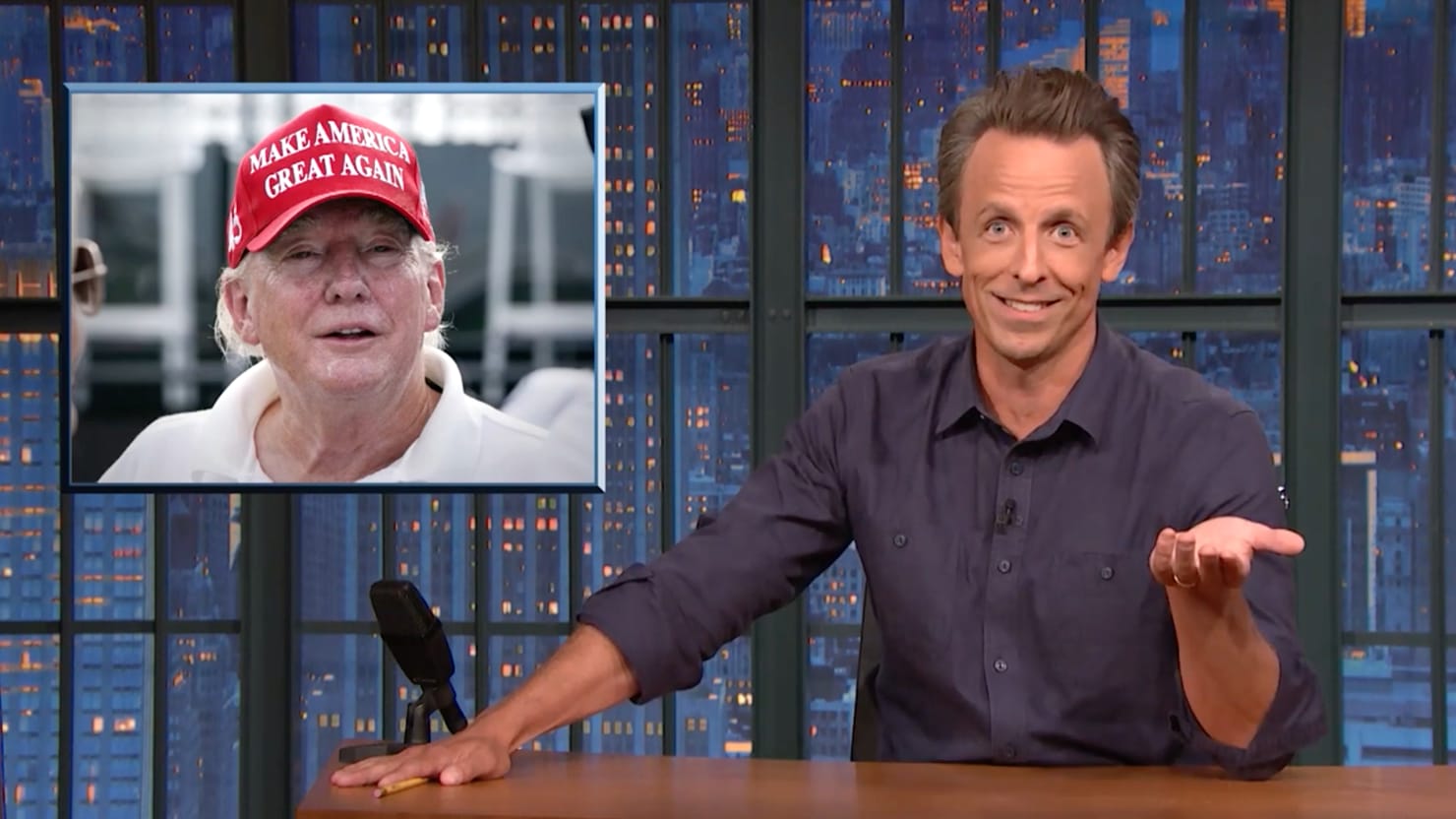
Seth Meyers Roasts the Hell Out of Trump’s ‘Face-Melt’ Photo

Seth Meyers returned to late night this Wednesday after taking a week off to recover from his second bout of COVID. And while he couldn’t cover everything he missed while he was away, he was not going to let the opportunity go by to make some brutal jokes about a photo of Donald Trump looking a little worse for wear during his recent Saudi-sponsored golf tournament.

In the middle of an unrelated bit about Trump’s double “ERIC” endorsement in Missouri’s GOP Senate primary, Meyers noted that both Eric Greitens and eventual winner Eric Schmitt “bragged that they had been endorsed by Trump, a man who, again, is not only under multiple active criminal investigations for inciting a coup to overthrow American democracy, but is also starting to look less like a former president and more like the Nick Nolte mugshot.”

“I mean, is his head getting smaller or is his hat getting bigger?” the host asked. “It looks like his hat from him is some kind of organism feeding on his blood from him. Look how pale he is! He looks like he’s starring in the next Martin McDonagh film as the ghost of an Irish priest opposite Colin Farrell.”

But he still wasn’t finished. “Look, I know they say that all presidents age rapidly,” Meyers said, “but Trump looks like he’s halfway through a Raiders of the Lost Ark face-melt. It’s like they opened the Ark, his face started to melt, but then he slammed it shut real fast. But then his face just stayed that way.

It was only after Meyers did an extended Trump impression ranting about how he had to open the Ark of the Covenant to look for Hunter Biden’s laptop that he felt ready to return to more substantive news like the results of Tuesday’s primaries.

For more, listen and subscribe to The Last Laugh podcast.

.

Categories
Technology

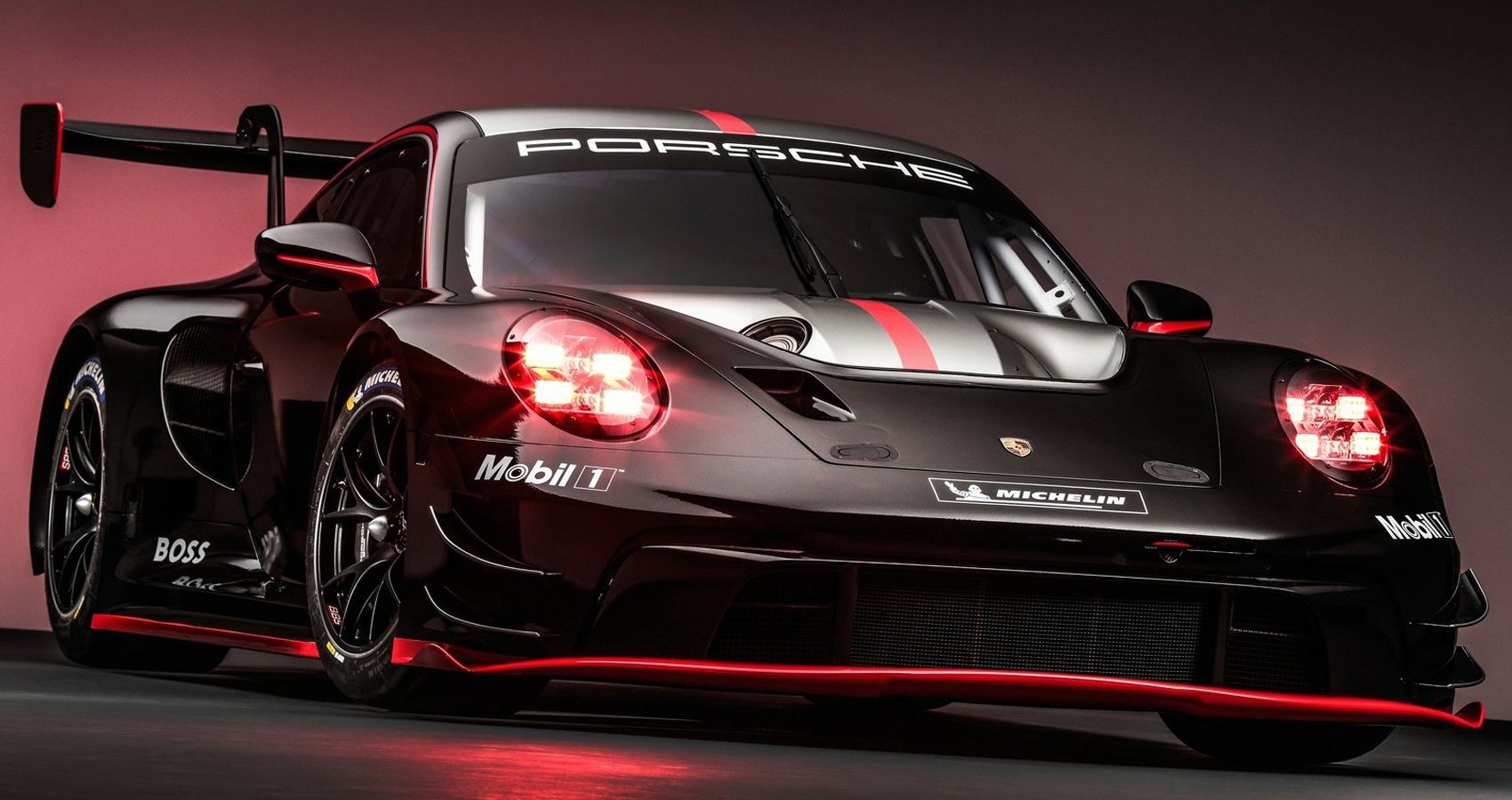
How The 2023 Porsche 911 GT3 R Plans To Dominate The Race Track

porsche has unveiled the latest generation of the 911 GT3 R which is Porsche’s bet on the GT3 series and is based on the current 992 generation, ready to race at the beginning of the 2023 season. It is Porsche’s aim to tap larger performance reserves for different Balance of Performance (BoP) classifications. In addition to this, the goal was also to streamline the handling of the race car for the teams and reduce the running costs. The new 911 GT3 R comes after Porsche recently unveiled the limited-run 911 GT2 RS Clubsport 25 which is truly a collector’s item.


As for the 911 GT3 R, Porsche seems to have hit it out of the park when it comes to making a thoroughbred racecar that is not only ready to race but looks set to win.

Porsche 911 GT3 R: Performance

Powering the car is the near-standard engine based on the 992-generation 911 unit. Similar to the previous model, it gets a water-cooled flat-six engine with four-valve technology and direct fuel injection. The major change is the displacement: like the 911 RSR, the engine capacity of the new 911 GT3 R has increased by a good five percent from 4.0-liter to 4.2-liter. Porsche says that this has increased the engine’s peak output to around 565 horsepower.


The high-revving six-cylinder motor makes do without a turbocharger and sits at the back of the car which enhances traction and braking. However, it has been tilted forwards by 5.5 degrees in order to create more leeway for the underbody diffuser. Additional elements like the alternator and the air conditioning compressor were moved a bit over 3 feet forward and further down into a space in front of the engine and the gearbox, which has a positive effect on the weight balance of the 911 GT3 R.

As for the transmission, the car gets a sequential six-speed contest-mesh gearbox that is derived from the current 911 GT3 Cup where the shift paddles control an electronic shift drum actuator that results in rapid and precise gear changes.


Related: Gotham Garage Transforms A Beaten-Up Elite Laser 917 Into A $50,000 Racecar

Porsche 911 GT3 R: Suspension and Brakes

Porsche claims that the new suspension setup allows more precise steering and ensures less wear on the rear tires as well as reduces the time spent on set-up changes.

At the front axle, the car gets a double wishbone layout. At the rear, the car gets a multi-link design. Porsche has improved the KW shock absorbers to offer five adjustment settings. Set-up modifications are done with what Porsche calls shims. These shims are aimed at enabling precision adjustments without the need for the time-consuming re-alignment of the suspension afterward.


Porsche has pushed the rear wheels a little further back, which extends the wheelbase from 96.8 inches to 98.7 inches. This doubles up to reduce the load on the rear tires and improves the consistency of the tires’ performance over longer stints.

In terms of the braking apparatus, the cars comes with aluminum monobloc racing brake calipers which are now also supplied by the specialist company AP. The brakes are 15.3 inches in size, internally vented, and activated by six pistons. At the back, there are four-piston calipers and discs measuring 14.5 inches. The company has incorporated a software application for the fifth-generation racing ABS which too, you guessed it, reduces wear on the tires and brakes. This is in addition to the new traction control system that has also received further development.


Under the skin, the car gets an aluminum-steel composite that draws on the production model, albeit with major modifications for use in the 911 GT3 R.

A vehicle like the new 911 GT3 R is highly optimized in terms of aerodynamics. The key highlight is an elevated underbody at the fore of the front axle, for the first time in conjunction with a smooth undertray, and a rear diffuser. Wizards at Porsche found out that this combination improves downforce without a significant increase in drag.

Related: A Detailed Look At Singer Vehicle Design’s Turbo Study

Porsche 911 GT3 R: Safety

In terms of safety, Porsche says that the new 911 GT3 R comes with a seat that’s closer to the center of the car. Like in the previous version, the steering wheel and pedals can be adjusted longitudinally to suit the driver. The steering wheel design also received further upgrades on the previous model. It incorporates elements that have proven themselves in the latest generation 911 GT3 Cup and 911 RSR race cars. The 10.3-inch display, for example, comes from the successful one-make cup racer, with the multi-switch concept adopted from the Le Man’s class winner.


The Porsche 911 GT3 R shows what happens when a company decides to push the envelope of innovation and performance. The fact that it looks so good while doing so is just an added bonus for us gearheads as it gives us another car to drool over.

Source: Porsche Newsroom, Porsche 911

Categories
Entertainment

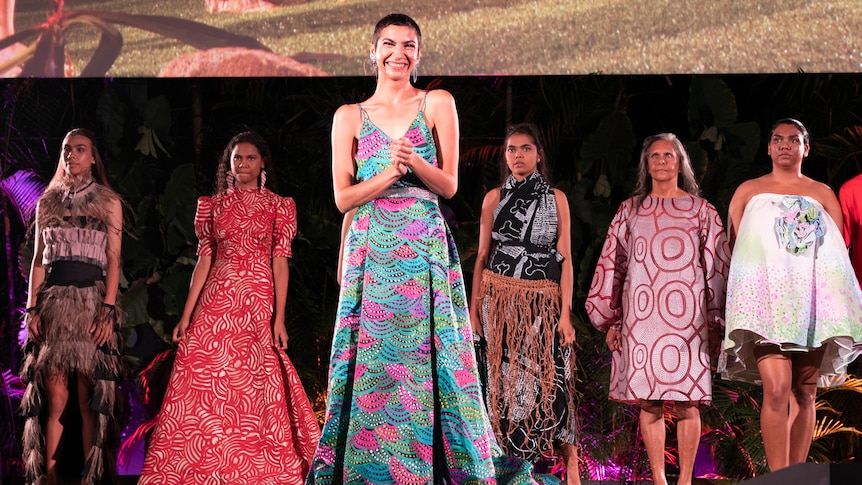
National Indigenous Fashion Awards in Darwin showcases growing fashion industry

First Nations fashion is about much more than just clothes.

According to one of the people behind the National Indigenous Fashion Awards, the fast-growing industry is a gateway for greater recognition of First Nations people and culture more broadly.

“When we come together as Australians to make decisions around things like an [Indigenous] voice to parliament … people will have a better understanding,” Darwin Aboriginal Art Fair Foundation Chair, Franchesca Cubillo, said.

“Because they’ve had those conversations with First Nations people, because they’ve bought those textiles or they’ve seen paintings or fashion.

“All of these important first steps allow First Nations people to take their place in Australia and be valued and appreciated.”

National Indigenous Fashion Awards, 2022, photo by Dylan Buckee.
The awards started during COVID lockdown in 2020. (Supplied: Dylan Buckee)

The third annual NIFAs — which see Indigenous designers and artists from all over the country recognized for their work — were held in Darwin last night.

.

Categories
Sports

NRL 2022 Sydney Roosters v Brisbane Broncos live score, updates, stream, start time, teams, SuperCoach scores

Plenty is on the line when the Roosters host the Broncos at the SCG on Thursday night with the former hoping to hang onto the top eight and the latter looking to keep in touch with the top four.

The Roosters sit eighth after three consecutive wins but a loss to the Broncos could see them drop out of the eight if the Raiders beat a depleted Panthers outfit on Saturday.

MATCH CENTER: Roosters vs Broncos live score, video, stats

Stream every game of every round of the 2022 NRL Telstra Premiership Season Live & Ad-Break Free During Play on Kayo. New to Kayo? Start your free trial now >

On the other side of the coin, the Broncos look set to return to finals footy and have their eyes on a top four finish — but a shock loss to the Tigers last week has seen them drop to fifth.

Both coaches have been forced into making key changes to their side with Roosters duo Lindsay Collins (concussion) and Egan Butcher (suspension) out as well as Broncos star Patrick Carrigan, who copped a four-week ban for a hip-drop tackle.

Trent Robinson has promoted Matt Lodge to the starting side and brought Terrell May and Ben Thomas onto the bench.

Meanwhile, Kevin Walters has replaced Carrigan with Kobe Hetherington and Rhys Kennedy joins the bench.

In other key changes for the Broncos, Origin star Selwyn Cobbo returns on the wing from the concussion he suffered in game three, while Jake Turpin is back in the 17 at the expense of Cory Paix and will start at hooker with Billy Walters dropping back to the bench.

Get all the latest NRL news, highlights and analysis delivered straight to your inbox with Fox Sports Sportmail. Sign up now!!

TEAMS

Roosters: 1. James Tedesco 2. Daniel Tupou 3. Paul Momirovski 4. Joseph Manu 5. Joseph Suaalii 6. Luke Keary 7. Sam Walker 8. Jared Waerea-Hargreaves 9. Sam Verrills 10. Matthew Lodge 11. Angus Crichton 12. Nat Butcher 13. Victor Radley 14. Connor Watson 15. Ben Thomas 16. Drew Hutchison 17. Terrell May. Replacement player: 19. Fletcher Baker

Broncos: 1. Tesi Niu 2. Corey Oates 3. Kotoni Staggs 4. Deine Mariner 5. Selwyn Cobbo 6. Ezra Mam 7. Adam Reynolds 8. Thomas Flegler 14. Jake Turpin 10. Payne Haas 11. Kurt Capewell 12. Jordan Riki 13. Kobe Hetherington 9. Billy Walters 15. Rhys Kennedy 16. Corey Jensen 17. Keenan Palasia. Replacement player: 18. Te Maire Martin

Follow the action live in our blog below. If you can’t see it, click here.

.

Categories
Australia

Tanya Plibersek says she will block Clive Palmer’s proposed coalmine near Great Barrier Reef | Environment

The environment minister, Tanya Plibersek, has said she intends to block a coalmine project backed by mining billionaire Clive Palmer that would have dug for the fossil fuel just 10km from Queensland’s Great Barrier Reef coastline.

Palmer’s Central Queensland Coal project would have mined up to 18m tonnes a year from two open-cut pits near Rockhampton.

It comes amid calls from the Greens to ban new coal and gas projects as the Albanese government’s bill to enshrine a 43% cut to greenhouse gas emissions made its way to the Senate.

The decision is the new environment minister’s first in the portfolio.

Environmentalists said the proposed refusal was a victory for the state, for the Great Barrier Reef, for the environment and for the climate.

A Queensland state government assessment said last year the Central Queensland Coal project was “not suitable” and would risk damaging the reef as well as wetlands, fish habitat and ecosystems that depended on groundwater.

An official notice said the minister is proposing to refuse the mine under the Environment Protection and Biodiversity Conservation Act 1999 and has invited public comment on her draft decision, with submissions closing on 18 August.

In a statement, the minister said: “Based on the information available to me at this stage, I believe that the project would be likely to have unacceptable impacts to the Great Barrier Reef marine park, and the values ​​of the Great Barrier Reef world heritage. area and national heritage place.”

“The available evidence also suggests that the project would be likely to have unacceptable impacts on water resources in the area.”

She said Palmer’s company had been contacted, adding a final decision would be made after public comments were received.

“While I am seeking comment on my proposed decision, and until I make my final decision on this project, I am unable to make any further statements on the matter.”

Last year Queensland’s state government sent a final assessment of the mine to the federal government, saying it posed “a number of unacceptable risks”.

Conservationists had called on the previous environment minister, Sussan Ley, to refuse the mine.

Palmer’s company had rejected claims the mine would do unacceptable damage. Guardian Australia called the Brisbane office of Central Queensland Coal, but was told nobody was available to speak as “everyone from the company is on site in central Queensland”.

Sign up to receive the top stories from Guardian Australia every morning

The director of the Queensland Conservation Council, Dave Copeman, said: “This prompt decision is a welcome change from the delayed and questionable decision making approach of the previous Morrison government.”

“It looks like we now have a minister who understands the science, is willing to listen to community concerns, and act accordingly.

“We won’t reach Australia’s 43% 2030 emissions reduction targets, that passed the House of Representatives today, without strong decisions such as this.

“This will be overwhelmingly positive news for the many locals and organizations who have been making clear the local and scientific opposition to this project.”

Cherry Muddle, a Great barrier Reef campaigner at the Australian Marine Conservation Society, said they hoped the minister “rejects this mine once and for all” and pointed to modeling suggesting mine sediments would have had disastrous impacts on an area that was rich in marine life .

“In the wake of the fourth mass bleaching event on the reef since 2016, it is vital new coal and gas projects like this one are refused,” Muddle said.

“It shows the government are serious about saving the reef and tackling the issues that threaten it.”