Page Oval is far from Canberra’s best-known sports arena.
But its fields are home to a football club that, for some new Canberrans, plays a much bigger role than sport does in most lives.
Key points:
Afghan refugees founded the Canberra Kangaroos in 2013
The club is playing in the ACT state leagues this year
Players face significant off-field difficulties, including uncertain futures
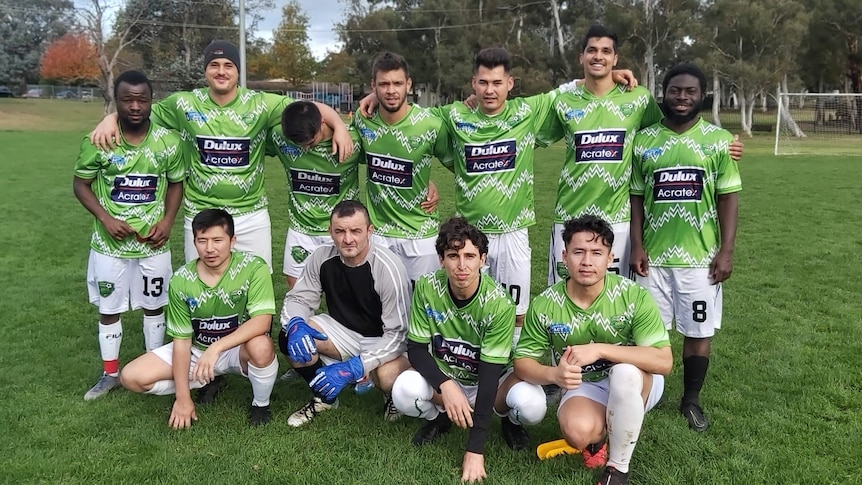
The Canberra Kangaroos was founded nine years ago by a group of Afghan refugees. It entered the annual refugee tournaments held around Australia.
But this year it’s gone mainstream. For the first time, the club is toughing it out in Canberra’s state league competitions.
Its secretary, Ali Ekhtyari, said that while the Afghan community began the club, it now had players from Pakistan, Brazil, South Sudan, Iraq and Iran.
“This club is based on inclusion, to prevent isolation that refugees and migrants often face,” he said.
“It’s really helpful for those migrants who don’t know what to do, how to come out of the isolation, from loneliness.
“This is a good place to be with each other.”
Pitch battles a relief compared with off-field stresses
The club began with Afghan players but is now open to all refugees.(Supplied)
Some of the club’s players face tough challenges away from football.
Goalkeeper Rohullah Hassani has a temporary visa and is fighting hard to bring his family to Australia.
“We have been separated from our family a long time, a decade now,” he said.
“It’s very hard. Every day it’s depressing and we are worried … back home, it’s not very safe, mentally we have lots of stress.
“We are just hoping for [the] new government to give us a chance to bring our family and start a life here.”
However, Mr Hassani said finding a welcoming community in Australia had softened his situation.
“I feel proud and I feel much better since I joined this club,” he said.
Reserves coach Mohammad Aamir said bringing together so many cultures had presented communication challenges.
“It was difficult at the start, I’m not gonna lie,” he said.
“A lot of the boys, they’ve come here maybe a year or so ago, and some of them have been here a bit longer,” he said.
“[Seeing] the guys who’ve been here for a bit longer… bring the other boys in and show them the way, it’s what’s brought the team together more.
“We all understand football to be a universal language and it’s been really good just getting the boys together and understanding their stories, where they come from and how they’re able to transfer that onto the field.”
One of the new players, Hekmat Frotan, moved to Australia last year.
“The most important thing when you come to a new country is to make new friends, to make connections and then, whenever you find something difficult or whenever you face a problem, there should be somebody who [can] help you,” he said.
“It is more than a football game for me — I came, I met new people, I made new friends, I made a new family actually, which is brilliant.”
The police in Albuquerque are investigating the killings of three Muslim men that they say may be connected.
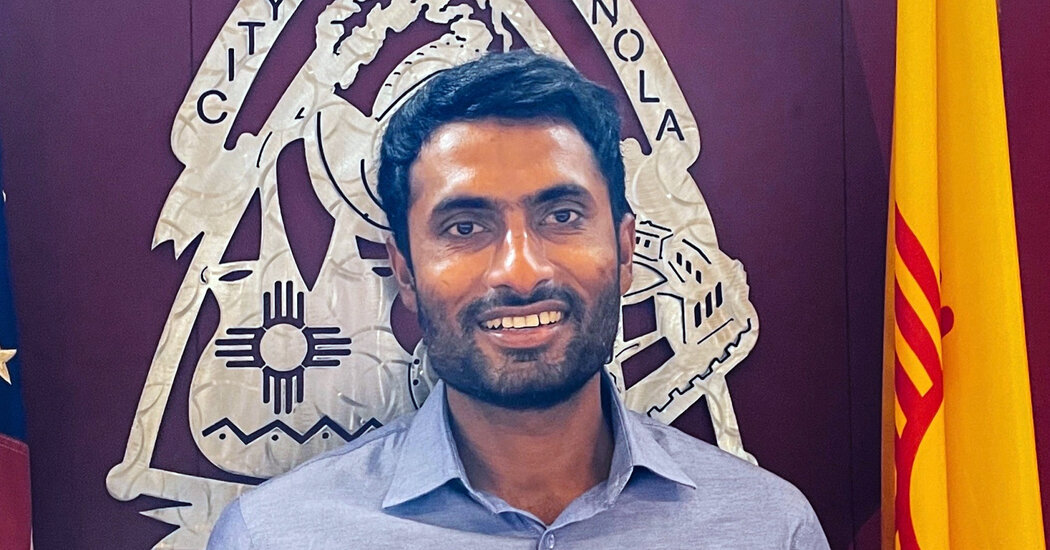
Muhammad Afzaal Hussain, 27, and Aftab Hussein, 41, two Pakistani men who attended the same mosque, were fatally shot within a week of each other, the police said. Mr. Hussain, who was killed on Monday, was the planning and land use director for the city of Española, about 90 miles north of Albuquerque. Mr. Hussein, slain on July 26, worked at a local cafe.
A third Muslim man was killed just before midnight Friday, according to the police. The identity and age of the latest victim has not been released, although the police said he was a “young man” and from South Asia.
The authorities said they believed the recent violence might also be connected to the November 2021 killing in Albuquerque of Mohammad Ahmadi, 62, a Muslim man from Afghanistan. Mr. Ahmadi was killed outside a business he and his brother ran on San Mateo Boulevard, the police said.
The authorities did not elaborate on why they thought the killings may be connected and did not say whether there were any witnesses to the homicides, but they said they believed the Muslim community was being targeted.
The Albuquerque Police Department, along with the Federal Bureau of Investigation and the Bernalillo County District Attorney’s Office, is asking city residents to come forward with any information that could be connected to the killings.
“This is something that impacts us all,” Raúl Torrez, the Bernalillo County district attorney, said at a news conference on Saturday. “Every member of this community has to stand up.”
Gov. Michelle Lujan Grisham said on Twitter on Saturday that the killings were “deeply angering and wholly intolerable” and that she was sending more State Police officers to help the Albuquerque Police and the FBI She also expressed solidarity with the Muslim community in the state.
“We stand with you,” she said.
Officials with the Islamic Center of New Mexico, still reeling from the Friday night funeral service for Mr. Hussain and Mr. Hussein, said they were shocked to learn of another death the next morning, and that the slayings have Muslims in the city fearing for their safety.
“We are incredibly sickened with the idea that someone has this much hate against innocent people,” said Ahmad Assed, the president of the Islamic Center of New Mexico. “We’re scared for our families, we’re scared for our children. And we are incredibly confused about why this is happening.”
The Council on American-Islamic Relations, the largest nonprofit Muslim civil rights group in the country, said Friday that it would offer a $10,000 reward to anyone who could provide information that would lead to the arrest and conviction of the person responsible for the killings.
“We’ve really never seen something like this, where there’s multiple similar murders that really seem connected,” said Ibrahim Hooper, the national communications director for the council.
Nihad Awad, the national executive director of the council, said in an interview that thetragedies affected not only the Muslim community but all Americans. “We must be united against hate and violence regardless of the race, faith or background of the victims or the perpetrators,” he said. “We urge anyone with information about these crimes to come forward by contacting law enforcement.”
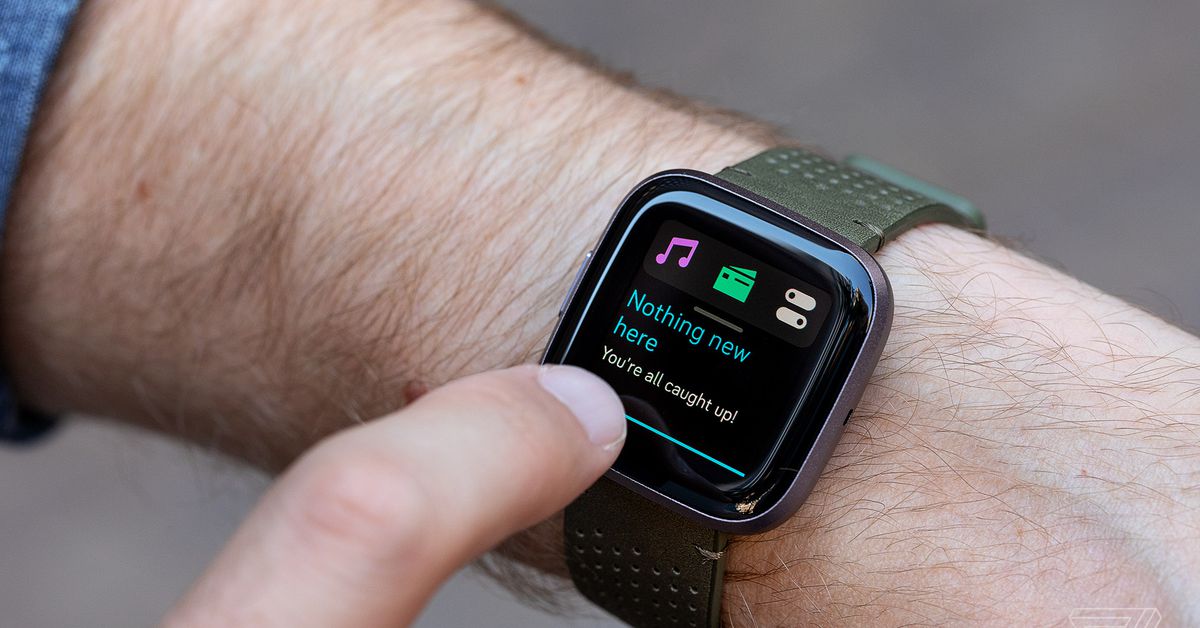
If you’re the owner of a Fitbit Versa, Versa 2, or Ionic, you’ll soon no longer be able to transfer music from your computer to your Fitbit device. In a support page spotted by 9to5GoogleFitbit says it’s discontinuing its Fitbit Connect app, leaving you with only two ways to download music to your device: a paid subscription to either Pandora or Deezer.
Fitbit Connect is a companion app for Mac and Windows computers that lets you sync fitness data between devices and transfer music to legacy Fitbit devices. Fitbit has slowly been phasing out the software in favor of its mobile app, as it no longer recommends that users download it on its setup page.
But without access to Connect, there’s no way to download music to your Fitbit without a paid subscription to either Pandora or Deezer. On its support page, Fitbit says “you may be eligible for a 90-day trial” of either service, which will run you $9.99 / month for Deezer Premium or $4.99 / month for Pandora Plus once the trial’s over.
This change doesn’t affect newer Fitbit models, however, as they don’t come with the option to transfer files between your PC and Fitbit device (devices like the Versa 3 and Sense already only let you download music through Deezer or Pandora). If you own an older Fitbit that has the ability to store music, you’ll still get access to the music files you have on your Fitbit device right now — you just won’t be able to download any additional songs without Pandora or Deezer past the October deadline.
Many users use their Fitbit devices to control the music they’re playing on their smartphone, whether they’re streaming music through Spotify or listening to songs already downloaded on their phone. But still, having access to local music files can come in handy if you’re listening to music offline or want to use your Fitbit without your smartphone.
While Fitbit doesn’t explain why it’s getting rid of Fitbit Connect, it’s possible that there just isn’t enough demand to keep the service up and running. Google (Fitbit’s parent company) didn’t immediately respond to TheVerge‘s request for comment.
One Sunday morning recently — stretched out like a croissant on the grass of Carlton Gardens — a friend said to me, “I’m 29 years old and I’ve never been to the club or worn a tiny top!”
I’m also 29, and although my friend and I both google things like “Phoebe Waller-Bridge how old when” routinely, our twenties have unfolded in markedly different ways.
I’ve spent many a night peeling my shoes off the floor of the proverbial club, and I’ve worn plenty a tiny top, but I still don’t understand how money works, and I’ve only just started my “career” .
“I’m 29 years old and I still don’t understand what the jobs are,” I replied, and as these words left my mouth I realized we were saying exactly the same thing: I have a sneaking suspicion I’ve done it all wrong.
Crisis? What crisis?
As much as I’ve tried to be very cool and relaxed about it all, the cliched late 20s existential crisis has come for me too (like The Vengabus, but do we really like to party?).
It seems rude to burden a single decade with the pressure of a lifetime, but culturally we can’t get enough of it: “Live it up while you can! Travel, party, follow your heart, your head is a wet blanket.”
But you don’t want to rent forever! Are you thinking about children? Stay in, get eight hours of sleep, drink enough water, when the physio gives you exercises for your knees, actually do them.’
The messaging is conflicting and relentless.
I haven’t made it through a single 30th birthday without being caught in a conversation where we go around the circle and list all the reasons why we’re not ready to be in our 30s.
It doesn’t matter if people have a partner, a PhD, a house, or a wallet full of (significantly devalued) Bitcoin, no one feels like they’ve done it right.
something missing
When I was 23, I went to New York with my best friend.
We shared a fold-out bed in the basement of a Brooklyn brownstone, and lived off tacos and watered-down happy hour cocktails. It was a scrappy kind of bliss.
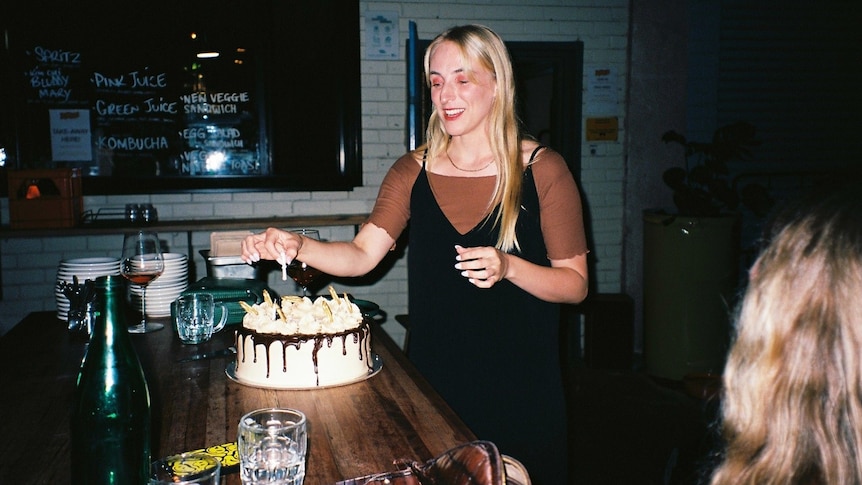
No matter how our 20s unfold, it feels like there’s always something missing.(Supplied: Chloe Elisabeth Wilson)
One night on the subway, I looked up from my phone and said something to him about wanting to start saving for a mortgage. He thought about it for a moment, before replying, “Why would you want to think about that right now?”
It’s funny to me now that the thought even entered my mind. I had no interest in securing a mortgage, and practically it was near impossible.
It was just the first time I’d seen people around me doing it (through my splintered phone screen, from the other side of the world). No matter how our twenties unfold — tiny tops, big careers, stable foundations, unpredictable adventures — it feels like there’s always something missing.
Many ways to live a life
None of these are unique thoughts, of course. I also don’t know that they’re as specific to the bridge between twenty and thirty as two stressed millennials on the grass of Carlton Gardens would have you believe.
At any age, how can we really pick apart what it is we want, and what it is we think we’re supposed to want?
Maybe some people are immune to this, or maybe it’s genetic. If you are one of these people and you’ve never felt any of the pressures outlined above, you should capitalize on this and create a learning course on it as soon as possible (you’re welcome).
There are just so many ways to live a life. I’m trying my best to remember that. When I worry that I’ve spent too many years following my frustratingly impractical heart, I tell myself that my head isn’t going anywhere.
Tiny tops are for all ages and careers extend far beyond 29. I keep coming back to this quote from Sharon Olds: “I was a late bloomer. But anyone who blooms at all, ever, is very lucky.”
Chloe is a writer and artisanal snack connoisseur based in Naarm/Melbourne. She runs a monthly newsletter called tall tales, and can be found on Instagram at @chloeelisabeth.
ABC Everyday in your inbox
Get our newsletter for the best of ABC Everyday every week
St Kilda legend Nick Riewoldt has described his former club’s decision to trade away Ben McEvoy to Hawthorn as “mind-boggling.”
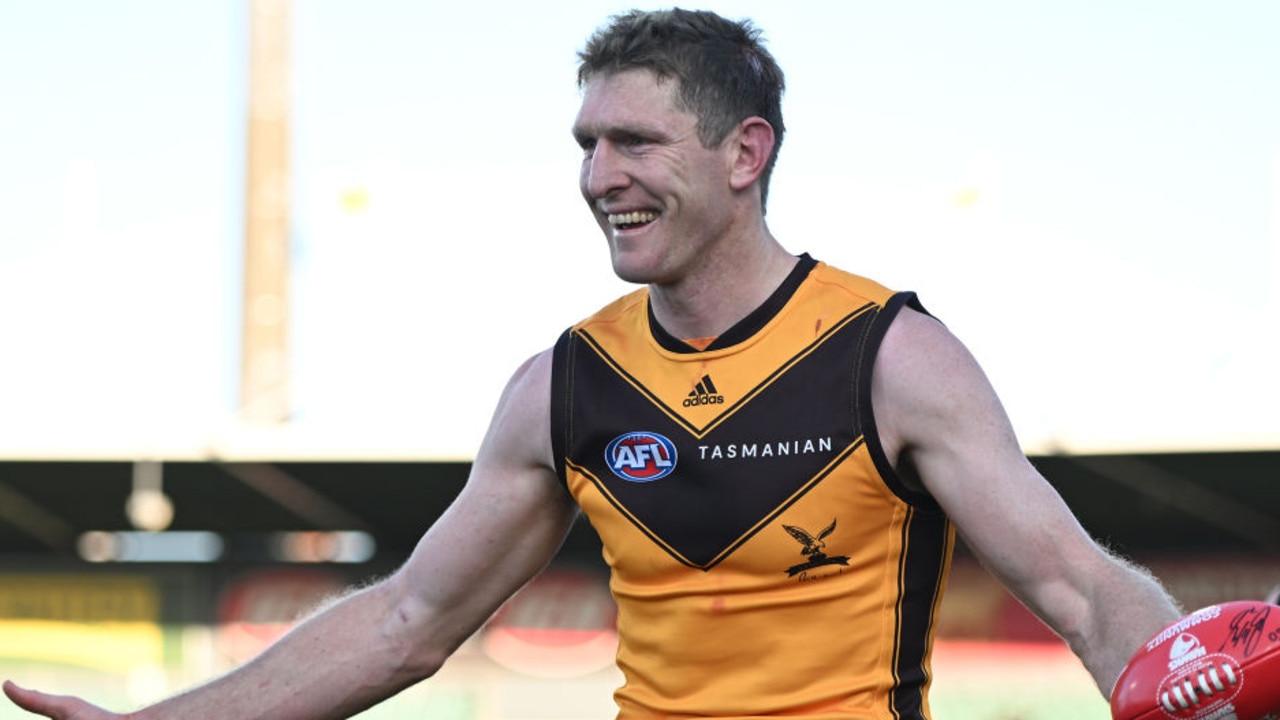
McEvoy, who played his 250th AFL game in Saturday’s win over Gold Coast, was dealt to the Hawks at the end of 2013 and has been an invaluable addition, winning two premierships and getting appointed captain in 2021.
Speaking on Fox Footy’s Best on GroundRiewoldt, who was Saints skipper at the time of the trade — which saw the club acquire Shane Savage and a first-round pick (Luke Dunstan) — says McEvoy was pushed out.
Watch every blockbuster AFL match this weekend Live & Ad-Break Free In-Play on Kayo. New to Kayo? Start your free trial now >
Suns succumb to Hawks hot streak | 02:07
“He didn’t leave, the club traded him. At the time it felt like the people in charge making those decisions were saying, ‘look how clever we are. Let’s trade this bloke and this bloke and we’ll get in some picks, we’ll show how clever we are with recruiting’,” Riewoldt said.
“You’ve got to get your picks right, and they didn’t… it was mind boggling, and still is.
“He’s been a superstar and it was still at St Kilda — a bit of a void of leadership is the criticism at times — he would’ve been perfect.
“But good luck to him, he’s gone on to great things.”
McEvoy was carried off after his milestone match and embraced by Hawks fans and teammates with his kids on the ground in great scenes.
Fellow Saints great Leigh Montagna also praised his former teammate post-game — a match that ended in the tough ruckman’s head bandaged after a knock.
McEvoy carried off after his 250th match (Photo by Steve Bell/Getty Images)Source: FOX SPORTS
“Congratulations to Benny McEvoy, big contested mark in that last minute, the headband, he’s everything we’ve seen from him over 250 games,” he said on Fox Footy.
Hawks star Jack Gunston said of McEvoy: “You always love a good that you want to follow, and Ben is that guy. Headband today, of course he did. He’s just such a genuine good block, but such a competitor as well.
“It’s not an easy gig playing in the ruck I wouldn’t have thought, he’s just a good fella and I’m glad we got the win for him.”
McEvoy gave a shout out post-match to Dylan Moore playing in his 50th match in true selfless McEvoy style.
“It wasn’t pretty today, but sometimes you’ve got to win ugly. So pleased to get a result in mine and Moorey’s 300th.”
When Australian Federal Police commissioner Reece Kershaw took over the agency, he promised a new era of transparency.
“If it’s going to get out, we might as well be the ones actually saying it,” he told The Sydney Morning Herald and The Age in late 2019, referring to the increasingly long delays to access documents under freedom of information laws.
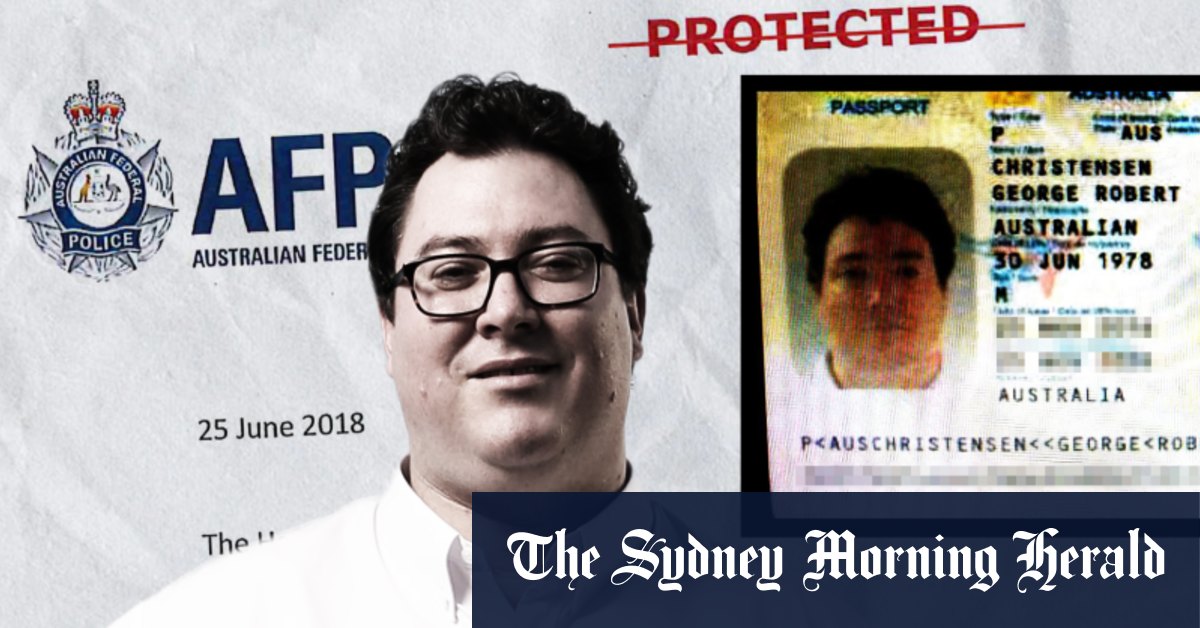
George Christensen spent 294 days in the Philippines over a four-year period.Credit:Andrew Mears
Back then, the AFP was mired in controversy over raids on multiple media outlets and the nation’s new top law enforcer was keen to project a transparency-trumps-all approach.
But what Kershaw might not have been aware of at the time was this: his agency had already begun what would turn into a more than three-year legal fight to block the release of a single-page document.
Five months earlier, Nine News and this masthead had applied to obtain a letter the AFP sent then-home affairs minister Peter Dutton regarding Nationals MP George Christensen’s activities in the Philippines. When Kershaw made his promise to him, the AFP had already issued its first rejection.
The AFP firstly opposed the release of the letter on privacy grounds, arguing it would be an unreasonable disclosure of Christensen’s personal information.
After the matter was appealed to the information commissioner, the AFP added more arguments on national security grounds. The police agency contended that releasing the letter would have a “substantial adverse effect” on its operations by compromising the “provision of frank and candid briefings to the minister of home affairs in relation to sensitive matters”.
The matter was further delayed by Christensen making three separate submissions arguing against the letter’s disclosure.
The long-running fight to obtain the document ended this week, when the AFP was forced to release the document after a ruling by the information commissioner found its disclosure was in the public interest.
In the letter sent to the then-home affairs minister Peter Dutton on June 25, 2018, the AFP said a police probe into Christensen’s frequent travel to the region had found no evidence of criminal conduct but the politician had “engaged in activities” that put him at risk of being compromised by foreign interests.
loading
The stonewalling by the AFP has opened itself up to accusations that it was trying to serve the then-Coalition government, rather than acting as the cops on the beat.
Sydney barrister Geoffrey Watson, SC, a former counsel assisting the NSW Independent Commission Against Corruption, says: “I can’t impute bad or political motives to the AFP, but that’s the practical effect of what they did.”
Watson says the three-year delay to release the letter is “scandalous” and “appalling” because now there is a new Labor government and Christensen is out of federal parliament.
He says he understands the AFP’s privacy arguments, even if they were outweighed by the public interest, but the agency’s national security arguments were “specious” and “baseless”.
“I found it laughable to think that it could have some effect on AFP operations.”
Asked why it fought the request for the document for so long, the AFP says it “respects the decision of the Information Commission and has released the document to the applicant”.
Christensen, who was privately dubbed the “Member for Manila” by colleagues, took at least 28 trips to the Philippines, spending almost 300 days in the country, between 2014 and 2018.
He would wander the streets of Angeles City – an urbanized area more than 80km from the capital Manila known for its red light district – in a Hawaiian-style shirt, board shorts and thongs, buying giant teddy bears and chocolates for women in the bars.
One of his favorite bars was Ponytails, which advertised itself as an “adult entertainment service” employing 100 female dancers and 50 female wait staff.
According to Marjorie Lamsen, the manager of the Ponytails, Christensen was a “very regular visitor” at the venue.
“He was always very good… He was a big spender,” Lamsen said in late 2019.
“The weakness of George is women. He would usually give allowances to these people … He would keep his job from him a secret but now we know he’s a politician.
It is here he would meet his wife, April, in early 2017. He would tell Queensland’s Courier Mail that a friend had introduced them at a “small karaoke” bar and his “singing talents obviously impressed her”.
Christensen has long denied any wrongdoing in relation to his activity in South East Asia, pointing to the fact that federal police never found any evidence of criminality.
He has previously claimed he spent so much time in the country to be with his now wife, but he made 19 trips – totaling 205 days – in the country before he ever met her.
loading
Alarm bells started ringing for federal police officers in early 2017, when Christensen’s regular trips to the Philippines and Thailand started catching their attention.
The AFP then became aware of multiple aliases Facebook pages Christensen appeared to be using to communicate with people in the Philippines. Officers were also concerned about payments Christensen was making to women in the country.
Christensen went to great lengths to normalize his trips. He would often fly straight to Manila from Canberra at the end of sitting weeks. He was, after all, chairman of the Parliamentary Friends of the Philippines. He would tell colleagues he visited regularly to do charity work for orphanages.
The Queenslander would holiday there over Christmas and New Year only to fly home and be seen in the electorate on Australia Day, or Anzac Day – post an image on Facebook before flying back.
On September 7, then-AFP commissioner Andrew Colvin briefed the country’s most senior bureaucrat, Martin Parkinson, the secretary of the Department of Prime Minister and Cabinet, on the matter. Parkinson advised Colvin he should brief then-prime minister Malcolm Turnbull, who was subsequently provided six briefings over the course of the next year.
Colvin told Turnbull that the Philippines police were aware of the concerns and that this raised the possibility Christensen could be questioned in Manila on an upcoming trip.
“Colvin described how Christensen had an unusually complex online presence and had been spending substantial sums in Manila bars and nightclubs as well as making many small payments to women there,” Turnbull writes in his memoir, A Bigger Picture.
“Against the advice of our embassy in the Philippines, he had been staying in seedy hotels in Angeles City, which was not only recklessly unsafe but made him vulnerable to being compromised.”
Over the coming months, then-deputy prime minister Barnaby Joyce, his successor Michael McCormack and Dutton were also all provided briefings on the police probe.
At some point during this time, there was a growing concern by some people within the government and the AFP that Christensen had been tipped off about the police probe.
Watson says if this did occur, it would be “disgraceful conduct” on behalf of the politicians.
“They engaged in briefings and it seemed to have been leaked to Christensen,” Watson says. “If you can’t trust senior politicians not to leak this information for political advantage then the country is in a woeful place.”
On May 24, 2018, the AFP met with Christensen and told him of their concerns that he could be compromised, including by foreign intelligence services. A month later, they sent the letter to Dutton, Turnbull and McCormack closing the case but warning of the ongoing risk.
Watson says it appeared the AFP were pursuing two different avenues: the allegation of criminal conduct, which was found to have no basis, and the national security concerns of Christensen being potentially compromised.
“Having investigated the criminal aspect and found nothing… I cannot understand why it wouldn’t be escalated if there was a risk, or why it wasn’t transferred to [counter-espionage agency] ASIO or why it just seemed to fall away to nothing.”
He also points out the AFP later raised national security grounds in the FOI process, despite dropping the inquiry into security concerns.
“The AFP was raising national security in relation to a matter they appeared not to pursue. How does that work out?
loading
Anthony Whealy, QC, chair of the Center for Public Integrity and a former Court of Appeal judge, says national security is an important concern but too often it is thrown up as a “cloak to avoid a situation”.
“This example of the AFP letter is a classic example of a completely artificial claim for national security protection,” he says.
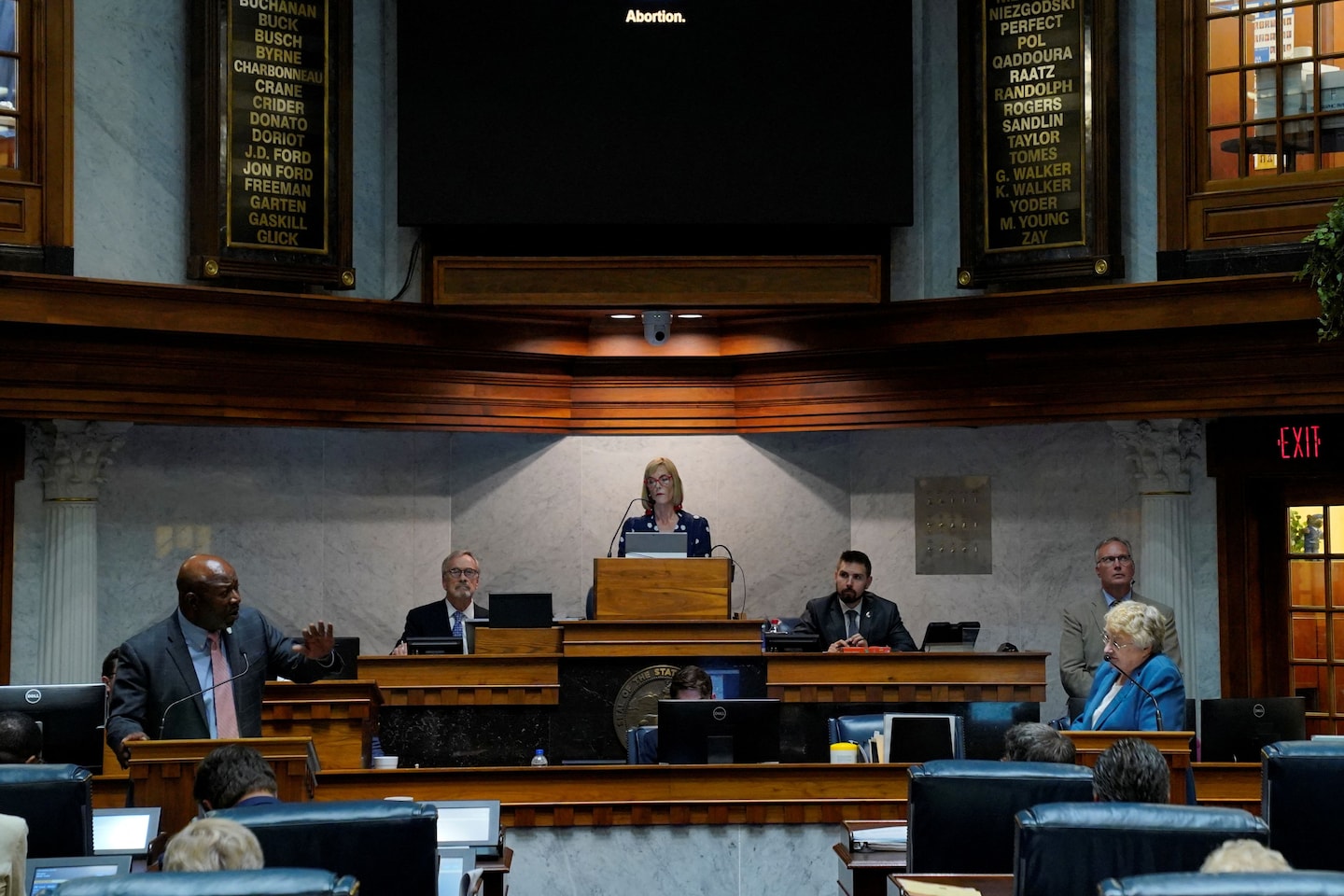
Indiana’s new sweeping ban on abortion produced immediate political and economic fallout Saturday, as some of the state’s biggest employers objected to the restrictions, Democratic leaders strategized ways to amend or repeal the law, and abortion rights activists made plans to arrange alternative locations for women seeking procedures.
The Indiana law, which the Republican-controlled state legislature passed late Friday night and Gov. Eric Holcomb (R) signed moments later, was the first state ban passed since the US Supreme Court struck down Roe v. Wade in June and was celebrated as a major victory by abortion foes.
On Aug. 5, Indiana lawmakers passed a near-total ban on abortion. The bill was signed into law by Gov. Eric Holcomb (R). (Video: Washington Post)
It also came just three days after voters in traditionally conservative Kansas surprised the political world bytaking a very different tack, rejecting a ballot measure that would have stripped abortion rights protections from that state’s constitution.
The vote in Indiana capped weeks of fraught debate in Indianapolis, where activists demonstrated at the state Capitol and waged intense lobbying campaigns as Republican lawmakers debated how far the law should go in restricting abortion. Some abortion foes hailed the law’s passage as a road map for conservatives in other states pushing similar bans in the aftermath of the high court’s decision on gnawswhich had guaranteed for the past 50 years the right to abortion care.
The Indiana ban, which goes into effect Sept. 15, allows abortion only in cases of rape, incest, lethal fetal abnormality, or when the procedure is necessary to prevent severe health risks or death. Indiana joins nine other states that have abortion bans starting at conception.
The new law represents a victory for antiabortion forces, who have been working for decades to halt the procedure. But passage occurred after disagreements among some abortion foes, some of whom thought the bill did not go far enough in stopping the procedure.
After the legislation was signed into law, Eli Lilly, the pharmaceutical giant and one of the state’s largest employers, warned that such laws would hurt its employee recruiting efforts and said the company would look elsewhere for its expansion plans.
“We are concerned that this law will hinder Lilly’s — and Indiana’s — ability to attract diverse scientific engineering and business talent from around the world,” the company said in a statement issued Saturday. “Given this new law, we will be forced to plan for more employment growth outside our home state.”
See where abortion laws have changed
Salesforce, the tech giant with 2,300 employees in Indiana, had previously offered to relocate employees in states with abortion restrictions, though it didn’t respond on Saturday to a request for comment on the Indiana law.
The Indianapolis Chamber of Commerce also warned the ban was passed too quickly and without regard for how it will affect the state’s tourism industry.
“Such an expedited legislative process — rushing to advance state policy on broad, complex issues — is, at best, detrimental to Hoosiers, and at worst, reckless,” the chamber said in a statement, asking: “Will the Indy region continue to attract tourism and convention investments?”
Indiana lost out on 12 conventions and an estimated $60 million of business after it passed a religious freedom law in 2015, according to one local tourism industry estimate.
Indiana is the first state to ban abortion by legislature since the Supreme Court decision in June overturning Roe v. Wade. Other states enacted “trigger laws” that went into effect with the fall of Roe.
Indiana may be just the beginning. Abortion rights advocates estimate that abortion could be severely restricted or banned in as many as half of the 50 states.
An official at Indiana Right to Life, an Indiana anti-abortion group, said the new law will end 95 percent of abortions in Indiana and will close all Indiana abortion clinics” Sept. 15, the date the legislation takes effect,abortion activists go to court and get an injunction beforehand.
Indiana has considered abortion restrictions for years, though it remained a state where many in the region traveled for abortion care. Now, as many nearby states — including Ohio, Kentucky and West Virginia — also push for abortion bans, patients may have to travel hundreds of thousands in some cases for care, said Elizabeth Nash, a policy expert at the Guttmacher Institute, which supports abortion rights. “Patients in Ohio won’t be able to go to Indiana for access. They’ll have to get to, perhaps, Illinois or Michigan,” she said.
Passage of the Indiana measure occurred just weeks after national attention was focused on a 10-year-old girl who was raped in Ohio, where abortion is banned after six weeks, and traveled to Indiana to terminate the pregnancy.
Caitlin Bernard, the doctor who performed that abortion in Indianapolis, tweeted Saturday that she was “devastated” by the legislature’s action. “How many girls and women will be hurt before they realize this must be reversed? I will continue to fight for them with every fiber of my being,” she wrote.
Doctors are reluctant to work in anti-abortion states
The Indiana measure drew swift condemnation from national Democrats, who sought to cast Republicans as extreme on abortion — citing the Kansas vote earlier this week, where even rural, conservative parts of the state rejected changing the state’s constitutional right to an abortion.
The law is “another radical step by Republican legislators to take away women’s reproductive rights and freedom,” White House press secretary Karine Jean-Pierre said in a statement.
Democrats are hopeful, though, that they can use what happened in Indiana to cast the entire Republican Party as extreme on abortion.
“This has nothing to do with being ‘pro-life,’ ” tweeted California Gov. Gavin Newsom (D). “It’s about power and control.”
In Washington, Republican leaders have been largely silent on Republican-led states’ push to ban abortion. Polls consistently show that near-total abortion bans like the one in Indiana are unpopular with the general public.
So when Indiana Republicans ban abortion for an entire state, “they are effectively speaking for all Republicans,” said Martha McKenna, a Democratic political strategist, “and that’s why I have hope it’s a good issue for Democrats in November.”
Another political strategist, Jonathan Levy, who worked on the Kansans For Constitutional Freedom Campaign, which is opposed to limiting abortion rights, said the Kansas vote showed that extreme anti-abortion positions are “going to be rejected by Americans across the political spectrum. The American people want legislators to focus on how to keep food on the table, keep the economy afloat. They think the legislature’s priorities are out of whack,” he said.
Alongside the near-total abortion ban, Indiana Republicans also passed legislation they said was intended to support pregnant women and mothers, but critics pointed out much of the money was directed at propping up pregnancy crisis centers run by anti-abortion groups.
The passage of the bill left health providers and abortion counseling agencies struggling to figure out the full impact of the legislation.
Indiana University Health, a major health-care provider in the state, issued a statement saying it was trying to figure out what the ban meant for its doctors and patients.
“We will take the next few weeks to fully understand the terms of the new law and how to incorporate changes into our medical practice to protect our providers and care for people seeking reproductive health,” the health provider said in a statement.
Meantime, activists began discussing plans to raise funds and provide transportation forthose seeking abortion access after the ban goes into effect, said Carol McCord, a former employee at Planned Parenthood.
“Since this is soon to be illegal in Indiana, we are looking for ways to help women travel to get services that they need,” she said. Indiana law was already considered restrictive compared with other states, so about 35 percent of women seeking abortions traveled out of state already, said Jessica Marchbank who serves as the state programs manager for the All-Options Pregnancy Resource Center in Bloomington.
Democratic state legislators began strategizingSaturday about how to respond, including considering repeal measures and organizing voters to elect legislators who favor abortion rights.
“This is a dark time for Indiana,” said state Sen. Shelli Yoder, an assistant Democratic caucus chair. “The plan going forward is to be sure we come out in November and vote out the individuals who supported something that only a tiny minority of Hoosiers wanted.”
Immediately, Yoder said in an interview that she and like-minded state legislators are contemplating action that could undo the impact of the new law, noting that the legislature has not been formally adjourned.
“We can come back and fix this,” she said, adding that legislators are at the early stage of plotting how to do that.
Katie Blair, the advocacy and public policy director of the American Civil Liberties Union in Indiana, said Saturday that her organization will examine legal action.
“You can guarantee that our legal team will be working with partners to evaluate every legal avenue available to defend abortion access here in Indiana,” Blair said in a statement.
In signing the legislation, Holcomb applauded the work of the lawmakers he had called into a special session this summer to find a way to restrict abortion, acknowledging disagreements among those opposed to abortion.
“These actions followed long days of hearings filled with sobering and personal testimony from citizens and elected representatives on this emotional and complex topic,” the governor said in a statement. “Ultimately, those voices shaped and informed the final contents of the legislation and its carefully negotiated exceptions to address some of the unthinkable circumstances a woman or unborn child might face.”
The electric Kombi reboot and its commercial van counterpart have been priced for the UK, giving Australian customers an idea of how much it could cost if it arrives in local showrooms.
0
Price for the 2023 Volkswagen ID. Buzz has been announced for the UK, indicating a starting price in excess of $100,000 for the reborn electric Kombi if it comes to Australia.
Revealed in March 2022 as an electric reboot of Volkswagen’s iconic Type 2 Kombi van from the 1960s, the ID. Buzz people-mover and its ID. Buzz Cargo commercial offshoot are due to go on sale in the UK next month.
While Volkswagen Australia is yet to confirm whether either ID. Buzz variant will appear in local showrooms, it has previously expressed interest in the iconic vehicle.
In the UK, the back-to-basics delivery van version of the Volkswagen ID. Buzz Cargo starts from £38,125 ($AU66,400) for the Commerce model – about £19,000 ($AU33,000) less than the cheapest five-seater ID. Buzz.
It’s worth noting these prices exclude the 20 per cent Value Added Tax (VAT) which applies to the majority of purchases in the UK, similar to the 10 per cent Goods and Services Tax (GST) in Australia.
Including VAT, the ID. Buzz Cargo Commerce’s price is pushed to £45,750 ($AU79,600) before on-road costs are applied.
Standard equipment on the ID. Buzz Cargo Commerce includes 19-inch wheels, a 10-inch touchscreen, 5.3-inch digital dash, three front seats (with heated driver’s seat), front and rear parking sensors, multiple USB-C ports plus wireless Apple CarPlay and Android Auto.
Buyers who want more from their vans can purchase the Commerce Plus from £42,375 (AU$73,760) excluding VAT, with its taxed price starting from £50,850 ($AU88,500).
On top of the base Commerce grade, Commerce Plus gains radar cruise control, sensor-key entry, park assist plus, a rear view camera, multi-function ‘leatherette’ steering wheel, heated windscreen, Discover Pro navigation system, travel assist, lane assist, side assist and emergency assist.
In the people-mover line-up, the five-seater ID. Buzz Life is the least expensive of the three variants, starting from £57,115 ($AU99,400) plus on-road costs– about $6,000 more than a Tesla Model 3 Performance in Australia.
Stepping up to the ID. Buzz Style comes with added equipment such as matrix LED headlights and ambient interior lighting, incurring a £4,800 ($AU8,350) premium over the Life with a price of £61,915 ($AU107,750) plus on-road costs.
The limited ID. Buzz 1st Edition in the UK gains additional features such as 21-inch alloy wheels, a 12-inch infotainment screen and electric memory seats for an extra £1080 ($AU1880) on top of the Style grade, topping out the price list at £ 62,995 ($AU109,630) before on-road costs.
While the variant names are different in the UK, these prices are similar to those already seen in the ID. Buzz’s home country of Germany, where the entry-level Pro grade starts from €64,581.30 ($AU96,300) excluding electric vehicle incentives.
All variants in the Volkswagen ID. Buzz and Volkswagen ID. Buzz cargo range are powered by a single 150kW/310Nm electric motor which drives the rear wheels.
A 77kWh battery pack provides power to the electric motor, enabling claimed driving ranges of 421km for the ID. Buzz and 424km for the Cargo variant on a single charge.
The Volkswagen ID. Buzz is capable of being DC fast charged at up to 170kW, topping the battery up from five to 80 per cent in roughly 30 minutes.
Volkswagen Australia is yet to announce the complete rollout of its portfolio of electric cars.
However, if the Volkswagen ID. Buzz does come to Australia, it is expected to follow higher priority models such as the ID.4 SUV, ID.5 SUV and the ID.3 hatchback.
Jordan Mulach is Canberra/Ngunnawal born, currently residing in Brisbane/Turrbal. Joining the Drive team in 2022, Jordan has previously worked for Auto Action, MotorsportM8, The Supercars Collective and TouringCarTimes, WhichCar, Wheels, Motor and Street Machine. Jordan is a self-described iRacing addict and can be found on weekends either behind the wheel of his Octavia RS or swearing at his ZH Fairlane.
On Sunday morning, the X Men shared actor emotional tribute to his French Bulldog Dali and revealed he died at the ripe old age of 11.
“It’s a very sad day for our family,” Jackman wrote. “He would’ve been 12 next month… which I’m told is a long life for this breed.”
READMORE:Freeze Frame: Why the ‘More Demi Moore’ cover was never meant to be seen by the public
Hugh Jackman announced his 11-year-old dog Dali has passed away. (instagram)
READMORE:Nicola Peltz Beckham shares cryptic post amid feud rumors
“I always, always called him the ROCKSTAR. Because he was! He marched to the beat of his own drum, was beloved by the whole world, and boy did he have a good life.”
“We will miss him but know he’s howling in heaven, ruling the roost and enjoying the all you can eat buffet,” said the actor. “RIP Dali Rockstar Jackman. We love you!”
The touching obituary was accompanied by some adorable photos of Dali and Jackman cuddling up together.
READMORE:Khloe Kardashian and Tristan Thompson welcome baby boy via surrogate
Dali has been a big part of the Jackman family’s lives since his adoption in 2010.
The Greatest Showman actor often shared photos of them going on beach trips or walking on the mean streets of Manhattan.
Dali is survived by Jackman’s other dog, a poodle-terrier mix named Allegra.
For a daily dose of 9Honey,subscribe to our newsletter here.
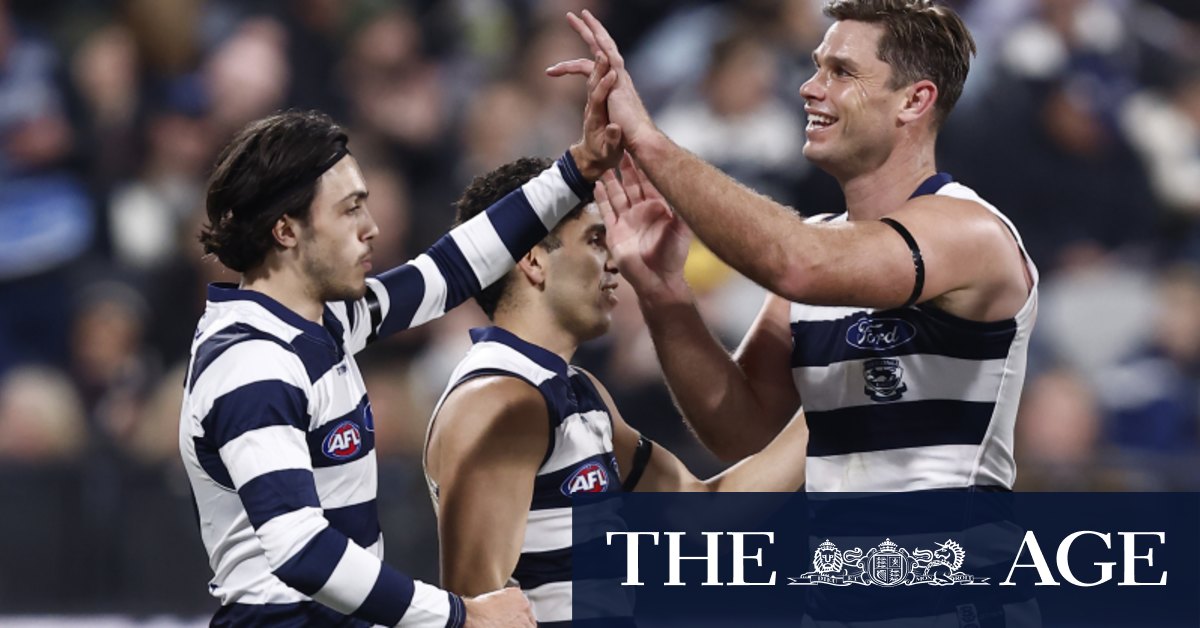
Jeremy Cameron kicked the next goal immediately after half-time and the Saints were never a chance from that point on as their hearts sank and their supporters checked how Richmond were going as they hoped to cling to the eighth rung on the ladder.
St Kilda’s Jack Steele tackles Mark O’Connor.Credit:Getty Images
Max Holmes was outstanding on the wing as Geelong rediscovered their ball movement, while their defense led by the precocious Sam De Koning – who defeated Max King – kept the Saints goalless for the third quarter. Jake Kolodjashnij was excellent in his 150th game, with Jack Henry playing forward while Rhys Stanley stamped himself as the No. 1 ruckman.
The run of eight unanswered goals ended when Higgins kicked a goal midway through the final quarter with the margin out to 58 points at that point. St Kilda’s disappointing performance was exacerbated by an ankle injury to veteran Dan Hannebery, who may have played the final game of his career.
The biggest headache for the Cats will be at selection with Dangerfield, Selwood, Gary Rohan and Mark Blicavs all on the sidelines, with Blicavs managed while Rohan was in the concussion protocols.
loading
Brandan Parfitt, in just his second game back from a hand injury, found form in the third quarter as the Cats look to get their best players playing at their best in September.
St Kilda are once again in a fight to finish in the finals, with Richmond taking their place in the top eight, the Saints battling Brisbane on Friday night while Richmond play Hawthorn.