Categories
Sports

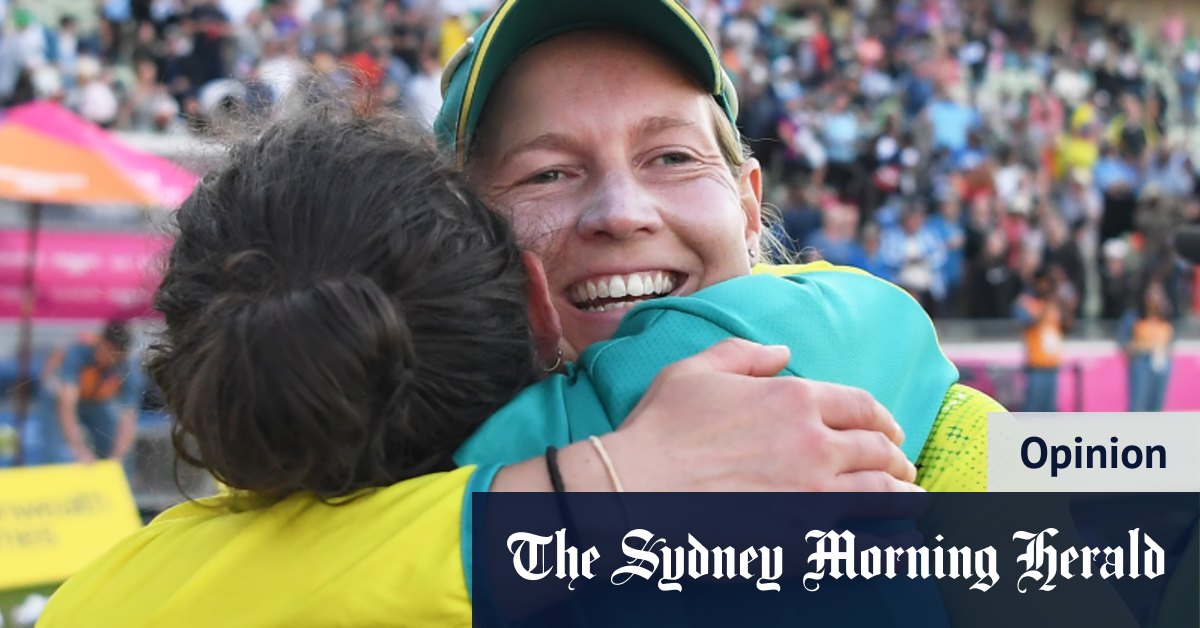
Michael Hooper and Meg Lanning entitled to whatever rest they need

See, I was contacted this week by a former bigwig of the NSW Government who gave me the drum, that the true figure will likely be at least double that if they go ahead with it. No need to go through it all again, but his broad point boiled down to this: “Parramatta Stadium (30,000 seats) opened in April 2019 at end cost of $360m = $12,000 per seat.

Allianz, which will open in two weeks, 42,000 seats at total end cost of $820m = $19,500 per seat. So Penrith at 25,000 seats on today’s construction cost of $19,500 per seat will be $500m if they start this year. Of course, they won’t.

So by the time they do tend (2023) the cost will have escalated another 7 per cent minimum = $535m to start if they are lucky. Este [stadium] will end up costing in excess of $600m given a three-year construction time frame.”

Again, the reaction was phenomenal: readers’ comments, tweets and emails were all in tune: outrage.

I say again, one more time for the road – if the premier cancels Penrith, he will be as roundly applauded as he was for canceling the other boutique stadiums. The money saved can be shared between hospitals, public schools and community sporting infrastructure.

England rugby coach Eddie Jones.

England rugby coach Eddie Jones.Credit:AP

Eddie speaks, RFU recants

Last weekend, England rugby coach, our own Eddie Jones was quoted on the subject of one thing ailing the English game.

“If you have only been in a system where you get to 15, you have a bit of rugby ability and then go to Harrow . . . Then for two years you do nothing but play rugby, everything’s done for you. That’s the reality. You have this closed life.

“When things go to crap on the field, who’s going to lead because these blokes have never had experience of it? I see that as a big thing.

“When we are on the front foot, we are the best in the world. When we are not on the front foot, our ability to find a way to win, our resolve, is not as it should be.”

In sum? It seemed to be: too many private school softies in my team. You can’t count on those marshmallows, when the chips are down!

For his trouble, Eddie was sent to the Headmaster’s office, rebuked, and a statement released: “The RFU is hugely appreciative and supportive of the role both the independent and state school sectors play in introducing boys and girls to our sport and in our player pathway.”

So, there!

Sad end to a great yarn

In all the years of doing this column, the following yarn from a decade or so ago remains one of my favorites. I’ll just replay it here, and give you the hook at the end. It goes like this…

Last Sunday in the under-10 finals, the Lindfield Tartans were due to play the Mosman Whales. Beforehand, the Tartans’ tighthead prop, Dan, came down with a bug, and his mum Donna sent out a group email asking the team for any quick-fix remedies they might have. Team manager Russell Adams was soon in with his reply:

“Donna, to start with, try him on the lemon juice, and make sure he has lots of sleep and rest and give him plenty of drugs. Then on Saturday night, show him the Souths v Manly grand final in 1970 (when Satts broke his jaw) … some tapes of Tommy Raudonikis … John Donnelly and Les Boyd … Steve Finnane whispering in Graham Price’s ear in the Test against Wales at the SCG in 1978 … and then bring out the DVD of the ’91 and the ’99 World Cups and stand in your living room and sing the national anthem.

“Then take him out the back and tell him to look up into the sky. Say to him, ‘Daniel, 50 years from now, when you look back on your life and regret all the things you could have done and all things you could have been, make sure one of them isn’t that you didn’t get a chance when you were 10 to stick it to those Mosman kids with their Wallaby dads… Don’t leave it on the table son; you might only get one shot at the title.’

“Then remind him that the reason God made him in the image of a bookend is because there can be no greater calling in life and no greater honor than to pack down in the engine room of the game they play in heaven and to lead those pigs forward into battle and into history. Apply a bit of Dencorub to his chest from him and send him to bed with plenty of encouragement and a hot water bottle. ”

Daniel played, and the Tartans won!

Sadly, Russell Adams passed away ten days ago, and his funeral was last Monday, with the Lindfield rugby mob in heavy attendance. Okay Russell. You captured the essence of the game beautifully and were yourself a great servant of the game.

What They Said

Ricky Stuart on Panthers half Jaeman Salmon: “I’ve had history with that kid, I know that kid very well. He was a weak-gutted dog as a kid, and he hasn’t changed now, he’s a weak-gutted dog person now.”

Ricky Stuart a day later: “I regret saying what I did on that platform after the game. I was speaking as a father and not as a football coach. My reaction was to a family situation that I thought I had dealt with. Clearly I haven’t. I allowed my emotions to get the better of me and for that I’m sorry.”

Australian squash player Donna Lobban after she beat Scottish Greg Lobban in the mixed doubles of the Commonwealth Games: “We’re not signing divorce papers after that – I think we’re still alright.”

Donna Loban: “I should have made the bet that if I win, I’d get to shave off his mullet and his mustache! I don’t know why I didn’t think of that… too late now.”

Australian Ollie Hoare who won the Commonwealth Games 1500m in blistering fashion: “I’ve never met Herb Elliott. Heard all about him. My Dad won’t shut up about him. You look up to them and you’d love to meet them. Steve Cram and Seb Coe you look around and they’re my heroes. They’re my Michael Jordan. Herb – I’d love to meet you for a beer if you’re around.”

Peter Bol after taking silver in the 800m at the Commonwealth Games: “It’s bittersweet. I wanted the win but starting with a medal that’s what we wanted. There was a lot of pressure, a lot of anticipation, I think we lived up to it and that’s the first medal down. . . if we had maybe another 20 meters I could have won, but we’re only running 800 meters, not 820.”

Peter Bol on his way to silver in Birmingham.

Peter Bol on his way to silver in Birmingham.Credit:Getty

Toby Rudolf, on the positive response to his interview with the Herald which revealed his same-sex sexual experiences, and view that “sexuality is fluid”: “I went out to Northies that night after the game, after we won that golden point game and everyone there was just being really nice as well, being really supportive, saying they loved what I said and yeah, overall was just overwhelmingly positive.”

Nick Kyrgios after winning the singles title at the Citi Open in Washington DC: “I feel like my motivation is a lot higher than it used to be… There is a small window, I should capitalize on it.”

Lewis Hamilton on driving as a civilian in Nice: “I just think that I find it stressful. I try not to do things that don’t add to my life. Look, we’re on these roads, anything can happen. This is now stressful for me. This road is crazy. So much going on here. I’m going to turn around in a second.”

Cameron Smith on reports he had signed with the Greg Norman-led, Saudi Arabian-backed rebel LIV golf tour: “I’m a man of my word and whenever you guys need to know anything it will be said by me.”

Cameron Smith and Greg Norman

Cameron Smith and Greg NormanCredit:john shakespeare

England all-rounder Moeen Ali on the fall and fall of 50 over cricket: “At the moment it’s not sustainable in my opinion. Something has to be done because I fear losing the 50-over format in a couple of years because it’s almost like the long, boring one, if that makes sense. It’s almost like you’ve got T20s, you’ve got the Test matches which are great and then the 50 overs is just in the middle – there’s no importance given to it at the moment.”

James Slipper on playing Argentina following the late withdrawal of Michael Hooper: “I just said to the boys before we ran out, I would like us to put in a performance where we make our fans proud, make our teammates proud and, most of all, to make Hoops proud. So I was just really ecstatic we got the result but mainly because of Hoops, and what he has done for this team and what he means to us as blokes.”

team of the week

Springboks. Inflicted their biggest defeat over New Zealand since 1928, 26-10 at Mbombela Stadium.

Wallabies. Had a great win against the Pumas and they play each other again on Sunday morning.

Sydney v Collingwood. The SCG will rock on Sunday as they play in one of the biggest home and away matches of the season.

Sydney AFLW. Meanwhile, good luck to the Sydney Swans’ AFLW team who plays Collingwood at the Blacktown International Sports Park in their first practice match two weeks ahead of their first actual match.

Nick Kyrgios. Just took out both the singles/doubles at the Citi Open in Washington.

Commonwealth Games. Only six of 38 countries that won medals have the Union Jack on the flag of which Australia is one. Discuss.

R.I.P. PaulGreen. The well-known rugby league coach, who guided the Cowboys to their stunning victory in 2015, tragically died this week. By all accounts a lovely bloke. Voucher. Lifeline 13 11 14.

Twitter: @Peter_Fitz

Sports news, results and expert commentary. Sign up for our Sport newsletter.

Categories
Australia

Judith Neilson Institute dismisses remaining members of advisory board after earlier director walkout | australia news

The Judith Neilson Institute for Journalism and Ideas (JNI) has dismissed the remaining members of its international advisory council ahead of a review of the not-for-profit which has now been stripped of its founding board, expert journalism panel and management.

The billionaire philanthropist funded the institute to the tune of $100m in 2018, but blindsided the organization earlier this year by announcing she wanted to take it in a different direction.

The chief executive officer of the Judith Neilson Foundation, Simon Freeman, said it made sense to dissolve the panel while an internal review of the JNI’s direction is undertaken.

“A number of the advisory council members have indicated they may be interested in continuing to work with us,” Freeman told Guardian Australia on Friday.

In June, Neilson took control after four independent directors – the former New South Wales chief justice James Spigelman, the Australian’s editor-at-large, Paul Kelly, the chief executive of Free TV, Bridget Fair, and Kate Torney, the former chief executive of the State Library – walked out en masse.

Staff and media beneficiaries remain perplexed about what the institute’s new mission to promote “social change journalism” means.

The executive director, Mark Ryan, formally exited the institute last week saying he was considering legal action.

“To date, no coherent rationale has been provided for what was a totally unnecessary disruption to the institute and its hard-working staff,” Ryan said in an email to council members.

“I remain unable to provide a full account of the behavior of the patron and have no intention of responding to the many media requests I’ve received to provide my version of events.

“I’m advised by Australia’s preeminent employment law firm Clayton Utz that I have strong grounds to pursue an adverse action claim and I’m reserving my rights in that regard.”

Sign up to receive the top stories from Guardian Australia every morning.

Neilson recently arrived back in the country after an extended overseas trip. Her daughter Ella Beau joined the JNI board, along with Neilson’s lawyer, Daniel Appleby, after the resignation of the independent directors.

Sources say Neilson wants to become more personally involved in the activities of the institute and for it to focus more on the consumers of journalism rather than the producers, including non-English speaking communities and those in regional areas.

Freeman told the advisory council members, who included Australians Tom Switzer, Catherine Liddle, Richard McGregor and Antoinette Lattouf, their services were no longer needed because JNI was taking a “different approach”.

In an email seen by Guardian Australia, Freeman added that Neilson “remains committed to the future of JNI.”

JNI once described the council, who include Kyle Pope, the editor-in-chief and publisher of the Columbia Journalism Review, as “a group of eminent figures in journalism from around the world” appointed to advise the “independent, non-partisan institution ”.

“As JNI embarks upon its new direction we would hope that you remain friends of the institute and remain open to the possibility of working together in the future,” Freeman said. “Judith and the board acknowledges and appreciates your contribution in establishing the Institute and bringing it to its present position.”

JNI has funded several projects for large and small media outlets, including Nine newspapers and Guardian Australia. It has also organized events and education.

Until mid-2021, the institute had distributed $2.5m in grants and had a total expenditure of $7.7m, according to the Australian Charities and Not-for-profits Commission.

Categories
Business

Lettuce prices to fall as production lifts in flood-hit growing regions

After months of paying $10 for lettuce, shoppers can expect some relief with Queensland growers getting back on track, three months after they were devastated by flooding.

Prices for the salad staple skyrocketed after flooding in May wiped out millions of dollars worth of vegetables in the Lockyer Valley, west of Brisbane.

Mulgowie Yowie Salads director Shannon Moss said he had only started full production about two weeks ago.

“We’ve had nice weather where a lot of growers have got stock coming on,” Mr Moss said.

“I was going through the photos [of the flooding] and I’m thinking how it’s hard to look at it, look at the devastation that was here.

“It is nice to see the paddocks recover and the farm get back into some sort of normality.”

Mr Moss said he was now producing about 30,000 cos lettuces a week for markets in Sydney, Melbourne and Brisbane.

Rows of lettuce wiped out from floods with the scenery of the lockyer valley in the background
Shannon Moss lost his entire lettuce crop in May when floods ripped through the Lockyer Valley. (Supplied: Shannon Moss)

He said prices had remained high for so long because the season had had to start from scratch.

“You have to remember a seedling in a nursery takes about four to six weeks to grow, then it’s another eight weeks in the ground to grow lettuce.

“So you’re looking at three to four months to grow any kind of lettuce.”

Man in fluro orange shirt stands in front of rows of lettuce.
After the trauma of floods, Mr Moss is happy to get back to normal production. (Rural ABC: Lucy Cooper)

Further price drop expected

Toowoomba-based greengrocer Bevan Betros said prices had halved in recent weeks.

“I think we can afford to eat iceberg lettuce again … they are a good size, they’ve got a bit of weight in them — they’re very good value again,” Mr Betros said.

He said prices would remain stable over the coming weeks.

“I don’t think they’ll get much cheaper just for the next week or two.

“There may be some gaps in the plantings due to the floods and what people were able to do when they could get on and off their property.”

Man stars at camera with shopping shelves behind him
Greengrocer Bevan Betros expects iceberg lettuce to drop to about $2 by September. (ABC News: David Chen)

Mr Betros said he expected prices would continue to fall heading into October.

“They’ll get back down as the warm weather comes on, as we get into spring.

“We should be getting down under $2 again, hopefully in September.”

Iceberg lettuce on shelf in supermarket with a price of $6.20
Iceberg lettuce has fluctuated from $1.50 a head to $12 and is now $6 a head. (ABC News: David Chen)

But don’t get used to it

Despite lettuce production returning to normal, shoppers are being warned not to get used to low prices.

Director of Coastal Hydroponics on the Gold Coast and Growcom chairwoman Belinda Frentz said a price reduction would likely be short term.

“We’ll start seeing the prices of most leafies coming back to what we would expect to be a normal sort of price,” Ms Frentz said.

Woman stands with arms crossed and lettuce growing behind her
Growcom chair Belinda Frentz says production is almost at full capacity. (ABC News: Steve Keen)

“Obviously we’ve got input cost pressures that are having a significant impact on businesses and recouping costs and seeing prices sort of not leveling out — there’s going to be some increases.”

Ms Frentz said farmers were still dealing with high labour, fuel and fertilizer costs.

“Growers are being hit in every pocket that they’ve got.”

Is there a right price?

While prices have dropped, growers want them to remain at levels where their businesses can survive.

“If we get down to $1.50 for retail lettuce that’s not going to be sustainable for too long,” Mr Moss said.

“You know, fuel levies are up 20 to 25 per cent, fertilizer prices are up another 25 to 30 per cent and diesel is up another 30 to 40 per cent, so our product needs to be up around 30 to 40 per cent,” he said.

Hand holds a plastic packaged cos lettuce
Lockyer Valley growers supply the key markets of Brisbane, Sydney and Melbourne.(Rural ABC: Lucy Cooper)

Ms Frentz hoped the severity of the losses endured by farmers during the floods would demonstrate to consumers how exposed the industry was.

.

Categories
Entertainment

From garage to charts: how Māori strum helped shape the sound of New Zealand | new zealand

Yon late 2021, a series of videos started circulating social media: a gifted singer belting out R&B and hip-hop tunes with a uniquely New Zealand take. The songs were stripped back to their bare guitar basics, peppered with Māori words and New Zealand in-jokes. Behind the renditions, there was something deeply, immediately recognizable: a guitar sound musicians call the “Māori strum”.

It is perhaps New Zealand’s most distinctive and enduring musical sound, strummed on guitars across the country and often nicknamed jing-a-jik or rakuraku, after the cadence it produces. It is a strum heard not only at marae (meeting houses), family gatherings and competitive kapa haka (action dance) performances, but in some of the country’s most beloved hits, including OMC’s How Bizarre and Crowded House’s Don’t Dream It’s Over.

Musician and actor Maaka Pohatu’s TikTok series, lengthily titled “00’s club bangas if they were Māori style garage party guitar jams (songs in the key of Māori)”, were an instant hit – racking up hundreds of thousands of views.

Allow TikTok content?

This article includes content provided by TikTok. We ask for your permission before anything is loaded, as they may be using cookies and other technologies. To view this content, click ‘Allow and continue’.

At is most basic, the Māori strum uses three to four chords and a light upward strum matched with a heavy downward strum on the second and fourth beat, to produce a rich combination of bass and treble, delivered with swinging percussion.

“It is a way of interpreting really technical songs… and breaking it down into its most basic components,” Pohatu says.

The beauty of the strum, which has been fine-tuned at garage parties across the nation, is its simplicity and familiarity.

“The garage party is all about the whole room singing along,” Pohatu says. “Even if you’re not a great singer it doesn’t matter, it’s about the inclusivity. We have a saying: if a song makes it to a Māori garage party, then it is an anthem.”

Pohatu first came across the idea for the Māori strum-R&B medleys while touring overseas in 2009. He joined a jam circle with award-winning pop musician Rob Ruha and Rawiri Waititi, now the co-leader of the Māori party.

“They were doing the Māori strum and put together a medley of love songs, including Low by T-Pain,” he says. As each verse came to an end, it was up to the next singer to keep the medley going, in friendly competition. Pohatu’s TikTok versions also became collaborative affairs – some artists added duets to his songs by him, others dance actions in the style of kapa haka.

The videos were made during New Zealand’s long Covid lockdowns. “In a way, TikTok was fulfilling [the garage party] – if I couldn’t go to a mate’s house, then I would try to bring the vibe to TikTok.”

Once you look for the strum, it shows up everywhere in New Zealand pop. Neil Finn credits it with forming the spine of a number of Crowded House songs.

“That influence has always been there,” Finn said in a 1995 Sunday Star-Times interview. “It’s deep as hell from childhood because that’s the way that we learned how to play guitar and heard people play guitars around us.”

“I don’t remember the first time I heard it, but I know I was very young,” says New Zealand singer-songwriter Marlon Williams, who recently joined Lorde on her European tour. The strum echoed through his early memories of Kohanga Reo – Māori preschool – and the sound of waiata (song).

Its distinctiveness is hard to pinpoint, but Williams believes it is recognizable through its “use of muting and its feathery, dull percussion.”

A few years ago, Williams started playing his “own little variations on the strum, just from sitting around and jamming.”

Allow TikTok content?

This article includes content provided by TikTok. We ask for your permission before anything is loaded, as they may be using cookies and other technologies. To view this content, click ‘Allow and continue’.

My Boy, a single from his new record, was one of the fruits of that time: the song blends that full-hearted, rhythmic strum with a disco-pop hook. “I do think of it as a Māori strum,” he says of the song. “It uses the mute, it’s played without a pick, but mostly it’s in the way the vocal phrasing skates over the guitar.”

But for a musical tradition with such a strong imprint on the country’s culture, little is known of its exact origins. Recordings of it appear around the time of the second world war, when touring Māori soldiers had their performances committed to tape. It later proliferated throughout the 60s alongside the rise of pop music.

Dr Michael Brown, the music curator at the Alexander Turnbull Library, captured some of its history in his doctoral thesis.

“I encountered many versions of the Māori strum style; every player seemed to have their own slightly different, vernacular approach,” Brown writes. “The strum’s full chords and percussive accents operate as a versatile accompaniment that can be adapted to suit almost any song.”

As New Zealanders increasingly embrace the Māori language, Williams says, its musicality also starts to feed into pop, and the musical sound.

“The musicality of waiata Māori is implicit in the sound, grammar and cadence of the reo. As more and more of the country start experiencing it as a living language, we won’t be able to help but let whakaaro Māori (Māori ideas) penetrate the flavor of our music.”

Pohatu points to musicians like Williams and Rob Ruha as the torchbearers for an ever-evolving, and distinctive, style of Māori music.

“They really are incorporating the entire history of Māori music, kapa haka, Māori show bands with all of today’s fancy bells and whistles and super crisp production … It’s quite a beautiful thing.”

Categories
Sports

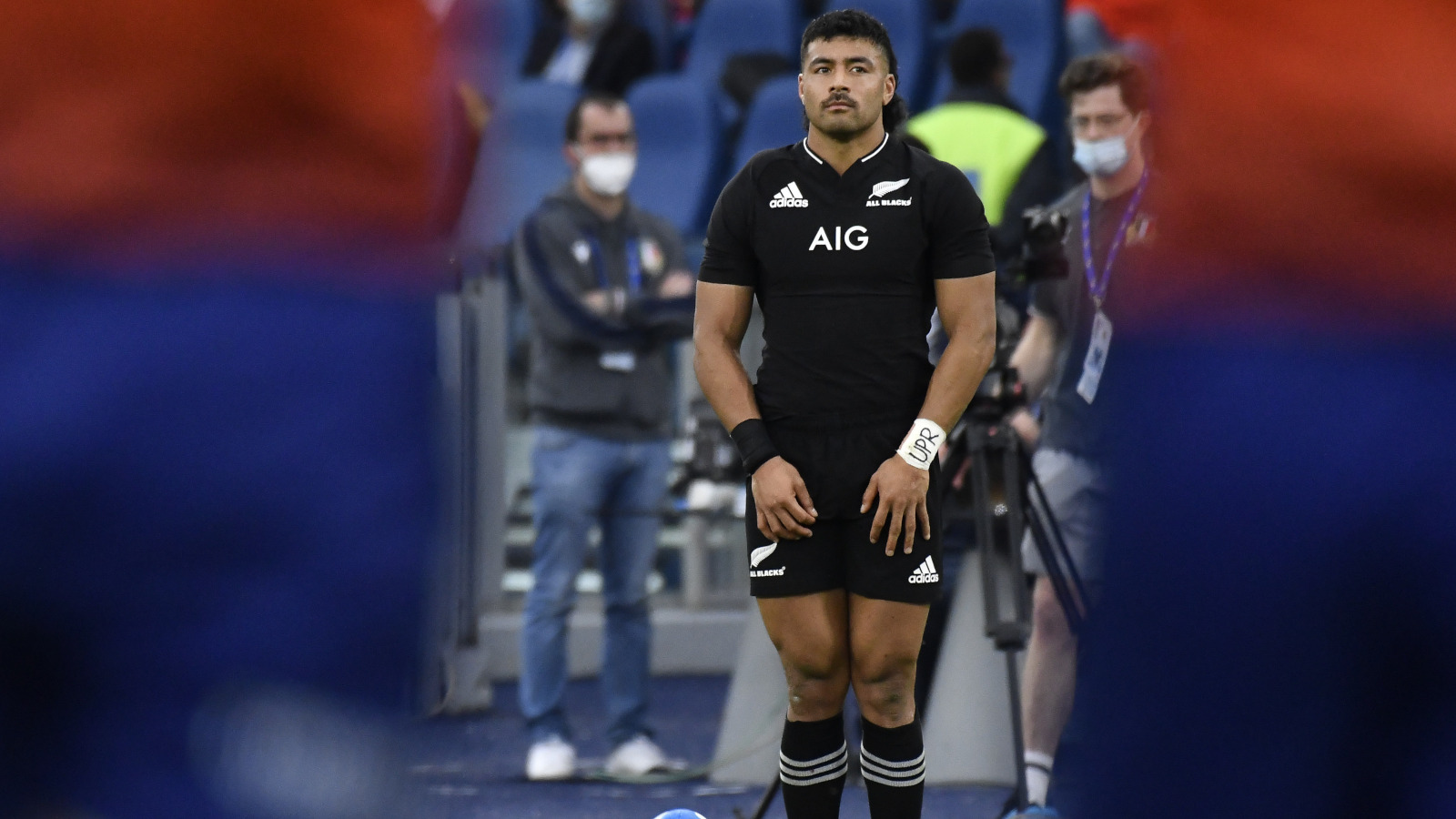
Richie Mo’unga starts ahead of Beauden Barrett

Richie Mo’unga will start at fly-half for the All Blacks as they face South Africa in the Rugby Championship at Ellis Park on Saturday.

He replaces Barrett in the primary playmaking position in one of four changes for New Zealand as they attempt to gain revenge for their 26-10 defeat last weekend.

The two-time World Rugby Player of the Year took a nasty-looking knock in the opening encounter of the tournament when he landed awkwardly following a poor aerial challenge by Kurt-Lee Arendse, but he is fit enough to take his place on the bench .

Boost in the backline

Elsewhere along the backline, both Jordie Barrett and Will Jordan have recovered from their minor ailments to be named in the XV.

Up front, there are three alterations with Tyrel Lomax, Shannon Frizell and Ethan de Groot replacing Angus Ta’avao, Akira Ioane and George Bower respectively – the latter two dropping to the bench.

Among the replacements, Codie Taylor comes in for Dane Coles and Fletcher Newell takes the place of Ta’avao in the 23, but that is the only other alteration to the squad, with Tupou Vaa’i, Finlay Christie and Quinn Tupaea all remaining.

It is a huge game for the All Blacks with another defeat almost certainly signaling the end of Ian Foster’s tenure as head coach.

“Belief and confidence remain high in our group, which is working incredibly hard this week,” Foster said ahead of their Rugby Championship encounter against South Africa.

“Playing at Ellis Park is always a special occasion for any All Black team, and this weekend will be no different.

“Adding to that, the Freedom Cup is on the line which makes this a challenge that everyone is looking forward to.”

The team

New Zealand: 15 Jordie Barrett, 14 Will Jordan, 13 Rieko Ioane, 12 David Havili, 11 Caleb Clarke, 10 Richie Mo’unga, 9 Aaron Smith, 8 Ardie Savea, 7 Sam Cane (c), 6 Shannon Frizell, 5 Scott Barrett, 4 Sam Whitelock, 3 Tyrel Lomax, 2 Samisoni Taukei’aho, 1 Ethan de Groot
Replacements: 16 Codie Taylor, 17 George Bower, 18 Fletcher Newell, 19 Tupou Vaa’i, 20 Akira Ioane, 21 Finlay Christie, 22 Beauden Barrett, 23 Quinn Tupaea

Date: Saturday, August 13
Venue: Ellis Park, Johannesburg
Kick-off: 17:05 local (16:05 BST, 15:05 GMT)
Referee: Luke Pearce (England)
Assistant Referees: Angus Gardner (Australia), Christophe Ridley (England)
OMT: Brett Cronan (Australia)

READMORE: All Blacks ‘won’t disappoint’ in Johannesburg says Springbok center Damian de Allende

.

Categories
Australia

Raw milk cheese deal with UK set to please foodies, but not all local producers

A dozen raw milk cheeses from the United Kingdom have been approved for export to Australia in a deal likely to please cheese lovers, but not necessarily local cheesemakers.

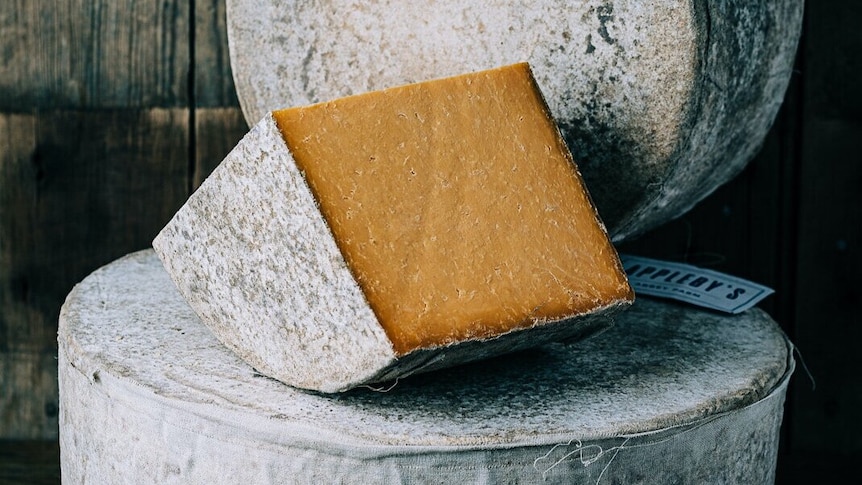
Paul Appleby from the West Midlands region of England said the “exciting” deal was a win for English cheesemakers, who make the semi-hard cheeses on-farm from fresh cow’s milk.

He makes two cheeses on the list: Appleby’s Cheshire and Double Gloucester.

“We’ve been selling out to America for quite a while but Australia is certainly a market we’d love to be in,” he said.

“I think we probably pasteurized our cheese about three times about 15 or 20 years ago, and never really had a lot of success with it.

A thick wedge of semi-hard cheese sits on a large wheel of cheese.
Appleby’s Double Gloucester cheese is one of 12 raw milk cheeses approved for importation into Australia from the UK. (Supplied: Appleby’s Dairy )

“But it is a constant source of worry. Obviously TB’s [Tuberculosis] an issue still in this country, so we still have to be very wary of that.

“Pasteurizing may be something we may have to do at some point, but we certainly wouldn’t want to.”

‘Fantastic for consumers, raw deal for farmers’

For international cheese specialist Will Studd, who first applied to import English raw milk cheeses 18 years ago, the decision is a dream come true.

“These cheeses used to be imported to Australia 40 years ago,” Mr Studd said.

“When I first started in the cheese industry we used to import and sell these cheeses, no problem.

“The idea that they were banned for the last 20 years on some sort of health grounds is absolute nonsense — it’s a story peddled by Food Standards Australia for no good reason, it’s all linked up to this great free trade agreement.”

Food Standards Australia New Zealand (FSANZ) did not respond to Will Studd’s “health ban” claims when contacted by the ABC.

A man in a peak cap sitting on hay bale in the green Tasmanian countryside.
Will Studd, who lives near Byron Bay, wants a fair go for Australian cheesemakers.(Landline: Fiona Breen)

While Mr Studd has welcomed the deal, he says it is not fair to local cheesemakers.

“It’s fantastic for cheese choice, for consumers and lovers of great cheese, but … it doesn’t allow Australian cheesemakers to be able to make the same cheeses, and that is just wrong,” he said.

Mr Studd said the whole purpose of his application in 2004 to import raw milk cheese varieties “was to allow consumers a greater choice not just of imported cheese but of local cheese”.

However, he said, since that time “almost 70 per cent of our small farmhouse producers have disappeared.”

“Milk is cheaper than water in Australia.

“Do we want to have small family farms anymore? They’re not allowed to produce cheese with an authentic taste to place, something that tastes different, something that … genuinely reflects the landscape like the great benchmark cheeses of Europe.”

A woman and a man reach from opposites of a table to hold an official document, two other women sit on the wooden table behind.
Natalie Browning, first secretary (Agriculture) at Australian High Commission London and Dr Robert Irvine, deputy chief veterinary officer, UK’s Department for Food, Environment and Rural Affair (DFER) joined by Department of Foreign Affairs and Trade counselor (Economic) Carly Stevens ( back left) and DFER policy advisor Nelly Brewer (back right).(Supplied: Australian High Commission London)

Bilateral trade to ‘level playing field’

However, the Department of Agriculture, Fisheries and Forestry (DAFF) said the UK cheese deal was separate to the free trade agreement between the two countries.

DAFF’s director of imported food Tania Martin said there was a “level playing field” as Australian cheesemakers could make the same cheeses locally.

“The requirements are exactly the same whether they’re being produced domestically, or whether they’re being imported, we’re assessing the cheeses to exactly the same requirements,” she said.

She said Australian raw milk cheesemakers must meet the requirements in the Food Standards Code, Standard 4.2.4 – Primary Production and Processing Standard for Dairy Products.

A man in a white jacket with a white hat and a man wearing a green jacket laugh together in a room filled with cheese wheels.
English cheesemaker Jamie Montgomery, with Will Studd, says it’s brilliant news his cheddar has been approved for export to Australia.(Supplied: Will Studd)

Since DAFF started accepting applications in 2016 from eligible countries, those free of foot and mouth disease, it has received this one from the UK and one from France.

“So with France they had previous permission to export Roquefort to Australia, so Roquefort cheese has been coming in since 2005, and then France also applied for an additional cheese which is Ossau Iraty and that was finalized last year,” she said.

Tough regulatory regime ‘too difficult’ for NSW cheesemakers

In Australia, local production is regulated by state-based food authorities.

Burringbar cheesemaker Debra Allard said the regulatory process to make raw milk cheese was too difficult and not worth it.

A middle-aged man and woman, smiling, and standing in a dairy shed.
Jersey cows ready for milking in Debra and Jim Allard’s dairy at Burringbar.(Rural ABC: Kim Honan)

“I only pasteurise at 65 degrees and that’s still within the legal parameter, commercially it’s 72 degrees, so my cheese is fine,” she said.

“I’d rather not have to bow and scrape to the NSW Food Authority.

“You do a lot of extra testing for raw milk cheese, and that’s an extra cost that you tend to wear.

“People don’t want to pay for an expensive cheese and they don’t want it to go off quickly either.

“My cheese is awesome, it tastes like a French-made cheese because of the way I make it and the fact that we’ve got Jersey milk is an awesome product.”

A box of artisan cheeses.
Debra Allard produces a range of artisan cheeses on her farm at Burringbar.(Supplied: Debra Allard)

The NSW Department of Primary Industries said raw milk cheesemakers must complete a form describing the steps used to make it.

“The pro forma can demonstrate to the Food Authority that the production process used is effective in reducing the numbers of L.monocytogenes to a safe level,” a spokesperson said.

“There are several steps and scientific trials that cheesemakers wishing to manufacture raw milk cheese must go through in order to demonstrate compliance with food safety standards.

“The maturation of the cheese must meet certain time, temperature and water content requirements, a process which has a similar effect to pasteurization in reducing pathogens.”

High entry barrier for Aussies

That process took Pecora Dairy at Robertson, in the Southern Highlands, two years.

Pecora Dairy was the country’s first raw milk cheesemaker and remains one of just two dairies making the product, according to owner Cressida Cains.

She said the milk from Pecora’s East Friesian ewes was taken straight into the vat to make cheese.

“What we’re doing, which has got no heat treatment at all, really allows a complete expression of the indigenous microbes that are in the milk when the animals have been milked to be expressed through the cheese,” she said.

A woman with short brown hair smiles while sitting on a log.
Artisan sheep cheese producer Cressida Cains from Robertson.(Supplied: AgriFutures)

Ms Cains said there was quite a high barrier for Australian cheesemakers to be able to make raw milk cheese.

“In many ways that’s fair and right for Australia because we need to make sure that our cheesemakers really fully understand the process,” she said.

“It’s a science — raw milk cheesemaking isn’t sort of a hit-and-miss and let’s-see-how-we’ll-go [process].

“We still need to test every batch of raw milk cheese, which does make it a very expensive process in Australia.

“So the information, as I understand it, is that we are on a level playing field with these cheeses that are coming into the country but I genuinely do hope that that’s the case.”

[Landline raw milk cheese]

.

Categories
Business

McDonald’s to reopen some restaurants in Ukraine for the first time since war began | Ukraine

McDonald’s will start reopening some of its restaurants in Ukraine in the coming months, in a show of support after the American fast-food chain pulled out of Russia.

The burger giant closed its Ukrainian restaurants after Russia’s invasion nearly six months ago but has continued to pay more than 10,000 McDonald’s employees in the country.

McDonald’s said on Thursday that it would begin gradually reopening some restaurants in western Ukraine and the capital, Kyiv, where other American businesses including Nike and KFC, and Spanish clothing retailer Mango are open.

“We’ve spoken extensively to our employees who have expressed a strong desire to return to work and see our restaurants in Ukraine reopen,” Paul Pomroy, corporate senior vice-president of international markets, said in a message to staff. “In recent months, the belief that this would support a small but important sense of normalcy has grown stronger.”

The Ukrainian economy has been severely damaged by the war, with the International Monetary Fund expecting the economy to shrink by 35% this year.

McDonald’s has 109 restaurants in Ukraine, but didn’t say how many would reopen, when that would happen or which locations would be the first to welcome back customers. Over the next few months, the company said it would start working with vendors to get supplies into restaurants, prepare stores, bring back employees and launch safety procedures, with the war still raging to the east.

While it will start to reopen in Ukraine, McDonald’s has sold its 850 restaurants in Russia to a franchise owner, three decades after the company opened its first location in Moscow in a powerful symbol of easing cold war tensions.

McDonald’s shuttered hundreds of Russian locations in March, costing the company about $55m (£45m) each month. Selling its Russian restaurants was the first time the company had exited a large market.

Alexander Govor, who held a license for 25 McDonald’s outposts in Siberia, has begun reopening former McDonald’s locations under the name Vkusno-i Tochka, or Tasty and that’s it.

Categories
Entertainment

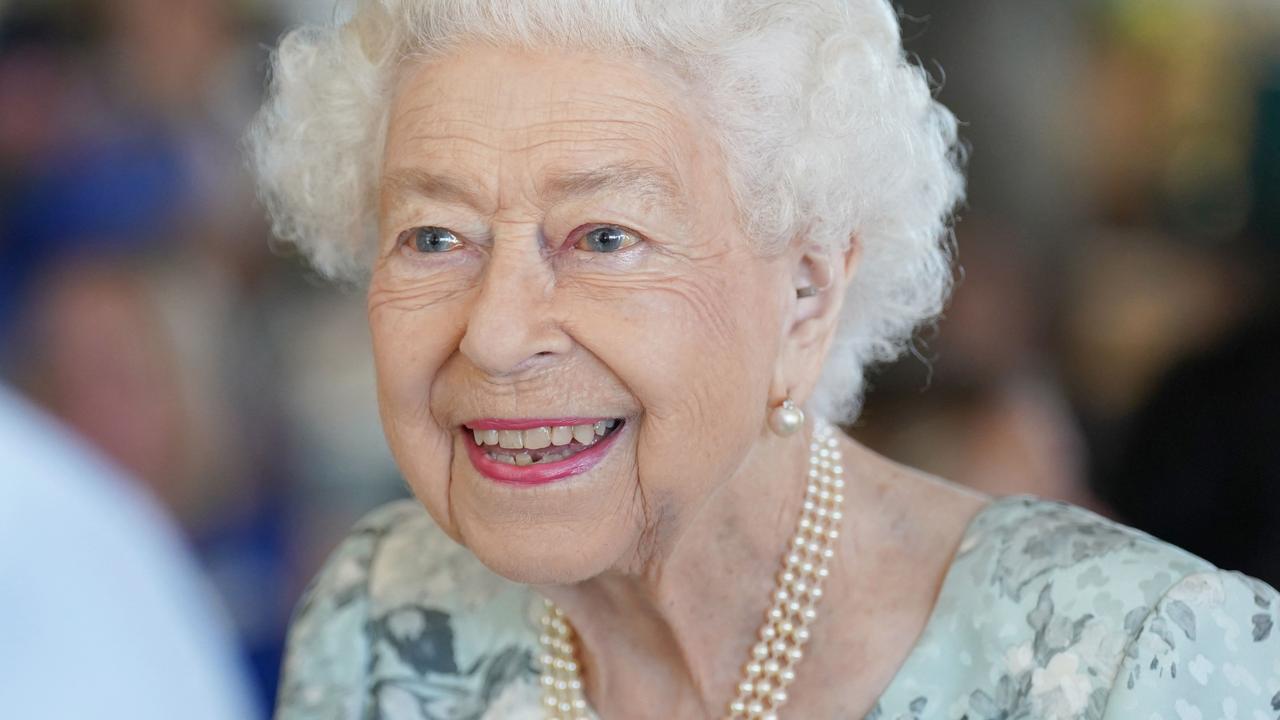
The Queen: Summer Balmoral trip cut short, sparking fresh concern for the monarch’s health

Somewhere in Aberdeenshire there is a sad Shetland pony. Named Lance Corporal Cruachan IV, the diminutive equine usually gets one moment in the spotlight a year, an all-too-brief chance to bask in the glow of global media interest during which he occasionally tries to nip the Queen or eat her bouquet.

As the mascot of the Royal Regiment of Scotland, Cruachan IV usually, at this time of year, enjoys his starring role in the Regiment’s ceremonial welcome of Her Majesty to her Balmoral estate, a traditional outing involving bagpipes and lots of big smiles and which marks the official start of the sovereign’s summer holiday.

But this year both Cruachan IV and the Queen have been kept confined to barracks, so to speak.

This week it was reported that for “reasons of comfort” the ceremonial welcome happened in private but this is just the latest sign that the sovereign’s advancing years and ongoing health woes are posing an increasingly blatant impediment on usual schedule.

News that Her Majesty would not be enjoying her yearly face-to-face with Cruachan IV just tops off what has been a bit of a rotten start to her holiday; a holiday that is already shaping up to be something of a dud thanks to the machinations of Downing Street and her wayward family.

It was only at the tail end of the Queen’s summer holidays last year, a scant 12 months ago or thereabouts, that Buckingham Palace was busy touting what a packed autumn schedule of dozens and dozens of events were planned. The message was clear: The Queen is fighting fit and ready to Queen with some seriously impressive vigor and vim! Trips to Northern Ireland, Wales and Scotland were planned as things geared up towards her big Jubilee year from her!

That ambitious plan then collided with the reality of a woman fast approaching her centenary and since October 2021 we have had one cancellation after another with the diminutive monarchy increasingly retreating from public view.

We did not see her in Scotland for Cop26, at the Cenotaph on Remembrance Day, on Commonwealth Day, Easter, at the State Opening of parliament or at the service of thanksgiving for her reign during her own Platinum Jubilee.

News that Her Majesty would not be facing down the bouquet-chomping Cruachan IV has only confirmed that things are changing, and fast, for the eleven irrepressible monarch.

However, this is the Queen we are talking about, a woman whose family has, in only the last few years, faced accusations of sexual abuse, racism, accepting millions of dollars from a controversial Middle Eastern politician and the brothers of Osama bin Laden and of “total neglect”.

The dark cloud over her vacation is that, in the months to come, Buckingham Palace faces all of these particular fires roaring back to full on blaze status.

It’s hard to think of a worse headline for any brand or business than one that ties them to the family of Bin Laden, but here we are thanks to Prince Charles and his seeming willingness to accept vast amounts of money for his Prince’s Trust charity from any stray billionaire.

In July it was reported that the Prince had accepted $1.7 million from the two of Bin Laden’s siblings, a shocking revelation that came only weeks after it was also reported by the Times he had accepted $1.7 million in cash stuffed in plastic shopping bags from a controversial Qatari politician.

Meanwhile, his former valet turned charity chief Michael Fawcett is still waiting to be questioned by Scotland Yard’s Special Inquiry Team after allegations of a cash-for-honours scheme embroiled Charles’ Clarence House last year.

Interestingly, the Prince of Wales has largely weathered these damaging reports and come out only slightly reputationally dinged, with the shocking claims have not really sparked any sort of public outcry.

The same likely won’t be able to be said when Prince Harry, the neophyte TV and podcast creator who is yet to actually, err, create anything, releases his memoir later this year.

If even a small percentage of the speculation about what he might reveal and what dirt he might dish is correct, this book is shaping up to be the most devastating royal release in 30 years and since Diana, Princess of Wales started whispering in the ear of Andrew Morton.

Given we are talking about Harry – a man who went on global TV screens alongside his wife Meghan, Duchess of Sussex to accuse The Firm of racism and neglectful treatment at a time when thousands were dying-a-day of Covid and while his 99- year-old grandfather was in hospital – does anyone really think all we are going to get is a feel-good read? Several hundred pages of self-important bleating and the occasional smoothie recipe thrown in?

In Tom Bower’s recently released Revenge: Meghan, Harry and the War Between the Windsors he casts a particularly grim view.

He writes: “Most Britons could not understand Harry’s hostility towards his country and family. His disloyalty from him to his grandmother was particularly mystifying.

“No one realized how his hostility had grown during his conversations with John Moehringer, the ghostwriter of his memoirs. To secure vast sales and recoup the huge advance, the publishers had encouraged Harry to criticize his family of him in the most extreme terms possible. Easily persuaded, Harry edged towards betraying his father to him, Camilla, the Cambridges and even the Queen. And then, the deed was done. To earn out the publisher’s advance, nothing and no one had been sacrosanct.”

Or to paraphrase Macbeth, another disgruntled figure from royal circles, something very dangerous this way comes…

At this stage, all indications would point to Harry’s book potentially being the most painful chapter yet in the long and sorry tale of Megxit.

Then, there is another book, or at least the possibility of a book, that should be a very serious cause for concern for Her Majesty. Six months ago her son de ella Prince Andrew settled the civil sex abuse case brought against him by Virginia Giuffre with a payment that at the time was reported to be around $21 million. (The royal has always vehemently denied Ms Giuffre’s claims that he sexually assaulted her on three occasions when she was a teenager.)

this week The Sun reported that figure was allegedly much lower – somewhere between $5.1 and $8.6 million – and that “that was as much money the disgraced Duke could scrape together quickly to halt her civil lawsuit”.

The “cut-price deal”, according to the report, might explain why the mother-of-three Giuffre did not sign a nondisclosure agreement, meaning she is free to write a tell-all of her very own, any time she wants.

That there is even a skerrick of chance that this chapter, the most sordid and horrifying in modern royal history by far, could at any moment explode back into the headlines must be a cause for very serious concern.

All Andrew has ever done to try and manage this situation is given an appalling TV interview, showing an appealing deficiency of compassion or empathy for anyone but himself, put out a couple of statements and write a seven-figure check. If anyone thinks that this is in any case an adequate response and has drawn a definitive line under his friendship with Jeffrey Epstein, a convicted sex offender, or that the public is ready to move on then they are deluding themselves.

The 62-year-old is still, and will likely always be, despised by much of the world and the appetite for seeing him embarrassed or raked over the coals is unlikely to diminish anytime soon. Cue 101 book publishers with dollar-signs in their eyes.

So too has Ms Giuffre shown a steely backbone and unwavering commitment to speaking about the horrors she experienced during her time with Epstein. There is no reason to believe that she will suddenly back down or go quiet now which leaves us with the very real possibility that she might release a book of her own from her at some point.

Even if all of these swirling worries weren’t enough to blight the Queen’s holiday, then there is the fact that she will have to cut her break short thanks to the fact that the UK will get a new Prime Minister next month. On September 6, Boris Johnson will formally resign and the Daily Mail has revealed that Her Majesty will “interrupt” her holiday to pop back to London where she will “invite”, in the quaint nomenclature of royalty, the winner of the Conservative party vote to form a government.

A source told the Email: “Her Majesty does not expect the new prime minister to travel to Scotland, so the plan is that the Queen will travel down to see them.”

So much for a regal break huh?

Balmoral is agreed to be Her Majesty’s favorite home where she used to enjoy long walks and getting out into nature but in recent years her time there has been blighted by a rolling series of crises. In 2019, August saw Harry and Meghan skip the family getaway to flit about Europe in private jets and then the suicide of Epstein. Come 2020, the pandemic was in full swing and she and Philip were cosseted inside HMS Bubble and last year the monarch faced her first summer de ella without her husband of 73-years.

The poor woman must be so tired. Not only is she still working, more than three decades after most people retire, but her family de ella is a source of never ending scandal and strain with things only looking like they are going to ramp up more.

If you ask me, and no one is, what Her Majesty needs right now is not another wet week wobbling over the moors and ruminating on how it all went wrong but needs to rally her lady-in-waiting of more than 60 years Lady Susan Hussey and abscond for a 72-hour all-inclusive gals weekend to Malaga.

Sun, sand, sangria and not having to think about all the brewing Windsor scandals? Now that’s a real holiday.

Daniela Elser is a royal expert and a writer with more than 15 years’ experience working with a number of Australia’s leading media titles.

.

Categories
Sports

Aston Villa legend warns Gerrard fans ‘ready to turn’ as Premier League target set

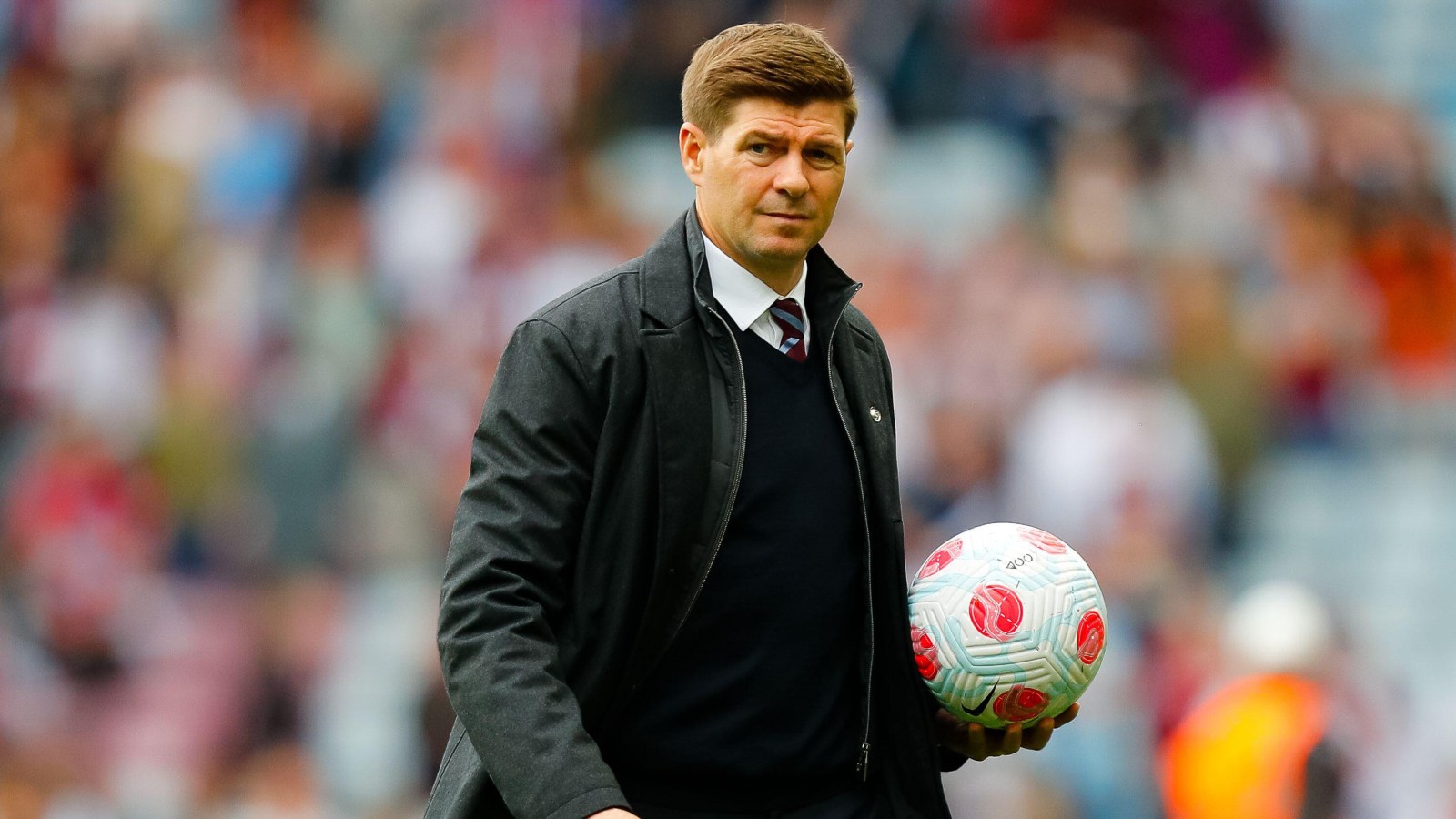
Aston Villa fans could turn on manager Steven Gerrard if he fails to lead them to a positive result against Everton on Saturday, according to Gabriel Agbonlahor.

Villa fell to a disappointing opening day defeat, conceding two goals against newly-promoted Bournemouth at the Vitality stadium without reply.


READ MORE: Villa cracks are starting to show and that’s bad news for Steven Gerrard


The result means Villa won just two of their last 12 Premier League games, with seven defeats in that time, as pressure continues to grow on Gerrard, who joined the club in November last year.

Villa have spent close to £80m under Gerrard’s watch, with Lucas Digne arriving from Everton in January along with Philippe Coutinho, who’s now signed permanently, joined by Diego Carlos, Boubacar Kamara and Robin Olsen this summer.

Because of that significant investment and the options he has available, Agbonlahor believes a top ten finish is the minimum requirement for Gerrard, who needs a result against the Toffees, who also lost on the opening day to Chelsea, to keep the fans off his back .

“He’s got a squad of players where he’s got a bit of a headache,” Agbonlahor told talkSPORT.

“You know when you’ve got options as a manager, he could play Emi Buendia or Philippe Coutinho, Ollie Watkins or Danny Ings and Leon Bailey’s been in good form in pre-season.

“He’ll know that Aston Villa need to be finishing in the top 10 this season. It’ll be a great game on Saturday against Everton at home to get a result, but that Villa crowd, if we go 1-0 down they’ll be ready to turn after the Bournemouth game.

“Aston Villa should be finishing in the top 10 with that squad of players. He’s been given the money. He’s got [Philippe] Coutinho, another centre-half and another centre-midfielder in [Boubacar] Kamara.

“He’s been given money to spend and that squad of players should be competing and finishing in the top 10. He’ll know that he’ll be under pressure if he doesn’t deliver that.

“The board have pumped a lot of money into Aston Villa Football Club, they’re bettering the stadium and the academy has had money pumped into it, so Steven Gerrard knows that Aston Villa need to finish in the top 10 and, in two seasons , to be looking at getting into those European places.”

.

Categories
Australia

Better bones, stronger muscles and a happier heart — the benefits of exercising into old age are big

Aging. It’s something many Australians dread.

Things that used to be easy may not be anymore, appearances change and the body functions differently – but it’s not all bad.

The aging process can’t be stopped, but physical activity can bring a host of benefits as people get older.

According to Pazit Levinger, principal researcher at the National Aging Research Institute, overall wellbeing and health are better for those who exercise into old age.

“Physical activity is one way you can preserve efficient systems in the body that help you overcome diseases, function better and live a good quality of life,” she said.

‘Running has kept me healthy’

While not all older Australians can expect instant health improvements from exercise, 84-year-old Abdon Ulloa swears by his regular running routine.

Abdon Ulloa gives two thumbs up while at parkrun.
Abdon Ulloa has been running for the last 40 years.(Supplied: Abdon Ulloa)

Abdon took up the hobby in his mid-40s. He’s now done 75 marathons (his last one of him was at 77 years old) and he estimates his half-marathons of him are now into the thousands.

He goes to park run weekly. He’s been turning up on Saturday mornings for the last three years and has clocked up 184 runs.

All that exercise, he believes, has paid off.

“To keep running, to keep moving, you have very much kept me healthy,” he said.

Abdon Ulloa runs along the water at Port Macquarie parkrun.
Abdon believes the exercise he’s done, and is doing, is keeping him healthy.(Supplied: Abdon Ulloa)

“I don’t take any medicines and I visit the doctor once a year. I have no problems at all.”

Abdon is in a league of his own at his local parkrun in Menai in Sydney, where he’s the only runner over 80.

About an hour south, 82-year-old Ron Perry can be found making his way around the North Wollongong track.

“A lot of us still shuffle along up the back of the field,” he said.

Like Abdon, Ron took up running in his 40s and believes it’s kept him in good health.

Ronald Perry walks on red dirt in Broken Hill as part of parkrun.
Ron Perry was at North Wollongong’s first ever parkrun and has been there most Saturdays since.(Supplied: Ronald Perry)

“I started running around the block and then along the beach and just took it on from there,” he said.

In the nine years since starting parkrun, he’s done 215 runs.

‘Use it or lose it’

The World Health Organization (WHO) and Australian Department of Health and Aged Care recommend people aged 65 and older do about 30 minutes of exercise most days of the week. But data from the Australian Bureau of Statistics (ABS) shows half of this cohort isn’t that active.

“It’s one of those things, we know it’s working [exercise]we just need to encourage people to do it more,” Professor Levinger said.

A portrait of Professor Pazit Levinger
Professor Levinger says overall health and wellbeing is better for those who exercise into old age.(Supplied: Pazit Levinger)

She also explained that ideally, exercise in older age should target the heart and lungs, with a bit of strength and resistance training too.

There should also be a focus on balance exercises.

“The heart has less capacity to function efficiently like it used to when we were younger,” Professor Levinger said.

“And the same with the respiratory system. We often might feel a bit breathless when we get older.”

Then there’s the issue of muscles getting weaker.

“If we don’t use them and preserve the strength we have, we lose muscle mass and strength and that will have a direct impact on how we function,” Professor Levinger said.

“When you exercise, you can improve how those systems function.”

When it comes to running in particular, Professor Levinger said the benefits were large, particularly for the cardiorespiratory system and bones.

A shot of an older woman running from behind.
Running into older age brings about benefits for the heart, lungs and bones.(Supplied: park run)

“Your blood pressure is in the healthy/normal range, your resting heart rate is reduced and pretty much your heart works more efficiently,” Professor Levinger said.

“Those who, for example, have run for a long time, and they keep running, it’s great for the bones, great for the muscles.

“We often use the phrase ‘use it or lose it’, which is actually correct.”

Someone using it is 98-year-old Colin Thorne, who in New Zealand has become the oldest person to join the 100-club at parkrun.

loading

“I’m not going to give up until I have to,” he said.

It’s never too late

Bill Lamont is Australia’s oldest active parkrunner. He signed up a couple of months ago and broke the record for his age group at Jells parkrun, on his first walk around the track.

“In June, on my 93rd birthday, I decided to give it a try and I’m very pleased that I did so, I’m thoroughly enjoying it,” Bill said.

93-year-old Bill Lamont holds a parkrun cut-out frame and smiles.
Australia’s oldest active parkrunner, 93-year-old Bill Lamont, has done nine parkruns so far.(Supplied: Bill Lamont)

Bill has always been active, and even now he does exercise classes, orienteering walks and plays table tennis.

“All those activities, I’m quite sure, are what is keeping me as healthy as I am. I don’t have any medical problems at this age,” Bill said.

Professor Levinger says the bottom line is, do what you can manage, and do what you enjoy.

“Do whatever you can and build up. You don’t have to be fit, you can exercise and start at any age.”

Lenore Rutley with 80th-birthday balloons.
Lenore Rutley took up running at 72.(Supplied: Lenore Rutley)

Just like Lenore Rutley, who’s always done her morning walk, but took up running at 72.

“I wanted to do something a little different,” she said.

Since that decision was made, Lenore has amassed 332 parkruns.

“I just run down hills now. Every so often I’ll get a spurt up and do a little bit of a run and then I’ll do a little bit of walking,” she said.

Professor Levinger said the key thing was that people aim to do something they enjoy.

“You want to do things that you feel comfortable with and find fun, because then you are likely to stick with it,” she said.

And as Lenore puts it – “what else would you do on a Saturday morning?”

ABC Sport is partnering with park run to promote the benefits of physical activity and community participation.

.