Categories
US

Democratic ads boosted extremists in Republican primaries. Was that wise? | US midterm elections 2022

When Peter Meijer voted to impeach Donald Trump, breaking with nearly all of his Republican colleagues in one of his first acts as a newly elected member of Congress, Democrats praised him as the kind of principled conservative his party – and the nation – desperately needed.

But this election season, as Meijer fought for his political survival against a Trump-endorsed election denier in a primary contest for a Michigan House seat, Democrats twisted the knife and helped his extremist opponent win.

It is part of a risky, and some say downright dangerous, strategy Democrats are using in races for House, Senate and governor: spending money in Republican primaries to elevate far-right candidates over more mainstream conservatives in the hope that voters will recoil from the election-denying radicals in November.

In Michigan, the gamble paid off – for now. Meijer lost after the House Democrats’ official campaign arm spent $425,000 to elevate Meijer’s opponent, John Gibbs, a former Trump administration official who asserted, falsely, that Joe Biden’s victory was “simply mathematically impossible”.

It is impossible to know what impact the Democrats’ ad had on the race, but cost more than the Gibbs campaign raised.

Now, as the primary season nears its conclusion and the political battlefield takes shape, Democrats will soon learn whether the gambit was successful. While election deniers have prevailed in Republican primaries across the country without any aid from Democrats, critics say the effort has already undermined the party’s grave warnings about the threats to democracy.

“It is immoral and dangerous,” said Richard Hasen, a UCLA law professor and director of the Safeguarding Democracy Project. He said the risk of miscalculation was great, particularly at a moment when the January 6 committee is attempting to show just how destructive Trump’s stolen election myth has been for American democracy.

“It’s hard for Democrats to take the high road when they’re cynically boosting some of these candidates in order to try to gain an advantage in the general election,” he said. “That doesn’t mean that what Democrats are doing is as bad as what Republicans are doing, but it still makes it objectionable.”

Meijer’s defeat has fueled a sharp debate among Democrats over the potential perils of the tactic, especially as the party warns of the risks posed by these very Republicans. But others argue it’s a necessary and calculated gamble in pursuit of keeping a dangerous party from winning power.

“If you let Republicans back in power, it is going to be those Maga Republicans who are going to take away your rights, your benefits and your freedom,” Congressman Sean Patrick Maloney, chair of the Democratic Congressional Campaign Committee, said, defending the strategy in a recent interview on MSNBC’s Morning Joe. “We need to stop it.”

The president’s party historically loses ground during the midterms. Decades-high inflation and widespread frustration with leaders in Washington have dragged Joe Biden’s approval ratings to record lows, hampering Democrats’ efforts to preserve their razor-thin majorities in Congress.

The ads are ostensibly scripted as an attack – highlighting a candidate’s loyalty to Trump and their conservative views on abortion. In Michigan, for example, Democrats charged that Gibbs was “handpicked by Trump to run for Congress” and “too conservative” for the district. But when aired during a primary, the message is intended to appeal to the conservative base.

“The voters in the Republican primary had agency,” said Bill Saxton, the Democratic party chair in Kent county. “They had two choices.”

Saxton, whose county is situated in the west Michigan district, said it was now time to set aside the bickering over tactics and focus on the real threat: Gibbs’s extremism.

In 2020, Gibbs could not win Senate confirmation to direct Trump’s Office of Personnel Management over past comments he made, among them calling Democrats the party of “’Islam, gender-bending, anti-police, ‘u racist!’”.

Democrats’ efforts to pick their opponents extends far beyond a single Michigan House race. They have deployed this strategy in House, Senate and governor’s races across the country.

In Maryland, the Democratic Governors Association boosted Dan Cox, who attended the January 6 rally and called Vice-President Mike Pence a “traitor” for not stopping the congressional certification of Biden’s victory as Trump wished. He won the party’s nomination for governor. That was after Democrats’ spent millions of dollars to successfully promote the Trump-backed election denier in the Illinois Republican gubernatorial primary. Both states lean Democratic and the party is reasonably confident their candidate will prevail.

Doug Mastriano, a supporter of Trump's big lie about election fraud, is the Republican nominee for governor in Pennsylvania.  His Democratic opponent of him, Josh Shapiro, spent big to support him in the primary.
Doug Mastriano, an election denier, is the Republican nominee for governor in Pennsylvania. His Democratic opponent of him spent big to support him in the primary. Photograph: Carolyn Kaster/AP

The race causing the most angst is in Pennsylvania battleground. There the Democratic nominee for governor, Josh Shapiro, spent hundreds of thousands of dollars in TV ads boosting the rightwing extremist Doug Mastriano – far more than the candidate spent on his own campaign. Mastriano, who attended the January 6 rally and has cast doubt on the legitimacy of the 2020 election, is now the Republican nominee in a swing state where the chief elections officer is appointed by the governor.

Polls show a tight race.

The strategy hasn’t always worked. In California, the incumbent Republican congressman David Valadao narrowly beat back a rightwing challenger despite Democratic spending on ads that highlighted his vote for him to impeach Trump.

And in Colorado, an outside group aligned with Democrats spent millions to boost an election denier who marched to the Capitol with rioters on January 6 over a relatively moderate Republican, businessman Joe O’Dea, in the race to take on the Democratic Senator Michael Bennet . O’Dea won and now the resources Democrats spent to make him unpalatable to the Republican base may help him appeal to moderate and independent swing voters.

Meddling in the opposition’s primary is not a new tactic. In 2012, Claire McCaskill, then a Democratic senator from Missouri, was facing a difficult re-election in a state where Barack Obama was deeply unpopular.

Surveying her prospective opponents, she devised a plan to lift the one she thought would be the weakest candidate, the far-right congressman Todd Akin. It worked: he won the primary, and she beat him decisively in the general.

But a decade later, she is urging caution.

“This has to be done very carefully,” she told NPR, adding: “You also have to be careful what you wish for.”

Maloney, the DCCC chair, has said the committee has a “high bar” for meddling in a Republican primary, but insisted that there are races where it “does make sense.” Still, it has become an issue for Maloney in his own primary race, where his challenger, Alessandra Biaggi, has accused him of playing “Russian roulette with our democracy”.

Some Democrats have also expressed misgivings about punishing the few Republicans willing to stand up to Trump. David Axelrod, a longtime Democratic strategist and political adviser to Barack Obama, said Democrats’ involvement in Meijer’s primary “makes them an instrument of Trump’s vengeance”.

Trump’s support has been one of the most decisive factors in choosing the party’s standard bearers, not Democrats, said David Turner, a spokesman for the Democratic Governors Association. In these races, he said Democrats seized the opportunity to expose a prospective opponent’s extremism early and pre-emptively blunt any attempt to “pivot” toward the mainstream during the general election.

Turner blamed Republican leaders for being “too cowardly to tell their voters the truth” about the 2020 election, a failure that he said ensured the success of election-deniers in the GOP’s 2022 nominating contests.

In Pennsylvania, one of Mastriano’s chief rivals was Lou Barletta, a signatory to the state’s fake elector scheme. And in Colorado, the candidate deemed more moderate won the Republican primary for governor but then selected an election denier to be her running mate.

“There aren’t any Liz Cheneys running for governor,” he said, referring to the Republican vice chair of the January 6 committee who may lose her primary over efforts to hold Trump accountable. “In terms of gubernatorial candidates, the scary part is that all these Republicans are regurgitating the same Maga talking points.”

Still, some Democrats argue that they are being held to a different standard than Republicans, who have failed to hold Trump and loyalists in Congress accountable. They say Republicans often cheer their leaders for being ruthless while Democrats are criticized for refusing to play hardball, especially when the stakes are the highest.

As a result of gerrymandering, Republican dominance of the redistricting process and historical trends, Democrats see few opportunities to flip House seats this cycle. Michigan’s third congressional district is one of them.

Gibbs has downplayed the impact of the ads, and projected confidence that he can win in November.

Hillary Scholten, the Democrat who will face him in the Michigan House race and had no involvement in the DCCC’s decision, called the focus on her party’s tactics an unwanted distraction from the issues voters care most about.

Scholten said: “It is the Republicans that decided who they wanted in their primary, and they chose John Gibbs, an extremist that embraces conspiracy theories and is way out of step with west Michigan. I’m focused on making sure he doesn’t get to Congress.”

Her newly redrawn Michigan district is considerably more favorable to Democrats this cycle than it was two years ago. And many Democrats believe Scholten, a former justice department attorney in the Obama administration who came close to beating Meijer in 2020, would have been a strong contender in a rematch.

While many are confident she can beat Gibbs, those still haunted by Trump’s against-the-odds victory in 2016 fear that in a “wave” election, Republicans deemed unelectable could be swept to power.

On the eve of his primary race, Meijer lashed Democrats in an online essay that accused them of “selling[ing] out any pretense of principle for political expediency”.

“Republican voters will be blamed if any of these candidates are ultimately elected,” Meijer wrote in an online essay published on the eve of the primary, “but there is no doubt Democrats’ fingerprints will be on the weapon. We should never forget it.”
Categories
US

9 people shot in Over-the-Rhine overnight Sunday; suspect not in custody

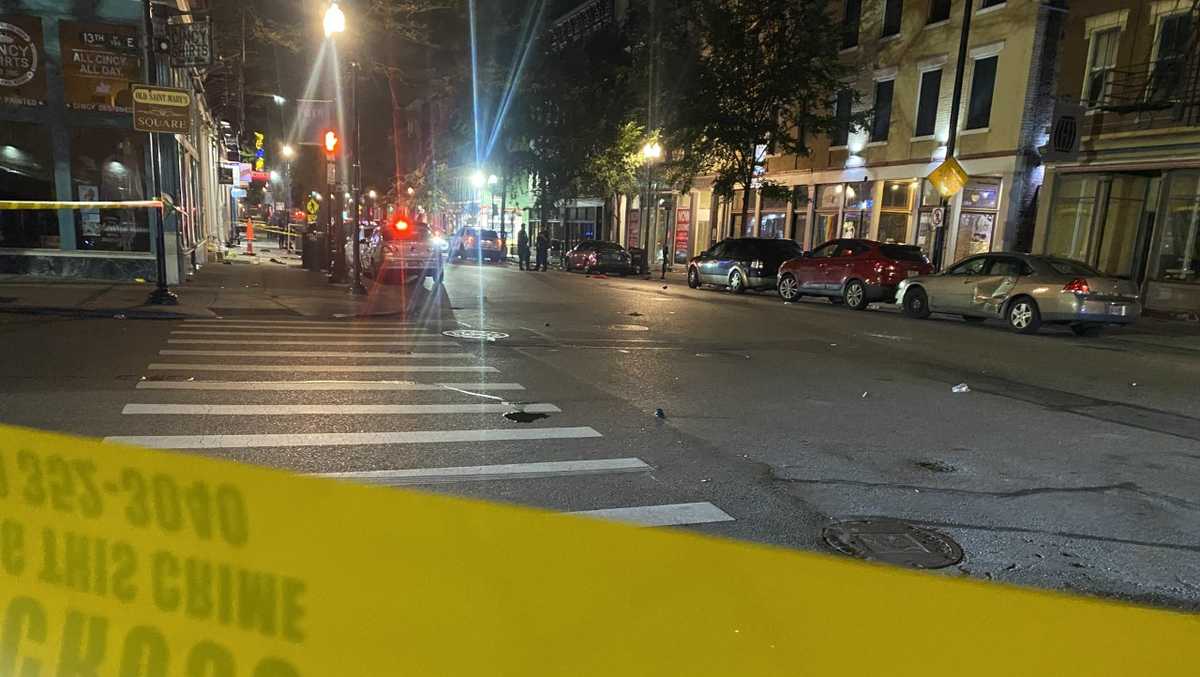
At least nine people were shot during a mass shooting in Over-the-Rhine Sunday. Cincinnati police said it happened at the corner of 13th and Main streets around 1:30 am According to police, that’s where one person fired into a crowd outside a bar. Officials said a police officer discharged their weapon while responding to the scene. Police say they do not know if the shooter was hit but did say the shooter was actively shooting when the officer fired at them. Surveillance video shows the initial panic of many patrons along Main Street as shots began to ring out. All of the victim’s were found at the scene on 13th and Main streets. Police said none of the victim’s injuries were life-threatening. Cincinnati police gave first aid to a lot of the victims on the scene, applying tourniquets to gunshot wounds. Cincinnati police also transported some of the victims in their cruisers while others self transported to hospitals. It’s unclear at this time which hospitals they were taken to. The suspect fled the scene, police say, and is not yet in custody. The suspect has been described as wearing a white shirt and dark pants. Police said officers used flash bangs for crowd control in the aftermath of the shooting. Lindsay Swadner, the owner of The Hub in Over-the-Rhine, said she heard 30 shots and walked outside where she saw multiple people with gunshot wounds. Swadner said after that, that’s when the chaos erupted. People began to run and find safety moments after they were enjoying a night out with friends and family. The Hub became a safe haven, with multiple people running inside to seek cover and safety.” There was probably about 25 to 30 shots fired off in two separate rounds.You had first where it went ‘bang, bang, bang, bang,’ we all start looking around going, ‘Was it over?’ And then you heard ‘bang, bang, bang, bang’ and everyone started running inside of wherever you could go,” Swadner recalled. “And so we started pulling people inside. I made sure everyone was inside, I walked up the street to see what happened and there was, of course, more shooting victims, I’m not sure how many.” people seeking cover inside The Hub was a wedding party. There was also a separate shooting at the Banks earlier Sunday morning. WLWT is told the two shootings aren’t believed to be related. We are working to learn more about that incident. If anyone has information on either shooting, they are asked to call Crime Stoppers at 513-352-3040. This is a developing story.

At least nine people were shot during a mass shooting in Over-the-Rhine Sunday.

Cincinnati police said it happened at the corner of 13th and Main streets around 1:30 am

According to police, that’s where one person fired into a crowd outside a bar.

Officials said a police officer discharged their weapon while responding to the scene. Police say they do not know if the shooter was hit but did say the shooter was actively shooting when the officer fired at them.

Surveillance video shows the initial panic of many patrons along Main Street as shots began to ring out.

All of the victim’s were found at the scene on 13th and Main streets.

Police said none of the victim’s injuries were life-threatening.

Cincinnati police gave first aid to a lot of the victims on the scene, applying tourniquets to gunshot wounds. Cincinnati police also transported some of the victims in their cruisers while others self transported to hospitals. It’s unclear at this time which hospitals they were taken to.

The suspect fled the scene, police say, and is not yet in custody. The suspect has been described as wearing a white shirt and dark pants.

Police said officers used flash bangs for crowd control in the aftermath of the shooting.

Lindsay Swadner, the owner of The Hub in Over-the-Rhine, said she heard 30 shots and walked outside where she saw multiple people with gunshot wounds.

Swadner said after that, that’s when the chaos erupted. People began to run and find safe moments after they were enjoying a night out with friends and family.

The Hub became a safe haven, with multiple people running inside to seek cover and safety.

“There was probably about 25 to 30 shots fired off in two separate rounds. You had first where it went ‘bang, bang, bang, bang,’ we all start looking around going, ‘Was it over?’ And then you heard ‘bang, bang, bang, bang’ and everyone started running inside of wherever you could go,” Swadner recalled. “And so we started pulling people inside. I made sure everyone was inside, I walked up the street to see what happened and there was, of course, more shooting victims, I’m not sure how many.”

She added that among the people seeking cover inside The Hub was a wedding party.

There was also a separate shooting at the Banks earlier Sunday morning. WLWT is told the two shootings aren’t believed to be related. We are working to learn more about that incident.

If anyone has information on either shooting, they are asked to call Crime Stoppers at 513-352-3040.

This is a developing story.

Categories
US

Liz Cheney Is Ready to Lose. But she’s not ready to quit.

CHEYENNE, Wyo. — It was just over a month before her primary de ella, but Representative Liz Cheney of Wyoming was nowhere near the voters weighing her future de ella.

Ms. Cheney was instead huddled with fellow lawmakers and aides in the Capitol complex, bucking up her allies in a cause she believes is more important than her House seat: Ridding American politics of former President Donald J Trump and his influence.

“The nine of us have done more to prevent Trump from ever regaining power than any group to date,” she said to fellow members of the panel investigating Mr. Trump’s involvement in the Jan. 6 Capitol attack. “We can’t let up.”

The most closely-watched primary of 2022 has not become much of a race at all. Polls show Ms. Cheney losing badly to her rival of her, Harriet Hageman, Mr. Trump’s vehicle for revenge, and the congresswoman has been all but driven out of her Trump-loving state, in part because of death threats, her office of her says.

Yet for Ms. Cheney, the race stopped being about political survival months ago. Instead, she’s used the Aug. 16 contest as a sort of a high-profile stage for her martyrdom de ella — and a proving ground for her new crusade de ella. She used the only debate to tell voters to “vote for somebody else” if they wanted a politician who would violate their oath of office. Last week, she enlisted her father de ella, former Vice President Dick Cheney, to cut ad calling Mr. Trump a “coward” who represents the greatest threat to America in the history of the republic.

In a state where Mr. Trump won 70 percent of the vote two years ago, Ms. Cheney might as well be asking ranchers to go vegan.

“If the cost of standing up for the Constitution is losing the House seat, then that’s a price I’m willing to pay,” she said in an interview this week in the conference room of a Cheyenne bank.

The 56-year-old daughter of a politician who once had visions of rising to the top of the House leadership — but landed as vice president instead — has become arguably the most consequential rank-and-file member of Congress in modern times. Few others have so aggressively used the levers of the office to attempt to reroute the course of American politics — but, in doing so, she has effectively sacrificed her own future de ella in the institution she grew up to revere.

Ms. Cheney’s relentless focus on Mr. Trump has driven speculation — even among longtime family friends — that she is preparing to run for president. She has done little to discourage such talk.

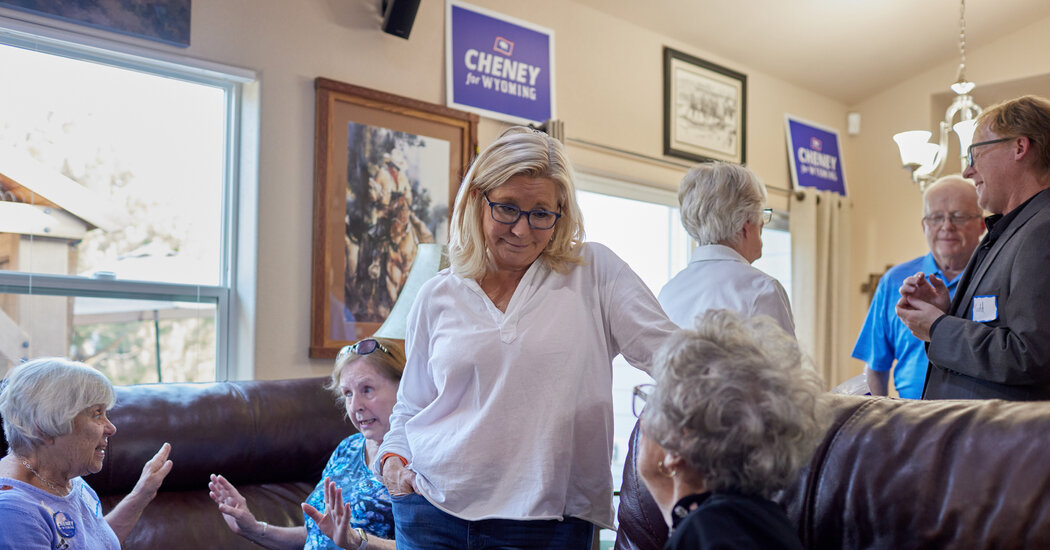
At a house party Thursday night in Cheyenne, with former Vice President Dick Cheney happily looking on under a pair of mounted leather chaps, the host introduced Ms. Cheney by recalling how another Republican woman, Maine Senator Margaret Chase Smith, confronted Senator Joseph McCarthy when doing so was unpopular — and went on to become the first female candidate for president from a major party.

The attendees applauded at the parallel, as Ms. Cheney smiled.

In the interview, she said she was focused on her primary—and her work on the committee. But it’s far from clear that she could be a viable candidate in the current Republican Party, or whether she has interest in the donor-class schemes about a third-party bid, in part because she knows it may just siphon votes from an opposing Democrat Mr Trump.

Ms. Cheney said she had no interest in changing parties: “I’m a Republican.” But when asked if the GOP she was raised in was even salvageable in the short term, she said: “It may not be” and she called her party “very sick.”

The party, she said, “is continuing to drive itself in a ditch and I think it’s going to take several cycles if it can be healed.”

Ms. Cheney suggested she was animated as much by Trumpism as Mr. Trump himself. She could support a Republican for president in 2024, she said, but her redline de ella is a refusal to state clearly that Mr. Trump lost a legitimate election in 2020.

Asked if the ranks of off-limits candidates included Gov. Ron DeSantis of Florida, whom many Republicans have latched onto as a Trump alternative, she said she “would find it very difficult” to support Mr. DeSantis in a general election.

“I think that Ron DeSantis has lined himself up almost entirely with Donald Trump, and I think that’s very dangerous,” Ms. Cheney said.

It’s easy to hear other soundings of a White House bid in Ms. Cheney’s rhetoric.

In Cheyenne, she channeled the worries of “moms” and what she described as their hunger for “somebody’s who’s competent.” Having once largely scorned identity politics — Ms. Cheney was only the female lawmaker who would n’t pose for a picture of the women of Congress after 2018 — she now freely discusses gender and her perspective of ella as a mother.

“These days, for the most part, men are running the world, and it is really not going that well,” she said in June when she spoke at the Ronald Reagan Presidential Library in Simi Valley, Calif.

In a sign that Ms. Cheney’s political awakening goes beyond her contempt for Mr. Trump, she said she prefers the ranks of Democratic women with national security backgrounds to her party’s right flank.

“I would much rather serve with Mikie Sherrill and Chrissy Houlahan and Elissa Slotkin than Marjorie Taylor Greene and Lauren Boebert, even though on substance certainly I have big disagreements with the Democratic women I just mentioned,” Ms. Cheney said in the interview. “But they love this country, they do their homework and they are people who are trying to do the right thing for the country.”

Ms. Cheney is surer of her diagnosis for what ails the GOP than she is of her prescription for reform.

She has no post-Congress political organization in waiting and has benefited from Democratic donors, whose affections may be floating. To the frustration of some allies, she has not expanded her inner circle beyond family and a handful of close advisers. Never much of a schmoozer, she said she longed for what she recalled as her father’s era of policy-centric politics.

“What the country needs are serious people who are willing to engage in debates about policy,” Ms. Cheney said.

It’s all a far cry from the Liz Cheney of a decade ago, who had a contract to appear regularly on Fox News and would use her perch as a guest host for Sean Hannity to present her unswerving conservative views and savage former President Barack Obama and Democrats .

Today, Ms. Cheney doesn’t concede specific regrets about helping to create the atmosphere that gave rise to Mr. Trump’s takeover of her party. She did, however, acknowledge a “reflexive partisanship that I have been guilty of” and noted Jan. 6 “demonstrated how dangerous that is.”

Few lawmakers today face those dangers as regularly as Ms. Cheney, who has had a full-time Capitol Police security detail for nearly a year because of the threats against her — protection few rank-and-file lawmakers are assigned. She no longer provides advance notice about her Wyoming travel and, not welcome at most county and state Republican events, has turned her campaign into a series of invite-only House parties.

What’s more puzzling than her schedule is why Ms. Cheney, who has raised over $13 million, has not poured more money into the race, especially early on when she had an opportunity to define Ms. Hageman. Ms. Cheney had spent roughly half her war chest de ella as of the start of July, spurring speculation that she was saving money for future efforts against Mr. Trump.

Ms. Cheney long ago stopped attending meetings of House Republicans. When at the Capitol, she spends much of her time with the Democrats on the Jan. 6 panel and often heads to the Lindy Boggs Room, the reception room for female lawmakers, rather than the House floor with the male-dominated House GOP conference. Some members of the Jan. 6 panel have been struck by how often her Ella’s Zoom background is her suburban Virginia home.

In Washington, even some Republicans who are also eager to move on from Mr. Trump question Ms. Cheney’s decision to wage open war against her own party. She’s limiting her future influence on her, they argue.

“It depends on if you want to go out in a blaze of glory and be ineffective or if you want to try to be effective,” said Senator John Cornyn of Texas, who has his own future leadership aspirations. “I respect her but I wouldn’t have made the same choice.”

Ms. Cheney is mindful that the Jan. 6 inquiry, with its prime-time hearings, is viewed by critics as an attention-seeking opportunity. She has turned down some opportunities that could have been helpful to her ambitions, most notably proposals from documentary filmmakers.

Still, to her skeptics at home, Ms. Cheney’s attacks on Mr. Trump have resurrected dormant questions about her ties to the state and raised fears that she has gone Washington and taken up with the opposition, dismissing the political views of the voters who gave her and her father their starts in electoral politics.

At a parade in Casper last month, held while Ms. Cheney was in Washington preparing for a hearing, Ms. Hageman received frequent applause from voters who said the incumbent had lost her way.

“Her voting record is not bad,” said Julie Hitt, a Casper resident. “But so much of her focus on her is on Jan 6.”

“She’s so in bed with the Democrats, with Pelosi and with all them people,” Bruce Hitt, Ms. Hitt’s husband, interjected.

Notably, no voters interviewed at the parade brought up Ms. Cheney’s support for the gun control bill the House passed just weeks earlier — the sort of apostasy that would have infuriated Wyoming Republicans in an era more dominated by politics than one man’s person.

“Her vote on the gun bill hardly got any publicity whatsoever,” Mike Sullivan, a former Democratic governor of Wyoming who intends to vote for Ms. Cheney in the primary, said, puzzled. (Ms. Cheney is pushing independents and Democrats to re-register as Republicans, as least long enough to vote for her in the primary.)

For Ms. Cheney, any sense of bafflement about this moment — a Cheney, Republican royalty, being effectively read out of the party — has faded in the year and a half since the Capitol attack.

When she attended the funeral last year for Mike Enzi, the former Wyoming senator, Ms. Cheney welcomed a visiting delegation of GOP senators. As she greeted them one by one, several of her praised her bravery and told her to keep up the fight against Mr. Trump, she recalled.

She did not miss the opportunity to pointedly remind them: They, too, could join her.

“There have been so many moments like that,” she said at the bank, a touch of weariness in her voice.

Categories
US

More than 300 Haitians found on sailboat grounded near Florida’s Key Largo

More than 300 Haitians were discovered on a dilapidated wooden sailboat that was grounded near Key Largo on Saturday, US Border Patrol officials said.

When 113 of the people on board jumped ship, US Coast Guard and Border Patrol crews made rescues and took the migrants into custody, officials said.

They were screened for medical issues, and two had to be treated for dehydration, said the Border Patrol’s Walter N. Slosar, chief of the agency’s Miami sector.

More than 300 Haitians were discovered on a wooden sailboat that was grounded near Key Largo on Saturday, officials said.
More than 300 Haitians were discovered on a wooden sailboat that was grounded near Key Largo on Saturday, officials said.US Coast Guard Southeast/Twitter

An estimated 220 other Haitians remained on the vessel and were taken into custody en masse, he said.

Their reason for travel was unknown, however, Haitians have been migrating to the United States in the last few years to escape political instability, the aftermath of natural disasters and poverty.

US Customs and Border Protection, or CBP, data show nearly 50,000 Haitian migrants were encountered at US boundaries in 2021, and nearly 40,000 in 2022 through the end of June. The United States has expelled or deported thousands of Haitians, though that number fell in June as the Biden administration allowed more coming through legal ports of entry to seek asylum.

It was at least the second time since March that a vessel with 300 or so Haitians has landed in the Florida Keys. A March 6 landing was described by CBP as a “smuggling event.”

Slosar said in a video Saturday said officials were working to identify “the smugglers who crammed these people onto that vessel.” He said they were also working to transfer the people on board the sailboat into the “the immigration process.”

“We are working to keep then safe, clean, fed and healthy and identify exactly who they are and what they may or may not have brought with them to the country,” he said.

Many migrants from Cuba and Haiti have attempted to cross the Straits of Florida in dilapidated vessels and even on flotation devices, prompting lifesaving rescues from the Coast Guard.

On Saturday the Coast Guard said it was still searching for five missing Cubans believed to have been on a boat that capsized Friday near Sugarloaf Key. The bodies of two were pulled from the water, and eight survivors were rescued, the agency said.

“These ventures are dangerous and not recommended,” John Priddy, director of southeast air and marine operations for CBP, tweeted.

Categories
US

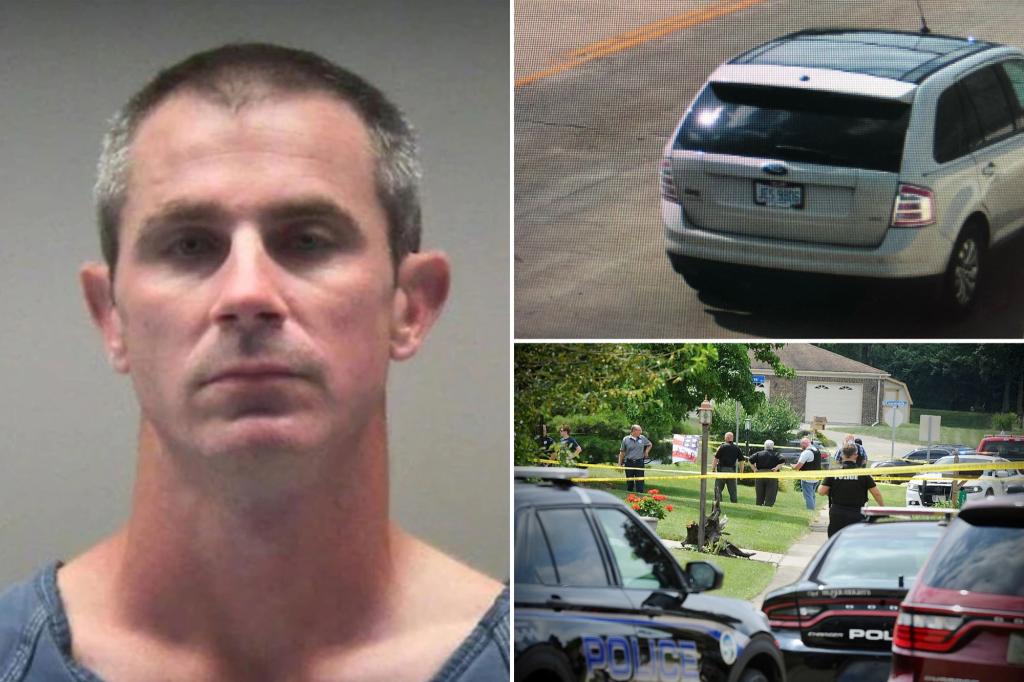
Ohio shooter Stephen Marlow who allegedly killed 4 has been arrested following manhunt, police say

The prime suspect in two Dayton, Ohio, shootings that left four people dead has been taken into custody, police confirmed on Saturday.

Stephen Marlow, 39, was apprehended in Kansas by the Lawrence Police Department, Butler Township Police Chief John Porter said at a press conference. The suspect was captured around 10 pm

Porter said local authorities are making arrangements to extradite Marlow.

This puts an end to a multi-state search for Marlow, who was considered to be armed and dangerous. The Dayton area shooting on Friday included a teenage girl and her mother of her.

Eva and Clyde Knox were found dead in their home Friday morning. Sarah Anderson and her 15-year-old daughter Kayla were also discovered dead shortly after.

The suspect had fled the state in a white 2007 Ford Edge SUV bearing an Ohio license plate following the shootings.

Marlow was charged with four counts of aggravated murder on Friday.

Stephen Marlow
Stephen Marlow allegedly fled the state in a white 2007 Ford Edge SUV.
Twitter/@fbicincinnati
Dayton Ohio shooting
Police investigate a shooting in Butler Township, Ohio, where four people were fatally shot on Aug. 5, 2022.
AP

On Saturday, prior to the apprehension, the US District Court for the Southern District of Ohio issued a federal arrest warrant on a charge of unlawful flight to avoid prosecution.

.

Categories
US

9 people shot in Over-the-Rhine overnight Sunday; suspect not in custody

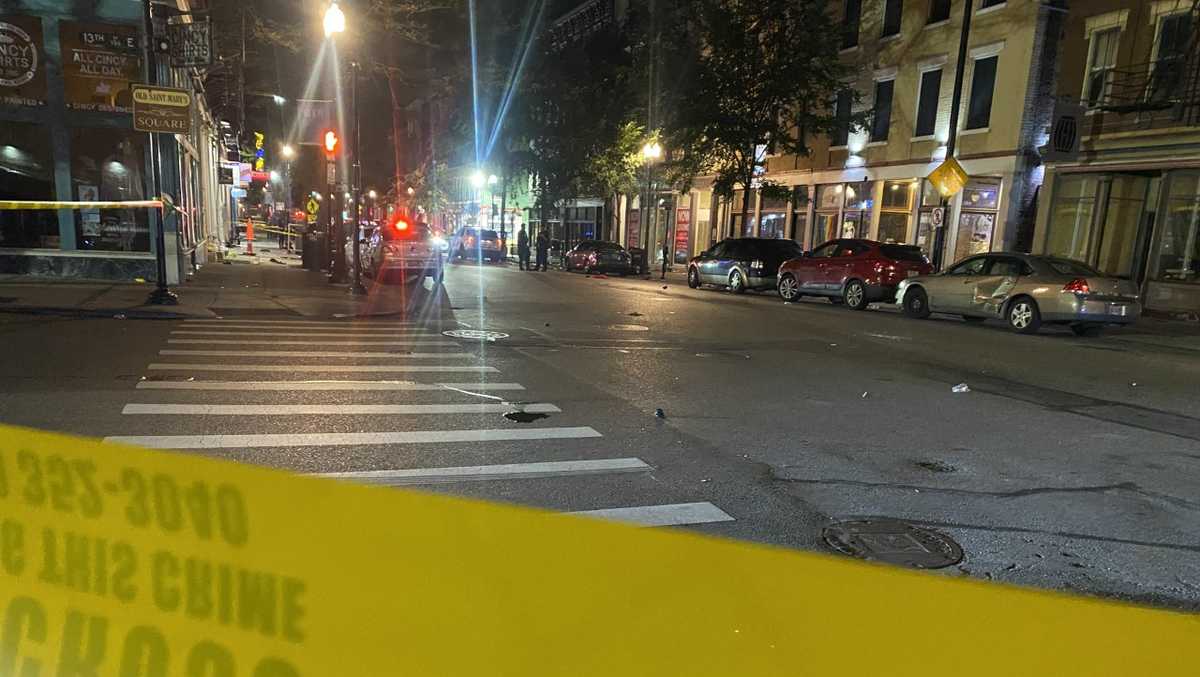
At least nine people were shot during a mass shooting in Over-the-Rhine Sunday. Cincinnati police said it happened at the corner of 13th and Main streets around 1:30 am According to police, that’s where one person fired into a crowd. Officials said a police officer discharged their weapon while responding to the scene. Police say they do not know if the shooter was hit but did say the shooter was actively shooting when the officer fired at them. None of the victim’s injuries are serious and all of the victims were located at the scene on 13th and Main streets scene. Cincinnati police applied first aid to a lot of the victim, using tourniquets to gunshot wounds. Cincinnati police transported some of the victim’s in their cruisers while other victim’s self transported to hospitals. It’s unclear at this time which hospitals are treating victim’s. The suspect fled the scene, police say, and is not yet in custody. The suspect has been described as wearing a white shirt and dark pants. Police used flash bangs for crowd control in the aftermath of the shooting. Linday Swadner, the owner of The Hub in Over-the-Rhine, said she heard 30 shots and walked outside where she saw multiple people with gunshot wounds. Swadner said after that, that’s when the chaos erupted. People began to run and find safety moments after they were enjoying a night out with friends and family. The Hub became a safe haven, with multiple people running inside to seek cover and safety.” There was probably about 25 to 30 shots fired off in two separate rounds.You had first where it went ‘bang, bang, bang, bang,’ we all start looking around going, ‘Was it over?’ And then you heard ‘bang, bang, bang, bang’ and everyone started running inside of wherever you could go,” Swadner recalled. “And so we started pulling people inside. I made sure everyone was inside, I walked up the street to see what happened and there was, of course, more shooting victims, I’m not sure how many.” people seeking cover inside The Hub was a wedding party. There was also a separate shooting at the Banks earlier Sunday morning. We are working to learn more about that incident. If anyone has information on either shooting, they are asked to call Crime Stoppers at 513-352-3040. This is a developing story.

At least nine people were shot during a mass shooting in Over-the-Rhine Sunday.

Cincinnati police said it happened at the corner of 13th and Main streets around 1:30 am

According to police, that’s where one person fired into a crowd.

Officials said a police officer discharged their weapon while responding to the scene. Police say they do not know if the shooter was hit but did say the shooter was actively shooting when the officer fired at them.

None of the victim’s injuries are serious and all of the victims were located at the scene on 13th and Main streets scene. Cincinnati police applied first aid to a lot of the victim, using tourniquets to gunshot wounds. Cincinnati police transported some of the victim’s in their cruisers while other victim’s self transported to hospitals. It’s unclear at this time which hospitals are treating victim’s.

The suspect fled the scene, police say, and is not yet in custody. The suspect has been described as wearing a white shirt and dark pants.

Police used flash bangs for crowd control in the aftermath of the shooting.

Linday Swadner, the owner of The Hub in Over-the-Rhine, said she heard 30 shots and walked outside where she saw multiple people with gunshot wounds.

Swadner said after that, that’s when the chaos erupted. People began to run and find safe moments after they were enjoying a night out with friends and family.

The Hub became a safe haven, with multiple people running inside to seek cover and safety.

“There was probably about 25 to 30 shots fired off in two separate rounds. You had first where it went ‘bang, bang, bang, bang,’ we all start looking around going, ‘Was it over?’ And then you heard ‘bang, bang, bang, bang’ and everyone started running inside of wherever you could go,” Swadner recalled. “And so we started pulling people inside. I made sure everyone was inside, I walked up the street to see what happened and there was, of course, more shooting victims, I’m not sure how many.”

She added that among the people seeking cover inside The Hub was a wedding party.

There was also a separate shooting at the Banks earlier Sunday morning. We are working to learn more about that incident.

If anyone has information on either shooting, they are asked to call Crime Stoppers at 513-352-3040.

This is a developing story.

Categories
US

Court records reveal more about Laurel’s quadruple homicide, suspect’s arrest | News

LAUREL — It took law enforcement less than 24 hours to arrest a suspect after four bodies were found in Laurel.

Jason A. Jones, 42, of Laurel was arrested Friday at 2:30 am in connection to four deaths found within blocks of each other, according to the Nebraska State Patrol. The four victims were found deceased in separate residences in the early-morning hours on Thursday.

Court records obtained by the Daily News have revealed more information about the alleged incident that led up to the victims’ deaths on Thursday.

According to the court records, a 911 call was made by a male around 3:30 am on Thursday after he heard an explosion that occurred at 209 Elm St. Laurel Fire and EMS arrived on the scene and located a woman lying inside the back door of the residence. She was pronounced dead on the scene after lifesaving attempts were unsuccessful.

Court records state that the woman appeared to have suffered two gunshot wounds. A bullet casing was found near her body.

The woman was later identified as Michelle Ebeling, 53, by the Nebraska State Patrol.

A fire also appeared to occur inside the residence after burn marks were observed on the floor, walls and furniture, according to the court records. The smell of smoke and gasoline was also present at the time, indicating that the fire had just occurred.

According to the records, a red fuel container could be observed and a discolored trail on the floor indicated that a fire accelerant was used on the scene.

A search warrant was later issued for Jones’ residence at 206 Elm. St, according to the court records. After entering the house, the Nebraska State Patrol SWAT team found several receipts in a black backpack.

Two receipts showed purchases from Cubby’s Gas Station and Rath’s Mini Mart in Laurel under Jones’ credit card, but it was not stated what he purchased from the gas station and liquor store.

However, another receipt found that a 6-gallon auto shutoff gas can, fuel tank and camping backpack were purchased from a department store in Sioux City, Iowa, under Jones’ credit card.

On Thursday, investigators met with an employee at Rath’s Mini Mart and viewed camera footage, which showed Jones pumping gas into two red gas cans, court records stated.

Shortly after the first incident was reported, a 911 call was made regarding smoke coming from a residence located at 503 Elm St.

Laurel Fire and EMS arrived on the scene and discovered soot damage consistent with fire, court records indicated.

According to the court records, three individuals were found in the residence, and all appeared to have gunshot wounds. The victims were Gene and Janet Twiford, 86 and 85, respectively, and Dana Twiford, 55. They were pronounced dead at the scene.

A firearm was found at the residence, which was purchased by Jones, according to the court records, which also stated that the gunshot wounds were consistent with the firearm found. However, the gunshot wounds to Ebeling appeared to have been shot by a different caliber firearm that has not been located, authorities said.

According to the court records, Jones will be charged with 10 felonies: Four counts of first-degree homicide, two counts of first-degree arson and four counts of use of a firearm to commit a felony.

The Nebraska State Patrol said on Friday that Jones was transported to CHI St. Elizabeth in Lincoln because of serious burn injuries. It is unclear at this time when his first court hearing will be.

It’s been more than a century since tragedy struck the Northeast Nebraska town of 1,000 people, according to Brenda Whalen, a resident of Laurel.

According to Whalen, the last time murder that happened in Laurel was during a 1918 shootout.

“Hopefully that was that century’s big news and this is this century’s big news and it never happens again,” Whalen said.

Whalen, who grew up in Laurel, said she was first aware that something had happened in her hometown when the fire whistle blew at around 3:14 am on Thursday. However, she didn’t hear about the day’s events until around 7:30 am

“It hurts your heart that something like this can happen in your little town because it’s safe here,” Whalen said.

Whalen said that she felt reassured for her safety when she saw the number of law enforcement authorities and firefighters in town. But at the same time, it also alarmed her to see that many law enforcement personnel.

“It still just didn’t feel real,” Whalen said. “It felt like it wasn’t a real event that was really happening here. It just felt like you were in a movie. It’s very hard to comprehend that it even happened yet.”

John Bolduc, superintendent of the Nebraska State Patrol, said in a news conference on Friday that more than 60 law enforcement officers were reportedly in town.

Whalen later found out that Jones had been arrested in connection to the quadruple homicide on Friday morning.

According to the state patrol, Jones lived across the street from one of the victims’ homes. He was later arrested at his residence, 206 Elm. St.

“It’s very shocking that the suspect could have been there across the street the whole entire day,” Whalen said, “while the police were present in the neighborhood.”

Whalen said that although she didn’t know Jones, she knew the victims well. She knew the Twifords from church, and Ebeling was a frequent customer in her store, Laurel’s Hometown Market.

“We are a very safe community, tight-knit community; we’ll make it through this,” Whalen said. “It’s not going to be over for a while. And I think learning more about what and why it happened will be helpful to help the community heal.”

.

Categories
US

forward! Is America’s latest third party marching to power – or oblivion? | US politics

After the 2020 election, Americans were clear: they wanted a viable third political party.

In modern US history the country has been dominated by the Republican and Democratic parties almost to the exclusion of all others, effectively creating a near two-party monopoly on power in the White House, Congress and the state level.

Other parties, like the Reform party, the Greens or the Libertarians have never really broken through. In 2021, as the fallout from the 2020 election continued, polling showed widespread support among Americans for a fresh third party that would offer something different from the status quo. Even a majority of self-identified Republicans said they wanted a new party in the mix.

This should be prime ground, then, for the Forward party, founded in July by a group of self-defined centrists including the former Democratic presidential candidate Andrew Yang and former Republican New Jersey governor Christine Todd Whitman.

People wanted a new third party, and they have been given one – one that has boasted of already raising more than $5m. So what are the chances of Yang and co winning office, and holding forth on the floors of the US Capitol?

“Slim to none,” says Marjorie Hershey, professor emeritus of political science at Indiana University Bloomington. “With an emphasis on none.”

Third parties face resource problems, for one thing. Forward’s $5m pales in comparison with the $1bn Joe Biden raised from donors during his 2020 election campaign.

Donald Trump raised $774m from donors, according to Open Secrets, while data from the Federal Election Commission shows that House and Senate candidates raised $4bn between 1 January 2019 and 31 December 2020, spending $3.8bn.

The two dominant parties also have huge structural advantages: mailing lists, email addresses, existing supporters and name recognition, things that have taken decades to build.

A more fundamental issue is that the US election system just isn’t set up to accommodate a third party.

The first-past-the-post system, in which one person is elected in each congressional district, means that a third party could, in theory, win 49% of the vote in a given area, and it would count for nothing if their opponent wins more.

Forward, which launched on 23 July, was formed from three existing political groups: Renew America Movement, made up of dozens of former Republican administration officials; the Forward party, which was founded by Yang after his failed bid to become the Democratic party’s nominee for New York City Mayor; and the Serve America Movement, a centrist group of Democrats, Republicans and independents.

“The rigid, top-down, one-size-fits-all platforms of the outdated political parties are drifting toward the fringes, making solutions impossible,” Forward’s website reads.

“We stand for doing, not dividing. That means rejecting the far Left and far Right and pursuing common ground.”

The party’s mission: “Not left. Not right. FORWARD,” as its slogan lays out, is a noble one. But there are doubts about what a centrist party might actually look like and stand for.

“There are a lot of people who would consider themselves moderate or centrist, who disagree very strongly with other people who consider themselves moderate or centrist. It’s not one group,” Hershey said.

The Forward party is yet to lay out a detailed platform. But once it does set out its positions on divisive issues like abortion, social security and tax cuts, Hershey said, “some of that middle is going to disagree with other parts of that middle, and the so-called huge middle is no longer huge.” .”

In a statement, the Forward party said it “can’t be pegged to the traditional left-right spectrum because we aren’t built like the existing parties.

“The glue that holds us together is not a rotten ideology, it is a shared commitment to actually solving problems. The hunger for that simple but revolutionary kind of politics is immense.”

In terms of how it will compete with Democrats and Republicans, the party said it “isn’t looking to drop a billion dollars in a 2024 presidential race”.

Instead, it will focus on gaining ballot access and recruiting candidates to run in races across the country.

“That takes money,” Forward said. “But more than money it takes people, and we are rich with them.”

Forward is less than two weeks old, but has already attracted a good deal of both cynicism and criticism, not least for the false equivalency it deployed when describing the need for a third party.

In an op-ed in the Washington Post titled “Most third parties have failed. Here’s why ours won’t,” Yang, Whitman and David Jolly, another co-founder who was previously a Republican congressman from Florida and executive chairman of the Serve America Movement, appeared to offer disingenuous arguments for why their efforts were required.

Ross Perot, center, takes part in a 1992 presidential debate as a third-party candidate alongside Bill Clinton, left, and George Bush.
Ross Perot, center, takes part in a 1992 presidential debate as a third-party candidate alongside Bill Clinton, left, and George Bush. Photograph: Mark Cardwell/Reuters

On guns, Forward suggested that most Americans are “rightfully concerned by the far right’s insistence on eliminating gun laws”, but “don’t agree with calls from the far left to confiscate all guns and repeal the Second Amendment”.

As Andrew Gawthorpe, a historian of the United States at Leiden University and host of the America Explained podcast, wrote in the Guardian:

“These two things are not the same: the first is what is actually happening in America right now, whereas the second is a view that was attributed to Kamala Harris as part of a fabricated smear on Facebook and enjoys approximately zero support in the Democratic party .”

Third parties can have an impact, said Bernard Tamas, associate professor of political science at Valdosta state university and author of The Demise and Rebirth of American Third Parties: Poised for Political Revival?. But there’s usually a pretty specific formula.

“It’s always built on outrage,” Tamas said. “It has to be where the public is galvanized.”

Tamas pointed to the Progressive party, founded in 1912. That party, led by former president Theodore Roosevelt, advocated for child labor laws and the establishment of improved working conditions, including and eight-hour working day and “one day’s rest in seven” for workers.

Roosevelt, who was shot during his campaign, won 27.4% of the vote, besting William Howard Taft, the incumbent Republican, but losing to the Democrat Woodrow Wilson. But progressive reforms were eventually introduced.

“What they have historically done successfully could be described with an analogy of ‘sting like a bee’,” Tamas said.

“They emerge, really often quite suddenly, and they attack the two parties [and] they effectively pull voters away from them.

“And the two parties then respond, and in critical moments, they respond by trying to take away these issue bases, whatever is making the third party successful. They take those away, the major party changes, and then effectively the third party dies.”

Forward, which has pledged that it will reflect “the moderate, common-sense majority”, has plenty of people skeptical as to whether it can sting like a bee – let alone do more and actually elect candidates.

“The way that they’re presenting themselves, it may not have the galvanizing message,” Tamas said.

“Simply saying: ‘Hey, you know, let’s all get together and work together’ is barely something that gets people running on the streets protesting.”

Categories
US

Democrats’ Inflation Reduction Act is ‘economic malpractice’: Economist

NEWYou can now listen to Fox News articles!

During an interview on “Fox & Friends Weekend,” American Legislative Exchange Council economist Jonathan Williams slams Democrats’ latest effort to combat inflation, the Inflation Reduction Act, arguing that raising taxes and increasing spending is “economic malpractice.”

JONATHAN WILLIAMS: And what we need is going in the opposite direction and actually cut spending in Washington. It’s clear we don’t have a problem with the lack of tax revenue here. We’ve hit record tax revenue numbers time and time again in recent years, but we just spend faster than the taxes are coming in. And this is a huge problem here. Let’s look to common sense, what’s happening in the 50 states. In fact, you know, 49 out of the 50 states, a lot of people don’t know this, have balanced budget amendment in their state constitution or in state law.

THERE’S NO WAY THAT MANCHIN, SCHUMER’S RECKLESS TAX AND SPEND PROPOSAL WILL GET MY SUPPORT

Congress spending concept

Congress spending concept
(istock)

Now, Washington needs to take a page from the successful stories of what’s happening at the state level. People look at Washington as this land of make believe, that say they want to double down on everything that’s causes problems. And by the way, as the economy is contracting. And people like Joe Manchin have said this and Chuck Schumer in the past, let’s not mess with taxes. Let’s not raise taxes. The economy is shrinking. I mean, this is absolutely economic malpractice what’s being discussed right now.

CLICK HERE TO GET THE FOX NEWS APP

WATCH THE FULL INTERVIEW HERE:

Categories
US

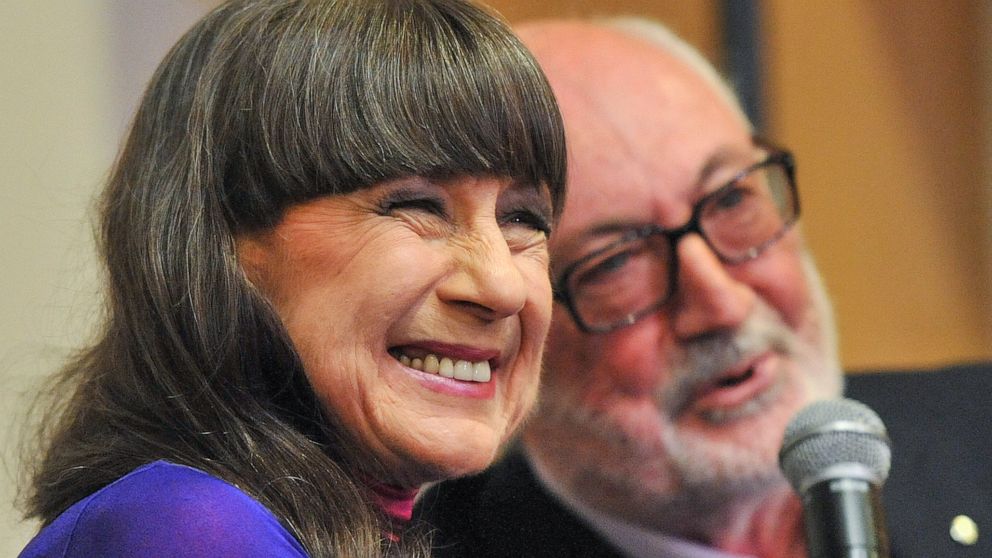
Judith Durham, Australia’s folk music icon, dies at 79

MELBOURNE, Australia — Judith Durham, Australia’s folk music icon who achieved global fame as the lead singer of The Seekers, has died. She was 79.

Durham died in Alfred Hospital in Melbourne on Friday night after suffering complications from a long-standing lung disease, Universal Music Australia and Musicoast said in a statement on Saturday.

She made her first recording at 19 and rose to fame after joining The Seekers in 1963. The group of four became the first Australian band to achieve major chart and sales success in the UK and the United States, eventually selling 50 million records.

International hits included “The Carnival is Over,” “I’ll Never Find Another You,” “A World of Our Own” and “Georgy Girl.”

Durham embarked on a solo career in 1968 but recorded with The Seekers again in the 1990s.

“This is a sad day for Judith’s family, her fellow Seekers, the staff of Musicoast, the music industry and fans worldwide, and all of us who have been part of Judith’s life for so long,” said The Seekers’ management team member Graham simpsons.

Her bandmates in The Seekers — Keith Potger, Bruce Woodley and Athol Guy — said their lives had been changed forever by losing “our treasured lifelong friend and shining star.”

“Her struggle was intense and heroic, never complaining of her destiny and fully accepting its conclusion. Her magnificent musical legacy from Ella Keith, Bruce and I are so blessed to share, ”they said.

Tributes flowed for the beloved singer, with Prime Minister Anthony Albanese describing Durham as “a national treasure and an Australian icon.”

“Judith Durham gave voice to a new strand of our identity and helped blaze a trail for a new generation of Aussie artists,” Albanese wrote on Twitter. “Her kindness of her will be missed by many, the anthems she gave to our nation will never be forgotten.”

In her home state Victoria, Premier Dan Andrews said Durham had conquered the music world both in Australia and overseas.

“With her unique voice and stage presence leading The Seekers, the band became one of Australia’s biggest chart toppers,” he said.

.