The family of Gabby Petito announced plans to file a $50m wrongful death lawsuit against Utah police on Monday, claiming that officers in the small desert town of Moab, who stopped Petito and boyfriend Brian Laundrie last year, failed to recognize their daughter was in a domestic violence situation.
The notice of a forthcoming claim alleges that when officers stopped the couple on 12 August 2021, they did not recognize that Petito, 22, was in danger.
Body-cam film later showed a visibly upset Petito speaking to officers on the side of the road.
Instead of intervening, the officers allowed the couple to proceed on a cross-country van trip after requiring them to spend a night apart.
The fight between the couple happened weeks before authorities say Laundrie strangled her. Petito’s body was found on 19 September near Grand Teton national park in Wyoming.
Laundrie, 23, later killed himself in a Florida swamp after being named the sole person of interest in her disappearance. His body of him was found last October. A notebook contained a confession to her murder of her.
“If the officers had been properly trained and followed the law, Gabby would still be alive today,” attorney James McConkie said in a statement. At a press conference in Salt Lake City, McConkie said that “officers fail to recognize the serious danger that she was in, and failed to investigate fully and properly.”
He referred to “clear signs that were evident that morning that Gabby was a victim and that she was in serious need of immediate help”.
Appearing by video at a news conference to announce the claim, Petito’s mother, Nicole Schmidt, described watching the body-cam video as “very painful”.
An independent investigation earlier this year found that Moab police made “several unintentional mistakes” when they intercepted Petito and Laundrie. In a report, police said it was very likely that Petito “was a long-term victim of domestic violence, whether that be physically, mentally, and/or emotionally.”
Petito’s family have already sued Laundrie’s parents claiming they knew since about 28 August last year that Petito was dead because their son had told them.
Instead of telling Petito’s family, or responding to their pleas for help, the Laundrie family issued a statement saying “it is our hope that the search for Miss Petito is successful and that Miss Petito is re-united with her family”.
A Florida judge is allowing that claim to proceed.
The family of Gabby Petito announced plans to file a $50m wrongful death lawsuit against Utah police on Monday, claiming that officers in the small desert town of Moab, who stopped Petito and boyfriend Brian Laundrie last year, failed to recognize their daughter was in a domestic violence situation.
The notice of a forthcoming claim alleges that when officers stopped the couple on 12 August 2021, they did not recognize that Petito, 22, was in danger.
Body-cam film later showed a visibly upset Petito speaking to officers on the side of the road.
Instead of intervening, the officers allowed the couple to proceed on a cross-country van trip after requiring them to spend a night apart.
The fight between the couple happened weeks before authorities say Laundrie strangled her. Petito’s body was found on 19 September near Grand Teton national park in Wyoming.
Laundrie, 23, later killed himself in a Florida swamp after being named the sole person of interest in her disappearance. His body of him was found last October. A notebook contained a confession to her murder of her.
“If the officers had been properly trained and followed the law, Gabby would still be alive today,” attorney James McConkie said in a statement. At a press conference in Salt Lake City, McConkie said that “officers fail to recognize the serious danger that she was in, and failed to investigate fully and properly.”
He referred to “clear signs that were evident that morning that Gabby was a victim and that she was in serious need of immediate help”.
Appearing by video at a news conference to announce the claim, Petito’s mother, Nicole Schmidt, described watching the body-cam video as “very painful”.
An independent investigation earlier this year found that Moab police made “several unintentional mistakes” when they intercepted Petito and Laundrie. In a report, police said it was very likely that Petito “was a long-term victim of domestic violence, whether that be physically, mentally, and/or emotionally”.
Petito’s family have already sued Laundrie’s parents claiming they knew since about 28 August last year that Petito was dead because their son had told them.
Instead of telling Petito’s family, or responding to their pleas for help, the Laundrie family issued a statement saying “it is our hope that the search for Miss Petito is successful and that Miss Petito is re-united with her family”.
A Florida judge is allowing that claim to proceed.
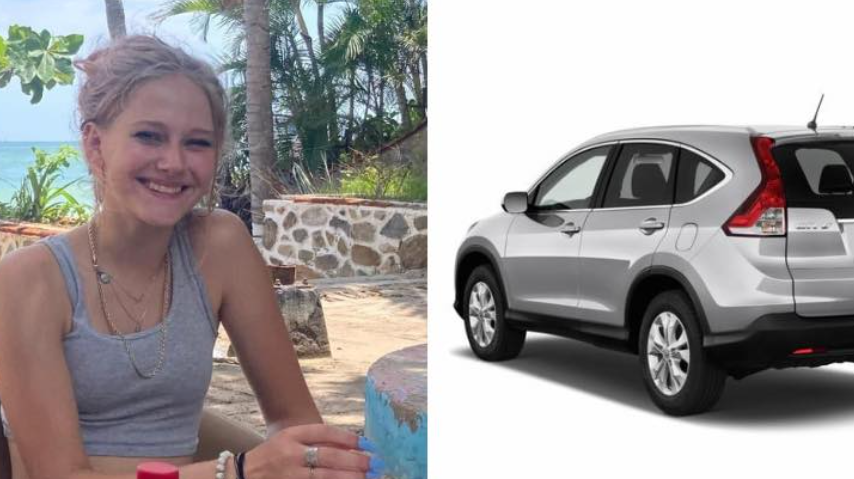
The 16-year-old missing teenager who was last seen at a party in Truckee is now being treated as an abduction case, Placer County Sheriff’s Office confirmed Sunday night. An anonymous tip line has been established and a $50,000 reward is being offered to help find Kiely Rodni. Rodni went missing early Saturday morning near the Prosser Family Campground in Truckee, authorities said. Her car de ella, a silver 2013 Honda CRV with California license plate “8YUR127” is also missing, which is why law enforcement believes she has been abducted. She’s described as being about 5 feet, 7 inches and 115 pounds with blonde hair and hazel eyes. She was last seen wearing green pants and a black tank top. She also has numerous piercings and was said to have jewelry on. Authorities said Rodni was at a party with over 100 other teens and young adults. She was last seen around 12:30 am on Saturday. Ella’s phone has been out of service since the party. The Placer County Sheriff’s Office shared a video message from ella’s mother, Lindsey Rodni-Nieman, who asked for her daughter’s safe return home. “If anybody else out there knows where she is, know anything about where she might be, if you have any ideas or thoughts please come forward,” Rodni-Nieman said in the video. The Placer County Sheriff’s Office said the search for Rodni is active and are asking the community for help. Anyone with information about the teen’s whereabouts is asked to call the tipline 530-581-6320, option 7. Rodni’s friends and family have also set up a website, findkiely.com, and an email address, [email protected]. Her family de ella confirmed a $50,000 reward is now being offered for information that leads to her being found.
TRUCKEE, Calif. —
The 16-year-old missing teenager who was last seen at a party in Truckee is now being treated as an abduction case, Placer County Sheriff’s Office confirmed Sunday night.
An anonymous tip line has been established and a $50,000 reward is being offered to help find Kiely Rodni.
Rodni went missing early Saturday morning near the Prosser Family Campground in Truckee, authorities said. Her car, a silver 2013 Honda CRV with California license plate “8YUR127” is also missing, which is why law enforcement believes she has been abducted.
She’s described as being about 5 feet, 7 inches and 115 pounds with blonde hair and hazel eyes. She was last seen wearing green pants and a black tank top. She also has numerous piercings and was said to have jewelry on.
Authorities said Rodni was at a party with over 100 other teens and young adults. She was last seen around 12:30 am on Saturday. Her phone has been out of service since the party.
The Placer County Sheriff’s Office shared a video message from Rodni’s mother, Lindsey Rodni-Nieman, who asked for her daughter’s safe return home.
“If anybody else out there knows where she is, know anything about where she might be, if you have any ideas or thoughts please come forward,” Rodni-Nieman said in the video.
This content is imported from Twitter. You may be able to find the same content in another format, or you may be able to find more information, at their web site.
Ace #PCSO detectives continue to investigate Kiely’s disappearance and follow up on multiple leads, Kiely Rodni’s mother, Lindsey Rodni-Nieman, has a plea to the community. If anyone has any information where Kiely may be, please call our tip line: (530) 581-6320, Option 7. pic.twitter.com/kx4ZBVnrwu
The Placer County Sheriff’s Office said the search for Rodni is active and are asking the community for help.
Anyone with information about the teen’s whereabouts is asked to call the tipline 530-581-6320, option 7.
This content is imported from Facebook. You may be able to find the same content in another format, or you may be able to find more information, at their web site.
Rodni’s friends and family have also set up a website, findkiely.com, and an email address, [email protected].
Her family confirmed a $50,000 reward is now being offered for information that leads to her being found.
President Biden seemed unfamiliar Monday with the specifics of the massive spending bill dubbed the Inflation Reduction Act that Senate Democrats passed Sunday, saying only that it funds healthcare “and God knows what else.”
Moments earlier, the president misstated the size of last year’s $1.2 trillion bipartisan infrastructure spending law while touring flood damage in Kentucky.
“We’ve never done this before, but because of a number of things we got done on a bipartisan basis — like a billion, two hundred million-dollar infrastructure project — like what we’re doing today, we passed yesterday, helping take care of everything from health care to God knows what else,” said Biden, standing in front of a flood-damaged home on his first official trip since recovering from a “rebound” case of COVID-19.
“What we’re going to do is — we’re going to see, for example, they got to put a new water line in the community,” the president stumbled. “There’s no reason why they can’t at the same time be digging a line that puts in a whole new modern line for Internet connections. why? Why can’t we do that? So it’s going to be different. We’re going to come back better than before.”
As President Biden toured flood damage in Kentucky, he said that the Inflation Reduction Act recently passed in the Senate funds health care and “God knows what else.”AP
Biden spoke for only about four minutes, much of the time with his back to cameras as he looked around at buildings and people impacted by the recent flooding.
At one point in his remarks, the president — who turns 80 in November — suggested it may become possible to control the weather, before jokingly telling his destitute storm-ravaged audience, which included the commonwealth’s Democratic Gov. Andy Beshear and Rep. Hal Rogers (R-Ky.), that it was time to “run laps.”
“We’re all Americans. Everybody has an obligation to help. We have the capacity to do this. It’s not like it’s beyond our control. The weather may be out beyond our control for now. But it’s not beyond our control,” Biden said.
Biden incorrectly stated the size of last year’s $1.2 trillion bipartisan infrastructure spending law during his speech.REUTERSThe legislation passed Sunday contributes almost $400 billion for environmental programs to combat climate change. REUTERS
The Senate-passed legislation, which is expected to pass the House of Representatives as early as Friday, provides nearly $400 billion for environmental programs, including tax credits of up to $7,000 to buy electric vehicles, and roughly $64 billion to extend more generous COVID- 19-era Obamacare subsidies.
The spending is offset by new taxes on corporations, including a new 15% corporate minimum tax, increased IRS enforcement and allowing Medicare to directly negotiate drug prices.
Detectives in northern California have launched an abduction investigation after a 16-year-old girl went missing from a large party Saturday.
Kiely Rodni was last seen while attending “a party of more than 100 juveniles and young adults” near the Prosser Family Campground in Truckee, California, at 12:30 am on Saturday, according to the Placer County Sheriff’s office. Also missing from the party was Rodni’s car, a silver 2013 Honda CRV.
Her phone has been out of service since the party, police said.
The sheriff’s office is currently investigating Kiely Rodni’s disappearance as an abduction because they haven’t been able to locate her car, Angela Musallam, a public information officer with the Placer County Sheriff’s Office, told NBC News.
Detectives are asking for help with locating Rodni and have set up a designated tip line people can call if they have information on the teenager.
“Kiely is described as a Caucasian female, 5’7”, 115 pounds with blonde hair and hazel eyes,” said a Facebook post from the sheriff’s office. “She was last seen wearing green Dickies pants, a black tank top, numerous piercings and jewelry, including a nose ring.”
Rodni’s mother, Lindsey Rodni-Nieman, said in a video posted on the sheriff’s office Facebook page that she just wants her daughter home.
“We’re so scared and we miss her so much and we love her so much,” Rodni-Nieman said tearfully. “Kiely, we love you and if you see this, please just come home. I want nothing more than to hug you.”
Rodni-Nieman implored anyone with information to come forward.
“And we’re not looking to like, bust anybody else or get anybody in trouble,” she said. “We just want to see our daughter home.”
Mirna Alsharif is a breaking news reporter for NBC News based in New York City.
After ambush-style shootings of three Muslim men and the recent killing of a fourth in Albuquerque, New Mexico, the Muslim community in the city is on edge and fearful.
A well-liked city worker who had aspirations of a future in politics and a proud new US citizen are among the victims of a spree of police shootings say they may be related.
The killings of Mohammad Ahmadi, Muhammad Afzaal Hussain, Aftab Hussein and Naeem Hussain have one obvious commonality though: They were all South Asian Muslims, according to Albuquerque police.
The three most recent killings happened within the span of two weeks, with local and national Muslim groups warning residents to remain vigilant. They’ve also put a spotlight on an unsolved homicide from November 2021.
Here’s what we know about the lives lost. CNN will continue to update this story with more details as we learn them:
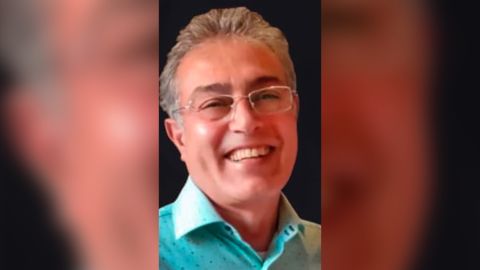
Mohammad Ahmadi was shot and killed outside of a business he and his brother ran together in November 2021, according to CNN affiliate KOAT.
Ahmadi was from Afghanistan, police said.
Muhammad Imtiaz Hussain had been living with his brother, Muhammad Afzaal Hussain, in the same apartment complex for almost five years and had never had any problems.
The brothers came to the US on student visas, studying at the University of New Mexico, and they would often take early morning or late night walks to the university library without any fear for their safety – until now.
Afzaal Hussain was shot, killed and found on a sidewalk on August 1, his face distorted from gunshot wounds, Imtiaz Hussain said.
“This is not a random killing,” said Imtiaz Hussain, who had to witness his brother’s wounds himself. “This is extremely motivated and extreme hatred.”
Afzaal Hussain was loved by everyone and a student leader excited for a future in politics once he gained US citizenship.
“We are in extreme fear,” Imtiaz Hussain said. “Living in this place is very painful.”
Hussain worked on the planning team for the city of Española. He had studied law and human resource management at the University of Punjab in Pakistan before receiving both master’s and bachelor’s degrees in community and regional planning from the University of New Mexico, according to a news release from Española Mayor John Ramon Vigil.
“Muhammad was soft-spoken and kind, and quick to laugh,” Vigil said in a news release last Wednesday. “He was well-respected and well-liked by his coworkers and members of the community.”
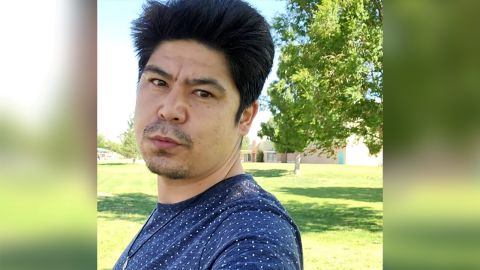
Naeem Hussain, 25, had been a US citizen for less than a month when he became the latest shooting victim found by Albuquerque police officers just before midnight Friday.
His brother-in-law Ehsan Shahalami identified Hussian to CNN Sunday and said he had migrated as a refugee from Pakistan in 2016 – fleeing persecution as a Shia Muslim.
“He had a lot of dreams and he accomplished some of them,” Shahalami said. “His others of him were cut short by this heinous act.”
Hours before his own death, Hussain attended a funeral for two of the recent victims and expressed concern about the shootings, said Tahir Gauba, spokesperson for the Islamic Center of New Mexico.
Hussain worked as a truck driver for several years from Albuquerque, a job he took immense pride in, according to Shahalami.
“He was not even a citizen at the time but he would say, ‘This is our country, these people need us more than any other time,’ so he drove extra shifts to keep things rolling,” Shahalami said.
After becoming a US citizen, Hussain opened his own trucking business, had plans to bring over his wife from Pakistan and was interested in buying property in Virginia, according to Shahalami.
“He was the most generous, kind, giving, patient, and down-to-earth person that I could ever meet,” he said. “He was very hard working.”
Hussain wasn’t just working to support himself – he would share his earnings with family back home, Shahalami said.
After the funerals Friday, Gauba said, Hussain attended a lunch at the mosque and approached him asking if he had more information on the shootings.
“We (The Islamic Center of New Mexico) thought after burial of these two young men (on Friday), we would have closure and move on and let law enforcement investigate,” Gauba said. “Waking up Saturday morning to his (Naeem Hussain) death, the whole community just feels helpless. There’s a lot of fear.”
About 700 to 800 Muslims on Fridays attend the Islamic Center of New Mexico, the largest mosque in Albuquerque founded in the mid-1970s, according to Gauba.
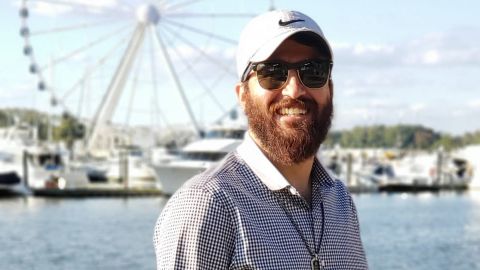
Aftab Hussein was a Muslim man from Pakistan, police said.
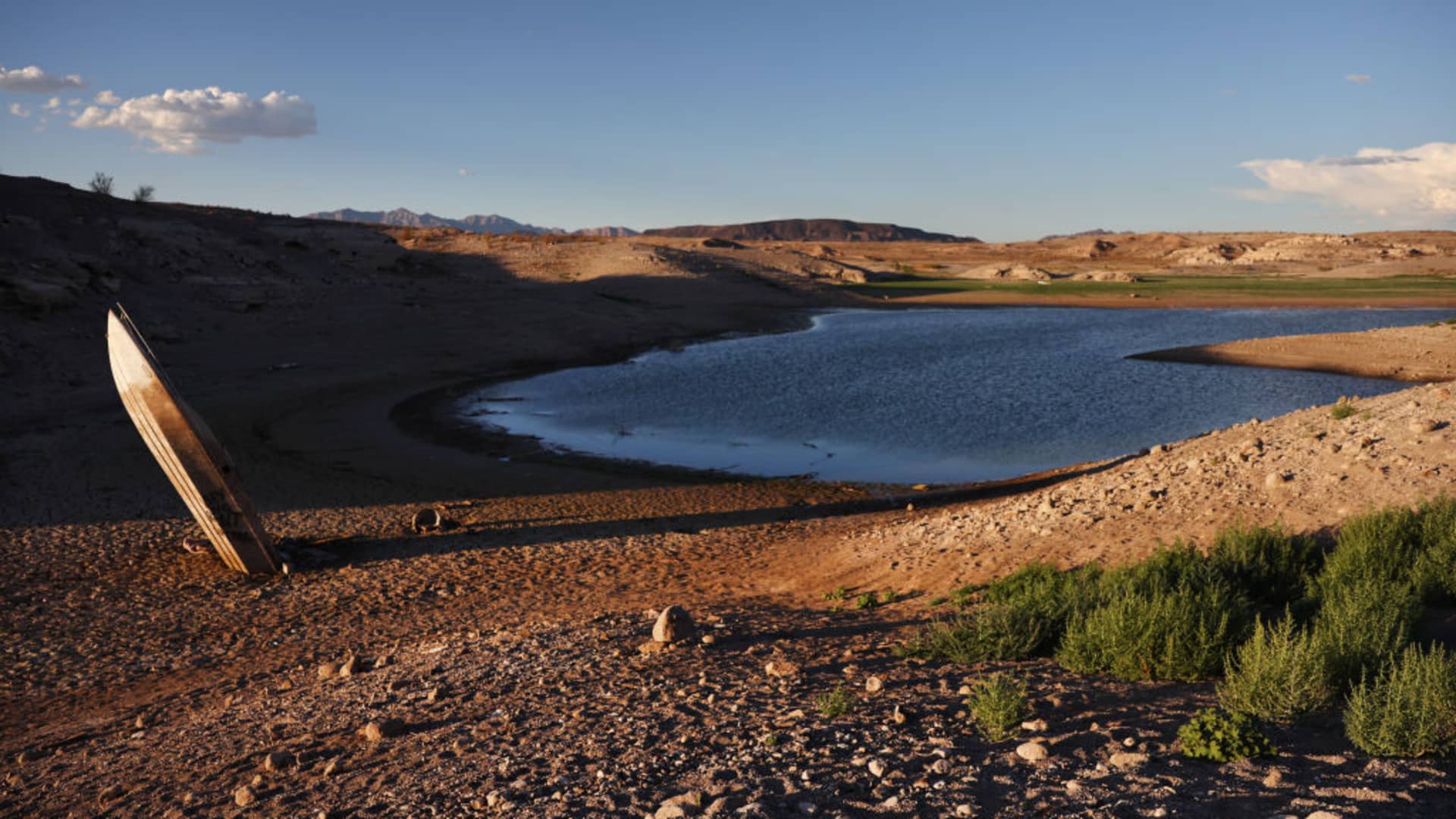
A formerly sunken boat is currently stuck nearly upright in a now-dry section of lakebed at the drought-stricken Lake Mead on June 23, 2022 in the Lake Mead National Recreation Area, Nevada. The US
Mario Tama | Getty Images
Lake Mead, a federal park as well as the country’s largest reservoir, has unveiled yet more secrets as human remains were discovered at Swim Beach on Saturday, officials said.
The find was reported in the late morning at the Lake Mead National Recreation Area, the National Park Service said in a statement. Park rangers cordoned off the area while Las Vegas Metropolitan Police Department divers helped with recovery, it said.
It was the fourth time since May possibly decades-old remains have been reported at the lake located in Arizona and Nevada 30 miles southeast of Las Vegas. The discoveries include the following:
May 1: Remains were found in a barrel. A victim had suffered a gunshot wound and his or her demise might be dated to the 1970s or early ’80s based on clothing, the Las Vegas Metropolitan Police Department said.
May 7: Remains were found in another barrel discovered along a shoreline, officials said.
July 25: Remains were reported at Swim Beach.
The Clark County Medical Examiner is responsible for determining identities, where possible, and cause of death.
A July 6 discovery of remains near the reservoir’s Bolder Islands turned out to be the body of a woman who had gone missing after she fell off a jet ski June 30, authorities said.
Authorities and experts say the four discoveries of possibly much older remains could be the result of the lake’s receding waterline, which has dropped its telltale white “bathtub ring,” made of drying minerals, more than 170 feet since 1983. The reservoir is at about one-quarter of its capacity.
In May, the Southern Nevada Water Authority announced that one of its water supply intakes was exposed to the lake’s descending surface and could no longer be used to draw liquid. The authority said it had long planned for the event, and had a deeper intake ready to take over.
Nearly continuous drought in major regions of the West and Southwest has plagued the Colorado River since at least the dawn of the millennium. Other symptoms have included the mighty Colorado’s longtime failure to reach the Gulf of California until last year, when a binational agreement put water back in Mexico’s delta.
The growing Southwest’s dependence on the Colorado River — which feeds taps and helps grow food for an estimated 33 million people — has also played a role in the lake’s shrinking presence. Last year the federal government announced mandatory water cuts for the seven states that use the Colorado.
In June, Lake Mead’s surface elevation was measured at 1,044.03 feet, its lowest since the lake was filled in the 1930s. In July, that number was bested by a new low: 1040.92 feet.
Some observers have speculated that the lake could reveal some long-held secrets buried by mobsters who killed for power and money in Las Vegas in the decades following World War II.
Historian and Mob Museum Vice President Geoff Schumacher told NBC News affiliate KNSV of Las Vegas that it was unlikely the mob would dump bodies so close to town because it was averse the kind of publicity and law enforcement attention that might have created.
“The mob doesn’t want murder victims to be found in the city because it creates bad publicity in a tourist town,” he told the station in July.
However, Schumacher said in May a body in barrel is a different story.
“A barrel has a signature of a mob hit,” he said. “Stuffing a body in a barrel. Sometimes they would dump it in the water.”
Lake Mead was created by Hoover Dam, completed in 1935 and officially opened the next year. It held up the Colorado River’s flow through Black Canyon and pushed water into four basins that can help it hold two years’ worth of the river’s flow.
The Republican matchup in the Wisconsin governor’s race on Tuesday features competing candidates endorsed by former President Donald Trump and his estranged vice president, Mike Pence. Democrats are picking a candidate to face two-term GOP Sen. Ron Johnson for control of the closely divided chamber.
Meanwhile, voters in Vermont are choosing a replacement for US Sen. patrick leahy as the chamber’s longest-serving member retires. In Minnesota, US Rep. Ilhan Omar faces a Democratic primary challenger who helped defeat a voter referendum to replace the Minneapolis Police Department with a new Department of Public Safety.
What to watch in Tuesday’s primary elections in Wisconsin, Minnesota, Vermont and Connecticut:
WISCONSIN
Construction company co-owner Tim Michels has Trump’s endorsement in the governor’s race and has been spending millions of his own money, touting both the former president’s backing and his years working to build his family’s business into Wisconsin’s largest construction company. Michels casts himself as an outsider, although he previously lost a campaign to oust then-US Sen. Russ Feingold in 2004 and has long been a prominent GOP donor.
Establishment Republicans including Pence and former Gov. Scott Walker have endorsed former Lt. Gov. Rebecca Kleefischwho along with Walker, survived a 2012 recall effort. She argues she has the experience and knowledge to pursue conservative priorities, including dismantling the bipartisan commission that runs elections.
With Senate control at stake, Democrats will also make their pick to take on Johnson. Democratic support coalesced around Lt. Gov. Mandela Barnes beats in the race, when his three top rivals dropped out and threw their support to him. He would become the state’s first Black senator if elected.
Several lesser-known candidates remain in the primary, but Johnson and Republicans have treated Barnes as the nominee, casting him as too liberal for Wisconsin, a state Trump won in 2016 but lost in 2020.
Four Democrats are also running in Wisconsin’s 3rd Congressional District, a seat that opened up with the retirement of veteran Democratic US Rep. Ron Kind. The district has been trending Republican, and Derrick Van Orden — who narrowly lost to Kind in 2020 and has Trump’s endorsement — is running unopposed.
MINNESOTA
Democratic Gov. Tim Walz faces a little-known opponent as he seeks a second term. His likely challenger is Republican Scott Jensena physician and former state lawmaker who has made vaccine skepticism a centerpiece of his campaign and faces token opposition.
Both men have been waging a virtual campaign for months, with Jensen attacking Walz for his management of the pandemic and hammering the governor for rising crime around Minneapolis. Walz has highlighted his own support of abortion rights and suggested that Jensen would be a threat to chip away at the procedure’s legality in Minnesota.
Crime has emerged as the biggest issue in Rep. Omar’s Democratic primary. She faces a challenge from former Minneapolis City Council member Don Samuels, who opposes the movement to defund the police and last year helped defeat efforts to replace the city’s police department. Omar, who supported the referendum, has a substantial money advantage and is expected to benefit from a strong grassroots operation.
The most confusing part of Tuesday’s ballot was for the 1st Congressional District seat that was held by US Rep. Jim Hagedorn, who died earlier this year from cancer. Republican former state Rep. Brad Finstad and Democrat Jeff Ettinger, a former Hormel CEO, are simultaneously competing in primaries to determine the November matchup for the next two-year term representing the southern Minnesota district, as well as a special election to finish the last few months of Hagedorn’s term.
CONNECTICUT
It’s been roughly three decades since Connecticut had a Republican in the US Senate, but the party isn’t giving up.
In the GOP primary to take on Democratic Sen. Richard Blumenthalthe party has endorsed former state House Minority Leader Themis Klarides. She’s a social moderate who supports abortion rights and certain gun control measures and says she did not vote for Trump in 2020. Klarides contends her experience and positions can persuade voters to oppose Blumenthal, a two-term senator who in May registered a 45% job approval rating, his lowest in a Quinnipiac poll since taking office.
Klarides is being challenged by conservative attorney Peter Lumaj and Republican National Committee member Leora Levy, whom Trump endorsed last week. Both candidates oppose abortion rights and further gun restrictions, and they back Trump’s policies from him.
VERMONT
Leahy’s upcoming retirement has opened up two seats in Vermont’s tiny three-person congressional delegation — and the opportunity for the state to send a woman to represent it in Washington for the first time.
Democratic US Rep. Peter Welch, the state’s at-large congressman, quickly launched his Senate bid after Leahy revealed he was stepping down. Leahy, who is president pro tempore of the Senate, has been hospitalized a couple of times over the last two years, including after breaking his hip this summer.
Welch has been endorsed by Vermont Sen. Bernie Sanders and is the odds-on favorite to win the seat in November. He faces two other Democrats in the primary: Isaac Evans-Frantz, an activist, and Dr. Niki Thran, an emergency physician.
On the Republican side, former US Attorney Christina Nolan, retired US Army officer Gerald Malloy and investment banker Myers Mermel are competing for the nomination.
The race to replace Welch has yielded Vermont’s first wide-open US House campaign since 2006.
Two women, including Lt. Gov. Molly Gray and state Senate President Pro Tempore Becca Balint, are the top Democratic candidates in the race. Gray, elected in 2020 in her first political bid, is a lawyer and a former assistant state attorney general.
The winner of the Democratic primary will be the heavy favorite to win the general election in the liberal state. In 2018, Vermont became the last state without female representation in Congress when Mississippi Republican Cindy Hyde-Smith was appointed to the Senate.
___
Associated Press writers Scott Bauer in Madison, Wisconsin; Doug Glass in Minneapolis; Susan Haigh in Hartford, Conn.; and Wilson Ring in Montpelier, Vermont, contributed to this report.
The Senate’s approval of the Inflation Reduction Act (IRA) on Sunday marks the first time the body has ever passed any significant measures to address climate change.
The IRA contains $369 billion in spending over 10 years to subsidize the deployment of clean energy and electric vehicles, and it includes other measures to combat climate change, such as a fee on methane leaked in oil and gas drilling. Overall, it is expected to help the US reach a 40% reduction in the greenhouse gas emissions that cause global warming from 2005 levels by 2030.
Although that falls short of President Biden’s goal of cutting those emissions by 50%, it nonetheless thrilled longtime leaders on climate change, who just 10 days earlier were apoplectic when it appeared the Senate would pass no climate change legislation at all.
“It’s been a long time coming, but the Senate has finally advanced transformative climate legislation,” former Vice President Al Gore, who kick-started the climate movement with his 2006 documentary “An Inconvenient Truth,” tweeted.
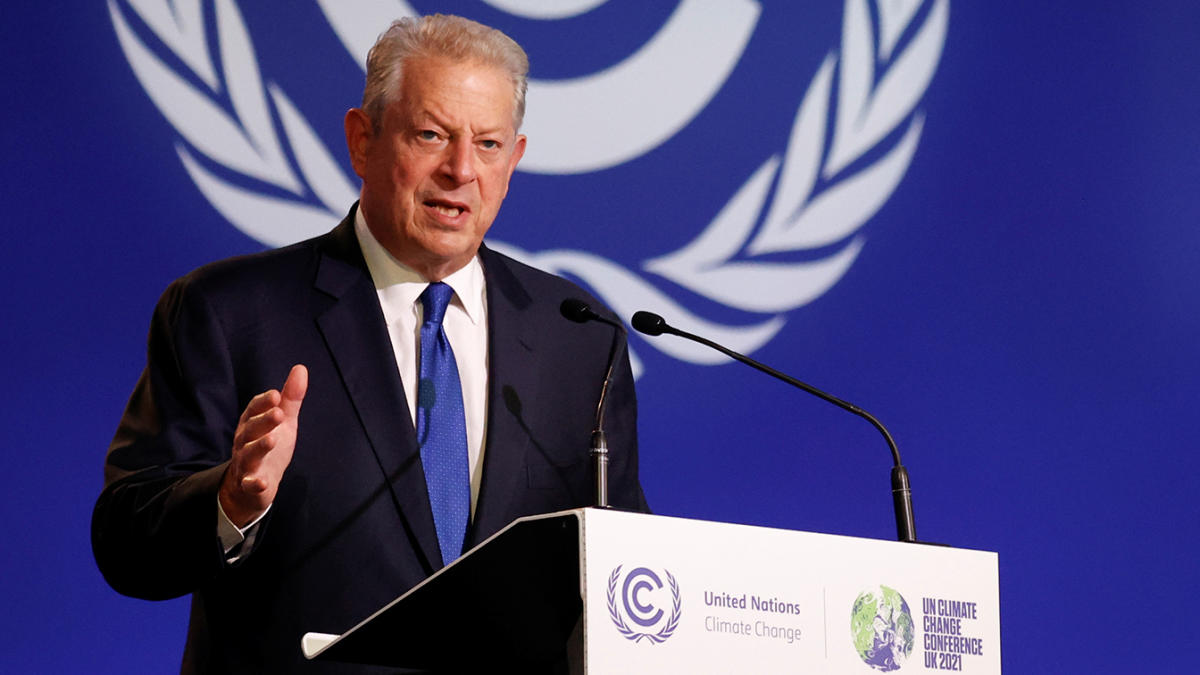
Former Vice President Al Gore at a news conference during the UN Climate Change Conference (COP26) in Glasgow, Scotland, in November 2021. (Phil Noble/Reuters)
While many climate activists have harshly criticized Sen. Joe Manchin, DW.Va., for successfully demanding concessions to fossil fuel producers—such as increased oil and gas drilling on federal land—Gore praised him. “Thank you to Senators [Chuck] Schumer and Manchin and to every Senator who fought to ensure that climate action was a priority in this bill,” he tweeted.
While pleading to keep pushing for more action in the future, the Senate’s leading climate hawks rejoiced.
“We did it,” Tweeted Sen. Brian Shatz, D-Hawaii. “We passed the biggest climate bill that any country has ever passed. It is the reason I came to the Senate.”
For the last 12 years, Sen. Sheldon Whitehouse, DR.I., has given a weekly address on climate change when the Senate is in session. He recently gave his 285th speech on the subject.
“We’ve packed a lot into this historic legislation, and I look forward to spending the coming weeks and months talking with Rhode Islanders about how the bill will lower their energy and health care bills and create millions of jobs,” Whitehouse said in a statement. “I’m also very proud to have shaped the best climate components of the bill, which is expected to double to triple the rate of historical emissions reductions. While there’s still much more to do to lead the planet to safety in the race against climate change, this is by far the biggest step the United States has ever taken to lower emissions. It is good reason for hope.”
In 2009, when he was in the House of Representatives, now-Sen. Ed Markey, D-Mass., co-authored a bill that would have capped and gradually reduced the carbon emissions that are the leading cause of climate change. The bill, known as Waxman-Markey, passed the House but died in the Senate. Markey has remained a leading legislator on climate change since he moved into the upper chamber.
“Twelve years ago, I watched my landmark climate legislation pass in the House and die in the Senate,” Markey said in a statement on Sunday. “Today, powered by a movement that never once wavered in the struggle for a livable future, I joined my Democratic colleagues in passing a bill that makes historic investments in climate justice and delivers the resources we need to have a fighting chance at a livable planet .
“As I know all too well — doing nothing is a political option, but it’s not a planetary option. The Inflation Reduction Act is far from everything we wanted to achieve, but it’s the start of what we need.”
Sen. Ed Markey and Rep. Alexandria Ocasio-Cortez at a news conference to reintroduce the Green New Deal at the US Capitol in April 2021. (Jonathan Ernst/Reuters)
Before Waxman-Markey failed, then-President Barack Obama had tried unsuccessfully to help shepherd it through the Senate. On Sunday, Obama celebrated in apair of tweets that his former vice president accomplished what he couldn’t.
“Thanks to President Biden and Democrats in Congress, people’s bills will get smaller, their lives will get longer, and we’ll have a real shot at avoiding the worst impacts of climate change,” Obama wrote.
Veteran environmental activist Bill McKibben did temper his elation with acknowledgment of the concessions to Manchin. McKibben wrote “The End of Nature,” one of the first popular books about climate change, published in 1989, and he co-founded the climate change advocacy group 350.org in 2007.
“34 years and 40 days ago, Jim Hansen broke the news of global warming to the US Senate,” wrote McKibben in a tweet, referring to the legendary 1988 congressional testimony in which Hansen, then director of NASA’s Institute for Space Studies, stated that the Earth had clearly warmed and that with “99 percent confidence” it was caused by the buildup of greenhouse gases in the atmosphere. “Finally, today, they act[.] It’s late, it’s deeply compromised, and it’s also a great victory for all who have fought so long and hard.”
Celebrities who have been outspoken activists on climate change also chimed in. Mark Ruffalo may be best known for playing the Hulk in Marvel movies, but he is also a leading activist opposing extracting natural gas and oil through fracking.
“As we are living through record heat, fires, floods, droughts, & climate anxiety, we can take a breath. A solid beginning. It will create meaningful jobs, bring manufacturing back to the USA, & begin to address climate change significantly,” I have tweeted.
Former New York City Mayor Michael Bloomberg, a multibillionaire, made climate change one of his signature issues as mayor and in his private philanthropy. On Monday he praised the bill and noted it would be a boon to local governments attempting to deal with climate change.
Leading climate scientists also cheered the news while already looking ahead to the possibility of further action in the future. Michael Mann, the director of the Earth System Science Center at Pennsylvania State University, tweeted that the IRA “Puts us on the path to meeting our obligation to cut carbon emissions in half by 2030, re-establishing American leadership on climate & paving the way to global climate action.” He followed up in response to critics who fretted that scientists were too celebratory of a bill that won’t, in and of itself, avert catastrophic climate change, to argue that it is a first step.
Katharine Hayhoe, who serves as chief scientist of the Nature Conservancy and a professor at Texas Tech, told Yahoo News that the bill’s passage would have global reverberations.
“This is huge,” Hayhoe said on Monday. “The United States is historically responsible for 25% of global carbon emissions and its influence outside its borders on technology, on policy, is enormous.”
Hayhoe acknowledged that the emission reductions would fall short of the US’s pledges in previous global climate agreements, but said “it’s a step in the right direction.”
“I particularly applaud the inclusive nature of the solutions,” she added. “Of course, there’s clean energy and there’s solar and wind and battery manufacturing, and tax credits, but there’s also funds to support climate-smart regenerative agriculture, to support restoring and conserving forest ecosystems and coastal habitats — and to support low-income communities who bear a disproportionate impact from climate change.”
Michael Bloomberg attends a panel at the UN Climate Change Conference (COP25) in Madrid in 2019. (Sergio Perez/Reuters)
There were, however, some detractors. Adam McKay, the director of the blockbuster film “Don’t Look Up,” a thinly veiled climate change parable, criticized the bill as “a greatest hits of everything wrong with USA.”
Peter Kalmus, a climate scientist at NASA’s Jet Propulsion Lab, gave the bill a mixed review in to Twitter thread running down its pros and cons.
The same dichotomy could be seen between mainstream environmental advocacy groups, which exulted in the bill’s passage, and some farther-left organizations that are particularly focused on opposing fossil fuel development.
“This is a historic moment for climate action, and a turning point in American climate policy,” said Evergreen Action executive director Jamal Raad. “Today, the Senate passed the largest climate investment in history — by far. This is the end of a decades-long road to pass a climate bill, but it’s only the beginning of the road towards achieving the greenhouse gas pollution reductions that science demands and building a better future for us all.”
Raad went on to acknowledge that painful compromises were made. Greenpeace USA, on the other hand, focused mainly on those concessions.
“The Inflation Reduction Act includes much needed investment in renewable energy, and a down payment on the union jobs we need to propel a green economy,” Greenpeace USA co-executive director Ebony Twilley Martin said. “But it is also a slap in the face to the frontline communities, grassroots groups, and activists that made this legislation possible. The IRA is packed with giveaways to the fossil fuel executives who are destroying our planet.”
While Greenpeace did not join its major counterparts such as the Sierra Club in urging swift passage of the IRA, it did not call for rejecting it either, instead asking Senate Majority Leader Chuck Schumer “to do everything in his power to kill” a side deal he made to secure Manchin’s support, in which the Senate will later take up separate legislation to streamline the process for obtaining permits for energy development projects.
Still, those views represented a minority opinion. Most people who have been working on climate change for decades seemed to agree with Hayhoe, who said they “should not let the perfect be the enemy of the good,” and Whitehouse, who told the Times’ Friedman: “It’s a bit of a dream come true.” But, he hastened to add, “Of course, it’s only the first chapter of the dream.”
_____
Global temperatures are on the rise and have been for decades. Step inside the data and see the magnitude of climate change.
‘Fox Business Tonight’ host David Asman discusses how the new spending bill Joe Manchin voted for will benefit the IRS massively.
After months of painstaking negotiations, Senate Democrats on Sunday approved a sweeping health care and climate change spending package that amounts to one of the largest tax hikes in decades.
The Inflation Reduction Act of 2022 – which passed along party lines with Democrats employing the budget reconciliation process – would raise an estimated $739 billion over the next decade, with the revenues going toward initiatives designed to combat climate change and curb pharmaceutical prices, as well as efforts to reduce the nation’s $30 trillion debt.
It includes about $433 billion in new spending, while roughly $300 billion of the new revenue raised would go toward paying down the nation’s deficit. Democrats say the legislation will help to reduce inflation and provide relief to Americans in the form of lower health care costs, while Republicans argue the measure does little to tackle higher prices – and could actually exacerbate the crisis.
The nonpartisan Congressional Budget Office said in an analysis last week that the spending bill will have a negligible impact on inflation.
JULY JOBS REPORT ‘SCORCHER’ RAISES ODDS OF ANOTHER SUPER-SIZED FED RATE HIKE
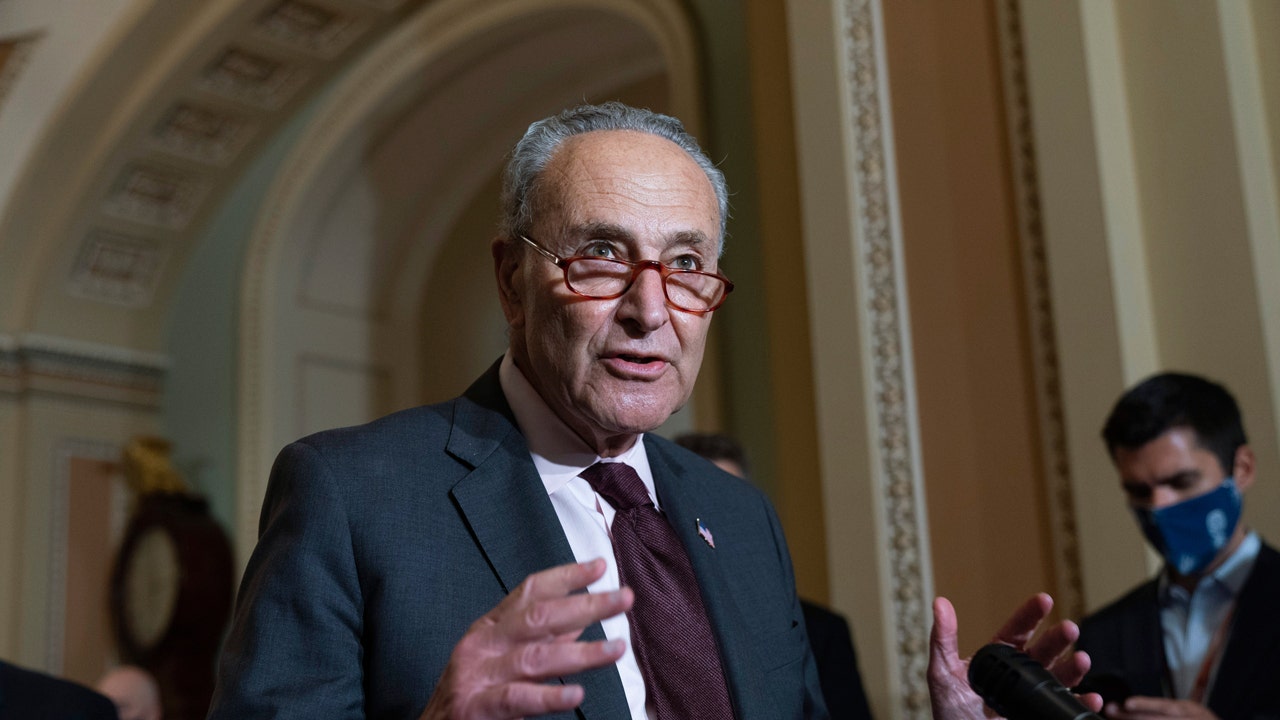
Senate Majority Leader Chuck Schumer gives two thumbs up after passage of the Inflation Reduction Act on Capitol Hill, Aug. 7, 2022. (Shuran Huang for The Washington Post via Getty Images/Getty Images)
The bill, which now heads to the House for a vote that could happen as soon as Friday, is a far cry from the ambitious $2 trillion agenda that President Biden rolled out last year that relied on major tax increases on wealthy Americans and corporations.
“This bill is far from perfect. It’s a compromise. But it’s often how progress is made,” Biden said at the White House last week. “My message to Congress is this: This is the strongest bill you can pass.”
Here is a closer look at the tax increases and other items included in the latest legislation:
Corporate minimum tax: $313 billion
The legislation would impose a 15% minimum tax on corporations based on profits they publicly report on their financial statements to shareholders.
The levy would only apply to companies that reported more than $1 billion in income. Democrats said the levy would affect around 200 of the country’s largest corporations – with profits exceeding $1 billion – that pay less than the current 21% rate for businesses.
Night falls at the Capitol in Washington, Dec. 2, 2021. (AP Photo/J. Scott Applewhite/AP Newsroom)
The private equity industry secured a last-minute victory when several Democrats voted with Republicans to exempt private equity companies and businesses they own from the new corporate minimum tax.
Prescription drug pricing reforms: $288 billion
Under the bill, the Medicare program would have the power to negotiate with pharmaceutical companies in order to lower prices for certain prescription drugs. The proposal would cap what seniors on Medicare pay out of pocket for drugs each year at $2,000. Seniors would also be eligible for free vaccinations if the bill passes, according to a copy of the legislation.
Democrats projected this will save the government roughly $288 billion over the next 10 years.
If pharmaceutical companies raise the prices of their drugs more than the rate of inflation, pharmaceutical companies would be required to rebate Medicare.
US ECONOMY ENTERS TECHNICAL RECESSION AFTER GROWTH TUMBLES 0.9% IN THE SECOND QUARTER
A provision to cap insulin prices at $35 a dose was thrown out by the Senate parliamentarian, a nonpartisan referee, who ruled the limit could be applied to Medicare but not private insurance.
IRS enforcement: $124 billion
the Internal Revenue Service would receive $80 billion in order to enhance tax enforcement by hiring more agents and introducing new technology to pursue tax dodgers.
Democrats expect a beefed-up IRS to add an extra $124 billion in revenue by cracking down on tax evasion by wealthy individuals and corporations.
IRS headquarters in Washington, Feb. 25, 2022. (Al Drago/Bloomberg via Getty Images/Getty Images)
About $1 trillion in federal taxes may be going unpaid each year because of errors, fraud and a lack of resources to adequately enforce collections, IRS Commissioner Chuck Rettig said last year.
Audit rates have declined steadily over the last year, falling to the lowest level in at least four decades amid dwindling funding and enforcement staff (the IRS has 20,000 fewer staff than it did in 2010). The agency audited just 0.45% of personal income tax returns in 2019, down from 1.1% in 2010, Rettig said in January.
Stock buyback tax: $74 billion
The measure includes a 1% excise tax on corporate stock repurchase that is poised to take effect in 2023. Democrats – who estimated this new levy will raise about $74 billion over the next decade – are hoping to slow companies’ tendency to buy back their own stock from investors.
CLICK HERE TO READ MORE ON FOX BUSINESS
“I hate stock buybacks,” Senate Majority Leader Chuck Schumer, DN.Y., said. “I think they are one of the most self-serving things that corporate America does.”
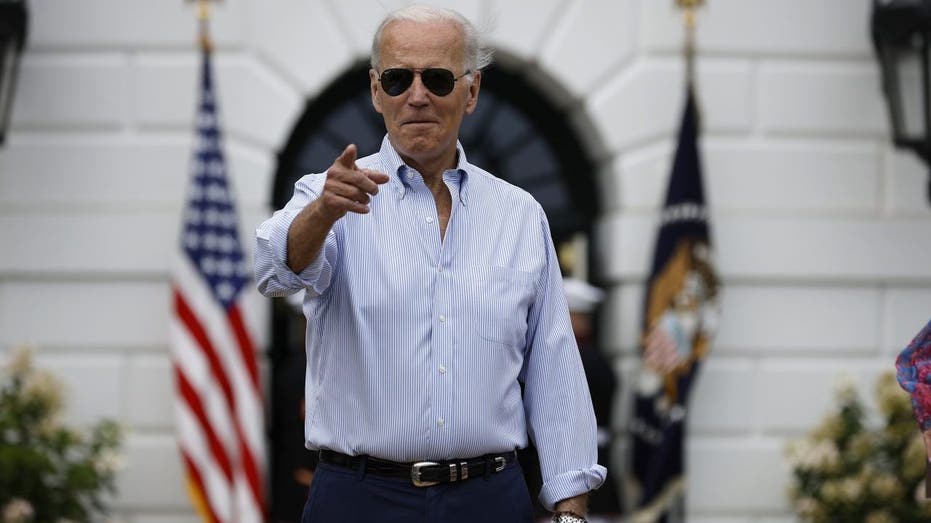
President Biden arrives at the Congressional Picnic on the South Lawn of the White House on July 12, 2022. (Chip Somodevilla/Getty Images/Getty Images)
Democrats included the stock buyback tax to fill the revenue gap after Sen. Kyrsten Sinema, D-Ariz., rejected a repeal of the break for carried interest. That loophole allows private equity fund managers to pay lower taxes on their earnings than they would for regular income, with part of an investment manager’s income taxed as a capital gain – a 23.8% levy – rather than regular income.