Categories
US

Federal Appeals Court Panel Rules Congress Can Get Trump’s Tax Returns

  • A federal appeals court panel ruled that Congress can obtain Trump’s tax returns.
  • The three-judge panel ruled that Congress’ request for Trump’s returns is “legitimate.”
  • Judge David Sentelle also rejected concerns that Congress could intimidate future presidents with such requests.

A federal appeals court panel ruled on Tuesday that House lawmakers can obtain former President Donald Trump’s tax returns from the IRS.

DC Circuit Court of Appeals Judge David B. Sentelle wrote that House Democrats’ request for Trump’s returns “did not violate separation of powers principles” and that lawmakers on the powerful House Ways and Means Committee have a legitimate reason to obtain the returns in order to better monitor the IRS’ policy of auditing sitting presidents.

Sentelle, a Reagan appointee, wrote that Trump’s concerns about some of his private financial information potentially being made public did not outweigh lawmakers’ requests.

“This is certainly inconvenient, but not to the extent that it represents an unconstitutional burden violating the separation of powers,” Sentelle wrote in his 33-page opinion. “Congressional investigations sometimes expose the private information of the entities, organizations, and individuals that they investigate. This does not make them overly burdensome. It is the nature of the investigative and legislative processes.”

The court was also unmoved by arguments that allowing Congress to obtain Trump’s returns would lead to an irrevocable fracture in the relationship between two key branches of government, potentially opening future presidents up to intimidation by lawmakers who could threaten to make their financial dealings public.

“While it is possible that Congress may attempt to threaten the sitting President with an invasive request after
leaving office, every President takes office knowing that he will be subject to the same laws as all other citizens upon leaving office,” the judge wrote. “This is a feature of our democratic republic, not a bug.”

The ruling does not mean that Trump’s returns will be made public, though Democratic Rep. Richard Neal, the chairman of the House Ways and Means Committee, has previously said that some information might be made public in a full report to the House. The committee said shortly after the appeals court decision that it expected to obtain the “requested tax returns and audit files immediately.”

Neal first requested six years of Trump’s taxes from the IRS in April 2019 as part of a wide-ranging investigation into the agency’s auditing process. The request came after Trump repeatedly refused to disclose his tax returns to the public, citing an ongoing audit.

The Treasury Department subsequently asked the Justice Department’s Office of Legal Counsel for guidance on whether it should turn over the documents to Congress, saying it believed Neal’s request was a “pretext” for the panel’s “true purpose” of going on a fishing expedition through Trump’s finances.

The OLC said in May 2019 that it believed the Treasury’s determination was “reasonable[e]”and that the committee did not have a legitimate legislative purpose in sifting through Trump’s taxes. The Treasury Department then denied Neal’s request.

The Ways and Means Committee later filed a lawsuit seeking to enforce its subpoena for Trump’s taxes, and Neal sent another written request in June 2021 for the tax records from 2015 through 2020.

The Treasury Department again contacted the OLC for guidance on the matter, and in a July 2021 letter, a top OLC official wrote that the committee’s investigation covers “a plainly legitimate area for congressional inquiry and possible legislation,” and that it should therefore be granted. access to Trump’s taxes.

Tuesday’s appeals court ruling comes just a day after FBI agents executed a search warrant at Trump’s Mar-a-Lago golf club in south Florida.

The warrant was reportedly related to 15 boxes of documents that Trump took from the White House to his Florida home upon leaving the presidency. The National Archives and Records Administration asked the Justice Department in February to investigate if Trump’s handling of the documents, some of which were marked classified, violated the law.

Categories
US

With or without student loan forgiveness, college still costs too much

The Biden administration has promised to make a decision on student loan forgiveness within weeks, or even days. And yet, college affordability will remain an issue for years to come, experts say.

Increasingly, high school students are rethinking the value of a four-year degree. Many now say it’s just not worth the sky-high cost.

“More and more people are asking ‘is college even worth it?'” said Jason Wingard, the president of Temple University and author of “The College Devaluation Crisis.”

More from Personal Finance:
College enrollment continues to slide
Inflation is making college even more expensive
Would you be included in student loan forgiveness?

“For 50 or 60 years, it was unquestionable; now, what we’re seeing is a flatline,” he added. “Higher education — for the first time — has to pivot in order to be relevant.”

The college system should be more responsive to rapidly evolving needs in the workplace to better position graduates for employment and career success, Wingard argued in his book.

Corporate hiring practices are starting to favor skills over credentials, he said. For higher education, “that means being more applied and not just theoretical.” (Some institutions have already slashed the academic programs that were once central to a liberal arts education.)

College is only getting more expensive

Temple University President Jason Wingard speaks during funeral services for the victims of a deadly row house fire, at Temple University in Philadelphia, Monday, Jan. 17, 2022.

A college education is now the second-largest expense an individual is likely to make in a lifetime — right after purchasing a home.

But it wasn’t always that way.

Deep cuts in state funding for higher education have contributed to significant tuition increases and pushed more of the costs of college onto students, according to an analysis by the Center on Budget and Policy Priorities, a nonpartisan research group based in Washington, DC

Schools are under continued pressure cut costs, admit more students who need less aid or raise tuition. This year, some colleges are hiking tuition as much as 5%, citing inflation and other concerns.

“We’re not getting more money from the state, and the market wants us to charge less,” Wingard said, but “every single cost is going through the roof,” he noted, referring to the rising expense of faculty, buildings and maintenance, books and materials, technology and cyber security. “It’s impossible to do that.”

“We need to make sure education is more affordable for students,” he added. “If the government can’t help make education more affordable, then students are going to stop considering higher education as a viable choice, as a valuable choice.

“This is a critical time.”

“I don’t believe that higher education should be this expensive,” said Kaya Jones, 23, who graduated from Temple in 2020 with a bachelor’s degree in political science and journalism.

To pay for school, Jones worked two jobs and relied on a combination of resources, including contributions from friends and family and student debt.

“It definitely took a whole village,” she said.

Jones is now a program coordinator at Ignite, a political leadership program for women, and still owes roughly $35,000 in loans, not including the Parent PLUS loan in her mother’s name.

Students want colleges that offer better value

For now, 83% of college students are completely, very or somewhat confident “they will earn enough money to make the cost of college worth it,” according to the 2022 College Confidence Index by GradGuard and College Pulse. Parents are less convinced: 63% are confident that a college education will allow their children to get a good job, and only 60% said it is worth the investment.

“Students and their families are prudent to evaluate the return on investment of college like other large consumer purchases,” said John Fees, co-founder and managing director of GradGuard, a tuition insurance provider. Further, “this has implications for how institutions operate,” he added.

There’s much more talk about pre-professionalism.

Eric Greenberg

president of Greenberg Educational Group

These days, students and parents want to get the best value for their college dollars, according to Eric Greenberg, president of the Greenberg Educational Group, a New York-based consulting firm.

“There’s much more talk about pre-professionalism,” he said.

Along with the cost and academic offerings, families should look at the preprofessional services, alumni networks, job placement and average salary just starting out, as well as 10 to 15 years down the road, he said. Then, Greenberg said, it “becomes less about the [name brand].”

Subscribe to CNBC on YouTube.

.

Categories
US

How Wall Street wooed Sen. Kyrsten Sinema and preserved its multi-billion dollar carried interest tax break

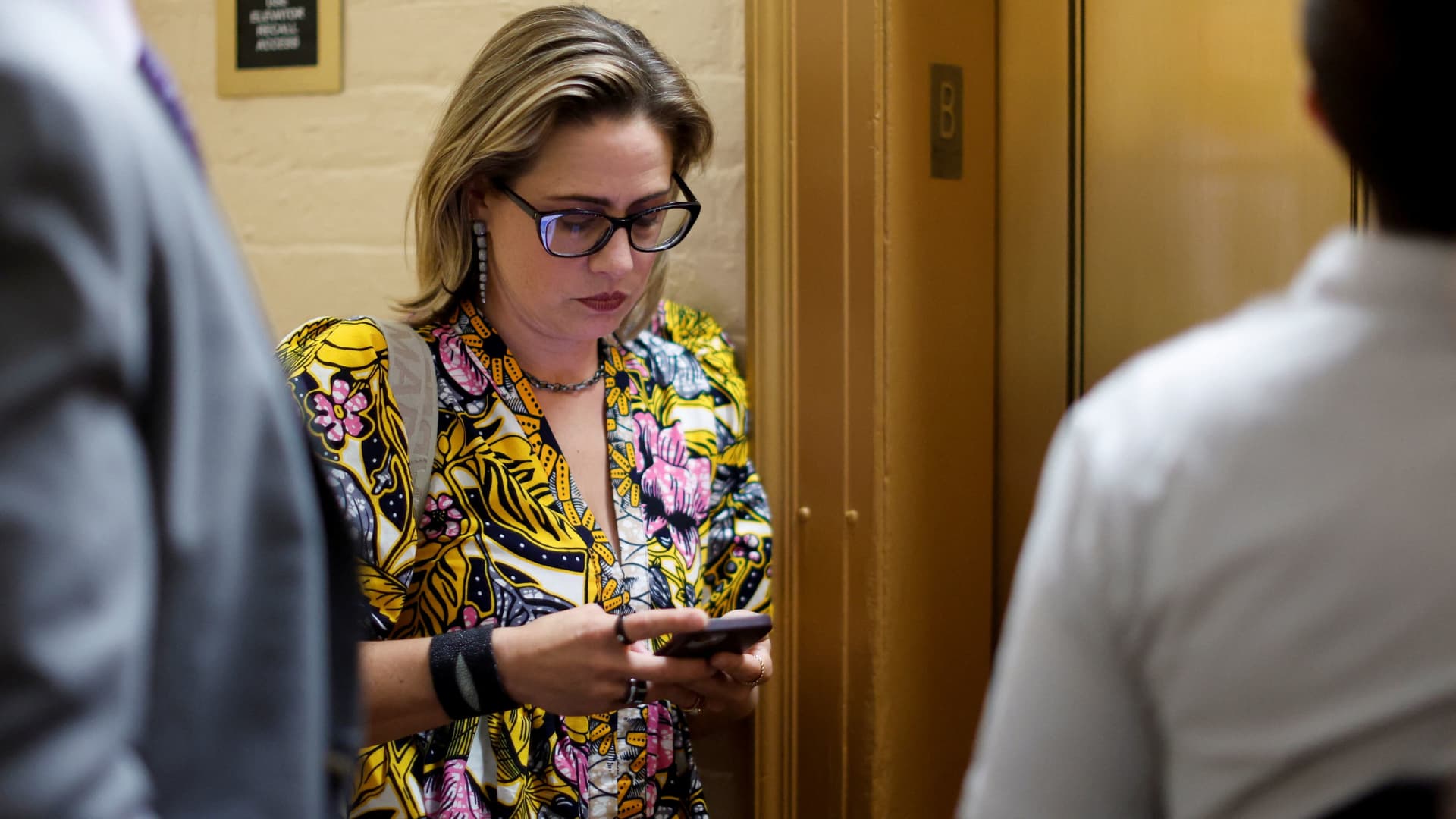
US Senator Kyrsten Sinema (D-AZ) waits for an elevator to go to the Senate floor at the US Capitol in Washington, US August 2, 2022.

Jonathan Ernst | Reuters

Long before Sen. Kyrsten Sinema, D-Ariz., held up a massive spending bill that promised to create jobs, invest in clean energy and tax the rich delivering on some of President Joe Biden’s and the Democratic party’s top campaign promises — those working at Wall Street investment firms had donated millions to the freshman senator’s campaign.

One of her main objections was the bill’s so-called carried interest tax provision — which would have closed an arcane loophole in tax law that allowed hedge fund managers, law firm partners and private equity executives, among others, to pay significantly less taxes than ordinary workers.

Closing that loophole, which was estimated to raise $14 billion in tax revenue over the next decade, was supposed to help pay for $433 billion in spending on climate and health initiatives.

To get Sinema’s vote, and the bill passed, Senate Majority Leader Chuck Schumer said Democrats had “no choice” but to drop that provision from the broader Inflation Reduction Act. The bill instead imposes a 1% tax on all corporate share buybacks along with a minimum corporate tax rate of 15% on companies with more than $1 billion in revenues. The massive spending-and-tax package squeaked through the evenly divided Senate 51-50 on Sunday with Vice President Kamala Harris’ tie-breaking vote. It’s expected to pass the House later this week.

American Investment Council

As Biden rallied support in the Senate just over a year ago to close the loophole, the head of the trade group representing the world’s largest private equity firms began cranking up the pressure on Sinema and fellow Arizona Sen. Mark Kelly, who is also a Democrat.

“Arizona Sens. Kyrsten Sinema and Mark Kelly will be critical voices and votes in the upcoming infrastructure debate,” Drew Maloney, the president and CEO of the American Investment Council, wrote in an op-ed published by an Arizona news outlet. The trade group represents some of the world’s largest private equity firms, including Blackstone, Apollo Global Management, Carlyle Group and KKR. “I urge them to continue supporting private investment’s role in helping small businesses here in Arizona and across the country,” he added.

One of the group’s top priorities was then, and is now, to preserve “carried interest capital gains and prevent elimination of interest deductibility.”

“Our team worked to ensure that members of Congress from both sides of the aisle understand how private equity directly employs workers and supports small businesses throughout their communities,” Maloney said in a statement to CNBC. “Our advocacy helped prevent punitive tax increases that would make it harder for investors to continue to support jobs, small businesses, and pensions in every state.”

Sinema’s been fighting to help preserve the loophole since at least last year when she told Democratic leaders she opposed closing the carried interest tax break. It was subsequently stripped out of a House bill, according to NBC News.

Sinema’s opposition, along with a bevy of concerns from Sen. Joe Manchin, DW.V., helped sink a much more sprawling version of the bill, which was significantly back to win over the two moderate Democrats.

‘What’s best for Arizona’

“Senator Sinema makes every decision based on one criteria: what’s best for Arizona,” Sinema’s spokeswoman Hannah Hurley told CNBC in an email. She said Sinema has been clear for over a year that she will only support tax reforms and revenue options that support Arizona’s economic growth and competitiveness. Sinema believes that “disincentivizing” investments in Arizona businesses would hurt the state’s economy and ability to create jobs, Hurley said.

In the weeks before Sunday’s vote, Sinema’s office was inundated with calls from lobbyists representing hedge funds, private equity firms and other money managers arguing against closing the carried interest tax loophole, according to people familiar with the matter. In the runup to last week’s deal, Ella’s senator and her staff fielded numerous in-person meetings with the industry, said some of the people familiar with these meetings, asking not to be identified to speak freely about private efforts to connect with Sinema .

Since she was elected to the Senate in 2018, Sinema has been a sympathetic ear to the industry. Last September, she huddled for a lunch meeting at a Philadelphia restaurant with Michael Forman, who manages at least $34 billion as CEO of a Philly-based investment firm FS Investments, and one of his executives, according to people familiar with the lunch. Forman did not return emails and calls seeking comment.

“Every single major industry that is not supportive of what’s in there is meeting with Sinema and she is meeting with anybody and everybody,” a lobbyist representing some of the biggest investment firms in the world told CNBC before Schumer announced late Thursday that Democrats agreed to drop the carried interest provision to get her vote. Sinema said she would work separately “to enact carried interest tax reforms.”

Private equity donors

Even before Sinema was elected to the Senate in 2018, she supported private equity investors as a member in the House of Representatives. In 2016, Sinema said the industry provided “billions of dollars each year to Main Street businesses,” according to the New York Times.

Sinema won a coveted seat on the powerful Banking Committee and made quick work networking with — and raising donations from — the industry she would oversee. Since the start of the 2018 election cycle, she’s raked in at least $2 million from the securities and investment industry — outraising Senate Banking Chairman Sherrod Brown’s $770,000 in industry donations over the same time, according to Federal Election Commission data analyzed by the nonpartisan campaign finance watchdog OpenSecrets. Both Sinema and Brown, D-Ohio, are up for reelection in 2024.

Sinema’s take includes $10,000 in campaign donations from the American Investment Council’s political action committee, half of which was donated to her campaign after Maloney’s op-ed ran last year.

Employees at private equity firms Kohlberg Kravis Roberts, the Carlyle Group and Apollo Global Management donated more than $95,000, combined, to Sinema from the 2018 election through the current 2022 election cycle, according to campaign finance data.

That includes $11,600 in combined donations from KKR co-founders Henry Kravis and George Roberts, according to Federal Election Commission filings. Records show that Carlyle’s and Apollo’s political action committees also donated a combined $15,000 to Sinema’s reelection campaign.

Representatives for KKR and Carlyle declined to comment. Representatives for Apollo and Blackstone did not return requests for comment.

‘Hats off to the P/E lobby!’

The reason why some of Wall Street’s wealthiest money managers want to preserve the carried interest loophole is because it taxes their profits at a lower rate than the ordinary income. Instead of paying the standard individual income tax rates of up to 37% for individuals who earn more than $539,900 ($647,850 for married couples filing jointly), carried interest is taxed at the capital gains rate, which is usually around 20% for high-income earners, as long as the investment is held for at least three years.

Democrats wanted to make executives hold those investments for at least five years to get the better rate. The industry defends the carried interest tax break, saying it helps preserve investments that benefit small businesses. Critics say it’s just a massive tax break for the rich.

Lloyd Blankfein, the former CEO of Wall Street investment bank Goldman Sachs, mockingly congratulated the private equity industry on Twitter after the carried interest provision was stripped from the Inflation Reduction Act: “Hats off to the P/E lobby! After all these years and budget crises, the highest paid people still pay the lower capital gains tax on earnings from their labor.”

.

Categories
US

How Wall Street wooed Sen. Kyrsten Sinema and preserved its multi-billion dollar carried interest tax break

US Senator Kyrsten Sinema (D-AZ) waits for an elevator to go to the Senate floor at the US Capitol in Washington, US August 2, 2022.

Jonathan Ernst | Reuters

Long before Sen. Kyrsten Sinema, D-Ariz., held up a massive spending bill that promised to create jobs, invest in clean energy and tax the rich delivering on some of President Joe Biden’s and the Democratic party’s top campaign promises — those working at Wall Street investment firms had donated millions to the freshman senator’s campaign.

One of her main objections was the bill’s so-called carried interest tax provision — which would have closed an arcane loophole in tax law that allowed hedge fund managers, law firm partners and private equity executives, among others, to pay significantly less taxes than ordinary workers.

Closing that loophole, which was estimated to raise $14 billion in tax revenue over the next decade, was supposed to help pay for $433 billion in spending on climate and health initiatives.

To get Sinema’s vote, and the bill passed, Senate Majority Leader Chuck Schumer said Democrats had “no choice” but to drop that provision from the broader Inflation Reduction Act. The bill instead imposes a 1% tax on all corporate share buybacks along with a minimum corporate tax rate of 15% on companies with more than $1 billion in revenues. The massive spending-and-tax package squeaked through the evenly divided Senate 51-50 on Sunday with Vice President Kamala Harris’ tie-breaking vote. It’s expected to pass the House later this week.

American Investment Council

As Biden rallied support in the Senate just over a year ago to close the loophole, the head of the trade group representing the world’s largest private equity firms began cranking up the pressure on Sinema and fellow Arizona Sen. Mark Kelly, who is also a Democrat.

“Arizona Sens. Kyrsten Sinema and Mark Kelly will be critical voices and votes in the upcoming infrastructure debate,” Drew Maloney, the president and CEO of the American Investment Council, wrote in an op-ed published by an Arizona news outlet. The trade group represents some of the world’s largest private equity firms, including Blackstone, Apollo Global Management, Carlyle Group and KKR. “I urge them to continue supporting private investment’s role in helping small businesses here in Arizona and across the country,” he added.

One of the group’s top priorities was then, and is now, to preserve “carried interest capital gains and prevent elimination of interest deductibility.”

“Our team worked to ensure that members of Congress from both sides of the aisle understand how private equity directly employs workers and supports small businesses throughout their communities,” Maloney said in a statement to CNBC. “Our advocacy helped prevent punitive tax increases that would make it harder for investors to continue to support jobs, small businesses, and pensions in every state.”

Sinema’s been fighting to help preserve the loophole since at least last year when she told Democratic leaders she opposed closing the carried interest tax break. It was subsequently stripped out of a House bill, according to NBC News.

Sinema’s opposition, along with a bevy of concerns from Sen. Joe Manchin, DW.V., helped sink a much more sprawling version of the bill, which was significantly back to win over the two moderate Democrats.

‘What’s best for Arizona’

“Senator Sinema makes every decision based on one criteria: what’s best for Arizona,” Sinema’s spokeswoman Hannah Hurley told CNBC in an email. She said Sinema has been clear for over a year that she will only support tax reforms and revenue options that support Arizona’s economic growth and competitiveness. Sinema believes that “disincentivizing” investments in Arizona businesses would hurt the state’s economy and ability to create jobs, Hurley said.

In the weeks before Sunday’s vote, Sinema’s office was inundated with calls from lobbyists representing hedge funds, private equity firms and other money managers arguing against closing the carried interest tax loophole, according to people familiar with the matter. In the runup to last week’s deal, Ella’s senator and her staff fielded numerous in-person meetings with the industry, said some of the people familiar with these meetings, asking not to be identified to speak freely about private efforts to connect with Sinema .

Since she was elected to the Senate in 2018, Sinema has been a sympathetic ear to the industry. Last September, she huddled for a lunch meeting at a Philadelphia restaurant with Michael Forman, who manages at least $34 billion as CEO of a Philly-based investment firm FS Investments, and one of his executives, according to people familiar with the lunch. Forman did not return emails and calls seeking comment.

“Every single major industry that is not supportive of what’s in there is meeting with Sinema and she is meeting with anybody and everybody,” a lobbyist representing some of the biggest investment firms in the world told CNBC before Schumer announced late Thursday that Democrats agreed to drop the carried interest provision to get her vote. Sinema said she would work separately “to enact carried interest tax reforms.”

Private equity donors

Even before Sinema was elected to the Senate in 2018, she supported private equity investors as a member in the House of Representatives. In 2016, Sinema said the industry provided “billions of dollars each year to Main Street businesses,” according to the New York Times.

Sinema won a coveted seat on the powerful Banking Committee and made quick work networking with — and raising donations from — the industry she would oversee. Since the start of the 2018 election cycle, she’s raked in at least $2 million from the securities and investment industry — outraising Senate Banking Chairman Sherrod Brown’s $770,000 in industry donations over the same time, according to Federal Election Commission data analyzed by the nonpartisan campaign finance watchdog OpenSecrets. Both Sinema and Brown, D-Ohio, are up for reelection in 2024.

Sinema’s take includes $10,000 in campaign donations from the American Investment Council’s political action committee, half of which was donated to her campaign after Maloney’s op-ed ran last year.

Employees at private equity firms Kohlberg Kravis Roberts, the Carlyle Group and Apollo Global Management donated more than $95,000, combined, to Sinema from the 2018 election through the current 2022 election cycle, according to campaign finance data.

That includes $11,600 in combined donations from KKR co-founders Henry Kravis and George Roberts, according to Federal Election Commission filings. Records show that Carlyle’s and Apollo’s political action committees also donated a combined $15,000 to Sinema’s reelection campaign.

Representatives for KKR and Carlyle declined to comment. Representatives for Apollo and Blackstone did not return requests for comment.

‘Hats off to the P/E lobby!’

The reason why some of Wall Street’s wealthiest money managers want to preserve the carried interest loophole is because it taxes their profits at a lower rate than the ordinary income. Instead of paying the standard individual income tax rates of up to 37% for individuals who earn more than $539,900 ($647,850 for married couples filing jointly), carried interest is taxed at the capital gains rate, which is usually around 20% for high-income earners, as long as the investment is held for at least three years.

Democrats wanted to make executives hold those investments for at least five years to get the better rate. The industry defends the carried interest tax break, saying it helps preserve investments that benefit small businesses. Critics say it’s just a massive tax break for the rich.

Lloyd Blankfein, the former CEO of Wall Street investment bank Goldman Sachs, mockingly congratulated the private equity industry on Twitter after the carried interest provision was stripped from the Inflation Reduction Act: “Hats off to the P/E lobby! After all these years and budget crises, the highest paid people still pay the lower capital gains tax on earnings from their labor.”

.

Categories
US

Florida man filming sunrise dies after sand dune collapses on him

NEWYou can now listen to Fox News articles!

A Florida man died filming the sunrise Monday after a sand dune he was lying under collapsed on top of him, police say.

Other beach-goers later saw parts of the man’s body protruding from the sand and called police. The Martin County Sheriff’s Office says the victim was 35 years old, but did not release a name.

“An early morning beachgoer noticed a portion of the victim’s body protruding from the sand and called for help. It appears that the man died hours earlier from asphyxia as a result of being trapped underneath the sand,” the MCSO wrote in a statement.

“Detectives say no foul play was evident and it appears that the victim was resting underneath a sand dune while taking video of a sunrise, but the dune collapsed trapping him underneath,” police added.

DOLPHIN DEAD IN FLORIDA AFTER BEING IMPALED IN HEAD: NOAA

Carmel beach on cloudy day, Carmel-by-the-sea, California, USA.  Highway 01.

Carmel beach on cloudy day, Carmel-by-the-sea, California, USA. Highway 01.

FLORIDA CYCLIST FALLS TO HER DEATH FROM PALM BEACH DRAW BRIDGE

Police say they do not suspect foul play to be involved in death, but nevertheless are running toxicology tests on the body.

“Investigators are awaiting toxicology tests, which is standard. Those tests, however, are not likely to change the outcome of this incident being a tragic accident,” police said.

CLICK HERE TO GET THE FOX NEWS APP

Police say the man had likely died just hours before he was found.

Categories
US

What’s at stake in Minnesota’s primary election

Minnesota is set to learn Tuesday who its newest member of Congress is, bringing the state’s eight-person delegation back to full strength after nearly six months with a vacancy.

The special election to replace the late Rep. Jim Hagedorn is a feature contest on a primary election day that will help finalize November’s ballot for other marquee races. Key primaries to watch include the Republican contest for attorney general and DFL primaries against congressional incumbents Betty McCollum and Ilhan Omar.

In southern Minnesota’s 1st Congressional District, Republican Brad Finstad and DFLer Jeff Ettinger are vying to fill the final few months of Hagedorn’s term. Finstad, a farmer and former state legislator, is also facing a challenge from Republican state Rep. Jeremy Munson to be the nominee for the next two-year term; Ettinger was favored on the DFL side, although he also has a pair of challengers from within the party.

Turnout overall for the August primary could struggle to match 2018 and 2020 — around 22 percent of eligible voters in each of those — due to a lack of competitive races high on the ballot.

Secretary of State Steve Simon has declined to predict the turnout level.

“So much of it depends on people’s engagement with particular races,” Simon said Monday. “If there are hot races on the ballot, turnout is up in Minnesota. If there aren’t hot races, then turnout is down.”

DFL Gov. Tim Walz faces only nominal opposition from frequent candidate Ole Savior. And Republican governor candidate Scott Jensen, who won his party’s endorsement in May, is facing minor opposition from Republicans Bob Carney and Joyce Lacey on the GOP ballot.

The two marijuana parties, which enjoy elevated status in Minnesota, have primaries to decide their gubernatorial nominees.

The only statewide primary race with much intrigue is for attorney general. First-time candidate and private attorney Jim Schultz carried the Republican endorsement into his matchup with former state Rep. Doug Wardlow, who was the party’s 2018 nominee.

The winner will advance to a fall campaign against DFL Attorney General Keith Ellison, who has a DFL challenger in Bill Dahn but isn’t expected to face any trouble. The attorney general’s election could be one of the fiercest and most expensive Minnesota has seen, with Republicans sensing opportunity around an office they haven’t held in 50 years.

There are scattered primaries for the Legislature as well.

Some Republican incumbents, including several from the GOP Senate majority, are dealing with serious challenges from the right.

And some DFL incumbents are on the ropes as well.

The legislative primaries most in the spotlight:

  • Senate District 5 in northern Minnesota between Republican Sen. Paul Utke, endorsed candidate Bret Bussman and another candidate, Dale Anderson.

  • Senate District 10 in central Minnesota, an open seat where former legislators Jim Newberger and Steve Wenzel were among those vying for the GOP nod.

  • Senate District 23 in southern Minnesota where Republican Sen. Gene Dornink was challenged by restaurant owner Lisa Hanson.

  • Senate District 54 in the Prior Lake area between Republican Sen. Eric Pratt and endorsed candidate Natalie Barnes.

  • Senate District 56 on the DFL side between endorsed candidate Justin Emmerich and former state Rep. Erin Maye Quade.

  • Senate District 62 in Minneapolis where DFL Sen. Omar Fateh was up against a well-connected rival in Shaun Laden.

  • Senate District 65 in St. Paul where longtime DFL Sen. Sandy Pappas had two competitive challengers in Zuki Ellis and Sheigh Freeberg.

  • House District 50B in the Bloomington area where two DFL incumbents were facing off — Reps. Andrew Carlson and Steve Elkins.

  • House District 52A in Eagan between two DFL incumbents — Reps. Sandra Masin and Liz Reyer.

  • House District 54A in Shakopee, which was a rematch between Republican state Rep. Erik Mortensen and former GOP state Rep. Bob Loonan.

Other newly open seats after the once-per-decade redistricting also attracted multiple candidate fields to be narrowed in the party primary.

Down the ballot were key local races, including two in the most populous Hennepin County. Voters there were chopping lists of candidates down to two for the open county attorney and county sheriff races that will be decided in November.

Categories
US

Boy, 17, shot in broad daylight in NYC

A 17-year-old boy was shot in broad daylight when a group of young suspects approached him and brazenly opened fire in Queens this week, wild video shows.

The teen was on 118th Avenue near 152nd Street in South Jamaica just after 5 pm Monday when four assailants walked up to him on the sidewalk, according to cops and the footage released early Tuesday.

One of the suspects appeared to say something to him before two others opened fire – prompting the victim to run into the street in front of a passing car, the clip shows.

Two young gunmen brazenly opened fire on the 17-year-old victim in broad daylight Monday, cops said.
NYPD

All four suspects – who cops say appear to be teens themselves – fled after the shooting.

The victim, who was struck in the right thigh, was taken to Long Island Jewish Medical Center in stable condition.

He told police he does not know the suspects, and authorities say he does not have a criminal record.

The teen victim fled into the street as the gunmen fired at him, the footage shows.
NYPD
Two of the suspects are shown firing at the victim while two others stand by.
The suspects were still on the loose Tuesday.
NYPD

The motive for the shooting is unclear.

Cops were still looking to track down the suspects Tuesday.

.

Categories
US

Arkansas judge’s body found in bottom of lake after missing from trip

Categories
US

NJ hospital marketing director arrested after cache of 39 guns, ammo found in office closet

A New Jersey hospital marketing director was arrested this week after a bomb threat at the facility led police to discover a cache of weapons and ammunition stashed in an unlocked office closet.

Reuven Alonalayoff, who worked at Hudson Regional Hospital, was taken into custody Sunday at Newark Liberty International Airport with assistance from the US Department of Homeland Security Investigations.

Alonalayoff, 46, of Elmwood Park, was charged with possession of an assault firearm and two counts of possession of a high capacity magazine.

Lawyer information for him was not immediately available.

His arrest comes weeks after the hospital received a phone call on July 18 that a bomb was in the facility, the Secaucus Police Department said in a news release.


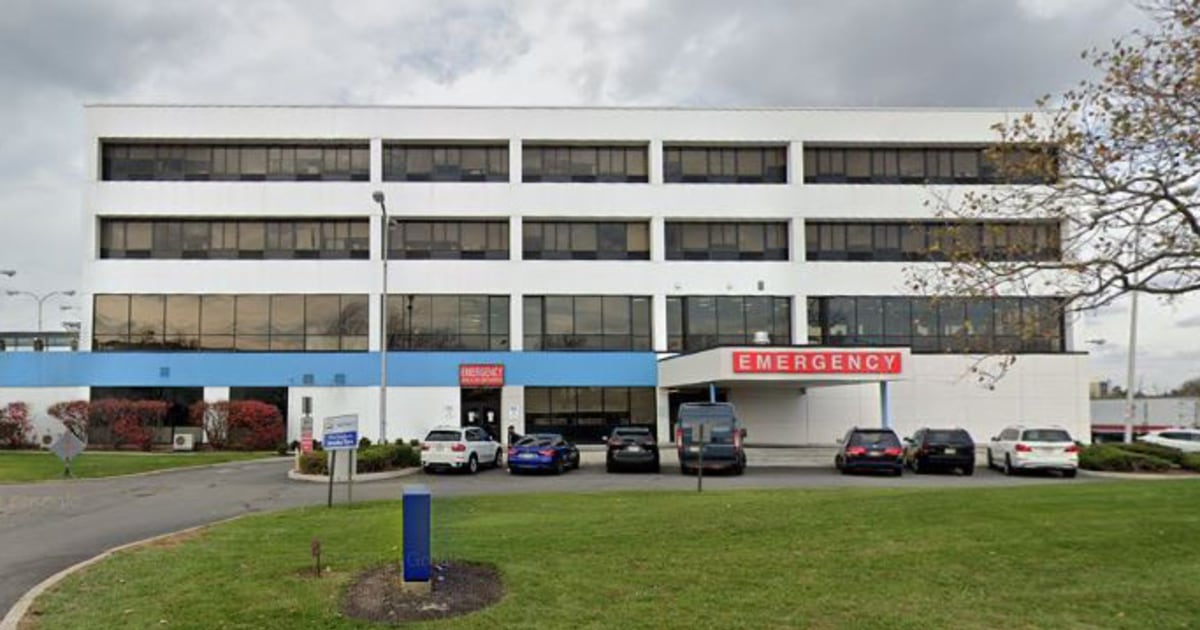
Image: Hudson Regional Hospital
Hudson Regional Hospital in Secaucus, NJGoogle

Officers, along with bomb detection canines, swept the hospital. It was a dog that flagged the unlocked closet, according to officials.

“Upon entering the closet, police discovered a large cache of rifles, shotguns and handguns, along with assorted ammunition for the firearms,” police said.

In total, authorities found 11 handguns of various calibers, 27 rifles/shotguns and a high-capacity magazine with 14 rounds, according to authorities. They also located a Kriss Vector .45-caliber semiautomatic rifle with a high-capacity magazine and determined it was an assault rifle, police said.

Authorities learned the bomb threat was a hoax and investigated the arsenal of weapons.

It’s not clear how Alonalayoff got the weapons into the hospital, how long they were stored there or why they were in the office closet. NBC News has reached out to officials for comment on those details as well as Alonalayoff’s status with the hospital.

“The unsecured storage of a large cache of weaponry, especially in this location, certainly creates a risk to public safety,” Police Chief Dennis Miller said. “I commend the efforts and professionalism of all the police personnel involved in this investigation and am thankful this situation was resolved without anyone being harmed.”

Categories
US

3 dead in shooting at Florida Narcotics Anonymous meeting

EDGEWATER, Fla. — A man went into a Narcotics Anonymous meeting in Florida and fatally shot his ex-girlfriend and her friend before turning the gun on himself, police said Tuesday.

Quinton Hunter brandished the gun shortly after entering the Monday night meeting, Edgewater police Chief Joseph Mahoney said during a news conference Tuesday. About 20 other participants safely fled and called police, he said.

Erica Hoffman and Ian Greenfield were already dead when officers arrived, the chief said. At some point after the shooting, Hunter began recording a Facebook Live which showed him wearing goggles and breathing heavily.

“It appears from the timeline we have that he had already shot Mr. Greenfield and had fired several other shots before he went live,” the chief said. “But he didn’t make any comments, he didn’t communicate with us. Just heavy breathing. It was very strange.”

Officers sought to make contact with the suspect to negotiate before a SWAT team breached the building and found the gunman and the two others dead inside, the post said.

Hunter had a violent criminal history, the chief said. He also said investigators are still trying to figure out the relationship between Greenfield and Hoffman, and that Hunter may have been motivated by jealousy.

The meeting was held in the offices of Be The Bridge, a nonprofit organization that helps the homeless and others get a fresh start in life.

.