Categories
US

St. Croix County stabbing suspect to appear in court Monday

HUDSON, Wis. (WEAU) – The suspect in a deadly stabbing spree in St. Croix County Saturday is set to appear in court on Monday.

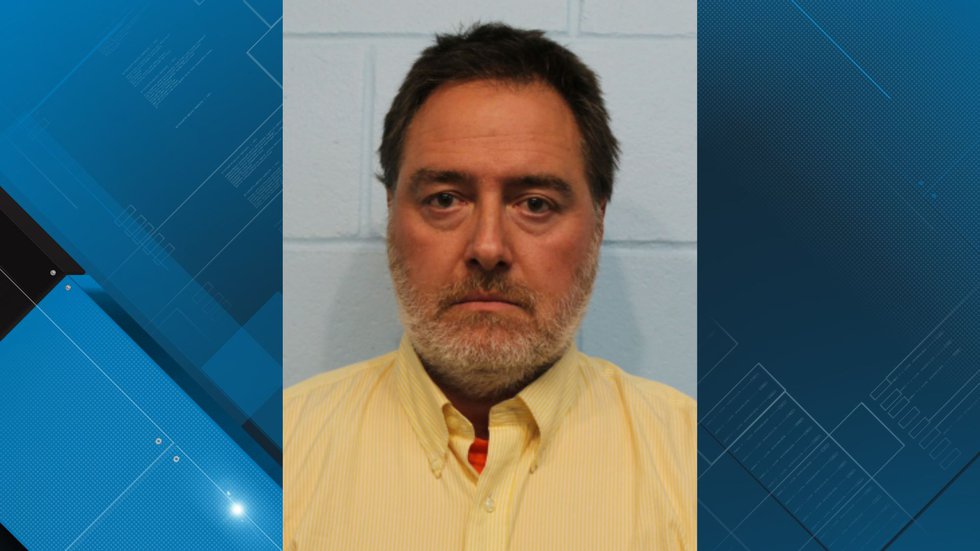
52-year-old Nicolae Miu of Prior Lake, Minn. is being held at the St. Croix County Jail awaiting formal charges for allegedly stabbing five people on the Apple River Saturday, killing one person.

In a release, the St. Croix County Sheriff’s Office said they were told that multiple people had been stabbed on the river while tubing upstream from the Highway 35/Highway 64 bridge in the Town of Somerset at 3:47 pm on Saturday, July 30 Deputies found five people with stab wounds to their abdomen and began providing medical care to the victims. Two of the victims were flown and two others were taken by ambulance to Regions Hospital in St. Paul, Minn. The fifth victim, a 17-year-old boy identified by his family as Isaac Schuman of Stillwater, Minn., was taken to Lakeview Hospital in Stillwater where we were pronounced dead.

Four other victims, a 24-year-old woman from Burnsville, Minn., a 22-year-old man from Elk River, Minn., and a 20-year-old man and 22-year-old man from Luck, Wis. ., suffered serious or critical torso or chest injuries, according to the release.

The family of Isaac Schuman, who was killed in the stabbings, released a statement Sunday, said the 17-year-old soon-to-be high school senior was preparing to apply to several universities to pursue a degree in electrical engineering. Schuman had started a car and boat detailing business in the past year, and his family called him “mature for his age and had a forward-looking mentality that was uncommon for a high school junior.” Family members said he “entered every room with a big smile, infectiously positive aura and lifted everyone around him up,” and that he had a bright future ahead of him.

Miu, the suspect in the stabbings, was found at the exit point for tubers on the river at Village Park in Somerset, Wis. after witnesses told law enforcement about his location of him. Miu was taken into custody without incident.

Miu is scheduled to appear in St. Croix County Circuit Court at 1 pm on Monday. He is being recommended for one charge of 1st-degree intentional homicide with the use of a dangerous weapon, four counts of mayhem and four counts of aggravated battery with the use of a dangerous weapon with the intention to cause great bodily harm. A conviction of 1st-degree intentional homicide in Wisconsin carries a mandatory life sentence in prison.

The investigation continues and anyone who has video of the incident is asked to send it to St. Croix County Sheriff’s Office investigator John Shilts, who can be contacted at 715-381-4319 or by emailing him at [email protected].

1 killed, 4 injured in stabbing attack on the Apple River.
1 killed, 4 injured in stabbing attack on the Apple River.(KARE 11 News)

Copyright 2022 WEAU. All rights reserved.

.

Categories
US

Hyperion, world’s tallest living tree, is off-limits to visitors now : NPR

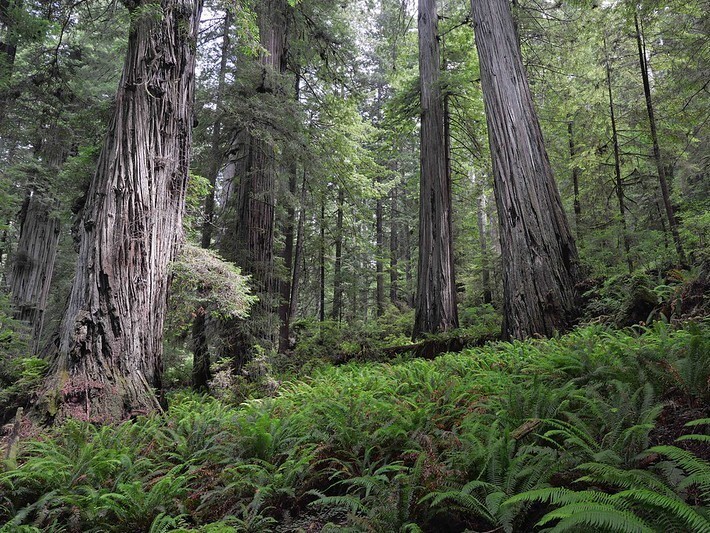
Hyperion is located in a closed part of the Redwood National Park. Still, many visitors have attempted to go off trail to observe the tree.

John S Chao/Flickr


hide caption

toggle caption

John S Chao/Flickr


Hyperion is located in a closed part of the Redwood National Park. Still, many visitors have attempted to go off trail to observe the tree.

John S Chao/Flickr

If Hyperion is considered the world’s tallest living tree but no one is allowed to see it, is it still the tallest?

Well, yes — but starting now, visitors who attempt to see the Guinness World Record tree in person will risk a $5,000 fine and six months in jail.

California’s Redwood National Park is urging visitors to stay away from Hyperion — and the area around it — which have been damaged as a result of the tree’s popularity.

Hyperion is located in a closed area, meaning there’s no formal trail to reach the site. Still, over the years, many tree enthusiasts pursued the trek, trampling and damaging the habitat leading up to Hyperion, according to Redwood National Park.

Employees have also found trash and human waste on the way to the site.

“As a visitor, you must decide if you will be part of the preservation of this unique landscape — or will you be part of its destruction?” the park wrote in a statement last week.

Hyperion, which is a coast redwood, towers at 380 feet. For reference, that’s 1.25 times bigger than the Statue of Liberty in New York.

Named after one of the Titans in Greek Mythology, Hyperion was discovered by two researchers in 2006. The park is home to several of the world’s tallest known trees, including Helios and Icarus, which are 377 feet and 371 feet respectively.

Redwoods in northern California get their height from a combination of their leaves and the region’s climate. Their leaves tend to absorb and store more moisture from morning fog and the species produces burl sprouts, which promotes growth after injury. For these reasons, redwoods are also able to live an incredibly long time.

But their roots are more shallow than those of other trees, which means it’s easy for hikers to have an impact on the soil. And like many older things, these trees are delicate.

“Forests grow by the inch and die by the foot,” the statement said. “A single visitor can make a drastic negative change to an environment.”

Hyperion may be a record holder, but the statement argues that it doesn’t match the hype and that trying to see it isn’t worth the penalty. The tree is tall, but its height is difficult to observe from the ground and the trunk isn’t impressive either.

“Hyperion’s trunk is small in comparison to many other old-growth redwood trees,” the statement said. “There are hundreds of trees on designated trails that are more impressive to view from the tree’s base.”

While the Hyperion is believed to be the world’s tallest living tree, it isn’t the largest. That title goes to the General Sherman tree in California’s Giant Forest of Sequoia National Park.

Categories
US

Lead foot drivers beware: NYC speed cameras now operate 24/7

New York City’s 2,000 speed cameras are officially working overtime.

Starting Monday, all the city’s speed cameras are now monitoring roadways for drivers going 10 miles an hour or more above the speed limit — 24 hours a day, seven days a week.

Gov. Kathy Hochul and the state Legislature granted New York City the power to expand speed cameras’ hours of operation with a law passed in June. Previously, the cameras only monitored roadways between the hours of 6 am and 10 pm on weekdays, though 31 percent of traffic-related deaths in those areas took place when cameras were off, according to the city Department of Transportation.

An earlier version of the bill proposed ratcheting up ends for repeat offenders, though it failed to pass. Instead, drivers face $50 ends for any violation, regardless of how fast the driver is going or how many times the car had been caught speeding previously.

Across the city, 2,000 speed cameras monitor 750 school zones. In 2020, speed cameras caught drivers speeding 4,397,375 times, according to the most recent data available, outlined in a DOT report.

New York City was granted the authority to start a speed camera program by former Gov. Andrew Cuomo and the state Legislature in 2013. Within a matter of months, it seemed to have changed drivers’ behavior.

In school zones where cameras were present, there was an 8% decline in crashes where someone was injured and a 20% decline in crashes where children were injured while walking or on bikes. That was compared to averages from the years before the speed cameras were installed with the one after.

And on major throughways like Grand Concourse in the Bronx, Coney Island Avenue and Eastern Parkway in Brooklyn, and Rockaway Boulevard in Queens, the number of violations speed cameras issued dropped by more than 80 percent, indicating drivers were pumping the breaks, the city report found.

Traffic fatalities have been on the rise, with 142 people killed on New York City streets through last Thursday. That represents a 20 percent increase from 2019, the year before the pandemic hit and disrupted normal traffic patterns, according to DOT data.

Categories
US

Why It’s So Hard to Find an Affordable Apartment in New York

A half a century ago, city planners warned that New York had the potential to swell into a “monster city” of 55 million people. To avoid this fate, the city passed a major overhaul of zoning rules in 1961, limiting the size of buildings and how many people could live in them.

Now, a longstanding housing shortage, partly fueled by those old constraints, is inflaming a crisis in affordability.

It may feel counterintuitive that the largest city in America has a housing shortage. Cranes and construction crews appear to be constantly in motion, stacking together new residential apartment buildings, condos and tall skyscrapers.

But the problems reflect a national phenomenon and are further fueled by the popularity of New York City itself. More people want to live here than the city can accommodate, driving up prices for the housing that is available.

The New York metropolitan area needed more than 340,000 additional homes in 2019, according to a May analysis by Up For Growth, a Washington policy and research group. The city has issued fewer building permits per resident over most of the past decade than Boston, Austin and San Francisco, according to a study by the Citizens Budget Commission, a nonprofit research group. And new housing is not keeping up with new job growth.

At the same time, the number of homes that rent at less than $1,500 is shrinking, and the median rent on Manhattan apartments newly leased in June reached a staggering $4,000, the real estate firm Douglas Elliman reported.

There are numerous barriers to increasing the supply of housing to meet the demand, including:

● Zoning restrictions that limit the size of buildings and enable many neighborhoods to all but shut out new development;

● The cost of building, and particularly the cost of subsidizing and supporting affordable homes;

● The inability of state and local politicians to agree on meaningful solutions.

Not everyone agrees that making it easier to build more homes is a panacea. Some housing advocates say government officials should also prioritize rent controls and public housing to make living here more affordable.

Most everyone, however, agrees that without some intervention, the situation could grow even more dire as the city tries to recover from the pandemic, exacerbating homelessness, making it difficult for businesses to retain workers and squeezing out poorer residents.

“I’m usually a pretty optimistic person,” said Vicki L. Been, a former deputy mayor for housing and economic development under the former mayor, Bill de Blasio who supports making it easier to build housing. “I would describe myself as very concerned.”

Cynthia Reel, 66, is one of the thousands of renters worried about the increasing cost of living. In March, she moved from the Upper West Side to a cheaper apartment a few blocks north of the George Washington Bridge. But at $2,000 a month, even that feels difficult to manage, especially if she gets hit with a rent increase when her lease renews next year.

If the increase is “ridiculous,” she may move to New Jersey, she said, “although I don’t want to do that.”

At the center of the problem is zoning.

The rules put in place in 1961 preserved a lower-density, suburban feel throughout vast swaths of the city, essentially making it illegal to build anything other than one- or two-family homes in many areas, said Jason Barr, an economics professor at Rutgers University-Newark who has written about the history of zoning.

Within years, the rules prompted worries they might create a housing shortage.

The city, grappling with crime and financial difficulties, lost population in the 1970s, dropping from about 7.9 million in 1970 to about 7.1 million in 1980. But it rebounded and reached 7.3 million in 1990 and more than 8 million in 2000.

When Mayor Michael Bloomberg took office after the terrorist attacks of Sept. 11, 2001, he undertook a huge reshaping of the city, to help it recover and boost its economy and population. And while the plan made way for higher density development and opened many of the city’s waterfront areas for residential uses, some of his efforts placed limits on new housing.

Between 2003 and 2007, the Bloomberg administration rezoned nearly one-fifth of the city, according to a 2010 study by the New York University Furman Center for Real Estate and Urban Policy. But nearly 90 percent of the lots analyzed in the study had their capacity reduced or only modestly increased.

At the same time, New Yorkers who didn’t want their neighborhoods to change increasingly found ways to slow down projects.

Evolving rules over zoning enabled individuals and neighborhood groups to file lawsuits against projects they didn’t like. Now, developers often will not propose a project at all if they sense they will face significant opposition, said Kirk Goodrich, the president of Monadnock Development.

Even when they do propose a project, the path can be rocky: A recent project in Harlem that could have contained more than 900 new homes was recently withdrawn after the opposition of the local council member. Council members have opposed two other projects — one in Astoria in Queens and another in Throgs Neck in the Bronx — that would add more than 3,000 units of housing, including some 800 that would rent below market rate.

An effort to rezone parts of the Gowanus neighborhood in Brooklyn, which was approved in 2021 and includes a Monadnock project, took more than a decade, in part because of political fights. The time taken up by these battles, Mr. Goodrich said, “doesn’t allow us to deliver housing of scale in a time frame that has enabled us to alleviate the shortage.”

The cost of building is also high, and increasing every year, according to the Citizens Budget Commission study. Interest rates, which are rising to combat inflation, threaten to make development even more expensive.

Even without inflation, unique provisions in New York City’s building code, plumbing code and electrical code drive up the cost of development, according to the study.

State and local officials have so far not been able to agree on meaningful solutions.

State lawmakers this year considered and failed to pass at least four different measures to increase the supply of housing in and around the city: Bills that would have made it easier to build apartment buildings around mass transit and that would allow cities to legalize basement and garage homes died after opposition from lawmakers representing New York City suburbs.

A bill that would have removed a state cap on residential building size also died in the Legislature.

And lawmakers let a contentious tax break that helped finance the development of big new apartment buildings, known as 421-a, expire without replacing or reforming it.

The city and state have also long failed to retool the uneven underlying tax system that puts more of a burden on big apartment buildings than on smaller properties.

Mayor Eric Adams has promised to make it easier to build in New York City, for example, by eliminating or relaxing some requirements that new buildings provide parking spaces for residents, and streamlining the building code.

But the changes, which are slated to be introduced in early 2024, may face fierce political opposition.

“More people than ever before got hit by the housing crisis over the course of the pandemic,” said Jessica Katz, the city’s chief housing officer. “We are hoping that we can build a coalition around that.”

Yvonne Stennett, executive director of the Community League of the Heights, a community development group in Washington Heights, says the city should be pushing for more projects like a 174-unit affordable housing development in Inwood that her group is involved with, made possible after a neighborhood rezoning and public and private subsidies.

Building and preserving affordable homes requires a vast amount of public investment to subsidize below-market rents. While Mr. Adams has pledged to spend $22 billion over 10 years on affordable housing — a historically high number — his administration has not set specific housing production targets, and housing advocates fear the investment may not go far enough.

To some, the housing supply problems are overstated.

Samuel Stein, a senior policy analyst at the Community Service Society, an anti-poverty nonprofit group, said other factors, like investors seeking higher profits from housing, also fuel the affordability problems.

He said lawmakers should prioritize measures that would curtail exorbitant rent increases, like the “good cause eviction” bill that also failed in the State Legislature, and channel public investments into projects that benefit the lowest-income New Yorkers.

As solutions remain stalled, affordability problems are forcing New Yorkers to make difficult decisions about where to live that could change the nature of the city.

Many New Yorkers wonder if middle- and lower-income people can continue to make a home here. Ms. Stennett said that many longtime residents in her neighborhood of Ella, long a largely working-class area, have been “pushed out,” as wealthier people moved in.

“This city is becoming so rich — who can afford some of this stuff?” Ms. Stennett said. “How is a newly married couple supposed to do that? How is a student coming out of college supposed to do that? How is a family that is on public assistance ever expected to get off of public assistance?”

Taylor Sicko, 25, used to commute from a Brooklyn apartment where she lived with roommates to Midtown Manhattan, until she lost her job during the pandemic and could no longer afford her $1,300 monthly rent. Ms. Sicko took an online quiz about where to live and decided to book a flight in late 2020 to Denver, a city she had never visited.

Almost two years later, Ms. Sicko, is still living there, with a new car and her own apartment and no plans to leave any time soon. And she would not have to: Her new job de ella is a fully remote role with a legal tech company based in New York.

“I find myself missing New York very rarely,” Ms. Sicko said.

matthew haag contributed reporting.

Categories
US

Two bodies found in burned vehicle in path of raging California wildfire | California

Two bodies were found inside a burned vehicle in the path of a raging northern California wildfire, authorities said, as several major blazes burn across the US west amid hot, dry, gusty conditions.

The bodies were found Sunday inside a charred vehicle in a residential driveway near the remote community of Klamath River, California, the Siskiyou county sheriff’s office said in a statement Monday. The victims were not immediately identified.

The house was in the path of the McKinney fire, which exploded in size over the weekend in a largely unpopulated area in the Klamath national forest, just south of the Oregon state line. It is California’s largest wildfire of the year so far.

Flames had scorched more than 82 sq miles (212 sq km) by Sunday night, according to officials. The fire torched trees along Route 96 and raced through hillsides in sight of houses. The blaze cast an eerie, orange-brown hue, in one neighborhood where a brick chimney stood surrounded by rubble and scorched vehicles.

Crews on the ground worked to keep the fire from moving east into the town of Yreka, home to 7,500 people. Thousands of people in the area had been told to evacuate.

Meanwhile, a second, smaller fire just to the west that was sparked by dry lightning Saturday threatened the tiny town of Seiad. About 400 structures were under threat from the two California fires.

A third fire, which was on the south-west end of the McKinney blaze, prompted evacuation orders for about 500 houses Sunday, said Courtney Kreider, a spokesperson with the Siskiyou county sheriff’s office. The office said crews had been on the scene of the fire since late Saturday but by the following morning it “became active and escaped its containment line”.

Thunderstorms that brought barrages of lightning and threatened to spark new fires in dry fuel beds in northern California were expected to move out starting Monday, forecasters said.

The fires in northern California are among several raging across the US west. In northwest Montana, a fire sparked in grasslands near the town of Elmo had grown to about 17 sq miles on Sunday after advancing into forest. And in Idaho, the Moose fire in the Salmon-Challis national forest has burned on more than 75 sq miles in timbered land near the town of Salmon. It was 21% contained by Sunday.

Scientists say the climate crisis has made the western US warmer and drier in the past 30 years and will continue to make weather more extreme and wildfires more frequent and destructive.

Categories
US

Dallas man shoots woman, kills self with same bullet, police say – WSOC TV

Police: Dallas man shoots woman, kills self with same bullet Dallas authorities are investigating after they believe a man died from the same bullet he fired at a woman. (NCD)

DALLAS — Authorities in Dallas are investigating the bizarre death of a man whom they believe died after being struck by a bullet he fired at a woman Saturday morning.

>> Read more trending news

According to KDFW, the shooting occurred just after 11:30 am local time, and responding officers found a large amount of blood and a blood trail – but no victims – in front of a Medical District apartment.

A short while later, an area hospital contacted the Dallas Police Department after a man and woman, both suffering gunshot wounds, were found in a vehicle and transported for medical attention, the TV station reported.

Investigators believe that the man, since identified as 26-year-old Byron Redmon, shot the woman in the neck and that, somehow, the bullet exited her neck and struck Redmon in the leg, WFAA reported.

According to police, Redmond died at the hospital, and the woman, who has not been identified publicly, was treated and released the same day, the TV station reported.

Categories
US

Charges could come today in fatal stabbing of teen while tubing on Apple River

The Stillwater High School community is mourning the death of a 17-year-old student who was one of five people stabbed over the weekend during an attack while tubing on the Apple River in western Wisconsin.

Principal Robert Bach said in an e-mail to families following the death Saturday of incoming senior Isaac Schuman that “we extend our deepest sympathy to the family and everyone impacted directly or indirectly. … During this time of grief, we ask you to keep the family in your thoughts.”

A 52-year-old man from Prior Lake was arrested and remains jailed Monday morning pending charges. The Star Tribune generally does not identify suspects before they are charged.

St. Croix County District Attorney Karl Anderson said that “if charged this morning, he would appear at 1 pm [Monday] for [an] initial appearance.”

The victims and the suspect were all tubing down the river around 3:45 pm, Sheriff Scott Knudson said. The attack happened just upstream from the Hwy. 35/64 bridge in Somerset Township, close to the Minnesota border, and northeast of Stillwater.

“Deputies, as well as citizens, began providing medical care to the victims,” ​​read a Sheriff’s Office statement.

The Apple River has long been a popular summer recreational destination for Twin Cities residents.

The surviving victims were all in stable condition, ranging from serious to critical injuries to their torso or chest, Sunday’s statement from the Sheriff’s Office read. They include two men from Luck, Wis., one 20 and the other 22 years old; a 24-year-old woman from Burnsville, and a 22-year-old man from Elk River. Their identities have yet to be released.

“Thank goodness a witness had taken a photo of him,” Knudson said. “Another witness located him at the exit of the tubing area, where he was taken into custody.”

“We don’t know yet who was connected to who, who knew each other or what precipitated it,” Knudson said. “It’s a tragic day.”

Two victims were flown to a hospital and two were taken by ground ambulance. Schuman was transported to Lakeview Hospital in Stillwater, where he was pronounced dead.

In his communication to high school families, Principal Bach added, “The death of a classmate, even for those who didn’t know them well, will impact each student differently, and all reactions need to be addressed with great care and support. We encourage you to talk with your children about this sad news and help them to process their feelings.

“Please let us know how we can continue to help you and your children as we work through this difficult process together.”

Categories
US

Friendships key to upward mobility: research – The Hill

Story at a glance


  • Childhood friendships between individuals of different economic classes in the United States is significantly associated with adult economic mobility, according to new research published in Nature.

  • The findings draw on data from 21 billion Facebook accounts.

  • In the future, researchers hope to conduct similar studies to determine whether or how social networks impact political affiliations or health behaviors.

The networks of relationships one develops over time, or an individual’s social capital, can impact different facets of life, ranging from education to health care.

In an effort to better understand what types of social capital matters for certain outcomes, a team of researchers conducted two studies assessing 21 billion Facebook friendships.

Results of these analyzes revealed a higher share of friends with higher socioeconomic status (SES) among those with low SES “is among the strongest predictors of upward income mobility identified to date,” authors wrote.

Defining this phenomenon as economic connectedness, researchers showed such friendships outweighed any other social capital measures, such as social cohesion, or cliques within networks, and civic engagement (volunteering), both of which had no strong association with economic mobility.

Notably, the data showed “if children with low-SES parents were to grow up in counties with economic connectedness comparable to that of the average child with high-SES parents, their incomes in adulthood would increase by 20% on average.”

Researchers hypothesize the lack of economic connectedness among certain societies can explain relationships between upward economic mobility and racial segregation, along with poverty rates and inequality.


America is changing faster than ever! Add Changing America to your Facebook or Twitter feed to stay on top of the news.


The data are compiled into a website that breaks down associations between social capital and outcomes by ZIP code, county, high school and college.

For example, in Sampson County, NC, 23 percent of individuals’ friends are high-income, compared with 57.9 percent of friends in Santa Clara County, Calif. From 2016 to 2020, the median household income in Sampson County was $42,914, according to US census data. In that same window, the median household income in Santa Clara County was $130,890.

Because Facebook friendships were used as a proxy for real-life friendships rather than online networks, the studies did not yield information on the impacts of strictly online social networks.

To be included in the analyses, Facebook users had to have been active on the site at least once in the past 30 days and were on average between the ages 25 and 44. Individuals also had to have at least 100 friends based in the US and have a residential ZIP code listed.

“Many theoretical studies have shown how connections to more educated or affluent individuals can be valuable for transferring information, shaping aspirations and providing mentorship or job referrals,” authors wrote.

In the study, researchers defined SES on average income for individuals’ neighborhoods and any self-reported levels of education attained.

Those with higher SES tended to be friends with other high SES individuals, while “a one percentile point increase in one’s own SES rank is associated with a 0.44 percentile point increase in the SES rank of one’s friends on average.”

Although the study did show areas with higher economic connectedness had positive causal effects on children’s potential upward mobility, researchers cautioned that this connectedness might not be the best or most important measure of general social capital.

Data showed network cohesiveness measures, for example, were more strongly associated with differences in life expectancy among those with low income across US counties.

Additional research is needed to better understand how these social networks might influence political preferences or health behaviors.

Published on Aug. 01, 2022

Categories
US

Two bodies found in burned vehicle in path of raging California wildfire | California

Two bodies were found inside a burned vehicle in the path of a raging northern California wildfire, authorities said, as several major blazes burn across the US west amid hot, dry, gusty conditions.

The bodies were found Sunday inside a charred vehicle in a residential driveway near the remote community of Klamath River, California, the Siskiyou county sheriff’s office said in a statement Monday. The victims were not immediately identified.

The house was in the path of the McKinney fire, which exploded in size over the weekend in a largely unpopulated area in the Klamath national forest, just south of the Oregon state line. It is California’s largest wildfire of the year so far.

Flames had scorched more than 82 sq miles (212 sq km) by Sunday night, according to officials. The fire torched trees along Route 96 and raced through hillsides in sight of houses. The blaze cast an eerie, orange-brown hue, in one neighborhood where a brick chimney stood surrounded by rubble and scorched vehicles.

Crews on the ground worked to keep the fire from moving east into the town of Yreka, home to 7,500 people. Thousands of people in the area had been told to evacuate.

Meanwhile, a second, smaller fire just to the west that was sparked by dry lightning Saturday threatened the tiny town of Seiad. About 400 structures were under threat from the two California fires.

A third fire, which was on the south-west end of the McKinney blaze, prompted evacuation orders for about 500 houses Sunday, said Courtney Kreider, a spokesperson with the Siskiyou county sheriff’s office. The office said crews had been on the scene of the fire since late Saturday but by the following morning it “became active and escaped its containment line”.

Thunderstorms that brought barrages of lightning and threatened to spark new fires in dry fuel beds in northern California were expected to move out starting Monday, forecasters said.

The fires in northern California are among several raging across the US west. In northwest Montana, a fire sparked in grasslands near the town of Elmo had grown to about 17 sq miles on Sunday after advancing into forest. And in Idaho, the Moose fire in the Salmon-Challis national forest has burned on more than 75 sq miles in timbered land near the town of Salmon. It was 21% contained by Sunday.

Scientists say the climate crisis has made the western US warmer and drier in the past 30 years and will continue to make weather more extreme and wildfires more frequent and destructive.

Categories
US

Visitors to the world’s tallest tree face $5,000 late

California’s Redwood National Park issued a statement last week that anyone who is caught near the tree can face up to six months in jail and a $5,000 fine.

The tree, which is deep in the park and has no trails leading to it, has faced serious environmental degradation from thrill-seekers who have visited since 2006, when it was found by a pair of naturalists.

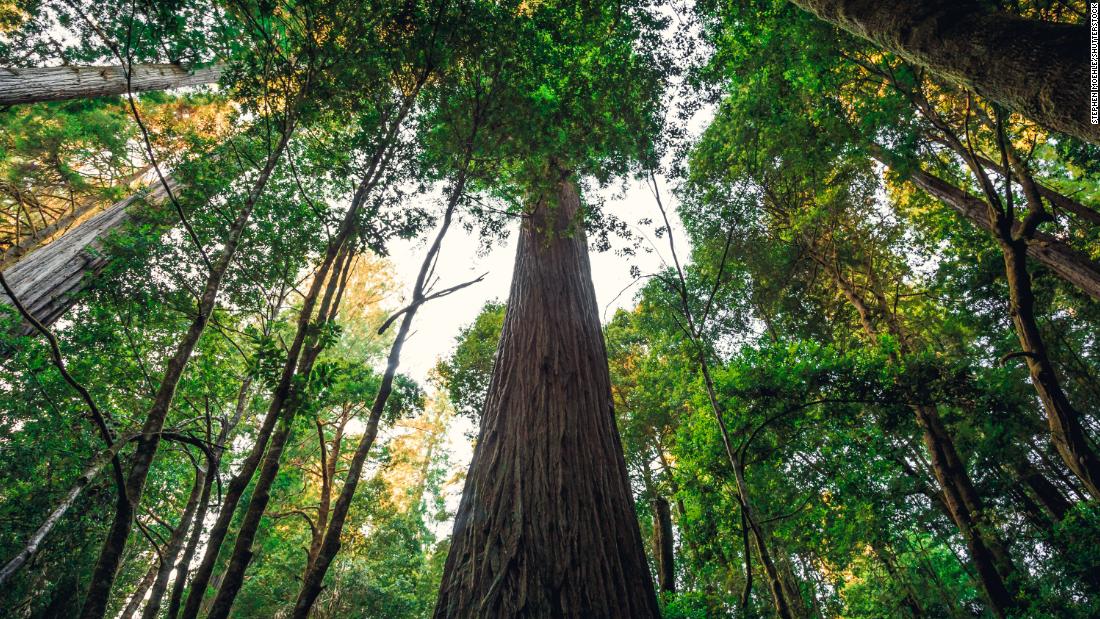
The coast redwood (sequoia sempervirens) tree is 115.92 meters (380 feet) tall and its name is derived from Greek mythology — Hyperion was one of the Titans and the father of sun god Helios and moon goddess Selene.

Hyperion's trunk diameter is 4.84 meters (13 feet).

Hyperion’s trunk diameter is 4.84 meters (13 feet).

Stephen Moehle/Shutterstock

“Hyperion is located off trail through dense vegetation and requires heavy ‘bushwhacking’ in order to reach the tree,” reads a statement on the national park’s website.

“Despite the difficult journey, increased popularity due to bloggers, travel writers, and websites of this off-trail tree has resulted in the devastation of the habitat surrounding Hyperion,” the statement says. “As a visitor, you must decide if you will be part of the preservation of this unique landscape – or will you be part of its destruction?”

Leonel Arguello, the park’s Chief of Natural Resources, told news site San Francisco Gate that the area has limited cellphone and GPS service, which means it can be very challenging to rescue any lost or injured hikers in the area.

In addition to erosion and damage caused at the base of the tree, there are secondary issues that come from an influx of people.

“There was trash, and people were creating even more side trails to use the bathroom. They leave used toilet paper and human waste — it’s not a good thing,” Arguello said.

Human visitors are not the only risk to these giant trees.

Wildfires are a growing concern throughout California’s national parks.

In 2021, officials at Sequoia and Kings Canyon National Parks took extreme measures to protect some of the world’s biggest trees from fire.

Hyperion tree image via Shutterstock

.