Categories
US

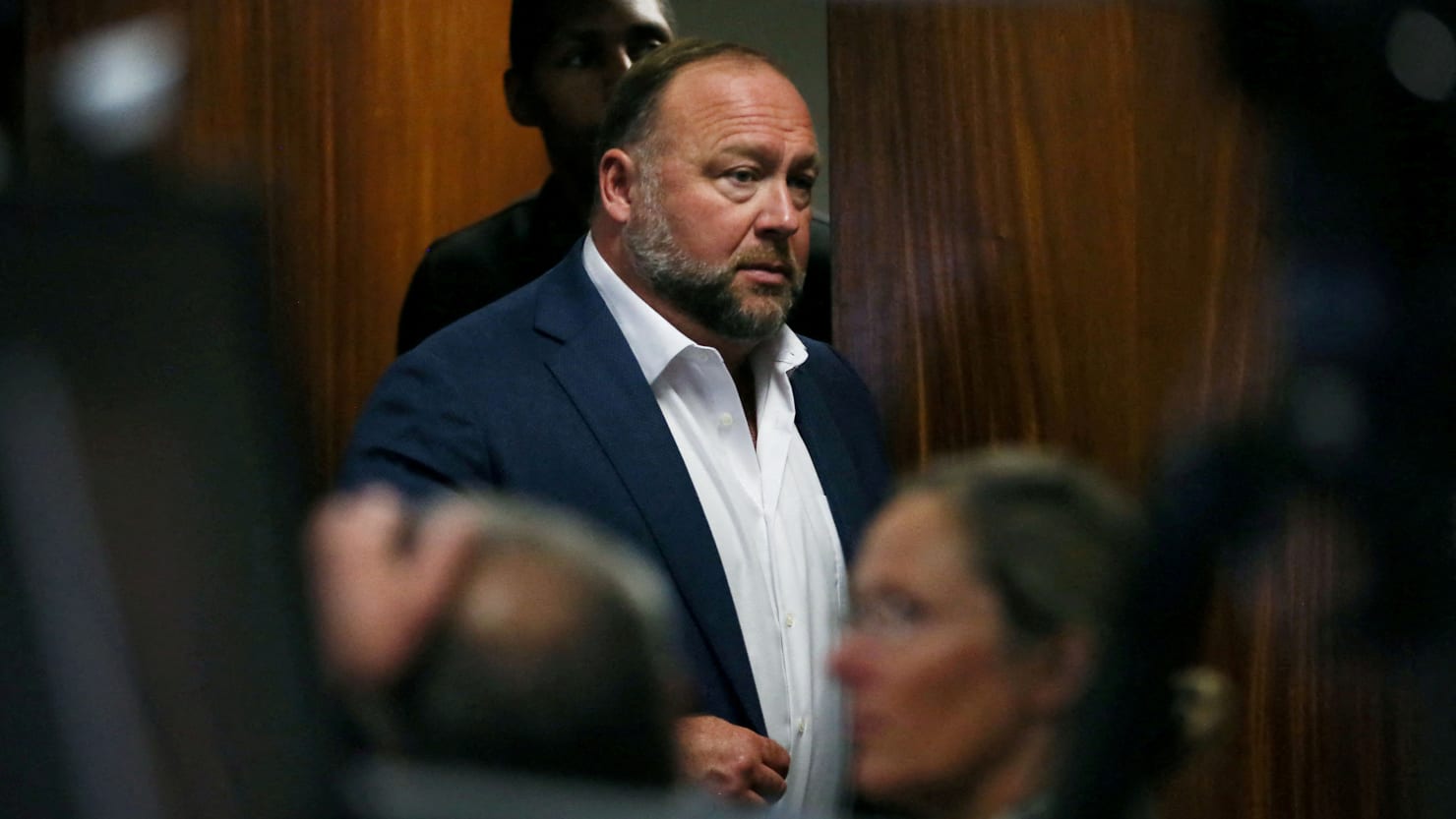
Alex Jones Has a Really Crappy Day at His Sandy Hook Defamation Trial

For a man so up in arms about being thrust in front of a “kangaroo court,” Alex Jones appears to be trying his hardest to make a mockery of the ongoing defamation suit brought against him by Sandy Hook parents.

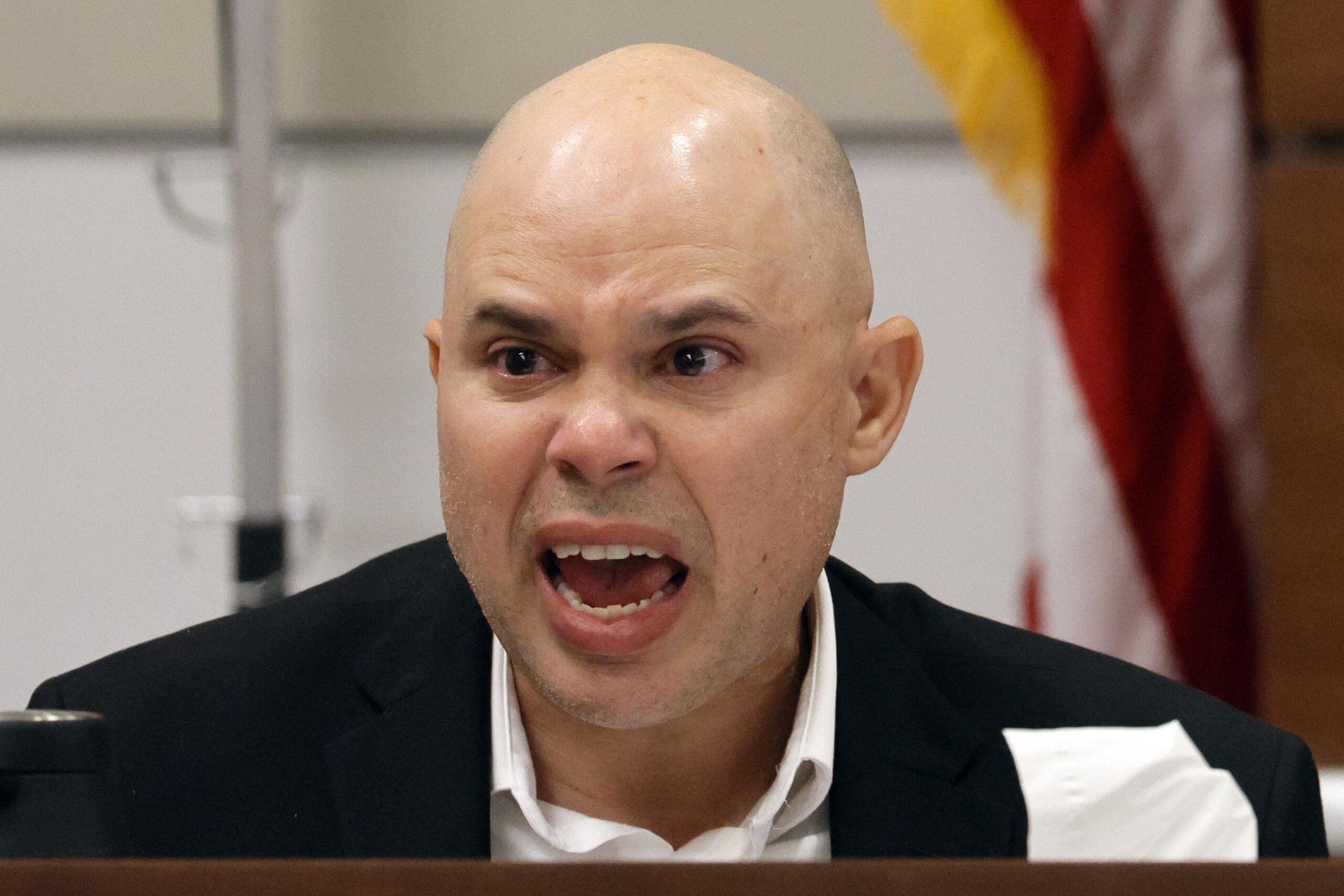
The final afternoon of testimony in Jones’ two-week trial got off to a rocky start on Tuesday, with the judge presiding over the Austin case reprimanding the notorious conspiracy theorist as he appeared to chew something in court.

“Spit your gum out, Mr. Jones,” said Judge Maya Guerra Gamble, eyeing Jones grimly from behind the bench.

“It’s not gum,” the far-right broadcaster retort immediately. Jones claimed that he’d had a tooth pulled late last month, and that he was massaging the hole in his mouth with his tongue.

“Would you like me to show ya?” he asked, leaning in.

“…I don’t want to see the inside of your mouth,” Gamble said, admonishing him to “sit down.”

The terse exchange came after a morning of emotional testimony from plaintiff Neil Heslin, the father of 6-year-old shooting victim Jesse Lewis. Heslin and Lewis’ mother, Scarlett Lewis, are seeking at least $150 million from Jones and his media company, Free Speech Systems, in compensatory damages. (Free Speech Systems filed for federal bankruptcy protection last week, according to the Austin American-Statesmanthough this is not expected to impact the trial.)

The parents contend in their 2018 lawsuit that Jones baselessly claimed the massacre was a hoax orchestrated by the government, dragging them—and other Sandy Hook families—through years of harassment and pain.

“I can’t even describe the last nine and a half years, the living hell that I and others have had to endure because of the recklessness and negligence of Alex Jones,” Heslin said.

Jones was not present in court during Heslin’s testimony, the Associated Press reported. Heslin criticized his absence from him, calling it “cowardly.”

“Today is very important to me and it’s been a long time coming… to face Alex Jones for what he said and did to me. To restore the honor and legacy of my son,” he said.

Jones went so far as to take potshots at the families from afar, calling them “pawns” in an episode of his Infowars show that aired Tuesday, according to Media Matters for America.

Later in the episode, an aggrieved Jones blasted Gamble and the lawyers representing Lewis’ parents, calling them “caricatures of what you would imagine in some alternate universe of dwarf goblins.”

“It’s demonic,” he added. “They all act demonically possessed. The judge, the lawyers. It’s surreal to be around them. And it makes you feel sorry for them because these people are committed to occult ideology of the new world order.”

Footage from the episode was introduced by the prosecution in court later that same day, while Scarlett Lewis was on the stand. She was asked how the clip made her feel, and she leveled her gaze at Jones, who had arrived at the Texas courthouse at that point.

“It’s horrible. Horrific. Horrific,” she said, according to the Independent.

Jones, who has attempted to spin the complaint against him as an attack on his First Amendment rights, had rolled up to the courthouse after the morning session. A piece of duct tape covering his mouth had the phrase “Save the 1st” plastered across it.

To reporters outside, Jones raged against Judge Gamble, accusing her of rigging the trial. “All I did was speculate and ask questions—I have a right to do that,” he smoked.

Jones is expected to testify as the defense’s only witness later on Tuesday.

.
Categories
US

Grieving father erupts at Parkland school shooter’s trial

FORT LAUDERDALE, Fla. (AP) — A grieving father erupted in anger Tuesday as he told jurors about the daughter Florida school shooter Nikolas Cruz murdered along with 16 others four years ago, his voice rising as he recounted her “infectious laugh that I can only get to watch now on TikTok videos.”

Dr. Ilan Alhadeff’s emotional testimony about his 14-year-old daughter Alyssa marked a second day of tears as families, one after another, took the witness stand to give heartrending statements about their loved ones who died at Parkland’s Marjory Stoneman Douglas High School on Feb. 14, 2018.

He and his wife, Lori, described Alyssa’s role as captain of her soccer team, the friend others always turned to for advice or a shoulder to cry on, and her plans to become a business lawyer. He cried as he recounted how he will not dance with his daughter de ella at her wedding de ella or see the children she would have had.

“My first-born daughter, daddy’s girl was taken from me!” yelled Alhadeff, an internal medicine physician. “I get to watch my friends, my neighbors, colleagues spend time enjoying their daughters, enjoying all the normal milestones, taking in the normal joys and I only get to watch videos or go to the cemetery to see my daughter.”

He said one of Alyssa’s two younger brothers was too young to comprehend her death when it happened, but now “asks to go see his sister at the cemetery from time to time.”

“This is not normal!” he said angrily.

Cruz, 23, pleaded guilty to 17 counts of first-degree murder in October; the trial is only to determine whether he is sentenced to death or life without parole. Over the two days of family statements, he has shown little emotion, even as several of his attorneys wiped away tears and Circuit Judge Elizabeth Scherer’s voice broke when she gave directions. He mostly stars straight ahead or looks down at the table where he sits.

As one family testifies, others sob in the gallery while awaiting their turn. When finished, they stay to lend support. They exchange packets of tissues, shoulder rubs and, when breaks come, hugs. Some jurors wipe away tears, but most sit stoically.

Some families had statements read for them. The mother of 14-year-old Martin Duque wrote that while he was born in Mexico, he wanted to become a US Navy Seal. The wife of assistant football coach Aaron Feis wrote that he was a doting father to their young daughter and a mentor to many young people.

The mother of 16-year-old Carmen Schentrup wrote that she was a straight-A student whose letter announcing she was a semifinalist for a National Merit Scholarship arrived the day after she died. She wanted to be a doctor who researched amyotrophic lateral sclerosis, commonly known as Lou Gehrig’s disease.

Shara Kaplan sobbed as she told the jurors of her two sons’ sadness that they weren’t there to protect their little sister, 18-year-old Meadow Pollack.

Luke Hoyer’s mom, Gina, said the 15-year-old was her “miracle baby,” her “Lukey Bear.” She said he yelled down that Valentine’s Day morning to thank her for the card and Skittles she’d placed in her bathroom. The gifts stayed there for a year. His father, Tom, said he never saw his son that morning, but he yelled up “Have a good day” as he hurried to work. “That is the kind of exchange you have when you think you have tomorrow,” he said.

Fred Guttenberg, who has become a national advocate for tighter gun laws, said he regrets that the last words he said to his 14-year-old daughter Jaime weren’t “I love you” but instead, “You gotta go, you are going to be late” as he pushed her and her older brother out the door that morning. He said his son is angry with him for telling him to run when he called in a panic to say there was a gunman at the school instead of having him find his sister, even though it would have made no difference.

His wife, Jennifer Guttenberg, said that while her daughter was known for her competitive dancing, she volunteered with the Humane Society and with special needs children. She planned to be a pediatric physical therapist.

Annika Dworet, her husband Mitch sitting somberly at her side, told the jurors about their son Nick, who was 17 when he died. A star swimmer, he had accepted a scholarship to the University of Indianapolis and was training in hopes of competing for his mother’s native Sweden in the 2020 Olympics. His younger brother of him, Alex, was wounded in the shooting.

“He was always inclusive of everyone. On his last evening with us, he spent time speaking to the younger kids on the swim team, giving them some pointers,” she said.

But now, she said, “our hearts will forever be broken.”

“We will always live with excruciating pain. We have an empty bedroom in our house. There is an empty chair at our dining table. Alex will never have a brother to talk or hang out with. They will never again go for a drive, blasting very loud music. We did not get to see Nick graduate from high school or college. We will never see him getting married.

“We will always hesitate before answering the question, ‘How many kids do you have?’”

.

Categories
US

DOD ‘wiped’ phones of Trump-era leaders, erasing Jan. 6 texts

The Department of Defense (DOD) failed to retain text messages from a number of its top officials relating to the Jan. 6, 2021, Capitol riot because it wiped their phones during the transition, a watchdog group that sued for the records disclosed Tuesday.

American Oversight filed a public records request for the communications of former acting Defense Secretary Chris Miller and former Army Secretary Ryan McCarthy in the days after the attack on the Capitol.

But they were informed during litigation that the records were not preserved.

“DOD and Army conveyed to Plaintiff that when an employee separates from DOD or Army he or she turns in the government-issued phone, and the phone is wiped. For those custodians no longer with the agency, the text messages were not preserved and therefore could not be searched,” the agencies wrote in a March court filing.

The disclosure follows news that numerous officials at the Department of Homeland Security (DHS) also had their messages erased during the transition, including former acting Secretary Chad Wolf and his deputy Ken Cuccinelli. Both had their phones reset following the inauguration, losing any texts from Jan. 6 in the process.

The inspector general at DHS also notified Congress last month that text messages from Jan. 5 and Jan. 6 were “erased” as part of a device replacement program.

The Secret Service contains any text messages that might be missing were lost through a software transition.

The effort to obtain Pentagon texts could have shed light on why the National Guard faced delays in getting approval to go to the Capitol as it was under siege.

The suit sought the military leaders’ communications with former President Trump, former Vice President Mike Pence and Trump’s chief of staff Mark Meadows. The request also asked for communications from Kash Patel, Miller’s chief of staff; Paul Ney, the Defense Department general counsel; and James E. McPherson, the Army’s general counsel.

Patel was also subpoenaed by the House committee investigating the Jan. 6 attack on the Capitol.

American Oversight sent a letter to Attorney General Merrick Garland to investigate, noting that each officer’s phone appears to have been wiped after their records request was filed.

“DOD has apparently deleted messages from top DOD and Army officials responsive to pending FOIA requests that could have shed light on the actions of top Trump administration officials on the day of the failed insurrection,” Heather Sawyer, the groups executive director, wrote in the letter, referring to the Freedom of Information Act.

“American Oversight accordingly urges you to investigate DOD’s actions in allowing the destruction of records potentially relevant to this significant matter of national attention and historical importance.”

The Pentagon did not immediately respond to a request for comment, while the Justice Department declined to comment.

It’s the second time in less than a week that Garland has been called upon to intervene in a Jan. 6-related matter.

Senate Judiciary Committee Chairman Dick Durbin (D-Ill.) penned a letter to the attorney general last week asking him to review what he called “the destruction of evidence” at DHS. Durbin also asked Garland to “step in and get to the bottom of what happened to these text messages and hold accountable those who are responsible.”

Categories
US

Man told RDU tower his co-pilot ‘jumped out’ of plane before emergency landing :: WRAL.com

Two Federal Aviation Administration employees in the Raleigh-Durham International Airport Tower told the Raleigh-Wake County 911 dispatcher that the surviving pilot reported his co-pilot jumped out of a plane last week before making an emergency landing.

The body of Charles Hew Crooks, 23, was found the evening of July 29 in a Fuquay-Varina backyard, hours after the plane landed at Raleigh-Durham International Airport. Crooks was one of two pilots on the CASA 212-200 airplane.

“This is from Raleigh Airport,” an FAA employee said in a recording obtained Tuesday by WRAL News. “We have a pilot who was inbound to the field. His co-pilot jumped out of the aircraft. He made impact to the ground and here are the coordinates.”

The recording, a communication between those at the airport and 911 dispatchers, lasts about 13 minutes.

“He said he jumped out of the aircraft,” an FAA employee said. “His co-pilot jumped out without the parachute so he might have impact to the ground.”

Wake County Emergency Management Chief of Operations Darshan Patel said the initial 911 call came in around 2:30 pm Friday, July 29 from RDU. Patel said the call is what prompted the search for Crooks. Flight logs show the emergency landing happened at 2:48 pm

The FAA employees tried to tell what happened.

“I am sure the pilot is going to be shaken up,” an FAA employee said. “I have no idea.

“He literally just said, ‘My pilot just jumped out.'”

Crooks didn’t have a harness or parachute.

Patel told WRAL News, “Once the aircraft had landed, it was reconfirmed based on a report the pilot said the second person in the aircraft had exited the aircraft prior to landing.”

“I guess at this point in time, all we can do is a recovery,” an FAA employee said. “I know. I don’t know. This is the craziest thing ever.”

NTSB takes over the investigation

The National Transportation Safety Board announced Tuesday it is taking over the investigation into Crooks’ death.

The news comes a day after the Federal Aviation Administration said it would lead the investigation.

The RDU Police Department said it had interviewed the surviving co-pilot, whose name was not made public. RDU police have not released the incident report, citing the ongoing investigation. Airport police turned over the interview to the FAA and NTSB.

Crews find person believed to be missing from plane that made emergency landing at RDU

Preliminary information indicates that the airplane sustained substantial damage to the landing gear and fuselage, according to the NTSB.

The NTSB will determine the scope of its investigation after more information is gathered. The board is not conducting any interviews as of Tuesday.

WRAL News has also requested interviews with the FAA and RDU Police.

Charles Hew Crooks

Patel said 80-plus people were involved in the search for Crooks.

“At the beginning, it was quite a large search area, and we wanted to make sure we use our resources effectively but also efficiently to do what we could for this individual,” Patel said.

Several law enforcement entities were involved in the search for Crooks, including Wake County Emergency Management, the town of Cary, the town of Holly Springs, the town of Fuquay-Varina and the North Carolina State Highway Patrol.

‘It was kind of an all hands on deck for the folks who were in that area,’ Patel said.

Authorities discovered Crooks’ body around 7 pm Friday, July 29 in the backyard of a Fuquay-Varina home. A neighbor who heard a noise flagged down officers in the area. Officers found Crooks with no signs of a harness or parachute.

WRAL News is working to determine what the two pilots’ mission was on July 29. Both pilots were working at the time for Rampart Aviation. The company has not responded to WRAL News’ multiple requests for comment.

.

Categories
US

Pennsylvania mail voting law Act 77 upheld by state Supreme Court

Pennsylvania’s mail-voting law is constitutional, the state Supreme Court ruled Tuesday, upholding the 2019 measure that allows any voter to use mail ballots and removing a cloud of uncertainty heading into the midterm elections.

The law dramatically expanded mail voting, from a method that had been allowed only in a very small number of cases — about 5% of votes in any given election — to one used by millions over the last two years.

It was the product of bipartisan negotiations between Democratic Gov. Tom Wolf and Republicans who control the state legislature, the biggest change to Pennsylvania election law in generations. But its implementation in 2020 came during both the first year of the pandemic and a heated presidential election. As massive numbers of voters cast ballots by mail, state and county election officials tried to build out the system — in some cases triggering Republican outrage and lawsuits over their decisions.

That was further stoked by then-President Donald Trump, who began attacking mail voting months before his loss to Joe Biden in the 2020 presidential election. Republicans have continued to try to dismantle the law — known as Act 77 — with some saying it has been abused in its implementation, and others espousing bogus conspiracy theories about widespread fraud.

The resulting partisan divide over a mail voting law that had been carefully negotiated — and trumpeted — by both Democrats and Republicans was on full display following the ruling Tuesday.

“I will continue to advocate for voting reforms that remove barriers and increase access to voting,” Wolf said in a statement as Democrats and allied groups applauded the court.

House Republicans’ point person on elections, meanwhile, suggested the elected Democrats who make up the court’s majority were acting as partisans. And the spokesperson for Senate Republicans said the ruling “underscores the importance of the actions taken by the General Assembly to strengthen election integrity,” including moving to add strict voter ID requirements to the Constitution.

» READ MORE: Fights over Pa. election rules that seemed settled after 2020 have now come roaring back

Partisanship helped create Act 77 in the first place, with bipartisan negotiations taking place in 2019 only after Wolf and Republican lawmakers repeatedly butted heads over election legislation and funding for new voting machines.

Constitutional questions also swirled around the law from the very beginning.

Pennsylvania’s Constitution explicitly describes situations allowing absentee voting, including for disabled voters and those who will be out of town on Election Day. Because of that, the legislature couldn’t simply expand absentee voting. Instead, Act 77 created a “mail-in” ballot that was the same as an absentee ballot. That created two functionally identical types of mail ballots — and lawmakers further blurred the lines between the two in a separate bill they passed in March 2020.

A group of Republican lawmakers — some of whom voted for the law in 2019 — and a Republican county commissioner sued last summer, saying Act 77 violates the state Constitution. The state Constitution’s protection of absentee voting, they argued, means it’s unconstitutional to provide mail voting in other cases.

Their argument also centered on the requirements for voter eligibility, which include that “he or she shall have resided in the election district where he or she shall offer to vote at least 60 days immediately preceding the election.”

That “offer to vote” language means voters must cast ballots in person unless they fall within the constitutional exception for absentee voting, Republicans argued, relying on two 1862 and 1924 cases.

The state Commonwealth Court agreed with that argument and temporarily struck down Act 77 in January. The state appealed to the Pennsylvania Supreme Court, which stayed the ruling and kept the law in place while it considered the case.

» READ MORE: Another election is coming and there’s still uncertainty around Pennsylvania’s mail voting law

The high court heard arguments in early March. Since then, officials and lawyers have waited for a ruling they knew could come at any time and had the potential to either affirm the status quo — or significantly disrupt the electoral system.

On Tuesday, the court its ruling: Act 77 didn’t overstep the Constitution in expanding mail voting, and the law remains on the books.

“We reiterate that our General Assembly is endowed with great legislative power, subject only to express restrictions in the Constitution,” Justice Christine Donohue wrote for the majority. “We find no restriction in our Constitution on the General Assembly’s ability to create universal mail-in voting.”

Donohue was joined by Chief Justice Max Baer and Justices Debra Todd and Kevin Dougherty; a fifth justice, David Wecht, agreed with most of the opinion. All five are Democrats.

They rejected the argument that previous court cases required them to limit mail voting only to the explicitly protected absentee voters. Walking through the history of the Constitution and absentee voting, the court reasoned that absentee voters are the minimum protected group of voters allowed to vote by mail — but that nothing bars the legislature from giving that option to others.

The two Republicans in court, Justices Sallie Updyke Mundy and Kevin Brobson, dissented. Both argued the court was improperly recasting history—and prior precedent—to protect the law.

“Succinctly stated, the majority overrules 160 years of this Court’s precedent to save a law that is not yet 3 years old,” Brobson wrote. “It does so not to right some egregiously wrong decision or to vindicate a fundamental constitutional right.”

Mundy emphasized that her disagreement with the Democratic majority was about law and precedent, not policy or politics.

“I express no opinion as to whether no-excuse mail-in voting reflects wise public policy,” Mundy wrote. “That is not my function as a member of this state’s Judiciary. My function is to apply the text of the Pennsylvania Constitution, understood in light of its history and judicial precedent. In so doing, I would hold that that venerable document must be amended before any such policy can validly be enacted.”

Tuesday’s decision is unlikely to dampen the partisan fighting over Pennsylvania elections.

The same Republican lawmakers who sued over Act 77 filed a second lawsuit in July, arguing that the law should be struck down on entirely separate grounds based on recent federal court rulings. Responses to that lawsuit are due Monday.

.

Categories
US

How Ayman al-Zawahiri’s ‘pattern of life’ allowed the US to kill al-Qaida leader | Ayman al-Zawahiri

In the end it was one of the oldest mistakes in the fugitive’s handbook that apparently did for Ayman al-Zawahiri, the top al-Qaida leader killed, according to US intelligence, by a drone strike on Sunday morning: he developed a habit.

The co-planner of the 9/11 attacks on New York and Washington in 2001 had acquired a taste for sitting out on the balcony of his safe house in Sherpur, a well-to-do diplomatic enclave of Kabul. He grew especially fond of stepping out on to the balcony after morning prayers, so that he could watch the sun rise over the Afghan capital.

According to a US official who briefed reporters on Monday, it was such regular behavior that allowed intelligence agents, presumably the CIA, to piece together what they called “a pattern of life” of the target. That in turn allowed them to launch what the White House called a “tailored airstrike” involving two Hellfire missiles fired from a Reaper drone that are claimed to have struck the balcony, with Zawahiri on it, at 6.18am on Sunday.

It was the culmination of a decades-long hunt for the Egyptian surgeon who by the time he was killed had a $25m bounty on his head. Zawahiri, 71, was held accountable not only for his part as Bin Laden’s second in command for 9/11, with its death toll of almost 3,000 people, but also for several other of al-Qaida’s most deadly attacks, including the suicide bombing of the USS Cole in Yemen in October 2000, which killed 17 US sailors.

The mission to go after the al-Qaida leader was triggered, US officials said, in early April when intelligence sources picked up signals that Zawahiri and his family had moved off their mountainside hideaways and relocated to Kabul. Following the Taliban’s return to power in Afghanistan last August, and with the support of the Haqqani Taliban network, Zawahiri and his wife de él, together with their daughter and grandchildren, had moved into the Sherpur house.

map

In their telling of events, US officials were at pains to stress that under Joe Biden’s instructions the mission was carried out carefully and with precision to avoid civilian casualties. The US president was first apprised of Zawahiri’s whereabouts in April, and for the next two months a tightly knit group of officials delved into the intelligence and devised a plan.

A scale model of the Sherpur house was built, showing the balcony where the al-Qaida leader liked to sit. As discussions about a possible strike grew more intense, the model was brought into the situation room of the White House on 1 July so that Biden could see it for himself.

The president “closely examined the model of al-Zawahiri’s house that the intelligence community had built and brought into the White House situation room for briefings on this issue”, a senior administration official told reporters.

The White House made further claims to bolster its argument that the attack was lawful, flawless and with a loss of life limited to Zawahiri alone. Officials said that engineers were brought in to analyze the safe house and assess what would happen to it structurally in the wake of a drone strike.

Lawyers were similarly consulted on whether the attack was legal. They advised that it was, given the target’s prominent role as leader of a terrorist group.

Biden, by now quarantined with Covid, received a final briefing on July 25 and gave the go-ahead. It was a decision in stark contrast to the advice he gave Barack Obama in May 2011 not to proceed with the special forces mission that killed Bin Laden in a raid on his safe house in Abbottabad, Pakistan.

On Monday evening, Biden stood on his own balcony – this one in the White House with the Washington Monument and Jefferson Memorial as his backdrop – to address the nation.

“I authorized the precision strike that would remove him from the battlefield once and for all,” Biden said. “This measure was carefully planned, rigorously, to minimize the risk of harm to other civilians.”

Biden’s insistence that no one other than the al-Qaida leader was killed in the attack was amplified repeatedly by US officials. The narrative given by the White House was that Zawahiri was taken out cleanly through the application of modern technological warfare.

Skepticism remains, despite the protests. Over the years drone strikes have frequently proved to be anything but precise.

In August last year one such US drone strike in Kabul was initially hailed by the Pentagon as a successful mission to take out a would-be terrorist bomber planning an attack on the city’s airport. It was only after the New York Times had published an exhaustive investigation showing that the strike had in fact killed 10 civilians, including an aid worker and seven children, that the US military admitted the mission had gone tragically wrong.

Perhaps mindful of the doubts that are certain to swirl around the Zawahiri killing for days to come, the White House said that the Sherpur safe house where the drone strike happened had been kept under observation for 36 hours after the attack and before Biden spoke to the nation. Officials said that Zawahiri’s relatives were seen leaving the house under Haqqani Taliban escort, establishing that they had survived the strike.

Categories
US

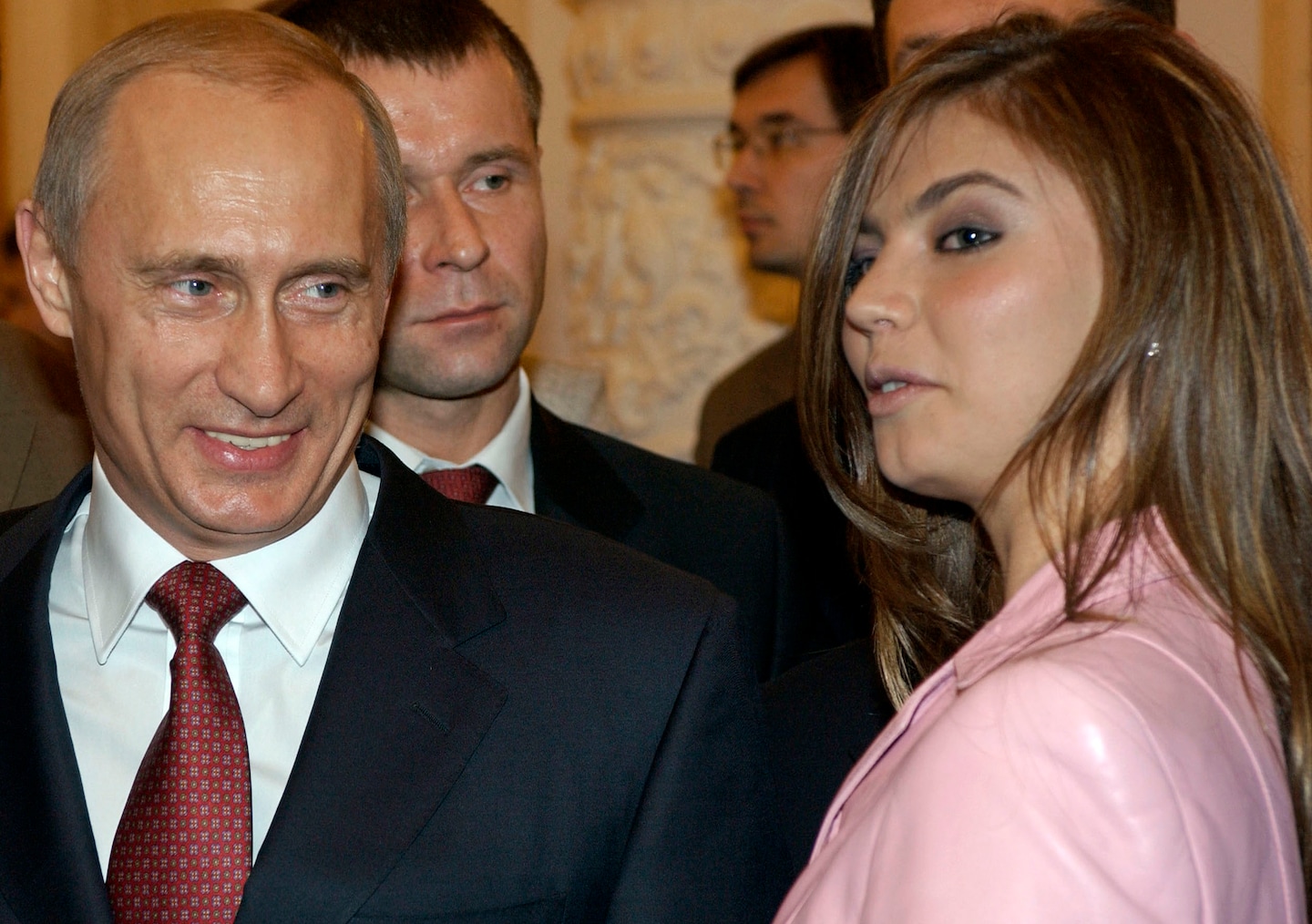
US imposes sanctions on Alina Kabaeva, Putin’s rumored girlfriend

Comment

The United States imposed sanctions on Russian President Vladimir Putin’s reported romantic partner Tuesday, part of the latest raft of penalties targeting Kremlin-linked officials and entities in response to Russia’s war in Ukraine.

Alina Kabaeva, 39, was among 13 Russian nationals added to the Treasury Department’s list of sanctions. A former star gymnast with two Olympic gold medals, Kabaeva has become better-known in recent years as the 69-year-old Russian leader’s rumored girlfriend.

The US announcement Tuesday cited Kabaeva’s “close relationship to Putin,” though it did not point to a romantic tie specifically. But the US government holds that Kabaeva is the mother of at least three of Putin’s children, the Wall Street Journal reported, and had previously prepared a sanctions package against her before making a last-minute decision in late April to hold off to avoid hurting prospects for a negotiated peace in Ukraine.

Kabaeva has also served as a lawmaker for Putin’s party in the State Duma and currently heads the pro-Kremlin National Media Group, which operates a network of TV and radio stations and publishes newspapers in Russia. Kabaeva was already under EU and UK sanctions.

“As innocent people suffer from Russia’s illegal war of aggression, Putin’s allies have enriched themselves and funded opulent lifestyles,” Treasury Secretary Janet L. Yellen said in a news release. “The Treasury Department will use every tool at our disposal to make sure that Russian elites and the Kremlin’s enablers are held accountable for their complicity in a war that has cost countless lives.”

Kabaeva, who was born in Uzbekistan in 1983, rose to prominence in Russia as one of rhythmic gymnastics’ most decorated athletes. Her athletic career was not without controversy, though — she had to return two medals from the 2001 Goodwill Games after a doping scandal.

Kabaeva retired from the sport around the same time reports emerged that she was romantically linked with Putin.

The Kremlin has denied the alleged relationship. A Russian newspaper that published an article in 2008 saying Putin and Kabaeva were romantically involved was quickly shut down under mysterious circumstances.

Putin and his wife of 30 years, Lyudmila Putina, divorced in 2014.

Kabaeva and her family have benefited handsomely from connections to Putin’s circle, according to Russian and US media reports. A classified US intelligence assessment of alleged Russian interference in the 2016 US election listed Kabaeva as a beneficiary of Putin’s wealth, the Journal reported in April, citing a US official.

The luxurious lifestyles of Putin’s reported girlfriends have fueled speculation about their relationships with the Russian president. The Pandora Papers, a trove of documents revealed by The Washington Post and a consortium of news organizations last year, showed that another woman who was reportedly romantically involved with Putin owned a fancy apartment in Monaco and a shell company in the British Virgin Islands — even as it was unclear how she had amassed so much wealth.

Kabaeva was spotted publicly for the first time in months in late April, when she led her annual “Alina Festival,” a patriotic rhythmic gymnastics festival in Moscow. She stood in front of a backdrop decorated with the letter Z, the state’s symbol for its invasion of Ukraine.

The United States previously imposed sanctions on Putin’s daughters from a former marriage, Katerina Tikhonova and Maria Vorontsova, after evidence emerged of alleged war crimes committed by Russian forces during their occupation of the suburbs of Kyiv, the Ukrainian capital. The atrocities included the beheading and torture of civilians.

The latest sanctions are aimed at Russian elites and businesses operating in sectors “that generate substantial revenue for the Russian regime,” the announcement said.

In addition to Kabaeva, they include Andrey Grigoryevich Guryev, founder of a Russian chemical company and owner of London’s second-largest estate after Buckingham Palace, and Viktor Filippovich Rashnikov, the majority owner and board chair of MMK, one of the world’s largest steel producers. . Two MMK subsidiaries were also placed under sanctions.

The sanctions freeze the US property of those targeted and ban US individuals or entities from transacting with them.

The State Department, meanwhile, announced new sanctions on three Russian oligarchs and Kremlin-backed officials in areas of Ukraine occupied by Russian or proxy forces, including Mariupol and Kherson. The sanctions also target 24 Russian defense and technology-related entities, including research centers.

“Our actions target some of Russia’s most important defense-related research and development institutions, semiconductor producers, and advanced computing and electronics entities,” Secretary of State Antony Blinken said in a statement. “These actions will further isolate Russia’s defense and high-technology industries and limit their contributions to Moscow’s war machine.”

The department also imposed visa restrictions on nearly 900 Russian officials as well as “31 foreign government officials who have acted to support Russia’s purported annexation of the Crimea region of Ukraine and thereby threatened or violated Ukraine’s sovereignty.”

Canada also unveiled a new round of sanctions Tuesday, targeting 43 military officials and 17 entities “that are complicit in Russian President Vladimir Putin’s senseless bloodshed” including atrocities in the Kyiv suburb of Bucha, according to the announcement from Global Affairs Canada.

Categories
US

California store owner Craig Cope recalls shooting would-be robber

An elderly California liquor store owner who flipped the script on armed gunmen during an attempted robbery said Tuesday that he had no choice but to open fire on one of the assailants, insisting it was “either him or me.”

Craig Cope, 80, said he feared for his life as four would-be thieves drove up early Sunday to Norco Market & Liquor in Norco, where he was behind the counter when one of the assailants busted in with a rifle and yelled at him to freeze.

“I got a long gun pointing directly at me,” Cope told The Post. “It was either him or me and I was a little bit faster.”

Cope said he knew something was off when he saw a dark BMW SUV pull up alongside the store instead of into several nearby open parking spaces. They also “backed in” as they approached, which was another “red flag” for the quick-thinking owner.

“I got a long gun pointing directly at me,” Cope told The Post Tuesday, adding that he feared for his life. “It was either him or me and I was a little bit faster.”
Fox 11
Surveillance footage from inside the store shows Cope firing the shotgun just seconds after the gunman announced the robbery.
Fox 11

“And then I saw them getting out of the car in masks and with guns,” Cope continued. “So, I figured what was going to happen. I just knew they were armed and masked and that they were coming in, so I was ready for them.”

At one point, three of the suspects hopped out of the SUV, while a fourth man stayed behind to act as a getaway driver, Cope said.

Surveillance footage from inside the store shows Cope firing the shotgun just seconds after the gunman announced the robbery, wounding the would-be robber in the arm.

“He was screaming that I shot his arm off,” Cope recalled. “That’s what he said.”

Cope, who suffered a heart attack and was rushed to the hospital after the shooting, is recovering at his Riverside home.

He said he intends to keep working at the store, but may soon cut back on his hours. That has nothing to do with Sunday’s attempted heist, which has characterized as a “terribly isolated” incident.

“I’ll be a presence one way or another,” he said.

Cope first purchased the store in 1976 and ran it for 19 years before selling it. He then bought it back about seven years ago. He declined to say whether Monday’s incident marked the first time the store had been targeted by criminals.

“I’m not going to release that one,” Cope said, adding the store had not been robbed during his most recent ownership stint.

Norco in Riverside County is not known as a “high-crime area,” Cope said. Many of the city’s residents own horses and the community is largely conservative.

“It’s not a good area for robbers to come,” Cope said flatly. “Many of the homeowners are conservatives and probably armed. These guys didn’t do their homework.”

Authorities tracked down the four suspects at a Southern California hospital, where one had a gunshot wound consistent with a shotgun blast, according to the Riverside County Sheriff’s Department.

At one point, three of the suspects hopped out of the SUV, while a fourth man stayed behind to act as a getaway driver, Cope said.
Fox 11

Three suspects being held on $500,000 bond were identified as Justin Johnson, 22, of Inglewood, Calif., Jamar Williams, 27, of Los Angeles, and Davon Broadus, 24, of Las Vegas.

Sheriff’s officials praised Cope for preventing a “violent crime” while ensuring his own safety as he was confronted by multiple armed suspects.

Cope — who grew up in Illinois, where he hunted for food as a child — said he doesn’t regret his actions.

“It’s not going to be on my mind or keep me from doing anything,” he told The Post. “It’s not going to change how I operate. I’m already alert and pay attention to my surroundings at all times.”

.

Categories
US

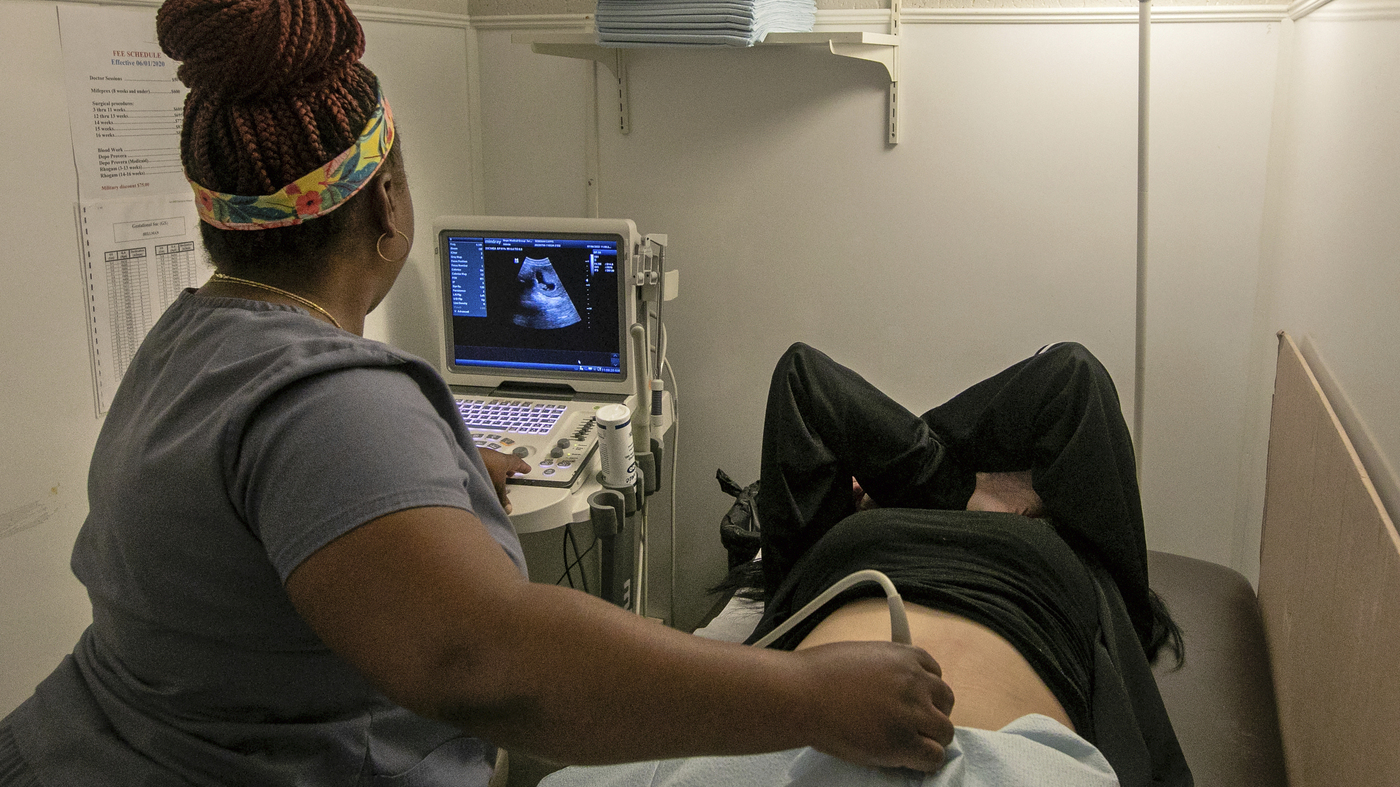
A fetus counts as a dependent on state tax returns in Georgia : NPR

The state of Georgia has established that a fetus can be listed as a dependent on state tax returns.

Encyclopaedia Britannica/Universal Images Group via Getty


hide caption

toggle caption

Encyclopaedia Britannica/Universal Images Group via Getty


The state of Georgia has established that a fetus can be listed as a dependent on state tax returns.

Encyclopaedia Britannica/Universal Images Group via Getty

Pregnant Georgians can now list their fetuses as a dependent on their tax returns.

The Georgia Department of Revenue released new guidance this week establishing that the agency “will recognize any unborn child with a detectable human heartbeat … as eligible for the Georgia individual income tax dependent exemption.”

An individual at least six weeks pregnant on or after July 20 through Dec. 31, 2022, can list the fetus as a dependent on their tax returns starting next year, the agency said. Georgian taxpayers can claim an exemption in the amount of $3,000 for each dependent.

This policy change follows the US Supreme Court’s decision in June that overturned Roe v. Wade and ended the constitutional right to an abortion. Following that, an appeals court ruled on July 20 that Georgia’s ban on abortion after six weeks of pregnancy can become law.

Taxpayers will have to submit relevant medical records or other supporting documentation to the department in order to provide their filing.

The “fetal personhood law” is the idea that a fetus is a person with full constitutional rights from the moment of fertilization. Both Georgia and Arizona established this in their abortion laws, but Arizona’s statute has been challenged in court.

This tax policy change has far wider implications “from taxes and inheritance rights to education to population counts,” says Elizabeth Nash, the Guttmacher Institute’s principal policy associate for state issues.

For now, the policy change only applies to state tax returns. This state law has no effect on federal taxes, says Alex Raskolnikov, a professor of tax law at Columbia Law School.

“A state (eg, GA) cannot dictate federal law. GA’s decision will have no impact of the IRS or the Internal Revenue Code,” he says.

Early critics note that this state policy may create questions for those who miscarry further along in their pregnancy.

Lauren Groh-Wargo, the campaign manager for Georgia governor candidate Stacey Abrams, tweeted: “So what happens when you claim your fetus as a dependent and then miscarry later in the pregnancy, you get investigated both for tax fraud and an illegal abortion?”

Georgia’s abortion law does allow exceptions for stillbirths, miscarriages and ectopic pregnancies (which can be deadly).

Categories
US

Jan. 6 text messages wiped from phones of key Trump Pentagon officials

The acknowledgment that the phones from the Pentagon officials had been wiped was first revealed in a Freedom of Information Act lawsuit American Oversight brought against the Defense Department and the Army. The watchdog group is seeking January 6 records from former acting Secretary of Defense Chris Miller, former chief of staff Kash Patel, and former Secretary of the Army Ryan McCarthy, among other prominent Pentagon officials — having filed initial FOIA requests just a few days after the Capitol attack.

Miller, Patel and McCarthy have all been viewed as crucial witnesses for understanding the government’s response to the January 6 Capitol assault and former President Donald Trump’s reaction to the breach. All three were involved in the Defense Department’s response to sending National Guard troops to the US Capitol as the riot was unfolding. There is no suggestion that the officials themselves erased the records.

The government’s assertion in the files that the officials’ text messages from that day were not preserved is the latest blow to the efforts to bring transparency to the events of January 6. It comes as the Department of Homeland Security is also under fire for the apparent loss of messages from the Secret Service that day.

Miller declined to comment. Patel and McCarthy did not immediately respond to requests for comment. The Pentagon and the Army also did not respond to requests for comment.

American Oversight is now calling for a “cross-agency investigation” by the Justice Department to investigate destruction of the materials.

“It’s just astounding to believe that the agency did not understand the importance of preserving its records — particularly [with regards] to the top officials that might have captured: what they were doing, when they were doing it, why they were doing, it on that day,” Heather Sawyer, American Oversight’s executive director, told CNN.

Sawyer said that her organization learned the records were not preserved from government attorneys last spring, and that acknowledgment was then memorialized in a joint status report filed with the court in March.

Top lawmakers renew call for DHS IG to step aside from investigation into missing texts, citing CNN reporting

“DOD and Army conveyed to Plaintiff that when an employee separates from DOD or Army he or she turns in the government-issued phone, and the phone is wiped,” the government said in the filing. “For those custodians no longer with the agency, the text messages were not preserved and therefore could not be searched, although it is possible that particular text messages could have been saved into other records systems such as email.”

The acknowledgment that the records were not preserved has taken on new significance in the wake of the ongoing scandal over the loss of Secret Service agents’ texts from January 6.

“It just reveals a widespread lack of taking seriously the obligation to preserve records, to ensure accountability, to ensure accountability to their partners in the legislative branch and to the American people,” Sawyer said.

This story is breaking and will be updated.

.