Categories
US

Live updates, watch parties and results as they come in

Tune in to FOX 10 Phoenix for the latest news:

We’re watching Arizona Primary Election races from across the state on Aug. 2, which includes those running for governor, attorney general, US Senate, Secretary of State, House seats and other highly contested races.

We’ll be providing up-to-date information on candidates and their progress in respective races, live looks at watch parties, and results as they come in, which is expected at 8 pm

UPDATES –

11:33 p.m.

This wraps up our election coverage for tonight (August 2). Check back tomorrow morning for more election results.

11:31 p.m.

11:30 p.m.

11:27 p.m.

11:26 p.m.

Former Maricopa County Sheriff Joe Arpaio

Former Maricopa County Sheriff Joe Arpaio

Former Maricopa County Sheriff Joe Arpaio is trailing his opponent in the race to be Fountain Hill’s mayor.

The former sheriff said during the late night hours of August 2 that the vote totals so far came from early ballots, and he was awaiting the totals of in-person voting.

If Arpaio loses in the mayoral election, it would mark his fourth electoral defeat in recent years.

Read More

11:15 p.m.

(A.P. Report) Voters on the vast Navajo Nation have advanced tribal presidential candidates Jonathan Nez and Buu Nygren to the general election in November.

Voters narrowed the list of 15 candidates in the primary election Tuesday.

The Navajo Nation is the largest Native American reservation in the US, extending into New Mexico, Arizona and Utah. The candidates pushed platforms that included economic development, ensuring that basic needs such as running water and electricity are met and finding ways to preserve the Navajo language.

11:10 p.m.

10:58 p.m.

10:53 p.m.

10:47 p.m.

The Associated Press is projecting Kirsten Engel to win the Democratic primary in Arizona’s 6th Congressional District. That district covers portions of Cochise, Graham, Pinal and Pima Counties, as well as the whole of Greenlee County.

10:40 p.m.

10:38 p.m.

10:28 p.m.

10:24 p.m.

Pinal County elections officials have provided a live feed of ballots being counted

https://www.pinalcountyaz.gov/elections/Pages/LiveVideoFeed.aspx

10:12 p.m.

10:00 pm

9:54 p.m.

Michelle Udall released a statement. She is one of five candidates, including write-in candidates, in the GOP primary for Superintendent of Public Instruction

9:39 p.m.

9:22 p.m.

9:10 p.m.

The question now, in terms of the ballot counting process, is what happens from here on out?

According to a statement released by the Maricopa County Elections Department, they will publish in-person Election Day results as they are returned from each of the 210 Vote Centers throughout the night. They estimate 106,000 ballots were cast in person on Aug. 2.

“Starting Wednesday, August 3, the Elections Department will begin to sign verify and process the early ballots dropped off on Monday and at the polls today. We’ll update unofficial results daily by 7:00 pm until all verified ballots are counted. We ‘ll also provide a daily update of the estimated ballots left to count,” read a portion of the statement.

Elections counting officials say they can’t complete until after the Aug. 9 statutory deadline for the following:

  • Conditional Provisional Ballots, cast by voters who did not provide sufficient ID when voting in-person.
  • Questionable Signatures, or ballots cast by voters whose early ballot signature were questioned. Those voters have a chance to cure the signature issue.

8:49 p.m.

Democratic gubernatorial hopeful Marco Lopez released a statement after the AP projected his opponent, Katie Hobbs, to win the primary race.

The last line, written in Spanish, translates to “It always seems impossible until it becomes reality.”

8:46 p.m.

8:39 p.m.

8:19 p.m.

8:16 p.m.

8:12 p.m.

8:02 p.m.

8 p.m.

The first batch of election results are released. Click here to view them.

7:05 p.m.

Maricopa County Recorder Stephen Richer says 106,000 in-person votes have been counted, so far.

7 p.m.

Polls have officially closed in Arizona.

6:59 p.m.

6:53 p.m.

5:38 p.m.

FOX 10 has received several calls and emails on Election Day from viewers saying they had issues with the voting in Pinal County, in-person. Some people said they couldn’t get a ballot to vote because some locations ran out.

MORE: Primary Election 2022: Confusion in Pinal County caused by ‘unprecedented demand for in-person ballots’

5:00 pm

It’s Election Day in Arizona and voters from around the state are heading to the polls for the 2022 Primary. Voters will decide on candidates for governor, senate, congressional races, and dozens of state and local contests. Many voters have already cast their ballots, but plenty of people are still showing up tonight at the polls.

Arizona Governor Race:

Democratic

libertarian

Republican

The AP is projecting that Katie Hobbs has won the gubernatorial Democratic Party primary.

Attorney general race:

Democratic

libertarian

Republican

Arizona Senator race:

Democratic

libertarian

Republican

More races:

Not finding information on a race you’re looking for? Click here.

Further coverage:

.

Categories
US

That big red wave? It didn’t reach the shores of WA state

So much for that rumored big red conservative wave.

So much also for the conspiracy theorists, the election deniers (most of them, anyway), and the MAGA right-wingers.

All of these things were not faring well, at all, in Tuesday’s vote count in the Washington primary. Overall, voters in this state seemed to be repudiating the conventional wisdom that this would be the first good year for Republicans around here since 2014.

“Republican narratives have been busted,” tweeted the Northwest Progressive Institute’s Andrew Villeneuve, who had been insisting for months that local polling did not back the media-fueled notion that there would be backlash in favor of conservatives in this state.

There still could be, of course, as there are three months until the general election in November. Lots can happen, including that totals for this primary can and will shift in the coming days as more votes are counted.

But Tuesday’s early primary results showed no signs of any sort of tidal change in our local, blue-heavy politics.

If anything, voters were signaling they just want a break from all the insanity.

Voters appeared in no mood to experiment with the fringes of either party. MAGA candidates were struggling on the right, while Democratic Socialists were not making any dent at all on the left.

Both of former President Donald Trump’s favored candidates in the state were trailing, for example, and may not make it out of the top-two primary. Former GOP governor candidate Loren Culp, in Central Washington, was running third in the 4th Congressional District, as was Fox News regular and newcomer Joe Kent, in southwest Washington’s 3rd District.

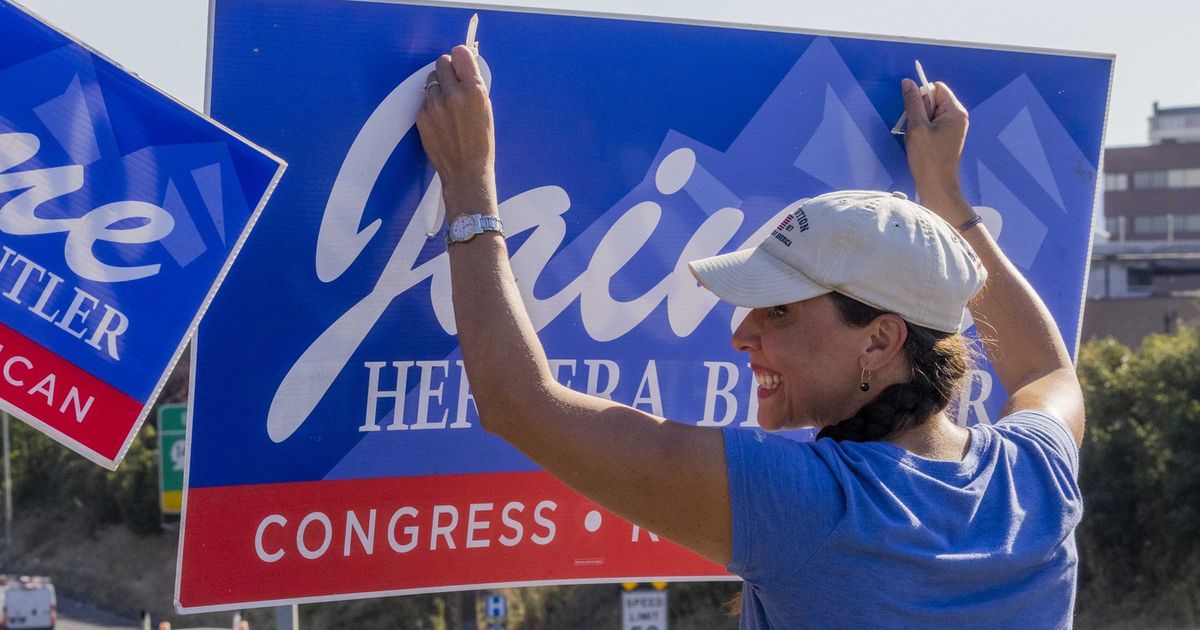
In both cases, Trump had sought revenge against incumbent GOP members of Congress who voted to impeach him for his role in the Capitol riot in 2021. These incumbents, Rep. Dan Newhouse, R-Sunnyside, and Rep. Jaime Herrera Beutler, R- Camas, were hardly coasting to reelection. (Both were only around 25%.) But both are in a position to make it through the primary challenge and into a general election against a Democratic opponent.

Culp and Kent were full-on election deniers, insisting Trump won in 2020. (Culp incredibly still insists he won his governor race against current Gov. Jay Inslee.) The lunacy element of it may have been too heavy a lift for voters.

In were rational candidates. Out: Candidates who connect their own realities.

Losing were a host of election conspiracy theorists, such as Tamborine Borrelli, who filed a raft of bogus lawsuits over the 2020 election; Rep. Brad Klippert, R-Kennewick, who attended a “stolen election” conference hosted by the My Pillow guy and then charged taxpayers for the trip; Vicki Kraft, R-Vancouver, who also went to that conference; and Amber Krabach, a Republican candidate for state House on the Eastside who made news recently for trying to surveil ballot drop boxes.

For all the talk that incumbent congressional Democrats such as Rep. Kim Schrier, D-Issaquah, and US Sen. Patty Murray might be in trouble, both were easily outpacing their rivals. Schrier in particular is doing better than she did in her de ella last primary de ella, in 2020. This does n’t mean she’s a lock in November. But it does mean no red wave came crashing down on her.

“I think six weeks ago the headwinds against Democrats were stronger than they are today,” Rep. Rick Larsen, D-Everett, told the Times.

What happened six weeks ago? The US Supreme Court went on a conservative bender, throwing out abortion rights, allowing school prayer and so on.

There’s a rule of thumb among election analysts that if you add up the vote shares for the parties in each of our open primary contests, it’s a decent guide for which side will win that race in November. It’s not perfect, but as a general guide, it captures the overall mood.

Using this technique on the preliminary results from Tuesday shows that despite high inflation, concerns about crime and President Joe Biden’s low approval ratings, Democrats are doing about as well as usual, particularly in the hard-fought suburbs.

Example: Republicans spent heavily targeting a series of state legislative districts in the King and Snohomish County suburbs, where the GOP had been wiped out in the Trump years. Yet Democrats were running well ahead on Tuesday in all of them.

In the 44th in Snohomish County, the Democrats were getting from 54% to 59% of the total vote. In the 47th in King, they were getting 52% to 56%, and in the 45th on the Eastside the Democrats were pulling a whopping 66% to 72%.

Biden, like Trump before him, was supposed to be a drag on his own party. It’s not normal that a party runs this far ahead of its own president’s poor approval ratings.

If in this environment Republicans can’t get a red wave, a swell or even a ripple, it’s tough to see how they’ll ever fight their way back in this state.

Categories
US

Kansas voters decide ‘no’ on the abortion amendment : Live Coverage: 2022 Primaries : NPR

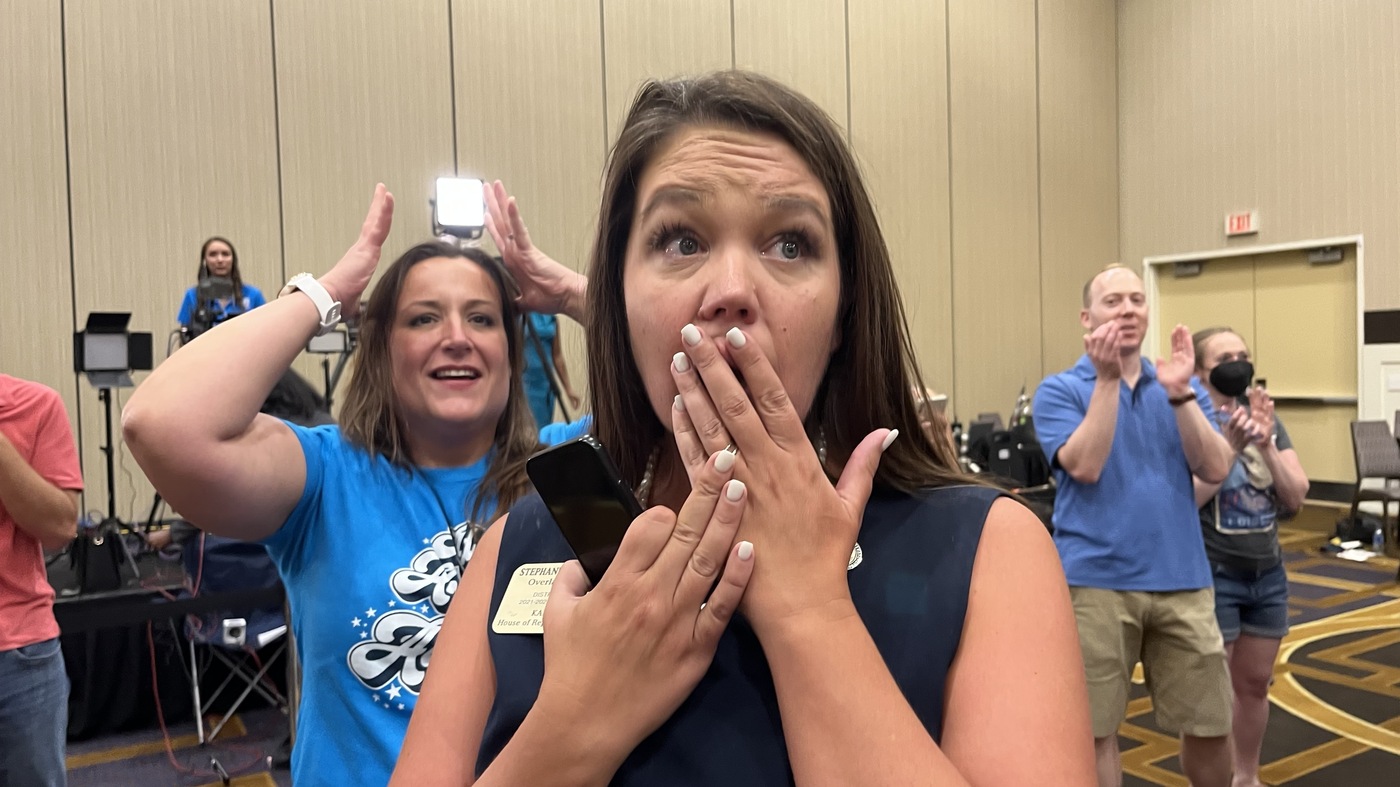
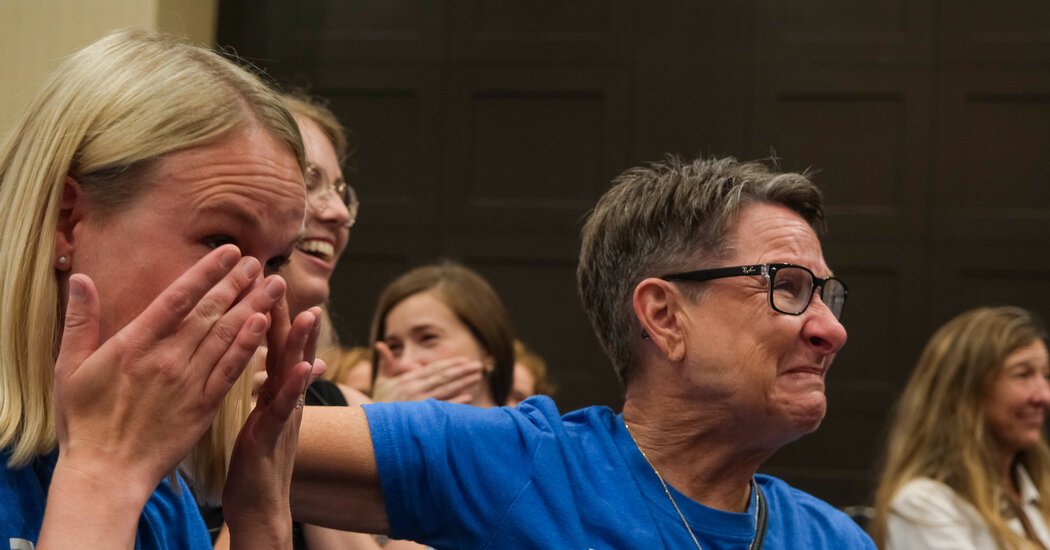
Kansas state Rep. Stephanie Clayton, an abortion rights supporter who was a Republican and is now a Democrat, reacts as a referendum to strip abortion rights out of the state constitution fails.

Danielle Kurtzleben/NPR


hide caption

toggle caption

Danielle Kurtzleben/NPR


Kansas state Rep. Stephanie Clayton, an abortion rights supporter who was a Republican and is now a Democrat, reacts as a referendum to strip abortion rights out of the state constitution fails.

Danielle Kurtzleben/NPR

LAWRENCE, Kan. — Voters in Kansas rejected a proposed state constitutional amendment Tuesday that would have said there was no right to an abortion in the state, according to The Associated Press.

Kansas was the first state to vote on abortion rights since the US Supreme Court handed down its ruling in Dobbsv. Jackson’s Women’s Health Organization.

President Joe Biden hailed Tuesday’s vote and called on Congress to pass a law to restore nationwide abortion rights that were provided by Roe.

“This vote makes clear what we know: the majority of Americans agree that women should have access to abortion and should have the right to make their own health care decisions,” Biden said in a statement.

Kansas For Constitutional Freedom, the main abortion rights group opposing the amendment, called the victory “huge and decisive.”

“The people of Kansas have spoken,” said Rachel Sweet, campaign manager for the group. “They think that abortion should be safe, legal and accessible in the state of Kansas.”

This year, a record number of abortion questions will be on state ballots, and many are asking Kansas’ decision Tuesday will be an indicator of what is to come.

In the lead-up to the vote, supporters of the amendment argued that it was necessary to correct what they say was the Kansas Supreme Court’s overreach in striking down some of the state’s previous abortion restrictions in 2019.

Opponents argued that the amendment would set state lawmakers up to pursue a total abortion ban.

an overwhelming victory

Struggling to speak after the race was called, 23-year-old Jae Moyer said the decisive victory in the red state was surprising.

“It’s never looked like this in Kansas,” Moyer said. “It’s so amazing. I’m so proud of my state right now.”

Planned Parenthood donated millions of dollars to the opposition effort.

“Anti-abortion politicians put this amendment on the primary ballot with the goal of low voter turnout,” said Emily Wales of Planned Parenthood Great Plains Votes, “but they discounted Kansans, who said loud and clear they believe and trust patients to make their own medical decisions.”

Access to abortion in Kansas remains limited. The state has only four clinics where abortions remain available, all in the Wichita and Kansas City areas.

That leaves many Kansans in the western part of the state hundreds of thousands away from abortion care. Many are closer to abortion providers in other states, like Colorado.

Trust Women, which operates two of the clinics in Kansas, said it will continue providing abortion care while also working to expand access throughout the state.

“We cannot be content with the status quo,” the organization said. “The loss of Roe has brought with it an unprecedented and manufactured health care crisis that is not solved by this election.”

Abortion opponents say they are not done

Kansans For Life, a major political group that opposes abortion rights, said in a news release that the vote is a temporary setback and the organization remains dedicated to continuing its work opposing abortion.

“While the outcome is not what we hoped for, our movement and campaign have proven our resolve and commitment,” the organization said. “We will not abandon women and babies.”

But it’s unclear what else can be done to further restrict abortion in Kansas.

Republican state Sen. Molly Baumgardner, who supported sending the amendment to voters, said abortion opponents will need to look at new restrictions to try to decrease the number of abortions in the state.

“The defeat this evening is disappointing,” she said. “That struggle for truth, and the struggle for life, is going to continue in the state of Kansas.”

Republicans, for the most part, remained quiet before Tuesday and wouldn’t say how far they wanted to restrict abortion access if the amendment passed.

Kansas’ abortion restrictions already include limiting abortions after 22 weeks of pregnancy to cases where the pregnant person’s life is in danger. The state also requires an ultrasound before a procedure.

Those restrictions would have remained in place whether the amendment passed or failed. The vote in this red state may be a sign of what’s to come in other abortion votes around the country later this year.

Categories
US

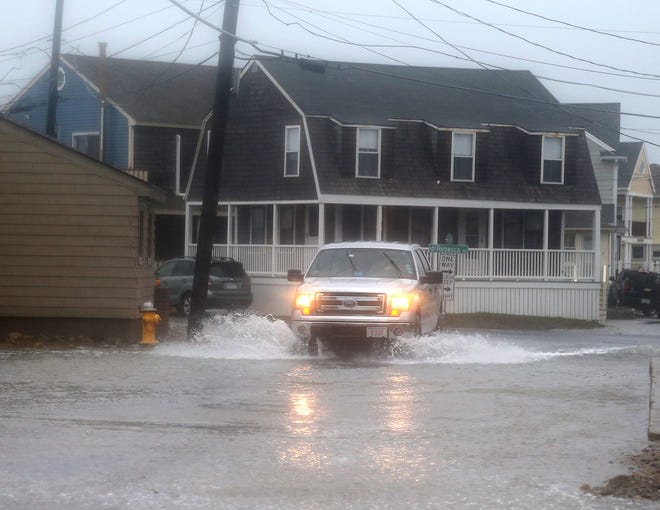
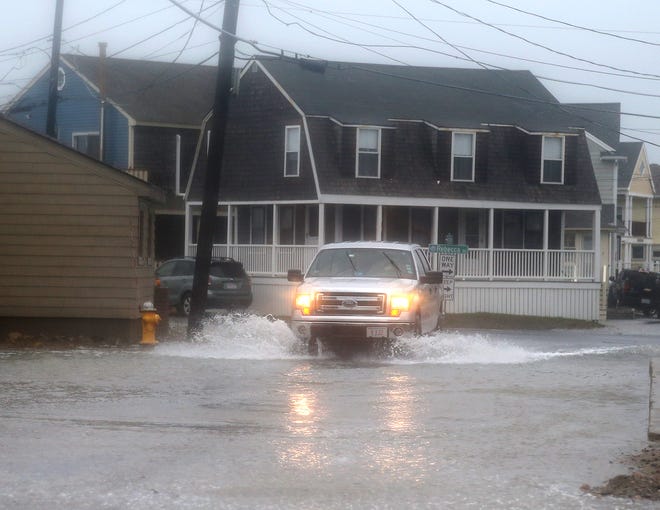
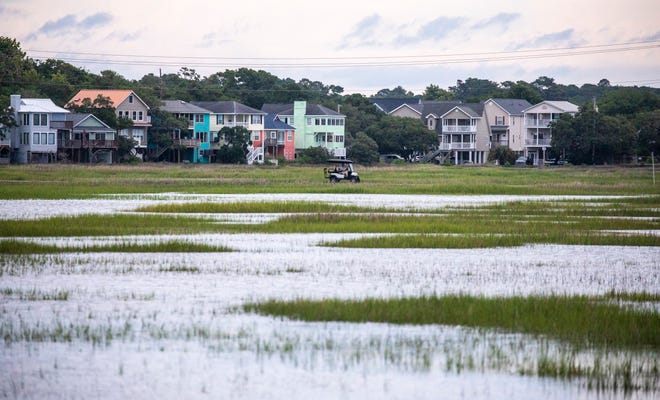
Water levels ‘nearing the brim’ as sea level rise brings higher tides

Categories
US

Couple loses dream home in Elmo Fire

DAYTON – The Elmo Fire exploded Monday afternoon as strong winds blew the fire east forcing evacuations.

A couple from Dayton had been building their dream home for the last 18 months, they felt helpless as they watched their home go up in flames.

“We don’t know where to go…that was our life savings…we have no idea, it’s less than 24 hours so we’re trying to figure it out, we have two dogs in the car, and these are the only shoes I have so we just have to start over,” said fire victim Lisa Holett.

Lisa and Steve Holett lost their dream home in Dayton when it was destroyed by the Elmo Fire, just weeks before moving in.

“You can’t have home insurance until the home is finished, so we had construction insurance which is like that (small hand gesture) and my husband did it himself, so there’s no reimbursement for that either,” said Holett.

Lisa was set to join her husband in retirement at the end of the year. Now she’s searching for answers thinking about what could have been…and what comes next.

“And we’re too old to do it again so, that was it, we’re not doing it again.”

Brigitte Cooley who has lived in Dayton since 1993 says she can’t believe what she witnessed Monday afternoon as the Elmo Fire blew out of control.

“It moved, it moved! The smoke and the flames and the flames everywhere, here were little ones, there were little ones and pretty soon it’s almost like it was sped up, you just can’t believe it,” said Brigitte.

Brigitte is amazed by the pilots operating aircraft through the heavy smoke.

“To guide those plans through the smoke, I’ll tell you they deserve a raise, a bonus and recognition, this is like serving in the military sometimes you know, this is war, we have a war against this fire.”

Lisa hopes nobody else suffers through the pain her family has endured, as the Elmo fire rages on.

“We just watched it go up in flames, we stood here, and it was our retirement home, our dream home that we’ve been building for 18 months, and it’s gone, all of its gone,” said Holett.

Those who would like to help Lisa and Steve Holett can do so here.

Categories
US

Teenage boy killed at light rail station in downtown Minneapolis

A teenage boy was fatally shot at a light-rail station in downtown Minneapolis, and police had a “person of interest” in custody within an hour of the shooting.

Officers were called to the light rail platform along 5th Street west of Nicollet Mall at about 5:30 pm Tuesday on a report of shots fired, Minneapolis police spokesman Howie Padilla said. First responders tried to save the boy’s life, but he died at the scene along the platform.

A single shell casing was found at the scene and police believe the shooter and the victim knew each other. The victim’s body lay covered on the platform as police investigated the area.

“This was a conflict of some sort between two individuals who seemed to have known each other,” Padilla said. Metro Transit police helped find images of the person of interest to identify him, and a bus operator spotted the person.

This is the 55th homicide in Minneapolis, according to the Star Tribune database.

The entire block where the transit station sits was cordoned off by police, where numerous squad cars and offices were securing the scene.

The incident also disrupted rail service downtown.

By 7:45 pm trains resumed through Nicollet Station all the way to Target Field, according to a Metro Transit alert.

A woman getting off the bus on 5th Street moments before described hearing a “pop” as she walked to a nearby store.

“I was like, ‘Is that a gunshot?’ Yes it was, “said Mary Sue, who declined to give her full name to her. “Scary.”

Several dozen bystanders lingered around the yellow crime tape waiting for answers as hundreds of pedestrians bound for the Minnesota Twins game streamed past the scene.

Categories
US

Nadler and Maloney Are Collegial at Debate. Their Rival Is Combative.

After decades of working together as House colleagues and ultimately ascending to powerful committee leadership posts, Representatives Jerrold Nadler and Carolyn Maloney took the stage on Tuesday night as reluctant foes in a three-way Democratic debate.

If fireworks were expected, then the debate was something of a washout: The two longtime Democrats stood and sat side by side, each collegially allowing the other to recite decades of accomplishments and showing an unusual degree of deference.

It fell to the third candidate, Suraj Patel, a lawyer who has never held an elected office, to play the energetic aggressor, criticizing the records of the New York political fixtures and suggesting that voters would be better served by a younger representative, and perhaps House term limits, too.

The debate, hosted by NY1 and WNYC, offered the broadest opportunity for the three leading Democratic candidates seeking to represent New York’s newly drawn 12th Congressional District to distinguish themselves ahead of the Aug. 23 primary. (A fourth candidate, Ashmi Sheth, will appear on the ballot but did not meet the fund-raising requirement to appear onstage.)

In a debate with few standout moments, the most notable exchange had little to do with the primary contest itself.

Errol Louis, one of the moderators, asked the three candidates whether they believed President Biden should run for re-election in 2024.

Mr. Patel, who is running on the importance of generational change, was the only candidate to respond in the affirmative. Mr. Nadler and Ms. Maloney, who are running on the argument that seniority brings clout and expertise, both dodged the question.

“Too early to say,” Mr. Nadler said.

“I don’t believe he’s running for re-election,” Ms. Maloney said.

It seemed like a rare break from Democratic solidarity for Mr. Nadler, 75, and Ms. Maloney, 76, who were elected to office in 1992 and have often worked together as they climbed the ranks of Congress.

About halfway through the 90-minute debate, Mr. Nadler was asked to expound on the differences between himself and Ms. Maloney. “Carolyn and I have worked together on a lot of things,” he said, stumbling a bit. “We’ve worked together on many, many different things.”

“There are some differences,” he added, stumbling a bit more before going on to name three votes in particular.

But even as the two essentially made cases for their political survival, Mr. Nadler and Ms. Maloney largely refrained from attacking each other or offering strong reasons for voters to choose one of them over the other. When given the opportunity to cross-examine an opponent, both chose to question Mr. Patel.

Ms. Maloney even admitted she “didn’t want to run” against Mr. Nadler, her “good friend” and ally.

Mr. Nadler pointed to three key votes that set him apart from Ms. Maloney — he opposed the Iraq War and the Patriot Act, which expanded government surveillance powers after the Sept. 11, 2001, terrorist attacks, while she voted for them; he supported the Iran nuclear deal, which she opposed. But he refrained from criticizing her votes outright. Mr. Patel was more forceful, at one point calling Ms. Maloney’s vote on Iraq his “single biggest issue of her with her voting record of her.”

Mr. Patel, 38, who has twice unsuccessfully attempted to defeat Ms. Maloney, at times tried to use their friendship to his advantage. At one point, Mr. Patel questioned why Mr. Nadler had previously endorsed Ms. Maloney despite her past support of her for legislation that would have mandated that the government study a discredited link between vaccines and autism.

“In the contest between you and her, I thought she was the better candidate,” Mr. Nadler said.

“What about now?” Mr Patel shot back.

“I still think so,” Mr. Nadler replied.

With three weeks until the primary contest and no clear front-runner, Mr. Patel sought to draw a sharp contrast with his two opponents. He pointed to their corporate donors and their adherence to party orthodoxy and tried to like himself to younger, rising party stars like Representatives Hakeem Jeffries and Alexandria Ocasio-Cortez.

“It’s 2022,” he said in his opening statement. “It is time to turn the page on 1992.”

Mr. Patel’s performance seemed energetic, in starkest contrast to that of Mr. Nadler, who gave a halting opening statement in which he misspoke and said that he had “impeached Bush twice” when he meant to refer to former President Donald J. Trump.

“I thought Suraj performed well,” said Chris Coffey, a Democratic strategist who is unaffiliated in the race. “I thought Carolyn did fine. And I thought Nadler struggled at times.”

It was only toward the end of Tuesday’s debate that Ms. Maloney seemed to set her sights on Mr. Nadler. In a conversation about infrastructure, she argued that she had wrongfully taken credit for helping fund the Second Avenue Subway, a long-sought project in her district.

Ms. Maloney said that she had advanced the project, while Mr. Nadler had yet to secure funds for a proposed freight tunnel that would run beneath New York Harbor, a project that he has championed for years.

“It’s still not built,” Ms. Maloney pointed out.

The exchange drove home the end of decades of political harmony preached on a dividing line between the two elected officials’ districts: Ms. Maloney represented most of Manhattan’s East Side, while Mr. Nadler served constituents on the West Side. Over their time in office, their reach grew to neighborhoods in parts of Brooklyn and Queens, after changes made in the state’s redistricting process. Both had endorsed each other’s previous re-election bids, supporting their respective journeys to becoming New York City political icons.

But the alliance fractured in May, when a state court tasked with reviewing New York’s congressional map approved a redistricting plan that threw the two powerful allies into the same district, one that combined Manhattan’s East and West Sides above 14th Street into a single district for the first time since World War II.

Mr. Nadler and Ms. Maloney ultimately chose to run against each other rather than seeking a neighboring seat — a decision that guaranteed that at least one of the two will lose their position, robbing New York’s congressional delegation of at least one high-ranking member with political influence.

Ms. Maloney leads the House’s Oversight and Reform Committee, a key investigative committee. Mr. Nadler chairs the Judiciary Committee, a role that vaulted him into the national spotlight during both of Mr. Trump’s impeachment trials.

For months, the two have engaged in a crosstown battle for their political survival that has riveted the Democratic establishment. Both Mr. Nadler and Ms. Maloney have drawn on political ties to try to pressure old allies and wealthy donors they once shared to back one of them.

All three of the candidates at Tuesday’s debate and political analysts alike have acknowledged that the race’s outcome may largely depend on who casts ballots. Even as they tried to appeal to voters, Ms. Maloney, Mr. Nadler and Mr. Patel acknowledged they largely share political viewpoints on key issues like abortion and gun control.

“We are, on this stage, star-crossed lovers,” Mr. Patel said. “We are arguing right now, but the fact of the matter is, we’re on the same team.”

Nicholas Fandos contributed reporting.

Categories
US

Eric Schmitt beats former Gov. Eric Greitens in Missouri GOP Senate primary, NBC projects

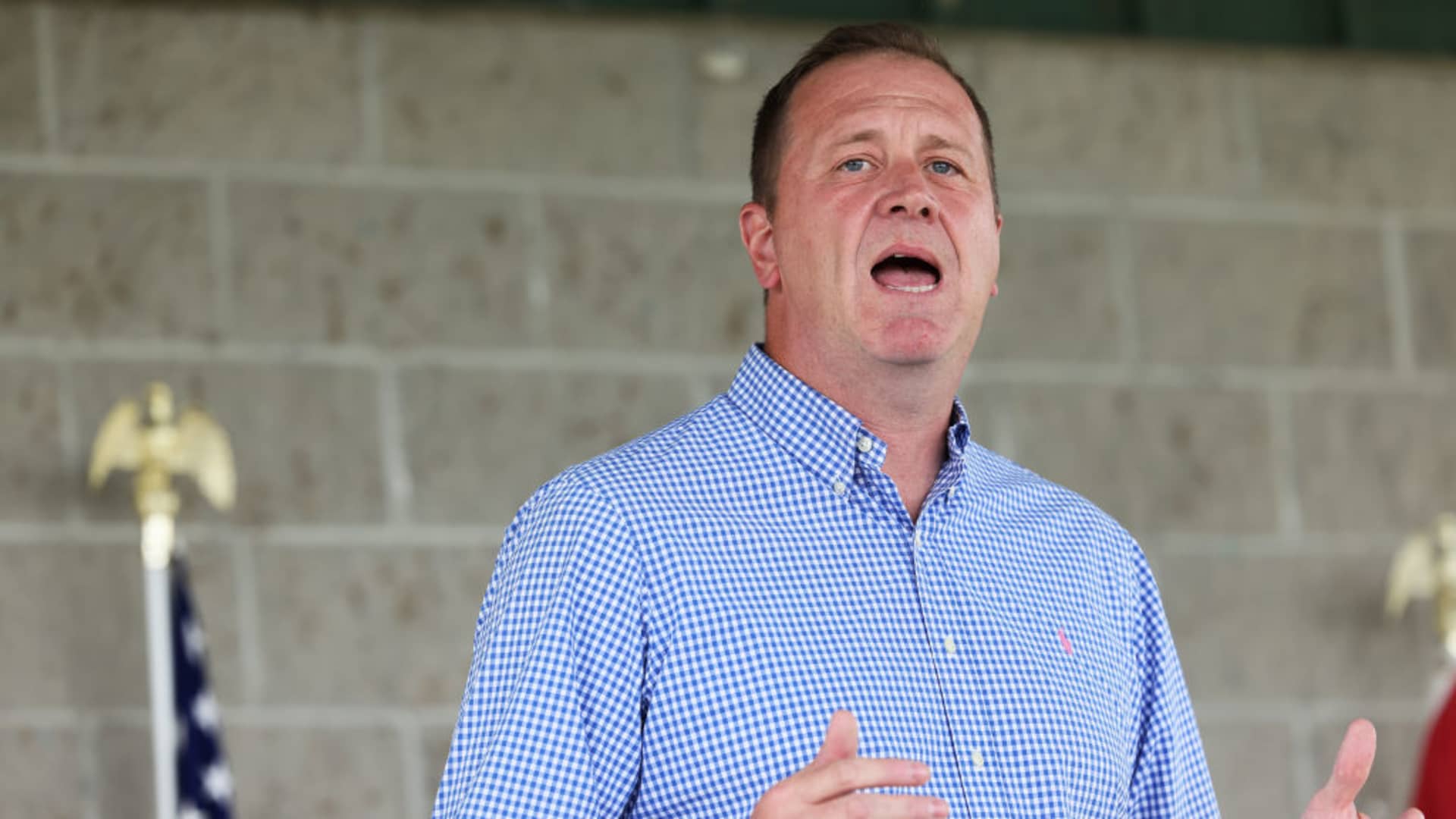
FARMINGTON, MISSOURI – JULY 31: Missouri Attorney General and Republican Senate candidate Eric Schmitt speaks to supporters in Hall Pavilion at Englar Park on July 31, 2022 in Farmington, Missouri. Schmitt is holding campaign events on the last weekend before the August 2nd primary elections in Missouri. He is the front runner in the primary race that includes former Missouri Governor Eric Greitens, to replace outgoing Senator Roy Blunt. (Photo by Michael M. Santiago/Getty Images)

Michael M. Santiago | Getty ImagesNews | Getty Images

Eric Greitens, the scandal-tarred former Missouri governor who launched a comeback bid against the wishes of many Republicans, will lose the state’s GOP Senate primary, NBC News projects.

Eric Schmitt, currently the state’s attorney general, is projected to proceed to the general election, where he will compete with a Democratic nominee for the seat being vacated by retiring Republican Sen. Roy Blunt.

The primary results mark a thudding defeat for Greitens, who fully embraced former President Donald Trump and fought against recent allegations of domestic abuse as he looked to claw his way back to the political fore.

Greitens had announced his Senate bid nearly three years after resigning from the governor’s office amid accusations that he blackmailed a hairdresser with whom he was having an affair. Greitens admitted to the tryst of her, but denied he had threatened to release her nude photographs he took of her if she revealed the affair.

He was charged with felony invasion of privacy related to the alleged blackmailing. Greitens was also charged with illegally using a charity donor list to help fund his 2016 gubernatorial campaign. Both charges were dropped around the time Greitens resigned in June 2018.

Eric Greitens, Missouri Governor, pictured at the Robin Hood Veterans Summit in New York City.

Craig Barritt | Getty ImagesEntertainment | Getty Images

Those and other scandals led mainstream Republicans to worry about a Greitens candidacy jeopardizing the party’s hold on a Senate seat in a state that otherwise reliably votes Republicans into high office. Democrats are desperate to keep their razor-thin majority in the Senate, but their control of the chamber is threatened by a challenging political environment, exacerbated by President Joe Biden’s unpopularity and recent economic turmoil.

Greitens had aligned himself completely with Trump during his Senate campaign, including echoing Trump’s false claims about widespread fraud tainting the 2020 presidential election. Kimberly Guilfoyle, the girlfriend of Donald Trump Jr., joined Greitens’ campaign as national co-chair.

But the former president ultimately did not give Greitens a full-throated endorsement. Rather, he bizarrely endorsed “Eric” in the Missouri GOP Senate primary, where two of the top candidates are named Eric.

“I trust the Great People of Missouri, on this one, to make up their own minds,” Trump said in a social media post on the eve of the primary.

Both Greitens and Missouri Attorney General Eric Schmitt touted Trump’s announcement as though it were a personal endorsement.

Polling averages from RealClearPolitics showed Greitens had a smaller lead over a top Democratic primary candidate than either of his two biggest competitors in the Republican primary.

After Sheena Greitens filed court documents in March alleging Eric Greitens abused her and their young son while they were married, numerous top Republicans called on Greitens to drop out.

“If you hit a woman or a child, you belong in handcuffs, not the United States Senate,” said Sen. Josh Hawley, R-Mo., who had investigated Greitens when he was Missouri’s attorney general.

Blunt himself said that Greitens “should not be a candidate for the Senate” if Sheena Greitens’ allegations are true.

Correction: This article has been updated to correct the photo of Eric Schmitt.

.

Categories
US

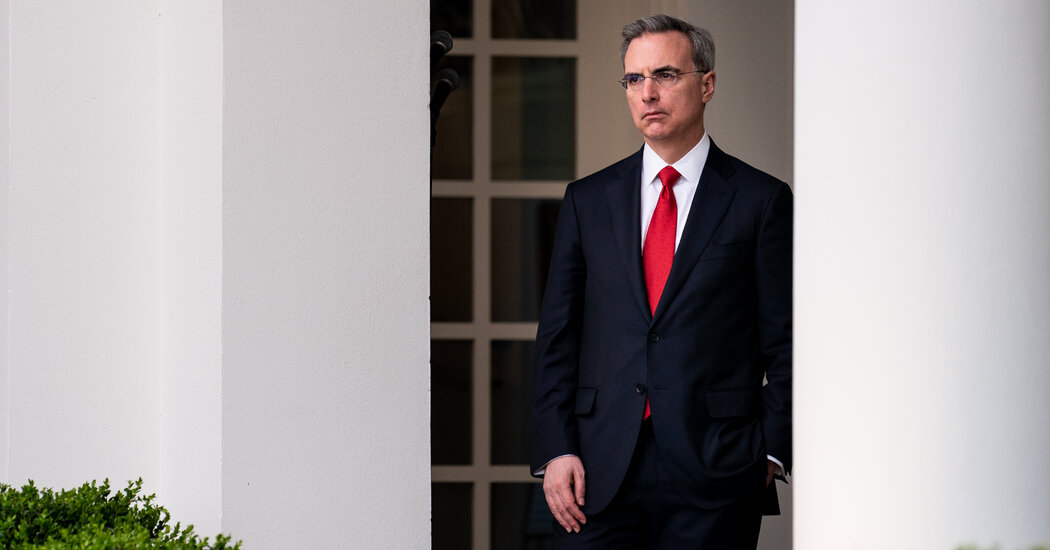
Justice Dept. Subpoenas Pat Cipollone, Trump White House Counsel

Pat A. Cipollone, the White House counsel under former President Donald J. Trump who tried to stop some of his more extreme efforts to overturn the 2020 election, has been subpoenaed by a federal grand jury investigating activities in the lead-up to the Capitol riot on Jan. 6, 2021, a person familiar with the subpoena said.

It was unclear which grand jury had called Mr. Cipollone to testify as a witness. Two are known to be hearing evidence and testimony — one looking at the scheme by some of Mr. Trump’s lawyers and advisers to assemble slates of electors who would falsely claim that Mr. Trump was the actual winner of the election, and another focused on the events of Jan. 6.

But Mr. Cipollone is the highest-ranking White House official working for Mr. Trump during his final days in office who is known to have been called to testify by federal investigators.

He was in the West Wing as Mr. Trump’s supporters violently stormed the Capitol and the president repeatedly refused to call them off. Mr. Cipollone also attended several meetings in the run-up to the riot in which Mr. Trump and his allies discussed how they could overturn the election and keep him in office.

Mr. Cipollone repeatedly pushed back on those efforts.

The subpoena was reported earlier by ABC News. An aid to Mr. Cipollone did not immediately respond to requests for comment. A spokesman for the Justice Department declined to comment.

Mr. Cipollone’s appearance has been requested at a time when federal prosecutors are sharpening their focus on the conduct of Mr. Trump, and not simply the people who were advising him.

In recent weeks, investigators have asked witnesses questions about Mr. Trump and his actions, including of people who worked in the White House. Two former senior advisers to Vice President Mike Pence — his chief of staff, Marc Short, and his chief counsel, Greg Jacob — recently testified before one of the grand juries, according to people familiar with their appearances.

Given the nature of Mr. Cipollone’s job, it was unclear how much information he would provide. He was subpoenaed by the House committee investigating the Jan. 6 riot and the events that helped precipitate it, and sat for a transcribed, recorded interview.

But certain terms were discussed ahead of time, and Mr. Cipollone, citing attorney-client and executive privilege, declined to discuss specific conversations with Mr. Trump.

Mr. Cipollone was a witness to some of the most significant moments in Mr. Trump’s push to overturn the election results, including discussions about seizing voting machines, meddling in the Justice Department and sending false letters to state officials about election fraud.

“That’s a terrible idea for the country,” he said of suggestions that the Trump administration seize voting machines, adding, “That’s not how we do things in the United States.”

Mr. Cipollone was also in direct contact with Mr. Trump on Jan. 6 as rioters stormed the Capitol and told the House committee he believed more should have been done to call off the mob.

“I think I was pretty clear there needed to be an immediate and forceful response, statement, public statement, that people need to leave the Capitol now,” Mr. Cipollone testified.

katie benner contributed reporting.

Categories
US

How Abortion Rights Supporters Won in Conservative Kansas

Supporters of abortion rights won a huge and surprising victory on Tuesday in one of the most conservative states in the country, with Kansas voters resoundingly rejecting a constitutional amendment that would have let state legislators ban or significantly restrict abortion.

Results were still coming in as the night wore on, but with more than 90 percent of ballots counted, the pro-abortion-rights side was ahead by about 18 percentage points, a staggering margin in a state that voted for President Donald J. Trump in 2020 by a margin of just under 15 percentage points.

Here is a look at what happened.

Going into Election Day, many observers believed the outcome of the referendum would be determined in increasingly Democratic areas like the Kansas City suburbs — that is, by whether enough voters turned out there to compensate for the very conservative lean of the rest of the state. But abortion opponents did surprisingly poorly even in the reddest places.

Consider far western Kansas, a rural region along the Colorado border that votes overwhelmingly Republican. In Hamilton County, which voted 81 percent for Mr. Trump in 2020, less than 56 percent chose the anti-abortion position on Tuesday (with about 90 percent of the vote counted there). In Greeley County, which voted more than 85 percent for Mr. Trump, only about 60 percent chose the anti-abortion position.

We can talk about the cities all day long, but Kansas is known as a rural Republican state for a reason: Rural Republican areas cover enough of the state that they can, and almost always do, outvote the cities. The rejection of the amendment has as much to do with lukewarm support in the reddest counties as it does with strong opposition in the bluest ones.

Certainly, though, the cities and suburbs deserve some credit. The comparatively slim margins of victory for abortion opponents in western Kansas left the door wide open, but abortion rights supporters still had to walk through it, and they did.

Wyandotte County, home to Kansas City, Kan., voted 65 percent for Joseph R. Biden Jr. in 2020, but 74 percent for abortion rights on Tuesday. Neighboring Johnson County, the state’s most populous, voted 53 percent for Mr. Biden but more than 68 percent for abortion rights.

What was striking, in fact, was the degree to which the picture was similar everywhere. From the bluest counties to the reddest ones, abortion rights performed better than Mr. Biden, and opposition to abortion performed worse than Mr. Trump.

We won’t know exactly how many people voted, much less their partisan breakdown or demographic characteristics, until the results are fully counted. But we can already say that statewide turnout was much higher than expected — nearly as high as it was in the last midterm election.

Roughly 940,000 Kansans voted in the referendum, according to preliminary New York Times estimates, compared with about 1.05 million people in the November 2018 midterm election. The gap between turnout in primaries and general elections is usually much larger than that.

Before Tuesday, the Kansas secretary of state’s office predicted a turnout of about 36 percent. But as voting ended, Secretary of State Scott Schwab told reporters that anecdotal evidence indicated turnout might hit 50 percent, an extraordinary increase over what was expected. The Times’s 940,000 estimate would mean a 49 percent turnout.

The voters who would have been expected to show up on Tuesday, under normal circumstances, would mostly have been Republicans. That is not only because registered Republicans significantly outnumber registered Democrats in Kansas, but also because most of the contested races on the ballot were Republican primaries, giving Democrats little reason to vote — except to oppose the constitutional amendment.

Abortion opponents’ strategic decisions around the amendment started with the choice to put it on Tuesday’s ballot in the first place. The primary electorate was expected to be small and disproportionately Republican, and it seemed like a reasonable assumption that the amendment would have a better chance of passing in that environment than on a general election ballot.

The overturning of Roe v. Wade in June upended that strategy, turning what might otherwise have been an under-the-radar ballot measure into a nationally scrutinized referendum on abortion rights. Many voters might previously have seen the stakes as theoretical: If the US Constitution protected abortion rights, how much did it really matter whether the Kansas Constitution did? But then the Supreme Court undid the first part of that equation, and Kansas abruptly became an island of abortion access in a sea of ​​Southern and Plains states banning the procedure.

Groups on both sides blanketed the state with millions of dollars in advertising. Democrats who would otherwise have stayed home, knowing their party had few competitive primaries on the ballot, turned out specifically to vote against the amendment. Supporters of abortion rights were gripped with that great political motivator: anger.

On Tuesday, the results were clear.