Categories
US

Arizona Republican gubernatorial primary too close to call between Lake, Taylor Robson

NEWYou can now listen to Fox News articles!

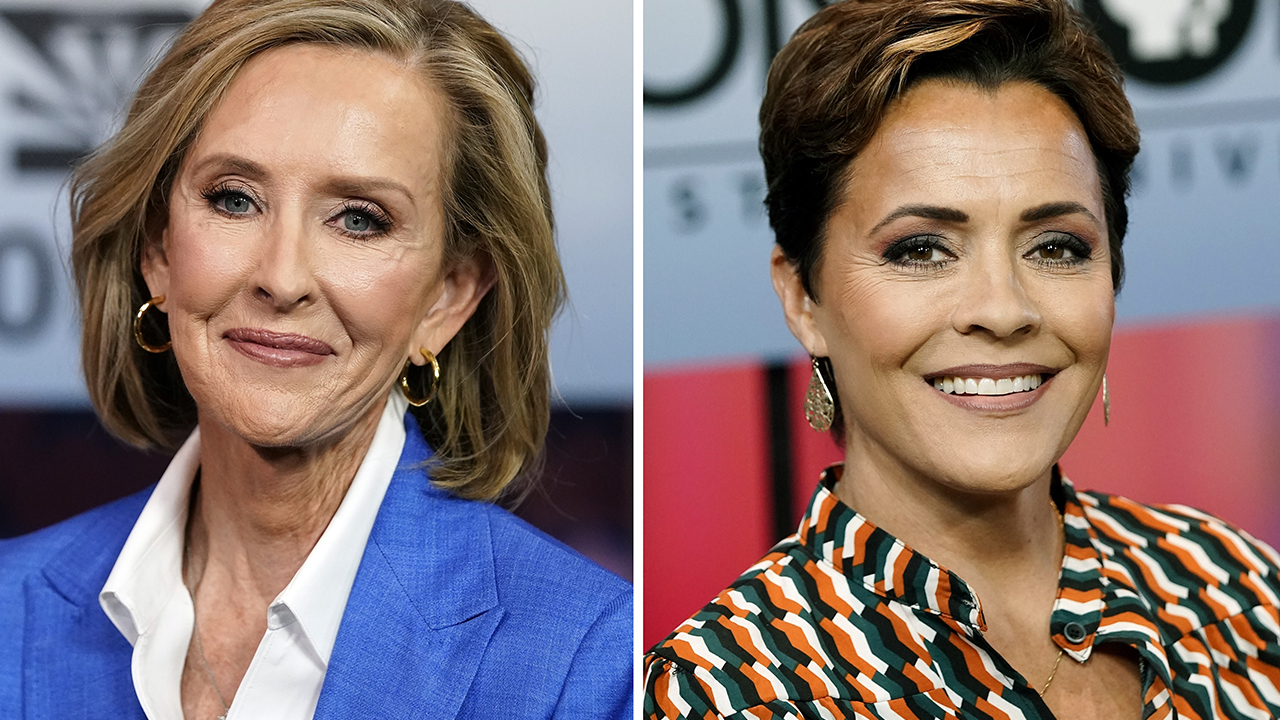
It is too close to call Arizona’s Republican gubernatorial primary, with former TV news anchor Kari Lake leading real estate developer and Arizona Board of Regents member Karrin Taylor Robson by fewer than 12,000 votes.

As of Wednesday morning, Lake had 46.2% of the vote, and Taylor Robson had 44.5% in the Republican primary. The two women are seeking to succeed term-limited Gov. Doug Ducey, to Republican.

The race turned into a bit of a proxy war between former President Trump and former Vice President Mike Pence.

The former president last year endorsed Lake, who is a strong supporter of Trump’s repeated and unproven claims that his 2020 election loss to President Biden was due to massive voter fraud.

HEAD TO THE FOX NEWS ELECTION CENTER FOR THE LATEST PRIMARY RESULTS

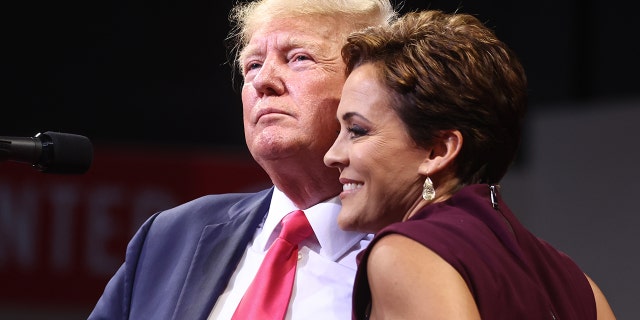
Former President Trump embraces Republican gubernatorial candidate Kari Lake at a rally on July 22, 2022, in Prescott Valley, Arizona.

Former President Trump embraces Republican gubernatorial candidate Kari Lake at a rally on July 22, 2022, in Prescott Valley, Arizona.
(Mario Tama/Getty Images)

Two weeks ago, Pence endorsed Taylor Robson, who is also backed by Ducey.

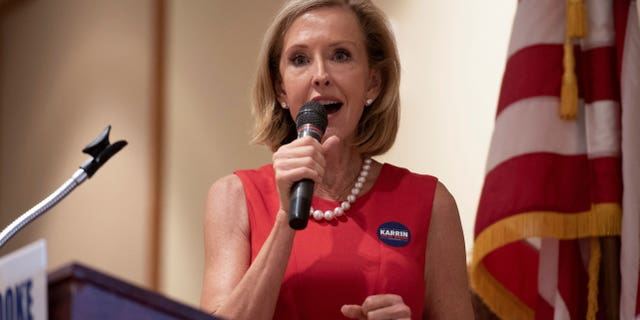
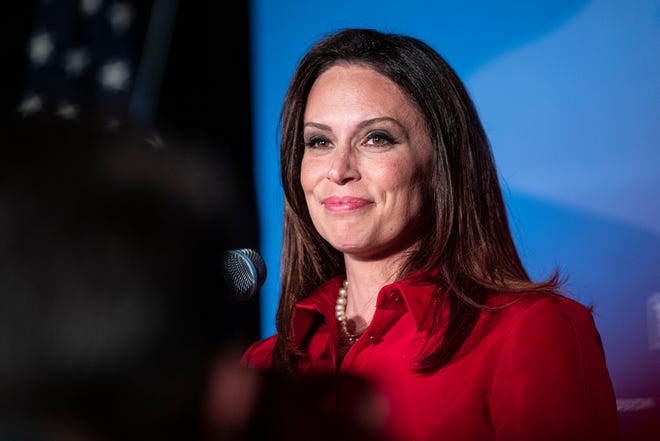
Arizona Republican Governor candidate Karrin Taylor Robson speaks in Tucson, Arizona, July 1, 2022.

Arizona Republican Governor candidate Karrin Taylor Robson speaks in Tucson, Arizona, July 1, 2022.
(REUTERS/Rebecca Noble)

Trump and Pence – who could potentially become rivals for the 2024 GOP presidential nomination – were both in Arizona on the same day a week and a half ago, headlining competing campaign events.

CLICK HERE TO GET THE FOX NEWS APP

The winner of the Tuesday’s Republican primary will likely face off in November with Arizona Secretary of State Katie Hobbs, who is the leading contender for the Democratic gubernatorial nomination in the one-time red state that has become a top general election battleground between the two major parties.

Categories
US

Arizona House Speaker Rusty Bowers loses state Senate bid

PHOENIX — Republican Arizona House Speaker Rusty Bowers lost his bid for a state Senate seat after refusing then-President Donald Trump’s pleas to help overturn the 2020 election results and testifying before Congress about the efforts.

Bowers tried to move to the state Senate because of term limits. He lost to former state Sen. David Farnsworth, who criticized him for refusing to help Trump or go along with a contentious 2021 “audit” that Republican leaders in the Senate commissioned.

Farnsworth will automatically win the Senate seat because no Democrat is running in the heavily Republican district.

Bowers faced an uphill battle in the eastern Phoenix suburb of Mesa, especially after the state Republican Party censored him following his June testimony before the panel investigating the Jan. 6, 2021, attack on Congress and Trump endorsed Farnsworth.

“I’m well aware that I’m highly distrusted,” Bowers told The Associated Press before the election. “My district is a very Trump district, and who knows how this is all going to work out.

“And if it doesn’t work out, great, I’d do it all again the same way,” Bowers said.

Trump pressured Bowers to help with a plan to replace electors committed to now-President Joe Biden during a phone call weeks after Trump lost the 2020 election. Bowers refused.

Former Republican Arizona state Sen.  David Farnsworth waves to a cheering crowd as he is introduced by former President Donald Trump as Trump speaks at a Save America rally Friday, July 22, 2022, in Prescott, Ariz.
Former Republican Arizona state Sen. David Farnsworth beat out his opponent in Tuesday night’s race.
AP Photo/Ross D. Franklin

Bowers insisted on seeing Trump’s evidence of voter fraud, which he said Trump’s team never produced beyond vague allegations. He recalled Trump lawyer Rudy Giuliani later told him, “We’ve got lots of theories, we just don’t have the evidence.”

Bowers is a conservative Republican, but Farnsworth said he’s not conservative enough and has become less so since becoming speaker following the 2018 elections.

“Of course, the big issue, I think, for everybody is the fact that I strongly believe that there was fraud in the 2020 election,” Farnsworth said in an interview last week. “And I feel like Rusty failed… to take responsibility as speaker of the House and look into that election.”

The Farnsworth-Bowers battle was one of several brewings that involved current or former Arizona lawmakers.

A where to vote sign points voters in the direction of the polling station as the sun beats down as Arizona voters go the polls to cast their ballots, Tuesday, Aug. 2, 2022, in Phoenix.  (AP Photo/Ross D. Franklin)
Election fraud was a major topic of discussion in several primaries, but especially in Arizona.
AP Photo/Ross D. Franklin

In another eastern suburban district, GOP Sen. Tyler Pace was trailing his challenger after an outside group targeted him and Bowers.

Redistricting put two Trump-supporting state senators, Kelly Townsend and Wendy Rogers, into the same district. Rogers was leading in early returns, but the race was too early to call.

It featured bitter recriminations as Rogers has faced repeated ethical charges for her inflammatory rhetoric, support for white supremacists and conspiracy-theory laden tweets.

Townsend said she felt compelled to run against Rogers when she refused to refute white nationalism after speaking at a conference in Florida in February.

“If I don’t run against her and make that statement, win, lose or drawn then her actions become our own,” Townsend said Monday. “It sort of spoils the whole (Republican) party.”

Rogers has earned a national following, raising a whopping $3 million from donors across the country since taking office in early 2021. Townsend had raised about $15,000, much more typical for a state legislative race.

A voter heads into a polling stating as Arizona voters go the polls to cast their ballots, Tuesday, Aug. 2, 2022, in Tempe, Ariz.  (AP Photo/Ross D. Franklin)
A voter heads into a polling station as Arizona voters go to the polls to cast their ballots on Tuesday, Aug. 2, 2022.
AP Photo/Ross D. Franklin

In the west Phoenix suburbs, former Rep. Anthony Kern, who attended Trump’s Jan. 6 rally that led to the attack on Congress and unsuccessfully sued Democrats who asked the Department of Justice to investigate him, was leading in his effort to return to the Legislature . He was defeated in his 2020 House primary and is now aiming for a Senate seat. If his solid lead holds, he’ll get it, since no Democrat is running.

Also trying for a political comeback is former Rep. Steve Montenegro, whose 2018 run for Congress was upended by a sexting scandal. He was leading among four Republicans running in a west Phoenix House district for two open House seats.

Democratic Reps. Diego Espinoza and Richard Andrade are facing off after being drawn into the same district in the western Phoenix suburbs, with Andrade holding a slight lead in a race too close to call. And Sen. Lela Alston, considered the most experienced lawmaker in the Legislature, was well ahead of two challengers in her central Phoenix district. One of them, political unknown Al Jones, has sought attention by buying billboards across the city.

.

Categories
US

Democrats scramble for Sinema’s support on climate, health and tax bill

Comment

Senate Democrats are discussing whether to dial back some of their proposed taxes targeting wealthy investors and billion-dollar corporations, part of a new scramble to win the support of Sen. Kyrsten Sinema (D-Ariz.) and advance their broader economic agenda swiftly.

One week after brokering a deal that secured the must-have vote of Sen. Joe Manchin III (DW.Va.), top party lawmakers have set their attention on assuaging the other centrist fiscal hawk among their ranks. They have actively engaged Sinema in private negotiations in recent days, opening the door for possible revisions to the health-care and climate-focused bill known as the Inflation Reduction Act.

Democrats race to ready Inflation Reduction Act for vote this week

Publicly, Sinema has said nothing about the measure, and her aides maintain she is still reviewing it. Behind the scenes, though, the senator has spoken with Democrats about at least two of the proposal’s tax provisions, according to two people familiar with the matter who spoke on the condition of anonymity to describe the sensitive negotiations.

The first involves tightening a policy that benefits hedge fund, private equity and real estate managers by taxing much of their compensation at a lower rate than most other earned income. The second sets a minimum tax on large, profitable companies that pay nothing to the US government. On both, Sinema’s exact requests are unclear, though she has previously expressed some openness to a minimum corporate tax. The people familiar with the talks cautioned that discussions are fluid.

The two proposals — along with other cost-cutting and revenue-raising components of the bill — together are expected to generate about $739 billion in new federal funds. The amount is enough to offset Democrats’ new spending on health care and climate, while still generating about $300 billion that can pay down the deficit over the next decade.

How the Schumer-Manchin climate bill might impact you and change the US

But resolving Sinema’s concerns could require party leaders to thread a narrow needle, as they labor to preserve a delicate deal that has satisfied Manchin and his fellow Democrats at a moment when some in the party share competing views about how best to respond to an economy facing major price spikes and other significant challenges. Republicans, meanwhile, vehemently opposed the bill, and many approached Sinema directly on the Senate floor late into Tuesday.

Speaking to reporters earlier in the day, Manchin acknowledged that he and Sinema are “exchanging texts back and forth.” Only minutes before his news conference, the two lawmakers spoke in the Senate, with Manchin kneeling beside Sinema as she presided over the chamber.

“She’ll make a decision based on the facts,” Manchin said afterward.

Sinema’s office declined to comment.

For Democrats, their campaign to rethink the US tax code has been a difficult one more than a year in the making.

Since winning the House, Senate and White House in 2020, President Biden and allied lawmakers have pledged to unwind the tax cuts adopted under President Donald Trump in 2017. Democrats argue that the rate reductions have disproportionately benefited corporations and the wealthy; Republicans have maintained that the cuts were essential to fostering economic growth before the coronavirus pandemic.

Democrats initially aimed to raise tax rates as part of their initial economic package, the ill-fated, approximately $2 trillion Build Back Better Act. But they ultimately faltered after Sinema opposed any change to individual and corporate tax levels. Once Democrats removed the last proposals fail, seemingly securing Sinema’s support, Manchin soon after staked out his opposition to the bill and its price tag. It passed the House but never came to vote in the Senate.

The two-week scramble that saved Democrats’ climate agenda

In rebooting Democrats’ economic agenda last week, Senate Majority Leader Charles E. Schumer (DN.Y.) worked out a new approach with Manchin. Rather than raise rates on all companies, the two men agreed to implement a 15 percent minimum tax that applies to corporations that pay nothing. This week, Democrats described the proposal as one of fairness, citing the fact that companies in “a lot of instances are paying a lower tax rate than firefighters and nurses,” as Sen. Ron Wyden (D-Ore.), the leader of the Senate Finance Committee, put it on Tuesday.

Democrats also targeted the ways private equity and hedge fund managers are taxed on fees their clients pay them. Lawmakers said their plan amounts to closing the “carried interest loophole,” which allows these investment managers to pay taxes on those fees at the much lower rate charged on capital gains rather than at the rate most Americans pay on wages.

Democrats in recent days have lined up behind the plan, but Schumer and Manchin worked out those tax policy contours without Sinema’s immediate input. Much like Manchin, though, Sinema’s vote is crucial: Democrats must band together if they hope to adopt the bill under the process known as reconciliation. That procedure only works if all 50 Democrats and Vice President Harris band together to vote for the legislation, overcoming a GOP filibuster.

“We’re in touch with Senator Sinema, we’re in touch with all of the members. I’m very hopeful we’re all going to stay united and pass this bill,” Schumer said at a news conference Tuesday.

The discussions vexed some Democratic aides this week. While they acknowledged that Sinema already had made clear her concerns with the changes on carried interest, they thought she had supported an earlier attempt to impose a corporate minimum tax after Biden sought to rework the Build Back Better Act.

Sinema offered her views in October, appearing to parse her words carefully. in to tweetshe described it as a “common-sense step” that would ensure firms pay “a reasonable minimum corporate tax on their profits,” while adding she would be “continuing discussions” with the White House on economic issues.

Democrats’ side deal with Manchin would speed up projects, West Virginia gas

Republicans, meanwhile, sought to increase pressure on Sinema and her fellow Democrats. On Tuesday, GOP lawmakers signaled they plan to force the issue on taxes once the bill comes to the floor, since reconciliation opens the door for them to offer unlimited amendments.

In a possible sign of their pressure campaign, Senate Republicans throughout the day were seen on the chamber floor huddling with Sinema directly. Speaking with reporters, Sen. John Thune (RS.D.), the chamber’s second-ranking Republican, blasted the policies as “big fat tax increases on American companies that create jobs, because we all know that’s going to be passed on” to Americans.

Tax experts have in recent days debated the merits of the minimum tax, with GOP opponents saying it could discourage corporations from claiming many of the incentives in the tax code designed to encourage corporate investment. Many Democratic tax experts are also skeptical of the merits of such a measure, and Treasury Department officials last year voiced concerns about the idea when the White House was pushing it.

Categories
US

Sinema leaves Democrats in suspense

Sen. Kyrsten Sinema (D-Ariz.) has Democrats and Republicans on the edge of their seats.

With the clock ticking down to the August recess, Senate Majority Leader Charles Schumer (DN.Y.) desperately wants to pass a bill that would tackle climate change and make significant changes to the tax code. But Schumer doesn’t have the votes — at least not yet.

Schumer says he’s working on Sinema and hopes she’ll be a “yes” on the motion to proceed to the measure, but the Arizona centrist hasn’t said whether she backs it.

“We’re in touch with Sen. Sinema, we’re in touch with all of the members, and we’re hopeful — I’m very hopeful — we’re all going to stay united and pass this bill,” he said Tuesday afternoon.

Schumer unveiled the tax and climate deal he struck with Sen. Joe Manchin (DW.Va.) on July 27 after more than a week of secret negotiations. The bill would implement a 15 percent minimum tax on wealthy corporations and enact new energy and climate programs.

Seven days later, Senate Democrats still don’t know where Sinema stands. Her office de ella says she is reviewing the legislation and waiting for the Senate parliamentarian’s review of the text.

That means senators may not know how Sinema will vote until they bring the more than 700-page bill to the floor on Thursday or Friday.

A Democratic senator who attended a virtual meeting of the caucus Tuesday said Sinema didn’t speak up about the bill at the meeting.

Republicans think there’s a good chance that Sinema may derail the legislation.

Senate Minority Leader Mitch McConnell (R-Ky.) slammed the deal as “terrible.”

“I would say to our friend Joe Manchin, I have made a terrible deal, a terrible deal. How he can defend this from a West Virginia point of view or think of it as a centrist kind of agreement is astonishing,” he said.

Sen. Kevin Cramer (RN.D.) believes Sinema will stick to her moderate principles.

“I always have faith in her. I don’t know how it will come out,” he said. “I have great faith she’s going to do what she feels is right. Ella she’s more convinced than she is transactional.

He predicted the climate and tax provisions in the bill will become a major issue in the midterm elections if they are seen as fueling inflation or dampening corporate investment.

Sinema, who has repeatedly angered progressives in this Congress, will likely face a primary challenge no matter how she votes on the Schumer-Manchin bill.

As the uncertainty builds, Manchin is waging a charm offensive to win over Sinema after he left her out of the secret negotiations with Schumer.

Manchin and Sinema worked together on last year’s bipartisan infrastructure bill and have stood together to oppose efforts by liberal colleagues to change the Senate’s filibuster rule.

But now their relationship is being tested after Manchin cut a deal with Schumer to reform the tax code and spend $369 billion on new energy security and climate change programs. News of the agreement caught Sinema and just about everyone else in Washington by surprise.

Manchin left Sinema a message on Monday in hopes of talking to her and explaining why he struck the deal and why she should support it. He tried to catch her on the floor for a conversation during the Monday evening vote, but without success.

Manchin finally tracked down his colleague on Tuesday when she was scheduled to preside over the floor, a duty routinely assigned to more-junior members of the upper chamber.

Television cameras caught Manchin kneeling on the chamber’s blue carpet next to the presiding officer’s desk, seemingly trying to cajole Sinema.

Democrats still don’t know whether Sinema will vote for the bill after Manchin insisted on adding a provision to close the carried interest tax loophole.

The carried interest tax loophole allows asset managers to use a favorable tax rate on income. A proposal to close it was left out of last year’s House tax reform package after Sinema opposed it.

Asked if she had spoken to Sinema or felt concerned that the Arizona senator might “tank” the deal, Sen. Elizabeth Warren (D-Mass.) said: “I’m not talking about private conversations. It will take 50 votes to get it through.”

All Republicans are expected to reject the bill, meaning Democrats cannot afford one defection.

Manchin provided little detail when asked how his talk with Sinema went.

“We had a nice time. We had a nice time. Next?” Manchin said tersely, looking to change the subject when pressed by reporters Tuesday afternoon.

Recognizing that Sinema could scuttle his deal with Schumer if she votes “no,” Manchin told reporters Tuesday that he’s doing his best to explain to her why he cut the deal and why it makes good sense for the country.

He also signaled that he’s open to considering any changes she might propose.

“We’re exchanging texts back and forth,” he said. She’s “extremely bright, she works hard, she makes good decisions based on facts. I’m relieved on that.”

Manchin said he and Schumer are “working with all the caucus” to get buy-in from all 50 members of the Democratic caucus.

“We’re just basically exchanging back and forth, whatever I have that she hasn’t seen. And our staffs are working together very closely,” he said, adding he’s also exchanging materials relevant to the bill with other Democratic and Republican senators.

Asked if he would be willing to change the bill’s carried interest provision, Manchin responded: “Everyone is still talking.”

Manchin on Tuesday defended his push to close the loophole that allows money managers to pay capital gains tax rates on income they collect from advising on profitable investments.

He told reporters last week that he was “adamant” about including it in the budget reconciliation package.

Asked whether Sinema is upset that she didn’t get looped in to last week’s secret talks, Manchin said he didn’t loop anyone else in to the private discussions with Schumer because he didn’t want to disappoint any of his colleagues by getting their hopes up just in case the talks fell apart again.

“She’s my dear friend,” he said. “But why bring anyone in and all their aspirations get high and the drama we go through and it doesn’t work out?

“I wasn’t really sure” a deal could be reached, he said. “I’m not in control of the timing” of the announcement of the deal, “Sen. Schumer is in control of the timing.”

But Manchin rejected the notion that Sinema or any other senator has reason to be upset because he negotiated the climate and tax deal with Schumer in secret.

“People getting mad because they think this is some kind of orchestrated coup against them is just so wrong,” he added.

Categories
US

Kansas voters resoundingly protect their access to abortion

TOPEKA, Kan. (AP) — Kansas voters on Tuesday sent a resounding message about their desire to protect abortion rights, rejecting a ballot measure in a conservative state with deep ties to the anti-abortion movement that would have allowed the Republican-controlled Legislature to tighten restrictions or ban the procedure outright.

It was the first test of voter sentiment after the US Supreme Court’s decision in June that overturned the constitutional right to abortion, providing an unexpected result with potential implications for the coming midterm elections.

While it was just one state, the heavy turnout for an August primary that typically favors Republicans was a major victory for abortion rights advocates. With most of the vote counted, they were prevailing by roughly 20 percentage points, with the turnout approaching what’s typical for a fall election for governor.

The vote also provided a dash of hope for Democrats nationwide grasping for a game-changer during an election year otherwise filled with dark omens for their prospects in November.

“This vote makes clear what we know: the majority of Americans agree that women should have access to abortion and should have the right to make their own health care decisions,” President Joe Biden said in a statement.

After calling on Congress to “restore the protections of Roe” in federal law, Biden added, “And, the American people must continue to use their voices to protect the right to women’s health care, including abortion.”

The Kansas vote also provided a warning to Republicans who had celebrated the Supreme Court ruling and were moving swiftly with abortion bans or near-bans in nearly half the states.

“Kansans bluntly rejected anti-abortion politicians’ attempts at creating a reproductive police state,” said Kimberly Inez McGuire, executive director of the Unite for Reproductive & Gender Equity. ”Today’s vote was a powerful rebuke and a promise of the mounting resistance.”

The proposed amendment to the Kansas Constitution would have added language stating that it does not grant the right to abortion. A 2019 state Supreme Court decision declared that access to abortion is a “fundamental” right under the state’s Bill of Rights, preventing a ban and potentially thwarting legislative efforts to enact new restrictions.

The referendum was closely watched as a barometer of liberal and moderate voters’ anger over the Supreme Court’s ruling scrapping the nationwide right to abortion. In Kansas, abortion opponents wouldn’t say what legislation they’d pursue if the amendment were passed and bristled when opponents predicted it would lead to a ban.

Mallory Carroll, a spokesperson for the national anti-abortion group Susan B. Anthony Pro-Life America, described the vote as “a huge disappointment” for the movement and called on anti-abortion candidates to “go on the offensive.”

She added that after the US Supreme Court ruling, “We must work exponentially harder to achieve and maintain protections for unborn children and their mothers.”

The measure’s failure was also significant because of Kansas’ connections to anti-abortion activists. Anti-abortion “Summer of Mercy” protests in 1991 inspired abortion opponents to take over the Kansas Republican Party and make the Legislature more conservative. They were there because Dr. George Tiller’s clinic was among the few in the US known to do abortions late in pregnancy, and he was murdered in 2009 by an anti-abortion extremist.

Anti-abortion lawmakers wanted to have the vote coincide with the state’s August primary, arguing they wanted to make sure it got the focus, though others saw it as an obvious attempt to increase their chances of winning. Twice as many Republicans as Democrats have voted in the state’s August primaries in the decade leading up to Tuesday’s election.

“This outcome is a temporary setback, and our fight dedicated to value women and babies is far from over,” said Emily Massey, a spokesperson for the pro-amendment campaign.

The electorate in Tuesday’s vote wasn’t typical for a Kansas primary, particularly because tens of thousands of unaffiliated voters cast ballots.

Kristy Winter, 52, a Kansas City-area teacher and unaffiliated voter, voted against the measure and brought her 16-year-old daughter with her to her polling place.

“I want her to have the same right to do what she feels is necessary, mostly in the case of rape or incest,” she said. “I want her to have the same rights my mother has had most of her life from her.”

Opponents of the measure predicted that the anti-abortion groups and lawmakers behind the measure would push quickly for an abortion ban if voters approved it. Before the vote, the measure’s supporters refused to say whether they would pursue a ban as they appealed to voters who supported both some restrictions and some access to abortion.

Stephanie Kostreva, a 40-year-old school nurse from the Kansas City area and a Democrat, said she voted in favor of the measure because she is a Christian and believes life begins at conception.

“I’m not full scale that there should never be an abortion,” she said. “I know there are medical emergencies, and when the mother’s life is in danger there is no reason for two people to die.”

An anonymous group sent a misleading text Monday to Kansas voters telling them to “vote yes” to protect choice, but it was suspended late Monday from the Twilio messaging platform it was using, a spokesperson said. Twilio did not identify the sender.

The 2019 Kansas Supreme Court decision protecting abortion rights blocked a law that banned the most common second-trimester procedure, and another law imposing special health regulations on abortion providers also is on hold. Abortion opponents argued that all of the state’s existing restrictions were in danger, though some legal scholars found that argument dubious. Kansas doesn’t ban most abortions until the 22nd week of pregnancy.

The Kansas vote is the start of what could be a long-running series of legal battles playing out where lawmakers are more conservative on abortion than governors or state courts. Kentucky will vote in November on whether to add language similar to Kansas’ proposed amendment to its state constitution.

Meanwhile, Vermont will decide in November whether to add an abortion rights provision to its constitution. A similar question is likely headed to the November ballot in Michigan.

In Kansas, both sides together spent more than $14 million on their campaigns. Abortion providers and abortion rights groups were key donors to the “no” side, while Catholic dioceses heavily funded the “yes” campaign.

The state has had strong anti-abortion majorities in its Legislature for 30 years, but voters have regularly elected Democratic governors, including Laura Kelly in 2018. She opposed the proposed amendment, saying changing the state constitution would “throw the state back into the Dark Ages.”

State Attorney General Derek Schmidt, a Republican hoping to unseat Kelly, supported the proposed constitutional amendment. He told the Catholic television network EWTN before the election that “there’s still room for progress” in decreasing abortions, without spelling out what he would sign as governor.

Although abortion opponents pushed almost annually for new restrictions until the 2019 state Supreme Court ruling, they felt constrained by past court rulings and Democratic governors like Kelly.

___

Stafford reported from Overland Park and Olathe.

___

Follow John Hanna on Twitter at https://twitter.com/apjdhanna. For more AP coverage of the abortion issue, go to https://apnews.com/hub/abortion.

.
Categories
US

Air traffic controllers say co-pilot ‘jumped’ from plane: 911 call

A 911 call made by air traffic controllers suggests that a co-pilot who died after exiting a plane during a mid-flight emergency last week may have jumped, a recording released on Tuesday showed.

The body of Charles Hew Crooks, 23, was recovered last weekend after he plunged from the plane near Raleigh, North Carolina, on Friday afternoon. The pilot did not have a parachute when he exited the twin-engine CASA CN-212 Aviocar, sparking questions around whether he had failed from the plane or jumped.

The 13-minute recording of a 911 call made by two Federal Aviation Administration employees in the RDU air traffic control tower during the incident may shine some light on the situation, with the workers suggesting the other pilot on the plane reported Crooks had jumped.

A twin-engine CASA CN-212 Aviocar is inspected following an emergency landing at Raleigh-Durham International Airport
A twin-engine CASA CN-212 Aviocar is inspected following an emergency landing at Raleigh-Durham International Airport in Morrisville, NC on July 29, 2022.Simon Palmore via Twitter

“This is from Raleigh Airport. We have a pilot that was inbound to the field. His co-pilot jumped out of the aircraft,” an FAA employee can be heard saying before providing the coordinates of where the incident unfolded.

“So, they said he jumped out of the aircraft,” they say. “His copilot jumped out without the parachute so he might have impact to the ground.”

“I guess at this point in time, all we can really do is kind of do a recovery,” the dispatcher says at one point.

“Yeah, I know. Yeah, I mean, I don’t know,” a different FAA worker who takes over the call responds. “This is the craziest thing I’ve ever dealt with.”

“I mean, I’m sure this pilot is going to be shaken up. I have no idea. He literally just said, ‘my pilot just jumped out’,” they say. The identities of the FAA workers have not been released.

There was no indication as to why Crooks may have jumped and an investigation into exactly what happened remains ongoing.

The pilot of the plane had told air traffic control that there was an issue with the landing gear and he had asked to make an emergency landing at Raleigh-Durham International Airport.

They were able to land the plane on a grassy area at the airport, at around 2:40 pm, the Federal Aviation Administration said.

In a video obtained by NBC affiliate WRAL of Raleigh, the plane can be seen appearing to skid off the runway and spin in a partial circle before coming to a stop.

The plane sustained substantial damage to its landing gear and fuselage, preliminary information gathered by the National Transportation Safety Board showed, according to The Associated Press.

A number of agencies assisted in searching for Crooks. His body was recovered in the Fuquay-Varina neighborhood after a resident flagged down an officer, saying they had heard a noise behind their property.

Crooks’ father, Hew Crooks, told WRAL that his son had spent years working towards his dream of becoming a pilot.

“He pursued his private pilot license while he was in college. I think he got that when he was a sophomore,” Hew Crooks said. “He said a couple weeks ago, he wouldn’t trade places with anybody in the world. He loved where he was.”

He said his family had been left devastated and questioning what exactly happened to their son that day.

“I can’t imagine what happened,” he said. “We’ll figure it out, I suppose.”

Hew Crooks said his son had been certified to fly in any condition and had previously been a flight instructor.

His loss, the father said, has left an irreparable void in the family.

“We’re a strong family and we’re a very loving family. But this, it leaves a hole,” he said.

Categories
US

Eric Schmitt wins GOP primary for Senate in Missouri, defeating former governor Eric Greitens

Signs are displayed by a road in Lenexa, Kansas, on Monday.
Signs are displayed by a road in Lenexa, Kansas, on Monday. (Kyle Rivas/Getty Images)

Kansas on Tuesday became the first state in the nation to let voters weigh in on abortion since the US Supreme Court overturned Roe v. Wade.

The closely watched vote offers the first popular look at voter sentiment in the wake of the decision striking down Roe, which eliminated a federal right to abortion and sent the matter back to the states.

Voters regardless of political affiliation were asked whether to amend the state constitution to remove a protected right to abortion. The procedure is currently legal up to 22 weeks in Kansas, where people from Texas, Oklahoma and Missouri have traveled for services amid Republican-led efforts to roll back abortion rights.

The text of the Tuesday’s question reads: “Because Kansans value both women and children, the constitution of the state of Kansas does not require government funding of abortion and does not create or secure a right to abortion. To the extent permitted by the constitution of the United States, the people, through their elected state representatives and state senators, may pass laws regarding abortion, including, but not limited to, laws that account for circumstances of pregnancy resulting from rape or incest, or circumstances of necessity to save the life of the mother.”

A majority vote for “yes” would result in the state constitution being amended to say that it “does not require government funding of abortion and does not create or secure a right to abortion.”

While such a vote would not ban abortion, it would be up to the GOP-controlled state legislature to pass laws regarding the procedure, including ban on abortion at all stages of pregnancy without exceptions for rape and incest. And removing state constitutional protections would significantly curtail the ability of an individual to challenge a restrictive abortion measure.

to “no” vote would leave the state constitution unchanged, and abortions up to 22 weeks would remain legal. Lawmakers could still pass restrictive abortion laws, but the state would have to meet a higher threshold providing that it has a reason to enact the law in court.

Until now, the courts have recognized a right to abortion under the state constitution. Lawmakers had passed a restrictive abortion law in 2015 that would have banned the dilation and evacuation procedure, but it was permanently blocked by the courts.

When the Kansas state Supreme Court in 2019 ruled on the law, it said that the right to an abortion was protected under Section 1 of the Kansas constitution’s Bill of Rights, which reads, “All men are possessed of equal and inalienable natural rights, among which are life, liberty, and the pursuit of happiness.”

The issue was placed on the primary ballot, rather than the general election, which abortion rights advocates believe was intended in order to limit turnout. Registered Republicans outnumber Democrats in the state by more than 350,000, according to the latest figures from the Kansas Secretary of State’s office.

The constitutional amendment has already raised voter interest in the primary election, according to the Kansas Secretary of State’s office.

CNN’s Nick Valencia and Devon Sayers contributed to this report.

Read more.

.

Categories
US

Election Victories by Trump Allies Showcase His Grip on the GOP Base

PHOENIX— Primary victories in Arizona and Michigan for allies of Donald J. Trump on Tuesday reaffirmed his continued influence over the Republican Party, as the former president has sought to cleanse the party of his critics, install loyalists in key swing-state offices and scare off potential 2024 rivals with a show of brute political force.

In Arizona, Mr. Trump’s choice for Senate, Blake Masters, won a crowded primary as did his pick for secretary of state, Mark Finchem, an election denier who has publicly acknowledged his affiliation with the far-right Oath Keepers militia group. The governor’s race was virtually tied early Wednesday, even as Mr. Trump’s pick, Kari Lake, was badly outspent.

And in a particularly symbolic victory for Mr. Trump, Rusty Bowers, the Republican speaker of the Arizona House who gained national attention after testifying against Mr. Trump at the Jan. 6 congressional hearings, lost his bid for State Senate.

In Michigan, a House Republican who voted to impeach Mr. Trump, Representative Peter Meijer, was defeated by a former Trump administration official, John Gibbs, and Mr. Trump’s last-minute choice for governor, the conservative commentator Tudor Dixon, who has echoed his false claims of election fraud, easily won her primary.

Mr. Trump and his allies have been particularly focused on the vote-counting and certification process in both Arizona and Michigan, seeking to oust those who stood in the way of their attempts to overturn the 2020 election. The victory of Mr. Finchem, who marched on the Capitol on Jan. 6, was a key sign of how the “Stop the Steal” movement that was formed on a falsehood about 2020 has morphed into a widespread campaign to try to take control of the levers of democracy ahead of the coming elections.

Tuesday’s primaries in five states — Arizona, Michigan, Missouri, Kansas and Washington State — kicked off a final six-week stretch of races that will provide the fullest picture of the Republican Party’s priorities in 2022, how tight Mr. Trump’s hold remains on the base and the extent to which his falsehoods about a stolen election in 2020 have infected the electorate.

In Washington State, Mr. Trump had backed challengers to two Republican House members who voted for his impeachment. But both of those incumbents appeared to be in strong positions to advance over Mr. Trump’s preferred candidates — benefiting from the state’s top-two primary system, though neither race had been called early Wednesday.

Many Republican strategists are eager to move beyond the primaries and this period of infighting to focus fully on defeating the Democrats this fall and to take advantage of President Biden’s slipping support and growing voter frustrations about inflation and the state of the economy.

In a relief for national party strategists, Missouri Republicans rejected the political comeback attempt of Eric Greitens, the scandal-plagued former governor who ran for Senate. Party leaders had worried that Mr. Greitens would have jeopardized an otherwise safe Senate seat for Republicans. Mr. Trump had stayed out of that race until a bizarre last-minute dual endorsement on Monday of “Eric” — with no last name — a blessing that covered both Mr. Greitens, who finished in a distant third place, and Eric Schmitt, the state attorney general, who won the Senate nomination.

In Kansas, voters offered a warning sign to bullish Republicans, as a ballot measure on abortion showed the electoral potency and shifting politics of the issue in the wake of the Supreme Court’s ruling overturning Roe v. Wade. Voters there strongly rejected the effort to amend the State Constitution to remove the protected right to abortion.

Several of the marquee Republican contests on Tuesday were in Arizona, a top presidential battleground with an open governor’s race, a contested Senate seat and multiple competitive House races in 2022.

In the contest for governor, Mr. Trump endorsed Ms. Lake, a telegenic former newscaster who had become an unabashed champion of Trumpism. Mr. Trump is seeking some redemption after struggling earlier this year in other governor’s races, most notably failing in his attempt to oust the Republican governor of Georgia, Brian Kemp.

Unlike Mr. Kemp, the Republican governor of Arizona, Doug Ducey, who earned Mr. Trump’s ire by supporting the results of the 2020 election, was term-limited and not on the ballot himself. Mr. Ducey put his support for her behind Karrin Taylor Robson, a wealthy real estate developer who spent more than $18 million on her run for her and who also had the backing of Mike Pence, Mr. Trump’s former vice president.

Ms. Lake, who has made voter fraud a centerpiece of her candidacy, declared victory at a moment when she was actually behind in the vote counting. “We won this race,” Ms. Lake said at her election-night party. “Period.” She later took the lead for the first time, but that reply remained too close to call.

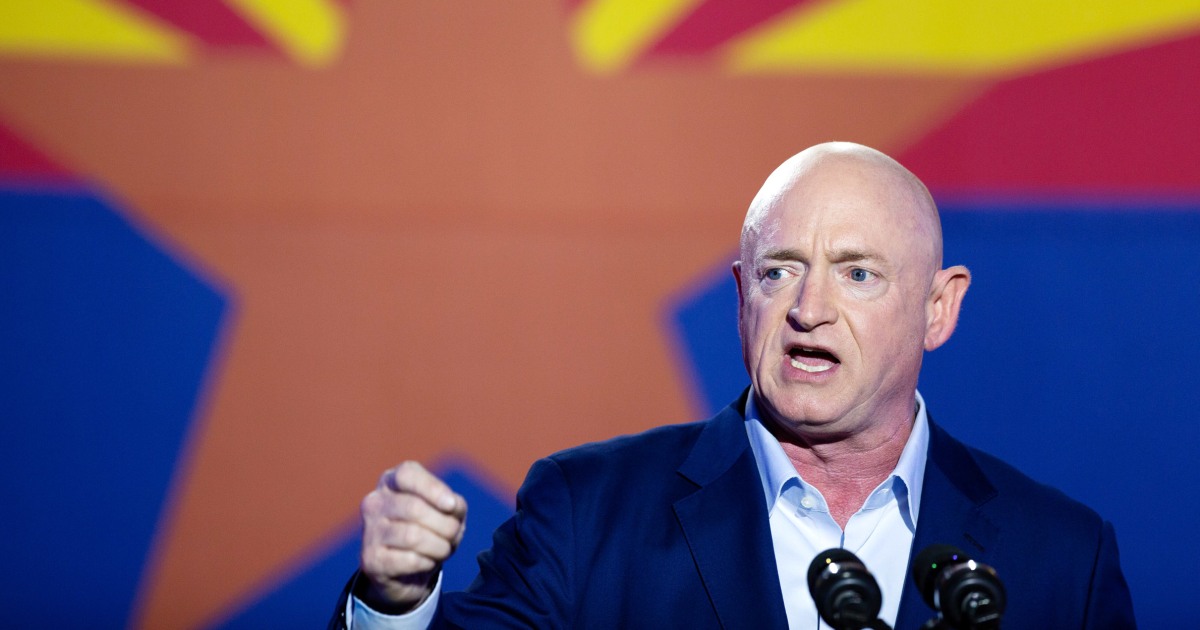
In the Senate race, Mr. Masters, a 35-year-old political newcomer, won the Republican nomination to face Senator Mark Kelly, a Democrat, who is seeking a full six-year term after ousting a Republican in 2020. The race is expected to be among the most contested of the fall midterms.

The primary victory represents the second major win for Peter Thiel, a venture capitalist and major Republican donor who co-wrote a book with Mr. Masters. Mr. Thiel put $15 million of his own money into a super PAC backing Mr. Masters and another $15 million into a separate super PAC supporting JD Vance, who won his Senate primary in Ohio this spring.

Mr. Masters defeated Jim Lamon, a businessman who pumped $14 million of his personal fortune into his campaign, and Mark Brnovich, the Arizona attorney general who Mr. Trump had repeatedly attacked for not investigating his baseless theories of voter fraud.

Holly Law, a 53-year-old who lives in Phoenix, said the determining factor in her votes for Ms. Lake and Mr. Masters was the former president’s blessing.

“The Trump endorsement — that’s it,” she said on Monday at a pre-election rally. Ms. Law insisted, despite the lack of evidence of fraud, that the 2020 election was stolen from Mr. Trump and said she had stopped watching Fox News entirely because it was the network that first called her state for Mr. Biden.

“Newsmax — 100 percent,” she said of her current viewing habits, referring to the conservative news network.

In Michigan, Mr. Trump had delivered a late endorsement to Ms. Dixon, who easily won the Republican nomination for governor after two top rivals were tossed from the ballot for turning in fraudulent petitions. Among those on the ballot and among those defeated on Tuesday was Ryan Kelley, who led in an early poll after he was arrested in June by the FBI and charged with trespassing and other crimes connected to the storming of the Capitol on Jan. 6. Mr Kelley was in fourth place early Wednesday.

The Democratic primaries on Tuesday for statewide offices were less drama-filled. In Arizona, Secretary of State Katie Hobbs won the Democratic nomination for governor, and in Michigan, Gov. Gretchen Whitmer formally became her party’s nominee for a second term.

Michigan did have some intense Democratic House primaries, including an expensive one in the Detroit suburbs where Representatives Andy Levin and Haley Stevens were drawn into the same district. Ms. Stevens won with the heavy financial support of the new super PAC arm of the American Israel Public Affairs Committee, among others.

But the highest profile House race in Michigan was Mr. Meijer’s re-election bid. His primary rival of him received a surprise late boost from the political arm of House Democrats, which spent hundreds of thousands of dollars on television ads because Mr. Gibbs was seen as easier to defeat this fall in a swing seat.

“I’m proud to have remained true to my principles, even when doing so came at a significant political cost,” Mr. Meijer said in a statement conceding defeat.

mr trump personally called Mr. Gibbs to congratulate him.

“Yes, sir, your endorsements have a really, really good record,” Mr. Gibbs told him.

“I’m very proud of you. That’s a great job,” Mr. Trump said.

The meddling by the Democratic Congressional Campaign Committee for a pro-Trump candidate has earned backlash from fellow Democrats, who saw such involvement as undermining the party’s overall message that election deniers are a threat to democracy.

“I’m disgusted that hard-earned money intended to support Democrats is being used to boost Trump-endorsed candidates,” Representative Dean Phillips of Minnesota said last month, calling Mr. Meijer “one of the most honorable Republicans in Congress.”

For the other two Trump impeachers, Washington State’s top-two primary system was poised to help them survive, drawing a larger crowd of candidates and splitting the vote among their Republican rivals.

Representative Jaime Herrera Beutler was ahead of her Trump-backed challenger Joe Kent, a retired Green Beret, with more than half the vote counted. Mr. Kent, whose wife was killed by a suicide bomber in 2019 in Syria, first met Mr. Trump at Dover Air Force Base when he went to view his late wife’s remains of her.

Representative Dan Newhouse, another Republican who voted to impeach Mr. Trump, counted among his challengers Loren Culp, a Trump-supported candidate who ran for governor in 2020 and refused to concede that race despite losing by a wide margin. Mr. Culp was not among the top two candidates with roughly half the votes counted.

Categories
US

Who is Tudor Dixon? 4 facts about Michigan governor candidate

Categories
US

Blake Masters wins Arizona’s GOP primary for Senate, will take on Democrat Mark Kelly

Chandler, Ariz. — Republican Blake Masters won the GOP primary for Senate in the crucial swing state of Arizona on Tuesday, NBC News has projected, and will face Democratic Sen. Mark Kelly in the fall.

With more than three-quarters of the vote in, Masters led the primary race Wednesday morning with 39 percent of the vote.

The projected Republican nominee won a hard-fought race that features several leading candidates who have embraced former President Donald Trump. He has scored Trump’s endorsement and has touted it in campaign speeches and TV ads. The limited polling in the run-up to the primary showed Masters with an edge against businessman Jim Lamon and state Attorney General Mark Brnovich, the other major candidates.

Kelly, meanwhile, cruised to a primary victory after running unopposed for the Democratic nomination as he seeks re-election. He was projected by NBC News to win the nomination shortly after polls closed in Arizona.

Kelly was not in Arizona to watch the results come in. He was in Washington, where the Democratic-controlled Senate is voting this week on medical care for veterans exposed to toxic burn pits and, potentially, on a better climate, health care and tax bill.

Image: Republican Senate candidate Blake Masters arrives for a campaign rally hosted by former President Donald Trump in Prescott Valley, Ariz., on July 22, 2022.
Republican Senate candidate Blake Masters arrives for a campaign rally hosted by former President Donald Trump in Prescott Valley, Ariz., on July 22, 2022.Mario Tama / Getty Images file

The Arizona contest is shaping up to be one of the most hotly contested races this fall and could determine which party controls the Senate for the next two years. Democrats have a 50-50 majority and Republicans need a net gain of one seat to seize control.

Arizona, once a reliably Republican state, has become more competitive in recent cycles: Voters there elected Democratic Sen. Kyrsten Sinema in 2018. And the state was narrowly won by President Joe Biden in 2020, the same year Kelly won a special election by 2.4 points.


rebecca shabad contributed.