Categories
US

Primaries bring big losses for incumbent GOP state lawmakers

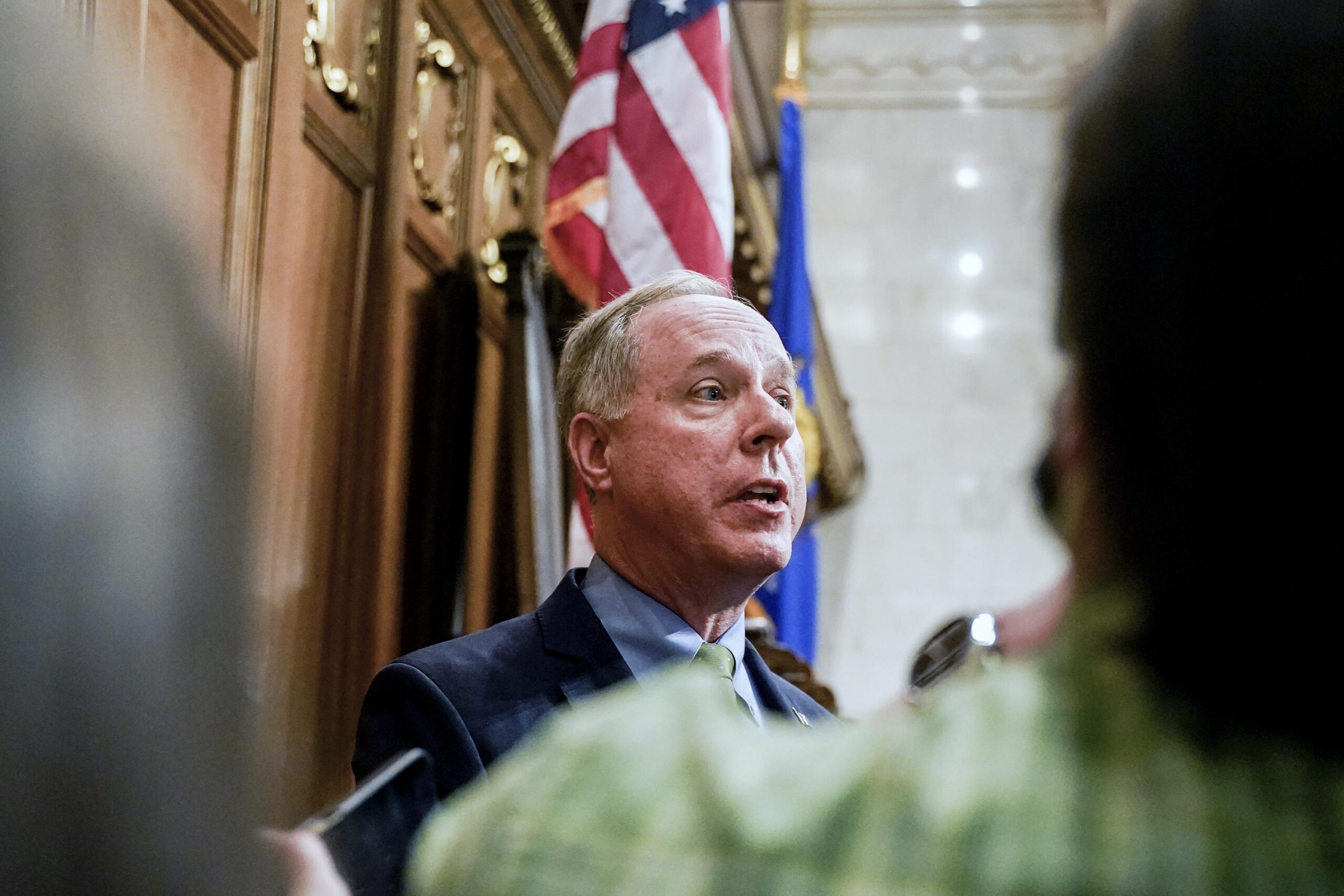
MADISON, Wis. (AP) — As Wisconsin’s longest-serving Assembly speaker, Republican Robin Vos has presided over efforts to restrict abortions, weaken unions, expand gun rights and push back against COVID-19 mandates. Despite that, he’s facing a primary challenger who claims he’s not conservative enough.

The challenger’s argument: You should do more to respond to former President Donald Trump’s unfounded allegations of fraud in the 2020 elections.

Primary challengers like the one facing Vos next Tuesday have been successfully targeting incumbent state lawmakers across the country, and Republicans are taking the brunt of it.

With more than half the state legislative primaries concluded, Republican incumbents this year have been losing at nearly twice the average rate of the past decade, according to data compiled for The Associated Press by the election tracking organization Ballotpedia. The primary loss rate for Democratic state lawmakers is similar to previous elections.

The Republican losses continued to mount Tuesday, as Trump-endorsed candidates You incumbent state senators in Arizona and Michigan and a conservative challenger beat the assistant majority leader of the Missouri Senate. Though not technically an incumbent, Arizona House Speaker Rusty Bowers also lost a bid for state Senate after being criticized for refusing to help Trump’s efforts to overturn the 2020 election.

In many cases, Republican lawmakers are being defeated by challengers portraying themselves as more conservative on election integrity, transgender policiesschool instruction and other hot-button issues.

“We have a far-right faction that is very dissatisfied with what’s happening on the left. So if you are not rabidly a fanatic that just punches every button, then you’re going to have an issue,” said Arkansas state Rep. Craig Christiansen, who lost in a Republican primary earlier this year.

Though Christiansen considers himself “very conservative,” he drew multiple challengers and failed to advance to a runoff. That came after he voted against overriding Republican Gov. Asa Hutchinson’s veto of legislation making Arkansas the first state banning gender-confirming treatments for those younger than 18. Christiansen said he considered the legislation unconstitutionalbecause it lacked an exception for youths already undergoing such treatments.

Vos, who has served as Wisconsin Assembly speaker since 2013, has taken sharp criticism for not pursuing a resolution decertifying Democrat Joe Biden’s victory in the state. trump endorsed his Republican challenger, Adam Steen, saying that “Vos refused to do anything to right the wrongs that were done” in the 2020 election.

Under pressure from Trump, Vos hired former state Supreme Court Justice Michael Gableman last year to investigate the election. Gableman said decertifying the election was “a practical impossibility.”

Steen said he decided to challenge Vos because he failed to pass legislation outlawing absentee ballot drop boxes ahead of the 2020 election and hasn’t pushed for tougher consequences for voter fraudamong other things.

“Conservatism as a whole has been lethargic,” Steen said. “We lack vision, and I think that vision is coming back.”

Vos said Steen is running on hyperbole. He said Gov. Tony Evers, a Democrat, poses the real obstacle to conservatives. Evers, for example, vetoed Republican bills that would have made it harder to vote absentee.

“If we don’t get a Republican governor, (Steen) would have less success than I had,” Vos said.

You are one of nine GOP Wisconsin lawmakers facing primaries. Though the challengers face an uphill fight, they could push the already conservative Legislature even further right if they notch a few victories. That would mark a significant shift in a state that plays a crucial role in national elections.

Twenty-seven states had held legislative primaries or conventions before Tuesday. In those, at least 110 Republican incumbents and 33 Democrats had been defeated. The Republican loss rate of 7.1% far exceeds the Democratic rate of 2.8%. It also significantly exceeds the 3.6% average Republican incumbent loss rate over the previous decade in those states, as well as the 4.4% Republican loss rate in those states during the last redistricting election cycle in 2012.

Idaho voters have led the way in ousting Republican incumbents, defeating 18 GOP lawmakers — or 30% of those who sought reelection — even while choosing GOP Gov. Brad Little over a Trump-backed challenger who claimed he wasn’t conservative enough. The losers included three lawmakers representing Kootenai County in northern Idaho, where a local Republican committee recommended conservative challengers against some incumbents after a lengthy vetting process.

“People have kind of had it, and they’re willing to get up and vote,” said Brent Regan, chair of the Kootenai County Republican Central Committee.

In Iowa, Republican Gov. Kim Reynolds endorsed primary opponents to four GOP state House members who hadn’t supported her plan to provide taxpayer-funded scholarships for students to attend private schools. All four incumbents lost, including House Education Committee Chairman Dustin Hite.

Even in some Democratic-dominated states, Republican primary voters have ousted incumbents deemed not conservative enough.

Illinois state Rep. David Welter, one of nine Republican lawmakers booted from the chamber in February for ignoring COVID-19 protocols to wear masks, lost his primary in June to a challenger who claimed Welter wasn’t Republican enough. Challenger Jed Davis criticized Welter’s votes for the Equal Rights Amendment and a construction bill containing a gas tax hikeamong other things.

Davis also derived Welter’s connections to US Rep. Adam Kinzinger of Illinois, who became a GOP outcast after voting to impeach Trump and participating in the Democratic-led House panel investigating the Jan. 6, 2021, attack on the US Capitol. Welter eleven worked for Kinzinger’s campaign and received $32,500 in contributions since 2021 from committees associated with Kinzinger.

“People pegged me as more of a moderate,” Welter said. “I’m now going to be replaced by somebody who is really, really far to the extreme on the right.”

Welter believes redistricting after the 2020 census also played a role in his defeat by shifting the voters he represented.

In states where partisan officials controlled redistricting, such as Illinois, the maps enacted for the 2022 elections often contained “more and more extreme partisan gerrymanders,” according to a recent analysis by political scientists and data experts.

When legislative districts tilt further right or left, incumbents are more likely to face challengers, and candidates who take more extreme positions are more likely to win, according to an analysis in a forthcoming book by Saint Louis University political scientist Steven Rogers.

Wisconsin’s state legislative districts had some of the largest pro-Republican tilts among all states during the past decade and underwent only minor changes before this year’s election.

Most of the challengers there are likely to lose, said University of Wisconsin-La Crosse political scientist Anthony Chergosky. But they still could leave their mark by forcing incumbents further right to please the GOP base that votes in primaries.

“We are just experiencing a real scramble for power within the Republican Party right now,” he said. “President Trump is really flexing his muscles in directing activists in the party against people like Robin Vos. Anyone in a position of authority in the Republican Party is a target.”

___

Lieb reported from Jefferson City, Mo.

___

Follow AP for full coverage of the midterms at https://apnews.com/hub/2022-midterm-elections and on Twitter at https://twitter.com/ap_politics.

.

Categories
US

As CPAC gets set to welcome Hungary’s hardline leader Viktor Orban, his policies at home are under new scrutiny

He wore a similar dark suit, white shirt and plain tie, albeit orange rather than Trump’s trademark red. I have flashed the same thumbs-up as Trump as they posed for photographs.

But Orban is no populist disciple of Trump: He was in power before, he built a fence to keep out migrants and refugees before, and more than a decade ago he introduced a new constitution that defined marriage as only between a man and a woman and life as beginning at conception, as well as other measures that were criticized as violating human rights.

But whatever welcome he gets from the CPAC audience in Dallas, the situation at home is showing cracks.

A racist speech by Orban last week lost him an adviser who had worked with him for 20 years. “This is why we have always fought,” Orban claimed of Europeans. “We are willing to mix with one another, but we do not want to become peoples of mixed race.”

Orban has since said he is neither racist nor anti-Semitic but his talk of racial purity has set off alarm bells in his capital, Budapest, where Jews were persecuted and murdered in the Second World War.

Rabbi Robert Frolich of the city’s historic Dohany Street Synagogue said Orban’s words hit too close to home, most particularly for the older members of his congregation.

“Most of them are Holocaust survivors,” he told CNN. “They are worried. They have heard this before and it didn’t end well.”

Hungarian leader Viktor Orban's 'mixed race'  speech condemned by ex-aide and Holocaust victims'  group
Orban has consolidated power since he became prime minister in 2010, having previously held the office from 1998 to 2002. He won his fourth consecutive term this April in a landslide but Freedom House, the US-based democracy research organization, rates the country only ” partly free.”

His economic policies have won him support, but with inflation rising, that’s beginning to change, according to economist Zoltan Pogatsa.

“In the longer run, yes, I think Orban remains popular but at this particular point in time I think more people are skeptical about him than ever before,” he said.

Data from the Organization for Economic Co-operation and Development (OECD) show that Hungary has a falling population and project its GDP will decline 2.5%.
Hungary is also heavily dependent on Russian gas and any shutoff of supplies could send the country into a deep recession, the International Monetary Fund has said.

In Budapest’s central market, opinions vary.

David Horvath, a juice seller, says: “To be honest, Viktor Orban is not even liked in our own country.”

But Margaretta Krajnik, a butcher, begs to differ. “Viktor Orban is doing everything for his people,” she says. “He loves his people from him.”

Here, it’s a split decision. In Dallas, the welcome by American conservatives may be more effusive.

.

Categories
US

Brittney Griner trial: Verdict expected Thursday

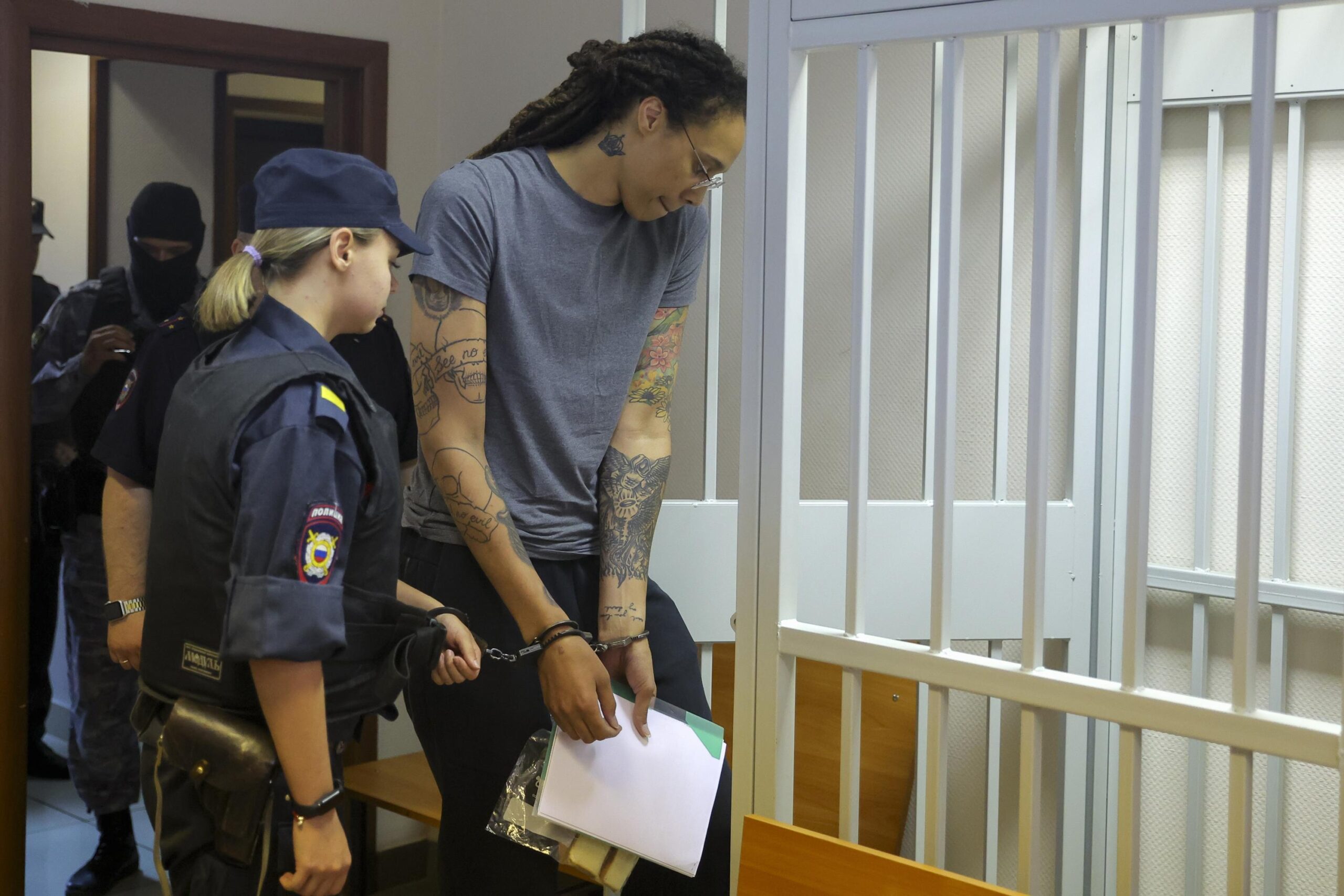
KHIMKI, Russia (AP) — An emotional Brittney Griner apologized in a Russian court Thursday as her drug possession trial drew to a close Thursday, and a prosecutor urged that the American basketball star be convicted and sentenced to 9 1/2 years in prison in a case that reached the highest levels of US-Russia diplomacy.

With a judge set to issue an unusually swift verdict later in the day and a conviction all but certain, Griner made a final appeal to the court. She said she had no intention to break the law by bringing vape cartridges with cannabis oil when she flew to Moscow in February to play basketball in the city of Yekaterinburg.

“I want to apologize to my teammates, my club, my fans and the city of (Yekaterinburg) for my mistake that I made and the embarrassment that I brought on them,” Griner said, her voice cracking. “I want to also apologize to my parents, my siblings, the Phoenix Mercury organization back at home, the amazing women of the WNBA, and my amazing spouse back at home.”

Under Russian law, the 31-year-old Griner faces up to 10 years in prison if convicted. but judges have considerable latitude on sentencing.

If she does not go free, attention will turn to the high-stakes possibility of a prisoner swap, which was proposed last week by US Secretary of State Antony Blinken to his Russian counterpart.

She said she made “an honest mistake,” adding: “hope in your ruling it does not end my life.”

Griner said Yekaterinburg, a city east of the Ural Mountains, had become her “second home.”

“I had no idea that the team, the cities, the fans, my teammates would make such a great impression on me over the six and a half years that I spent here,” she said. “I remember vividly coming out of the gym and all the little girls that were in the stands there waiting on me, and that’s what kept making me come back here.”

Lawyers for the Phoenix Mercury center and two-time Olympic gold medalist have pursued strategies to bolster Griner’s contention that she had no criminal intent and that the canisters ended up in her luggage due to hasty packing. They have presented character witnesses from the Russian team that she plays for in the WNBA offseason and written testimony from a doctor who said he prescribed her cannabis for pain treatment.

Griner lawyer Maria Blagovolina argued that Griner brought the cartridges with her to Russia inadvertently and only used cannabis to treat her pain from injuries sustained in her career. She said she used it only in Arizona, where medical marijuana is legal.

She emphasized that Griner was packing in haste after a grueling flight and suffering from the consequences of COVID-19. Blagovolina also pointed out that the analysis of cannabis found in Griner’s possession was flawed and violated legal procedures.

Blagovolina asked the court to acquit Griner, noting that she had no past criminal record and hailing her role in “the development of Russian basketball.”

Another defense attorney, Alexander Boykov, also emphasized Griner’s role in taking her Yekaterinburg team to win multiple championships, noting that she was loved and admired by her teammates.

He told the judge that a conviction would undermine Russia’s efforts to develop national sports and make Moscow’s call to depoliticize sports sound shallow.

Boykov added that even after her arrest, Griner won the sympathy of both her guards and prison inmates, who supported her by shouting, “Brittney, everything will be OK!” when she went on walks at the jail.

Prosecutor Nikolai Vlasenko insisted that Griner packed the cannabis oil deliberately, and he asked the court to hand Briner a fine of 1 million rubles (about $16,700) in addition to the prison sentence.

If she does not go free, attention will turn to the high-stakes possibility of a prisoner swap.

Before her trial began in July, the State Department designated her as “wrongfully detained,” moving her case under the supervision of its special presidential envoy for hostage affairs, effectively the government’s chief hostage negotiator.

Then last week, in an extraordinary moveBlinken spoke to Russian Foreign Minister Sergey Lavrov, urging him to accept a deal under which Griner and Paul Whelan, an American imprisoned in Russia on an espionage conviction, would go free.

The Lavrov-Blinken call marked the highest-level known contact between Washington and Moscow since Russia sent troops into Ukraine more than five months ago. The direct outreach over Griner is at odds with US efforts to isolate the Kremlin.

People familiar with the proposal say it envisions trading Griner and Whelan for the notorious arms trader Viktor Bout, who is serving a prison sentence in the United States. It underlines the public pressure that the White House has faced to get Griner released.

White House Press Secretary Karine Jean-Pierre said Monday that Russia has made a “bad faith” response to the US government’s offer, a counteroffer that American officials don’t regard as serious. She declined to elaborate.

Russian officials have scoffed at US statements about the case, saying they show a disrespect for Russian law. They remained poker-faced, urging Washington to discuss the issue through “quiet diplomacy without releases of speculative information.”

.

Categories
US

Limited Staten Island Ferry service resumes amid staffing shortage

ST. GEORGE, Staten Island (WABC) — Limited, hourly service on the Staten Island Ferry resumed Thursday morning after a rough night for commuters amid a staffing shortage that previously caused canceled routes.

The first vessel departed St. George Terminal at 6 am, with hourly service expected thereafter.

NewsCopter 7 was overhead as the first boat of the morning made the trip across New York Harbor.

The ferry normally runs service every 15 minutes during the morning and evening rush.

The NYC Department of Transportation continues to “strongly recommend New Yorkers seek alternate modes of public transit, such as NYC Ferry and express buses. The SI Ferry should be used for essential travel only.”

NYC Ferry is operating hourly between St George’s Landing & the Battery Maritime Building adjacent to Whitehall Terminal.

Officials had to change the schedule late Wednesday to run every hour instead of every 15 minutes after a huge chunk of the ferry workforce failed to show up to work.

The MTA encouraged commuters to seek out alternative routes and said New York City Transit had increased bus service to Staten Island.

Increased express bus service was provided on the SIM1/SIM1C (Hylan Blvd), SIM3/SIM3C (Port Richmond) and SIM4/SIM4C (Richmond Avenue).

Customers could also take a Brooklyn-bound R train from Whitehall St-South Ferry to 86th St and 4 Ave in Bay Ridge, Brooklyn. Customers could continue their journey to Staten Island by taking the S79 SBS, S53 or S93 bus where service would be augmented as necessary. Limited service was suspended on all Staten Island local routes (except for S93 and S89).

“COVID is not the issue at the ferry right now. The fact that DOT is saying it’s an issue is the larger issue. It’s actually the fact that we’re very shorthanded in all of our titles,” said MEBA Secretary-Treasurer, Roland Rexha.

The ferry is currently short-staffed by approximately 15 workers in key operational positions, such as assistant captains, engineers, and oilers.

The ferry operated on an overnight hourly schedule Tuesday into Wednesday. It ran 20-minute service through the morning rush, down from the normal service every 15 minutes.

Due to the short-staffing, it can be difficult to run full service whenever crew members are off, on vacation, or unexpected illnesses.

“If you’re short one person in one of those titles it’s damning, but if you’re short three or four in a title like the marine engineer that has 18 jobs, if you’re missing four people, you’re missing almost a quarter of your workforce,” Rexha said.

Filling the vacant positions has been a struggle due to a national shortage of qualified, professional mariners.

The ongoing short-staffing has also forced existing crew members to work longer shifts without proper breaks, contributing to worker fatigue that could pose potential safety issues.

“We’re navigating some of the most heavily-trafficked waters in the country. The fact that they’re not getting proper breaks is a reason for employee fatigue, and it also burns people out and makes them want to leave the job,” Rexha said.

ALSO READ | 5-year-old girl killed, 2 adults critically injured in NYC apartment fire

———-

* More Staten Island news

* Send us a news tip

* Download the abc7NY app for breaking news alerts

* Follow us on YouTube

Copyright © 2022 WABC-TV. All Rights Reserved.

.

Categories
US

Russian prosecutor asks court for nearly 10-year sentence : NPR

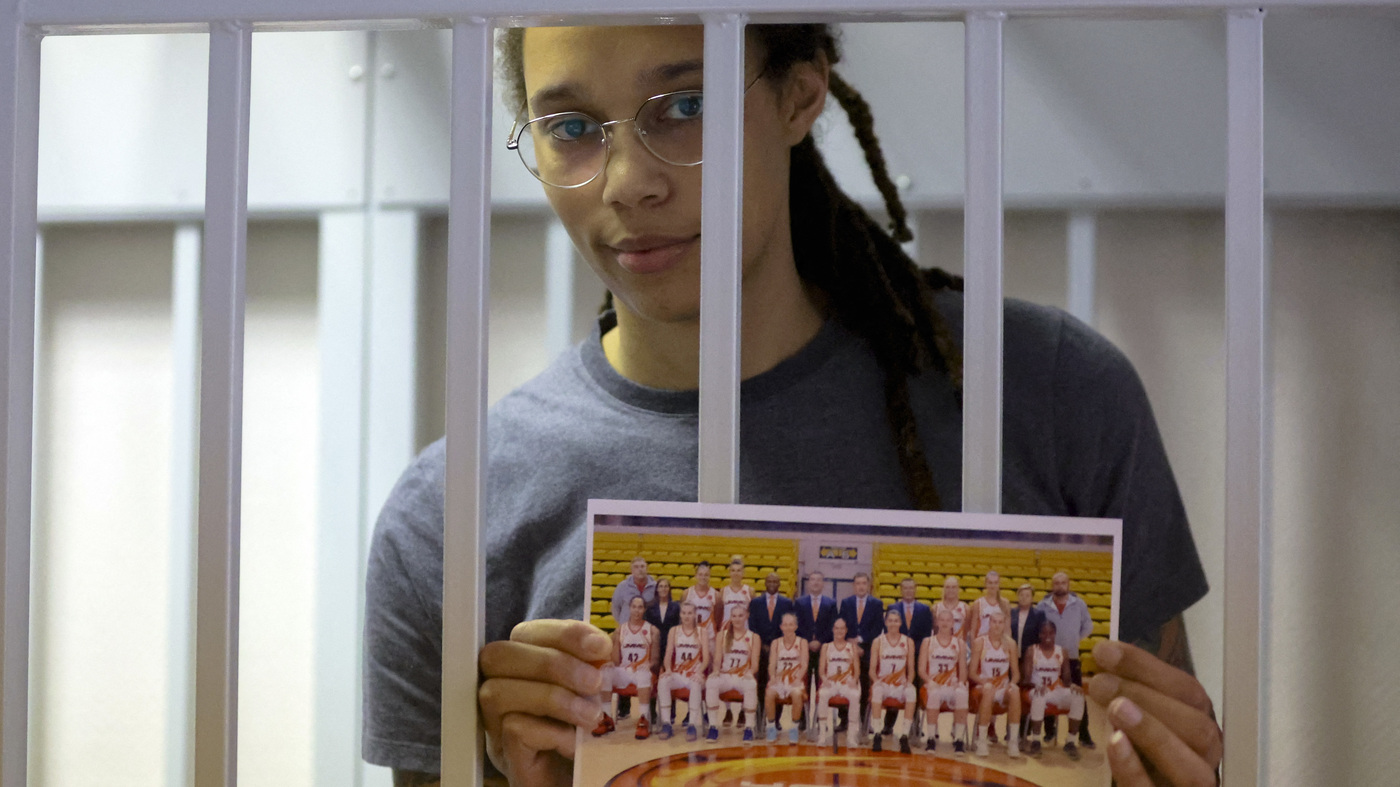
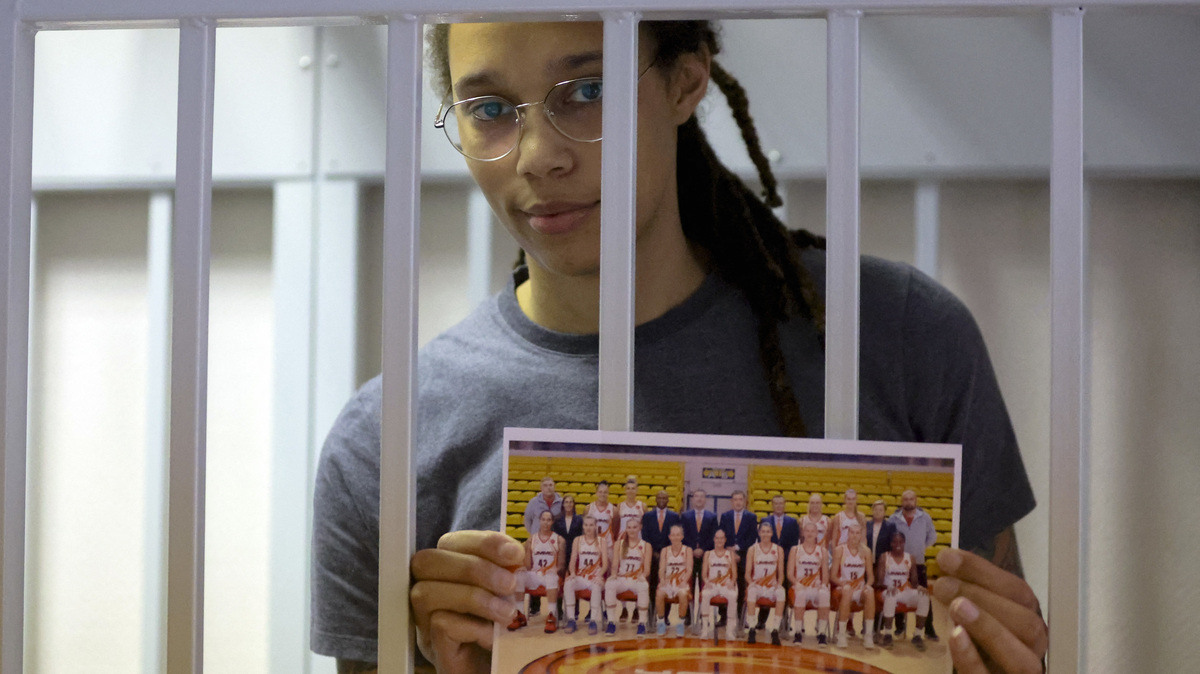
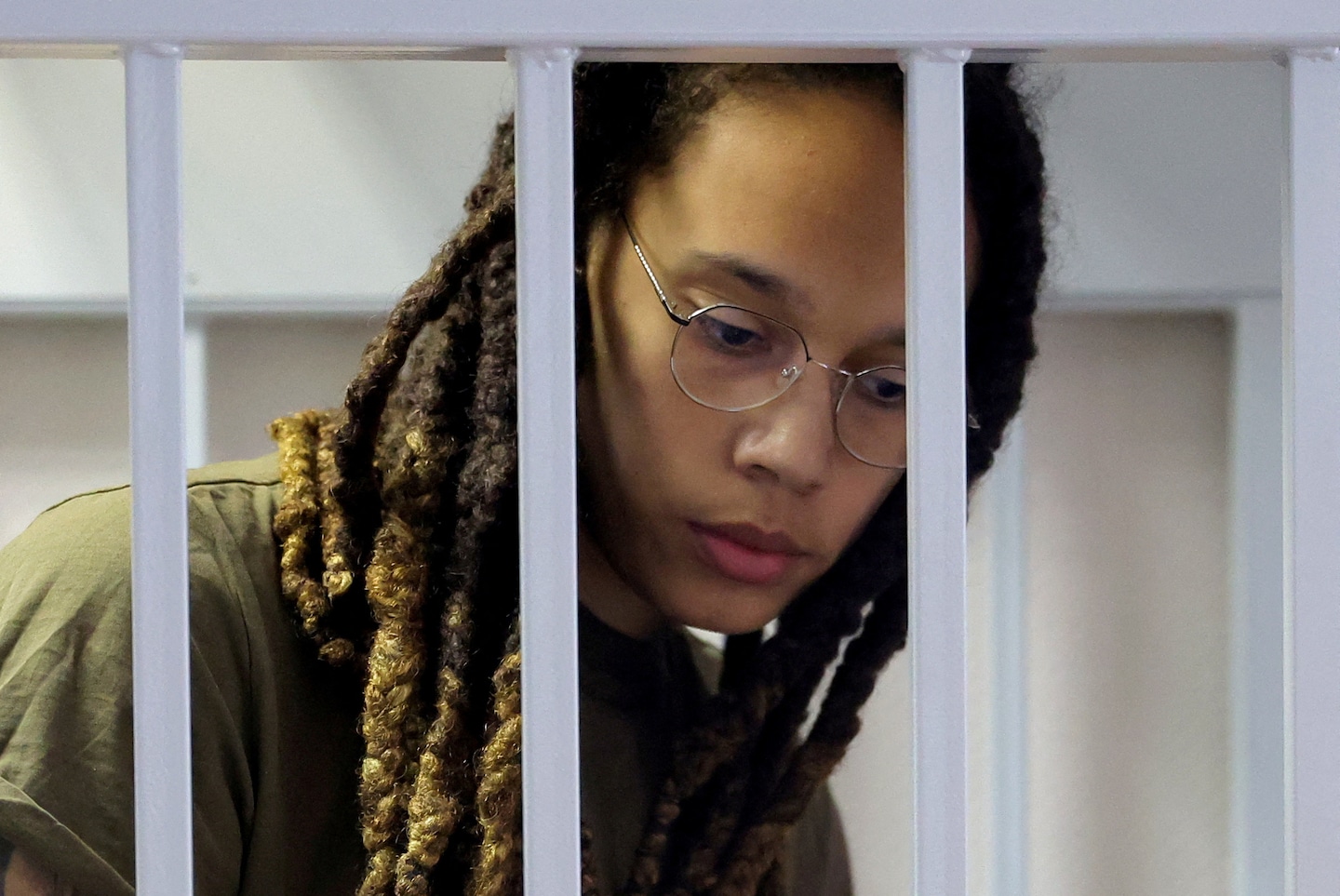
Brittney Griner holds a picture of her Russian basketball team as she stands inside a defendants’ cage before a court hearing in Khimki, outside Moscow, on Thursday.

Evgenia Novozhenina/AFP via Getty Images


hide caption

toggle caption

Evgenia Novozhenina/AFP via Getty Images


Brittney Griner holds a picture of her Russian basketball team as she stands inside a defendants’ cage before a court hearing in Khimki, outside Moscow, on Thursday.

Evgenia Novozhenina/AFP via Getty Images

MOSCOW — A Russian prosecutor asked a judge to find Brittney Griner guilty on drug charges and to sentence her to serve 9 years and 6 months in a prison colony, as the two sides delivered closing remarks in Griner’s month-long trial.

Griner’s defense attorney called for her to be acquitted, or for the court to show leniency in any punishment she’s given. The basketball star also spoke on her own behalf of her.

Thursday’s court session then took a brief recess before the verdict is announced — likely around 10:45 am ET.

Griner, 31, has now been detained for 24 weeks, after authorities at Sheremetyevo International Airport outside Moscow found cannabis vape cartridges in her luggage. She could face up to 10 years in prison if she’s convicted of drug charges.

The Olympian and NBA champion says she must have put the cannabis in her bag by mistake. Her defense team notes that Griner has a medical marijuana card in Arizona to help her cope with injuries sustained over years of competition. But personal cannabis possession is illegal under any circumstances in Russia, similar to US federal law.

In her final statement to the judge, Griner reiterated that she never intended to break any laws or hurt anyone.

She apologized to her Russian teammates for any damage she may have caused, adding that “this is my second home and all I wanted to do was win champsionships and make them proud.”

“I made an honest mistake and I hope that in your ruling that it doesn’t end my life here,” Griner said.

The court’s judgment is only one factor deciding Griner’s fate. She’s also at the center of a potential prisoner swap that could see the US release notorious Russian arms dealer Viktor Bout. But Russian officials have said any such deal would have to wait until after Griner’s trial is over.

Some legal experts have described Griner’s guilty plea as a strategy for a shorter trial, and more lenient verdict — especially since Russian criminal courts reportedly have a conviction rate of 99%.

Griner was arrested in February, one week before Russian President Vladimir Putin invaded Ukraine. Her detention of her quickly led to speculation that Putin’s government wants to use her as leverage against the US Griner alluded to that in her closing remarks of her to the judge on Thursday.

“I know everybody keeps talking about political pawn and politics, but I hope that is far from this courtroom,” she said.

Here’s a quick recap of Griner’s ordeal:

  • Feb. 17: Griner is detained at the airport near Moscow
  • May 3: The US State Department declares Griner wrongfully detained
  • May 28: US Ambassador to Russia John J. Sullivan calls Griner a “bargaining chip” amid talk of a possible prisoner exchange
  • July 1: Prosecutors unseal their case in court as the trial begins
  • July 7: Griner pleads guilty to drug charges as talk of a prisoner swap grows
  • July 27: Griner testifies, saying she inadvertently brought the cannabis to Russia
  • July 27: The US says it offered Russia a deal to free Griner and another jailed American, Paul Whelan
  • Aug. 4: Closing arguments begin

Griner is a star center for the Phoenix Mercury. But like many WNBA players, she plays in overseas leagues during the US league’s offseason, earning far more than her WNBA salary from her. In recent years, she has played for UMMC Ekaterinburg, a Russian team owned by oligarch Iskander Makhmudov. The team has had longstanding ties to Griner’s US club.

Griner was returning to her Russian team from the US when she was detained.

The effort to free Griner has grown from her fans and fellow basketball players to include a much broader circle. This summer, dozens of rights groups, including the Human Rights Campaign, the National Organization for Women and National LGBTQ Task Force wrote a letter to President Biden urging him to treat her case with urgency.

Maynes reported from Russia. Chappell and Treisman reported from Washington, D.C.

Categories
US

Sinema Will Make ‘Own Decision’ on Inflation Reduction Act: Manchin

  • Joe Manchin said he and Kyrsten Sinema have been “talking” about the Inflation Reduction Act.
  • Manchin said he had a “nice conversation” with Sinema and that they exchanged papers on the matter.
  • “And she’ll look at all of this and make her own decision,” Manchin said.

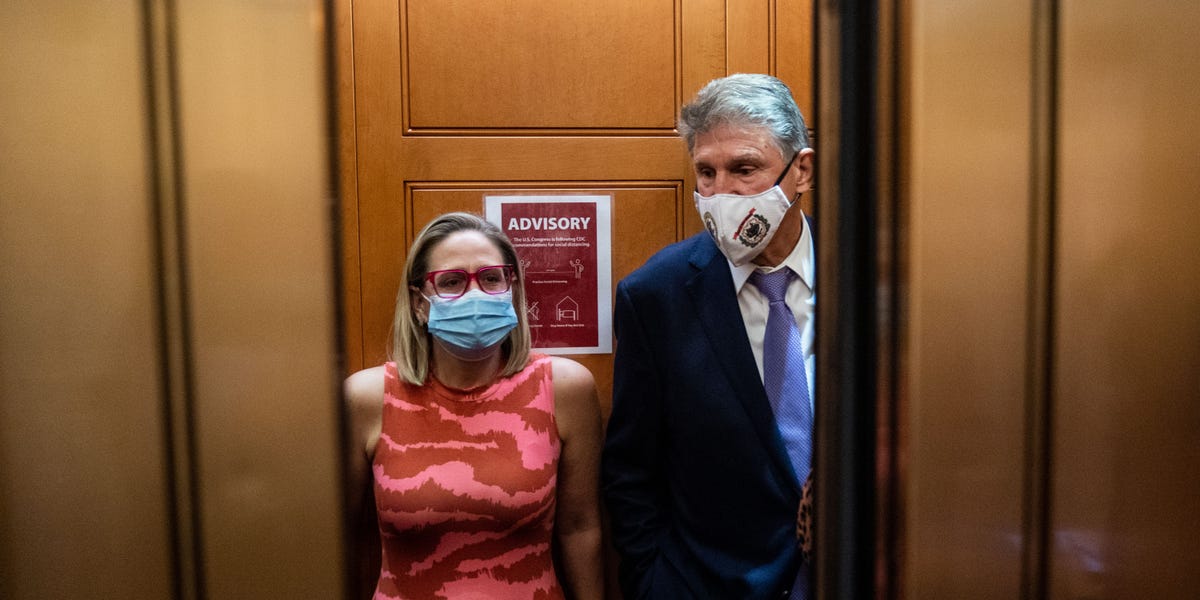
Sen. Joe Manchin said he and Sen. Kyrsten Sinema has been “talking” about the Inflation Reduction Act and that she would lawmaker eventually make her own decision on the piece of legislation.

Manchin described the pair’s discussion during a Wednesday appearance on MSNBC.

“We did have a nice conversation and exchanged papers back and forth to make sure we understand everything, and she understands where we’re coming from,” he said.

Manchin also described Sinema — the lone Democrat who has yet to vote on the bill — as “a friend” who has “always done her due diligence.”

“And she’ll look at all of this and make her own decision. So hopefully — there’s a lot of good things in there, and she’s working very hard over the past on a lot of the issues that we’re talking about,” Manchin said.

“So, we’ll just have to see how it goes, but we’re talking,” he added.

During the show, Manchin was also asked by host Stephanie Ruhle about what he would do and who he would appeal to if Sinema didn’t vote in support of the bill.

“I talk to them — they’re all my friends, from day one,” Manchin said.

However, when pressed by Ruhle on the issue, Manchin admitted that he wouldn’t be able to change his GOP colleagues’ minds.

“I cannot get their vote because they won’t change a penny of the tax code,” Manchin said, referring to how Republicans would not budge on the issue of corporate taxes. “I can’t convince them to change that.”

Manchin has been pushing for the passage of the Inflation Reduction Act, after cutting a surprise deal with Sen. Chuck Schumer in late July that allots, among other things, $370 billion for climate and energy programs and commits the US to a 40% emissions reduction by 2030.

Republicans like Senate Minority Leader Mitch McConnell have vociferously objected to the bill and the GOP is now counting on Sinema to reject it.

Before the $790 billion legislation passes in the Senate, Manchin and Sinema would likely have to hash out her objections to the closing of a tax loophole for rich Americans. Sinema is known to have disagreed with efforts to eliminate carried interest, which is the basis for the loophole.

Manchin said this week that he would pitch Sinema on the legislation to get her make-or-break vote. He was seen on August 3 literally taking a knee and crouching in front of Sinema’s desk to speak to her on the Senate floor.

Categories
US

Arizona’s key Senate showdown is quickly heating up

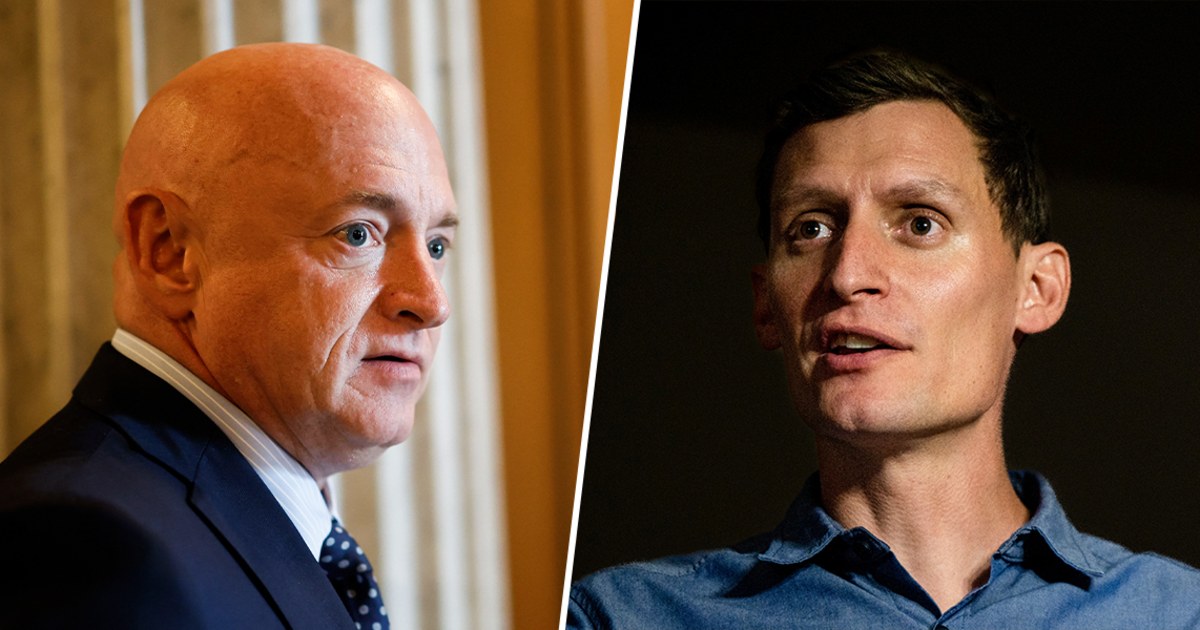
Chandler, Ariz. — Blake Masters went all in with Donald Trump, and it propelled him to victory in a highly competitive Republican nomination for Arizona’s coveted Senate seat.

Now, his campaign to unseat Democratic Sen. Mark Kelly this fall will test whether the Trump wing is strong enough to repaint Arizona red two years after Trump became the first Republican presidential candidate to lose the state in 24 years.

As Kelly’s campaign labels Masters a “dangerous” and fringe candidate, Masters’ strategy is to tie Kelly to an unpopular President Joe Biden and undercut his image as a moderate. He’ll need to join a party fractured by an ugly primary, unlike Kelly, who ran unchallenged for his party’s renomination and ended June with $25 million cash on hand.

“I think he’s the worst senator. This guy, Mark Kelly, he campaigns as a moderate, but he votes like a radical,” Masters told voters at his election night party in this Phoenix suburb. “We are sick of Joe Biden and the Democrats destroying our country.”

In what is shaping up to be one of the most hotly contested Senate races in 2022, one that could decide control of a chamber that is currently split 50-50, the newly minted Republican nominee begins his general election bid with a polling and fundraising deficit .

Kelly leads Masters 49% to 44% among likely Arizona voters in a new survey conducted by Republican firm Fabrizio, Lee & Associates for the pro-Masters super PAC Saving America.

The polling memo, provided to NBC News by a super PAC supporting Masters, also found Biden with a dismal approval rating of 38% in the state and suggested that Kelly is vulnerable if he is perceived as “more liberal and in lockstep with Biden than voters believed when they elected Kelly two years ago.”

Kelly’s team seeks to brand Masters

Kelly campaign manager Emma Brown said the senator is “an independent leader who cuts through political noise to deliver real results for Arizonans, like lowering costs at the grocery store and gas pump” and “creating good-paying Arizona jobs.”

“Blake Masters has dangerous beliefs that are wildly out of step with Arizona and harmful to Arizona families — like a national abortion ban with no exceptions for rape or incest and privatizing Social Security,” Brown said on Wednesday.

Republican Senate candidate Blake Masters speaks at a campaign event on July 30, 2022, in Phoenix, Ariz.
Republican Senate candidate Blake Masters speaks at a campaign event on July 30, 2022, in Phoenix, Ariz.Brandon Bell/Getty Images

The GOP has a voter registration advantage in Arizona. But the state has a history of favoring institutionalist Republicans, from Sen. John McCain to Sen. Jeff Flake to outgoing Gov. Doug Duey. It is unclear if Masters, a Trump disciple who has backed the Jan. 6 objections to counting some 2020 electors, can win moderate and well-educated voters who have drifted away from Republicans in recent elections.

Masters “is all Trump,” said Brooks D. Simpson, a political historian at Arizona State University. “He buys into the illegitimacy of the 2020 election.”

“The outcome will shape discussions about whether Arizona’s now a purple or even a blue state; it will be a measure of Trump’s influence on him in a state he narrowly lost in 2020; and it will tell us how the messages offered by extreme Trump Republicans resonate with voters in a general election,” he said.

Masters recalibrates for general election

The newly-minted nominee made a plea for GOP unity Tuesday, after defeating businessman Jim Lamon and state Attorney General Mark Brnovich.

“You may have noticed we had a spirited primary reply here. And it got a little loud. Maybe it got a little mean,” Masters said. “If you supported a different primary candidate, it’s all good. I get it. He probably had good ideas. But now it’s time to unite.”

The Phoenix metropolitan area, flush with well-educated and prosperous suburbs like Paradise Valley and Scottsdale, makes up about two-thirds of the state’s population. Kelly’s path to victory, his team said, is a strong Democratic turnout, holding the voters who have sourced on Republicans and maintaining high Latino support.

Andy Surabian, a Republican strategist advising the pro-Masters Saving Arizona PAC, said the blueprint for Masters to defeat Kelly is “really simple.”

“Just tie him to Joe Biden, who’s very unpopular in Arizona, and the even more unpopular policies of Joe Biden,” Surabian said, adding that Masters will need to “dominate in the rural” areas and “keep it competitive in Maricopa” and do not lose the county “by double digits.” He said it would help to “over-perform a little bit with Hispanics in a state like Arizona.”

Kelly is currently running a TV ad attacking corporate “price gouging” by oil companies who are “earning record profits” by exploiting a crisis and calling for a cut to the federal gas tax. His campaign for him rolled out a Spanish-language ad touting his support for Arizona’s small businesses.

Sen.  Mark Kelly, D-Ariz., speaks with members of the media as veterans, military family members and advocates, rally outside the Capitol in Washington on Aug. 2, 2022, in support of a bill that enhances health care and disability benefits for millions of veterans exposed to the toxic burn pits.
Sen. Mark Kelly, D-Ariz., speaks with members of the media as veterans, military family members and advocates, rally outside the Capitol in Washington on Aug. 2, 2022, in support of a bill that enhances health care and disability benefits for millions of veterans exposed to the toxic burn pits.Mariam Zuhaib/AP

Asked about Masters’ portrayal of him as an extremist in lockstep with Biden, a Kelly campaign strategist said the Democrat has shown a willingness to “stand up to the president,” citing his opposition to Biden revoking the Trump-era Title 42 border rule and his letter pushing Biden to act against high gas prices. The strategist added that Kelly outperformed Biden in Arizona in 2020.

“Trump-Kelly voters are real,” the strategist said.

This week, Kelly was in Washington as the Senate voted on a bill to provide health care benefits to veterans exposed to burn pits and other toxins. He praised elements of the Democrats’ big agenda package, which grew out of a deal between Senate Majority Leader Chuck Schumer and Sen. Joe Manchin, DW.Va., including a provision empowering Medicare to negotiate drug prices as well as funding for health insurance coverage and clean energy. Kelly has also touted his support for the recent law that will provide new investments in US computer chip production and the $550 billion bipartisan infrastructure law.

Progressives in Arizona say Kelly isn’t as left-leaning as they want him to be. But they find him accessible and forthcoming.

“He’s not a senator that I would say aligns 100% with everything that progressives and Democrats are asking for Arizona. But he is constantly communicating with us,” said Luis Ávila, 40, a community organizer in Phoenix. “But he has town halls; he has meetings with us; he’s traveling across the state and meeting with constituencies. So at least we know where he stands.”

‘A bold America First caucus in the Senate’

Masters closed the primary with a TV ad touting Trump’s endorsement, an illustration of the former president’s influence over committed Republican voters in this state.

At an election eve rally in Phoenix alongside 2020 election conspiracy theorist and Republican candidate for governor Kari Lake, Masters served up red meat and a cocktail of cultural grievances over legal abortion, “critical race theory,” the 1619 Project, “woke ideology” and big tech He said the only good reason not to impeach Biden and remove him from office is that Vice President Kamala Harris would replace him.

“Pretty soon,” Masters told the cheering crowd on Monday, “we’re going to have a bold America First caucus in the Senate.”

A Masters supporter in the crowd, 56-year-old Kristin Zenk from Phoenix, said she worries Kelly isn’t going to be easy to defeat.

“Because people like him,” Zenk said. “He’s likable.”

Categories
US

GOP Governors Cause Havoc by Busing Migrants to East Coast

WASHINGTON — Lever Alejos arrived in the nation’s capital last week on a bus with dozens of fellow Venezuelans who had traveled more than 1,300 miles from their broken country to the United States. Most had braved poisonous plants and thugs as they trudged through dense jungle on the Colombian border and waded in water up to their chins to cross the Rio Grande into Texas, some clutching babies.

After being processed by US border authorities, the undocumented migrants were released into South Texas, free to go where they wanted. Mr. Alejos, 28, said he was offered two options: a $50 bus ride to San Antonio or a free bus ride to Washington, DC, paid for by the State of Texas. “I wanted San Antonio, but I had run out of money,” said Mr. Alejos, who has no family in the United States. “I boarded the bus to Washington.”

A few days later, he arrived in the nation’s capital, among a busload of weary migrants. He spent the first night in the plaza across from Union Station but eventually found a bed at Central Union Mission, where he hopes to stay until he can apply for asylum, get a work permit and find a job — a process that could take months.

A political tactic by the governors of Texas and Arizona to offload the problems caused by record levels of migration at the border is beginning to hit home in Washington, as hundreds of undocumented migrants arriving on the governors’ free bus rides each week increasingly tax the capital’s ability to provide emergency food and housing.

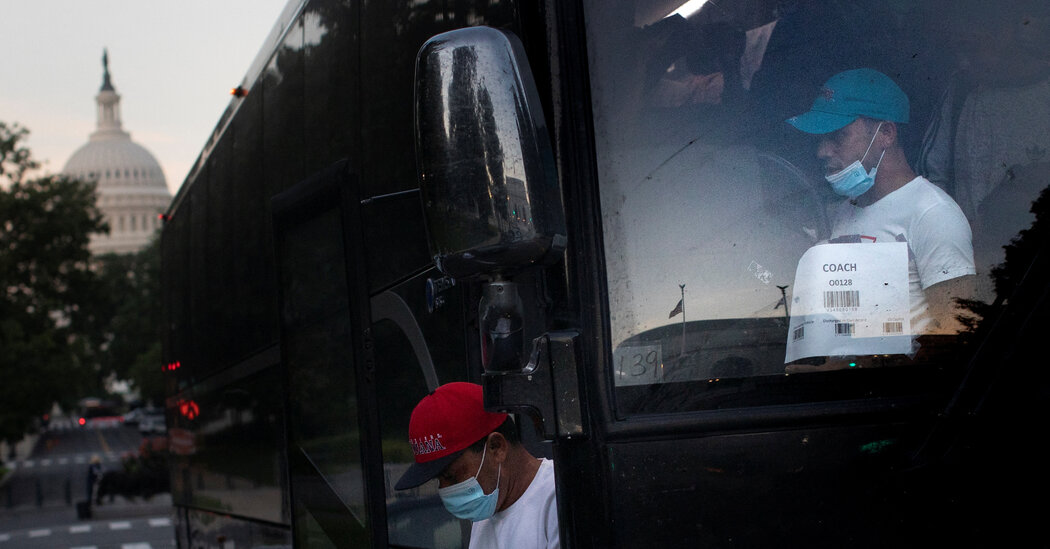
With no money and no family to receive them, the migrants are overwhelming immigrant nonprofits and other volunteer groups, with many ending up in homeless shelters or on park benches. Five buses arrived on a recent day, spilling young men and families with nowhere to go into the streets near the Capitol.

Since April, Texas has delivered more than 6,200 migrants to the nation’s capital, with Arizona dispatching an additional 1,000 since May. The influx has prompted Muriel E. Bowser, Washington’s Democratic major, to ask the Defense Department to send the National Guard in. The request has infuriated organizations that have been assisting the migrants without any city support.

A vast majority of recent bus riders are Venezuelans fleeing their crisis-ridden country, and many have also been arriving in New York, often via Washington. Eric Adams, Mayor of New York City, announced emergency measures on Monday to enable the city to quickly build additional shelter capacity. The mayor, also a Democrat, said the city had received 4,000 asylum seekers since May, fueling a 10 percent growth in the homeless population, with about 100 new arrivals each day.

Venezuelans have been showing up daily at the offices of Catholic Charities of the Archdiocese of New York seeking help. “Their primary concern has been a place to stay, food for their children,” said Maryann Tharappel, who directs the organization’s immigrant and refugee services.

“The infrastructure in New York is not built for this,” she said. “We are not on the border.”

Gov. Greg Abbott of Texas and Gov. Doug Ducey of Arizona, both Republicans, blame President Biden for record numbers of migrants crossing the southern border.

Cities along the border in Texas and Arizona have at times been overwhelmed with a surge in unauthorized border crossings that peaked under the Biden administration, which has sought to unravel some of the harsh border restrictions imposed by former President Donald J. Trump.

While thousands of migrants have been swiftly expelled under a pandemic-related health order known as Title 42, thousands of others are being allowed into the country to pursue asylum claims because they cannot be returned to Mexico or their own countries.

State officials in Texas and Arizona have been greeting many of the migrants after their release from US Border Patrol custody, offering them free bus rides to Washington in a bid to force the federal government to take responsibility for what they say is a failed immigration system.

After reaching their destinations, migrants may remain in the country for months or even years while they fight their deportation cases in court; they are allowed to work while they pursue asylum claims.

The situation has become acute in recent weeks with the arrival of so many Venezuelans, who cannot be expelled under Title 42 because Mexico will not take them and their own government does not have an agreement with the United States to accept deportation flights. And unlike most migrants from Mexico and Central America who have family and friends in the United States, Venezuelans often arrive with no money and nowhere to go.

Border Patrol encountered 110,467 Venezuelans along the southern border in the first nine months of this fiscal year, compared with 47,408 in the entire 2021 fiscal year. Overall unauthorized crossings have declined with the arrival of hot summer temperatures.

The situation has led to back-and-forth accusations with the Democratic mayors on the East Coast in recent weeks. In the latest salvo, on Monday, Mr. Abbott sent a letter to the mayors, Mr. Adams and Ms. Bowser, inviting them to tour the “dire situation” on the border with Mexico.

“Your recent interest in this historic and preventable crisis is a welcome development — especially as the president and his administration have shown no remorse for their actions nor desire to address the situation themselves,” Mr. Abbott wrote.

Fabien Levy, the New York mayor’s press secretary, had this statement: “Instead of a photo op at the border, we hope Governor Abbott will focus his energy and resources on providing support and resources to asylum seekers in Texas as we have been hard at work doing in New York City.”

The Texas governor and the mayors agree on one point: All three are calling on the federal government to act.

“The migrant crisis facing our city and our country through cruel political gamesmanship from the governors of Texas and Arizona must be dealt with at a federal level,” Ms. Bowser wrote in a letter to White House officials.

In requesting a processing center at the DC Armory and activation of the National Guard, she said that the number of migrants had reached a “tipping point” that had “overwhelmed” the district’s ability to handle them.

Ms. Bower’s request drew rebuke from immigrant advocates who said she had ignored repeated requests for shelter space, a respite center and coronavirus rapid testing for the migrants, among other things.

“The last thing we want is a militarized response to a humanitarian crisis,” said Andrea Scherff, a core organizer with the Migrant Solidarity Mutual Aid Network, a coalition of grass-roots groups.

Noting that Washington is a sanctuary city for immigrants, she said, “We should meet housing needs for everyone.”

The Biden administration said it had been in touch with Mayor Bowser, but Karine Jean-Pierre, the White House press secretary, said the governors were using the migrants as a “political tool” for their own ends.

“There is a process in place for managing migrants at the border. This is not it,” she said, adding that the administration was continuing to expel some migrants, place others in custody and release those eligible to the care of local nonprofits “as they await processing.”

About 15 faith and community-based groups in Washington have opened their doors to the migrants, offering them meals, showers and hygiene items during daylight hours. But the increase in the frequency of buses, from two to four a day to now sometimes eight, has depleted donations and exceeded capacity, and many volunteers have contracted Covid-19, said Ms. Scherff.

“The mayors have been playing into the Republican governors’ hands,” said Adam Isacson, a scholar at the Washington Office on Latin America who studies the border.

“Of course they’re making noise about the migrant arrivals because those who need shelter are a strain on their cities’ social services,” he said. But “the tenor of their comments,” he said, is giving the governors ammunition to push for a clampdown on immigration, including such measures as erecting border walls and eliminating asylum.

On a recent night, migrants climbing down from three buses were greeted by volunteers and staff from SAMU First Response, an international aid organization that has received some funding from the Federal Emergency Management Agency and began operating in Washington in late June.

They were given water, pizza and granola bars, and some were provided tickets for onward travel. By 1 am, most had settled for the night on the marble floor of the East Hall of Union Station. Others, from earlier buses, were forced to sleep on the streets. It created an unusual tableau: unhoused Americans on one side of the plaza; on the other, migrants with their meager belongings splayed on the ground — all within sight of the Capitol.

Tatiana Laborde, SAMU’s managing director, said her organization had enough funds to buy tickets to other destinations for about a third of the migrants for whom they were providing services. The group’s shelter in Montgomery County, Md., could not provide long-term housing, she said.

Ten City Council members sent a letter to the greater Washington urging her to not just seek federal assistance, but also release contingency funds and enlist staff members to help migrants, as well as provide Covid testing, isolation hotels and other resources.

“This is a crisis created by Republican leaders in other states, however, unfortunately it’s failed on the greatest to allocate resources locally,” said Brianne Nadeau, the council member who prepared the letter.

Many Venezuelans have said that they made the journey to the United States because they believed that the country’s doors were open.

“On TikTok we saw that people were easily getting into the United States,” said Yennifer Ortiz, who made the trip with her partner, Luis Moreno, and their 5-year-old daughter, Sofia.

Their trek to the United States lasted 45 days, including nine days traversing the perilous jungle on the border of Colombia and Panama known as the Darién Gap, Mr. Moreno said.

By the time they reached Texas, they had no money and were happy to board a free bus to Washington. “They told us that here, there would be people to receive us and help us,” Ms. Ortiz said.

When their bus pulled in around 8 am on a recent day, volunteers directed them to a respite center run by a church, where they bathed and received a fresh change of clothes. They spent their first night on park benches, and since then have been bouncing between the homes of Americans, they said.

Juan Rojas, 22, said that when he and a friend arrived in Washington, they were sent to a city shelter housing mainly Americans, where they felt unwelcome.

“The guys were yelling at us, and we couldn’t understand a word,” he said. “It was clear they didn’t want us there.” The pair left after two nights and spent a week sleeping on the streets, he said.

In recent days, Mr. Rojas said, they have been hosted by a “woman who helps migrants” some nights and in hotels arranged by volunteers other nights. He said that he had not yet given up on America after his odyssey of her.

But he was not optimistic. “In Texas, they told us that here, we would get help with housing, work and everything else we needed,” he said. “It was all a lie.”

Categories
US

Cincinnati zoo’s hippo Bibi gives birth to second hippo baby

ZOO TODAY F US WITH THE ENTIRE HIPPO FAMILY. IT’SRU YOU WORLD FAMOUS. HIPPO FIONA WILL HAVE TO SHARE THE SPOTLIGHT SOON BECAUSE THERE’S GOING TO BE A NEW BABY. TOWN IT’S HARD TO BELIEVE FIONA IS GOING TO BE A BIG SISTER NOW MATT. I KNOW THERE’S ANOTHER BABY ON THE WAY. I’M SO EXCITING F ALRIGHT. YES, BB IS EXPECTING AND YOU COULD CALL THIS A SURPRISE PREGNANCY. WE WEREN’T EECXPTING IT. WE WON’T LIE. SHE WAS ON BIRTH CONTROL, BUT I FOUND A WAY SO WE ARE READY TO VEHA A SIBLING FOR FIONAHE T ZOO SHARED THIS ULTRASOUND IMAGE SUNDAY ON SOCIAL MEDIA SAYING PPHAY SIBLINGS DAY. THE POST WAS FOLLOWED BY A PICTURE OF WATERMELON AND JUST A FEW HOURS LATER. IT WAS MADE OFFICIAL THE ZOO ANNOUNCED TODAY BABIES. IN BIRTH, BUT WE DECIDED IT MIGHT BE CZYRA SINCE SHE IS UNCONSCIOUS, BUT SHE COULD BE PREGNANT AND WE DECIDED TO DO AN ULTRASOUND AND WE SAW A LITTLE BABY HIPPO IN THERE FIVE YEAR OLD FIONA BECAME A WORLDWIDE INSPIRATION WHEN THE FAMOUS HIPPO WAS BORN SIX WEEKS PREMATURELY DEFYING THE ODDS OF HER PREEMIE BIRTH. YOU COULD SAY SHE’S A ZOO FAN FAVORITE. WHAT DO YOU THINK ABOUT FIONA BECOMING A BIG SISTER? I MUST SAY REALLY EXCITED AND I PRETTY MUCH STJU HERE TODAY. FIONA WILL ALWAYS BE THE HIPPO WHO DEFIED THE ODDS. AND THE HIPPO WHO SOON WILL HAVE TO LEARN TO SHARE THE SPOTLIGHT THWI HER BABY BROTHER OR SISTER 18 YEAR OLD MALE HIPPO TUCKER IS THE PROUD PAPA. THE ZOOIL WL BE SHARING UPDATES ON BB’S PREGNANCY AND BABY PREPARATIONS LEANGDI UP TO THE BIRTH FROMHE

Fiona is a big sister: Cincinnati zoo’s hippo Bibi gives birth to second hippo baby

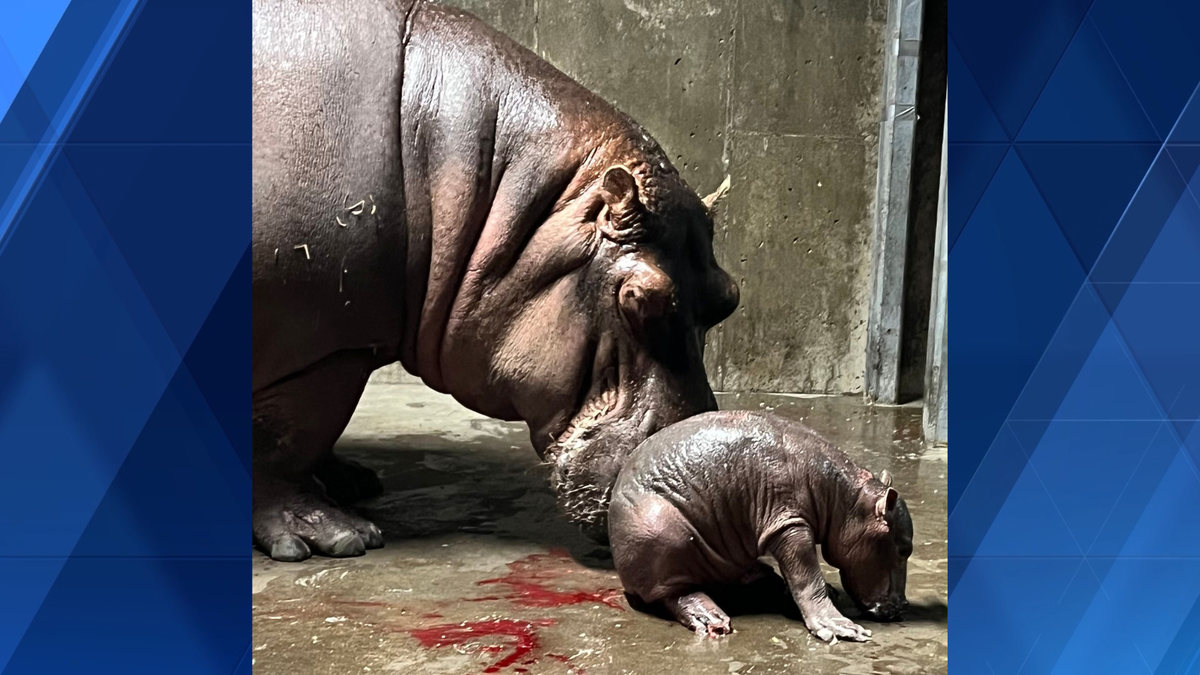
Cincinnati Zoo’s most famous resident Fiona is officially a big sister. The Cincinnati Zoo announced Bibi has given birth to her second baby hippo. The new addition to the family came around 10 pm Wednesday night. “This calf looks huge to us because Fiona, Bibi’s first baby, only weighed 29 pounds when she was born six weeks premature and wasn’t able to stand on her own. This new calf weighs at least twice as much as Fiona did and is already walking,” said Christina Gorsuch, Cincinnati Zoo’s director of animal care. “We’re not sure if nursing has occurred yet because the water is murky. It’s Bibi’s first time nursing, since Fiona had to be cared for by the hippo staff, so we’re keeping a close eye on them to make sure we don’t need to step in.”Fiona weighed only 29 pounds at birth — 25 pounds less than the lowest recorded birth weight for her species. She survived because of her animal care team’s tireless efforts to save her and has inspired many to care about her species and wildlife.“Bibi and the baby, yet to be named, will spend the next two weeks bonding behind the scenes,” said Gorsuch . “A female would take her newborn away from the bloat for about that amount of time in the wild, and we try to give Bibi the choice to do what feels natural to her.” The zoo says the baby and Bibi will not be visible to the public right away, but videos will be shared via social media by the Zoo. Tucker and Fiona will still be in their outdoor habitat as usual. The zoo’s dad-to-be Tucker arrived in Cincinnati in September from the San Francisco Zoo. Bibi and Tucker bred in December, the zoo says.

Cincinnati Zoo’s most famous resident Fiona is officially a big sister.

The Cincinnati Zoo announced Bibi has given birth to her second baby hippo. The new addition to the family came around 10 pm Wednesday night.

“This calf looks huge to us because Fiona, Bibi’s first baby, only weighed 29 pounds when she was born six weeks premature and wasn’t able to stand on her own. This new calf weighs at least twice as much as Fiona did and is already walking,” said Christina Gorsuch, Cincinnati Zoo’s director of animal care. “We’re not sure if nursing has occurred yet because the water is murky. It’s Bibi’s first time nursing, since Fiona had to be cared for by the hippo staff, so we’re keeping a close eye on them to make sure we don’t need to step in.”

Fiona weighed only 29 pounds at birth — 25 pounds less than the lowest recorded birth weight for her species. She survived because of her animal care team’s tireless efforts to save her and has inspired many to care about her species and wildlife.

“Bibi and the baby, yet to be named, will spend the next two weeks bonding behind the scenes,” said Gorsuch. “A female would take her newborn away from the bloat for about that amount of time in the wild, and we try to give Bibi the choice to do what feels natural to her.”

The zoo says the baby and Bibi will not be visible to the public right away, but videos will be shared via social media by the Zoo.

Tucker and Fiona will still be in their outdoor habitat as usual.

The zoo’s dad-to-be Tucker arrived in Cincinnati in September from the San Francisco Zoo.

Bibi and Tucker bred in December, the zoo says.

Categories
US

Russian prosecutor in Brittney Griner case asks for 9-and-a-half year sentence

Comment

A Russian prosecutor on Thursday asked a judge to sentence WNBA basketball star Brittney Griner to nine-and-a-half years in prison for drug charges, and the defense team in her trial said the judge was expected to hand down her sentence by evening.

In seeking close to the 10-year maximum, the state’s request ignored the athlete’s plea of ​​leniency. Griner pleaded guilty in July to carrying vape cartridges with cannabis oil into the country.

The prosecutor’s call for a tough sentence for Griner — as well as a fine of 1 million rubles ($16,590) — came amid calls from the United States for Russia to seriously weigh its offer on a prisoner exchange to bring her home.

A member of Griner’s legal team, Alexander Boykov, told the judge that Griner deserved to be acquitted despite her guilty plea, saying the prosecution had failed to prove criminal intent. In addition, he said, her rights were breached during the investigation and legal process.

“We know that in Russia the laws regarding drugs are very strict,” Boikov said, “but Russia also cares about its prestige in sports.” Griner’s career de ella, and her play de ella for the UMMC Ekaterinburg team during the WNBA offseason, has been a celebration of friendship between people, he continued. “She had many offers, but she for some reason chose cold Yekaterinburg, knowing how warmly she would be received there.”

The prosecution contains that the 0.702 grams of cannabis found in the Griner’s luggage after she landed at Sheremetyevo International Airport in February was a “significant amount.” Griner testified last week that she was in a hurry when she packed, had no idea the items were in her bags and did not intend to break Russian law.

The Phoenix Mercury star testified that she uses cannabis oil in the United States for treatment of chronic pain from injuries but knew that carrying cannabis into Russia was illegal. She said she flew to Russia despite US State Department warnings about such travel because she did not want to let her Russian team down.

The Biden administration is feeling massive public pressure to secure her release, a behind-the-scenes negotiation greatly complicated by the collapse of relations between Washington and Moscow because of the Ukraine war.

Secretary of State Antony Blinken spoke to Russian Foreign Minister Sergei Lavrov late last week, urging him to accept a deal involving Griner and former security consultant Paul Whelan, an American who is serving a 16-year prison term in Russia. Whelan, who was arrested in 2018 and convicted of spying in 2020, says he was framed.

Blinken, Lavrov discussed potential prisoner exchange for Griner, Whelan

The United States has declined to say whether the pair would be swapped for Russian Viktor Bout, an arms trafficker who was arrested in a US sting operation in Thailand in 2008.

The administration’s announcement of its proposed deal appears to be an effort to curb criticism of its handling of the Griner case. But the Kremlin has told Washington to refrain from “megaphone diplomacy,” with Russian Foreign Ministry officials repeatedly warning that public calls will not help her cause.

John Kirby, spokesman for the US National Security Council, said Tuesday that the administration was not going to negotiate in public.

“We’ve made a serious proposal, made a serious offer,” Kirby said. “And we urge the Russians to take that offer because it was done with sincerity, and we know we can back it up.”

In past years, the United States has resisted Russian pressures to exchange Bout given the seriousness of his offenses. He was convicted in New York in 2011 and later sentenced to 25 years in prison for conspiracy to sell surface-to-air missiles, AK-47s and explosives to the Revolutionary Armed Forces of Colombia, or FARC, knowing that they planned to shoot down US helicopters.

A deal to bring Bout home would be a major political victory for Russian President Vladimir Putin, signaling to his domestic audience that despite unprecedented Western criticisms and sanctions, he still has the clout to force the White House to negotiate with him.

Bloomberg has reported that as part of an exchange, Moscow may seek the release of a wealthy Russian businessman close to the Kremlin, Vladislav Klyushin, who pleaded not guilty in a Boston court in January over an alleged $82 million insider trading scam. Klyushin claimed the case against him was “politically motivated” because of his ties to the Russian government.