Categories
US

Armed attempting to breach FBI office leads to pursuit

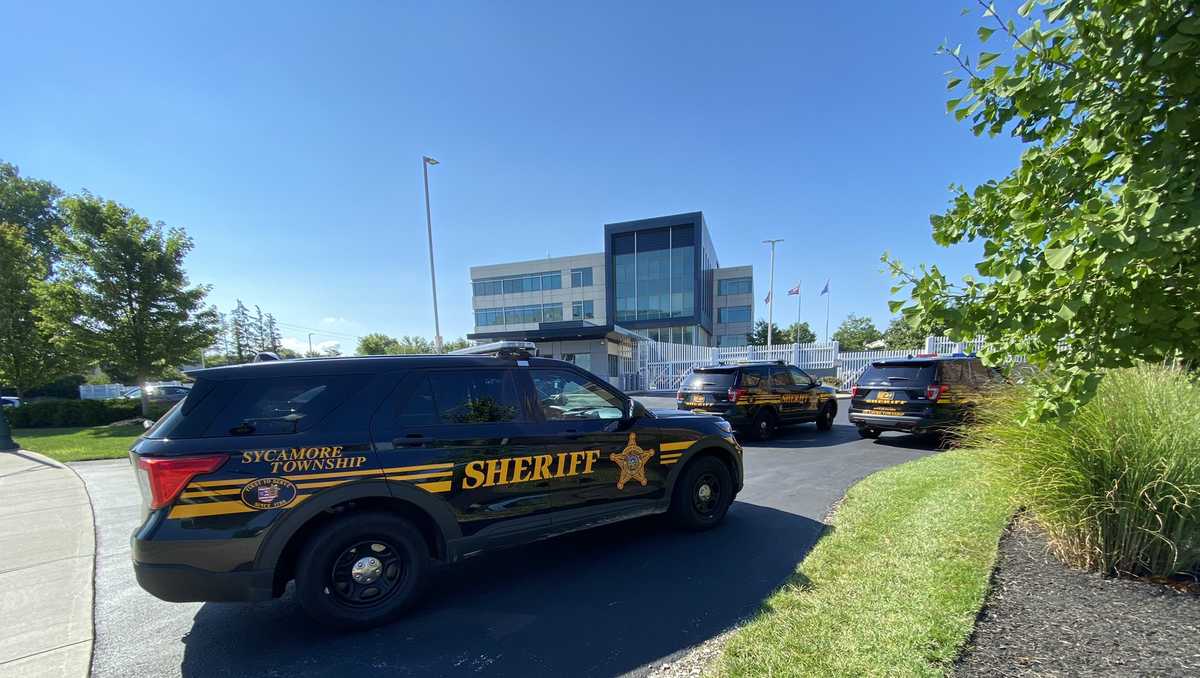
FBI: Armed subject attempting to breach Cincinnati FBI office leads to pursuit, police situation



BREAKING NEWS… POLICE ARE CONFRONTING AN ARMED SUSPECT IN CLINTON COUNTY… [CAPTIONING MADE POSSIBLE BY WLWT-TV] KELLY: POLICE ARE CONFRONTING AN ARMED SUSPECT IN CLINTON COUNTY AFTER A POSSIBLE THREAT AT THE CINCINNATI FBI BUILDING. ALLISON: ONE MORE PUSH OF RAIN BEFORE REFRESHING AIR SETTLES IN. WHO SEES ANOTHER SHOWER, COMING UP. COLIN: AND A HOUSE EXPLOSION LEAVES THREE PEOPLE DEAD IN INDIANA. THE LATEST ON THE INVESTIGATION. >> THIS IS WLWT NEWS 5, LEADING THE WAY WITH BREAKING NEWS. KELLY: THAT BREAKING NEWS, POLICE CONFRONTING A SUSPECT IN CLINTON COUNTY WHO OFFICIALS SAY MADE A THREAT TOWARDS THE FBI BUILDING IN CINCINNATI. TWO DIFFERENT SCENES HERE. THANKS FOR JOINING US, I’M KELLY RIPPIN. COLIN: AND I’M COLIN MAYFIELD. THIS ACTIVE SITUATION SHUTTING DOWN I-71 AND STATE ROUTE 73 IN BOTH DIRECTIONS FOR BOTH OF THOSE INTERSTATES AND HIGHWAYS. WLWT NEWS 5’S KARIN JOHNSON JOINS US LIVE IN CLINTON COUNTY WITH WHAT WE KNOW SO FAR. KARIN. >> JUST STARTING FROM THE BEGINNING HERE. THIS ALL STARTED OUTSIDE THE FBI OFFICES IN CINCINNATI. MY COLLEAGUE BRIAN HAMRICK HAS BEEN OUT THERE ALL MORNING AND WILL BRING YOU THE LATEST ON THAT SITUATION. RIGHT HERE IN CLINTON COUNTY, IT IS IMPORTANT FOR PEOPLE TO KNOW, A LOCKDOWN DOES REMAIN IN EFFECT. IT IS WITHIN A ONE-MILE RADIUS OF THE INTERSECTION OF SMITH ROAD AND CENTER ROAD. POLICE ARE TELLING RESIDENTS AND BUSINESSES TO REMAIN VIGILANT AND THEY SHOULD LOCK THEIR DOORS. WE HAVE CONFIRMED LAW ENFORCEMENT OFFICERS HAVE TRADED SHOTS WITH A MALE SUSPECT WHO IS WEARING A GRAY SHIRT AND ALSO BODY ARMOR. AGAIN, FROM WHAT WE HAVE BEEN HEARING AFTER THE INCIDENT STARTED WITH SOME KIND OF THREAT AT THE FBI OFFICE. THAT GUY FLED NORTHBOUND ON 71 GOING THROUGH HAMILTON COUNTY MAKING THEIR WAY INTO WARREN COUNTY AND INTO CLINTON COUNTY. WE DID HEAR RADIO TRAFFIC THAT POSSIBLY THAT SUSPECT WAS FIRING AT OFFICERS THAT WERE FOLLOWING HIM NORTH. AGAIN, WE’RE TRYING TO GET ALL OF THAT CONFIRMED. THE IMPORTANT PART HERE IS THAT PEOPLE WHO LIVE IN THE AREA SHOULD LOCK THEIR DOORS. WE ARE HERE AT THE CAESAR FLEAMARKET WHICH IS SEVERAL MINUTES AWAY FROM THE SITUATION. THEY ARE KEEPING US BACK. WE ARE EXPECTING A SPOKESPERSON WITH THE OHIO STATE HIGHWAY PATROL TO ARRIVE AT ANY MOMENT WITH MORE INFORMATION. AS SOON AS WE GET ANYTHING CONFIRMED OR IF WE FIND OUT THIS LOCKDOWN HAS BEEN LIFTED, WE WILL MAKE SURE TO PASS ALONG TO YOU ON AIR AND ONLINE. COLIN: AND I JUST GOT ON SCENE ABOUT 30-45 MINUTES AUG. HOMELAND SECURITY EVENT GOING TO THAT FBI SIDE. >> THERE ARE SOME DEPUTIES ARE AROUND, BUT I HAVE TO BE HONEST WITH YOU, THEY ARE KEEPING IS PRETTY FAR BACK. THEY ARE TRYING TO KEEP THE PUBLICLY FROM THE SCENE. WE DON’T KNOW IF THE SUSPECT WAS HIT BUT WE DO KNOW THE LOCKDOWN DOES REMAIN IN EFFECT. IF WE GET ANY MORE INFORMATION, WE WILL PASS IT ALONG. KELLY: THANK YOU. COLIN: THE SUSPECT BELIEVED TO HAVE MADE A THREAT TOWARDS THE FBI BUILDING IN CINCINNATI. KELLY: THAT’S WHERE WLWT NEWS 5’S BRIAN HAMRICK IS LIVE. WHO HAS BEEN ABLE TO SPEAK WITH SOME PEOPLE ON SCENE AND ALSO LET US KNOW WHAT THE INVESTIGATION LOOKS LIKE AS IT UNFOLDS THERE. >> THE FBI HAS CONFIRMED THERE WAS A POTENTIAL THREAT HERE. APPARENTLY, A PERSON ARMED WITH A GUN SHOWED UP HERE AND THEN LEFT. THEY HAVE NOT SAID EXACTLY HOW LONG THEY WERE HERE. LET ME SHOW YOU WHAT IS HAPPENING RIGHT NOW. THIS IS THE FBI CENTER IN KENWOOD, TECHNICALLY SYCAMORE TOWNSHIP. THIS IS THE EVIDENCE COLLECTION TEAM. THEY HAVE BEEN OUT HERE FOR ABOUT 20 MINUTES OR SO. THEY SEEM TO HAVE A LOT OF INTEREST IN THIS WINDOW IN THE CHECKPOINT GOING INTO THIS FBI CENTER. IT IS VERY SECURE HERE. THERE IS A HUGE FENCE AROUND THE PLACE. IT IS A VERY SECURE FACILITY HERE. THERE ARE CONFLICTING REPORTS OF THE PERSON WEARING BODY ARMOR. SOME HAVE SAID HE HAD BODY ARMOR. IT IS NOT CLEAR EXACTLY WHAT THIS PERSON WAS WEARING WHEN THEY GOT HERE. ALSO, NOT SURE HOW LONG THEY WERE HERE OR WHAT EXACTLY HE DID IF HE GOT INSIDE OR IF ALL OF THIS HAPPENED IN A PARKING LOT. WE HAVE ASKED FBI AGENT ABOUT THIS. THEY HAVE NOT PROVIDED THAT INFORMATION AT THIS POINT. AT SOME POINT, THE MAN TOOK OFF FROM THIS AREA. AGAIN, NOT CLEAR IF FBI AGENTS CHASED AFTER HIM BUT ONCE HE GOT ON THE 71 HEADED NORTH IS WHEN THE OHIO STATE PATROL TOOK UP THE CHASE AND ENDED UP THERE WHERE KAREN HAS BEEN THIS AFTERNOON. FOR NOW, HOMELAND SECURITY IS HERE. FEDERAL POLICE THAT SHOW UP TO THESE PROTECTION FOR THEIR FEDERAL PROTECTIVE SERVICE POLICE. THEY ARE HERE ON THE SCENE. WE HAVE VIDEO EARLIER THIS MORNING WHEN EVER THE CREW SHOWED UP. THE VERY FIRST CRUISE TO ARRIVE WHERE THE SHARES DEPARTMENT. THEY SHOWED UP ON THE SCENE VERY EARLY AND THEN DAYS — THEY LEFT AND THESE OTHER AGENCIES TOOK OVER. OHIO STATE PATROL INVOLVED IN ALL OF THIS. THE ONE THING THEY WANTED TO MAKE SURE AT THIS POINT, FBI SAYS EVEN THOUGH THERE WAS A POTENTIAL THREAT EARLIER TODAY, THERE IS NO THREAT TO THE AREA AND THE PERSON THAT WAS INVOLVED IN THIS IS NOW UP THERE WHERE KAREN IS ON THAT SCENE. EVERYTHING IS UNDER CONTROL HERE, HOWEVER, THEY ARE COLLECTING EVERY PIECE OF EVIDENCE THEY CAN TO TRY TO PUT — TRY TO TIE THIS PERSON TO WHAT IS HAPPENING UP THERE. THEY WILL HAVE OTHER THINGS LIKE CAMERAS. THERE IS A MEMBER OF CAMERAS HERE ON EVERY CORNER OF THE BUILDING. IT WILL BE IN EVIDENCE COLLECTION PROCESS AS THEY GET THROUGH THIS AND IT COULD TAKE SOME TIME. WE WILL CONTINUE TO KEEP YOU POSTED AS WE RECEIVE NEW DETAILS. KELLY: WE GOT A STATEMENT FROM THE FBI A SHORT TIME AGO. THEY REFERENCE THE PERSON ATTEMPTED TO BREACH THE VISITORS SCREENING FACILITY. THIS IS A FAIRLY NEW BUILDING. WE THINK THAT HELPED DE-ESCALATE THE SITUATION THERE FASTER? >> IT WOULD HAVE BEEN VERY DIFFICULT FOR THIS PERSON TO GET IN. IF THEY WOULD HAVE TRIED TO CLIMB THE FENCE, THAT WOULD TAKE SOME TIME TO GET OVER THAT FENCE AND SOME EFFORT. YOU HAVE TO GO THROUGH THIS BUILDING HERE. I’M SURE THESE — THE GLASS AND EVERYTHING IN HERE IS SECURE. I AM CERTAIN THAT SECURITY MEASURES HERE IN TRYING TO KEEP PEOPLE THEY DON’T WANT IN OUT HAD A LOT TO DO WITH THIS PERSON NOT GETTING INTO THE FACILITY. AGAIN, IT LOOKS LIKE WHATEVER MIGHT HAVE TOUCHED THIS GLASS, THERE IS A LOT OF INTEREST IN WHAT IS ON THE OUTSIDE OF THE WINDOW SO THEY MIGHT BE LOOKING AT GETTING FINGER’S OFF OF THAT OR WHATEVER THEY COULD DO TO TRY TO FIGURE OUT WHO THIS WAS. THEN, DETERMINE WHILE OF THIS HAPPENED. KELLY: AND WE ARE SPIKING TO GET — EXPECTING TO GET UPDATES FRO

FBI: Armed subject attempting to breach Cincinnati FBI office leads to pursuit, police situation

A pursuit and ongoing police situation in Clinton County has shut down two highways and prompted an area lockdown Thursday. It all started after an armed suspect attempted to breach an FBI building in Cincinnati. According to FBI Cincinnati, it started around 9 am when a person showed up to the office in Kenwood and attempted to breach the visitor screening facility. An alarm went off and FBI special agents responded when the person fled north onto I-71 leading Ohio State Highway Patrol on a pursuit into Clinton County. The FBI, Ohio State Highway Patrol and local law enforcement are now on scene near Wilmington where they say they are trying to resolve the critical incident. Clinton County Emergency Management Agency officials said law enforcement has exchanged shots with the male suspect who is described as wearing a gray shirt and body armor. I-71 is closed between State Routes 73 and 68 in both directions until further notice. State Route 73 is also shut down in both directions between Mitchell Road and State Route 380. State Route 380 is also closed between State Route 73 and Brimstone Road. A lockdown is in effect for all buildings within a one mile radius of Smith Road and Center Road, according to Clinton County EMA. Residents and businesses are asked to lock their doors. This is a breaking news story, WLWT is working to learn more and will continue to update with the latest information as it comes in.

A pursuit and ongoing police situation in Clinton County has shut down two highways and prompted an area lockdown Thursday. It all started after an armed suspect attempted to breach an FBI building in Cincinnati.

According to FBI Cincinnati, it started around 9 am when a person showed up to the office in Kenwood and attempted to breach the visitor screening facility.

An alarm went off and FBI special agents responded when the person fled north onto I-71 leading Ohio State Highway Patrol on a pursuit into Clinton County.

.

The FBI, Ohio State Highway Patrol and local law enforcement are now on scene near Wilmington where they say they are trying to resolve the critical incident.

This content is imported from Twitter. You may be able to find the same content in another format, or you may be able to find more information, at their web site.

Clinton County Emergency Management Agency officials said law enforcement has exchanged shots with the male suspect who is described as wearing a gray shirt and body armor.

I-71 is closed between State Routes 73 and 68 in both directions until further notice. State Route 73 is also shut down in both directions between Mitchell Road and State Route 380.

State Route 380 is also closed between State Route 73 and Brimstone Road.

A lockdown is in effect for all buildings within a one mile radius of Smith Road and Center Road, according to Clinton County EMA. Residents and businesses are asked to lock their doors.

.

This is a breaking news story, WLWT is working to learn more and will continue to update with the latest information as it comes in.
Categories
US

a new twist in US-Russia prisoner swaps : NPR

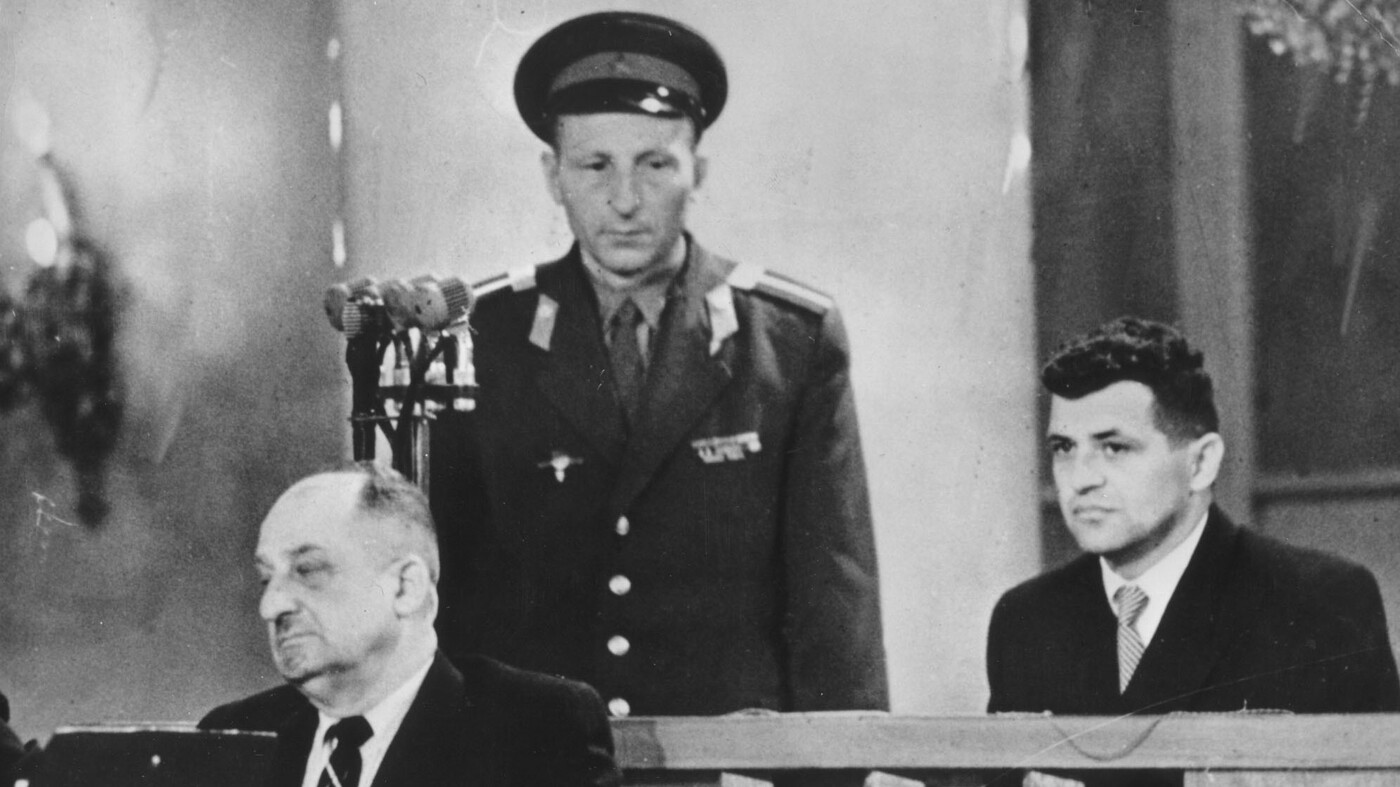
American pilot Francis Gary Powers (far right) during his 1960 trial in Moscow. Powers was shot down while flying a U-2 spy plane over the Soviet Union. He was jailed for nearly two years before he was freed in a swap for a Soviet spy imprisoned in the US

AP


hide caption

toggle caption

AP


American pilot Francis Gary Powers (far right) during his 1960 trial in Moscow. Powers was shot down while flying a U-2 spy plane over the Soviet Union. He was jailed for nearly two years before he was freed in a swap for a Soviet spy imprisoned in the US

AP

In a darkened exhibit hall at the International Spy Museum, Executive Director Chris Costa recounts the most dramatic prisoner swap between the US and the Soviet Union.

In 1960, the US had limited human intelligence on the ground inside the Soviet Union, and desperately wanted more information on its military capabilities.

“So we had spies in aircraft that could take pictures of the Soviet Union,” said Costa.

One of those pilots was Francis Gary Powers, who was working for the CIA and was flying a U-2 spy plane 70,000 feet above the Soviet Union when he was shot down.

The Americans didn’t think the Soviets could take down a plane at that altitude, and they didn’t expect a pilot would survive such an emergency.

They were wrong on both counts, and the result was high drama at the height of the Cold War.

A proposal to free two Americans

Today, the US and Russia are trying to work out a prisoner swap that involves American basketball star Brittney Griner and former Marine Paul Whelan, apparently in exchange for Russian Viktor Bout, a notorious weapons dealer who’s serving a 25-year sentence in Illinois.

While Washington and Moscow have done deals for decades, they usually involved trading spies for spies. The new twist is that an increasing number of private citizens are becoming entangled in foreign legal systems.

“During the Cold War, it was very much understood by both sides. This was a bit of a gentlemen’s game,” said Costa. Before running the Spy Museum, he worked at the White House, where he dealt with cases of Americans detained or held hostage abroad.

Brittney Griner holds a picture of her Russian basketball team as she stands inside a defendants’ cage before a court hearing in Khimki, outside Moscow, on Thursday.

Evgenia Novozhenina/AFP via Getty Images


hide caption

toggle caption

Evgenia Novozhenina/AFP via Getty Images


Brittney Griner holds a picture of her Russian basketball team as she stands inside a defendants’ cage before a court hearing in Khimki, outside Moscow, on Thursday.

Evgenia Novozhenina/AFP via Getty Images

“What we’re seeing play out now is really more hostage diplomacy,” said Costa. He describes Griner as a “pawn in an international game. She has pleaded guilty (to a drug charge) and yet she is being held for political reasons.”

The old rules

That doesn’t mean it was easy to broker a deal in the Cold War, but the dynamics were different.

“When my father was shot down, there were all sorts of misinformation, fake news being published as to how he was captured,” said Francis Gary Powers Jr., the son of the pilot.

He’s referring to the US government and media, which genuinely didn’t know how Powers’ plane was taken down initially, or how the case should be portrayed publicly.

“They thought sabotage. They thought pilot error or they thought flame out. They thought UFO encounter,” Powers said with a chuckle.

Three years before Powers was captured, the US had convicted a Soviet spy, Rudolph Abel. He had posed as a photographer in Brooklyn, but was secretly passing along coded messages stuffed inside hollow coins.

The US and Soviet governments each feared their own spy would spill secrets while being interrogated by the adversary.

“Our governments wanted to get them back, to be debriefed, to find out what happened. How did you get caught? Do the Soviets have the missile technology to shoot down the U-2?” said Powers, founder of The Cold War Museum outside Washington.

Meanwhile, the Soviets “wanted to debrief Rudolf Abel to find out how he got caught so that they could improve their intelligence systems in the future.”

Director Steven Spielberg turned the story into a movie in 2015, called “Bridge of Spies.”

Tom Hanks plays the American lawyer at the center of the negotiations. He makes the case that the convicted Soviet spy shouldn’t be put to death, because if an American is captured, “we might want to have someone to trade.”

That American turned out to be Francis Gary Powers. Still, Powers would be held for nearly two years.

Already difficult negotiations were further complicated by the US insistence that a second American detainee be released. He was Frederic Pryor, a graduate student held in communist East Germany on suspicion of spying.

A deal was eventually struck, freeing the two Americans and the Soviet spy.

Powers died in 1977 in a helicopter crash in California. In 2017, Powers Jr. traveled to central Russia to visit the site where his father touched down by parachute. There he met a number of residents who still remembered the day an American pilot fell from the sky more than a half-century earlier.

A series of swaps

In those intervening years, multiple US-Russia prisoner exchanges have been worked out, most involving actual or suspected spies.

The biggest such case was in 2010, when the US exchanged 10 Russian spies caught in the US for the freedom of four Russians who had been arrested in their homeland, accused of spying for the West.

Today the Biden administration describes the two jailed Americans as “wrongfully detained.” The US has stated publicly that it wants to make a deal, but the Russian leader Vladimir Putin seems certain to drive a tough bargain.

“He’s not easy to deal with,” said Oleg Kalugin, a former Russian spy who was Putin’s boss in the 1980s, when Putin was a young intelligence officer.

“Putin is sly, smart, and he manipulates people and circumstances if he can,” said Kalugin, who’s 88. After decades in the Soviet intelligence agency, the KGB, he became a critic of the Soviet Union in its final days and eventually moved to the US

He says he wasn’t much impressed by Putin when he was his boss. Now, they really don’t care for each other.

“He called me a traitor. I called him a war criminal,” said Kalugin.

US-Russia relations continue to spiral downward over the war in Ukraine and a host of other issues.

But there’s still a broad consensus on the need to keep lines of communication open to deal with issues like prisoner swaps or potential military confrontations.

“Throughout the Cold War, there was a communication mechanism,” said Costa. “There can be unintended consequences of putting US military forces close to Russian military forces. So it’s absolutely crucial that those channels of communication remain open.”

Categories
US

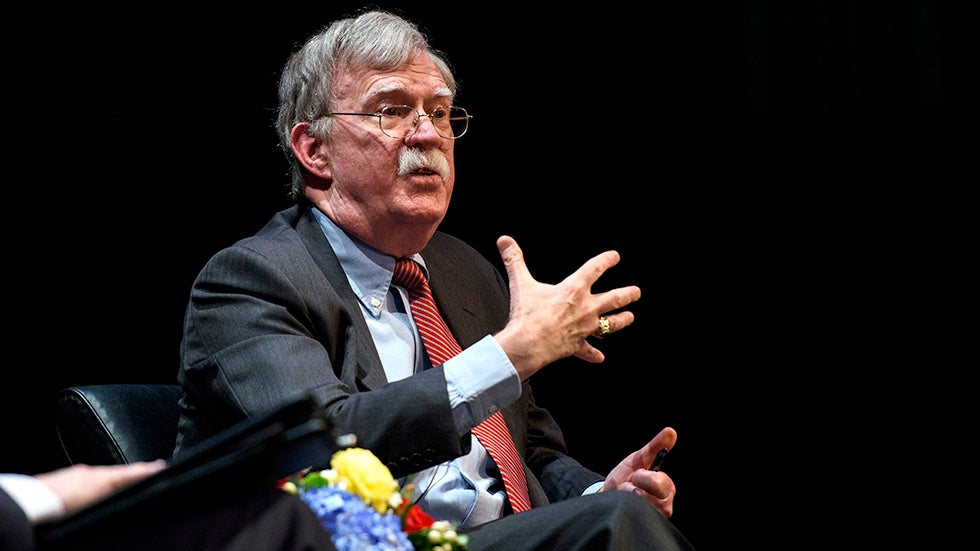
Bolton ’embarrassed’ at ‘low price’ allegedly offered in assassination plot

Former national security adviser John Bolton on Wednesday said that the price a member of Iran’s Islamic Revolutionary Guard Corps (IRGC) allegedly attempted to pay people to kill Bolton was lower than he expected.

“The suspect put a $300,000 price tag on your head,” said anchor Wolf Blitzer on CNN’s “Situation Room.” “What goes through your mind, ambassador, hearing the details of this plot, as explained today in great detail by the US Justice Department?”

“Well, I was embarrassed at the low price,” Bolton, a former US ambassador to the United Nations, responded. “I would have thought it would have been higher. But I guess maybe it was the exchange rate problem or something.”

The Department of Justice announced the plot publicly earlier on Wednesday, saying Shahram Poursafi started planning to murder Bolton in October in likely retaliation for his involvement in a drone strike that killed Qassem Soleimani, who led the IRGC’s elite Quds Force.

Poursafi also reportedly planned to target former Secretary of State Mike Pompeo, who served in the role at the time of the drone strike against Soleimani. Bolton said on CNN he had not spoken to Pompeo about the unsealed charging document and was only aware of the press reports about his alleged targeting of him.

Bolton added that the FBI warned him of foreign threats to his security, which “grew more severe” as time went on, noting that his Secret Service detail ended following his time in the White House but was recently reinstated.

“Eventually, by the late fall of 2021, I asked, ‘If it’s this serious, perhaps the Secret Service should be involved,’” Bolton said. “And ultimately President Biden made that decision. And I appreciate it, obviously.”

Bolton also slammed the Biden administration for negotiating with Iran on a new nuclear deal in the wake of the plot, saying attempts to “appease” Tehran encourage threats against US officials.

Talks led by the European Union in Vienna to negotiate the text of a potentially revived nuclear deal ended on Monday, and the EU’s foreign affairs chief said the capitals must now discuss the final text and there was no more room for negotiation.

“I think the deal was a mistake in 2015” when it was first created, Bolton said.

“It hasn’t gotten any better with age,” he continued. “The administration has been on its knees in Vienna begging to get back into the deal, which sends signals of weakness, not just to Tehran, but around the world.”

.

Categories
US

Social media posts warn not to call 988. What you need to know : Shots

Only when the caller cannot or will not collaborate on a safety plan and the counselor feels the caller will harm themselves immediately should emergency services be called, according to the hotline’s policy.

d3sign/Getty Images


hide caption

toggle caption

d3sign/Getty Images


Only when the caller cannot or will not collaborate on a safety plan and the counselor feels the caller will harm themselves immediately should emergency services be called, according to the hotline’s policy.

d3sign/Getty Images

When the 988 Suicide & Crisis Lifeline launched last month, many mental health providers, researchers and advocates celebrated. Although a national suicide hotline had existed for years, finally there was an easy-to-remember three-digit number for people to call, they said. The shorter number would serve as an alternative to 911 for mental health emergencies.

But not everyone felt the same way. Some advocates and people who had experiences with the mental health system took to social media to voice concerns about 988 and warned people not to call it.

One Instagram post said, “988 is not friendly. Don’t call it, don’t post it, don’t share it, without knowing the risks.” The post, which had garnered nearly a quarter of a million likes as of early August, went on to list the risks as police involvement, involuntary treatment at emergency rooms or psychiatric hospitals, and the emotional and financial toll of those experiences.

Other posts on Instagram and Twitter conveyed similar concerns, saying that the hotline sends law enforcement officers to check on people at risk of suicide without their consent and that people, especially from LGBTQ+ communities and communities of color, may be forced into treatment.

So is 988 a critical mental health resource or a cause for concern? We decided to dig into these questions, figure out how 988 works, and explain what you need to know before dialing.

Why are some people saying not to call 988?

We reached out to the creators of some of the social media posts to ask them directly.

Liz Winston, who authored the Instagram post calling 988 “not friendly,” said she wanted people to understand all the potential outcomes of calling so they wouldn’t be blindsided by the “traumatizing system” that she experienced.

Last summer, Winston was having suicidal thoughts and visited a hospital in New York. She hoped to speak with a psychiatrist but instead she was involuntarily detained in the psychiatric wing of the emergency room. She said that she did not receive any counseling during the 24 hours she spent there and that the experience was “extremely traumatic.”

Winston hadn’t called the hotline, but she said those who can end up in a similar situation. It’s true that when police respond to calls about people in mental health crises, they often take them to an emergency room or psychiatric hospital.

khn logo

“I realize there is an urge to rescue people in crisis, but the reality is the services that exist make the problem much, much worse,” said Winston, who works in mental health peer support and has started an online support group for people recovering from involuntary treatment.

Research shows suicide rates increase drastically in the months after people are discharged from psychiatric hospitals. Those who were sent involuntarily are more likely to attempt suicide than those who chose to go, and involuntary commitments can make young people less likely to disclose their suicidal feelings in the future. Some people also get stuck with large bills for treatment they didn’t want.

Emily Krebs, a suicide researcher and assistant professor joining Fordham University this fall, said that involuntary treatment is viewed as a necessary part of suicide prevention in the US, but that other countries don’t see it that way. The United Nations has called forced mental health treatment a human rights abuse and asked countries to ban it.

Like Winston, Krebs wanted people to be fully informed before deciding to call 988. That’s why she wrote on Twitter that 988 can and will “send police if they deem it necessary.”

That can be dangerous, she said, given that 1 in 5 fatal police shootings in 2019 involved a person with mental illness. Some years, the share has been even higher.

What does 988 say about how it handles crisis situations?

Officials from 988 say they recognize the risks of having law enforcement officers involved in mental health emergencies. That’s why 988 was created as an alternative to 911, said John Draper, executive director of the hotline and a vice president at Vibrant Emotional Health, the company tasked with administering it.

“We know the best way for a person to remain safe from harm is for them to be empowered and to choose to be safe from harm,” Draper said. Dispatching police is a last resort, he said.

Counselors who answer the phones or respond to texts and online chats for 988 are supposed to be trained to actively listen, discuss the callers’ concerns and wishes, and collaborate with them to find solutions. Most calls about suicide are de-escalated without law enforcement, Draper said. Instead, counselors talk through people’s reasons for dying and reasons for living; have callers connect with supportive family, friends, religious leaders or others in their community; refer callers to outpatient treatment; or set up follow-up calls with 988.

Only when the caller cannot or will not collaborate on a safety plan and the counselor feels the caller will harm themselves immediately should emergency services be called, according to the hotline’s policy.

At that point, Draper said, “we have the choice of just letting [harm] happen or doing whatever we can to keep them safe.”

In previous years, before the 988 number launched, emergency services were dispatched in 2% of the hotline’s interactions, the service reported. With about 2.4 million calls a year, that means emergency services were initiated for roughly 48,000 calls. Those services can be mobile crisis teams, consisting of people trained in mental health and de-escalation, but in many rural and suburban communities, it is often police.

Contrary to some information circulating on social media, 988 cannot geolocate callers, Draper said. When emergency services are called, 988 call centers share with 911 operators information they have about the location of the person who contacted the hotline — typically a caller’s phone number, with area code, or a chat user’s IP address — to help first responders find the individual.

Starting this fall, Draper said, 988 will update its policies to require supervisors to review all calls that result in the use of emergency services. Counselors for 988 nationwide will also receive additional training on the alternatives to involving law enforcement and the consequences callers can face when police respond.

So should I use 988 or not?

We know it’s not satisfying, but the honest answer is: It depends.

The 988 hotline is the nation’s most comprehensive mental health crisis service and can provide crucial help to those in emotional distress. If you’re thinking about suicide but not taking steps to act on it, 988 is unlikely to call law enforcement without your consent. Instead, 988 counselors can provide resources, referrals and a kind ear. However, if you’re at imminent risk and could act on a plan to kill yourself, police may be called, and you could be taken to a hospital involuntarily.

Sonyia Richardson, a licensed clinical social worker who owns a counseling agency that serves mostly Black and brown clients in Charlotte, NC, said she didn’t immediately tell her clients about 988 when it launched. Even though she’s a member of her state’s 988 planning committee, she said she needed time to develop trust in the service herself. When she learned at a recent committee meeting that fewer than 5% of 988 calls in North Carolina led to a law enforcement response, she felt reassured.

“There are going to be issues perhaps with 988, but it might be one of the safer options for us,” Richardson said. With suicide rates increasing among Black Americans, the community needs more ways to save lives, she added.

If I don’t want to call 988, do I have other options?

Although the US doesn’t have a national, government-run mental health hotline that pledges not to call police without callers’ consent, several alternatives that are smaller than 988 aim to decrease law enforcement involvement.

“Warm” lines are one option. They’re typically staffed by “peers,” people who have experienced mental health challenges. They focus less on crisis intervention and more on emotional support to prevent crises. You can find a directory of warm lines by state here.

Below are other hotlines and resources. This is not a comprehensive list, and some resources may limit their services geographically.

KHN (Kaiser Health News) is a national newsroom that produces in-depth journalism about health issues. It is an editorially independent operating program of KFF (Kaiser Family Foundation).

Categories
US

Clock is ticking for Biden to make key decisions on student loans

Borrower balances have effectively been frozen for more than two years, with no payments required on most federal student loans since March 2020 — when the coronavirus pandemic sent many Americans into lockdown. During this time, interest stopped accumulating and collections on defaulted debt have been on hold.

Now, as borrowers’ fates hang in the balance, the President is set to spend several days on a long-awaited vacation. And the Biden administration has not sent any signals to suggest they’ll announce a student loan decision while he’s away.

Biden has already extended the pause four times and has repeatedly argued that it was necessary to allow borrowers to get back on their feet. In April — when he last extended the repayment pause — he said that though the economy had gained strength, the country was “still recovering from the pandemic and the unprecedented economic disruption it caused.”

Along with potentially extending the pause, the White House has suggested Biden is considering canceling $10,000 per borrower, excluding those who earn more than $125,000 a year.

“We haven’t made a decision yet. … The Department of Education will communicate directly with borrowers about the end of the payment pause when a decision is made,” White House press secretary Karine Jean-Pierre told reporters on Tuesday. “When it comes to the cancellation… the President firsthand understands the burden that a student loan has on families… and so we’re just going to continue to assess our options for cancellation.”

Jean-Pierre emphasized that Biden will have something to announce “before August 31.”

With only three weeks until student loan servicers are scheduled to resume collecting federal student loan payments, Biden and his team are cutting it close. Normally, loan servicers send out billing statements at least 21 days before a payment is due, but those have n’t gone out yet since Biden is still making up his mind about him.

“For many weeks, there’s been no change in the guidance from the Department of Education. Servicers have been told to hold off on sending out any communication about the resumption of payments,” said Scott Buchanan, executive director of the Student Loan Servicing Alliance, a nonprofit trade group whose members are responsible for servicing over 95% of all federal student loans.

While Biden didn’t announce a decision on student loans announced before he ditched Washington for the beaches of South Carolina on Wednesday, he’s riding into his vacation on the headwinds of a few successful and chaotic weeks at the White House.

Over the course of the last three weeks, Biden has dealt with a case of Covid-19 and a subsequent rebound, he signed into law two major bipartisan pieces of legislation, he gave the green light on the targeted killing of the man who succeeded Osama bin Laden as leader of al Qaeda, and the Senate managed to pass a slimmed down version of his landmark climate and health care bill.
Meanwhile, despite concerns last month about the prospect of a recession, national unemployment numbers defied economists’ expectations, gas prices have continued to go down in the last several weeks and heightened inflation eased in July. However, Americans are still paying more for everyday items like food, gas and vehicles than they’re used to, leaving less room in their budgets.
The midterm elections are less than 100 days away, and CNN’s latest data shows Biden’s approval rating remains low.

Americans’ attitudes toward student debt relief are sharply divided along partisan and generational lines.

A majority of Democrats in a May CNN poll (56%) — and an even wider majority of self-described liberals (69%) — say the government is doing too little on student loan debt, according to the CNN poll, while only a third of Republicans and self-described conservatives alike say the same. Seventy percent of adults younger than 35 say the government is doing too little, a figure that drops to 50% among those in the 35-49 age bracket, and 35% among those age 50 or older.
Continuing the forbearance or canceling debt could deliver financial relief to borrowers. But broad student loan forgiveness would also shift the cost — likely hundreds of billions of dollars — to taxpayers, including those who chose not to go to college or already paid for their education. Loan cancellation could also add to inflation while doing nothing to address the root of the problem: college affordability.
And the President, so far, has failed to get most of his college affordability proposals approved by Congress. The latest iteration of his proposed social safety net bill, called the Inflation Reduction Act, was approved by the Senate this month and now heads to the Democrat-controlled House of Representatives for a vote. But the bill does not contain previously proposed provisions that would have lowered the cost of college.

Outside of the payment pause and an executive action to broadly cancel student loan debt, there are several other ways many of the 43 million federal student loan borrowers may qualify for some student loan forgiveness. Targeted debt forgiveness programs already exist that help public sector workers and borrowers who were defrauded by their for-profit college, for example.

And under Biden, some of these programs have been temporarily expanded, making it easier for some borrowers to qualify for forgiveness. The administration has approved more than $26 billion in targeted cancellation for over 1.3 million borrowers — more than under any other president.

CNN’s Ariel Edwards-Levy contributed to this report.

.

Categories
US

Bryan Betancur told his probation officer he was handing out Bibles on Jan. 6

Placeholder while article actions load

As authorities tell it, convicted burglar Bryan Betancur made what seemed to be a reasonable request to Maryland probation officials a few days before the insurrection at the US Capitol. Prohibited from leaving the state without permission, he asked to travel to the District on Jan. 6, 2021, so that he could hand out Bibles on behalf of the Christian group The Gideons International.

Maryland’s division of parole and probation said okay.

“Betancur provided [his] probation officer with updates throughout the day and communicated that he would not be home by the normal curfew time,” a federal prosecutor said in a court filing.

In a recent plea deal, Betancur acknowledged that his story about distributing the Good Book was a ruse. Instead, clad in a shirt bearing a logo of the Proud Boys, a far-right group with a history of violence, he attended Donald Trump’s incendiary rally on the Ellipse, after which Betancur stormed the Capitol with an angry mob of fellow Trump supporters trying to prevent Congress from affirming Joe Biden’s electoral victory, according to the US attorney’s office in Washington.

Betancur, described by the FBI as a white supremacist who lived with his mother in Silver Spring, Md., was sentenced Wednesday to four months behind bars for participating in the riot. Although his age is not clear (prosecutors say he is 24; his attorney says 22), there was no dispute in US District Court in DC regarding his Jan. 6 whereabouts him.

What helped give him away: On the day of the insurrection, he was wearing a GPS tracking device that had been affixed to one of his ankles by probation officials after his release from incarceration in a Maryland burglary case.

Defense lawyer Ubong E. Akpan, in asking for a one-month federal sentence, told Judge Timothy J. Kelly in writing that his client, who pleaded guilty to a misdemeanor charge, believed “a falsehood advertised to millions — that former Vice President Mike Pence had the power to overturn the ‘fraudulent election’” during the Jan. 6 congressional proceedings. Akpan added that Betancur “struggles with mental health issues, which he does not and cannot bring himself to discuss. Instead, he puts on a brave face.”

Efforts to reach Akpan for comment after Wednesday’s sentencing hearing were unsuccessful.

Prosecutor Maria Y. Fedor asked for a six-month term in her sentencing memo, saying Betancur’s Jan. 6 visit to Washington wasn’t the first time he lied to probation officials to get approval to leave Maryland. After gaining permission to hand out Bibles for the Gideons in DC a month earlier, on Dec. 12, he took part in the Proud Boys’ violent pro-Trump rally in the District that day, Fedor said.

At the Capitol, she wrote, Betancur “climbed scaffolding and later entered a sensitive area,” meaning Senate conference room ST-2M, and helped rioters “in removing furniture from ST-2M, which was likely used as weapons in the nearby Lower West Terrace tunnel” in a confrontation with police. In addition to tracing his movements with videos, photographs and other evidence from social media, Fedor wrote, investigators used the GPS data to show that Betancur entered restricted areas of the Capitol.

He pleaded guilty in May to one count of disorderly conduct in a restricted building or grounds. He is among 800-plus defendants who have been charged in the Capitol insurrection, more than 200 of whom have been sentenced.

“Betancur has made statements to law enforcement officers that he is a member of several white supremacy organizations,” an FBI agent wrote in a court affidavit. “Betancur has voiced homicidal ideations, made comments about conducting a school shooting, and has investigated mass shootings. … Betancur has stated he wanted to run people over with a vehicle and kill people in a church.”

Akpan, the defense lawyer, described him as a lonely person — a product of an abusive childhood who gravitated to right-wing extremist groups out of a yearning for community, for a place where he felt wanted.

Fedor described a conversation Betancur had with authorities during plea negotiations.

“When asked if he regretted the decisions he made on January 6, 2021, Betancur stated he did not live a life of regrets,” she wrote. “However, I have added that he only regrets that the actions he took now prevent him from joining the US military. Betancur wanted to join the US military because of the sense of brotherhood. If he is unable to join the US military, Betancur said that he may attempt to join a different country’s military or become a mercenary.”

Categories
US

Beto O’Rourke calls heckler ‘motherf—er’ for Uvalde laughter

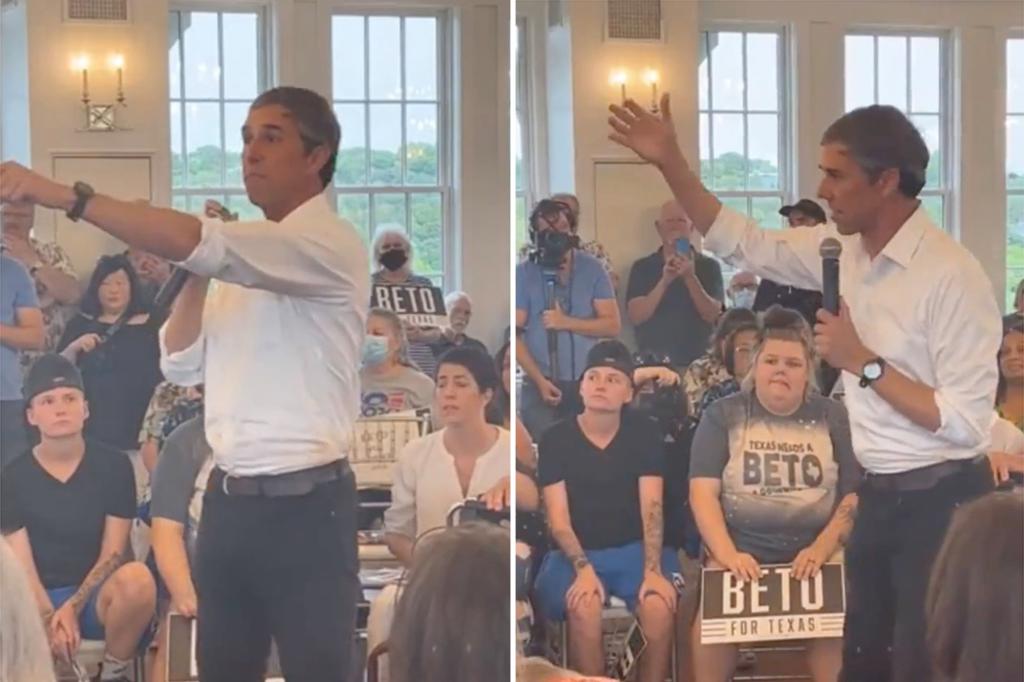
Texas Democratic gubernatorial challenger Beto O’Rourke lost his cool with a man who laughed while the former congressman was talking about the Uvalde school massacre — calling him a “motherf—er.”

O’Rourke, who has been vocal in his condemnation of local and state officials’ response to the tragedy at Robb Elementary School, which claimed the lives of 19 children and two teachers, was in the city of Mineral Wells on Wednesday arguing for stricter gun control measures when he heard a loud chortle coming from an audience member.

O’Rourke whipped around and immediately confronted the inappropriately jovial town hall attendee.

“It may be funny to you, motherf—er, but it’s not funny to me,” O’Rourke barked back.

O'Rourke, a Democrat who is running to unseat Gov.  Greg Abbott, was talking about gun control in Mineral Wells, Texas, Wednesday, when he encountered a hackler.
O’Rourke, a Democrat who is running to unseat Gov. Greg Abbott, was talking about gun control in Mineral Wells, Texas, Wednesday, when he encountered a hackler.
Twitter/Beto Media
When O'Rourke heard the man laugh in response to his comments about the Uvalde shooting, he snapped: "it may be funny to you, motherf---er, but it's not funny to me."
When O’Rourke heard the man laugh in response to his comments about the Uvalde shooting, he snapped: “it may be funny to you, motherf—er, but it’s not funny to me.”
Twitter/Beto Media

The would-be governor’s potty-mouthed clapback drew loud cheers and applause from the crowd, culminating with a standing ovation.

The unnamed audience member was reportedly standing among a small clique of supporters of Gov. Greg Abbott who were dressed in black and displaying the Republican incumbent’s campaign signs.

Videos of O’Rourke’s salty retort quickly went viral on social media platforms.

After his fiery town hall speech, O’Rourke tweeted: “there was nothing more serious to me than getting justice for the families in Uvalde and stopping this from ever happening again.”

O’Rourke’s response was widely praised by Democrats on Twitter, while a few conservatives slammed him for using foul language.

“@BetoORourke captures the anger and frustration that so many of us feel when people like this heckler and @GovAbbott show no compassion for Uvalde victims and their families,” wrote the Texas state Sen. Roland Gutierrez, a Democrat who represents Uvalde.

Jaime Harrison, chair of the Democratic National Committee, applauded O’Route for “calling it like it is.”

A day after the school shooting on May 24, O’Rourke famously interrupted Abbott and local officials press conference, demanding action on gun control in what was widely perceived as an ill-timed campaign stunt.

O'Rourke famously hacked Gov.  Abbott during a press conference held a day after the May 25 shooting at Robb Elementary School.
O’Rourke famously hacked Gov. Abbott during a press conference held a day after the May 24 shooting at Robb Elementary School.
AFP via Getty Images

“The time to stop the next shooting is right now, and you are doing nothing,” the liberal politician said, before he was escorted out.

The former congressman and 2020 presidential candidate will face off against Abbott at the polls in November.

.

Categories
US

Biden plans to go on offense against GOP’s inflation barrage

President Biden plans to go on offense against Republicans’ drumbeat about rising prices by arguing the GOP has repeatedly sided with special interests — “pushing an extreme MAGA agenda that costs families,” according to a White House memo shared first with Axios.

Why it matters: The GOP plans to try to make November’s midterms a “gas and groceries” election — all about inflation. Biden can’t undo the pain families have felt as everyday prices skyrocketed. So this is his inflation jujitsu from him — using Republicans ‘force against them.

Zoom out: Biden is expected to sign Democrats’ climate-health-tax bill, the Inflation Reduction Act, soon after House passage, expected late this week. Biden, Vice President Kamala Harris and the cabinet then will fan out across the country with this message.

  • The White House believes the bill puts Democrats in a position of strength heading into Labor Day.

The memo — from White House communications director Kate Bedingfield and senior adviser Anita Dunn — argues that Biden’s wins have dealt blows to a parade of entrenched interests.

  • Among the targets: the pharmaceutical industry, big corporations, the gun lobby and oil and gas companies.
  • “This is the choice before the American people,” the memo concludes. “President Biden and Congressional Democrats taking on special interests for you and your family. Or Congressional Republicans’ extreme, MAGA agenda that serves the wealthiest, corporations and themselves.”

Between the lines: The special-interest messaging attempts to counter the narrative that Democrats are becoming the party of the economic elite.

  • It’s a message that Democrats running in swing states — including Pennsylvania, Ohio and North Carolina — are already embracing, in an effort to win back rural and working-class votes Dems lost in 2020.

Both parties are now fighting for the working-class mantel.

  • House Republican Leader Kevin McCarthy argues: “President Biden and House Democrats’ radical policies have caused inflation to soar to a 40-year high. They’ve pushed out-of-touch policies that have caused energy prices to rise and real wages to go down.”

Go deeper: Enactment timeline for Dems health, climate and tax package

.

Categories
US

Biden arrives on secluded South Carolina island for week-long family vacation

NEWYou can now listen to Fox News articles!

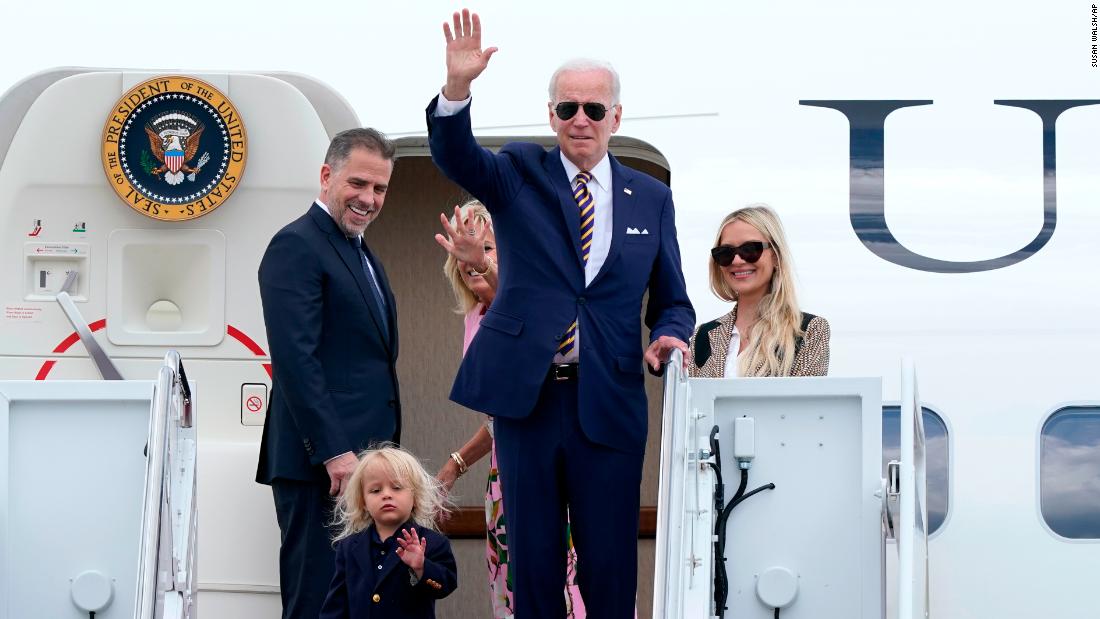
President Biden flew to a South Carolina island for a vacation with his family Thursday, a trip that is expected to last at least one week.

The Biden family will be staying at a private residence owned by a friend on Kiawah Island, a wealthy and secluded destination. The president’s son, Hunter Biden, accompanied Biden and first lady Jill Biden on the Air Force One flight from Washington. Biden’s daughter-in-law Melissa Cohen and grandson Beau also attended.

Late-summer vacations are common for US presidents, but Biden’s comes as the House is expecting to vote on the massive “Inflation Reduction Act,” which is full of White House priorities.

The vacation will likely delay the bill’s signing, and the White House has not stated when the president will return to Washington.

VULNERABLE HOUSE DEMOCRATS WON’T SAY IF THEY PLAN TO VOTE FOR MANCHIN INFLATION REDUCTION ACT

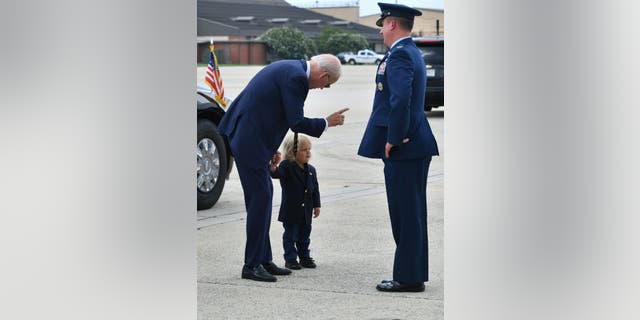
President Biden walks with his son Hunter Biden and grandson Beau Biden to board Air Force One at Andrews Air Force Base, Maryland, Wednesday, Aug. 10, 2022. The president is traveling to Kiawah Island, South Carolina, for vacation.

President Biden walks with his son Hunter Biden and grandson Beau Biden to board Air Force One at Andrews Air Force Base, Maryland, Wednesday, Aug. 10, 2022. The president is traveling to Kiawah Island, South Carolina, for vacation.
(AP Photo/Manuel Balce Ceneta)

President Biden walks with his grandson Beau Biden at Joint Base Andrews in Maryland on Aug. 10, 2022.

President Biden walks with his grandson Beau Biden at Joint Base Andrews in Maryland on Aug. 10, 2022.
(Nicholas Kamm/AFP via Getty Images)

MEMBER OF GOP LEADERSHIP SAYS IRS COULD ‘BULLY THE MIDDLE CLASS,’ TARGET CONSERVATIVES, IF MANCHIN BILL PASSES

Previous Presidents George W. Bush, Obama and Trump all took similar vacations throughout their time in office. Bush would often spend the time at his Texas ranch, while Obama and Trump both preferred golf resorts in New England.

While Biden’s trip may delay signing legislation, the hard work of negotiation is largely finished for the IRA, which was first introduced by Sen. Joe Manchin, DW.Va. The Senate passed the mammoth spending bill on Sunday, and House Speaker Nancy Pelosi, D-Calif., says she plans to push for passing the bill through the Democrat-controlled House with no changes.

CLICK HERE TO GET THE FOX NEWS APP

It is unclear when exactly the House will hold its vote.

The Associated Press contributed to this report.

Categories
US

Opinion | Meet some of the Kansans who stunned the experts on abortion rights

Placeholder while article actions load

We should not read too much into Kansas voters’ surprisingly lopsided rejection last week of an amendment that would have declared that the state’s constitution does not guarantee a right to abortion. After all, this is one result in a single state — fewer than 1 million people voted.

But I do think the results in Kansas have an important message for all of America: Even if the country’s elected officials and activists are clearly split into a Team Blue largely unified around one set of views and a Team Red with opposing ones, the nation’s voters are more complicated.

The ballot initiative, which would have cleared the way for Kansas Republicans to pass a near-total ban on abortion, failed because many unaffiliated and Republican voters opposed it. This wasn’t just a story of Democrats outvoting Republicans. Significantly more Kansans are registered Republicans (about 850,000) than Democrats (500,000). And turnout among Democrats (about 57 percent) last week was only slightly higher than for Republicans (55 percent). If the only people who voted on the initiative had been registered Democrats and registered Republicans, and they all voted with their leadership’s position, it would have passed by a 62-38 margin.

But that’s not what happened. Instead, around 170,000 people who did not participate in the partisan primaries voted on the abortion question. (It’s likely most of them are registered as unaffiliated and therefore can’t vote in party primaries.) This outcome — tens of thousands of people in Kansas who won’t join the Democratic Party turning out in august to vote in favor of abortion rights — was far from obvious, and that’s why many political experts, including me, were stunned by the result.

That said, this result didn’t come from nowhere. About 30 percent of American adults are Republicans, about 30 percent Democrats, and around 40 percent independents. Kansas’ electorate is more Republican (44 percent) and less Democratic (26 percent) than the nation overall but also includes a big bloc of unaffiliated voters (29 percent). Some independents are people who don’t follow politics closely and have fairly undefined views. But most consistently vote for one party or the other. And even if they don’t, many have strongly held views on particular issues.

Ruth Marcus: Why I fear Indiana, not Kansas, charts the future of abortion rights in America

One such voter is Tyler Dillman, 32, who lives near Kansas City. “I don’t feel like any party accurately reflects my ideology. I’m ‘conservative’ on topics like immigration, national security, and economics, but more ‘liberal’ on education, gay rights, and health care, and find myself in the middle on many other social issues,” Dillman, who works at a higher-education research firm, told me in an email.

But he felt strongly about taking the pro-abortion rights stand on this ballot measure.

“The Dobbs decision was a watershed moment for me,” Dillman wrote. “Previous attempts to ban abortion, or significantly curtail it, always felt like political posturing, because you knew that there was a solid foundational backstop in the Roe v. Wade decision.”

Tillman is one of eight Republican or unaffiliated Kansas voters who voted for abortion rights whom I reached via email and text message.

Their comments have good and bad news for both parties.

Greg Madison, 69, a retiree in the Kansas City area, told me he used to be a Democrat and often votes for Democratic candidates but, “I changed my registration to unaffiliated as a protest or statement against the two-party system.”

Cynthia Smith, a 63-year-old retired lawyer who lives in Lawrence, home of the University of Kansas, voted for abortion rights as part of her broader disenchantment with the Republican Party.

“Shortly after the January 6 insurrection, my husband and I changed our registration to unaffiliated because we were disgusted with the Republicans in our government, but did not feel the Democratic Party represented us either,” Smith wrote.

Even if all the unaffiliated Kansans who voted last week took the pro-abortion rights stance, the results would have been about 50-50, assuming everyone else voted along party lines. The election results suggested that more than 80,000 Republicans, around a fifth of those who voted in Kansas last week, also took the pro-abortion rights position, leading to the 59-41 blowout for that side. That’s surprising, at least at first glance. I had assumed that registered Republicans who turned out for primaries would be aligned with the party on one of its long-standing core positions.

But that result didn’t come from nowhere, either. Polls have long suggested that from one-fifth to one-third of Republicans support abortion rights, depending on how the question is phrased. These Republicans can rarely express that preference without voting for a Democratic candidate.

And we know that Americans often have views that conflict with their party’s stands. Measures to raise the minimum wage, expand Medicaid and reduce gerrymandering have passed in red states over the past decade, even as GOP leaders oppose all three positions. A 2020 ballot measure to lift a ban on affirmative action failed in heavily Democratic California.

I asked Melissa Clark, a 42-year-old registered Republican who works in sales in the Kansas City area, what restrictions on abortion she would support. “None,” she replied.

“Politicians should not be involved in health-care decisions,” she wrote. “Women and all humans can make their own healthcare decisions. … I think it is a personal decision that is something that should be left in the hands of the individual under all circumstances.”

“Generally Republicans have gotten more of my votes,” said Cheryl Bannon, a 61-year-old retired title closing officer in the Wichita area who is also a Republican. “I am not in favor of large giveaway programs. However the Republicans are just getting too far out there — ‘don’t touch our rights to buy assault rifles in any way but let’s make women and, yes, children carry embryos to term.’”

The good news for Democrats is that all eight I interviewed said they voted for Joe Biden in 2020 and would oppose Donald Trump again in 2024. This is a very small sample, but it fits with lots of evidence that there is a small-but- real bloc of anti-Trump Republicans and that independent voters are really turned off by the former president.

“If it’s between Biden and Trump, I will absolutely vote for Biden. If a moderate Republican were to come into the mix, I may vote for them but I can’t vote for someone who is anti-choice at this point,” said a 26-year-old Kansas City-area Republican named Sydney, who works in financial services and asked that we do not use her last name.

“Can we please have Romney or another Bush?” said Katie Minnis, a 42-year-old Republican who lives in Lawrence and works in corporate sales.

The good news for Republicans is that these voters aren’t likely to become consistent Democratic votes, even as Trump-like figures dominate the GOP.

Stephanie Sharp, a 46-year-old Kansas City-area software manager who described herself as a lifelong Republican, said that she would back Democratic Gov. Laura Kelly’s reelection bid this fall. But Sharp said she won’t support US Rep. Sharice Davids, a Democrat who holds a swing seat in the Kansas City area that the party desperately needs to hang on to, casting Davids as “a mediocre and embarrassing representative.”

The biggest lesson from Kansas is one people like me keep forgetting — the voters aren’t nearly as predictable as we think they are.