Car maker Brute and Catfood completed the CS:GO work of Tuscan, one of the most iconic maps from Counter-Strike.
This Tuscan remake is being developed for the first time since at least 2020 when a number of people called Nors3 invited to practice a series of tests, and to inspect how far this is done. In CS:GO the first version of Tuscan was revealed on a tour that was made by former professional player and current streamer Erik fl0m Flom in February 2021.
The full release of Tuscany is now out on the workshop, said Catfood today. I wish everyone a good game.
The full release of Tuscany is already over at the workshop! I wish everyone well and have fun! Download link:https://t.co/BvCggjgYgK pic.twitter.com/IWjKdYNEL – a download link from our website.
catfood (@catfoodplans) August 8-2022.
The Battle of Tuscan is a bombed defusal map created in 2007 by Brute and became the most popular map in the game. Since the game was called for in 2012, the community pushed for a port for CS:GO, but only in 2019 rumors were floating about that a rework will be done.
The official release of Tuscan for CS:GO comes a few weeks after Gabe Follower, a famous CS:GO leaker, said that the official developers of Valves FPS were testing Tuscan and a new map named Prime.
After Tuscans’ work is done, it can’t get to CS:GO’s official active map pool – in case Valve wants to add it and replace one of the maps there. For now, only the most enjoyable thing players can do is download it on the Steam workshop and play custom games with friends.
ORDER’s Australian CS:GO lineup has been depleted to four players after the organization parted ways with Jordan “Hatz” Bajic ahead of the return of the competitive season.
The move comes a little over two months after ORDER acquired the roster from Renegades in June 2022. Although Hatz spent just a couple of months under the ORDER banner, he had been playing alongside Simon “Sico” Williams and Joshua “INS” Potter since January 2020, when he joined Renegades.
“I’ve worked with Jordan (Hatz) all the way back from the beginning of Renegades – over the years, he’s been a teammate, long-term housemate, dominant CS force, and most importantly a great friend to not only myself but the entire team throughout,” ORDER’s manager William “MrGrayhound” Gray said in a statement. “This team has always been a group consisting of real friendships and for that, it’s with an incredibly heavy heart to see him go.”
Hatz only got to play at two events during his stay with ORDER: the ESL Pro League season 16 Conference in June and IEM Cologne in July. He averaged an underwhelming 0.94 rating across these two events, according to HLTV’s statistics, and was among the team’s worst individual performers.
It’s unclear at this point who ORDER will pick up to replace Hatz. The pool of Australian players is limited and there’s not a big signing the organization can make with the exception of former Renegades, 100 Thieves, and EXTREMUM in-game leader Aaron “AZR” Ward.
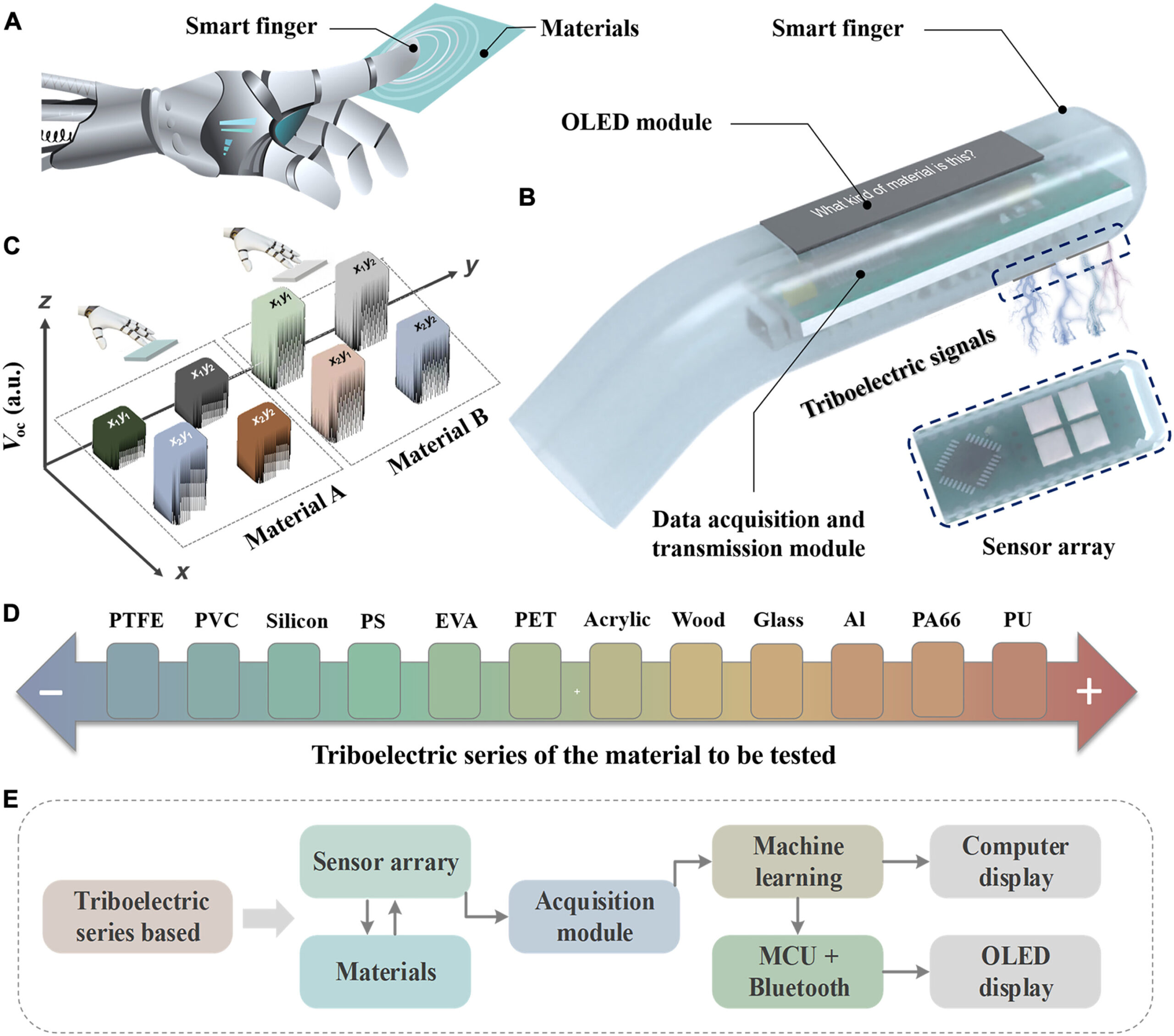
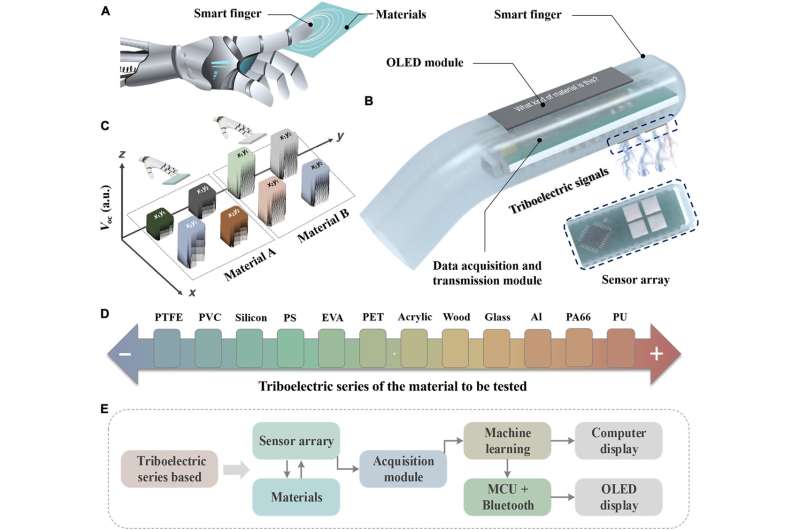
(A) Schematic diagram of the material identification process of the triboelectric tactile perception smart finger. (B) Structure of the triboelectric tactile perception smart finger, consisting of a triboelectric sensor array, data acquisition and transmission module, and display module. (C) Schematic diagram of the output signals of the triboelectric sensor array when the smart finger identifies different materials. au, arbitrary units. (D) Typical materials located in different positions in the triboelectric series: Electronegativity increases from right to left; conversely, electropositivity increases from left to right. (E) Flowchart of the interaction between the modules of the smart finger when identifying materials. Credit: Science Advances (2022). DOI: 10.1126/sciadv.abq2521
A team of researchers at the Chinese Academy of Sciences, has developed an artificial finger that was able to identify certain surface materials with 90% accuracy. In their paper published in the journal Science Advancesthe group describes how they used triboelectric sensors to give their test finger an ability to gain a sense of touch.
Prior research has led to the development of robotic fingers that have the ability to recognize certain attributes of certain surfaces, such as pressure or temperature—the team with this new effort, have taken such efforts further by adding the ability to identify a material that is being touched.
The finger was created by applying small square sensors to the type of a finger-shaped object. Each of the squares was made of a different kind of plastic polymer, each chosen because of their unique electrical properties. When such sensors are moved close to an object, such as a flat surface, electrons from the sensors interact with the materials in unique ways.
The sensors beneath the polymer were all connected to their own processors inside of the finger, which were then connected together to allow for comparison of results and for machine learning-based data analysis. The researchers also attached a tiny LCD screen for displaying results. The researchers then tested their finger by having it touch various flat surfaces such as those made of glass, wood, plastic and silicon. They found it capable of detecting the right material on average 96.8% of the time, with a minimum accuracy of 90% for all of the surfaces. The researchers also tested the finger for endurance by having it touch a surface thousands of times and found that it held up well enough for industrial applications.
The researchers suggest that if their finger were to be used in an industrial setting it could be connected directly to a control mechanism. They also suggest it could be used to test products to ensure they meet manufacturing standards. And they also note that such a finger could also be used on a full-sized human robot, adding to its capabilities. They point out that the technology behind their finger could likely be used in prosthetic devices to help restore a certain degree of touch for people who have lost such an ability.
Warehouse robots that feel by sight
More information:
Xuecheng Qu et al, Artificial tactile perception smart finger for material identification based on triboelectric sensing, Science Advances (2022). DOI: 10.1126/sciadv.abq2521
citation: Artificial finger able to identify surface material with 90% accuracy (2022, August 8) retrieved 8 August 2022 from https://techxplore.com/news/2022-08-artificial-finger-surface-material-accuracy.html
This document is subject to copyright. Apart from any fair dealing for the purpose of private study or research, no part may be reproduced without the written permission. The content is provided for information purposes only.
All the best advice about bullet journaling says you don’t have to be neat or artistic or organized to create an effective journal. In fact, the original Bullet Journal Method created by Ryder Carroll, who has a book and a website and a $249 course teaching the technique, ignores artistry altogether. But let’s be real. The bullet journal pages you’ve seen on Instagram and TikTok are intimidating because only an artist could have made them. And with that intimidation comes the fear of ruining the notebook you paid $25 for.
That’s why many people get bullet journal paralysis. They hesitate to write anything at all for fear it’ll be ugly and sloppy, and thus their notebook collects dust. (Note that I use “bullet journaling” in a generic sense. When I refer to Carroll’s method specifically, I capitalize it.)
Or maybe bullet journaling failed you for other reasons, like you found the supposed mindfulness aspects to be time wasters. As Anna Russell put it in The New YorkerThe New Yorker, “You get the sense, in some of the more beautiful posts, that it took more time to make the to-do list than it would have to complete the to-dos.”
There is a better way. You can get nearly the same benefits of bullet journaling using a method that’s:
Do not intimidate
Allows for corrections and changes along the way
Doesn’t require lengthy transfers of useful notes to a new section or notebook each month
Won’t cost you any additional money if you already own a computer or mobile device
The trick? Go digital. And I’m not even talking about buying a specialized bullet journal app, because you can get better results with the right to-do list or note-taking app.
If you’re committed to writing your bullet journal by hand, you can still do that and digitize your notes—I’ll explain how in a moment. But by going digital you give up almost nothing, except the tactile feel of paper, and you gain so much more.
A Brief Overview: What Is a Bullet Journal?
Here’s a very brief overview of bullet journaling: The original namesake Bullet Journal Method uses a paper notebook, where you create an index in the front and use the rest of the pages to write down and organize everything you have to do and need to remember for each month. There’s a formula for creating each page, which Ryder Carroll explains clearly in his original 2013 video about bullet journaling.
The Bullet Journal Method involves using page spreads in a paper notebook to make an entry for every day of the month and write down tasks (checkbox), events (open circle), and ideas (bullet point).
Since that first conception, people have riffed on the idea so that now it can include pretty little sketches, calligraphy, and other designs that look so beautiful they ultimately discourage nonartistic people from trying.
At its core concept, the bullet journal is a wonderful tool for getting organized by doing what nearly all organizational techniques do. They get ideas out of your head and onto paper so that you are no longer burdened with having to remember them. Journaling in general also helps people process thoughts and emotions, articulate goals, and review what’s happened in the past.
But there are reasons to do it electronically instead of on paper.
Why Apps Are a Better Place to Bullet Journal Than Paper
Digital journals are superior to paper ones in so many ways. I’m not saying paper is bad or wrong to use, but there are clear advantages to working electronically.
You can edit and reprioritize cleanly and simply without crossing out your work or rubbing an eraser across the page.
You get reminders. A paper notebook can’t pop up a notification on your phone one day before you need to make a cake for your kid’s birthday reminding you to buy ingredients, but an app can.
Electronic files are easy to rifle through and they’re searchable. Good luck finding an idea you wrote down in a notebook two years ago. In a digital journal, you can jump back 10 years in a second or two, search for keywords, and browse through old notes without ever leaving your computer or mobile device.
You can upload photos, images, PDFs, and other files to your notes, which you can’t do with a bullet journal unless you start gluing and stapling inside your pages.
With digital journals, you typically get access to templates, or you can make your own, plus you get stickers (or icons) that never run out the way physical ones do. Everything you need is always there unlike your favorite pen that you’ve misplaced or the journal that’s down to its last page.
Which App Should You Use for a Digital Bullet Journal?
What a lot of people don’t realize is bullet journals are not at all different from to-do list apps. Proponents of bullet journaling think they’re different, but that’s because they aren’t up to speed on what to-do lists apps are these days. I’ve been testing and writing about to-do list apps for nearly ten years. I know them inside and out. If you write your to-do list strategically and use one of the best to-do list apps, you’ll quickly realize that it’s more than just a digital checklist of things you need to do.
For example, the Toodledo app has sections for writing down tasks, as well as one for tracking habits, writing freeform notes, and creating outlines. Then there are note-taking apps that look exactly like the blank pages of any journal but which contain features for making to-do lists, adding stars and other icons, and even in some cases doodling and sketching. In short, a to-do list app covers everything a bullet journal does, and offers more.
Here’s a closer look at some of the apps I recommend using instead of a paper bullet journal.
Because of its organized setup, Microsoft OneNote is a superb app for commandeering for bullet journaling.
Microsoft OneNote
Every single thing you would do with a paper bullet journal you can also do in Microsoft OneNote (free). This app lets you create blank notes that are more like canvases than word document files. You get a wealth of icons, including checkboxes and stars, that you can add anywhere on the page. As you can see from the image, OneNote has sections where you can organize different kinds of lists and ideas. There’s no need to create an index because you essentially have one visible to you at all times from those sections at the left.
Aside from being free, the other huge advantage of Microsoft OneNote is that it works everywhere. No matter what kind of device you have, you can create and access notes.
Free templates for the Notability app make it a tidy place to keep a journal and to-do list.
iPad Apps: Notability, Notes X Plus, or Penultimate
If you want to preserve the feeling of writing by hand and sketching with a pencil and you have an iPad, try a note-taking app that reads handwriting and perhaps even smooth lines as you draw.
Notability is one option. There’s a free version with limitations, or you can pay a reasonable $11.99 per year (or $2.99 per month) for extra features such as handwriting recognition and smoothing, math conversion technology, and iCloud syncing. You can get fantastic free templates for it to guide your journaling. While Notability is best on an iPad, it’s also available on Macs and iPhones.
Next are Notes Plus X ($9.99) and Notes Plus ($9.99), also for iPad and iPhone. The key difference between the two is Notes Plus supports older versions of iPadOS and iOS, should you need it. This app comes with some nice features that reduce distractions so you can focus on your work.
Last in this group is Penultimate, another note-taking app for the iPad that supports sketching and stylus input. It’s useful for people who also use Evernote, as it’s owned by the same company and you can easily store your notes there. It’s free to download, though you don’t get the full experience of being able to search your notes and save them to all your devices unless you have a paid Evernote account, which is expensive.
If you explore digital journaling, you’ll come across plenty of other app suggestions, especially for the iPad. I’ve tried many of those other apps, and I don’t feel confident recommending them because they’re finicky to use, or light on features, or something else about them doesn’t result in a high quality experience. I do have a few more recommendations for note-taking apps and devices that go beyond the iPad.
Toodledo’s Notes section can be repurposed as a bullet journal, alongside its habit-tracking and to-do list features.
Toodledo
I already mentioned Toodledo, but let’s get into it. It’s primarily a to-do list app, and to be frank, it could be improved in a few areas. But when I think about which to-do list app would be best for people who want to make a bullet journal, Toodledo is it. It has a ton of features for creating to-do lists and adding detail to them. You can write down additional thoughts, like your goals, in Toodledo’s notes or outline sections. If you are someone who enjoys spending a lot of time customizing your tools, then you’re going to love this app. It’s available on the web, and as a downloadable app for Android and iPhone. There are no desktop apps for Windows or macOS, but the web app works fine as long as you’re online.
Toodledo’s to-do list includes a calendar view.
What do you do? Yo Use?
I don’t use the Bullet Journaling Method, but I have consistently kept a daily journal for more than seven years and I’m fastidious about using a to-do list, grocery shopping list, list of ideas, etc. What do I use for them? For a long time I was an Evernote user, but after I got frustrated with it, I switched to Joplin, and the majority of my notes go there. For my daily tasks and lists, I use Todoist and I couldn’t imagine using anything else.
Those two apps work for me in part because I’m not a doodler. My notes are all typed. Plus I like compartmentalizing my daily journal and ideas from my tasks and other lists. If Joplin doesn’t speak to you, you might consider a few other alternatives to Evernote with a different look and feel.
keep it up
Have I not convinced you that digital is the way to go? No problem! Pen and paper work better for some people, and that’s fine. Even I keep a good pen on hand (alongside other high-quality necessities for remote work) to jot down ideas and take notes. Digital notes aren’t the end-all-be-all.
If bullet journals haven’t worked for you in the past, however, and you’re still hungry for everything they promise, then make a digital journal instead. Pick a time every day when you’ll write in it, set a reminder for that time, and keep it up. It takes a few months to make the habit stick.
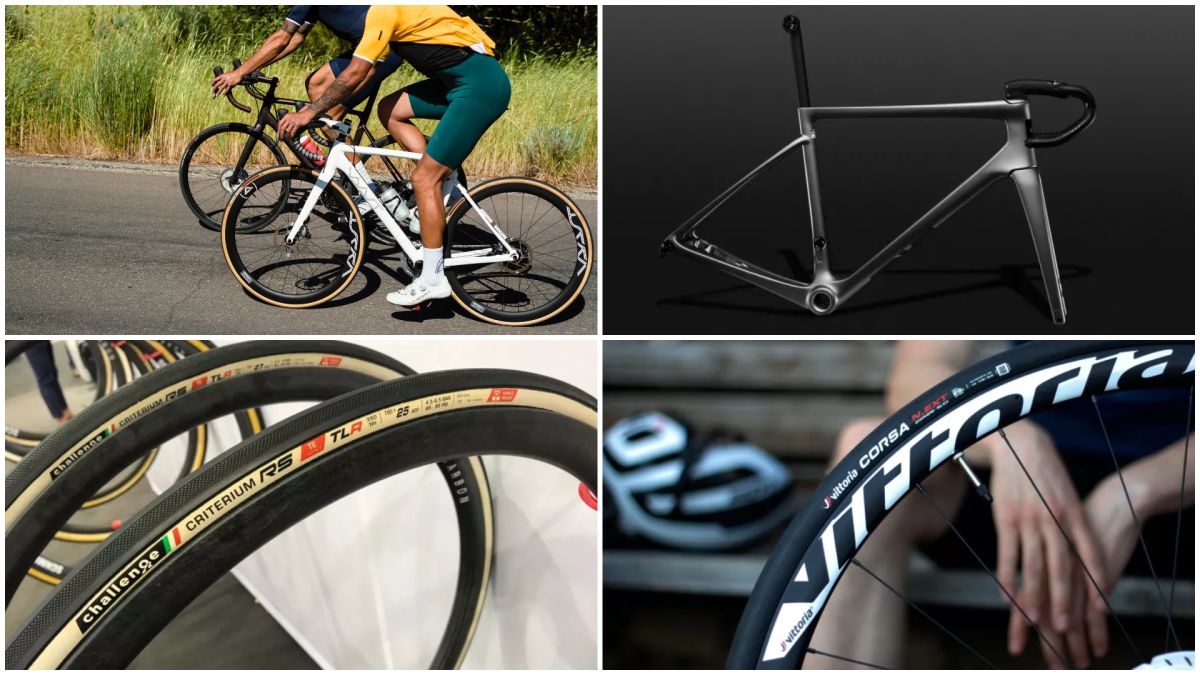
This month we take a dive into magnesium alloys in wheels, frames and pedals – looking back to some classic products as well as checking out those at the cutting edge from VAAST, DMR and the e-bike newcomer Honbike.
Alongside that, we take a look at the new crit-specific race tires from Challenge and Vittoria’s recently released Corsa N.EXT performance tires – designed to be a Continental GP5000 killer.
Finally, after attending the launch of Enve’s Melee road bike, we take a look at what exactly the frame has to offer.
Competition
But just before all of that, we just wanted to let you know that we’ve partnered with Garmin to give away a brand new set of Rally XC100 power meter pedals.
These are compatible with two-bolt Shimano SPD cleats, making them well suited to gravel and more adventurous road riding. As a ‘100’ series model, these only measure the power output of your left leg – but it is possible to upgrade the right pedal down the line, should you wish for more granular power data.
It’s also possible to swap out the pedal bodies and convert them to power pedals for Look or Shimano road cleats – there’s a lot of versatility packed into Garmin’s new Rally platform.
To be in with a chance of winning, simply click this link or fill in the form below. We’ll get in touch with the lucky winner by the end of this month. If you don’t end up being the lucky one – don’t worry, we’ll be running it again next month.
VAAST R/1 magnesium road bike
(Image credit: VAAST)
VAAST has recently released its R/1 road bike which, as with all of VAAST’s bikes, is built with a magnesium alloy frame. It’s not a material you see so often these days, although there have been many notable products released through the years that do make use of the alloy.
The Kirk Precision is perhaps one of the most striking, but Pinarello also produced a Dogma in magnesium for a number of years. American Classic – now relaunched as a tire brand – produced a set of super light magnesium wheels, whilst magnesium flat pedals have pretty much a constant through the decades.
VAAST claims that the R/1 frame weighs just 1,250 grams – which is about 250g lighter than what would be considered very light for aluminium. VAAST believes that its frames can be made more feathery still, admitting that they are still near the start of their manufacturing experience with the material and that further refinements are yet to come.
Considering that aluminum bikes have had the best part of 40 years to hone their production, for VAAST to be dropping in at this level is pretty impressive. It’s also claimed that magnesium can offer a smoother ride feel, closer to that of titanium than aluminum – but with modern wide tires and low pressures, nuances such as this can be hard to detect.
Either way, we’ve got one in on test, so stay tuned for our review!
Challenge Criterium RS and Vittoria Corsa N.EXT tires
(Image credit: Future)
The Criterium RS from Challenge are quite a ‘traditional’ tire in a few respects. They utilize a 350 Thread Per Inch (TPI) cotton casing, which is a very high TPI count and should make the tires more supple and better able to cope with deflection. The tires are also offered in only 25 and 27mm widths – no larger ‘plus size’ options here.
But in other ways, the Criterium RS are quite up to date – they’re tubeless compatible and will work with hookless rims. It doesn’t come cheap though, with each tires setting you back €84.90 / $94.99.
On the other hand, we’ve got Vittoria’s new Corsa N.EXT tyres, which are designed as a cheaper and more accessible performance tyre. Rather than the cotton casing that the flagship Cora Speed and Corsa Control tires use, there a nylon casing is employed – similar to that of Continental and Schwalbe.
This allows Vittoria to reduce the price, selling them at £54.99/$74.99, which undercuts both Continental’s GP5000 S TR and Schwalbe’s Pro One TLE. We’ll publish a full review once we’ve spent more time on them, but so far they do feel like a strong competitor.
send melee
(Image credit: Send)
Enve had already dipped its toes in the frame-making game with the ‘Custom Road’ last year. That was a high-end, bespoke carbon bike, made to measure in the USA and with an understandably high price to match: $7,000 for the frameset only.
Now, Enve has launched the Melee, a lower priced model ($5,500/£5,300) that comes in stock sizes, is made “overseas”. It’s still a very expensive frame, comparable to the Specialized Aethos and Colnago C68, but while those models come from brands with a proven heritage, the this is a bit more of an unknown.
Still, Enve certainly has plenty of experience in manufacturing carbon, with high-end wheels, handlebars, forks and seatposts all in its portfolio. If it can mass produce a frame to the same standards, that’s certainly something to look out for.
We’ve got one on order and will bring you our first impressions as soon as we’ve put some thousands into it.
Well, it looks like Micron has officially commenced the mass production of its next-gen GDDR6X memory chips offering speeds of up to 24 Gbps.
Micron’s 24 Gbps GDDR6X Memory Enter Mass Production, Coming To NVIDIA’s Next-Gen GPUs Later This Year
Micron announced earlier this year that they were readying their brand new 24 Gbps GDDR6X memory modules for future graphics cards. The announcement came at a time when NVIDIA’s GeForce RTX 3090 Ti had just entered the market for which Micron had produced 16 Gb DRAM modules rated at up to 21 Gbps speeds.
Now, Micron is going to offer even faster pin speeds of 24 Gbps in a 16 Gb density which means that once again, we will be looking at 2 GB VRAM capacities and up to 24 GB capacities across a 384-bit bus interface. Just like the GeForce RTX 3090 Ti which featured all of its memory modules on the front of the PCB, the next-gen GeForce RTX 4090 would feature its 12 GDDR6X modules on the front, allowing for more cooling compared to solutions that feature memory modules on the back of the PCB such as the RTX 3090 (Non-Ti).
Although the full 24 Gbps speeds aren’t expected to be utilized by the NVIDIA GeForce RTX 4090 (rumored to offer up to 21 Gbps die speeds), the 24 Gbps GDDR6X memory modules can offer up to 1,152 TB/s of bandwidth which is an increase of 14% versus the 1,008 TB/s offered on current 21 Gbps GDDR6 memory modules.
Micron has commenced mass production of its 24 Gbps GDDR6X memory modules for NVIDIA Next-Gen GPUs. (Image Credit: Harukaze5719)
Following are the bandwidth numbers you can expect with a 24 Gbps DRAM solution:
512-bit solution – 1.5TB/s
384-bit solution – 1.1TB/s
320-bit solutions – 960GB/s
256-bit solution – 768GB/s
192-bit solution – 576GB/s
128-bit solutions – 384GB/s
92-bit solutions – 276GB/s
64-bit solutions – 192GB/s
The NVIDIA GeForce RTX 4090 is going to be amongst the first next-gen graphics card to utilize the latest GDDR6X memory modules when it launches later this year. Given that these chips are likely going to be downclocked to hit the power targets, there will be a huge overclocking potential for enthusiasts to take advantage of.
AMD on the other hand is likely to depend on its partner, Samsung, for its next-gen RDNA 3 lineup. Samsung is also working on a 24 Gbps GDDR6 memory module which is expected to hit mass production soon.
Two Fridays ago, just before I left for a week-long vacation to Florida, I went through my pretrip digital routine. I set my Slack status to “Vacationing” with a palm tree emoji and paused notifications until further notice. I turned on Gmail’s auto-responder. I deleted a bunch of apps from my phone that would only serve to distract me from poolside bliss.
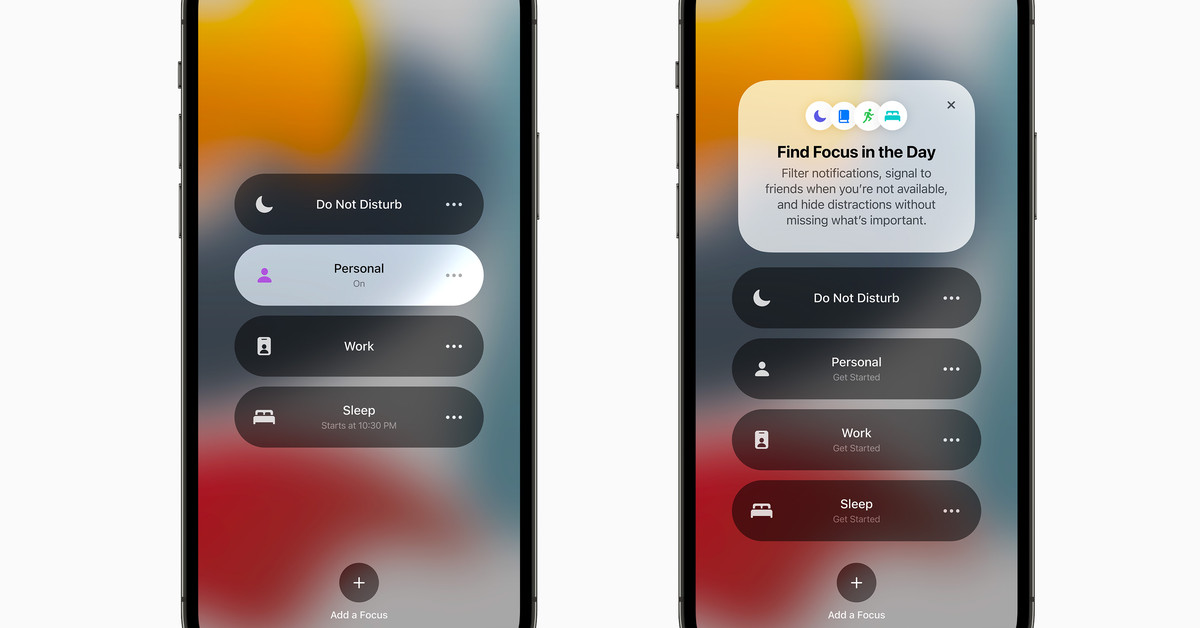
The last thing I did was pick up my iPhone and create a new Focus mode. Focus, in case you didn’t know, is a new-ish iOS feature designed to let you quickly switch your phone from one context to another. You can set it to shut up your work apps on the weekends, turn off notifications while you’re reading or sleeping, or only alert you to new emails from 9AM to 5PM and not a moment after. It’s really just an extension of Do Not Disturb, but it gives you more specific control and lets you have different setups for different situations.
My new Focus mode was called “Vacation Mode.” The goal was simple: I wanted to make sure people who needed me could reach me and that I’d be alerted if someone stole my credit card or my house burned down. Short of that, I wanted my phone to shut up and leave me alone. And, ideally, I also wanted it to actively prevent me from using it whenever possible.
Unfortunately, the reality of Focus falls well short of this idea. The only thing it really controls is your notifications: you can choose specific people whose calls and messages get through and the specific apps that are allowed to light up your phone. This is a good idea; it’s just too much work. You have to manually scroll through all of your contacts and then all of your apps, in alphabetical order, to pick which ones to exclude from the Focus blockade. (The app does offer some AI-powered suggestions in the app picker, but I found them basically useless. No, phone, Vacation Mode does not require calendar notifications.)
Here’s where I eventually landed: I allowed phone calls from “All Contacts” and added Messages, Reminders, WhatsApp, Home, and my banking apps to the list of allowed apps. I also turned off the toggle for “Time Sensitive” notifications because, at least in my experience, there’s nothing remotely time-sensitive about the “Time Sensitive” notifications I get. I turned off all notification badges, too. It wasn’t a perfect setup, but it meant I’d get all my texts and calls from people I know and be alerted to crucial stuff.
Turning on Vacation Mode drastically reduced my phone’s buzzing and lighting up over the course of a week. It was wonderful, and I didn’t miss anything I actually cared about. But all those notifications Focus mode blocks? They weren’t gone. They were just grouped on my lock screen, one tiny swipe away. And so, every time I picked up my phone, I found myself bombarded by them anyway. When I picked up my phone to check the weather, it was like being transported back to the office, with all the news alerts and Slack updates and unimportant email alerts reappearing — and then, oh fine, I’ll just look at TikTok for a second.
There’s this underlying tension that makes Focus hard to get right. Apple surely knows that showing you a bunch of stuff you don’t want is less of a problem than failing to show you the one truly important thing you needed to see. As a result, the feature is permanently stuck in a place of careful caution. But if Apple really wants to help users take back control of their phones, it needs to make Focus much more aggressive. Most of the tools to do so even already exist! Focus should integrate with Screen Time so that I could say “while I’m in Vacation Mode, only let me use Twitter five minutes a day” instead of having to change that setting separately. Rather than just hiding notifications, Focus should stop them entirely, as if I’d gone into the Notifications settings page and toggled them off. Focus mode currently lets you hide entire pages of your homescreen, but it should let you hide specific apps or widgets or even just rearrange things as soon as you turn on Focus. I don’t just want distractions slightly hidden on my phone while I’m on vacation — I want them gone. All these things should be part of a whole, not partitioned off from each other. And they shouldn’t feel like the Rube Goldberg machine they currently are.
In iOS 16, Focus mode gets some big improvements, including within apps.Image: Apple
The good news is that it looks like this is where Apple is headed. In iOS 16, for instance, you’ll be able to set up different lock screens for different Focus modes, and it’s working on improving both the setup process and the recommendations you get along the way. The new software also allows you to opt out of things rather than opting in, so instead of saying “only these six apps can reach me,” you can say “everything but these six apps can reach me.” That’ll make getting started with Focus modes a lot easier.
The real key to the future of Focus, though, is the new Focus filter API, which gives developers the ability to change their apps in response to settings you’ve enabled or tweaked in Focus modes. Apple’s own apps are a good guide for what that might look like: in iOS 16, I’ll be able to tweak Vacation Mode to hide my work events in the Calendar app or silence my work email in Mail but still get stuff sent to my personal account. Apple has suggested to developers that they might want to use Focus filters to let people hide specific accounts, turn off their in-app alerts, or even completely change the layout of the app depending on what a person is doing. (You can imagine, for instance, a navigation or music app that might want to look different as soon as you turn on the “Driving” Focus mode.) “Fundamentally, if your app can surface different content based on context,” Apple’s Teja Kondapalli told developers during a WWDC session in June, “you may be able to employ Focus filters to enhance user experience.”
Sounds great, right? Maybe in a year, I’ll be able to turn on Vacation Mode and have my Slack status automatically change, my auto-responder automatically engage, and all my notifications go away except the ones that really matter. There are two problems with this strategy, though. One, it assumes developers will willingly build less engaging versions of their app with fewer notifications and badges and incitements to pick up your phone. That’s not going to happen. And two, it still puts all the work in users’ hands: you’ll have to configure the Focus filters for each app individually.
Ultimately, though, I do recommend doing the work to set up a few Focus modes. I have a couple of them now, including one that automatically turns on whenever I open the Kindle app so I don’t get distracted by notifications when I’m reading. The feature is both not powerful enough and too complicated to use, but it’s a step in the right direction toward giving me actual control over my phone. I’m back at work, but I’m still in Vacation Mode, and my phone is still mostly quiet. And I might keep it that way.
The National Health and Medical Research Council (NHMRC) funds most of the health and medical research conducted in Australia – and hence pays the salaries of most of our health and medical researchers.
Recently, a decline in the level of NHMRC funding has meant that fewer grant applications are being funded and this, along with an assessment system which allows bias and chance to influence the outcomes of applications, is leading to a de-moralized and depleted medical research workforce, according to Professor Tony Blakely, from the Melbourne School of Population and Global Health at the University of Melbourne.
In the article below, originally published in The Conversation, Blakely discusses how the NHMRC could improve the way in which it awards grants in order to support our health and medical research workforce improve the value that their work delivers to the Australian community.
Tony Blakely writes:
Most health research in Australia is funded by the National Health and Medical Research Council (NHMRC), which distributes around $800 million each year through competitive grant schemes. An additional $650 million a year is funded via the Medical Research Future Fund, but this focuses more on big-picture “missions” than researcher-initiated projects.
Ten years ago, around 20% of applications for NHMRC funding were successful. Now, only about 10–15% are approved.
Over the same ten-year period, NHMRC funding has stayed flat while prices and population have increased. In inflation-adjusted and per capita terms, the NHMRC funding available has failed by 30%.
As growing numbers of researchers compete for dwindling real NHMRC funding, research risks becoming “a high-status gig economy”. To fix it, we need to spend more on research – and we need to spend it smarter.
Increased funding needed
To keep pace with other countries, and to keep health research a viable career, Australia first of all needs to increase the total amount of research funding.
Between 2008 and 2010, Australia matched the average among OECD countries of investing 2.2% of GDP in research and development. More recently, Australia’s spending has fallen to 1.8%, while the OECD average has risen to 2.7%.
When as few as one in ten applications is funded, there is a big element of chance in who succeeds.
Think of it like this: applications are ranked in order from best to worst, and then funded in order from the top down. If a successful application’s ranking is within say five percentage points of the funding cut-off, it might well have missed out if the assessment process were run again – because the process is always somewhat subjective and will never produce exactly the same results twice.
So 5% of the applications are “lucky” to get funding. When only 10% of applications get funding, that means half of the successful ones were lucky. But if there is more money to go around and 20% of applicants are funded, the lucky 5% are only a quarter of the successful applicants.
This is a simplistic explanation, but you can see that the lower the percentage of grants funded, the more of a lottery it becomes.
This increasing element of “luck” is demoralizing for the research workforce of Australia, leading to depletion of academics and brain drain.
The ‘application-centric’ model
As well as increasing total funding, we need to look at how the NHMRC allocates these precious funds.
In the past five years, the NHMRC has moved to a system called “application-centric” funding. Five (or so) reviewers are selected for each grant and asked to independently score applications.
There are usually no panels for discussion and scoring of applications – which is what used to happen.
The advantages of application-centric assessment include (hopefully) getting the best experts on a particular grant to assess it, and a less logistically challenging task for the NHMRC (convening panels is hard work and time-consuming).
Disadvantages of application-centric assessment
However, application-centric assessment has disadvantages.
First, assessor reviews are not subject to any scrutiny. In a panel system, differences of opinion and errors can be managed through discussion.
Second, many assessors will be working in a “grey zone”. If you are an expert in the area of a proposal, and not already working with the applicants, you are likely to be competing with them for funding. This may result in unconscious bias or even deliberate manipulation of scores.
And third, there is simple “noise”. Imagine each score an assessor gives is made up of two components: the “true score” an application would receive on some unobservable gold standard assessment, plus or minus some “noise” or random error. That noise is probably half or more of the current variation between assessor scores.
So how do we reduce the influence of both assessor bias and simple “noise”?
First, assessor scores need to be “standardized” or “normalized”. This means rescaling all assessors’ scores to have the same mean (standardisation) or same mean and standard deviation (normalisation).
This is a no-brainer. You can use a pretty simple Excel model (I have done it) to show this would substantially reduce the noise.
Second, the NHMRC could use other statistical tools to reduce both bias and noise.
One method would be to take the average ranking of applications across five methods:
with the raw scores (ie as done now)
with standardized scores
with normalized scores
dropping the lowest score for each application
dropping the highest score for each application.
The last two “drop one score” methods aim to remove the influence of potentially biased assessors.
The applications that make the cutoff rank on all the methods are funded. Those that are always beneath the threshold are not funded.
Applications that make the cut on some tests but fail on others could be sent out for further scrutiny – or the NHMRC could judge them by their average rank across the five methods.
This proposal won’t fix the problem with the total amount of funding available, but it would make the system fairer and less open to game-playing.
A fairer system
Researchers know any funding system contains an element of chance. One study of Australian researchers found they would be happy with a funding system that, if run twice in parallel, would see at least 75% of the funded grants funded in both runs.
I strongly suspect (and have modeled) that the current NHMRC system is achieving well below this 75% repeatability target.
Further improvements to the NHMRC system are possible and needed. Assessors could provide comments, as well as scores, to applicants. Better training for assessors would also help. And the biggest interdisciplinary grants should really be assessed by panels.
No funding system will be perfect. And when funding rates are low, those imperfections stand out more. But, at the moment, we are neither making the system as robust as we can nor sufficiently guarding against wayward scoring that goes under the radar.
See here for Croakey’s archive of stories on medical research
Today Square Enix released a series of animated “starter guide” videos dedicated to its super-popular MMORPG Final Fantasy XIV.
Published on Giuseppe Nelva
Home ” Uncategorized » Final Fantasy XIV Gets New “Starter Guide” Animated Video Series Teaching You the Ropes
Today Square Enix released a series of animated “starter guide” videos dedicated to its super-popular MMORPG Final Fantasy XIV.
The videos focus on a new player named Kaz as he’s guided through his first steps in Eorzea by the scholar Mayra.
The series includes seven videos and it’s available in English, German, and French. Interestingly, Japan has its own completely different series released a few days ago.
You can watch it all below and learn the ropes of Final Fantasy XIV.
If you’re interested, below you can read a full description for each episode directly from the press release.
Series Introduction – Join veteran adventurer Mayra as she guides new player Kaz to the world of FINAL FANTASY XIV.
Episode 1: The Adventure Begins – Kaz creates his character and takes his first steps in Eorzea. Mayra introduces Kaz to the map and different quest types so he can enjoy the main story without getting lost.
Episode 2: Meet Your FATE – Mayra introduces Kaz to class quests and how he can unlock different classes starting at level 10. Kaz encounters his first FATE, an open world encounter where everyone nearby can take part.
Episode 3: Hall of the Novice – Kaz learns how to organize his cluttered inventory and discovers the Recommended Gear feature. Mayra takes Kaz to the Hall of the Novice where he gets a crash course on party combat and a new set of gear.
Episode 4: Do Your Duty – Putting his newly acquired skills to the test, Kaz teams up with Mayra to form a light party with the Duty Finder to tackle his first dungeon. Kaz learns how dungeon rewards are distributed via Need, Greed, and Pass.
Episode 5: Trial by Fire – Kaz forms his own party and takes on his first trial: an epic boss battle. As his renown from him grows, Kaz is recruited by one of three Grand Companies of Eorzea, and unlocks his very own chocobo mount at level 20.
Episode 6:The End of the Beginning- Mayra regales Kaz with all he has learned so far and all he still has to look forward to in the Free Trial… and beyond!
Final Fantasy XIV is currently available for PlayStation 4, PS5, and PC. The Endwalker expansion has been released a few months ago and you can read our recent review.
You can also read more about the changes planned for the longer term, including a refresh of the graphics, and about the upcoming update 6.2 “Buried Memory,” which will introduce the “Island Sanctuary” feature and more.
Incidentally, the traditional seasonal event Moonfire Faire is about to begin in the next few days.
Scientists have created a transparent protective coating material that can self-heal in 30 minutes when exposed to sunlight.
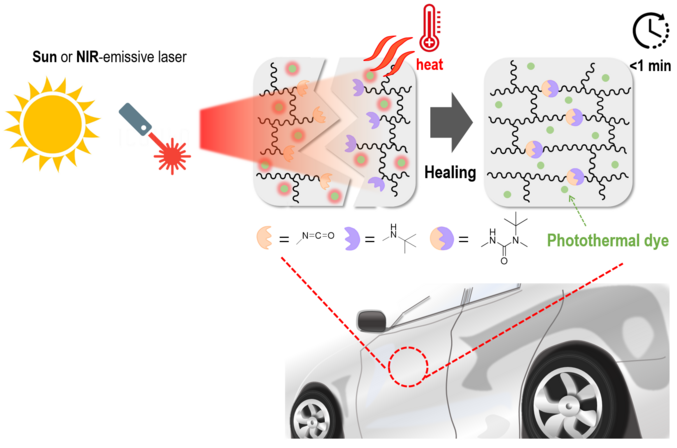
Self-healing mechanism of eco-friendly protective coating material for vehicles, including dynamic polymer network and photothermal dye. Image Credit: Korea Research Institute of Chemical Technology (KRICT)
The excellent durability of automotive coatings is the most important factor when it comes to protecting the surface of a vehicle. In addition, protective coating materials should be transparent and colorless so that the original color of the product can be seen. Yet, it is hard to ensure a self-healing function while satisfying all of these conditions.
High hardness and exceptional durability are accompanied by very poor self-healing performance in materials with free molecular movement, while the reverse is true for materials with high self-healing capacity but low durability.
Researchers from the Korea Research Institute of Chemical Technology (KRICT), led by Drs. Jin Chul Kim, Young Il Park, and Ji-Eun Jeong have created a transparent coating material that meets all of the aforementioned requirements, performs similarly to commercial protective coating materials, and can self-heal using only sunlight (Particularly near-infrared light in sunlight, in the wavelength range of 1,000 to 1,100 nm).
Surface scratches can be repaired using the self-healing protective substance in 30 minutes when exposed to sunlight. The study team used a spray-coating machine to coat a laboratory-scale model car to demonstrate the self-healing capabilities of the created coating material. The blemish vanished, and the surface of the coating material was restored after the model automobile spent around 30 minutes in midday sunlight.
The self-healing phenomenon’s guiding principle is that the surface temperature of the created material increases as sunlight is absorbed because light energy is transformed into thermal energy. The repeated dissociation and recombination of chemical bonds in the polymer structure is then enabled by the elevated surface temperature to self-heal a surface scratch.
The research team combined an already-existing commercial coating resin with a transparent photothermal dye and a dynamic chemical bond (Hindered urea structure) that can repeat the decomposition and recombination of the polymer structure so that dynamic chemical interaction can happen actively when exposed to sunlight.
Even though photothermal dyes have been used to study self-healing properties, most previous research has focused on inorganic compounds, which are challenging to use in industrial settings because coating materials need to be transparent. Additionally, the production of a photothermal effect in inorganic materials requires a significant quantity of light energy.
The research team used near-infrared light-absorbing transparent organic photothermal dyes. Near-infrared light can prevent large increases in the vehicle surface temperature because it is a long-wavelength energy source that makes up less than 10% of noon sunlight.
Additionally, organic photothermal dyes have several benefits for commercialization, including affordability, ease of paint blending, and the fact that their colorless inherent hue does not alter the product’s color.
Future applications for the self-healing material include coatings for construction materials, electrical equipment like computers and cellphones, and transportation applications. Additionally, it is anticipated that lowering the usage of dangerous organic solvents produced in huge quantities when repainting vehicles will help the world achieve carbon neutrality.
This research was published as an additional cover of the May 2022 issue of ACS Applied Polymer Materialsan international scientific and technological journal.
The developed technology is a platform technology that synthesizes self-healing coating materials using both inexpensive commercial polymer materials and photothermal dyes. It is expected to be widely used not only in automotive clearcoats but also in various applications.
Dr. Jin Chul Kim, Research Director, Korea Research Institute of Chemical Technology
Journal Reference:
Son, DH, et al. (2022) Fast, Localized, and Low-Energy Consumption Self-Healing of Automotive Clearcoats Using a Photothermal Effect Triggered by NIR Radiation. ACS Applied Polymer Materials. doi.org/10.1021/acsapm.1c01768.







:format(webp):no_upscale()/cdn.vox-cdn.com/uploads/chorus_asset/file/23930134/FocusMode_ios16.jpg)