Originally scheduled for the end of July 2022, both the Racin’ USA Pt3 DLC and the V1.4 update have been pushed back due to some issues that cropped up in development.
This newest and final DLC pack for the Racin’ USA bundle will officially include oval racing to the sim with the addition of two new tracks – Auto Club Speedway and World Wide Technology Raceway at Gateway. Also, the Formula USA 2022 is Reiza’s unofficial representation of the NTT IndyCar, and that will also drop in the DLC.
The new Formula USA 2022 that will release in Racin’ USA Part 3 DLC.
With the addition of oval racing, the Racin’ USA Part 1 DLC will now also have the oval configuration for Daytona International Speedway included. Furthermore, all of the open-wheel cars from all of the Racin’ USA DLC packs will have short oval and speedway configurations added alongside the road racing form.
If you remember back more than a year ago, in June 2021 to when the first part of the Racin’ USA DLC dropped, all three of the Racin’ USA DLCs were announced and were available to purchase as an Expansion Pack bundle. Part 2, remember, dropped back in February. Although it will just be a little while longer, AMS2 players who made that purchase will finally get what they paid for when it comes out.
In fact, anyone who has purchased either the 2020-2022 Season Pass, the Premium Expansion Packs or Racin´ USA Expansion Pack bundle, you’ll finally be getting your hands on the awaited product. Anyone who is looking to buy the separate pack, the price point is still up in the air. Parts 1 and 2 are $14.99 each.
Auto Club Speedway (pictured) and WWT Raceway at Gateway will drop in Racin’ USA Part 3 DLC.
In the Steam posting about the DLC and update, it’s also unveiled that full course yellow support is being added to compliment the oval racing being added, along with a visible pace car, marshals that can wave flags, caution lights and even virtual safety cars for road racing. However, the delay for the entirety seems to be because of issues that cropped up in testing.
“The system was still proving somewhat glitchy in Multiplayer during our tests late last month, which ended up being the leading factor in the decision to postpone v1.4 as naturally you can’t successfully bring oval racing to the game without proper full course yellow support,” the post reads. “Luckily, good progress has already been made since, with our more recent tests already going quite smoothly.”
While the delay is unfortunate, the added content will hopefully be worth the wait. Especially the oval racing side, I’m going to have to talk to the community managers about possibly setting up a community event with the new content. Not many sims have proper oval racing besides iRacing, so fingers crossed for a good time when the DLC finally drops later this month.
Images and information found via the AMS2 Steam page
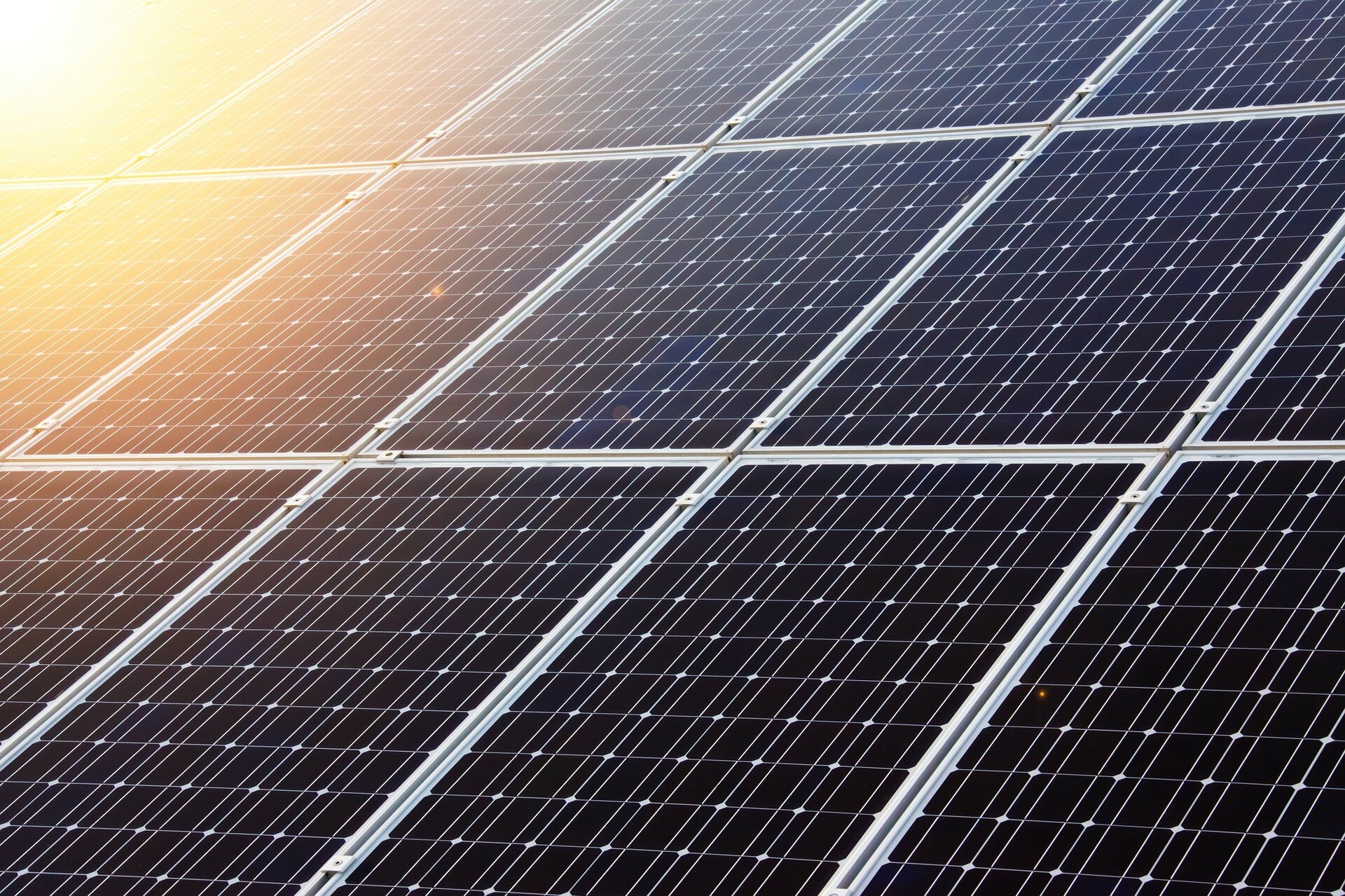
A perovskite solar cell developed by engineers at the University of California San Diego brings researchers closer to breaking the ceiling on solar cell efficiency, suggests a study published Aug. 10 in Nature.
The new solar cell is a lead-free low-dimensional perovskite material with a superlattice crystal structure—a first in the field. What’s special about this material is that it exhibits efficient carrier dynamics in three dimensions, and its device orientation can be perpendicular to the electrodes. Materials in this particular class of perovskites have so far only exhibited such dynamics in two dimensions—a perpendicularly oriented solar cell has never been reported.
Thanks to its specific structure, this new type of superlattice solar cell reaches an efficiency of 12.36%, which is the highest reported for lead-free low-dimensional perovskite solar cells (the previous record holder’s efficiency is 8.82%). The new solar cell also has an unusual open-circuit voltage of 0.967 V, which is higher than the theoretical limit of 0.802 V. Both results have been independently certified.
The open-circuit voltage is a solar cell property that contributes to its efficiency, so this new solar cell “may have the potential to break the theoretical efficiency limit of current solar cells,” said study senior author Sheng Xu, a professor of nanoengineering at the UC San Diego. “This might one day allow us to achieve higher efficiency with more electricity from existing solar panels, or generate the same amount of electricity from smaller solar panels at lower costs.”
The researchers hypothesize that the material’s improved open-circuit voltage might be attributed to a new physical mechanism that they call intraband carrier relaxation. The material’s unique superlattice structure allows different components of the solar cell to integrate in the vertical direction, which creates an atomic-scale double band structure. Under light, the excited electrons could relax from one component (smaller bandgap region) to another component (larger bandgap region) before equilibrating to alter the fermi levels in the superlattice solar cell. This contributes to a higher open-circuit voltage. This process is verified to be related to the built-in potential in the superlattice solar cell. The researchers also acknowledge that there are other possible mechanisms occurring in the unique superlattice structure that might be contributing to its unusually high open-circuit voltage.
To create the new lead-free low-dimensional perovskite solar cell, the researchers used chemical epitaxy techniques to fabricate a superlattice crystal network. The network’s structure is unique in that it consists of perovskite quantum wells that are vertically aligned and crisscrossed. This crisscrossed structure makes the material’s carrier dynamics—which include electron mobility, lifetime and conduction paths in all three dimensions—more efficient than just having multiple quantum wells. These techniques can potentially be used to create perovskite superlattices of different compositions.
“This perovskite superlattice demonstrates an unprecedented carrier transport performance that many researchers in the field have dreamed about,” said Yusheng Lei, the lead author of this paper, who was a Ph.D. student in Xu’s lab at UC San Diego and is now a postdoctoral researcher at Stanford University.
The superlattice consists of a nanoengineered phase separation between Bi3+ alloyed and intact Sn-I regions in vertically aligned multiple-quantum-wells. This composition creates component variations in the atomic scale, which in turn enables hot carriers to quickly cross the multiple-quantum-wells heterostructural interface before they relax–a feat that is usually impossible to achieve, the researchers explained. Here, it is possible because of the short diffusion length required to cross the heterostructural interface.
“This work opens up a lot of new exciting potential for the class of lead-free low-dimensional perovskite materials,” said Xu. Moving forward, the team will work on optimizing and scaling up the fabrication process to make the superlattice crystals, which is currently still laborious and challenging. Xu hopes to engage partners in the solar cell industry to standardize the process.
New record for solar cell efficiency signals bright future for solar tech
More information:
Yusheng Lei et al, Perovskite superlattices with efficient carrier dynamics, Nature (2022). DOI: 10.1038/s41586-022-04961-1
Provided by University of California-San Diego
citation: Perovskite material with superlattice structure might surpass efficiency of a ‘perfect’ solar cell (2022, August 11) retrieved 12 August 2022 from https://techxplore.com/news/2022-08-perovskite-material-superlattice-surpass-efficiency .html
This document is subject to copyright. Apart from any fair dealing for the purpose of private study or research, no part may be reproduced without the written permission. The content is provided for information purposes only.
In a nutshell: Meta’s Portal displays weren’t successful as standalone video calling devices, but the company isn’t wholly killing them off. Some models can now work as secondary screens for PCs. Their future may depend on their advantages over tablets and traditional PC monitors.
On Wednesday, Meta announced that two of its Portal video calling devices now support an app that can wirelessly connect them to PCs. The new feature may save them from total cancellation as the company attempts to pivot the products from consumers to workplaces.
The ultraportable Portal Go and the premium Portal Plus now support Duet Display, an app for wirelessly connecting tablets to PCs as additional displays. Users can drag windows back and forth between a computer screen and the Portal after downloading the Duet app on both devices. However, the function requires a one-time $15 purchase, a premium monthly $2 subscription, or an enterprise subscription.
Though not particularly cheap compared to a decent PC monitor, a Portal might be more convenient in certain situations. Both models are relatively small, and the Duet connection is wireless, which might make for an easy dual-screen setup on a table or countertop.
However, prospective customers should consider the pros and cons of using a Portal for this functionality versus a standard tablet, as Duet Display already works on other similar devices. Furthermore, those with an iPad and a Mac can use Apple’s Sidecar, which offers similar functionality for free.
Furthermore, at $350, the Portal Pro costs about the same as a standard 9th generation iPad. Both devices feature a 12MP front-facing camera and similar screen resolutions, although the Portal Pro’s screen is 14 inches to the iPad’s 10.2 inches. Meta’s device comes with a robust speaker setup but only a handful of apps versus Apple’s iPadOS. The comparison highlights one of the reasons for the Portal’s initial failure as a video-calling assistant — they seem unnecessary in homes already full of tablets.
In June, reports indicated that Meta planned to stop selling Portals after mediocre sales and reviews while maintaining support for existing users. However, the devices saw an uptick in use during the pandemic, as their functionality provided a good fit for remote work.
Meta’s announcement also mentioned a Mac companion app for all touchscreen Portal models. It lets users control video calls on a Portal with a Mac, share screens between the two devices, and send links between them.
Note: This is a guest post written by Jeeva Shanmugam
Samsung’s unpacked event is the most well-known occasion by Samsung, usually, the Galaxy Fold, Watch, and Flip line-ups get addressed on that occasion. On the tenth of August of this year, Samsung had its unpacked event.
Samsung Unpacked event 2022 you have brought a lot of new items into the overlay. Samsung has revealed the Galaxy Z Flip 4, Galaxy Z Fold 4, Galaxy Buds 2 Pro. and the new Galaxy Watch 5, Galaxy Watch 5 Pro. There’s a ton to process.
In this article, we will have a short glimpse of Samsung’s unpacked event in 2022. We will figure out all the hardware improvements that Samsung has brought to all its successors.
Without further delay, let’s dive into the article
One of my favorite phone lineups from Samsung, I think the Flip phone is more practical than the Fold at an affordable price, either way, as we all expected Samsung announced the Galaxy ZFlip 4 at the event.
Samsung is improving a lot with their Z Flip series. At the initial launch of the Flip 1, I didn’t like the smartphone much, but from their Galaxy Z Flip 3, I have become a huge fan of Samsung’s Flip.
Straight of the rip, let’s move on to the basics specs of the phone, the phone has a Snapdragon 8+Gen 1 processor, with a 6.7″ FHD+ Dynamic AMOLED panel with HDR10+ certified Up to 120Hz refresh rate.
The phone comes with a dual camera setup with a 12MP main sensor, a 12MP Wide-angle Camera with the support of OIS, and a traditional 10MP selfie camera.
Users can shoot videos up to 4K UHD video recording at 30 and 60 fps, 1080p FHD video recording at 30 and 60 fps, and 720p HD video recording at 30 fps.
The phone comes with a 3700mAh battery, with the support of a 25W adapter which is sold separately. From 0% up to 50% charge in around 30 minutes with 25W Adapter or higher.
The phone comes in three variants with a base of 8GB of LPDDR 5 RAM
8GB RAM with 512GB internal storage (UFS 3.1)
8GB RAM with 256GB internal storage (UFS 3.1)
8GB RAM with 128GB internal storage (UFS 3.1)
The phone comes with Android 12 out of the box with One U1 4.1
These are just an outlook of the smartphone, I will discuss the Galaxy Z Flip 4 in the upcoming articles.
The phone comes in 4 basic colors: Bora Purple, Graphite, Pink Gold, and Blue
And the phone also get launched in a BeSpoke Edition with another 4 different colors:
Gold (Frame), Yellow (Front), White (Back)
Black (Frame), Khaki (Front), Khaki (Back)
Silver (Frame), White (Front), White (Back)
Silver (Frame), Navy (Front), Navy (Back)
Gold (Frame), Yellow (Front), Yellow (Back)
The Galaxy Z Flip 4 will start at A$1,499.
Samsung Galaxy Z Fold 4 comes with a Snapdragon 8+ Gen 1 processor, with a foldable Dynamic AMOLED 2X, 120Hz, HDR10+, and 1200 nits of peak brightness.
The phone comes with a Size of 7.6 inches, (~90.9% screen-to-body ratio) with a resolution of 1812 x 2176 pixels. The phone also has Corning Gorilla Glass Victus+ support.
The phone also comes with a traditional S Pen Fold Edition, with Pressure levels of 4096.
The phone has a 12MP Ultra Wide Camera, 50MP Wide-angle Camera, 10MP Telephoto Camera, and a traditional 10MP selfie camera. But surprisingly the phone comes with a 4MP under-display camera. I don’t know about the usage of that 4MP camera, but we can consider this as a feature.
The phone supports 8K video recording at 24 fps, 4K UHD video recording at 30 and 60 fps, 1080p FHD video recording at 30 and 60 fps, and 720p HD video recording at 30 fps.
The Z Fold 4 comes with a 4400mAh battery with a 25W power adapter which is sold separately.
The phone comes in 3 variants with a base of 12GB LPDDR5 RAM
12GB RAM with 256GB internal storage (UFS 3.1)
12GB with 512GB internal storage (UFS 3.1)
12GB RAM with 1TB internal storage (UFS 3.1)
The phone comes with Android 12 out of the box with One U1 4.1. These are just an outlook of the smartphone. I will discuss the Galaxy Z Fold 4 in the upcoming articles.
The phone comes in 3 basic colors: Greygreen, Phantom Black, and Beige. There’s also Burgundy color which is a Samsung.com Exclusive.
The Galaxy Z Fold 4 is the most expensive, starting at A$2,499.
What do you think about the Galaxy Z Fold 4? kindly comment your thoughts in the
comment section.
Samsung is becoming more popular in the watch segment. I love Samsung watches. The display will be amazing. I haven’t used one for personal use but a few of my friends have got it so I have experienced the watch and it was amazing.
The Watch comes with a Titanium frame in a Circle shape design which weighs around 33.5?grams.
It has 1.4” 450×450 SuperAMOLED display for the 44mm and 1.2″ 396×396 SuperAMOLED display for the 42mm. The watch comes with 1.5?GB of RAM with 16GB of Inbuilt Memory.
The watch comes with 5.1 Bluetooth and also supports Calling and GPS. The watch is powered by a 410?mAh Battery, and according to Samsung, the battery lasts for 5 whole days.
The watch has IP68 Water Resistant Certificate so it is waterproof and dustproof it can survive a depth of 50?m.
The watch has all the necessary sensors like Pedometer, Heart Rate Monitor, SpO2 Monitor, Calorie Count, Step Count, Sleep Monitor, and Extra Features like an Alarm Clock, Stopwatch, Timer, and Reminder.
The Galaxy Watch 5 starts at A$499.
What do you think about the Galaxy Watch 5? kindly comment your thoughts in the
comment section.
Let’s start with the processor, the Galaxy Watch 5 Pro has an Exynos W920 with a 5 nm processor. The watch comes with a 1.4 inches Super AMOLED display with a Resolution of 450×450 pixels protected by Sapphire crystal and the watch has an Always-on display.
The Watch comes with an Android Wear OS 3.5, One UI Watch 4.5, the watch comes with a 16GB ROM with 1.5GB RAM.
It supports all the necessary features like Wi-Fi, Bluetooth 5.2, GPS support, and NFC.
The Galaxy Watch 5 Pro has been covered by all the necessary sensors like Accelerometer, gyro, heart rate, barometer, thermometer (body temperature) Natural language commands and dictation Samsung Pay.
The Watch is powered by a Li-Ion 590 mAh, non-removable battery with 10W Qi wireless charging technology.
The Galaxy Watch 5 Pro starts at A$799.
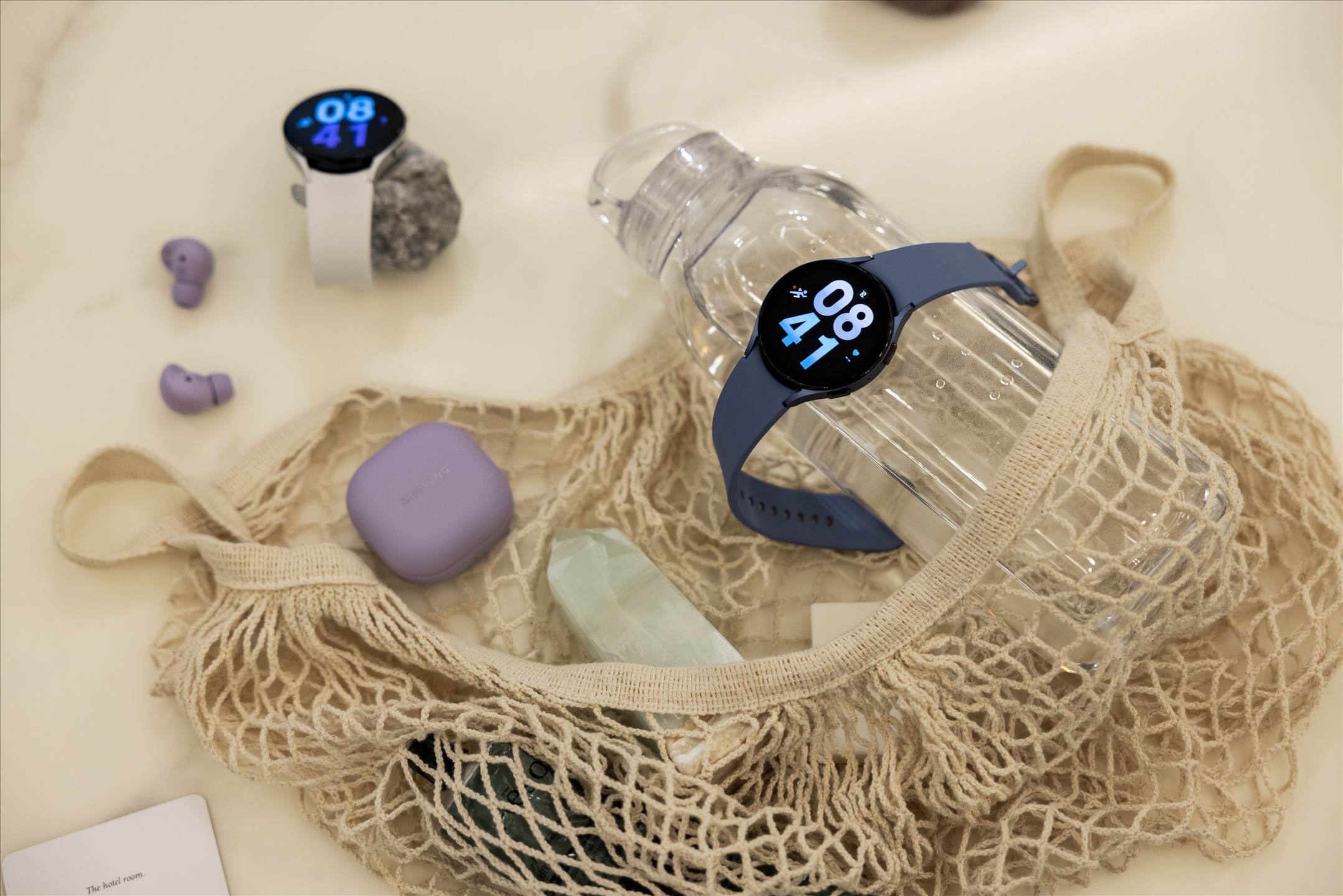
Samsung is doing an extraordinary job with their Galaxy Buds series, I loved the Buds1, of course, it has a few bugs but still, the sound quality is amazing for the price.
Let’s jump to the upgrade, the Buds2 Pro, is powered by 24-bit Hi-Fi audio, so the overall quality is enhanced. The ANC has improved this time, Active Noise Canceling comes with 3 high SNR (Signal-to-Noise Ratio) microphones, and the Galaxy Buds2 Pro tracks and eliminates more outside sound — even soft sounds like wind.
The Buds2 Pro supports 360 Audio ie: it comes with Direct Multi-channel (5.1ch / 7.1ch / Dolby Atmos®) and enhanced head tracking makes every movement stay in sync — creating an immersive experience.
360 Audio can even pinpoint the direction of the sound as you move your head, giving you the spatial experience.
An iPhone-exclusive feature is now available on Samsung too, the Galaxy Buds2 Pro will automatically pop up on your Samsung Galaxy devices and are ready to connect with a tap.
Auto Switch on Samsung Galaxy Buds2 Pro intelligently detects mobile activity and seamlessly shifts its connection to your Samsung Galaxy phone, tablet and watch.
I love this feature actually, switching to answer the phone makes Samsung so unique. I loved the optimization in Buds2 Pro. It works even when you’re connected to a Samsung TV.
Once the Galaxy Buds2 Pro is connected to the Samsung TV via Bluetooth, there is no need to take the earbuds out to answer the phone. Incoming calls can be answered simply by tapping the Galaxy Buds2 Pro twice.
Users can preorder the Galaxy Buds2 Pro now for A$349.
Atlus has revealed that Soul Hackers 2, the upcoming sequel to 1997’s Devil Summoner: Soul Hackers, is getting a slew of DLC that’ll be available from day one. The line-up of extra, paid content includes things like outfit packs, exclusive demons and a “booster item pack”.
Save humanity in style with the Soul Hackers 2 DLC!
? 6 Outfit Packs ? 8 Exclusive Demons ? DLC Story: The Lost Numbers ?? Booster Item Pack pic.twitter.com/djfq2uzTn8
Probably most interesting is that a full, new piece of DLC story content will be sold at launch. Titled The Lost Numbers which Atlus describes as follows:
“Centered around a new Devil Summoner, Nana, you’ll experience this side-story over the course of multiple requests (recommended levels ranging 19-99), which will appear gradually at Club Cretaceous as you progress through the main story.
Your progress in the main story will also unlock a new dungeon: Hachigaya Training Field. In its depths, you will find the most harrowing, punishing boss fight this game can throw at you. If you hunger for the thrill of battle, look no further.”
The Lost Numbers DLC story content comes in at approximately $15 AUD, or you’ll be able to grab the base game and every bit of DLC available for around $145 AUD.
Soul Hackers 2 is being released on August 26, 2022. The cheapest price is at Amazon for $79 with free shipping.
Watching cycling on television is an interesting spectacle in the UK, and maybe it’s similar elsewhere around the world.
During the Tour de France coverage on ITV, viewers are inundated with adverts pleading you to give money to sanctuaries housing very sad looking donkeys placed amongst commercials for various end-of-life products and services that remind you in a four-minute break for every 20km of racing that one day you too will slip off your deadly coil and not be able to watch the Tour de France anymore.
On Eurosport this season, we’ve been taken inside the lives of EF Education EasyPost’s riders as they promote Whoop’s wearable technology, the likes of Esteban Chaves, Hugh Carthy and Alex Howes telling us how it helps them recover from injury or balance pro life with having kids. Moreover, data on riders’ heart rates during the race have been broadcast on screen while the stages are ongoing. Newsflash – they’re often quite high.
While also measuring things such as the strain of physical exertion the riders go through in races, as well as calories burned, there is one aspect that is easiest for non-pro muggles to relate to WorldTour riders and that’s sleep.
Whoop informs you of the quality of your sleep, how much you need, and also tracking things like how many times you wake up per night, which will be more than you expect and also make you wonder if you have some sort of sleepwalking problem you don’t know about.
Try and think of something that would make it as hard as possible to get a good night’s sleep. Having a baby? Yep. Having two babies? Sure. What about racing the Tour de France?
You’re riding fast for 150km+ a day, having to travel in a big, slow bus between each day’s starts and finishes, staying in varying qualities of regional French hotel to rest your weary head and legs.
Finally, thanks to the EF Education EasyPost riders wearing Whoops during the Tour Hommes and Femmes, we can find out how they sleep – which after reading that sentence back makes this whole thing sound much creepier than it was ever intended to.
But first, before the sleep stats, let’s find out just what the riders were putting their bodies through when they were awake.
Overall strain is a measurement of your cardiovascular load and the time you spend in various heart rate zones and therefore tells you how hard your heart and body are working. The daily strain you place on your body, which is supposed to inform you when to push yourself and when to rest and to help avoid overtraining, is scored from 0 to 21.
Unsurprisingly, as the women tackled 1,029 kilometers in eight stages of racing with zero rest days, their average strain for the entire race was 20.4. Doesn’t get much harder than that.
Compare this to the men, who never raced more than six consecutive days. Take that middle section of six consecutive days in the second week from July 12-17 and their average strain score was 19.5 but add in the rest day on Monday July 18 in Carcassonne and that average comes down to 18.1.
Now, to the nap stats.
There are a few different measures here. Sleep performance is calculated by comparing how much sleep the rider got on a given night compared to how much sleep they needed.
Sleep need is calculated by the individual’s baseline sleep requirement while factoring in how strenuous their day was and if they have accumulated any sleep debt.
The team’s best Tour de France sleeper, which you will have undoubtedly guessed thanks to the headline above, was Rigoberto Urán who nailed an 86 per cent score, spending on average 8 hours and 44 minutes in bed every day and getting an average of 7 hours and 17 minutes of shut eye every night.
In the graphic below, you can see his sleep performance peak on and around rest days. The worst night of sleep Urán had been after his teammate Magnus Cort won stage 10, getting only 6 hours and 24 minutes. Let’s assume that it was because of the excitement and celebration surrounding the team winning a coveted stage of the Tour and not because he was rooming with the Dane.
While Urán was the best of the eight-man squad, the fact that he needed 9 hours and 5 minutes of sleep per night, on average, and only got 7 hours and 17 minutes goes to show not only the physical exertion the Colombian had to deal with, but accentuates the suffering of his teammates who got even less sleep than this.
The Tour de France Femmes followed the men’s race and the riders of EF Education-Tibco-SVB were much better at getting the required rest.
Magdeleine Vallieres was the team’s best sleeper, spending a whopping 9 hours and 58 minutes in bed on average (what a life), and on average the team got into bed and slept for longer than the men’s squad did.
Vallieres managed a 96 per cent average sleep performance, on three days getting exactly the amount of sleep she needed and only missing out on 16 minutes of shut eye a night.
Insights like this from inside the peloton are rare, and the data helps us all realize what these riders put themselves through when riding the biggest bike races on the planet.
Even before EF Education-EasyPost and Whoop collected all of the data, they must have known Urán was one of the team’s best at being in bed, judging by the photoshoot the team had during the three weeks in France.
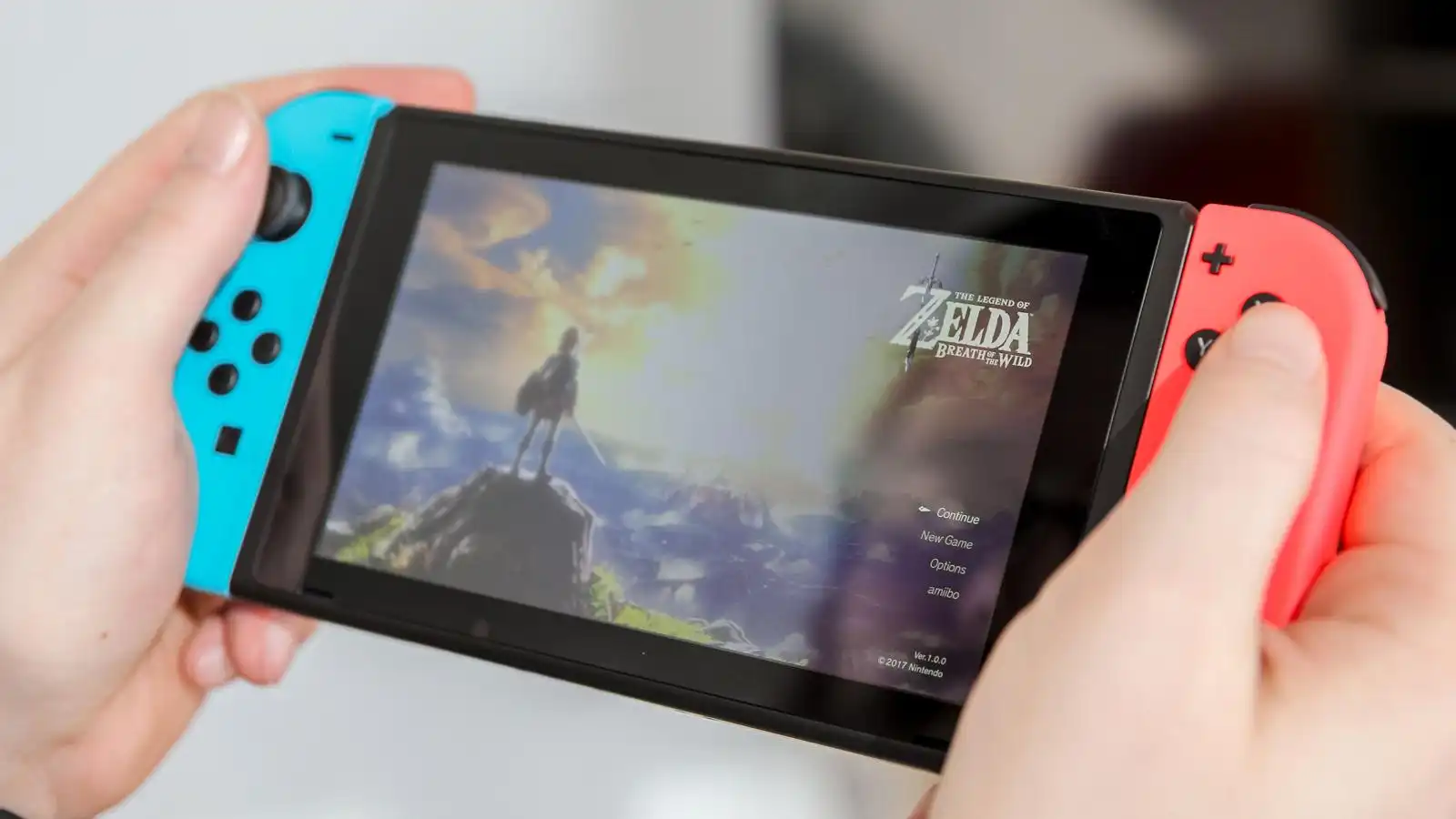
Despite a rise in shipping and manufacturing expenses, Nintendo is standing firm on the price of their Switch console, with plans not to raise it to avoid scaring off new customers.
In an interview with NikkeiAsia, Nintendo president Shuntaro Furukawa said that the company wants to “avoid pricing people out” and that it thinks “about pricing in terms of the value of the fun we offer.”
Like many tech companies, Nintendo has been hit hard by the global semiconductor shortage and supply chain crisis. The console, which is now 5 years old, saw a 23 percent decline in sales during the April to June quarter.
The 2017 launch of the console tripled the company’s profits, however Nintendo’s annual net profit is expected to follow the same decline as the console, as the company forecast a 29 percent decline for the fiscal year ending March 2023.
Nintendo has sold over 100 million units of its Switch console range to date, and Furukawa says that its important that the company continue to push their software products to maintain business momentum and demand for the console.
“Our products also include software. Nintendo has sold more than 100 million Switch units so far, and it’s important to maintain the momentum of our overall business.”
Despite the stock shortages and sales decline, Nintendo aims to reach its target of 21 million units sold for the year. While consoles generally slow down around the 5 to 6 year period, Furkawa says that upcoming titles are set to provide a boost in sales.
“Having hit software also gives a boost to hardware. We have a lineup of new games that will allow us to take a crack at meeting our sales forecast, including Splatoon [3] coming out in September and Pokemon [Scarlet and Violet] in November.”
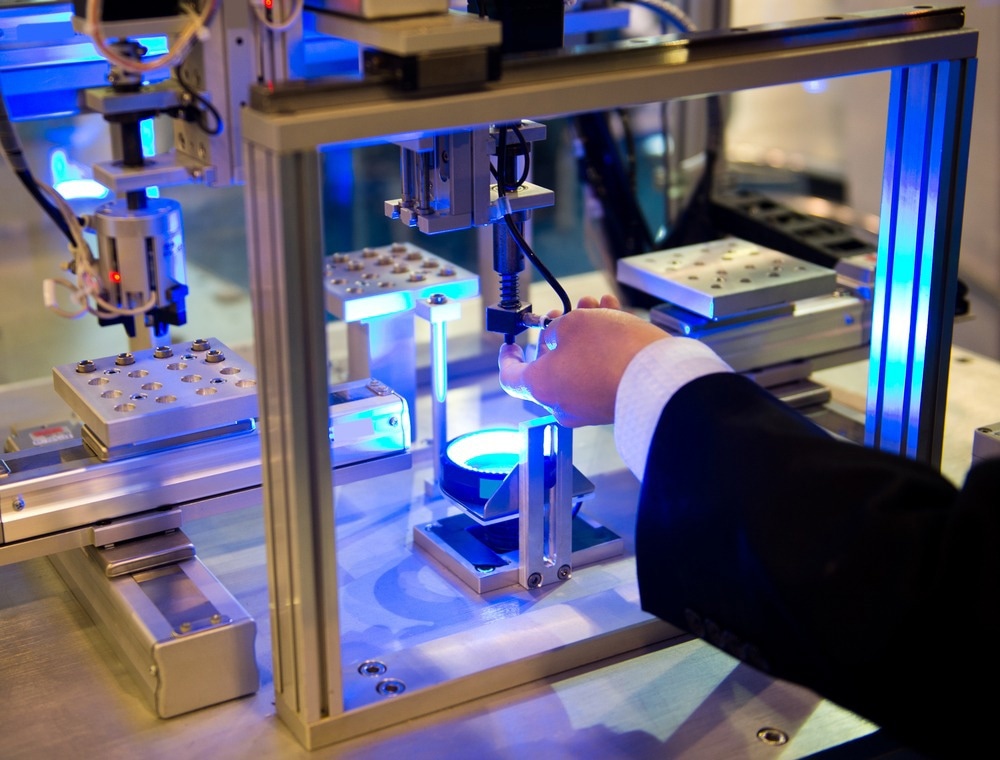
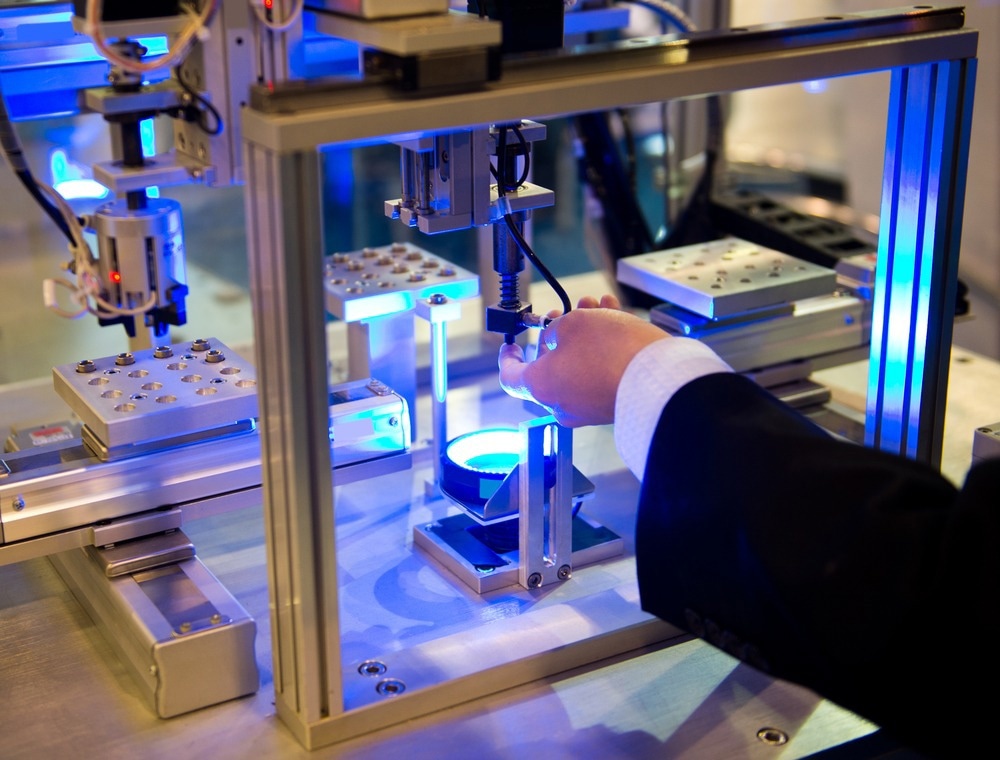
In an article published in ACS Applied Materials & Interfacesresearchers have presented an infrared (IR)-based highly flexible soft optoelectronic sensor with pigmented cladding that is efficient in multimodal sensing.
Compared with optoelectronic sensors based on the visible spectrum, this novel method makes the sensor more suitable for low-powered devices as the IR-spectrum signal allows it to operate with a fraction of the power than what would have been initially used.
The reliability of soft optoelectronic sensors that can perform multimodal sensing makes them a desirable option for applications involving strain sensors. However, the constant electrical power input required to transmit the light signal through the core of these strain sensors is a drawback that results in excessive power consumption for low-powered devices. The present work demonstrates that utilizing an IR-spectrum signal for signal propagation can effectively counter the problem.
The soft optoelectronic sensors were highly resilient due to using pigmented elastomers as the fiber optics or waveguides cladding. These strain sensors were installed into a soft robotics gripper that could control its contact force despite severe extrinsic disturbances.
Improving the Performance of Soft Robotics
Soft robotics has promoted tremendous interest in creating devices that can interact safely with humans and the environment. However, since these devices are incredibly deformable, much work has been put into designing stretchable and soft strain sensors to assess the deformation effectively.
The optoelectronic sensors employ numerous operating theories and are ideally reliable, precise, resistant to interfering noise sources, and suitable for low-powered devices. However, physical and non-physical disruptions occurring in the environment where these soft strain sensors are operated can impact their measurements. Therefore, research on reducing the impact of environmental disturbances on soft optoelectronic strain sensors is crucial to make them appropriate for practical applications.
The waveguides in fiber optics typically consist of two components: a core that directs light and cladding that shields the core from interference. A cladded fiber that can detect excessive strains of up to 300% can be manufactured by carefully choosing the materials for the core and cladding and co-extrusion of both the materials. Such optical linear strain sensors are frequently used for sensing the deformation of linear actuators such as the McKibben actuators.
The soft optoelectronic sensors were made robust for sensing operations by the IR resilient pigments utilized in fiber optics for the cladding material of the waveguides. These pigments also helped block the optical penetration of IR and visible light.
The researchers proposed a viable production process for the pigmented soft waveguides in fiber optics and investigated their optical properties for multimodal deformation sensing.
The researchers also characterized the power consumption of IR- and visible-based waveguides in fiber optics and studied the impact of noise interferences on pigmented and non-pigmented soft waveguides.
The current paper also introduced a soft pneumatic gripper with implanted IR-based pigmented soft waveguide in fiber optics for its resilience to outside interference and grasping applications.
Fabricating and Enhancing the Resilience of the Optoelectronic Sensor
The existing soft optoelectronic sensors were made of an optical waveguide in fiber optics, a photodiode (PDE), and a light-emitting diode (LED). However, in the current work, the visible spectrum PDE and LED were substituted with IR-based ones to reduce power consumption, making them suitable for low-powered devices. The working principle of soft optoelectronic sensors requires the PDE and LED to be constantly active to detect variations in the flowing optical signal.
The energy requirement problem in soft robotics was resolved using longer wavelength signals with lesser energy expenditure, such as IR wavelengths. Using an IR signal instead of a visible wavelength signal affected the resilience of the sensor as IR-based spectrum light can flow through diverse mediums, such as the cladding of the sensor, more effortlessly than visible light.
The researchers built an IR-based soft optoelectronic sensor suitable for low-powered devices. The sensor was protected from interference effects and was resilient to infrared and visible spectrum disturbances.
Aside from the sun, there are relatively few external IR optical sources in the environment that can disturb a single IR-based soft optoelectronic sensor. However, multiple IR-based strain sensors working in proximity interfered with each other as each signal leaked from the cladding and created cross-interference between each sensor. Therefore, the researchers added black silicone pigments to the cladding of the soft waveguides in the fiber optics.
They also developed a soft robotics pneumatic gripper using IR-based resilient, soft optoelectronic strain sensors for measuring the contact force of the fingers. Each finger consisted of a PneuNet actuator with rigid reinforcements onto which hybrid optical fibers were fixed. These hybrid optical fibers consist of rigid fibers connected to a soft core.
The soft robotics gripper was highly responsive to external optical disturbances. The suggested resilient and sensorized IR-based soft robotics pneumatic gripper grasped various objects and measured and controlled its grasping force. The soft robotics gripper could follow the desired reference command even in the presence of an external IR source acting as a disturbance.
IR-Based Soft Optoelectronic Sensors and the Way Ahead
The paper primarily focused on introducing pigments to the cladding of soft optoelectronic sensors, enhancing their resilience and ability to prevent optical interferences. As a result, the researchers produced soft and stretchable optoelectronic sensors that were robust, efficient in multimodal sensing, and suitable for low-powered devices.
The visible spectrum-based LED and PDE employed in previous soft optoelectronic sensors resulted in significant power consumption due to their constant operation.
The researchers substituted the visible spectrum PDE and LED with IR-based ones, which resulted in the sensor using only a tiny fraction of the power of a comparable visible spectrum sensor.
The cladding of the soft waveguide in fiber optics was coated with black silicone pigments to make the sensor extraordinarily robust and suitable for low-powered devices. The silicone made the cladding highly resistant to interferences by preventing the external and internal IR signals from passing through the cladding.
The sensors proposed in the present paper were integrated into a soft robotics gripper that could sense contact force.
The gripper controlled the contact force despite extrinsic IR optical disturbances.
The soft optoelectronic strain sensor is a promising candidate for various applications due to its low power requirements and remarkable resilience.
Reference
J. Babar and R. Hugo. (2022) Low-Powered and Resilient IR-Based Pigmented Soft Optoelectronic Sensors. ACS Applied Materials & Interfaces. https://pubs.acs.org/doi/10.1021/acsami.2c07318
Disclaimer: The views expressed here are those of the author expressed in their private capacity and do not necessarily represent the views of AZoM.com Limited T/A AZoNetwork the owner and operator of this website. This disclaimer forms part of the Terms and conditions of use of this website.
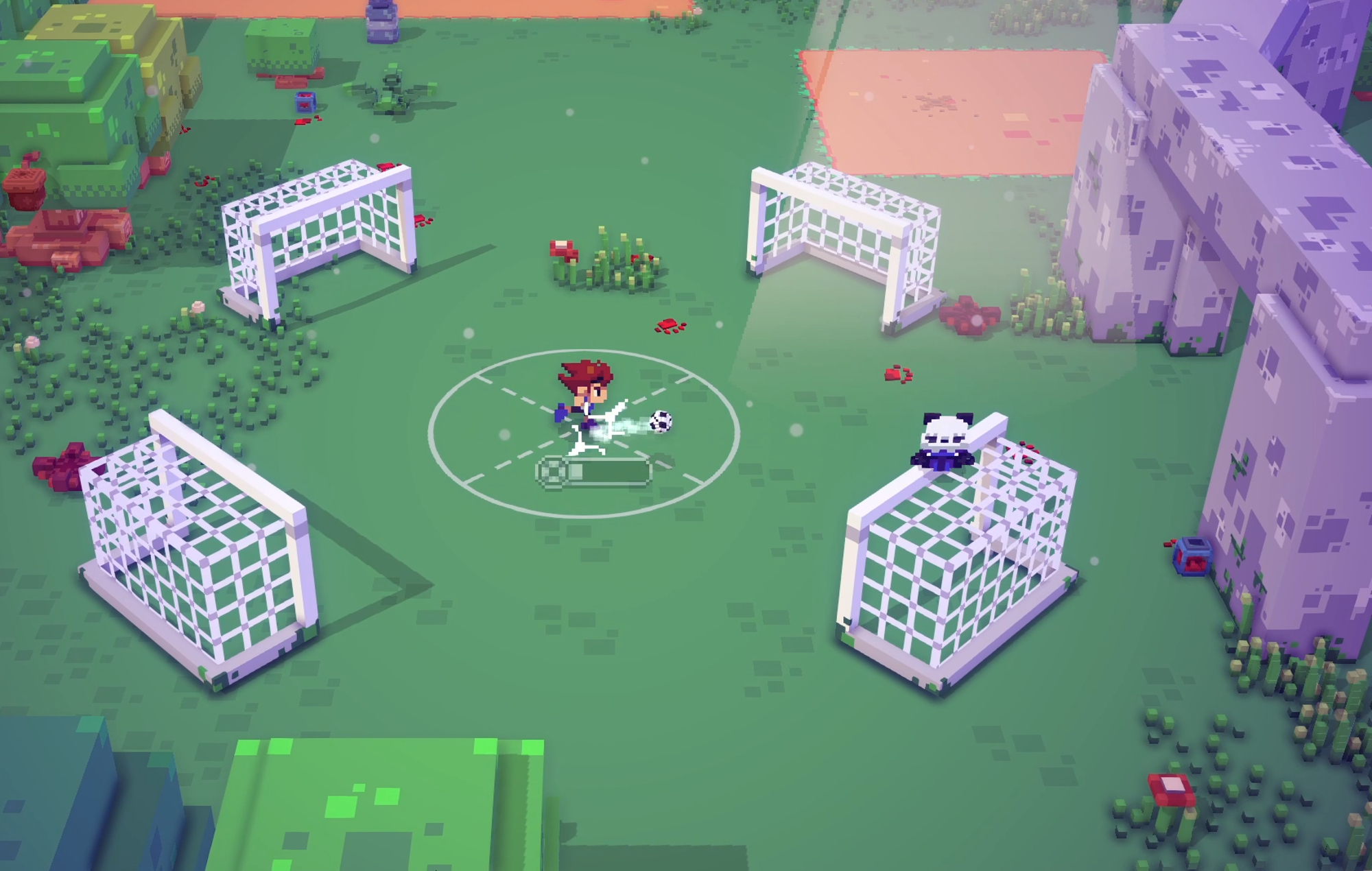
No More Robots has announced Soccer Storyan “open-world RPG about solving puzzles and saving the world.”
Set to launch later this year, Soccer Story will task players with solving puzzles and saving the world with their football.
An open-world RPG, Soccer Story‘s 15 plus hour runtime will involve a mix of quests, side-missions, and events; along with a four-player local multiplayer match mode.
As for the game’s plot, No More Robots has shared the following:
“It’s been a year since The Calamity tore apart the very foundations of soccer as we know it. Since then, Soccer Inc. has made dang well sure that not a soul has been allowed to even look at a soccer ball, let alone kick it. It’s a real Messi situation, no doubt.”
Soccer Story. Credit: No More Robots.
No More Robots add that after a “magical football” chooses the player, they are tasked with “saving the future of sport, and bringing harmony to the world once more” – a mission that will involve doing battle against rival teams including “literal sharks , toddlers, old-age pensioners and ninjas.”
Soccer Story will be available on PC, Xbox, Nintendo Switch, PlayStation, and Google Stadia when it launches in 2022. The game will also be available on Xbox Game Pass, as one of “half a dozen” games that No More Robots director Mike Rose says will arrive on the subscription-based service over the next 12 months.
Earlier in the year, Rose told NME that putting No More Robots’ titles on Game pass “makes them sell so much more,” and refuted concerns surrounding the service.
“That’s the thing that gets me the most in all of this, people making out like that is what’s harming the industry,” said Rose. “When really, it’s dinosaurs, not realizing that things are moving on. And if you don’t get on the train, you can’t then complain when it’s passed you by.”
In other news, Microsoft has alleged that Sony pays developers to keep them from making games available on Xbox Game Pass.
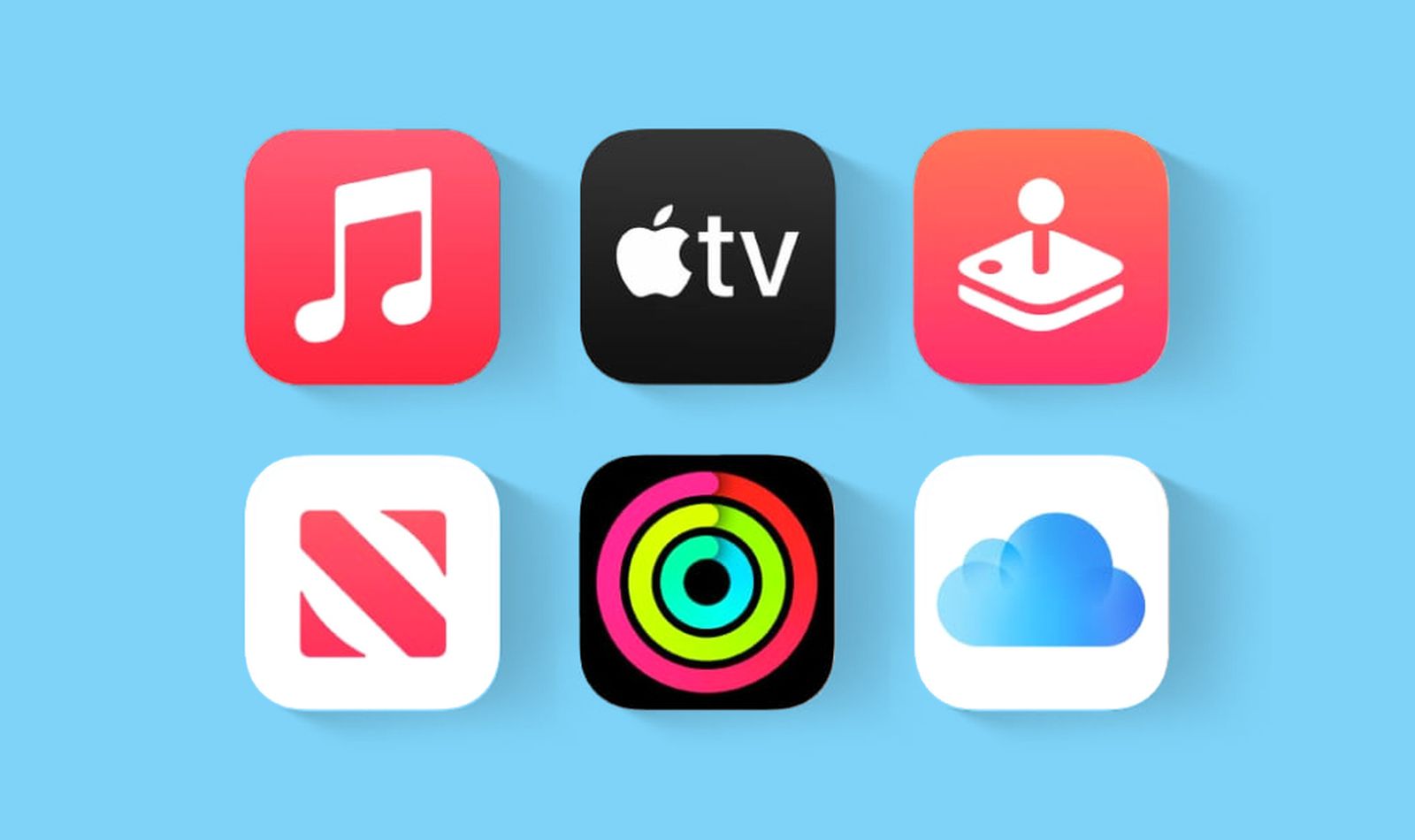
In the 30 second spot, Apple gives a quick rundown of the services that are included: Apple Music, Apple Fitness+, Apple TV+, Apple News+, Apple Arcade, and iCloud+. “What’s in Apple One? The best of Apple,” reads the tagline at the end of the video.
There are multiple tiers of the Apple One subscription service with prices that start at $14.95. The highest-tier Premier plan is the only one that includes all of the services in the video, and it is priced at $29.95 per month with access available for up to six family members.
For those curious about the Apple One subscription service, we have a dedicated guide that goes over all of the details.
Popular Stories
iPhone 14 Pro Predicted to Start With Increased 256GB Storage Alongside Rumored Price Increase
Earlier today, analyst Ming-Chi Kuo claimed iPhone 14 Pro models will be more expensive than iPhone 13 Pro models. Kuo did not reveal exact pricing, but he said that the average selling price of all four iPhone 14 models will increase by about 15% overall. While higher prices would be disappointing for customers, it is possible the iPhone 14 Pro and iPhone 14 Pro Max will offer increased…
Kuo: Apple to Increase Prices of iPhone 14 Pro Models
Apple plans to increase the prices of iPhone 14 Pro models compared to iPhone 13 Pro models, according to analyst Ming-Chi Kuo. Kuo did not reveal exact pricing for the iPhone 14 Pro models. However, in a tweet today, I have estimated that the average selling price of the iPhone 14 lineup as a whole will increase by about 15% compared to the iPhone 13 lineup. In the United States, the iPhone…
iOS 16 Beta 5: Battery Percentage Now Displayed in iPhone Status Bar
With the fifth beta of iOS 16, Apple has updated the battery icon on iPhones with Face ID to display the specific battery percentage rather than just a visual representation of battery level. The new battery indicator is available on iPhone 12 and iPhone 13 models, with the exception of the 5.4-inch iPhone 12/13 mini. It is also available on the iPhone 11 Pro and Pro Max, XS and XS Max, and…
Here’s Why the iPhone Battery Status Icon in iOS 16 Is So Controversial
In the latest iOS 16 beta, Apple has updated the status bar battery icon on iPhones with Face ID to display the exact percentage remaining rather than just a visual representation of battery level, and while the change has been largely welcomed, some users are unhappy with the way it has been implemented. In iOS 15 and earlier, battery percent has not been present on iPhones that have…
iPhone 14 Is Just a Few Weeks Away: Three Tips to Prepare for the New iPhone
Wednesday August 10, 2022 4:08 am PDT by Sami Fathi
The launch of the new iPhone 14 is just a few weeks away, meaning millions of iPhone customers will soon upgrade their existing iPhone or perhaps get an iPhone for the first time. Exclusive MacRumors iPhone 14 Pro renders by graphic designer Ian Zelbo Whether upgrading from an older model or this is your first iPhone, we’ve rounded up a few tips to help you prepare for the next flagship…
Color Options for All iPhone 14 Models: Everything We Know
The iPhone 14 and iPhone 14 Pro models are rumored to be available in a refreshed range of color options, including an all-new purple color. Most expectations about the iPhone 14 lineup’s color options came from an unverified post on Chinese social media site Weibo earlier this year. Overall, the iPhone 14 and iPhone 14 Pro’s selection of color options could look fairly similar to those of the …