Categories
Technology

Out Of Range Secrets And Wii Play

Video: Out of Range Secrets and Wii Play

Wii Play Presents many mysteries beyond its limits. Among other things, the game reveals that the Earth is indeed flat and therefore has a bill! Okay, maybe a 3D object isn’t needed at the time, so we’ll let that slide.

Wii Play There is a collection of minigames for the Nintendo Wii. in Europe, Australia and Japan Wii Play Released on the same day as the console. However, it was only released in the United States in February 2007. At the time, it was sold with the Wii remote control and was intended to help learn how to use the remote control. Wii Play Supports My function, which allows you to play with your own My avatar. hear Wii PlayMotion Was released in 2011 – also for Nintendo Wii.

In the following YouTube video you can see which secrets are in the shadows Wii Play Current Boundary Break episodes seen in:

Wii Play It consists of nine mini-games (also called levels in the game) that can be played alone or in pairs. When you first start the game, only one of these mini-games is available. After playing one, the other will be unlocked (regardless of success) until all nine are unlocked. In single player mode you can get a prize (Bronze, Silver, Gold and Platinum prizes) for each mini game, which will be saved under the respective Mi. When you do, you’ll receive a message on the Wii menu stating the specific rank for the minigame. For example, Panzerkiste has the rank of private first class. There are the following mini-games:

  • shooting festival
    • It’s about knocking down objects in a corn field. There are five rounds.
  • my mob
    • Mii avatars run around and you have to do z. B. Find twins or mismatched Miis within the time limit.
  • table tennis
    • A table tennis simulation where you compete against a computer opponent.
  • my posenspiel
    • The Mi Avatar can have three different poses that you have to select quickly and then move the Mi to the right place. The place where the MI should be placed is a bubble; Bubbles fly through the screen and must not land in the water.
  • ice hockey
    • An air hockey simulation like table tennis, where you play against a computer opponent.
  • billiards
    • This is billiards simulation.
  • fishing
    • Here you have to catch fish that fetch different points. There is a bonus fish that gives a double score.
  • wild kuhu
    • This is a racing game. A cow is taken to a field and has to avoid the scarecrow to get points.
  • armor box
    • Here you have to shoot at other tanks as a battle tank and you can lay landmines. Alternatively, the game can also be played with nunchucks. The game initially expands to more than 20 missions. Once you complete it, you can play until the 100th mission. There are different types of enemy tanks. You start the game with three lives and after every five missions you get an extra effort.

do you have it Wii Play Then played on Nintendo Wii? Were there any exciting discoveries in the video that you would like to share in the comments section below?


Categories
Technology

Google NYC blitz wants Apple to get RCS ‘Message’

On Tuesday, Google kicked off its “Get The Message” RCS campaign online and will be continuing with digital billboards in NYC going after Apple.

Starting August 25, the pressure campaign will appear on over 500 digital billboards in Manhattan and Brooklyn. The examples we have today show the ads appearing on LinkNYC kiosks and their portrait displays, which fit the messaging thread nature of the advertisements. [Note: We were initially informed that there would also be “static billboards,” but we’re now told NYC is just a digital campaign running until October 6.]

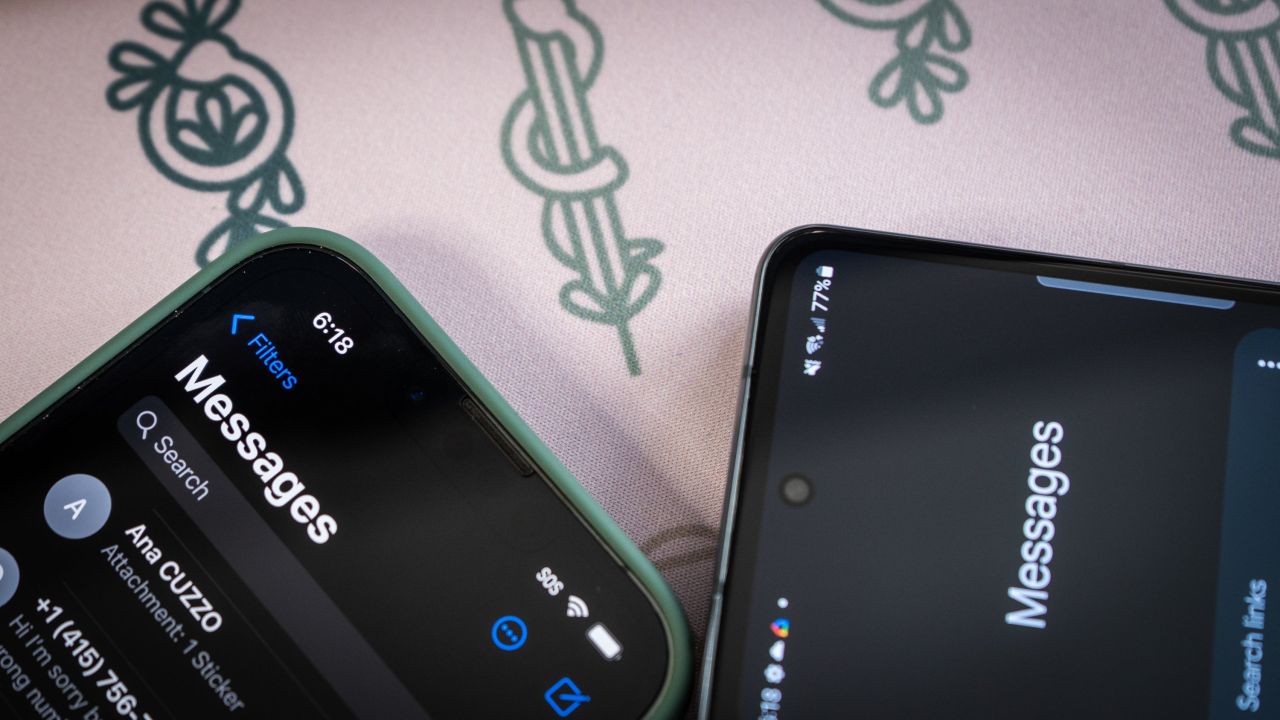
Google is going after how Android to iPhone texting results in low-resolution images due to the old MMS standard, while noting the blue/green bubble phenomenon.

The green Android head appears in the bottom-left corner with a “Help Apple #GetTheMessage” and link to the Android.com website. There’s also a Chrome Dino QR code.

Until NYC goes live, Google will continue running digital Get The Message advertising on YouTube, Twitter, and TikTok targeting Apple. It also has “celebrity influencers” (like Keke Palmer, Vanessa Hudgens, and Madelaine Petsch) on Instagram and Twitter.

Google wants Apple to adopt RCS (Rich Communication Services) so that iPhone and Android users texting each other can benefit from read receipts, typing indicators, sending over data, higher-res video and images, and better group chats.

Messaging is how we stay connected with our family, allow our friendships to feel close enough to touch no matter how far apart they are, and how we get things done. However, conversations between people using iOS and Android platforms today are unnecessarily challenging and they emotionally pull us apart. From Google’s perspective, any platform that isn’t built to bring people together simply doesn’t represent the level of seamless communication and modern technology people deserve and expect. This campaign is intended to deliver a clear call to Apple to finally join us in adopting the latest messaging standards that provides the best possible messaging experience for everyone, both on iOS and Android.

— Adrienne Lofton, Global Vice President of Integrated Marketing, Platforms and Ecosystems

More on Google:

FTC: We use income earning auto affiliate links. More.


Check out 9to5Google on YouTube for more news:

Categories
Technology

Does Google Think Gen Z Is the Answer to Its Green Text Woes?

This week, alongside a massive unveiling of brand new foldable devices and accessories from Samsung, Google put out its own ad campaign in an attempt to rally the troops against Apple’s tyrannical reign on messaging. Google’s #getthemessage campaign hopes to stoke the flames of millions of bothered Android fans so that Apple might be encouraged to support RCS messaging, the cross-platform standard recently adopted by Google Messages.

The Get The Message website reads like a Bible class handout from my old Christian school. It has all the talking points Google wants me to use to remind people that it’s Apple’s fault that I, as an Android user, don’t have access to the full resolution and capabilities afforded by Apple Messages. Google brings up that, sometimes, group messages get broken because they include a mixture of Apple and Android-using folks, often leading to “social frustration.” It even links to past coverage pointing to evidence that children and teens dread carrying around Android devices for fear of being denoted an uncool Green Bubble.

I immediately knew what Google was going for when I saw the ad campaign go live. I remember covering Google Senior Vice President Hiroshi Lockheimer’s first tweet storm about the inefficiencies of Apple’s proprietary messaging standard. And then the second time, months after when he called on Apple to make it easier on everyone.

But the latest #getthemessage campaign seems a little all over the place. I’m struggling to understand precisely the demographic that is supposed to go after Apple to make things play nice. Is it Android olds like me who are crotchety and have complained about the lack of parity in messaging since the early days on the platform? Or is it Gen Z-ers on TikTok who have no problem taking in the weirdest Riverdale storylines and running with whatever horror shitshow the CW is allowing to show over there? (I hear it’s very good.)

Why is Madelaine Petsch, who plays Cheryl on Riverdalepart of this advertising campaign? Is she supposed to inspire the youngins to help drive the point home? Furthermore, why is Vanessa Hudgens part of this ad campaign, when her last relevant IMDB entry is The Princess Switch, a Netflix-exclusive Christmas movie with nothing on my Lifetime favourites? I have absolutely no emotional connection to these people as an Android user. Not to mention, you can tell they’re reading off a script from their screens. I don’t believe these famous-ish people know what my life is like wielding an Android phone and hanging out in Apple land.

What’s the problem with iMessage?

There’s indeed fragmentation in text messaging among the major mobile platforms. Apple Messages app runs on the iMessage service to send texts between iPhones and other iOS-enabled devices. It supports end-to-end encryption, better support for group chats, and high-resolution images and videos. But when an Apple user texts an Android device with the default texting application, the message is sent out as an old-school SMS or MMS message, often deprecating the experience of the text on the Android user’s side.

Google adopted RCS, or Rich Communication Services, to try to fix this dichotomy, and it’s already in use in other markets. RCS enables encrypted messaging, high-quality media sharing, and other modern features like bigger character limits and read receipts. If you have access to RCS on Android Messages and are chatting with another Android user, you already have access to some of these features. That’s what life could be like with your iPhone-using pal.

Google has attempted to bridge the gap between iOS and Android messengers despite the repeated pleas for Apple to do the work. Emoji reactions, which used to be limited to iPhone users, became available earlier this year after the company added support for them on Android.

The fragmentation will persist unless Apple wants to get on board with RCS. But Apple is committed to keeping its walled garden coifed and gated up, because it helps sell its hardware, where it makes the bulk of its cash. The iOS 16 Beta already has iPhone-only abilities to edit and delete delivered iMessages. That sort of feature is possible precisely because of the tightly-knit nature of the iOS platform.

Anyway, I wouldn’t be surprised if this campaign fizzles out because Android users have already moved on. Meta’s Messenger and WhatsApp have a stronger hold on the market, and many other messaging apps work with your phone number. Even I’ve moved on from Android Messages and find most of my daily correspondence happening exclusively inside Instagram DMs.

Categories
Technology

Alone In The Dark Has Been Officially Revealed Alongside Its First Gameplay Trailer

After it leaked last night, THQ Nordic has officially announced Alone in the Dark, which is a reimagining of the classic 90s franchise for PS5, Xbox Series X|S and PC.

The premise of the game is a little bit different in the sense that it is a brand new game with a new story that is written by the minds behind SOMA and Amnesia, but it’s said that it will incorporate characters, places and themes from the original trilogy. It’s said to be a story/game that brand new fans can enjoy, but those who have played the other games will be able to recognize a lot of things in the game.

https://www.youtube.com/watch?v=I0WPDDn6DpY

The game takes place in the Deep South in the 1920s where Emily Hardwood is searching for her uncle alongside private investigator Edward Carnby. You can expect to see strange residents, nightmarish realms and dangerous monsters.

It was also revealed that there will be a prologue chapter where you play as Grace from Alone in the Dark 2 that is playable at Gamescom, We’ll be there, so we’ll hopefully be able to bring you hands-on directly from the Show.

Alone in the Dark looks quite a decent way along, so hopefully we’ll be able to bring you more information in the very near future. In the meantime, you can read a lot more about the game and check out more screenshots over on the PlayStation Blog.

Categories
Technology

Mike Tyson’s Ferrari F50 up for auction, could fetch $US5.5 million

All ears? A rare Ferrari F50 once owned by boxing champion Mike Tyson is heading to auction, and it could eclipse current records.


A low-mileage 1996 Ferrari F50 previously owned by former heavyweight boxing champion Mike Tyson is tipped to set new auction records for the V12 supercar.

Listed by auction house Gooding & Company, the Rosso Corsa red Ferrari F50 is estimated to sell for a hammer price between $US4.5 million to $US5.5 million (between $6 million and $7.8 million in Australian currency) at next weekend’s Pebble Beach auctions in California.

Built by Ferrari’s Maranello factory in February 1996, this chassis is the 73rd of 349 examples of the F50 to roll off the production line, and one of 55 built for the US market.


According to the listing, this particular Ferrari F50 was first delivered to Beverly Hills Sports Cars in Los Angeles, where it was purchased by car broker Nadir Amirv before it was sold to Mike Tyson.

It is not clear whether Tyson had purchased the Ferrari F50 before or after his infamous fight with Evander Holyfield, in which ‘Iron Mike’ bit a portion of his opponent’s ear off.

Tyson owned the supercar for a number of years before it was sold in 2001 to Kevin Marcus, the co-founder of the early search engine website InfoSpace.


Numerous collectors have owned the Ferrari F50 since Marcus sold it a handful of years later, however the odometer currently reads 6193 miles (9966 km).

The listing states the Ferrari F50 was given a comprehensive service within the past six months, consisting of a new clutch, tires, air-conditioning system and refurbished Alcantara door cards – all of which set the current owner back roughly $US75,000 ($ AU105,000).

While the Ferrari F50 may not have received the praise of its F40 predecessor when it was launched in 1995, it is now appreciated as a modern classic.


The F50 was one of the first road-going production cars to use a carbon-fibre monocoque, tipping the scales at just 1223kg fully laden.

Its 4.7-liter V12 engine was based on the 3.5-liter unit which Ferrari used to power its 1990 and 1991 Formula One cars, although in the F50 it only produced 382kW and 471Nm – all of which was sent to the 355mm-wide rear tires via a six-speed manual gearbox.

Values ​​of the F1-derived V12 supercar have been increasing in recent years, as the F50’s auction record was reset earlier this year.


If this particular example sells at the lower end of Gooding & Company’s estimates, it could set a new Ferrari F50 auction record.

Jordan Mulach

Jordan Mulach is Canberra/Ngunnawal born, currently residing in Brisbane/Turrbal. Joining the Drive team in 2022, Jordan has previously worked for Auto Action, MotorsportM8, The Supercars Collective and TouringCarTimes, WhichCar, Wheels, Motor and Street Machine. Jordan is a self-described iRacing addict and can be found on weekends either behind the wheel of his Octavia RS or swearing at his ZH Fairlane.

Read more about Jordan Mulach LinkIcon

Categories
Technology

Oppo’s new Apple Watch clone has an important spec inside

Oppo has just announced its promised duo of smartwatches featuring Qualcomm’s latest Snapdragon W5 Gen 1 chip — the first wearables to adopt the new platform since Qualcomm announced it last month.

The new Oppo Watch models build on last year’s Oppo Watch 2. However, neither is a direct successor to that earlier model. Instead, it looks like Oppo has split the difference, with the Oppo Watch 3 moving the specs down a notch to make room for a new Oppo Watch 3 Pro on the higher end.

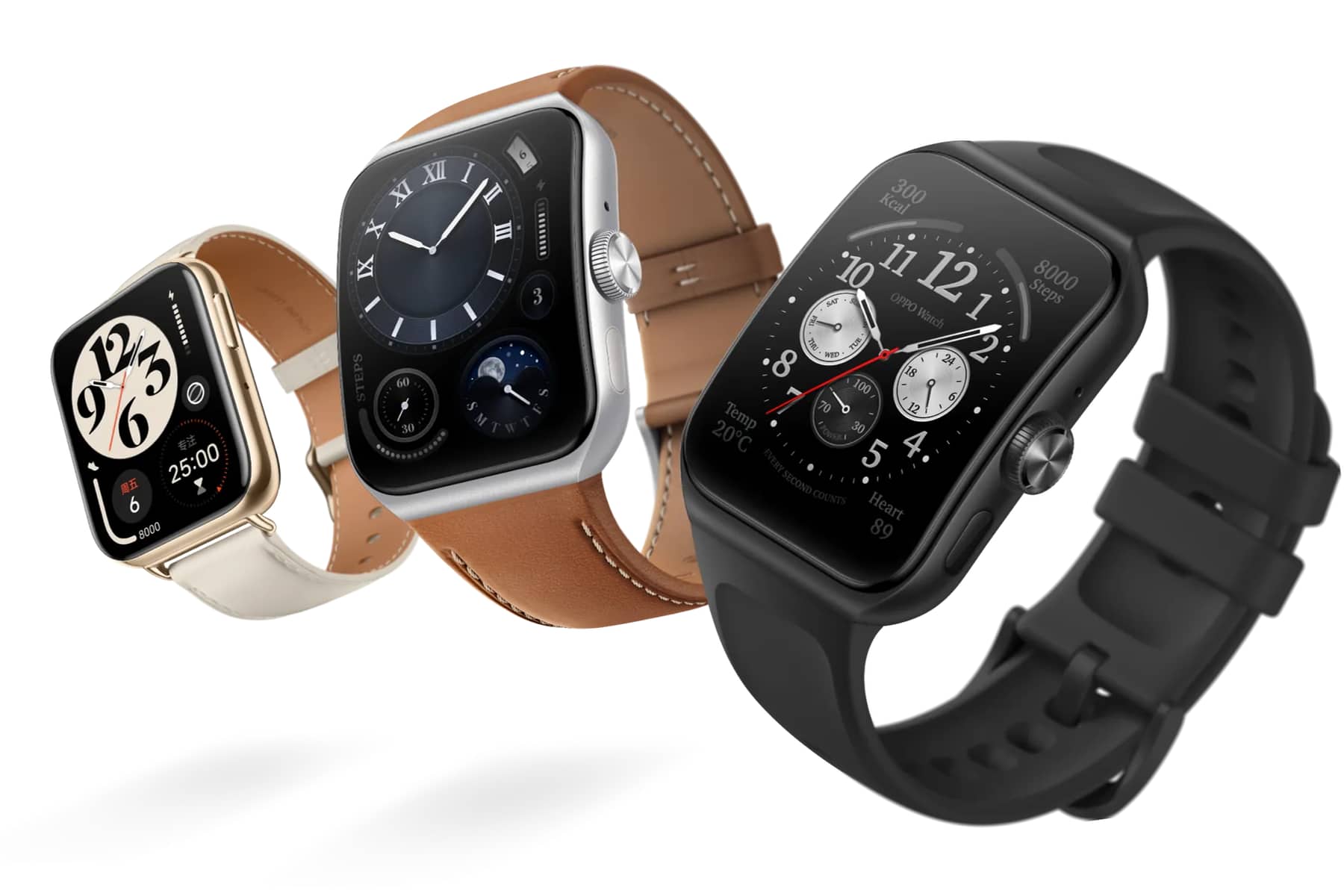
Oppo Watch 3 and Oppo Watch 3 Pro
Oppo

The Snapdragon W5 Gen 1 is here

Oppo has notably gone for the lesser of Qualcomm’s new Snapdragon wearable chips, the W5, rather than the W5+. Interestingly, this is the chip that Qualcomm has targeted at “segment-specific wearables” rather than “mainstream smartwatches,” but Oppo likely considers that good enough for its target market. It’s also worth noting that Qualcomm defines “segment-specific” to include China, as well as kids, seniors, health-focused devices, and enterprise solutions.

Qualcomm Snapdragon W5 Wearable platforms.
Qualcomm

The new chip follows the Snapdragon Wear 4100 used in last year’s Oppo Watch 2, but it’s interesting that Oppo hasn’t chosen to distinguish the Oppo Watch 3 Pro by packing in the more powerful flagship W5+ chip. However, the boost over last year’s model should be pretty significant, as Qualcomm promises 50% better power efficiency and double the performance of the Wear 4100 chip.

Qualcomm Snapdragon W5 Wearable platform benefits.
Qualcomm

The Snapdragon W5 Gen 1 platform also supports better health and fitness experiences thanks to the ability to keep the sensors active at all times. It’s unclear how this will play out on the Oppo Watch 3 since Oppo has its own co-processor in the mix for lower-power tasks, but Oppo promises faster app launching and assessment of vascular elasticity in under 30 seconds.

A familiar design with a twist

If you’re thinking the Oppo Watch 3 looks strangely familiar, you’re not alone. Oppo has been mirroring the iconic design of Apple’s wearables since it first arrived on the scene two years ago, and this latest release is no exception.

However, it seems Oppo is willing to take a few more risks than Apple. The higher-end Oppo Watch 3 Pro is the first wearable to feature a 3D AMOLED LTPO display, and with that comes a flexible curved face that follows the contour of your wrist.

Oppo calls this the “third form of smartwatches,” and with the striking similarity to Apple’s design, it offers a fascinating glimpse into what a curved Apple Watch might look like. Even Oppo’s marketing photos strongly resemble Apple’s.

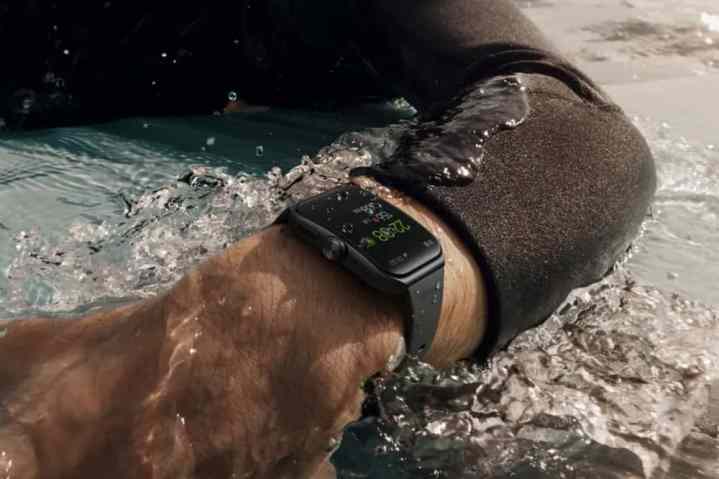
Man wearing Oppo Watch 3 Pro in water.
Oppo

Interestingly, Oppo has also brought a digital crown-like control to the Oppo Watch 3 Pro with mechanical haptic feedback during rotation. Unlike the Apple Watch, the crown is placed centrally on the side, with a single button below. The non-Pro model lacks the dial and loses one of the two buttons found on the prior model.

In terms of screen size, it’s the Oppo Watch 3 Pro that comes closest to its predecessor, with the same 1.91-inch display presented in a 378 x 496 resolution due to the taller aspect ratio. The Oppo Watch 3 has a smaller 1.75-inch 372×430 AMOLED screen.

Battery life, storage capacity, and more

The smaller model only features a 400mAh battery, a significant drop from last year’s 510mAh cell. However, thanks to the power efficiency of Qualcomm’s Snapdragon W5 combined with Oppo’s own Apollo 4 Plus co-processor, it still delivers up to four days of battery life with normal usage. The Oppo Watch 3 Pro features a larger 550mAh battery that can deliver up to five days of battery life under the same conditions.

Much of the magic here comes from Oppo’s in-house chip that handles routine tasks like timekeeping to let the more power-hungry Snapdragon W5 take a nap whenever it’s not needed to handle more powerful tasks. A lower-power mode can give you up to 10 days on a single charge for the Oppo Watch 3 or 15 days for the Oppo Watch 3 Pro.

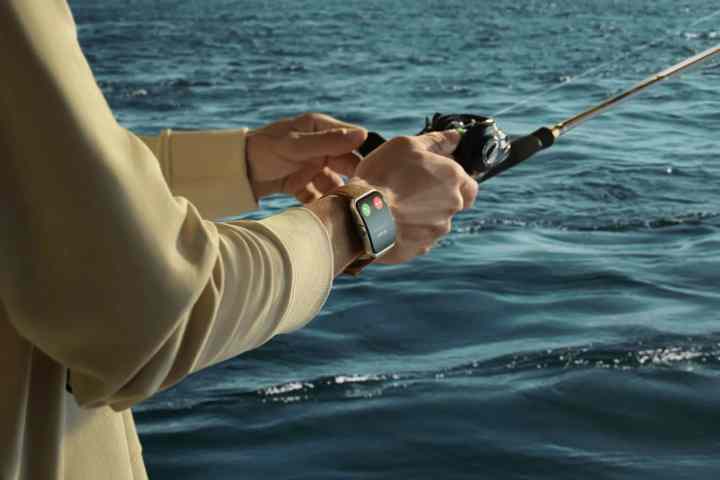
Person wearing Oppo Watch 3 Pro while fishing.
Oppo

In addition to the new Snapdragon W5 chip and screen changes, both models also get a healthy storage increase to 32GB. However, the other specs remain largely the same as before, including 1GB of RAM, Bluetooth 5.0, eSIM, NFC, 5 ATM water resistance, and GPS capabilities.

The Oppo Watch 3 models also offer the same 100 workout modes, 150 watch faces, and other built-in sensors, including an optical heart rate monitor, blood oxygen sensor, and ECG sensor.

China only, for now

So far, the Oppo Watch 3 and Oppo Watch 3 Pro are only being released in China and are expected to go on sale August 19 for around $220 and $280 respectively at current exchange rates. Both models will be available in Platinum Black, while the Oppo Watch 3 adds Feather Gold and the Pro comes in Desert Brown.

It’s unclear when or if there will be an international release. The versions announced today use a proprietary operating system for China. However, Oppo adopted Wear OS for the international releases of the Oppo Watch 2 last year, so presumably, the same will happen if the Oppo Watch 3 models launch outside of China.

Editors’ Recommendations


Categories
Technology

Are You Being Followed? Use a Raspberry Pi to Find Out

In the movies, a hero can always tell he’s being followed because the goons tasked with following him never blend in. In real life, figuring out if someone is tailing you is much trickier, and can be a matter of life and death. At the Black Hat security conference, a speaker demonstrated a low-cost device that looks for the tell-tale wireless signature of bad guys on your tail.


Watch Your Back

Matt Edmondson, who works with the US Department of Homeland Security, was approached by a friend from a government agency and declined to name onstage at Black Hat. This friend worked with confidential sources, and one in particular had links to a terrorist organization. Edmondson’s friend was concerned that if they were followed after meeting with the confidential source, his friend’s government connections could be discovered and the source put in danger.

The traditional spycraft method of surveillance detection, Edmondson explained, is to change your route and see who does the same—such as exiting the highway and then getting back on again. “It’s really obvious the [Washington, D.C.] Beltway was designed as a surveillance-detection route,” quipped Edmondson, perhaps joking, perhaps not.

Edmondson said his friend asked if he could revisit an idea he had discussed years ago: Using network-detection technology to scan for devices that were following you.

Even if you’re being tailed by a nation-state-backed surveillance team, “isn’t there still a really good chance they have a phone in their pocket?” asked Edmondson.


Tattletale Devices

This works because so many of our devices are constantly trying to communicate with other devices and various wireless networks. Many mobile devices, for example, are constantly seeking familiar wireless networks to connect to. Other devices, such as AirPods, Bluetooth speakers, laptops, and so on, can be similarly chatty.

All those wireless conversations can be easily detected. If the same devices are in your vicinity repeatedly, Edmondson reasoned, it’s likely you’re being followed.

At PCMag, we’ve looked at similar devices before. The PwnPro was a multi-thousand-dollar device with sophisticated backend software that could monitor devices within 1,000 feet. It, too, could identify specific devices and usage patterns, but was far from affordable or portable.


SimpleComponents

To build a device that could scan for wireless communications and alert you when such a device stayed in your vicinity, Edmondson set out to use low-cost materials, and settled on the Raspberry Pi single-board computer. “How many of us have multiple Raspberry Pis sitting in your closet doing absolutely nothing?” Edmondson joked.

Add to that a low-cost touch screen purchased off Amazon, a portable power bank, and a USB wireless adapter (Alfa AWUS036ACM), and Edmondson was off and running.

Screenshot of a livestream, a man is smiling on the left side while the right is a PowerPoint slide showing a Pelican Case full of electronics.

A view of the ‘minimum viable product’ version of Edmondson’s detection device.

Scanning duties on the device would be handled by Kismet, a free and open-source wireless monitoring tool. Kismet scans the airwaves and records its findings in an SQLite database. “Everything else is shoddy python code,” said Edmondson.

Users interact with Edmondson’s device via the touch screen and a custom interface Edmondson described as “literally the worst user interface you’ve ever seen.” It consists of several large, gray buttons, which are intended to be easily pressed while driving. For this task, Edmondson explained, “you don’t want a nice interface designed by Apple, you want something designed by Fisher-Price.”

Once activated, Edmondson’s device compiled data on the surrounding devices into lists broken down by time. If the device detects something that already appears in the list from 5-10 minutes ago, or 15-20 minutes ago, that’s a sign someone might be on your tail.


A Few Challenges

There were still some challenges with the device, however. First, Edmondson needed to build in a mechanism where detected devices could be added to an ignore list. That way, trusted devices wouldn’t trigger an alert.

A slide from a PowerPoint presentation showing a black Pelican case full of foam and several electronic components neatly arranged

Edmondson’s presentation showed a better, more neatly arranged version of his device.

During a field test in the Arizona desert, Edmondson discovered another problem: MAC address randomization. This is a security feature of many modern devices, where wireless requests are sent with a random, spoofed MAC address.

Edmondson’s solution was to also look at what Wi-Fi networks devices were asking for. If the same Wi-Fi network request appears again and again, that probably means a single device is nearby. Edmondson said that this could possibly be expanded upon, since tracing the location of the requested Wi-Fi networks could tell you where the device had been previously. Even the requested Wi-Fi network name could contain clues. Edmondson said he also wanted to add a GPS component, so it was possible to see where a potential follower first appeared.

In his talk, Edmondson didn’t reveal whether the device was ever practically put to the test, or what became of his friend’s informant. He did, however, bemoan the lack of similar detection technology. “There’s so much technology out there to stalk on people and invade their privacy and very little to protect yourself,” he said.

Keep reading PCMag for the latest from BlackHatBlackHat.

.

Categories
Technology

Elden Ring Player Proves Faith Builds Rule With One Shot Kills

matthew "Your Average Gamer" Farnkopf is just standing around while Elden Ring's final boss, the Elden Beast, collapses behind their faith/lightning-based Tarnished.

Elden Ring‘s faith stat is pretty flexible to build around, particularly because developer FromSoftware baked so many incantations and spells into the game. Still, it tends to see very little use at high levels, as YouTuber Your Average Gamer put it in an email to Kotaku DotCom, folks claim it’s not as good as other in-game stats like the health-defining vigor. In an effort to prove the masses wrong, Your Average Gamer took their ardent belief in faith and put it to the test. Not only did they take on the hardest difficulty possible, they also absolutely demolished a variety of bosses, including ones like Radagon and the Elden Beast, in a single attack. It’s nuts!

Matthew “Your Average Gamer” Farnkopf is a YouTuber dedicated to putting together “crazy Elden Ring builds.” they’ve got a video on destroying Malenia in 90 seconds, another breaking down the effectiveness of Godrick the Grafted’s Great Axeand a different one on the ultimate status effect build. In short, Matt has spent a lot of time with Elden Ring since it dropped on February 25. And yet, it’s still remarkable they were able to find a one-shot build powerful enough to take out two of the game’s hardest bosses, Radagon of the Golden Order and the Elden Beastwith an assortment of equipment and incantations on New Game Plus Seven, the highest difficulty option Elden Ring currently has to offer. Every round of new game plus retains all your gear and stats while increasing the overall damage output and health pool of the enemies around you, meaning Your Average Gamer’s run is some seriously gnarly shit.

FromSoftware

It looks like Matt’s just throwing things to be throwing things during the fight, but there’s actually an order to the madness. as they explained in a short video detailing what they’ve dubbed the “ultimate PvE build,” Matt first casts the Howl of Shabriri and Golden Vow incantations for some initial status effects, like madness buildup for attack power and attack negation, respectively. They then poison themselves to increase their intelligence stat and temporarily boost lightning attack damage, the latter is especially important when paired with the sole attack spell Ancient Dragons’ Lightning Strikea late-game ability you find in the labyrinthine legacy dungeon Crumbling Farum Azula. After a quick buffing session, Matt turns to their gear for even more buffs—the Gravel Stone Seal to up the damage of Dragon Cult/lightning-related incantations, the Jellyfish Shield for 20% increased damage for 30 secondsand the Kindred of Rot’s Exultation Talisman to raise attack power by 20% for 20 seconds when there’s poisoning or rot nearbyamong others—before entering the battle arena to show the final bosses what’s up.

It was curtains once Matt stepped in front of Radagon. They cast the Ancient Dragons’ Lightning Strike, a multi-hitting attack that sends down several bolts of lightning to strike in a determined area, and watched as the hammer-wielding god’s health bar melted away in seconds. The same thing happened to the colossal Elden Beast, and y’all, I’m gagging RN.

ReadMore: Elden Ring Fans Rejoice As Dreaded Bloodhound Step Nerfed In Enormous Gameplay Update

matt canopy Kotaku over email that they wanted to dispel the myth permeating the game’s community that “faith [builds aren’t] nearly as good as magic.” It took them “nearly 20 hours of trial and error” to find the right combination of gear and incantations to do the necessary damage to slay Radagon and the Elden Beast in one shot, and the results were stunning.

“I was primarily inspired to prove that something that many said couldn’t be done could actually be done…even on the hardest difficulty,” Matt said. “When I pulled this off on Journey Three, that gave me hope that it was technically possible. Once again to prove how powerful faith can be!”

Matt, to put it plainly, loves faith. It’s one of their favorite stats to construct characters around, and a central theme to the game overall. Still, getting things just right to accomplish this feat was quite the headache, something that forced them to “quit two separate times” because of how time-consuming it was becoming. Regardless of the frustrations, Matt said they were “glad [to have] stuck it out” in the end.

“So I’m physically disabled,” Matt said. “I have ongoing day-to-day stomach issues that can get/have gotten severe at times. I had just gotten over a flare-up of Colitis that I had to go to the ER for. After failing so many times throughout several hours, I found myself possibly going back into another flare-up. So I relaxed, calmed myself down, and spaced out my time. From then on I set hours I would do it and took the pressure entirely off myself. The moment I said ‘Okay, if someone else does it that’s fine,’ I was able to relax. Shortly after, I was able to achieve it anyway!”

FromSoftware

Doing a one-shot kill in Elden Ring is impressive but not entirely new. there was one Redditor back in April who killed the notorious Tree Sentinel in one hit and another speedrunner that created a glass-cannon build to bonk bosses with a single swing of their hammer in May. While it may not be that fresh, slaying FromSoftware’s infamously challenging enemies in one hit is still a cool sight to see. I wish I were patient enough to do this.

While Matt’s Beaten Elden Ring several times now, he’s not done with the game. They’re hoping FromSoftware adds new content in the form of “very challenging bosses, much like Dark Souls 3‘s DLC” or “another late game spike that would test us yet again.” Until then, Matt is trekking through the Lands Between once more looking for new builds to experiment with.

“I’ve retired the lightning build/character,” Matt said. “He’s kind of a legacy to me now. I’m starting a new build fresh, and I’m going to focus on exploring and the next cool build I can come up with. Elden Ring is a fantastic game, and the community is amazing! And remember ‘Seek Lightning!’”

It’s worth noting that while FromSoftware dropped patch 1.06 for the game, Matt said their ultimate PvE build is still effective against the game’s bosses. If you want to try out Matt’s full build for yourself, here you go:

  • Gravel Stone Seal or Golden Order Seal
  • Jellyfish Shield
  • Mushroom Crown
  • Fetid Pots
  • Neutralizing Boluses
  • Blood Sword for Health Damage
  • Godfrey Icon
  • Lightning Scorpion Charm
  • Kindred of Roy’s Exultation
  • Red-Feathered Branchsword
  • Ancient Prayer book (for the incantation)
  • Lightning-Shrouding Cracked Tear
  • Intelligence-knot Crystal Tear
  • Howl of Shabriri Incantation
  • Golden Vow Incantation

.

Categories
Technology

NVIDIA Shield TV Pro and Shield TV drop back to all-time-low prices

If you missed out on snapping up an NVIDIA Shield TV Pro or Shield TV when they were on sale for record-low prices, there’s some good news. The media streaming devices have dropped back to the same all-time lows at Amazon. The standard is currently $125, which is $25 off the regular price. Its more advanced sibling, the , has dropped to $170, which is a $30 discount.

Buy NVIDIA Shield TV at Amazon – $125

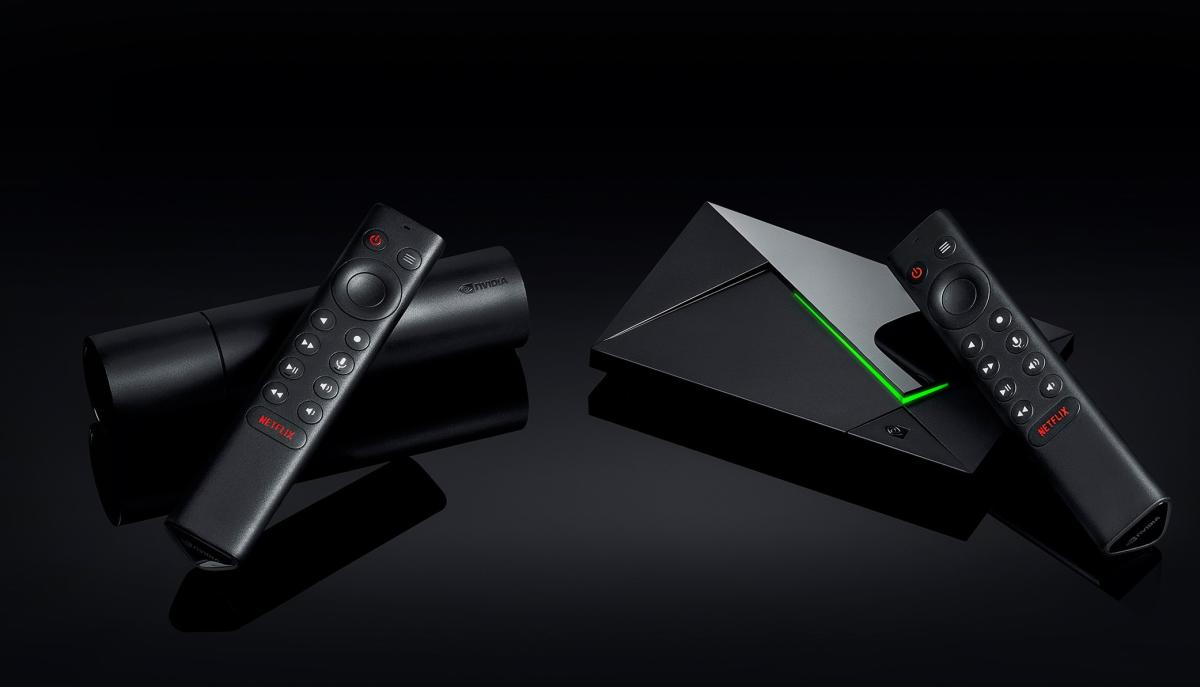
The NVIDIA Shield TV has a compact tube design, which should make it easy to slot somewhere behind your television, but it still makes space for the Tegra X1+ processor. You can control it using voice commands via Alexa and Google Assistant. It comes with a remote control with a voice search function and motion-activated, backlit buttons.

Owners can use it to stream shows, movies and music from the likes of Plex, Amazon Prime Video, Hulu, Netflix, YouTube, HBO Max, Disney+, Spotify and Apple Music. The Android TV-powered device supports 4K HDR Dolby Vision, Dolby Atmos audio and Chromecast streaming. You can also use the device to stream games from NVIDIA GeForce Now and Google Stadia (the Ethernet port should come in especially handy there).

Buy NVIDIA Shield TV Pro at Amazon – $170

The NVIDIA Shield TV Pro has all of those features and more. It might be the way to go if you plan to play Android games from the Google Play Store. It has 3GB of RAM, compared with the Shield TV’s 2GB, and double the storage at 16GB. Storage on both devices is expandable, via microSD on the base model and USB drives on the Pro version. The biggest difference, however, is the fact the Shield TV Pro can be used as a Plex server.

Meanwhile, if you’re not quite sold on NVIDIA’s offerings, another prominent streaming device that might fit the bill is also on sale. Last year’s version of the 32GB Apple TV 4K is , at a third off the regular price of $180.

Follow @EngadgetDeals on Twitter and subscribe to the Engadget Deals newsletter for the latest tech deals and buying advice.

Categories
Technology

Waluigi bachelorette party dubbed ‘best event that has ever happened’

A Waluigi bachelorette party is the talk of the town on TikTok.

When TikToker @cherriesorbet, a burlesque and cosplay costume designer, was getting married, she knew her bachelorette party was going to be special. But few brides would be daring enough to go with a Waluigi theme. For the uninitiated, Waluigi is a villain from the Mario franchise. He’s Luigi’s longtime nemesis and sidekick to Wario.

The bridal party each dressed up as a different version of Waluigi, with the bride herself going as Elvis Waluigi. There was a Cowboy Waluigi, Pirate Waluigi, Sexy Firefighter Waluigi, Cult Waluigi, Chef Waluigi and a Strong Man Waluigi.

Each Waluigi guessed who would get the drunkest that night, and most of them guessed Elvis, the bride.

“I do a lot of burlesque and cosplay costuming, so there was no way I wasn’t going to do something like this for my Bach,” the bride explained on TikTok.

The video earned nearly 1 million views. People loved the commitment to the theme.

“I think that this is the best event that has ever happened ever,” a person commented.

“Imagine being at a restaurant and just seeing an army of differently themed Waluigi’s pulling up,” a user wrote.

“Everyone brought it with their costumes,” another said.

“I’m so impressed that everyone went ALL OUT with props and everything!” to TikToker replied.

“I’ve never been in love with so many people at once,” someone added.

More from In The Know:

Nordstrom is having a major Reformation sale right now, featuring so many chic fall essentials for up to 58% off

TikTok is obsessed with the ‘Plazacore’ aesthetic for fall — these 12 items will help you get the look

Mom always knows best: TikTokers share important life lessons from their mothers

Hunter and Ming transformed this school bus into their pastel dream home

Listen to the latest episode of our pop culture podcast, We Should Talk: