Categories
Technology

Who’s Afraid of a Facebook Hack? A Lot of People, Apparently

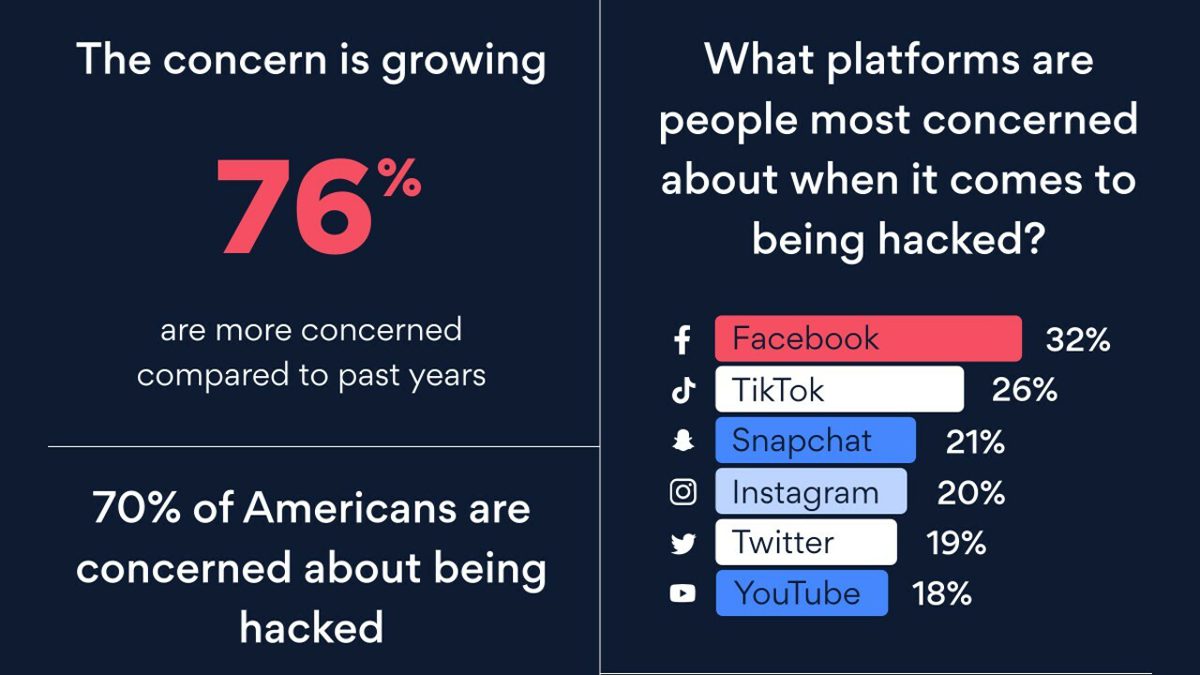
Are you worried about your social media accounts getting hacked? You aren’t alone. That fear seems to be growing, as a survey from NordVPN found that 76% of respondents are more concerned about the possibility than they were the previous year.

Facebook is the platform that people worry about the most, with 32% of respondents fearing their account will be hacked. This makes sense, after years of high-profile security breaches and the reality that you may never get your account back after a breach. We previously reported that millennials are more concerned about Facebook breaches than bank account hacks.

infographic covering American concerns about social media hacks

After Facebook, Americans worry about their TikTok accounts the most, with 26% of respondents concerned about a hack. Americans using other social media platforms are less concerned: only 21% of Snapchat users worry about a hack, followed by Instagram (20%), Twitter (19%), and YouTube (18%).

Think your accounts are safe? Eighty-nine percent of survey respondents know someone who has been compromised, 47% know up to five people, 27% know up to 10 people, and 15% know more than 10 people.

About 37% of Americans say they’ve been the victim of a hack themselves. The most commonly breached app is, of course, Facebook, followed by Instagram, Twitter, YouTube, and TikTok.

.

Categories
Technology

Google Stadia, important news coming for the live streaming function

google-will-show-cloud-games-in-the-results/”>Google Stadia is about to further improve the live streaming experience – a feature called is on the way Party Streaming according to what was anticipated by the colleagues of xda-developers. The deployment should already have started and will take about a week to complete.

Quite simply, it means that it will be possible stream live during a party, which we could basically define as the equivalent of a private group chat. The users included in a streaming party can be a maximum of ten, and a mix between players and spectators. The resulting video stream is only available to the party attendees themselves, rather than in public on YouTube. All typical party features – including voice chat, emoji reactions, and voice reactions – remain available.

The functionality will initially be available on desktop browser and official Android app; timing for distribution on other platforms has not yet been communicated.

At the same time, Stadia announced important improvements to the quality of the streaming experience: in essence, it will be possible change game and even device without having to stop and restart a broadcast. For example, just open the app on the new device and the message will automatically appear to resume streaming. It is worth noting that there are third-party software that allows for similar results, but they are not compatible with Stadia.

Categories
Technology

Desktop CPU shipments plunge to lowest total in nearly 30 years

Credit: Dreamtime

Remember about two years ago, when absolutely everyone wanted to either upgrade their existing PC or buy a new one? Yeah, that doesn’t appear to be the case anymore, according to the latest market report from Mercury Research.

The report states that x86 chip shipments have dropped by the largest percentage year-over-year since the report began way back in 1994. Analyst Dean McCarron said it’s probably the largest decline since the precipitous downturn of 1984.

Desktop and mobile client CPU shipments were down significantly compared to a year ago, with desktop CPU unit shipments falling to the lowest level in nearly three decades, McCarron said in an emailed statement. Total CPU shipments had the largest on-year decline in the history of our report, which spans 28 years.

Even so, the news is good if your name is AMD. Across desktops, laptops, and servers, AMD has gained ground on Intel in every segment, totaling 3.7 per cent market improvement and nearly nine per cent gain year over year. That measurement from Mercury is broadly in line with the quarterly reports from Intel and AMD — awful and rosy, respectively.

Even while gaining on its industry rival, AMD is showing a downturn in laptop CPU shipments, despite glowing reviews for its Ryzen 5000 and 6000 lines. But in desktop and server shipments the company is well up on its position a year ago.

.

Categories
Technology

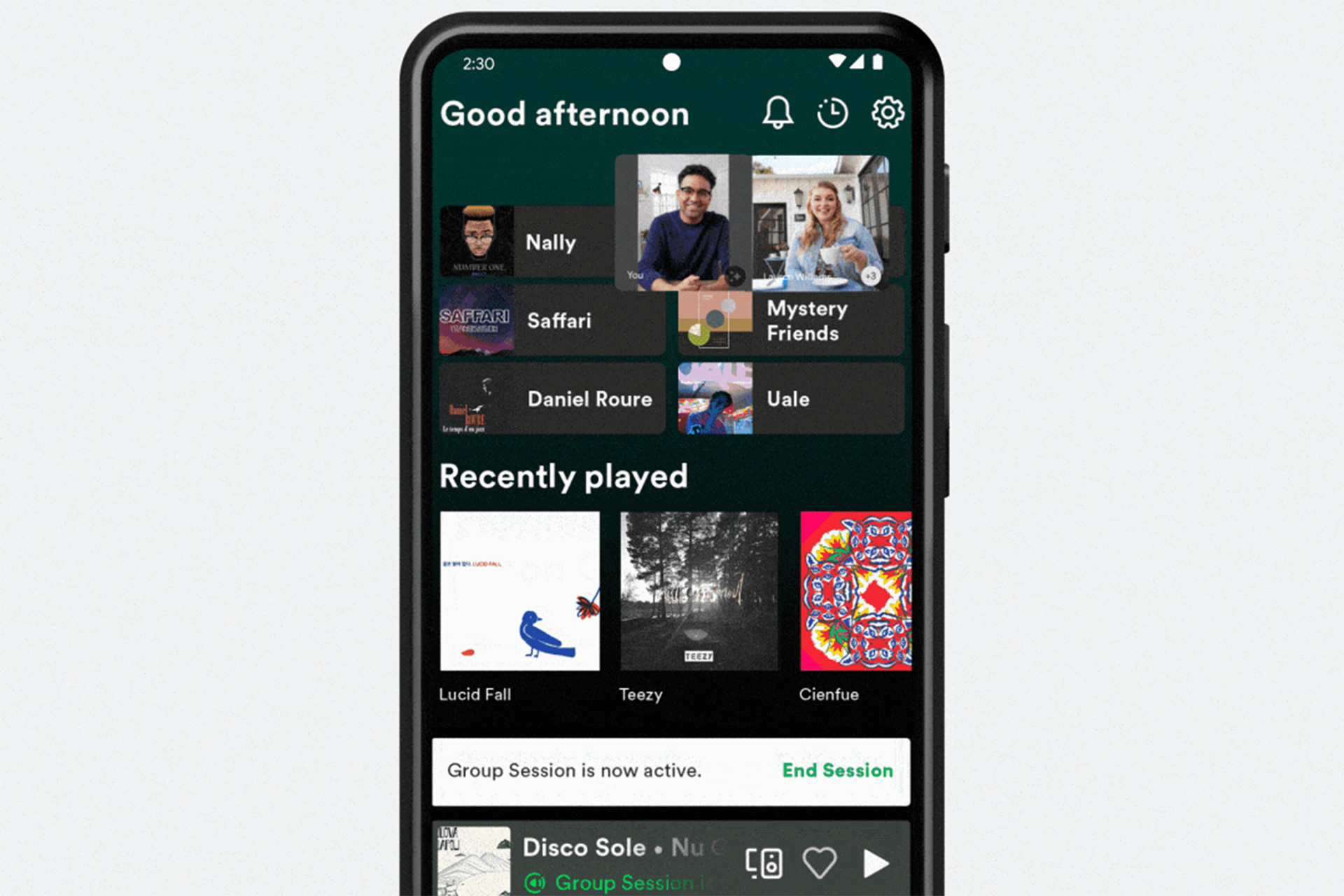
The merged Google Meet app lets you host group Spotify and YouTube sessions

Google’s merger of Meet and Duo may be confusing, but it should deliver some useful upgrades in the bargain. The company has added a live sharing beta feature that lets users of the revamped Meet share Spotify and YouTube streams during chats. You can play games like One Mobile and kahoot, too. The functionality will sound familiar if you’ve tried SharePlay, but you can’t use Spotify or YouTube with Apple’s media feature.

The Meet upgrades include scheduled recurring meetings, virtual backgrounds and in-meeting chats. As with the Meet features coming to Duo, live sharing has been rolling out over recent weeks. The rebranding of Duo as Meet will take place throughout August for mobile devices, and is coming later for everyone else.

Google has pitched the Meet-and-Duo union as an adaptation to the modern realities of video calls. Live sharing clearly reflects this. I’s an acknowledgment that many people use video chats as social spaces, particularly when remote hangouts are more common than they were before the pandemic.

All products recommended by Engadget are selected by our editorial team, independent of our parent company. Some of our stories include affiliate links. If you buy something through one of these links, we may earn an affiliate commission.

Categories
Technology

Everyone Should Be Using iOS 16’s Safety Check Feature

With iOS 16, Apple is bringing even more privacy-focused features to your iPhone. We’ve already discussed Lockdown Mode, which protects your data when you suspect you may be targeted by a sophisticated cyber attack. Not exactly a universal use case — but another new feature, Safety Check, can benefit anyone with an iPhone. It lets you quickly review who has access to the data on your device — including your location, shared notes, and Home access — and revoke those permissions immediately.

Previously, you’d have to manually locate things like shared calendars and notes and remove people from them one at a time. All of the other security settings used to be located in different places, too. With Safety Check, iOS 16 does the legwork for you, and reduces the risk of someone having access to your information without your permission.

Why you should use iOS 16’s Safety Check feature

Safety Check is a hub for your iPhone’s security. You should routinely check it to ensure unauthorized devices or people don’t have access to your data and activity. It lets you review which apps have access to your iPhone’s sensors and your personal data, and allows you to verify that unused apps aren’t accessing this information without your knowledge.

When browsing this section, you can easily remove people from shared access. If you forget others can see some of your notes or calendar entries, you may be letting them see more of your data than you intended. Additionally, people with access to your Home app can control smart devices in your house such as lights, doors, and smart speakers. This could lead to unwanted situations, such as your ex being able to see your shopping lists or planned trips, or mess with the smart devices in your house.

Safety Check can also stop you from spamming people accidentally. When you share notes with others, they get notified every time you make an edit. If you used Notes to collaborate on your vacation planning, the shared note stops being useful after the trip is complete. If someone accidentally opens this note and changes something by mistake, everyone gets an annoying notification.

How to use Safety Check in iOS 16

Screenshot: Pranay ParabScreenshot: Pranay Parab

Because Safety Check is an iOS 16 feature, for now you’ll need to install the iOS 16 beta to check it out. If you’re comfortable taking on the risks of beta software, follow our instructions here to download and install the latest iOS 16 beta to your iPhone.

To use Safety Check, go to Settings > Privacy & Security > Safety Check on your iPhone. You can go to Manage Sharing & Access to get started.

Tap Continue on the next page, and your iPhone will show you a list of people you’ve shared notes or calendars with. You can select those you want to remove, then go to the Information tab on the same page.

On the Information Sharing page, you’ll be able to see how many people have access to shared calendars, notes, or your Home app. Select one of these and tap ReviewSharing. Select the entries again on the next page and tap stopsharing. You’ll have to tap this button again to confirm it.

On the next page, you’ll be able to see which apps have access to your data and sensors on your iPhone. It’s best to go to the Information tab, select each category, and tap Stop App Access.

The final page will ask you to review your account security. Verify that all the devices listed on this page are yours and that you’re using them. If you’ve sold or given away any of the devices listed on this page, select and remove them. Do the same thing if any of the devices belongs to someone else.

Your iPhone will next ask you to check if your trusted phone number and emergency contacts are up to date. Only retain those of the people you trust, and remove the rest. You’ll also be asked if you want to update your Apple ID password and your iPhone’s passcode.

If you ever find yourself in a situation where you need to make sure not one have access to any of your data, you can tap Emergency Reset. This option immediately resets access for all of these settings at once. It’s a drastic move, but could be essential depending on the circumstance.

Once finished, you can be sure that your iPhone’s information cannot be accessed without your authorization. If you keep using the Safety Check feature once every few months (if not more often), you can rest easier knowing your data is secure.

Categories
Technology

Chrissie Swan shows off her 90kg weight loss in activewear as she trains for 300km charity walk

Chrissie Swan looks fit and determined as she gets in the steps for her charity walk in Melbourne following her dramatic weight loss during Covid lockdowns.

On Friday, the radio host, 48, donned an all-black STAX activewear set which included tights and a zip up, long-sleeved shirt.

She kept her brown hair loose and flowing in the wind as she lugged along a Coles shopping bag and a backpack with mustard in the side pocket.

On Friday, Chrissie Swan showed off her 90kg weight loss in activewear as she trained for her 300km charity walk

On Friday, Chrissie Swan showed off her 90kg weight loss in activewear as she trained for her 300km charity walk

The television presenter had a set of earphones plugged in as she walked to raise funds for the Fred Hollows Foundation, browsing some shops and her local Sussan along the way.

It comes after Chrissie lost a significant amount of weight, starting in early 2020 during lockdowns.

The Masked Singer judge, who has lost 90kg since the start of her journey, previously credited her slim-down to daily walks and quitting alcohol.

Chrissie Swan looks fit and determined as she gets in the steps for her charity walk following her dramatic weight loss during Covid lockdowns

Chrissie Swan looks fit and determined as she gets in the steps for her charity walk following her dramatic weight loss during Covid lockdowns

She kept her brown hair loose and flowing in the wind as she lugged along a Coles shopping bag and a backpack with mustard in the side pocket

Chrissie has more recently decided to no longer discuss her weight loss publicly.

‘I think the reason I’m not talking about anything now is because I have done that in the past 20 years,’ she told Stellar magazine in July.

‘I’ve waded into that kind of toxic environment, and it didn’t make me feel good. And it didn’t help me, and it didn’t help anyone else. And it just propagates the interest in a woman’s body, which is irrelevant,’ she added.

The television presenter had a set of earphones plugged in as she walked to raise funds for the Fred Hollows Foundation, browsing some shops and her local Sussan along the way

The television presenter had a set of earphones plugged in as she walked to raise funds for the Fred Hollows Foundation, browsing some shops and her local Sussan along the way

It comes after Chrissie lost a significant amount of weight, starting in early 2020 during lockdowns

It comes after Chrissie lost a significant amount of weight, starting in early 2020 during lockdowns

Chrissie briefly touched on her weight loss in an interview with The Australian Women’s Weekly earlier this year.

She said the ‘enormous’ lifestyle changes she’d made over the previous 12 months had improved her life in so many ways.

‘I’m not going to talk about the size of my a**e. I’m not going to tell you what I eat in a day. Because I’ve read those stories and they make me feel bad about myself,’ she told the magazine.

The Masked Singer judge, who has lost 90kg since the start of her journey, previously credited her slim-down to daily walks and quitting alcohol

The Masked Singer judge, who has lost 90kg since the start of her journey, previously credited her slim-down to daily walks and quitting alcohol

Chrissie has more recently decided to no longer discuss her weight loss publicly. ‘I think the reason I’m not talking about anything now is because I have done that in the past 20 years,’ she told Stellar magazine in July

'I've waded into that kind of toxic environment, and it didn't make me feel good.  And it didn't help me, and it didn't help anyone else.  And it just propagates the interest in a woman's body, which is irrelevant,' she added

‘I’ve waded into that kind of toxic environment, and it didn’t make me feel good. And it didn’t help me, and it didn’t help anyone else. And it just propagates the interest in a woman’s body, which is irrelevant,’ she added

Chrissie has continued to smash her fitness goals by setting herself a new target: to walk 300km in one month for the Fred Hollows Foundation.

She announced last week she’ll be ‘pounding the pavement’ every day in August to raise money for the blindness charity.

‘I’m doing it again! It’s August and that means I’ll be walking 300km to restore sight to those with avoidable blindness,’ she wrote on Instagram.

‘It only takes $25 to restore someone’s sight. That’s amazing to me! Will you get behind me? Last year we raised over $80,000 (that’s over 3,200 people who can see again because of you!?) This year I’m aiming for $100,000!’

'I've waded into that kind of toxic environment, and it didn't make me feel good

Chrissie has continued to smash her fitness goals by setting herself a new target: to walk 300km in one month for the Fred Hollows Foundation

She concluded: ‘Whatever you can spare – there’s a link in my bio. I’ll keep you updated as I go. Let’s do this!’

Chrissie took part in the challenge this time last year, initially aiming for 150km before later extending her goal to 300km.

According to an Instagram post last year, she clocked more than 310km and told her followers that a company had offered to match her donations for the next $15,000.

Chrissie took part in the challenge this time last year, initially aiming for 150km before later extending her goal to 300km and clocking in more than 310km.  (Pictured at the Logie Awards in Melbourne on April 27, 2014)

Chrissie took part in the challenge this time last year, initially aiming for 150km before later extending her goal to 300km and clocking in more than 310km. (Pictured at the Logie Awards in Melbourne on April 27, 2014)

.

Categories
Technology

‘Destiny 2’ cheatsite claims they made the game more popular

destiny 2 cheat site Aimjunkies has claimed it made the game more popular, hitting back at accusations from Bungie that it has caused “grievous harm” to the title.

In April, destiny 2 developer Bungie had a lawsuit against Aimjunkies dismissed from court.

Bungie alleged that AimJunkies was infringing in the developer’s copyright and trademark, as well as breach of contract, “tortious interference,” and “unjust enrichment,” however a judge dismissed the copyright claims as Bungie was unable to actually prove AimJunkies had copied any work .

However, other elements of the lawsuit remained intact with the studio resubmitting the copyright infringement portion of its case a few weeks later, claiming AimJunkies “reverse-engineered and copied the software code for destiny 2” in order to make its cheat software.

Destiny 2. Credit: Bungie.

According to torrentfreakAimJunkies is preparing to defend itself, submitting legal documents to companies like Valve, PayPal, and Google in a bid to get information that it hopes will prove that its cheats did not cause damage to Bungie.

In an accompanying press release, AimJunkies wrote: “Bungie claims that we caused grievous harm to their game when in fact some of their most popular months of player counts and sales were during the time Aimjunkies offered their software products. We believe and intend to gather actionable proof of that and disprove another one of their wild assertions.”

“Do not believe everything you read in their filings, they continued before saying they believed Bungie think “the more shit you throw at the wall, the greater the possibility of something sticking with the court, no matter how ridiculous or absurd it is in the real world.”

“Understand cheating is not illegal and the game companies want to make it illegal because they cannot govern their own players. They are looking to the courts to do what Bungie are powerless to do on their own, even with the vast resources and technologies at their disposal. They would rather suffer death by a thousand cuts then admit this is not the way to fix the problem.”

They went on to say that they’ve “offered to work with Bungie to acquire multiple solutions to their problem.” They go on to say that firstly, they want to “implement our features in a version of their game for distribution, but their pride and bullying mentality prohibits them from thinking out the box. If they did that, would there be a market for our software?

In other news, it’s been reported that three individuals who created and sold cheats for Genshin Impact will serve jail time after developer HoYoverse took legal action against the trio.

Categories
Technology

Which watch should you wear?

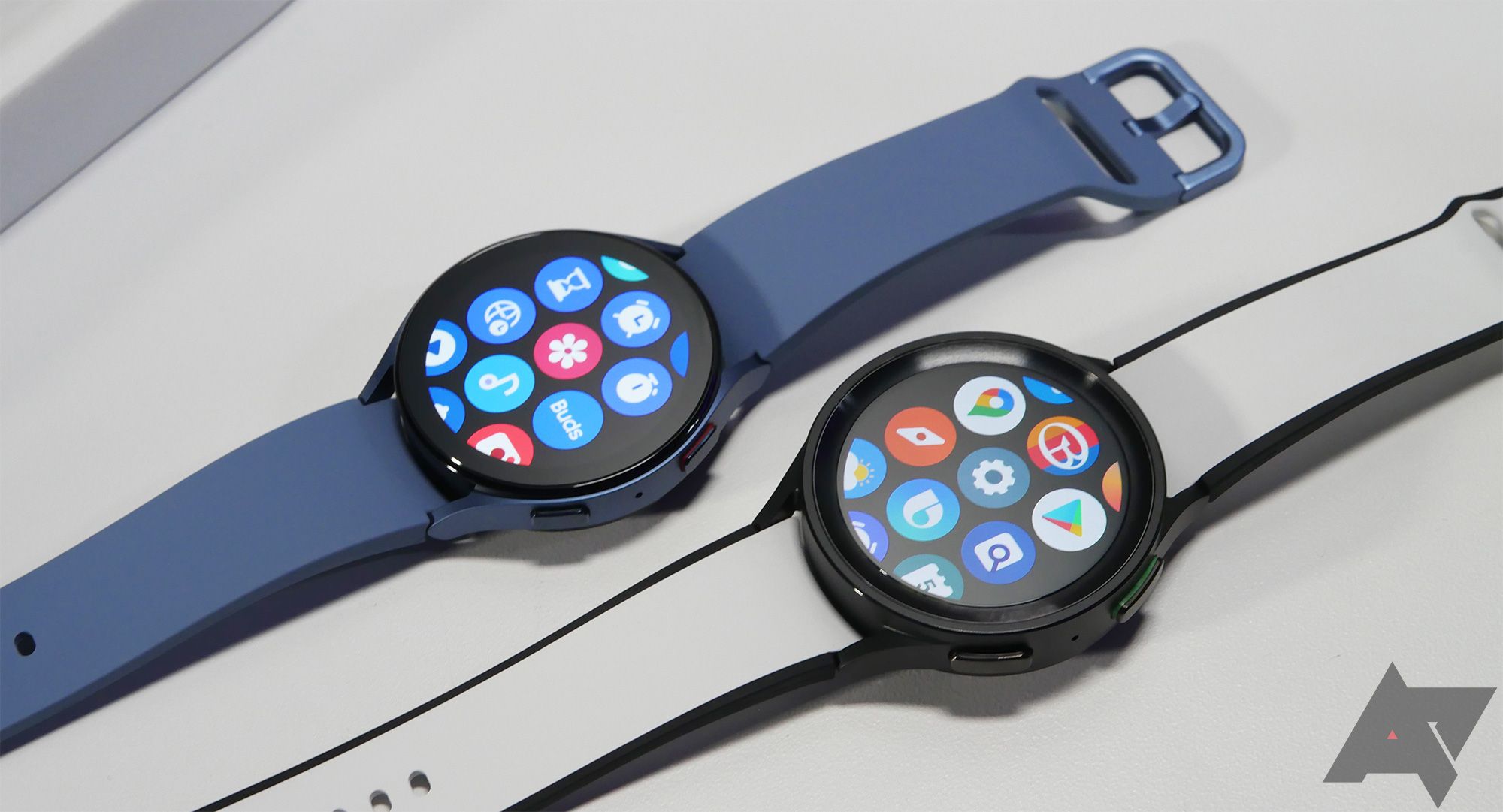
Samsung’s 2022 Galaxy Watch lineup consists of two models: the Galaxy Watch 5 and the Watch 5 Pro. The Watch 5 Pro is a new addition to the series featuring a more durable design that can take on rugged terrains easily. But the Galaxy Watch 5 also features a strengthened screen and a bigger battery. If you are in the market for one of the best Android smartwatches, do you take home the Galaxy Watch 5 or Watch 5 Pro? Is the extra protection worth the cost? Let’s find out.

ANDROID POLICE VIDEO OF THE DAY

Samsung Galaxy Watch 5 vs. Samsung Galaxy Watch 5 Pro: Specs

Samsung Galaxy Watch 5 Samsung Galaxy Watch 5 Pro
display 1.19″ Sapphire Crystal Glass AMOLED (396 x 396px) (40mm) or 1.36″ Sapphire Crystal Glass AMOLED (450 x 450px) (44mm) 1.36″ Sapphire Crystal Glass Super AMOLED (450 x 450px) (45mm)
CPUs Exynos W920 Exynos W920
RAM 1.5GB 1.5GB
Storage 16 GB 16 GB
Battery 284mAh (40mm) or 410mAh (44mm) 590mAh
connectivity NFC, GPS, Bluetooth 5.2, Wi-Fi (2.4GHz & 5GHz), LTE (optional) NFC, GPS, Bluetooth 5.2, Wi-Fi (2.4GHz & 5GHz), LTE (optional)
Durability IP68, Waterproof to 50m (5ATM), MIL-STD-810H IP68, Waterproof to 50m (5ATM), MIL-STD-810H
Software One UI Watch 4.5 (Wear OS 3.5) One UI Watch 4.5 (Wear OS 3.5)
Health sensors Optical Heart Rate, Electrical Heart Sensor (ECG), Bioelectrical Impedance (BIA), Continuous SpO2, Skin Temperature Sensor Optical Heart Rate, Electrical Heart Sensor (ECG), Bioelectrical Impedance (BIA), Continuous SpO2, Skin Temperature Sensor
Price From $280 From $450
Strap 20mm 20mm
Dimensions 40.4 x 39.3 x 9.8mm (40mm) or 44.4 x 43.3 x 9.8mm (44mm) 45.4 x 45.4 x 10.5mm
Weight 29 (40mm) or 32.8g (44mm) 46.5g (45mm)
Watch Material Armor Aluminum Titanium
mobile payments Samsung Pay, Google Wallet Samsung Pay, Google Wallet
Workout detection And it is And it is
Exercise modes 90+ 90+
Color options Silver, Graphite, Pink Gold (40mm only), Sapphire (44mm only) BlackTitanium, GrayTitanium

Galaxy Watch 5 vs. Watch 5 Pro: Durability and design

Design is an area where the Watch 5 differs from its Pro sibling. At first glance, the latter might look like a beefier version of the regular model, but there are a lot of other differences.

The Galaxy Watch 5 is available in 40mm and 44m sizes, while the Pro model only comes in a 45mm casing. The Watch 5’s design looks very similar to the Watch 4, but Samsung has tweaked the curvature to ensure more contact with your wrist. It continues to use an aluminum casing, with Samsung using a Sapphire Crystal Glass for the display, which is seemingly 1.6x times stronger than last year’s model. The more durable build makes the Watch 5 Pro heavier and thicker: 46.5g and 10.5mm vs. the Watch 5’s 28.7g and 9.8mm thickness.

The Galaxy Watch 5 Pro further builds on its more affordable sibling with a sturdier titanium casing. It also features a protruding bezel that helps protect the display from dings and scratches, though in our Galaxy Watch 5 hands-on, we were not a big fan of it. Samsung claims the Sapphire Crystal Glass sitting on top of the 1.36-inch circular display is 2x tougher than the Watch 4. Unlike the regular model, the Watch 5 Pro uses a D-Buckle Sport Band that can easily handle rugged terrains while offering a clean fit. The entire Watch 5 lineup uses 20mm watch bands, so you can swap bands if the in-box band ends up too loose or too tight on your wrist.


The beefier design of the Watch 5 Pro means it is not suitable for smaller wrists. Heck, for some with narrow wrists, even the 40mm Watch 5 might feel too big, as the in-box band with its sculpted ends can keep it from rotating enough for a proper fit. You can alleviate that by swapping to a high-quality 20mm watch strap with flat ends. If you are not a fan of big and bulky watches, opt for the regular Galaxy Watch 5.

Both smartwatches are IP68 + 5ATM certified, so you can wear them while swimming. Compared to the Galaxy Watch 4 Classic, the Watch 5 lineup misses out on a rotating bezel—instead, they use a digital bezel. In addition, there are two physical keys located on the right side for navigation purposes.

Galaxy Watch 5 vs. Watch 5 Pro: Chipset and sensors

Despite their outer shell differences, the Galaxy Watch 5 and its Pro sibling pack the same internals. Both smartwatches use Samsung’s 5nm Exynos W920 chip running at 1.18GHz—the same SoC does duty inside the Galaxy Watch 4. This is paired with 1.5GB RAM and 16GB internal storage. So, in terms of performance, the Pro and non-Pro watches should perform the same.

This goes for the health sensors, too: they match across the entire Galaxy Watch 5 series. This includes an accelerometer, barometer, gyro sensor, geomagnetic sensor, and light sensor. Samsung’s BioActive Sensor—which can measure your heart rate, electrical heart signal, and body mass composition—is also present. The temperature sensor is a new addition that relies on infrared to take more accurate measurements.

Samsung even claims that the sensors on the Galaxy Watch 5 will take your measurements with greater accuracy. That’s because they now have direct contact with your wrist over a larger surface area, which should again help those with thin or narrow wrists.

Irrespective of which watch you buy, it can measure your heart rate and body composition, track your workouts, sleep cycle, and more. All the recorded data is synced to Samsung Health, where you can further analyze it. The only difference is that the “find your way back” hiking guidance feature is restricted to the Watch 5 Pro, presumably due to its better battery life.

Both watches run on One UI Watch 4.5 based on Wear OS 3.5. There’s no difference between them regarding software experience, with Samsung supporting them for up to four years after launch.

Galaxy Watch 5 vs. Watch 5 Pro: Battery life and charging

If you want a smartwatch with the best possible battery life, go for the Watch 5 Pro. Samsung uses a 15% bigger battery on each Galaxy Watch 5 model. The company claims that’s good enough for the Watch 5 to last for 50 hours on a single charge. The Galaxy Watch 5 Pro, with its massive 590mAh cell, is in another league altogether. It has a 60% bigger battery than the Galaxy Watch 4, allowing it to last up to 80 hours between charges.

We’re still putting both models through their peace to see exactly how well they live up to Samsung’s claims, but in the earliest testing, even the smaller Watch 5 definitely seems to be lasting more than 24 hours. Hopefully, the Galaxy Watch 5 and 5 Pro will finally get back to the multi-day battery life last enjoyed on the Samsung Galaxy Watch Active series back in 2019.

Apart from bigger batteries, the Galaxy Watch 5 lineup also supports faster charging speeds courtesy of a new USB-C charger. The company claims you can top off the cell to 45% in 30 minutes or get eight hours of sleep tracking after eight minutes of charge. For the Watch 5 Pro, a full charge should take slightly longer due to its large 590mAh battery.

Galaxy Watch 5 vs. Watch 5 Pro: Price

Source: Samsung

True to its name, the Galaxy Watch 5 Pro also carries a ‘pro’ price tag. It starts from $450, with the LTE version costing another $50. This makes it substantially more expensive than the Galaxy Watch 5, which starts from $280. The 44mm variant costs $310—a $39 premium over the smaller size.

The Galaxy Watch 5 is slightly more expensive than last year’s Watch 4. And that’s understandable given the Sapphire Crystal Glass and longer battery life. But it is hard to justify the Watch 5 Pro’s $170 premium over the Watch 5 for the same reasons. The good thing is the sturdy construction and beefy battery life mean the wearable will easily last you a few years.


Both smartwatches are currently on preorder, with retail availability scheduled to start on August 26. You can trade in your existing smartwatch or take advantage of Samsung’s preorder offers to get an even sweeter deal: at least a $75 trade-in on any smartwatch in any condition. If you own a Watch 4 or Watch 4 Classic, it’ll cut the watch’s price in half.

Galaxy Watch 5 vs. Samsung Galaxy Watch 5 Pro: Which should you buy?

For an additional $170 that you pay for the Watch 5 Pro over the regular model, you get a more durable build quality, a slightly bigger screen, and significantly longer battery life. Unless these improvements are really that important, buying the regular Watch 5 makes more sense. Thanks to a bigger battery, it should last at least a day and a half on a single charge, possibly even two. And when in a hurry, the faster charging times can help top off the cell to ensure the watch lasts for a few more hours with ease.

The Watch 5 Pro is on the bulkier side and that may not look good on everyone’s wrists. Unlike the regular Watch 5, which is available in more funky and bright colors, the Pro model comes in two boring shades — black and gray — that may not be to everyone’s tastes.

While the Watch 5 Pro’s longer battery life is tempting, that should not be the sole reason to spring for it. If you frequently go for hikes and trail walks where you rely on your smartwatch to track your workouts, then the Pro model is an ideal choice. Its rugged build will come in handy in such scenarios, as you can rest assured knowing it can withstand such environments with ease. And that battery life means it can go multiple days between charges.

Preorder the Samsung Galaxy Watch 5

See at SamsungSee at AmazonSee at Best Buy

Preorder the Samsung Galaxy Watch 5 Pro

See at Samsung See at Amazon See at Best Buy
Categories
Technology

Moto Razr 2022 teardown video shows how the new hinge improves on the old one

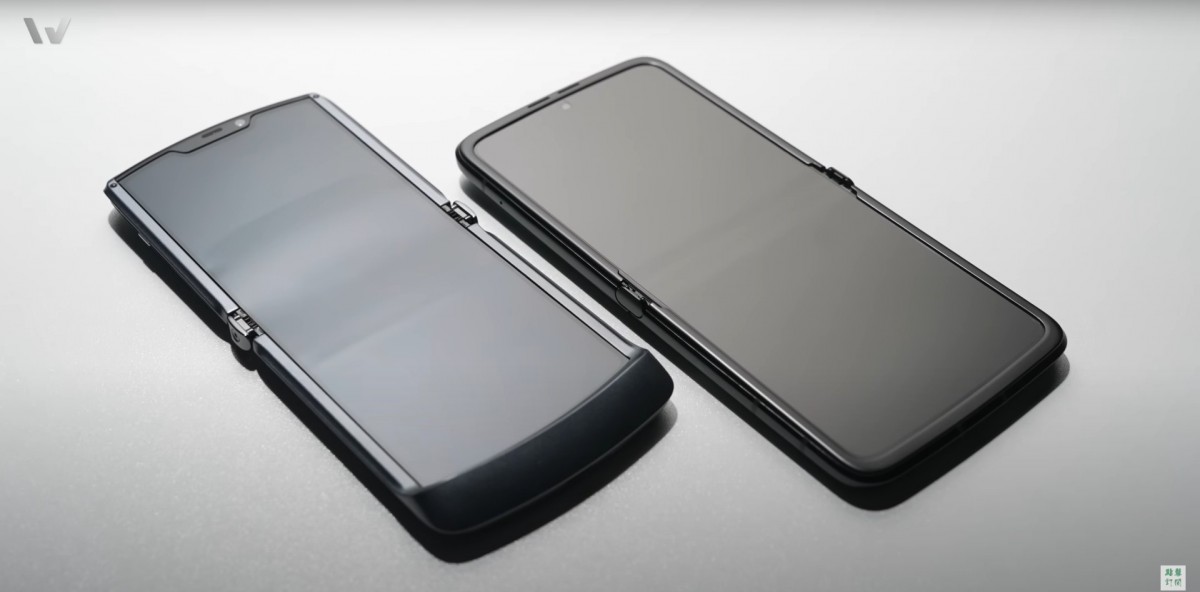
The Moto Razr 2022 looks more modern without the chin, but that actually served an important purpose on the Razr 5G (beyond nostalgia). A spring-loaded mechanism within the chin kept the foldable display taut to try and minimize the crease. The 2022 model takes a different approach.

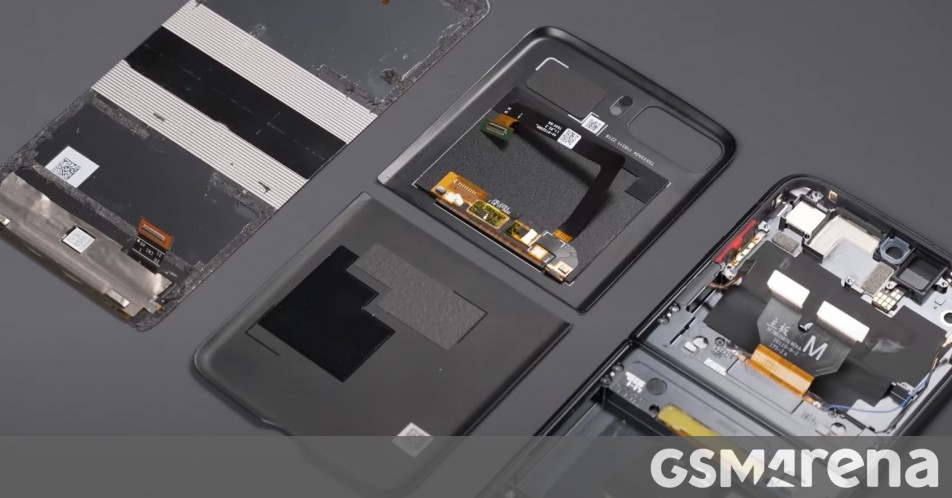
The teardown video from WekiHome offers a great visual demonstration of how the two different mechanisms work. It starts at the 9 minute mark, you can see the display of the old Razr 5G move up and down slightly as the phone is opened and closed.

The new Moto Razr 2022 keeps the display fixed at both ends and instead folds the middle in a teardrop shape (with a 3.3mm diameter). There are thin metal strips in the middle, which help to reduce the stress on the display. As you can see below, the creased area on the new model is significantly smaller.

Moto Razr 2022 teardown video shows how the new hinge improves on the old one

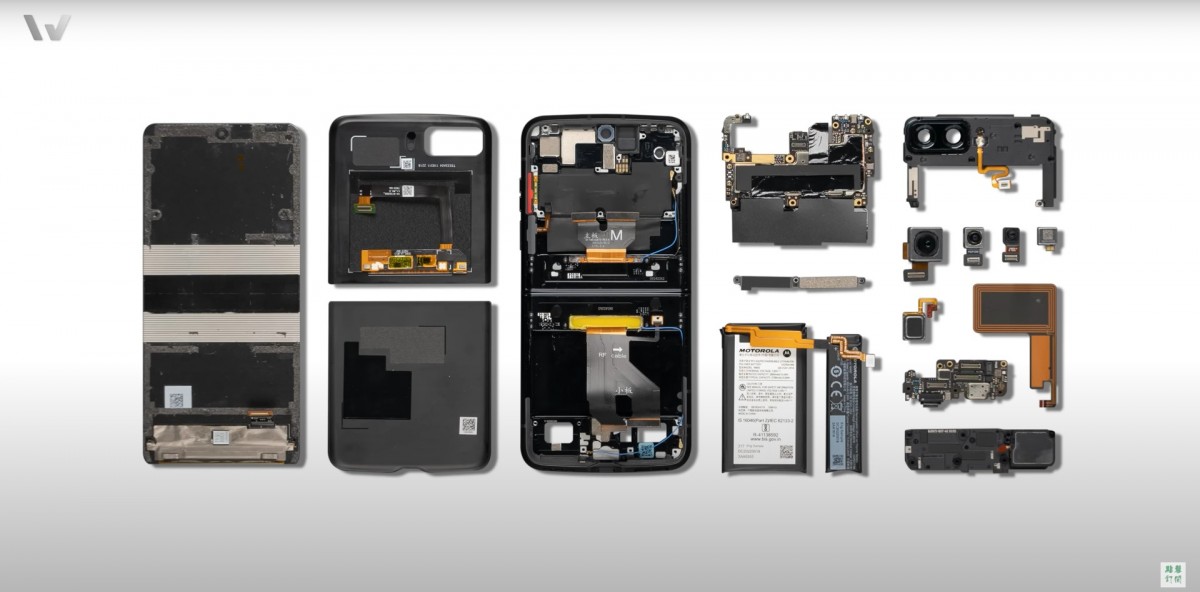
A few other interesting things to note. Everything is stacked in multiple layers interconnected by ribbon cables, this takes real skill to take apart and put back together again. Also, that colorful gloss you see on the PCBs is the conformal coating that repels any water that might have entered the phone.


A closer look at the Moto Razr 2022 hinge mechanism
The two battery cells

A closer look at the Moto Razr 2022 hinge mechanism • The two battery cells

As is typical with foldables, the battery is split into two cells – a small 712mAh/2.8Wh one in the top half and a larger 2,788mAh/10.9Wh one in the bottom half. Motorola didn’t use vapor chambers to cool the Snapdragon 8+ Gen 1 chipset, relying instead of a copper block, several copper sheets and thermal paste to do the job.

Moto Razr 2022 teardown video shows how the new hinge improves on the old one

Yesterday Motorola only announced details for launch in China, but insiders and analysts claim that the Moto Razr 2022 is destined for a global rollout (like its predecessors).

Source

Categories
Technology

Thinking like a cyber-attacker to protect use

A component of computer processors that connects different parts of the chip can be exploited by malicious agents who seek to steal secret information from programs running on the computer, MIT researchers have found.

Modern computer processors contain many computing units, called cores, which share the same hardware resources. The on-chip interconnect is the component that enables these cores to communicate with each other. But when programs on multiple cores run simultaneously, there is a chance they can delay one another when they use the interconnect to send data across the chip at the same time.

By monitoring and measuring these delays, a malicious agent could conduct what is known as a “side-channel attack” and reconstruct secret information that is stored in a program, such as a cryptographic key or password.

MIT researchers reverse-engineered the on-chip interconnect to study how this kind of attack would be possible. Drawing on their discoveries, they built an analytical model of how traffic flows between the cores on a processor, which they used to design and launch surprisingly effective side-channel attacks. Then they developed two mitigation strategies that enable a user to improve security without making any physical changes to the computer chip.

“A lot of current side-channel defenses are ad hoc — we see a little bit of leakage here and we patch it. We hope our approach with this analytical model pushes more systematic and robust defenses that eliminate whole classes of attacks at the same time,” says co-lead author Miles Dai, MEng ’21.

Dai wrote the paper with co-lead author Riccardo Paccagnella, a graduate student at the University of Illinois at Urbana-Champaign; Miguel Gomez-Garcia ’22; John McCalpin, a research scientist at the Texas Advanced Computing Center; and senior author Mengjia Yan, the Homer A. Burnell Career Development Assistant Professor of Electrical Engineering and Computer Science (EECS) and a member of the Computer Science and Artificial Intelligence Laboratory (CSAIL). The research is being presented at the USENIX Security Conference.

Probing processors

A modern processor is like a two-dimensional grid, with multiple cores laid out in rows and columns. Each core has its own cache where data are stored, and there is also a larger cache that is shared across the entire processor. When a program located on one core needs to access data in a cache that is on another core or in the shared cache, it must use the on-chip interconnect to send this request and retrieve the data.

Though it is a large component of the processor, the on-chip interconnect remains understudied because it is difficult to attack, Dai explains. A hacker needs to launch the attack when traffic from two cores is actually interfering with each other, but since traffic spends so little time in the interconnect, it is difficult to time the attack just right. The interconnect is also complex, and there are multiple paths traffic can take between cores.

To study how traffic flows on the interconnect, the MIT researchers created programs that would intentionally access memory caches located outside their local cores.

“By testing out different situations, trying different placements, and swapping out locations of these programs on the processor, we can understand what the rules are behind traffic flows on the interconnect,” Dai says.

They discovered that the interconnect is like a highway, with multiple lanes going in every direction. When two traffic flows collide, the interconnect uses a priority arbitration policy to decide which traffic flow gets to go first. More “important” requests take precedence, like those from programs that are critical to a computer’s operations.

Using this information, the researchers built an analytical model of the processor that summarizes how traffic can flow on the interconnect. The model shows which cores would be most vulnerable to a side-channel attack. A core would be more vulnerable if it can be accessed through many different lanes. An attacker could use this information to select the best core to monitor to steal information from a victim program.

“If the attacker understands how the interconnect works, they can set themselves up so the execution of some sensitive code would be observable through interconnect contention. Then they can extract, bit by bit, some secret information, like a cryptographic key,” Paccagnella explains.

Effective attacks

When the researchers used this model to launch side-channel attacks, they were surprised by how quickly the attacks worked. They were able to recover full cryptographic keys from two different victim programs.

After studying these attacks, they used their analytical model to design two mitigation mechanisms.

In the first strategy, the system administrator would use the model to identify which cores are most vulnerable to attacks and then schedule sensitive software to run on less vulnerable cores. For the second mitigation strategy, the administrator could reserve cores located around a susceptible program and run only trusted software on those cores.

The researchers found that both mitigation strategies were able to significantly reduce the accuracy of side-channel attacks. Neither requires the user to make any changes to the physical hardware, so the mitigations would be relatively easy to implement, Dai says.

Ultimately, they hope their work inspires more researchers to study the security of on-chip interconnects, Paccagnella says.

“We hope this work highlights how the on-chip interconnect, which is such a large component of computer processors, remains an overlooked attack surface. In the future, as we build systems that have stronger isolation properties, we should not ignore the interconnect,” he adds.

This work was funded, in part, by the National Science Foundation and the Air Force Office of Scientific Research.

###

Written by Adam Zewe, MIT News Office

Paper: “Don’t Mesh Around: Side-Channel Attacks and Mitigations on Mesh Interconnects”

https://people.csail.mit.edu/mengjia/data/Mesh_Attack_USENIX_22.pdf


Disclaimer: AAAS and EurekAlert! are not responsible for the accuracy of news releases posted to EurekAlert! by contributing institutions or for the use of any information through the EurekAlert system.