Categories
Technology

WellCare Today Samsung Galaxy 4 LTE Smartwatch With HealthAssist – Review 2022

The WellCare Today Samsung Galaxy 4 LTE Smartwatch With HealthAssist (starting at $199, plus a monthly subscription) is more than a stylish smartwatch. In addition to connecting you with an emergency response agent when you fail or otherwise need help, it takes ECG readings, monitors your blood oxygen level and heart rate, and tracks your daily activities. It also offers numerous caregiver features including medicine and appointment reminders, messaging, and hands-free two-way calling. A Remote Patient Monitoring feature even sends your real-time health data directly to your doctor. All these features, in conjunction with the watch’s Wi-Fi connectivity and GPS location tracking, make it our new Editors’ Choice winner for mobile medical alert systems.


A Stylish and Durable Design

The Editors’ Choice-winning Samsung Galaxy Watch4 is the basis of the system, but the real star here is WellCare Today’s HealthAssist software (more on this later). You still get all of the Wear OS and Samsung app functionality as you do with the regular Watch4, but the HealthAssist software transforms it into a capable medical alert system.

The watch is available in several styles and sizes. WellCare Today offers 40mm ($199) and 44mm ($229) standard models in black, silver, or rose gold, as well as 42mm ($299) and 46mm ($329) variations of the Classic model (with a rotating bezel) in black or silver .

WellCare Today sent us the black version of the standard 44mm watch. Our test model measures approximately 1.7 inches by 0.4 inches (WD), weighs about 1.1 ounces, and comes with a smooth lightweight rubber wrist strap. Despite its stylish looks, this watch is pretty rugged: It meets the MIL-STD-810G standard for durability and sports an IP68 weather resistance rating. It also adheres to the 5ATM waterproof spec, which means it can last for up to 10 minutes at depths of up to 164 feet. The 1.4-inch AMOLED display has a 480-by-480-pixel resolution and features a protective Corning Gorilla Glass cover.

The WellCare smart watch on the stress meter

A 1.18GHz Exynos W920 Dual Core processor powers the watch, which comes with 1.5GB of RAM and 16GB of internal storage. It has Bluetooth, GPS, NFC, and Wi-Fi radios, along with built-in fall detection, location tracking, and hands-free two-way talk (AT&T provides cellular service for the latter) features. The bottom of the watch houses a multifunction health sensor that can take an ECG; record your blood oxygen levels and your body composition (body fat, skeletal muscle, body water, body mass index); perform a stress test; and measure your heart rate. The watch also has a step counter and provides Sleep Insight readings based on your activity and blood oxygen levels while you are asleep. Temperature and blood pressure readings are on the horizon pending FDA approval.

The watch uses a rechargeable 361mAh battery that can last up to 40 hours between charges, but as with the Medical Guardian MGMove Smartwatch (starting at $199.95), you should charge the watch every day with the included magnetic charger to be safe.

The right side of the watch has two buttons: Press and hold both simultaneously to power up the watch. When you press and hold the top button you can just say, “Call for help,” to initiate a call to 911 or an emergency response center depending on your preference (this is preprogrammed before shipping). Pressing this button twice automatically dials the number. The bottom button wakes up the watch and doubles as a back button for navigating the menus.


WellCare Today Subscription Features and Watch Interface

The two available subscription levels are comparable with those for the Medical Guardian MGMove Smartwatch ($39.95 per month) and the LifeStation Sidekick Smart ($43.95 per month), but neither of these other watches offers fall detection.

A HealthAssist Gold subscription costs $34.95 per month and includes one-press calls to a caregiver, one-press calls to 911 or an emergency call center, medication reminders, Managing Medication Adherence (the watch alerts a caregiver if you don’t take your meds ), blood oxygen monitoring, blood pressure monitoring (again, pending FDA approval), fall detection, and ECG tracking. For $44.95 per month, a Platinum subscription gives everything above as well as Remote Patient Monitoring (RPM). With RPM, the watch sends data such as ECG, blood oxygen, blood pressure, and stress readings to a participating physician or caregiver so they can monitor your health in real time. This allows doctors and caregivers to intervene quickly when the data suggests an increased risk of heart attack, stroke, or any other medical issue. Along with the subscription fee, you must pay a one-time $30 cellular activation fee and a $25 shipping fee.

A screenshot of the WellCare website

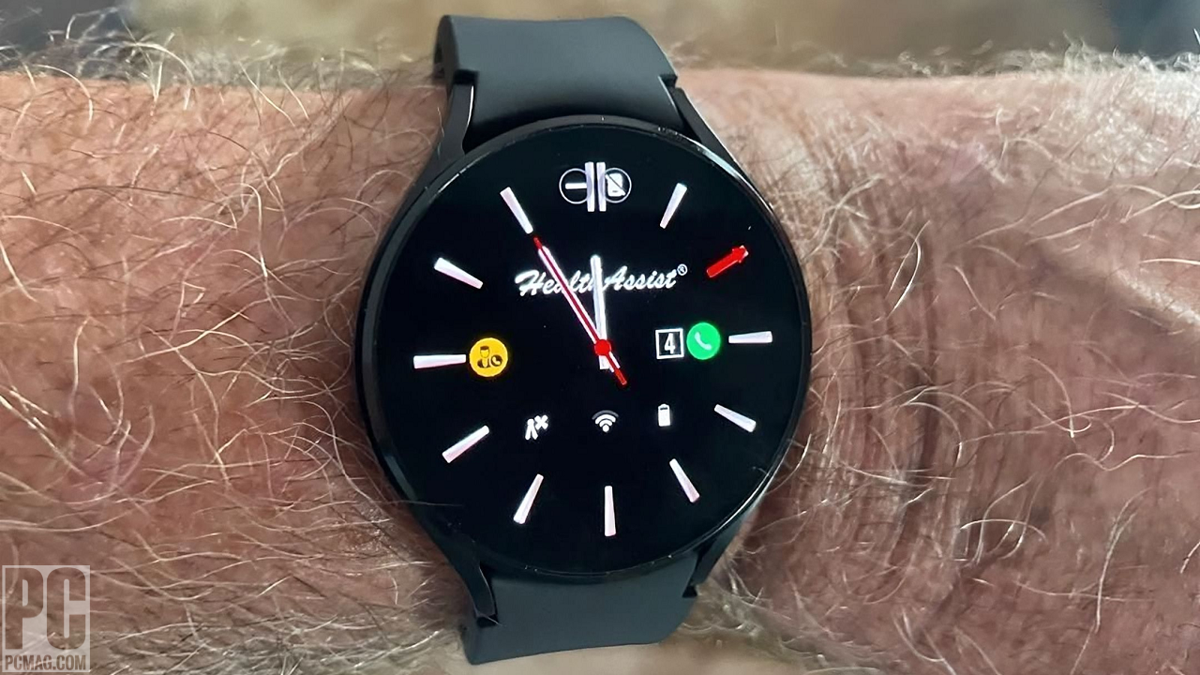
Despite its robust feature set, the watch is very easy to use. When you turn it on or press a button, you see a classic watch dial with hour, minute, and second hands. Tap the amber circle on the left to automatically place a call to your caregiver, or tap the green circle on the right to initiate a test call to make sure everything is working correctly. When the watch detects a fail, it automatically places a call to 911 or the emergency call center if you remain motionless. At this point, agents can pinpoint your location and dispatch help if you do not respond. If there is no emergency, press the red X to cancel the call.

Swipe the watch face to the left to see your blood oxygen, ECG, heart rate, body composition, and stress measurements. Keep swiping left to access the step counter and Sleep Insights screens, as well as to reach a FAQ screen; connect with HealthAssist customer service; and view health data including reminder notifications and daily activity. The Special Functions screen lets you refresh data (send data to the servers); check battery life; view Wi-Fi and cellular signal strength; and send diagnostic information to HealthAssist.

Back at the dial face, swipe down to access Wi-Fi, NFC, and Bluetooth settings; set the display brightness; enable sound and vibration modes for calls and notifications; set ringtones; and change the font size. Swipe up from the bottom of the dial to access Samsung apps that let you view call history, configure settings, access a compass, check the weather, set timers, use the calculator, and lots more. You can technically connect the watch to your Samsung phone, but we don’t recommend it, because doing so deletes the HealthAssist app and all of its data.

The WellCare smart watch displaying a medicine reminder.

Users and caregivers can use the HealthAssist Web Companion app to enter medical information; create medicine and appointment reminders; track your location; monitor emergency call events; and more. The software is available only on the web (there’s no mobile companion app), but it’s very easy to use and offers a wealth of information.

When you first log in, you see a dashboard with several large green buttons: Medication, Reminder Messages, Instrument Messages, Personal Health Record, Message Inbox, and Device Location. Tap the Medication button to enter medication names, dosages, and schedules. Here, you can also view medication histories, select pharmacies, add reminders, and see if the scheduled medication dosage is complete. Use the Reminder Message button to add one-time or recurring reminders for things like doctor appointments. Instrument Messages tell you when to take an ECG test or check your blood oxygen level. The Personal Health Record button lets you enter information such as your primary care physician, insurance carrier, and important medical history. The Message Inbox lets you see previous reminders (with time stamps). Finally, the Device Location button opens a map that shows your real-time location.


Simple Setup, Responsive Performance

Preparing the HealthAssist watch for first use is easy. Simply plug in the charger and place the watch on the magnetic charging disc for around 30 minutes to ensure it is fully charged. At this point, you or a caregiver can log in to the HealthAssist web portal and enter medication reminders, doctor and insurance information, and emergency contact information. It’s also a good idea to press the green circle on the watch face to test the watch before you venture out.

A screenshot of the WellCare website

The watch worked well in our tests. An average response time (the time it takes for the watch to connect us to a live agent after we press the button) of 26 seconds was identical to that of the Medical Guardian MGMove watch. For comparison, the LifeStation Sidekick Smart and Kanega Watch respectively took 28 and 46 seconds on average.

As with every medical alert device we’ve tested, the emergency response agents were helpful and polite. Two-way audio was also clean and adequately loud. I compared the step counter readings with that of a Fitbit Inspire 2 and they were nearly identical. Device Location tracking was accurate, too.


Comprehensive Wrist-Based Health Monitoring

The WellCare Today Samsung Galaxy 4 LTE Smartwatch With HealthAssist is an excellent alternative to a mobile medical alert device that you attach to your belt or wear around your neck. Granted, you have to shell out $199 for the watch and up to another $45 per month for a subscription, but that’s pretty much in line with what you pay for other medical alert watches. In its favor, the WellCare Today watch includes fall detection, offers web-based location tracking, and reports real-time health data to physicians and caregivers. All this earns the WellCare Today Samsung Galaxy 4 LTE Smartwatch With HealthAssist our Editors’ Choice award for medical alert devices.

.

Categories
Technology

Aussie Halo star Barcode debuts for G2 Esports in HCS NA Super sweep of Spacestation

Following months of rumors that Australian talent Barcode was seeking a move to a North American team, the Aussie debuted for G2 Esports in the HCS NA Super this weekend. Taking the fourth spot on the roster, one that has already been inhabited by three different players in the past six months, Barcode made a statement with a standout performance that saw G2 take down Spacestation Gaming 3-0 in their first match of pool play.

While all three games in the best-of-five series were a closer call than the final series score may suggest, G2 can be encouraged by the lineup’s immediate potential and ability to close out tight games. Barcode was a major factor in putting that potential on display, topping G2’s stat screen in games one and two.

The Australian was the only member of G2 who could keep up with the slaying output of Spacestation’s Ace and Suppressed in Capture The Flag in game one. With seven more kills to his name than his closest teammate, for a total of 26, Barcode’s performance proved essential in a game that went to overtime and only concluded with G2 taking a narrow 2-1 victory. This was despite Ace and Suppressed both finishing the match with 13 and 10.7 KDA’s, respectively—a worrying sign that Spacestation’s objective play requires some major improvements.

Barcode also secured a triple kill in Slayer on Streets in game two, topping his team yet again with 15 kills overall in the match. Spacestation’s struggles in the series were only exacerbated when they faltered in the face of a small lead in their favor toward the end of the game. A two-kill advantage for Spacestation with 10 kills to go culminated in a 50-42 win for G2, which proved to be a momentum swing that Spacestation failed to recover from in the third and final game.

Here are the final results for Pool D’s match between G2 Esports and Spacestation Gaming:

  • Capture The Flag on Catalyst: 2-1 G2
  • Slayer on Streets: 50-42 G2
  • Oddball on Recharge: 2-0 G2

Barcode left his Australian organization, The Chiefs Esports Club, after a six-month period of total dominance in the region at the beginning of halo-infinite‘s competitive season. While Barcode and G2 wo n’t enjoy the same kind of record in the face of the heightened competition in North America, it’s clear those greater heights and greater rewards are far more of a home for Barcode’s talents than his home region ever was .

G2 will continue at the HCS NA Super this weekend as they aim to top Pool D and stake a claim at the top of North America with its refreshed roster.

Categories
Technology

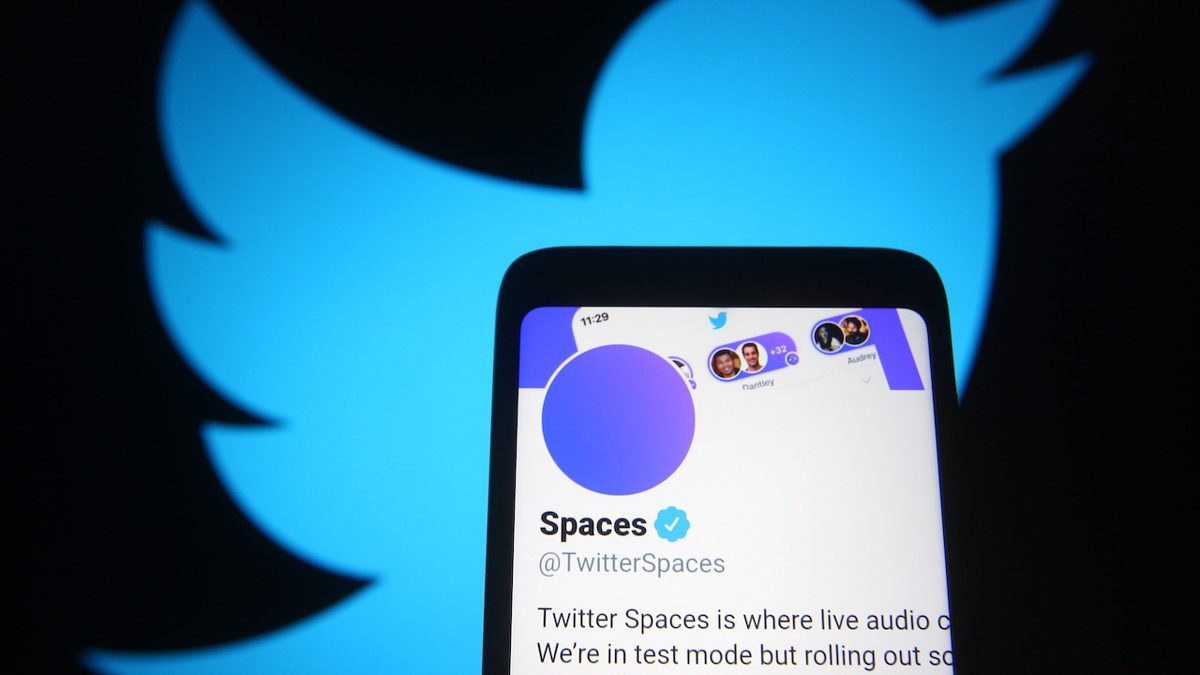
Twitter Is Tweaking the Design of Spaces, Experimenting With New Features

Twitter has confirmed it’s currently experimenting with the design and features on offer to users of Spaces audio chat rooms.

Screenshots of an early test version, published by TechCrunch, suggest an updated concept which has yet to be finalized; Twitter noted that these images are “inaccurate and outdated,” representing “an initial version” of the new experience. However, a new look, personalized daily digest, and themed stations are teased in the shots.

The redesign looks set to reorganize the audio chat room into different topics, for example Music and Sports. Topics were launched last year for creators to tag their audio programs, but were limited. They could now become a core feature of the Spaces experience.

As to when we’ll get to see the “new” Spaces, an official announcement is expected “further down the road,” according to Twitter, but no time frame was given.

Twitter introduced Spaces to a “very small” feedback group in late 2020, inviting select members to join its experimental audio chat rooms. By the summer of 2021, Spaces was available to mobile and desktop accounts with over 600 followers, with the option to include co-hosts and charge for exclusive live audio experiences.

.

Categories
Technology

Nintendo Download Updates (Week 31) Hot to Frog

Time to kick off August with a tidy amount of new games. There’s no huge releases this month, so it’ll be a little bit of grazing as we go. This week there’s a surprise with MEGA MAN BATTLE & FIGHTERS, an Aussie made game Hot Lap League: Deluxe Edition which plays a lot like Trackmania, Frogun is cute and Before We Leave and South of the Circle also look good.

By the way, whenever a game is in capital letters, it’s the publisher doing it, not us! Anything for you this week?

New release highlights: Before We Leave, Frogun, QUByte Classics: Thunderbolt Collection by PIKO, Hot Lap League: Deluxe Edition, South of the Circle and MEGA MAN BATTLE & FIGHTERS.

✚ 90” Soccer – $5.99 (Usually $7.49)
✚ AAA Clock Platinum Edition – $2.88 (Usually $16.95)
✚ After Wave: Downfall – $22.50
✚ Animal Fun Puzzle – Preschool and kindergarten learning and fun game for toddlers and kids – $11.99
✚ Arcade Archives DIG DUG – $10.50
✚ Before We Leave – $22.39 (Usually $27.99)
✚ Celestian Tales – $22.50
✚ Clumsy Rush: Ultimate Guys – $2.94 (Usually $10.50)
✚ Counter Bunny Hop – Strike Go Simulator Xtreme Deluxe 3D Shooter – $19.99
✚fig. – $15.00
✚ Fightro – $9.00 (Usually $11.25)
✚ Frogun – $18.00 (Usually $22.50)
✚ Frogun Deluxe Edition – $30.00 (Usually $37.50)
✚ Gale of Windoria – $20.25 (Usually $22.50)
✚ Gigapocalypse – $15.00
✚ Hindsight – $19.95
✚ Hot Lap League: Deluxe Edition – $29.99
✚ Japanese Escape Games The Retro House – $6.74 (Usually $13.49)
✚ Jump The Car – $15.00
✚ Kells – $7.99
✚ Ki11er Clutter – $15.00
✚ KOKORO CLOVER Season 1 – $25.24 (Usually $28.05)
✚ Little Mouse’s Encyclopedia + Comic Coloring Book – Complete Edition – $4.32 (Usually $48.00)
✚ Logic Pic – $8.85 (Usually $11.80)
✚ MEGA MAN BATTLE & FIGHTERS – $12.00
✚ My Dangerous Life – $19.50
✚ Princess.Loot.Pixel.Again x2 – $5.70
✚ Pure Crosswords – the best Crossword Puzzle Word Game ever! – $22.50
✚ Quarry Truck Simulator – $11.99 (Usually $14.99)
✚ QUByte Classics: Thunderbolt Collection by PIKO – $11.99
✚ Roll The Cat – $6.39 (Usually $7.99)
✚ Sofia and the Ancient Clan – $9.59 (Usually $11.99)
✚ South of the Circle – $17.55 (Usually $19.50)
✚ Star Seeker in: the Secret of the Sorcerous Standoff – $8.40
✚ Super Snake Block – $3.00 (Usually $7.50)
✚ Super Space Serpent SE / Perpetuum Mobile Bundle – $19.50
✚ Thibalryn – $1.50
✚ Ultimate 4×4 Offroad Trucks :Car Racing Driving Simulator 2022 – $39.99
✚ Viki Spotter: Megapolis – $5.25 (Usually $7.50)
✚ Wavecade – $8.00 (Usually $10.00)
✚ Zen Mindfulness: Meditation and Relaxation – $4.50

Categories
Technology

The Rotom Phone is finally getting a second camera

The Rotom Phone is getting a big upgrade. Following its introduction in the Galar region three years ago, the updated version of the smartphone-that’s-inhabited-by-a-Pokémon is finally making the jump from one back camera to two. The handset will soon be available in the new Paldea region as well.

It’s difficult to tell exactly what kind of second lens is for — all I can really see is that the main lens remains blue while the new second lens is black. I don’t think that’s enough information to make an informed guess about whether this new lens is a telephoto, an ultrawide, or something else, though I’m hoping I’ll be able to use that second camera to take pictures of the new best boy Fidough.

Beyond that, it seems like this new Rotom Phone is a largely iterative upgrade from the previous one. One new feature is a mysterious glowing blue ring in the middle of the device. Maybe that’s for wireless charging? The ring is set pretty much exactly where you’d expect a wireless charging coil to be, after all. Though I don’t remember ever having to charge the Rotom Phone in Galar, I guess it’s nice that wireless charging could be an option while I’m at one of Paldea’s trainer schools.

Disappointingly, the large points on the top and bottom of the Rotom Phone have stuck around for this next generation. That means it’s probably still not comfortable to slip into your pocket, but in Paldea, backpacks seem to be all the rage — I guess I’ll have to pick one up as a place to stash my phone. (Maybe someday we’ll get a Rotom Phone Mini.)

Who needs a selfie stick when your Rotom Phone can float?
Image: The Pokemon Company

No word on 5G support, which could make it easier to stay in touch with your friends while you’re traveling across Paldea. But I really hope the race to 5G doesn’t become a thing in Paldea like it has in other regions.

The company that makes the Rotom Phone confirmed in a press release that the Pokédex and a map will once again be loaded on the device. But we’ll have to wait and see what other new functionality might be available until we can try the new Rotom Phone for ourselves on November 18th.

Categories
Technology

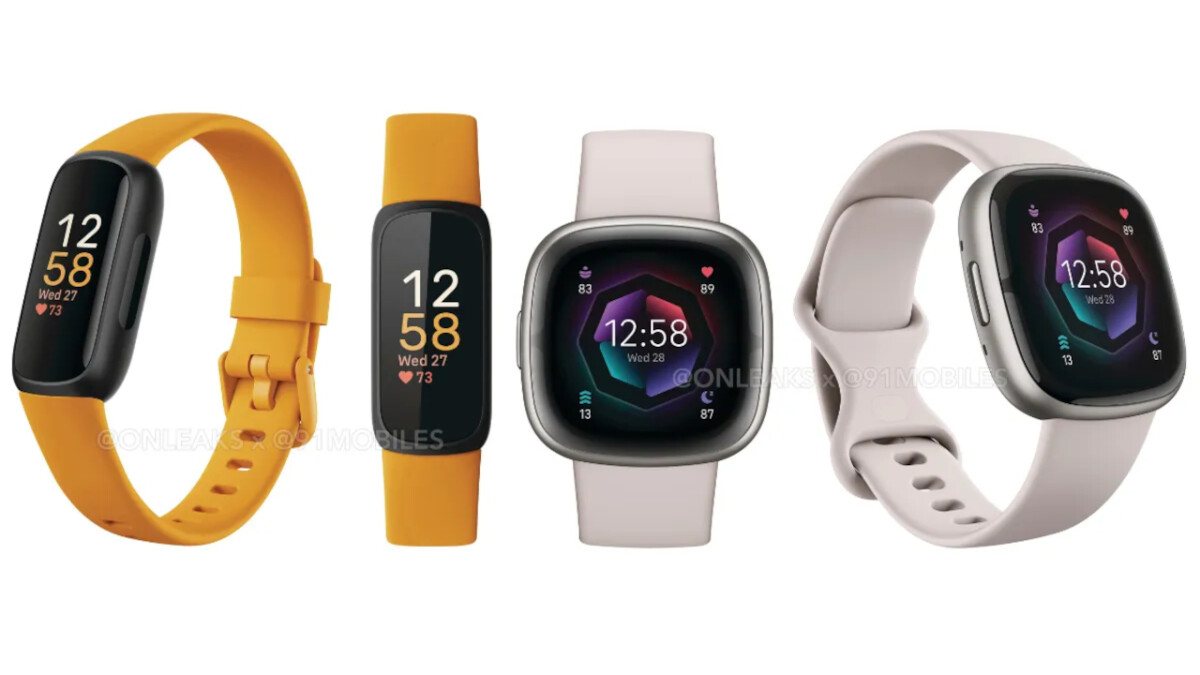
Fitbit’s entire 2022 wearables lineup has just been leaked

Fitbit hasn’t announced any new products this year, but good times are yet to come for fans of the brand. Three unannounced Fitbit wearable devices have just emerged, which suggests the Google-owned company is close to making them official.

It’s hard to tell whether or not all three will be announced at the same time, but we can safely assume they will be introduced throughout 2022. Fitbit Sense 2, Fitbit Versa 4, and Fitbit Inspire 3 will be coming soon and 91mobile has the scoop on all of them courtesy to @OnLeaks (aka Steve Hemmerstoffer).

Several press renders of Fitbit’s upcoming wearables show that little has changed for the company’s products in terms of design. All three unannounced devices look very much like the previous models, but that’s not necessarily a bad thing.

The Versa 4 will be Fitbit’s top of the line wearable device, so it’s safe to assume it will be more expensive than the other two. No details about specs are available at the moment, but based on the leaked images, the Fitbit Versa 4 will be available in Graphite and Rose.

Moving on to Fitbit Sense 2, this one looks very much like the Versa 4 and the original Sense. However, the additional button on the side differentiates it from the previous model. We can probably assume that it will inherit all the good features of the original Sense, but as to whether or not Fitbit will include new ones, this remains a mystery. Unlike the Versa 4, the Fitbit Sense 2 will be available in three different colors: Gold, Graphite, and Platinum.

Finally, the cheapest of the three upcoming Fitbit wearable devices, the Inspire 3, will probably be the company’s top tier fitness tracker when it launches this year. Although no specs are available for this one either, the press renders confirm the Inspire 3 looks pretty much different than any of its predecessors. We also know that the fitness tracker will be available in three colors: Black, Pink, and Yellow.

All three Fitbit wearable devices are expected to be revealed in the coming months, so if you’re in the market for a smartwatch or fitness tracker, you might want to wait a bit for the US company to reveal the specs and prices for its new products.

Categories
Technology

Quest’s Most Popular Basketball Game on App Lab ‘Gym Class’ Secures $8M – Road to VR

IRL Studios announced that Gym Classits popular VR basketball game on Meta Quest App Lab, has raised $8 million in a seed round led by Andreessen Horowitz (a16z) with participation from Y Combinator.

Other participants include Founders Inc., Todd and Rahul’s Angel Fund, Balaji Srinivasan, Zaza Pachulia, and a number of other angel investors.

named in Road to VR’s top 20 free games on Quest, Gym Class lets you shoot hoops and dunk on friends like you probably can’t on a physical court.

The free early access version is highly rated on App Lab for good reason, in part thanks to it’s physics-based gameplay and full-body kinematics, but mostly because it offers one of the most realistic basketball playing experiences that lets you go toe-to -toe with up to eight other online players. Gym Class has also claimed the number two spot on Meta Quest App Lab, garnering a [4.9/5] user rating from more than 14,000 reviews.

The studio hasn’t specified precisely what it plans to do with the funding, although the team’s mission includes building a digital sports ecosystem “indistinguishable from what you see IRL. One that delivers on deep needs for friendship, identity, entertainment, creation, fitness, fashion, and even competing to become a superstar,” its Y Combinator profile reads.

Gym Class is more than a game, it’s a digital sport.” said Paul Katsen, studio co-founder and Chief Product Officer of Gym Class. “It lets you dunk like a pro, become a basketball star, watch, compete, cheer, and get involved in the whole experience of the sport. Just like with real sports, we believe digital sports will see thriving global communities, leagues, entertainment and events, fashion, commerce, fitness, and more.”

“We are convinced that games, virtual worlds and digital sports will be the new social networks,” said Andrew Chen, partner at Andreessen Horowitz (a16z). “Gym Class signals the dawn of digital sports. It has the traction, and has the right team behind it to realize the true potential of social VR. We are strong believers in the vision and the team who have already proven Gym Class has a massive audience and opportunity.”

Gym Class is slated to of the official Quest Store sometime in fall 2022.

Categories
Technology

Square Enix afraid Western studios “cannibalised” Japanese game sales

The latest round of financial results have come out for publisher Square Enix, and they show some very interesting numbers. The internal conference call that concerned the financial report, however, revealed that potentially more Western studios are about to be up for sale.

The financial results detail that despite slowing growth in Square Enix’s single-player game sales, mega-popular MMORPG Final Fantasy XIV is not only exceeding projections but keeping the company from dipping into the red.

Square Enix recently sold off several Western studios, such as Eidos and Crystal Dynamics, for a pittance of only $432 million AUD. According to the analyst David Gibson, that was only ‘phase one’ of a two-phase plan. This series of planned sales are intended to “diversify studio capital structure,” — in layman’s terms, due to development costs skyrocketing as a result of various global events, Square Enix needs to be picky with what resources it spends.

As Square Enix is ​​a Japanese publisher, this likely means that the company will focus on divvying up resources towards Japanese developers and games, putting Western studios on the proverbial chopping block — all in the name of maximizing capital efficiency.

This comes at a good time for other companies as well. Sony and Tencent, huge video game companies, are looking to expand their footprint. For years, fans have wondered if Square Enix would be bought out by Sony, owing to the company’s flagship series of Dragon Quest and Final Fantasy history with the company. As of the writing of this article, Square Enix’s stock prices hiked up 9% as a result of the announcement, showing a good short-term outlook for the company.

Square Enix is ​​relying heavily on Final Fantasy 14, a social and combat-oriented massively multiplayer online game, to buoy its revenue streams. The game is so popular that in-game nightclub owners rented real billboards to advertise their DJ parties. Final Fantasy is such a popular series even that older games, such as Final Fantasy X, are being granted stage show adaptations in Japan.

Original reporting by David Gibson.

Written by Junior Miyai on behalf of GLHF.

.

Categories
Technology

‘The best thing we can do today to JavaScript is to retire it,’ says JSON creator Douglas Crockford • DEVCLASS

JavaScript, the world’s most popular programming language according to most surveys, has become a barrier to progress, according to Douglas Crockford, creator of the JSON (JavaScript Object Notation) specification used everywhere for serializing data in web applications.

Crockford made this assertion in an interview last month:

“The best thing we can do today to JavaScript is to retire it. Twenty years ago, I was one of the few advocates for JavaScript. Its cobbling together of nested functions and dynamic objects was brilliant. I spent a decade trying to correct its flaws. I had minor success with ES5. But since then, there has been a strong interest in further bloating the language instead of making it better. So JavaScript, like the other dinosaur languages, has become a barrier to progress. We should be focused on the next language, which should look more like E than like JavaScript.”

JavaScript is the world’s most popular programming language according to most surveys

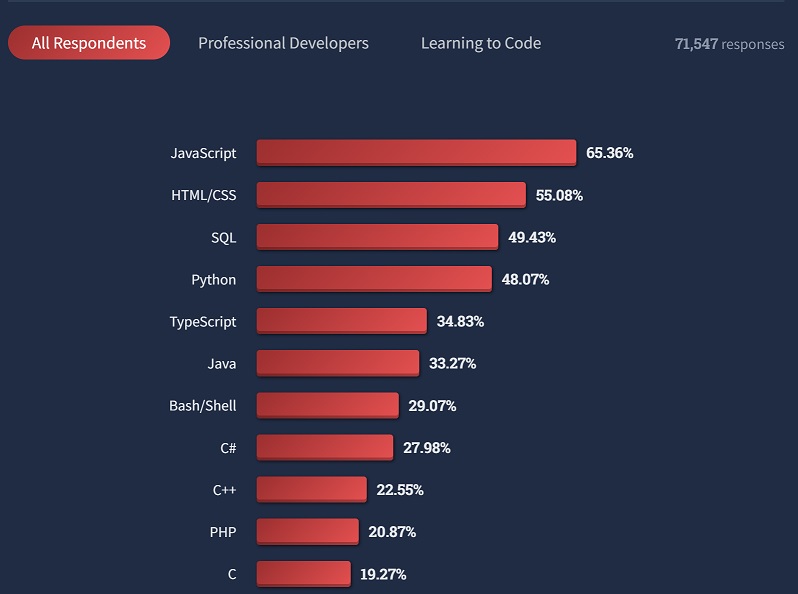
According to a StackOverflow survey earlier this year, JavaScript is used by over 65% of developers, way ahead of second placed Python at 48 percent (ignoring HTML, CSS and SQL which are not general purpose languages). It is an unlikely achievement considering its origins.

Brendan Eich invented the language for Netscape in 1995, apparently in just 10 days. “In May I did 10 days of hard work, I didn’t sleep much,” Eich told the dot.JS conference in 2018. In 2012 Eich told Computer’s Charles Severance that: “I went in to do … a programming language for HTML , for web designers and programmers to use, embedded directly in the web page … not like Java which was a professional’s language where you would run real code with type declarations, and you’d have to write in a way that compiled.” I have added that, “the name is a total lie. It is not so much related to Java so much as to a common ancestor, C, in syntax.”

Eich called the work “a rush job” but also said that “I knew there would be mistakes, there would be gaps, so I made it very malleable as a language. That has enabled web developers to make it be what they want it to be.”

Why has JavaScript been such a wild success?

There are multiple reasons, including Eich’s foresight, ease of learning, and tolerance of code that would be mistakes in many languages, like comparing strings to numbers and getting a common-sense result – though Eich later called this “a big regret, because that breaks an important mathematical property.”

Another big factor is that Google’s determination to make browser-based applications competitive with the desktop gave the world the V8 engine (2008), which along with Mozilla’s SpiderMonkey and Apple’s JavaScript Core gave the language amazing JIT-compiled performance. In 2009, Ryan Dahl came up with Node.js, enabling V8 to run outside the browser. Dahl had server applications in mind, but today Node.js and NPM (Node Package Manager) are also essential to the development process for most web applications.

Development process? Part of the problem referenced by Crockford is that along with increased capability JavaScript has acquired lots of complexity, and a typical application today includes a build process using WebPack, Rollup or some other bundler, a long way from Eich’s original concept.

Further, many web developers do not write JavaScript; rather, they write TypeScript, which compiles to JavaScript. TypeScript was invented by Anders Hejlsberg at Microsoft, the rationale being that JavaScript’s malleability and lack of type safety made it unsuitable for large applications. TypeScript is now the number three language in the survey mentioned above, and it is evidence that JavaScript is not altogether loved. The advent of WebAssembly, a binary format that can be targeted by languages ​​including C, C++, C# and Rust, is another innovation that may undermine JavaScript’s dominance.

“JavaScript has exploded in popularity in just a few years and yes, the ecosystem is horribly complex. It’s a running gag even among full time JS devs how crazy it’s gotten. None of us can keep up,” confessed a developer in a recent discussion on Hacker News.

JavaScript is evolving with many new features and progress can be tracked here, though the demands of compatibility means that some flaws cannot be corrected, and at the other end feature bloat is a constant risk.

Crockford’s pick to replace JavaScript, E, is an outlier. Created by Mark Miller, Crockford and others, E is an object-oriented language designed for secure computing and in Crockford’s words, “eliminating many of the bad parts of Java.”

Crockford also notes though that JavaScript will be hard to shift, in particular because it is the language supported by every browser for DOM (Document Object Model) manipulation. Asked about what can replace it there, Crockford said: “There are two difficulties. First, we don’t have the next language yet. It needs to be a minimal capability-based actor language that is designed specifically for secure distributed programming. Nothing less should be considered.

“Second, we need all of the browser makers to adopt it and to simultaneously replace the DOM with a well designed interface. Good luck with that.”

Categories
Technology

Square Enix reportedly worried that Tomb Raider and Deus Ex ‘cannibalised’ sales of its Japanese games

Square Enix has reportedly revealed that its sale of studios Crystal Dynamics and Eidos Montreal was driven by concerns their games would “cannibalise” sales of the rest of the company. Looking forward, it also looks like Square Enix may look to sell stakes in some of its studios to improve ‘capital efficiency’ all while resources shift from US and European studios to Japan.

As shared by MST Financial senior analyst David Gibson on Twitter (opens in new tab), Square Enix has delved further into the rationale of its decision to sell the Tomb Raider and Deus Ex studios during a recent conference call for investors. According to Gibson, the company felt that sales from the pair would “cannibalise” sales of the rest of the company and that selling them would allow Square Enix to improve “capital efficiency”.