Rumor has it that an announcement regarding Samsung’s next generation of foldable phones is just around the corner, which means it’s a pretty perfect time to track down the best Samsung Galaxy Z Fold 3 deals.
Hefty discounts on the popular phone are becoming more and more common, and that’s a very good thing: with its $1,799.99 price tag, the cost is prohibitive for most people unless they can find a really good deal. Luckily, that’s why we’re here. Below you’ll find the best offers of the month, with everything from straight discounts to enhanced trade-in opportunities up for grabs.
With its lightning-fast performance, excellent cameras, and unique, one-of-a-kind user experience, the Galaxy Z Fold 3 was the first device to transform the idea of the foldable from a gimmick into a serious phone that anyone could use . While we’re still trying to make sense of everything we know about the Galaxy Z Fold 4 so far, why not take advantage of the buzz surrounding the upcoming device and pick up a still-excellent foldable from last year.
Best Samsung Galaxy Z Fold 3 deals
Once you get your new Z Fold 3, you’re obviously going to want to keep it safe. Check out our list of the best Samsung Galaxy Z Fold 3 cases for some stylish and reliable protection.
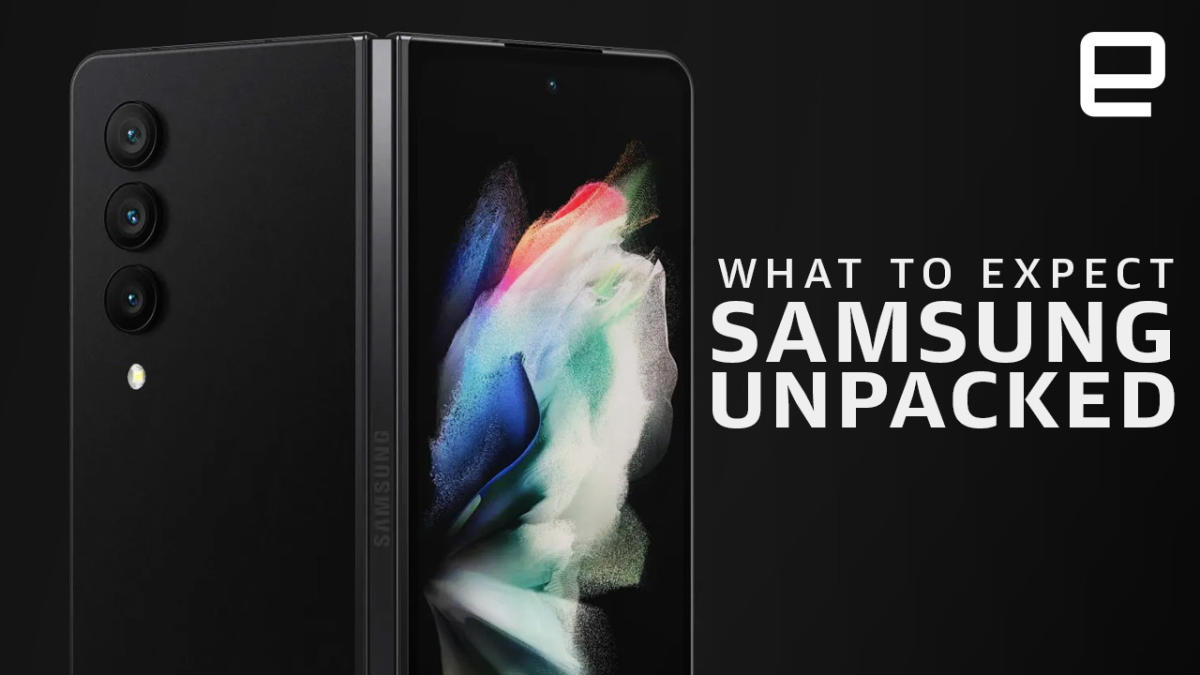
What to expect at Samsung Galaxy Unpacked event 2022
video transcript
– Samsung is holding its next unpacked livestream on August 10th, and expectations are running high. The company has used previous summer events to introduce new foldable phones, smartwatches, and earbuds. And the company has effectively confirmed a repeat for 2022. Just what will appear this time around, though? Don’t worry, we’ve got you covered with what you should expect to see at Samsung’s next big event.
[MUSIC PLAYING]
It will be easy to follow Samsung’s announcements. The company is streaming Unpacked Live on August 10 at 9:00 AM Eastern. You can watch it on Samsung’s website, and there’s usually a broadcast on the brand’s YouTube channel as well. And of course, you can expect tons of coverage, hands-ons, and more from us here at Engadget.
The Galaxy Z Fold3 is nearly a year old, so it’s arguably due to an update, and Samsung’s own Unpacked teasers hint that one is coming. That said, we wouldn’t expect the Z Fold4 to represent a major overhaul. If leaks are correct, the new model will represent a refinement of the marquee foldable. Rendered images shared by OnLeaks and SmartPrix as well as Evan Blass and 91Mobiles suggest the Z Fold4 will mate the series phone/tablet formula with design elements from the S22 Ultra. You get Ultra-Like rear camera bumps and slightly tweaked dimensions, but it would otherwise be a very familiar device.
Not that we’d rule out any functional changes. According to leaker Ice universe, the Z Fold4 could have a less prominent crease, which is a good thing for everybody. Performance upgrades could be more substantial, though, if a bit predictable. Noted leaker Yogesh Brar says the Z Fold Fold4 would use the new Snapdragon 8+ Gen 1 chip paired with either 12 gigs or 16 gigs of RAM. We’re expecting to see an upgraded 50 megapixel main sensor along with a new-and-improved 16 megapixel UDC. That’s the under-display camera that goes on the Z Fold4’s main foldable display. We’re also expecting to see a 12 megapixel ultrawide sensor along with a 3x optical Zoom and a 10 megapixel selfie shooter on the front.
That said, there is a dispute over the storage. While Brar maintains the Z Fold4 will start with 256 gigs of storage, Evan Blass has discovered references to a 128 gig model. That storage question may also affect the price. While YouTuber Jon Prosser and others believe that the Z Fold4 four will reach stores on August 26, it’s not clear how much the device will cost. A 128 gig variant could lead to a lower starting price than the $1,800 price tag we saw on its predecessor. Just don’t expect higher capacities than last year when there hasn’t been any mention of storage options beyond 512 gigabytes.
As for the Z Flip4, there’s even less mystery to that one. Samsung’s teaser video for the Unpacked event very clearly shows a new version of the clamshell phone, so it’s really just a question of what the Z Flip4 will offer compared to the previous model. Don’t expect a major redesign, though. If images shared by OnLeaks and Evan Blass are accurate, the Z Flip4 looks to be a virtual carbon copy of the previous model. So you should expect a very similar rear camera setup, maybe a slightly larger exterior screen, and some new color options.
Now, that isn’t necessarily a bad thing, but it might prove a bit disappointing if you’re looking for a brand new look. The less pronounced screen creasing from the Z Fold4 might carry over too. However, the under-the-hood upgrades for the Z Flip4 might be a little bit more subtle compared to the Z Fold4 if rumors are accurate. Yogesh Brar claims the Z Flip4 would make the leap to a Snapdragon 8+ Gen 1 chip but would still feature just 8 gigs of RAM and up to 256 gigs of non-expandable storage and a 6.7 inch, 120 Hertz display.
You’d also get a larger 3,700 milliamp power battery compared to 3,300 milliamp hours on the Z Flip3 and 25 Watt charging, so the Z Flip4 might last a little bit longer. The previous phone’s dual 12 megapixel rear cameras and 10 megapixel selfie camera also look to be carried over to the new model. As for a potential release date, Samsung typically releases both versions of its new foldables on the same day, so we’re expecting to see the Z Flip4 also come out on August 26. If so, the only big question left is price. There’s no certainty that the Flip4 will stick to the previous model’s $999 price tag. However, if there is a 128 gig model, we wouldn’t expect the latest device to be much more expensive, if anything at all.
Moving on to new watches, the Galaxy Watch4 marked a revival of Samsung’s smartwatch strategy with its switch to Wear OS and a sleeker design. And it looks like the company could be eager to preserve that momentum as there are signs it’s running the Galaxy Watch5 family with a few new twists. If 91mobile’s shared renders are authentic, Samsung will drop its higher-end classic model in favor of a more modern looking, if still posh, Galaxy Watch5 Pro. You might not get the neural bezel of the previous smartwatch, but the Pro would upgrade from a steel case to a light-but-strong titanium chassis.
Samsung inadvertently hinted at the Pro name in its health app, although we haven’t seen any further clues since. The regular Galaxy Watch5 isn’t expected to be quite as big of a departure, so you should expect a very familiar minimal and fitness-oriented device similar to what we’ve seen in the past. SamMobile floated a rumor that the wristwatch could have a 10% larger battery than its [? Euro ?] counterpart, but it’s unknown if that will translate into actually improved longevity. It’s also still unclear if Samsung is going to add any new processors or any new sensors that could affect that battery life.
You may also have to pay more than you might expect. Win Future’s Roland Quant heard in June that the regular Galaxy Watch5 would start at around 300 Euros or around $306 for a 40 millimeter Bluetooth model and top out at around 400 Euros or $409 for a 44 millimeter LTE unit. For the Galaxy Watch5 Pro, because titanium is more expensive than steel and aluminum, that could bump up the price to around 490 euros or about $502 for a 45 millimeter Bluetooth model, or around 540 Euros or $552 for its LTE equivalent.
As for audio, the basic Galaxy Buds2 premiered at last year’s Unpacked. And Samsung might follow that up with a higher-end option this year. Evan Blass and 91mobiles recently posted renderings of what they say are the Galaxy Buds2 Pro. Cosmetically, the true wireless earbuds will look nearly the same as the existing Galaxy Buds Pro, which were introduced in January 2021. 9to5Google sources claim that you might get new 24-bit audio support. And there have been murmurs of a larger battery as well. Otherwise, Samsung might play it safe with familiar active noise cancellation and multi-device pairing support.
Just be ready to pay a little bit more too. A tipster who spoke to 9to5Google says that the new Galaxy Buds Pro 2 could cost around $230, which is $30 more than the previous model. Well, that still makes them more affordable than rivals like the AirPods Pro, which cost $249. You might not save much by springing for Samsung’s new in-ear headphones. As for any potential wild cards, while we wouldn’t rule out any surprises for Samsung’s Unpacked event, we’re not expecting to see any either.
There haven’t been any signs of any upgrades coming to the standard Galaxy Buds2. And because Samsung already updated the Galaxy A S-series phones this year, those don’t seem in line for any upgrades either. But what about you? Is there some dark horse device that you’re hoping to see Samsung update? Let us know in the comments below. And of course, stay tuned to Engadget for more news, hands-on, and coverage from Samsung’s Unpacked event next week.
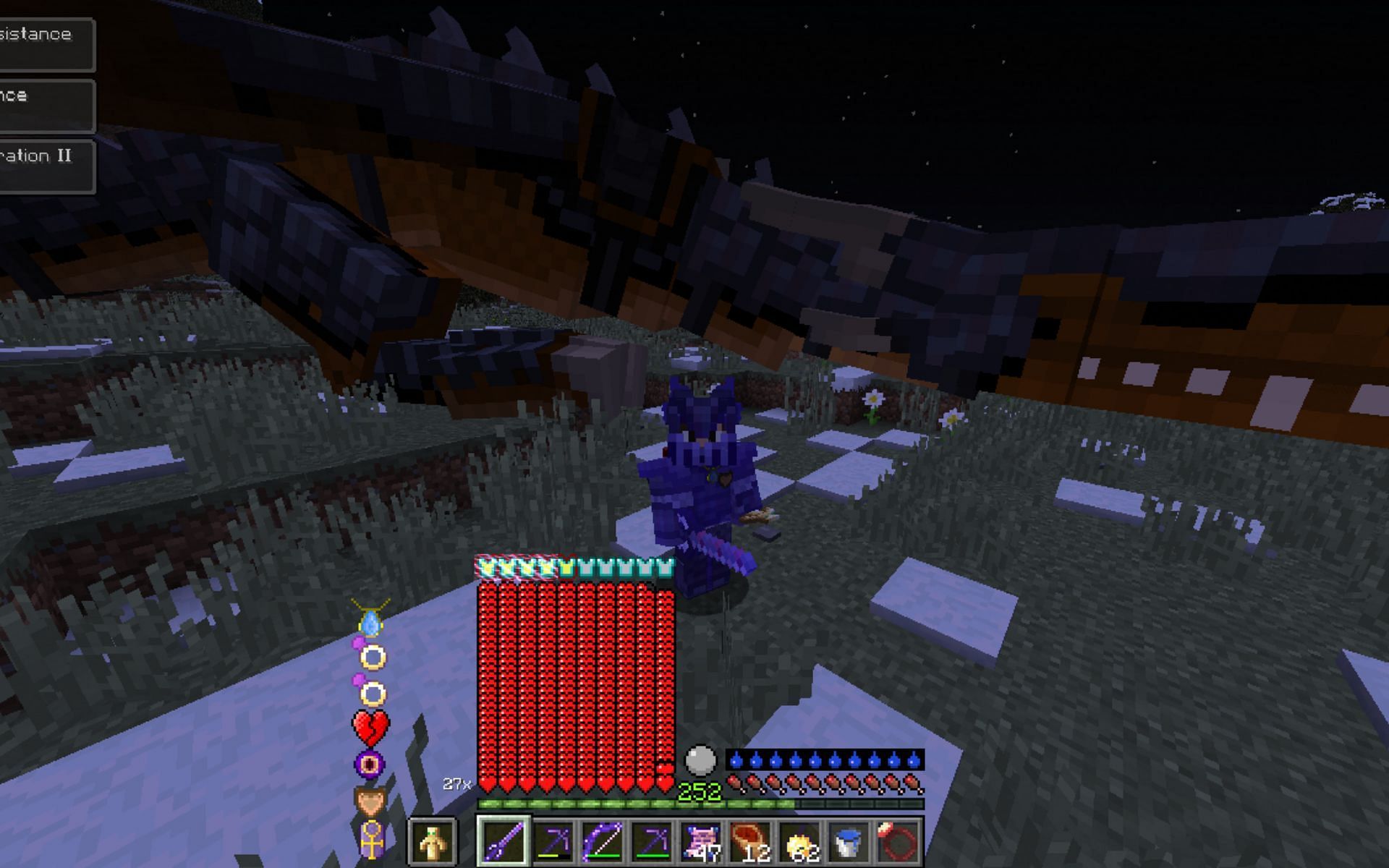
RLCraft is a modpack for Minecraft that players can easily download and play with. As expected, there are loads of modpacks out there for the game made by highly active modding groups. Since Minecraft can be heavily modded, it allows players to add all sorts of third-party features to the base game. The RLCraft modpack takes full advantage of that freedom and creates a completely new game out of the sandbox title.
It is one of the most detailed modpacks since it completely changes the title’s gameplay and UI. From adding a plethora of new mobs to changing several mechanics of the game, the modpack genuinely seems like an all new game. However, new players who are unfamiliar with the game’s mods may have some difficulty installing the modpack. The article below is an easy guide for readers to download and play with this modpack.
Steps to download and install RLCraft Minecraft modpack
1) Download Forge App
First, players will need to understand that this particular modpack needs Forge API to run properly. Players will need to download the Forge App that lets players easily download the modpack using Forge API. The app can be downloaded from here.
2) Install Forge App and download modpack
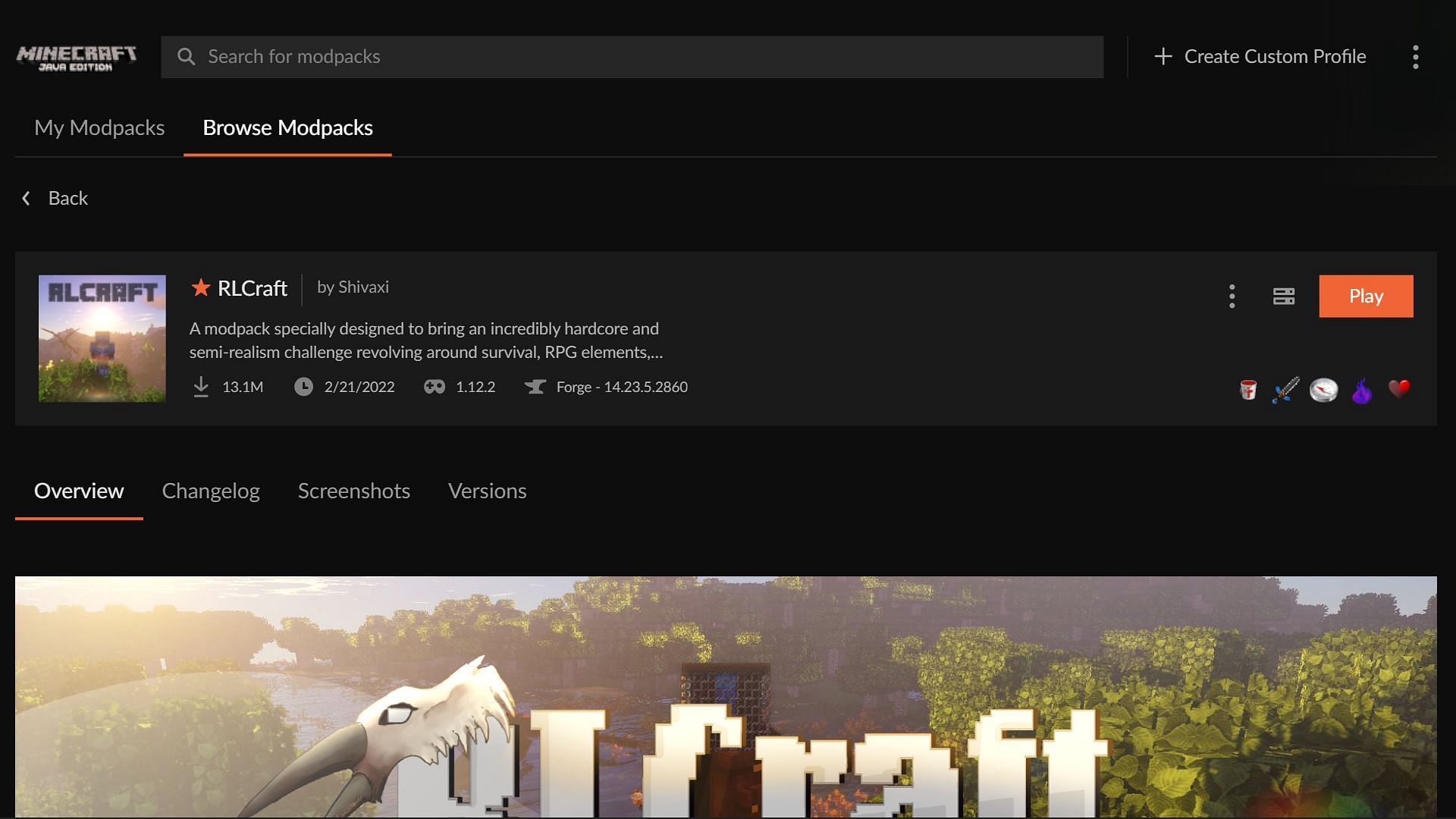
Players can install the Forge App and search for RLCraft in the Minecraft modpack tab (Image via Sportskeeda)
Once players download the software, they must install the Forge App normally. After the installation, players will see that the app features mods for various other games as well. Players will have to click on ‘Minecraft’ and then head over to the ‘Browse Modpacks’ tab that is visible in the top left corner of the app. Here, players will be able to find the modpack quite easily since it will be the first option on the list.
Simply hit ‘Install’ to start downloading the modpack. This may take some time depending on the user’s internet connection as the modpack’s download size is rather large. Players do not need to create a custom profile for the modded game version since this modpack will automatically download all the necessary files for the game to run. Since they are downloading 166 different mods that will work simultaneously, the download will generally take a fair amount of time.
3) Open the game
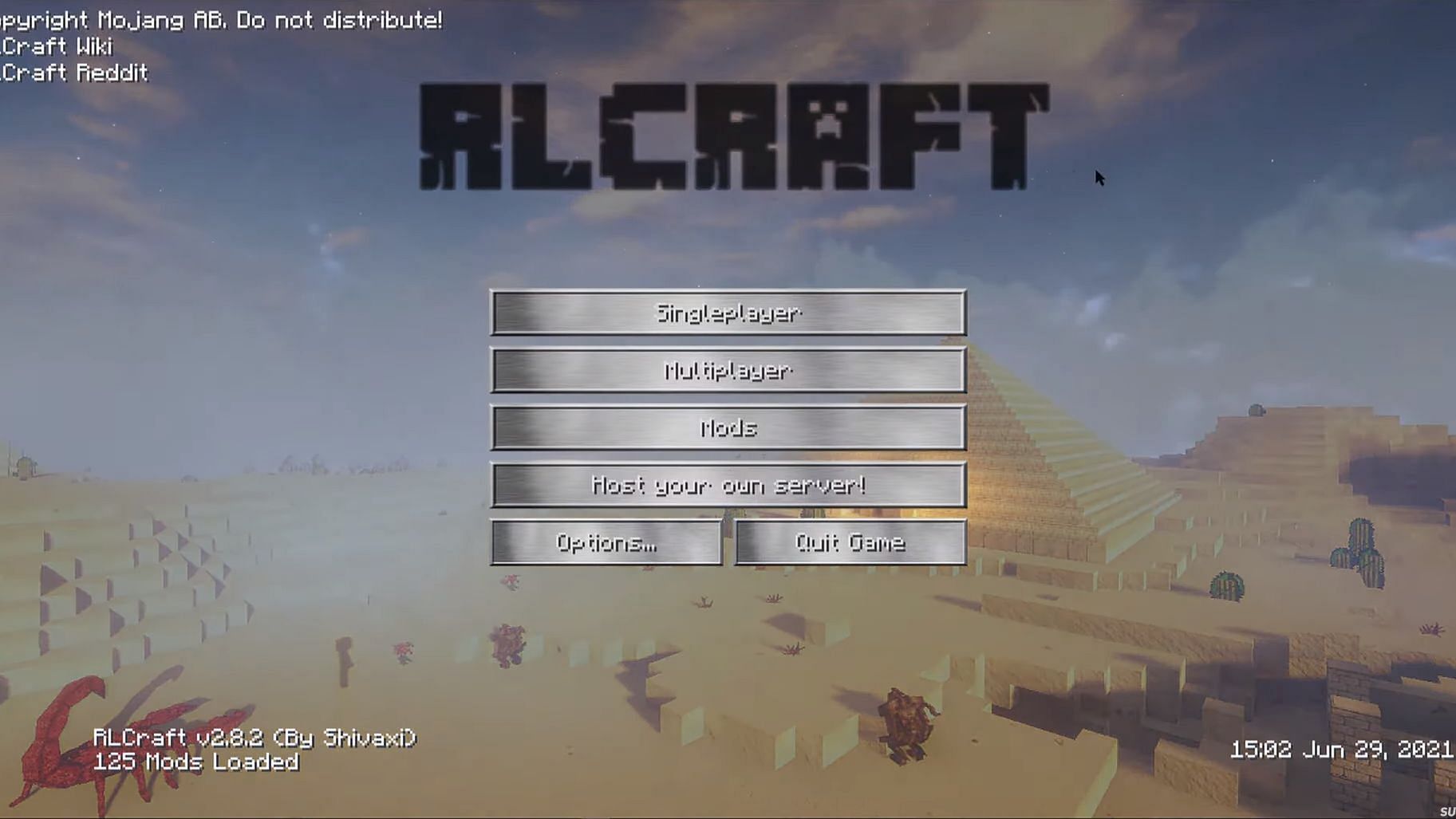
The Minecraft modpack even changes the main menu (Image via YouTube/ItzCuba Tutorials)
Also Read Story Continues below
Once everything is downloaded and installed, the ‘Play’ button will be available which players can hit to open a brand new official game launcher. It will not be connected to the regular game launcher and will only contain the RLCraft installation with the compatible Forge version written below it. Players can simply go ahead and hit ‘Play’ on the launcher to open the game.
Since RLCraft needs to run so many mods at once, it runs on the old 1.12.2 game version that is compatible with most mods. It will take a while to run the game since all the mods will have to be activated. Players can normally create a new world and enter their new and incredible Minecraft world.
More than half a decade after Microsoft’s truly monumental Taye debacle, the incident still stands as a stark reminder of how quickly an AI can be corrupted after exposure to the internet’s potent toxicity and a warning against building bots without sufficiently robust behavioral tethers. On Friday, Meta’s AI Research division will see if its latest iteration of Blenderbot AI can stand up to the horrors of the interwebs with the public demo release of its 175 billion-parameter Blenderbot 3.
A major obstacle currently facing chatbot technology (as well as the natural language processing algorithms that drive them) is one of sourcing. Traditionally, chatbots are trained in highly-curated environments — because otherwise you invariably get a Taye — but that winds up limiting the subjects that it can discuss to those specific ones available in the lab. Conversely, you can have the chatbot pull information from the internet to have access to a broad swath of subjects but could, and probably will, go full Nazi at some point.
“Researchers can’t possibly predict or simulate every conversational scenario in research settings alone,” Meta AI researchers wrote in a Friday blog post. “The AI field is still far from truly intelligent AI systems that can understand, engage, and chat with us like other humans can. In order to build models that are more adaptable to real-world environments, chatbots need to learn from a diverse, wide-ranging perspective with people ‘in the wild.'”
Meta has been working to address the issue since it first introduced the BlenderBot 1 chat app in 2020. Initially little more than an open-source NLP experiment, by the following year, BlenderBot 2 had learned both to remember information it had discussed in previous conversations and how to search the internet for additional details on a given subject. BlenderBot 3 takes those capabilities a step further by not just evaluating the data it pulls from the web but also the people it speaks with.
When a user logs an unsatisfactory response from the system—currently hovering around 0.16 percent of all training responses—Meta works the feedback from the user back into the model to avoid it repeating the mistake. The system also employs the Director algorithm which first generates a response using training data, then runs the response through a classifier to check if it fits within a user feedback-defined scale of right and wrong.
“To generate a sentence, the language modeling and classifier mechanisms must agree,” the team wrote. “Using data that indicates good and bad responses, we can train the classifier to penalize low-quality, toxic, contradictory, or repetitive statements, and statements that are generally unhelpful.” The system also employs a separate user-weighting algorithm to detect unreliable or ill-intentioned responses from the human conversationalist — essentially teaching the system to not trust what that person has to say.
“Our live, interactive, public demo enables BlenderBot 3 to learn from organic interactions with all kinds of people,” the team wrote. “We encourage adults in the United States to try the demo, conduct natural conversations about topics of interest, and share their responses to help advance research.”
BB3 is expected to speak more naturally and conversationally than its predecessor, in part, thanks to its massively upgraded OPT-175B language model, which stands nearly 60 times larger than BB2’s model. “We found that, compared with BlenderBot 2, BlenderBot 3 provides a 31 percent improvement in overall rating on conversational tasks, as evaluated by human judgments,” the team said. “It is also judged to be twice as knowledgeable, while being factually incorrect 47 percent less of the time. Compared with GPT3, on topical questions it is found to be more up-to-date 82 percent of the time and more specific 76 percent of the time.”
Activision’s online service page has confirmed that multiple Call of Duty games including — Vanguard and war zone are experiencing connectivity issues on all platforms. According to a report by Dot Esports, Activision is aware of the issues faced by these games (including Black Ops Cold War on all platforms and Black OpsIII on PC) and is investigating the cause. Moreover, some users have also reported issues regarding Modern Warfare and Black Ops 4, however, Activision has listed any issues regarding these games. The server outage was initially reported by BO4 connection on PlayStation 4, the report mentions.
How this outage has impacted the game and players As per the report, the developers are likely working hard to patch this issue, however, it will take some time before they resolve it. This outage will deduct a little bit of time out of the Double XP week that recently began for both weapons and the battle pass in Vanguard and Warzone. Apart from that, the connectivity problems have also affected the Call of Duty League Championship which is also the biggest COD event of the year. The championship has been experiencing a delay since the outage. The report suggests that the league seemed ready to start the second match of the tournament right around the time the servers dropped.
How to understand when a server starts falling As the server of a game starts struggling, players will start experiencing lag, high ping, and packet loss along with complete loss of connection to the server while playing it. There are a few fixes that can temporarily patch the issue, however, only the developers can roll out a permanent solution to the problem.
Years ago, a never-officially-released warcraft point-and-click adventure game developed by Blizzard in the late ’90s was leaked online. While the game was completely playable back then, its cutscenes were low-quality, highly compressed, not perfectly synced to the audio, and a few were even just straight up missing from the leak. Now, after years of working on it, someone has remastered all the cutscenes, fixed them up, and made it easier to experience this bit of video game history.
As spotted by Indie Retro News and pc gamermodder DerSilver83 recently released the finished 1.0 release of WACRP (Warcraft Adventures Cutscenes Remastered Project). The mod contains 20 completely remastered cutscenes, including two which didn’t actually exist in the initial leak but appeared later on via a different DVD leak.
You can see an example of what this mod and its improved cutscenes look like in the video below:
A lot of work went into this release, according to the modder and the project’s website. Apparently, DerSilver83 hand-removed all the compression artifacts from all of the cutscenes. The modder also used Photoshop to painstakingly redraw entire frames and assets, frame-by-frame. Continuity issues have also been fixed and some new transitional scenes have been created entirely from scratch. All audio was also synced and everything now runs at the correct 12fps.
All told, DerSilver83 says they have been working on this mod for about six years, and this latest 1.0 release represents the end of the project. They explained in a post on July 31 that they have done all they can in what they call a “reasonable timeframe” and are happy with the end results.
“I want to remember this project as something fun before it transforms into some kind of a burden,” said DerSilver83 on the project’s site. “So this is it. The final release of my Cutscenes Remaster Project and I hope everybody who uses it can enjoy it as much as I do. I always wanted to create a substantial mod for a game I love and I can finally say that I have achieved (or at least tried) that.”
To actually play this, you’ll need to do some searching around the internet to find the appropriate files needed to play the full game, as this mod only contains the remastered cutscenes and nothing else.
In the meantime, you can read more about Warcraft: Lord of The Clans via this great story from our own Luke Plunkett.
Activision Blizzard, previously known for its high-profile console and PC games, is now primarily a mobile game publisher. Recent success Diablo Immortal combined with Candy Crush and Call of Duty Mobile helped the mobile earnings reach 51% of total revenue for Q2 2022.
Most gamers do not think about Activision Blizzard as a mobile company. Hearthstone and Candy Crush have been popular mobile games for several years, and Call of Duty Mobile made a huge splash when it launched, with a total of nearly 88 million downloads in the first month of its release.
Activision Blizzard used to be known only for PC and console games — primarily Call of Duty, Starcraft, and World of Warcraft. It’s been a rough year for the company overall: in addition to the numerous ongoing cases against the company regarding sexual harassment and abuse, as well as the furore surrounding its massive buyout by Microsoft, to the tune of nearly 100 billion AUD.
In Q2 2022, Activision Blizzard’s mobile games generated approximately $1.2 billion AUD, accounting for 51% of the company’s total quarterly earnings. Console games comparatively made only $540 million AUD, and PC games took in just shy of $500 million AUD. In the mobile games section, the biggest winner was King, with 82% of all mobile revenue profit at just shy of $1 billion AUD.
Embattled Activision Blizzard CEO Bobby Kotick had this to say during the earnings report: “In addition, we expect to continue to deliver ongoing content for various of our franchises. We will also continue to invest in opportunities that we believe have the potential to drive our growth over the long term, including continuing to build on our advertising initiatives and investments in mobile titles.
Activision Blizzard is facing no shortage of troubles despite this massive growth. The company is accused of anti-union behavior towards one of its studies, hiring union-busting firms in the process. Activision Blizzard also recently scrapped a World of Warcraft mobile game after some financial disagreements with its Chinese partner, NetEase.
While the Messenger Bot revolution never took hold like Meta might have hoped, bots are still widely used, in a range of contexts, with many brands now implementing responding bots in messaging apps to streamline their customer connection process.
And this could help further bot use. Today, Meta has released BlenderBot 3, an advanced bot responding dataset, which is able to engage with humans in a more natural way while also utilizing more prompts to guide users along a specific path of inquiry.
As explained by Meta:
“BlenderBot 3 is capable of searching the internet to chat about virtually any topic, and it’s designed to learn how to improve its skills and safety through natural conversations and feedback from people “in the wild.” Most previous publicly available datasets are typically collected through research studies with annotators that can’t reflect the diversity of the real world.”
Which is the real purpose of this release – by giving the public access to the BlenderBot system, and enabling them to ask questions in the app, that will then give Meta more feedback on how to refine and improve the system, with a view to building a more realistic, organic simulator of conversation and engagement.
Which could have a range of purposes, and could again make it much easier for brands to maintain their connection flow, with fully automated bots that are able to respond to user queries 24/7, and direct people to the right products and services to suit their needs.
The updated BlenderBot process combines two recently developed machine learning techniques, SeeKeR and Directorto build more advanced conversational models that learn from interactions and feedback.
“BlenderBot 3 delivers superior performance because it’s built from Meta AI’s publicly available OPT-175B language model — approximately 58 times the size of BlenderBot 2.”
The idea is that this next-level system will be able to build on this engagement to iterate even faster, and become a more functional base AI for conversational systems moving forward.
Though there are also risks with public testing of such.
Back in 2016, Microsoft released its conversational AI system ‘Tay’ for public testing, via a dedicated Twitter account that invited Twitter users to interact with the bot, and help it learn conversational patterns. Within a day, Twitter users had the Tay account sharing an array of lewd and racist remarks, which forced Microsoft to shut it down, never to be heard from again.
Meta is well aware of this risk, and it’s built in various safeguards, which could see some of BlenderBot’s responses go off-topic. But it will avoid moving into risky territory wherever it can.
It could be a big advance for AI systems, and it may well be worth checking it out to see how well the process actually handles engagement – and to consider whether it might, eventually, be valuable in your own customer service process.
Those in the US can try it out here, where you can engage in a conversation with BlenderBot and provide feedback on the quality of the experience.
DNA-based information is a new interdisciplinary field linking information technology and biotechnology. The field hopes to meet the enormous need for long-term data storage by using DNA as an information storage medium. Despite DNA’s promise of strong stability, high storage density and low maintenance cost, however, researchers face problems accurately rewriting digital information encoded in DNA sequences.
Generally, DNA data storage technology has two modes, ie, the “in vitro hard disk mode” and the “in vivo CD mode.” The primary advantage of the in vivo mode is its low-cost, reliable replication of chromosomal DNA by cell replication. Due to this characteristic, it can be used for rapid and low-cost data copy dissemination. Since encoded DNA sequences for some information contain a large number of repeats and the appearance of homopolymers, however, such information can only be “written” and “read,” but cannot be accurately “rewritten.”
To solve the rewriting problem, Prof. LIU Kai from the Department of Chemistry, Tsinghua University, Prof. LI Jingjing from the Changchun Institute of Applied Chemistry (CIAC) of the Chinese Academy of Sciences, and Prof. CHEN Dong from Zhejiang University led a research team that recently developed a dual-plasmid editing system for accurately processing digital information in a microbial vector. Their findings were published in Science Advances.
The researchers established a dual-plasmid system in vivo using a rationally designed coding algorithm and an information editing tool. This dual-plasmid system is suitable for storing, reading and rewriting various types of information, including text, codebooks and images. It fully explores the coding capability of DNA sequences without requiring any addressing indices or backup sequences. It is also compatible with various kinds of coding algorithms, thus enabling high coding efficiency. For example, the coding efficiency of the current system reaches 4.0 bits per nucleotide.
To achieve high efficiency as well as reliability in rewriting complex information stored in exogenous DNA sequences in vivo, a variety of CRISPR-associated proteins (Cas) and recombinase were used. The tools were guided by their corresponding CRISPR RNA (crRNA) to cleave a target locus in a DNA sequence so that the specific information could be addressed and rewritten. Because of the high specificity between complementary pairs of nucleic acid molecules, the information-encoded DNA sequences were accurately reconstructed by recombinase to encode new information. Due to optimizing the crRNA sequence, the information rewriting tool became highly adaptable to complex information, thus resulting in rewriting reliability of up to 94%, which is comparable to existing gene-editing systems.
The dual-plasmid system can serve as a universal platform for DNA-based information rewriting in vivo, thus offering a new strategy for information processing and target-specific rewriting of large and complicated data on a molecular level.
“We believe this strategy can also be applied in a living host with a larger genome, such as yeast, which would further pave the way for practical applications regarding big data storage,” said Prof. LIU.
/PublicRelease. This material from the originating organization/author(s) may be of a point-in-time nature, edited for clarity, style and length. The views and opinions expressed are those of the author(s).
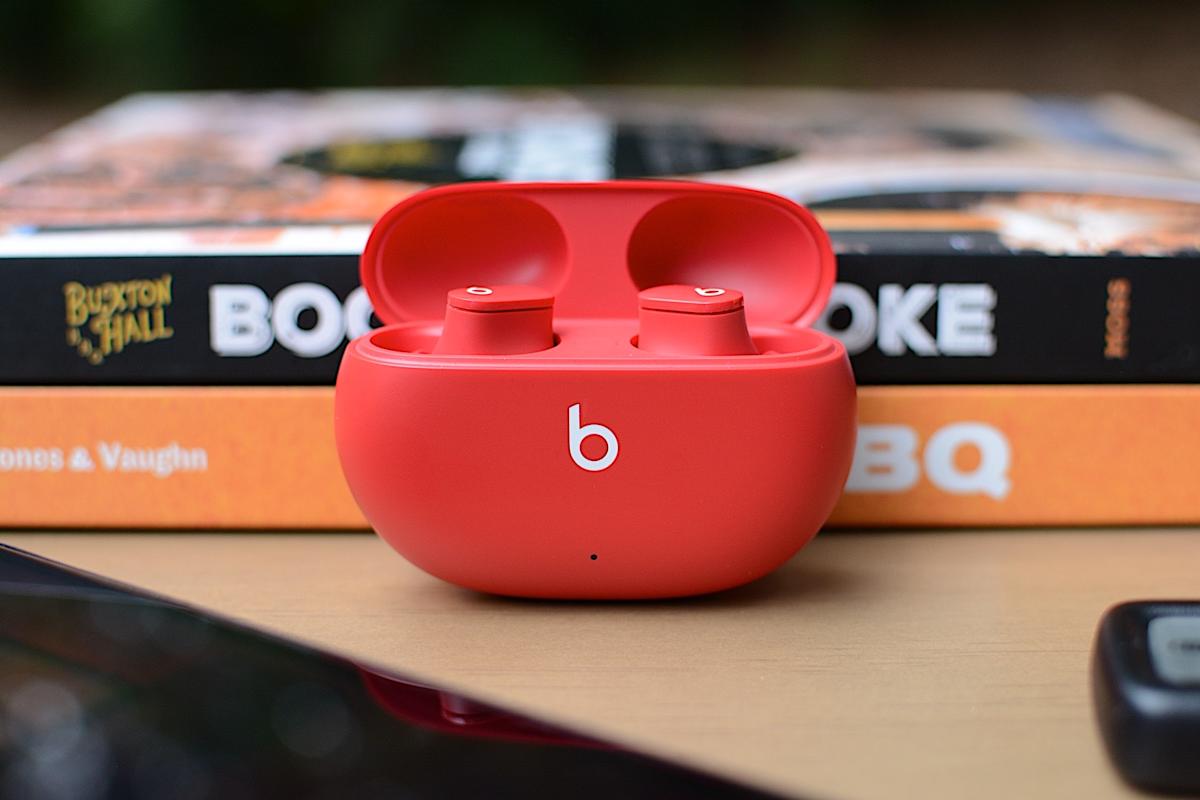
We called the Beats Studio Buds the best device from the company for most people when they came out last year, and it remains one of our top picks if you’re looking for a pair of relatively affordable wireless earbuds. They’re an even better buy when you can grab them on sale — Amazon currently has the Beats Studio Buds for $100, which is a record low and a return to their Prime Day price. The discount applies to all color options, too, including the newer moon gray and ocean blue schemes.
Buy Beats Studio Buds at Amazon – $100
Normally priced at $150, the Beats Studio Buds impressed us with their small, comfortable design, solid sound quality and good active noise cancellation. In addition to being compact and lightweight, these buds have an IPX4 water-resistant rating, making them good for sweaty workouts, and they have onboard controls that let you play/pause, skip tracks and adjust ANC on the fly. Our biggest flu with the overall design is that the Studio Buds’ case doesn’t support wireless charging.
As far as sound quality goes, Beats has come a long way. In addition to supporting Apple’s spatial audio, the Studio Buds produce well-tuned sound with punchy bass that doesn’t overwhelm. Noise cancellation does a good job of blocking out environmental noises, and Transparency mode lets you easily jump in and out of conversations happening around you.
The Beats Studio Buds also include Apple’s H1 chipset inside, which will allow them to quickly pair with iPhones and other Apple devices. Similarly to AirPods, they should provide seamless switching between those devices as well. But Android users have not been left out in the dust — the Studio Buds also support Fast Pair and Find My Device on Android gadgets, so all of those features make them a good pick, regardless of which OS you prefer.
If you’re willing to pay a bit more, the new Beats Fit Pro earbuds are also on sale right now for $180. While not the record low we saw during Prime Day last moth ($160), this $20 discount is a decent one for Beats’ latest offering. These buds have a similar design to the Beats Studio Buds, but they include wingtips that help keep the buds in your ears comfortably. We like them for their solid sound quality, strong ANC and spatial audio support with dynamic head tracking.
Buy Beats Fit Pro at Amazon – $180
Follow @EngadgetDeals on Twitter and subscribe to the Engadget Deals newsletter for the latest tech deals and buying advice.