Two people have died in a horror late-night crash in regional Victoria.
The crash took place in Berrybank, west of Melbourne, about 11pm on Friday.
Police say a ute ran off the road near the Hamilton Highway and Berrybank-Wallinduc Road intersection and crashed into a tree.
Watch the latest News on Channel 7 or stream for free on 7plus >>
Two men were in the car at the time and died at the scene.
Their ages were not disclosed immediately by police.
File: Two men have died after their car left the road and hit a tree in regional Victoria. Credit: AAP
“The exact circumstances surrounding the collision are yet to be determined and the investigation remains ongoing,” police said in a statement.
“Anyone who witnessed the crash, with information or dashcam footage is urged to contact Crime Stoppers on 1800 333 000 or submit a confidential report online at www.crimestoppersvic.com.au.”
The fatalities bring Victoria’s road toll to 143 this year, compared to 128 at the same time last year.
A 52-year-old Mount Isa man has been charged with murder after an alleged hit-and-run killed a teenager in the north-west Queensland community of Mount Isa during the early hours of this morning.
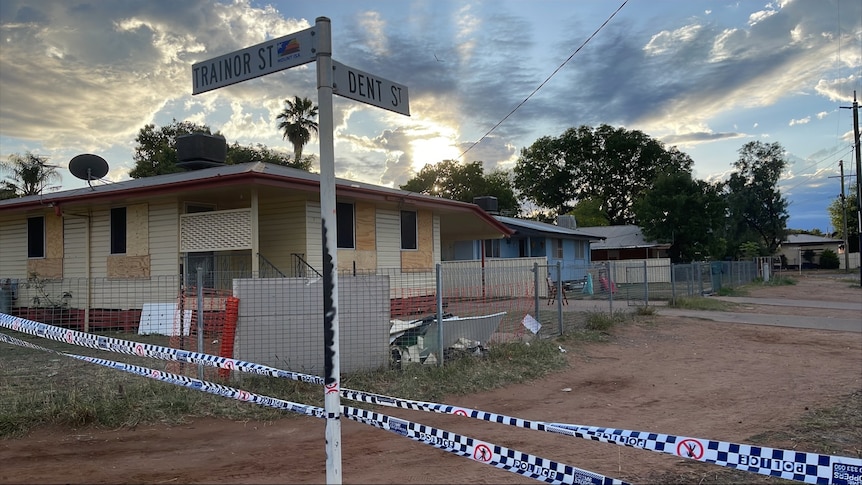
Emergency services were called to the corner of Delacour Drive and Dent Street in Pioneer sometime after midnight to treat a female victim for critical head injuries.
Police confirmed that she succumbed to her injuries and died at the scene.
The man will appear at Mount Isa Magistrates Court on Monday, August 8.
Police have taped off areas at the scene.(ABC North West Qld: Emily Dobson)
Police are working to formally identify the victim and are speaking to several families in the community.
“I can assure the community that we are taking this matter very seriously and investigating this intensively,” Detective Inspector Dave Barron said.
“Our sympathy goes out to the family and the community who are feeling… grief at this time.”
Investigations are ongoing, and police are urging anyone with information to contact Crime Stoppers on 1800 333 000 or report online.
This is the second alleged hit-and-run to have occurred in Mount Isa over the space of two days.
Two pedestrians were hospitalized in stable conditions after being struck by a stolen vehicle during the early hours of Friday, August 5.
Yot’s late Friday afternoon in suburban Brisbane – about the hour when “day drinking” ticks over to the more respectable “knock off” drinks. We’re sitting at a communal table enjoying a glass of wine with strangers while an upbeat playlist meanders through decades and genres. We’re not in a bar, a pub or even a restaurant. Rather, we’re in a store. More specifically, a wine store.
Queensland bottle-os used to be a place you popped into briefly on your way somewhere else. And while the old-school chains may still be the place for a weekend “smash and grab”, increasing numbers of independents in Brisbane have embarked on wine store/bar hybrids more aligned with the Italian wine bar.
Sommelier and winemaker Danilo Duseli took over Ashgrove’s Arcade Wine in a retro arcade four months ago. He comes from the north of Italy, where appetizer hour sees locals gather at enoteche that populate even the smallest towns for a neighborhood catch-up, pre-dinner drink and, always, food of some kind.
“It’s very unusual to drink wine in Italy without a little something to eat,” he says, placing down rounds of bread topped with anchovies and house-made salsa verde.
As we sip our wine, many customers engage Duseli, keen for recommendations or to report back on previous purchases. Some stay a while, grabbing a stool at the table or settling on the couch to enjoy a glass. Besides us, a couple reminisce about their recent trip to wineries in Tuscany.
“My aim is to get to know my customers and to educate them about wine,” Duseli says, and he’s not alone.
A similar ethos exists at Wineism in Albion, Grape Therapy in the CBD, Barbossa in South Brisbane, Baedeker in Fortitude Valley and Honor Avenue Cellars in Graceville.
“Although the opportunity to have a combination wine store/wine bar has been around since the Wine Industry Act was passed in 1994, it’s probably the interest in all things artisanal that has developed over the last few years that has people looking lately at what’s possible. ,” says Matthew Jones, a Queensland liquor licensing specialist.
Duseli takes pride in educating customers about wine. Photograph: Rhett Hammerton/The Guardian
The stores are using a “wine merchant license”, which allows a premises to both sell wine to take home and by the glass. The license was created specifically to support the Queensland wine industry, its granting dependent on the venue actively contributing, whether by selling and promoting Queensland wines or, in some cases, making it themselves. Currently, there are around two dozen Queensland businesses using the license.
“It’s certainly the cheapest, and one of the only ways someone can participate in the takeaway liquor market [in Queensland],” Jones says. “The alternative is a hotel license which of course requires you to have an actual hotel.”
Michael Nolan, owner of Wine Experience, added a bar 18 months ago, after 16 years of operating a retail wine store in Rosalie.
“I fell in love with the tiny bars in Spain and the rest of Europe – that really intimate environment – and always wanted to do something like that, but I never wanted a full-time bar,” he says.
Wine Experience’s tiny 12-seater bespoke bar is wheeled out from Wednesday to Sundays at 3pm, with a couple of additional tables for drinker or diners set on the footpath.
“For us the bar was about building a community,” Nolan says. “People come in and we get to know them and build loyalty. It’s definitely created a following – people pop in on the way home from shopping or they stop for an afternoon drink before heading off to a restaurant or movie.”
There are regular wine masterclasses and up to 50 glasses available at any one time, always with a couple of Queensland wines and some that “are a bit esoteric or harder to get hold of”, Nolan says.
“And of course, you can take any wine from the shelf and with a service charge of $30, drink it here. That’s a huge saving compared to the margin you’d have to pay for the same bottle in a restaurant.”
At Albion’s Wineism, owner Ian Trinkle is a former sommelier and so are all his shop staff. Trinkle opened in December last year. A long tiled communal table dominates the shop, used for tastings but also the evening crowd who come to eat and drink.
It’s the one-on-one engagement he values most.
“I’m surprised by how adventurous people are now,” Trinkle says. “People really want the experience and to talk about the wines. I can talk about tannic structures forever but it’s great to be able to uncork a bottle and say, ‘Hey, let’s taste this and sit down and chat a bit’.”
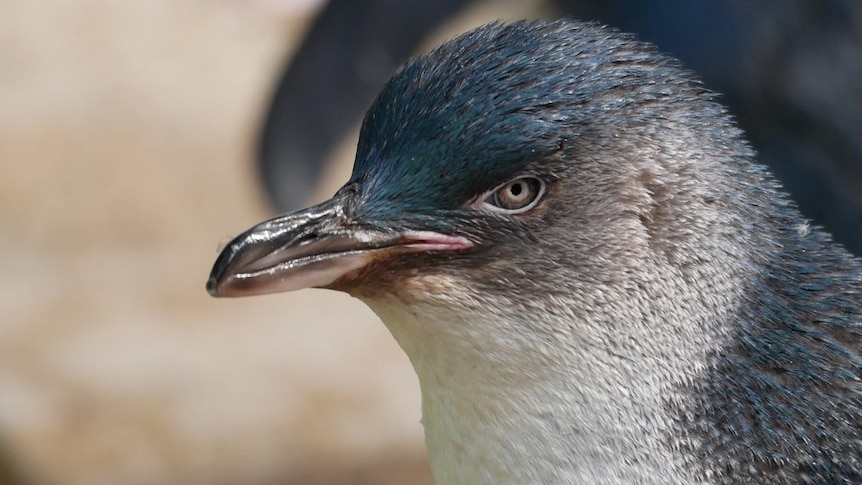
Just shy of 21 years old, Gordon is the oldest Australian little penguin on record and is still maintaining an active love life despite his age.
Key points:
Gordon the little penguin has fathered children across Australia
The little penguin population in captivity helps ensure the species’ survival
Despite his age, Gordon continues to hatch chicks and feed them
Outliving the average life span of his species for more than 14 years, the senior penguin has also been busy safeguarding his species’ declining population.
Gordon’s bloodline runs strong, and he has successfully raised four adult daughters, who have gone on to breed in other colonies around Australia.
His minder at Adelaide Zoo, Amelia Kennett, said that it was no small feat for an animal that usually mates for life.
“He has had quite a number of different partners, which is a little bit unusual for little penguins,” Ms Kennett said.
“Especially because he does have a variety of partners it means he’s not over-represented genetically too much … so he’s done well in that part.”
Despite having arthritis and partial blindness, Gordon continues to amaze, hatching another chick just the other day.
Gordon is Australia’s oldest little penguin at almost 21 years old, which is about 89 in human years.(ABC News: Ethan Rix)
His keepers are hopeful the new hatchling will pull through.
“He just powers on,” Ms Kennett said.
“As he’s getting older and older, we’re realizing how significant that is and I guess he’s quite a special one in the group.”
Gordon is one of 14 little penguins at Adelaide Zoo.
With only half of little penguins surviving past their first year and the continuous loss of habitat, small populations like this one help ensure the existence of the species.
“By having a breeding population in captivity, it means we’ve got a little bit of a backup just in case things go south out in the wild,” Ms Kennett said.
Zookeeper Amelia Kennett says Gordon has fathered many children.(ABC News: Che Chorley)
Parenting is a fifty-fifty job between little penguins, with the mother and father usually splitting feeding shifts between morning and night.
But with more parenting experience than any other, Gordon has learned to pick up the slack.
“For Gordon, if his mate is letting down the relationship a bit, he’ll definitely step up and sometimes he’ll do both feeds in a day,” she said.
Since arriving from Sydney’s Taronga Zoo two decades ago, Gordon has become a beloved character at Adelaide Zoo.
“They all have their unique personalities and attributes but Gordon is certainly one that stands out,” Gordon’s keeper chuckled.
“He’s very routine based … which I guess comes with his age.”
Gordon’s nest is fittingly placed at the highest point of the enclosure, overlooking the pond and his penguin mates.
“We moved his nest box once and he was very determined that we never move it again,” Ms Kennett said.
Gordon is popular with visitors at Adelaide Zoo.(Supplied: Zoos SA)
With an eagerness like his, the only sign of Gordon’s age comes from his name, which was inspired by a brand of gin.
“We did have a number of birds named after alcohol, that has since been changed,” his minder said.
“We do have a theme with names every year and way back then that’s what that was.”
Gordon currently sees an eye doctor once a year and occasionally takes pain medication but overall Ms Kennett said he was fit and healthy.
“He is more than comfortable at the moment but we keep a close eye on him,” she said.
Despite opposition from Dominello and the council, the spokesman said the project was backed by members of the RSL and rugby clubs. “There exists significant support in the Ryde [local government area] for what is proposed and for the delivery of a new one-hectare public park.”
The spokesman also said the amount of open space per resident in Marsfield exceeded the rest of the Ryde council area and NSW government guidelines.
The rugby fields no longer served the Marsfield community, especially new residents from China, India, Korea and the Philippines “where rugby is not popular”, he said.
The viability of keeping the rugby fields had also been affected by previous council decisions rejecting lighting upgrades and imposing parking restrictions, he said.
“Despite the best efforts over many years of Eastwood Rugby and North Ryde RSL to keep TG Millner Field alive, the fields are unused and not relevant to the local community.”
The row over the future of the TG Millner Field follows a controversial deal by Lane Cove Council to allow the construction of senior housing on sporting fields in Lane Cove.
Dominello said public open space in Sydney was precious “and once it’s gone it’s gone forever”.
“That’s why we must fight to save TG Millner Field for future generations,” he said. “If proponents of the plan don’t think rugby is popular any more, then we should work together to accommodate other sports.”
loading
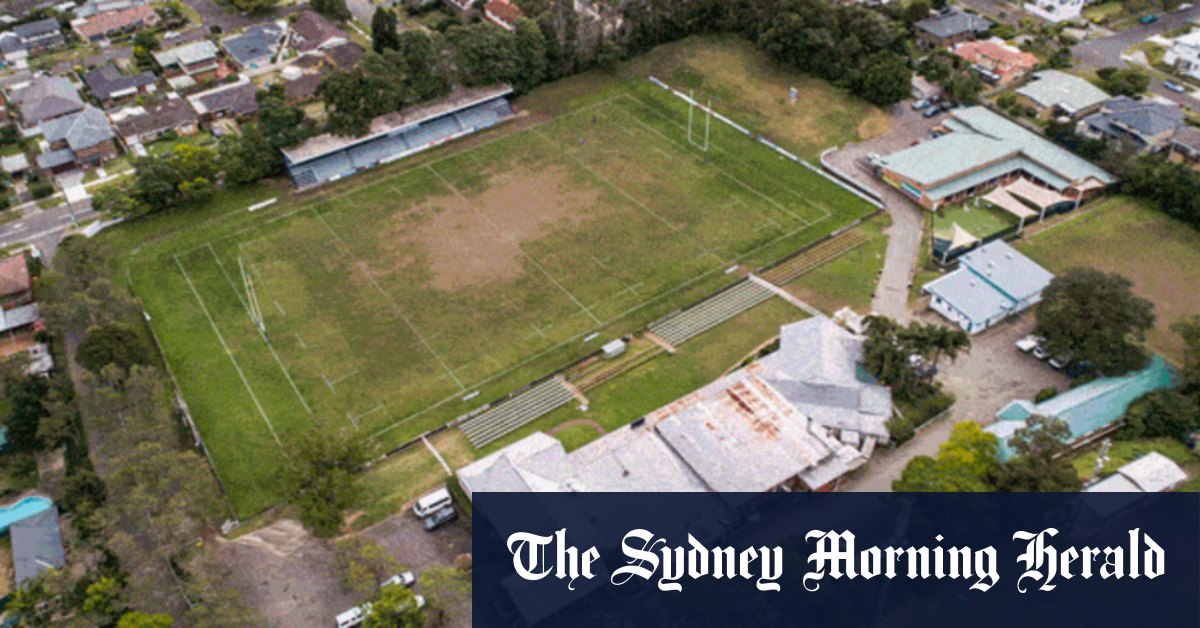
The TG Millner Field is the home ground for the Ryde-Eastwood Hawks rugby league club – although it only uses the ground on Sundays.
Football operations manager Michael Frain said the club could use the facility six days a week for 10 months a year if permitted.
Frain also said the club will not have a ground to play in the area if the project goes ahead. “There is not one rugby league field in Ryde [local government area] at present for training or playing, so there is an obvious need to keep green space.”
The planning proposal is currently being assessed by council officers, but 12 out of 13 Ryde councilors in June voted to oppose any plans to reduce green space in Ryde.
The councilors also voted in favor of a motion to secure the TG Millner Field, described as an “iconic local landmark”, as open space in perpetuity.
Ryde’s Major Liberal Jordan Lane said the Ryde area needed grounds for all sporting codes. “TG Millner is a premier field, worthy of preservation.”
Lane said there was “no doubt traffic and other social pressures will be exacerbated by the concurrent eroding of open space, and development of new dwellings”.
loading
The Ryde area needed 13 additional sports ovals by 2036 to keep up with demand and population growth, he said. “Decimating one of our largest existing open spaces will set this cause back significantly.”
Lane said it was “absurd” to suggest any part of Ryde had sufficient open space.
“Were the fields to be made available to the public, council could also help address the oversubscription of requests for its current sporting fields,” he said.
“When you’re talking about the size and scale of Lismore LGA alone, no council anywhere can afford to even partially fund that,” Krieg said.
Blocks of privately owned land had been identified on the outskirts of Lismore that could be used to permanently rehome flood-affected residents, Krieg said.
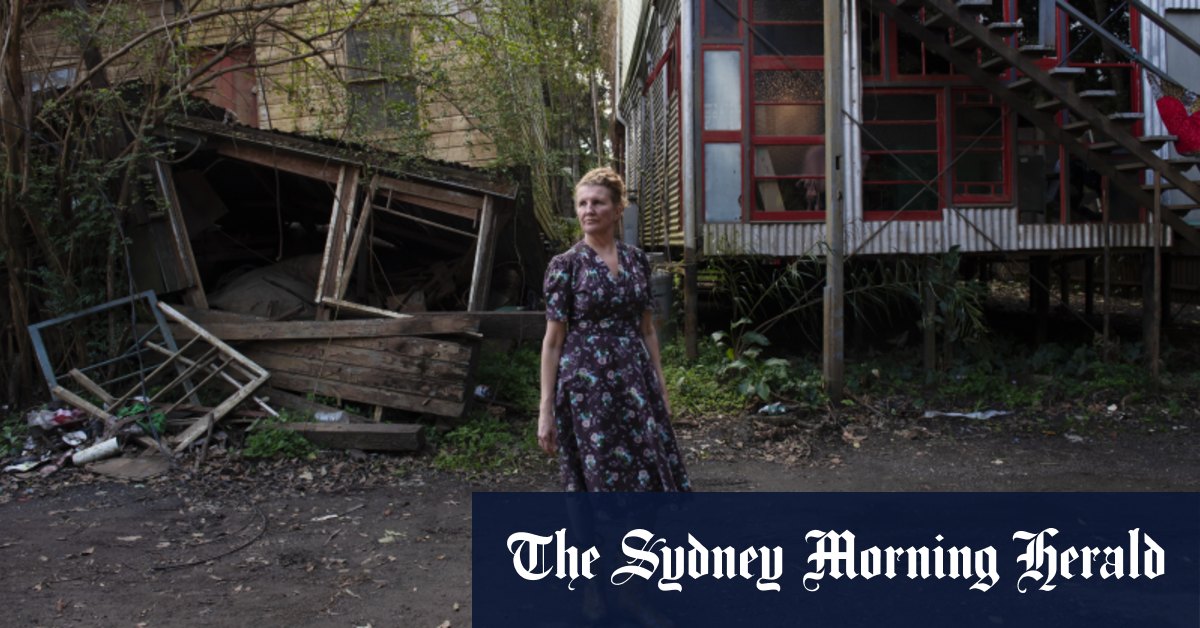
Steve Krieg on the streets of Lismore in the days after the flood.Credit:elise derwin
“There are people who have been sitting on some suitable land for a long time, saying that now is an opportunity to open that up,” Krieg said.
The council said in May that about 1,000 homes would need to be rebuilt off the floodplain, at a cost of $400 million.
The challenge with any buyback or land-swap scheme would be meeting demand, according to Resilient Lismore, a grassroots group helping with recovery.
“Lots of people are ready to go,” co-ordinator and Lismore city councilor Elly Bird said. “They’re just waiting to see what the government will deliver before they decide what they’ll do.
“We know Queensland moved very quickly with a program around buybacks and land swaps, and here we are, still waiting.
“We’d like to see that [independent inquiry] report. That’s our report, our submissions that we put in, and we want to see the results.”
Krieg also called on the government to release the report in its entirety, saying his community needed certainty after five months in limbo.
“People have been holding off making big decisions about their homes and their businesses, waiting for this report.”
loading
Labor state MP Janelle Saffin said purchase prices in a buyback scheme had to be based on pre-flood property valuations, a sentiment echoed by residents.
Schofield said many of the flood-affected parts of Lismore were low-socioeconomic areas and any buyback or land swap scheme had to ensure people had enough money to pay off their debts and start again.
”If you still have to pay your bank [exit] clause in the mortgage, buy a piece of land and build, that will be out of reach for I’d say 90 per cent of people in North and South Lismore.”
She is back living in two rooms of her home, but without any walls, and said she and her neighbors were frustrated waiting for details on what help would be coming their way.
loading
“A week when you’re living like this is a very long time. It’s incredibly stressful. A lot of people are really anxious about their futures.”
She would ideally like to take part in a land swap and move her house with her.
“A lot of us have beautiful old houses built 120 years ago and some of them are still in very good nick. And the community doesn’t necessarily want to separate from each other.
“If we had a magic wand, I think there’s a large percentage who would stay fairly close to where we are now, just out of the flood.”
The Morning Edition newsletter is our guide to the day’s most important and interesting stories, analysis and insights. Sign up here.
Have you ever driven past special road crossings for wildlife and wondered if they actually work?
Key points:
A new study by Southern Cross University provides evidence that road underpasses are used by wildlife to safely cross
It’s the first long-term study of underpasses in Australia and focussed on two locations in northern NSW
It found some mammals were using underpasses more than once a week
There’s new evidence to suggest they are effective, based on the first long-term study of road underpasses in Australia.
The research from Southern Cross University (SCU) was published in the journal Ecology and Evolution and based on a two-year study of underpasses located on the Mid North Coast of New South Wales.
During that time wildlife cameras detected close to 5,000 medium-to-large mammals and goannas using highway underpasses at Port Macquarie and Grafton.
The researchers studied 12 underpasses in those two areas– five under the Oxley Highway at Port Macquarie and seven under the Pacific Highway south of Grafton – comparing camera trap detections of animals at underpasses with those at nearby forest sites.
A koala is captured on camera using a highway underpass on the Mid North Coast.(Supplied: Southern Cross University)
The lead researcher, SCU Associate Professor Ross Goldingay, said the results were encouraging.
“More than 4,800 detections were made; that number was quite astounding,” he said.
“These crossing rates suggest animals used the underpasses to forage on both side of the freeways.”
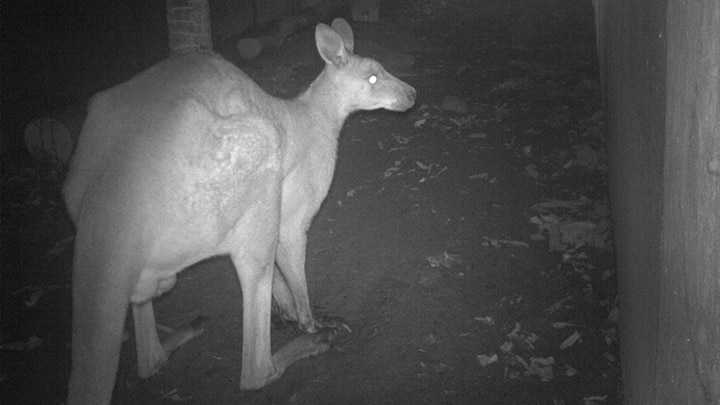
Associate Professor Goldingay said certain species, including eastern gray kangaroos, swamp wallabies, red-necked wallabies, red-necked pademelons, and lace monitors crossed some underpasses more than once per week.
A dedicated wildlife underpass at Port Macquarie where there have been regular animal sightings.(Supplied: Southern Cross University)
“We actually got quite a bit of traffic of animals passing through those underpasses, particularly in Port Macquarie … it’s a wetter forest type there so it seems there’s a greater abundance of animals,” he said.
“We were getting eastern gray kangaroos and swamp wallabies moving through two to four times per week and other species, including the red-necked pademelon was going through once every two weeks, so quite frequently.
“At Grafton we’ve got a very high use of a couple of underpasses by echidnas and another small wallaby called the rufous bettong, which is actually a NSW-listed threatened species.”
‘Prey-trap’ concerns dismissed
The study also dispelled concerns that underpasses could become a “prey-trap” used by introduced feral pests and that animals could become caught in the relatively confined area.
The rufous bettong is a small, nocturnal marsupial species that has been seen using the underpasses.(Supplied: Mt Rothwell)
“We looked at that in detail as there have been a couple of other short-term studies where they have had frequent occurrences of foxes in a few underpasses, and in one case in Western Australia that coincided in a decline in the bandicoots using that particular underpass,” Professor Goldingay.
“Because we had more underpasses and a longer period for this study, we were able to look at this in more detail than anyone has before.”
Professor Goldingay said predators which were detected at the underpasses included the introduced red fox, feral cat, and dingo.
“What we found was feral cats were very rare at both sites. We did have dingoes at both sites, but they weren’t very frequent in the underpasses,” he said.
“The red fox is the main concern, particularly in Port Macquarie. Of the five underpasses there, there were three that were used relatively frequently.
“However, the fox activity coincided less than expected with the activity of the mammals most at risk and it seemed potential prey were possibly avoiding using the underpasses when foxes were about.”
Caution still needed
A combined wildlife and drainage underpass at Grafton.(Supplied: Southern Cross University)
Despite the positive study results, Professor Goldingay said any expansion of road networks in Australia still needed to be done with caution.
“Australia’s wildlife species are increasingly threatened with extinction by habitat clearing and fragmentation,” he said.
“One leading cause of this is the expansion of our road network, particularly the upgrade and duplication of major highways.
“Underpasses are a useful generic tool to enable wildlife to move across landscapes with roads. But not all ground-dwelling species of wildlife will find underpasses to their liking but so far, many do.”
GPs are choosing to phase out bulk-billing payment methods and are concerned vulnerable Australians will be left without access to affordable basic health care.
“Over the past few decades the government hasn’t been really paying much attention to general practice,” Sydney Dr. Brad McKay told Today.
GP Brad McKay is warning of the end of bulk-billing. (9News)
“Our wages for general practitioners haven’t been escalating, or increasing for a long time, our wages were frozen for many many years under Medicare as well, so this gap has developed.”
McKay said GPs are sick of handling the gap and being paid “at half the wage” they should be.
“We’ve been asking for support for many, many decades and it’s really got to breaking point at the moment,” McKay said.
With the average out-of-pocket expense for GPs having risen by 60 per cent in the last decade, hundreds of clinics across the nation are struggling to make ends meet.
The Medicare Benefits Schedule rebate for a standard consultation recently rose by 65 cents to $39.75.
The current Medicare Benefits Schedule rebate for a standard consult is $39.75 (iStock)
More and more GPs are advising their patients they can no longer provide bulk billing as a service.
“It’s very, very hard to find a bulk billing doctor these days and it’s going to get harder,” said McKay.
The result, McKay says, is more people ending up in hospital.
“People don’t see the doctor and they get worse and they end up in the emergency department,” he said.
“So it costs the government a lot more when that happens. It’s like $1000 for you to go to the emergency department.”
The subvariants and mutations of COVID-19
A shortage of GPs is adding to the stress, with many choosing to leave the profession.
“Lots of GPs aren’t coming in from medical students, they’re not deciding to do general practice,” McKay said.
“We’re getting really thin on the ground as well.”
In May, the Albanese government announced a $970m investment in primary health care to boost GP practices.
The policy includes a $750m “Strengthening Medicare” fund to roll out from 2023-24 and a $220m grants program for upgrades in local practices.
He has turned the first couple of weeks of parliament into a masterclass in political tactics. The teal program has been subsumed by Labor and, using kindness, Labor is transforming the teals from mavericks into minions.
The first involvement of the teals in policy is a case in point. When the climate bill passed the lower house this week, the teals were left with a minor supporting role. Curtin MP Kate Chaney got to add that it is “urgent”, Goldstein MP Zoe Daniel threw in that it is to be a floor not a ceiling, and Warringah MP Zali Steggall said something about listening to the science.
Minister for Climate Change Chris Bowen graciously acknowledged their “sensitive suggestions”. In history, the teals will not own this bill. Even now, they are a footnote in media reports of Labor’s success. If Labor continues to take this approach, it is only a matter of time before this year’s crop of teals, professionals with interesting alternate careers, begin to regret their life choices. For most of them, entering politics represented a cut in pay and autonomy in exchange for the prospect of making a difference. But what difference is going to be left to them?
Former director of neurology at Royal Melbourne Children’s Hospital Monique Ryan, now a member for Kooyong, demonstrated the come-down this week. From bossing a team that saves children’s lives, she’s been reduced to Karen-ing in parliament about the need to wear masks.
loading
She was allowed barely a moment to bask in this dim glory. Health Minister Mark Butler leapt to his feet from him and, smooth as Savlon, stole the show. “She actually is one of a large number of doctors and health professionals in the parliament who will add enormous quality and depth to our health policy,” Butler said, subtly reminding the public that Labor also counts a number within its ranks.
And, never missing a moment to bring the focus back to the things Labor can do that teals cannot, he added that, “We have extended support to the state hospital system. We have expanded access to fourth-dose vaccines and antiviral treatment.”
The teals are left with the scraps. Former GP Sophie Scamps (who keeps up appearances like Hyacinth Bucket, by insisting her name de ella is pronounced “Scomps”) might welcome the salary as doctors’ practices struggle to remain solvent. But Allegra Spender, who said in her first speech that women like her are “done waiting” and that “we are taking what is ours” will find that what is now hers is nothing more than the opportunity to commute from her waterfront Sydney home to the Canberra biodome on a Dash 8 plane . To be fair to Spender, she has flagged a number of substantial ideas that go beyond the gazumped teal playbook.
North Sydney MP Kylea Tink’s great contribution to the national stage so far has been to propose a name change for her electorate. Unfortunately, the Indigenous tribe she wants to name it after was not the only tribe living in the expanse of her electorate de ella, as a local mayor (the level of government usually concerned with place names) pointed out.
Kylea, whose name derives from the Indigenous word for a boomerang that doesn’t come back, was left looking like a very blunt stick. Is effeminated the right term for women robbed of their power? Because that is the result of the new kinder, gentler politics, as delivered by a prime minister who is surely a prince among men.
The Opinion newsletter is a weekly wrap of views that will challenge, champion and inform your own. Sign up here.
Kylie Spelde is aware people might be sick of hearing about the search for her sister, Janine Vaughan, who vanished almost 21 years ago.
But for Ms Spelde and her brother Adam Vaughan, Janine’s disappearance is a part of their everyday lives.
The “bright, bubbly, vivacious” 31-year-old was last seen getting into a red car after a night out at a pub in the central west NSW town of Bathurst.
What happened next has been a mystery for more than two decades, and the subject of a podcast, dozens of media stories and soon a documentary.
Sometimes Ms Spelde gets recognized by strangers who have seen some of the coverage, who confuse her with Janine.
She said sometimes people saw her sister as a concept, not a real person.
“A lot of the missing people that are out there, they just get labeled as a missing person, and I think people need to start realizing that they are somebody’s loved one, someone’s daughter, someone’s mother, and sister,” Ms Spelde said.
Kylie Spelde and Adam Vaughan hope their sister will be found alive.(Supplied: Kylie Spelde)
She said people were often awkward and unsure how to ask about the investigation.
“It was ‘oh have you found your sister yet?’ like she was this lost dog,” Ms Spelde said.
“When it’s a missing person, it’s an ongoing discomfort that people don’t want to ask.”
She said people would as “oh how’s the case going?” instead of “how are you coping?”.
Mr Vaughan said he remembered Janine as his “big, big, big sister” due to the 12 year age gap between them.
“Because she’s gone missing, we don’t know how to react, because we talk about her everyday,” Mr Vaughan said.
“It’s like she’s still here, it’s like she was just in the door yesterday.”
He said meeting new people always required him to consider how he explained Janine.
He said it was hard to know what to say.
“Do I say oh my sister died? And then it would be ‘oh, poor you’,” he said.
“Or, I’ve got a missing sister, and then the whole conversation for the rest of the night is about my missing sister.”
Janine Vaughan’s siblings remember her as “bright, bubbly and vivacious.”(Supplied: Kylie Spelde)
While the siblings have hope Janine will be found alive, that is not always the case for others.
“On one hand you’ve got the people who talk to you as if she’s just dead, and then that’s it, so they’ve got over it and they’re more worried about you,” Mr Vaughan said.
“Then there’s other people that kind of forget that she’s not dead, that we don’t know that she’s dead and if she’s still missing, and they don’t really know how to talk about it, so they kind of forget about her and everything goes on to what we’re doing.”
A 2009 coronial investigation found Janine was suspected to be murdered by an unknown individual.
Her family commissioned a billboard in 2020 which stands on the highway through the center of Bathurst.
A billboard features Janine Vaughan and the two other missing people.(Supplied)
It also features the images and information about two other people last seen in the city: 15-year-old Jessica Small, who was abducted in 1997, and Andrew Russell, last seen in 2010.
As National Missing Person’s Week came to an end for 2022, and the attention moved away from the more than 2,500 individuals not seen for at least three months, Ms Spelde said it was the hope of finding out what happened to her sister that kept her going .
“My hope is that I find Janine before I die, before something happens to me,” she said.
“So that’s my drive, that’s where I’m at, I’m like ‘I’ve got to do this’.”
NSW Police have offered a $1 million reward for information to help solve Janine’s disappearance and suspected murder.
“I would love to take that money from the government and make sure somebody’s got it, and it would also shine hope in other missing people’s families, if ours is solved, it gives other families hope,” Mr Vaughan said.
Anyone with any information relating to missing person cases can contact Crime Stoppers on 1800 333 000.