A Perth man who severely bashed an African migrant in a misguided vigilante attack has had his conviction overturned by the High Court and will face a retrial.
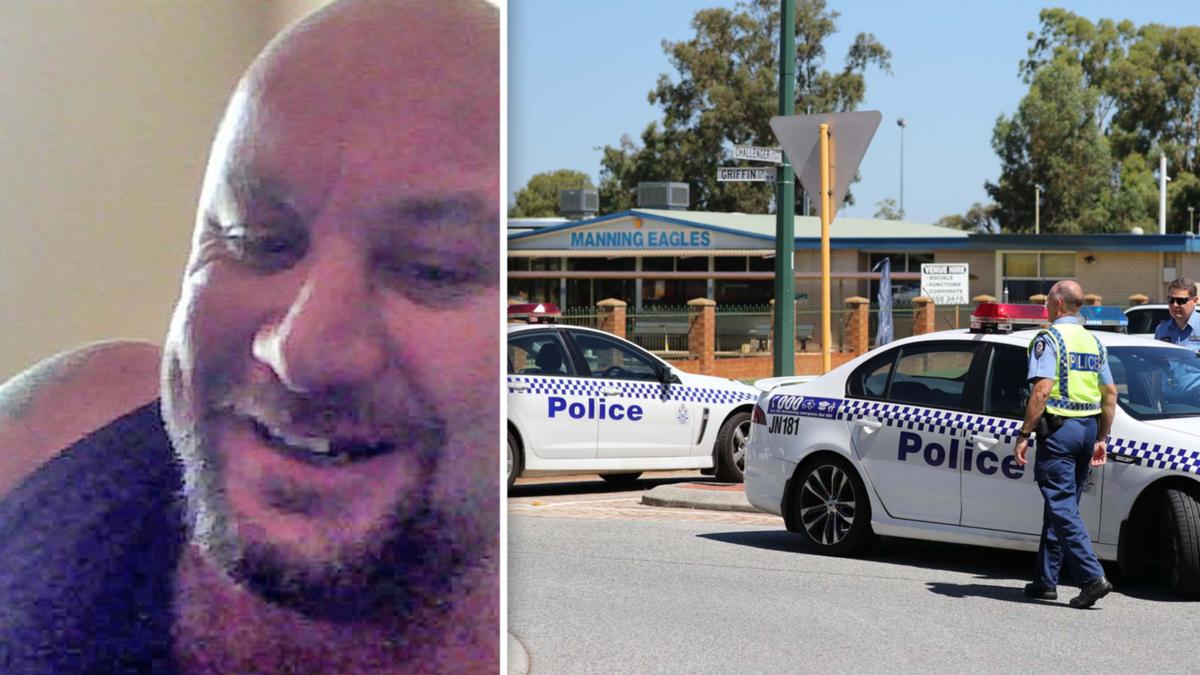
Brett Christopher O’Dea, 46, was found guilty by a jury of committing grievous bodily harm with intent to Alimamy Koroma, a 35-year-old migrant from Sierra Leone, in the driveway of a Manning home in January 2018.
Mr Koroma had been chasing a young woman who had attempted to steal from the bowling club where he worked as a cleaner when he was attacked by O’Dea and another man, Jacob Jefferson Webb.
O’Dea testified he had heard the woman screaming she had been raped and ran out to protect her, responding in a manner he felt was appropriate at the time.
He attacked Mr Koroma with a weapon similar to a hockey stick, kicked him in the face and punched him in the head at least 10 times while he was on the ground.
The father-of-one suffered a traumatic brain injury and a fractured skull. He was forced to move into a rehabilitation facility after suffering cognitive impairments that left him unable to work or drive.
O’Dea’s trial in the District Court of Western Australia was told Mr Koroma’s brain injury was more likely to have been caused by O’Dea than Webb. It was also possible it was caused by a combination of their acts, prosecutors said.
A father-of-one suffered a traumatic brain injury and a fractured skull. He was forced to move into a rehabilitation facility after suffering cognitive impairments that left him unable to work or drive. Credit: trevor collens/The Sunday Times
O’Dea was found guilty in 2019 and sentenced to a minimum of four years and three months in prison.
The jury was unable to reach a verdict for Webb, who later faced a retrial and was convicted of the alternative charge of unlawfully doing grievous bodily harm.
O’Dea’s conviction was upheld last year by WA’s Court of Appeal.
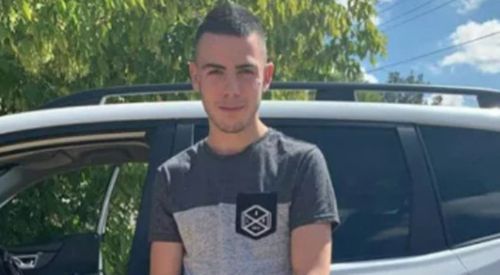
Brett Christopher O’Dea, pictured, was found guilty by a jury of committing grievous bodily harm with intent to Alimamy Koroma. Credit: unknown/Facebook
But Australia’s highest court on Wednesday ruled O’Dea had suffered a miscarriage of justice because the trial judge had erred in his instructions to the jury.
A majority of High Court judges found the instructions, based upon the “broadest” interpretation of the relevant legislation, left it open to the jury to attribute acts to O’Dea that Webb may have been carried out.
“That direction was an error of law amounting to a miscarriage of justice,” Justices Michelle Gordon, James Edelman and Simon Steward said.
The jury needed to be satisfied beyond reasonable doubt that O’Dea’s acts, in isolation, were sufficient to have caused the brain injury and were not undertaken in self-defence or because of an honest or reasonable mistake, they said.
In dissenting remarks, Chief Justice Susan Kiefel and Justice Stephen Gageler found the jury had been entitled to convict O’Dea.
The court ordered his conviction be set aside and a new trial held.
An article in the Conversation with the catchy title “Hey Minister, leave that gas trigger alone” has urged the Labor government not to extend the Turnbull government’s gas trigger, which could be used to compel foreign-owned gas companies to keep gas reserves for use in Australia in some circumstances. It warns that actually using the trigger could inadvertently allow such companies to seek to sue the government under Australia’s existing international agreements.
Many Australians don’t know this but some of our trade agreements give foreign-owned companies special legal rights to sue the federal government if a change in law or policy reduces their profits, even if the change is in the public interest. The mechanism is known as an investor-state dispute settlement (ISDS).
It was this mechanism in a Hong Kong-Australia trade agreement that enabled Philip Morris to sue the Australian government over plain packaging laws in 2012. The Gillard government persisted with the legislation because it was an important public health policy. Successive governments fought and won the Phillip Morris case, although it took more than five years and cost taxpayers $12 million in legal fees.
In light of the ISDS risk, the Conversation article urges the government to seek out other solutions to the trigger mechanism to safeguard gas supplies, such as the Western Australian gas reservation model, which requires companies to reserve supplies for the local market before other transactions. However, ISDS also raises a broader matter of principle. Should governments simply accept the threat of being sued by a foreign company when we determine our own public policy?
I would argue no – it is not acceptable for companies to use this legal tool to curtail the democratic rights of governments to act in the interest of their citizens, especially on issues as important as energy supplies and climate change.
A recent study showed mining companies have been increasingly inclined to use the obscure legal tool to sue governments for billions in compensation over decisions that aim to phase out fossil fuels to combat climate change, and recommended ISDS be removed from trade agreements. The Intergovernmental Panel on Climate Change (IPCC) have warned that climate action is being threatened by ISDS clauses in trade agreements.
Cases already under way around the world include the US-owned Westmorland coal company suing the Canadian government because the Alberta province is phasing out fossil fuels, and the German-owned energy companies RWE and Uniper suing the Dutch government over similar policies. European governments want to withdraw from the Energy Charter Treaty because it includes ISDS provisions that are being used against climate change policies.
In Australia, the Coalition’s government policy on ISDS varied over the years. The Howard government did not agree to include ISDS in the Australia-US free trade agreement. But successive Coalition governments agreed to include it in the comprehensive and progressive trans-Pacific partnership between 11 Pacific rim countries, including Japan, as well as in bilateral agreements with China, Korea and Hong Kong. Companies from all these countries have fossil fuel or energy investments in Australia.
Discover the Australia Weekend app
However the Coalition government was influenced by the growing sentiment against ISDS. More recent agreements, including the regional comprehensive economic partnership between 15 Asia-Pacific countries, the Australia-UK free trade agreement, the interim Australia-India economic cooperation agreement, and the Australia-EU free trade agreement still under negotiation do not include ISDS.
The Albanese government’s policy platform explicitly opposes including ISDS mechanisms in new trade deals and pledges to review and remove ISDS from existing trade agreements.
“Labor views these provisions as contrary to the national interest and basic principles of democratic sovereignty and will not accept such clauses in any trade agreements,” the policy said. “Labor will not ask this of Australia’s trading partners in future trade agreements.”
But what about ISDS in existing deals? Labor has promised to review existing trade agreements and “seek to work with Australia’s trading partners to remove these provisions”.
There is growing evidence that ISDS provisions pose a real threat to governments wanting to take action on climate change. Negotiations with other governments to remove them from trade agreements should happen as a matter of urgency.
This would enable the Australian government to develop effective policies to combat climate change, without the threat of being sued by foreign-owned companies.
In a joint judgment, Chief Justice Susan Kiefel and Justice Patrick Keane said discussions of animal welfare are a “legitimate matter of governmental and political concern and a matter in respect of which persons may seek to influence government” but the laws did not amount to an impermissible restriction on the implied freedom.
They said the provisions furthered the legitimate purpose of preventing or deterring “trespassory conduct”.
While the majority of the court answered a narrower question about the validity of the laws, some judges considered how the law might apply to media outlets.
Justice Michelle Gordon said the provisions would “prevent, for example, media outlets communicating about footage that reveals unlawful conduct taking place at an abattoir or even unlawful conduct engaged in by the Government” if it was given to them by a trespasser. To that extent, Gordon said, the laws would be invalid.
In a dissenting judgment, Justice Stephen Gageler said the laws operated indiscriminately and imposed an impermissible burden on the implied freedom of political communication. Justice Jacqueline Gleeson agreed.
Justice James Edelman said Delforce had been “involved in many incidents of covered recording of farming activities involving considerable suffering of non-human animals”, and some of the images tendered in court “reveal shocking cruelty to non-human animals”. However, it had not been established in court that the practices were unlawful.
It meant the challenge in this case was confined to circumstances in which the Farm Transparency Project had published footage of lawful activities. Justice Simon Steward agreed the laws were valid.
Edelman said the court was not asked to, and did not, consider the wider application of the laws, such as a newspaper publishing a smartphone video taken by a gatecrasher at a private function that recorded government MPs discussing “an unlawful enterprise”.
The Morning Edition newsletter is our guide to the day’s most important and interesting stories, analysis and insights. Sign up here.
Richard Arow’s girlfriend can still hear the blood-curdling screams as he was shot dead minutes after arriving at melbourne’s Love Machine club.
“What began as the most beautiful day and evening quickly became the most harrowing, terrifying and life-altering event,” Rebekah Spinks told the Supreme Court on Wednesday.
Arow and Spinks were standing outside the Prahran nightclub with some friends on April 14, 2019, when a car drove by and fired four shots.
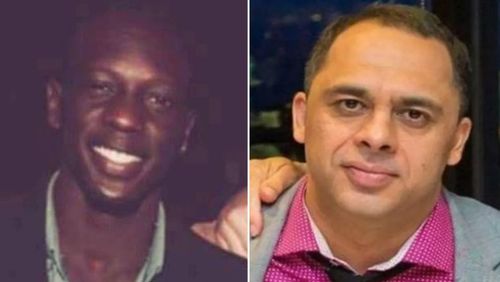
Richard Arow and Aaron Khalid Osmani were shot dead outside the Love Machine nightclub. (Supplied)
She watched in horror as her 28-year-old partner and security guard Aaron Osmani, 37, fell to the ground after being shot in the head just after 3am.
Both men died from their injuries.
Security guard Semisi Tu’itufu was struck in the shoulder, while another bullet went through club-goer Ukash Ahmed and into Ali Shohani as they lined up.
“I didn’t see the car coming, I heard the gunfire and I watched as Richard fell to the ground like a ragdoll,” Spinks said, between tears.
“The people on the street ran and Iran to Richard.
“From time to time, I still have to hear the blood-curdling screams from my own lungs.”
More than three years on, Spinks still cannot walk down busy streets filled with cars for fear that someone may fire bullets in her direction.
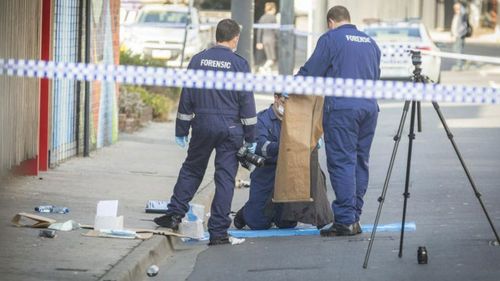
Police outside the Love Machine nightclub after the 2019 shooting. (Nine)
“They shot at a crowd of defenceless people with no time to defend ourselves, it was completely gutless,” she said.
Jacob Elliott fired four shots from a car driven by Allan Fares at the club, near the corner of Little Chapel Street and Malvern Road.
They went to the club after Elliott’s younger half-brother Ali Maghnie was booted out for poor behaviour.
Maghnie spoke to his father Nabil Maghnie and then to his brother after the incident.
Elliott and Fares drove past the nightclub four times before the shooting.
The pair were found guilty of two counts of murder and three of attempted murder by a Supreme Court jury in April.
A third man, Moussa Hamka, was found guilty of one charge of assisting the men after he knowingly concealed the gun used in the shooting.
Jacob Elliott is the son of slain gangland figure Nabil Maghnie. (Supplied)
All three faced a pre-sentence hearing on Wednesday, where prosecutors asked the court to impose lengthy prison sentences for shooting at innocent bystanders.
“That was a grossly violent act committed upon defenceless victims, who had no reason whatsoever to suspect that they were under any risk or danger,” Justin Bourke QC told the court.
“The victims were selected to send a message that any disrespect, such as an ejection from a nightclub for being intoxicated, would not be tolerated.”
Five victims gave statements to the court about the impact of the shooting, including Tu’itufu who said he wished he could have stepped in and saved Osmani and Arow’s lives.
“To this day, I never felt like I did enough,” he said.
The hearing continues before Justice Andrew Tinney.
Hi there. It’s Wednesday, August 10, and you’re reading The Loop, a quick wrap-up of today’s news.
Here’s what you need to know:
Ahead of the Indigenous Voice to Parliament referendum, One Nation has been registering several domain names after Pauline Hanson declared her party would become the face of the “no” campaign last week.
She said her campaign had acquired and registered 46 domain names in opposition to an Indigenous Voice to Parliament, a practice known as “cyber-squatting”, which can be used to maximize search engine traffic.
Some of the websites registered by One Nation included voicetoparliament.org.au and ulurustatement.com.au.
Pauline Hanson has vowed to campaign against an Indigenous Voice to Parliament.(ABC News: Ian Cutmore, file photo)
The entity responsible for licensing Australian domains (websites with .au at the end) has told the ABC that they will suspend several of the domains One Nation has registered.
It’s unclear exactly how many of the domains the regulator will take down, but its policy says entities must have a “close and substantial connection” to their registered domain name — simply put, they must match the name they’re known by or the service they offer.
One Nation has not commented, but the party has since registered several new businesses with names matching the domains in question.
loading
We heard a lot about China and Australia’s relationship
China’s ambassador to Australia, Xiao Qian, addressed the National Press Club today, where his country’s relationship with Australia and Taiwan was firmly under the microscope.
After his speech, Mr Xiao said Beijing would not compromise on Taiwan and would use “all necessary means” for “a peaceful reunification”.
“If every country put their ‘One China’ policy into practice with sincerity, with no compromise, it is going to guarantee the peace and stability across the Taiwan Strait,” he said.
When challenged about when China would conclude its military exercises around the island of Taiwan, Mr Xiao was non-committal.
“There’s no room for compromise. How long it’s going to last, a proper time? I think there will be an announcement.”
Mr Xiao also said the change in Australia’s government provided an “opportunity to reset” relations between the two countries, and while recent high-level meetings had been productive, “there’s a lot of work to be done”.
You can look back at Mr Xiao’s address and read analysis from our experts here.
Xiao Qian shared his views on the China-Australia relationship and tensions with Taiwan.(AAP: Mick Tsikas)
News alerts you might have missed
Lauren Jackson will make her return to international basketball after being named in the Opals world cup squad.
loading
The Commonwealth Bank has reported a 9-per-cent profit increase, making a $9.7 billion profit in the past financial year. It will pay shareholders a fully franked final dividend of $2.10 a share.
The Liberal Party has rejected an invitation from the federal government to attend a national jobs summit in Sydney next month, labeling it “a stunt”.
What Australia has been searching for online
The COVIDSafe contact tracing app has been scrapped.(ABC News: Lara Smith)
Matthew Guy: The leader of the Victorian opposition’s media manager, Lee Anderson, has quit just two days after Mr Guy’s new chief of staff was announced, citing “personal reasons”. The party’s Deputy Leader, Georgie Crozier, says rumors there was a disagreement between the two is false.
loading
One more thing: Arrivederci Domino’s
The pizza chain has called time on its franchises in Italy after seven years, according to a Bloomberg report.
Domino’s first planned to open 880 stores that would allow it to control about 2 per cent of the Italian pizza market by 2030, with its Italian chief executive, Alessandro Lazzaroni, saying there was an opportunity for the company to capitalize on pizza delivery in the country .
However, it appears the rise of food delivery services during the pandemic took away its planned competitive edge, with its last 29 franchises shutting their doors and no longer accepting orders online.
ACT police have hired a criminal psychologist to help them tackle the problem of hoon driving in Canberra.
Key points:
Chief Police Officer Neil Gaughan says “better solutions” are needed to prevent hoon drivers
Uriarra residents say the behavior particularly affects their village, and not enough is done to stop it
Deputy Commissioner Gaughan say police cannot attend every call for help
ACT Chief Police Officer Neil Gaughan said hooning had grown as an issue in the ACT over the past few years, and that police were considering a range of tactics to try to deal with it.
The ACT Legislative Assembly has meanwhile launched an inquiry into the issue of dangerous driving, and is currently accepting submissions from the public.
Hoon driving ‘happening daily’
Deputy Commissioner Gaughan said police were getting constant reports of dangerous driving.
“It’s daily occurrence,” he said.
“Yesterday I had the radio on in my office and we were in pursuit of vehicles driving on the wrong side of the road.
“It’s happening daily and it’s not happening at three o’clock in the morning like it used to. It’s happening at three o’clock in the afternoon in Braddon.”
He said action needed to be taken to come up with “better solutions” and prevent hoon drivers from becoming involved in criminal activity in the first place.
Space to play or pause, M to mute, left and right arrows to seek, up and down arrows for volume.
ACT Chief Police Officer Neil Gaughan says hoon driving is a major problem in Canberra.
“It seems to be post lockdown, after COVID, we’ve seen an increase in this sort of risky, dangerous behaviour,” he said.
“We’ve actually engaged a criminal psychologist to look at some of the reasons why people are doing it and thinking about how we can entertain kids. You know, I’m keen on trying to keep people out of the criminal justice system.”
Police are also considering placing cameras in problem areas to try to apprehend hoon drivers, Deputy Commissioner Gaughan said, as well as the potential of drones to help in tracking the vehicles.
He also said drivers had learned how to evade police, by crossing onto the other side of the road during a pursuit, where police were not permitted to follow.
“At the moment, if a car goes onto the wrong side of the road, we don’t chase it,” he said.
“Other jurisdictions do things slightly differently.”
He said he was aware that residents shared the concerns of police.
“From a policing perspective, this is the one issue that I know Canberrans are really filthy about,” he said.
I have encouraged Canberrans to make their own submissions to the ACT Legislative Assembly inquiry.
“Hopefully we can see a number of submissions to the committee and they can get together and can work through it and come up with some solutions.”
‘They’ve just blocked passage’
Residents of Uriarra say hooning in the area is a huge problem.(ABC News: Talib Haider)
In Uriarra, hoon driving is a persistent problem.
For resident Jess Agnew, it is a weekly occurrence.
“Sometimes three nights a week,” she said.
“It can be dangerous — there’s times where there’s hundreds of people … and you just cannot get through, they’ve just blocked passage.”
She said she had struggled to get a reaction from the police.
“There really hasn’t been one,” she said.
“We were calling regularly, all the residents, and then we just got us stopped because there was absolutely no reaction that we could see.
“And then the police report came out that hoon behavior had dropped at Uriarra, because we stopped recording because we’d sort of given up.
“And then so the minister said to us, ‘no, you’ve got to continue reporting’, so we so we all report now.”
She said she held concerns for learner drivers.
“We don’t want our kids to have to navigate through those kinds of things,” she said.
“When they’re coming home at night, they’ve already got to deal with kangaroos and wombats.”
‘Up to 100 cars coming out’
Uriarra resident Hugh Hagan, 17, says hoon drivers cause problems for the community every week.(ABC News: Greg Nelson)
Hugh Hagan, a 17-year-old who also lives in Uriarra, agrees.
“Consistently we see on Friday and Saturday nights normally only about 20, but up to 100 cars coming out and just doing burnouts and hooning along roads late at night and blocking traffic,” Hugh said.
“That’s been going on for a number of years now.”
He said he knew of people who had been blocked from driving through while attempting to get into Canberra Hospital, and of fires that had been started by the burnouts.
“[Police] just tell us to call it in and try and get photos and video and they will do whatever they can with the numbers that they’ve got on.
“They might send out a car, it’s not very often that they do, and if they do get sent out they just clear the crowd and then they just end up gathering again later in the evening.”
Hugh said he did not believe that a criminal psychologist would help, and called for harsher punishments for offenders.
Deputy Commissioner Gaughan defended the police response.
“There’s literally thousands of kilometers of roads in Canberra, and particularly if we find these things are occurring in the evening when we’re busy responding to other things such as family violence matters, we simply just don’t have the resources to get to every location on time,” he said.
“So coming up with other ways of dealing with the matter is important and that’s why I welcome the inquiry.”
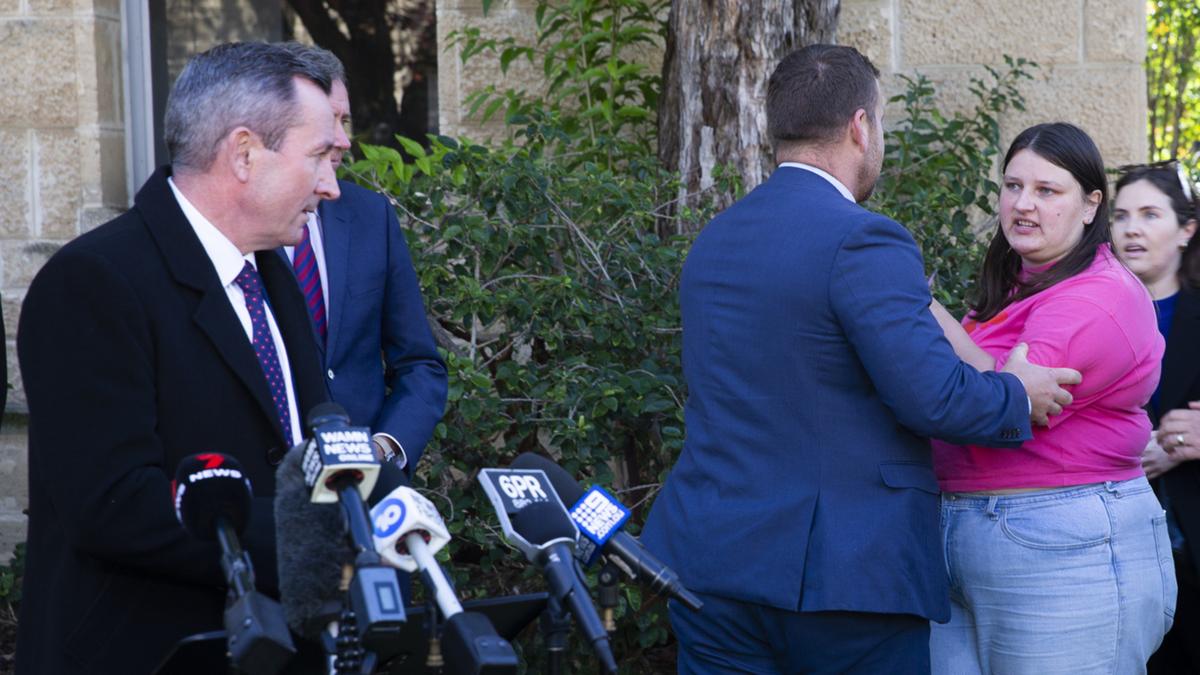
A University of Western Australia student gate crashed a press conference being held by Premier Mark McGowan and had to be ushered away by his security team as she demanded to know whether abortion would be made free across the State.
The female student approached Mr McGowan as he was preparing to answer questions from reporters after announcing a contract had been awarded for the installation of 98 electric vehicle chargers as part of WA’s electric highway.
“I’m a student here at UWA and I just wanted to know if you were planning to make abortion free in WA,” the young woman said as she walked towards Mr McGowan.
The student was dealt with by the Premier’s bodyguards. Credit: Andrew Richie/The West Australian
The Premier’s minders immediately jumped into action, getting between the woman and Mr McGowan and attempting to move her away from the gathered media.
She asked one of Mr McGowan’s male bodyguards why he had placed his hands on her but seemed to accept the explanation when told he was part of the Premier’s personal security team.
“I just, I don’t understand why Mr McGowan can’t just answer my question,” she shouted as she was moved away.
“I’m just a student at UWA and I want to know if abortion will be made free?”
The woman was ushered away during the press conference. Credit: Andrew Richie/The West Australian
Mr McGowan remained silent throughout the encounter, but later addressed the protester’s question — after she had been moved well away from the site of the press conference — when it was repeated by the media.
“We’re reviewing the law in relation to abortion reform as to whether or not further reforms need to be put in place to make it nationally consistent with other states,” the Premier said.
“You may not know but I was in the Parliament when abortion was made legal in Western Australia. I’m one of the few members still left from that period and I voted in favor of it.”
Health Minister Amber-Jade Sanderson in June revealed work was underway to modernize WA’s abortion laws, which have been described as among the most oppressive in Australia.
Security staff swoop on the UWA student. Credit: Andrew Richie/The West Australian
“Cost is an issue and… women do fly interstate to access abortions past actually about 15 weeks. There are only two private providers and often their hours are limited,” she said.
Abortions cost vary from state to state and can run into hundreds of dollars depending on the medications or surgical procedures required.
In WA, women who seek an abortion after 20 weeks must have their request reviewed by an “ethics panel” consisting of six medical practitioners, two of whom must agree the mother or fetus has a severe medical condition that justifies the procedure.’
Mr McGowan said he understood the review of WA’s abortion regime would be completed by the end of the year.
“It’s obviously come into more focus recently with the Supreme Court decision in America and we’re looking at what we need to do to make it more nationally consistent and if there are anomalies that make it difficult for women in certain circumstances,” he said .
“They’re the sorts of things we’re looking at changing and repairing.”
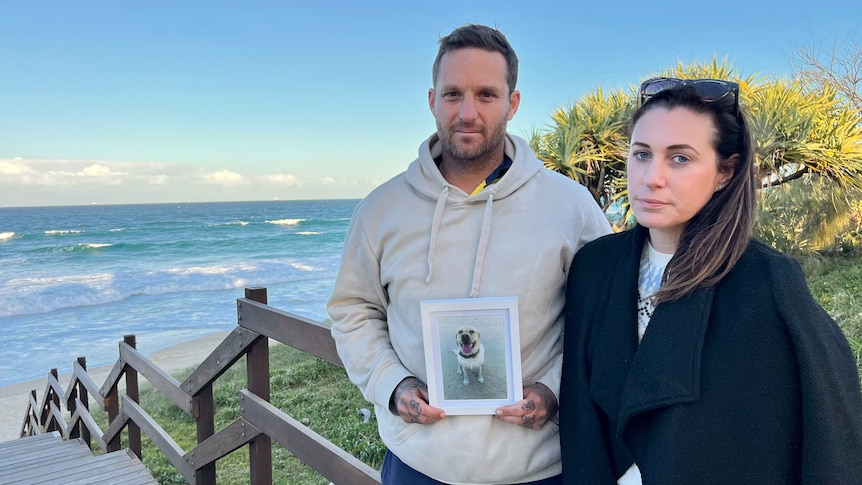
For Samantha Barrass and her family, the loss of their golden labrador Pepper this week has been made even harder by the knowledge it may have stemmed from a deliberate, malicious act.
Key points:
Sunshine Coast Council has received reports of seven dogs poisoned at Buddina
The council, police and RSPCA investigators are working to determine the cause
Coast dog owners are in shock and taking extra precautions
“It’s unbelievable… it just makes you sick to the stomach… there’s no words,” Ms Barrass said.
“I don’t know how you could harm let alone kill an innocent, defenseless animal and a dog… that provides so much joy.”
Pepper was one of five dogs to die after visiting Buddina beach — a popular off-leash area on the Sunshine Coast.
Pepper exhibited poisoning symptoms several hours after her walk.
Ms Barass said her dog died at the vet clinic on Tuesday
Breaking the news to her five-year-old daughter was one of the hardest things she’d had to do.
“She just wants Pepper to be home and can’t kind of comprehend what’s happened,” Ms Barass said.
“She was the happiest dog…stupidly happy…she was the brightest of all of us.”
Pepper’s family are devastated after she succumbed to poisoning symptoms on Tuesday.(Supplied: Samantha Barrass)
Dog bowls removed
Sunshine Coast police and the RSPCA are investigating, with at least seven dogs affected, including the five that have died.
Sunshine Coast Council has removed a dog drinking bowl from beach access 210.(ABC Sunshine Coast: Jessica Ross)
Several of the owners told authorities their dogs had drunk from water bowls at Buddina, near beach access 210.
Sunshine Coast councilor Joe Natoli said portable drinking bowls had been removed while fixed bowls had been sealed to prevent further contamination.
“We’ll increase our surveillance of the area,” Mr Natoli said.
“Council is actually asking people that if they if they have their dogs, and they’re in off leash areas, to be very vigilant to make sure that they keep an eye on their dogs.”
Joe Natoli says water bowls have been removed or sealed.(ABC Sunshine Coast: Kylie Bartholomew)
Kawana Waters police officer-in-charge Mark Cordwell encouraged pet owners to make an official report.
“We would like to try and pinpoint the location where all these dogs were may have frequented, as well as the times,” Senior Sergeant Cordwell said.
If found to be a deliberate act, those responsible could face up to seven years in jail.
“It is concerning enough for us to commence an investigation.”
Billy the beagle is one of five dogs that have died after a spate of suspected poisonings.(Supplied: Doggie Adventure Playhouse)
dog lovers in shock
The news has rocked the Sunshine Coast community, particularly dog park regulars.
Many took to social media to say they wouldn’t be visiting the area until the source of the poisoning had been found.
Buderim resident Gary, who didn’t want to give his full name, didn’t take his dog I went to the park on Wednesday but spent the morning warning other walkers.
“I thought I’d come down here and sit for half an hour and anyone with a dog coming along, I would mention to them just in case they hadn’t heard the news,” Gary said.
“So that they can be wary and maybe keep their dog on the leash and prevent them from eating something, if there’s something around.”
Gary, from Buderim, didn’t want to walk his dog I went after hearing of suspected poisonings.(ABC Sunshine Coast: Kylie Bartholomew)
Meanwhile, Ms Barrass said she was determined to help with the investigation into the dog deaths to ensure there was justice for the animals lost.
“Pepper was only four… it would be different if she went from old age or she developed a health complaint,” she said.
“For someone… an individual or a group of people… to be part of the death… that’s just viciousness.”
A female South Australian relief teacher accused of grooming a boy for sex has had the case against her dropped.
Ammy Singleton, 28, was charged with communicating to make a child amenable to sexual activity in Port Augusta last year.
But at Port Augusta Magistrates Court on Wednesday, the court was told the complainant did not wish to proceed with the case, The Advertiser reports.
Ms Singleton did not comment to media as she left the courtroom.
The offending was alleged to have occurred against a 16-year-old male between November 1 and 30, 2021.
Her lawyer Alexander Hosking had previously told the court the alleged victim had come into contact with his client through a chat room.
The court was also told the allegations had nothing to do with Ms Singleton’s job as a teacher.
Ms Singleton, who worked as a relief teacher at multiple schools in the Port Augusta area, was arrested and charged in December.
Two schools sent letters to parents confirming she had briefly worked at the campuses but stressed the charges did not involve any students at the school and there was “no need” for any concern.
Ms Singleton’s teaching registration was canceled in March this year.
Under South Australian law, the offense of communicating with a child with intent to procure for a sexual activity carries a maximum penalty of 10 years’ jail.
Earlier this year, Ms Singleton’s mother claimed her daughter was dragged into a “teen love triangle” after receiving a Snapchat message.
She said Ms Singleton did not even know the youth in question, voicing concern that her daughter would struggle to repay her student loans.
“She will never have a life again, and she’s never done a bad thing to anyone but she’s guilty until proven innocent,” she said at the time.
“She’ll have her day in court, but she will never get her life back and neither will we.”
Trawl fishers have ramped up calls for compensation following the federal government’s announcement that it will establish six offshore wind energy zones.
Key points:
Commercial fishers say they should be compensated if they are barred from fishing in parts of the ocean
They are particularly worried about the size of the areas that could become off-limits
Star of the South is encouraging concerned parties to participate in the consultation process
Waters off Gippsland, Portland, the Hunter Valley, Illawarra, northern Tasmania, Perth and Bunbury have been earmarked for development.
But fishers are concerned they will be excluded from the sections of the ocean where the turbines are built.
The most progressed wind farm proposal is the Star of the South project in Gippsland.
“I think it’s obvious that Australia is moving to a lower carbon future,” South East Trawl Fishing Industry Association executive officer Simon Boag said.
“The problem we have is that the federal government has already given out rights … to go commercial fishing.
“Then they appear to be giving out a second set of rights to put in wind farms.
“The two are obviously to some extent mutually exclusive.”
If built, the Star of the South wind farm may resemble Veja Mate in Germany.(Supplied: Star of South)
Bottom line for fishers
Mr Boag’s organization represents the interests of owners, fishers and sellers in the trawl fishery of south-eastern Australia.
He said fishing or quota rights sat “in the balance sheets of fishing businesses”.
“Fishing businesses borrow against them. They’re bought and sold between fishing businesses,” Mr Boag said.
Fishers already work around oil and gas platforms in Bass Strait.
Mr Boag said the exploration phase for new oil and gas developments was intrusive for the industry, but the longer-term exclusion zones were only a few hundred square meters.
“These wind farms are more or less a 500-square-kilometre exclusion,” he said.
“We’re assuming trawlers can’t go in there.
“What we need and want is that if we’re giving up our rights to go fishing and they’re going to build a wind farm and we’re all going to enjoy the electricity … that the fishing industry is adequately compensated.”
A 60-day consultation period was initiated alongside last week’s wind energy zone announcement.
Star of the South acting chief executive officer Erin Coldham encouraged people who used the waters to engage in the consultation process.
She said Star of the South’s turbines would be between seven and 25 kilometers from the coast of Woodside Beach, McLoughlins Beach and Port Albert.
“We’re aiming to get power into the grid by the end of this decade and we think that’s important, noting Yallourn [power station] is closing by 2028,” Ms Coldham said.