Categories
Australia

Aussie dad misses out because his wife is Irish

New dad Dale Lander was looking forward to taking a few months off work to care for his firstborn son.
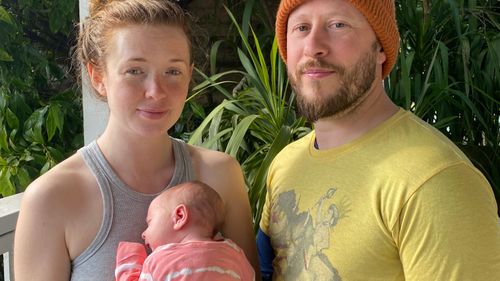
But, last month, a week before baby Liam was born, a conversation with Centrelink scuttled those plans completely.
Lander, from Gippsland, Victorywas told he wasn’t eligible for the federal government’s Parental Leave Pay – which provides 18 weeks’ pay at minimum wage and is worth almost $15,000.
New parents Meadhbh Ni Fhlannagain and Dale Lander with baby Liam.
New parents Meadhbh Ni Fhlannagain and Dale Lander with baby Liam. (Supplied: Dale Lander)

Instead, Lander was informed he will only qualify for two weeks of Dad and Partner Pay.

It was money the 38-year-old mature age plumbing apprentice and his wife Meadhbh Ni Fhlannagain had been counting on.

“I initially wanted to take 12 weeks off and then use the rest of the Parental Leave Pay over the next two years,” Lander said.

“Now, I can only take six weeks off, two of it is paid from the government and the rest of it is unpaid.”

The reason Lander does not qualify for paid parental leave is complex and involves a two-year waiting period for new migrants to access the scheme.

Although Lander is an Australian citizen who was born and raised here, his wife is Irish.

Ni Fhlannagain, a primary school education support officer, came to Australia nine years ago, and the pair married in 2017.

After their marriage, Ni Fhlannagain applied for a partner visa and – following an 18-month wait – was granted permanent residence in 2020.

When Liam was born 12 days ago, Ni Fhlannagain was just a few weeks shy of the two years she needed to spend as a permanent Australian resident before qualifying for Parental Leave Pay.

Current social services regulations allow a mother to “share” Parental Leave Pay entitlements with her partner, but only if her application for the allowance is accepted first.

Lander said he was told there would only be one situation in which he would qualify for Parental Leave Pay.

“They said the only way I could qualify was if we could provide a medical reason why my wife was unfit to be the primary carer for my son,” he said.

“It was a bit disheartening.

“They do have the mechanism to make those payments, but the fact that we had to prove my wife was medically unfit, that seemed a bit shit,” he said.

April Tole missed out on Parental Leave Pay after her baby was born four weeks premature.
April Tole missed out on Parental Leave Pay after her baby was born four weeks premature. (Supplied: April Tole)

Ni Fhlannagain said she was also shocked by the situation.

“Dale is an Australian citizen, so I was a bit thrown by that,” she said.

“It seems really unfair for him not to be able to take time off and get that payment unless I am deemed medically unfit.”

The proposed changes – slated to begin in March 2023 – aimed, in part, to address this disparity.

Under the budgeted plans, Parental Leave Pay and Dad and Partner Pay would be merged into one scheme, which would be lengthened to 20 weeks.

This would mean both parents could apply directly for the 20 weeks Parental Leave Pay and share it between them.

After Labor’s election win, Prime Minister Anthony Albanese confirmed in June his government would be examining the Parental Leave Pay scheme.

“Changes proposed to the Paid Parental Leave Scheme in the 2022-23 Budget have not been legislated,” a spokesperson for the Department of Social Services said.

“The Government will continue to consider enhancements to the Paid Parental Leave scheme, to ensure it is working in the best way for families.”
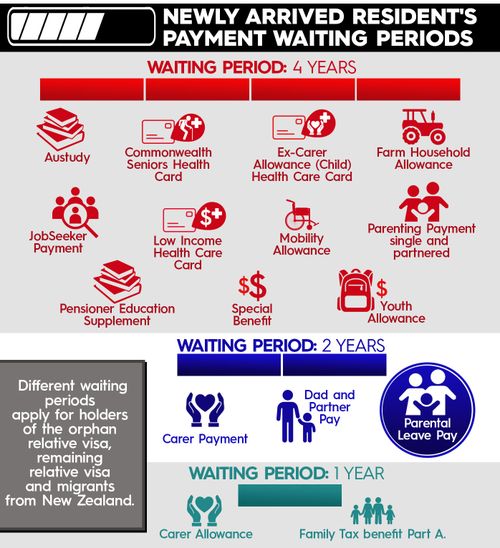
The current waiting periods for migrants to receive government benefits varies.
The current waiting periods for migrants to receive government benefits varies. (Graphic: Tara Blancato)
Meanwhile, some new migrants have called for changes to be made to the two-year waiting period for permanent residents to access Parental Leave Pay, saying it often leads to distressing situations.

UK citizen April Tole has lived in Australia for five years and is the partner of an Australian citizen.

The data analyst, from the Gold Coast, was in line to qualify for Parental Leave Pay, according to her daughter’s due date in July last year.

However, in a harrowing and traumatic experience, Tole’s daughter was born four weeks prematurely via an emergency caesarean after she developed sepsis.

“I was rejected for Parental Leave Pay because my daughter was born more than two years before I was granted my visa,” Tole said.

“However, if she had been born on time, or even just nine days later, I would have been eligible.

“I ended up having to go back to work after seven months due to money issues and my daughter had to go to daycare.

“I was not ready, and it was very upsetting.

“It is outrageous to be penalized for having a premature baby, when you already feel bad enough about the situation and having to care for a tiny baby.

“The system needs to be reviewed and for paternity leave pay to be awarded based on a baby’s due date … not birth date.”

A departmental spokesperson said the Parental Leave Pay rules for new migrants reflected “the longstanding expectation that migrants support themselves and their families when they first become permanent residents in Australia”.

Categories
Australia

Some New Zealand politicians want to crack down on gangs. That’s no way to solve the problem | Morgan Godfery

The US has its mafia. Australia has its bikes. New Zealand, a country often understood as more innocent than its larger, more dangerous English-speaking partners, has its street gangs.

Members of the Mongrel Mob, New Zealand’s largest gang, are a familiar part of most provincial towns and cities on the North Island. Tourists who arrive in Rotorua might find it strange to spot Mob men, wrapped in black leather with bulldogs inked across their faces. But locals would hardly register a gang member.

In 2018 The Economist reported that gangs were recruiting higher numbers than the army. Last year the Gang Intelligence Center found that membership numbers had doubled in the previous five years, rising from a little over 4,000 members in 2016 to just over 8,000 in 2021. This, in a country of 5 million, means New Zealand might take home the curious honor of the highest per capita gang membership rate in the world.

For a country with a seeming gang “problem”, though, there are few conflicts to point to from the last three decades. In the mid-to-late 20th century short, intense conflicts between rival gangs (and police) were common. In the 1970s public fights, including all-in brawls in central Auckland in 1971 and Christchurch in 1973, led to a moral panic over a gang scene growing unacceptably bold.

Yet from the 1990s to late 2010s a social approach to gang management, an aging membership, and increasingly professional structures within the gangs themselves meant conflicts were comparatively rare. Gang membership is not a crime, and in the 2000s the leading “gang story” had nothing to do with gang members at all, but with politicians. In 2009 the Whanganui district council implemented a bylaw banning gang patches in public places.

But 2022 is different. Within a single fortnight in June there were 23 drive-by shootings in Auckland. In one night in May there were seven drive-bys. In Canterbury police attended more than 2,000 gun-related incidents between 2016 and 2021, more than 15% of all callouts in the region. Granted, not every firearms callout is a gang callout, but it contributes to a perception that gang warfare is returning after a 30-year peace.

This is grim news. And it’s a development politicians should take deadly seriously. Unfortunately, opposition politicians are reaching for all the exhausted troops since the 1980s. At the National party’s northern regional conference Chris Luxon confirmed that his party would ban gang insignia from public places – including the exteriors of gang pads and club houses. The party would also, somehow, ban insignia from social media.

That final policy – ​​banning gang members from TikTok or Instagram – is obviously unenforceable. But the vibe is important. The opposition is squaring up for a fight with “the gangs.” The trouble is that social workers, sociologists, historians, lawyers, and police know that “cracking down on gangs” only confirms the very alienation that led them to gang life in the first place.

What works to decrease gang tensions and decrease membership numbers is negotiation between police and gang leaders, and investment in the housing, health, and education of gang members’ children. Gangs aren’t a criminal phenomenon. They’re a social phenomenon. This is why gang membership is a mirror on poverty – “gang towns” are those where unemployment is higher than the national average and median incomes are lower.

Or at least this is true of the traditional gangs such as the Mongrel Mob. It’s a little less true of the newcomers such as the Australian Comancheros or Bandidos. And those are the gangs who are responsible for a good deal of the violence happening in Auckland, Canterbury, and the central North Island.

As sociologist Jarrod Gilbert notes, these gangs are bringing their foreign contacts and networks, their professional structures and their violence – and seizing greater and greater control of the local drug trade. But even this is more of a social phenomenon than a criminal one. Under the ultra-conservative Peter Dutton, Australia’s former home affairs minister, hundreds of “501s” – criminals convicted in Australia who were born elsewhere – were sent back to their birth country where they, more often than not, were completely without connections. Some 501s hadn’t visited New Zealand since they were toddlers. Others had no family or friends in the country at all.

In this social context what choice did these gang members have other than to stick together in a strange new country? This isn’t to mount a defense of those members. Where they import, manufacture, and deal drugs they deserve a full-throated condemnation. Where they employ violence as a means to their financial ends they deserve the same condemnation.

But it’s important to note how public policy choices led to the situation New Zealand finds itself in. That lesson in public policy serves as a warning to opposition politicians and the government. Gangs and gang members are more complex than the criminality we associate them with. They’re people with the same societal and community needs as anyone else – good quality housing, well paid and secure jobs, and future opportunities for their children. Where those factors are absent, foreign and domestic gangs will flourish.

Categories
Australia

Driver training program helps migrants gain license and independence in Launceston

When 18-year-old Afghan migrant Mehdi Safari from Launceston passed his driving test, he was “hopping around” with excitement.

It made it easier for him to travel to his part-time job at a local hardware store, and to school every day.

“Yo puedo [also] go out more with friends, and even when I’m going out to play sport, it’s very helpful to have a license,” he said.

It was also an important milestone for the Launceston Migrant Resource Center’s learner driver program, Drive4Life, as Mr Safari was its 500th participant to pass the P-test.

Coordinator Janice Molineux said it was incredibly significant for those migrants and refugees and their families.

“I was very happy… [and] now it’s 511 [people who have passed]. I just think it’s such a great thing,” she said.

A boy in a hoodie behind the wheel of a parked car.
Mr Safari got a “lecture” from his father about the serious responsibility of driving well.(ABC Northern Tasmania: Sarah Abbott)

license to independence

Arriving in Launceston with his family from the Iranian city of Ahvaz in 2013, Mr Safari said he was passionate about cars and wanted to become a mechanic or engineer since childhood.

“Growing up, I tried to buy toy cars and I’d disassemble them to try to work out how they worked,” he said.

But in Tasmania, once old enough to obtain a driver’s licence, Mr Safari found it a challenge to accrue the required number of hours of practice as a learner driver.

“It was difficult for me to find a car to practise,” he said.

A car provided by the Drive4Life program allowed him to gain the supervised driving practice and skills he needed to get his P-plates.

Odds stacked high

In many ways, Mr Safari and the 510 other migrants who have now passed through Drive4Life have beaten the odds in obtaining a licence, according to Ms Molineux.

“One challenge… is knowing someone with a full driver’s license to help them gain the required hours to sit for their P-test,” Ms Molineux said.

Another is knowing enough English to pass.

A woman with tied back hair smiling to camera, with greenery and a building behind her.
Janice Molineux enjoys seeing Drive4Life graduates driving around town.(ABC Northern Tasmania: Sarah Abbott)

Ms Molineux said some learners who were capable drivers were not able to gain their Ps due to interpreters not being allowed in the car with them during tests.

That restriction was introduced during the COVID-19 pandemic, and Ms Molineux said her organization was working on a proposal to address it.

“We are hopeful that people who are still learning English can acquire their licences. It should not be ‘English first, then a license’,” she said.

“Safety must always come first… [but] you don’t need perfect English to be able to drive.”

Ms Molineux said being able to drive was life-changing for many migrants and refugees living in Tasmania.

“A license lets them gain independence, get to English classes and travel to work where public transport options are not viable,” she said.

Bring your own tutor

Launceston’s Migrant Resource Center started its Drive4Life program in 2009.

The program operates with around ten volunteer driving tutors providing lessons in two dual-controlled cars. The 500 drivers it has helped to gain a license have come from countries ranging from Afghanistan to Sudan.

But the program’s success means it now has a long list of learner drivers waiting to join it, and not enough driving tutors to keep up.

Ms Molineux said it was due to the “battle” of finding driving tutors, particularly bi-lingual ones, that she began a ‘Bring Your Own Mentor’ initiative last year.

“It doesn’t matter where you are on the [learner waiting] list, if you bring someone who’s happy to be inducted as a Drive4Life mentor, then they help you and someone else from the top of the list,” Ms Molineux said.

A man wearing a cap crouched in front of a car that has an L plate on it
Abbas Safari is a fluent Farsi speaker and tutors Farsi-speaking Launceston locals.(ABC Northern Tasmania: Sarah Abbott)

The volunteer tutors go through a driver induction, which involves “some theory, but mostly practice” in a dual-control car with the program’s head mentor.

It was through this initiative that Mr Safari successfully passed his Ps, after being tutored in a Drive4Life car by his father, Abbas.

“With him… teaching me it was alright, because we had that father-son bond and connection, so I was comfortable with him,” Mr Safari said.

“It made the learning experience a bit easier.”

Finally finding their legs

Abbas Safari has gone on to tutor his other son, 16-year-old Milad, and Farsi-speaking Launceston mother-of-nine, Shah Jafari.

He said he enjoyed teaching “very much”, and was motivated to volunteer by his desire to help people in Tasmania’s Afghan community get their license “so they can go on with their lives”.

“Not having a license is like having extra weight on your shoulders,” he said.

A woman in a green headscarf sitting behind the wheel in a car, while a man in the passenger seat smiles to camera too
Shah Jafari looks forward to having her license so she can help with school drop-off.(ABC Northern Tasmania: Sarah Abbott)

Abbas Safari is keen to keep tutoring into the future, and has inspired his older son to one day “definitely” do the same.

“I would like for everyone in the right age bracket to have their license,” Mehdi Safari said.

“Because I experienced that feeling when you get your license and… it’s like you finally find your legs, so you can travel everywhere.”

.

Categories
Australia

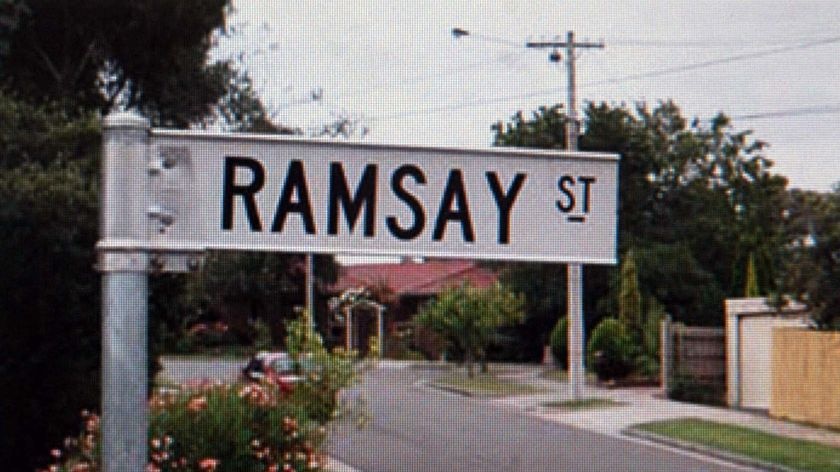
Neighbours’ Ramsay Street would have been Ramsay Court if it was in NSW. So, when is a street a street?

The recent end of the long-running soap Neighbors has raised the question: why was Ramsay Street not Ramsay Court?

Pin Oak Court in Melbourne’s east doubled as the famous fictional street, correctly acknowledging its cul-de-sac status.

But why is a street not a road, an avenue not a boulevard and a crescent not a circuit?

ABC Radio Sydney Drive presenter Richard Glover put these questions to the New South Wales Geographical Names Board.

If Ramsay Street were under the purview of the NSW board, it would have been a court, a close or a place, deputy surveyor general and director of survey operations Thomas Grinter said.

“With all the high drama that happened on Ramsay Street, I’m pretty sure it would have come to our attention,” Mr Grinter said.

Pin Oak Court sign
Pin Oak Court has doubled as Ramsay Street for decades.(ABC News: Danielle Bonica)

The authority is in charge of naming places in NSW like mountains, railway stations and suburbs. However, roads are typically named by local councils.

Mr Grinter said the state authority receives applications from councils, which are then reviewed to avoid duplicates.

When is a street a street?

While “road” is a generic term used for vehicle passages from one place to another, “street” refers to a passage found in a town or an urban environment.

Mr Grinter explained the board’s definitions for other common road types:

  • Avenue: a broad open-ended road usually lined with trees
  • Boulevard: a wide open-ended road usually ornamented with trees and plants
  • Drive: a wide thoroughfare without many cross-streets
  • Parade: a public roadway with good pedestrian facilities on either side
  • Parkway: a roadway through parklands or open grassland area
  • Terrace: a roadway where the homes are raised above the road level

Some areas use a particular road type frequently, which is taken into account by council when putting forward the names of road types.

“In one particular suburb or town, you might have a lot of very similar road types throughout,” Mr Grinter said.

Another interesting rule is that the road cannot be named after a living person, according to Mr Grinter.

Themes of your town

Some areas of the city appear to have been exempt from that rule though.

In Newington, which hosted the athletes’ village for the 2000 Olympics, some streets are named after living Australian athletes.

Examples include Perkins Avenue, Thorpe Place and O’Neill Avenue, named after Kieran Perkins, Ian Thorpe and Susie O’Neill.

A male Australian swimmer smiles as he holds up a gold medal with his right hand after winning at the 2000 Sydney Olympics.
Swimmer Ian Thorpe has Thorpe Close named after him in Newington in Sydney’s west.(AAP: Julian Smith)

Other suburbs have adopted themes when naming their local arteries.

Cremorne in Sydney’s lower north shore has many names of cricketers, including Spofforth Street, Bannerman Street, Boyle Street and Murdoch Street.

Croydon Park holds castle names, such as Windsor Avenue, Balmoral Avenue and Dunmore Street.

Marsfield on the Upper North Shore kept to its namesake, naming its roads after famous battles including Waterloo Road, Balaclava Road and Agincourt Road.

Small Arms Factory dormant building
Many of Lithgow’s streets are named after weapons in a possible node to the city’s old small arms factory.(ABC Central West: Gavin Coote)

The tradition is not limited to Sydney suburbs. Lithgow in the state’s Central Tablelands has many streets named after weapons such as Carbine Street and Rifle Parade, possibly in recognition of the city’s small arms factory.

Some Sydney streets pay homage to ancient history, for example The Appian Way in Bankstown.

For some streets, the authority may have simply tried to have it both ways — see Avenue Road in Mosman, Glebe and Hunters Hill.

.

Categories
Australia

Backyard hens’ eggs contain 40 times more lead on average than shop eggs, research finds

There’s nothing like the fresh eggs from your own hens, the more than 400,000 Australians who keep backyard chooks will tell you.

Unfortunately, it’s often not just freshness and flavor that set their eggs apart from those in the shops.

Our newly published research found backyard hens’ eggs contain, on average, more than 40 times the lead levels of commercially produced eggs.

Almost one in two hens in our Sydney study had significant lead levels in their blood. Similarly, about half the eggs analyzed contained lead at levels that may pose a health concern for consumers.

Even low levels of lead exposure are considered harmful to human health, including among other effects cardiovascular disease and decreased IQ and kidney function. Indeed, the World Health Organization has stated there is no safe level of lead exposure.

So how do you know whether this is a likely problem in the eggs you’re getting from backyard hens? It depends on lead levels in your soil, which vary across our cities.

We mapped the areas of high and low risk for hens and their eggs in our biggest cities — Sydney, Melbourne and Brisbane — and present these maps here.

Our research details lead poisoning of backyard chickens and explains what this means for urban gardening and food production. In older homes close to city centers, contaminated soils can greatly increase people’s exposure to lead through eating eggs from backyard hens.

What did the study find?

Most lead gets into the hens as they scratch in the dirt and peck food from the ground.

We assessed trace metal contamination in backyard chickens and their eggs from garden soils across 55 Sydney homes. We also explored other possible sources of contamination such as animal drinking water and chicken feed.

Our data confirmed what we had anticipated from our analysis of more than 25,000 garden samples from Australia gardens collected via the VegeSafe program. Lead is the contaminant of most concern.

The amount of lead in the soil was significantly associated with lead concentrations in chicken blood and eggs. We found potential contamination from drinking water and commercial feed supplies in some samples but it is not a significant source of exposure.

loading

Unlike for humans, there are no guidelines for blood lead levels for chickens or other birds. Veterinary assessments and research indicate levels of 20 micrograms per deciliter (µg/dL) or more may harm their health. Our analysis of 69 backyard chickens across the 55 participants’ homes showed 45 per cent had blood lead levels above 20µg/dL.

We analyzed eggs from the same birds. There are no food standards for trace metals in eggs in Australia or globally. However, in the 19th Australian Total Diet Study, lead levels were less than 5µg/kg in a small sample of shop-bought eggs.

The average level of lead in eggs from the backyard chickens in our study was 301µg/kg. By comparison, it was 7.2µg/kg in the nine commercial free-range eggs we analyzed.

International research indicates that eating one egg a day with a lead level of less than 100μg/kg would result in an estimated blood lead increase of less than 1μg/dL in children. That’s around the level found in Australian children not living in areas affected by lead mines or smelters. The level of concern used in Australia for investigating exposure sources is 5µg/dL.

Some 51 per cent of the eggs we analyzed exceeded the 100µg/kg “food safety” threshold. To keep egg lead below 100μg/kg, our modeling of the relationship between lead in soil, chickens and eggs showed soil lead needs to be under 117mg/kg. This is much lower than the Australian residential guideline for soils of 300mg/kg.

To protect chicken health and keep their blood lead below 20µg/kg, soil concentrations need to be under 166mg/kg. Again, this is much lower than the guideline.

How did we map the risks across cities?

We used our garden soil trace metal database (more than 7,000 homes and 25,000 samples) to map the locations in Sydney, Brisbane and Melbourne most at risk from high lead values.

A map graphic of Sydney showing the levels of lead risk for backyard chickens.
A map graphic of Melbourne showing level of lead risk for backyard chickens.
A map of brisbane with red dot in the center
Map of Brisbane showing levels of lead risk for backyard chickens. Dark green dots indicate areas with safe lead levels. Light green and yellow dots are areas over the safe lead level. Orange and red dots indicate areas with high levels. (Supplied: Max M. Gillings, Mark Patrick Taylor)

Deeper analysis of the data showed older homes were much more likely to have high lead levels across soils, chickens and their eggs. This finding matches other studies that found older homes are most at risk of legacy contamination from the former use of lead-based paints, leaded petrol and lead pipes.

What can backyard producers do about it?

These findings will come as a shock to many people who have turned to backyard food production. It has been on the rise over the past decade, spurred on recently by soaring grocery prices.

People are turning to home-grown produce for other reasons, too. They want to know where their food came from, enjoy the security of producing food with no added chemicals, and feel the closer connection to nature.

While urban gardening is a hugely important activity and should be encouraged, previous studies of contamination of Australian home garden soils and trace metal uptake into plants show it needs to be undertaken with caution.

Contaminants have built up in soils over the many years of our cities’ history. These legacy contaminants can enter our food chain via vegetables, honey bees and chickens.

Urban gardening exposure risks have typically focused on vegetables and fruits. Limited attention has been paid to backyard chickens. The challenge of sampling and finding participants meant many previous studies have been smaller and have not always analyzed all possible exposure routes.

Mapping the risks of contamination in soils enables backyard gardeners and chicken keepers to consider what the findings may mean for them.

Particularly in older, inner-city locations, it would be prudent to get their soils tested. People can do this at VegeSafe or through a commercial laboratory. Soils identified as a problem can be replaced and chickens kept to areas of known clean soil.

Mark Patrick Taylor is Chief Environmental Scientist at EPA Victoria and Honorary Professor at Macquarie University. Dorrit E Jacob is a Professor at Research School of Earth Sciences, Australian National University. Vladimir Strezov is a Professor at the School of Natural Sciences, Macquarie University. This piece first appeared on The Conversation.

.

Categories
Australia

Chinese ambassador compares Taiwan to Tasmania, telling Australia to act with ‘caution’

China’s ambassador to Australia Xiao Qian has told the Australian government to treat the issue of Taiwan with “caution” saying there is “no room for compromise” over Beijing’s territorial claim over the self-governed island.
Mr Xiao addressed the National Press Club on Wednesday as tensions intensify across the Taiwan Strait since US House Speaker Nancy Pelosi’s visit to Taipei.

Mr Xiao struck a conciliatory tone about the prospect of improving relations with the new Australian government, but on the question of Taiwan remained resolute.

He said China would be prepared to use “all necessary means” for what he described as “unification” of the island with mainland China.
“Caution is just to remind,” he said.
“I like to remind [that] big and great as Australia is, it is important for the government in this country to stick to the commitment of ‘One China’ policy.
“It should be practiced with absolute sincerity, but without discount.”
China considers Taiwan as part of its territory, despite the ruling Chinese Communist Party never controlling the self-governed island.

It has threatened to take Taiwan under its control by military force if necessary.

Tensions simmer over Nancy Pelosi’s visit

The Chinese military conducted military and air force drills near Taiwan in retaliation to Ms Pelosi’s visit to Taipei, blaming the United States for what it describes as a provocative action undermining the status quo.
The democratically elected government of Taiwan has responded with its own military exercises.

Taiwanese Foreign Minister Joseph Wu has said the self-governed island will not be intimidated describing the action as an “an attempt to weaken public morale in Taiwan”.

Australia doesn’t formally recognize Taiwan as a sovereign state, adhering to its own “One China policy”, but has continued to maintain ties with Taipei on an unofficial basis.
Foreign Minister Penny Wong recently said Australia wanted to see “calm and restraint” prevail, calling on all sides to maintain the status quo.
A spokesperson for the Taipei Economic and Cultural Office in Australia said it had called upon China to “act with reason and restraint.”

“Taiwan would neither escalate the conflict nor instigate disputes, but resolutely defend our nation’s sovereignty,” they said.

You can use your imagination, but the one point for [the] chinese people [is they] are absolutely determined to protect our sovereignty, territorial integrity.

‘Use of force would be the last resort’

As tensions persist, the Chinese government released a Taiwanese White Paper on Wednesday reiterating its position Beijing considers Taiwan its own territory.
The paper says the Hong Kong model of “one country, two systems” should be implemented in Taiwan and that “use of force would be the last resort taken under compelling circumstances”.
The white paper also accuses Taiwan’s ruling Democratic Progressive Party, led by President Tsai Ing-wen, of restricting progress towards what it called “peaceful reunification”.

“These are the obstacles that must be removed in advancing the process of peaceful reunification.”

Mr Xiao was asked about the position outlined in the white paper and pressed to explain what conditions the Chinese government would use to constitute using force to take Taiwan.
“What does it mean ‘all necessary means?’” he said.

“You can use your imagination, but the one point for [the] chinese people [is they] are absolutely determined to protect our sovereignty, territorial integrity.”

The location of six exclusion zones China announced around Taiwan for its military drills

China announced six exclusion zones around Taiwan for military drills after the visit of US House Speaker Nancy Pelosi. Source: SBSNews

Territorial claim over Taiwan

Mr Xiao also used the example of Australia’s territorial claim over Tasmania to explain his point about China’s territorial claim over Taiwan.
“It’s not a good example, but Tasmania was, is, will be part of Australia. This involves territorial integrity.”
Opposition Leader Peter Dutton speaking before Mr Xiao’s address said China had made its intentions clear in Taiwan and this needed to be called out.
“The only way that we can maintain peace in our region, is if we call out bullying behavior and bad actors,” he told reporters.
“The propaganda that you’re seeing coming out is similar to what you’d see come out of North Korea or out of Russia, and it needs to be called out.”
The address from Mr Xiao comes after the new ambassador had earlier signaled a desire from the Chinese government to improve fractured relations with the Australian government.
He has spoken about the prospect of a reset in relations with the new Albanese government.
Since the 21 May federal election, high-level ministerial meetings between China and Australia have been recommended including with Defense Minister Richard Marles and Senator Wong.

But Australia has continued to raise concerns over trade sanctions imposed by Beijing, the detention of Australian citizens and Beijing’s military expansion.

Mr Xiao described the communication as a “good start” but added that there was “more to be done” to create a “favourable atmosphere” for the relationship.
Asked about a possible meeting between Prime Minister Anthony Albanese and Chinese President Xi Jinping, I suggested progress still needed to be made for this to occur.
“The meeting at the top level is very important, not in the sense of symbolism, but also in essence,” he said.
Mr Albanese has indicated he would be willing to meet with his Chinese counterpart.

But the prime minister has also constantly spoken about the need for countries to act in adherence to international law, in the wake of Russia’s invasion of Ukraine.

In the past couple of years, unfortunately, the relationship between China and Australia was caught in a difficult situation due to reasons known to all.

China has not openly denounced Russia’s military action in the country, instead calling for a political solution to be achieved between the countries.
Mr Xiao used the address to argue his country believed in adhering to international law.
“No matter how China develops itself now or in the future, China will never seek hegemony or sphere of influence,” he said.
The ambassador also claimed that his country had no intention to establish a military base in the Solomon Islands, following his country’s signing of a security deal with Honiara.
Asked about the detention of Australian journalist Cheng Lei in China, the ambassador defended China’s secrecy over the trial, saying the case was a matter of “national security” that would be decided according to Chinese law.
Mr Xiao said he did want to see relations continue to improve with Australia explaining that he had come here to seek “friends” not “rivals”.
“When we cooperate, we both win. When we don’t, we both lose,” he said.

Despite the recent fracture in the relationship, China remains Australia’s largest trading partner.

Categories
Australia

Outback town Dirranbandi draws in visitors with Elvis-themed wedding vow renewals

It’s a long way from the bright lights of Las Vegas, but a little white chapel in outback Queensland has become the perfect backdrop for couples to rekindle their burning love in front of the King.

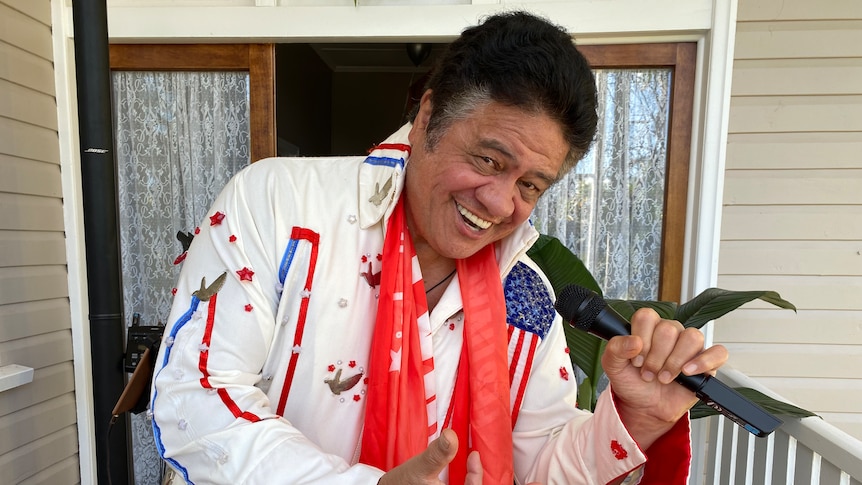
Elvis impersonator Steven Minhinnick has never ventured so far west, but his vocal cords worked overtime as he officiated over a mass ceremony for nine couples renewing their vows.

“To come down to a place like Dirranbandi, it is a real experience,” the Sunshine Coast-based performer said of the town, about 580 kilometers south-west of Brisbane.

“Not in a fit I would ever have dreamt I’d be down here.

“It was daunting but I absolutely loved it.”

A man dressed in an Elvis costume holds a microphone
Elvis (aka Steven Minhinnick) came to the outback town of Dirranbandi.(ABC Southern Queensland: Georgie Hewson)

Brisbane couple Ken and Dorene Ord have been married for 31 years but could not resist the opportunity to walk down the aisle again during their western Queensland road trip.

“We actually renew our vows any chance we get,” Mr Ord said.

“Sometimes when you’re on a cruise and the captain says he’ll do it, we line up, but we’d always wanted to be married by the King so we couldn’t pass up the chance.

“I thought the conga line through the confetti was the best part.”

A man and woman kiss
Dorene and Ken Ord say they always wanted to be married by the King.(ABC Southern Queensland: Georgie Hewson)

The Ords said they couldn’t wait to tell the story to their children and grandchildren.

“They won’t be surprised. They’ll say: ‘You renewed your vows again?'” Mr Ord said.

“We’re lucky,” Mrs Ord said.

“We know it doesn’t happen for a lot of people [staying together] but it happened for us.”

.

Categories
Australia

Almost 200,000 Australians don’t have safe drinking water, new report finds

Almost 200,000 Australians are often forced to drink water containing unsafe levels of uranium, arsenic, nitrates, fluoride and E.coli, according to the peak body for water suppliers.

A further 400,000 people across Australia regularly drink water that fails aesthetic standards, a new Water Services Association of Australia report has found.

Researchers discovered unsafe drinking water in 115 locations, while hundreds more had water that failed aesthetic standards.

Towns and communities in the Northern Territory, South Australia, Queensland and Western Australia returned the worst water quality results, with remote Indigenous communities found to be the most affected by unsafe drinking water.

Jackie Mahoney and Pam Corbett, who live in Alpurrurulam, 500 kilometers north-east of Alice Springs on the NT-Queensland border, say poor water quality causes a wide range of illnesses and problems.

“It makes you itchy … and causes kidney problems and makes you sick in the stomach,” Mr Mahoney said.

“People with sensitive skin were treated for scabies, but it wasn’t scabies. Children’s scalps were dry and itching, and lots of calcium on the taps and clogged pipes caused problems.”

A calcified shower head
Hard water in remote areas causes plumbing problems and contributes to chronic health issues. (ABC Alice Springs: Steven Schubert)

The community recently installed a filtration system which, they said, had helped to improve the water quality, but it did not remove everything and many people still suffered health issues because they had been forced to drink poor quality water for years.

“Before that it was worse,” Ms Corbett said.

“We didn’t know we were drinking no-good water. It made our stomach sick, and… our kids.”

Ms Corbett said she and her partner had approached governments, the Central Land Council and other funding bodies for a new water bore for the community but progress had been slow.

“I’m worried because of our kids, their future, the next generation. We need to fix this. We need new water soon, ASAP,” Mr Mahoney said.

“It’s our homeland. We’re there for life and we should have good water.”

600,000 rely on poor quality drinking water

The Water Services Association of Australia report shows 115 locations across remote Australia exceeded safe guidelines at least once in 2018-19, while 408 locations did not meet aesthetic standards, affecting more than 600,000 people.

More than 40 per cent of all locations surveyed were remote Indigenous communities, the report said.

A sign in Yuelamu about using water wisely
Many remote Indigenous communities struggle with drinking water access, including Yuelamu north-west of Alice Springs. (Supplied: Adam Lovell)

But association executive director Adam Lovell said the number of locations and breaches of the guidelines actually could be much higher because there was not enough testing being done.

“There’s hardly any data to understand what the water quality looks like,” he said.

“When we talk about closing the gap, we don’t know what that gap actually looks like right now.”

Unacceptably high levels of elements like uranium or arsenic could result in long-term chronic health issues, Mr Lovell said, but the most common risk was E.coli.

“It’s immediate. If a water supply is not being disinfected properly then there’ll be gastrointestinal problems in the house,” he said.

“Over the longer term you’ll see that the chemical impacts build up and build up and build up and they’re the chronic impacts, which are much harder to see immediately and then much harder to treat.”

A man drinks water in a remote Indigenous community.
Adam Lovell tests drinking water in Yuendumu, NT. (Supplied: Adam Lovell)

‘Blame shifting’ over water quality

Mr Lovell said in Australia’s major cities there were usually hundreds of water samples taken a day, testing for microbial contaminants like E.coli and chemicals.

“Australian drinking water guidelines should preferably be legislated and regulated across all states and territories, which currently it is not,” he said.

Report author Eric Vanweydeveld said there were too many government departments and other organizations involved in service provision for remote communities, which led to blame shifting and inaction.

Two men stand in a desert community.
Eric Vanweydeveld and Adam Lovell say there’s too much bureaucracy in managing water in remote Indigenous communities. (Supplied: Adam Lovell)

“If there is a water leak in the street, and you are a member of a remote community and you try to understand ‘who do I need to talk to fix this leak?’, you will deal with probably seven or 10 different departments ,” he said.

The report has recommended that the federal government spend $30 million to establish a national water monitoring program.

“That will help us understand what closing the gap looks like,” Mr Lovell said.

Steven Porter, from the Northern Territory Power and Water Corporation, said it had been working with the Central Land Council to secure $5.2 million from the National Indigenous Affairs Association to bring two new bores online but there was still a $1 million shortfall.

“In doing that we can access better sources of water and improve the quality of water for the local community,” he said.

.

Categories
Australia

Victorian councils ax in-home services as aged care providers struggle to find staff

Louise Craig had been using her local council’s in-home care assistance for about 15 years, but this year the Mornington Peninsula Shire Council (MPSC) made the decision to stop the services, leaving elderly residents waiting for support.

MPSC is one of 28 local government regions across the state opting to discontinue in-home care services.

Ms Craig told ABC Radio Melbourne it had been seven weeks since she had helped cleaning her home.

“Now I’ve had nothing, I’ve had no service since June 21st,” the Somers resident said.

Prior to this, she said she was sent a letter stating she could choose between aged care organizations mecwacare or Bolton Clarke to continue her in-home support once the MPSC services ceased on June 30.

“Since then [I’ve heard] absolutely nothing,” she said.

In a letter from mecwacare, Ms Craig said the organization was training new staff and struggling with worker shortages.

“‘We ask that you please be patient with us, we will call you to schedule the services but this may take some time,'” she quoted the letter as saying.

“When all this began, someone from the council told me I could be waiting six months and it looks as though they were right.”

Gloved hands work to clean a wall.
Ms Craig needs help to get her cleaning done.(Supplied)

Struggling to get by

Ms Craig, who has emphysema, said she used to get her house cleaned once a fortnight.

“What I do now, I do what I used to do before I realized I wasn’t coping,” she said.

“In the kitchen I sweep regularly, where I make a meal or drop crumbs, I sweep it up.

“As for the rest of it, the carpets don’t get vacuumed, the floor areas don’t get mopped and the bathrooms don’t get cleaned.

“I can wipe down the bathroom sink but I can’t do very much.”

It was not just the wait that was frustrating Ms Craig.

“The woman who did the work for 15 years basically became a friend, she was a lovely person and took her work very seriously,” she said.

Ms Craig said the delays made her feel like she was one step closer to being forced into an aged care facility.

A young girl's hand over an elderly man's hand sitting on the arm of a chair.
The Australian Services Union says the labor shortage poses a challenge, but funding is still available.(ABC News: Natasha Johnson)

No need to rush, union says

The Australian Services Union’s Victorian and Tasmanian branch secretary, Lisa Darmanin, believed councils were choosing to opt out of in-home care after changes made by the previous federal government.

“There have been some funding changes to the provision of in-home aged care over the years, some of it as a result of the royal commission, but the previous government kept extending the funding, so there is no need for the councils to get out of these services,” she said.

“The funding has been extended for another 12 months, into next year, and we have been arguing with councils across the state that they do not need to exit these services at the moment, but they are continuing to do so.”

Ms Darmanin said it would be a challenge to fill the staffing shortages with private aged care providers because those roles were less appealing to employees than positions within local governments.

“Most of the workers have not moved across [to a private organisation] because of the lower wages,” she said.

“Different employers have different employee arrangements and historically the not-for-profit and private sector have lower wages and conditions … than services provided by council.”

She said in some cases the difference was about $10 less per hour.

“The conditions are quite stark and it’s easy to understand why there’s quite a high turnover,” Ms Darmanin said.

An elderly man in silhouette sitting in a chair looking at trees.
Advocates say councils have a responsibility to make sure residents are looked after.(ABC News: Natasha Johnson)

Council passes urgent motion

Mornington Peninsula Mayor Anthony Marsh said the council had chosen to push the change forward to give residents the best chance of attracting quality service providers in readiness for the government’s new open market system.

“We did not get a say in the appointment of new providers, that was done by the federal government,” he said.

“We were given assurances by both providers and the federal government that all essential services would continue to be delivered from the 1 July transition date.

“We offered to keep some staff on to help with the transition, but that offer was turned down.”

Mr Marsh said the MPSC passed an “urgent motion” at its meeting yesterday seeking assurance from the federal government that residents’ care would be accounted for during the change-over period.

Council on the Aging chief executive Ian Yates said in-home care was provided well by councils and not-for-profit and private providers.

“Many home care services are under stress at the moment because of workforce pressures, like many other industries,” he said.

But Mr Yates said he believed the council should have continued to provide care until it was assured its elderly residents’ needs would be met.

“I think there is a duty of care,” he said.

mecwacare said it had contacted all clients transitioning to its service and that “client care and support was paramount”.

In a statement, Bolton Clarke said services had commenced for all referred clients receiving essential support, including personal care and shopping.

“All remaining clients have been contacted and we remain in touch on a regular basis to update on progress and to address any immediate needs and as part of this,” it said.

“We are checking what other supports clients have in place and those without family visiting regularly are prioritized for services.”

.

Categories
Australia

NSW farmers say Murrumbidgee flooding exacerbated by dam mismanagement

Farmers who lost livestock due to flooding along the Murrumbidgee River say water management by dam operators has made the event worse than it needed to be.

The Murrumbidgee River reached moderate to major flood levels this week following releases of close to 100,000 megalitres a day from Burrinjuck Dam after record inflows from some parts of the catchment.

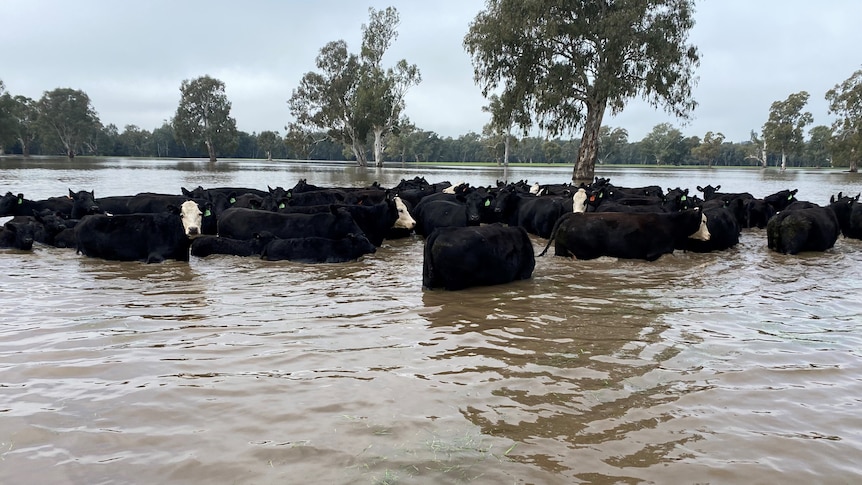
Borambola farmer Trish Cookson lost dozens of calves in the flood, with some washing up dead, and still has cattle stranded by floodwaters.

She said they could have managed the anticipated flows of up to six meters but they struggled with the larger than expected water release.

“We’ve made several attempts with boats, dogs, neighbours, trying to get the cattle out… it’s very heartbreaking,” Ms Cookson said.

She said living on the banks of the Murrumbidgee, they expected some natural riverine flooding, but keeping dams at such high levels during a La Nina year was “reckless.”

“I would say that it’s been mismanagement of the water storage facilities,” she said.

A woman stands in front of floodwaters, spread out across paddocks.
Ms Cookson says the flooding was due to mismanagement of water storage facilities.(ABC Riverina: Olivia Calver)

Ms Cookson said there were plenty of opportunities throughout the year for dam managers to lower dam levels.

Of the two Murrumbidgee storages, Burrinjuck Dam has not fallen below around 80 per cent this year, while Blowering Dam has not dropped far below 90 per cent full.

Drone photo of floodwaters from the Murrumbidgee River
Floodwaters have spread across more than 30 per cent of Borambola farmer Trish Cookson’s property. (Supplied)

WaterNSW is in charge of dam operations and said Burrinjuck Dam filled and spilled due to inflows that were higher than forecast.

“The Yass River at Yass, in particular, experienced its highest flood peak since records began in 1915,” WaterNSW said in a statement.

“WaterNSW will make releases from rural dams well in advance of an event in order to create airspace and mitigate the impacts of future rain events.

“However, when storages are full WaterNSW has limited ability to mitigate floods.”

Overlooking a large dam with high water levels through the trees.
The storage level of Burrinjuck Dam on the Murrumbidgee River increased by 13 per cent last week.(Supplied)

Flooding impacts ‘seem to be ignored’

Independent Wagga Wagga MP Joe McGirr said he had been contacted by several landholders concerned about the dam management.

“The concern that landholders have expressed to me is when those levels are kept too high. The risk is when you get a sudden weather event… the dam spills,” Dr McGirr said.

Dr McGirr said he had brought the issue to the attention of NSW Parliament this week.

“It’s almost as though so much priority is given to the need for the irrigators to have their water and the environmental flows that the effects of flooding… seem to be ignored.”

Cattle on the other side of floodwaters
Farmers say floodwaters came up unexpectedly fast following huge releases from Burrinjuck Dam. (ABC Riverina: Olivia Calver)

Fear of more flooding this spring

Ms Cookson said she was holding out hope that floodwaters would recede soon, but with a full catchment and wet spring predicted, any relief could be short-lived.

“I can only see that for every rain event that happens, we’re going to be plunged further and further into this quagmire that we’re in at the moment,” she said.

“I fear for those animals. We will continue to try and find a way to get them out.”

Murrumbidgee River landholders are also worried about the NSW government’s program to more effectively deliver environmental water to the Murray Darling Basin.

The Reconnecting River Country Program could see the river run at higher flow rates, potentially exacerbating natural flooding events.

“After having the water modeling done on our property, we know that the reconnecting river program is virtually going to make our property not a viable business,” Ms Cookson said.

“We have a billabong that cuts from one of our property to the other.

“At the higher flow levels that they’re predicting, we will not be able to access 34 per cent of our property.”

A boat rests on higher ground next to floodwaters.
Farmers have used boats to try and rescue cattle stranded in floodwaters. (ABC Riverina: Olivia Calver)

The Department of Planning and Environment said current water levels seen across the Riverina were well above the flows being considered by the program.

“We take the views of landholders and stakeholders seriously, and we encourage them to have their say on the flood mapping and flow options to ensure we get it right,” a Department of Planning and Environment spokesperson said.

.