dingoes might seem cuter than your average apex predator – but they do pose a danger to humans.
What seems like curious or playful behavior from them can actually be a serious form of “dominance testing” that can lead to attacks or aggression if not defused.
The Queensland Department of Environment and Science has now published two videos showing a candid dingo encounter on K’gari (Fraser Island), which shows the best way to face down a dingo.
A video of a man’s interaction with a dominance-testing dingo has been shown to be the perfect example of dealing with the predator. (Queensland Department of Environment and Science)
The video shows a dingo trotting up to a person – who is filming from their phone – on a beach.
The person stands still until the dingo lies down, and then begins to slowly back away, without turning their face from the animal.
This continues as the dingo follows the person for some time, until they reach their car.
The encounter took place on K’gari (Fraser Island). (Queensland Department of Environment and Science)
It matches the official guidelines for confronting a threatening dingo:
Stand up to your full height
face the dingo
Fold your arms and keep eye contact
calmly back away
If in pairs, stand back to back (dingoes move fast and there’s less chance of being taken by surprise)
Confidentially call for help
Do not run or wave your arms.
There are of course other dingo-safe behaviors to think about when in proximity to them, especially on Fraser Island, which has a large population of the animals.
People are advised to travel in groups, to keep children within arm’s reach, to avoid littering, to not feed the animals – and if you need to go to the toilet in the bush, make sure somebody is able to go with you.
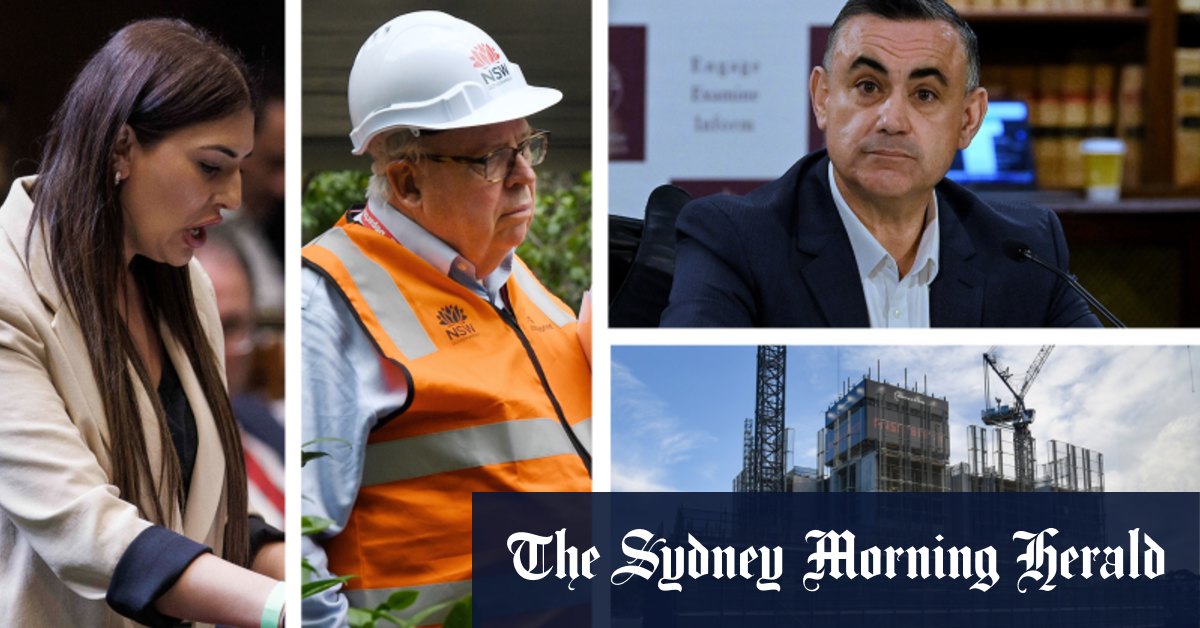
The building commissioner also described the difference in his engagement with the minister’s office, since a ministerial reshuffle last year resulted in Petinos taking over the portfolio from now-Hospitality Minister Kevin Anderson.
Alas, the same level of engagement has not been experienced since. My personal experience has been one where engagement with the minister’s office has been problematic,” he wrote.
“Given where all the above matters now rest, I believe my continued role as NSW building commissioner is no longer viable.”
An excerpt of the resignation letter
Further to these concerns, I have raised with you concerns that I have with the advised relationship of the Minister and Coronation Property Group. These concerns crystallized at the time of the Stop Work Orders issued under the Design and Building Practitioner’s Act, Declared Design Audit. As advised to you I received a call from the Minister’s Office shortly after a draft order was issued on Coronation’s Merrylands Development. Shortly after that call, a message was sent to me by JohnBarilaro who I was advised had recently joined the Coronation Board. This contact came to me as a message on my personal phone requesting a meeting with me. I copied that message to you. I subsequently met with Mr Barilaro to answer his questions about him. A separate record of that meeting exists.
Chandler said other officers in the department had reported similar experiences, “and important pieces of previously canvassed legislation have now run into serious disruption.”
The NSW opposition used upper house orders to compel the government to release the letter after it was revealed that Petinos met representatives from a property development company that employed Barilaro.
loading
Both Petinos and Barilaro have issued statements saying that Barilaro was not in attendance at a June 2 meeting between Petinos and Coronation Property. A second meeting with Coronation on June 21 was disclosed in her diary out of “an abundance of caution”, Petinos has said.
Barilaro on Tuesday said he didn’t work for the company on June 21, and the pair met to celebrate his new job as a trade commissioner to the US.
Chandler resigned abruptly last month despite having recently signed a contract extension. As an industry veteran of 50 years, he was tasked in 2019 with cleaning up NSW’s construction industry as the state’s first building commissioner.
His sudden resignation prompted over the circumstances of his departure amid scrutiny speculation over the conduct of recently dumped Petinos, to whom he reported.
Premier Dominic Perrottet on Wednesday revealed during question time that Chandler’s resignation letter was sent to the secretary of the Department of Customer Service, who referred it to the Independent Commission Against Corruption on August 1.
He said he only learned that the letter had been referred to the corruption watchdog late on Tuesday night.
Perrottet has maintained that the sacking of Petinos was unrelated to Chandler’s resignation.
When he resigned, Chandler said in a statement that he felt the time was right for “a reset”, but remained firmly committed to working with the department until the end of his tenure in November.
“I do not want my resignation to distract people from what has been achieved so far, and the work that is still to be done,” he said on July 27.
Our Breaking News Alert will notify you of significant breaking news when it happens. Get it here.
Urgent action needs to be taken to eliminate the “unacceptable” backlog of veterans’ compensation claims, with almost 42,000 awaiting processing at the end of May, a royal commission has warned, saying the situation may lead to suicides.
Key points:
Thirteen recommendations have been made in the interim report, with five of them focusing on the DVA’s claims process and staffing levels
The commissioners identified 50 previous reports and more than 750 recommendations on these issues in the past 22 years
More current and former ADF members have died by suicide than in combat in the Afghan and Iraq wars, the government says
The Royal Commission into Defense and Veteran Suicide handed down its interim report this morning, calling for an end to the backlog and for a simplification of the claims system to make it easier for veterans.
The commission made 13 recommendations, with five focused on the Department of Veterans’ Affairs’ claims processes and staffing levels.
Another eight are intended to make it easier for witnesses to appear before the commission and allow it to more easily access documents.
The commissioners also said they were “dismayed” at the “limited” ways the federal government had reacted to previous reports relevant to the topics of suicide and suicidality among serving and ex-serving defense force members.
“We have identified over 50 previous reports, and more than 750 recommendations [since the year 2000],” the report said.
Space to play or pause, M to mute, left and right arrows to seek, up and down arrows for volume.
‘There’s nothing else left’: Jacqui Lambie makes emotional plea for veterans to speak to royal commission
‘Lives depend on’ clearing claims backlog
Commission chair Nick Kaldas said the Department of Veterans’ Affairs’ (DVA) claims backlog was “unacceptable” and could lead to suicide and suicidality in some cases.
“Behind each claim is a veteran who needs support, and it is seriously important that this assistance is provided as quickly as possible — lives and livelihoods depend on it,” he said.
The commission has recommended the department be given until March 2024 to eliminate the claims backlog, and called on the government to streamline processes and ensure DVA had the necessary resources to do so.
Space to play or pause, M to mute, left and right arrows to seek, up and down arrows for volume.
Veteran Gavin Tunstall on lack of training to deal with traumatic scenes
The report found Australia’s veteran compensation and rehabilitation system was “so complicated that it adversely affects the mental health of some veterans” and it recommended the federal government introduce legislative reforms by the end of the year.
“Previous reports and inquiries … have called for legislative simplification and harmonization,” the report said.
“We recognize that making change will not be easy, but the difficulties of reform provide no justification to delay any further.”
Witness calls department ‘cruel and inhumane’
Widow Madonna Paul told the commission she struggled to access support after the death of her husband by suicide.(ABC News: Luke Bowden)
The commission has heard wide-ranging accounts of horrific abuse and trauma since public hearings began in November last year.
At the Tasmanian hearings, which wrapped up on Wednesday, the commission heard from Senator Jacqui Lambie, who said a back injury that resulted in her being medically discharged began a six-year battle with the Department of Veterans’ Affairs for compensation, as well as debilitating pain and depression.
Space to play or pause, M to mute, left and right arrows to seek, up and down arrows for volume.
Jacqui Lambie says a department spied on her from a bush behind her house for weeks.
She said the department put her under surveillance after becoming suspicious she was faking her injuries, and representatives from the rehabilitation service spied on her from a bush near her back fence.
The widow of an ex-serviceman also spoke out about her struggles with the “cruel and inhumane” Department of Veterans’ Affairs.
She said she struggled to access support following her husband’s suicide.
And a former soldier spoke of his trauma after seeing the bodies of two boys killed in combat in Afghanistan.
Australia has lost more serving members to suicide than recent combat: Minister
loading
Veterans’ Affairs Minister Matt Keogh said the federal government was committed to a better future for Australia’s current and ex-service personnel and would look into implementing the report’s recommendations.
“Unfortunately, the rate of veterans’ suicide in Australia is a national tragedy,” he said.
“It’s devastating that Australia has lost more serving and former serving personnel to suicide than it has lost through operations over the last 20 years in Afghanistan and Iraq.”
Governor-General David Hurley receives the interim report from commissioner Nick Kaldas this morning.(AAP: Mick Tsikas)
Mr Keogh said it was important the recommendations were “addressed as a priority” and the government had already started hiring 500 additional staff to help the Department of Veterans’ Affairs clear its claims backlog.
He also said it had been made clear to the defense force and government departments that “the royal commission must be assisted in any way possible to ensure that it can make the most effective recommendations on how to address the scourge of suicide that has plagued our defense personnel, veterans and families.
Mr Keogh said he was “deeply sorry” if there had been failings in the way the defense force and the Department of Veterans’ Affairs had operated.
‘We’ve had silence for long enough’
Julie-Ann Finney called for the royal commission after the death of her son.(ABC News: Luke Bowden)
Julie-Ann Finney, the mother of a veteran who took his own life, said it was “uplifting” to know that people were finally talking about the high rates of suicidality among current and former defense force personnel.
Ms Finney became a high-profile campaigner for the commission to be established after her son, Petty Officer David Finney, took his own life in 2019.
She has attended hearings all over the country, carrying a photo of David with her each day.
Ms Finney said the hearings were confronting, but incredibly important.
“It’s frustration, anger and trauma associated with all this listening, but the alternative is silence, and we’ve had silence for long enough,” she said.
“Unfortunately, I was quite naive before my own son took his life but I don’t find myself naive anymore. I need to keep learning, keep listening to people.
Ms Finney called on the federal government to immediately act on the interim report’s recommendations, but she said she was more confident than ever that change would occur.
“I don’t want to speak to another mother who has recently lost her child, or a father or a partner,” she said.
“We need to look at why this is happening and find solutions, and I feel at the moment that that is coming out.
“We will just keep fighting. I’ve said it from the beginning that I didn’t bury my son to walk away — and there are hundreds like me.”
Ms Finney said she wanted to see the creation of an independent body where service personnel could report concerns about their mental health and unacceptable behaviour, and she also wanted the Department of Veterans’ Affairs to immediately clear its claims backlog.
Surge in compensation cases sees backlog grow six times in size
The commissioners said many people who had participated in the royal commission so far had spoken about their “frustration and disappointment” with the processing of compensation claims and “an unhelpful and negative attitude” from the Department of Veterans’ Affairs staff.
“Negative engagement with DVA staff regarding claims and entitlements was pervasive,” the report said.
“Long waiting times to action and pursue claims produced considerable frustration for ex-serving members.
“Many said that they dealt with simultaneous injuries, mental ill health and complex socioeconomic pressures.”
The report also found veterans were not given accurate information about claims processing and wait times, which it said could cause “considerable distress.”
The report found the backlog of undetermined claims — both allocated claims that had yet to be processed and those that had not yet been allocated — had multiplied by almost six times in the past five years.
It found the backlog was partly caused by “a significant surge” in the number of DVA claims received since 2016.
The department had expected the number of veterans receiving assistance to drop to just over 150,000 by June this year, but it had instead grown to 240,000.
Further hearings to come, full report in 2024
The report said the commission intended to make recommendations that resulted in “effective, long-lasting and compassionate change.”
“The prevalence of suicide and suicidality among serving and ex-serving Australian Defense Force members is something that should concern us all,” the report said.
“Each death by suicide, each life lost, has profound effects on family, friends, colleagues and the wider community.”
The commission has held six hearings around the country since it was established in July 2021.
It will hold further hearings in Darwin and Wagga Wagga this year, with a full report to be handed down in June 2024.
Mr Kaldas said the interim report did not touch on a number of issues, but he promised they would be examined in the final report.
The interim report is available for download on the Federal Parliament website.
More than 5,000 NSW Corrective Services officers will strike for 24 hours on Friday in response to one of their colleagues facing an upgraded murder charge over the fatal shooting of an inmate in 2019.
Key points:
The corrective services officer allegedly shot Dwayne Johnstone outside Lismore hospital in 2019
Mr Johnstone was trying to escape custody
The Public Service Association says the weapons carried by corrections staff are not “for show”
WARNING: Aboriginal and Torres Strait Islander readers are advised that this article contains the image of a person who has died.
Indigenous man Dwayne Johnstone, 43, had received treatment and was leaving Lismore Base Hospital while shackled in March 2019 when he attempted to escape custody.
A Corrective Services officer fired three shots, with Mr Johnstone dying from a single bullet wound, despite receiving medical care, an inquest has previously heard.
The officer, who cannot be named due to a court suppression order, was previously charged with a manslaughter.
“All the available evidence in this matter, including newly subpoenaed material, has been reviewed in preparation for the upcoming trial,” a spokesperson for the NSW Office of the Director of Public Prosecutions said.
“The Director has determined that the appropriate charge is one of murder.”
Dwayne Johnstone was shot and killed by a corrective services officer.
Public Service Association General Secretary Stewart Little said members would strike from 6am on Friday, affecting all areas of the correctional system and “very, very limited movements of inmates.”
Mr Little said a duty of care will be provided to inmates, with commissioned officers still deployed on sites and critical legal visits allowed.
“There is a huge degree of anger at this charge being brought,” he said.
Mr Little said both the original and upgraded charge came as “a shock” and the officer had an “impeccable record”.
“Every day, our members look after over 12,000 inmates across the prison system,” he said.
“When they have to take those inmates into the community, their job is to protect the community from those people.”
Mr Little said the events had caused members to question how they will deploy their weapons in the future.
He also called on the state government to support the “very difficult and dangerous job” they perform.
Mr Little said weapons carried by Corrective Services officers were not there “for show”.
“Inmates are under absolutely no illusion, when they’re on escort, they are told unequivocally if you try to escape that weapon can and will be deployed to prevent you escaping.”
The officer was granted bail last year when a magistrate requested he surrender his passport and not travel outside Australia.
Mr Johnstone’s mother, Kerry Crawford-Shanahan had traveled from Sydney to Lismore for the hearing, only to be told it would take place in a closed court.
The Albanese Government has axed the “wasteful and ineffective” COVIDSafe app — saying it cost $21 million and identified only two positive virus cases.
Health Minister Mark Butler said the app, which was launched in April 2020, identified only 17 close contacts over the past two years that hadn’t already been found through manual contact tracing.
“This failed app was a colossal waste of more than $21 million of taxpayers’ money,” he said.
“The former prime minister said this app would be our ‘sunscreen’ against COVID-19 — all it did was burn through taxpayers’ money.
“This failed app only found two unique positive COVID cases at the cost of more than $10 million each.
“It was contact tracers working on the ground who were the real success story.”
Users of the app had been prompted to accept an update this week with the message that it was being decommissioned.
“The COVIDSafe app is no longer being used to assist health officials with contact tracing,” the message said.
“Data is no longer collected and will be deleted from the National COVIDSafe Data Store.
“Data on your device will be deleted when you uninstall the app.”
When former prime minister Scott Morrison rolled out the app, he touted it as “a way out of lockdowns” for Australia.
But it was met with skepticism from the Australian public, with less than 800 of the 7.9 million users consenting to their data being added to the National COVIDSafe Data Store for contact tracing.
With just two years until water-saving deadlines of the Murray-Darling Basin Plan, New South Wales is at high risk of not meeting its responsibilities.
Key points:
The eighth MDBA report card shows seven state-managed water-saving projects are at high risk of not being delivered
MDBA chief executive Andrew McConville says the environment is benefiting from the first decade of the Murray-Darling Basin Plan
Federal Agriculture Minister Murray Watt says he is yet to speak to Water Minister Tanya Plibersek about buyback options
A new report card by the Murray-Darling Basin Authority (MDBA) shows that as of the end of July, New South Wales had formally submitted one of 20 water resource plans required to set out how water is used across catchments.
The recently appointed chief executive of the MDBA, former oil and gas lobbyist Andrew McConville, says the “New South Wales water resource plans are firmly in the red”.
“Without accredited water resource plans and a coverage catchment, it means that New South Wales is effectively working outside the basin’s compliance framework,” he said.
South Australia, Victoria and Queensland have completed their water resource plans.
Water projects at extreme risk
The eighth MDBA report card, released today, shows there are also a number of state-managed water-saving projects intended to recover large amounts of water for the environment “slipping behind”.
“There are seven projects that remain at high risk of not being delivered,” Mr McConville said, referring to the Sustainable Diversion Limit Adjustment Mechanism projects.
“That’s really going to require a concerted effort by the basin states to make sure that they can do everything they can to be delivered, and deliver that expected reduction in water recovery for irrigation community.”
The report card, released every six months, shows seven projects are considered at “high or extreme risk” of not being completed by June 2024.
Former Water Minister Keith Pitt had previously warned that some of these projects would not be completed on time.
Last week, a second review of the Water for the Environment Special Account (WESA) was tabled in the parliament, showing how little water had been recovered toward the 450 gigalitre target.
“I think that WESA report findings are not surprising… we’ve been indicating for some time, that delivering that target would be very challenging,” Mr McConville said.
He said while more work was required to complete the projects and reach the 450 gigalitre target, the environment was benefiting from the first decade of the Murray-Darling Basin Plan.
“We can already see what great benefits can be achieved by returning water to the river environment, with 2100 gigalitres in entitlements secured since the start of the Basin Plan,” he said.
Nothing is ruled out, minister says
Australia’s Agriculture Minister Murray Watt says he has not spoken to the water minister about the potential for the Commonwealth to buy water from farmers to meet environmental water savings targets.
Prime Minister Anthony Albanese made a pre-election commitment to deliver 450 gigalitres of water to the environment — a target set out in the 2012 Murray-Darling Basin Plan.
Ms Plibersek has told the ABC that voluntary buybacks are definitely on the table.(ABC News: Matt Roberts)
The water for this target was to come from efficiency projects.
In 2018, state water ministers agreed to a strict criteria about how the water could be reallocated and it has long been reported that just two gigalitres have been recovered toward that target.
As recently as last week, Water Minister Tanya Plibersek said she was considering using voluntary buybacks as a way of meeting environmental water commitments in the basin.
Asked if the federal government would appeal to a legislated cap on water buybacks, Ms Plibersek told the ABC: “voluntary water buybacks are definitely on the table.”
“I have said that we are considering a whole range of measures, I’m not ruling things in or out at this stage,” she said.
The Victorian and New South Wales governments, and the federal Coalition oppose buying water entitlements from farmers, arguing enough water has been bought back from irrigators as part of the Murray-Darling Basin Plan.
Asked at the National Rural Press Club this week if he would discuss the possibility of buybacks with Ms Plibersek, Agriculture Minister Murray Watt said he had not.
“I’ll be honest, I haven’t discussed water matters with Tanya up until now,” Mr Watt said.
“We’ve both been working on a few other things, but clearly it’s an issue that impacts on the [agriculture] portfolio. We remain committed to our election commitment about the 450 gigalitres.”
Nationals leader David Littleproud says Mr Watt’s remarks “show a sheer lack of understanding of the impact taking 450 gigalitres out of the consumptive pool would have on productive agriculture”.
“We’ve got all the states to agree on this, this trauma should not be reopened,” Mr Littleproud said.
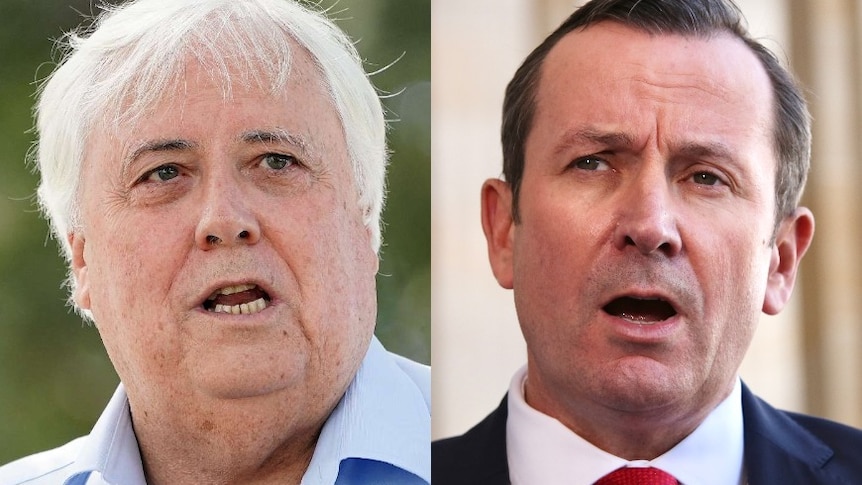
WA Premier Mark McGowan tried to put an end to defamation proceedings with Queensland businessman Clive Palmer in December last year, but Mr Palmer rejected his offer, the Federal Court has heard.
Key points:
Mark McGowan had urged Clive Palmer to settle and avoid further costs
The daily cost of the Premier’s lawyer exceeds his payout, it has emerged
Justice Michael Lee will deliver his costs decision in court later today
Shortly before Christmas, Mr McGowan made an offer for both sides to drop their proceedings and walk away, with each to bear their own costs, thereby avoiding further expense.
But the offer was rejected by Mr Palmer and the case proceeded, with the court finding both sides defamed each other in a scathing judgment handed down last week.
Lawyers for both sides appeared in the Federal Court this morning to argue over costs, with Justice Michael Lee due to deliver his decision later today.
Mr McGowan was last week ordered to pay damages of $5,000 to Mr Palmer, while Mr Palmer was instructed to pay Mr McGowan $20,000.
Daily lawyer costs highlighted
During this morning’s arguments, Justice Lee remarked that even the daily cost of Mr McGowan’s barrister, Bret Walker SC, was higher than the damages awarded.
“It’s an interesting state of your career you reach when your daily fee exceeds the award of damages,” he said.
WA’s hard border sparked the bitter feud between Mr Palmer and Mr McGowan.(Facebook: Clive Palmer, Mark McGowan)
Mr Walker’s response was met with laughter in the courtroom.
“I’d hate for your honor to think this is the first time that’s happened,” he said.
Mr McGowan’s case has been funded by WA taxpayers, but the Premier has been at pains to point out that Mr Palmer initiated the defamation action.
Justice Lee said the rejected offer for both sides to walk away would be important in his decision.
Waste of court resources
The defamation action was centered on their war of words over WA’s closed border and a mining project of Mr Palmer’s.
Justice Lee was damning in his criticism of both men for wasting the court’s limited resources, telling the men: “The game has not been worth the candle.”
Both chose to be part of the “hurly burly” of political life and should have expected the barbs that came along with it, he said.
Space to play or pause, M to mute, left and right arrows to seek, up and down arrows for volume.
Mark McGowan and Clive Palmer were slammed last week over the “wasteful” defamation trial.
The mining magnate was unhappy with the Premier’s decision to close WA’s border in April 2020, which he felt was disruptive to his business interests, and sought to have the closure overturned in court.
Over the course of a series of press conferences in 2020, during the early days of the pandemic, Mr McGowan called Mr Palmer an “enemy of the state” for his actions.
The mining magnate told the court this caused him to be brought into “hatred, ridiculous and contempt”, but Justice Lee found the damage to his reputation to be non-existent.
A serial litigant, Mr Palmer was observed in the witness box by the judge to have “carried himself with the unmistakable aura of a man assured as to the correctness of his own opinions”.
‘Outlaw swinging his gun’
The other part of the defamation claim related to a state agreement held by Mr Palmer’s company Mineralogy for the Balmoral South iron ore project.
The development of the project was rejected by the then-Liberal government in 2012 under Colin Barnett, and Mr Palmer had sought $30 million in damages for what he maintained was a breach of contract.
However, under Mr McGowan extraordinary legislation was passed preventing him from seeking compensation, prompting Mr Palmer to call the Premier “an outlaw swinging his gun around to protect him and his Attorney General from the criminal law”.
Mr McGowan said these and other comments suggested he had behaved corruptly, and prompted him to counter-sue Mr Palmer.
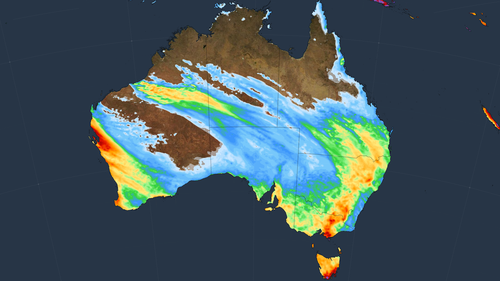
A large northeast cloudband is stretching across Australia, bring the threat of more rain and flooding to “every other state and territory” apart from Western Australia.
Weatherzone shared satellite images of the weather system writing, “this week’s weather will be a perfect example of how a negative Indian Ocean Dipole (IOD) affects Australia.”
The large northeast cloudband brings the threat of more rain and flooding to “every other state and territory”, apart from WA. (Weather zone)
Sharing images of the cloudband, Weatherzone said it is being fed by moisture-laden air from the tropical Indian Ocean.
“This stream of tropical moisture is linking up with a mid-latitude low pressure system and associated cold air mass to creating a large and thick band of cloud,” the weather service wrote.
“This type of weather pattern is common during a negative IOD and this is the second such cloudband that has affected Australia since the negative IOD was declared last week.
“After soaking parts of WA earlier this week, this cloudband will drift further east over the next few days and produce widespread cloud and rain over parts of every other state and territory in Australia.”
A negative IOD was declared last week, and is a driver of wet weather like La Nina.
Forecast accumulated rain during the next seven days (Wednesday to Tuesday) according to the ECMWF-HRES model. (Weather zone)
Rainfall forecasts suggest up to 30mm of rain could fall over “a broad area of eastern and southeastern Australia between Thursday and Sunday”.
This could extend from central Queensland to Tasmania and South Australia.
Numerous flood warnings are already in affect for NSW and Victoria.
Rare flurry of snow dusts Western Australia
BoM defines an IOD as “the difference in sea surface temperatures between the eastern and western tropical Indian Ocean.”
Offices in Melbourne CBD are emptier than in any other capital city, new data has revealed, as melbournecafes and restaurants continue to suffer from the lack of foot traffic.
Just 38 per cent of offices in Melbourne CBD were occupied in July, according to the latest Office Occupancy Survey by the Property Council of Australia, marking a significant drop on the 49 per cent occupancy rate recorded in June.
Some of the worst days in July saw just 19 per cent of offices being used, the survey has shown.
Empty Melbourne CBD under lockdown. (TheAge)
Office occupancy rates also declined in Sydney, Brisbane and Adelaide in July, but every other major Australian city still sits above 50 per cent occupancy.
Offices in Sydney CBD were 52 per cent full in July, while 53 per cent of offices in Brisbane were occupied, and 64 per cent were in Adelaide.
Melbourne City Council has been working to try to attract workers back to CBD offices since COVID-19 lockdowns got people into the habit of working from home.
However, Adina Cirson from the Property Council has explained that a “perfect storm” of factors – the recent spike in COVID-19 and influenza cases, the updated advice from Government around work-from-home settings and the chilly Melbourne winter – has led to people staying home.
“While Melbourne has enjoyed steady growth in office occupancy numbers over the first half of the year, it’s clear that there are serious challenges facing us in terms of encouraging workers back into the city,” Cirson said.
“More than 30 per cent of respondents to the survey indicated that health and safety concerns were an influence on occupancy, which is the highest number since the survey began in 2020.
“It’s clear from these figures that Government advice about working from home, especially internal policies for public service colleagues, has seriously dampened any momentum for a broader return to the office.”
Offices are mostly empty in Melbourne CBD. (Getty)
Cirson has said the survey should serve as a “wake-up call” to leaders about the need for work to get people back into the CBD.
“We can’t take our foot off the pedal when it comes to CBD recovery and that a new round of bold messaging is needed, as soon as health advice allows, to actively promote the CBD and attract workers back to the office again.
“With an end to winter in sight and updated health advice that the peak of our latest COVID event has passed earlier than expected, it’s critical that government and the business community come together to find urgent solutions to ensure winter hibernation doesn’t extend into spring .”
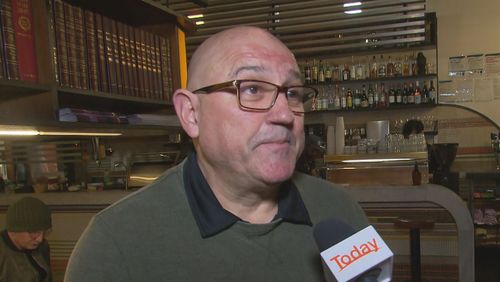
The owner of Journal café, Johnny, has said work needs to be done to revitalize Melbourne CBD. (Nine)
The owner of Journal café on Flinders Lane, Johnny, told Today that business was the quietest he had ever seen in his 25 years working in the area.
“Previous to COVID this place would have been half-full by now,” he said.
“Now only a few dribs and drabs. It makes life hard at the moment.
Johnny said the council and the government needed to work to get back people into the city, and stop advising people to work from home.
“We need people coming in here for these shops to be filled and to make the city great again.”
Murdoch University students have helped uncover a missing piece of the puzzle and an Australian twist in a decades-old European murder investigation.
As part of the International Cold Case Analysis Project, Murdoch students, alongside criminology and forensic science students from UK universities, dusted off a mysterious murder case known as “The Gentleman” which had sat unanswered for 28 years.
On July 11, 1994, a male body was found by police in the North Sea, west of the German island of Helgoland. The body showed signs of trauma and had been weighed down with cast iron cobbler’s feet, a shoemaker’s tool.
Your local paper, whenever you want it.
An artist’s reconstruction of The Gentleman. Credit: Murdoch University/Supplied
The body was brought to the city of Wilhelmshaven for a post mortem, but the man’s identity remained a mystery and he became known as ‘The Gentleman’ due to his apparent ‘middle-class’ clothing.
Initial investigations by German police in the 1990s suggested ‘The Gentleman’ was about 45 to 50 years old when he died and from an English-speaking country, but they were never able to confirm his identity or homeland.
The students, along with Germany’s Police Academy of Lower Saxony, recommended a range of further actions to be taken by local authorities which resulted in a surprising discovery — ‘The Gentleman’ likely spent most of his life in Australia.
This vital clue came from isotope ratio analyzes on a sample of bone. Isotopic compositions of food, water and dust differ across the globe due to variations in climate, bedrock, soil and human activity, and so do the isotopic compositions of the tissues of humans who ingest them.
A complete DNA profile was achieved in December last year, as well as photographic facial reconstruction.
Murdoch’s Cold Case Review group directors Brendan Chapman and Dr David Keatley are now using their local law enforcement connections to help German authorities progress the case in Australia, with hope it may lead to ‘The Gentleman’ finally being identified.
“It’s almost unbelievable,” Mr Chapman said.
Murdoch Cold Case Review group co-director Brendan Chapman. Credit: Murdoch University/Supplied/Supplied
“What are the chances that from this small collection of universities working on this case, one would be from the country where the man originated?”
“We’ve built such a great relationship with ICCAP course leader Karsten Bettels over the years and we are really privileged to be afforded the trust by the German Police Academy to work on live cases with our students.”