Categories
Australia

Alone but not lonely: the solo activities that help foster connection | Health & wellness

When we feel lonely, our first instinct is often to withdraw. “There tends to be shame around loneliness, so we tend to hide and avoid,” says Dr Alison Mahoney, a psychologist at Sydney’s St Vincent’s hospital. “Which only perpetuates loneliness… you disconnect further.

“There’s a myth that there’s something inherently weak with feeling lonely, but in fact, it’s universal.”

Loneliness arises when the quantity and quality of social relationships fall short of our needs; you can feel lonely when you’re not alone – but you can also be alone but not lonely. Ending Loneliness Australia, an organizational network aimed at fostering social connections, estimates one in four Australian adults is lonely.

“It’s not a weakness at all,” Mahoney says. “We get hungry, we need food. We need connection and loneliness tells us that.”

While arranging a quality catch-up on short notice isn’t always possible, it is not the only solution when feelings of loneliness arise.

Sharon Westin holding a paint brush.
Sharon Westin says that for her, painting has an almost meditative quality. Photographer: Sharon Westin

Getting into a flow

Melburnian Sharon Westin separated from her husband during the pandemic. Now her teenage sons de ella live with her every second fortnight. On the weeks without her children, “I often feel lonely,” she says.

“I can go days without speaking to anyone, with most of my daily work done by email. Now I’m single, whereas most friends are in partnerships or have families to run. I feel a little bit on the outer in that respect as well.”

The graphic designer finds her art practice is a balm in those moments. “Painting gets you into a state of flow, like meditation,” Westin says. “The act itself relieves any loneliness I may be feeling.”

Studies conducted during the pandemic with international students and retirement home residents in Taiwan found that activities which allow people to experience a sense of mastery and autonomy – ie flow – are associated with decreased feelings of loneliness. In a state of flow, people become so absorbed in an activity that they lose track of time. A flow state requires a task that is ideally just challenging enough, and provides clear goals and feedback.

In addition to offering short-term relief, finding only activities you love can serve a deeper purpose. “Reflective time alone – exploring hobbies, your passions, your values ​​– can help you get in touch with yourself,” Mahoney says. “When you know who you are, it’s easier to connect with people in a genuine way.”

Keeping nature’s company

Adrian Allen, psychologist at Healthy Mind Clinic in Sydney, says activities like walking and hiking are known to have mental health benefits, and may help shift “attention away from internal feelings and thoughts about being lonely”.

A 2021 study in Nature found people are more likely to feel lonely in dense, crowded areas, but a connection with the natural environment can help those feelings subside.

This is something Hayley Iluka can relate to. Iluka, a teacher, was once an avid surfer but stopped in her 40s. Multiple battles with cancer and other traumatic experiences earlier in life had left her with post-traumatic stress disorder, depression and anxiety. Every time she faced the water, “my PTSD was telling me, everything is going to kill you.”

Sign up to receive Guardian Australia’s weekend culture and lifestyle email

Although Iluka had a supportive family, she also grappled with paralyzing thoughts in social situations. “I’d think, ‘you’re a waste of space, no one wants to sit with you’. I really isolated myself.”

As she entered her 50s, she decided to get back on her board, initially through attending standup paddle boarding lessons alone. Even when her first lessons from her triggered panic attacks, she persisted.

“The beach has always had good feelings for me,” she says. From standup paddle boarding, she progressed back to surfing, and the Waves of Wellness program, a mental health charity that offers “surf therapy” – a combination of surfing and group therapy. She started attending sessions, and it was here that she found her her “tribe”; a group of fellow surfers she now socialises with regularly.

“You’re just in the moment, that’s the beautiful thing about surfing,” Iluka says. “You actually can’t think about anything else. You’re watching the ocean, the waves. You can’t be stuck in that cycle of negative self-talk because you’ve got to watch what’s coming.”

making meaning

When Graham Wynn, 61, separated from his wife of 20 years, he found himself increasingly socially isolated. His family of him were based in the UK, but he lived in Australia.

“Twenty years we were together and when that ends, you start to think, ‘Was it me? Will somebody else want me? Am I good enough?’”

At first, Wynn found distraction through things like crossword puzzles and reading. But he felt a need to give back.

Graham Wynn volunteering at animal charity Edgar's Mission.
Graham Wynn volunteering at animal charity Edgar’s Mission. Photograph: Graham Wynn/Supplied

“I’m really cautious about who and what I donate to,” he says. I have spent a lot of time researching organisations, and found that animal shelters would often hold fundraisers when an animal in their care needed veterinary surgery. Spending time online seeking out and contributing to those causes became almost a hobby for him. It felt good, “doing something meaningful like this, without even going anywhere,” he says. “It helped a great deal during that loneliness period.”

This pastime lead him to Edgar’s Mission, a shelter in his area that holds regular volunteering and open days. Turning up to the shelter alone was a little intimidating at first. “I didn’t know what to expect,” he says. “But once you’re thrown a pitchfork and a spade, it passes quickly!”

Mucking out pig styes, painting fences and weeding thistles so animals wouldn’t stand on them helped his world open up as he interacted with others during shifts. “I think volunteer work really does help when you’re lonely … it gives you a sense of self-worth.”

Allen says experiences like Wynn’s are common. In addition to providing social contact, volunteering fosters “a sense of inclusivity and social cohesion that can help ease loneliness. It can also help promote a sense of meaning, purpose and self-esteem by contributing to others or to causes that are bigger than the self.”

Wynn says: “That’s how I moved forward. I got my confidence back… I started believing in myself again.”

Categories
Australia

How NSW Labor stumbled across the scandal that has Dominic Perrottet under pressure

“Those candidates could be anyone and everyone and there are a mixed bag of candidates right across the board and we’ll have more to say about that, but they’re confidential in those conversations, they’re confidential in the nature of those conversations and we’ll have more to say.”

loading

Barilaro’s response further fueled Labor’s suspicions. The party did not relish a byelection in McKay’s marginal seat of Strathfield and was also convinced the Coalition had its sights on it. Senior MPs and staffers started doing some digging into the trade jobs, which newly elected Labor leader Chris Minns had concerns about. Minns could not see the benefit of NSW having such roles.

One month, after Berejiklian’s shock resignation, the new premier Dominic Perrottet was also pressed on a possible McKay appointment: “Are you considering appointing Jodi McKay as a trade envoy?” No, it was his response from him before adding: “There are always discussions, and I for one, believe that former members of parliament make good ambassadors and trade commissioners.

“I think it is a role that politicians, as unpopular as this may sound, that’s a job that, I think, is well suited to former politicians and people who have provided years of service in public life should certainly be in the mix. But in terms of those appointments, they haven’t come before the cabinet.”

After a late Friday afternoon announcement in June this year, which revealed Barilaro had snared the plum New York trade commissioner’s job, Minns was in his electorate of Kogarah with Mookhey for a budget-related press conference.

Minns relayed to Mookhey that voters had approached him unprompted at his street stall to raise the Barilaro appointment, which had been reported in the media that day. The pair quickly decided that it was an issue that had to be pursued with rigour.

Investment NSW chief executive Amy Brown at the parliamentary inquiry.

Investment NSW chief executive Amy Brown at the parliamentary inquiry.Credit:Kate Geraghty

Within 24 hours, Mookhey and Labor’s leader in the upper house, Penny Sharpe, had referred the matter to the public accountability standing committee, which has a non-government majority, for an inquiry. Two more Labor frontbenchers were recruited to interrogate the trade appointment, John Graham and Courtney Houssos. Greens MP Cate Faehrmann chairs the inquiry.

“We took another look at those documents,” Mookhey says of the papers already in his possession. “We saw references to a mystery ‘preferred’ candidate at the bottom of some email chains from August last year. Yet by December, mention of this mystery candidate had all but disappeared.” These were the documents that revealed senior bureaucrat Jenny West had already been offered the job that Barilaro ultimately secured. Others also revealed that Barilaro, in fact, asked that McKay (and former Liberal minister Pru ​​Goward) be interviewed for a trade role.

Mookhey, who has also prosecuted other problematic issues for the government (and Perrottet) such as the mass underpayment of injured workers exposed in the Icare scandal, admits the opposition stumbled across the trade appointment saga.

The first witness the inquiry called was the bureaucrat responsible for appointing Barilaro, Investment NSW chief executive Amy Brown. A parade of witnesses followed, including Jenny West – who was offered the New York role only to have that offer rescinded – and the public service commissioner Kathrina Lo, who was an independent member on Barilaro’s selection panel. Barilaro was also called.

Public Service Commissioner Kathrina Lo was expected to be a friendly witness for the government.

Public Service Commissioner Kathrina Lo was expected to be a friendly witness for the government.Credit:Kate Geraghty

The evidence has been hugely damning for the government, although Perrottet has dismissed the inquiry as little more than a political hit job.

One senior minister said the public service commissioner was assumed to be a “friendly witness” for the government. However, the experienced public servant delivered a searing assessment of the process that saw Barilaro appointed, with saying she would never have signed off on a final selection report if she knew then what she knows now.

Brown also conceded that despite his denials, Ayres was not “at arms length” from the trial, despite his insistence that he had no role. West, in her evidence, claimed she was told that the New York job would be a “present for someone.”

loading

A NSW Labor senior source says the opposition has forensically reviewed all the documents, pursued questions in the inquiry and created a slow-burn scandal for the government. The source, who spoke on the condition of anonymity, said the inquiry was a “dress rehearsal” for government.

“We have the best team on the park for this and Daniel Mookhey is shaping as the Macquarie Street version of John Faulkner as interrogator-in-chief,” the source says.

However, Coalition committee member Nationals MP Wes Fang, is scathing of the inquiry. He says it was designed to destroy Barilaro and has not uncovered any wrongdoing.

“It is a political hit job in circumstances where the opposition and crossbench have the numbers on the committee using what should be extraordinary powers of parliament to political assassinate John Barilaro,” Fang says. “This is not an impartial committee, there has been no procedural fairness with this inquiry.”

Barilaro was due to appear at the inquiry for the second time on Friday, but canceled due to poor mental health. His friend, Mental Health Minister Bronnie Taylor, said Barilaro had not been treated fairly by the inquiry, which took three weeks to call him to give evidence.

“This constant, constant attention on him. Him waiting three weeks until he was able to give his side of a story at an inquiry. I say to you and I say to anyone out there, how would that make you feel and how do you think you would manage with that?” Taylor said on Friday.

Taylor praised Barilaro for always being “very open” about his own struggles. “So I respectfully say to everyone, he has been very honest and very open, and he has put his case forward. He deserves correct process. He deserves independence [and] respectful behaviour,” she said.

Barilaro will, however, still be expected to appear before the inquiry once he is well enough. Meanwhile, Labor has uncovered more problems for the government in its trove of documents. Next in its sights is another potentially problematic trade role, the agent-general in London, which will also be interrogated by the inquiry. The saga has a long way to run.

The Morning Edition newsletter is our guide to the day’s most important and interesting stories, analysis and insights. Sign up here.

Categories
Australia

Riverwood plan unveiled for unloved Sydney suburb

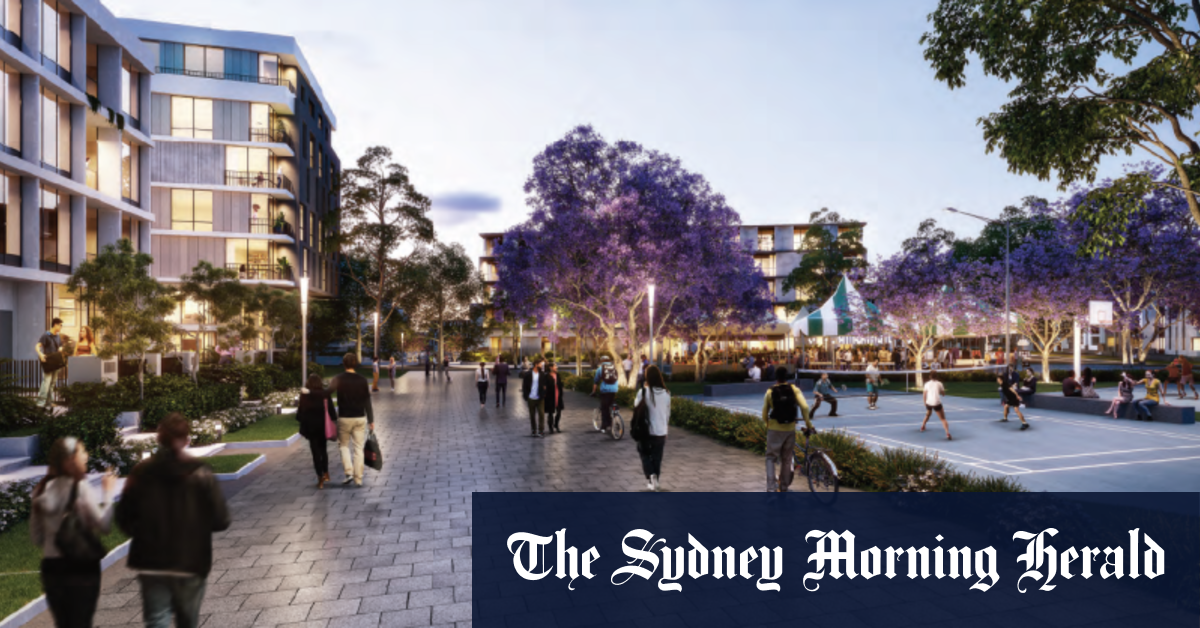
The NSW government has unveiled plans for a major redevelopment of a public housing estate in Riverwood, near Punchbowl, which would replace 1,000 aging units with close to 4,000 private and social housing dwellings.

But it is likely to face another round of pushback from residents over the scale of the buildings and the proportion of private housing in the redeveloped estate.

The 30-hectare Riverwood Estate between the M5 and Belmore Road will be one of the state's largest urban renewal projects.

The 30-hectare Riverwood Estate between the M5 and Belmore Road will be one of the state’s largest urban renewal projects.

The 30-hectare Riverwood Estate sits just south of the M5 on Belmore Road, north of Riverwood train station, and has been earmarked for redevelopment since 2016. The government initially proposed 6,000 new homes, but this was reduced to 3,900 following an earlier consultation.

A new masterplan, to be released publicly on Friday, proposes buildings of three to 12 storeys and a mix of about 30 per cent public housing and 70 per cent private. But the planning documents stipulate the 30 per cent is a maximum and the final amount will be determined following “engagement with industry during the tender process”.

Riverwood Community Center chairman Karl Saleh, also a Canterbury-Bankstown councillor, said the estate needed to be renewed, but the mix of public and private housing should be closer to 50-50. The community was also more likely to support buildings of six to eight storeys, not 12, he said.

“[There is] a long list of people who need social housing, and we need to address this urgently,” he said. “If we want to bring more people to the area, both private and social housing, we need to put in proper infrastructure. We need this development, but we need it to be the right development.”

An artist's impression of the redeveloped Riverwood Estate, released by the Department of Planning and Environment.

An artist’s impression of the redeveloped Riverwood Estate, released by the Department of Planning and Environment.

The government has fought several battles over public housing, most notably when it sold off property at Millers Point. In this case, the NSW Land and Housing Corporation is promising all current public housing residents in Riverwood they will be able to return if a suitable home is available, unlike those in Millers Point who could not.

The work will be done in stages over 15 to 20 years and is expected to generate about 11,000 jobs and $2 billion in local investment. The finished precinct would also have 4.8 hectares of new or upgraded open space.

Categories
Australia

Two killed in car crash on Bruce Highway in Wunjunga

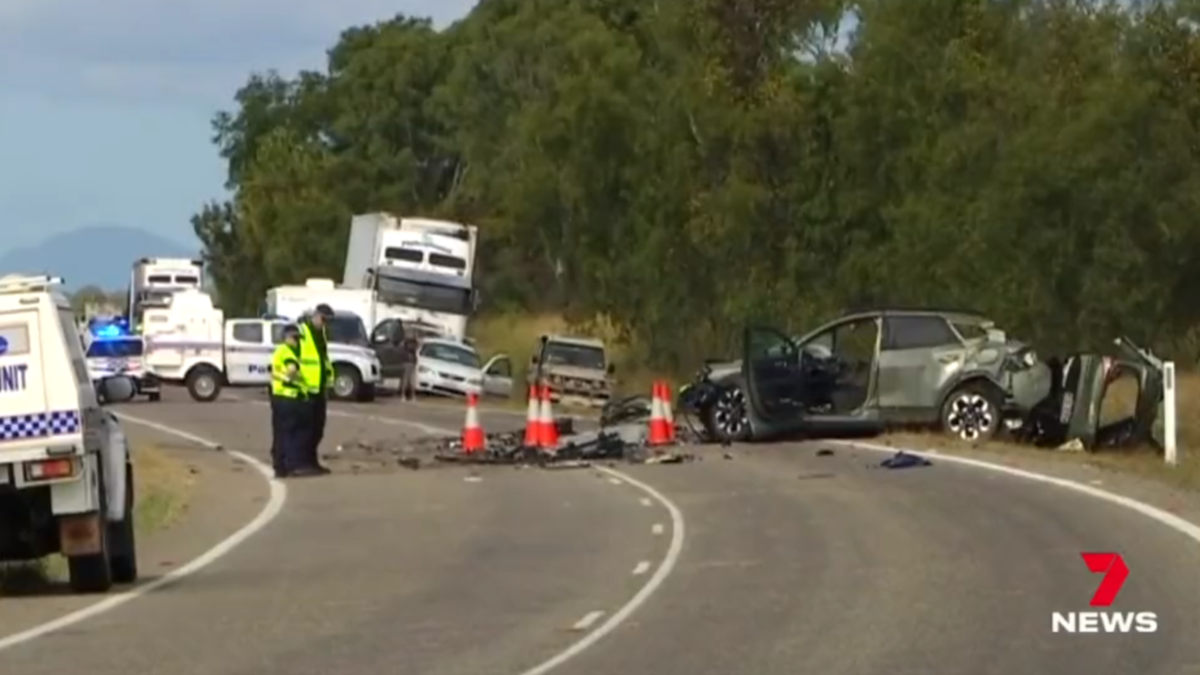
Two people died in a horror three-vehicle crash in regional Queensland on Friday.

Queensland Police say a man and woman were traveling north on the Bruce Highway in Wunjunga, about 22km south of Home Hill, when a truck traveling in the opposite direction collided with their vehicle about 11.30am.

Watch more in the video above

Watch the latest News on Channel 7 or stream for free on 7plus >>

The incident subsequently caused a third vehicle to crash.

The driver of the initial vehicle, a 67-year-old Hervey Bay man, died from his injuries at the scene.

His 62-year-old passenger was airlifted to Townsville University Hospital in a critical condition, but later died from his injuries.

The 67-year-old driver of the car died from his injuries at this scene and his 62-year-old female passenger later died in hospital. Credit: 7NEWS
Police at the scene of the Wunjunga fatal crash. Credit: 7NEWS

The truck driver, a 61-year-old Deeragun woman, and the 36-year-old male driver of the third vehicle managed to escape the ordeal uninjured.

“It’s a very horrific scene,” Queensland Police senior sergeant Craig Shepherd told 7NEWS.

Forensic police are investigating the circumstances of the crash.

Anyone with information or dashcam vision of the area at the time of the crash is urged to contact Crime Stoppers on 1800 333 000 or report online at www.crimestoppersqld.com.au.

Van owner confronts would-be thief.

Van owner confronts would-be thief.

.

Categories
Australia

McDonald’s in $250 million wage theft claim with SDA over alleged denial of paid rest breaks

The fast food workers’ union has hit McDonald’s with a $250 million-plus wage theft claim in the Federal Court over the alleged denial of paid rest breaks.

The Shop, Distributive and Allied Employees Association is seeking compensation for more than 250,000 current and former workers across the country.

The union this month launched a new “mega” legal action involving 323 McDonald’s operators and the fast good giant itself, and spanning almost 1000 current and former McDonald’s sites.

.

Categories
Australia

Australian GPs say access to bulk billing is on the wane, even for most vulnerable patients because the Medicare rebate isn’t covering rising costs

“We now have a system where universalism is at risk, and patients paying more in out-of-pocket costs for a basic GP visit than the rebate. This is just going to lead to more people not getting the care they need.”

The Royal Australian College of General Practitioners warned this week that inadequate Medicare rebates were leading an increasing number of GPs who had previously bulk billed all consultations, to start charging patients.

Melbourne GP Anita Munoz, who chairs the Royal Australian College of General Practitioners’ Victorian faculty, said the rebate given to doctors had not increased in real terms for many years, and that many GPs could not afford to continue bulk billing without charging a gap fee .

“The cost of delivering care has so far outstripped the contribution from Medicare that not charging a gap is no longer feasible,” she said.

Medicare patient rebates for GP consultations were frozen from 2013 to 2019, and received a small boost earlier this year, of 1.6 per cent. Munoz said no other industry could continue under such circumstances. “And our industry is now showing that it will collapse under that weight unless something changes.”

GPs want Canberra to raise the Medicare rebate by 10 per cent for doctor visits between 20 and 40 minutes, and to also introduce a new rebate for one-hour consultations for patients requiring complex care. The call is included in an advocacy plan put out by the RACGP this week.

Education service HealthEd recently released a poll of almost 500 GPs that found 22 per cent had recently changed their billing model, meaning patients faced higher out-of-pocket costs to see a GP. A third of those that changed their billing model moved from bulk billing to mixed billing (a combination of bulk billing and private billing), while 67 per cent changed from mixed billing to completely private billing.

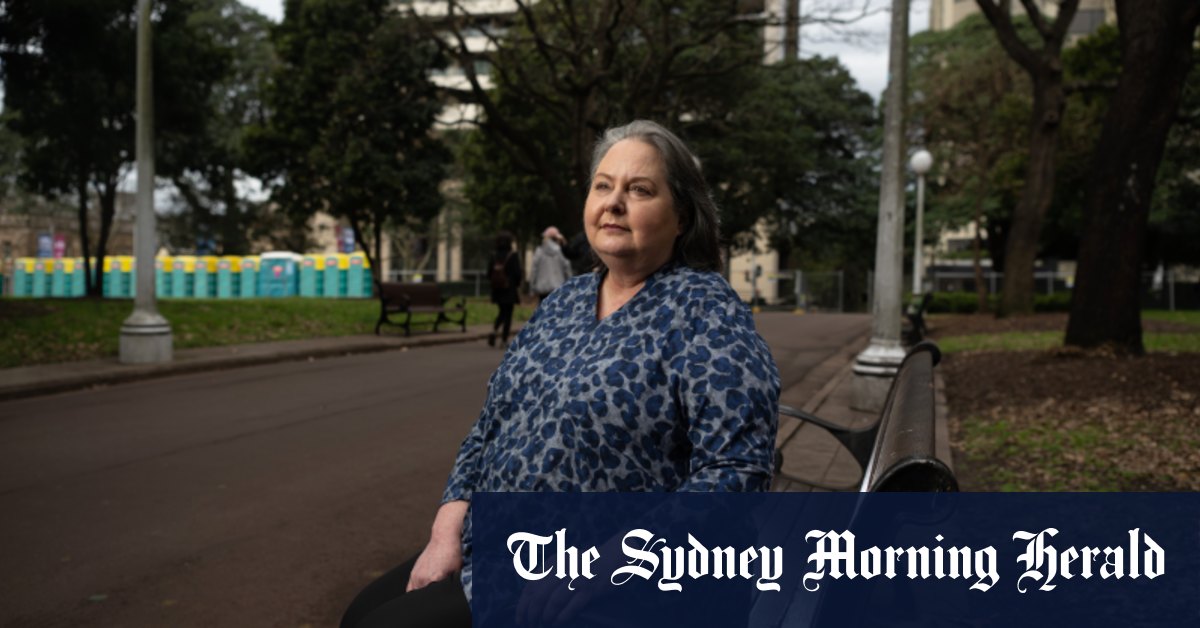
Kathy Barr has two daughters, aged 24 and 19, and for the past five years the family has visited a local clinic. “They bulk billed, and we initially went to them when money was tight because we also found a really good doctor in the practice,” says Barr, 60, who lives in Stanmore, in Sydney’s inner west.

loading

In April, the practice stopped bulk billing. Barr caught pneumonia in 2019, and then in late 2021 she had treatment for a benign brain tumor, which still requires monitoring, and has required constant access to specialists – most of whom require her to see a GP for a referral.

“Because I have to get multiple prescriptions, it’s often a double appointment, which is $160,” she said. About $80 of that is refunded via Medicare. Barr said she could cover it. “I’ve got a professional career, but that’s still a lot of money. So I hesitate to see a doctor when I should, due to the cost.”

And Ms Barr said the charges had all but stopped her daughters going unless it was absolutely vital.

“Once bulk billing finished, it made it almost impossible. When you have a complex medical condition, on top of what happened during the pandemic, and then not having access to bulk billing – it means really serious impacts on the individual.”

The Morning Edition newsletter is our guide to the day’s most important and interesting stories, analysis and insights. Sign up here.

Categories
Australia

Australian academic pleads not guilty in trial with ousted Myanmar leader Aung San Suu Kyi, official says | myanmar

An Australian academic who is being tried with ousted Myanmar leader Aung San Suu Kyi on charges of violating the country’s official secrets law testified in court for the first time on Thursday, a legal official has said.

Sean Turnell, an economist at Sydney’s Macquarie University, had served as an adviser to Aung San Suu Kyi, who was arrested when her elected government was ousted by the army on 1 February 2021.

Turnell was arrested five days later and is being held in the main prison in Naypyidaw, the capital, as is Aung San Suu Kyi. Three of Aung San Suu Kyi’s former cabinet members are being tried with them in a special court at the prison.

A legal official familiar with Thursday’s proceedings said Turnell denied the allegations against him and pleaded not guilty. Further details of his testimony from him were not available because his lawyers from him have been barred from talking about the case.

All the trials involving Aung San Suu Kyi have been held under similar restrictions, with the proceedings closed to the media and the public.

The legal official, who spoke on condition of anonymity because he is not authorized to release information, said Turnell and his co-defendants appeared to be in good health.

The exact details of the alleged offense in the case have not been made public, though Myanmar state television, citing government statements, said last year that Turnell had access to “secret state financial information” and had tried to flee the country.

Turnell is also being prosecuted under the immigration law, which carries a punishment of six months to five years’ imprisonment. Prosecutions under the immigration law are common for foreigners being held for other offences.

The judge added Thursday’s proceedings until next week, when Aung San Suu Kyi is to testify.

The case is one of many faced by Aung San Suu Kyi and is widely seen as an effort to discredit her to prevent her return to politics. The charges against her include corruption and election fraud. She has already been convicted of several minor offenses.

Last year’s military takeover sparked peaceful nationwide street protests that security forces quashed with lethal force, triggering armed resistance that some UN experts have characterized as civil war.

Categories
Australia

Shark nets will be removed from Sydney beaches if councils have their way

The state government’s shark net program aims to determine three species of sharks – the tiger, white and bull shark – but the nets’ efficacy has been debated for years. Many critics say the technology is almost 100 years old and alternative and less harmful methods should be used.

For those who support the nets, they offer psychological comfort, says Dr Vanessa Pirotta, a marine predator researcher at Macquarie University.

But they offer little protection. Shark nets are not designed to create a complete barrier between swimmers and sharks, but rather they aim to detect sharks from frequenting the site.

Over the years, there have been significant advancements in technology, which include SMART drumlines and drone surveillance. Both are in place along the Central Coast.

Earlier this year, the government announced $85 million to fund the implementation of other shark mitigation tools, including increased shark tagging, improving community awareness and installing shark listening stations that provide real-time tracking of tagged sharks.

Brendan Rogers, who supports the removal of shark nets, has swum for years along the Central Coast.

Brendan Rogers, who supports the removal of shark nets, has swum for years along the Central Coast.Credit:Brook Mitchell

Central Coast resident Brendan Rogers tries to swim most mornings but the possibility of bumping into a shark is never far from his mind. He says it’s a risk of entering the sharks’ habitat.

loading

“I think that maybe a long time ago, they were one of the better solutions, but I think there are so many other options now that are potentially safer to other wildlife as well,” he says. “There is no one silver bullet; the nets are old-fashioned. If we can use a combination of smart things – like technology [then that is better].”

Perhaps one of the most controversial aspects of shark nets is how many marine animals get caught in the nets. Of the 376 marine animals caught in shark nets during the 2021-22 reporting period, only 51 were the target species. The remaining 203 were threatened or protected species, including sharks, turtles and rays. Of these animals, 156 died, data from the NSW Department of Primary Industries (DPI) shows.

Among these were 16 leatherback turtles – the majority of which were caught on the southern Central Coast. There were also 28 white sharks, 19 green turtles and 52 smooth hammerheads caught, as well as 14 critically endangered gray nurse sharks.

A Sydney seahorse is caught in a shark net, one of hundreds of non-target species each year.

A Sydney seahorse is caught in a shark net, one of hundreds of non-target species each year.Credit:Brook Mitchell

DPI oversees the shark meshing program and employs seven contractors, one in each region shark nets are installed: Hunter, north and south Central Coast, Illawarra and North, Central and South Sydney. The department hires contractors to inspect the nets every 72 hours and release animals.

What happens to injured animals is not entirely clear. If a contractor finds a live animal caught in the nets, they are to free it using instructions from the Shark Meshing Supervisor and contractors may then “disentangle, handle, treat and release any living marine mammal, marine bird or marine reptile in accordance with any relevant national or state guidelines where practical and safe to do so”.

A DPI spokesperson says the nets were actively managed to ensure minimal impact on marine animals and that since the shark nets were introduced in 1937, there had only been one fatality at meshed beaches.

“The NSW government will continue to work with coastal councils to ensure that community preferences are balanced against effective shark mitigation for bathers,” the spokesperson says.

“Contractors are required to check the shark nets within 72 hours of the previous inspection and release live animals with the least possible harm.

“If an injured marine animal is caught in the nets, DPI fisheries will liaise with Taronga Zoo directly and organize the potential drop-off of the injured animal for assessment and treatment.”

However, Taronga Zoo says their wildlife hospital accepts and treats many animals but their records indicate they have not received “any wildlife impacted by shark nets for many years”.

When pressed further, a government spokesperson provided no further clarification about the fate of injured marine wildlife.

Sea Shepherd threatened and endangered species campaigner Lauren Sandeman says the true number of animals impacted by the shark nets is much higher than reporting shows.

“Any released animals that are still alive are left to nature and there is a strong likelihood that they will succumb to their injuries. But those deaths are not recorded in the program,” she says.

“We’ve seen footage from the program of animal releases that sink to the bottom of the water but they count those as a live releases. [The program] doesn’t track animals after they are released.”

Pirotta says the combination of targeted and non-targeted species caught in nets highlighted the push to move towards less invasive shark mitigation methods.

loading

“Sharks are not actively out to target people,” she says. “The majority of people don’t want to see wildlife harmed, so we need to work towards smarter solutions that collect information so we can learn more about them.”

Get to the heart of what’s happening with climate change and the environment. Our fortnightly Environment newsletter brings you the news, the issues and the solutions. Sign up here.

Categories
Australia

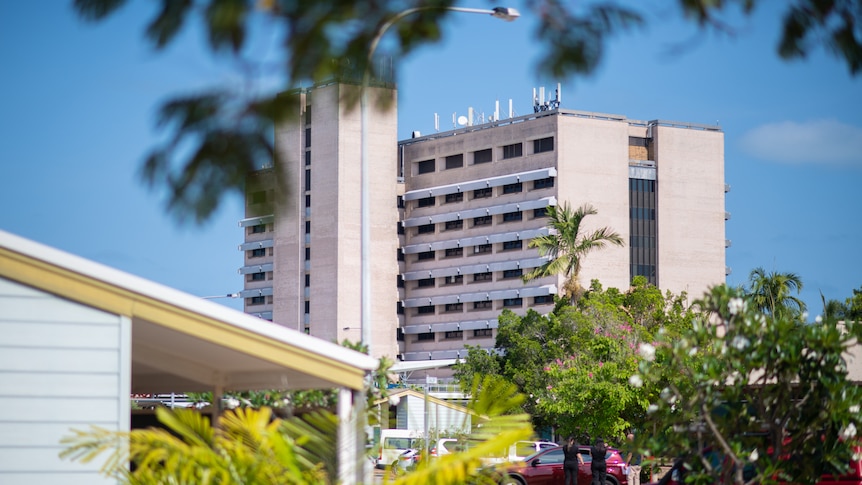
Darwin’s main hospital, prison among over 300 buildings potentially non-compliant with NT building standards

The Northern Territory’s anti-corruption watchdog has revealed hundreds of government buildings may not comply with their own occupancy regulations, including Parliament House, Royal Darwin Hospital and the Darwin prison.

In March, the Independent Commissioner Against Corruption, Michael Riches, launched an investigation into the use of Darwin’s main sporting venue, Marrara Stadium, which has not had an occupancy certificate since it was built in the 1990s.

On Friday, Mr Riches said he has now expanded his investigation after obtaining details about other venues across the territory, which also do not have the required certification.

“I have received information suggesting there may be more than 300 other sites, either owned or leased by the Northern Territory Government, with buildings or structures that do not presently comply with occupancy certification requirements under the Building Act 1993 [NT],” he said.

Mr Riches said the affected sites include Parliament House, the prison at Holtze, the Royal Darwin Hospital, the Darwin Entertainment Centre, as well as numerous public schools and police stations.

An exterior photo of Parliament House in Darwin.  There are large palm trees out the front.
The seat of the Northern Territory Legislative Assembly since 1994, Parliament House is among the buildings deemed non-certified.(ABC News: Michael Franchi)

Investigation to probe how ‘non-compliance’ has occurred

On its website, the government described occupancy certification as a “statement that building work has achieved a particular level of safety, health and amenity and is suitable to occupy”.

Mr Riches said he would conduct a joint investigation with the Ombudsman “to assess the extent of non-compliance and why and how it had occurred”.

“We want to hear from any person, particularly those who work in building, certification and building insurance industries, who might have information relevant to this investigation,” he said.

Aerial view of jail facility at Holtze, near Darwin.
The Darwin Correctional Center at Holtze was opened in 2014.(Supplied)

Government says buildings ‘safe for occupancy’

In response to questions from the ABC, Infrastructure Minister Eva Lawler said preliminary investigations showed the buildings affected were “safe for ongoing occupancy”.

.

Categories
Australia

Trauma-informed photography course gives abuse survivors a new perspective, boosting self-esteem

Child sexual abuse survivors say a photography course is teaching them to see beauty in the world and help them gain a sense of confidence — all with their smartphones.

After photographer Mitch Dunn taught the six-week course in Ballarat last year, the participants kept in touch, sharing their photos in a private social media group called the Light Seekers.

“The real foundations of photography which support healing are light and perspective, and that can be accessed through any camera,” Dunn said.

“Light is a really beautiful metaphor for healing. When we think about light in terms of photography, when we look at the brightest light source, it creates the darkest shadows.

“When you find yourself in a dark place, when you understand photography, if you turn 180 degrees, you’ll find bright light — it’s also a metaphor for hope.”

wave crashing over a rock
Marita finds joy in taking photos on the Great Ocean Road.(Supplied: Marita)

Dunn also focused on composition.

“It’s about narrowing your frame, so when things are overwhelming or you’re seeing a lot of negativity, if you can compose what you’re seeing in a certain way, there is always beautiful hope and inspiration somewhere around.”

New friendships without expectations

Abuse survivor Marita described the course as a “powerful experience”.

“It was my first step back into being a bit social. I had 15 months off work related to a court case and a breakdown,” she said.

Learning about composition, grid lines, lighting and portrait photography changed her approach to how she takes photos or uses her phone camera.

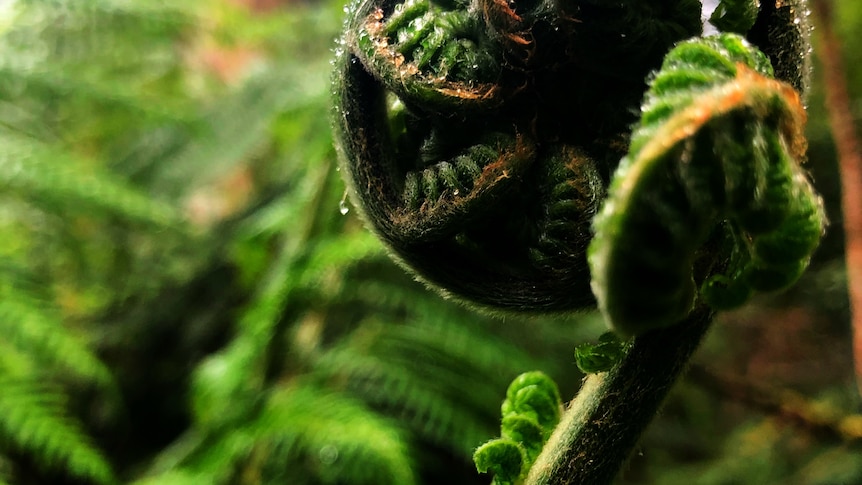
Close up of a fern.
Martia says she finds photographing nature a great way to feel connected.(Supplied: Marita)

“Mitch was really good at getting us to see things from different perspectives; some of mine turned out quite abstract,” Marita said.

She found new friendships with the other survivors where there were “no expectations”.

“It was nice to be in a space that felt safe and supportive of being who you are, not having to justify your behaviour. It felt quite trauma-informed.”

The 43-year-old’s favorite photo is waves crashing over rocks at Johanna Beach on Victoria’s Great Ocean Road.

“It makes me feel peaceful; it sounds weird but it’s a wild and windy place, but whenever I go there I feel really calm because I can feel the sand, the spray of the ocean and the salty air.

“I feel like I’m away from everything and it’s a really calm experience.”

Passion for photography returned

old church
Drew found his iPhone ideal to use as his hands shake due to Parkinson’s disease.(Supplied: Drew)

When Drew was seven years old, he had his camera taken off him by the Anglican Church where he was sexually abused in South Australia.

“They told me they were ‘saving it for the best’ but I never got it back,” he said.

Now 57, the Narungga man said a lot of his photos were in black and white at graveyards.

graves with trees in the background
Drew took black-and-white photos to represent the camera taken off him as a child.(Supplied: Drew)

“The black and white represented the type of camera I had taken away and because one of the places I was taken for walks by the reverend was in cemeteries.

“It’s interesting how some habits are still there subconsciously or otherwise, but they can’t hurt me anymore.”

Drew lives with Parkinson’s disease but finds his phone’s in-built stabilization helps him to deal with his hands shaking.

“The course provided so much joy for people who had been left in the dark and we’ve been friends ever since,” he said.

A mindfulness tool

cat-face
Mel says she now uses photography as a mindfulness tool.(Supplied: Mel)

Mel is a carer for her husband — both are survivors of child sexual abuse. She said the biggest thing she learned was the mindful aspect of photography.

“If I feel a little bit stressed or overwhelmed, I just take myself for a walk and take my camera,” she said.

“Taking photos of things I see at that moment can be a tool in moving forward.”

red mushroom in a forest
Mel has found joy in taking photos while out walking.(Supplied: Mel)

For Mel, the course was the first time she had done something for herself to address her trauma apart from a few counseling sessions.

“It’s a very personal thing. I wasn’t ready to open that can of worms for a long time,” she said.

“But now I love being able to stop myself and be present in that moment when taking photos.”

New views everywhere

Sun and the clouds, tones of blue and a bright sun
Annie finds joy in photographing clouds which she sees a metaphor for her life.(Supplied: Annie)

Annie was sexually abused as a child, which has caused her to experience low self-esteem and a lack of confidence in trying anything new.

However, the Light Seekers book created with the participants’ photos at the end of the course has her beaming with pride.

“It was such a boost to my self-esteem, something we’d achieved out of such adversity,” Annie said.

“It was me getting some recognition for the sorrow I’d gone through in my life.”

Annie found her favorite topic was taking photos of clouds.

Cracks on the pavement
Annie says she now sees aspects to photograph in unexpected places.(Supplied: Annie)

“The clouds were symbolic of my life — the different shapes, some days they’re beautiful and others are just smudges across the sky,” Annie said.

The 63-year-old now sees the world in a new way.

“On bad days now I’ll sit and look at the clouds. My eyes have become like my camera and I’m more cued into looking at things differently.

“Even cracks on the sidewalk, I stop and look at them and take photos of them too.”

.