Categories
Australia

melbourne pollinator corridor heart gardening project city of port phillip emma cutting

Cutting said after the initial eight-kilometre pollinator corridor is established, it will be expanded elsewhere in Melbourne. And she has had inquiries about starting versions in Adelaide and Sydney.

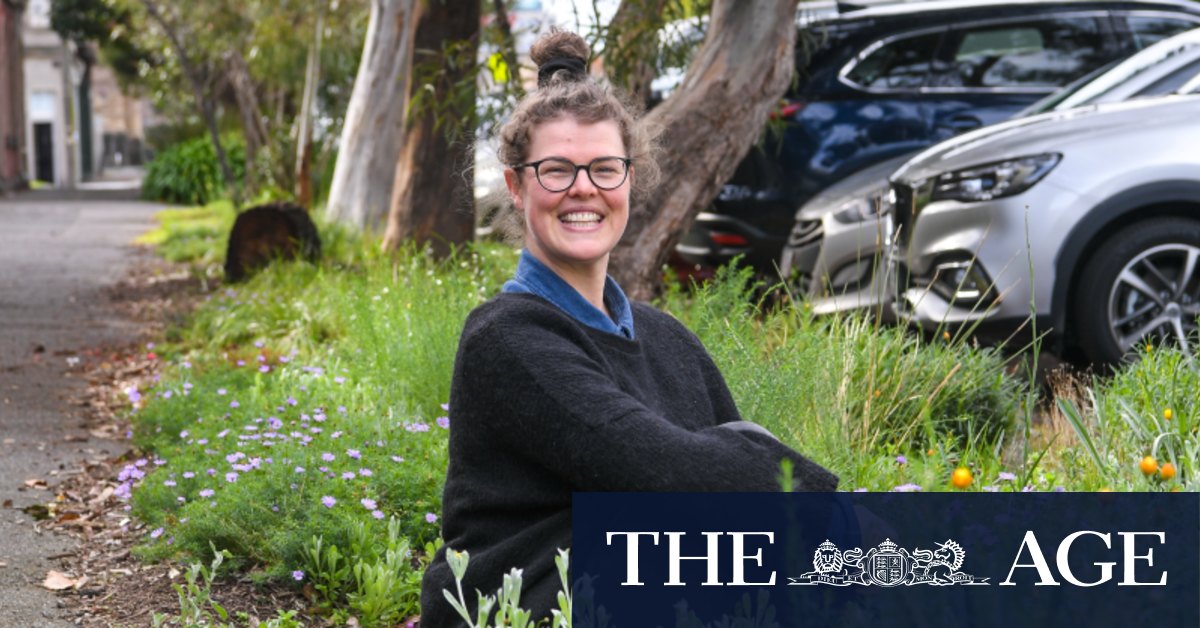
Cutting, a music teacher and keen gardener, who in the past suffered from chronic fatigue syndrome, said street gardening helped her get out and connect to the community.

One greened-up street in South Melbourne in December 2021.

One greened-up street in South Melbourne in December 2021.Credit:eddie jim

“It’s such a positive activity, it ticks so many boxes to do with improving mental health, greenness and liveability, and I’ve seen what it does for biodiversity.”

In December she told The Age that the council’s original specifications for distances between plants and curbs, driveways, trees and services infrastructure would be too limiting.

The petition also claimed that well-established gardens that didn’t adhere to the new guidelines would have been subject to removal “at council’s whim”.

But Cutting said after negotiation with the community, the council’s final guidelines would allow a lot more street gardening and preservation of existing plots.

“They’ve gone from [in the original plans] almost all existing gardens being non-compliant to having a level of compliance,” she said.

The council originally wanted a 1.5-meter radius around every utility such as power poles and NBN pits but have now agreed for it to be a 30-centimeter radius, except for fire hydrants where it remains 1.5 meters.

An early draft said residents couldn’t plant within 1.5 meters to 2.5 meters of a tree; that has now been changed to 50 centimetres.

loading

In addition, the council minutes on the resolution state that “modifications to current nature strip gardens will only be requested if safety or access concerns are raised”.

Cutting said she council supports restrictions to protect tree health, and also residents’ accessibility and safety in relation to paths and roads.

“But they’re not the only considerations. We also need to think about climate change, biodiversity, community health, mental health, street amenity and liveability”.

Port Phillip Mayor Marcus Pearl said: “We have listened to our community and believe we have come up with the best possible way of greening our city through beautiful street plantings while not risking the safety of people with mobility or vision concerns.”

He said ripping out established nature strip gardens was never part of council’s plan. It wanted to address complaints that gardens were extending over footpaths or obscuring children’s crossings.

Pearl said the council is looking into ideas such as de-paving to provide more space for street gardening and hiring a part-time community greening officer to provide advice, information and organize workshops on gardening in public open space.

“We are looking forward to even more residents wanting to beautify their nature strips and enjoying the social connection this can bring under these clear guidelines.”

The Morning Edition newsletter is our guide to the day’s most important and interesting stories, analysis and insights. Sign up here.
Categories
Australia

Great Australian Platypus Search removes guesswork for scientists in Victoria

The results are in from an audacious search that’s been described as part CSI, part Where in the World is Carmen Sandiego?

If Carmen Sandiego was a platypus and not a computer video game character from the 1990s, that is.

For the first time, thanks to The Great Australian Platypus Search, Victoria has a statewide picture of how its platypus population is faring.

The search was held from August to September last year, with citizen scientists asked to collect water samples from more than 1,500 waterways across the state.

Scientists at EnviroDNA ran those water samples through their labs searching for environmental DNA, also known as eDNA.

The eDNA contained traces of wildlife DNA shed from the animals into the environment.

Ember emerged from her borough just after the Victorian bushfires.
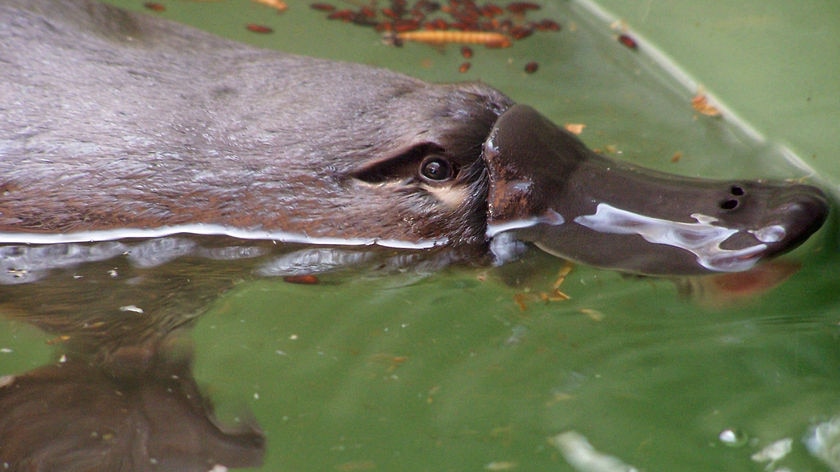
The platypus is an Australian icon and an important indigenous species.(Healesville Sanctuary)

Scientists used the information to genetically trace some of the state’s stealthiest critters into previously unknown hideouts.

“I don’t know if it’s exciting, but filling in areas where we didn’t have platypus data before was one of the big goals of the project,” said platypus ecologist Josh Griffiths.

“The results were largely what we expected — the platypus were largely where we thought they were, and not where they weren’t thought to be.”

But that didn’t mean all was well for one of Australia’s most unique mammals.

The platypus was listed as threatened for the first time in Victoria last year, and was endangered in South Australia.

An EnviroDNA spokesperson said the data from the project would be released to the public soon, and that a similar program was expected to start in New South Wales in the near future.

A map showing thousands of points across Victoria that have been tested
Water samples were taken from more than 1,500 waterways as part of the Great Australian Platypus Search.(Supplied: EnviroDNA/Google Maps)

victorian rivers under microscope

The platypus search turned Victoria’s waterways into a quasi-crime scene, with amateur sleuths slugging through the bush taking samples that would hopefully uncover vital clues.

Early results indicated promising returns in western Victoria, particularly in the Wimmera region.

“There was a localized population in the Mackenzie River and it looks like that population is expanding a little bit further which is great,” Mr Griffiths said.

“We’ve found them as far downstream as we’ve seen in decades.”

A gloved hand holding a small syringe
DNA samples were collected using an array of equipment, including this syringe pictured at the Hopkins River in Warrnambool.(Supplied: EnviroDNA)

Further south-west near Warrnambool, strong numbers were recorded in the Glenelg and Hopkins Rivers, however there were no platypuses found in smaller tributaries off those major rivers.

“One of the big things to come out of this is to find where those populations are that are in strife,” Mr Griffiths said.

“That way we can find out where we can best assist the population so that they’re still around in another 50 or 100 years.”

What can be done?

The survey was spearheaded by a not-for-profit conservation organization the Odonata Foundation, with funding from the state government and numerous philanthropists.

It was hoped the results would be a baseline for future generations’ learning.

“To have a statewide, point-in-time snapshot of Victoria’s platypus populations is really special,” said Odonata Foundation CEO Sam Marwood.

A woman wearing a science lab coat testing a water sample for DNA
Information analyzed by scientists will be invaluable for catchment authorities and those charged with protecting the state’s waterways.(Supplied: Rachael Dere (Blue Tree Studios) and Amicus.)

“This data will complement many years of visual observations and scientific studies, to give us the most comprehensive understanding of platypus distribution we have ever had.”

Mr Griffiths said the information would be invaluable for catchment authorities and those charged with protecting the state’s waterways.

And just as citizen scientists collated the information, they could also help to stop the population decline.

“The number one thing is trying to be careful with our water,” Mr Griffiths said.

“When we went through the drought everyone was very conscious about conserving water, but I think it’s probably been a bit slacker since.

“Every time we have a shorter shower or don’t water gardens in the middle of the day; every liter of water we can save can potentially be returned back to the environment for platypus and fish and turtles and everything that’s dependent on it.

“That’s the number one thing we can be aware of.”

.

Categories
Australia

Rail gates thrown open as industrial action begins

The gates to the city’s rail network have been thrown open, as union members begin a planned three-week period of industrial action and Sydney Trains management urges customers to pay regardless.

Beginning at 6am on Saturday, station staff who are members of the Rail Tram and Bus Union said they would leave the gates open at all stations across the network, meaning those using the train system did not have to tap on and off to access it.

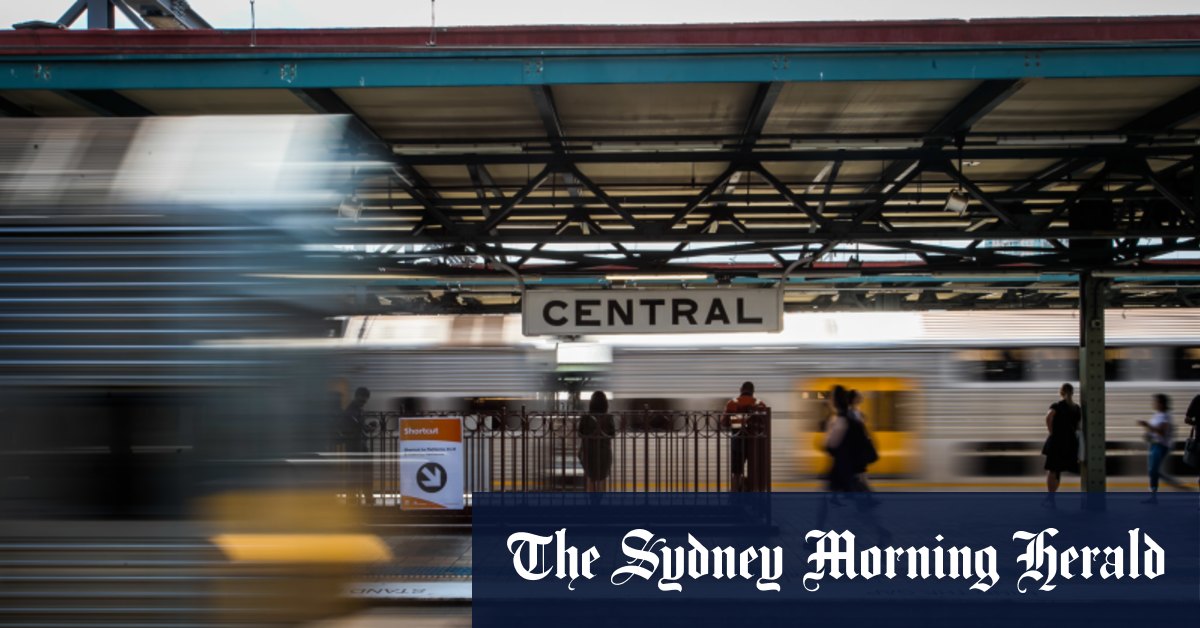
Rail users will be able to access the city's train network without tapping on or off for three weeks, starting on Saturday.

Rail users will be able to access the city’s train network without tapping on or off for three weeks, starting on Saturday.Credit:anna kucera

While passengers could run the risk of a fine or caution if they do not tap on and off, the union has banned its members from issuing fines or cautions until September 6 as well.

The industrial action is planned for a three-week period, which Sydney Trains management warned could cost the state up to $10 million in lost revenue.

“Tapping on and tapping off ensures commuters are charged the correct fare, and can access Opal benefits, including daily and weekly travel caps,” chief executive Matt Longland said.

The RTBU and the state government are at loggerheads over NSW’s new intercity train fleet, which the union says is unsafe.

Two ministers met with union leaders on Thursday night and agreed to provide a deed next week guaranteeing the government would make modifications to the trains.

The union vowed to continue with industrial action until it receives a deed satisfying the demands of its members for safety modifications to the guards’ compartments.

Unless a deal can be struck, commuters are likely to face major disruptions on the T8 Airport and South, T3 Bankstown and Southern Highlands lines next Wednesday with another six-hour work stoppage planned.

With Matt O’Sullivan

Categories
Australia

At NSW Parliament, the century-old Bear Pit nickname remains

It was more than a century ago that the then all-male NSW parliament first became known as the Bear Pit. So aggressive and unruly was the behavior of MPs on the floor of parliament in the early 1900s that the lower house could have been a blood-sport arena hosting bear-baiting.

Disturbingly, little has changed in Macquarie Street. The Bear Pit nickname remains and so does a toxic culture.

NSW Parliament House is the country's oldest parliament.

NSW Parliament House is the country’s oldest parliament.Credit:louise kennerley

The first woman was elected to Australia’s oldest parliament in 1925, but still it has not shaken its moniker. Perhaps it is little wonder, then, that the bad behavior that has long been tolerated in the chamber has spilled outside into the halls of power.

Former sex discrimination commissioner Elizabeth Broderick’s long-awaited report into the workplace culture in NSW parliament is a shocking indictment on the people who seek to represent us and the institution where laws are made.

NSW parliament is still a male-dominated workplace, where sexual harassment is rife and people are fearful to speak up in case they lose their job, Broderick says. Three men and two women disclosed to her de ella review their experiences of attempted or actual assault and almost half of sexual harassment incidents in the past five years were carried out by elected members of parliament.

A series of anonymous first-person accounts makes for uncomfortable reading. One described the parliamentary precinct as feeling “like the 1970s”, with “old rich white men employing these beautiful young women in their 20s. People would come to the office and joke ‘[this member] always employs the lookers’ ”.

loading

Another said: “MPs make lewd comments, especially at drinks. It’s a bit of a boys’ club, there’s sexting in the Parliament.” And this: “It’s a completely predatory environment. People use their position to influence and manipulate young adults to get what they want. It’s the nature of the relationship in those offices, I saw it happen in my office.”

Broderick’s report, which was based on the response of almost 500 people, found that most people who took part identified the “unequal distribution of power”. Women are still grossly underrepresented.

Categories
Australia

Education ministers are in unison on fixing the teacher shortage crisis — but is that enough for a plan to materialize?

It’s pretty hard to find anyone who seems to be loving their job at the moment.

A pandemic in its third year, a community desperate to move on and a virus that has no regard for the state of the world that existed before it started killing people.

Add to that the perilous state of the economy with prices up, interest rates up, workloads up, pretty much everything up — except for wages.

It’s perhaps unsurprising that the teaching workforce would be no different — tired, burnt out and feeling underpaid and undervalued.

.

Categories
Australia

Fixing weekend discharge key to improving capacity at South Australia’s hospitals

A senior doctor at Adelaide’s biggest hospital says the health system is under “siege” and pinpoints Mondays as the busiest day.

SA’s struggling health system was again in focus this week due to the death of a 47-year-old man while he waited for an ambulance in suburban Adelaide on Monday.

Problems around ramped ambulances, overcrowded emergency departments and full inpatient hospital beds, trouble doctors and nurses on any day of the week.

But each Monday a perfect storm of complications aligns, cranking up pressure on health staff and patients.

So, what makes Monday the busiest day in SA’s hospitals, and what can be done about it?

Headshot of Dr Peter Subramaniam at an Adelaide hospital
Dr Peter Subramaniam says having fewer doctors working and community services unavailable on weekends leads to lower discharge rates.(ABC News: Ethan Rix)

A weekend hangover

As medical lead of the surgery program at the Royal Adelaide Hospital and chair of the Australian Medical Association Council, Peter Subramaniam knows South Australia’s health system well.

He says it is under “siege”.

“The system is under pressure and there is a significant demand and our capacity to meet that demand is not working,” Dr Subramaniam said.

The qualified vascular surgeon pinpointed Mondays as the busiest days for hospitals.

“You can see from the data we have that ours are lower on the weekend compared to weekdays,” he discharge said.

“So that contributes to the log jam that occurs on a Monday.”

A masked nurse adjusts their blue plastic glove in an operation room.
Experts say more resources are needed every day of the week, including weekends.(Rawpixel: Chanikarn Thongsupa)

Dr Subramaniam said fewer doctors working to patients over the weekend had an impact discharge.

“Most acute care hospitals operate on reduced staffing,” he said.

But that’s not the only thing bringing down discharge numbers.

“We rely heavily on community services to be available and accessible over weekends and often that’s difficult to organize,” Dr Subramaniam said.

“You might need a rehab bed or a step-down bed or a community nursing service to be able to manage the patient once they’re discharged.

“Once we’ve discharged the patients, they need to go somewhere.”

Elizabeth Dabars stands outside a hospital in Adelaide
Elizabeth Dabars says a criteria-led discharge policy was never fully implemented.(ABC News: Michael Clements)

monday blues

Chief executive of the Australian Nursing and Midwifery Association’s SA branch Elizabeth Dabars said the “absence of senior clinicians” on the weekend was driving up ramping times.

Professor Dabars wants to see nurses, allied health professionals and junior doctors able to discharge more acute patients under something called criteria-led discharge (CLD).

“It’s a win for the people wanting to go home and it’s a win for the broader community who would have better access to hospital beds,” the qualified nurse said.

CLD has been hotly debated for decades and was a policy directive issued by SA Health in 2019.

A car drives past an emergency department building
The state’s emergency departments have been under extreme pressure.(ABCNews)

Professor Dabars said it was never fully implemented.

“That has not really seriously been put in place and that is a blocker to people being discharged,” she said.

“It doesn’t actually make sense for it not to be enabled.”

But the former president of the South Australian Salaried Medical Officers Association, Dr David Pope, said the number of patients that would fit the CLD criteria was small.

“Item [CLD] works quite well in some areas but I defy anyone to go around and find patients sitting around in the hospital for want of a doctor to come in on a Monday morning,” Dr Pope said.

“That just doesn’t happen.”

Headshot of Doctor David Pope
David Pope says elective surgery admissions make Mondays busier than other days.(ABC News: Ethan Rix)

He said a crowded start to the week was a side effect of elective surgery.

“That worse effect on a Monday is purely a function of when elective surgery patients arrive,” he said.

The doctor said the idea that senior clinicians were unwilling to provide care on weekends was damaging to an already stretched workforce.

“Doctors are in the hospitals 24/7, so if there’s a need for a doctor to be in the hospital they will be there if they exist,” he said.

What will change?

The state government said it was looking to make criteria-led discharge “a regular part of hospital operations.”

.

Categories
Australia

Site of fatal Walhalla road accident set for safety upgrades

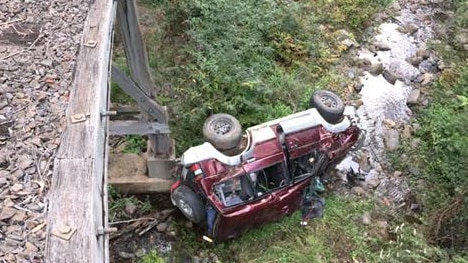
The site of a fatal car accident in Victoria’s east, where a 4WD carrying four teenagers plunged over a cliff, is set to be widened and have safety barriers installed.

The crash in June this year on Walhalla Road just outside the historic town of Walhalla, claimed the life of a 19-year-old passenger.

There have been at least two similar accidents at the corner — one a fortnight later, while the other in 2017 prompted community calls for safety barriers at the time — to no avail.

Local Mayor Michael Leaney, who runs a hotel in the town, said the upgrade was something the local community and visitors to the historic town would “welcome wholeheartedly.”

“This has been a long process to get to where we are but we are pleased that we’ve been able to get the solution of having barriers installed at what is a dangerous corner on the Walhalla Road,” he said.

Tire marks show where the car left the road.
A 19-year-old man died when the car he was traveling in left the road and plunged over a cliff in June.(ABC Gippsland: Kerrin Thomas)

“We hope with the installation of these barriers, and the other safety measures that have been installed at this location, that we won’t see any further incidents at this place, and there won’t be any further fatalities or serious injuries.”

Barriers to be installed in coming months

The planned upgrades come after Regional Roads Victoria and Victoria Police visited the site last month to investigate how safety could be improved.

Walhalla 2017 crash
Locals lobbied for safety barriers to be installed after an accident in 2017, to no avail.(Supplied: Michael Leaney)

“New signage has been installed following a recent safety audit and we plan to widen the road and install safety barriers to further improve safety,” Minister for Roads and Road Safety Ben Carroll said.

The new signage includes advice to drivers to reduce their speed to 25 km/h. Road-side foliage has also been trimmed.

Specialized safety barriers will be needed to suit the narrow section of road, with work to install them expected to start in coming months, following completion of detailed planning and site assessments.

Line marking and road resurfacing is also on the list of jobs.

Walhalla town sign
The remote hamlet of Walhalla is a popular spot for tourists.(ABC Gippsland: Kerrin Thomas)

Mr Leaney hoped it would be completed quickly.

“We hope that this will happen before the busy summer season, although there have already been a number of improvements at this corner,” he said.

“There’s been big warning signs installed, there is some road treatments that are going in as well at the same location.

“Certainly, people are more aware of the dangers of this corner and adding a barrier will just finalize the matter and hopefully, will make it safe for locals and visitors alike.”

.

Categories
Australia

Australia’s attorneys-general to ramp up action on coercive control

Australia’s attorneys-general have agreed to create a national plan to address coerce control as the government ramps up action to reduce domestic and family violence.

Coercive control refers to “the pattern of abusive behavior designed to create power and dominance over another person or persons”.

This can look like controlling what someone wears, who they see or their access to money, tracking their location, and can often lead to physical violence.

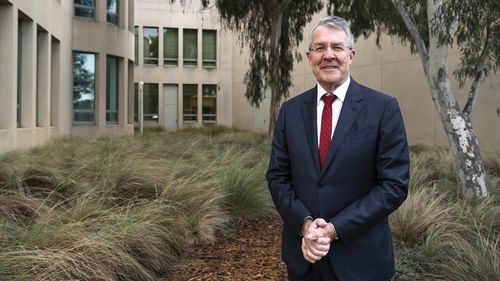
Attorney-General Mark Dreyfus.  Parliament House, Canberra.
Attorney-General Mark Dreyfus met with his state and territory counterparts to discuss coercive control. (Rhett Wyman)

State and territory attorneys-general met with their federal counterpart Mark Dreyfus on Friday to create a “national understanding” of coercive control which could eventually filter down to laws and legislation criminalizing the behaviour.

It comes after vast calls for legislative reform to coercive control laws in particular after the murder of Brisbane woman Hannah Clarke and her children by Clarke’s estranged husband.

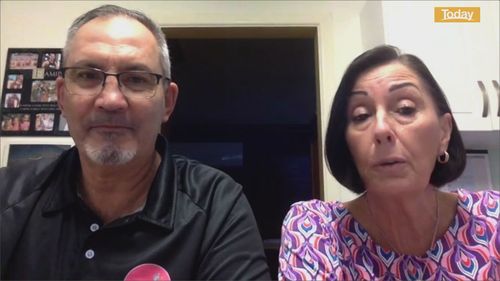
Clarke’s parents Sue and Lloyd told Today the national plan is a step in the right direction and is a “no brainer”.

“We have been hoping for this quite a long time for it to go national. For them to actually sit down and collaborate together and all states get onboard,” Mr Clarke said.

Ms Clarke added: “I am pleased to see the conversation is going on about it and people are talking about it. I am shocked people aren’t aware of what the flags are in a coercive relationship, I think we need a lot of education .”

Hannah Clarke's parents Sue and Lloyd speak on coercive control reform.
Hannah Clarke’s parents Sue and Lloyd speak on coercive control reform. (9News)
During the inquest into the murder of Hannah Clarke and her three children, it was revealed the young mum had approached police for help, fearing her estranged husband would kill her.
Hannah Clarke and her three children were murdered by her estranged husband. (9News)

The attorneys-general meeting resulted in an endorsement of a consultation draft of National Principles to Address Coercive Control, the first of its kind in Australia.

“We have agreed on a set of measures which are going to help keep women and children safer in Australia,” Dreyfus said.

“We think it will help to establish a set of national principles to help people better recognize the behavior when it occurs.

“The important thing is people understand when to recognize coercive control, even in relationships where there is no physical violence occurring, there can be a pattern of abusive behavior that is designed to dominate and control and can ultimately be very harmful.”

The draft includes eight principles and will identify a national approach to:

  • What coercive control is and its impacts
  • The importance of coordinated approaches when responding to incidents of coercive control and educating the community
  • “Concerns” about the misidentification of victim-survivors as perpetrators of family and domestic violence, in particular for First Nations women

“They deal with different aspects of this problem they deal with how to identify coercive control, how to listen to victim-survivors, and what steps should be taken to lower the incidence of this problem,” Dreyfus said.

The national principles are set to be approved by 2023.

The group also agreed to review the definition of consent and work towards updating legislation in relation to stealthing, which is when a person removes a condom without the other person’s consent.

Categories
Australia

John Howard reflects on the Liberals defeat at the Federal Election under Scott Morrison

Former prime minister John Howard has weighed in on what went wrong for the Liberal Party in its 2022 Federal Election campaign that ended with the Coalition losing power after nine years.

In his first interview since the May 21 defeat, Mr Howard – who led the Liberals to four election victories – told The Australian the party was badly hurt by its failure to properly outline its vision for the nation.

“The absence of a program for the future… the absence of some kind of manifesto, hurt us very badly,” Mr Howard told the publication.

“There’s a shelf-life to argue that we can manage things better… you have got to keep arguing for something.”

Stream more on politics with Flash. 25+ news channels in 1 place. New to Flash? Try 1 month free. Offer ends October 31, 2022

Stream more on politics with Flash. 25+ news channels in 1 place. New to Flash? Try 1 month free. Offer ends October 31, 2022

The Liberals under Scott Morrison lost 18 seats at the election, reducing the Coalition to 58 seats overall. The Nationals held all their seats.

Labor took 10 seats from the Liberals, the Greens picked up two and Teal Independents won the remaining six seats.

Mr Howard, whose latest book A Sense of Balance is out on August 17, revealed another one of the mistakes the Liberals made was “to take its natural constituency for granted”.

“One of the reasons we suffered more is the Teals did offer, as it happened, something that was attractive to people who were unenthusiastic about the Liberal Party but really couldn’t bring themselves to vote Labor,” he said.

Mr Howard’s remarks come as the Liberal Party undertakes a review into its Federal Election defeat.

The review – led by former Liberal Party director Brian Loughnane and opposition frontbencher Jane Hume – will include responses to the success of teal independents as well as the Coalition’s climate change policies.

Also under microscope will be how the Liberals lost six out of nine seats across the top 15 Chinese-Australian electorates.

The Australian reported this week Opposition Leader Peter Dutton has been advised to scale back the Coalition’s attacks on Beijing and adopt a more subtle approach in a bid to win back Chinese-Australian voters.

The revelation came as recent Australian Bureau of Statistics census data overlaid with election results found the party suffered above average swings against it in electorates with high numbers of Chinese-Australian voters.

Post-polling suggested the Morrison government’s anti-China rhetoric alienated Chinese-Australian voters who would otherwise prefer the Coalition on economic matters.

Former treasurer Josh Frydenberg lost his seat of Kooyong – which has Chinese-Australian voter base of 19 per cent- to teal independent Monique Ryan following his crackdown on Chinese foreign investment in response to Beijing’s sanctions on Australian imports.

In the seat of Bennelong, a 13 per cent swing against the Liberal Party was recorded in polling booths in Eastwood, where 38 per cent of residents have Chinese heritage.

The Coalition also lost the Victorian seat of Chisholm, which boasts a Chinese-Australian voter base of 28.9 per cent, while it narrowly retained the seat of Menzies – where 26.7 per cent of voters are of Chinese heritage – by just 1,377 votes.

Mr Dutton said his criticisms of China were not about its people – it was about the country’s government.

“If you look back at my transcripts, I’ve been at pains to talk about China under President Xi. President Xi has appointed himself leader for life,” he told reporters on Wednesday.

“It’s like our criticism about Russia under President Putin – our criticism is not of the Russian people. When we talk about problems that we have with other countries, our comments aren’t an attack on those people, it’s on that dictatorship.

“I mean, our attacks on the North Korean dictator, when you talk about that, it’s not an attack on the North Korean people and talk of that is just absurd.”

.

Categories
Australia

Peter Dutton ‘very strongly supports’ Richard Marles’ language used about nuclear submarines as he warns of Taiwan invasion

Opposition Leader Peter Dutton has stressed the importance of acquiring nuclear-powered submarines as soon as possible after the Chinese Ambassador to Australia delivered his first National Press Club speech this week.

Xiao Qian – who became Beijing’s top diplomat in Canberra this year – had defended China’s actions when it responded with live military drills in Taiwan following the historic visit from United States House Speaker Nancy Pelosi last week.

He warned Australia to handle the messaging around Taiwan “with caution” and added there was “no room for compromise” as China sees the island as its own territory.

Mr Xiao also threatened Beijing would take Taipei with force and would be “ready to use all necessary measures” to restore the liberal democracy “to the motherland”.

Stream more Australian news with Flash. 25+ news channels in 1 place. New to Flash? Try 1 month free. Offer ends October 31, 2022

Mr Dutton said he was not “shocked” by the remarks from the ambassador as the messaging was similar to what was delivered by Chinese President Xi Jinping.

But he agreed it was alarming to hear the comments being made on Australian shores before he flagged it would be no “surprise” if China invaded the island.

“I don’t think anyone would be surprised if there was an incursion into Taiwan,” he told ABC’s 7:30 on Thursday.

The Opposition Leader then stressed the importance of having a “deterrence in place”, in the form of nuclear submarines, to ward off a potential future attack.

“China is clear that their center of humiliation doesn’t come to an end until there is a re-unification, in their words, so it is important for us to have deterrence in place because any adversary should know that a strike on Australia would ‘t be accepted,” he said.

“And there would be retaliation and also weed need to be close and fight with our allies, not just America, but India and Japan.”

While Australia’s national security would be secure under the AUKUS alliance with the US and United Kingdom for the next five to six decades, he warned the nation needed nuclear-powered submarines to plug the capability gap.

He also came to the support of Defense Minister Richard Marles who insisted this week it is the government’s “top priority” to fill the gap left by the Collins fleet of boats.

“Yes, I very strongly support Richard Marles,” he said.

“He is adopting similar language that I used not too long ago to say if we can get those submarines off the production line, then we should certainly strongly believe that that is possible and that’s the course of action that the government should be pursuing. “

Mr Dutton also welcomed the response from Mr Marles, Foreign Minister Penny Wong and Prime Minister Anthony Albanese who have all called for a de-escalation of tensions in the Taiwan region but believes the messaging can be stronger.

“I believe very strongly that we are better to speak frankly about China’s intent – they’re clear about it themselves, as we have discussed, and it is important for Australians to hear that message,” he said.

Mr Marles is set to make a decision by March 2023 on whether Australia will go with acquiring eight US Virginia-class or British Astute-class built submarines.

The government is expected to decide then whether Australia will need interim, conventionally powered submarines before the AUKUS vessels are ready to hit the water, which may not be for another 20 years around the 2040s.

Mr Marles said this week he would like to see the new boats constructed in Australia as part of a beefing up of its domestic defense manufacturing ability.

.