Singaporean: Indonesia wants Australia’s acquisition of nuclear-propelled submarines to be closely monitored by the United Nations watchdog, saying it is taking “a very serious interest” because its waters will be passed by such vessels.
Along with south-east Asian neighbor Malaysia, Indonesia has expressed consternation about Australia’s submarine ambitions since the AUKUS deal was unveiled last September.
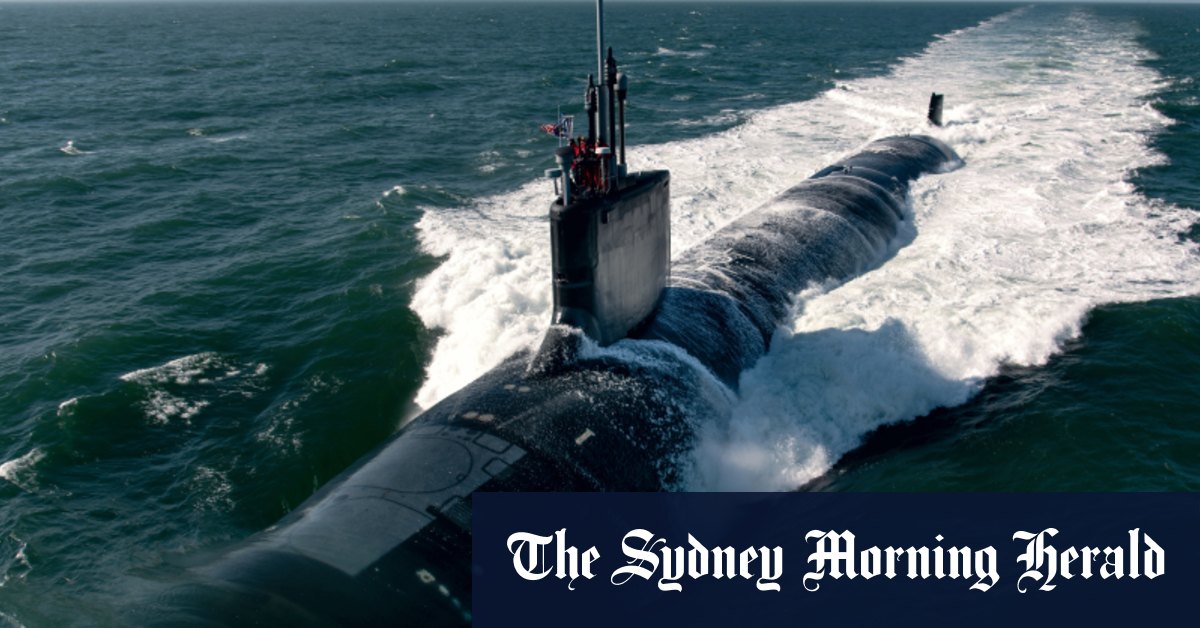
A US Virginia class submarine, which could form the basis of Australia’s planned nuclear-powered submarine fleet.Credit:U.S. Navy
Now, Jakarta has raised major concerns about the sharing of nuclear technology for military purposes in a working paper for this week’s UN nuclear non-proliferation review conference in New York, highlighting safety issues with the transportation and use of highly enriched uranium and the risk of it being fun to weapons programs.
Indonesia’s proposal for stricter regulations around the sharing of nuclear material to fuel submarines is being supported by Malaysia, according to Tri Tharyat, the director general for multilateral cooperation at Indonesia’s foreign ministry.
“As an archipelagic country, whether we like it or not, [Indonesia] will definitely be passed by nuclear-powered submarines and therefore we have a very serious interest in getting our proposals done,” he said.
“The bottom line is the use of nuclear energy for submarines should be closely monitored by IAEA [International Atomic Energy Agency]. We hope through our working paper there will be attention and steps from the IAEA for an inspection, preventing proliferation from taking place.”
Indonesia’s submission to the conference was made in the same week that President Joko Widodo met with China leader Xi Jinping.
Beijing has made no secret of its opposition to Australia buying nuclear-powered submarines from the United States or United Kingdom under AUKUS, claiming it would be a dangerous precedent and a violation of the Treaty on the Non-Proliferation of Nuclear Weapons, known as the NPT.
While not mentioning Australia or AUKUS in its working paper, Indonesia also argued sharing of nuclear technology and materials for military purposes may be counter to the spirit and objective of the NPT. Without proper safeguards in place, such arrangements “could be exploited to provide a shield for diversion of that material to [a] nuclear weapons program,” it warned.
You’re not quitting your job — but you are quitting going above and beyond.
It’s a new trend called “quiet quitting” and it seems Aussies are increasingly getting onboard with the mindset.
Sick of letting work creep into their lives — from not taking lunch breaks to working unpaid overtime and keeping abreast of emails and Teams messages after hours — workers are implementing the revolutionary concept of quiet quitting.
They are drawing boundaries and no longer letting work intrude on their “life” space.
“You’re not outright quitting your job but you’re quitting the idea of going above and beyond,” TikTokker @zkchillin explained in a popular video on the topic.
“You’re still performing your duties but you’re no longer subscribing to the hustle culture mentality that work has to be your life — the reality is, it’s not and your worth as a person is not defined by your labour.”
As we have embraced technology, so too have we allowed work to creep into our free-time space.
And “quiet quitters” say following their lead is crucial in avoiding burnout and enjoying and appreciating life outside of the office.
One quiet quitter posted on social media: “When you do it (quiet quitting) you realize nothing at work matters and suddenly all the stress vanishes.”
Another said: “I quiet quit six months ago and guess what, same pay, same recognition, same everything but less stress.”
And another wrote: “I did this when I asked for a raise and they told me no, but then started hiring people with higher pay and less responsibilities.”
However, while the idea of quiet quitting may sound appealing, some experts have warned to proceed with caution.
LinkedIn’s Charlotte Davies said that by the time you reach the stage of quiet quitting, you may already be suffering from burnout — and more drastic measures may be needed to avoid a mental health meltdown.
A user on Reddit. Credit: supplied
Career trends expert at Glassdoor, Jill Cotton, said by taking up the trend, you could feel more powerless.
“Quietly quitting is often a sign that it’s time to move on from your role,” she said.
“If you’re reducing your effort to the bare minimum needed to complete tasks, your heart is probably no longer in the job or the company.”
Others have warned that by quiet quitting, you are likely shutting yourself off from promotions and pay rises.
But it hasn’t stopped the movement gaining momentum Down Under.
A discussion on Reddit shows many Aussie are taking up the trend.
“I stepped down from a management position to a lower one with fewer hours to study,” one said.
“Went from putting in 110 per cent into everything I did to the absolute bare minimum required to keep me happy and employed.”
Two clinical psychologists have accused Community Corrections Tasmania of incorrectly applying a sexual offender risk assessment tool to determine whether or not a Nepalese man is likely to reoffend — and say the tool has likely been misused in other cases.
Key points:
A man caught masturbating in his car at a public reserve was reported by council workers
The man, who moved to Australia in 2015, faces deportation if he’s placed on the sex offender’s register
The man’s lawyer is arguing the man has been placed into a category of offender that is beyond the level of offending
The man, who moved to Australia in 2015, faces being placed on the sex offenders register, which his lawyer says could lead to him being deported.
The 26-year-old Nepalese man was working as a food delivery driver in Hobart in 2021 when the offense occurred.
Hobart Magistrates Court heard earlier that on the day in question, the man had finished his early morning delivery shift and headed to Rosny Park.
Assuming no one was around, he began to masturbate in his car.
The court heard a council worker then approached the car to let the man know he could not park there. When he knocked on the window he realized the man was masturbating and the council worker told him to leave.
The man immediately drove away — he was later charged with one count of prohibited behavior to which he pleaded guilty.
As part of the court case, Community Corrections Tasmania (CCT) was asked to undertake a risk assessment to determine whether or not he was at risk of reoffending, which could then be used by the court to determine whether or not he should be placed on the sex offenders register.
CCT found he had a medium risk of reoffending.
That finding was challenged by the man’s lawyer, Dinesh Loganathan.
CCT ‘applying tool incorrectly’
Mr Loganathan commissioned reports from two separate clinical psychologists — Dr Grant Blake and Dr Emma Collins — who both refuted CCT’s assessment, finding the man had a very low-risk of reoffending.
Dr Blake even described the man’s risk of future offending as “far-fetched” and “fanciful”.
In court on Monday, Mr Loganathan told Magistrate Andrew McKee that despite the reports, CCT would not shift its position.
“We have two certified trained clinical psychologists who have provided a report to the court that Static-99R [the risk assessment tool] should have never been administered to [the man] and the administration was flawed,” he told the court.
“We have Community Corrections who have provided a recommendation that [he is at] medium risk of offending.
“On the other hand, there’s Dr Blake, who quite forcefully provides a view that Community Corrections has been wrongly administrating [assessments] for however long they’ve been doing it.”
Magistrate McKee then questioned the claim that CCT had “wrongly” administered assessments beyond the current case, to which Mr Loganathan responded by reading out some of Dr Blake’s report.
“Community Corrections must be informed they are continuing to use risk assessment tools incorrectly,” he read to the court.
“It is unethical, unacceptable practice. It cannot continue.”
Mr Loganathan said Dr Blake’s position was that the risk assessment should never have been applied to the man and CCT “continue to use it for people within Category B”.
The court heard Dr Collins’s report also stated it was wrong to use Static-99R to assess Category B offenders.
Tool developed by Canadian, UK researchers
According to the manual for Static-99R, Category B offenses include “sexting”, “consenting sex in public places” and “indecent behavior without a sexual motive”.
Static-99R was developed by researchers in Canada and the United Kingdom and is meant to apply in “cases where an actual sex offense has occurred with an identifiable victim”.
Community Corrections representative Emily Drysdale, who did not undertake the assessment, said it had been applied “based on the fact there had been sexual offending.”
“My communication with senior management is that it was correctly applied,” she told the court.
She said CCT did not have a position on whether or not the man should be placed on the register and that was up to the court.
When Magistrate McKee asked her if she accepted that the assessment had been applied incorrectly, Ms Drysdale deferred to her manager’s advice.
“In their understanding it was applied correctly,” she told the court.
Magistrate McKee said Community Corrections had assessed the man was at a “higher risk than a routine sample of offenders”.
“[Based on that] I would need to give significant consideration to the register,” he said.
When asked about what CCT thought of the psychologists’ opinions that the assessment tool was being used incorrectly, Ms Drysdale said she had passed on their feedback.
“I have submitted that to that particular manager and haven’t received a particularly favorable response,” she told the court.
While Ms Drysdale did not say that she was challenging the psychologists’ reports, Magistrate McKee said that by standing by CCT’s assertion it had applied the risk assessment tool correctly, she effectively was.
“Your manager has told you ‘we were right’, therefore, the only inference is that Dr Blake and Dr Collins are incorrect and I’ve got to sort it out,” he said.
The case has been adjourned and will potentially lead to a disputed facts hearing.
Police have charged a man over a spate over terrifying sex attacks in Kalgoorlie in the early hours of Monday morning.
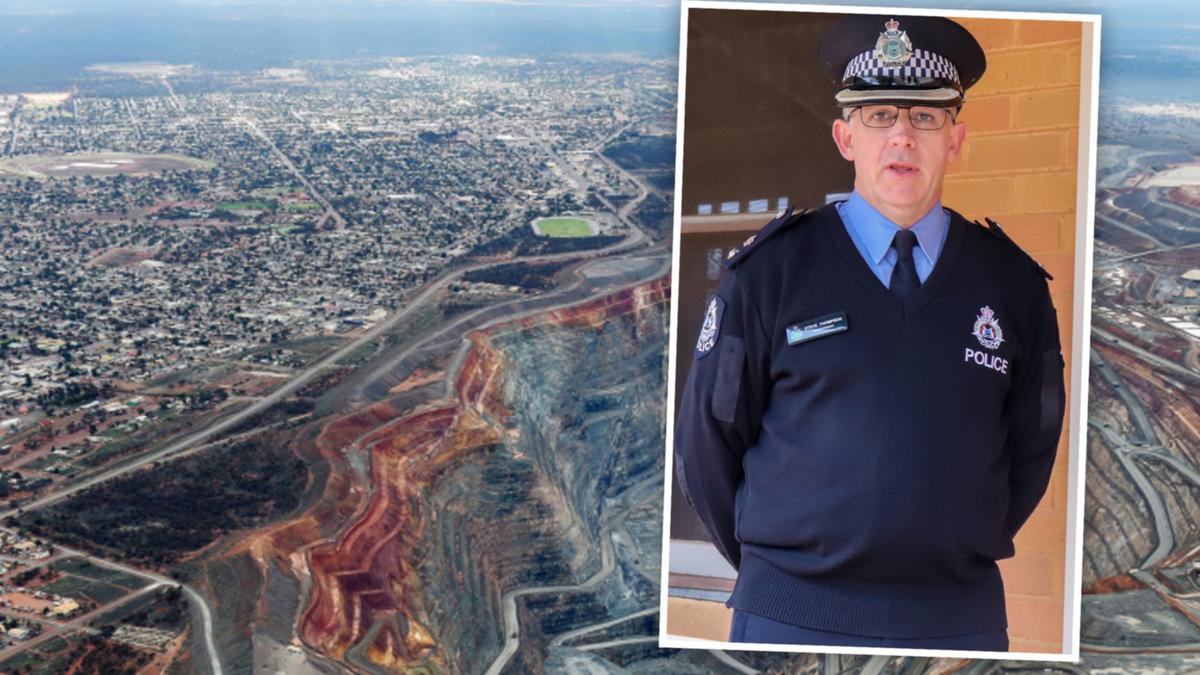
In the space of two-and-a-half hours, between 1am and 3.30am, the man allegedly forced entry into three homes and at each property sexually or indecently assaulted an adult female. Police say he also unsuccessfully tried to gain entry to a fourth home.
All incidents were in the south Kalgoorlie-Boulder area. None of the homes or victims are linked.
On Monday, Superintendent Steve Thompson said as a result of police inquiries they arrested a man shortly before 7am.
“Our thoughts are with the victims of these incidents, which would have been a significant and traumatic event, and they’ve been provided with a medical and support that is appropriate,” Supt Thompson said.
Supt Thompson said the victims were aged between 30 and 70, with two of the women the only occupants of the houses at the time of the attacks but there was another occupant present during the incident in the third home.
He said entry was forced to the homes.
“It wasn’t a matter of an open door, there was force used,” he alleged.
Supt Thompson said police had responded quickly when the alarm was raised.
“We all come together, when it’s significant crimes such as this, we throw all available resources and we use all our capabilities. And, it’s very pleasing for me that within a matter of hours we were able to make an arrest,” he said.
“We’re fortunate to live in this State that incidents such as this . . . are very rare. And when they do occur, they are our highest priority and we throw all our resources at the investigation.”
A 30-year-old man from the Warburton community has been charged with two counts of aggravated sexual penetration without consent in the course of a home burglary, one count of indecent assault and three counts of home burglary.
He was refused bail and is due to appear in Kalgoorlie Magistrates Court on Tuesday.
Almost a Sydney Harbour’s worth of water committed to Australia’s largest river system can’t be delivered by a 2024 deadline, a new report has been found, despite a promise from the now-Prime Minister his government would deliver the water.
Key points:
A promise to return 450 gigalitres of water each year to the Murray-Darling Basin won’t be met
It could cost almost $11 billion to deliver the commitment if the 2024 deadline was removed
The statutory report found not enough water has been saved to date to meet the commitment
It could cost taxpayers almost $11 billion to deliver 450 gigalitres (GL) of water for the environment across the Murray-Darling system, according to the latest statutory review required under the Water Act.
“Putting aside program and timing limitations, the estimated cost to recover the full 450 GL through efficiency measures is between $3.4 billion and $10.8 billion,” the second review of the Water for the Environment Special Account (WESA) found.
“It is not possible to reach the 450 GL target through the current efficiency measures program … even if the WESA’s time and budget limits were removed.”
Less than $60 million of the $1.7 billion WESA fund for water-saving projects had been spent as of June last year.
WESA reviewers said not enough water had been recovered to date, and requirements for where water savings could be found were too limiting.
A 2018 agreement between the Commonwealth and basin state ministers set strict criteria about how the 450 GL could be recovered, to ensure no negative social or economic impact on basin communities.
It was to be recovered for the environment by what’s known as efficiency projects – those that save water by changing the way it is used.
By June 2021, just 2 GL of water had been recovered toward the 450 GL target.
Despite several warnings the 450 GL target would not be met, Anthony Albanese doubled down on the water promise during the election campaign.
“Labor will deliver on the final 450 gigalitres of water for the environment that Scott Morrison and Barnaby Joyce failed to deliver,” Mr Albanese announced in April, in Adelaide.
Earlier this month, Water Minister Tanya Plibersek said it would be “next to impossible” to deliver the 450 GL.
In Question Time last week, she also taunted the Opposition for delivering just 2 GL while in office.
Tanya Plibersek took aim at the Coalition’s management of the Murray-Darling in Question Time on Tuesday. (ABC News: Nick Haggarty)
Plibersek says former government ‘ran down the clock’ on water promise
The second WESA review was delivered to the former Water Minister Keith Pitt late last year, but not tabled in federal parliament until today.
“It’s disappointing this report was never released – but not surprising,” Ms Plibersek said.
“The previous government had no intention of delivering on the Murray-Darling Basin Plan, they just didn’t have the guts to admit that before the election.
“The failure to deliver on the plan wasn’t due to a lack of money, it was a lack of will.”
Ms Plibersek accused the Coalition of “running down the clock” on the fund for water-saving projects.
“They were deliberately hoping to leave it unspent… the report shows that under the current policy settings, there’s virtually no way that the money can be spent in the remaining time frame,” she said.
Promised water for the Murray Darling Basin won’t be delivered by its 2024 deadline.(Supplied: Madman)
Last year some Nationals senators and MPs unsuccessfully attempted to change the law, to scrap the 450 GL commitment, which was made in return for South Australia’s support for the 2012 Murray-Darling Basin Plan.
Earlier this week the Victorian Farmers’ Federation issued a statement calling on the federal government to “come clean on how it expects to recover the 450 GL and avoid negative impacts on our communities.”
“Where is the openness and integrity the new government promised us?” Victorian Farmers Federation spokesman Andrew Leahy said.
The 450 GL target is one component of the Murray-Darling Basin Plan.
Over the past decade, more than 2,100 gigalitres has been re-allocated towards a 2,750 gigalitre environmental water target.
That water has mostly come from infrastructure upgrades and farming.
Lawyers for a Riverland man in possession of a white supremacy manifesto authored by the Christchurch mass shooter have told a court his multicultural community have “socially condemned” him.
Key points:
Aidhan Kenneth Cooling has pleaded guilty to possessing extremist material
Police found the Christchurch massacre manifesto as well as a white supremacist manifesto at his Loxton home
His lawyer says Cooling has disavowed right-wing ideologies
Aidhan Kenneth Cooling, 28, will be sentenced in the Adelaide Magistrates Court next month after pleading guilty to possessing extremist material.
Prosecutor Jillian Lieschke today told Magistrate John Wells that police attended his Loxton property to check on firearms when they noticed books about German expansion and Adolf Hitler on a shelf.
“The accused police told his ideology was right-wing regarding race, and he was anti-government in relation to COVID directions,” she said.
She told the court that Cooling told police he met an elderly German man through his church, who left him possessions, including the books, when he died.
The court heard Cooling told police he “got bored” reading the Christchurch massacre manifesto and could not remember watching the video.
Ms Lieschke said Cooling also had Nazi memorabilia, literature and items with the Swastika on it, including a flag and a shirt.
“Right-wing, supremacist messages and material were located on his devices,” she said.
Manifestos incite hatred
The court heard Cooling also had a white supremacy manifesto, which has been used to influence attacks all over the world, including the Christchurch mass shooting in 2019.
Ms Lieschke said it was also used to inspire an attack on a 2011 youth summer camp in Norway, on a Pittsburgh synagogue in 2018 and helped influence the 2022 Buffalo supermarket shooting in the US.
The four attacks have claimed a combined 155 lives.
Magistrates John Wells says possessing extremist material is a serious offence.(ABC News: Che Chorley)
Mr Wells said Cooling had not been charged with anything other than possessing the documents, but understood the background was important for sentencing.
“The point you’re making is that this is not trivial, and the manifesto has been used by very dangerous and violent men and I should not treat it as a bit of political theatre,” he said.
“It is very serious and can be used as a justification for catastrophic violence.”
Ms Lieschke agreed, saying other members of the community need to be deterred from possessing these manifestos which incite hatred and violence.
Cooling disavows right-wing ideas
Jason Evitats, for Cooling, told the court his client had matured since his arrest and had experienced “social condemnation” by the Riverland community, which is multicultural.
“He accepts, without reservation, that the material found on his devices was completely unacceptable,” he said.
“He now entirely disavows the ideologies, the philosophies, the thought processes, the beliefs, images and the intention behind the memes that were found.
“He has learned his lesson … he’s experienced an arrest, he’s experienced social condemnation – it’s a small community, it’s multiracial.”
Mr Wells told Cooling he would not be jailed for the offence, but would learn what penalty he would receive next month.
Aboriginal Senator Jacinta Nampijinpa Price has taken a swipe at Lidia Thorpe after she made a Black Power salute and labeled the Queen a “coloniser” in the Senate.
The Greens Senator was preparing to take the parliamentary oath on Monday when she walked to the central table of the chamber with her right fist raised in the air.
She then proceeded to reluctantly recite and tweak the oath of allegiance, which sitting members must take prior to serving the Queen.
“I sovereign, Lidia Thorpe, do solemnly and sincerely affirm and declare that I will be faithful, and I bear true allegiance to the colonizing Her Majesty Queen Elizabeth II,” she said, drawing uproar from the Senate.
Stream your news live & on demand with Flash for $8/month and no lock in contracts. New to Flash? Try 1 month free. Offer ends October 31, 2022
Senator Price suggested ministers who do not take the oath “then simply don’t take the job” before criticizing the “immaturity” of Senator Thorpe.
“There is definitely a level of immaturity about that kind of behaviour,” she said, according to The Australian.
“If you want to be a protester, then this isn’t the place for it. Go ahead and join the resistance, but we are there to be legislators for the benefit of our nation.
“I think it is just disruptive behaviour. The majority of us in the Senate today…just saw it as contemporary behaviour.”
During the series of events on Monday, one person could be heard telling the outspoken politician she was “not a Senator if you don’t do it properly.”
Senator Thorpe responded by saying “none of us like it.”
Senate President Sue Lines then interjected and urged Senator Thorpe to “recite the oath as printed on the card.”
She begrudgingly corrected herself the second time and was sworn into parliament.
“Sovereignty never ceded,” Senator Thorpe wrote to Twitter moments later, sharing a photo of herself performing the Black Salute.
Greens leader Adam Bandt showed support for his party member and retweeted the same image with the caption, “Always was. Always will be.”
Senator Pauline Hanson – who walked out of parliament during the Acknowledgment to Country last week – said Senator Thorpe did not take her position “seriously”.
“She’s filling a position she does not respect, to represent people she obviously despises, in an institution she does not recognize as being legitimate,” she told news.com.au.
“What we saw this morning was a stunning exercise in hypocrisy, made worse by her happily taking $211,000 a year from taxpayers for work she clearly does not intend to do.”
Senator Thorpe has previously stated her role as an Indigenous woman was to “infiltrate” the Senate.
A group of Pacific workers who breached their visa conditions are fighting to get them back, although advocates say it should never have reached this point.
Key points:
Under the PALM scheme, workers can only take jobs with approved employers
Officials are attempting to reinstate some of the 24 Pacific workers who are still eligible to work
Farmers say the highly skilled workers are essential for picking and planting
The 24 workers in Bundaberg “absconded” from the Pacific Australian Labor Mobility (PALM) scheme by getting jobs with a non-registered employer when working on the farm they were at dried up.
A spokesman for the Department of Employment and Workplace Relations (DEWR) said officials had met with the employees to discuss their individual cases, but solicitor Dana Levitt said they should have helped sooner.
She said the workers were brought to Australia by an approved employer but there were issues with pay and conditions.
“These workers were faced with overheads that they couldn’t meet because they weren’t getting sufficient work,” Ms Levitt said.
“Unable to make ends meet, these workers were very open and vulnerable to inducement from other employers who were not approved employers in the scheme.
“These workers went with that non-approved employer, fell foul of the program and their visa conditions, and have been trying to navigate their way back into the PALM scheme ever since.”
Reluctance to complain creates vulnerability
The PALM scheme allows Australian businesses to hire workers from nine Pacific Island countries and Timor-Leste for seasonal work or longer engagements of up to four years, under certain circumstances.
Approved employers must ensure the workers are well supported, and provide sufficient hours of work, a minimum standard of accommodation and the same workplace rights as Australian workers receive.
Last month, DEWR officials met with the workers, and they are now working with the Department of Home Affairs to re-engage those that are still eligible.
“These are matters the department takes seriously,” a spokesman said.
It is a condition of the visa that workers continue to be employed by their sponsor or another approved in the scheme, and not change employers unless approved by the federal government.
PALM scheme employees can access country liaison officers and a support phone line if they have issues with their employment, but Ms Levitt said there was reluctance to report issues to the same authority that they relied on for visas.
Advocates say workers are reluctant to complain to the same authority that approved their visas.(ABC Wide Bay: Johanna Marie)
“There’s a huge deterrent effect for workers to actually seek help through the right channels,” she said.
“There’s no distinction between the people that are going to sport you and the people that are going to help you.
“There needs to be … an independent body that workers can approach when they have issues related to their inability to make ends meet, or their desire to move to another approved employer.”
Worker shortage exacerbates issues
Traditionally, farmers have relied on seasonal backpacker labor for planting and harvest work, but since the pandemic, working holiday-makers are yet to return in the same numbers.
Bundaberg Fruit and Vegetable Growers chief executive Bree Grima said that it made it even more critical the Pacific workers were supported.
“If it wasn’t for them, we simply would not have been harvesting our crops or planting our crops either,” she said.
“We’ve had some brilliant numbers come into Queensland and into regional areas, a lot more than we’ve had before.
“So we need to make sure that the workers that are here, that they are keen to stay here, that they’ve got the support mechanisms to ensure that they’ve got that work available for them.”
She supported calls for independent and confidential advice, but said there was already a lot of support and protection built into the scheme.
“There’s a lot of work and time and effort that goes into becoming an approved employer, and there should be,” she said.
“It is a difficult process to go through but I do support that it does do a lot of background checks and ticks a lot of boxes.
“These workers, they are highly skilled, they’re putting a lot into the community, and we need to make sure that we’re looking after them in every aspect.”
The Solomon Islands government has ordered the country’s national broadcaster to self-censor its news and other paid programs and only allow content that portrays the nation’s government in a positive light.
Key points:
The Solomon Islands government is seizing financial and editorial control of the Pacific nation’s public broadcaster
The government says its censorship will protect the public from “misinformation and lies”
Local media and observers fear democracy will suffer as a result
Staff at Solomon Islands Broadcasting Corporation (SIBC)confirmed to the ABC that acting chairman of the board William Parairato met with them last Friday to outline the new requirements.
They include vetting news and talkback shows to ensure they did not create disunity.
Mr Parairato had earlier attended a meeting with the Prime Minister’s office, the SIBC journalists said.
Prime Minister Manasseh Sogavare has become increasingly critical of the public broadcaster, accusing SIBC of publishing stories that have not been verified or balanced with government responses.
Last month, SIBC was removed as a state-owned enterprise (SOE) and became fully funded by the government, raising concerns about the broadcaster’s independence.
The government defended the reclassification, saying it had a duty to protect its citizens from “lies and misinformation”.
It is unclear whether SIBC — which plays a vital role as a government watchdog — will be able to publish any news or statements from the opposition under the new regime.
Critics are concerned the new rules resemble media policies adopted by the Chinese Communist Party, and could essentially make SIBC a mouthpiece for the government.
Local reporters say the government has become less inclined to answer media questions since the country signed a security pact with China. (Photo by Yao Dawei/Xinhua via Getty)
Media Association of Solomon Islands president Georgina Kekea said there were growing fears the government would be influenced by its “new partner”, referring to the security pact recently signed between Solomon Islands and China.
“It really doesn’t come as a surprise,” she told the ABC.
“This is one of the things which we are fearful of for the past month or so now.
“We’ve been vocal on this issue, especially when it comes to freedom of the press and media doing its expected role.”
What impact will it have?
Honiara-based Melanesian News Network editor Dorothy Wickham said it was unclear how the development would play out.
Dorothy Wickham says she isn’t surprised by the move, given the government’s ongoing criticism of the media. (Supplied: Dorothy Wickham )
“We haven’t seen this happen before,” she said.
“If the opposition gets on SIBC and starts criticizing government policies, which every opposition does… would the government disallow SIBC to air that story or that interview? That is the question that we’re asking.”
Officials have denied taking full control of SIBC’s editorial policy, saying it just wants the broadcaster to be more responsible because it’s a government entity.
But University of South Pacific journalism professor Shailendra Singh said the government’s intentions were clear.
“There seems to be no doubt that the government is determined to take control of the national broadcaster, editorially and financially,” he told ABC’s The World Today.
“I don’t think there’s any way the government can be stopped.
“This latest move by the government, what it has done with the SIBC, is bringing it closer to media in a communist system than in a democracy.”
Press freedoms dwindling
Local media have been vocal about increased government secrecy, the closing of doors and controlled dissemination of information from the prime minister’s office.
Wickham said the media did not have issues with governments in the past, adding that since the security pact was signed with China, the government had been making life harder for the press.
“I don’t think this government actually restricts us, I think it’s controlling their information more than they used to,” Wickham told ABC’s The World.
“The government has been concerned that the negativity expressed by a lot of Solomon Islanders is affecting how the government is trying to roll out its policies.”
When China’s foreign minister toured the country in May, Solomon Islands local media boycotted a press conference because they were collectively only allowed to ask one question — to their own Foreign Minister.
They also struggled to obtain information about the timing of the visit and agreements being signed between the two countries.
Last month, the ABC was also shunned after being promised an interview with Mr Sogavare after his national independence day speech, in which he thanked China for being a “worthy partner” in the country’s development.
Instead, his minders escorted him to a nearby vehicle, with police blocking reporters from getting close to the Prime Minister.
Professor Singh warned that the country’s democracy would suffer as a result of less media freedom.
“Media is the last line of defence, so if the media are captured, who will sound the alarm? It’s happening right before our eyes. It’s a major, major concern,” he said.
The local police force blocked the ABC from speaking to the Prime Minister. (ABC News: Adilah Dolaiano )
‘A wake up call’
Kekea said SIBC staff should be able to do their jobs freely without fear and intimidation.
loading
But the best thing the media can do is uphold the principles of journalism, stressing that “we must do our jobs properly.”
“It’s a wake-up call for SIBC to really look at how they have gone over the years, how they format their programs, the quality control they have in place,” Kekea said.
“It’s really a wake up call for every one of us.”
She said the media landscape had changed over the years and standards had been dropping, but the government also needs to respect the role of journalist and be more open to requests for information.
The Prime Minister had repeatedly said he was available for questions and calls, but local media complained they were continuously left unanswered, she said.
“They do not have the courtesy to respond to our emails. Even if we want to have an exclusive it gets rejected,” Kekea said.
“So it’s time governments should also walk the talk when it comes to responding to the media when they ask questions.”
The ABC has contacted Solomon Islands’ Prime Minister’s office and SIBC for comment.
So much of the heat over how we manage the current COVID-19 wave is about mandatory masks, yet Australia has dropped the ball where it matters most right now – booster vaccination.
Australia led the world in two-dose uptake, reaching 96 per cent of people aged over 16 years. But we have stalled on boosters, where rates have sat about 70 per cent for weeks. For NDIS participants, 76 per cent have had a booster; for First Nations people, it’s just 54 per cent.
The number of Australians receiving booster shots has stalled. Credit:AP
We need to focus our attention on boosters. They sit at the top of a limited set of COVID-19 management tools. A booster markedly reduces a person’s risk of severe disease if they have it three months after a previous vaccine or infection. A study of more than 2 million Sydney residents during the first Omicron wave estimated that one hospitalization or death was prevented for every 192 people aged over 70 getting a third dose. In an Israeli study, a fourth dose lowered the rate of severe disease by a factor of three.
Your postcode should not determine your likelihood of having a vaccine that could greatly reduce your risk of hospitalization from COVID. Yet, that is what is occurring. Some of this will be explained by people’s recent infections delaying their booster. But the huge differences in geographic vaccination rates tell a familiar story of inequity.
Local council areas of Queensland and western Sydney dominate the lowest-ranked booster rates. Just 49 per cent of people in Queensland’s Central Highlands have had three or more doses. In Cumberland, western Sydney – which includes Greystanes, Merrylands, Guildford, Granville and Auburn – it’s 55 per cent. Contrast that with wealthy Mosman in Sydney at 83 per cent. This drops even more for First Nations individuals – in one very remote community in Queensland, only 31 per cent are boosted.
The take-up of booster vaccinations has been poorest in areas that most need the protection.Credit:Wayne Taylor
It is easy to get outraged about so-called “anti-vaxxer” hotspots when such areas have the lowest vaccination rates. But we need to pay attention to the areas where people face disadvantage, and not with outrage or stigmatisation, but with listening and constructive solutions.
As a resident of western Sydney for two decades, I know there are many communities with different reasons for not vaccinating.
Social research, backed up by conversations I’ve had with people in my local community, reveals an information gap on vaccination. There is a lack of clear, translated, actionable information about why boosters are needed now. We learn how misinformation fills voids created when accurate information flows too slowly. We learn of the challenges in getting transport to the clinic and other practical barriers that remain for some.