Categories
Australia

Trees and fungi are the ultimate friends with benefits

Take a walk in the bush, and you’ll find yourself immersed in a soundscape of chatter.

You might hear birds bantering to one another as they forage for food, or swarms of insects serenading potential partners.

But the quietest life forms are having some of the liveliest conversations.

.

Categories
Australia

Minister’s letter reveals details of allegations against opposition leader

Munz told News Corp: “I do not know how many people received this unsolicited and unwanted email, but when I got it, I rejected it out of hand.”

Guy told nervous MPs in the Liberal party room that the swift resignation of his top adviser would clear the decks and allow the Coalition to continue criticizing the government’s record on integrity, which the opposition was planning to make a central campaign issue before the November election.

Mitch Catlin.

Mitch Catlin.Credit:Tash Sorensen

However, some MPs expressed concern about the political impact of the revelations and in a meeting of Coalition MPs former leader Michael O’Brien spoke up about the importance of integrity.

Addressing the media on Tuesday morning, Guy said Catlin offered his resignation even though the contract was never signed, and he denied forwarding the email to the donor.

Credit:Matt Golding

Guy also committed to introducing a code of conduct for his advisers, which Dr Catherine Williams from the Center for Public Integrity previously flagged as “a gaping hole in Victoria’s integrity framework”.

“I value integrity,” Guy said. “We didn’t do this. We didn’t agree to this. Nothing was signed. There was nothing signed.

“We value integrity, which is why Mitch has resigned today despite signing and agreeing to nothing.”

Asked whether the proposed payments were linked to Catlin’s employment as his chief of staff, Guy said “of course that was part of the discussion”.

“But the point is that it was not considered transparent enough… and nothing was ever [acted] on,” he said. “Mitch and I believed it was better to have everyone employed through the [regular] budget, which is what it is today.”

The Age on Tuesday reported details of a proposed agreement for a donor, who rejected the proposal, to pay $8,333 a month to Catlin’s private marketing company, Catchy Media Marketing and Management, for services as a contractor described as “supporting business interests”.

“Hey MG. Attached is the proposed agreement between [the donor] and Catchy Media Marketing and Management,” Catlin wrote in an email, obtained by TheAge, to Guy’s private Hotmail address. “It’s as per the original email agreement between you and me. Can I leave you to forward onto him?”

Speaking under parliamentary privilege on Tuesday, which protects MPs from defamation action, Pearson claimed Guy and Catlin had conspired to subvert the state’s strict donation laws.

“[It was a] scheme designed to donate to the Liberals through sham contracts … This person cannot be trusted,” he said.

loading

“It’s up to the authorities to investigate this matter and do their job.”

In addition to IBAC, the government asked Victoria Police, the Victorian Electoral Commission, the Victorian Ombudsman and the Australian Federal Police to look into the matter.

Guy said the government’s request for authorities to investigate the matter was a “desperate attempt from a tired, corrupt and arrogant government to distract from its own integrity failings”.

He said he would fully co-operate with any investigation and “will not waste taxpayer money to block the work of integrity agencies and cover-up the truth. Unlike Daniel Andrews, I will increase, not cut, the funding and powers of the ombudsman and the IBAC.”

In Pearson’s letter to Redlich, he asks that IBAC consider whether Guy and Catlin’s proposal could have constituted corruption as outlined in the IBAC Act of 2011 if it:

  • Adversely affects the honest performance of the function of a public officer;
  • constitutes or involves the dishonest performance of functions as a public officer;
  • Constitutes or involves a public officer knowingly or recklessly breaching public trust;
  • Constitutes a conspiracy or attempt to engage in such conduct

Further, Pearson wrote that the proposal may have breached the Electoral Act of 2002, which prohibits “entering into” a scheme to circumvent donation laws.

The Victorian Electoral Commission posted on social media on Tuesday that it was “aware of recent issues raised regarding political donations being potentially disguised as alternate payments or funding to political entities”. It did not name any individual MPs or staff.

“We take the regulation of political donations very seriously and have commenced preliminary inquiries into these issues. In the lead-up to state election, we’ll continue to monitor and follow up on activities that may constitute an offense against the Electoral Act, including where a person appears to have entered into a scheme to avoid donation disclosure and reporting requirements.”

loading

Integrity experts told The Age that if the proposed contract was acted upon and was determined to be a donation, it could breach the state’s $4,210 cap on donations.

Former opposition leader Michael O’Brien, an ex-barrister, said during the meeting of Liberal MPs on Tuesday that opposition MPs and staff often took pay cuts to be involved in politics because it was a service to the public.

On Tuesday afternoon, O’Brien tweeted: “Sick of dodgy politics? So am I. It’s why I’ll fight for more power and more funding for our anti-corruption watchdogs.”

Coalition MPs expressed nervousness about the potential political damage that could be caused by the episode. In particular, they were worried that Guy was susceptible to attacks on political integrity because of the “lobster with a mobster” dinner, where he dined with an alleged mafia boss, and scandals as a planning minister in the Baillieu-Napthine government.

Federal Liberals were also worried if Guy could withstand any further revelations about his involvement in the proposed arrangement with Catlin.

The Morning Edition newsletter is our guide to the day’s most important and interesting stories, analysis and insights. Sign up here.

Categories
Australia

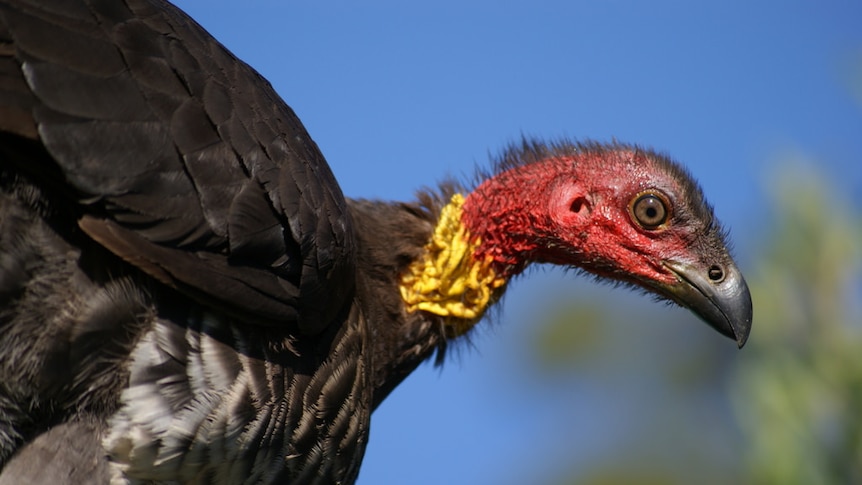
Brush turkeys are spreading across Sydney but how the bird crossed the harbor is a mystery

After a decades-long absence, brush turkeys are reclaiming Sydney’s inner-city and southern suburbs, but not everyone has welcomed the distinctive birds back.

From the odd sighting south of the Sydney Harbor Bridge a few years ago, brush turkeys are now widespread.

Research ecologist Matthew Hall told ABC Radio Sydney it was only a matter of time before the native birds returned to the areas they once inhabited before hunting, land clearing and introduced species threatened their survival.

“They’ve been slowly coming back. But we’ve been taken by surprise just how fast they’re spreading into the city,” Mr Hall told Cassie McCullagh on Mornings.

A brush turkey walks across a fence in Summer Hill in Sydney's inner-west.
Brush turkeys are thriving thanks to their ability to adapt to the urban environment.(ABC Radio Sydney: Rosemary Bolger)

On the brink of extinction in the 1930s, some birds took refuge in national parks in the north and north-west.

Since hunting brush turkeys were outlawed, their numbers have increased steadily on the northern beaches and surrounds.

But many residents south of the Sydney Harbor Bridge are seeing the birds in their backyards and parks for the first time.

How did brush turkeys cross the harbour?

Researchers may have predicted the population would expand, but one question has them scratching their heads.

Given the harbor separates the city’s north and south, how did the brush turkey get to the other side?

“It truly is a mystery,” Dr John Martin, research scientist at Taronga Zoo, said.

“These birds do not fly very well, so flying hundreds of meters across the harbor or across the [Parramatta River] is just not something they are capable of.”

Brush turkeys cross the road in Gladesville in Sydney's Lower North Shore.
Brush turkeys cross the road in Gladesville on Sydney’s Lower North Shore.(Supplied: Paula Marchant)

One theory is that residents in the north wanting to rid their backyards of the pesky bird may have captured them, driven them across the bridge and released them into new territory.

They may have come down from existing populations in the Blue Mountains or up from Wollongong, which may explain sightings on the city’s southern fringes.

.

Categories
Australia

NSW is reserving 20 per cent of selective school places for disadvantaged students, and some parents aren’t happy about it

Thousands of NSW students are nervously awaiting the results of their selective school tests following a significant overhaul of the admissions process.

Last month, NSW Education Minister Sarah Mitchell announced up to 20 per cent of places at selective schools would be set aside for disadvantaged students.

North Sydney resident Bruce Fan is one of many parents now worried their children may miss out on a spot at their dream school due to the new policy.

Mr Fan started an online petition calling on the government to scrap the new policy and redo the public consultation.

“It is unfair that the policy has been retrospectively implemented on the students who have already sat the tests this year,” he said.

A man sits next to the computer
Bruce Fan says the government should increase the number of places at selective schools rather than reserving existing places for disadvantaged students.(Supplied)

Mr Fan said the online petition was not about stopping the government from helping the disadvantaged groups but urging the government to invest more funding into the public education system.

“I firmly believe that we need to support the disadvantaged communities and students, but this quota is not the right solution,” he said.

“The government should set up more selective schools in lower socio-economic areas.”

Kellyville resident Yashwant Desai, one of more than 4,000 signatories to the petition, said he too believed the change was unfair.

“It’s not giving everyone a fair go,” said Mr Desai, whose children have already been accepted into a selective school.

“What the government is doing is just for political advantage and to gain the most sympathetic votes.

“Why are only selective schools being targeted?” he asked, echoing Mr Fan’s call for the government to invest more in public schools where disadvantaged students lived.

An Indian man with glasses sits next to his computer
Yashwant Desai said students work hard for the selective school test and deserve a fair process.(Supplied)

Changes intended to make selective schools fairer

Selective high schools are designed to cater for the needs of gifted students, or those with high potential, by providing specialized teaching methods and materials.

The 49 selective schools in NSW often outperform expensive private schools and dominate HSC leaderboards.

But the only way to get into one is to compete with thousands of other students on the state-run entry tests.

.

Categories
Australia

Sydney news: Saudi sisters’ Canterbury apartment for rent, with prospective tenants told of deaths

Here’s what you need to know this morning.

Saudi sisters’ apartment for rent

The Sydney apartment where two Saudi sisters were mysteriously found dead has gone back on the rental market, with a disclaimer from the real estate agent.

In June, Asra Abdullah Alsehli, 24, and Amaal Abdullah Alsehli, 23, were found dead in separate beds in their Canterbury apartment during a welfare check.

Police said there were no obvious signs of injury or forced entry and called the deaths “unusual.” Neither homicide nor suicide has been ruled out.

The Canterbury Road apartment has now been listed for rent again but prospective tenants have been notified of the recent deaths.

“A crime scene has been established and it is still under police investigation,” the listing reads.

“According to the police, this is not a random crime and will not be a potential risk for the community.”

John Barilaro inquiry

The parliamentary inquiry into former deputy premier John Barilaro’s controversial trade job appointment will summarize public hearings this morning.

Investment NSW CEO Amy Brown, who oversaw the recruitment process for the US-based role, will front the inquiry for a second time.

She first gave evidence five weeks ago but a lot of new information has come to light since then.

The opposition says it plans to question her about her discussions with Trade Minister Stuart Ayres and why she decided the original preferred candidate, Jenny West, was unsuitable.

Labor has previously called for Ms Brown to be stood down.

Goulburn firefighter wins gold

Ellen Ryan has won Australia’s first-ever gold medal in the women’s lawn bowls singles.(Supplied: Bowls Australia)

NSW firefighter Ellen Ryan has made Commonwealth Games history, claiming gold with a two-shot victory in lawn bowls.

The Goulburn brigade member became the first Australian in her sport to win a gold medal in Britain and the first to claim the women’s singles crown.

The 25-year-old got her first taste of the sport in 2008 and made her senior debut for Australia in 2017, narrowly missing out on a spot in the Commonwealth Games team a year later.

Five years on, she’s living out that dream of wearing the green and gold on the world stage.

Rooty Hill station assault

Blacktown’s mayor has publicly condemned violence after three teenage boys allegedly assaulted an off-duty police officer and Blacktown City councilor on Monday.

The teenaged trio were allegedly involved in an assault at Rooty Hill train station, which ended in a 60-year-old chief inspector allegedly being struck multiple times to the head with a bike seat pole.

Mayor Tony Bleasdale said the alleged attack was absolutely despicable and also involved one of the most respected members of the Blacktown City community, Councilor Bob Fitzgerald.

Three teenagers have been charged and police are urging witnesses to come forward.

.

Categories
Australia

Cost of living pressures lead to food insecurity and fears of chronic health conditions

More Australians are now experiencing mild to moderate food insecurity due to the cost and unavailability of fruit and vegetables leading to ill health and pressures on charities, experts warn.

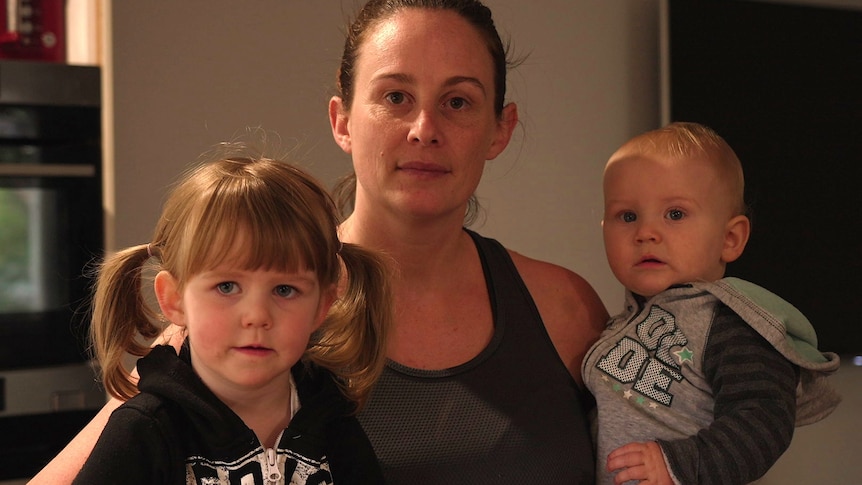
The skyrocketing cost of living has been particularly difficult for mum of three Jane Winters.

Her family of five, who live in Redcliffe, north of Brisbane, have seen their weekly grocery bill more than double from between $100 and $150 to nearly $300.

“We are going standard, home brand, whatever we can just to try and save some money because it’s a bit ridiculous,” she said.

A grocery list that was once full of fresh produce and healthy ingredients has now been replaced with cheaper alternatives and processed food.

“Fast food is fast becoming cheaper than healthy food which is awful,” Ms Winter said.

“It’s going to become a really big problem and I think childhood obesity is going to get so much bigger because of that.”

‘Unable to send kids to school with lunch’

Melissa Peters works in an affordable food shop west of Brisbane known as Restore, run by a not-for-profit organization Ipswich Assist.

Melissa smiles with glasses on.
Melissa Peters says the number of shoppers in Ipswich Assist’s charity grocery store has tripled, some of whom are from middle class backgrounds.(ABC News: Baz Ruddick)

She said the charity has seen a marked increase in families, some on dual incomes, seeking help to feed their families.

“Prior to this increase in the cost of living, we were seeing around maybe 30 to 40 people come through each week and now we’re cracking upwards of 100 people, 100 families coming through each week,” Ms Peters said.

“People tell us that they’re no longer able to afford just basic groceries, fruit and veggies, they’re unable to send their kids to school with lunches because the cost of living is just getting higher and higher each week.”

Cans of baked beans at the Ipswich Assist Restore charity grocery store
Cans of baked beans at Ipswich Assist’s charity grocery store.(ABC News: Baz Ruddick)

The store receives food from OzHarvest and Foodbank, as well as donations from mainstream supermarkets, with all items sold for $1 each.

“We’re seeing more and more families come through that have never needed to seek assistance before because they’ve never experienced any sort of financial hardship or crisis in the past,” she said.

“It’s a sense of vulnerability that they don’t want to have to show to the world… [but] we often remind them that seeking assistance is not weak.”

‘A big domino effect’

With the rising cost of food, fuel and rent showing no sign of abating, Ms Peters said the situation was only expected to worsen.

“At what point does it end? At what point does something happen that stops it from affecting every day Aussies?” she said.

“If people dig themselves into debt and get more and more into financial crisis, they have to then rely on more and more places to provide assistance.

“And those assistance places don’t have enough funding and it just becomes this big domino effect on people not being able to support themselves.”

Pru smiles next to a rack of clothes.
Pru Burke’s second-hand clothing store now features a free community pantry.(ABC News: Baz Ruddick)

Redcliffe woman Pru Burke has also opened a free community pantry with stacks of free, donated pantry items destined for Queenslanders doing it tough.

“I see the mums every day come and tell me their stories and it is heartbreaking,” she said.

“It’s those small drops in the ocean that are going to save them a lot more money in the end.

“If you’ve got the ability, try doing something like this. Open a food pantry, talk to members of your community and find ways to help each other.”

Fears of rising obesity, chronic illness

Dr Ward sits in a hospital ward looking stern.
Food security expert Dr Aletha Ward says there is a clear link between nutrient deficient diets and chronic disease.

University of Southern Queensland food security expert Aletha Ward said Australia was now experiencing mild to moderate food insecurity due to a lack of fruit and vegetable consumption.

“The problem with mild to moderate food insecurity is that it drives obesity, so we are having food, it is just not the right type of food,” Dr Ward said.

“Most families would not purchase an iceberg lettuce for $10.”

.

Categories
Australia

Arato was living out his tennis dreams, until his coach noticed something odd

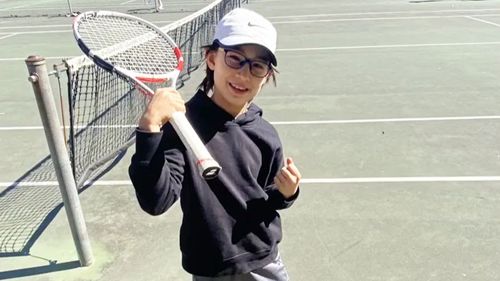
Eighteen months ago, sydney boy Arato Katsuda-Green was a young tennis star on the rise.

The then nine-year-old was out on the court six days a week and had dreams of playing as a professional.

However, it was around this time that Arato’s coach noticed something strange.

His young athlete was suddenly missing shots he would have nailed a year earlier.

Arato began playing tennis at the age of four.
Arato began playing tennis at the age of four. (Supplied)

“Arato’s coach was struggling to find an explanation and it rang alarm bells,” his father, Tim Green, said.

Green immediately had a suspicion of what was wrong, but it was something he had been assured by experts was extremely unlikely to happen.

Close to 25 years ago, Green had himself been diagnosed with a rare genetic eye condition called Stargardt’s disease.

The disease affects the macula and causes broad central vision loss.

At the time Green was diagnosed, he was told there was almost no chance he would pass on his eye condition to any future children he may have.

“I was told that it’s recessive, and therefore, I wouldn’t have to be concerned that my children would inherit this genetic problem,” he said.

Arato, pictured with his father Tim Green.
Arato, pictured with his father Tim Green. (Supplied)

Research scientists have since discovered there are some forms of Stargardt’s disease caused by dominant genes.

Despite being told not to worry all those years ago, Green said he did get Arato tested by an ophthalmologist when he was about six years old and began showing a passionate interest in tennis.

The tests showed Arato had normal eyesight at the time.

Arato was given more tests a few years later, when his coach raised the alarm, which confirmed he did indeed have Stargardt’s disease and was displaying early signs of vision loss.

Arato’s journey has in some ways mirrored his father’s, despite him being diagnosed at a far younger age.

Green was also diagnosed with Stargart’s disease while training to become a professional athlete – in his case, competing in triathlons and ironman events.

“I was in full training for an ironman event at the time,” Green said.

“I started tripping over and riding over things, which was what prompted me to see an ophthalmologist to be tested.”

Arato, who is now 10, is one of the faces for this year’s Jeans for Genes Day, to be held this Friday.

The annual campaign raises funds for the Sydney’s Children’s Medical Research Institute.

Arato is one of the faces of this year's Jeans for Genes Day fundraiser.
Arato is one of the faces of this year’s Jeans for Genes Day fundraiser. (Supplied)

Although there is currently no cure for Stargardt’s disease, Green said the advances made through medical research towards finding a possible treatment was one of the things that gave him hope for Arato’s future.

“When I was diagnosed, there was no follow up. I was told there is nothing that we can do for you,” he said.

“But the conversation is very different now. You are advised to actually keep in contact with the clinicians because there are clinical trials happening.

“Science has come a long way and, in the conversations we’ve had with clinicians with respect to Stargardt, we are very hopeful in the next decade that there will be effective treatments.”

Green said his son had so far coped “exceptionally well” with his difficult diagnosis.

“He is taking things in his stride. There’s advantages and disadvantages to being diagnosed at a relatively young age, I think kids are pretty resilient and adaptable.”

Green said Arato was still playing tennis recreationally and was also enjoying taking part in a blind and low vision tennis (BLV) competition, run by Tennis Australia.

At school, things were a bit more of a challenge, with Arato needing vision aids in the classroom to see his work.

While Stargardt’s disease affects central vision, Green and his son are like many with the condition who have retained peripheral vision.

“I can still navigate myself around an environment that I’m familiar with, but I struggle on the stairs, because I can’t see the end of the step, or the depth,” Green explained.

“For Arato, at school it’s hard for people to understand why he can play handball so well, but he can’t read the whiteboard.

“Or when they play soccer he can see the ball, but he might kick it to the wrong person because he can’t see faces.”

It was Arato's tennis coach who noticed he was suddenly missing easy shots.
It was Arato’s tennis coach who noticed he was suddenly missing easy shots. (Supplied)

Green said while living with Stargardt’s disease had presented him with plenty of challenges it had also opened up new and unexpected opportunities.

It was a chance conversation with the ophthalmologist who diagnosed him that led Green on the path to becoming a lawyer.

“We were talking about what my future would look like and he said to me, ‘Tim, the best thing you can do is go get yourself a good education and then you’ll always have a good job.’

“I have suggested becoming a lawyer and, indeed, that’s what I went and pursued.”

Green also recently took part in an ironman event in order to raise funds for Jeans for Genes Day and demonstrate for his three guiding principles he says he lives by – courage, commitment and resilience.

“When you have those three principles and values ​​you can still achieve a lot of things,” Green said.

Money raised will go towards the Eye Genetics Research Unit at the Children’s Medical Research Institute, where scientists have developed the first ever gene therapy for a blinding eye condition in Australia and are researching new treatments for several forms of genetic blindness.

Categories
Australia

Ryan Butta says Afghan cameleers were ignored by Henry Lawson, and our national story is the poorer for it

It’s a bold move to pick a bone with one of Australia’s best-known and most celebrated writers, but Ryan Butta doesn’t shy away from it.

The writing of Henry Lawson, he says, “gave a sense of national identity … which still permeates how white Australians thinks about [themselves]”.

However, there are some glaring omissions in that writing, argues Butta, a NSW-based author and editor.

In 1892, when Lawson was reporting on his time in Bourke, in north-western New South Wales, he “not only ignored the Indigenous people, but [also] the Afghans”, Butta says.

Yellowing black and white photo of a camel with saddle and man holding its reigns wearing turban and squinting into the sun.
Cameleer Bejah Dervish leaves on an expedition from Mullewa, WA, in 1896. Camels carried heavy loads over long distances with little need of water.(Image: State Library of South Australia)

Butta spent several years researching this history for his book, The Battle of Abdul Wade.

Wade was a young Afghan entrepreneur who first brought his camel trains to the outback in the 1890s.

He was revered by many in and around Bourke for his business nous and his generosity.

Among other things, Wade offered hundreds of his camels to Australia’s war effort at the outbreak of World War I.

However, he was attacked by other sections of the community, who saw him as a threat to their business interests, and to white Australia.

Black and white grainy photo of Henry Lawson with thick mustache and round cap, and jacket, vest and tie, standing.
Henry Lawson, pictured in 1911, was sent to Bourke on assignment for The Bulletin newspaper, and spent about nine months there,(Supplied: Trove)

Wade was not alone in dividing opinions. Newspapers from the time heave with conflicted community sentiment about early camels.

For example, after flooding in 1890, the Cunnamulla Argus reported that: “When provisions had nearly run out and not even the lightest vehicle could stir on any highways leading to us, the despised Afghan came with his camels through wastes of water and saved us from semi-starvation.”

An 1892 editorial in the Bulletin put forward another view, saying “the imported Asiatic … is another cheap labor curse in a land where such curses are already much too plentiful”.

Butta believes it would have been impossible at that time to have missed the Afghans’ “ubiquity” in social, political and business life.

Yet, he says, Lawson wrote about none of it.

“If you know Bourke, you know Australia,” Lawson told a friend in a 1902 letter.

But which version of Australia?

Black and white image of one man holding camel's lead while another man mounts the camel.
In 1916, Abdul Wade donated camels to the Australian war effort. Here, men from the Imperial Camel Corp, deployed to fight in World War I, train to ride them.(Supplied)

How camels came to Australia

There’s some confusion about exactly when the first camels and their handlers arrived in Australia, and for what purpose.

We do know that “Harry” was the first camel to arrive in Australia after landing in Port Adelaide on 12 October, 1840. The animal was shipped from Tenerife, Spain, by the Phillips brothers, Henry Weston and George.

.

Categories
Australia

Cashless debit cards linked to buy now, pay later services raise concerns ahead of end of scheme

The number of people using buy now, pay later services connected to their cashless debit card (CDC) has complicated the federal government’s plan to abolish the program.

During the election campaign, Labor promised to end the scheme, which quarantines 80 per cent of a person’s welfare payments onto a card that cannot be used for alcohol, gambling or cash withdrawals.

More than 17,000 welfare recipients in Western Australia’s Goldfields and East Kimberley regions, Ceduna in South Australia, as well as Bundaberg and Hervey Bay in Queensland, are on the card.

A significant number of them have linked their card to buy now, pay later services like Afterpay, which allows a person to buy products up front but pay them off in installations.

Social Services Minister Amanda Rishworth said it means transitioning people off the card could take some time.

“A number of deductions that participants have connected to their card means that you can’t just close the card overnight,” she said.

.

Categories
Australia

RBA hikes interest rates further; Al-Qaeda leader killed in airstrike; 2022 Commonwealth Games continue; Australia COVID wave peaks; Clive Palmer, Mark McGowan case ends in draw; Stuart Ayres under pressure amid John Barilaro trade saga

Speaking of the Greens, Senator Lidia Thorpe – a DjabWurrung, Gunnai and Gunditjmara woman – says her tone in taking the oath of allegiance yesterday “was the tone that you use when you really, really, really don’t want to do something and you ‘re being forced to do it”.

“To be told that I have to swear allegiance to a queen from another country, I feel really uncomfortable about that given I’m a First Nations woman, and my allegiance is to this country and the people of this country, not to a queen who lives in England and who has not been elected,” Thorpe told Melbourne-based radio station 3AW.

Deputy Leader of the Australian Greens in the Senate, Senator Lidia Thorpe.

Deputy Leader of the Australian Greens in the Senate, Senator Lidia Thorpe.Credit:alex ellinghausen

Thorpe was made to redo her oath in the Senate after calling the Queen to colonize in her first try, which was ruled out of order by president Susan Lines.

Today’s 3AW interview descended into a fiery debate in which host Neil Mitchell accused Thorpe of being disrespectful and a hypocrite after she said she was part of an “illegitimate” parliament.

loading

“To be there with the Black Power salute, sarcastic tone, and in describing the Queen as a colonizer is divisive and destructive at a time where we need a unity of purpose,” Mitchell said.

Thorpe denied both accusations.

“I suppose what it does is it puts a spotlight on truth-telling,” she said. “This country was invaded, and this country does not have an agreement with its people.

“This country is rich and vibrant. And we have things here, our country and our own people, that we should be swearing allegiance to. So I wanted to inform the Australian public that we are still, today, swearing allegiance to someone who has nothing really to do with our everyday lives.”