Categories
Australia

Victorian Liberals refuse to answer questions about Guy’s chief of staff as authorities consider investigations

“For this government to be out there peddling garbage like they’re peddling at the moment that there’s some sort of equivalence – well, it’s just a bit rich.”

Staley declined to answer details and release the full email chain in which Guy’s private Hotmail account was included in a discussion about “the agreement”. Staley said the opposition would let police and integrity agencies do their work and cooperate fully.

Victoria Police confirmed the referral would be assessed. IBAC and the ombudsman declined to comment.

Munz, whose family was estimated to be worth $1.24 billion in 2019, made his fortune as the founder of plumbing supplies company Reliance Worldwide Corporation. The horse racing figure funded a High Court bid that unsuccessfully sought to provide the Victorian government’s COVID-19-related restrictions on movement were unconstitutional. Companies have controlled have made large donations to the Liberal Party, including a $100,000 donation in 2017-18.

In a statement, Munz said: “I do not know how many people received this unsolicited and unwanted email, but when I got it, I rejected it out of hand.”

loading

Integrity is a central election issue ahead of the November state poll, with the opposition attempting to cast the Andrews government as unethical after the IBAC and ombudsman found Labor had a rotten culture.

Coalition MPs expressed nervousness about the potential political damage that could be caused by the episode. In particular, they were worried that Guy was susceptible to attacks on political integrity because of the “lobster with a mobster” dinner, where he dined with an alleged mafia boss, and scandals as a planning minister in the Baillieu-Napthine government.

Victorian Government Services Minister Danny Pearson said Guy’s position had been severely compromised but said it was up to police and integrity agencies to consider whether he acted improperly.

loading

“Last time around, he ran a strong campaign on law and order, yet was found to be having dinner with alleged members of the mafia. This time around, he’s running a strong campaign on integrity, and he’s been shown to have none,” Pearson said.

In his referral letter to the agencies, Pearson said the “attempted entering into of an agreement involving the disbursement of funds in a political context for ‘supporting business interests’ naturally invites consideration” of a finding of potentially corrupt conduct.

Deputy Premier Jacinta Allan told reporters: “Matthew Guy really needs to come clean as quickly as possible with the Victorian community about his role in this extraordinary secret arrangement that would have sought to subvert the strict donation laws in our state.”

“Quite frankly, I think the sooner he answers these questions the better,” she said.

loading

“It’s a demonstration that he has completely committed himself now and for any future role,” Allan said.

The Morning Edition newsletter is our guide to the day’s most important and interesting stories, analysis and insights. Sign up here.

Categories
Australia

SpaceX rocket debris lands in sheep paddock, Australian Space Agency confirms

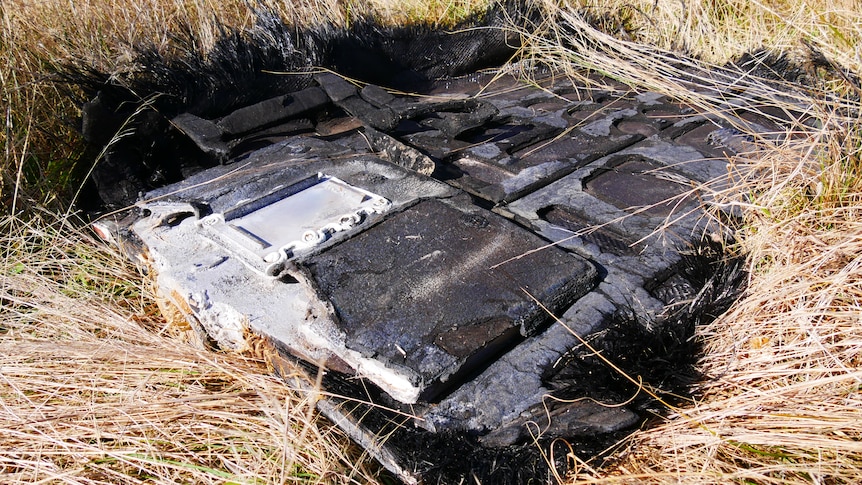
The Australian Space Agency has confirmed debris found in the NSW Snowy Mountains belongs to SpaceX.

Three pieces of space junk have so far been found in the region, which are considered to be the biggest pieces found in Australia since 1979.

Two pieces were inspected by technical experts from the Australian Space Agency and NSW Police on Saturday.

Police have since confirmed they were also aware of the third piece being found in the region.

a long piece of space junk
This piece of space junk is estimated to be up to three meters long. (ABC South East NSW: Adriane Reardon)

Authorities believed the space debris belonged to SpaceX but had been awaiting confirmation.

“The agency has confirmed the debris is from a SpaceX mission and continues to engage with our counterparts in the US, as well as other parts of the Commonwealth and local authorities as appropriate,” an Australian Space Agency spokesperson said.

“The agency is operating under the Australian Government Space Re-entry Debris Plan which outlines roles and responsibilities for key Australian government agencies and committees in supporting the response to space re-entry debris.”

a piece of space junk lies on the ground in a paddock
This third piece of space junk was also found in the NSW Snowy Mountains, near Jindabyne.(Supplied: Nick Lodge)

It comes after locals reported hearing a loud boom on July 9, which was considered to have been caused by the SpaceX Dragon spacecraft, which was launched in November 2020, re-entering Earth’s atmosphere.

Locals in the regions are being told that there’s a possibility more pieces could still be found.

“If the community spots any further suspected debris they should not attempt to handle it or retrieve it,” the agency said.

“They should contact the SpaceX Debris Hotline at 1-866-623-0234 or at [email protected].”

SpaceX has been contacted for comment.

Space to play or pause, M to mute, left and right arrows to seek, up and down arrows for volume.

Play Video.  Duration: 3 minutes 34 seconds

Space junk has landed at two properties in the NSW Snowy Mountains.(ABC South East NSW: Adriane Reardon)

.

Categories
Australia

Comanchero boss Mark Buddle in Australian custody over alleged $40 million cocaine import

Comanchero boss Mark Buddle is in Australian custody, after being deported by Turkish authorities.

The 37-year-old faced court in Darwin this morning, accused of importing more than 160 kilograms of cocaine into Melbourne in May 2021.

The judge granted a request for him to be extradited to Victoria.

The court heard Mr Buddle did not appear in person due to security concerns from police, and instead appeared via an audio link.

“Normally, of course, someone appearing in court would be either present in court or on the video from the prison, Chief Judge Elizabeth Morris told Mr Buddle.

“But the court’s received information that the police have some security concerns, and that’s why you’re on the telephone from the Palmerston watch house.”

Assistant Commissioner Nigel Ryan said the drugs had a street value of more than $40 million.

A man in surrounded by Australian Federal Police officers, some of whom are holding him around the chest.  His face of him is blurred.
Mark Buddle was escorted on a charter flight to Darwin. (Supplied: AFP)

Commonwealth lawyer Naomi Low told the court police wanted until August 10 to extradite Mr Buddle to the Melbourne Magistrates Court, to make arrangements to mitigate security concerns.

“Mark Buddle is to be secured and kept in custody in NT Corrections until no later than the tenth of August, 2022, by which time he is to be transferred into the custody of [the AFP] … to then appear in the Melbourne Magistrates Court on or before the tenth of August 2022,” Chief Justice Morris said.

She told Mr Buddle he would be kept in prison until arrangements were made to transfer him to Melbourne in the custody of police.

Mr Buddle was deported to Turkey from Northern Cyprus last month, and taken into police custody in the capital, Ankara.

He had been living in the self-declared republic after being granted a residence permit in August 2021.

Bikes gather for Legalize Freedom ride
Mark Buddle became president of the Comanchero Outlaw Motorcycle Gang in 2010.(Dean Lewins, file photo: AAP)

Taskforce targeting offshore organized crime threats

Assistant Commissioner Ryan said the AFP had been working to “build a brief of evidence” against Mr Buddle since mid-2021.

“When it comes to this alleged offender, we have been patient and thorough, and we have done what the AFP does best – we have used our capability, intelligence and international networks to ensure we have a warrant and a finalized brief of evidence so the alleged offender can face the justice system,” he said.

“However, let me be clear: this alleged offender has been a target of the AFP-led Transnational Offshore Disruption Taskforce, known as Operation Gain, since 2021.”

Assistant Commissioner Ryan said today was the first time the existence of Operation Ironside South-Britannic had been made public.

“[The taskforce] targets Australia’s biggest organized crime threats offshore, disrupts their criminal activities and ultimately ensures these alleged criminals face prosecution.”

.

Categories
Australia

Australia’s military structure, preparedness and investments to be reviewed for the first time in a decade

A former Labor Defense Minister and a Chief of Defense who served under him will conduct a strategic review of Australia’s military for the first time in a decade, with recommendations to be made within five months.

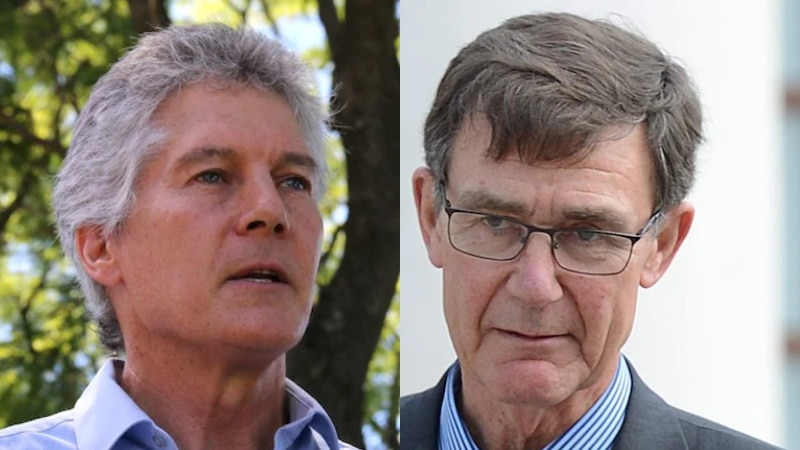
The Albanese government has announced Stephen Smith, who was Defense Minister between 2010 and 2013, will join retired Air Chief Marshal Sir Angus Houston in overseeing the comprehensive study of the ADF’s structure, preparedness and investments.

Prime Minister Anthony Albanese says the review will ensure the Australian Defense Force (ADF) is “well positioned to meet the nation’s security challenges over the next decade and beyond”.

“Professor Smith and Sir Angus bring a unique blend of knowledge and experience to their role as independent leads,” Mr Albanese said.

“Their depth of expertise will be invaluable in informing the review.”

Defense Minister Richard Marles said the Morrison government’s Defense Strategic Update of 2020 found changes in Australia’s strategic environment were accelerating more rapidly than predicted in the last Force Posture Review in 2012.

Richard Marles addresses media
Richard Marles says changes to the ADF were happening more rapidly than predicted. (ABC News: Keane Bourke)

“This necessitates an immediate analysis of where and how Defense assets and personnel are best positioned to protect Australia and its national interests,” Mr Marles said.

“It also requires an assessment of Defense’s force structure and Integrated Investment Program.

“Exploring how our capabilities can better integrate and operate with the United States, the United Kingdom and other key partners will also be an important element of the review.”

Inside ADF ranks Stephen Smith’s appointment to lead the Defense Strategic Review is considered controversial given cuts to military spending and project cancellations which occurred when he was Minister.

Air Marshal Sir Angus Houston served as Chief of Defense between 2005 and 2011, and was knighted in 2015 for extraordinary service to Australia, particularly for his role in the aftermath of the MH370 and MH17 disasters.

Formal defense minister Stephen Smith and Retired Air Marshal Sir Angus Houston in composite image.
Stephen Smith (left) and Sir Angus Houston will oversee the review.

According to the Terms of Reference released by the government, the review will be completed for National Security Committee of Cabinet consideration “no later than March 2023”.

It states that the latest review is needed because “military modernisation, technological disruption and the risk of state-on-state conflict are complicating Australia’s strategic circumstances.”

“The review is to be a holistic consideration of Australia’s Defense Force structure and posture by including force disposition, preparedness, strategy and associated investments, including all elements of Defense’s Integrated Investment Program,” it said.

Earlier this year Labor matched the former government’s pledge to increase the number of uniformed personnel to almost 80,000 by 2040, amid strategic risks posed by China and Russia.

.

Categories
Australia

Productivity Commission says working smarter can improve life

While average hours worked had failed by about 10 per cent, or four hours, over the same period, average hours worked in other rich nations had failed even more. In some nations, such as Norway and Denmark, hours worked have fallen by a quarter but their productivity has grown more than Australia’s.

The combination of more people working longer hours than in other countries meant GDP per capita had remained relatively high.

Increased productivity over the past 120 years has lifted Australians’ living conditions. In 1901, it took 185 working hours to afford a double bed and mattress compared to just 18 hours in 2019. In more recent years, the cost of smartphones has tumbled while their quality has soared.

According to the commission, finding ways to lift productivity would not only make Australians better off, but better rested.

If the country’s labor productivity level was the same as Belgium’s, Australians could reduce the amount of time spent at work by four hours a week without a fall in income.

According to the commission, this would deliver Australians a “leisure dividend” of one less day a week of work.

Productivity Commission chair Michael Brennan says finding ways to increase productivity will make Australians better off.

Productivity Commission chair Michael Brennan says finding ways to increase productivity will make Australians better off.Credit:Louie Douvis

If Australia had the same productivity levels as Belgium but people only marginally reduced their working week, they could get an extra hour a week of leisure while increasing GDP per capita by 25 per cent.

Commission chair Michael Brennan said the country had to look for new ways to drive productivity growth, including a review of the nation’s policy levers and industries into which resources should be concentrated.

“Productivity growth is essential to address the nation’s economic challenges, including rising cost-of-living pressures, but it is not guaranteed,” he said.

“Nowadays, improvements in service quality and the impact innovative new products and services have on people’s lives matter most.

“However, the overarching principle of productivity – that we aim to work smarter, not harder or longer – is as important as ever.”

Productivity traditionally describes the number of goods and services that can be generated from inputs such as machines and workers. It also covers the improvement in the quality of goods and services over time.

According to the commission, which in its 2017 Shifting the Dial report set out a range of proposals to increase productivity, little has changed over the past five years.

The 2017 report found changes in education and health, competition in the pharmacy sector, a price on carbon emissions, tax reform and vehicle user charges could deliver a $140 billion boost to the economy over 20 years.

“However, overall the dial has yet to be shifted by government,” its latest report found.

loading

The commission will release discussion papers over the coming months on specific areas where it believes there is scope for major productivity gains. They will cover the use of data, education and skills, the diffusion of innovation across the economy and impediments to business investment that will also include decarbonisation.

Cut through the noise of federal politics with news, views and expert analysis from Jacqueline Maley. Subscribers can sign up to our weekly Inside Politics newsletter here.

Categories
Australia

John Barilaro’s New York job put on ‘separate path’ to others, inquiry hears

A senior NSW government bureaucrat has told an inquiry the lucrative New York-based trade job given to John Barilaro was “put on a slightly separate path” to similar roles.

Investment NSW CEO Amy Brown is being grilled for a second time at a parliamentary inquiry into the appointment of the former deputy premier as the state’s senior trade and investment commissioner to the Americas.

This morning, Ms Brown told the inquiry she had a meeting with former trade minister Stuart Ayres on October 12 last year.

The inquiry was shown an email sent by one of Ms Brown’s staff shortly after that meeting, which included the line “the Minister would like to leave the New York post vacant for now”.

A man looking forward
Former deputy premier John Barilaro is due to give evidence at the inquiry next week.(AAP: Joel Carrett)

But Ms Brown told the inquiry it had actually been her decision to leave the post open, because of various factors, including tax hurdles and “serious performance issues” with a candidate who had initially been successful in applying for the role, Jenny West.

“I didn’t go into any particular detail about some of the performance issues I was starting to become aware of with regard to Ms West,” she told the inquiry.

“That was more conversations I was having with her team, as at that point, they were directly reporting to me because she was on extended leave.

“I said, ‘well, in light of the fact that we can’t offer anyone the job for some time, is it your view that we should keep that recruitment process closed and reopen it at another time?'”

She told the inquiry that Mr Ayres agreed.

“Any conversation I had with Minister Ayres were, therefore, to a degree, influential on my decision but in my view, it did not amount to undue influence because at all times, I felt that the decision was mine, ultimately mine to make, she said.

A woman walking on the street
Ms Brown was required to give evidence in person this morning. (abcnews)

Labor MLC Daniel Mookhey Ms Brown asked whether this meant the Americas position was put “on a slightly separate path” to other similar roles around the globe, to which she replied “yes”.

“I think it was a pragmatic piece of advice from me that we couldn’t fill the role for some time and his response was, ‘well then it makes sense to keep it vacant,’ she told the inquiry.

“I think we both concluded, given everything that had happened, it would be sensible to go back to market when we were ready to put a contract on the table and when we could take stock of where things were at.”

Mr Ayres, who maintains he has done nothing wrong throughout the process, this morning resigned from the NSW ministry, after weeks of being linked to Mr Barilaro’s appointment.

Mr Barilaro’s appointment has been put under the microscope for several weeks and is the subject of two separate inquiries.

He has since withdrawn from the $500,000-a-year position.

Mr Barilaro is due to appear before the inquiry on Monday.

Premier Dominic Perrottet has also ordered a separate review into the recruitment process for the role.

.

Categories
Australia

Former judge and coroner Wayne Chivell crashed into man who then lost lower legs, court hears

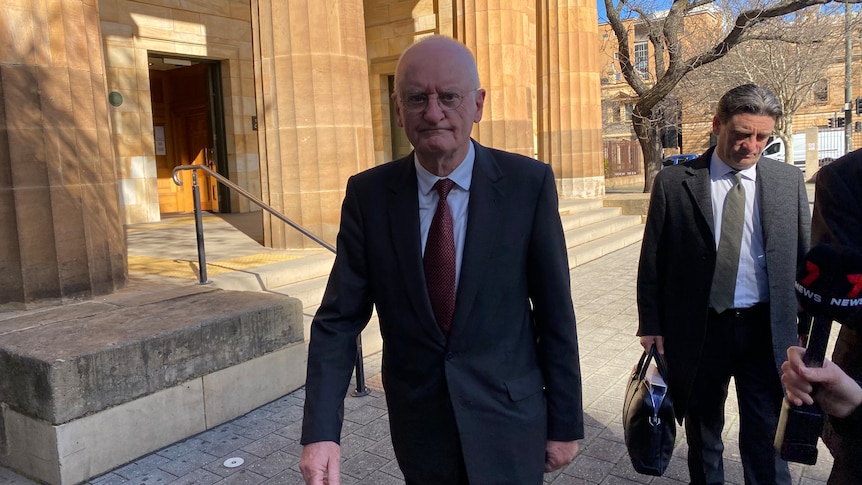
A former South Australian coroner and District Court judge and will be sentenced later this month for seriously injuring a delivery driver during a crash in Adelaide late last year.

Wayne Cromwell Chivell, 71, pleaded guilty in the Adelaide Magistrates Court to careless driving on Anzac Highway at Plympton in December 2021.

The court heard that Chivell stopped to inform an OzHarvest delivery driver that his back door was swinging open before getting back in his car.

His lawyer said he intended to put his foot on the brake but accidentally accelerated and hit the 66-year-old driver, who lost both his legs below the knees because of the crash.

Chivell issued a public apology in court and was provided character references by judges Paul Slattery and Trish Kelly, who described how devastated their former colleague was for injuring the driver.

Chivell was a magistrate for seven years in the 1980s before becoming the state coroner in 1993 and sitting on the District Court bench from 2005.

I have retired in 2020 at the mandatory age of 70.

In 2011, during the sentencing of a driver who had hit and killed a boy, Chivell pointed out that “even momentary lapses in concentration can have tragic consequences.”

“We need to make people stop and think twice before they jump behind that wheel,” he said.

In 2012, he spared a driver jail in a case he said showed the terrible consequences that could follow from inattentive driving.

As the coroner, he said a complacent attitude to safety led to the death of a yachtsman off Adelaide in 2002.

.

Categories
Australia

How the Cherbourg Marching Girls moved in step from an Aboriginal mission to sporting history

Aboriginal sporting history has been brought to life in a new book that details how a group of women from a south-east Queensland mission nearly won a national title in the most popular female sport of the era.

Faced with a future working in heavily controlled conditions in the 1950s, a group of young Aboriginal girls from Cherbourg held their head high and marched.

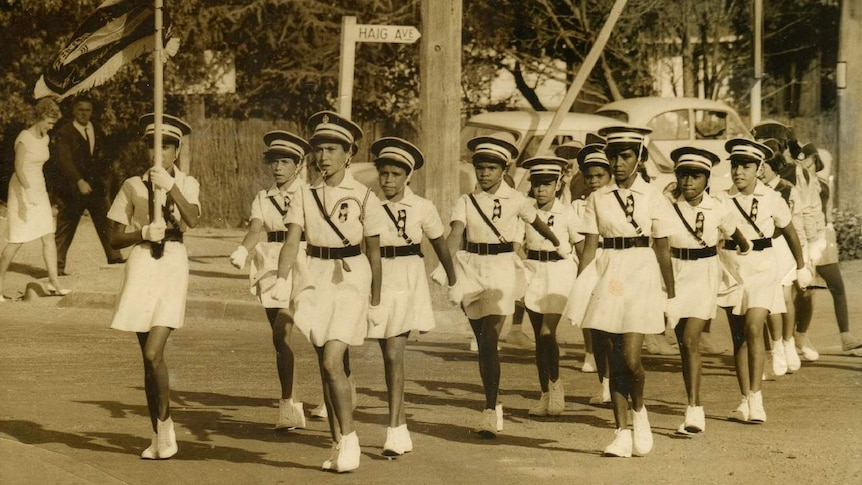
Marching was the lead sport for Australian women at the time, with participants dressing up in white boots, skirts, sashes and formal hats to perform at agricultural shows, city parades and for visiting dignitaries.

Teams competed against each other on weekends and were judged on their timing, uniforms, synchronization and performance.

On the government-controlled mission at Cherbourg, it was the only sport available to the young women.

A black and white photo of Indigenous girls in the Cherbourg marching girls with their trophies in Melbourne 1962.
Aunty Lesley Williams [second from right] and her team received trophies in Melbourne during 1962.(Supplied)

A sense of pride

Aunty Lesley Williams began marching in Queensland’s only Indigenous troupe in 1957 when she was just 11.

The sense of pride gave her as a young person who had been denied her culture and freedom was something she would never forget.

“We were told you are going to have this career. Stop practicing your culture. You can’t speak your language,” Aunty Lesley said.

“If you look back to this point in time, it was about controlling this group of people.”

Dressed in uniforms created in the community, the Cherbourg Marching Girls went on to become the best in Queensland in the six years they competed, and then went even further to place second at the national championships.

“We had a lot of fun. We were so proud,” Aunty Lesley said.

“We’d travel around on the back of the settlement truck that carted wood, flour and meat down from the slaughter yard to the butcher shop.

“When it was time for us to travel, it was scrubbed down, seats were put on it and we didn’t care because we wanted to travel and be part of what was happening in the wider world.”

A group of Aboriginal women wearing blue skirts, red tops and hats
A photo of the Cherbourg marching girls in 1958.(Supplied)

why marching mattered

Aunty Lesley, her sister Sandra Morgan and a Cherbourg committee, have worked alongside co-authors Professor Murray Philips and Dr Gary Osmond from the University of Queensland to document the history in a book entitled, Marching With A Mission: Cherbourg’s Marching Girls.

Professor Phillips studied sport history and said she was researching in Cherbourg when the idea was born.

“We had just finished the day and [were] walking to the car when one of the female elders said, ‘When are you going to tell our story?’

“And we swung around and said, ‘What story is that?,’ and they said, ‘The marching girls’, and that’s how it started.

“The key drivers at Cherbourg are some women elders and they were giving us all this information about the men’s sport, Eddie Gilbert, Frank Fisher and all these other high-profile male athletes.”

The book’s storyline follows the history of marching, the opportunities it offered and how the sport shaped their lives.

A group of women stand behind a woman speaking at a podium.
Aunty Lesley, surrounded by former marching girls, launches the book at the State Library of Queensland.(Supplied)

Professor Phillips said it was an important period for Queensland First Nations women.

“You’ve gone from that era of protection to assimilation, and these girls really rode the crest of that wave,” she said.

“For many of these women, this was the first opportunity to get out of Cherbourg and see the opportunities that lay beyond.”

.

Categories
Australia

BOM declares negative Indian Ocean Dipole, likely to add to unrelenting rain in Australia’s east

The Bureau of Meteorology (BOM) has officially declared yet another climatic phenomenon likely to add to unrelenting rain on Australia’s east coast.

Known as the Indian Ocean Dipole (IOD), the climate driver affects rainfall patterns across Australia.

Persistently warm seas to the north-west of Western Australia have swung the IOD into a “negative” phase for the second year in a row.

That typically means wetter than normal weather for most of the country, particularly the south-eastern states.

A map indicating regions which typically receive more rainfall during negative IOD
While every year is different, the areas shaded in green usually receive wetter than normal weather during a negative Indian Ocean Dipole — particularly the south-east of Australia.(ABC: Shakira Wilson)

Following a La Nina phase during the last two summers, it means rain-bearing climate drivers have now been in play for eastern states for two years straight.

Bureau of Meteorology head of long-range forecasting Andrew Watkins said there was also the chance La Niña could re-form for a third time during spring.

“Certainly, we are in an unusual time to have so many climate drivers pushing Australia’s climate toward wetter conditions for the past two to three years,” he said.

Increased flood risk for already sodden land

While rain is usually welcomed during winter, an already sodden landscape means the risk of flooding is a lot higher for the next few months.

“At the moment we have full dams, full rivers and we’ve also got high soil moisture, and with the wet outlook the flood risk is elevated in eastern Australia,” he said.

Since February, Australia’s east coast has endured four intense weather systems, leading to record rains and flooding.

The events, which have occurred in southern Queensland, northern New South Wales and Sydney, have been devastating, and at times even deadly.

Purple hues on clouds with lightning
Warm waters to the north-west of WA encourage the development of cloud bands full of tropical moisture that then sweep across WA’s Gascoyne, central Australia and into eastern parts of the country.(Supplied: Marcus Scott)

Dr Watkins said this year’s negative IOD was shaping up to be stronger than last year.

“This year is looking a little more on the weak to moderate scale, at least at this stage anyway,” he said.

But he said it would not change their winter outlook, which was already projecting a particularly soggy season for most of Australia.

Dr Watkins said this was because they had already anticipated it would occur and factored it into the outlook, along with a range of other drivers.

Impacts already at play

A negative IOD encourages the development of north-west cloud bands filled with moisture, which carry rain from the Gascoyne region of WA, across the central desert and into the eastern states.

This acts as a source of tropical moisture that typical winter systems, such as cold-fronts and lows, can tap into.

A satellite image of a north-west cloud band
A negative IOD encourages the development of cloud bands, full of tropical moisture, that stretch from the ocean to the north-west of Western Australia into the eastern seaboard.(Supplied: BOM)

Dr Watkins said it is likely to have already played a role in some of the big rain events of the last two months.

“We have a seen a few north-west cloud bands already this year,” he said.

“So to some degree, it is having an influence already, alongside all of those other climate drivers that influence our climate.”

It is potentially playing a role in the severe weather currently being experienced across southern Australia, including damaging winds, heavy rain and dangerous seas.

The severe weather has been driven by a series of strong cold fronts moving across the country.

However, tropical moisture from a north-west cloud band has also fed into the system, adding to rainfall totals.

Not wet for everyone

Even though the IOD develops off the coast of Western Australia, its impacts are typically minimal to the state’s most populated area, the south-west.

In June, large parts of south-west Western Australia, including Perth, finished the month with less than half their average rainfall – a trend becoming more frequent with climate change.

July rainfall was closer to average for most.

The negative IOD is expected to last until November or December.

Categories
Australia

Indigenous Voice to parliament referendum must be transparent

Even more so, in this case, when there is no provision (as there was with the 1999 proposal for the election by parliament of a head of state) for a special majority. To say “leave it to the parliament” means, in practical terms, to leave it to whatever deal Labor makes with the Greens and one independent senator (for instance, the left-wing activist David Pocock, or Jacqui Lambie). What sensible non-Labor voter would delegate the final decision on the architecture of the Voice to them?

While the prime minister may be spooked by the failure of the republic referendum, and has taken the wrong lessons from it, there are two other recent historical precedents that are instructive. In both cases, the government was transparent about its intentions, and was successful.

loading

The first is the GST. This was not, of course, a constitutional referendum, but those who remember the 1998 election know that it was a de facto referendum on the GST. It was the only issue in the campaign. John Howard and Peter Costello published the most complicated tax reform for a generation, in detail. In an act of real policy statesmanship, they argued the case for it thoroughly and slowly. They were not spooked by fear of failure; they showed true policy courage. Howard and Costello bet the entire government on their signature reform, and they won.

The other recent example is the same-sex marriage survey in 2017. Once again, although it was not a constitutional referendum, it was a massive act of public choice which, like the Voice, was an act of inclusion of a marginalized minority. As attorney-general, I instructed my department to prepare an exposure draft of the amendments to the Marriage Act and other legislation that would be required to enact marriage equality. Senator Dean Smith developed his own draft bill. Both drafts were published well before the survey. During the campaign, religious conservatives raised many arguments against same-sex marriage. But they were never able to argue that Australians didn’t know what the proposal meant.

There is virtually no chance that a referendum on the Voice would succeed without the opposition on board. If it isn’t bipartisan, it is bound to fail. There is no way that the Liberal and National parties would or should support a measure without insisting the full proposal be put before the public. Even then, they may oppose it. Dutton is a very tough-minded politician, unswayable by the blandishments of fashionable opinion or abuse from sections of the media. He is also highly strategic. It would not be lost on him how devastating to the Albanese government – ​​and personally, to Albanese himself – the loss of this referendum would be.

But the real devastation, were the referendum to fail, would be that felt by Indigenous Australians. Rightly or wrongly, they would see it as a betrayal. It would poison the already difficult relationship between Indigenous and other Australians for generations to come. As was the case with the republic referendum, the opportunity for constitutional reform would be put back for decades.

loading

If that were to happen, it would not mean – although some would undoubtedly claim it – that Australia is a racist nation. It would mean that an opportunity readily within our grasp had been fumbled. That would not be the opposition’s fault. Nor would it be the fault of a public only too willing to embrace Indigenous constitutional recognition if it is put to them in an honest and open way. It would be entirely the fault of those who, through lack of political courage and fear of transparency, turned a winning position into a losing one.

The Opinion newsletter is a weekly wrap of views that will challenge, champion and inform your own. Sign up here.