Categories
Australia

Labor hire company rejects claims Pacific workers who ‘absconded’ were enticed to breach their visas

The labor hire company that employed Pacific Islanders who absconded from their work program has rejected claims it enticed them to breach their visas.

The 24 workers were employed under the Pacific Australian Labor Mobility (PALM) scheme but left their original sponsor to pursue better pay and conditions and subsequently breached their visa conditions.

The scheme requires workers to stay employed by their original sponsor and not change employers unless approved by the federal government.

The director of Victorian-based Urson Contracting, Isagani Ursua, said the workers came to him looking for jobs and acted in good faith when he employed them to work in Bundaberg, Queensland.

“There was no enticing, there was no recruitment, I didn’t visit Western Australia, Tasmania, or South Australia, wherever they absconded from — that’s totally false,” he said.

“It really hurts that things get thrown around like that, but there was no enticing them whatsoever.”

It is understood some of the dispute arose around confusion about pay deductions, which employers were entitled to make to recover some of the costs of flights and visas to recruit workers from the Pacific.

Mr Ursua said he was cooperating with an investigation by labor hire licensing authorities in Queensland, which had been launched in the wake of the allegations.

He said 12 of the workers were still engaged by his company.

“Absolutely great workers, can’t fault them at all, they love working,” Mr Ursua said.

“I had a meeting with them last week — they tell me that they enjoy working for us, that we’re doing all the right things, paying super, tax, everything is paid.

“[The accusations] have just really thrown me out… I’ve just really got a sick feeling in my gut.”

A man with a neat haircut, wearing a dark blazer, stands outside and speaks to the media.
Daniel Walton from the AWU Pacific workers should be able to move freely says between employers.(abcnews)

Calls to end deduction ‘rorting’

The use of deductions to recover costs has come under fire from the Australian Workers’ Union (AWU), which passed a resolution at its national conference calling for new laws to limit them.

“Most PALM workers work in excess of 30 hours a week and can earn over $800,” AWU national secretary Daniel Walton said.

“But their take-home is less than $100 a week after dubious deductions for accommodation and transportation.

“After looking after their families back home, many PALM workers are left with nothing to buy even basic necessities.”

Mr Walton said the union had seen deductions charged at exorbitant rates for gear that should be provided on the job and for rapid antigen tests.

“Many of the deductions we’ve seen are just plainly wrong,” he said.

“We should make it explicit that the employer picks up the tab for flights and not the worker.

“If that principle is good enough for white collar workers coming to Australia, it should be good enough for farm workers too.”

A woman in a sleeveless blouse stands beside a building next to a red flowering tree.
Growcom chief executive Rachel Chambers says the labor shortage is overwhelming for many small growers.(ABC Wide Bay: Nicole Hegarty)

‘Have you tried locals?’

The PALM scheme was originally devised as a small pilot in 2009 in Mundubbera, Queensland, to offer foreign aid through agricultural skills and jobs for people in the Pacific.

In 2012 it was expanded and since then, according to chief executive of horticulture industry group Growcom, Rachel Chambers, said it had grown into an essential source of workers.

“Absconding has happened highly infrequently, in my own experience,” the Mundubbera citrus grower said.

Space to play or pause, M to mute, left and right arrows to seek, up and down arrows for volume.

PlayAudio.  Duration: 5 minutes 37 seconds

They breached their visa conditions, now these pacific workers want back in

Ms Chambers said it was reasonable to expect workers to take up any issues they had with their employer first, most of whom were small growers who put everything they had into their businesses.

“There are no workers … the first question that anyone’s going to ask in Australia is, ‘Have you tried locals?'” she said.

“I was speaking to a strawberry grower last week… he had 600 group certificates last year.

“Out of those only four were consecutive for two weeks in a row and only two finished the 10-week strawberry season.

“That’s what the growers are up against… they’re doing [the PALM scheme] because they actually can’t find any other source of labour.”

Ms Chambers said the administrative burden on small business was immense, and as pressure built on the industry and the workers there was potential for future problems.

“Make no mistake, this labor shortage is a huge issue,” she said.

“People are going to play growers off against each other because the growers have to get the stuff picked, packed, shipped.

“There’s a lot of competition and I think potentially it could have been driving some of these outcomes.”

The Department of Employment and Workplace Relations (DEWR) is working with the Department of Home Affairs to re-engage eligible Pacific workers back into the program.

.
Categories
Australia

Calls for more social housing and higher allowances for Tasmania’s homeless youth

Layla was only in grade eight when she found herself on the streets.

After family conflict, she spent four months homeless, couch surfing, going to shelters and even sleeping rough.

Now, at 16, she understands more than most about what lies behind a statistic.

“When I was on the streets, I think I went to school three times the whole time I was out there. I didn’t have a social life … I didn’t know what was going to happen,” she said.

“Towards the end of it, I was at a house that wasn’t the nicest of houses, but I had a roof over my head most nights,” she said.

It was an incident she does not want to detail that prompted her to seek a different path.

“One thing opened up my eyes and I didn’t want to stay out there, so I packed up my crap and just went home.”

Layla then stayed with her sister and began rebuilding her life.

Homelessness on the rise

The latest Census data on homelessness will not be released until next year, but support groups say it is already apparent the issue has worsened over the past five years.

Patti Chugg Shelter Tasmania.
Shelter Tasmania’s Pattie Chugg says the state has the highest proportion of people who are homeless.(ABC News: Scott Ross)

A recent Mission Australia survey found that, during the COVID pandemic, more than one in 30 young Tasmanians experienced homelessness for the first time in their lives.

Pattie Chugg from Shelter Tasmania said 6,600 people a year accessed housing services and that number was increasing all the time.

“Tasmania has the highest proportion of people [who] are homeless because they haven’t got affordable rental, and for young people that’s exacerbated very much for them when they are on lower incomes, part-time [or] casual wages or Youth Allowance,” Ms Chugg said.

“It’s a really simple equation in some ways. We’ve got a lot of people on low incomes. We’ve got rents that are rising and then those two things come together. It is the people with the least amount of resources [who] are the ones missing out the most.

“We’ve got this perfect storm really of not enough affordable housing to house people in Tasmania.”

Middle group emerging

Tania Hunt smiles at the camera.
Tania Hunt from the Youth Network of Tasmania has called for more social housing for young people.(ABC News: Maren Preuss)

Advocacy group Youth Network of Tasmania is concerned there is an emerging group of young people who are homeless because they do not qualify for the public housing waiting list.

“We are seeing young people {who]are not necessarily eligible for social housing, and can’t afford to enter the rental market. So, what do we do for those individuals?” Youth Network chief executive Tanya Hunt asked.

“They need to be allocated more social housing in my view. They need to be prioritized, to reduce homelessness in our community.

“We know that there is high youth unemployment in Tasmania. We know that underemployment is a significant issue. [There’s] transport disadvantage, low incomes — there’s a range of challenges that contribute to housing insecurity and homelessness for young Tasmanians.”

Ms Hunt said the COVID-19 pandemic had also taken a toll.

“Young people experienced unprecedented job losses and a range of other challenges that resulted in housing insecurity and homelessness.”

She said it was difficult to know the exact number, but young people were over represented in the homeless population.

“The problem in Tasmania is often hidden, with young people couch surfing with friends and family, sleeping in their cars and sleeping rough.”

Both Shelter Tasmania and Youth Network say that increasing the Youth Allowance is key to keeping young people off the streets.

“Very few people know how little Youth Allowance is: It’s only $500 a fortnight,” Ms Chugg said.

“Why is Youth Allowance so low and less than an adult’s income on unemployment and other benefits when all their other costs are the same?”

Youth homelessness.  Good generic.
Support groups say there is a growing disparity between government youth payments and rental prices.(abcnews)

State government urged to do more

Hobart City Councilor Jax Fox was behind a move to cap new, short-stay accommodation in an effort to increase rental stock, a measure that is now before the Planning Commission.

In the past, they have also couch surfed and lived in tents, but they say it was “very much on the light end” of homelessness.

“When I was younger my family would just kind of camp, we moved around a lot. It was very socially isolating,” Cr Fox said.

Jax Fox looks away from the camera.
Hobart City Councilor Jax Fox has experienced couch surfing and living in tents.(ABC News: Maren Preuss)

“Housing is the first thing that you need to survive.

“If you don’t know somebody who is going through this, or has gone through this, you are deliberately not looking, because it’s everywhere.”

The Tasmanian government has promised to build 10,000 homes in the next 10 years but Cr Fox says even that is not sufficient.

“There are 4,000 families — not individuals, families — on the [waiting] list now. So, if we are going to build houses just for them without the list growing, it is going to take four or five years for the current demand to be met.”

Cr Fox wants more money for emergency housing, access to hotels and a vacancy tax.

“Aside from building more housing, we need a vacancy tax. There are heaps of empty houses around Hobart,” Cr Fox said.

“If people can sit on houses as investments and incomes when others are starving on the streets, how detached from reality do you have to be to think that’s an OK thing to do?

“We should ban short-stay accommodation altogether.”

Data shows that, once a young person experiences homelessness, they are more likely to do so again in later life.

Two women standing in a park.
Layla, pictured with her support worker, Heidi, is no longer homeless and tries to help others who are.(ABC News: Maren Preuss)

And being homeless brings with it complications that are hard to overcome.

Understanding much of that, Layla is now looking out for others in the same predicament.

“We’ve got a friend down at the supermarket who is homeless and we help him out every time we go down there. Every day he is there,” Layla said.

“Everyday he’s there and he lives up in a tent in South Hobart and he’s freezing at the moment.

“We bought him some tuna and stuff last night and he can’t even get Centrelink because he doesn’t have a home address. It’s a bit sad.”

Blankets and sheets under a bridge in northern Tasmania.
Unemployment and transport disadvantage are some of the factors at play in youth homelessness.(ABC News: April McLennan)

Pattie Chugg has urged young people to seek out support services by contacting Housing Connect.

“It’s important to make contact through school, support services. There is help there and it’s important our youngest citizens are looked after.”

Premier Jeremy Rockliff said his governments’ plan for 10,000 affordable homes over the next 10 years was “a number that is no doubt a challenge, but we will get there.”

He said the government “recognizes the pressures of homelessness [and we are] looking behind the reasons for homelessness, the mental health pressures, people’s health and wellbeing.”

Mr Rockliff said the government would “engage with key stakeholders such as the Tasmanian Council of Social Service and other advocates in ensuring we have the right policy settings and investment is targeted in the right areas.”

.

Categories
Australia

WA unions warn of more industrial action as they reject McGowan government’s latest wage offer

The standoff between public sector unions and the McGowan Labor government is set to escalate after unions decided to continue their campaign for better pay in a rejection of the government’s latest wage offer.

They described the latest offer as inadequate and said it did not offset inflation, declaring they would go ahead with a mass rally outside state parliament on August 17.

Unions WA Secretary Owen Whittle warned the government it had “entrenched industrial strife through the rest of their term of government.”

A joint meeting of public sector unions representing police, firefighters, prison officers, teachers, child protection, health and other public sector workers decided to press on for a “fair pay” deal for the public sector workforce.

A generic photograph of an unidentified WA Police officer wearing a high visibility police vest over a blue uniform.
Police are among the workers represented by the unions fighting for a better deal.(ABC News: Kenith Png)

Mr Whittle said the government’s revised offer was an acknowledgment the workers deserved a pay rise but it was not good enough, as interest rates and cost of living soared.

Unions want at least 5 per cent a year

The McGowan government has offered a three per cent increase in salaries this year and next, plus a $2,500 one-off payment. The unions wanted the government to come to the table with an offer of at least five per cent a year.

“The three per cent is a low wage offer in the current economic environment, it doesn’t recognize the hard work of the public sector through the pandemic and doesn’t recognize the extremely high cost of living pressures that workers are currently facing,” Mr Whittle said.

Unions WA secretary Owen Whittle speaks to journalists.
Owen Whittle says the offer does not offset the skyrocketing cost of living. (ABC News: Tabarak Al Jrood)

“The new policy does not adequately offset inflation over the two years it covers.

“Further, it comes off the back of pay going backwards in real terms for most over the past five years.”

The government upped its pay offer to public sector employees on Sunday following the ongoing campaign by unions and in acknowledgment of rising cost of living pressures.

Premier Mark McGowan said the $2,500 payment was to reflect current pressures, which he expected to ease over the next year.

WA Premier Mark McGowan speaks at a media conference wearing a suit and tie.
Mark McGowan says the payment would help workers cope with the “temporary” spike in inflation.(ABC News: Keane Bourke)

Perth currently tops all capital cities with a whopping 7.4 per cent inflation rate.

Unions also said the one-off bonus was just that, a one-off, and would be gone in a year. What was needed instead, the union argued, was a further percentage increase to base salaries.

Mr Whittle today granted the revised offer may be approved by some groups of union members “as the one-off payment does deliver benefits to low wage public sector workers”.

But for others, he said, real wage cuts will continue in the second year of the agreement.

“There is a serious problem in the second year when the one-off payment that is not on the base wage is long gone and the three per cent rise fails to keep pace with inflation.”

.

Categories
Australia

‘Wins and losses’ for south-east Queensland rail commuters under Cross River Rail plan

Commuters using the new Cross River Rail network will face “wins and losses” when traveling from 2025, a rail lobbyist says.

Under the new South East Queensland Rail Connect plan released on Tuesday several existing rail lines will be rerouted.

The Gold Coast and Beenleigh lines will bypass Central station and travel directly through the Cross River Rail tunnel to Woolloongabba, Albert, and Roma Street stations before continuing northward to the Sunshine Coast.

The Ferny Grove line will be linked up with the Cleveland line instead of the current Beenleigh line, and the Airport line linked up with the Ipswich line.

‘Sound’ railplan

Rail Back on Track spokesman Robert Dow, who received a briefing on the plan before it was published, said overall the new network would allow significantly more trains to run daily.

“We think [the plan] is the best structuring in terms of how the tunnel is configured with the track layouts north and south of the tunnel,” he told ABC Radio Brisbane.

“It will mean that people in some cases will have to change how they travel.”

The switch of the airport line onto the Ipswich spine will require travelers from the north to change at Eagle Junction or Roma Street to get to Brisbane Airport.

Southern travelers to the airport will also need to change at Roma Street.

A map of the Queensland train lines
The new rail network that will operate from 2025 when Cross River Rail comes online.(Supplied: Queensland Government)

Overall, Mr Dow said, the new network was sound, noting bus connections would also need to change to match the new system in 2025.

Gold Coast concerns

But Gold Coast Major Tom Tate questioned why the new network ended the direct line between his city and the Brisbane Airport.

“Something isn’t right when the two biggest cities in Queensland, with two major international airports, won’t have a direct air train service,” Mr Tate said.

“I accept that the services from the coast to Brisbane city will be faster but having to change for an airport connection is a huge disincentive.

“The whole intent of Cross River Rail is more services, faster services and greater reliability. That seems to not apply to the critical airport direct services.”

core promises

Transport Minister Mark Bailey said there was “a lot of logic” in the new network which made the most use of the new underground tunnels.

He said the new network would significantly improve access to The Gabba for sporting and cultural events while CBD workers would find it more convenient.

A design concept for a new CBD train station
A concept image of the Albert Street Cross River Rail station in the center of Brisbane.(Supplied: Queensland Government)

“A lot of people, for instance, get out at South Bank and South Brisbane at the moment and walk across the bridges because the current system is so circuitous,” he said.

“They’ll be able to go directly to Albert Street, get out and go to their place of work within a block or two. It’s going to be fantastic.”

On Tuesday, opposition transport spokesman Steve Minnikin grilled Mr Bailey on the total cost of Cross River Rail during parliamentary estimates, questioning the project’s $5.4 billion price tag.

Mr Minnikin said the “core” cost of Cross River Rail did not include millions for additional projects that were critical to the network’s future success, including $301 million for the Clapham Yard Stabling in Moorooka and $327 million for a new European train control system.

Mr Bailey said his advice was the project was “on budget” and his department was monitoring the impacts of rising inflation on construction materials.

Meanwhile, Brisbane City Council recently launched a review of its bus network ahead of the $1.7 billion Brisbane Metro coming online in late 2024.

The on-demand Metro buses will run regularly along the south-eastern busway and connect with Cross River Rail at Roma Street and Woolloongabba.

Plans for exactly how the Metro will integrate with those two rail stations are still to be determined.

.

Categories
Australia

Borrowers to feel the heat as RBA raises rates again, but new customers get cheaper deals

As the Reserve Bank raises interest rates for the fourth time in four months, home loan borrowers are bracing for more repayment pain.

The official interest rate is now at its highest level in six years, at 1.85 per cent, up from a record low of 0.1 per cent at the start of May.

Some economists say the RBA is only halfway through its rate-hiking cycle, with the goal of reaching, or even exceeding, 3 per cent by the end of the year.

As the cost of money goes up, the big four banks have dramatically raised interest rates for existing customers with variable-rate loans, and more rate rises are expected.

RateCity said bank customers could expect to see an average variable rate of 4.61 per cent if today’s RBA rate rise was passed on in full.

It said the accumulated 1.75 per cent rise in borrowing costs that had occurred since early May would add an extra $472 a month to mortgage repayments for the typical borrower with a 25-year, $500,000 loan.

Borrowers with a $1 million mortgage would have to pay an extra $944 a month.

Table showing monthly mortgage repayment estimates
RateCity’s estimate of the cost of RBA rate rises on monthly mortgage repayments. (RateCity: Supplied)

Fixed rates are rising

The rates offered for new fixed-rate loans are rising noticeably.

It comes as new Australian Bureau of Statistics (ABS) data show the proportion of new home loans being written with fixed rates has plunged to 9 per cent, down from the July 2021 peak of 46 per cent.

Sally Tindall, the research director at RateCity.com.au, said 90 lenders raised rates on fixed-term home loans last month before this latest increase.

.

Categories
Australia

Investment NSW CEO says Stuart Ayres’ input ‘carried some weight’ in appointing John Barilaro to NY trade job

Investment NSW CEO Amy Brown has conceded Trade Minister Stuart Ayres’s input to the appointment of the New York trade posting carried “some weight”.

A parliamentary inquiry into the appointment of former deputy premier John Barilaro to the lucrative trade role has entered its fourth hearing just hours after Ayres resigned from cabinet.

Brown is facing questions for a second time.

Department secretary Amy Brown (right) during the inquiry into the appointment of John Barilaro as Senior Trade and Investment Commissioner to the Americas, at NSW Parliament.  Sydney, NSW.  2nd August, 2022. Photo: Kate Geraghty
Department secretary Amy Brown (right) during the inquiry into the appointment of John Barilaro as Senior Trade and Investment Commissioner to the Americas, at NSW Parliament. Sydney, NSW. 2nd August, 2022. Photo: Kate Geraghty (Kate Geraghty)

In her opening statement, Brown said: “Any conversations I have with Minister Ayres were, therefore, influential on my decision. But, in my view, it did not amount to undue influence because, at all times, I felt the decision was mine.” , ultimately mine to make.”

Labor’s Daniel Mookhey later asked, “Surely the minister (Ayres) praising John Barilaro to you, after the applications have closed, would you have carried some weight with you?”

Brown also admitted Ayres wasn’t kept at “arms length” from the decision making and regularly sought his opinion.

“Objectively speaking, arm’s length is not a fair characterization of how the process was (done),” she said.

“A lot of it was actually initiated by me, because I felt the need that I had to keep checking, partly because of this gray area that we were in around public service.

“Broadly speaking, I wanted to make sure he (Ayres) was comfortable.”

The inquiry will continue for the remainder of Wednesday.

NSW Trade Minister Stuart Ayres resigns

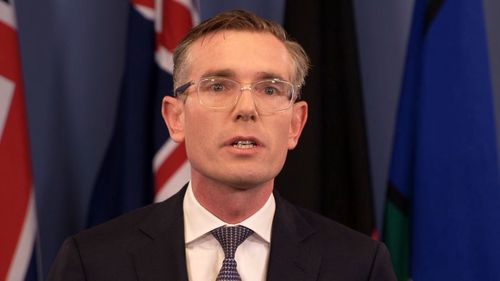
It comes as Ayres today resigned from cabinet and his role as deputy Liberal leader, Premier Dominic Perrottet announced.

Ayres has faced intense scrutiny for any role he had in former deputy premier John Barilaro’s application for a high-profile trade envoy role to New York, and whether it was consistent with ministerial standards.

Ayres has consistently denied he breached any ministerial standards.

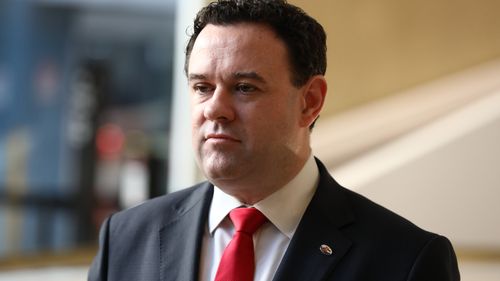
Minister for Enterprise, Investment and Trade, Tourism and Sport and Western Sydney Stuart Ayres has resigned. (Dominic Lorimer)

While he will remain an MP for Penrith, Ayres has stepped down as deputy leader of the NSW Liberals, as well as his ministerial roles (his portfolios included Enterprise, Investment and Trade; Tourism and Sport; and Western Sydney).

Perrottet said Ayres’ ministerial roles will be reassigned and announced in “due course.”

The premier said the independent review of Barilaro’s appointment had raised questions about Ayres’ contact with the recruitment process for the New York trade job.

“The draft review that I have seen, relating to those matters with respect to Mr Ayres, raises questions,” he said.

“It raises questions in respect to the ministerial code of conduct. I am the custodian as premier of the ministerial code of conduct.”

NSW Premier Dominic Perrottet has announced Trade Minister Stuart Ayres has resigned. (Nine)

“The issues in the review go directly to the engagement of Mr Ayres with a department secretary in respect to the recruitment process,” Perrottet said.

An investigation will now take place into whether Ayres breached the ministerial code of conduct. The premier said he would take action when that investigation is completed.

Ayres had been under fire for his handling of the former deputy premier’s appointment, following accusations he used discussions with NSW CEO Any Brown to promote Barilaro’s standing as a candidate.

He rejected that accusation, saying he was only receiving updates of the process.

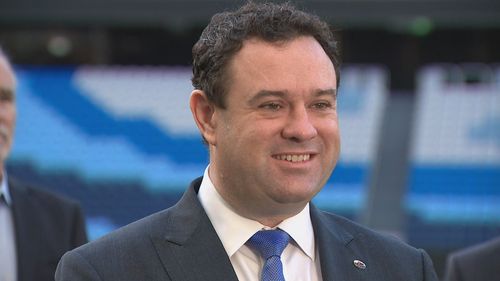
Former NSW trade minister Stuart Ayres had been under intense scrutiny over the John Barilaro affair. (9News)

When asked directly by reporters whether Ayres had “lied” or “misled” him, Perrottet said he did not believe that was the case.

“What is important is, the information that comes to light is acted on, and that’s what I have done,” he said.

“I will make this very clear, Mr Ayers denies any wrongdoing at all. He denies any wrongdoing,” Perrottet said.

Perrottet stressed that Ayres had denied any wrongdoing.

Ayres became the second NSW cabinet minister to stand down this week after Perrottet sacked Fair Trading Minister Eleni Petinos on Sunday after allegations she bullied staff.

Political photo ops that captured the attention of punters on social media

Categories
Australia

Kalgoorlie’s skimpy barmaids featured in new photographic exhibition

A photographer has shed some light on Kalgoorlie-Boulder’s famous skimpy barmaids in a new exhibition, which was 18 months in the making as she documented the nightlife in pubs in the historic gold mining city.

Known as Mellen, a pseudonym of her real name, the photographer originally from Sydney shares her anonymity in common with skimpies who typically work under an alias.

The scantily clad barmaids arrived on Kalgoorlie-Boulder’s pub scene in the 1970s and have since become part of the hard-working, hard-drinking culture of mining towns across Western Australia.

While one Kalgoorlie pub briefly flirted with the concept of male skimpies, or so-called himpies in 2018, the job has predominantly been the domain of young women working on a fly-in fly-out basis.

Most wear lingerie or bikinis and sometimes go topless, but all of the skimpies pull beers and chat to patrons to keep the amber fluid flowing.

As Mellen explains, the idea for her skimpy exhibition was born when she was hired as the house photographer for Kalgoorlie’s aptly named Gold Bar nightclub where she befriended many of the skimpy barmaids.

“It just gave me a license to photograph the girls working … with their consent of course,” she says.

“Then I started going to some of the other venues once I started to get to know the girls, follow them around and take their photos… I hadn’t seen many pictures of them around.

“It’s behind closed doors yet such a widely known thing about Kalgoorlie that I thought, why not meet some of the girls and see if they’d be interested in having their portraits taken?”

A woman pasting a black and white poster of a girl in lingerie to the wall
Photographer Mellen set out to tell the stories of some of Kalgoorlie-Boulder’s skimpy barmaids.(Supplied: Mellen)

More than money

Her photography work has garnered her hundreds of followers on Instagram, where her handle @nophotosofthegirls reflects the signs that typically hang behind the bar of every pub with skimpies on duty.

More than a dozen skimpies gave their permission to be included in the photographic exhibition, underlining the trust Mellen built over more than a year.

Each image in the exhibit has a QR code linking to interviews she recorded with the skimpies that detail some of their personal experiences on the job.

“There’s a lot of different stories to how the women have gotten into this profession,” Mellen says.

“The common themes were the camaraderie between the women, and of course the money, but there’s a lot of jobs where you can make a lot of money, so it’s got to be more than that, especially these days.

“Maybe back in the 70s when women weren’t allowed to work in the mines, but these days there are so many other elements — the self-confidence was another common trait.”

Authentic portrayal of skimpies

The exhibition is a mixture of documentary photography and portraiture.

Mellen says she did not want to portray the industry as glamorous, but as authentically as possible.

“I try and get a balance of what is real, not too glam, but also a nice portrait,” she says.

A woman in denim cut off shorts holding a dog against a white background.
Photographer Mellen says she set out to tell the stories of the women as authentically as possible.(Supplied: Mellen)

“I love the one-on-one interaction of taking a formal portrait, but to be able to capture what’s going on is also a pretty amazing privilege.”

The project has also sparked Mellen’s interest in the history surrounding skimpies in a city that was home to Australia’s biggest gold rush in 1893.

“I have been looking at the history while doing the project, just to try and get a bit more depth of my understanding so I could represent it in a well-rounded way,” she says.

“I am from Sydney and we don’t have skimpies over there, so it was just something that stuck out as a bit unusual for so many venues to have skimpy barmaids here.

“I had been living here a year before I stepped foot in a pub … we have rough and tumble pubs in Sydney, but I didn’t find it [skimpies] jarring at all.”

The exhibition at Kalgoorlie’s Black Crow Studios is open until August 14.

.

Categories
Australia

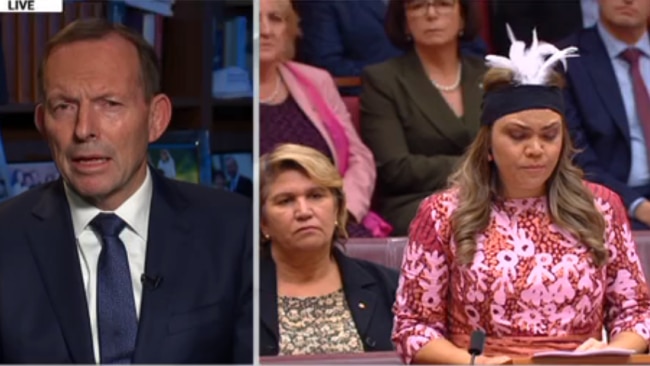
‘Relentlessly practical’: Former prime minister Tony Abbott backs Jacinta Price amid Voice to Parliament debate

Former prime minister Tony Abbott said Jacinta Nampijinpa Price “knows what she’s talking about” as the debate continues about the Indigenous Voice to Parliament.

Senator Price has spoken out against the Indigenous Voice to Parliament, saying the body would create a division between indigenous and non-indigenous Australians and wouldn’t address the issues facing First Nations communities.

While appearing on Credlin on Tuesday night, Mr Abbott told Sky News Australia host Peta Credlin he has ‘enormous respect’ for Ms Price’s opinion on the matter.

Stream the news you want, when you want with Flash. 25+ news channels in 1 place. New to Flash? Try 1 month free. Offer ends October 31, 2022 >

“I have enormous respect for Jacinta Price and unlike so many of the people who talk a lot about this area- Jacinta Price has lived a life in remote Australia.

“So she knows what she’s talking about. That’s why her focus is so relentlessly practical.”

Mr Abbott said what we need to focus on instead is “what are we actually gong to do to get the kids to school, to get the adults to work and to keep communities safe.”

“Because all too often we apply these different standards and we say well it’s OK for indigenous kids not to go to school, it’s ok for indigenous adults not to go to work because of culture.

“We tolerate things that we wouldn’t tolerate for a second in suburban Australia because we say well that’s just the sort of thing that happens in remote places.”

The Voice to Parliament was a key element of the 2017 Uluru Statement from the Heart and called for an elected Indigenous advisory body to the Federal Parliament.

The proposed body would advise the government on issues affecting First Nations people.

The Labor Government pushed the issue to the center of its agenda when Prime Minister Anthony Albanese declared on election night that there would be a referendum in his first term.

The former prime minister weighed in on the issue and said there was no need for “constitutional change”.

“I think this proposed constitutionally voice to the parliament is wrong in principle and it will work out badly in practice.

“I don’t believe that we need a constitutional change if we are to have a voice and certainly I don’t think that there is any lack of consultation already,” Mr Abbott said.

.

Categories
Australia

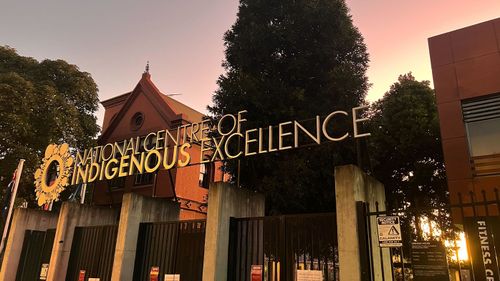
Community ‘devastated’ after Aboriginal hub in Sydney forced to close

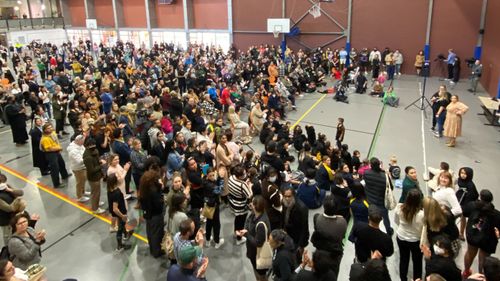
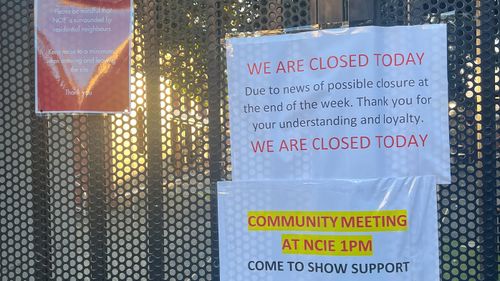
sydney locals have been “devastated” by the sudden closure of a well-loved community centre, with hundreds protesting today after staff were notified they’d be losing their jobs when handed a non-disclosure statement.

Staff at the National Center for Indigenous Excellence (NCIE) in Redfern were told the non-profit organization will close on Monday after it’s government owners were unable to reach an agreement on the hub’s future.

“I don’t think we can measure the impact,” executive director of Redfern Youth Connect Aunty Margaret Haumono told 9News.com.au.

Elders say they will fight fiercely to keep the NCIE up and running.
Elders say they will fight fiercely to keep the NCIE up and running. (Supplied)
The National Center of Indigenous Excellent opened in 2006 and offers sport, fitness, conferences and community classes including tutoring and educational support.
The National Center of Indigenous Excellent opened in 2006 and offers sport, fitness, conferences and community classes including tutoring and educational support. (Supplied)

“I’ve got kids asking me ‘Aunty Marg, where are we gonna go? What are we going to do?'”

The centre, which opened in 2006, offers community classes, educational support and tutoring along with social sport and fitness classes.

But Aunty Marg said the hub was much more than that, and has questioned why there was no consultation with the community before its closure.

“This place is just not a gym and a swimming pool for us, this place is a meeting point, it’s a meeting place,” she said.

“We have elders who come here and sit and have a cup of tea.

“We have mums and bubs swimming sessions, we have our elders that sit here.”

The center employs mostly Aboriginal staff and was created to support the health and wellbeing of thousands of Indigenous and non-Indigenous community members.

Aunty Haumono said members of the independent subsidiary of the Indigenous Land & Sea Corporation (ILSC) turned up to the NCIE and broke the news yesterday by handing out non-disclosure statements to staff, informing them they’d lost their jobs.

“We had no idea this was coming,” she said.

“The majority of staff did not accept the non-disclosure agreements, and now we’re here starting the fight to keep this place open.”

The NCIE is set to close in seven days.
The NCIE is set to close in seven days. (Supplied)

The youth worker was one of 400 people who descended on the community hub today demanding an independent inquiry into the closure.

“It’s been disgusting, and we are as a community calling on an independent inquiry into the divestment process,” Aunty Haumono said.

“They (the ILSC) said ‘call the police’ as a response as opposed to showing up and providing dialogue and community.”

Federal Minister for Indigenous Affairs Linda Burney described the center as “the beating heart of the Aboriginal community in Redfern”.

“I have spoken with the CEO and Chair of the Indigenous Land and Sea Corporation and the Member for Sydney today,” she said.

“I strongly encourage the Indigenous Land and Sea Corporation and the NSW Aboriginal Land Council to work together to find a solution so the centre’s programs and services continue to benefit the local community.

The decision to shut down was announced one month after the George Street property was divested from ILSC on June 30th, and transferred to the NSW Aboriginal Land Council (NSWALC).

The ILSC purchased the land where the old Redfern Public School once was, with community support in 2006.

The heritage buildings were transformed into conference, accommodation and office spaces and recreational facilities including a gym and aquatics center were built.

The social enterprise is still managed by the ILSC, which runs and acquires millions of dollars in land and sea assets to benefit Indigenous people.

‘Running at a deficit’: Government bodies unable to reach agreement

More than 400 people gathered at the NCIE in Redfern today to stand in solidarity with the community.
More than 400 people gathered at the NCIE in Redfern today to stand in solidarity with the community. (Supplied)

Chairperson of the NSWALC Danny Chapman said the land council was “not in a financial position to pick up the enormous amount of money that it would take to run the business” and so negotiations with ILSC failed.

“We told the community that the New South Wales ALC was not in a position to run the pool and the gym, which was the main contributors towards the NCIE running at a deficit,” Chapman told 9News.com.au.

“We made that very clear.”

Chapman said negotiations would be reopened today.

9News understands a meeting between NSW ALC and the ILSC was scheduled but the NCIE Aboriginal community were not invited.

The ILSC has been contacted for comment.

Categories
Australia

COVID-19 vaccines to be offered to vulnerable children from 6 months to under five years of age

COVID-19 vaccines will be offered to at-risk children from 6 months to under five years of age from next month.

The Australian Technical Advisory Group on Immunization (ATAGI) has recommended approximately 70,000 young children at higher risk of developing severe illness from COVID-19 be able to receive the Moderna vaccine from September 5.

At this stage, the vaccine is only recommended for children in that age group who are severely immunocompromised, have a disability, or complex health conditions that increase the risk of COVID-19.

It comes after the Therapeutic Goods Administration (TGA) provisionally approved a pediatric dose of the Moderna vaccine, which contains a lower concentration of the active ingredient than the adult dose.

Meanwhile, the federal government has secured 500,000 doses of the vaccine for the age group and initial supplies will arrive in Australia later this week.

Parents are currently unable to book the vaccine but details on doing so will be laid out in coming weeks.

The federal Health Minister, Mark Butler, said Australia would be one of the first countries in the world to roll out a COVID-19 vaccination for children aged under five years, following the United States and Canada.

Mr Butler said more than 1.5 million Australians had also received a fourth dose of the COVID vaccine since the federal government expanded eligibility three weeks ago.

Two-thirds of people over 65 have received a fourth dose of the vaccine.

More to eat.