Categories
Australia

Indigenous leaders bring their ancestors home after 90 years at the Smithsonian National Museum of Natural History

Millions of people pass through the doors of one of America’s most popular museums each year.

But few come with a purpose as deeply personal as the group of Indigenous South Australians who recently arrived at the front steps.

WARNING: Aboriginal and Torres Strait Islander readers are advised that the following story contains images and voices of people who have died.

For decades, the Smithsonian National Museum of Natural History has held the remains of Aboriginal and Torres Strait Islander people whose bones were taken from Australia in order to be studied in the United States.

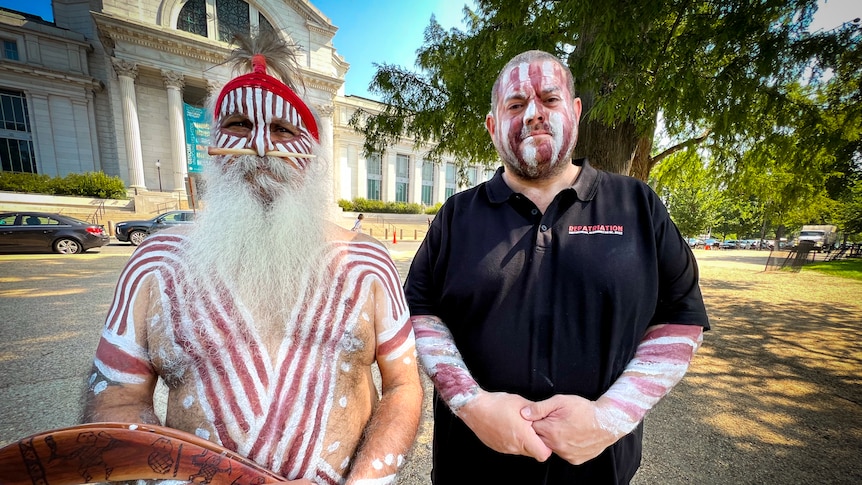
Major Sumner was one of several representatives from the Narungga and Kaurna nations who made the long journey to the US capital to take their ancestors home.

Two Indigenous men, one in a black polo shirt and the other in traditional dress, stand next to a white an in a suit
The repatriations to Australia are the result of years of lobbying by Indigenous leaders, with the Smithsonian initially resisting the return.(ABC News: Jade Macmillan)

“Let the world know this is what happened to our people, to the people that passed on,” he said.

“They were taken away, they were put in boxes and kept in museums and poked.

“Once we rebury them, they [will] no longer be touched.”

A long history of ancestral remains taken from Indigenous land

The repatriation from Washington was the third time the Smithsonian Institution had returned ancestral remains to Australia.

It earlier repatriated bones taken from the Northern Territory during a major scientific expedition to Arnhem Land in 1948.

A black and white photo of tents in the outback with Australian and American flags hanging from a tree
Thousands of plant and animal specimens, as well as Indigenous artefacts and paintings, were taken during a major scientific expedition in the 1940s.(Supplied: Frank Maryl Setzler, NAA Photo Lot 36, Department of Anthropology, Smithsonian Institution)

Co-sponsored by the Smithsonian, National Geographic and the Australian government, the months-long trip was carried out by a team of scientists, anthropologists and photographers from both Australia and the US.

Martin Thomas, a professor of history at the Australian National University, said the researchers collected thousands of plant and animal specimens, as well as Indigenous artifacts and paintings.

But they also took human remains, without the permission of traditional owners.

“With travel time, they were away for the better part of a year,” he said.

“And so the understanding was that they would come back with collections that would be the dividends on that investment.”

A black and white photo showing men loading boxes onto a boat as others look on
ANU history professor Martin Thomas says researchers took remains without the knowledge or permission of Indigenous people.(Supplied: Frank Maryl Setzler, NAA Photo Lot 36, Department of Anthropology, Smithsonian Institution)

In his 2018 documentary Etched in Bone, Professor Thomas showcased footage taken during the expedition of American Frank Setzler removing remains from a cave at Gunbalanya.

The film cites Setzler’s diary entries to argue he deliberately hid what he was doing from the local Indigenous people.

“I paid no attention to these bones as long as the native was with me,” he wrote on October 7, 1948.

“During the lunch period, while the two native boys were asleep, I gathered the two skeletons which had been placed in crevices outside the caves.”

The remains stolen during the expedition were finally returned in 2008 and 2010.

“He was more an archaeologist than an anthropologist, so more interested in past eras, than contemporary cultures,” Professor Thomas said.

“And he wasn’t really somebody who was interested in documenting culture, particularly, even in his own field of specialisation, which was North American anthropology.

“He was much more of an excavator.”

Museum acknowledges long wait for Indigenous communities

The remains repatriated in July 2022 entered the Smithsonian’s collections between 1904 and 1931, before the expedition to Arnhem Land began.

The institution would not detail how it acquired them, referring only to “accessions” and “exchanges” with other museums.

The remains of two people have been returned to the Narungga and Kaurna nations in South Australia, while a further 23 will be held by the Australian Government until traditional custodians are determined.

“We realize as museums that we have to be part of the 21st century,” the National Museum of Natural History’s director Kirk Johnson said.

“And move towards repatriation of human remains and funerary objects, and with much more respect to the source communities from which these objects came.”

A man with glasses in a white shirt and gray jacket stands in front of the Smithsonian
Kirk Johnson, the director of the Smithsonian National Museum of Natural History, acknowledged the long wait of Australian Indigenous communities.(ABC News: Jade Macmillan)

The repatriations to Australia are the result of years of lobbying from Indigenous leaders, with the Smithsonian having initially resisted the return.

That was despite laws being passed in the US in the 1990s requiring the repatriation, on request, of human remains and ancestral objects belonging to Native American people.

“When you take people off Country, you’re taking away their spirit,” Narungga man Cyril Kartinyeri said.

“And bringing them back to Country, then that’s their resting place.”

Four Indigenous men, one in traditional dress, stand side by side
Indigenous leaders Douglas Milera, Cyril Kartinyeri, Major Sumner and Allan Sumner in Washington DC.(ABC News: Jade Macmillan)

Mr Johnson acknowledged the long wait of Australian Indigenous communities, with one collection of ancestral remains still to be returned at an undecided date.

“We’re in communication with the Australian government and with the communities to make sure that we get these things going,” he said.

“Fast enough I’m sure is not fast enough for the communities, but we really want to be as responsive as possible.”

Remains to be reburied on Country

On a hot Washington summer’s day, the visiting Indigenous leaders carried two boxes containing ancestral remains, draped in the Aboriginal flag, into the gardens outside the museum.

Under the shade of a large tree, they performed a smoking ceremony and reflected on the significance of the task they were about to undertake.

Four Indigenous men wearing traditional white and red paint stand around boxes draped in an Aboriginal flag
Allan Sumner, Major Sumner, Douglas Milera and Cyril Kartinyeri perform a traditional smoking ceremony at the Smithsonian museum in Washingon DC.(ABC News: Supplied)

“It’s an honor and a privilege to be here today, as we represent our nation groups,” Allan Sumner said.

“And to write our histories, according to us.”

The Kaurna, Ngarrindjeri and Yankunytjatjara man said the group had experienced mixed emotions while in the US but was hopeful of making a positive impact by taking the remains back for reburial.

“It’s not the most pleasant thing to do but it’s the right thing to do for us.

“This is about healing for ourselves, healing for our Country, and our people.”

Major Sumner had not been in Washington for long but was already looking ahead to the trip home.

“It’s going to be a joyful one. Because it’s their spirit, you can feel their spirits and feel them,” he said.

“I talk to them and tell them you’re going home now.

“We’ll get you there as fast as possible and get you back to where you came from.”

Packing crates with black, yellow and red Aboriginal flags draped over them
The remains of two people have been returned to the Narungga and Kaurna nations, and 23 will be held by the Australian government until traditional custodians are determined.(ABC News: Supplied)

.

Categories
Australia

Iranian asylum seeker on bridging visa wants permanency in Australia to care for her sick daughter

Elham Amareh is used to feeling fear and uncertainty, having fled Iran with her husband, son and daughter and making the treacherous journey to Australia by boat in 2013.

“My family is very strict with religion, and I didn’t follow my religion, and because I lose my hijab and lose my religion [sic]I cannot go back,” she said.

“If I return to my country, they will kill me straight away, and they will kill my daughter as well.”

Ms Amareh has lived in Australia for a decade now, but her attempts to secure a protection visa have been denied.

Instead, her family has lived on six-month bridging visas for most of that time.

Life’s uncertainties became too much to bear in January this year, when her 16-year-old daughter was diagnosed with T-cell lymphoma – a type of blood cancer.

A woman stands next to a teenage girl in a hospital bed whose hair has fallen out from cancer treatment
Elham Amareh’s 16-year-old daughter, Areezo, is undergoing treatment in hospital for T-cell lymphoma. (Supplied)

“I am depressed [and] I can’t sleep,” she said.

“My whole family is depressed about [my daughter].

“As a mum, it’s hard when I see my child sick.

“I can’t go back to my country [because] it is hard to find her treatment in my country, and very expensive.”

People in limbo for years

Ms Amareh gradually reduced her work hours after her daughter’s diagnosis, and eventually quit, to spend more time at the hospital.

She said her husband was too depressed to work more than a few days each week, and her family was currently living in a house offered up as a short-term option by a friend.

While her visa arrangements include Medicare access, other supports such as those available through Centrelink are not included.

“I’ve been here a long time, we pay taxes, and we have children here,” she said.

“I just want a good life for my kids.”

A man sits next to a woman who is affectionately holding the shoulders of a teenage girl, they are sitting in a restaurant
The Amareh family has been living on six-month bridging visas for most of the last decade.(Supplied)

Immigration lawyer Chris Johnston said there were many others across the country struggling to find stability under current visa arrangements.

He said some were asylum seekers, like Ms Amareh, who had been denied refugee status, but were unable to return safely to their home country – creating a state of limbo.

“The system is messy, and it leaves many people in limbo for long periods of time,” he said.

“People are on bridging visas for up to a decade, and their life goes on [and] their children grow up and they’re still on bridging visas.

“There’s the uncertainty of, ‘If I get this visa refused, am I going to be put into detention? If I get put into detention, am I going to be deported?’

“It’s very stressful.”

Mr Johnston said the six-monthly renewal requirement, as well as some restrictions on access to healthcare, welfare, and education, made it extremely difficult for traumatized people to move on with their lives.

“They’re spending a lot of time just trying to access things, and get the basics for life,” he said.

Mr Johnston suggested a longer time frame between renewal could be applied, to reduce the pressure of six-monthly applications.

Giving refugees permanency

Around the same time Ms Amareh arrived in Australia, the number of asylum seekers traveling to the country by boat was increasing dramatically.

Successive Labor and Coalition governments brought in a range of policies designed to stop the arrival of boats carrying asylum seekers and deter people smuggling.

When the last Labor government was defeated in 2013, the Coalition reintroduced Temporary Protection Visas, available for a period of three years for people who arrive in Australia without a visa and were found to be owed international protection obligations.

Female hands holding two photographs
Elham Amareh fled Iran with her husband and two children in 2012.(ABC News: Trent Murphy)

In the lead up to this year’s federal election, Labor promised to abolish that scheme, along with the Safe Haven Enterprise Visas (SHEVs), and “transition eligible refugees onto permanent visa arrangements.”

About 19,000 refugees on TPVs and SHEVs could be “eligible” under the changes.

Mr Johnston said the government had a “difficult challenge ahead” to develop the details of that “transition” in a timely fashion.

“Immigration policy is not an easy thing to do,” he said.

“But this is the time to do it, in the first year of their term.

“We don’t want to see this go on for another three years, or another six years.

“The time to act is now.”

Immigration Minister Andrew Giles said he was “currently considering options on how best to resolve the current cohort’s visa status.”

“This Government will stop wasting taxpayer money reassessing their visas every three or five years … [and] will deliver on our commitment to convert those on temporary protection visas and safe haven enterprise visas to permanent protection visas,” he said.

A woman stirring a pot in a kitchen
Elham Amareh wants to live in Australia to care for her daughter.(ABC News: Trent Murphy)

What about bridging visas?

While the new Labor Government’s plan is a source of hope to certain visa-holders, the changes won’t help others stuck on bridging visas, like Ms Amareh and her family.

She said her family was desperate to stay in the country permanently, and focus on her daughter’s treatment.

“I want to be treated like an Australian citizen,” she said.

“Please — I want this government to look after us.”

The Minister for Immigration, Andrew Giles, has the power to intervene in migration matters.

A spokesperson for the Minister said he was unable to comment on individual cases, but that “every case was assessed on its individual merits.”

The Federal Government declined to comment on whether any policy changes were being considered around bridging visas held by asylum seekers, specifically Bridging Visa E (050).

.

Categories
Australia

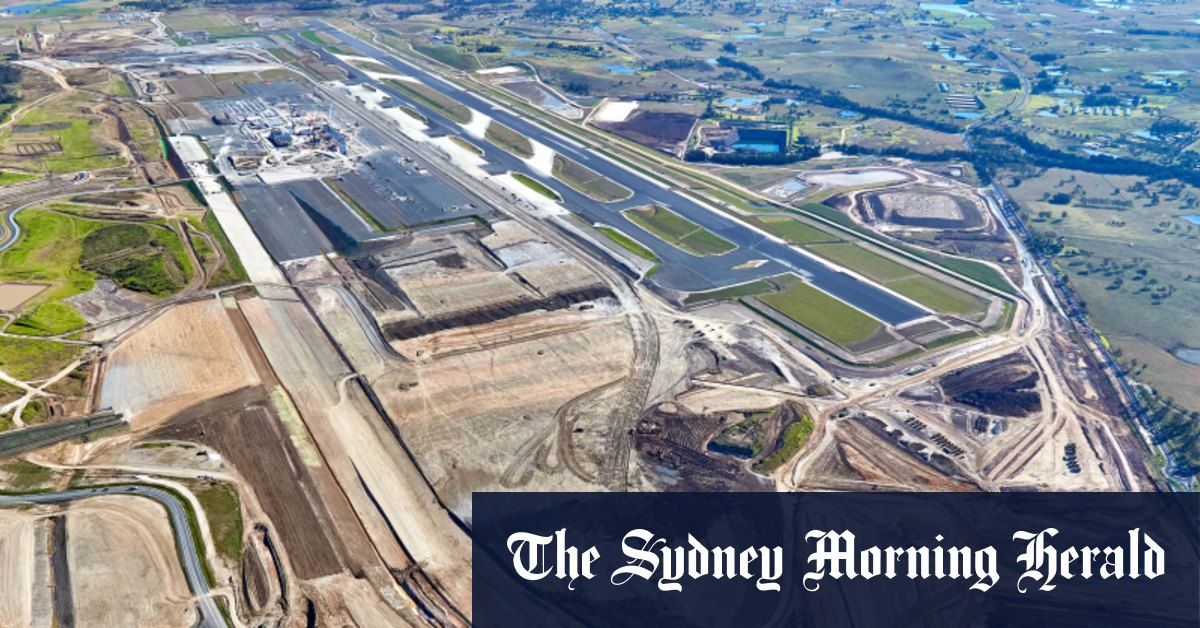
Western Sydney Airport rail line documents reveal cost blowouts of $2 billion

It states that the project budgets for the three new metro rail lines “now range from $13 billion to $26 billion”. The $13 billion refers to the airport line, which in late 2020 the state and then federal Coalition governments estimated would cost “around $11 billion”.

A strategic assessment by Sydney Metro in September last year also rated as “high” the risk of the agency failing to deliver “projects within the approved budget envelope”.

Despite this, Transport Minister David Elliott said he had been advised by Sydney Metro chief executive Peter Regan that the airport rail line project was “tracking to time and budget”, adding that it would be the “spine for communities across western Sydney”.

However, Labor transport spokeswoman Jo Haylen said the public deserved to know why the airport line project had blown out by $2 billion before shovels were in the ground.

“This cost blowout exists in black and white in the government’s own internal documents. The Liberal government needs to be honest with the public about the cost of this project,” she said.

Minutes of meetings for Sydney Metro’s risk committee also show it had concerns two years ago about a budget hit from the COVID-19 pandemic spreading to the airport line and Metro West.

The meeting documents detail fears that other infrastructure projects, and the timing of building the rail lines concurrently, would result in “unintended competition” for construction industry resources.

Sydney Metro said in a statement that the airport line was “tracking to time and budget”, and that the earlier City and Southwest project was at peak construction when many market pressures such as an overheated construction market began to take shape, “meaning their impact was more acute”.

“It is no secret that construction projects across the world are managing supply chain disruption, COVID-19 impacts and an overheated construction market with significant material and labor cost increases,” it said.

The agency said it was working with delivery partners on the airport line and Metro West to “mitigate these impacts”.

loading

Unlike the other metro train lines, the 23-kilometre rail link from St Marys to the airport and Bringelly, where a new city center is planned, is jointly funded by the NSW and federal governments.

In a highly critical assessment last year, Infrastructure Australia warned that the cost of building the airport rail line outweighed its benefits by $1.8 billion, and found the project’s business case was based on several flawed assumptions.

However, federal Infrastructure Minister Catherine King said the airport line would “benefit western Sydney communities for years to come”, noting that the state government’s advice was that the $11 billion project was “tracking to time and budget”.

The Morning Edition newsletter is our guide to the day’s most important and interesting stories, analysis and insights. Sign up here.

Categories
Australia

Renter forced to give up her cat under laws in South Australia, where landlords can refuse pets

When Jasmin Witham started renting in Adelaide, she was forced to make a heartbreaking decision.

In order to move into her new home in Clovelly Park, the 27-year-old would have to give up her kitten, Nina.

Even though more than 60 per cent of South Australian households own a dog or cat, the decision to allow pets in rental properties lies with the landlord.

Property owners can currently refuse tenants’ requests to own a pet and do not have to provide a reason for doing so.

As a result, Ms Witham, who has struggled with rental affordability over the years as a part-time student who lives with bipolar disorder and is on the Disability Support Pension, said she was faced with a difficult choice.

“We approached the landlord and asked to bring the pet with us and they said no, so I wasn’t able to bring my kitten with me to the new house,” Ms Witham said.

“It is still very upsetting, and I don’t see how having a pet or a smaller animal like a cat is detrimental in any way to a property, like if there is any damage there is a bond.”

A hand holding a smartphone with a photo of a cat shown on screen
Nina the cat went to live with Jasmin’s parents instead.(ABC News: Che Chorley)

The South Australian government is currently looking at modernizing the state’s residential tenancies laws which could see tenants allowed to rent with pets.

In 2020, new laws came into effect in Victoria which made it much easier for renters to own a pet.

Now landlords are only allowed to deny a tenant’s request for a pet if they receive approval from the Victorian Civil and Administration Tribunal.

Queensland followed in 2021 by updating its legislation and stripping landlords of the right to refuse pets in rental properties without a reason deemed valid by the state government.

In the ACT, tenants still require consent of the landlord to keep a pet on the property but tenancy agreements can no longer prohibit pets completely.

If the landlord wants to refuse a pet, they have to take it to the Civil and Administrative Tribunal.

Shelter SA executive director Alice Clark said the current legislation in place in South Australia is outdated.

“The number of pet rentals that is listed is very low in South Australia so yes I think we should catch up,” Dr Clark said.

“What we don’t want is tenants hiding their pets which we know happens frequently so it would be great to have that all done transparently and responsibly by both sides.”

Rental Crisis Jasmin Witham
Jasmin Witham is currently renting in Unley.(ABC News: Che Chorley)

Considering what she could afford, Ms Witham said finding a rental by herself was difficult and even finding a share house was hard.

“It’s difficult to be put onto a lease where a lot of landlords and agencies feel uncomfortable taking people getting social security benefits and will prioritize people in employment,” she said.

As Australia’s housing crisis worsens, Ms Witham hopes South Australia updates its laws to better protect both tenants and landlords.

.

Categories
Australia

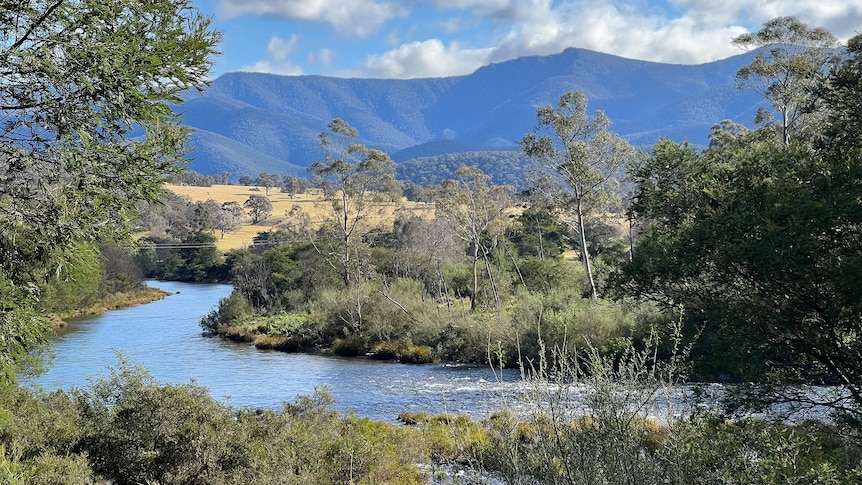
Gippsland farmer ‘shocked’ by Crown land campsites announced by Victorian government

A Gippsland farmer has described his shock at the location of several new campsites being established on what he considers “totally inappropriate” sections of land licensed from the Victorian government.

The government last Friday published details of the first four camps in Gippsland — two are on the Wonnangatta River, and two are on the Dargo and Macalister Rivers — on the Crown land river frontage.

Access to many of the campsites is from narrow country roads with limited parking opportunities and strict conditions.

Trevor Archer manages the farm that hosts the Macalister River campsite and said it was “totally inappropriate” because there was “nowhere to park”.

The site is 4 kilometers from Cheyne’s Bridge Recreation Area, a campsite with toilet facilities popular among trail bike riders.

“It gave me a bit of a shock, actually,” Mr Archer said.

“I knew it was proposed but they hit us pretty quick with it.

“There’s nowhere to park. The closest safe park is 4 kilometers away [at Cheyne’s Bridge] on a dangerous windy narrow road.

“It’s an accident waiting to happen if people are on foot down there.”

A barbed wire farm fence runs alongside the narrow Licola Road.
The Macalister River campsite is currently accessed by jumping a fence on Licola Road.(Rural ABC: Peter Somerville)

Access to the campsite involves scaling a barbed wire fence beside a narrow two-lane road and walking through a paddock often grazed by Mr Archer’s cattle.

“The entry point is 40 meters from where I bring my cattle up a little cutting … and later in the year there are 130–140 cows and calves coming up here and I’ve got to try to get them through [the campers],” Mr Archer said.

“If someone’s here trying to unload their gear when I’ve got cows and calves coming in… it’s just not going to work.”

The Department of Environment, Land, Water and Planning was contacted for comment.

The wide Macalister River flows between a rocky hill and green campsite.
The Macalister River Cheyne’s Bridge campground is 4 kilometers upstream from the new campsite.(Rural ABC: Peter Somerville)

Fulfilling an election commitment

The Labor government made a 2018 election commitment to open licensed Crown land river frontages to camping.

The land was previously accessible for day use, with the four campsites opened on areas that are frequently grazed by cattle.

The sites have to be accessed by foot, campers must keep portable toilets at least 50 meters away from waterways, or 100 meters away if burying human waste, and dogs and campfires are not permitted.

A dirt road adjacent to a shallow valley
A new campsite on the Wonnangatta River frontage must be accessed by foot.(Rural ABC: Peter Somerville)

Campers are welcome

Mr Archer said he was not opposed to having campers on the land but expected the 4km walk from Cheyne’s Bridge would deter many.

“I don’t see that anyone’s going to carry their gear 4 kilometers down the road, 4 kilometers back,” he said.

“And they can only get in that one entry and exit.”

Trevor stands on a ridge above a paddock leading down to the river.  He wears a broad hat and a dark jumper.
Trevor Archer worries how he will move cattle while campers are unloading equipment.(Rural ABC: Peter Somerville)

It would not be the first time campers have set up on the property.

“Before the 2007 flood when the river blew out and changed course, I had 14 sites where people could choose to camp,” Mr Archer said.

“But we had them where we wanted them. They were in a bend in the river and it didn’t interfere with our stock work or anything.”

A wide grassy farm paddock with rows of trees on either side.
Walk-in campers are allowed to set up on this site alongside the Macalister River.(Rural ABC: Peter Somerville)

Calls for a ‘level playing field’

Further downstream, Paradise Valley camp and caravan park operator Neil Williams was surprised to learn about the free campsite.

“It doesn’t really seem fair that we have to go through all the compliance rigors that we do, and the state government feels like it can open up a parcel of land for anyone at any time,” Mr Williams said.

He said many Paradise Valley guests had visited the park over many years.

But Mr Williams conceded he may lose business to the free campsites upstream.

“I’d just like everyone to be on a level playing field,” he said.

“There are caravan parks all over Victoria that have had to comply with Country Fire Authority regulations.

“There’s a whole host of other council health and safety compliance issues that we deal with on a regular basis and it all adds to our overheads.”

.

Categories
Australia

Destructive cold front sweeps east bringing rain, damaging winds to NSW, Victoria, South Australia, Tasmania, ACT and WA

Another destructive cold front is sweeping east, exacerbating the risk of flooding across multiple states in southern Australia.

A large area of ​​South Australia, and some elevated areas in Victoria and New South Wales, and north-western parts of Tasmania, are on high alert today with warnings of heavy rain and damaging winds.

It comes as yet another destructive cold front sweeps east.

“Rainfall totals of 10 to 30 mm are likely over a broad area of ​​southeastern Australia on Thursday,” Weatherzone said.

“The heaviest rain will be in central and southern inland NSW and the ACT, where 24-hour totals could exceed 150 mm on and west of the ranges, with six-hourly rainfall rates possibly reaching 50 to 60 mm.”

Severe weather warnings have been issued and multiple flood watches are in place across parts of NSWnorth eastern Victory and northern Tasmanian.

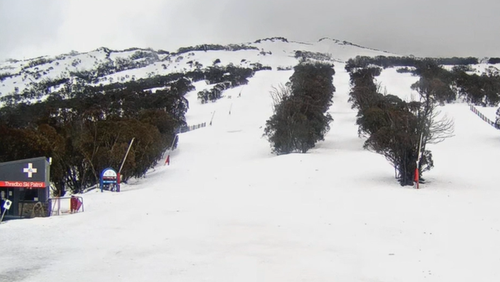
Thredbo Ski Resort in NSW has been forced to close lifts due to safety reasons, as the wild weather lashes the alpine region.

The wild winter weather has forced the closure of Thredbo's ski and chair lifts.
The wild winter weather has forced the closure of Thredbo’s ski and chair lifts. (9News)

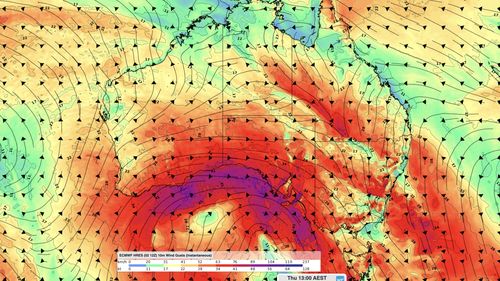
In South Australia, damaging winds up to 90 km/h will be felt across Adelaide and the Hills.

Forecast wind like speed and direction at 1pm AEST on Thursday, according to the ECMWF-HRES model.
Forecast wind like speed and direction at 1pm AEST on Thursday, according to the ECMWF-HRES model. (Weather zone)

“We are in for a very wet afternoon, particularly in our northern region, around 50-60mm expected up in the Hills,” 9News presenter Jesse Burns said.

“A wet weather warning has also been issued, with a month’s worth of rain expected this week alone, particularly in our northern region with around 50 to 60mm expected around The Hills.

“That’s cause for alarm with potentially localized flash flooding in those areas.”

Senior Meteorologist at the Bureau of Meteorology (BoM) Dean Narramore explained the next cold front is “tapping into tropical moisture”, which will cause moderate to heavy rainfall across parts of Victoria and NSW.

“That could lead to another possible flood event for inland parts of NSW,” Narramore said.

“Looking at the rainfall totals we will see light to moderate falls right across WA and SA, but the focus of the heaviest rainfall will be north-east Victoria and south-eastern NSW.”

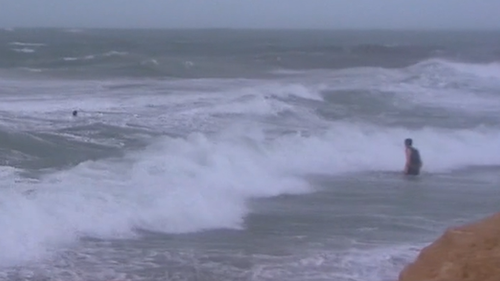
While rain is easing in WA, large swathes of coastline are being pounded by dangerous surf.
Large swathes of WA’s coastline is being pounded by dangerous surf. (9News)

Residents in WA’s central west to south east corner are being told to stay away from the surf as large swell pounds the coast.

Significant wave heights exceeding 7 meters have occurred in exposed locations, and erosion has been observed along the coast.

a travel warning has been issued as thick fog covers Brisbane this morning.

‘River City’ wakes to white-out as fog swallows city

Categories
Australia

Police release CCTV vision amid investigation into Sydney shooting murder

Shady Kanj was gunned down in Chester Hill, in Sydney’s west last August in what police believe is a “targeted attack”.

As part of ongoing investigations, Homicide Squad detectives conducted a secondary canvass of the area in Sydney’s west and unearthed the vision.

Shady Kanj was shot in Chester Hill, in Sydney's west last August.
Shady Kanj was shot in Chester Hill, in Sydney’s west August 6, 2021. (Supplied)

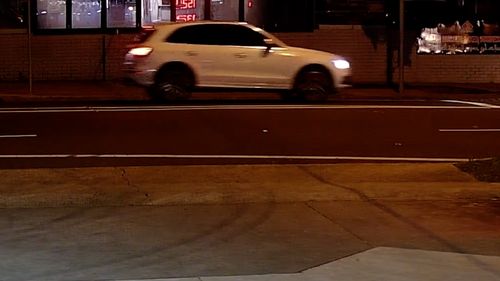
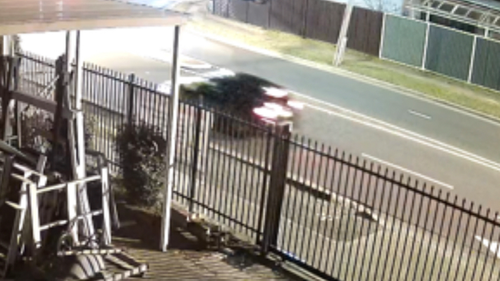
It shows a man and woman in a white Audi Q5 at a McDonald’s drive-thru in Lidcombe prior to the murder.

Police do not believe the man and woman were involved in Kanj’s murder but may have information that could assist with inquiries.

Detective Superintendent Danny Doherty urged the man and woman, or those with knowledge of their identities, to come forward.

The white Audi was seen at a McDonald's drive-thru prior to the shooting murder of Granville man Shady Kanj.
The white Audi was seen at a McDonald’s drive-thru prior to the shooting murder of Granville man Shady Kanj. (NSW Police)
Police do not believe the man and woman were involved in Kanj's murder.
Police do not believe the man and woman were involved in Kanj’s murder. (NSW Police)

“Detectives have released CCTV in the hope of identifying the occupants of a white Audi captured on the night of Shady’s murder, as we suspect they have information of value to our investigation,” he said.

“That vehicle is captured at the fast-food restaurant in Lidcombe before the shooting, then again on the corner of Mona Street and Clyde Street at South Granville later that night.

“Given the vehicle traveled in the vicinity of the murder around the time of the shooting, it is possible the occupants saw something suspicious that may further our inquiries.”

Doherty said police believe the individuals involved in the murder visited Miller Street before and after the shooting.

“As part of ongoing investigations, detectives returned to Miller Street at South Granville to conduct further canvasses of the area,” he said.

“It is believed that those involved in Shady’s murder visited Miller Street before and after the incident and may have even disposed of evidence in the vicinity.”

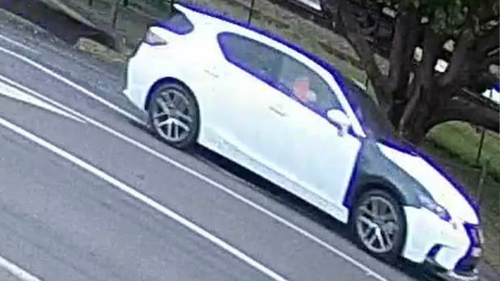
The release of the CCTV comes months after police seized a white Lexus hatchback, which was believed to be disguised and used in the murder.

The disguised Lexus was shown traveling to and from the Chester Hill area on the night of Shady Kanj's murder.
The disguised Lexus was shown traveling to and from the Chester Hill area on the night of Shady Kanj’s murder. (Supplied)
In CCTV vision the Lexus is seen traveling to and from the Chester Hill area on the night of Shady Kanj's murder.
The Lexus CT200H hatchback was taken from an Auburn home, in the city’s west, in April. (Supplied)

It’s suspected the Lexus CT200H hatchback was “wrapped” in black nylon film to disguise its true colour.

The vehicle has since undergone extensive forensic examination.

Anyone with information that may assist investigators is urged to contact Crime Stoppers on 1800 333 000 or online here.
Categories
Australia

Record coral cover on parts of Great Barrier Reef at risk from global heating, scientists warn | Great Barrier Reef

Marine scientists monitoring the Great Barrier Reef say they have recorded the highest levels of coral cover in 36 years in the north and central areas, but warned any recovery could be quickly overturned by global heating.

The Australian Institute of Marine Science’s annual long-term monitoring report says the fast-growing corals that have driven coral cover upwards are also those most at risk from marine heatwaves, storms and the voracious crown-of-thorns (COTS) starfish.

Global heating is accepted by scientists as the reef’s biggest long-term threat.

Earlier this year, unusually hot ocean temperatures caused the first ever mass bleaching during a La Niña year – a natural climate phase that should have given corals a respite.

The first ever mass bleaching on the reef was recorded in 1998, but since then corals were hit in 2002, 2016, 2017, 2020 and again earlier this year.

The prognosis for the reef’s future under climate change, the report said, was one of increasingly frequent and longer lasting marine heatwaves, with the ongoing risk of COTS outbreaks and tropical cyclones.

“Mitigation of these climatic threats requires immediate global action on climate change,” the report said.

A diver is towed over a reef as part of the monitoring program
A diver is towed over a reef as part of the Great Barrier Reef monitoring program. Photograph: Australian Institute of Marine Science

Dr Mike Emslie, who leads the Australian Institute of Marine Science monitoring program, told the Guardian: “The fact that we have had four bleaching events in the last seven years and the first one in a La Niña year is really concerning.”

Surveys are carried out by towing divers over reefs at a standardized rate, recording corals, bleaching levels, COTS and the number of coral trout and sharks.

About half of the 87 reefs surveyed for the report were carried out before the most recent bleaching event unfolded in February and March this year.

Sign up to receive the top stories from Guardian Australia every morning

“The effects of the 2022 mass bleaching event are still unfolding, and its impact will only be known over the coming months,” the report said.

Aerial surveys carried out in March by the Australian Institute of Marine Science and the Great Barrier Reef Marine Park Authority covered 750 individual reefs.

The fast-growing acropora Species of branching and plate-like corals that were pushing coral cover up were also preferred prey for COTS, he said.

Image captured by marine scientists during monitoring of Hyde Reef
Image captured by marine scientists during monitoring of Hyde Reef. Photograph: Australian Institute of Marine Science

In the northern parts of the reef, the monitoring data showed coral cover averaged 36% – a record high, with the lowest levels in the region at 13% recorded in 2017.

Coral cover averaged 33% in the central area – another record high compared to the 2019 low of 14%.

In the southern region, the average coral cover dropped from a 2021 estimate of 38% to 34%.

While bleaching was widespread across the reef in February and March, Emslie said the heat stress had not reached levels likely to cause corals to die.

“To get at the impacts [of the latest bleaching] we won’t know until we do in-water surveys over the next few weeks.

“But bleaching does have sublethal affects and will affect the physiology of the corals because while they bleach they have been starving.”

He said there was evidence that even when corals did not die from bleaching, the phenomenon could reduce their ability to reproduce, slow their growth and make them more susceptible to coral disease.

He said it could take a year or more for those sublethal effects to become apparent.

QuickGuide

How to get the latest news from Guardian Australia

Show

Photograph: Tim Robberts/Stone RF

Thank you for your feedback.

As bleaching events were happening more often, future bleaching events could “reverse the observed recovery in a short amount of time”, he said.

The most recent mass bleaching coincided with a UN monitoring mission to the reef that had been requested by the Morrison government as it attempted to fight a recommendation to place the reef on a list of world heritage sites in danger.

The status of the reef will be discussed at the next world heritage meeting, but a date has not yet been set after a scheduled June meeting was canceled due to Russia’s invasion of Ukraine. Russia was due to host the meeting.

Categories
Australia

Mildura Airport says instrument landing system will be used only a handful of times per year

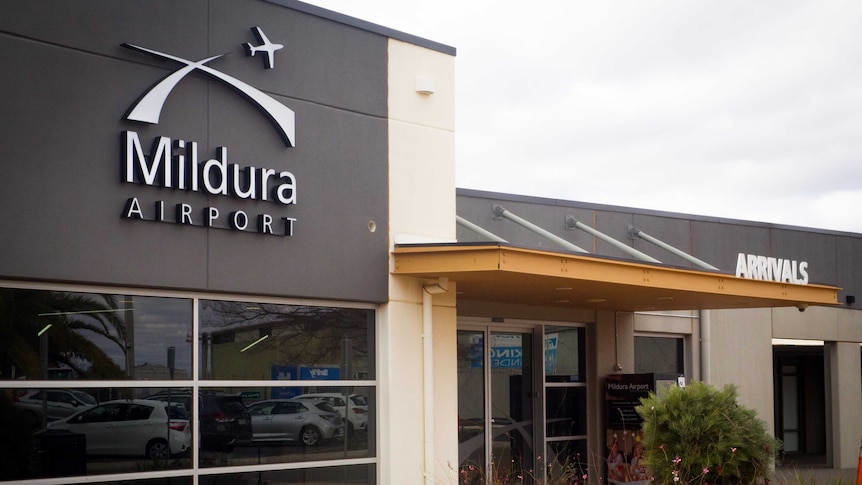
Mildura Airport bosses have revealed a new multi-million-dollar navigation system will only be used “a maximum of two or three times” per year outside of training purposes.

The $4 million category 1 instrument landing system (ILS) began to be installed at the airport last year with a promise that it would reduce flight delays caused by fog and low visibility.

It was funded by the federal government, local council, and the airport, and is expected to be operational by early next year.

loading

Airport chief executive Trevor Willcock said the system was installed primarily for safety to help land planes when visibility is low, but he said this may only occur “a maximum two or three times per annum.”

“But there’s no price you can put on safety,” he said.

“We at all times want this to be the safest airport possible.”

foggy rationale

In July, a QantasLink plane arriving from Melbourne was forced to fly west of Mildura for 40 minutes before flying back to Tullamarine airport due to foggy conditions.

Passengers were stuck on the flight for more than three hours.

Mr Willcock said it was “very hard to say” if the system would have helped in that instance because fog changes quickly in depth and density.

“But that’s what the ILS is for, so we have to assume that they would have been able to land [if the ILS was operational],” he said.

“Most airports in the world have [an ILS] so they certainly do enhance the ability to land in poor weather conditions.”

Maintenance and testing of the ILS is also expected to cost the airport more than $100,000 per year.

Pilot says system won’t work

However, Mildura-based airline captain Andrew Carrigan, who has more than 20 years of experience flying regional airliners, said the ILS would not have made a difference in July.

“It really annoys me that they are putting it out there as a safety thing, it’s not really,” he said.

“It won’t allow us to land in fog.”

a tree and two houseboats on a river are visible in the foreground with the background shrouded in fog
Mildura is affected by foggy mornings during winter, such as on this occasion in July 2020.(ABC Mildura-Swan Hill: Christopher Testa)

Mr Carrigan said to legally land an airplane with the assistance of an ILS in Mildura, visibility would need to be at least 1,500 meters.

“I was supposed to work that day so I was monitoring the automatic weather service,” he said.

“The fog was ranging from 300-900 meters for most of the day, with the occasional foray to around 1.2 kilometers or 1.3km.

“But they were very narrow windows. So the chances of plans getting in on that morning were minor.

“You would have to be extremely lucky to get a five or 10-minute window where the visibility would get close to a level where you could land.”

Mr Carrigan said in addition to a category 1 ILS larger airports like Sydney Airport also had high-intensity approach and runway lighting which allow pilots to land with a minimum visibility of 800 metres.

He said without the lighting the ILS would make minimal difference to passenger planes in Mildura.

“What I’m scared of is when [the ILS is] operational and we aren’t able to land in fog. People are going to ask, ‘Why not when we were told it would allow that?'”

Mr Carrigan said these were his personal views and not the view of his employer.

Nothing to do with flying school

Anne Webster, Simon Clemence and Michael McCormack smiling in a photo with Chinese pilots.
Anne Webster, Simon Clemence, Michael McCormack, and three pilots at Mildura Airport when the first funding announcement was made for the ILS in 2019. (Facebook: Dr Anne Webster MP)

Mr Willcock said a secondary reason the ILS was installed was to help flying school students train in Mildura.

To receive a commercial pilot’s license students are required to have experience using an ILS.

Mr Willcock said nine flying schools were within range of the airport and could use the ILS for training purposes, with a booking system and strict restrictions on what times it could be used.

A sign that reads "Mildura Welcomes You" along with a photo of a group of people smiling outside the Mildura Airport.
A plane flying in the air over Mildura Airport in 2020.(ABC News: Christopher Testa)

Chinese-owned company International Aviation Alliance also started training pilots at Mildura Airport in 2019 under a 10-year tenancy agreement.

However, Alliance CEO Simon Clemence said the ILS would be of minimal benefit to its flying school.

He said students were required to undertake “long navigation” flights which they would combine with ILS training at airports in Melbourne or Adelaide.

“It has absolutely nothing to do with the flying school,” he said.

Worth the funding, MP says

The ILS first received funding from the federal government in April 2019, 21 days before a federal election.

Mildura Rural City Council committed $1 million in June 2020 and the airport also contributed $1 million.

Nationals Mallee MP Anne Webster said Mildura Airport deserved the same safety standards as other airports and even if it was used only once a year the ILS was worth funding.

.

Categories
Australia

Stuart Ayres faces world of financial Payne after resignation

It was, apparently, a tribute to Barilaro, and then-treasurer Dominic Perrotte‘s efforts in bringing back live shows during year one of the pandemic, with a commemorative plaque noting that the duo “were instrumental in guiding Australian theater out of crisis”.

This week, CBD’s spies brought word that the plaque was nowhere to be seen. So has Barilaro been cancelled? Not, so, according to Foundation Theaters printer Stephen Found, who told us the plaque hasn’t been removed and never would be. hmm.

jen heads west

Western Sydney University has a new chancellor, with veteran Business Council of Australia boss Jennifer Westcott appointed yesterday.

The former KPMG partner, senior public servant, and member of more boards than we care to name succeeds peter shergoldwho moves on after 11 years as chancellor of the institution formerly known as the University of Western Sydney.

Westacott said she was drawn to the role by WSU’s “enduring connections with the diverse and vibrant communities of western Sydney”.

As a hugely influential voice for the big end of town, Westacott is quite a big coup for the sprawling, multi-campus institution known for spending $20 million marketing its change of name, and which has long lived in the shadow of its Group of Eight rivals. She might just have to give up her spot on the UNSW council though!

Meanwhile, don’t expect a changing of the guard at the BCA just yet. Westacott remains chief executive, as she has since 2011. While rumors of her departure from Ella have been circulating for years, who would want to miss the excitement of a new government?

Forgotten Farage

We brought word yesterday that Britain’s “Mr Brexit” Nigel Farage was shaping up as one of the stars at October’s Conservative Political Action Conference, along with various others whose glory days are behind them.

Turns out that right-wing nostalgists don’t have to trek it to the harbor city to catch Farage’s act, after he announced on Wednesday that his solo tour next month will take in Melbourne and Brisbane too.

Now that the former UK Independence Party leader’s greatest triumph – Britain’s withdrawal from the European Union – is both getting old and not looking so flash these days, Farage has found other things to talk about.

loading

the show, An Entertaining Evening with Nigel Faragepromised audiences insights gained in both the UK and the US, where Farage shared a CPAC platform in February with former president donald trump about how Western Civilization is under threat and how “we” can “believe in who we are as a people once again”.

But there’s more; Farage will also dispense some advice for the conservative political parties who came a cropper in May’s federal election. The diagnosis is not that original – “When conservative parties fail to be conservative, they lose elections” – which might come as news to the Coalition.

Fixer is in

Scott Morrison‘s former principal private secretary Yaron Finkelstein forged a reputation as the Mr Fixit of the Prime Minister’s office during the last government, generally regarded as a force to be reckoned with.

So tongues were set wagging on Wednesday morning when Finkelstein was spotted in the vicinity of Coalition Senate Leader simon birmingham‘s office, raising the question, in the gossipy hot-house on the hill, of whether a comeback to politics was on the cards?

Calm down, Finkelstein advised CBD. He was “just saying hello from the outside world to some people who didn’t make parole”.

Cut through the noise of federal politics with news, views and expert analysis from Jacqueline Maley. Subscribers can sign up to our weekly Inside Politics newsletter here.