Categories
Technology

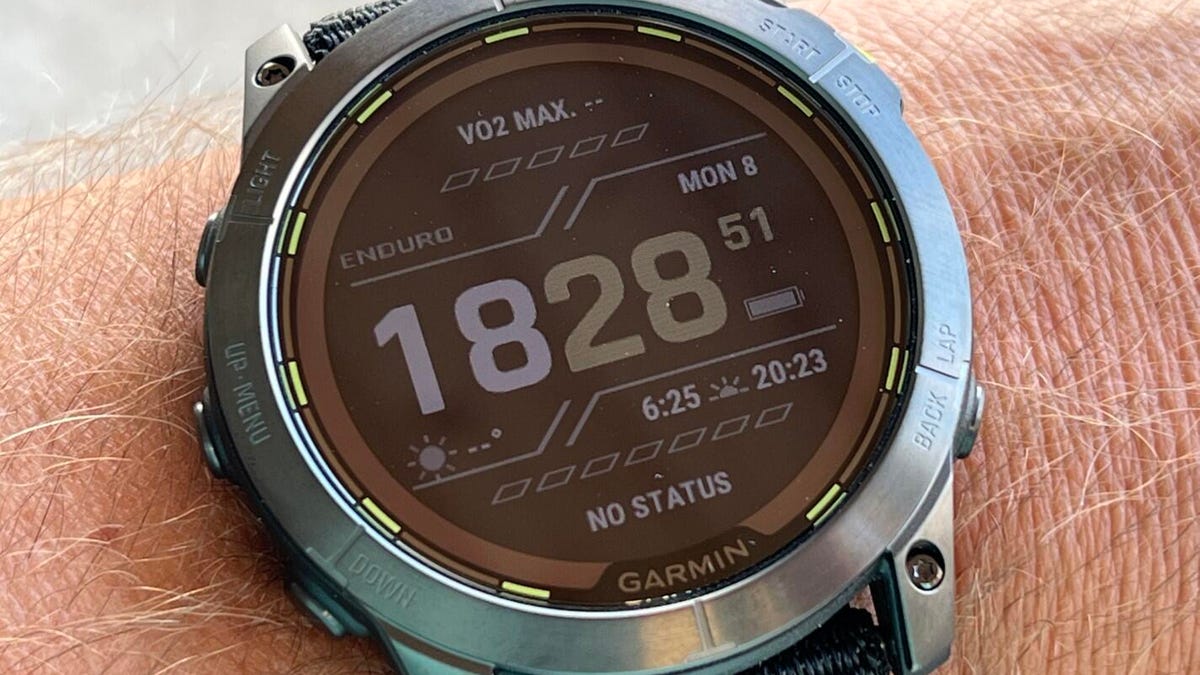
Garmin Enduro 2: 150 hours of GPS tracking and endurance athlete training features

garmin-enduro-2

Garmin’s ultimate watch for endurance athletes

Matthew Miller/ZDNet

Early this year, I had the chance to try out the fantastic Garmin Fenix ​​7X Sapphire Solar watch and loved that I could train, play, work, and live with the watch mounted on my wrist for weeks. The Fenix ​​7X is built for multisport athletes, while the new Garmin Enduro 2 is optimized for endurance athletes who need a wearable that will track performance for the longest ultra races.

The Fenix ​​7X Sapphire Solar is advertised to provide up to 122 hours of GPS tracking with solar charging. The Garmin Enduro 2 adds more than a day to that with a battery life of up to 150 hours of GPS tracking, more than 40% of that provided by the original Enduro announced in early 2021. The Enduro 2 is clearly not built for casual athletes but for those who participate in the most grueling races today. Ultrarunning events are longer than marathons, typically at least 50km and even over 100km. There are also 100-mile races and even multi-day races with the Garmin Enduro 2 helping these endurance athletes train for and track these events.

The Garmin Enduro 2 sports the familiar standard five-button Garmin user interface with a new touch screen display for the Enduro series. Solar charging is a staple of the Enduro line and continues with the entire 1.4-inch Power Sapphire glass display harnessing the power of the sun.

While the watch is large with a 51mm diameter and 26mm watch band, it is fairly light and comfortable thanks to the titanium bezel and rear case. So far, I love the Ultrafit nylon band that ensures a perfect fit. The Enduro 2 package includes the Ultrafit nylon band along with a 26mm Quick Fit silicone band.

The LED flashlight was one of the coolest new features on the Fenix ​​7X Sapphire Solar. Garmin includes this flashlight on the Enduro 2 and also made it the brightest Garmin flashlight ever, with twice the brightness of the 7X. You can use the white LED light to expose the night or turn on the red light to help you maintain your sight at night. A strobe mode also matches your cadence so people can see you while running on the road or on the trail.

Some of the new training features that are present on the Garmin Enduro 2 include:

  • NextFork: Map guide that shows the distance to the next trail intersection, as well as the name of the upcoming trail. Very handy for national parks and other areas where multiple trails can cause confusion.
  • Grade-adjusted pace: I live on a hill, so every single time I run, I am going up and down hills. This feature displays an equivalent running pace on flat ground to help you adjust your pace and maintain your stamina.
  • Visual race predictor: This pacing estimator uses your running history and overall fitness level to show you where you could finish in your upcoming event. It’s great to watch this time fall as you train more.
  • Automatic rest timer: Ultrarunning races are long and hard, so that you may spend some time on a break for replenishment or first aid. The automatic timer logs these breaks without requiring you to pause your run.
  • Adventure racing activity profile: This ARWS-approved profile tracks heart rate, elevation, segment times, and other metrics for post-race viewing. A summary screen also helps verify a finish time with the race committee.

Since the Garmin Enduro 2 is optimized for endurance athletes, it comes preloaded with TopoActive maps with multi-continent coverage. Garmin’s new SatIQ technology that dynamically determines the best GPS mode necessary to maximize battery life and positional accuracy is present on the watch. Golf course maps and SkiView maps are also preloaded on the watch.

Also: The 5 best Garmin watch models: Which is right for you?

We saw some exciting new software features on the Garmin Forerunner 955 Solar, but those are not yet present here on the Enduro 2 review unit that just arrived. These include training readiness, Morning Report, HRV status, running power (with a compatible accessory), and real-time stamina. I understand many of the newer Garmin watches will be receiving these features in upcoming software updates, so stay tuned for more on those updates.

All of the great Garmin 24/7 health and wellness features are also present, so you will have heart-rate monitoring, blood oxygen measurements, Body Battery, fitness age, sleep score, sleep stages, and more. A new Health Snapshot feature will record and generate a report of key stats that includes heart rate, heart rate variability, blood oxygen level, respiration, and stress. Recovery advisor and daily suggested workouts are also found on the Enduro 2.

Garmin Pay, offline music support, multi-GNSS support, incident detection, and everything Garmin offers is found on the Enduro 2. The Garmin Enduro 2 is available now for $1,099.99 in one size and one color.

We have a review unit mounted on our wrist and will be testing it for the next few weeks so if you have any questions or functions you want us to try out, please leave a comment below.

Categories
Sports

Rudi Koertzen dies, death, how did he die, age, cricket news, umpire, slow finger of death, doom

Former South African umpire Rudi Koertzen, labeled the ‘slow finger of death’ by the media, has died in a car accident, a family member told AFP on Tuesday.

He was 73.

“Rudi suffered fatal injuries after an accident near Stilbaai between Cape Town and Gqeberha,” said the family spokesperson, who requested anonymity.

“My father went to a golf tournament with some friends and they were expected to come back on Monday, but it seems they decided to play another round of golf,” his son Rudi told a Gqeberha radio station.

Watch South Africa’s Tour of England. Every ODI & T20 Live & On-Demand on Kayo. New to Kayo? Start your free trial now >

The South African team will wear black armbands on Wednesday in honor of Koertzen when they face England at Lord’s in London in a Test match.

Koertzen first umpired in 1981, handled his maiden international assignment 11 years later, and retired in 2010 after a Test between Australia and Pakistan in Leeds, England.

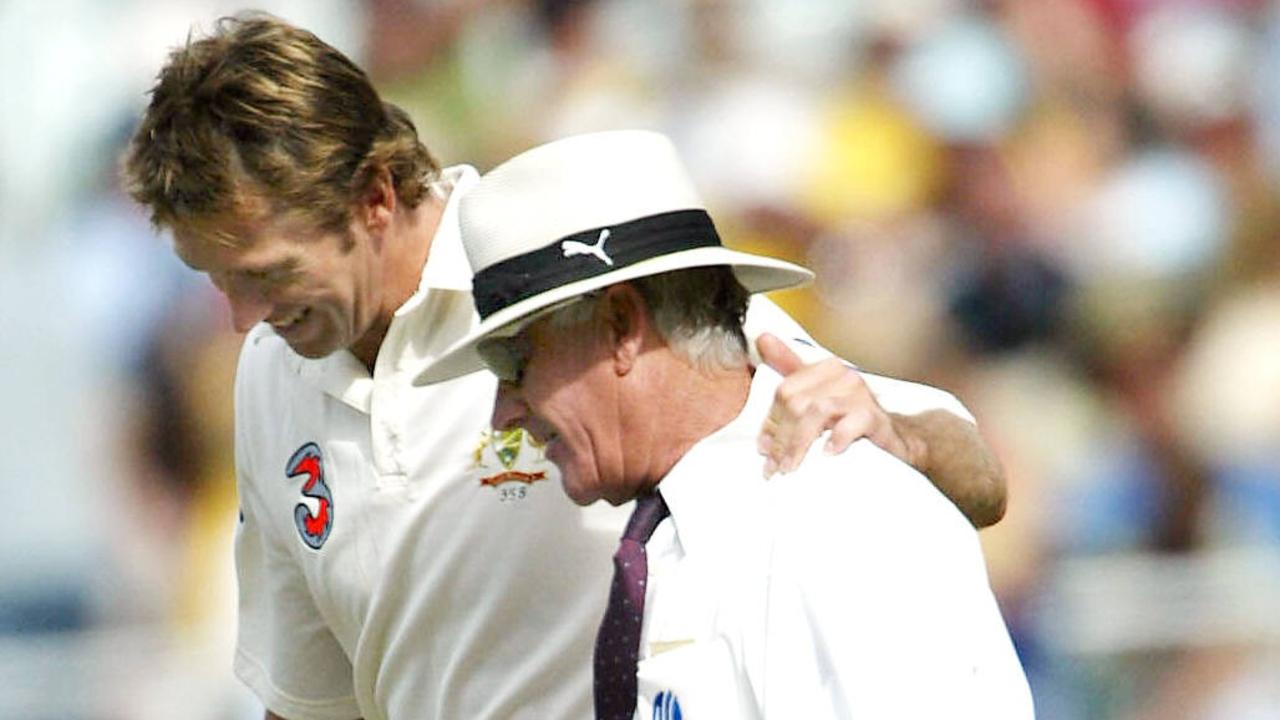
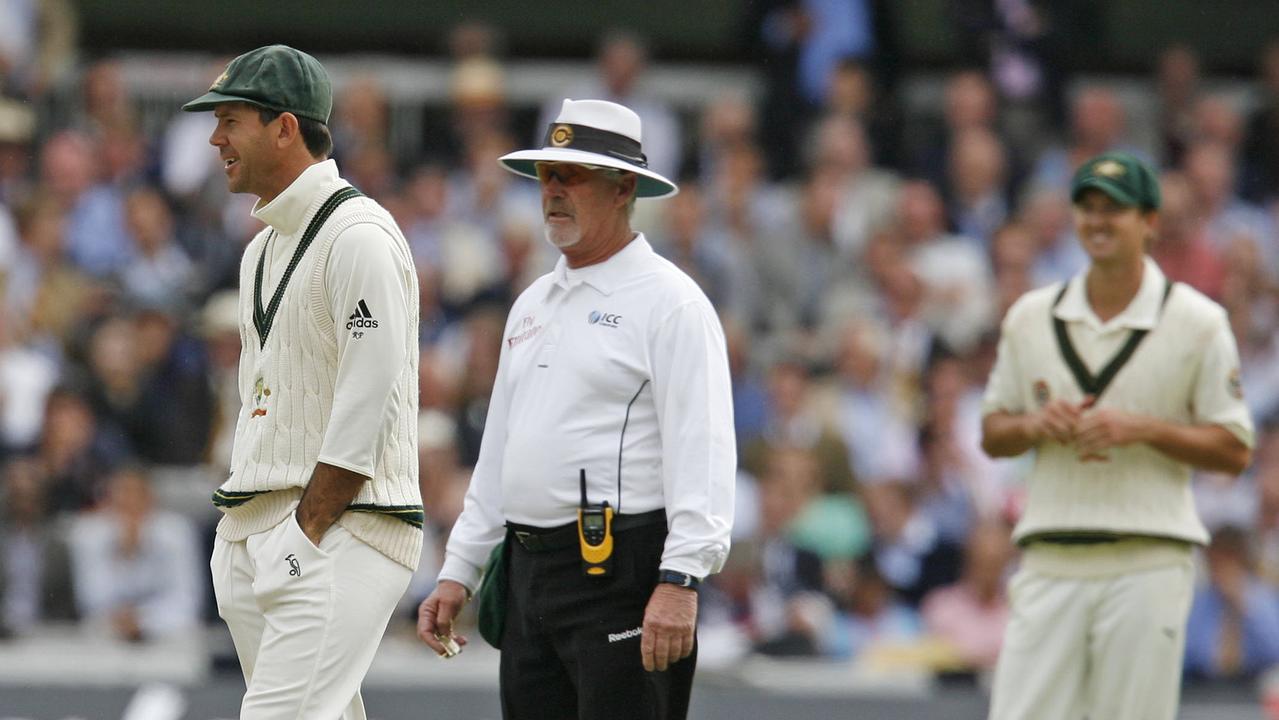
Rudi Koertzen and Ricky Ponting in 2009.
Rudi Koertzen and Ricky Ponting in 2009.Source: AFP

He became known as the ‘slow finger of death’ because he very slowly raising his finger whenever indicating a batsman was out.

“Every umpire has their trademark and that was mine. The media labeled it the ‘slow finger of death’ and I found that pretty interesting. There is a story behind it,” Koertzen said in an interview.

“When my umpiring career first began, I used to hold my hands in front of me and every time there was an appeal, I would fold them against my ribs,” said Koertzen.

“The someone told me ‘Rudi, you cannot do that. Every time you raise your hands to fold them, the bowler thinks you are going to give him a wicket’.

“So I started clasping my wrists at the back. The finger comes out slowly because it takes time for me to release my grasp at the back.”

.

Categories
US

Michigan AG probe alleges GOP opponent involved in unauthorized voting machine access

WASHINGTON — Michigan Attorney General Dana Nessel’s office has requested the appointment of a special prosecutor to consider criminal charges against nine people it alleges were involved in a conspiracy to improperly obtain access to voting machines used in the 2020 election — including the presumptive GOP nominee for attorney general set to challenge Nessel in the November election.

In a petition filed Friday, Nessel’s office asked the state’s Prosecuting Attorneys Coordinating Council for the appointment of a special prosecuting attorney in part to avoid a conflict of interest given that allegedly “one of the prime instigators of the conspiracy” is now Trump-backed Republican candidate Matthew DePerno.

DePerno allegedly “orchestrated a coordinated plan” with other individuals, including state Rep. Daire Rendon and Barry County Sheriff Dar Leaf, to gain access to voting machines that had been used in several Michigan counties in the 2020 election.

Five voting tabulators were taken to hotels or Airbnbs, where several people “broke into the tabulators and performed ‘tests’ on the equipment,” the petition alleges. “It was determined during the investigation that DePerno was present at a hotel room during such ‘testing.'”

The alleged conspiracy also involved the “printing of fake ballots to be run through the tabulators” and recruitment of “volunteers,” the petition added.

DePerno’s campaign manager, Tyson Shepard, said in a statement Sunday that Nessel “has a history of targeting and persecuting her political enemies” and alleged that her “actions are unethical and will further demonstrate to the voters that she is unfit for office.” The statement, however, did not address whether DePerno participated in the alleged plot to gain unauthorized access to the machines.

In a radio interview with Michael Patrick Shiels on “Michigan’s Big Show,” DePerno said Monday that “we did nothing illegal” and that Nessel is merely trying to attack a political opponent by “weaponizing her office.”

“It’s all nonsense. It’ll all be proven false,” DePerno said, adding that he had “nothing to do with hotel rooms or any Airbnbs.”

Leaf and Rendon did not immediately return requests for comment.

Image: Dana Nessel
Michigan Attorney General Dana Nessel addresses the media during a news conference in Lansing, Mich., on March 5, 2020.David Eggert / AP file

On Friday, Nessel’s office also sent a letter to Secretary of State Jocelyn Benson notifying her about the investigation, which was conducted in coordination with the state police. The probe “uncovered that, after the 2020 election, a group of individuals gained unauthorized access and compromised tabulators” from several county clerks, the letter said.

The letter said a state representative, whose name it didn’t, told some of these clerks that the representative was looking into election fraud and wanted them to turn their vote tabulators over to investigators. An individual identified as Person 1 in the letter, who said it was represented as “acting on behalf of the Sheriff’s Department,” went to various county clerks’ offices in March 2021 to obtain the voting machines as well as a laptop used as an electronic chicken book.

Person 1 “assured each separate clerk that they would be returned in just a few days,” but the machines were not returned until early April in some cases, and June and September in others, the letter said.

The attorney general’s office said it determined that the voting machines were “accessed improperly and damaged,” and they were decommissioned before this year’s primary election. The office also noted that in February 2021, a month before the alleged conspiracy unfolded, the Bureau of Elections sent out a notice that “only election officials, licensed vendors, or accredited voting system test laboratories should be granted access to voting equipment.”

“Election clerks should be notified that they should always request to see identification from any individual purporting to be a law enforcement officer and seeking to inspect or seize election equipment,” the attorney general’s office wrote. “Further, even law enforcement officers should have a search warrant to inspect or seize equipment.”

The office also noted that it’s a felony punishable by five years in prison for a person to take undue possession of a voting machine used in an election.

benson tweeted Sunday that there “must be consequences for those who break the law to undermine our elections & further political goals.”

“The election clerks of this state do their jobs with professionalism and integrity, and we will continue to ensure they are equipped with a full understanding of the legal protections in place to block bad actors from pressing them to gain access to secure election systems,” she wrote.

Categories
Sports

Mat Ryan joins FC Copenhagen

Socceroos captain and goalkeeper Mat Ryan has moved from Spain to Denmark in search of regular first-team football ahead of this year’s World Cup.

Ryan, 30, has left La Liga club Real Sociedad to join Danish Superliga champions FC Copenhagen on a two-year deal.

“I’m really looking forward to becoming part of a big club like FC Copenhagen, which has a fantastic reputation throughout Europe,” Ryan said in a club statement.

“The team has great quality and the ambitions for the club are high in terms of winning titles and competing in the biggest tournaments in Europe. I will work hard to contribute to that.”

Ryan signed with Real Sociedad in July last year following a spell at English Premier League club Arsenal, where he was on loan from Brighton.

However, he only made nine appearances in all competitions last season, playing second fiddle to Sociedad’s first-choice gloveman Alex Remiro.

With the World Cup starting in November, Ryan could ill afford further time on the bench, and jumped at the chance to join FC Copenhagen, who recently lost goalkeeper Kamil Grabara to a serious facial injury.

FC Copenhagen sporting director Peter Christiansen said: “After Kamil Grabara’s injury, we have been looking for an addition to the goalkeeper position, and we are very satisfied with the solution, which both in the short and long term ensures increased competition and quality in that position.

“Maty has played many games in some of the world’s biggest leagues and still has plenty of hunger to do well at FC Copenhagen and for Australia in the World Cup.

“We are looking forward to having him in the team and are sure that he will strengthen our squad.”

.

Categories
Australia

Tony Burke must get serious about productivity and wages

Such hyperbole clashes with Labor’s talk of the summit as an opportunity to forge consensus and co-operation between business and unions. It also fails to grasp the realities of Australia’s industrial law.

Reinforcing the union chokehold

Rather than freely bargaining, the workplace system grants unions the monopoly right to represent workers in award determinations and enterprise bargaining negotiations. The union chokehold over employers is borne out by the facts of the case that Mr Burke says supposedly shows why the law needs to change.

Port tug operator Svitzer has applied to terminate an expired enterprise agreement after more than 50 meetings with the Maritime Union of Australia failed to secure a productivity-boosting new agreement that would wind back restrictive work practices and intrusions on management prerogatives. The union’s stonewalling is an abuse of its institutional privileges, and completely contrary to the original win-win – higher pay for higher performance – purpose of the enterprise bargaining system.

The MUA has delayed the hearing of Svitzer’s application before the Fair Work Commission until December. That has bought time for Mr Burke to amend the Fair Work Act and save the union’s blushes.

The focus on a legislative bailout for Labor’s union comrades, while forcing employers to stick with non-performing enterprise agreements, is a disturbing sign of the government’s priorities.

Instead, Mr Burke should be hearing what is actually another cry for help from employers to fix the broken bargaining system that has been in steady decline since the Rudd government legislated the “better off overall test” on union orders. Or – with just 15 per cent of the workforce now covered by enterprise agreements – is Labor going to turn a deaf ear to business abandoning the bargaining system?

Is it going to do nothing to fix the BOOT that makes it impossible to achieve meaningful productivity gains from the costly and time-consuming bargaining process? If so, then what credible plan is the government going to take to the jobs summit to fulfill its election pledge to reverse Australia’s lost decade of sluggish productivity and real wages growth, especially as the inflation outbreak now means workers face real wage cuts?

The starting point should be for the minister responsible for industrial relations to take a serious interest in how the workplace system needs to change to deliver wins for both employers and employees, instead of just operating as the unions’ political mouthpiece and fixer.

Categories
US

‘Staggering’ number couldn’t get care during pandemic, poll finds : Shots

Tomeka Kimbrough-Hilson was diagnosed with uterine fibroids in 2006 and underwent surgery to remove a non-cancerous mass. When she started experiencing symptoms again in 2020, she was unable to get an appointment with a gynecologist. Her experience with her was not uncommon, according to a new poll by NPR, the Robert Wood Johnson Foundation and the Harvard TH Chan School of Public Health.

Nicole Buchanan for NPR


hide caption

toggle caption

Nicole Buchanan for NPR


Tomeka Kimbrough-Hilson was diagnosed with uterine fibroids in 2006 and underwent surgery to remove a non-cancerous mass. When she started experiencing symptoms again in 2020, she was unable to get an appointment with a gynecologist. Her experience with her was not uncommon, according to a new poll by NPR, the Robert Wood Johnson Foundation and the Harvard TH Chan School of Public Health.

Nicole Buchanan for NPR

When the pandemic started, Tomeka Kimbrough-Hilson knew she had a small growth inside her uterus. She was first diagnosed with uterine fibroids back in 2006 and had been able to have the non-cancerous mass removed through outpatient laser surgery. Over the years, she’d also been able to manage her symptoms with medication and changes in her lifestyle.

But when those symptoms – a bloated belly, irregular periods, nausea – returned in 2020, Kimbrough-Hilson was unable to get an appointment with a specialist.

“March 27th came and everything got shut down,” says Kimbrough-Hilson, 47, of Stone Mountain, Georgia. “I wasn’t at the tier of care that needed [immediate attention]because of all the precautions that had to be taken.”

But even after the lockdown in spring of 2020 was lifted, Kimbrough-Hilson, a mother of five who works in the health insurance industry, was unable to see a gynecologist.

She left message after message with providers. But her calls from her went unreturned, or providers were booked for months at end. “I couldn’t get the appointments,” she says. “I couldn’t follow up.”

These days, her belly is swollen, and she says she often feels fatigued and nauseous: “It makes me want to throw up a lot.”

She also struggled to get appointments for other members of her family. Her 14-year-old daughter underwent brain surgery before the pandemic, but then she could n’t get follow-up appointments until recently.

Kimbrough-Hilson’s family’s experience isn’t uncommon, according to a new poll by NPR, the Robert Wood Johnson Foundation and the Harvard TH Chan School of Public Health.

Among households that had a serious illness in the past year, one in five respondents said they had trouble accessing care during the pandemic.

That’s a “staggering” number of people unable to access care, says Mary Findling, the assistant director of the Harvard Opinion Research Program. “From a health and a good care standpoint, that’s just too high.”

Other recent studies have found significant delays in cancer screenings, and disruptions in routine diabetes, pediatric and mental health care. While it’s still early to know the long-term impacts on people’s health, researchers and physicians are concerned, especially as the disruptions continue with the country’s health care system struggling to bounce back from the pandemic.

The new poll also found that disruptions in care hit some racial and ethnic groups harder. Among households where anyone had been seriously ill in the past year, 35% of American Indian and Alaska Native households and 24% of Black households had trouble accessing care for serious illness, compared with only 18% of White households.

Among Black respondents who had seen a provider in the past year, 15% said they were disrespected, turned away, unfairly treated, or received poor treatment because of their race and ethnicity, compared with only 3% of White respondents who said the same.

“What’s really sad is the racial gaps in health care between Black and White Americans has remained,” says Findling. “And looking across a broad range of measures, it’s better to be a White patient than a Black patient in America today. And when you just stop and think about that, that’s horrible.”

Health insurance wasn’t a barrier to access

The vast majority of people – across racial and ethnic groups – who experienced delays in care reported having health insurance.

“One thing it tells us is that just the provision of more health care insurance is not going to plug some of these gaps and holes that we’re seeing in terms of individuals getting more care,” says Loren Saulsberry, a health policy researcher at the University of Chicago, who worked closely with Finding on the poll.

“There are broader issues at play here,” says Findling, like the historic workforce shortages among health systems. “The pandemic continues and it’s wreaking havoc on everyone.”

Saulsberry, who studies health disparities in vulnerable populations, says that the pandemic has exacerbated those disparities because of a range of barriers, including a person’s zip code.

For example, the state of Georgia, where Kimbrough-Hilson lives, has had one of the lowest numbers of OB-GYNs in the country for years. Now, she’s having a harder time getting an appointment with one than ever before.

“I’ve been able to get my teeth done, my eyes checked,” she says. “But I can’t get to women’s health.”

She has a referral from her primary care provider, she says, but it’s for a practice “30 to 40 miles away.”

Health systems too overwhelmed for routine care

While the pandemic exacerbated disparities in care, it also overwhelmed the health care system, causing delays and disruptions across the board, says Cassie Sauer, CEO of the Washington State Hospital Association.

And it’s also taken a huge financial toll, says Dr. Arif Kamal, chief patient officer at the American Cancer Society. “Some of that is related to actually taking care of patients who are very complex, who have very serious illnesses due to COVID-19,” he says. “But also during that time there was also loss of revenue because other activities had to be stopped, for example, elective surgeries.”

As a result, preventive services and early detection activities – not the “highest margin activities” for health systems – have taken a back seat, he adds.

“Over the last two years we estimate about 6 million women, for example, have missed routine cancer screening,” says Kamal. That includes missed mammograms for breast cancer detection, and Pap smears to check for cervical cancer.

Kamal is concerned that in a year or two, providers will start to detect cancers at later stages because of missed screenings, which makes them harder to treat or cure.

In the meantime, health systems are continuing to feel the repercussions of the pandemic, causing continuing delays in what was once routine care.

Sauer has experienced this at work and in his personal life.

“In my own family, we have struggled to get access to health care for my kids and my parents,” says Sauer.

Her 80-year-old father, who has Parkinson’s disease, had a fall over the winter holidays and was hospitalized. “I was with him, caring for him in the hospital. My mom had COVID at the time, so she wasn’t able to be there,” she says. “And I couldn’t figure out how to get him out of the hospital.”

He needed to go to a skilled nursing facility, but she couldn’t get him into one. “I found two nursing homes that seemed like good fits,” says Sauer. “And they both shut down because they had COVID outbreaks the same day.”

This is still one of the biggest problems that the state’s hospitals are facing right now, she adds. “We can’t get people out of the hospitals right now. There’s no back door, but the front door is wide open to the emergency room.”

There are patients who spend as many as 90 days in a hospital, she says, when the average hospital stay is three days. “So they’ve taken the space of 30 patients who needed care.”

This is why, more than two years into the pandemic, she says, people are still unable to schedule regular procedures, everything from knee and heart valve replacements, to cancer treatments.

These procedures may be considered “elective,” but postponing them can have major repercussions on a patient’s health and quality of life, she adds.

“You have a chance of falling, you are probably going to gain weight,” says Sauer. “You’re going to lose flexibility. You know, all those things contribute to a potential decline, cardiac issues, respiratory issues.” Which can in turn also increase someone’s risk of serious illness from COVID.

“I think that the toll of this delayed care is tremendous,” she says.

Categories
Entertainment

Khloe Kardashian and Tristan Thompson welcome second child, baby boy via surrogate

Khloé Kardashian and Tristan Thompson Welcome Second Child, Baby Boy Via Surrogate

Getty/Jerritt Clark

Khloé Kardashian and Tristan Thompson Welcome Second Child, Baby Boy Via Surrogate

Khloe Kardashian and Tristan Thompson are parents, again – this time via surrogate to a baby boy, per Page Sixand several other news outlets.

Just seven months after the two broke up again amid rumors of infidelity, news broke that the two were expecting a baby boy.

Kardashian who is 38, and Thompson who is 31, are not back together – according to an insider at Page Six. “Khloe is incredibly grateful to the extraordinary surrogate for such a beautiful blessing,” Kardashian’s rep told Page Six at the time.

Thompson and Kardashian began dating in 2016 and had their first child, a daughter, True shortly after. The two broke up for the most recent time in January of 2022 after allegations that Thompson had fathered a child with personal trainer Maralee Nichols.

READMORE:
* Khloe Kardashian ‘not ready’ for True Thompson’s first day of school
* Kim Kardashian shares cryptic quotes about ‘red flags’ and ‘regrets’
* Maralee Nichols says Tristan Thompson has ‘done nothing’ to support son amid child support reports

Those allegations were proven to be true, via paternity test. Together with Nichols, the two share an 8-month-old boy, Theo. He is also a father to son Prince, 5, with ex Jordan Craig.

Khloe was told by doctors that a second pregnancy would be high risk, should she decide to carry the child herself.

In the premiere episode of the final season of KUWTK, Khloe said in her confessional, “All I’m trying to do is bring more love into my life and into my family, and I just seem to be running into more and more roadblocks. It’s really hard for me to digest.”

Categories
Sports

Rudi Koertzen dead at 73: Killed in car crash, cricket world reacts, how did he die, cricket news

Former South African cricket umpire Rudi Koertzen, labeled the ‘slow finger of death’, has died in a car accident aged 73.

“Rudi suffered fatal injuries after an accident near Stilbaai between Cape Town and Gqeberha,” said a family spokesman.

Watch South Africa’s Tour of England. Every ODI & T20 Live & On-Demand on Kayo. New to Kayo? Start your free trial now >

“My father went to a golf tournament with some friends and they were expected to come back on Monday, but it seems they decided to play another round of golf,” his son Rudi told a Gqeberha radio station.

The South African team will wear black armbands on Wednesday in honor of Koertzen when they face England at Lord’s in London in a Test match.

Koertzen first umpired in 1981, handled his maiden international assignment 11 years later, and retired in 2010 after a Test between Australia and Pakistan in Leeds, England.

He became known as the ‘slow finger of death’ because he very slowly raising his finger whenever indicating a batsman was out.

His death rocked the cricket world.

Umpire and long-time colleague Aleem Dar paid tribute to Koertzen: “It is a very big loss forever for his family and then for South Africa and cricket. I stood in so many games with him. He was not only very good as an umpire but also an excellent colleague, always very cooperative on the field and also always willing to help off the field. Because of the way he was, he was also well respected by the players.”

Australian great Jason Gillespie wrote: “RIP Rudy- very good umpire, nice man. Thoughts are with his family and friends of him. ”

Indian star Virender Sehwag wrote: “Ok Rudi Koertzen! Om Shanti. Condolences to his family from him. Had a great relationship with him. Whenever I used to play a rash shot, he used to scold me saying, “Play sensibly, I want to watch your batting.”

“Every umpire has their trademark and that was mine. The media labeled it the ‘slow finger of death’ and I found that pretty interesting. There is a story behind it,” Koertzen said in an interview.

“When my umpiring career first began, I used to hold my hands in front of me and every time there was an appeal, I would fold them against my ribs.

“The someone told me ‘Rudi, you cannot do that. Every time you raise your hands to fold them, the bowler thinks you are going to give him a wicket’.

“So I started clasping my wrists at the back. The finger comes out slowly because it takes time for me to release my grasp at the back.”

.

Categories
Australia

Fake cosmetic doctor facing jail time for allegedly advertising services

A Mount Waverley woman who was exposed as a fake cosmetic doctor is facing jail time for allegedly advertising her services again.

Aliaa Sherif, 54, on Tuesday appeared before melbourne Magistrates’ Courtfacing 21 charges and the possibility of two years of jail time if convicted.

In 2021, Sherif was convicted and fined for pretending to be a cosmetic guru.

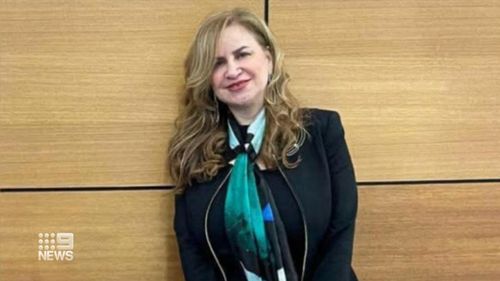
Aliaa Sherif, 54, appeared on Tuesday before Melbourne Magistrates’ Court, facing 21 charges and the possibility of two years of jail time if convicted. (Nine)

One of her clients ended up in hospital with swollen and bleeding lips after a botched Botox injection.

The Health Complaints Commissioner later put out a warning to the public about the woman and banned her from advertising her anti-ageing services.

The 54-year-old is now accused of breaching that order.

In court today, when asked by a magistrate if she was a doctor, Sheriff responded she was an “overseas specialist.”

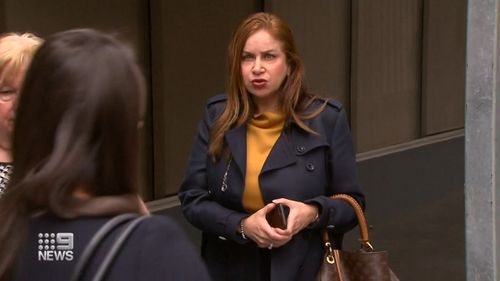
Aliaa Sherif was exposed as a fake cosmetic doctor in 2021 and is facing jail time for allegedly advertising her services again. (Nine)

But prosecutors pointed out the Egyptian-born woman had never been a registered medical practitioner in Australia.

Sherif said she was the victim of an “unfair attack” by health authorities and claimed her former clients only made complaints against her because they owed her money.

Representing herself at today’s court hearing, Sherif said she could not afford a lawyer because she was busy studying for exams and was hoping to join Australia’s Royal College of Pathologists as a haematology specialist.

Sheriff will return to court in December.

Categories
US

PM Update: Scattered downpours into evening, with a hot and humid repeat Tuesday

Comment

* flash flood warning for northwestern Prince George’s County until 7 pm *

5:10 pm — High water rescues reported in central Prince George’s County after 3 inches of rain in just over an hour

A slow-moving thunderstorm with torrential rain plowed through north central Prince George’s County and unloaded over 3 inches of rain just north of Landover, prompting a flash flood warning. The National Weather Service reported that Prince George’s County Fire and Rescue was deploying boats to conduct water rescues along MD-201 Kenilworth Avenue between MD-450 Annapolis Road and MD-410 Riverdale Road. “Seven vehicles were stranded,” the Weather Service wrote. “Police have closed the road.”

The responsible thunderstorm has moved south and southeast of the flash flood warning zone and has weakened somewhat.

Still, stay weather-aware into this evening as, with the air being so humid, widely scattered storms could continue to unleash heavy rain and cause a few localized flooding issues.

We picked up yet another 90-degree day, and high humidity made it feel even hotter. Heat indexes were around 100 this afternoon. Near instant sweat, then lots more to follow. The high temperatures have mixed with high humidity to cause a few intense showers and storms in the area this afternoon. They’ll wane with sunset. We do it all again Tuesday.

Listen to our daily DC forecasts: Apple Podcasts | Amazon Echo | More options

Through Tonight: A shower or storm will plague a few spots into the evening. Many pop up and die off quickly but some could dump a few inches fast, causing some isolated flooding. This activity should mainly wane by sunset. With humidity holding the warmth in, lows are far from low. They end up mainly in a mid-70s to near 80 range.

View the current weather at The Washington Post.

Tomorrow (Tuesday): It will be something of a repeat of today, but perhaps a somewhat hotter version. Partial sunshine and murky air will lead to billowing clouds producing showers and storms in the afternoon. A few storms could be strong to severe, with the main threat outside being lightning, heavy rain and isolated damaging wind. Before any rain, temperatures will head for the low and mid-90s. Heat index values ​​will be near or above 100 at peak.

See Jason Samenow’s forecast through the weekend. And if you haven’t already, join us on Facebook and follow us on Twitter and Instagram. For related traffic news, check out Gridlock.

Pollen update: Mold spores are low/moderate, as is weed and grass pollen. Tree pollen is low.

90-degree days: Over the past 30 days, there have been 17 days at or above 90, compared to about 15 normally. While the District continues to run somewhat below average to date, we’re closing in with 27 through today. Per the 1991-2010 averages used by the Weather Service, the city is running two behind the typical 29 to date.

Want our 5 am forecast delivered to your email in-box? Subscribe here.