Intel is continuing its “marketing” for their upcoming Arc GPUs with something that leaker Moore’s Law is Dead talked about: the Arc desktop GPU story. There’s not much new here, but it’s interesting that it’s all playing out like this.
VIEW GALLERY – 4 PICTURES
You can check out the “story” on Intel Arc GPUs on the official intel website, where we find out that ex-PC Perspective owner and reviewer Ryan Shrout has a major hand in Arc. Shrout seems to be the Arc GPU ship, as the Intel website itself says that “Intel Gaming Access met steering with Ryan Shrout, Senior Director of Graphics and HPC Marketing at Intel”.
Intel explains that “when it came to the creation of Intel Arc, Ryan and Intel’s engineers had plenty of graphics experience to call on”. Interesting, it seems that Ryan was integral to the entire Arc GPU process … so this marketing plan is his, and he’s calling the shots.
The post continued, with Ryan adding: “We’ve had integrated graphics in Intel CPUs for over a decade, but high-performance discrete graphics are a whole different game, if you’ll excuse the pun. Integrated graphics have given our engineers a lot of learnings to use in dGPUs; for example, a version of the modern Xe microarchitecture that Intel Arc is built on, first appeared in 11th Gen Intel Core processors. The architecture scales up from low-power iGPUs (Xe-LP), through Intel Arc GPUs as Xe-HPG (high-performance graphics), and even all the way up to data-centers and supercomputing“.
Where will Intel Arc GPUs “shine” according to Ryan? DX12 games… where he explains: “is where the Intel Arc graphics cards are going to shine. DX12 and Vulkan are modern rendering APIs, which means there is a thinner software layer between the game code and the GPU. Older APIs, like DirectX 11 and 9, do more of the work for programmers, but have more layers between the game and GPU.”
I do find it rather amusing, and worrying, that Intel has a specific disclaimer at the bottom of Ryan’s post on Intel’s website. It reads: “no product or component can be absolutely secure” and that “all product plans and roadmaps are subject to change without notice”.
In further proof that working for the ABC is similar to staying at the Hotel California – you can check out any time you like, but you can never leave – veteran host Fran Kelly is returning to the national broadcaster just months after departing Radio National’s flagship news and current affairs program, Breakfast.
Kelly will be the host of franklya new chat show set to screen on Friday nights later this year.
Fran Kelly will front a brand new ABC chat show coming to Friday nights later this year, Frankly.Credit:ABC
frankly will be filmed in front of a live audience with a house rock band and feature “frank yet fun” conversations with international and home-grown actors, musicians, comedians, big thinkers and change-makers.
Kelly said of her return to broadcasting at the ABC: “I’m so excited about this new show. leaving RN Breakfast was bittersweet… I love the sleep-ins but miss all those incredible conversations with fabulous guests from around Australia and the world.
“People have been asking ever since what’s next for me. Well, this is it, and I can’t wait. More great conversations, a live audience and my own band… what’s not to be excited about? It’s such a privilege and going to be so much fun.”
Kelly spent 17 years hosting RN Breakfast before signing off last December, telling The Sydney Morning Herald and The Age at the time, “I just need a minute to reinvent myself.”
Fran Kelly retired from Radio National Breakfast in December after 17 years on the microphone.Credit:ABC/Steven Siewert
Head of ABC Entertainment Nick Hayden said, “Fran brings such a warmth and depth of intelligence, we couldn’t be more excited to invite the audience in to hear her chat with the most interesting and electrifying people on the planet.”
Dipping a toe into evening TV represents a change of pace for Kelly, who spent nearly two decades waking up to a 3.30am alarm.
Mitch Hinge has signed a two-year contract extension keeping him at the Club until at least 2024.
The 24-year-old South Australian has become a regular in Adelaide’s AFL team this season, playing 15 games across half-back and on the wing.
He has impressed with his penetrating left foot and registered a career-high 21 disposals and a goal in Sunday’s win over the West Coast.
Hinge was drafted to Brisbane from Glenelg in the 2017 Rookie Daft and played three games with the Lions before signing with the Crows as a delisted free agent at the end of 2020.
He made his Crows debut in the opening round of 2021 when he courageously played on with a dislocated shoulder in Adelaide’s win over Geelong.
Unfortunately the shoulder required surgery which saw him miss the rest of the season but after a strong summer Hinge has taken his game to a new and consistent level in 2022.
Adelaide General Manager List Management and Strategy Justin Reid said Hinge had made an immediate impact since joining the Club last season.
“Mitch won a lot of admiration from his teammates and coaches on debut last year and then with his attitude towards his shoulder rehabilitation and pre-season training,” Reid said
“We knew when we signed him the attributes he would bring to our team and I’m pleased we’ve been able to see them this season – his physicality as a defender as well as his run and carry with the footy and damaging kick has really added to our team.
“Now we look forward to him building on that with another strong pre-season behind him.”
Hinge, who grew up a Crows supporter and whose brother John also played for the Club in 2007, said he had loved his time at West Lakes so far.
“Obviously last year was challenging with my shoulder but I had a lot of support from everyone at the footy club and it’s been great to get back on the field and play some regular footy,” Hinge said.
“The club has backed me in and hopefully I can repay that faith. I feel like I haven’t tapped into my potential yet and still have a lot to give, and this is the perfect place and perfect group to do that with.”
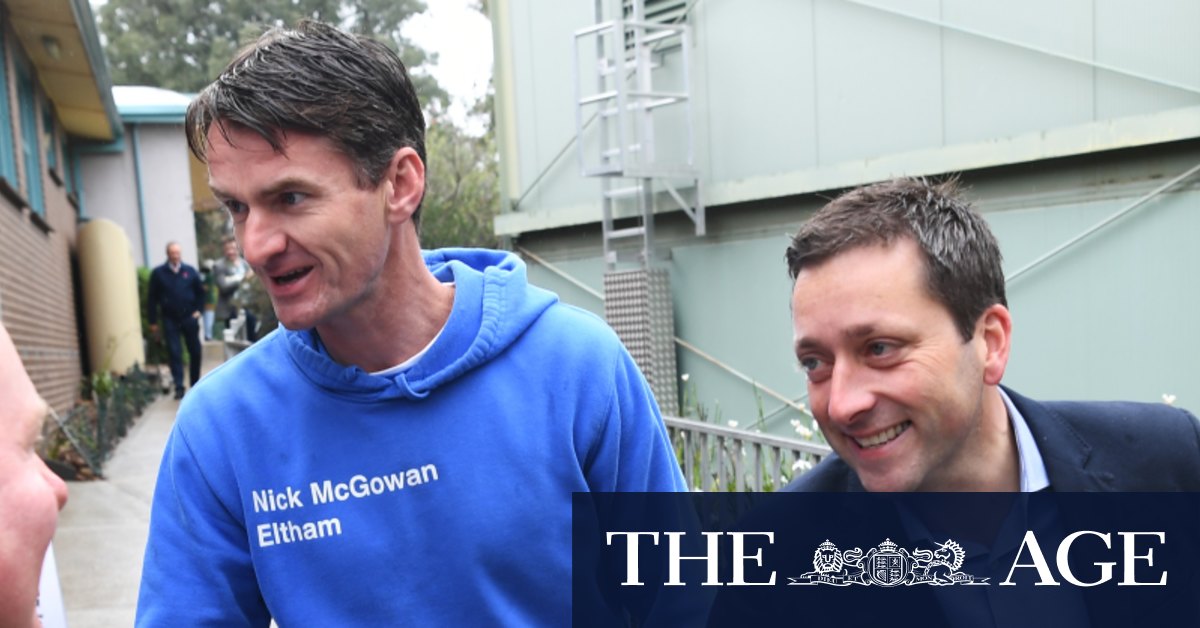
The Victorian opposition has lost another senior staffer just three months out from the state election.
Lee Anderson has quit his role as the Liberal Party’s director of media, effective immediately, just a week after Matthew Guy’s former chief of staff, Mitch Catlin, was forced to stand down.
New state Liberal chief of staff Nick McGowan (left) with Opposition Leader Matthew Guy in 2018.Credit:AAP
Catlin’s resignation came after it was revealed he asked billionaire Liberal donor Jonathan Munz to pay more than $100,000 to his private marketing business, in addition to his taxpayer-funded salary.
The contract, which was never executed, would have required the donor to pay $8,333 a month to Catlin’s company, Catchy Media Marketing and Management, for contracting services described as “supporting business interests”.
Alex Woff will replace Anderson as director of media, and Anja Wolff will be promoted to deputy director of communications.
The opposition’s five-person media team lost Nationals media adviser Emma Manser less than a fortnight ago.
The Victorian opposition’s director of media, Lee Anderson, has quit.
When asked about Anderson’s departure, opposition health spokeswoman Georgie Crozier said the Coalition was in “full campaign mode”.
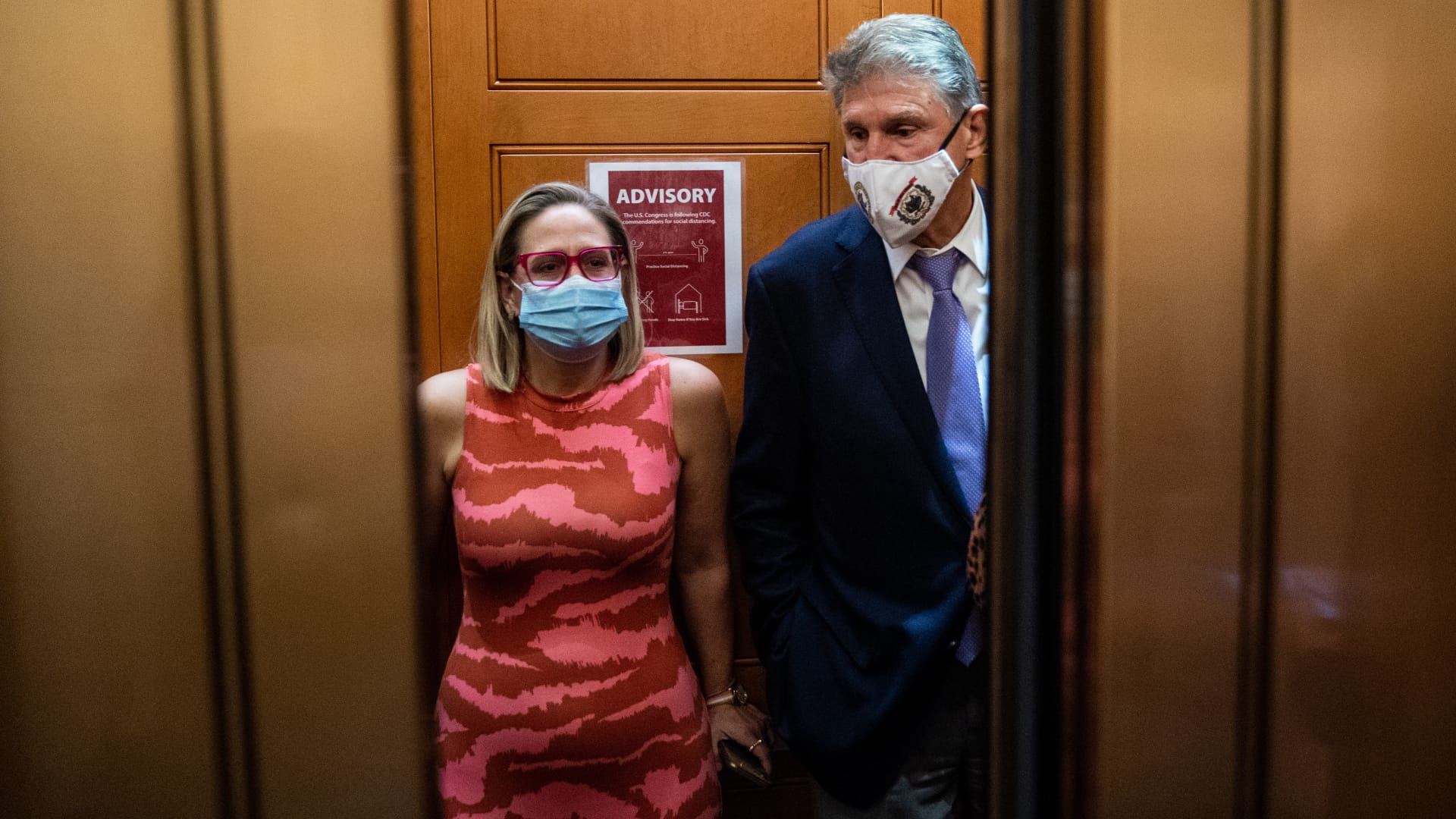
Sen. Kyrsten Sinema, D-Ariz., and Sen. Joe Manchin, DW.V., on Capitol Hill on Sept. 30, 2021.
Jabin Botsford | Washington Post | Getty Images
Senate Democrats passed a historic package of climate, healthcare and tax provisions on Sunday.
But one proposed tweak to the tax code — a modification of so-called carried interest rules — didn’t survive due to objections from Sen. Kyrsten Sinema, D-Ariz., whose support was essential to pass the Inflation Reduction Act in an evenly divided Senate. The bill now heads to the House, which is expected to pass it this week.
Many Democrats and opponents refer to the lower tax rate on carried interest as a loophole that allows wealthy private equity, hedge fund and other investment managers to pay a lower tax rate than some of their employees and other American workers.
“It’s a real rich benefit for the wealthiest of Americans,” said Steve Rosenthal, a senior fellow at the Urban-Brookings Tax Policy Center. “Why should a private-equity manager be able to structure his or her compensation for her with low-taxed gains? That seems wrong.”
Here’s what carried interest is, and why many Democrats want to change how it’s taxed.
Carried interest is a form of compensation paid to investment executives like private equity, hedge fund and venture capital managers.
The managers receive a share of the fund’s profits — typically 20% of the total — which is divided among them proportionally. The profit is called carried interest, and is also known as “carry” or “profits interest.”
Here’s where the tax controversy lies: That money is considered a return on investment. As such, managers pay a top 20% federal tax rate on those profits, rather than regular federal tax rates of up to 37% that apply to compensation paid as a wage or salary.
That preferential 20% tax rate is the same as “long-term capital gains,” which applies to investments like stocks, bonds, mutual funds and real estate held for more than a year.
Bulk of fund managers’ compensation is carried interest
Carried interest accounts for the “vast majority” of compensation paid to managing partners of private equity funds, according to Jonathan Goldstein, who leads the Americas private equity practice at Heidrick & Struggles, an executive search firm.
More from Personal Finance: How the Inflation Reduction Act preserves expanded health subsidies These 30 companies will help employees pay off their student loans Reconciliation bill includes nearly $80 billion for IRS funding
In dollar terms, managing partners’ carried interest ranged from $10 million to $102 million, on average, according to the survey, again depending on overall assets under management.
Additionally, while capital gains for wealthy investors are generally subject to an additional 3.8% Medicare surtax, not all carried interest is subject to this “net investment income tax,” according to tax experts. When it is factored in, managers that are subject to the tax would owe a 23.8% total top tax rate at the federal level, when added to the 20% top rate for capital gains.
Some say it’s a ‘stain’; others, a ‘successful policy’
Wealthy investors, including Warren Buffett and Bill Ackman, have lambasted the tax treatment of carried interest.
“The carried interest loophole is a stain on the tax code,” Ackman, the chief executive of Pershing Square, wrote July 28 on Twitter.
However, other tax experts and proponents of the current tax structure think a lower rate on carried interest is appropriate, benefiting investors and the economy. Raising taxes on fund profits would be a disincentive for managers to take risk and would reduce investment capital, they said.
“Carried interest is appropriately taxed as a capital gain and a successful policy that incentivizes investment in the US economy,” according to Noah Theran, the executive vice president and managing director of the Managed Funds Association, a trade group.
Higher tax rates could also have “spillover effects” by reducing the rate of return for investors like pension funds and other institutions, said Jennifer Acuna, a partner at KPMG and former tax counsel for the Senate Finance Committee.
“The policies have been going back and forth for many years, on what is the right policy to tax carried interest,” Acuna said. “I don’t think it’s a slam dunk.”
Proposal would have curtailed carried interest
A deal brokered by Senate Majority Leader Chuck Schumer, D-NY, and Sen. Joe Manchin, DW. Va., initially proposed curtailing the tax break for carried interest. However, the proposal was removed from the final legislation that passed the Senate.
Most significantly, the proposal would have required fund managers to hold portfolio assets for five years — an increase from three years — in order to receive the preferential 20% tax rate.
Managers with a holding period of less than five years would incur “short-term” capital gains tax rates on carried interest — a 37% top rate, the same that applies to wage and salary income for the highest-income taxpayers.
Another proposed tweak would have effectively lengthened that holding period beyond five years, according to Rosenthal.
That’s because the initial proposal would have started counting the five-year clock only after a private-equity fund made “substantially all” of its investments — a term that isn’t specifically defined but which tax experts would generally consider as 70% to 80 % of a fund’s investment capital being committed, Rosenthal said.
In practice, that would likely have extended the effective holding period to roughly seven to nine years, a policy that “had some bite,” he added.
Democrats estimated that the proposed changes to the carried interest rules would have raised $14 billion over 10 years.
The TheatreQuip ‘Reference’ range of theater hoists launch at Integrate-Expo, ICC 17-19 August. See the range and talk to The PA People’s Venue Engineering Team at Stand C23
Following on from The PA People’s recent acquisition of the TheatreQuip business, the team have been busy creating a unique range of motorized hoists designed to span a range of applications, from a simple bar in a school auditorium through to the most demanding professional theater installation.
The new range will be known as Referencewith each product meticulously designed and independently certified to comply with Australian Standards and with the new EN17206 Standard “Entertainment Technology – Machinery for stages and other production areas”.
“When it comes to safety in hoisting and winching systems, especially those in theater spaces which invariably require the suspension of loads above people, we regard it as our duty of care to ensure that we follow the most rigorous of standards,” commented Andrew Mathieson , Chief Engineer at The PA People. “The safety requirements of the 2021 edition of the Australian Standard (AS1418) have been relaxed to the point where an appropriate level of safety for a theatrical hoist may not always be realized by complying with this standard alone. We have decided to continue designing and certifying our hoisting products to comply with the 2002 requirements for Special Lifting Applications. This approach exceeds the requirements of the most recent version of AS1418, and ensures we deliver the most rigorous safety outcomes.”
the Reference range will include a series of drum hoists that span capacities from 350kg up to 1,800kg and drifts in excess of 20m, alongside the next generation of pile-winding hoists.
The first model from the TheatreQuip family of hoists will be on display at Integrate. The TQP-K650/12 is a novel balanced drive eight-line pile-wind hoist rated at 650kg @ 12m/minute. It has a redundant double-braking system, a certified 4-pole safety limit switch and encoder, slack wire detection and load monitoring. With a range of unique features including self-balancing twin chain drives, large stepless piles, symmetrical mounting and a simple cable reeving system, the new Reference TQP-K650/12 Pile Hoist is set to become the new standard for pile hoists in the region .
advertisement
At October’s ENTECH Roadshow, TheatreQuip will also launch its TQD-A750/12 drum hoist. The TQD-A750/12 is a six wire zero fleet moving carriage drum hoist, rated at 750kg, with a 12m drift and operating at 12m/minute. It features a redundant double-braking system with a full load failsafe brake on the motor and a second silent brake on the drum, a certified 4-pole safety limit switch and encoder, cross and slack wire detection and load monitoring. Higher speed and longer drift variants of the hoist will also be available for special applications.
Both models are in production now, and The PA People are taking orders for delivery later in the year.
“I didn’t know what was happening; it was a confusing time for everybody, especially for Middle Eastern kids growing up.”
“You’re 10 years old, but you suddenly have to deal with no one wanting to be your friend, and you’re thinking, ‘I didn’t have anything to do with this, I live in Auckland, I live like two minutes away from you, I’m your neighbour! What’s going on?’”
In those early and confusing days following 9/11, Assadi looked to nullify the confusion by getting creative: he tried to convince his schoolmates he was Tongan. In Raised by Refugeeswe see Pax attempt the same move, desperate to distance himself from the drama playing out half a world away.
“That worked for a little while until the real Tongans started asking questions I couldn’t answer,” Assadi laughs.
Eventually, he realized that comedy (not finger guns) could be his most potent weapon.
A successful stand-up comedian in his native New Zealand, Assadi regularly mined his childhood for material before figuring out that his experiences would make for a perfect sitcom.
“It’s such a fascinating vantage point to be this kid in Auckland, New Zealand, which is 18 hours away from New York but is still heavily impacted by the event,” he says.
“And the beautiful thing about comedy is that it is so disarming; it’s a tool to open people up to dialogue.”
Raised by Refugees is the latest in a series of TV comedies created by first, second and third-generation immigrants that tap into the cultural minefield of identity.
From Aziz Ansari’s Master of None to Ramy Youssef’s Ramy and, closer to home, Benjamin Law’s The Family Lawthe landscape is brimming with creators reflecting on what it means to be trapped between two worlds.
Ramy Youssef also explored the challenges faced by second generation immigrants in his critically acclaimed series, Ramy.Credit:Hulu
“During production, I had a whiteboard in my office where I had written ‘Pax is in cultural limbo’ above my desk,” explains Assadi.
“And that was my reference point; every time I got confused about the story, I just looked at that and remembered how it felt not to belong.”
While Assadi is well-versed in using his experiences on stage and screen, Raised by Refugees presented an opportunity to gain insight into his parents’ journey. Assadi played his own Iranian father, Afnan, which proved to be both an inspired and confronting casting decision.
The apple doesn’t fall far from the tree. Pax Assadi playing his own father, Afnan, in Raised by Refugees.
“Playing my dad was easy, which means I’m very similar to my dad, which is a terrifying thought. I just grew the mustache and started yelling at white people in a Middle Eastern accent,” he jokes.
“I know it sounds cliched, but it made me appreciate my parents more; I never really thought about the fact that when my grandmother died, we couldn’t afford to send my mother home for the funeral or that my dad would get called names at work, so it helped me understand what they went through.”
Finding a young actor to play Pax was decidedly less tricky, with Assadi stumbling across newcomer Kenus Binu at the movies.
First time for everything. Novice actor Kenus Binu was discovered by Pax Assadi at the movies before landing the lead role.
“My wife and I were watching Wonder Woman, and Kenus was hanging out with his mates and throwing out gags, making the entire audience laugh, which was insane,” says Assadi.
“My wife was like, ‘You have to get this kid to audition’. By this point, we had narrowed it down to 50 kids from about 250, but then Kenus came in and nailed the audition, even though he had never acted a day in his life from him.
Binu’s beginner’s luck looks set to continue with Raised by Refugees approved for a second season. Returning to his younger self is something Assadi relishes, with plans to explore the ultimate cultural crossroads: the obligations of faith versus the temptations of high school.
“I’m part of the Bahaʼi Faith, and we’re encouraged to avoid a lot of what you encounter at that time: sex, girls and alcohol,” says Assadi.
loading
“So Pax will have to confront that, just like I did, but we’ll have a good time doing it.”
* Stan is owned by Nine, publisher of The Sydney Morning Herald and The Age.
You can listen to The Age and The Sydney Morning Herald‘s culture news editor Osman Faruqi interviewed with Raised by Refugees creator Pax Assadi on the latest episode of our weekly culture podcast, The Drop.
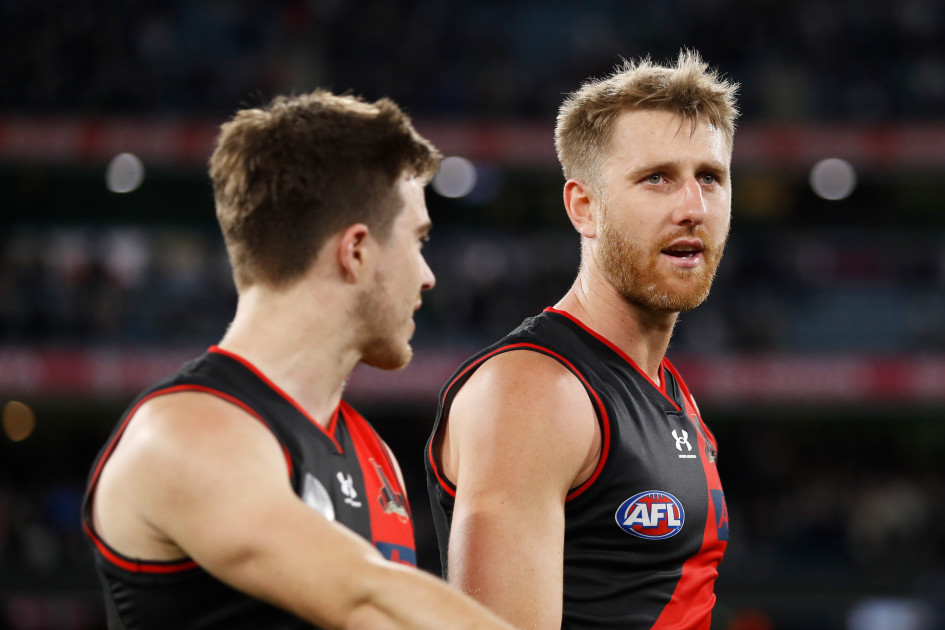
There has been a “significant change” regarding Essendon’s Dyson Heppell and a potential move to Gold Coast.
SEN’s Sam Edmund reported on Tuesday that the Bombers captain was being tempted by a four-year offer to join the Suns.
However, the situation has shifted substantially with Heppell now more likely to stay with the Dons where he has been since he was drafted in 2010.
“The Gold Coast offer was four years, two as a player ideally, and two as a coach,” Edmund said on SEN’s Whateley.
“Essendon’s offer had been, A) slow to arrive, and B) slightly underwhelming. Well, we haven’t had any change here in the past 24 hours from both clubs.
“My information is that Dyson Heppell had got used to the idea of going up to the Gold Coast, that it was more likely to happen than not. He’d been sold the vision, he’d met with the Suns, he was entertained and excited by the prospect after having a portion of time to get used to that idea.
“Now we’ve had a significant change.
“The Gold Coast, perhaps less enthusiastic than they were even 48 hours ago, and now we’ve got Essendon more enthusiastic than they were 48 hours ago.
“It’s like the old pendulum has swung. All signs point to Dyson Heppell staying on an improved offer from Essendon.”
Heppell is out of contract this year and is yet to re-commit to a 13th season in the red and black, but Edmund suggests it is likely that he will remain at The Hangar.
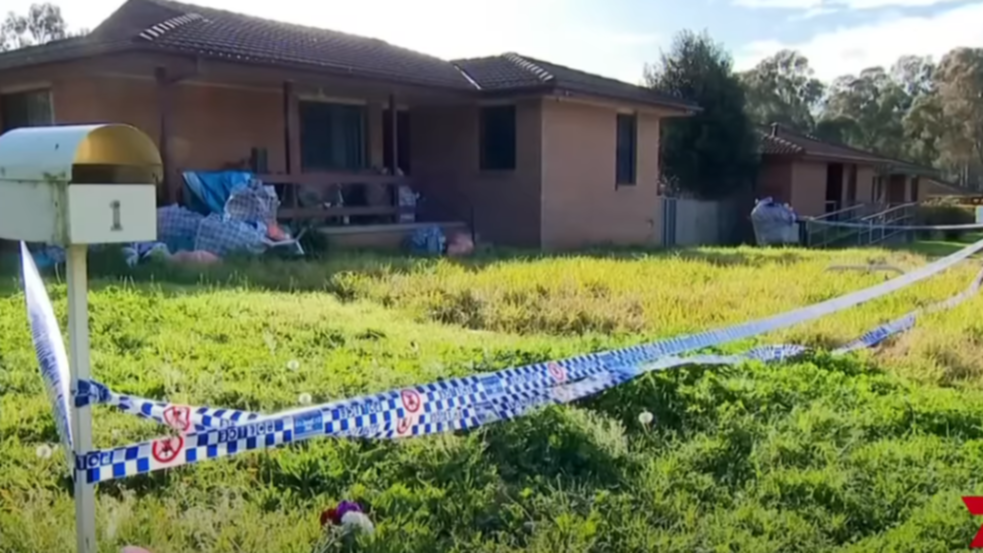
The baby girl who was found dead in Sydney’s west following a welfare check had COVID when she died, however police say her exact cause of death is still unknown.
Emergency services were called to a home on Yindi Place, Doonside, just after 10am on Monday where a nine-month-old was found unresponsive.
Paramedics treated the baby at the scene, but she could not be revived.
Watch the latest News on Channel 7 or stream for free on 7plus >>
It has now been revealed that the baby girl had COVID at the time of her death, as did both her parents.
In another development, neighbors told 7NEWS they had heard the 32-year-old mother shout “go, go, go” on Monday.
Parents of the nine-month-old baby girl who died on Monday. Credit: 7NEWS
Both parents told investigators that they had woken up to find their daughter unresponsive.
Neighbors told 7NEWS they were shocked by the incident.
“(I’m) devastated, actually, that someone so young won’t continue on with their life,” Karen Nicholas said.
“For a young baby to just die like that …. it’s a pity for our street, it’s very emotional,” neighbor Bondu Allieu said.
According to neighbors the baby’s 32-year-old mother shouted ‘Go, go, go’ the day the child was found unresponsive. Credit: 7NEWSPolice will await results from toxicology reports to determine the exact cause of death. Credit: 7NEWS
However, it’s not the first time Doonside has seen death on one of its streets.
Almost a year ago to the day, a 16-year-old boy was beaten to death by a group of teenagers just a few doors up the street from Yindi Place. All five teenagers involved in the attack were charged with murder.
Despite the revelation that the nine-month-old had COVID, police are keeping an open mind regarding the cause of death, and are awaiting the results of toxicology reports.
WASHINGTON – An excerpt from the new book “The Divider: Trump in the White House, 2017-2021,” authored by The New Yorker’s Susan B. Glasser and the New York Times’ Peter Baker, says former President Donald Trump wanted his national security team to be loyal to him, the way he thought German soldiers were loyal to Adolf Hitler.
“Why can’t you be like the German generals?” Trump asked his chief of staff, John Kelly, who asked Trump to which generals he was referring to.
“The German generals in World War II,” Trump responded. Then Kelly said, “you do know that they tried to kill him three times and almost pulled it off?”
“No, no, no, they were totally loyal to him,” Trump responded.
The excerpt, published Monday in the New Yorker, goes on to detail the frustrations of Trump’s top military leaders. Here’s a look at what else the book reveals about those relationships.
Gen. Mark Milley’s condition for his job
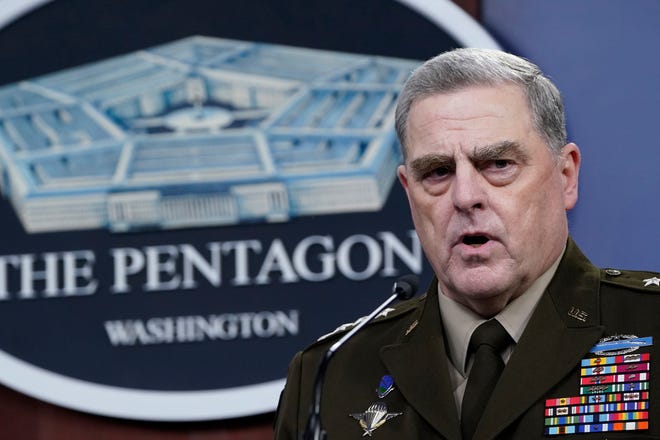
When Gen. Mark Milley accepted Trump’s offer to serve as chairman of the Joint Chiefs of Staff, he told Trump he would do whatever Trump asked of him and would back him, but with a condition, according to the book.
“I’ll give you an honest answer on everything I can. And you’re going to make the decisions, and as long they’re legal I’ll support it,” the excerpt quotes Milley as saying in November 2018.
Why did Trump get frustrated with Milley, Barr and Esper?
Trump became frustrated with Milley and other aides because they would not submit to all he asked them to do.
One particular example is when Milley, Attorney General William Barr and Defense Secretary Mark Esper refused to send in the military as Trump asked to clear Black Lives Matter protesters at Lafayette Square, near the White House in June 2020.
It was then that Trump yelled at his top aides, “You are all losers! And he repeated that, including an expletive the second time.
According to the excerpt, Trump then turned to Milley and asked: “Can’t you just shoot them? Just shoot them in the legs or something?”
Milley on China:Milley: Calls to China in final months of Trump presidency were ‘perfectly’ within scope of job
Why Milley almost resigned
Milley drafted several resignation letters, according to the exception, after the National Guard violently forced Black Lives Matter protesters out of Lafayette Square park, so the way could be cleared for Trump’s photo op holding a Bible in front of a church on June 1, 2020 .
Milley drafted different letters to the former president, which were never sent, about why he was stepping down. One in particular was his “preferred version of him,” the excerpt says, in which he accused Trump of doing “irreparable harm to his country of him.”
In the letter, Miley wrote, “the events of the last couple of weeks have caused me to do deep soul-searching, and I can no longer faithfully support and execute your orders as Chairman of the Joint Chiefs of Staff,” the book excerpt reads.
Milley was concerned that Trump was using the military to scare people.
“You are using the military to create fear in the minds of the people — and we are trying to protect the American people,” Milley’s letter stated.
“I cannot stand by idly by and participate in that attack, verbally or otherwise, on the American people,” he wrote, according to the book.
Finally, Milley wrote that Trump was “ruining the international order, and causing significant damage to our country overseas …,” according to the excerpt.
Trump praises Hitler:Donald Trump praised Adolf Hitler while on 2018 European trip, new book alleges
Why did Milley change his mind about resigning?
He later decided he would not resign, so he could stop Trump from starting a war abroad, and ensure the military was not used against American civilians again as a way to keep Trump in power. “I’ll just fight him,” the excerpt has him saying.
Trump’s military parade
After returning from a trip to France, which included a Bastille Day celebration including a military parade, Trump wanted a parade of his own.
But, he refused to have any injured veterans in his parade.
“Look, I don’t want any wounded guys in the parade,” Trump told Kelly, according to the book. “This doesn’t look good for me,” he was referring to the Bastille Day parade that he went to in France, where there were wounded soldiers.
The book said Kelly was in disbelief about what Trump was telling him, in which he told the former president,
“Those are the heroes,” he continued, “In our society, there’s only one group of people who are more heroic than they are – and they are buried over in Arlington,” the book said.
Baker and Glasser wrote that “Kelly did not mention his own son Robert, a lieutenant killed in action in Afghanistan, was among the dead interred there.”
“I don’t want them,” Trump said. “It doesn’t look good for me.” And he repeated that sentiment.