Categories
Technology

‘Halo Infinite’ Was Scaled Back Significantly From Original Ambitions, Says Joe Staten

One of the weirdest aspects of the Halo Infinite campaign for me was the final section, where there’s one giant portion of the map still hovering around, and yet when you finally arrive there, you’re just given a liner mission or two and that’s it . No exploration in what looked like a third major island on the map, and no hope that Halo Infinite would expand beyond its singular biome.

Turns out that once upon a time, Halo Infinite did have a much larger scale in mind, but it was slowly slimmed down and down over time. The open world shrunk, many campaign segments were kept linear and the biome remained uniform.

This is not some insider talking about rough development, this is 343’s Joe Staten, being up front about how much the game had to be scaled back over time, both before he joined the project, and after. Speaking on the Game Maker’s Notebook podcast (via TechRadar), he had a lot to say about what the game cut over time.

“The team went through a lot of iterations on scope and biome variety before I joined. Even after I joined the team, we had to make choices about where to scale back.”

“We didn’t end up cutting that much ultimately from the open world, but I know from the original designs there was a pretty significant scaling back of what the team had hoped at one point that they could deliver on. We knew that we needed to truly deliver a quality experience [and] scope our ambitions to make sure that the stuff that we did ship met expectations.”

In other words, they had to scale things down in order to make sure what was there was really polished, no doubt mandated after the disastrous initial showing which caused the final year delay of Infinite. But it was more than that too, as Staten said they even talked about inserting crafting systems to use more mechanics from other open world games:

“We talked a lot about crafting, for example, and my infamous line to the team was something like ‘Master Chief doesn’t need to kill animals to make leather shirts for himself. He’s a massive armored super soldier. If he wants something, he goes and kills it, grabs its gun, and then keeps on going.’”

I am…vaguely unnerved that crafting was ever seriously considered for a Halo game, open world or not, but at least Staten was very much right in his pushback on that point. Still, this is yet another tick in the “does 343 really even get Halo?” column, as of course Staten himself got his start with the series back in the OG Bungie days.

One confusing aspect of Microsoft’s plans for Halo is where things go from here on the single player front. Yes, we know Halo Infinite will continue to produce multiplayer seasons, and it’s releasing features like campaign co-op and Forge mode. But we have gotten zero indication of how and when Zeta Halo itself is going to expand. The idea appeared to be that Halo wouldn’t need to go 5-6 years between major games anymore with Infinite used as a “platform,” so…when do we see Chief again? When do we get those missing biomes? When do we meet the Endless? All open questions in search of answers since launch.

follow me on Twitter, Youtube, Facebook and Instagram. Subscribe to my free weekly content round-up newsletter, God Rolls.

Pick up my sci-fi novels the hero killer series and The Earthborn Trilogy.

.

Categories
US

DOJ sues to block Idaho abortion law after Supreme Court tosses Roe

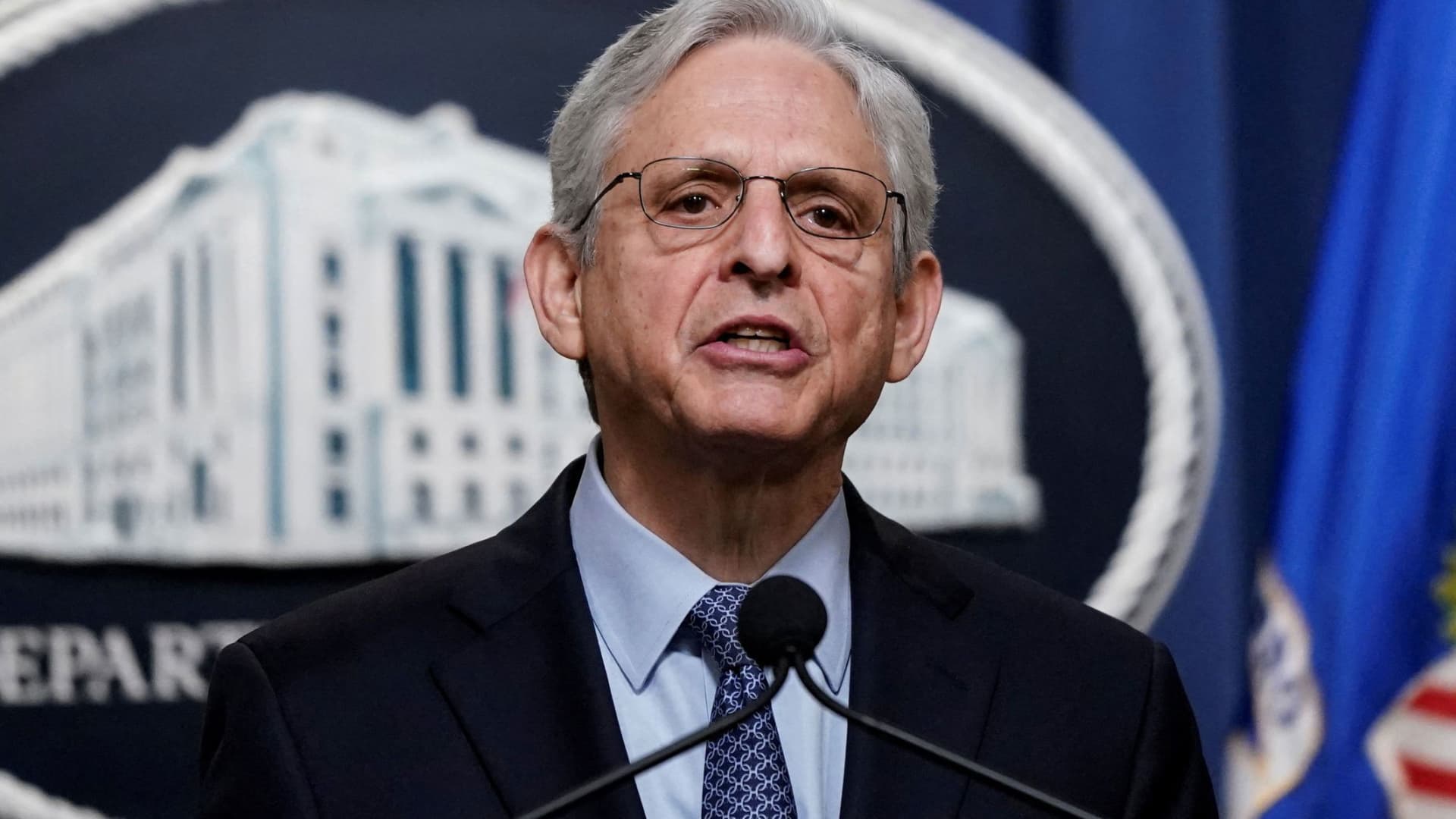
US Attorney General Merrick Garland announces enforcement actions against Russia, during a news conference at the Justice Department in Washington, US, April 6, 2022.

Elizabeth Franz | Reuters

The US Justice Department filed a lawsuit Tuesday seeking to block Idaho’s new restrictive abortion law on the grounds that it violates federal law requiring most hospitals to give medically necessary treatment to patients before discharging them.

It is the first Justice Department lawsuit to target a state’s new abortion restrictions adopted on the heels of the Supreme Court’s ruling in June, which said there is not a federal constitutional right to abortion.

That ruling reversed the Supreme Court’s 49-year-old decision in Roe v. Wade, which established the nationwide right of women to terminate their pregnancies.

Attorney General Merrick Garland held a news conference detailing the lawsuit.

The suit filed in Idaho federal court notes that the state “has passed a near-absolute ban on abortion,” which after taking effect Aug. 25 will make it a criminal offense to perform an abortion “in all but extremely narrow circumstances.”

Garland said the ban conflicts with the federal Emergency Medical Treatment and Labor Act, which requires a hospital that accepts Medicare funds to provide treatment at their emergency departments to stabilize a patient necessary to stabilize their medical condition before transferring or discharging the patient.

This is breaking news. Check back for updates.

.

Categories
Technology

Microsoft puts its RiskIQ acquisition to work

Microsoft today added two new features to its Microsoft Defender security platform: Microsoft Defender Threat Intelligence and Microsoft Defender External Attack Surface Management. These features are based on the company’s acquisition of RiskIQ and with this launch, Microsoft is now bringing some of RiskIQ’s core features to its own security platform (all while RiskIQ continues to operate its own services, too).

“Our mission is to build a safer world for all — and threat intelligence is [at] the heart of it,” Microsoft’s Vasu Jakkal told me. “If you don’t know what’s happening in the world around you, it’s very hard to understand what to do about it and how to act on it. Microsoft has the largest breadth and depth of threat signals today — we are tracking, as we just announced in our earnings, 43 trillion signals [each day] which we see from identities, from devices, from platforms, from email, collab tools.”

With Defender Threat Intelligence, Microsoft is using RiskIQ’s technology to scan the internet and provide additional data to the existing Defender real-time service to help security teams proactively secure their infrastructure. Microsoft, of course, already had a large signal map to power its Defender platform, but Jakkal noted that RiskIQ’s data not only helps enrich this existing data set but also enables an additional layer on top of Defender that gives security teams a view of the entire attack chain.

“They can see the entire attack chain, they can act on it and then — combined with their own human intelligence —– they can see where the attack is going and how to proactively prevent it,” Jakkal explained.

Image Credits: microsoft

The service also provides users with a library of raw threat intelligence and analysis from Microsoft’s security experts, which in turn should help security teams find, remove and block adversary tools that may be hidden within their organization.

Meanwhile, the new external attack surface management service helps these security teams understand how a potential attacker sees their network. Like similar services, it provides security teams with a way to discover all of their resources and find those that are unknown and/or unmanaged. Most businesses that start using a service like this end up being surprised by how many internet-facing unmanaged assets they find.

Image Credits: microsoft

“All organizations are asking the question: how secure am I? It’s such a simple question but it’s so hard to answer that question. Because the first point is, well, first we need to understand what’s happening in the world of threats. And we we need to understand what that looks like. The second thing we need to understand is where our resources are,” Jakkal noted. With these new tools, Microsoft is giving security teams more data to work with to protect their networks and other assets.

Categories
Sports

Broncos prop Patrick Carrigan handed four-week suspension by NRL judiciary over dangerous tackle

Broncos prop Patrick Carrigan has been suspended for four matches for his part in a tackle that broke the ankle of Wests Tigers lock Jackson Hastings.

The decision came after a 90-minute hearing by the NRL judiciary on Tuesday night.

It means the Broncos will be without Carrigan until the last week of the regular competition.

But it means Carrigan will be free to play assuming the Broncos make the finals.

Brisbane is currently fifth on the NRL ladder.

Carrigan had pleaded guilty to a dangerous contact charge for an incident in the 73rd minute of Brisbane’s shock 32-18 loss to the Tigers last Saturday night.

Hastings was bent back over Carrigan, with his ankle twisting underneath.

The Tigers lock was in immediate distress and pain and hobbled from the field with the help of trainers.

Broncos prop Patrick Carrigan passing the football during a match
Broncos prop Patrick Carrigan faced the judiciary for a hip-drop tackle on Wests Tigers player Jackson Hastings.(AAP Image: Pat Hoelscher)

Scans later confirmed Hastings had suffered a broken ankle and will require surgery — ending his NRL season.

He took to Twitter following the injury.

“I love footy more than anything and obviously this will be challenging,” he wrote.

“My main focus right now is to get under the knife asap then get back to helping my teammates in any way possible finish off the year to the best of our abilities.”

Carrigan, 24, has been a pivotal member of the Broncos resurgence this season, after he missed much of the previous season when he ruptured an anterior cruciate ligament (ACL).

He has played 13 games this year, averaging 143 running meters and 32 tackles a game.

A man runs the ball during an NRL match
Carrigan played a pivotal role in the Maroons’ Origin series win. (Getty Images: Mark Kolbe)

Last month, Carrigan created State of Origin history as the first debutant to win the Wally Lewis Medal, as the player of the series for the Maroons.

The Broncos are in fifth place on the NRL ladder, but are only outside the top four on points differential.

They play a crucial top-eight clash against the Roosters at the Sydney Cricket Ground this Thursday night.

There are five rounds of the regular season to go.

.

Categories
US

Biden Justice Department sues Idaho over state’s abortion restrictions

Idaho’s near-total abortion ban, which will take effect later this month, would make it nearly impossible, according to the Justice Department. for patients who need an abortion in emergency medical situations, such as an ectopic pregnancy or other complications, from receiving potentially lifesaving treatment.

Where state abortion bans stand amid legal challenges

“In the days since the Dobbs decision, there have been widespread reports of delays or denials to pregnant women experiencing medical emergencies,” Attorney General Merrick Garland said in a news conference Tuesday. “We will use every tool at our disposal to ensure that pregnant women get the medical care that they are entitled to.”

The trigger law, which was passed in 2020, would make providing abortions a felony punishable by up to five years in prison. The ban has exceptions for cases of rape or incest if reported to law enforcement or to prevent the death of the pregnant person.

The Justice Department is suing under the Emergency Medical Treatment and Labor Act, which states that hospitals receiving Medicare funds “must provide medical treatment necessary to stabilize that condition before transferring or discharging the patient,” according to Tuesday’s lawsuit.

“The Idaho law would make it a criminal offense for doctors to comply with EMTALA’s requirement to provide stabilizing treatment, even where a doctor determines that abortion is the medical treatment necessary to prevent a patient from suffering severe health risks or even death,” DOJ said .

The inside story of how John Roberts failed to save abortion rights

Abortion providers in Idaho have also challenged the state’s trigger law. The state Supreme Court is set to hear the case on Wednesday.

DOJ last month created a task force aimed at protecting abortion fights following the Supreme Court decision in Dobbs that overturned Roe v. Wade and struck down the federal right to abortion.

Garland said that the lawsuit has “nothing to do with going around” the Supreme Court’s decision in Dobbs.

“The Supreme Court said that each state can make its own decisions with respect to abortion, but so too can the federal government,” he told reporters Tuesday. “Nothing that the Supreme Court said, said that the statutes passed by Congress, such as EMTALA are in any way invalid. It’s quite the opposite. The Supreme Court left it to the people’s representatives. EMTALA was a decision made by the Congress of the United States. The supremacy clause is a decision made in the Constitution of the United States. Federal law invalidates state laws that are in direct contradiction.”

This story has been updated with additional details.

.

Categories
Technology

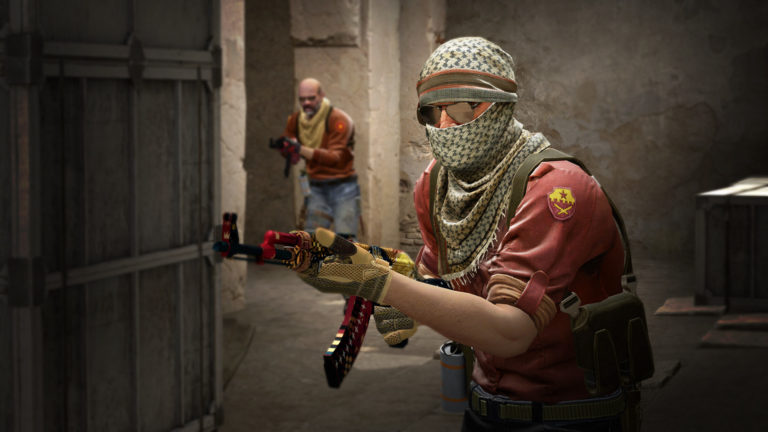
CS:GO matchmaking ranks recalibrated in latest patch

Valve has finally zeroed in on CS:GO’s matchmaking system and made some much-needed changes.

In the latest patch, which hit the live servers last night, the developers pushed out a competitive skills group “recalibration.”

When the devs usually make changes to the matchmaking system, they don’t tend to include them in the official patch notes. But this change warranted an explanation because the update “affects all CS:GO players,” according to Valve.

In short, the ranking of every player has now been hidden. To make the rank reappear, players will have to secure at least one win in matchmaking to be assigned to a skill group. Following the recalibration, these groups (or ranks) may differ from before. “Most of you will notice a change to your Skill Group, but some of you may find that you were already in the right place,” Valve explained.

Although it remains to be seen what exactly Valve has changed here, the community seems to be pleased with the update. Players have been asking Valve to fix the matchmaking system for a long time, complaining about being frequently matched up with players of a higher or lower rank.

Along with the matchmaking update, the developers have also released a list of patch notes. You can find them here.

Categories
US

Big Trouble in Little Loving County, Texas

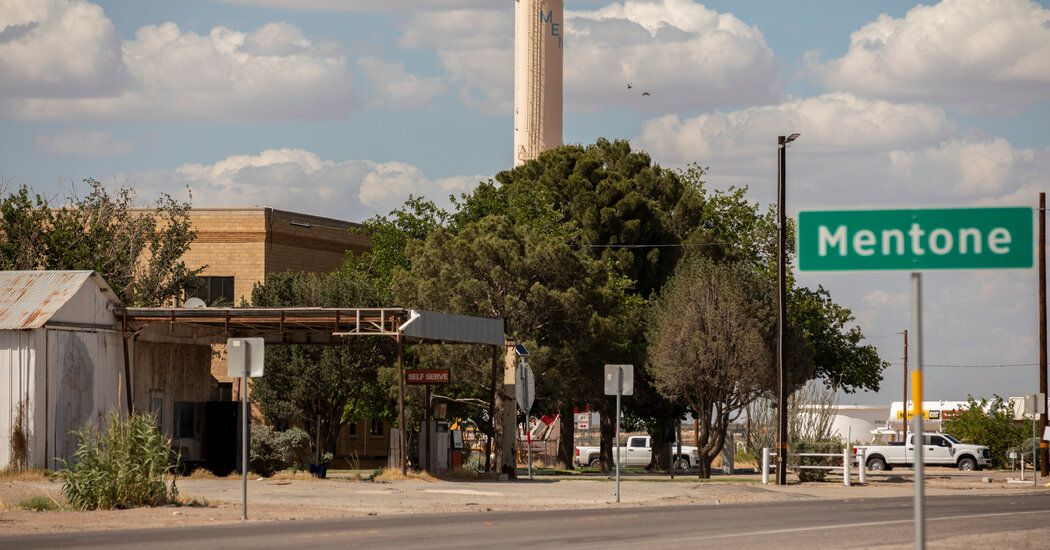
MENTONE, Texas — In America’s least populated county, the rusting ruins of houses, oil drilling operations and an old gas station interrupt the sun-blanched landscape. A hand-painted wood sign still promises good food at “Chuck’s Wagon” to drivers along State Road 302, though the owner died months ago and the wagon is gone.

Apart from the brick courthouse, the convenience store packed with off-shift oil-field workers and the lone sit-down restaurant where you’re liable to see the sheriff at lunch, everything else that the county’s 57 recorded residents might need is a ways away. Not school. Not church. No grocery store.

But while it might seem quiet, all has not been well in Loving County. The first sign of the brewing conflict came last spring with the killing of five cows, shot to death and left in the dry dirt.

That brought a special ranger — a so-called cow cop — to town. He quickly began to see other things awry.

He opened an investigation into possible thefts of stray cattle by the top local leader, the county judge. Then it emerged that the complaints about cattle theft might have grown out of a deeper problem: a struggle for political control. People told the cow cop that some “residents” who called the county home and voted there actually lived somewhere else most of the time. Election fraud, in other words.

Soon, it would seem like everyone in the county was being arrested.

First, the judge, Skeet Jones, was charged along with three of his ranch hands with taking part in an organized crime ring aimed at stealing cattle.

Days later, four others close to the judge, including one of his sons, were arrested when they showed up for jury duty. The justice of the peace said they had improperly claimed to be eligible jurors when they did not, in fact, live in Loving County.

“It sounds very far-fetched,” said Brian Carney, a lawyer from Midland representing one of the ranch hands who has been charged. “If someone were to tell you this story, you’d be like, come on, is that some kind of novel? Is that something that really happens?”

Now, as 100-degree temperatures bake the terrain, the tiny county has been engulfed in an intensely personal political struggle, one that raises not only questions about the correct way to wrangle wayward cattle, but also weightier considerations of the definition of residence, the nature of home and who has a right to vote where in Texas.

For some in Loving County, the serial arrests provided a cautionary example of how law enforcement in a remote corner of rural America can be used to achieve political ends. For others, the arrests seemed like a necessary step to rein in county leaders who many believed had been skirting the rules.

The depth of animosity as well as the interconnectedness of almost everyone involved became apparent when the sheriff temporarily barred one of the arrested ranch hands — a former deputy who has talked of running against the sheriff — from entering the county building that houses the sheriff’s office, saying he would charge him with trespassing if he set foot inside.

The only problem: That particular ranch hand is also the county’s part-time custodian. A couple days after the warning, the sheriff sent an email to county officials complaining that nobody was taking out his trash from him.

Inside the county courthouse in Mentone, prominent figures in two competing political factions occupy offices at either end of a short hallway: the county judge, Mr. Jones, 71, on one end, and on the other, his nephew, Brandon Jones, the county constable.

At issue is control over what might seem like mundane local government matters — how many deputies the constable gets, who serves on the appraisal board — but they have become more contentious in recent years as the rise of fracking has elevated land values ​​and created a property tax windfall. The county judge and the county commissioners now oversee a budget of $27 million.

But the fight for power has been fueled more by personal rivalries and a desire for control among a younger generation than any specific political goal, said Steve Simonsen, the county attorney whose wife is a cousin in the Jones family.

“There’s no contracts or patronage, but you’re in control,” he said. “That’s why I find this to be so stupid, because the only thing that anybody is going to get out of this is, ‘I won.’”

Tensions are so high that at a recent county meeting, the sheriff’s office conducted security screenings and checked for bombs. None were found.

“Right now, the climate is the worst I’ve ever seen,” said Jacob Jones, 31, one of the county judge’s sons. “It breaks my heart. Family turning against family.”

“Voter turnout is always a hundred percent, sometimes more,” a former county justice of the peace told Texas Monthly in the 1990s.

In 2020, the US census counted 64 county residents of all ages. That same year, 66 people voted for president in the general election. The census estimate has since gone down to 57 people, though that does not include the oil field workers who stay in temporary camps that dot the landscape.

Among the contested local races in November, Brandon Jones’s wife is running against the county clerk, who is Skeet Jones’s sister. And a county commissioner, who was among those arrested after showing up for jury duty, is also facing a challenge.

“Before all this, I really thought I liked politics,” said the constable, Brandon Jones. “But now, not so much.”

It was back in March of last year that the five stray cattle were found dead. They were shot after reports of cattle crossing 302, a dangerous stretch of roadway packed with heavy trucks from the oil fields.

“There were no shell casings in the area,” a sheriff’s deputy noted in his incident report, “and no footprints or vehicle tracks.”

That brought the cow cop — a special ranger for the Texas and Southwestern Cattle Raisers Association named Marty Baker — to Loving County.

When he arrived in town, he met with the judge, Skeet Jones, who had reported the killings, and watched as Mr. Jones and the ranch hands — who had been trying to corral the stray cattle the day before they were shot — loaded the carcasses onto a trailer.

Mr. Jones, whose father had been the sheriff decades earlier, said he long had a practice of catching such cattle and selling them, and then donating the proceeds to nonprofit schools for at-risk children.

But this appeared to be a violation of the Texas Agriculture Code, Mr. Baker, the cow cop, wrote in a criminal complaint. The code requires reporting stray cattle to the local sheriff, who tries to find the owner and, if none is found, can sell the cattle.

Mr. Jones said he had an arrangement with the sheriff, Chris Busse, to handle the sales himself, according to the complaint, but the sheriff denied that.

In trying to sort it out, Mr. Baker wrote, he had help from a source close to Mr. Jones: a “confidential informant” from the “inner circle of the Jones family.”

Mr. Carney, the lawyer, said he believed the informant was Skeet Jones’s own nephew, Brandon Jones, who had been privy to text messages on a family thread. Skeet and Brandon Jones, along with Mr. Busse, the sheriff, declined to comment on the investigation.

The sheriff, who is also the county’s voter registrar, told NBC News that he “never, never, ever had a conversation about stray cattle with the judge.” A sheriff’s deputy, Noah Cole, told The Times that the office had no role in the investigation.

With what happened to the dead cattle a lingering mystery, the cow cop hatched a plan to catch any rustlers in the act.

Mr. Baker released three head of unmarked cattle, with microchips, as bait. Eventually, they were caught and brought to market by Skeet Jones and his ranch hands, Mr. Baker wrote.

In late May, a dusty column of law enforcement trucks tore down the dirt road to the Jones family ranch.

“It was just crazy,” said Jacob Jones, the county judge’s son, who was working at the ranch as a scrum of officers arrived.

The arrest of a county judge for cow theft attracted widespread attention. Brandon Jones, the constable, attacked his uncle in an interview with NBC, saying he had “free rein” as judge that gave him “a sense of power and impunity that he can do whatever he wants.”

A lawyer for Mr. Jones, Steve Hunnicutt, denied any crime had been committed, adding that the political motives for the arrests were “pretty clear.”

Skeet Jones posted bond and returned to his job. But tensions deepened a few days later with a seemingly innocuous event: the call for jury duty.

Eleven prospective jurors were summoned for a misdemeanor traffic matter.

Then, to their surprise, Amber King, the justice of the peace, had four of them arrested for contemplation. One was a son of Skeet Jones. Another was the county clerk’s son. Yet another was a county commissioner, who had been accused during a county meeting of claiming his property in Loving County as his residence while living at a ranch in Reeves County.

Residence has long been a contentious question. The argument is over whether people who may have homes elsewhere vote in Loving County because they want to tilt elections or because they consider it the home they intend to return to one day. Many of those recently arrested support the current county leadership.

Ms. King said a new election law that passed last year, Senate Bill 1111, changed things. The law was designed to stop people from registering to vote in places where they don’t live in order to sway elections, which has occasionally occurred in Texas.

She bristled at those who claimed residence but did not have to cope with actually living in a county with no schools, few amenities and dangerous truck traffic.

“We choose to live here,” she said. “We choose to put our kids on the bus. We choose to drive an hour and a half one way to HEB if we want decent groceries. They could live out here if they wanted to. But they don’t.”

Mr. Simonsen, the county attorney, conceded that some people may live elsewhere, but said that it did not necessarily disqualify them from voting.

So long as you are not voting in two places, he said, “Essentially, your residence is where you say it is.”

The most immediate result of Ms. King’s bid to clean up elections is that it’s now even harder to assemble a jury.

At least two people recently summoned for a grand jury have written to say they do not want to appear because they fear being arrested, Mr. Simonsen said, and the county has been unable to seat a grand jury.

With the flurry of law enforcement activity in recent weeks, it can seem as if everyone in the county will soon need a lawyer. Mr. Simonsen said he was trying to find the humor in it.

“Every morning, I walk over here,” he said, “and when they ask, ‘How’s it going?’ I say, ‘I haven’t been arrested yet!”

Categories
Technology

Google Pixel 6a vs. Pixel 6 Pro: Camera Quality Shoot-Out

The midrange Google Pixel 6a ($449) earned our Editor’s Choice award in no small part because of its imaging prowess. Simply put, it’s one of the best midrange camera phones on the market.

At $899, the Pixel 6 Pro costs twice as much as the Pixel 6a, and fittingly includes higher-end camera components as part of the upgrade. But if image quality is your main concern, is the Pixel 6 Pro really worth double the price of the Pixel 6a?

To help you decide, we pit their cameras against each other in several common photography situations so you can see the difference and determine which model is the best buy for your needs.


How Do the Pixel 6a and Pixel 6 Pro Cameras Differ?

Before you look at our real-world photo samples from the Pixel 6a and Pixel 6 Pro, here’s a quick rundown of the camera specs and features you get with each phone.

To start, the high-end Pixel 6 Pro’s main camera uses a 50MP Octa PD Quad Bayer sensor, whereas the Pixel 6a mainly relies on a 12.2MP dual-pixel sensor. The Pro offers four times the resolution of the 6a, but the image output sizes are pretty similar because the former oversamples images; both phones save photos at around 12MP (4,080-by-3,027-pixel) resolution. If you’re interested in how oversampling works and why it makes a difference for detail capture, check out our article on CMOS, BSI CMOS, and Stacked CMOS sensors and pay attention to the section on Quad Bayer tech.

Outside of resolution, the Pixel 6 Pro’s 26mm lens has an f/1.85 aperture. The Pixel 6a’s lens offers an f/1.7 aperture and captures photos at a 27mm focal length. The difference between 26mm and 27mm isn’t massive, but the 6 Pro’s wider field of view lets in slightly more of a scene.

Google Pixel 6a


Review image

Both phones use the same wide-angle hardware: a 12 MP, f/2.2 camera with a 17mm focal length. Images from these lenses look almost identical, and the only difference stems from how the two devices process photos.

The Pixel 6 Pro has an extra lens that the Pixel 6a doesn’t—a 48MP telephoto camera with a 104mm focal length (4x optical zoom ratio compared with the standard lens). If you want to capture tight frames without compromising quality, the Pixel 6 Pro is the clear winner on paper. We explore how the two handle zooming in on subjects in the tests below.

In terms of software, Google includes just about everything in the more expensive Pixel 6 and 6 Pro in the 6a. That means you get Real Tone, Magic Eraser, Night Shot, Top Shot, and all the other software-based goodies.


Pixel 6a vs. Pixel 6 Pro: Main Rear Cameras

We took several pairs of photos in various lighting environments with each phone’s primary camera. In theory, the Pixel 6 Pro’s images should look sharper based on its higher-resolution sensor, but it’s more important to examine real-world results than to just look at the numbers.


Outdoors in Sunlight

A play area

Pixel 6a (Credit: Dave LeClair)

A play area

Pixel 6 Pro (Credit: Dave LeClair)

It’s tough to spot the difference between the Google Pixel 6a and 6 Pro in environments with good sunlight. Even though the 6 Pro captures more detail at the onset, its final output doesn’t look very different (especially on the web). The pricier Pixel Pro still has an edge in detail—it’s just not as dramatic an advantage as the raw numbers indicate.

Winner: Pixel 6 Pro (barely)


Indoors in Low Light

A dog on its bed

Pixel 6a (Credit: Dave LeClair)

A dog on its bed

Pixel 6 Pro (Credit: Dave LeClair)

The Pixel 6a and Pixel 6 Pro both offer Google’s fantastic Night Sight feature on the main lens, which works well in dim-light settings. In the above photos of my dog, the image from the Pixel 6a seems a bit brighter, but I prefer the slightly wider field of view on the 6 Pro. That makes for a tie.

Winner: tie


Indoors in Very Low Light

to closet

Pixel 6a (Credit: Dave LeClair)

to closet

Pixel 6 Pro (Credit: Dave LeClair)

I took the above photos inside my closet in almost total darkness. Here, the Pixel 6 Pro captures a bit more detail than the Pixel 6a, though neither photo is very usable. Still, it’s a good way to stress-test the Night Sight feature. We’re impressed that the shirts are even visible in these photos.

Winner: Pixel 6 Pro


portrait mode

A selfie of Dave LeClair

Pixel 6a (Credit: Dave LeClair)

A selfie of Dave LeClair

Pixel 6 Pro (Credit: Dave LeClair)

When you use Portrait Mode in sunlight, you should get similar results from both cameras. They even seem to apply roughly the same amount of bokeh to the background in the tests above. That said, the slightly wider view of the Pro gives it an edge.

Winner: Pixel 6 Pro


Close-Up Outdoors in Sunlight

The words garbage only on a sign

Pixel 6a (Credit: Dave LeClair)

The words garbage only on a sign

Pixel 6 Pro (Credit: Dave LeClair)

It’s difficult to distinguish the macro performance between the two phones; both show the same amount of detail just at slightly different angles of view. If you want to get close to your subject, you should be able to capture great photos with either camera.

Winner: tie


Pixel 6a vs. Pixel 6 Pro: Wide Angle Cameras

Although both phones use the same wide lens, it’s still important to see if there are any differences in how they process images.


Outdoors in Sunlight

An apartment complex

Pixel 6a (Credit: Dave LeClair)

An apartment complex

Pixel 6 Pro (Credit: Dave LeClair)

It’s not surprising that these photos look similar given the identical hardware. We can’t pick a winner here.

Winner: tie


Indoors in Low Light

A photo of a hallway

Pixel 6a (Credit: Dave LeClair)

A photo of a hallway

Pixel 6 Pro (Credit: Dave LeClair)

We also tested the wide-angle lens in a low-light setting to see if the devices process images differently. Even here, the photos look essentially the same.

Winner: tie


Pixel 6a vs. Pixel 6 Pro—Zoom

The Pixel 6 Pro has a dedicated zoom lens with 4x optical zoom. The Pixel 6a doesn’t. We zoomed into images we took in sunlight to see if we can ascertain how much of a benefit that extra lens offers.


2x Zoom

A bridge with graffiti

Pixel 6a (Credit: Dave LeClair)

A bridge with graffiti

Pixel 6 Pro (Credit: Dave LeClair)

When you zoom in, you can see some extra detail in the Pixel 6 Pro’s shot. Both images look great, though.

Recommended by Our Editors

Winner: Pixel 6 Pro (barely)


4x Zoom

A bridge with graffiti

Pixel 6a (Credit: Dave LeClair)

A bridge with graffiti

Pixel 6 Pro (Credit: Dave LeClair)

The telephoto lens on the Pixel 6 Pro shines at 4x zoom, whereas the Pixel 6a starts to struggle. You can clearly see an improvement in detail on the 6 Pro; the 6a’s image looks comparatively washed out.

Winner: Pixel 6 Pro


Pixel 6a vs. Pixel 6 Pro: Selfie Cameras

The Pixel 6 Pro comes with an 11.1MP front-facing camera with an f/2.2 aperture. The Pixel 6a features an 8MP lens with an f/2.0 aperture. Clearly, the former’s hardware is better, but the practical difference isn’t that substantial.


Outdoors in Sunlight

A selfie of Dave LeClair

Pixel 6a (Credit: Dave LeClair)

A selfie of Dave LeClair

Pixel 6 Pro (Credit: Dave LeClair)

As mentioned, the Pixel 6 Pro’s front-facing camera offers a slightly higher resolution. But, in practice, both cameras produce very similar images in this scenario. I prefer the image from the Pixel 6 Pro because the colors in the Pixel 6a’s image look a little too bright. Still, the differences are pretty slight.

Winner: tie


Indoors in Good Light

A selfie of Dave LeClair

Pixel 6a (Credit: Dave LeClair)

A selfie of Dave LeClair

Pixel 6 Pro (Credit: Dave LeClair)

In a slightly dimmer indoor space, the images look even more similar. You really have to study them to see any differences.

Winner: tie


Indoors in Very Low Light

A dark selife of Dave LeClair

Pixel 6a (Credit: Dave LeClair)

A dark selfie of Dave LeClair

Pixel 6 Pro (Credit: Dave LeClair)

I took the above selfies in almost complete darkness, with just a small amount of light coming through the curtain. Neither image looks great (despite Google Night Sight’s best efforts), but neither is dramatically worse than the other either.

Winner: tie


And the Winner Is…You

The Pixel 6 Pro’s camera stack is better than the one in the Pixel 6a, but that isn’t surprising given the difference in price between the two handsets. Most notably, the pricier Pixel 6 Pro shows more fine detail in complex scenes, along with more accurate colors. If you’re simply looking for the best Pixel camera quality no matter the cost, the Pixel 6 Pro is the phone to get. These differences alone aren’t enough to justify the Pixel 6 Pro’s $450 premium, however. Of course, the Pixel 6 Pro also brings a host of other improvements over the Pixel 6a that justify its higher price, including a larger, sharper display and class-leading battery life.

But, in terms of camera performance, the Pixel 6a offers truly impressive performance for the price, nearly on par with the Pixel 6 Pro. That means the winner is you, the buyer, as both of these phones earned our Editors’ Choice award. They represent some of the finest midrange and high-end phones currently available.

For more on mobile photography, check out our 10 easy tips and tricks for better smartphone photos.

Like What You’re Reading?

Sign up for Fully Mobilized newsletter to get our top mobile tech stories delivered right to your inbox.

This newsletter may contain advertising, deals, or affiliate links. Subscribing to a newsletter indicates your consent to our Terms of Use and Privacy Policy. You may unsubscribe from the newsletters at any time.

Categories
US

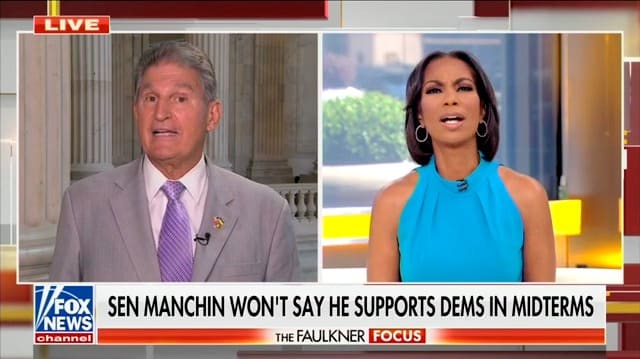
Fox News Anchor Harris Faulkner Loses It When Joe Manchin Questions Her Patriotism

Fox News anchor Harris Faulkner briefly lost it during a contentious interview with Sen. Joe Manchin (D-WV) on Tuesday, taking a strong issue with the centrist senator asking her if she’s afraid of Democrats doing “something good” for America.

“My father served,” an incensed Faulkner fired back at Manchin at one point, demanding that the West Virginia lawmaker not make it “personal.”

With Manchin taking a media victory lap after finally striking a deal with Senate Majority Leader Chuck Schumer to pass portions of President Joe Biden’s economic agenda, Fox News has quickly turned on their favorite Democrat. After praising him for months for tanking Biden’s Build Back Better legislation, the network’s “disappointed” hosts and commentators have groused about Manchin’s “betrayal.”

Appearing on The Faulkner Focus on Tuesday to explain his support for the newly named Inflation Reduction Act, Manchin parried most of Faulkner’s pointed questions about the bill’s tax structure, spending, and energy investments. For the most part, Manchin continued his appeal to the patriotism of both the anchor and the network’s viewers.

“We need more energy today so—we also need to invest in the energy for the future,” Manchin declared early in the interview. “This is a balanced approach everyone has been talking about. Everyone is upset for whatever reason because they are afraid it is a political bill. It is not a Democratic bill. Not a Republican bill. It is not a green deal. This is a red, white, and blue deal, Harris.”

Manchin also pushed back when Faulkner parroted Republican claims that the new legislation would raise taxes on middle-class Americans, noting that it merely requires large corporations to pay a minimum tax rate of 15 percent.

“Who is paying any taxes that doesn’t have a corporation that has revenue of over a billion dollars a year? Not one person,” the West Virginia senator replied.

“I am asking you a different question than you’re answering. I’m saying Americans $400,000 and below are now going to be taxed. Their taxes will go up,” Faulkner replied.

“That’s wrong,” Manchin retort. “That’s a lie. A pure, outright lie.”

The conversation only grew more tense when Manchin taunted the Fox News host, at one point urging her to “be optimistic” and “be an American” when she said experts predict US gas prices will rise around Labor Day.

Eventually, Faulkner brought up Manchin’s non-response when recently grilled by Meet the Press moderator Chuck Todd on whether he wanted Democrats to stay in power after this year’s midterms. Insisting he didn’t dodge the question, Manchin instead said he is solely focused on getting his deal passed and is unconcerned with political races.

Faulkner, however, continued to press the issue, bringing up Biden’s low approval numbers while stating that “elections are going to need some help” for Democrats.

“Harris, are you scared that we’re going to do something good that will help our country?” Manchin shot back, prompting the Fox anchor to grow apoplectic.

“Of course not! My father served!” Faulkner shouted.

“Well, sounds like you are,” Manchin calmly interjected.

“Are you kidding? Service is in the Bible!” Faulkner continued. “That’s what we do, we serve our fellow man and woman. Of course! Don’t make this personal, because it’s not.”

After that heated moment, Faulkner again pushed Manchin on the low approval ratings Biden is “rocking right now,” remarking that the West Virginia senator doesn’t sound very supportive of his own party.

“I work with what I have here in the majority party we have as a Democratic Party. I’m working with the president, who has accepted the proposal I put forward and negotiated,” Manchin responded. Balanced energy policy. It’s wonderful for our country. I know people who don’t like the president and don’t like Democrats might be upset. It is not whether you like the president or you like Democrats. Do you like America? Do you want to fight inflation? This bill does it.”

.

Categories
Sports

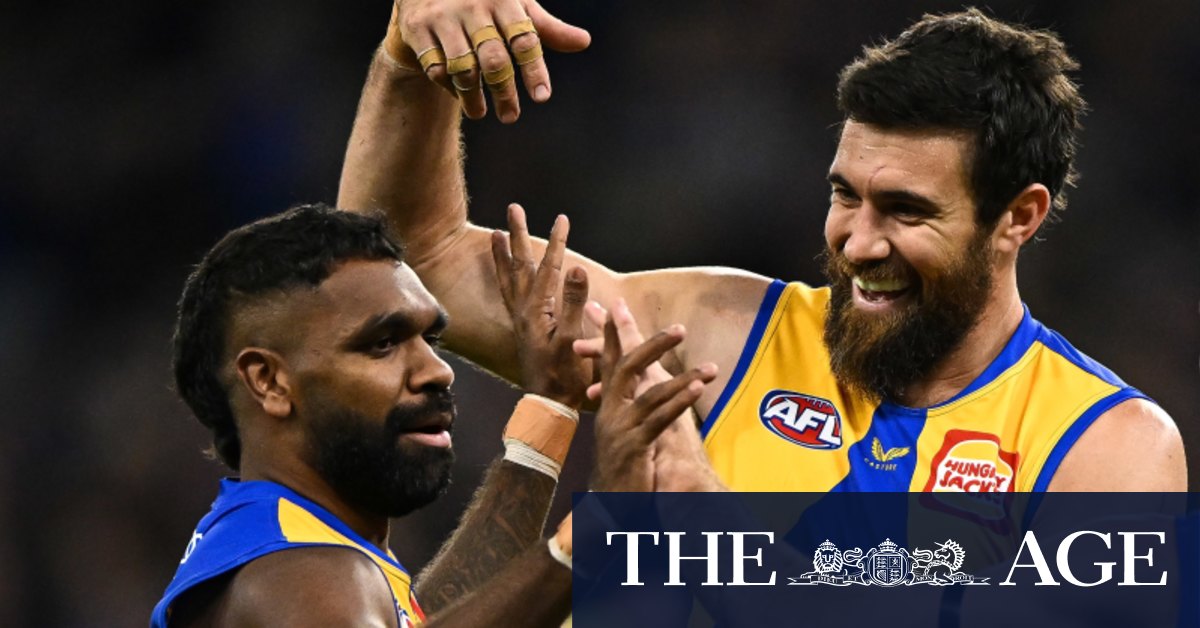
Josh Kennedy to retire from West Coast Eagles

loading

The Northampton local was drafted at pick No.4 in 2005 and debuted for Carlton the following year. He was then traded to the Eagles in 2007 as part of a deal for the Blues to get former Eagles captain Chris Judd.

The forward will fall just short of reaching 300 games, with 292 games played to date.

Kennedy said post-football he planned to continue to oversee his labor hire business and establish a foundation to support children in the midwest, where he was raised.

“We’re looking at helping disadvantaged youth there and help to facilitate programs to find what they want to aspire to and then help build an environment around them to build a pathway where they feel supported in being able to achieve what they want to achieve and not be restricted with travel or location,” he said.

West Coast coach Adam Simpson said Kennedy was one of the club’s greatest players.

“What he’s done in my time at the club, it’s just been a pleasure to see and watch. Coleman Medals, the ability to stand up in big games. Clutch, not just goals, but clutch moments,” he said.

“I can remember the prelim against North Melbourne in 2015 where we were 20 points down, hadn’t scored a goal, and he took this contested mark 50m out and just rolled and slotted it.

“That just sums him up. He’s a big-game player, but he also loves his teammates and loves his club.

“He’s going to go down as one of the greatest.”

Meanwhile, Port Adelaide dasher Steven Motlop has opted to retire immediately, having played 217 matches with the Power and Geelong.

Port Adelaide dasher Steven Motlop, who began his career with Geelong, has retired immediately.

Port Adelaide dasher Steven Motlop, who began his career with Geelong, has retired immediately. Credit:Getty Images

Motlop, 31, was one of the league’s most exciting players when at his best. Taken with the 39th selection in the 2008 national draft, Motlop played 135 games with the Cats, booting 175 goals, before crossing to Alberton during the 2017 trade period.

I have played 82 games with the Power, booting 54 goals.

“Fourteen years is a long time in the game, especially in the position I play. It was always a childhood dream to play in the AFL and I’ll always be grateful to Geelong and to Port Adelaide for giving me the opportunity to achieve that dream,” Motlop said on Tuesday.

“As a kid you just want to play in finals. I played in five preliminary finals and, while it would have been nice to have won one, playing in those big games alongside my teammates is something I’ll always look back on fondly.

“There’s been a rich history of my family playing at Port Adelaide and to be able to get the opportunity come over to Adelaide, where my family was set up, was a big part of why I moved across and it means a lot to say I had the chance to play at the club where I have such strong family links.”

Josh Kennedycareer highlights

  • West Coast Eagles all-time leading goal kicker (currently 704 goals). Ranked 24th for most goals in VFL/AFL history
  • Seven-time club leading goalkicker – 2011, 2013, 2014, 2015, 2016, 2017 and 2020 – equal-most tied with Peter Sumich
  • Equal fourth-most games played in West Coast history (270) behind Shannon Hurn (317), Dean Cox (290) and Glen Jakovich (276).
  • Runner-up best and fairest 2016; 3rd-place in 2013
  • Three-time All-Australian – 2015 (vice-captain), 2016, 2017 (vice-captain)
  • Two-time Coleman medalist – 2015 and ’16
  • 2018 premiership player
  • Chris Mainwaring Medal as best clubman in 2015
  • Three-time Glendinning-Allan medalist in a RAC Derby
  • West Coast vice-captain 2014-2020

Our Breaking News Alert will notify you of significant breaking news when it happens. Get it here.