Categories
Business

Why none of the big four banks wants to be the first to raise interest rates

The central bank has made one point beyond debate – its three top priorities are inflation, inflation and inflation.

How the big four banks respond to the RBA is even more curious – a curious dance and an exercise in game theory.

It’s a competition about who goes first. Hiding behind another bank works best.

It feels bizarre given borrowers are aware that all the banks will pass on the RBA’s rate rise in full. The banks fully understand the RBA has given them the cover to allow them to raise rates by half a percentage point.

loading

By 3.30pm on Wednesday – more than 24 hours after the RBA statement – none of the four major banks had said a word. (Macquarie had moved the previous evening on savings and borrowing rates.)

Privately, ANZ, Westpac and NAB have spent the day pointing the finger at the Commonwealth Bank, hoping that, as the largest player, it would take the lead.

One bank assured me that being first to move left that bank exposed because customer focus groups found that branding was damaged for the first mover in raising rates.

Frequently the first mover is left out to dry for hours before the rest follow suit.

This kind of bank gamesmanship was understandable in years gone by when the RBA was lowering rates and the banks were not passing the full cut onto borrowers.

In this instance, it was important to see what the other banks were doing.

This time around with all passing on the full rate rise, the difference between the banks will come down to how they treat depositors.

It is a market that is now being carefully watched by customers and by the treasurer, Jim Chalmers.

loading

He has already launched a shot across the bow of the big banks that have captured hundreds of millions in profits by arbitraging higher lending rates and not fully passing it to depositors.

How the banks respond to savers is particularly important because there is an additional $260 billion parked in bank accounts than there was before COVID-19 struck.

But transparency around savings rates is muddier. There are so many types of rates, depending on size, duration, honeymoon periods and caps applied, that it is difficult to compare apples and apples.

But it is a major competition battleground for the banks – and the real area to watch. Chalmers certainly is.

Categories
Technology

What’s the deal with: Meike lenses?

August 3, 2022

Hong Kong optics manufacturer, Meike, rose to prominence somewhat suspiciously in 2018 with affordable M43 cine prime lenses, and has gone on to rapidly expand its stills lens range. It’s suspicious as Meike’s break out products were ‘nearly identical’ to a line of cine M43 prime lenses by a fading competitor, Veydra, which shut up shop just a year later.

There is lots of talk about Chinese manufacturers nefariously reverse-engineering innovative products by established brands to create cheap knock-offs. An established brand will sub-contract a Chinese factory, and someone there will steal the IP and re-create the product with inferior materials. While it sounds plausible, and accusations have been thrown around, this isn’t the case with Meike. Rather, it’s speculated the Chinese optics manufacturer cut a deal with a Veydra co-founder as the company headed towards turmoil.

Meike has now built a reputation in cinematography, but remains a ‘cheap and cheerful’ option for stills photographers.

It’s unusual that Meike has been slow to develop quality stills optics, while winning over some in the cine lens market. But what it may lack in stills photography quality, it makes up for in quantity. Meike offers a range of lenses for Canon EF and Z, Nikon Z and F, Sony E, Fujifilm X and M43 cameras.

For some perspective on its rapid expansion in stills, Meike recently announced an ASP-C 10mm f2 manual focus prime lens for five mounts, including the Canon RF. Canon has only just unveiled its first line of crop-sensor RF cameras.

So the team at Meike are either preternaturally intuitive, being tipped off, easily able to adapt a design to a different mount, or all of the above.

According to Meike

Meike’s roots go back to 1997 with a plastics molding factory. Its clients mainly included ‘global well-known companies in Japan’s photographic equipment industries’, the company bio states.

At this stage the Meike brand wasn’t established. But the mold factory operators thought they could try their hand at designing products similar to what they were helping the Japanese build.

So in 2005 – or 2007, depending on where you get your information – Meike was established ‘to facilitate operating our own brand, strategically steering its main business to R&D, manufacture and sales on photographic equipment, including lens for camera’. Perhaps this may have included a few reserve-engineering experiments?

We don’t want to mimic that slightly pompous, worldly friend who corrects everyone’s pronunciation of ‘pho’ or ‘paella’ when going out for lunch, but let’s quickly clear this up. Having pronounced it ‘Meek’ for a while, research suggests it’s apparently ‘May-kuh’.

Despite launching in the mid-noughties, Meike was slow to gain much interest. Vigorous Googlin’ ​​shows few mentions of Meike until 2017. For about a decade it was a truly obscure brand, likely sold direct via eBay to bargain-hunting cheapskates who care not for red dots and brand names.

YouTube camera hardware reviewer, Christopher Frost, a softly-spoken Brit who has reviewed almost every budget contemporary lens on the planet, uploaded a review of a Meike 35mm f1.7 lens in 2017. It looks like a clunky bit of gear – completely manual , including focus and aperture control. But it produced decent results for the low price of £80 (AUD$140).

So it was essentially competing with low-cost second-hand analog lenses, which photographers could mount to a digital camera with an adapter.

Meike’s big break

Veydra was a start-up cine lens company established in 2014 through a Kickstarting crowdfunding campaign. It proved unexpectedly popular, with the two founders, Ryan Avery and Jim Zhang, raising US$272K to build prime cine lenses for M43 cameras.

According to a blog post by Matthew Duclos, who worked with the Veydra team, the fledgling company was a ‘small batch’ manufacturer, driving overheads sky high.

In March 2017, the Veydra warehouse was robbed after receiving a major shipment, crippling the company and halting production. Behind the scenes Zhang and Avery were apparently having disputes regarding the company’s direction, which according to Duclos led to nasty lawsuits.

Here’s an excerpt from his post:

‘Perhaps not so coincidentally, when Veydra stopped producing inventory after the lawsuit in 2017, a curious new lens began popping up around the web in 2018: Meike. These lenses looked nearly identical to Veydra Mini Primes but at a fraction of the price tag. Speculation began flooding the Veydra Facebook group and forums. How was this possible? Could someone have copied the Mini Primes that carefully? Was Veydra selling off old stock under a different name? Did someone sell the designs to another company to skirt around litigation?

The truth is locked up in lawsuits but it’s not hard to read between the lines. I suspect that Jim contracted the optical and mechanical designs to an outside factory during the original Veydra production. The exact relationship and manufacturing path is still unclear but what is clear is that Meike has a much larger, more sophisticated manufacturing operation than that of the original factory that Veydra lenses were produced in.

According to Duclos, Meike’s optical and mechanical design was ‘strikingly similar’, but better ‘in almost all areas’. Cheaper, too, thanks to Meike’s large-scale in-house manufacturing capabilities.

Substance to the speculation was provided when an online video showed Avery, ‘the original co-founder of Veydra’ promoting Meike lenses.

‘In 2019 Veydra went out of business. But out of that came the birth of Meike cine lenses,’ Avery says in the video. ‘The Meike cinema primes have improved coatings and performance and optical qualities, as well as mechanical quality. This enabled a very significant increase in production quantity, which also lowered the cost.’

Online pundits speculated this video was somehow linked to the outcome of lawsuits.

Meike has since gone on to design stills lenses with features like autofocus and aperture control, but unlike in the cine industry it’s yet to establish a reputation for designing high-quality products, affordable though its lenses are.

The first autofocus lens, released in 2018, was criticized by Frost – who is normally quite kind and forgiving – for having sluggish, inaccurate and extremely noisy AF. The AF noise sounds like the zoom lens on an old analog point-and-shoot. Almost nostalgic enough for hipsters to embrace!

The AF noise issue has been somewhat resolved with the inclusion of a stepping motor in a recent upgrade. But apparently the AF accuracy is still ordinary.

While Meike’s new product releases are often covered in the global photo media, the local presence in the Australian specialist retail sector is virtually non-existent. Whereas the likes of Laowa, Yongnuo, and Viltrox are available at some of the bigger retailers.

This miniseries of article by Inside Imaging has explored the story behind the lens manufacturers listed above. Each brand has gained popularity in the global market for a specific line of products, and then what follows is typically rapid expansion. Yongnuo with flash triggers; Viltrox with lens mount adapters; Laowa with quirky niche lens products; and Meike with M43 cine lenses.

But what’s remarkable is these brands all emerged in the last few years. And for all of these more ‘established’ Chinese players, there are many others still peddling cheap wares via eBay, Amazon, or Alibaba. Waiting for that big break.


Categories
Entertainment

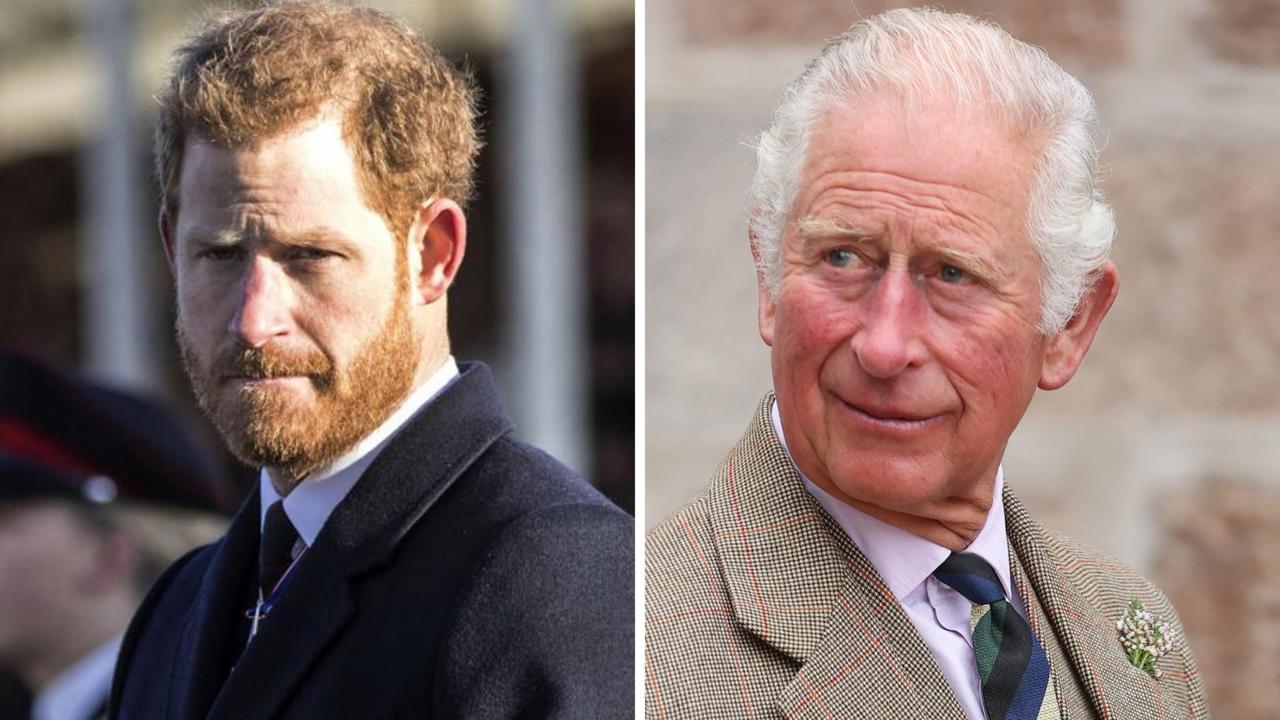
Prince Harry reportedly snubbed by Prince Charles over refusing to share details of upcoming memoir

Prince Harry was reportedly ‘snubbed’ by his father Prince Charles after he refused to discuss details of his upcoming memoir.

The memoir ie yet to be released but it is already causing tensions among senior members of the Royal Family.

The icy father-and-son moment occurred after the Duke of Sussex and his wife, Meghan Markle, stopped by to visit Windsor Castle on the way to the Invictus Games in Holland earlier this year.

According to royal expert Neil Sean, a source told him that “Harry refused to talk about what he put down in his book” during their brief meeting.

Stay up to date with the latest news on the British Royals with Flash. 25+ news channels in 1 place. New to Flash? Try 1 month free. Offer ends October 31, 2022 >

It reportedly resulted in Prince Charles brutally “icing” his son and stopping the meeting after just 10 minutes.

“We know Prince Charles spent very little time with his son Prince Harry,” Mr Sean said, according to The Daily Express.

“Charles wanted to have a one-to-one chat, but that ended up being a very brief meeting.

“According to a very good source, allegedly, Prince Harry refused to detail anything about his forthcoming memoir to Prince Charles.”

“The big sticking point this year, being the Queen’s Platinum Jubilee and the 75th year of Camilla, the Duchess of Cornwall, Charles doesn’t want any negativity.

“According to that good source, Harry refused to talk about what he put down in his book and how this will pan out.

“It has been pushed back, and Charles will have to wait and see like the rest of us.”

Last year, Harry announced that he’s writing a tell-all book about his life.

In a statement, the prince said he was excited to share an account of his life that’s “accurate and wholly truthful”.

“I’m writing this not as the Prince I was born but as the man I have become,” he said.

“I’ve worn many hats over the years, both literally and figuratively, and my hope is that in telling my story – the highs and lows, the mistakes, the lessons learned – I can help show that no matter where we come from, we have more in common than we think.

“I’m deeply grateful for the opportunity to share what I’ve learned over the course of my life so far and excited for people to read a firsthand account of my life that’s accurate and wholly truthful.”

– with The Sun

Read related topics:prince harry

.

Categories
Sports

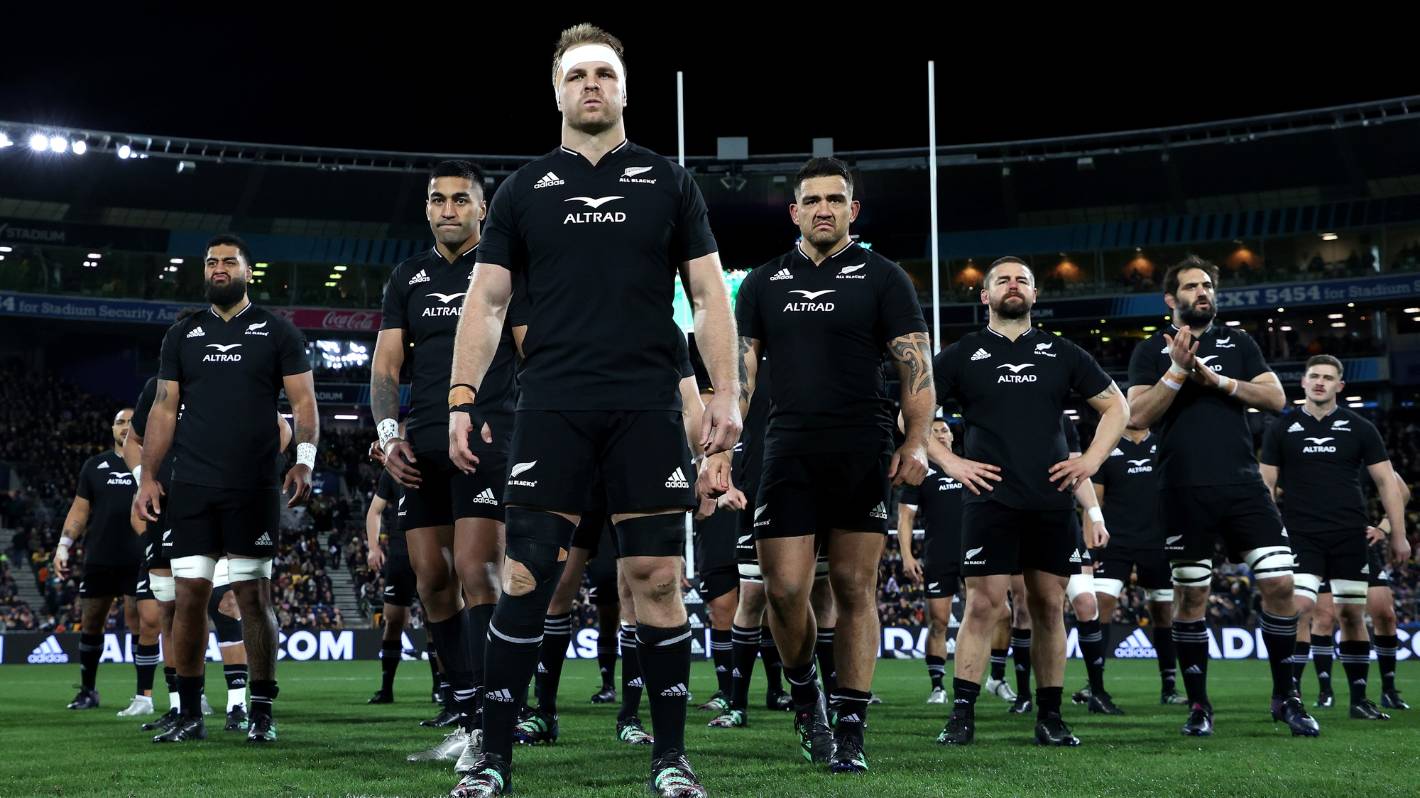
All Blacks skipper Sam Cane adamant fixes within reach ahead of South Africa double

Sam Cane calls them the “big rocks” – the foundation stones of any turnaround that is going to play out as the All Blacks head into a daunting pair of matches against the world champion Springboks to open the Rugby Championship.

On the surface it’s an unpromising situation indeed for Cane and his New Zealanders who have lost four of their last five test matches, including a devastating 2-1 home series defeat against Ireland in July that threatened to turn their nation of rugby followers inside-out .

There was a lot to regret from that, and indeed the twin defeats last November. The All Blacks forwards have been off the mark, the defense sporadic, kicking game often aimless, set-piece work messy and attack lacking clarity, sharpness and a discernible plan. On the plus side, at least Ardie Savea and Will Jordan played well.

Since the final whistle in Wellington, the recriminations have flowed and the consensus from seasoned observers has been they need to stop back the detail, simplify the plan and let the players run out with uncluttered heads and clear minds.

Cane has more or less agreed with that, by pointing out, to answer a query from stuff, the “fixes” in the All Blacks are not as widespread as some may realize. In fact as the All Blacks skipper looks at it, you mend a couple of key things, most of the problems go away.

Sam Cane is adamant the All Blacks can repair a lot of what's wrong by taking care of a couple of key areas.

Phil Walter/Getty Images

Sam Cane is adamant the All Blacks can repair a lot of what’s wrong by taking care of a couple of key areas.

“It may seem like there’s a lot to fix from the outside, but in camp we’ve got a couple of really clear focuses, and often when you get the big rocks of a forward pack right, a lot of those smaller things which may seem like issues sort themselves out,” he said from the team’s training base in Ingwenyama, just out of Mbombela.

“The hardest bit after the last game was actually going home for a week. As much as we needed the break from it all, it was so good to get back in Wellington for that two-day camp and start putting the work in to fix things. It didn’t feel like you could really move forward till we started getting things right.”

The All Blacks need to get more players producing the eye-catching rugby of in-form loosie Ardie Savea.

Andrew Cornaga/Photosport

The All Blacks need to get more players producing the eye-catching rugby of in-form loosie Ardie Savea.

New Zealand Rugby, in their wisdom, have tried not to throw the baby out with the bathwater. They’ve shed a couple of assistant coaches, kept the boss Ian Foster in place at least for these two matches in the republic, and they’ve brought in Jason Ryan from the Crusaders to take the forwards.

Cane, contrary to speculation from some quarters, has remained as captain.

Asked about the balance of keeping confidence up ahead of such a daunting challenge, the skipper reiterated his “we’ve got this” stance.

“It’s important we don’t focus on all these things that are going wrong because the truth is there are not heaps of things that are going wrong, and with top teams there are small margins between games,” said Cane.

“For example the last game we lost by 10, but we let in two rolling maul tries which as an All Blacks forward pack is something we don’t see as acceptable. We fix something like that and that’s one big rock sorted out. So we focus on what we need to, and there is a lot of stuff we are doing well, so we focus on that as well instead of just drilling down on what’s not going well.”

Sam Cane: 'A lot of stuff we are doing well, so we focus on that instead of just drilling down on what's not going well.'

Ella Bates-Hermans/Stuff

Sam Cane: ‘A lot of stuff we are doing well, so we focus on that instead of just drilling down on what’s not going well.’

Cane also gave a massive tick to the addition of Ryan, who has been brought in to address supposed player concerns about the direction the forwards were getting.

“Jase has been outstanding,” said Cane. “He has come in and taken control and found his feet from him straight away. He’s clearly very knowledgeable and knows what he wants out of our forward pack. I feel like we’ve made some good strides already the last couple of days.”

There has also been plenty of conjecture around just how much damage the absence of South African teams from Super Rugby has done. Cane’s response to a question directly related to that indicated it’s a real thing.

“Super Rugby is certainly different these days to pre-Covid. That’s just the reality,” he added. “If you speak to any of the Kiwi boys, we always enjoy playing the South Africans to test ourselves physically. Although we pride ourselves on playing skilfully, the physical side is a component that a lot of our boys relish as well.

“We knew a long time ago how tough these two games were going to be when we looked at the first five matches of our schedule. But it was always exciting because 1, it’s been a while; and 2, I’ve never in my 10 or so years had two test matches back to back in South Africa. As an All Black you love tests and times that really challenge you – and this is certainly one of those.”

Categories
Australia

Euthanasia ban for ACT and NT closer to being repealed as territory rights bill passes House of Representatives

A bill to restore territory rights has passed in the House of Representatives this morning, edging the ACT and Northern Territory closer to being able to set their own laws on voluntary assisted dying.

The private member’s bill was introduced by Labor MPs Alicia Payne and Luke Gosling on Monday and aims to overturn a 25-year-old ban on territories legislating on euthanasia.

This bill does not legalize voluntary assisted dying, but rather gives the territories the right to vote on it.

It will still have to undergo a vote in the Senate, where leading opponents of assisted dying blocked previous attempts to repeal the ban. Two of those opponents – former Liberal senators Eric Abetz and Zed Seselja – no longer hold Senate seats.

If passed, the bill would give the opportunity for the territories to follow every state in Australia and allow voluntary assisted dying, after NSW became the last of the states to pass its legislation on the issue in May.

MPs in the House of Representatives on different sides of the chamber.
The bill was passed 99 to 37 in the House of Representatives.(ABC News: Nick Haggarty)

Advocates have been campaigning for change for decades

Advocates for voluntary assisted dying laws have been campaigning for the territories to be able to set their own laws on the issue for decades.

Between 2006 and 2016, multiple bills were introduced to federal parliament seeking to restore territory rights, but each failed.

Among those in support of the legislation is Darwin resident Judy Dent, whose husband Bob was the first to make use of the NT’s voluntary euthanasia law before it was repealed when the ban on territories legalizing assisted dying was introduced.

Bob Dent, the first person to use the NT Rights Of The Terminally Ill Act to die, with the help of Dr Philip Nitschke in 1996
Bob Dent was the first of four people to use the NT’s short-lived assisted suicide laws.(Supplied)

Mr Dent died on September 22, 1996, but the law’s reversal has been a source of pain for his widow ever since.

“Surely it is unconstitutional to treat people differently because of where they choose to live,” Ms Dent said last year.

“That’s what they’re doing — they’re making the people of the territories second-class citizens.”

In March last year, both the ACT and NT wrote to senior Commonwealth ministers asking for the ban to be appealed, but in October, the request was denied by then attorney-general Michaelia Cash.

But the issue was revived ahead of the federal election, when now Independent Senator David Pocock made it one of the major issues of his campaign.

“Tragically, for some in our community, this is not a debate that can wait,” Senator Pocock said at the time.

Yesterday, in his maiden speech to the Senate, he said whether the ACT allowed for voluntary assisted dying should be a decision by the Legislative Assembly.

“It is time for us to restore the right of the territories to make decisions for themselves. To ensure that our Legislative Assembly here in the ACT gets to make decisions about the future of Canberrans, not MPs from around the country whose own constituents already enjoy these same rights,” Senator Pocock said.

‘Incredibly special moment’

Ms Payne said it was an “incredibly special moment” when the bill passed in the lower house.

loading

“I’m very, very grateful to each of our parliamentary colleagues across political lines who support the rights of the territories to have the same democratic rights as other Australians,” she said.

“We’re only halfway there, the conversation needs to continue now in the Senate and those discussions with our colleagues are continuing.

“I put that plea now to our Senate colleagues to please do this for our constituents, to have their say.

“I am grateful to those colleagues who don’t personally support voluntary assisted dying but do support our equal democratic rights.”

Mr Gosling said he and Ms Payne were “very proud” to see the bill go through, with an overwhelming majority of 99 MPs voting in the affirmative.

“We’re grateful for that support,” he said.

“The bill will now go to the Senate and we’re hoping that it receives support there as well, and that’ll mean, for Territorians, that we will regain the ability to make laws on issues that affect us.”

.

Categories
US

Air traffic controllers say co-pilot ‘jumped’ from plane

RALEIGH, NC (AP) — A 911 call from air traffic controllers suggests that a co-pilot may have jumped from a damaged plane before the other pilot made an emergency landing in North Carolina, according to a recording of the call that was released Tuesday .

It’s been unclear exactly how or why Charles Hew Crooks, 23, exited the small cargo plane on Friday afternoon about 30 miles (48 kilometers) south of Raleigh-Durham International Airport. He did not have a parachute, and his body was found in a backyard in the town of Fuquay-Varina.

Two unnamed Federal Aviation Administration employees can be heard telling a 911 dispatcher that the plane was heading to the airport. The pilot onboard had apparently told them that his co-pilot had “jumped out of the aircraft,” news outlets reported.

“We have a pilot that was inbound to the field,” a controller told the 911 dispatcher, according to WRAL. “His co-pilot jumped out of the aircraft. He made impact to the ground and here are the coordinates.”

The call lasted about 13 minutes, with the controllers stating several times that the co-pilot had jumped.

Wake County Emergency Management Chief of Operations Darshan Patel said the initial 911 call prompted the search for Crooks.

The airplane sustained substantial damage to its landing gear and fuselage, according to preliminary information gathered by the National Transportation Safety Board. The investigation is ongoing.

.

Categories
Business

Cost of living: New data from Foodbomb exposes foods hit hardest by inflation

As the consumer price index (CPI) tips over 6 per cent, new data reveals how much staple pantry items, fruits and vegetables have soared in price over the last six months.

According to the Australian Bureau of Statistics, the price of food and non-alcoholic beverages increased by 5.9 per cent in the last year due to high freight costs, supply constraints and strong demand.

As a result, consumers and businesses have gone to extreme lengths to cope with the country’s cost of living crisis as empty shelves, sky-high price tags and costly grocery bills become the new normal.

Recently there have been some unusual methods Australians have used to slash costs and make-up for insufficient stock, including broccoli stalks being broken off and left on fresh produce units and KFC switching lettuce for cabbage in its burgers.

So with the effects of inflation felt and seen right around the country, food experts from Foodbomb crunched the numbers to assess which foods are having the greatest impact on consumers’ hip pockets.

Research shows that broccoli, iceberg lettuce and baby spinach have been the most expensive items in short supply within the last six months.

Broccoli has increased by a staggering 130 per cent, with a box previously worth $42 now costing stockists $95 each. This increase is then passed onto consumers per kilo.

Meanwhile, the price of iceberg lettuce hiked from $4 to $10.80, at a 151 per cent increase. A bag of shredded lettuce also rose for $7.50 per kilo.

As for baby spinach, the price for a 1.5kg box more than doubled, rising from $16.50 to $38.50.

While these prices have caused trouble for consumers and businesses in the past, offering some hope is Mouhamad Dib, the company director at MD Provodores.

He told news.com.au that despite the increase in costs observed recently, the inflated price tags on these leafy vegetables won’t be here to stay.

“The cost of fertilizer from the farms, to labor shortages and transport costs has amplified pricing across all sectors,” Mr Dib said.

“But with spring around the corner and summer days behind it, we hope to see some prices come down. Lettuce leaves are definitely still in short supply, but broccoli and baby spinach are getting better.”

Unfortunately, the same can’t be said for staple pantry items and animal products which are taking a hit as a result of global events and supply chain issues.

Oil unexpectedly soared in price with 20 liters of sunflower oil doubling from $30.60 to $66. Whereas the cost of canola oil is triple the amount, with some suppliers selling the same quantity for as much as $92.10.

It’s bad news for egg lovers with the war in Ukraine preventing farmers globally from sourcing feed grain which has in turn slowed egg production.

As a result, wholesale prices for a one dozen carton of free-range eggs have risen from $2.60 to $4.45. Caged eggs have also seen a similar increase however, they aren’t selling out in supermarkets as quickly due to the shift in demand for the cage-free range.

Foodbomb predicts that egg supply will run tight for the next 18 months as feed supply becomes increasingly difficult to source.

Salmon and chicken breast are also among some of the other animal products in short supply while selling at a higher cost, now ticketed at $40kg and 9.50kg respectively.

Similar to the egg situation, consumers can expect the price of chicken meat to remain high for the next 12 months.

Anthony Ponte from the operations and procurement department at wholesaler Melba Fresh told news.com.au that these price increases are a reflection of the market.

“(Prices) are going up because the supply is going down, while the demand is staying the same if not increasing. As a result, we’re getting less sales and it’s getting harder and harder to source produce,” he said.

“We’ve been looking everywhere, interstate and all kinds of places, just trying to get our hands on products. It’s been very hard. We have to split what we’ve got between orders, but you still ultimately end up disappointing everyone.”

Mushrooms also make Foodbomb’s top 10 list of expensive items in short supply with a box now priced at $50 each. Lebanese cucumbers, $11 per kilo, and cabbage, $14 each, come in at ninth and 10th place.

.

Categories
Technology

Hollywood Goes Down Under | LBBOnline

When Thor: Love and Thunder was announced as shooting in Australia, few industry experts were surprised. The land down under has become a hub for major American productions, with major blockbusters of all stripes flocking to the country (and to New Zealand) rather than Hollywood, New York, or even Atlanta.

While major productions taking place across AUNZ is nothing new – think back to The Lord of the Rings or the Star Wars prequels and Matrix trilogy from the early 2000s – the volume of major productions has definitely increased of late. The consequences for local production have been varied – especially when it comes to commercial creativity.

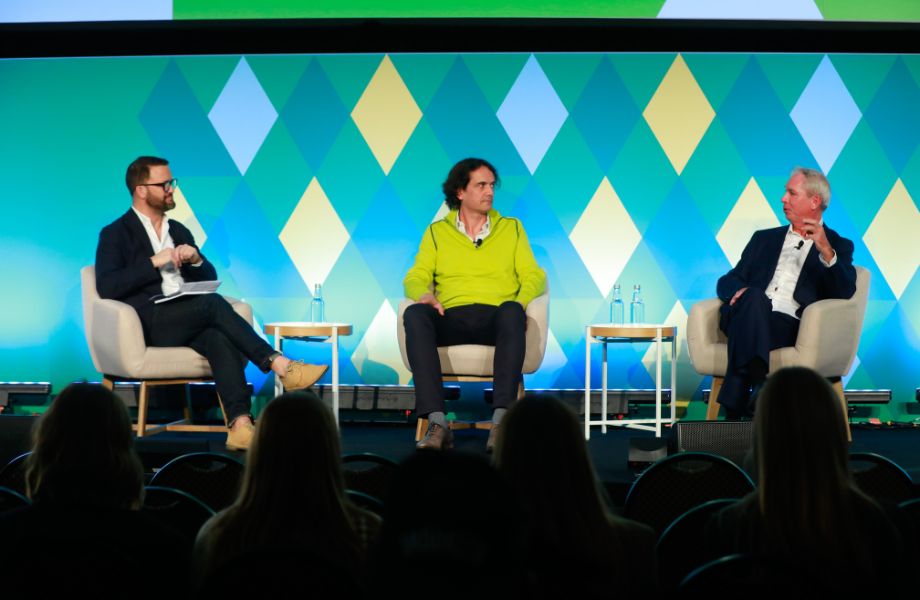
At this year’s Advertising Week APAC, a panel led by LBB’s Toby Hemming called on Damien Whitney, executive producer at Clockwork Films, and Stephane Renard, executive producer at Media Monks, to parse the good and the bad of this development.

First, the bad. The influence of major productions, Damien explained, has led to a real skill shortage for commercial productions. The allure of major film work (as well as the specialist skills often required) has, on more than one occasion, caused commercial producers real headaches thanks to a lack of availability. Stephane echoed this view, explaining that the chance to show Star Wars as a CV credit could be “irresistible” to special effects talent, regardless of the opportunities offered in the commercial sphere.

There has also been little creative bleed into domestic production in either film or commercial realms. The influx of money has neither allowed more Australian films to be made, nor made a material difference to the creative side of commercial creativity. But this, the panel expressed, was not really an attributable ‘harm’. Damien explained that Australian films have simply always struggled to compete with the scale of American pictures, while creativity itself couldn’t be quantified as something which was measurably “improved” by American money. But what has improved is the industry’s technical skill.

Stephane agreed. He cited multiple instances of directors, VFX artists, or cinematographers who had transferred skills to and fro between commercial and artistic production realms: From major productions, they take the access to new technology (such as LED screen backdrops), while, from commercial productions , they take the freedom to experiment – ​​using both to develop their skills and potential.

Ultimately, both executive producers concluded that this technical upskilling was a major benefit, and remarked with a hint of pride that Australia was “punching above our weight” when it came to global production capacity. The skill shortage was very real, but Damien emphasized that “this is an industry of people”, and drove home that if enough was done to promote homegrown talent, this demand could be met. Stephane agreed, and pointed out that, with the new major production opportunities in Australia, there was more reason than ever to stay – thus countering the “brain drain” production has faced in years past.

The reason, Damien concluded, that this uptick in production had happened was largely a result of tax incentives and good Covid management. “The industry is very good at self managing”, I have explained. In that light, regardless of the challenges that Hollywood poses for Australian production – both artistic and commercial – there is little doubt that the industry is still healthy, and there are reasons to be optimistic about its future.

.

Categories
Sports

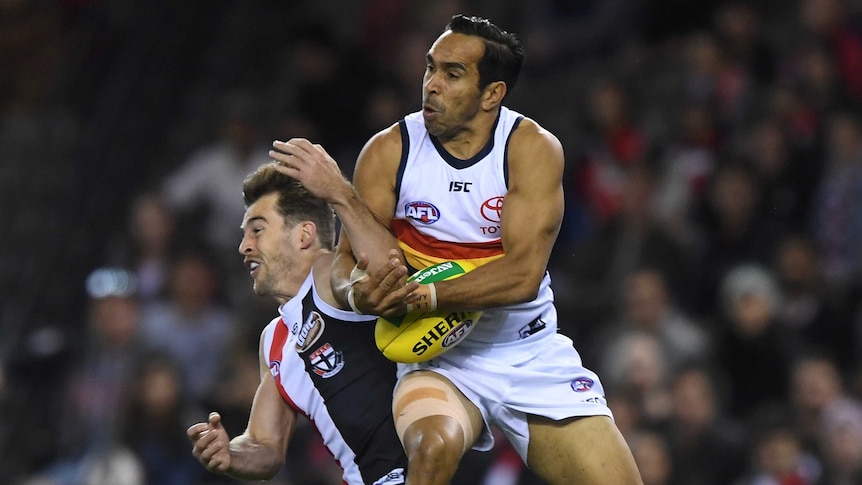
Adelaide Crows apologizes to former AFL star Eddie Betts following new book airing claims about preseason training camp

Former AFL champion Eddie Betts says his form slumped after he felt disrespected and traumatized at an Adelaide Crows preseason training trip, accusing the camp of cultural insensitivities.

Betts’s biography The Boy from Boomerang Crescent, which was released today, includes a chapter on the controversial 2018 Adelaide Crows’ preseason training camp following a devastating defeat to Richmond in the 2017 grand final.

In it, Betts describes the anxiety and anger he felt following the camp and the subsequent fallout.

AFL Players’ Association chief executive Paul Marsh said the association would contact all players who attended the 2018 camp to get a better understanding of issues that might have arisen.

In a statement, he said the association had previously spoken to players about the camp, but based on the experience detailed in Betts’s book, he now believed “players felt pressured into remaining silent.”

“The details outlined by Eddie Betts in his new book about the 2018 Adelaide Crows training camp are extremely concerning and difficult to read,” he said.

“We commend Eddie on the courage he’s shown in telling this story and are troubled by the ongoing hurt caused to Eddie and his family.”

In one example, Betts wrote how personal details he had confidentially shared with a camp counselor were used to verbally abuse him in front of teammates during a physically and emotionally grievous “initiation.”

Among the insults yelled while he “crawled through the dirt” was that the father-of-five would be a “sh** father” as he was “raised by only his mother.”

Betts, who joined the Geelong coaching team following his retirement last year, described the incident as “traumatizing” and had him “broken to tears”.

Eddie Betts holds his hands out and looks at a yellow AFL ball while being challenged by a Suns player
Eddie Betts returned to Carlton in 2020.(AAP: Dave Hunt)

The 350-game veteran said teammates were recruited to verbally abuse each other during the same exercise.

“I’ll live with this shame for the rest of my life,” he said.

Betts said players at the camp were prevented from showering, had to surrender their phones, and were transported blindfolded on a bus that “reeked of off food” with the Richmond theme song loudly playing on loop.

Betts details how First Nations rituals were misappropriated, which he found “extremely disrespectful”, and references to sacred Aboriginal words “were chucked around in a carefree manner”.

“When I started to talk to people around me about my experience, I started to realize that what we’d been put through was all just a bit f***** up, and I rightly became angry,” he said.

A man and a woman with five children gathered around them stand on a dirt path in front of a tree
Eddie Betts with his wife Anna and five children in Darwin in November 2021.(Instagram: annascullie)

Betts said he raised his concerns with the club and asked to remove Aboriginal players from further “mind training exercises” with the company behind the camp, which continued to work with the Crows until later that year. The club “mutually agreed to part ways” with the company in June.

“Three weeks after I addressed the team about my concerns, I was told that I hadn’t been re-elected to the leadership group. I was devastated,” he wrote.

Crows chief executive Tim Silvers, who only joined the club last year, said he would investigate Betts’s claims that he had been dropped from the leadership group as a result of raising his concerns.

Silvers said he was “saddened” to read the impact the camp had had on Betts.

“It obviously hurt him in a number of ways,” he said.

Silvers described Betts as a “legend” who “lit up the Adelaide Oval for a long period of time”.

A man wearing a suit speaks to microphones in front of a blue and red banner
Adelaide Crows chief executive Tim Silvers apologized to Betts for his experience at the camp.(ABC News: Camron Slessor)

Silvers acknowledged the camp “probably wasn’t the right move at that time” and apologized to Betts and “any of our playing group who had a negative experience.”

“To have someone like Eddie, who has now left our club, to have a negative experience, saddens me,” he said.

Silvers said the club had new leadership and was moving “in a positive direction”.

Betts acknowledged in the book that a SafeWork SA inquiry had cleared the club of breaching any workplace safety laws, but he wrote: “My view remains that the activities there were inappropriate, counter-productive and culturally unsafe.”

books of eddie betts on bookshelf, with his face on the front cover
Eddie Betts’s biography, The Boy from Boomerang Crescent, reveals claims about the Crows’ preseason training camp.(ABC News: Ben Pettit)

In a statement made in 2018, the Crows said SafeWork SA’s investigation “found neither the club nor any other person or organisation, breached any work health and safety laws during or in relation to the camp”.

SafeWork SA provided no more information about the investigation.

Crows player Rory Laird, who also attended the camp, described Betts as one of his “close mates” and a “loved figure” at the club.

“I think each individual had different experiences and I actually wasn’t on that part of the camp I guess, so I can’t really comment on the ins and outs of it,” he said.

“But obviously as a former teammate and a friend, you don’t like hearing about that.”

Betts, who moved to Carlton in 2020, wrote of the continuing toll the camp took, saying his “on-field form slumped” at the start of the following season and describing 2018 as “tough.”

“Personally, I felt like I’d lost the drive to play footy, and to be honest I’m not sure I ever had the same energy I did before that camp,” he wrote.

The ABC has contacted Collective Minds for comment.

.

Categories
Australia

Biggest defense review in decades to identify ‘capability gaps’

Prime Minister Anthony Albanese has announced a comprehensive strategic review of the Australian Defense Force amid concerns about a “capability gap” in the country’s armed forces.

He said the review was aimed at ensuring the ADF was well positioned to meet Australia’s security challenges over the next decade and beyond.

“This review will prepare Australia to effectively respond to the changing regional and global strategic environment and ensure that defense’s capability and force structure is fit for purpose, affordable, and delivers the greatest return on investment,” Albanese said.

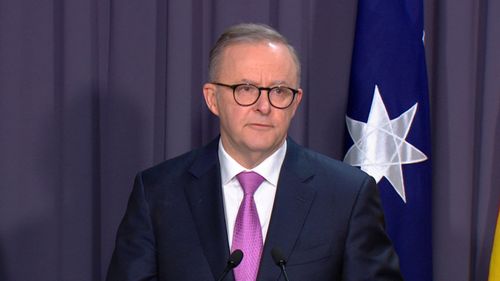
Prime Minister Anthony Albanese has announced a major defense review. (Nine)

Albanese said the review will be headed by retired defense chief Sir Angus Houston and former Labor defense minister Stephen Smith.

“Professor Smith and Sir Angus bring a unique blend of knowledge and experience to their role as independent leads,” he said.

“Their depth of expertise will be invaluable in informing this review.”

Albanese said the review was being held amid growing tensions in the Asia Pacific region, with China showing greater assertiveness.

“We live in an era where there’s strategic competition and increased tension in our region,” he said.

“And where China has taken a more aggressive posture in the region.”

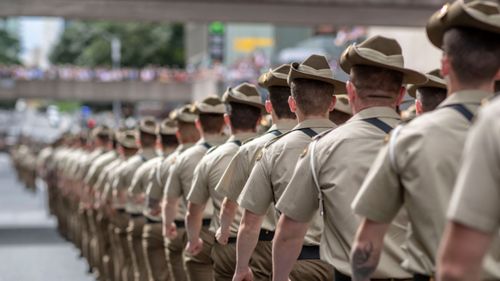
The defense review will examine the ADF’s capability and force structure. (APA)

Albanese also defended the selection of Smith after some commentators criticized his record as defense minister in the former Gillard government when he oversaw cuts.

Defense Minister Richard Marles said the review would be the most exhaustive for decades.

“This will look at questions of force structure, look at questions of capability, it will ask and answer foundational questions about given our strategic circumstances: what is it that we want our defense force to do on behalf of our nation at this moment?” he said.

He said it would run concurrently with Australia’s involvement in the AUKUS defense pact with the US and Britain, under which Australia will acquire nuclear-powered submarines.

“Given the significance of that platform, it’s really important that both bodies of work happen concurrently and are able to cross pollinate each other,” Marles said.

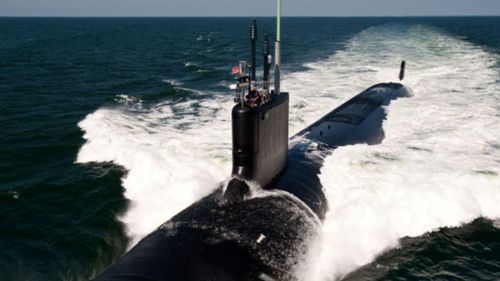
The defense review will be held in conjunction with Australia’s involvement in the AUKUS defense pact, under which Australia will acquire nuclear-powered submarines. (U.S. Navy)

Albanese said the review would also identity gaps in military resources planned for the ADF and what has been delivered.

“There is a gap there between capability and what has actually been promised in the past,” the prime minister said.

“There are significant delays in delivery of what has been promised.”

Similarly, Marles also said the review would examine major defense projects over the coming decade.

“We’re going to look at the integrated investment plan over the course of the next 10 years to make sure what we have as a schedule of procurements does meet the challenges that our strategic circumstances present.”

Marles said the federal government has asked the reviewers to report their findings by the first half of 2023.

China accuses the US of ‘navigation bullying’