Categories
Entertainment

Olivia Newton-John and the Grease casting choices we almost got to see

Her role as Sandy in grease remains her most resonant film work and provided her with a string of hits, but it was also a film that had to overcome many obstacles to get made, including convincing Hollywood studio bosses that people would see it.

A testament to its success is grease‘s ability to transcend generations. Last week’s prime-time broadcast of the film on Nine the day Olivia died managed to draw one of the evening’s biggest audiences, while songs from the film have soared to the top of streaming charts.

It was larger-than-life, outrageously flamboyant, kaftan-wearing Hollywood producer Allan Carr who fought to bring grease to the big screen, convincing skeptical studio bosses at Paramount that the all-dancing, all-singing musical would find an audience at a time when the genre was considered a major risk in Hollywood. The movie musical had long been written off as passé, despite the slow-burn success of 1975’s The Rocky Horror Picture Show.

loading

But Carr would eventually come right. grease it became the highest-grossing movie musical of the 20th century, despite an erratic birth.

Production was mapped out in just five weeks and the film shot over two months with a modest US$6 million budget.

According to a Vanity Fair piece in 2016, Carr’s original vision for grease was considerably different from the classics so loved today.

The original treatment, submitted to the studio in December 1976, included Danny Zuko as a busboy and gas-station attendant (doing a song called Gas Pump Jockey); Paul Lynde (at that time best known as Uncle Arthur on television’s Bewitched) as the Rydell High principal, rather than Eve Arden as Principal McGee; Donny Osmond as Teen Angel; and the Beach Boys doing the showstopping garage production number, Greased Lightnin’.

The studio wanted Henry Winkler from Happy Days to play John Travolta's Danny Zuko.

The studio wanted Henry Winkler from Happy Days to play John Travolta’s Danny Zuko.

Paramount had wanted Henry Winkler, Fonzie on the popular sitcom Happy Days, as Danny, but Winkler, fearful of being typecast, passed.

Robert Stigwood, Carr’s co-producer, had a three-picture deal with the 22-year-old rising star John Travolta, already a TV hit with Welcome Back, Kotter playing school stud Vinnie Barbarino. After Travolta shot saturday night fever he signed on to star in grease Ace Danny.

The Beach Boys were considered to sing Grease Lightning instead of the T-Birds.

The Beach Boys were considered to sing Grease Lightning instead of the T-Birds.

Casting Sandy would prove trickier. Director Randal Kleiser saw rushes from a new film his old college buddy George Lucas was making,titled Star Wars, to see if its female lead, Carrie Fisher, could be a fit. She wasn’t.

Marie Osmond (left) and Carrie Fisher (right) were both considered for Olivia Newton-John's Sandy.

Marie Osmond (left) and Carrie Fisher (right) were both considered for Olivia Newton-John’s Sandy. Credit:

Kleiser and Carr mulled other possibilities, including The Partridge Family’s Susan Dey, model turned actor Deborah Raffin, and America’s Mormon sweetheart Marie Osmond, who became the front-runner until she objected to Sandy’s transformation from good girl to bad girl and dropped out in protest.

In 2009 Osmond told Fox News: “The script came to me, and [it] was much edger than what Olivia came up with.

Paul Lynde was a possible candidate to be principal, instead of Eve Arden.

Paul Lynde was a possible candidate to be principal, instead of Eve Arden.Credit:Getty Images

“But I was at a place in my life where I wanted to have children and I didn’t like the fact that the girl had to turn bad to get the guy. I think the guy has to work hard to get the girl, that’s what I believe.”

Donny Osmond was considered as Teen Angel instead of Frankie Avalon.

Donny Osmond was considered as Teen Angel instead of Frankie Avalon. Credit:Getty Images

With Osmond out, Carr set sights on Olivia, who sat across from him at a dinner party at fellow Aussie Helen Reddy’s house one night without realizing she was auditioning. Carr gushed that she would be perfect for the role, but the singer wasn’t so sure, fearing she was too old – 29 – to play a teenager, and nervous after the previous musical bomb she had appeared in.

Olivia Newton-John and John Travolta in Grease.

Olivia Newton-John and John Travolta in Grease.Credit:AP

Carr prevailed and rewrote the part to make Sandy Australian. Cinematographer Bill Butler used soft lenses to turn back the clock.

loading

grease was originally released in the United States on June 16, 1978 and was an immediate box-office success. At the time it became the highest-grossing musical ever, eclipsing the 13-year-old record held by The Sound of Music, with a worldwide gross of US$341 million, or well over US$1.5billion dollars in today’s money.

And, despite her early misgivings, grease guaranteed Olivia’s major league celebrity status for the rest of her life, and beyond.

The Opinion newsletter is a weekly wrap of views that will challenge, champion and inform your own. Sign up here.

Categories
Sports

AFL: ‘Go sit somewhere else’: Sydney Swans star Isaac Heeney’s road to 150

Isaac Heeney was 12 years old, nursing a broken hand and sitting in a mostly empty grandstand with his mother Rochelle.

A junior football carnival was playing out in front of them that he was supposed to be captaining an under-12s team in, before suffering his injury in one of the early games.

Then up walked a man, seemingly unaware of how many seating options he had, to slide in next to the Heeneys.

“We were like, ‘Go and sit somewhere else; you don’t have to sit in our laps’,” Heeney, 26, recalled, laughing about the memory, which he said made him “feel old”.

“Then he introduced himself: ‘I’m Chris Smith from the Sydney Swans Academy. I’ve been watching you for a little while.’”

Heeney’s life changed forever in that moment. The Swans had found a future superstar, one who will play his 150th AFL game at the SCG on Sunday against Collingwood.

Rochelle, a dairy farmer, started working half-days on Thursdays to drive Heeney and his brother, Beau, two-and-a-half hours each way from the outskirts of Newcastle to Sydney for a 90-minute Academy training session.

Their dad, Adam, a butcher, would sometimes drive them as well but also spent countless hours with his sons kicking the Sherrin on their hobby farm.

“I had the best childhood in the world. It was a really simple way of living but it was epic,” Heeney said.

“My parents were so supportive and loving and it was simple and cheap. We never had much money… we’d come home, eat sausages for dinner and always be outdoors.

“Mum and dad, being sporty people themselves, loved being outside and having fun with us, too.”

Their home doubled as a field of sporting dreams and was the scene of all sorts of other “sketchy” adventures, from tree parachuting to propelling into a dam at full speed on a bike.

Heeney only half-jokingly reflects on how Beau almost killed himself a couple of times.

“We built a ramp that we would go down on this hill and it was sort of like a quarter pipe but shooting off into the dam,” he said.

“You’d probably be a good four or five meters in the air with a pushbike that had a couple of milk cartons on it, so it didn’t sink to the bottom and just launches into the dam.

“Dad, Beau and I would also set these star pickets as goals and we’d just kick the footy to each other every afternoon and pretend to take hangers on each other – just like kids do.”

But not every kid is as gifted as Heeney.

He once kicked a ridiculous 68 goals in 12 games of junior soccer, and averaged 216 with the bat while playing up an age group but still in the top division.

A friendship developed in those soccer days with a boy who lived down the road, plus a family decision to delay him playing either of the rugby codes for fear of head knocks were critical in setting Heeney on his AFL path.

That friend was Will Quade, the grand-nephew of Rick Quade, the inaugural coach of the rebranded Sydney Swans’ team in 1982.

Will’s cousin also just so happened to be Charlie Dixon, who has played 187 games and counting for Port Adelaide and Gold Coast.

In a further twist of fate, big brother Beau ended up marrying Rick Quade’s niece, Amanda. But it wasn’t all smooth sailing.

Will wanted to start playing Australian rules football and asked Heeney if he wanted to join him, so they headed down to sign up for Wallsend Swans.

The problem was there weren’t enough players to field a team – participation numbers have skyrocketed in Newcastle in recent years – meaning they instead ended up at Cardiff Hawks, which now has bragging rights as Heeney’s junior club.

“I loved it from the get-go, and credit to Cardiff Hawks. It was a really fun, family sort of vibe and I think that’s why mum and dad loved it, too,” he said.

“Everyone knew each other and was really welcoming and they were amazing for me.

“At the same time, I was the only kid in my primary school who played it, then at high school there was only a handful of us out of like 1000 kids.”

Heeney’s star rose quickly but his Academy invitation came at just the right time, as he started playing rugby league at school.

But not rugby league or any of the gentle teasing about him playing “aerial ping pong” dissuaded him from chasing his AFL dream.

Heeney became not only the standout Sydney junior but arguably in the entire country for his 2014 draft year, when the likes of Paddy McCartin, Christian Petracca, Angus Brayshaw and Darcy Moore were also selected.

He has lived up to the hype and inked a bumper new six-year deal worth about $900,000 per annum on season eve this year that adds up to his growing importance at the Swans, which goes well beyond the field.

In Heeney, Sydney has a homegrown, Academy-bred star with an overflowing highlight reel to win over the masses.

The Swans now have a series of Academy graduates on their list, from Heeney to Callum Mills, Nick Blakey, Errol Gulden, Braeden Campbell, James Bell, Sam Wicks and more.

But does Heeney himself realize how meaningful he has become in the club’s bigger picture?

“I know there’s some significance there, absolutely. But I just look at myself as another player and whenever I can give back, whether that’s to the club or the fans, I definitely will,” he said.

“I know that I’m a decent role model to a lot of kids out there and I understand there’s a fair significance I’ve got around the club. I don’t know how to word it but it’s humbling.”

Read related topics:sydney

.

Categories
Australia

Fears affordable housing project in Melbourne’s west will entrench isolation for new residents

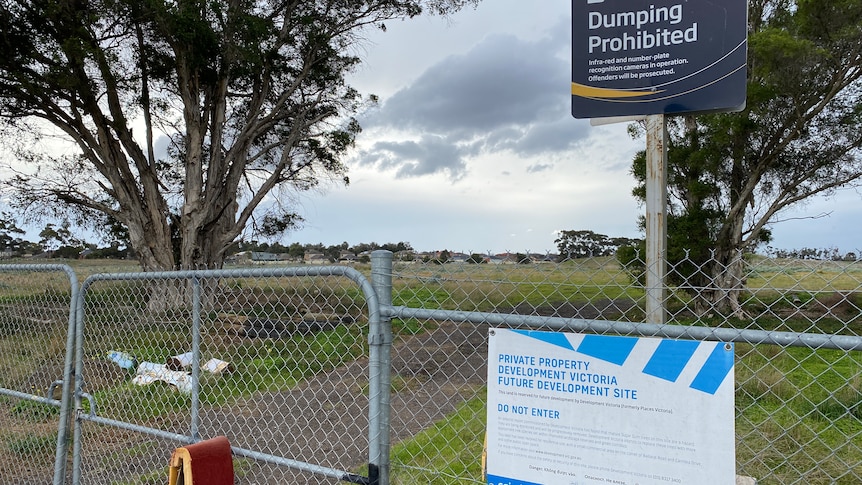
Community leaders in Melbourne’s west have raised concerns a plan to convert a slice of land next to a freeway into more than 800 homes could result in social isolation for its new residents, unless major changes are made.

The proposed 41-hectare site in Cairnlea is just off the busy Western Ring Road and was part of the Albion Explosives Factory from the 1940s to the 1980s.

Development Victoria plans to build 840 homes on the site, 25 per cent of which will be affordable and social housing.

Graeme Blore has spent 17 years working in Cairnlea with communities dealing with social disadvantage.

He wants to see more social housing in the suburbs, but he is not convinced Development Victoria’s plans strike the right balance.

“It’s a vital issue, and really important to every community, but it actually needs to be done in a way that’s holistic, that embraces and enhances community,” he said.

A fence with a sign stating it is private property and dumping is prohibited
More than 800 new homes will be built at the Cairnlea site.(ABC News: Darryl Torpy)

One of his main concerns is the site’s proximity to late-night pokies venues on Ballarat Road.

The venues netted $80,000 per day in 2019-2020, according to Brimbank City Council data.

The council area, which covers Cairnlea and surrounding suburbs such as Deer Park and St Albans, has the highest pokies losses in the state — an average of $444,000 per day or $92 million per year.

“It has the potential to end up as a social housing ghetto, with a lack of opportunity,” Mr Blore said.

.

Categories
Business

Adelaide auction sees bold buyer offer $395k less than asking price

A buyer has attempted to low-ball a vendor, hopeful of a bargain in a cooling market, before the time-warp house passed in at auction.

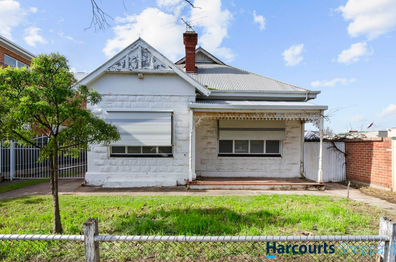
The 1910 home at 2 Northcote Street, Torrensville, in Adelaide’s western suburbs had a price guide of $895,000, but saw a registered bidder offer a measly $500,000 in private negotiations prior to the auction.

It was revealed to the crowd by the auctioneer on Saturday that $500,000 had been offered but was firmly rejected by the vendor.

Listed by Harcourts Sheppard and represented by Matilda Todman, the auction began with a vendor bid of $850,000 after minutes of awkward silence.

With prospective buyers and the vendor failing to come to an agreement, Nine understands negotiations for the four-bedroom family home will continue for at least another week.

Agent Darcy Harcourt of Harcourts Sheppard told Nine that the asking price remains at $895,000 but will likely change on Monday.

READMORE: A traditional Summer Hill home is the most-wanted property right now

A bold buyer tried to low-ball a vendor after this time warp house in Torrensville, Adelaide, passed in at auction on Saturday. (Harcourts Sheppard)
The 1910 four-bedroom home had a price guide of $895,000, but saw a registered bidder offer $500,000 in negotiations. (Harcourts Sheppard)

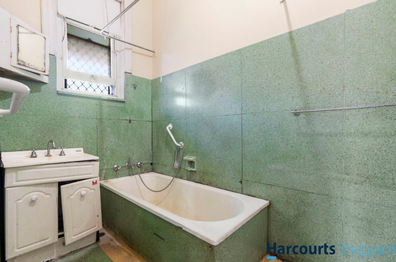
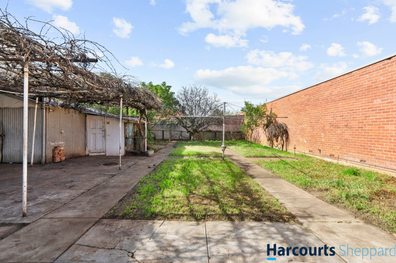
The property contains one bathroom, a generously-sized backyard and a two-car garage.

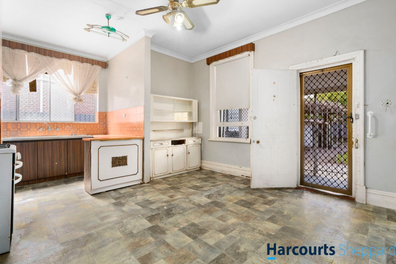
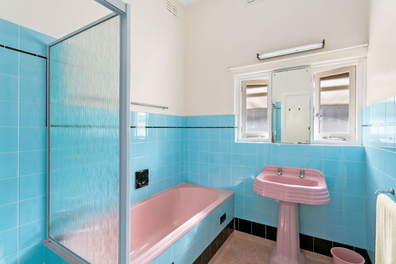
It requires extensive renovation with dated vinyl floor in the kitchen, cabinet doors falling off their hinges, and a garish green and red interior color palette.

The façade is also in need of some TLC with cracked white paint and basic wire fencing.

It comes as the national clearance rate last week hit the 50 per cent range for the 14th week in a row. At the same time last year it was almost 70 per cent.

READMORE: Penny lived on cheese and salami sandwiches to buy a home

Interiors are in major need of some TLC with dated vinyl floors in the kitchen and living area. (Harcourts Sheppard)
There is however a generously sized backyard that could be updated to a buyer’s content. (Harcourts Sheppard)

This is another indication that the housing market is slowing down, with nervous buyers holding off on purchasing amid mounting inflation and interest rates.

Meanwhile, a very different outcome occurred in another of Adelaide’s western suburbs.

Another time-warp house at 19 Whimpress Avenue in Findon, which the owner had held for around 50 years, hit the market for the very first time and sold under the hammer for $682,000.

Listed by Ray White Henley Beach and represented by Mark Bowden, the two-bedroom home had an opening bid of $550,000, with the auction between two bidders.

The price the owner paid for the property almost half a century ago is undisclosed.

Over in Findon, another of Adelaide’s western suburbs, this time warp house sold under the hammer for $682,000. (Ray White Henley Beach)
The dated property hit the market for the very first time and had an opening bid of $550,000. (Ray White Henley Beach)

Containing one bathroom, a decent-sized backyard and shed, the property was pitched to those who are wanting to renovate or build their dream home.

The interiors are in need of a refresh, with it currently boasting a retro color palette, a dated fireplace and old-fashioned carpet.

Over in Cheltenham, Melbourne, a vendor who held a family home for 18 years sold the property for $1.5million.

According to PriceFinder, the owner purchased the three-bedroom, one-bathroom home at 9 Herald Street for $369,555 back in 2004.

Interiors are also in need of a major revamp with a dated fireplace and unappealing carpet. (Ray White Henley Beach)

Listed by Hodges and represented by Pandelis Plousi, proceedings kicked off with a vendor bid of $900,000.

The indicative selling price of the property was between $1million and $1.1million.

Two bidders went head-to-head and when the reserve price wasn’t met at $995,000, the home was passed in.

After negotiations, the property was sold to the highest bidder at $1.5million.

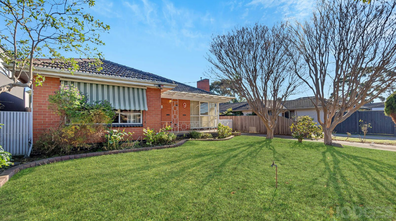
The home is located in a desirable area of ​​Melbourne that’s close to schools and cafes, and boasts a picturesque lawn at the front.

Interiors are in need of a “modern makeover” as per the listing’s description, with dated tiling, carpet and paint color choice.

Also on Saturday, a three-bedroom property in Melbourne’s Cheltenham sold for $1.5million. (Hodge)
Two bidders went head-to-head and when the reserve price wasn’t met at $995,000, the home was passed in. (Hodge)

In Melbourne’s Mitcham, a 15-year old unit attracted plenty of buyer attention, with four bidders competing in a spirited and fast auction.

Listed by Philip Webb Real Estate Doncaster, the two-bedroom brick home at 3/38 Linlithgow Street sold for $775,000, which was $40,000 more than the reserve.

“The auction started with an opening bid of $650,000 and went up in $10,000 increments up until $750,000,” Anthony Webb, chief executive of Philip Webb Real Estate said. “The eventual buyer was very keen and a rapid-gun bidder, securing the keys after a 15-minute auction.”

As a whole, despite interest rate pain causing uncertainty elsewhere in the market, the number of properties going to auction continues to rise.

Domain’s latest auction report shows there were 1,324 auctions scheduled across the combined capitals this Saturday – an 8 per cent increase nationally from last week.

Brisbane and Adelaide have seen a decrease in the number of properties going under the hammer compared to last week.

Sydney, Melbourne and Canberra have more than last weekend. Sydney and Adelaide have a greater number of auctions than the same time 12 months ago, defying the overall trend.

3/38 Linlithgow Street in Mitcham collected $40,000 over reserve for the vendor.
3/38 Linlithgow Street in Mitcham collected $40,000 over reserve for the vendor. (Domain/Philip Webb)
Categories
Entertainment

We’re entering a golden age of diversity in storytelling — with genre fiction and graphic novels leading the way

C S Pacat is fast becoming one of Australia’s best-selling authors, and they’re doing so by following one very simple formula.

just write what you want to see.

As a queer teen, Pacat didn’t see themselves reflected in anything they read. Or watched on film and TV. Or anywhere else for that matter.

“If nothing in the wider culture is reflecting you, then you feel that you are wrong, or you don’t fit,” Pacat told ABC RN’s Big Weekend of Books.

“[There’s] the idea that monsters and vampires can’t see their own reflection.

“Not being able to see yourself makes you feel like a monster.”

Which is ironic, because the fantasy fiction world of monsters and magic is where Pacat found their home. Or rather, where they created their home.

.

Categories
Sports

Fremantle Dockers defeat West Coast Eagles by 24 points to secure a home final

Fremantle have secured a home final after overcoming a bad case of the goalkicking wobbles to post a 24-point win over West Coast in a spiteful western derby.

All-in melees and individual tit-for-tats were common throughout Saturday night’s rain-affected match at Optus Stadium but Fremantle booted 4.11 to 2.3 after halftime to secure the 9.17 (71) to 7.5 (47) win in front of 53,816 fans.

The result means Fremantle can’t finish lower than sixth, and they can still secure a prized top-four berth if they beat GWS next week and other results fall their way.

Dockers ruckman Sean Darcy won the Glendinning-Allan medal as best field for his 16-disposal, 57 hit-out effort.

Fremantle legend David Mundy does a walk around the ground with his family after the win.
Camera IconFremantle legend David Mundy does a walk around the ground with his family after the win. Credit: Will Russell/AFL Pictures

Blake Acres (29 disposals, one goal), Will Brodie (28 possessions, seven clearances), and David Mundy (25 disposals, eight clearances) dominated in the midfield courtesy of Darcy’s dominance.

But despite snaring the win, doubts still remain about Fremantle’s ability to thrive in the wet.

The Dockers entered the match having lost to Gold Coast, Collingwood and Melbourne in slippery conditions this year and they were unable to put West Coast to the sword despite the Eagles missing 10 first-choice players.

Fremantle’s wayward goalkicking ensured West Coast remained within striking distance for most of the match.

But it was the defensive duo of Tom Barrass and Shannon Hurn that truly epitomized West Coast’s fighting spirit.

Barrass (20 disposals, 12 marks) restricted Rory Lobb to just 0.1 from seven disposals, while Hurn racked up 28 touches and nine rebound 50s.

Fremantle fans were over the moon about the win.
Camera IconFremantle fans were over the moon about the win. Credit: Will Russell/AFL Pictures

Lobb was subbed out late in the match after aggravating his right shoulder injury in the third quarter.

The match was a willing contest befitting a derby with a huge melee breaking out in the opening quarter in what will no doubt result in a flurry of ends.

Caleb Serong was target No.1 early on, with Jack Redden doing his best to ruffle the feathers of the Fremantle star.

The tactic worked a treat, with Serong the core culprit when Fremantle gave away a 50m penalty that led to a goal on the line to Redden.

Redden gave away a 50m penalty of his own late in the opening term to gift a goal to Andrew Brayshaw.

Jackson Nelson targeted Brayshaw at every opportunity, with the Brownlow medal fancy visibly frustrated at times.

An early downpour ensured the first half was played in slippery conditions and the Dockers led by four points at the long break.

Fremantle dominated the third term but their return of 2.8 meant the 17-point margin was still within reach for West Coast.

However, with Darcy dominating the ruck, the Eagles couldn’t work their way back into the match despite fighting right until the end.

.

Categories
Australia

Community events cancelled, emergency services stretched as volunteer numbers fall

From the Dragon Boat Regatta in Broome to the Orange Mardi Gras festival on the other side of the country, community events are being canceled and emergency services are struggling to cope as the number of volunteers plummets.

The trend has triggered soul-searching among community groups and charities — is it a temporary blip linked to the COVID pandemic, or have Australians become more selfish?

“What we’ve seen is a longer-term decline in volunteering rates, and that’s been amplified by the COVID pandemic,” Volunteering Australia CEO Mark Pearce says.

Paramedics gather around a person on the ground in a park with an ambulance parked nearby
Emergency service crews are staffed mainly by volunteers in many parts of regional Australia.(Supplied)

“There are also changes in how people want to volunteer and participate — there’s increasing demand for flexibility that doesn’t necessarily correlate with the structure of formal volunteering programs.”

The 2021 census data recorded a 19 per cent drop in volunteering since the last snapshot in 2016. The finding is backed up by more regular, in-depth social surveys done by the ABS.

A graph showing a reduction in numbers of a decade period
The number of Australians volunteering has reduced significantly in recent years.

The biggest decline has been recorded in the 15-24 year old age group, the same age group posting an increasing number of controversial ‘good deed’ stunts on social media.

The depletion of the volunteer brigade is affecting sports clubs, emergency services and long-established organizations like Rotary and Lions, that help run events and raise funds for local charities.

Country towns suffering

The impact is most noticeable in regional areas, where event organizers and first-responders are more likely to be unpaid.

As a result, some events are being cancelled, such as the annual Dragon Boat Regatta in Broome.

A wide shot of stalls, people and dragon boats lined up along turquoise waters of a bay.
The Dragon Boat Regatta sees dozens of teams race in Broome’s Roebuck Bay.(Supplied: Abby Murray Photography)

It has been a popular fixture in the town for almost 20 years, and raises tens of thousands of dollars for charity. But this year there weren’t enough people to organize or run it.

“The practical impact in regional and remote Australia is that social activities and the cohesion that takes place by community coming together is lost or significantly reduced,” Mr Pearce says.

“And that has implications for the livability of these communities in which people choose to spend their lives.”

The Dragon Boat Regatta is usually organized by the local Rotary chapter, which currently has only a handful of members.

It is hoping to find enough local people to help with the nine-month organizing process to revive the regatta in 2023.

A group of drag queens blows kisses and laughs.
The Drags on Boats team debuted at the 2015 Dragon Boat Regatta, where most ended up in the water.(ABC News: Erin Parke)

Events fighting across the country

Meanwhile in Alice Springs, organizers are struggling to pull together enough volunteers to hold the beloved Henley-on-Todd Regatta, which raises money for local Rotary Club projects.

Every August, teams of people race on the dry Todd River in boats without bottoms in front of a crowd of about 4,000 people.

Secretary Ron Saint said getting the right number of volunteers had been “tenuous.”

“We would like to have 130 but we’ve got about a hundred. So we’re at that point where we’d like to have 12 people doing a certain role but we’ll have nine or eight,” he said.

Three men stand in a home-made cardboard boat ready to race down a dry riverbed.
Organizers are hoping more locals will get involved to ensure the future of the Henley-on-Todd river race.(ABC News: Alexandra Fisher)

“It’s not going to stop the event … but you’d want a few more [people] in case someone can’t make it.”

Mr Saint believed some people who might volunteer were now trying to make up for paid work lost during COVID lockdowns.

“People are time poor and as we try to get the economy kick started again it’s difficult to commit the discretionary time for volunteer work,” he said.

In March, a proposed inaugural Mardi Gras celebration in Orange, in central west New South Wales, was canceled for the third year in a row when the small team of people organizing the Rainbow City Festival event became “exhausted” from repeatedly having to postpone it .

A scene from a mardi gras event.
The Rainbow City Festival will focus on providing more smaller-scale events in the future. (ABC News: Kevin Nguyen)

What’s causing the decline?

Australian Bureau of Statistics data shows that people aged 40 to 54 are most likely to volunteer.

Women and men participate at a similar rate, with the greatest number of people volunteering with sporting clubs and religious groups.

People living in remote areas are most likely to volunteer, but the rates in regional and urban areas are almost identical.

Social researcher Hugh Mackay has been monitoring Australian attitudes and lifestyle habits for six decades.

“This is a weird period we are in at the moment, that helps explain the decline of volunteering,” he says.

“We’ve been changing in ways that have made us more individualistic, much more concerned about ‘me and my rights and my entitlements and my identity’.

An elderly man leaning against a tree and smiling.
Ever the optimist, social researcher Hugh Mackay sees a silver lining in the COVID cloud.(Supplied)

“And that’s all working against our natural proclivities to be kind and compassionate and cooperative and help each other out.

“But it’s also worth noting that organizations that want volunteers have probably not been quite nimble enough, and not understanding all these societal shifts and the changing culture.”

dr mackay says the main change has been a withdrawal from community involvement.

This has been caused by an increase in the use of social media to stay “connected’; people living alone; and the trend for having fewer children, resulting in fewer opportunities to develop local friendships through schools and kids’ sporting clubs.

“We’ve also become too ‘busy’, and being ‘busy’ is a kind of hiding place, a barrier between us and others,” he says.

“It’s the enemy of social cohesion and the enemy of volunteering, because as long as we can convince ourselves we’re too busy to help other people, we can get away with it – we have made being busy a virtue.”

Are young people the problem?

Dr Mackay rejects the notion that young people are too selfish to volunteer, saying a more nuanced shift has occurred.

“Millennials have grown up with a deep sense of impermanence and have adopted a mantra of ‘let’s keep our options open’,” he says.

A large Chinese dragon performs for a crowd of people with palm trees in background
Every year dozens of volunteers are needed to be the ‘legs’ of Sammy the Dragon, as part of Broome’s Shinju Matsuri.(Supplied: Abby Murray Photography)

“Committing to anything long-term runs against the ethos of this generation, so they will be happy to help out, but reluctant to join up to anything that requires a weekly meeting or a long-term program.

“One of the favorite occupations of older people through history has been to bash younger people and complain about them.

“But it’s worth remembering that the rise of individualism is not a generational phenomenon, it’s happening right across the age ranges.”

All at sea as volunteers jump ship

Some organizations are adapting by asking people to help out with one-off events, or ramping up social media recruitment campaigns.

But sometimes the challenge is retaining the volunteer recruits who do sign up.

In the waters off Broome, it is a matter of life or death — every few weeks the volunteer Sea Rescue team is called out to save a sinking or stranded vessel.

A group of men in fluro shirts sit in a boat.
Volunteer skipper Gareth Owen briefs crew on a planned training exercise.(ABC News: Erin Parke)

Skipper Gareth Owen says cyclones, crocodiles and big tides make it a hazardous job.

“It’s vital we’re able to crew the vessel, because the calls can come at any time,” he says.

“It’s always very close as to whether we have enough people.

“It’s a major problem, because we’re low on numbers and the commitment to training is quite high, so it can be difficult to maintain people’s enthusiasm.”

Mr Owen, who originally signed up to learn marine skills with his young sons, says he’s not surprised the latest census data shows a drop in volunteer numbers.

“I think we’ve seen over the past few years that some people have become a bit more self-centered and they don’t go out as much because of COVID,” he says.

“So I guess a lot of people have prioritized families, and that has put pressure on volunteer groups like us.”

Annie Stephenson has been volunteering with the group for two years, and coordinates recruitment.

A woman in a fluro short stands smiling in front of a boat.
Annie Stephenson says she benefited from volunteer organizations as a child, so is keen to contribute.(ABC News: Erin Parke )

Ms Stephenson says a recent advertising campaign attracted more than 20 people, but the numbers dropped away as they realized the commitment involved.

“It’s one thing to recruit people, but retaining them can be hard,” she says.

“Because there’s so much training involved, we’re looking for people who can commit for two years minimum, but people’s circumstances change, they’ll get a new job or have family commitments, which is totally understandable.

“The key thing for us is to have a big enough pool of qualified crew to share the load and fatigue management, and to make sure people don’t get burned out.”

One of the new recruits is 18-year-old Byron Schaffer.

He says he doesn’t know many people his age who volunteer regularly.

Two men in fluro shirts on a boat at sunset
Byron Schaffer (left) is training as a Sea Rescue volunteer in Broome.(ABC News: Erin Parke)

“I think some teenagers see it as something that ‘adults’ do, people who are a bit more settled down,” he says.

“I really enjoy it, it’s something to do in your free time that makes you feel good.”

What does the future hold?

Volunteering Australia says there has been a small increase in participation rates this year, following the easing of COVID restrictions.

But they are still well short of the volunteer numbers of five years ago.

Volunteer skipper Gareth Owen hopes recent natural disasters might prompt Australians to sign up and offer their time and expertise.

Volunteer Qld firefighter from the Rural Fire Brigade
Thousands of Australians volunteered during recent bushfires and floods.(Supplied: Queensland Department of Community Safety )

“With the floods and the firefighters you see so many awesome volunteers doing things, and I think people forget they are volunteers because they’re doing such an excellent job and they’re at it for so long,” he says.

“Sometimes people might think it’s part of the service we get for being Australian, and not realize we need to put our hand up and look out for each other by volunteering.”

Dr Mackay, now aged 83, remains optimistic.

“I think this rise of individualism marks a really weird, aberrant period in human history, and it’s not actually who we are,” he reflects.

“I think our true nature as communitarians, cooperators, and kind and compassionate people who look out for each other will re-emerge.”

“The pendulum is going to swing back, I am sure of it.”

Additional reporting Steven Schubert

.

Categories
Business

Solid State Batteries – The Future of Batteries

https://e-vehicleinfo.com/solid-state-batteries-the-future-of-batteries/

Solid state batteries as the name suggest use a solid electrolyte instead of a liquid electrolyte that is used in traditional Lithium-ion batteries.

Similarities

  1. It follows the same mechanism as traditional Lithium-ion batteries, which is the movement of lithium ions from the cathode to anode during charging and anode to cathode during discharging.
  2. The movement of lithium ions happens in a similar way, which is through the electrolyte medium.

Dissimilarities

  1. Solid state batteries use solid electrolyte instead of liquid electrolyte that is used in traditional Lithium-ion batteries.
  2. A traditional Lithium-ion battery has a liquid electrolyte along with a separator, which separates the positive and negative electrodes to prevent the possibility of a short circuit. Whereas, a solid-state battery contains a solid electrolyte, which separates the positive and negative electrodes, thereby making the use of a separator unnecessary.

Advantages compared to a traditional Lithium-ion battery (NMC)

  1. Faster charging (Higher C rate of charge)
  2. Safer because of the absence of liquid electrolyte, which tends to catch fire.
  3. Higher power density (Higher C rate of discharge)
  4. Higher overvoltage value
  5. Higher rated voltage
  6. Overcharging does not lead to fire.
  7. Higher cycle life
  8. Higher durability
  9. Higher stability
  10. Higher temperature operations.
  11. Higher degradation of battery allowed before reaching its end-of-life.
  12. The higher gravimetric energy density (Wh/Kg).
  13. A short circuit does not lead to a fire.
  14. Nail penetration does not lead to a fire.
  15. No structural limitation, enabling it to be used in various shapes that can be smaller and thinner.

ReadMore: Solid-State Battery for EVs

Future of Solid State Batteries

A few companies have set up pilot-scale facilities to manufacture solid-state batteries. It has a very good potential to take a good market share in the battery market, especially in the EV segment. Its adoption will ensure that battery fires are a thing of the past.

About Author: Rahul Bollini is an emerging technology R&D specialist. He works with various new technologies. He is one of the very few people in India to have access to Solid State Batteries. He is currently running trials with a company for electric vehicles application.

Categories
Entertainment

Boggo Road Gaol and Brisbane’s dark side to feature heavily in Netflix production of Boy Swallows Universe

Looming over the inner-southern suburbs of Brisbane’s south is a red brick structure that was once part of Queensland’s “most infamous” prison.

The guard tower and gallows beam that used to hang murderers and rapists stand as a stark reminder of the state’s history as a penal colony.

Former officer John Peel, 67, remembers Boggo Road Gaol as a place where “anything could happen.”

“Every day, you didn’t know whether you were going to make it out and come home,” he said.

“If you heard a whistle blow, that meant someone was in serious trouble.”

For decades after it opened in 1883, the maximum-security prison held some of the most brutal, and longest-serving criminals in the country, including the convicted Whiskey Au Go Go fire bombers and escape artist Arthur “Slim” Halliday.

A man in an old photo standing indoors at a prison.
John Peel said the prison guards did not carry any weapons, even batons, when he worked at Boggo Road.(Supplied: John Peel)

Kevin Hayden, 66, was a guard at the men’s “Two Division” when Boggo jail attracted national scrutiny over a string of riots, hunger strikes and rooftop protests in the 1980s.

“The conditions were disgusting. There were no toilets in the cells, no running water. They had a bucket and a jug of water,” he said.

“And there was the bird lice and rats. It was a horrible place.”

Now, more than 30 years since the prison was shut in 1992, the heritage-listed site in Dutton Park will be featured in a Netflix adaptation of the blockbuster Australian novel Boy Swallows Universe.

Outside the Boggo Road jail watchtower in Brisbane in 2015.
The Boggo Road jail was closed in the early 1990s.(ABC Brisbane: Saskia Edwards)

Inspired by author and executive producer Trent Dalton’s own childhood in Brisbane, the TV series will tell the “semi-fictional” story of 12-year-old Eli Bell, who tries to break into Boggo Road Gaol on Christmas eve.

“Boggo Road, to me, is the most significant historical site in Brisbane,” Dalton said.

“I had to put it in [the story] … it speaks of so much about Brisbane’s ascension.

“We shouldn’t shy away from our dark side as a city because our dark side is the thing that makes us such a wondrous city.”

With filming starting this month, Dalton said Brisbane’s first production for streaming giant Netflix had already generated excitement from local communities represented in Boy Swallows Universe.

A smiling man leans against a pole with a night scene behind him.
Trent Dalton remembers “Slim” Halliday from his childhood.(Supplied: Lyndon Mechielsen)

“More than 200 Vietnamese locals in the hood where I used to live — Darra, Inala, and those areas — came out going, ‘I want to be a part of this television series’,” he said.

“And then Sunnybank High — the most multicultural school you could find in Brisbane — wants to be the place where we shoot the school scenes.

“Even the restaurant that my wife and I used to eat at in Darra want us to film inside. I get really emotional thinking about that fact.”

Dalton would not reveal the names of the main actors in the series, but he confirmed it would include some familiar Hollywood names.

“To see an amazing Hollywood actress playing my mum, paying tribute to her, and to see that come full circle is very, very neat,” he said.

The Brisbane-based production has also attracted the interest of former guard and aspiring actor Mr Hayden.

“I’m hoping to be in [the series] … they’re going to see if I can be in it somewhere,” he said.

“We should never lose our history. I think it gives you more knowledge of how we came to be where we are now today.”

Tour director Jack Sim stands holding a cell door at the old Boggo Road Gaol in Brisbane.
Jack Sim says he hopes the show will encourage the preservation of Brisbane’s cultural heritage.(abcnews)

Jack Sim, who operated the Boggo Road Gaol tours for 25 years, said he hoped the show would encourage the preservation of Brisbane’s cultural heritage.

“The story of our lives is not always nice or easy, and Boggo Road Gaol encompasses all the darkest and most difficult things that people have had to go through,” he said.

“Some of them rose out of that with a brand new life, started again and never looked back.

“And others paid a big penalty for their mistakes and their crimes.”

Before Queensland became the first part of the British Empire to abolish capital punishment in 1922, 42 people were executed at the jail.

Child-killer Ernest Austin was the last person to be hanged, and he was buried in South Brisbane Cemetery with the other executed prisoners.

Mr Sim said the history of the jail captured how attitudes toward criminal justice have changed over time.

“We no longer have ‘prisons’ in Queensland, we have ‘correctional services’,” he said.

“The idea is to try [to] rehabilitate people, so that they don’t come back to jail, not to punish them.”

What makes a good man?

In a case of art imitating life, Boy Swallows Universe grapples with the question of what makes a “good” man.

“I have this vivid memory of a family friend who used to play with me all the time, and his name was Slim Halliday,” Dalton said.

“He was a really sweet man to me when I was a boy, and then I started to realize that, before I knew him [in the 1970s]he was known as the Houdini of Boggo Road.”

Arrest photos of an A Halliday.
Arthur “Slim” Halliday was one of Boggo Road’s most infamous inmates.(Supplied: John Oxley Archives)

Arthur “Slim” Halliday was originally sent to jail in 1939 to serve a five-year sentence for housebreaking, but he ended up doing more time after he carried out a series of dramatic escapes.

He was eventually released from Boggo Road in 1949, but it was not long before he was sent back to jail in 1952 over the murder of a taxi driver.

“I just thought it was too irresistible to not introduce that guy in [Boy Swallows Universe],” Dalton said.

“I wanted to pay tribute to my memory of that man who was, at once, a good and bad man.

“That was at the heart of the story that I was writing. It’s about a boy trying to find the goodness in the people around him.”

Much like the protagonist Eli, who grew up around drug dealers and an ex-convict, the prison guards at Boggo Road spent much of their life around inmates.

“You really got to know the guys,” Mr Peel said.

“It’s not like today, when they’re segregated with bubbles — you had to be within contact range of them all the time,” Mr Hayden said.

“So you had to get their respect, because if you lost their respect, then you could be in trouble.”

A man in uniform stands in front of an old jail.
Former Boggo Road Gaol officer John Peel has plenty of stories about his time working there.(Supplied: John Peel)

Mr Peel said the prison guards did not carry any weapons, not even a baton, when he worked at Boggo Road.

“A whistle. That’s the only weapon you really had,” he said.

Mr Hayden did not carry any arms either: “All we had were hands and feet,” he said.

“You learned to be a very good talker, very quick, because you had to talk your way out of situations, rather than have to fight.

“But, occasionally, we had to fight. You had no choice. That’s what life in jail was all about.”

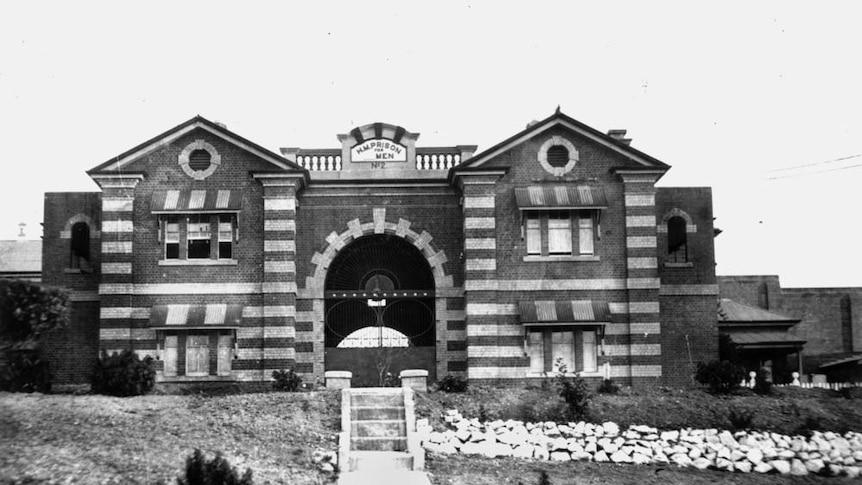
Entrance to Boggo Road Gaol, ca.  1936
The entrance to Boggo Road Gaol in Brisbane, circa 1936.(Supplied: State Library of Queensland)

Mr Hayden recalled having to handle James Finch and John Stuart, after they started the Whiskey Au Go Go nightclub fire in 1973, killing 15 people.

“Finch was a model prisoner, really. He didn’t cause any trouble,” he said.

“Stuart was a different kettle of fish. He was just a bad bugger all the way through. He was a horrible human being.

“He’d fight with everybody, every day, so he was locked in his own cell, in his own yard, in his own cage.”

Mr Hayden also handled the “Colossus” of Boggo Road Nathan Jones, who is now a Hollywood actor and best known for his role in Mad Max: Fury Road.

“You couldn’t put handcuffs on him because his wrists were too big,” he said.

“So we had a special body belt for him when we had to move him anywhere.”

A tall bald man on a film set.
Nathan Jones was known as the “Colossus” of Boggo Road.(ABC News: Thuy Ong)

Mr Hayden said the legend that Jones had ripped the door off his cell was true.

“He did that because he suffered from claustrophobia and didn’t like being locked in,” he said.

“But he was harmless. He was pretty easy to handle.”

Categories
Sports

All Blacks upset Springboks in Rugby Championship classic as Ian Foster clings to job

By Sam Worthington with AP

All Blacks coach Ian Foster admits he has “no idea” whether he’ll keep his job despite a rousing 35-23 upset of the world champion Springboks at Ellis Park.

The much improved performance snapped a three game losing streak that caused New Zealand to plummet to an all-time low world ranking of fifth and the knives to come out in the rugby-mad nation.

Under-fire captain Sam Cane, Samisoni Taukei’aho, David Havili and Scott Barrett scored tries for the All Blacks in an exhilarating Test as the Kiwis retained the Freedom Cup.

Watch every match of the Rugby Championship on the home of rugby, Stan Sport. Continue this weekend with Pumas vs Wallabies (Sunday 4.45am AEST). All matches streaming ad-free, live and on demand

Foster, who got a hug from Ma’a Nonu during the post-match coverage, almost certainly would have lost his job if the All Blacks had been beaten.

“There’s no doubt it’s been a pretty stressful time. The stress has been good for me, last week I lost 1kg,” Foster joked.

“So proud of the effort, we hung in strong.”

READMORE: Veteran NRL referee’s shock grand final confession

READMORE: Roosters star in hot water over dangerous hit

READMORE: Hynes makes passionate plea after big win

Foster then referenced last weekend’s comments when he said the 26-10 loss in Mbombela was “probably the best performance of the year.”

“I know I got a little bit mocked for saying that last week but we made a big shift as a forward pack,” Foster said.

“We were more patient and when you start to believe in yourself you get more patient.”

Jeff Wilson then asked Foster whether he expects to retain his job as the team returns to New Zealand ahead of two home games against Argentina.

“I’ve got no idea. I’ll just go and enjoy tonight.”

New Zealand led by 15 points at one stage before a Springboks comeback.

But the All Blacks rallied with two tries in the last six minutes to possibly save Foster.

Flanker Cane and hooker Taukei’aho scored tries in the first half to silence 61,000.

South Africa replied with tries by the outstanding Lukhanyo Am and Makazole Mapimpi either side of halftime and Handre Pollard kicked the home team 23-21 ahead in the 68th minute, the first time the Springboks had led.

It was also the only time.

New Zealand launched a length-of-the-field attack, finished off by David Havili, to snatch the lead back while down to 14 men with Beauden Barrett’s yellow card.

The All Blacks added another try right at the end by lock Scott Barrett to secure a deserved win.

“The last few weeks have been really difficult but we got it done at one of the hardest places to play rugby in,” man of the match Rieko Ioane said.

“There’s a few doubters back home but we know what we have in this team. I’m hugely proud of our effort tonight.”

Cane finished the match on the sidelines as the indefatigable Ardie Savea took over as captain and Sam Whitelock also led superbly.

“Proud is an understatement,” Cane said.

“Adversity challenges your character and we’ve got plenty of it. One of the toughest places to play in the world. The last month has been pretty challenging.

“We were a lot better at the breakdown tonight. Massively stoked.”

ALL BLACKS 35 (Sam Cane, Samisoni Taukei’aho, David Havili, Scott Barrett tries; Richie Mo’unga 3 conversions, 3 penalties) SPRINGBOKS 23 (Lukhanyo Am, Makazole Mapimpi tries; Handre Pollard 2 conversions, 3 penalties). HT: 15-10

For a daily dose of the best of the breaking news and exclusive content from Wide World of Sports, subscribe to our newsletter by clicking here!