Categories
Business

Streets’ Golden Gaytime has teamed up with OAK

Two iconic Australian brands have joined forces to create a frozen treat that many will be lining up to get their hands on.

Golden Gaytime has teamed up with OAK to create a chocolate twist on the iconic ice cream.

The treat has an OAK-inspired ice cream centre, dipped in a layer of chocolate, and is smothered in Golden Gaytime’s famous delicious biscuit pieces with a choccy twist.

Streets spokeswoman Annie Lucchitti said: “Golden Gaytime has been an Aussie favorite for over 50 years and we’re known for some pretty impressive flavor experiences!

“Golden Gaytime OAK brings the iconic elements of Golden Gaytime together with the unmistakeable OAK Choc Milk flavor hit. It’s creamy, crumbly, choccy – delicious.

“It’s a crowd pleaser that’s for sure. We’re ecstatic to be bringing the next level of Golden goodness to market!”

The release of the new ice cream will be staggered, hitting the shelves exclusively at IGA and Ritchies stores on Thursday, August 4.

In September, Golden Gaytime OAK will be available in Coles, petrol stations and convenience stores.

The ice creams can be purchased in a box of four for $9.50.

It’s the latest collaboration from OAK, after Allen’s beloved Milk Bottles were transformed into OAK-flavoured lollies.

The confectionary company revealed in July the beloved brands were collaborating.

The Milk Bottles come in two OAK-inspired packs and come in two flavours.

One is an Oak-inspired iced coffee – a chocolate and malt blend.

The second is strawberry, with the new Milk Bottles being sold as standalone bags of lollies.

.

Categories
Technology

How analog AI hardware may one day reduce costs and carbon emissions

Are you unable to attend Transform 2022? Check out all of the summit sessions in our on-demand library now! Watch here.


Could analog artificial intelligence (AI) hardware – rather than digital – tap fast, low-energy processing to solve machine learning’s rising costs and carbon footprint?

Researchers say yes: Logan Wright and Tatsuhiro Onodera, research scientists at NTT Research and Cornell University, envision a future where machine learning (ML) will be performed with novel physical hardware, such as those based on photonics or nanomechanics. These unconventional devices, they say, could be applied in both edge and server settings.

Deep neural networks, which are at the heart of today’s AI efforts, hinge on the heavy use of digital processors like GPUs. But for years, there have been concerns about the monetary and environmental cost of machine learning, which increasingly limits the scalability of deep learning models.

A 2019 paper out of the University of Massachusetts, Amherst, for example, performed a life cycle assessment for training several common large AI models. It found that the process can emit more than 626,000 pounds of carbon dioxide equivalent — nearly five times the lifetime emissions of the average American car, including the manufacturing of the car itself.

At a session with NTT Research at VentureBeat Transform’s Executive Summit on July 19, CEO Kazu Gomi said machine learning doesn’t have to rely on digital circuits, but instead can run on a physical neural network. This is a type of artificial neural network in which physical analog hardware is used to emulate neurons as opposed to software-based approaches.

“One of the obvious benefits of using analog systems rather than digital is AI’s energy consumption,” he said. “The consumption issue is real, so the question is what are new ways to make machine learning faster and more energy-efficient?”

Analog AI: More like the brain?

From the early history of AI, people weren’t trying to think about how to make digital computers, Wright pointed out.

“They were trying to think about how we could emulate the brain, which of course is not digital,” I explained. “What I have in my head is an analog system, and it’s actually much more efficient at performing the types of calculations that go on in deep neural networks than today’s digital logic circuits.”

The brain is one example of analog hardware for doing AI, but others include systems that use optics.

“My favorite example is waves, because a lot of things like optics are based on waves,” he said. “In a bathtub, for instance, you could formulate the problem to encode a set of numbers. At the front of the bathtub, you can set up a wave and the height of the wave gives you this vector X. You let the system evolve for some time and the wave propagates to the other end of the bathtub. After some time you can then measure the height of that, and that gives you another set of numbers.”

Essentially, nature itself can perform computations. “And you don’t need to plug it into anything,” he said.

Analog AI hardware approaches

Researchers across the industry are using a variety of approaches to developing analog hardware. IBM Research, for example, has invested in analog electronics, in particular memristor technology, to perform machine learning calculations.

“It’s quite promising,” said Onodera. “These memristor circuits have the property of having information be naturally computed by nature as the electrons ‘flow’ through the circuit, allowing them to have potentially much lower energy consumption than digital electronics.”

NTT Research, however, is focused on a more general framework that isn’t limited to memristor technology. “Our work is focused on also enabling other physical systems, for instance those based on light and mechanics (sound), to perform machine learning,” he said. “By doing so, we can make smart sensors in the native physical domain where the information is generated, such as in the case of a smart microphone or a smart camera.”

Startups including Mythic also focus on analog AI using electronics – which Wright says is a “great step, and it is probably the lowest risk way to get into analog neural networks.” But it’s also incremental and has a limited ceiling, he added: “There is only so much improvement in performance that is possible if the hardware is still based on electronics.”

Long-term potential of analog AI

Several startups, such as LightMatter, Lightelligence and Luminous Computing, use light, rather than electronics, to do the computing – known as photonics. This is riskier, less-mature technology, said Wright.

“But the long-term potential is much more exciting,” he said. “Light-based neural networks could be much more energy-efficient.”

However, light and electrons aren’t the only thing you can make a computer out of, especially for AI, I added. “You could make it out of biological materials, electrochemistry (like our own brains), or out of fluids, acoustic waves (sound), or mechanical objects, modernizing the earliest mechanical computers.”

MIT Research, for example, announced last week that it had new protonic programmable resistors, a network of analog artificial neurons and synapses that can do calculations similarly to a digital neural network by repeatedly repeating arrays of programmable resistors in intricate layers. They used an “a practical inorganic material in the fabrication process,” they said, that enables their devices “to run 1 million times faster than previous versions, which is also about 1 million times faster than the synapses in the human brain.”

NTT Research says it’s taking a step further back from all these approaches and asking much bigger, much longer-term questions: What can we make a computer out of? And if we want to achieve the highest speed and energy efficiency AI systems, what should we physically make them out of?

“Our paper provides the first answer to these questions by telling us how we can make a neural network computer using any physical substrate,” said Logan. “And so far, our calculations suggest that making these weird computers will one day soon actually make a lot of sense, since they can be much more efficient than digital electronics, and even analog electronics. Light-based neural network computers seem like the best approach so far, but even that question isn’t completely answered.”

Analog AI not the only nondigital hardware bet

According to Sara Hooker, a former Google Brain researcher who currently runs the nonprofit research lab Cohere for AI, the AI ​​industry is “in this really interesting hardware stage.”

Ten years ago, she explains, AI’s massive breakthrough was really a hardware breakthrough. “Deep neural networks did not work until GPUs, which were used for video games [and] were just repurposed for deep neural networks,” she said.

The change, she added, was almost instantaneous. “Overnight, what took 13,000 CPUs overnight took two GPUs,” she said. “That was how dramatic it was.”

It’s very likely that there’s other ways of representing the world that could be equally powerful as digital, she said. “If even one of these data directions starts to show progress, it can unlock a lot of both efficiency as well as different ways of learning representations,” she explained. “That’s what makes it worthwhile for labs to back them.”

Hooker, whose 2020 essay “The Hardware Lottery” explored the reasons why various hardware tools have succeeded and failed, says the success of GPUs for deep neural networks was “actually a bizarre, lucky coincidence – it was winning the lottery.”

GPUs, she explained, were never designed for machine learning — they were developed for video games. So much of the adoption of GPUs for AI use “depended upon the right moment of alignment between progress on the hardware side and progress on the modeling side,” she said. “Making more hardware options available is the most important ingredient because it allows for more unexpected moments where you see those breakthroughs.”

Analog AI, however, isn’t the only option researchers are looking at when it comes to reducing the costs and carbon emissions of AI. Researchers are placing bets on other areas like field-programmable gate arrays (FPGAs) as application-specific accelerators in data centers, that can reduce energy consumption and increase operating speed. There are also efforts to improve software, she explained.

Analog, she said, “is one of the riskier bets.”

Expiration date on current approach

Still, risks have to be taken, Hooker said. When asked whether she thought the big tech companies are supporting analog and other types of alternative nondigital AI future, she said, “One hundred percent. There is a clear motivation,” adding that what is lacking is sustained government investment in a long-term hardware landscape.

“It’s always been tricky when investment rests solely on companies, because it’s so risky,” she said. “It often has to be part of a nationalist strategy for it to be a compelling long-term bet.”

Hooker said she wouldn’t place her own bet on widespread analog AI hardware adoption, but insists the research efforts are good for the ecosystem as a whole.

“It’s kind of like the initial NASA flight to the moon,” she said. “There’s so many scientific breakthroughs that happen just by having an objective.

And there is an expiration date on the industry’s current approach, she cautioned: “There’s an understanding among people in the field that there has to be some bet on more riskier projects.”

The future of analog AI

The NTT researchers made clear that the earliest, narrowest applications of their analog AI work will take at least 5-10 years to come to fruition – and even then will likely be used first for specific applications such as at the edge.

“I think the most near-term applications will happen on the edge, where there are fewer resources, where you might not have as much power,” said Onodera. “I think that’s really where there’s the most potential.”

One of the things the team is thinking about is which types of physical systems will be the most scalable and offer the biggest advantage in terms of energy efficiency and speed. But in terms of entering the deep learning infrastructure, it will likely happen incrementally, Wright said.

“I think it would just slowly come into the market, with a multilayered network with maybe the front end happening on the analog domain,” he said. “I think that’s a much more sustainable approach.”

VentureBeat’s mission is to be a digital town square for technical decision-makers to gain knowledge about transformative enterprise technology and transact. Learn more about membership.


Categories
Sports

Newcastle Knights, Adam O’Brien, David Klemmer future, news, latest, transfers, Sam Walker, Rabbitohs, Latrell Mitchell

The divide in the Newcastle dressing room has been simmering for the past few months with Knights coach Adam O’Brien telling the playing group after a recent loss: “I know what you blokes are saying about me. I’m going nowhere.”

The point blank message from O’Brien can be revealed as the Knights go into damage control in the wake of the coach’s loose carry press conference last Sunday.

O’Brien fronted the media again on Tuesday to try and walk things back off the cliff but by that stage the cracks in the Newcastle dressing room had been prized wide open.

The David Klemmer situation has only driven a further wedge into the struggling club which has only managed five wins out of 19 games this year.

Stream every game of every round of the 2022 NRL Telstra Premiership Season Live & Ad-Break Free During Play on Kayo. New to Kayo? Start your free trial now >

The Knights started this season full of optimism after back-to-back wins over the Sydney Roosters and Wests Tigers before going on a run of seven losses leading into Magic Round.

It’s been slim pickings since with Newcastle now having the worst defensive record in the NRL having leaked 522 points at an average of 27.47 points per game along with currently having the worst differential in the competition of minus 238 points.

There’s no question O’Brien’s penchant for a blow-up is wearing thin with elements of the Newcastle playing group.

The problem for O’Brien is in 2022 it’s so much easier to get rid of a head coach than it is to completely try and turn over a roster.

The old saying goes you’ve never really been a head coach until you’ve lost four games in a row and the heat is on – which is exactly where O’Brien finds himself now.

‘AT A TIPPING POINT’: Knights at a crossroads, O’Brien feels for running ‘soft ship’

David Klemmer’s future at Newcastle is clouded. NRL PHOTOSSource: The Daily Telegraph

The Knights are adamant O’Brien will remain as the head coach next season but the biggest immediate challenge the Newcastle coach faces is getting the playing group all back on the same page.

New Director of Football Peter Parr has arrived at Newcastle and could only be shaking his head at the bun fight he’s walked into.

O’Brien is signed with Newcastle until the end of 2024 which if the Knights stay the course would mean he’s had a five-year tenure at the club.

After the events of the past week it’s now become blatantly clear the Knights coach needs a fast start to next season to ensure his own job security.

Let’s call the Klemmer play from Newcastle for what it is – the Knights are clearly trying to free up some money to try and go in a different direction next season.

Klemmer is on $800,000-plus which would give Newcastle some serious money to go to the open market with.

Plenty of ex-players are happy to tell you middle forwards often protest against being dragged from the field.

Newcastle have clearly identified they no longer want the ex-NSW and Australian prop at the Knights and so have started the process of steering him towards another club.

Adam O’Brien has come under scrutiny this week. (Photo by Ian Hitchcock/Getty Images)Source: Getty Images

ROOSTERS MOVE TO LOCK UP WALKER

The Sydney Roosters are set to launch a multi-million dollar play aimed at keeping young gun halfback Sam Walker at the Tricolours long-term.

Walker, 20, will be a free agent for rival clubs to approach as of November 1 but like all the good clubs the Roosters will try and make sure they strike a deal well beforehand.

The other rookie who has everyone talking at the Chooks is emerging superstar Joseph Suaalii. The Roosters clearly value his contribution to the team at the point where champion frontrower Jared Waerea-Hargreaves has been bringing him into leading the club’s team song over the past fortnight.

Jared has long been the Roosters leader in charge of leading the team song. Even after the Roosters were disappointed with their round 20 win over Manly, JWH still insisted on Suaalii riding shot gun with him leading the celebrations.

Nofoaluma vows to honor Tigers deal | 01:16

MORE NRL NEWS

‘DONE 100’: Roosters star Keary’s confession reveals NRL big hip-drop problem

STADIUM WARS: NRL’s $800m threat to NSW govt over stadium funding backflip

‘VERY FEW LIVE BY 10 COMMANDMENTS’: Anonymous player blasts Manly seven

‘EMBARRASSING’: NRL slammed for ‘dumbest explanation’ over star’s non-charge

DRAGONS CHASE ROOSTERS HOOKER

THE Gold Coast Titans aren’t the only club having a crack at signing Sydney Roosters hooker Sam Verrills.

The St George Illawarra Dragons are also making a play for the premiership-winning no.9.

Where it gets interesting is the Dragons have had a tough conversation with current hooker Andrew McCullough.

McCullough, 32, still has a year to run on his contract next season but the Red V are clearly exploring going in a different direction.

McCullough is one of the ex-Broncos clique of Dragons players who enjoys a close rapport with Red V coach Anthony Griffin.

The hooker, Dragons captain Ben Hunt and Josh Maguire all played in an under 20s grand finale with the Broncos in 2008 when Griffin was the coach.

‘This is what gives me the s****!’ | 02:04

FARAH GETS HANDS ON IN TIGERS FRONT OFFICE

The Wests Tigers putting the band back together with Tim Sheens, Benji Marshall and Robbie Farah is a smart play from the struggling club.

What’s equally as smart is Farah’s new contract stipulating that he’s also set to learn the ropes in terms of front office administration with the club.

The Tigers have long been laughed at by rival clubs about the way the club has been run.

Getting a figurehead like Farah who has bled for the club more hands-on in this department makes a lot of sense.

SOUTHS MOVE TO KEEP LATRELL, CODY AT REDFERN

We told you last week how South Sydney had a delicate $6 million balancing act on their hands around the re-signings of superstar fullback Latrell Mitchell and five-eighth star Cody Walker.

We were told there was a big chance the two key position players would wait until after November 1 to re-commit to South Sydney.

The Rabbitohs have swiftly moved to try and nip the scenario in the bud by meeting with the star duo earlier this week.

Both Latrell and Cody are off-contract at the end of next season but with talks progressing positively there’s every chance they can soon re-commit to the Bunnies.

It will be a huge coup for the red and green club and also for CEO Blake Solly.

.

Categories
Australia

Mildura Airport says instrument landing system will be used only a handful of times per year

Mildura Airport bosses have revealed a new multi-million-dollar navigation system will only be used “a maximum of two or three times” per year outside of training purposes.

The $4 million category 1 instrument landing system (ILS) began to be installed at the airport last year with a promise that it would reduce flight delays caused by fog and low visibility.

It was funded by the federal government, local council, and the airport, and is expected to be operational by early next year.

loading

Airport chief executive Trevor Willcock said the system was installed primarily for safety to help land planes when visibility is low, but he said this may only occur “a maximum two or three times per annum.”

“But there’s no price you can put on safety,” he said.

“We at all times want this to be the safest airport possible.”

foggy rationale

In July, a QantasLink plane arriving from Melbourne was forced to fly west of Mildura for 40 minutes before flying back to Tullamarine airport due to foggy conditions.

Passengers were stuck on the flight for more than three hours.

Mr Willcock said it was “very hard to say” if the system would have helped in that instance because fog changes quickly in depth and density.

“But that’s what the ILS is for, so we have to assume that they would have been able to land [if the ILS was operational],” he said.

“Most airports in the world have [an ILS] so they certainly do enhance the ability to land in poor weather conditions.”

Maintenance and testing of the ILS is also expected to cost the airport more than $100,000 per year.

Pilot says system won’t work

However, Mildura-based airline captain Andrew Carrigan, who has more than 20 years of experience flying regional airliners, said the ILS would not have made a difference in July.

“It really annoys me that they are putting it out there as a safety thing, it’s not really,” he said.

“It won’t allow us to land in fog.”

a tree and two houseboats on a river are visible in the foreground with the background shrouded in fog
Mildura is affected by foggy mornings during winter, such as on this occasion in July 2020.(ABC Mildura-Swan Hill: Christopher Testa)

Mr Carrigan said to legally land an airplane with the assistance of an ILS in Mildura, visibility would need to be at least 1,500 meters.

“I was supposed to work that day so I was monitoring the automatic weather service,” he said.

“The fog was ranging from 300-900 meters for most of the day, with the occasional foray to around 1.2 kilometers or 1.3km.

“But they were very narrow windows. So the chances of plans getting in on that morning were minor.

“You would have to be extremely lucky to get a five or 10-minute window where the visibility would get close to a level where you could land.”

Mr Carrigan said in addition to a category 1 ILS larger airports like Sydney Airport also had high-intensity approach and runway lighting which allow pilots to land with a minimum visibility of 800 metres.

He said without the lighting the ILS would make minimal difference to passenger planes in Mildura.

“What I’m scared of is when [the ILS is] operational and we aren’t able to land in fog. People are going to ask, ‘Why not when we were told it would allow that?'”

Mr Carrigan said these were his personal views and not the view of his employer.

Nothing to do with flying school

Anne Webster, Simon Clemence and Michael McCormack smiling in a photo with Chinese pilots.
Anne Webster, Simon Clemence, Michael McCormack, and three pilots at Mildura Airport when the first funding announcement was made for the ILS in 2019. (Facebook: Dr Anne Webster MP)

Mr Willcock said a secondary reason the ILS was installed was to help flying school students train in Mildura.

To receive a commercial pilot’s license students are required to have experience using an ILS.

Mr Willcock said nine flying schools were within range of the airport and could use the ILS for training purposes, with a booking system and strict restrictions on what times it could be used.

A sign that reads "Mildura Welcomes You" along with a photo of a group of people smiling outside the Mildura Airport.
A plane flying in the air over Mildura Airport in 2020.(ABC News: Christopher Testa)

Chinese-owned company International Aviation Alliance also started training pilots at Mildura Airport in 2019 under a 10-year tenancy agreement.

However, Alliance CEO Simon Clemence said the ILS would be of minimal benefit to its flying school.

He said students were required to undertake “long navigation” flights which they would combine with ILS training at airports in Melbourne or Adelaide.

“It has absolutely nothing to do with the flying school,” he said.

Worth the funding, MP says

The ILS first received funding from the federal government in April 2019, 21 days before a federal election.

Mildura Rural City Council committed $1 million in June 2020 and the airport also contributed $1 million.

Nationals Mallee MP Anne Webster said Mildura Airport deserved the same safety standards as other airports and even if it was used only once a year the ILS was worth funding.

.

Categories
US

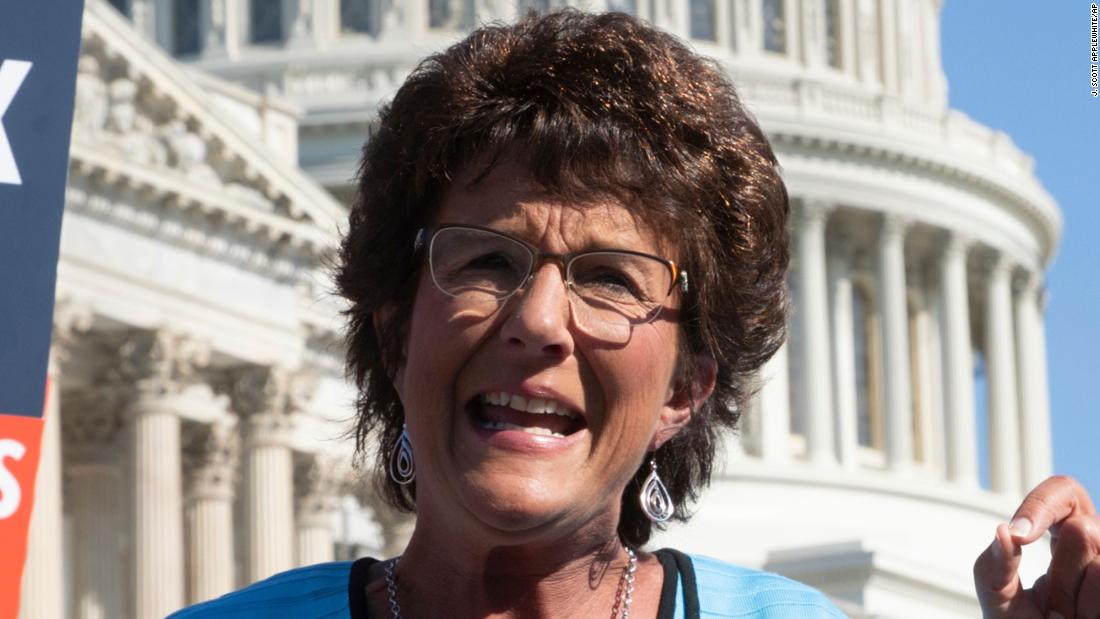
Jackie Walorski, Indiana Republican congresswoman, is killed in car accident

“I am devastated and saddened to learn about the tragic passing of my dear friend Jackie Walorksi and two of her staffers,” House Minority Whip Steve Scalise announced in a statement.

House Minority Leader Kevin McCarthy announced Walorski’s death, sharing a statement from the family.

“Dean Swihart, Jackie’s husband, was just informed by Elkhart County Sheriff’s office that Jackie was killed in a car accident this afternoon. She has returned home to be with her Lord and Savior, Jesus Christ. Please keep her family in your thoughts and prayers We will have no further comment at this time,” read a message from the congresswoman’s office that McCarthy tweeted.

A statement released by the congresswoman’s office said that two staffers had also died. “In addition to the devastating loss of Congresswoman Walorski, it is with a broken heart that I announce the passing of two dedicated members of her staff, Zach Potts and Emma Thomson. They were the epitome of public servants who cared deeply about the work they performed,” said the statement from Tim Cummings, the congresswoman’s chief of staff.

House Speaker Nancy Pelosi ordered flags at the Capitol to be flown at half-staff in response to the death of the congresswoman, Pelosi deputy chief of staff Drew Hammill announced Wednesday afternoon.

News of the congresswoman’s death and the death of two of her staffers came as a major shock on Capitol Hill and immediately sparked an outpouring of grief and remembrances from lawmakers and aides who paid tribute to their lives and careers.

The congresswoman was viewed inside the House Republican conference as someone who could one day ascend to the ranks of GOP leadership, and her name had been batted around for the position of conference chairwoman in the past. She had been a member of the House GOP’s deputy whip team.

Walorski, who was 58, represented Indiana’s 2nd Congressional District and had previously served as a member of the Indiana House of Representatives. She began serving in Congress in 2013.

The congresswoman served as the top Republican on the House Ethics Committee, a spot that put her in line to become chair of the panel if the GOP retakes the House majority in the upcoming midterm elections. She also served as the ranking GOP member for a subcommittee of the powerful House Ways and Means committee.

GOP Rep. Liz Cheney of Wyoming tweeted in reaction to the news, “There was no more dedicated or effective member of Congress than Jackie,” adding, “I was proud to be her friend.”

This story has been updated with additional developments Wednesday.

.

Categories
Technology

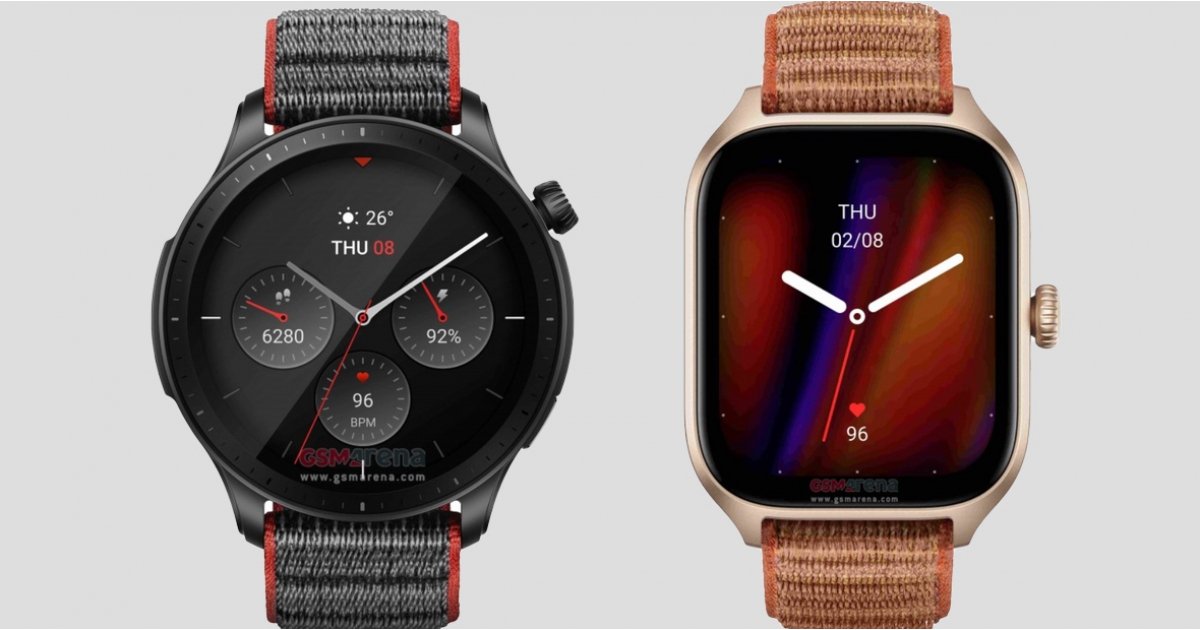
Amazfit GTR 4 and GTS 4, more high-res pics revealed

Some more details have been leaked on the upcoming GTR 4 and GTS 4 watches. Both are expected to officially launch soon.

We know they are coming because Zepp Health said so at its May 2022 investor call. They mentioned Q3 as the launch window, so the GT 4 watches could start dropping in the next few weeks. Or the company could time the official reveal for IFA in Berlin. Europe’s biggest tech gathering is scheduled to take place at the start of September and its a great launch platform for tech devices.

A watch in the GT 4 series has already dropped. A few days ago Zepp Health officially announced the GTS 4 Mini. The device comes with some modest upgrades. This includes a 1.65 inch HD display, which is slightly larger than the one that can be found on its 2020 predecessor.

Now we have some pictures and details of other watches in the series. They come courtesy of GSMArena.com.


GTR 4 & GTS 4: what to expect

Both GTR and GTS are popular smartwatches. That’s because they look good and pack a lot of health and fitness smarts into something that doesn’t cost too much. As before, generation 4 of the duo comes with the same internals. The obvious difference is in the shape of the watches.

As the R in its name indicates, Amazfit GTR 4 packs a round 1.43-inch diameter AMOLED touchscreen. It has a 466 x 466 pixel resolution and always-on option. This means the screen is larger by 0.4 inches as compared to its predecessor. But it is slightly smaller than the 1.45 inch AMOLED that can be found on the Pro version of GTR 3.

Once again we get two physical buttons on the right-hand side. But the top one is in the shape of a crown, while the bottom button has been changed to a square rather than a round shape. Whether this is just an aesthetic detail or something to do with new functionality remains to be seen.

essential reading: Top fitness trackers and health gadgets

The build is aluminum alloy and you’ll have an option between a silver and a black case. As before, this can be attached to a range of leather, silicone or nylon watch straps.

The square shaped GTS 4 gets a 1.75 inch AMOLED with 390 x 450 pixel resolution. Which is exactly the same as the display that can be found on GTS 3. The watch will be around 9.9mm thick and will weigh 27 grams. The case color options for this one include black, rose gold and brown, and this can be paired with a selection of silicone or nylon watch bands.

Amazfit GTR 4 has a hefty 475 mAh battery on-board which is good for 12 days between charges. GTS 4 gets a 300 mAh which should keep the thing going for about a week.

It is not clear at this stage what health and fitness improvements we will see. Hopefully we will get a few. What is confirmed are 150 sports modes, some with workout recognition, along with dual-band GPS with support for all five global positioning systems.

Of course, the watches get Huami’s latest BioTracker 4.0 PPG optical sensor. This should ensure better accuracy and around the clock SpO2 tracking.

The duo comes with over 200 watch faces. About 30 of these are animated. However, you may want to aim for the plain ones as they will not consume too much battery power.

An important change, it seems, will be on-board storage for music. To support this, both watches will be equipped with a speaker and microphone. Bluetooth calling comes as part of the package, along with Amazon Alexa support.

No details on price yet. The third generation watches cost around $180 so expect the GT 4 range to come in around this price point.

Like this article? Subscribe to our monthly newsletter and never miss out!

Categories
Sports

Commonwealth Games 2022: Rohan Browning 100m finals result, star ‘bitterly disappointed’

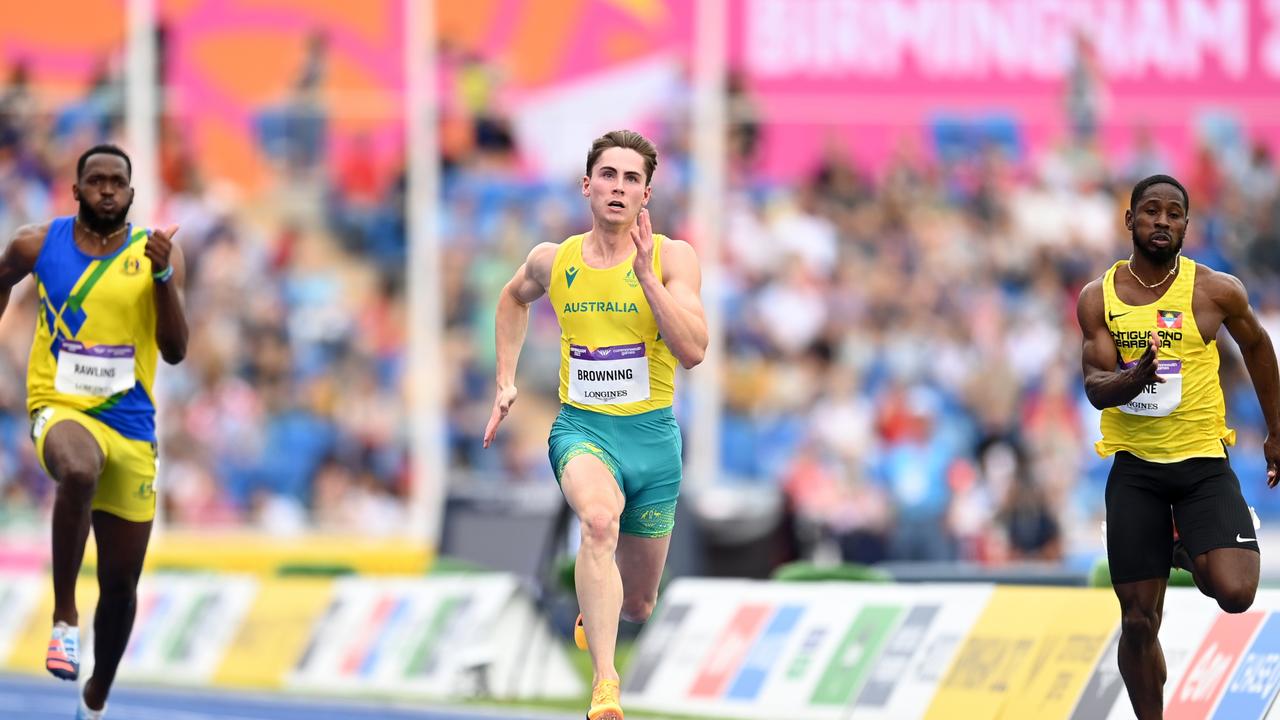
Cult hero Rohan Browning has finished sixth in the final of the 100m at the Commonwealth Games.

Just an hour after he became the first Australian to reach a Commonwealth Games 100m final since 2010, Browning endured a disappointing final run that left him just 0.06 seconds short of the bronze medal at the Alexander Stadium in Birmingham.

It was the closest Australia has got to winning a medal in the men’s blue ribbon event since Matt Shirvington’s lightning time of 10.03 still wasn’t enough for him to get a medal at the 1998 Games.

Australia has never won a medal in the men’s event since the Commonwealth Games changed the distance to 100m in 1970. Now we have to wait at least four more years.

Kenya’s Ferdinand Omanyala won gold in 10.02 and reigning champion Akani Simbine won silver in 10.13. Sri Lanka’s Yupun Abeykoon took bronze with 10.14 with Browning crossing the line in 10.20.

Stream Over 50 Sports Live & On-Demand with Kayo. New to Kayo? Try 14-Days Free Now >

24-year-old Browning exploded out of the blocks and was right there in the mix with 40m to run. However, he slipped back slightly in the final run to the line and had to settle for a result that Aussie athletics great Tamsyn Manou said would have made him “bitterly disappointed”.

“He wasn’t far off,” she said in commentary on Channel 7.

“He looks bitterly disappointed, but I’m OK with that because that means he wanted more.”

In a cruel twist, Browning’s time of 10.10 seconds he set in the heats would have been enough for the silver medal.

Browning was philosophical when assessing his performance after the race.
Browning said he “didn’t quite have the gas”.

“It’s nice to make a final and go through rounds of running. It’s a step in the right direction, I would’ve loved to be on the podium,” he added.

“I’m not satisfied by any means, but not too beat up. It’s been one of those seasons, and always learning.”

Browning is also just the fourth Aussie to make a Commonwealth Games 100m final in the past 30 years.

He joins Aaron Rouge-Serret (fifth in 2010) and Patrick Johnson (sixth in 2006) in the list of Aussies who have fallen agonizingly short.

Browning produced his best run of the year to send a message in the heats on Tuesday night (AEST).

He won his heat in a time of 10.10 in a spectacular turnaround from the World Championships in Oregon last month where he was unable to get out of the heats.

Browning, who famously ran 10.01 to win his heat at the Tokyo Olympics last year, looks like he is the real deal once again.

He said part of his bounce back from the world championships is the “humiliating” factor of failing to reach the semi-finals.

“I try not to take it to heart,” he said.

“There’s always that humiliation element when you get run out in the heats, but just trying to bounce back from it and not take it to heart and just trust that the form is there, it’s just in the execution. I think I’ve tapped into a good vein of form.”

Jake Doran, Australia’s second-fastest man, was unable to reach the final, finishing eighth in Heat 2 in a time of 10.40 seconds.

.

Categories
Australia

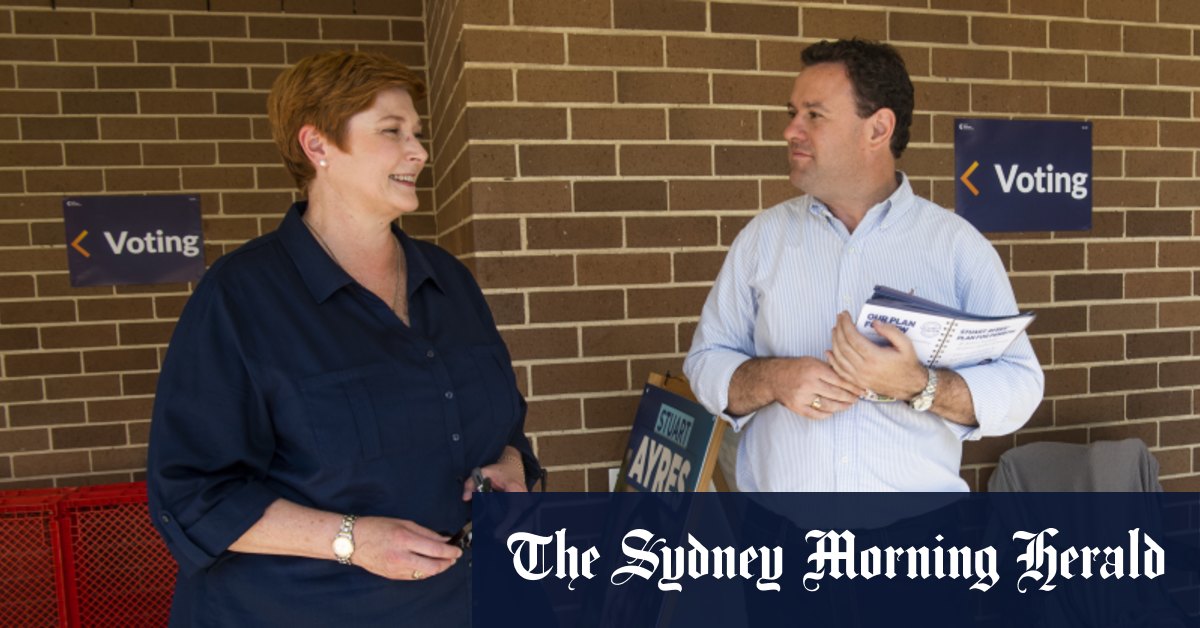
Stuart Ayres faces world of financial Payne after resignation

It was, apparently, a tribute to Barilaro, and then-treasurer Dominic Perrotte‘s efforts in bringing back live shows during year one of the pandemic, with a commemorative plaque noting that the duo “were instrumental in guiding Australian theater out of crisis”.

This week, CBD’s spies brought word that the plaque was nowhere to be seen. So has Barilaro been cancelled? Not, so, according to Foundation Theaters printer Stephen Found, who told us the plaque hasn’t been removed and never would be. hmm.

jen heads west

Western Sydney University has a new chancellor, with veteran Business Council of Australia boss Jennifer Westcott appointed yesterday.

The former KPMG partner, senior public servant, and member of more boards than we care to name succeeds peter shergoldwho moves on after 11 years as chancellor of the institution formerly known as the University of Western Sydney.

Westacott said she was drawn to the role by WSU’s “enduring connections with the diverse and vibrant communities of western Sydney”.

As a hugely influential voice for the big end of town, Westacott is quite a big coup for the sprawling, multi-campus institution known for spending $20 million marketing its change of name, and which has long lived in the shadow of its Group of Eight rivals. She might just have to give up her spot on the UNSW council though!

Meanwhile, don’t expect a changing of the guard at the BCA just yet. Westacott remains chief executive, as she has since 2011. While rumors of her departure from Ella have been circulating for years, who would want to miss the excitement of a new government?

Forgotten Farage

We brought word yesterday that Britain’s “Mr Brexit” Nigel Farage was shaping up as one of the stars at October’s Conservative Political Action Conference, along with various others whose glory days are behind them.

Turns out that right-wing nostalgists don’t have to trek it to the harbor city to catch Farage’s act, after he announced on Wednesday that his solo tour next month will take in Melbourne and Brisbane too.

Now that the former UK Independence Party leader’s greatest triumph – Britain’s withdrawal from the European Union – is both getting old and not looking so flash these days, Farage has found other things to talk about.

loading

the show, An Entertaining Evening with Nigel Faragepromised audiences insights gained in both the UK and the US, where Farage shared a CPAC platform in February with former president donald trump about how Western Civilization is under threat and how “we” can “believe in who we are as a people once again”.

But there’s more; Farage will also dispense some advice for the conservative political parties who came a cropper in May’s federal election. The diagnosis is not that original – “When conservative parties fail to be conservative, they lose elections” – which might come as news to the Coalition.

Fixer is in

Scott Morrison‘s former principal private secretary Yaron Finkelstein forged a reputation as the Mr Fixit of the Prime Minister’s office during the last government, generally regarded as a force to be reckoned with.

So tongues were set wagging on Wednesday morning when Finkelstein was spotted in the vicinity of Coalition Senate Leader simon birmingham‘s office, raising the question, in the gossipy hot-house on the hill, of whether a comeback to politics was on the cards?

Calm down, Finkelstein advised CBD. He was “just saying hello from the outside world to some people who didn’t make parole”.

Cut through the noise of federal politics with news, views and expert analysis from Jacqueline Maley. Subscribers can sign up to our weekly Inside Politics newsletter here.

Categories
US

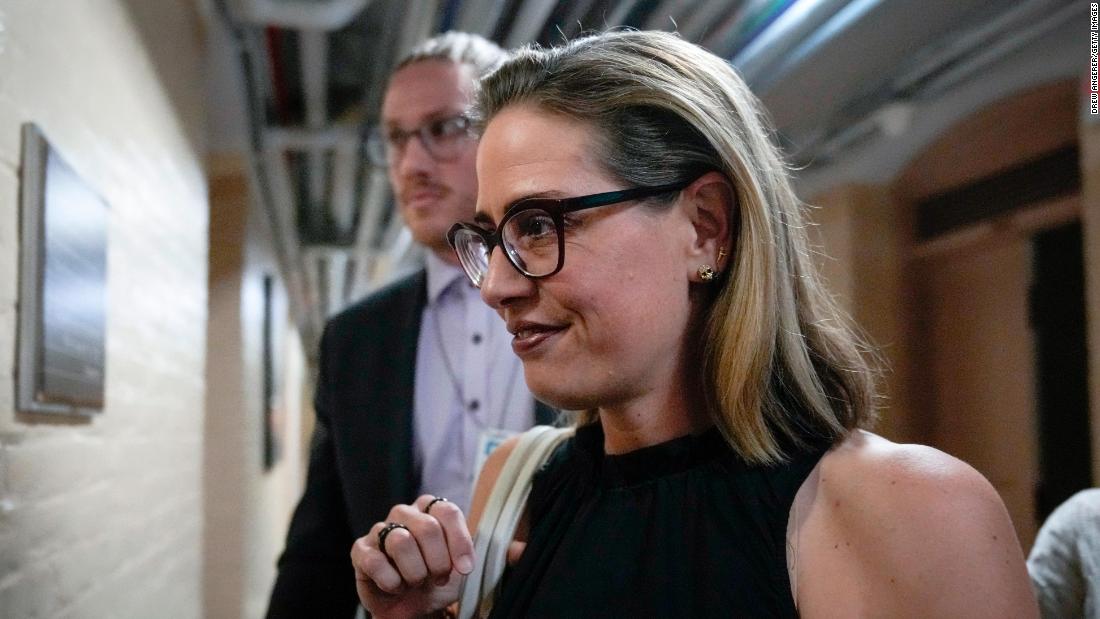
Kyrsten Sinema raises concerns about proposed tax in Democrats’ bill

And in a private call with business groups on Tuesday, Sinema asked a question about the bill’s proposed 15% minimum tax on corporations that gave them some hope for optimism.

“Is this written in a way that’s bad?” Sinema asked, according to Danny Seiden, president of the Arizona Chamber of Commerce, who relayed the call to CNN.

“It gave me hope that she’s willing to open this up and maybe make it better,” Seiden said.

Sinema’s office declined to comment on the call. But she has expressed concerns about other tax provisions as well — namely on raising taxes on so-called carried interest, which would impact private equity and hedge fund managers, and raise $14 billion in the Democrats’ bill. Sinema has relayed to top Democrats that she wants that provision out of the bill, according to a source familiar with the matter.

Sinema, the lone holdout among the 50-member Senate Democratic Caucus and who was blindsided by news of the deal last week, has refused to tip her hand one way or the other on the bill — giving conservative critics of the bill reason to believe they could convince her to change her mind. Democrats are still confident that they can win her over from her but also acknowledge that they may have to make some changes – particularly over the tax provisions – to get her to “yes.”

But as she’s been in talks with Democrats who have touted the bill’s benefits, Republicans like Senate Minority Whip John Thune have expressed concerns to her about the taxes on companies and the proposal to hire new IRS agents to bolster tax enforcement.

“She’s analyzing it,” the South Dakota Republican said of Sinema. “Ella Keeps her own counsel, I think as most of you know, and usually comes to her own decisions de ella, pretty independent of any pressure that she might get from either side. So you know, I think she’s going through that process right now.”

At a conference news on Wednesday, where Republican senators railed against the proposed tax hikes, Idaho Sen. Mike Crapo said senators were privately making the same case to Sinema.

“We are making this case that we’ve made here to you today as aggressively as we can,” Crapo said.

On Wednesday, Sinema indicated to CNN that she was in no hurry to announce her position on the bill. “Taking my time,” she said. Her spokesperson reiterated that Sinema was waiting for the review by the Senate parliamentarian to be completed before announcing her position.

What's in the Manchin-Schumer deal on climate, health care and taxes

But last fall, Sinema indicated her support for a corporate minimum tax, saying at the time that it’s a “common sense” proposal to ensure that “highly profitable corporations” pay their share of taxes. The proposal was developed last fall with her input from her after she rejected calls to raise corporate income tax rates, a Democratic aid said Wednesday.

In the private call with Sinema on Tuesday, Seiden expressed the business community’s opposition to the 15% tax provision, noting it would particularly hit manufacturers that take advantage of an accelerated depreciation tax deduction that lowers their tax burden. (Seiden said National Association of Manufacturers president Jay Timmons was also on the call; A NAM representative did not immediately respond to a request for comment.)

Seiden told CNN that Sinema did not “tip her hand” on any particular provision, asked for more information on how the bill affects Arizona, but asked that question, which gave him hope that she would be open to somehow amending the bill’s tax proposals.

“She did not tip her hand, tip her hat, in any way, shape or form,” Seiden said. “It was a pure listening moment for her, collecting information, soliciting information, just like any good representative would do.”

In the meantime, she’s hearing arguments from both sides. On the Senate floor Tuesday night, a number of senators from both parties approached the senator, including Senate GOP Leader Mitch McConnell, GOP Sen. Rob Portman of Ohio, Democratic Sen. Patty Murray of Washington state and Democratic Sen. Mark Warner of Virginia.

Democratic leaders acknowledge they are uncertain where she will come down.

“She didn’t tell me or give me any signals as to where she’s going on this bill,” Illinois Sen. Dick Durbin, the Democratic whip, said of a recent conversation he had with the senator. “We need her, we need every single vote, so I hope she’ll be with us.”

While Democrats say the bill would ensure large corporations don’t avoid paying taxes, instilling “fairness” into the tax code, the Arizona Chamber president argued that a minimum corporate tax makes the code “overly complicated.” Seiden said that raising taxes during a recession is particularly unpopular and would inject more uncertainty into the marketplace.

“The meeting went great,” said Seiden of his call with Sinema. “She knows that our businesses are struggling, because of inflation, because of supply chain issues. So anything that will impact or make that worse or halt the economic growth that we’ve seen, she’s very sensitive towards that.”

Seiden thanked Sinema for her work on the bipartisan infrastructure bill and the recent legislation boosting semiconductor manufacturing, but said the “the celebration of the Chips Act is short-lived” if some of the tax provisions remain untouched in the bill negotiated by Senate Majority Leader Chuck Schumer and West Virginia Sen. Joe Manchin.

Seiden said he would like to see some of the energy and environmental pieces go through without the “poison pill” tax provisions, acknowledging that some elements of the energy sector support provisions like the tax credits for electric vehicles. Nikola Corporation and Lucid Group, two electric vehicle manufacturers, have operations in Arizona.

Corporations are hoping that Sinema, the crucial vote in the 50-50 Senate, will make changes to the bill, pointing to her previous statements.

In April, Sinema told the Arizona Chamber of Commerce, “I am unwilling to support any tax policies that would put a break on that type of economic growth, or stall business and personal growth for America’s industries.”

“You all know, the entire country knows, that I am opposed to raising the corporate income tax,” Sinema said. “That was true yesterday and it is true today.”

Sinema already has effectively pushed back on raising personal and corporate tax rates in President Joe Biden’s Build Back Better bill, one reason she is being attacked by the left.

If she doesn’t back the bill, a potential 2024 challenger warned it would come back to haunt her.

“I think there’s going to be some consequences at the ballot box for her,” said Arizona Democratic Rep. Ruben Gallego, who has expressed interest in possibly mounting a primary campaign against Sinema.

John LaBombard, a former Sinema spokesperson, said that Sinema is looking for “good, effective policy that is not going to carry any unintended consequences” and would be “impervious” to political considerations.

“I’ve not met someone more impervious to political pressure than Kyrsten Sinema,” LaBombard said.

This story and headline have been updated with additional developments Wednesday.

CNN’s Jessica Dean and Morgan Rimmer contributed to this report.

.

Categories
Technology

Amazfit GTR 4 and GTS 4 images give us a good look at the new fashion watches

The Amazfit GTR 4 and GTS 4 look set to be the next smartwatches introduced to an already extensive Amazfit family.

After sharing initial images and details about the watches back in July, GSM Arena has managed to get hold of another collection of renders of the two smartwatches, which should once again fall under Amazfit’s fashion watch category, promising those smarts in sleek and stylish surroundings.

read this: Best smartwatches for Android users

These new images do appear to show off follow-ups to the GTS 3 and GTR 3, which launched alongside the pricier GTR 3 Pro last year.

They’re shown from all angles displaying band and case color options and the presence of physical buttons and watch crowns. There’s also a series of lifestyle images, which might hint at some of the new features we could expect to see. The presence of strength training images might point towards some improved indoor workout tracking support, though it’s difficult to see what the watch screens in those images are displaying.

In terms of what we should expect, GSM Arena previously reported that the Amazfit GTS 4 will feature a rectangle, 1.75-inch, 390 x 450 pixel resolution AMOLED touchscreen display. It’ll measure in at 9.9mm thick and weigh 27g (case only). Case color options will be black, rose, gold and brown. The Amazfit GTS 3 features the same sized screen, while the GTS 4 dimensions suggest its successor will be thicker and heavier in comparison.

Amazfit GTR 4 and GTS 4 images give us a look at fashion smartwatch duo

The GTR 4 is the round watch option and is said to feature a 1.43-inch, 466 x 466 pixel resolution AMOLED screen and will come in silver and black case looks. Unlike the GTS, Amazfit includes both a side button and a twisting crown to aid touchscreen interactions. It’ll be partnered up with the choice of leather, nylon or silicone straps.

That would mean a bigger screen than the one packed onto the GTR 3 while the very prominent red mark on the crown might be a hint to a new feature. Or that we could actually be looking at the GTR 4 Pro. Could Amazfit throw an ECG sensor into the mix? Maybe.

Amazfit GTR 4 and GTS 4 images give us a look at fashion smartwatch duo

In terms of smarts, it seems we can expect these watches to run on Zepp OS just like the GTR and GTS 3, offering access to an app storefront, which has more recently added a few high profile names like GoPro.

There will be a speaker and microphones to support Bluetooth calling and an onboard music player, 150 sports tracking modes, a dual-band mode to improve outdoor tracking accuracy and BioTracker 4.0 optical sensor to offer more accurate heart rate, blood oxygen stress tracking than previous watches.

Battery life for the GTS 4 is said to be 7 days of a single charge while the GTR 3 will deliver 12 days in comparison, so they’re likely to offer similar levels of stamina as their predecessors.

The GTR 3 Pro, GTR 3 and GTS 3 launched together in October, so it wouldn’t be all that surprising, given the timing of these pretty legit-looking images that these are watches that are going to land before the end of the year .

The question now is how Amazfit is going to make its smartwatches more competitive. As we mentioned in our Amazfit GTR 3 Pro review, it’s a smartwatch platform that’s getting a lot of things right, especially on the design front, but it still needs to make improvements with the overall software experience and the fitness and wellness tracking in particular.

There’s promising signs those improvements are coming as we found testing the Amazfit T-Rex 2, so there’s definitely reasons to be optimistic that the GTS 4 and GTR 4 could be impressive smartwatches when they do officially land.