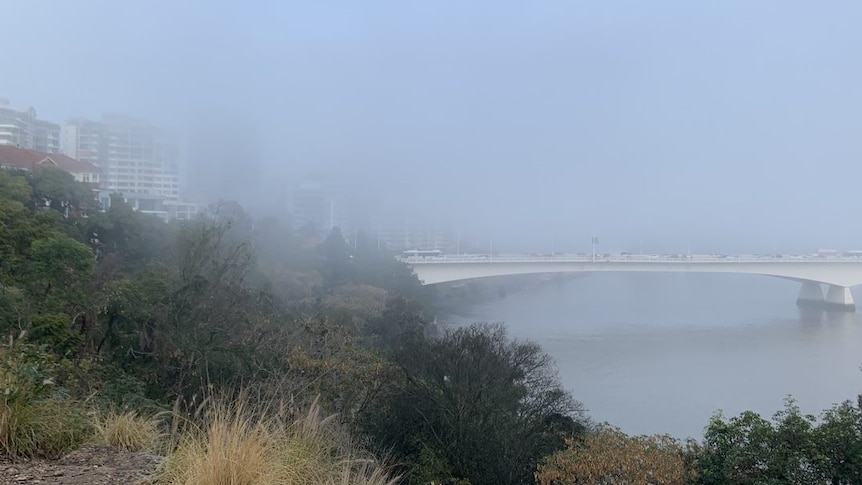
Greater Brisbane has been blanketed in thick fog for the second time this week, prompting the Bureau of Meteorology (BOM) to issue an alert for dangerous road conditions.
But today the pea soup is more widespread, with patches of fog impacting cities along the Queensland coast all the way north to Townsville.
BOM forecaster Matthew Bass said the fog was a “similar event” to what Brisbane experienced on Tuesday, but heavier today in outer suburbs.
“Maybe a little bit more extensive through southern parts of Brisbane, down towards the Logan area,” he said.
Patches of fog can be seen all the way to Townsville.(Supplied: BOM)
“Out west [of Brisbane] it is maybe a little bit more extensive but relatively similar to what we saw a couple of days ago.”
Mr Bass said visibility was down to 100 meters in parts of south-east Queensland, and down to 2,000 meters at the Brisbane Airport at 6am.
Lord Mayor Adrian Schrinner said Brisbane ferry and CityCats were running a “little slower” due to the fog.
The Captain Cook Bridge on the Pacific Motorway lost in the haze.(ABC New: Curtis Rodda)
“Everyone does need to pay attention on the road, take it that little bit slower and a little bit more careful in the reduced visibility,” he said.
“Definitely quite low visibility in the city as well.”
The hazy view from Brisbane’s William Jolly Bridge at 5am. (ABC News: Matt Eaton)
Mr Bass said the fog was likely to hang around for a few hours until after sunrise.
With visibility so low, police also asked commuters to drive with caution.
Mr Bass warned the fog could also cause disruptions to flights in and out of Brisbane airport.
Victoria Bridge hidden in fog from South Bank on Thursday morning.(ABC News: Matt Eaton)
“There’s a reasonable chance that the fog will make it to the airport and cause flight disruptions,” he said.
BOM forecaster Steven Hadley told ABC Radio Brisbane the fog was likely to clear before 9am in most places.
“The main Brisbane airport is just starting to clear up there, but Archerfield Airport is pretty fogged in,” he said.
The city view lost in fog from Highgate Hill in Brisbane. (ABC News: Curtis Rodda)
“It is quite a thick fog across some of the western, southern suburbs and inland as well, so expect it to probably lurk a bit longer through that part of the world.”
Mr Hadley said once the fog cleared it would be a nice day in the Brisbane area.
The pedestrian and cycle bridge at Indooroopilly was shrouded in fog on Thursday morning. (Supplied: Peter Doherty)
The view across the Brisbane River from the South Bank on Thursday morning.(ABC NewsBrian Hurst)
The National Archives first became aware of Navarro’s use of a personal email account last year, according to the filing, after the House select panel investigating the coronavirus pandemic obtained emails showing Navarro used the ProtonMail account for official White House activities.
The civil lawsuit was assigned to US District Court Judge Colleen Kollar-Kotelly, an appointee of former President Bill Clinton.
It’s a separate case from Navarro’s indictment for contempt of Congress, which the Justice Department is also handling. The Jan. 6 select committee subpoenaed him for documents and testimony in February, but he refused to comply with their summons, prompting the panel to ask the Justice Department to pursue charges against him. Navarro has also acknowledged receiving a federal grand jury subpoena related to Jan. 6.
Navarro did not immediately respond to a request for comment.
The lawsuit comes as top Trump officials have drawn increased scrutiny for their failures to properly preserve documents and messages. Navarro was not the only Trump administration official who used personal accounts to conduct official business — in a Monday letter to the department’s watchdog, congressional investigators highlighted one of Trump’s top Department of Homeland Security officials, Ken Cuccinelli, for his use of a personal phone for government business and failure to preserve messages.
“Any old vacancies that come [on the market]if the fit-outs are older than five or seven years, then they need to be refitted,” he said.
“It’s a must in this current environment because anything that presents as just four walls and empty space will be left behind. People know what they want – lighter, brighter, fresher and collaborative spaces.”
New shower and changing facilities at 136 Exhibition Street.Credit:Jason South.
The Property Council report pointed to an oversupply of second-grade office space, with 14 per cent of the lesser-grade buildings empty compared to 12 per cent of prime buildings. The only category of office space with increased demand in the past six months was “prime stock” luxury buildings.
“It’s like the residential market these days; if it’s not dressed up, it’s going to struggle,” Martinez said.
Ashley Buller, Victorian head of office leasing for commercial real estate agency CBRE, said his firm was also aware of the demand for high-quality offices.
“High-rise, premium-grade rents in Melbourne’s east end have risen strongly, with a number of transactions reflecting 15-25 per cent improvements against pre-COVID levels,” he said.
The increase in empty offices continued even though the number of people returning to work in city offices stalled. According to the lobby group’s most recent data, office occupancy stalled at 49 per cent in June.
“We’re in a bit of a holding pattern at the moment because we’ve clearly got a COVID spike in the community, [and] some beefed up health messaging and advice. But that’s not going to last forever,” said Lowcock.
“We’re having a tricky winter, but from what we’ve seen in other cities, we definitely think Melbourne is capable of further increases in office occupancy.”
Department of Transport statistics show patronage on Melbourne’s trains and trams has increased since six months ago, but remains well below pre-pandemic levels. In July, average weekday patronage on Metro Trains was 58 per cent of pre-COVID levels, while trams were at 67 per cent, and V/Line services were at 55 per cent.
Credit:Matt Golding
Data shows pedestrian numbers have increased in the Melbourne CBD in the past six months, but there are half as many people on foot as there were before COVID-19.
According to the City of Melbourne, the average number of pedestrians using the Flinders Street Station underpass between 6am and 10pm jumped 63 per cent from 11,012 people in February to 17,247 in July.
loading
Although demand for offices remains steady, Lowcock said the high amount of subleasing in Melbourne compared to other cities was “some cause for concern” because it indicated tenants had too much unused space.
The Morning Edition newsletter is our guide to the day’s most important and interesting stories, analysis and insights. Sign up here.
Men, women and children are again risking their lives trying to get to Australia and neighboring India in boats, and trying to enter other countries with the assistance of people smugglers.
Between January and the first week of July, more than 150,000 citizens left the country in search of work as the country entered a period of economic insecurity, according to data from the Sri Lankan Foreign Employment Bureau.
Athlete disappearances have plagued both recent Commonwealth Games and the Olympics.
At least 230 athletes and officials – the majority of them from Africa – lodged applications for protection visas following the last Games on the Gold Coast in 2018. The overwhelming majority of them were denied.
About a third of the Cameroon team went missing after the event, while Rwanda’s weightlifting coach fled the Games during a toilet break at Carrara Stadium.
loading
It was a major increase on Melbourne 2006, the last time Australia had hosted the Commonwealth Games, when 40 athletes overstayed their visas.
It is estimated that about 100 athletes and officials filed for asylum after the 2000 Olympic Games in Sydney.
Fernando told reporters ahead of the Games it was a “dream” for athletes to take part considering the circumstances at home.
“We have a responsibility to fulfill that dream. Just because we are facing economic crisis… does not mean that we just forget about it,” he said.
Britain is in the midst of a fierce domestic debate about immigration as the government facing a backlash over its attempts to send asylum seekers to Rwanda.
The Conservative Party leadership contest that will choose the replacement for outgoing prime minister Boris Johnson has sharpened the focus on the number of people crossing the English Channel from France. UK Border Force staff are bracing for the arrival of thousands more people in small boats in the coming months.
The Ministry of Defense said 696 people made the journey in 14 small boats on Monday alone. There were 460 arrivals on Saturday and 247 on Friday, and more than 1000 people crossed last week.
In July, 3683 people crossed from France. The total for this year is believed to be more than 17,000.
The Morning Edition newsletter is our guide to the day’s most important and interesting stories, analysis and insights. Sign up here.
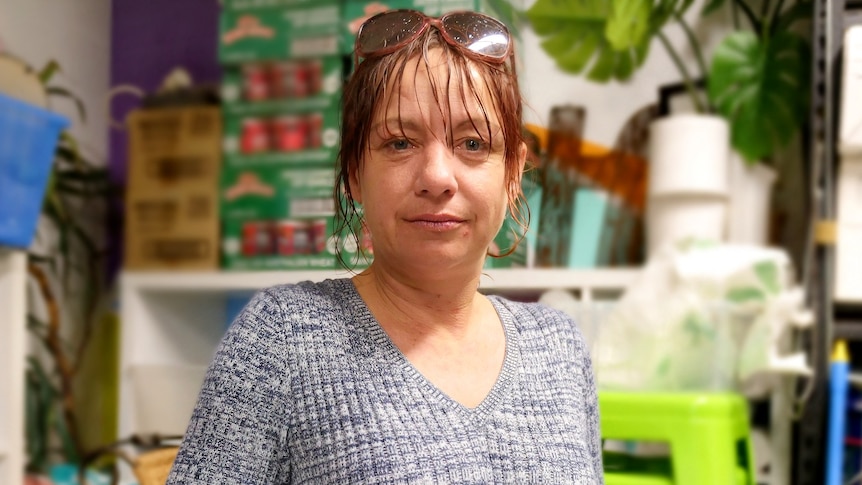
As wet weather lashes Perth’s southern regions Kirsty Buchanan is spending her nights on the cold, rainy, streets of Mandurah — one of many in the Western Australian seaside city doing it tough.
Key points:
Almost a quarter of people without a home in Mandurah are sleeping on the street or in improvised dwellings
Support workers say there’s support for people doing it tough, but not enough services to get the long-term homeless off the streets
Families and pensioners are also reaching out to food kitchens amid the rising cost of living
Mental health issues, brought on by family tragedies, prompted Ms Buchanan to leave her home of 26 years and her stable job when her life took a turn.
“I just ended up with nowhere to stay,” she said.
“I’m on the priority list [for housing]. I have been about eight months.”
She has relied on homeless support services for food, dry clothes, and sleeping bags during the harsh winter.
“Being winter, this week out of all the weeks has been the coldest. [It’s] cold. But it’s the boredom as well,” she said.
She is not the only one struggling.
Timothy Tonkin spent six years living on the streets in the Peel region and now shared a motorhome with his friend while he tried to find a house and a job.
Timothy Tonkin is living in a van and struggling to find work, and says the cost of living has hit him hard.(ABC Radio Perth: Jacqueline Lynch)
“We’re actually arguing now as we speak because of the cost of living, the cost of everything. I haven’t got a cent to my name and neither does she,” he said.
“I would love to go back to work but work is hard to find in my situation – no license and no proper qualifications.
“It’s not easy living day-to-day.”
Unemployment high and many sleeping rough
A recent Deloitte Access Economics report, adopted by the City of Mandurah, outlined unemployment rates in Mandurah as “stubbornly higher” than Perth with a “nationally significant” level of people dependent on rent assistance payments.
Community organizations are playing a big role in helping the homeless.(ABC Radio Perth: Jacqueline Lynch)
It also highlighted a great deal of housing stress among residents, high illicit drug use, and a rising number of people living with mental health issues in the city.
The local council has vowed to look at what can be done to address the issues.
Meanwhile, a recent University of WA Center for Social Impact report found while the rate of homelessness in Mandurah was lower than other parts of Western Australia, the region had the highest proportion of homeless people sleeping rough in the state.
It showed that almost 25 per cent of those without a home were staying on the street or in improvised dwellings as opposed to staying with friends or in crowded houses.
More broadly, the UWA report highlighted a 39 per cent increase in the number of people accessing government-funded homeless services over the past five years in Western Australia.
Significantly, it outlined an over-representation of Aboriginal and Torres Strait Islander people among the state’s homeless population.
‘We’re all struggling to eat’
Vanessa Nelson is a proud Whadjuk Ballardong Bibbullmun woman who spent years on the streets.
She secured a house in Mandurah earlier this year but said her struggle was not over.
Vanessa Nelson struggles to pay bills and fill her refrigerator, but her greatest worry is for others.(ABC Radio Perth: Jacqueline Lynch)
“I’m empty, I have got a loaf of bread, no butter … my cupboard’s empty,” she said.
“I come down to the soup kitchen along with many other family members and non-family members. We’re all in the same boat.
“We’re all suffering, we’re all struggling to eat. We’re all struggling to pay our bills. We are not getting jobs and we are not moving forward,” she said.
But her concern was not for herself, it was for others.
“I sit and I worry every day for the hundreds and thousands of people who are still out there that are living rough, living cold, living sick,” she said.
Fed for free but no place to sleep
There are many community-led organizations, businesses, and individuals lending a hand in Mandurah.
As a city also harboring great wealth, coordinator of the Peel Community Kitchen, Tracey Bain, said there was a drive within the community to help the homeless.
“[The wealthy] donate clothes, a lot of come in and donate money at tax time. So I think there wouldn’t be so much help for the homeless if there wasn’t that much wealth here,” Ms Bain said.
Tracey Bain said there was plenty of support for the homeless, but a lack of services to help them transition into stable housing.(ABC Radio Perth: Jacqueline Lynch)
But she said the city lacked what was needed to help combat long-term homelessness, such as affordable housing, more mental health services, and support to help people break drug and alcohol addictions.
“In Mandurah you can get fed every day of the week for free, you can get clothes, you can get shower. The only place it doesn’t offer is somewhere to live,” she said.
“I have been here eight years and I’m still seeing the same people on the streets that were on the streets eight years ago.”
Advocates say housing the key
The state government is set to spend more than $28 million setting up a Common Ground-supported housing facility in Mandurah which will provide up to 50 self-contained apartments and wraparound support to rough sleepers.
But the site is not expected to open to residents until 2024.
Ms Bain said the facility was a step in the right direction.
The CEO of Halo, Dee Freitag, agreed to housing in Mandurah was a key issue that needed to be addressed.
Halo provides food, clothing, household items, furniture, transitional accommodation, and outreach support assisting with welfare services.
Halo CEO Dee Freitag said a lack of housing was a key problem in Mandurah that needed to be addressed. (ABC Radio Perth: Jacqueline Lynch)
Ms Freitag said the rental crisis in Western Australia had prompted an increasing number of new people to reach out for help.
“We are also seeing a lot of families because of the housing crisis … and the elderly,” she said.
“We are seeing a major increase in people who are not eating because they’re trying to keep a roof over their head.
“And then there are the ones, in this bucketing down rain, who are sleeping on pathways and verandahs because they don’t have cars.”
Whether it be social housing or private rentals, Ms Freitag said any offering would be welcome to get people off the streets.
“Any house that goes up for rent is a bonus,” she said.
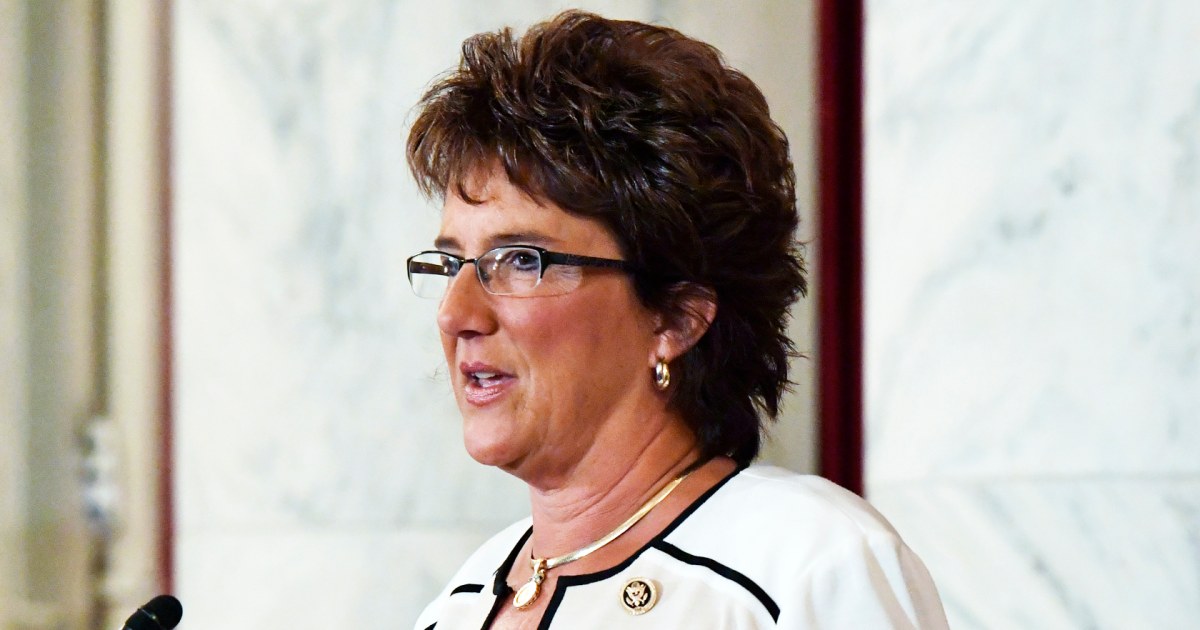
WASHINGTON — Rep. Jackie Walorski, R-Ind., and two of her staffers were killed in a car crash on Wednesday, authorities said. Walorski was 58.
House Minority Leader Kevin McCarthy first confirmed Walorski’s death in a tweet earlier Wednesday.
McCarthy said he spoke to Walorski’s husband, Dean Swihart, who was informed of her death by the Elkhart County Sheriff’s office on Wednesday afternoon.
“This news is absolutely devastating,” McCarthy said in a statement. “Jackie was a dear friend, trusted advisor, and the embodiment of integrity who achieved the admiration and respect of all her colleagues in the House.”
Walorski District Director Zachery Potts, 27, and her Communications Director Emma Thomson, 28, also died in the two-car collision. Their deaths were confirmed by the sheriff’s office in a Facebook post. “A northbound passenger car traveled left of center and collided head on” with Walorski’s vehicle, the sheriff’s office wrote. The driver of that car was also killed.
“Devastated to hear the horrible news of the passing of Jackie Walorski and her two staffers,” House Minority Whip Steve Scalise, R-La., tweeted. “She was a dear friend who loved serving the people of Indiana in Congress.”
Speaker Nancy Pelosi, who was traveling in Asia, ordered the flags at the Capitol to be flown at half-staff in honor of Walorski and her staffers, her spokesman said.
“A lifelong Hoosier, Congresswoman Walorski lived a life of service: whether caring for impoverished children in Romania, representing her community in the Indiana Statehouse or serving nearly a decade in the House,” Pelosi said in a statement. “She passionately brought the voices of her north Indiana constituents to the Congress, and she was admired by colleagues on both sides of the aisle for her personal kindness.”
The White House said it will fly flags at half-staff on Wednesday and Thursday in memory of Walorski.
A former Indiana state lawmaker, Walorski was first elected to Congress in 2012 and was running for her sixth term this fall. She was well-liked by her Republican and Democratic colleagues in the House, where she was close to McCarthy and his leadership team.
McCarthy named her the top Republican on the House Ethics Committee, and she was set to be chairman of the bipartisan committee if Republicans won the majority in November.
“When there was a vacancy for Republican leader of the Ethics Committee, she was my first call,” McCarthy said in a statement. “Everyone who knew Jackie knows she was tough, but fair — a no nonsense, straight shooter who knew that Congress must reflect the will of the people with decency and honesty.”
Ethics Committee Chairman Ted Deutch, D-Fla., worked closely with Walorski on a weekly basis, as their panel met to provide ethics training and investigate any violations of House rules by lawmakers or their aides.
“As partisans as Congress has become, it is still a family, and this loss hits close to home,” Deutch said in a statement. “Jackie Walorski was a colleague and a friend. She cared deeply about the House and about her constituents, and she will be dearly missed by all of us.”
Many of her colleagues in the Indiana delegation also tweeted their sympathies shortly after her death was announced.
“I’m truly devastated. Jackie loved Hoosiers and devoted her life to fighting for them,” tweeted Sen. Todd Young, R-Ind., who had served with Walorski in the House. “I’ll never forget her spirit from her, her positive attitude from her, and most importantly her friendship from her.”
“My heart is heavy with the news from northern Indiana. Jackie was a true friend & an incredible colleague,” tweeted Rep. Jim Baird, R-Ind. “Hoosiers have lost a champion & dedicated public servant.”
Small regional communities are working to secure their own energy futures amid electricity price rises and widespread fears of blackouts.
Key points:
Regional Victorian towns Ballan and Pomonal are investigating a community battery
Experts say batteries will be a big part of Australia’s renewable energy transition
Questions remain around the role community level batteries will play in the mix
A new report from the Australian Energy Market Operator shows electricity prices rose to their highest levels on record in the three months to June 30, leading to increasing energy bills across the east coast.
Communities like Ballan, 80 kilometers north-west of Melbourne, are driving their own renewable energy projects as they seek reliability, lower costs, and reduced environmental impact.
The volunteer-run Moorabool Environment Group is working with residents on the first steps of a project to bring a community battery to the town of almost 3,400 people.
Rose De la Cruz has solar panels on her home in Ballan and would like to link to a community battery.(Supplied: Rose De la Cruz)
Resident and group member Rose De la Cruz said Ballan was a “good candidate” for the technology.
“We do suffer from power outages quite a lot here and we have a growing lot of residential houses with solar on their roofs,” she said.
“At the moment everybody is talking about the cost of electricity, so people are interested in anything that will bring down the cost.”
The basic concept was for households and organizations with rooftop solar to feed into a shared battery and draw out electricity when needed.
Ben McGowan inspects a mid-sized battery at Yackandandah.(ABC News: Emilia Terzon)
Increasing take-up
Community batteries are becoming an increasingly popular option for regional communities.
The first community battery in Yackandandah, a small tourist town in north-east Victoria, was launched in July 2021 after two years of planning and fundraising.
The 274-kilowatt-hour battery that supplies electricity to 40 homes from solar panels on the roof of an old sawmill is part of a bigger mission to have the entire town powered by renewable energy.
It also serves as a backup power supply.
Residents in the western Victorian town of Pomonal, on the edge of the power grid, are also looking for solutions to eliminate blackout concerns.
Pomonal Power People member Dee-Ann Kelly said more people had become interested in the idea of a community battery.
Grampians Community Power Hub hosted a community meeting at Pomonal.(Supplied)
“I am interested in the idea that not everyone needs to have solar,” she said.
“Down the track I am willing to do get solar, but for now I want to be able to utilize where we have got solar and where we may have solar in the future.”
She said the project was also about supporting people who did not have the ability to put solar panels on their properties.
“We have talked about not leaving people behind,” she said.
The town is part of a community battery feasibility study and is waiting for a report before deciding on the next steps.
Ms Kelly said sustaining interest and driving the project could be a challenge, given it could take many years and was not an “overnight solution”.
A community battery in Meadow Springs, Western Australia, is accessed by 52 homes.(Supplied: Western Power)
But she said she was confident the community’s desire for power reliability during disasters, such as bushfires, and broad focus on sustainability would drive continued support.
“We live in the beautiful Grampians and have nature all around us. This is what drives people to want to have a future and be involved in making really important decisions,” she said.
clean energy future
Australia Institute energy advisor Dan Cass said Australia had been over-reliant on “risky and expensive” coal and “increasingly expensive” gas.
Mr Cass said the community battery model would be part of the move to build clean energy resources quickly to avoid another energy crisis.
A community battery in the Perth suburb of Port Kennedy.(Supplied: Western Power)
He said the Australian Energy Market Operator modeling showed a need to build thousands of gigawatts worth of battery storage over the next several years.
“We need a lot more batteries on the grid and we need them urgently,” he said.
“The question is who owns the batteries and what is the scale at which they are built?”
Mr Cass said it was likely large batteries, mid-scale community batteries, and small household batteries would be part of the solution.
“I think we will find eventually every freestanding roof in the country will be able to have solar panels and in some cases that will be backed up by batteries,” he said.
“It will give enormous power and control back to energy consumers and communities as well as being more resilient and zero emissions.
“Australia is in a great position … it is just a matter of planning this out well and this will be the last energy crisis Australia will ever need to face.”
Thai driver Alex Albon confirmed he has agreed to continue with Williams in 2023 amid the fallout over fellow F1 hopeful Oscar Piastri’s denial he will be racing for Alpine.
“I understand that, with my agreement, Williams Racing have put out a press release this afternoon that I am driving for them next year,” Albon said in a Twitter post, ironically referencing Piastri.
“This is right and I have signed a contract with Williams for 2023. I will be driving for Williams next year. Let’s go @williamsracing.”
Watch Every Practice, Qualifying & Race of the 2022 FIA Formula One World Championship™ Live on Kayo. New to Kayo? Start your free trial now >
On Wednesday, Australian young gun Piastri refuted an announcement made earlier in the day by the French team Alpine that he had signed for them next season.
“I understand that, without my agreement, Alpine F1 have put out a press release late this afternoon that I am driving for them next year,” Piastri tweeted.
“This is wrong and I have not signed a contract with Alpine for 2023. I will not be driving for Alpine next year.”
Williams are one of the teams which, according to unconfirmed reports, are in talks to sign Piastri, Formula 2 champion in 2021 and currently a reserve driver at Alpine.
Williams, however, made no mention on Wednesday of their other driver, Canadian Nicholas Latifi, whose contract expires at the end of this year.
The confusion follows last week’s announcement by four-time world champion Sebastian Vettel that he would retire at the end of 2022.
His Aston Martin team announced a few days later they had concluded an agreement with Alpine driver Fernando Alonso, a double world champion, to replace Vettel from next year.
This precipitated the decision of the French team to announce Piastri as his replacement when the Australian seems to have entered into negotiations to sign for another team.
Rumors are raging Piastri is eyeing a seat at McLaren, with plenty of doubt about Daniel Ricciardo’s place at the team after two underwhelming seasons.
Albon, 26, whose mother is Thai and father British, debuted in Formula 1 in 2019 with Red Bull and joined Williams for this season.
During his time at Red Bull he had two third places before being replaced in 2021 within the Austrian team by Sergio Perez.
He currently sits 19th place in the championship with three points.
Millions of people pass through the doors of one of America’s most popular museums each year.
But few come with a purpose as deeply personal as the group of Indigenous South Australians who recently arrived at the front steps.
WARNING: Aboriginal and Torres Strait Islander readers are advised that the following story contains images and voices of people who have died.
For decades, the Smithsonian National Museum of Natural History has held the remains of Aboriginal and Torres Strait Islander people whose bones were taken from Australia in order to be studied in the United States.
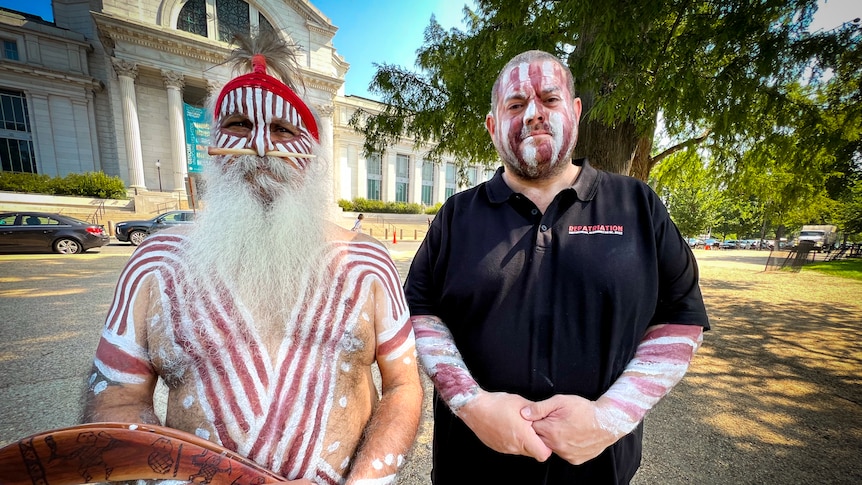
Major Sumner was one of several representatives from the Narungga and Kaurna nations who made the long journey to the US capital to take their ancestors home.
The repatriations to Australia are the result of years of lobbying by Indigenous leaders, with the Smithsonian initially resisting the return.(ABC News: Jade Macmillan)
“Let the world know this is what happened to our people, to the people that passed on,” he said.
“They were taken away, they were put in boxes and kept in museums and poked.
“Once we rebury them, they[will]no longer be touched.”
A long history of ancestral remains taken from Indigenous land
The repatriation from Washington was the third time the Smithsonian Institution had returned ancestral remains to Australia.
It earlier repatriated bones taken from the Northern Territory during a major scientific expedition to Arnhem Land in 1948.
Thousands of plant and animal specimens, as well as Indigenous artefacts and paintings, were taken during a major scientific expedition in the 1940s.(Supplied: Frank Maryl Setzler, NAA Photo Lot 36, Department of Anthropology, Smithsonian Institution)
Co-sponsored by the Smithsonian, National Geographic and the Australian government, the months-long trip was carried out by a team of scientists, anthropologists and photographers from both Australia and the US.
Martin Thomas, a professor of history at the Australian National University, said the researchers collected thousands of plant and animal specimens, as well as Indigenous artifacts and paintings.
But they also took human remains, without the permission of traditional owners.
“With travel time, they were away for the better part of a year,” he said.
“And so the understanding was that they would come back with collections that would be the dividends on that investment.”
ANU history professor Martin Thomas says researchers took remains without the knowledge or permission of Indigenous people.(Supplied: Frank Maryl Setzler, NAA Photo Lot 36, Department of Anthropology, Smithsonian Institution)
In his 2018 documentary Etched in Bone, Professor Thomas showcased footage taken during the expedition of American Frank Setzler removing remains from a cave at Gunbalanya.
The film cites Setzler’s diary entries to argue he deliberately hid what he was doing from the local Indigenous people.
“I paid no attention to these bones as long as the native was with me,” he wrote on October 7, 1948.
“During the lunch period, while the two native boys were asleep, I gathered the two skeletons which had been placed in crevices outside the caves.”
The remains stolen during the expedition were finally returned in 2008 and 2010.
“He was more an archaeologist than an anthropologist, so more interested in past eras, than contemporary cultures,” Professor Thomas said.
“And he wasn’t really somebody who was interested in documenting culture, particularly, even in his own field of specialisation, which was North American anthropology.
“He was much more of an excavator.”
Museum acknowledges long wait for Indigenous communities
The remains repatriated in July 2022 entered the Smithsonian’s collections between 1904 and 1931, before the expedition to Arnhem Land began.
The institution would not detail how it acquired them, referring only to “accessions” and “exchanges” with other museums.
The remains of two people have been returned to the Narungga and Kaurna nations in South Australia, while a further 23 will be held by the Australian Government until traditional custodians are determined.
“We realize as museums that we have to be part of the 21st century,” the National Museum of Natural History’s director Kirk Johnson said.
“And move towards repatriation of human remains and funerary objects, and with much more respect to the source communities from which these objects came.”
Kirk Johnson, the director of the Smithsonian National Museum of Natural History, acknowledged the long wait of Australian Indigenous communities.(ABC News: Jade Macmillan)
The repatriations to Australia are the result of years of lobbying from Indigenous leaders, with the Smithsonian having initially resisted the return.
That was despite laws being passed in the US in the 1990s requiring the repatriation, on request, of human remains and ancestral objects belonging to Native American people.
“When you take people off Country, you’re taking away their spirit,” Narungga man Cyril Kartinyeri said.
“And bringing them back to Country, then that’s their resting place.”
Indigenous leaders Douglas Milera, Cyril Kartinyeri, Major Sumner and Allan Sumner in Washington DC.(ABC News: Jade Macmillan)
Mr Johnson acknowledged the long wait of Australian Indigenous communities, with one collection of ancestral remains still to be returned at an undecided date.
“We’re in communication with the Australian government and with the communities to make sure that we get these things going,” he said.
“Fast enough I’m sure is not fast enough for the communities, but we really want to be as responsive as possible.”
Remains to be reburied on Country
On a hot Washington summer’s day, the visiting Indigenous leaders carried two boxes containing ancestral remains, draped in the Aboriginal flag, into the gardens outside the museum.
Under the shade of a large tree, they performed a smoking ceremony and reflected on the significance of the task they were about to undertake.
Allan Sumner, Major Sumner, Douglas Milera and Cyril Kartinyeri perform a traditional smoking ceremony at the Smithsonian museum in Washingon DC.(ABC News: Supplied)
“It’s an honor and a privilege to be here today, as we represent our nation groups,” Allan Sumner said.
“And to write our histories, according to us.”
The Kaurna, Ngarrindjeri and Yankunytjatjara man said the group had experienced mixed emotions while in the US but was hopeful of making a positive impact by taking the remains back for reburial.
“It’s not the most pleasant thing to do but it’s the right thing to do for us.
“This is about healing for ourselves, healing for our Country, and our people.”
Major Sumner had not been in Washington for long but was already looking ahead to the trip home.
“It’s going to be a joyful one. Because it’s their spirit, you can feel their spirits and feel them,” he said.
“I talk to them and tell them you’re going home now.
“We’ll get you there as fast as possible and get you back to where you came from.”
The remains of two people have been returned to the Narungga and Kaurna nations, and 23 will be held by the Australian government until traditional custodians are determined.(ABC News: Supplied)
The Idaho Supreme Court will hear arguments today to decide whether two strict abortion laws will go into effect this month.
The court will consider Idaho’s total abortion ban law that was triggered after the Supreme Court overturned Roe v. Wade and a “heartbeat bill” that allows families to sue medical providers who perform abortions.
The trigger law prohibits abortion in nearly all cases. While there is an exception for rape and incest, the law requires victims to file a police report and provide that report to a medical provider.
Medical providers could be convicted of a felony and face up to five years in prison if they violate this law. This law was passed in March 2020 and would go into effect Aug. 25.
The court will also consider whether to lift the temporary pause placed on a heartbeat bill. The bill does include exceptions for rape, incest or a medical emergency that would cause death or create serious risk of substantial harm to the mother.
This law allows civil lawsuits to be filed against medical providers who provide abortions after fetal cardiac activity is detected, at about six weeks.
The families of the fetus or embryo who sue medical providers could be awarded at least $20,000 if they win.
Planned Parenthood and one of its abortion providers will argue that both of these laws violate Article 1 of the state’s constitution. Their argument is based on decades of case law in which the Idaho Supreme court upheld the right to decide “whether to procreate” is a fundamental right in the state’s constitution.
During Wednesday’s arguments, lawyers from the state and Planned Parenthood will argue to the court whether to pause the enforcement on the near-total abortion ban and whether to lift the existing pause on the heartbeat bill, set to go into effect immediately.
The court will also decide if the two lawsuits should be consolidated into one case and whether those cases should be transferred to a lower district court for further review.
Planned Parenthood also filed another lawsuit against a “six-week trigger ban” that is set to go into effect Aug. 19. This bill criminalizes abortion after six weeks of pregnancy and would issue a two to five year felony sentence to any person who violates this statute.
The US Department of Justice has also filed its own lawsuit against the state’s trigger law. It argues that the total abortion ban violates the federal Emergency Medical Treatment and Labor Act (EMTLA) that states hospitals that receive Medicare funds are required to provide necessary emergency medical treatment.
“The suit seeks to hold invalid the state’s criminal prohibition on providing abortions, as applied to women who are suffering medical emergencies,” Garland said in a press conference Tuesday. “Idaho’s law would make it a criminal offense for doctors to provide emergency medical treatment that federal law requires.”
While the law provides an exception in order to prevent the death of a pregnant woman, Garland said “it includes no exception for cases in which the abortion is necessary to prevent serious jeopardy to the woman’s health.”
The Idaho Attorney General called this lawsuit “politically motivated.”
“It’s unfortunate that, instead of sitting down with the State of Idaho to discuss the interplay between its abortion laws and EMTALA, the US Department of Justice has chosen to file a politically motivated lawsuit,” Attorney General Lawrence Wasden said in a statement.
“Instead of complying with the requirements of this provision and reconciling Idaho’s law with EMTALA, or even attempting to engage Idaho in a meaningful dialogue on the issue, the federal government has chosen to waste taxpayer dollars on an unnecessary lawsuit.”