Categories
US

Biden to sign executive order to help patients travel for abortions

Comment

President Biden signed an executive order Wednesday directing his health secretary to consider actions to assist patients traveling out of state for abortions.

The order’s travel-related provision calls on Health and Human Services Secretary Xavier Becerra to consider inviting states to apply for Medicaid waivers when treating patients who cross state lines for reproductive health services.

President Biden signed an executive order on Aug. 3 designed to help patients travel for abortions. (Video: The White House)

The executive order, the second Biden has signed on reproductive health since the Supreme Court overturned Roe v. Wade, follows the administration’s call for the Department of Health and Human Services to explore all options to support Americans who live in states that have severely limited abortion access. The president’s actions came a day after Kansas voters rejected an effort to strip away their state’s abortion protections.

“[Republicans] don’t have a clue about the power of American women,” Biden said Wednesday before signing the order. “Last night in Kansas, they found out.”

In the aftermath of the Supreme Court decision, Biden and Attorney General Merrick Garland both vowed to protect Americans’ ability to cross state lines to seek abortions and other reproductive health services.

Biden, who is isolating because he continues to test positive for the coronavirus, signed the executive order ahead of Vice President Harris’s first meeting of an interagency task force on reproductive health access. The president joined the meeting virtually.

Two long weeks: Inside Biden’s struggle to respond to abortion ruling

The executive order also directs Becerra to consider actions to ensure health-care providers comply with federal nondiscrimination laws to ensure women receive medically necessary care, which could include providing technical assistance for providers confused about their obligations following the Supreme Court’s decision.

Finally, the order calls on Becerra to improve research and data collection on maternal health outcomes.

In early July, Biden signed an executive order that directed Becerra to identify ways the administration can help expand abortion access and signaled his intention to protect access to medication abortion, or abortion pills.

Biden referred last month to what he called “the Supreme Court’s terrible, extreme and, I think, so totally wrongheaded decision.”

He added: “The court has made clear it will not protect the rights of women — period. Period. After having made the decision based on a reading of a document that was frozen in time in the 1860s when women didn’t even have the right to vote, the court now practically dares the women of America to go to the ballot box and restore the very rights they’ve just taken away.”

But many activists have criticized Biden for responding too slowly to the decision, especially given that a draft opinion leaked weeks before the official decision. Activists and some Democratic members of Congress have called on the administration to declare abortion access to a public health emergency.

In some states, women who need medical care for miscarriages are getting delayed care or denied it completely given confusion over the laws, putting some women’s lives in danger.

A group of more than 80 Democratic House lawmakers sent a letter to Biden and Becerra last month urging them to make abortion a public health emergency. But the White House has reservations about the move because it would provide little in extra funds and would be likely to end up in the Supreme Court, which could use the case to curb the federal government’s emergency powers.

Yasmeen Abutaleb contributed to this report.
Categories
Business

Now Finance is the non-bank lender bracing for a ‘shakeout’

“There’s no doubt that some of those players did list too prematurely, and you’ve got to question what the next step for them looks like.”

But what dismays Blumberg is the lack of institutional support for what he sees as a vital sector of the economy.

“I’m not sure how long it takes the market to recover. I don’t think it’s a quick fix. But I don’t think structurally and strategically that’s good for the sector and for Australia. We just don’t want to go back to the concentration we’ve had previously. You want to see a successful and growing non-bank lending sector.”

‘Some pain… is a good thing’

But Blumberg is also realistic about what’s coming. Those non-bank lenders who have aggressively pursued growth in recent years at the expense of profitability will probably be squeezed as funding becomes more expensive and less plentiful.

“I do think there will be some players in the market that experience some pain in their books and in their margins. And I think that’s a good thing, too. I think it’s important that we have a shakeout.”

Blumberg wants to be on the right side of that.

Now, which specializes in fee-free personal loans to prime or near-prime borrowers, was founded in 2013 and supported by Farrel Meltzer’s Wingate Group, before being spun out to its underlying investors late last year. Blumberg says the business has been profitable since 2017 and conservative in the way it has grown; Although credit inquiries dropped across the sector last month, he says he is not seeing bad debts rise.

“We haven’t seen any issues with delinquencies in arrears. I think the fact that we have full employment is an important consideration.”

Last month, Now tapped debt markets and raised $200 million through the sale of new asset-backed securities. Although Blumberg says credit spreads have widened and liquidity softened since Now was last in the market in September last year, the company’s raising was completed very quickly.

Blumberg is now raising equity to further support Now’s expansion into the auto loans market, which is set for next month. The banks aren’t as active in this market as they were, and Blumberg believes that with pricing of auto loans more rational, there is room for Now’s fee-free product offering.

The auto loan expansion is part of Blumberg’s bigger plan to double Now’s loan book to $1 billion, which he sees as the sweet spot for a niche lender in Australia. The coming shakeout among non-bank leaders might present Now with opportunities.

“To the extent there is distress – and there will be – we are keen to take a look at that and see what opportunities there are to buy into businesses and to buy loan books.”

Categories
Technology

LED Smart Lighting System Based on Quantum Dots More Accurately Reproduces Daylight

LED Light Bulb

New smart light devices designed using quantum dots are more efficient, have better color saturation than standard LEDs, and can dynamically reproduce daylight conditions in a single light.

Researchers have designed smart, color-controllable white light devices from quantum dots – tiny semiconductors just a few billionths of a meter in size – which are more efficient and have better color saturation than standard LEDs, and can dynamically reproduce daylight conditions in a single light .

The researchers, from the University of Cambridge, designed the next-generation smart lighting system using a combination of nanotechnology, color science, advanced computational methods, electronics, and a unique fabrication process.

The team found that by using more than the three primary lighting colors used in typical LEDs, they were able to reproduce daylight more accurately. Early tests of the new design showed excellent color rendering, a wider operating range than current smart lighting technology, and wider spectrum of white light customization. The results are reported today (August 3) in the journal

Quantum dots have been studied and developed as light sources since the 1990s, due to their high color tunability and color purity. Due to their unique optoelectronic properties, they show excellent color performance in both wide color controllability and high color rendering capability.

The Cambridge researchers developed an architecture for quantum-dot light-emitting diodes (QD-LED) based next-generation smart white lighting. They combined system-level color optimization, device-level optoelectronic simulation, and material-level parameter extraction.

The researchers produced a computational design framework from a color optimization algorithm used for neural networks in machine learning, together with a new method for charge transport and light emission modeling.

The QD-LED system uses multiple primary colors – beyond the commonly used red, green, and blue – to more accurately mimic white light. By choosing quantum dots of a specific size – between three and 30 nanometres in diameter – the researchers were able to overcome some of the practical limitations of LEDs and achieve the emission wavelengths they needed to test their predictions.

The team then validated their design by creating a new device architecture of QD-LED based white lighting. The test showed excellent color rendering, a wider operating range than current technology, and a wide spectrum of white light shade customization.

The Cambridge-developed QD-LED system showed a correlated color temperature (CCT) range from 2243K (reddish) to 9207K (bright midday sun), compared with current LED-based smart lights which have a CCT between 2200K and 6500K. The color rendering index (CRI) – a measure of colors illuminated by the light in comparison to daylight (CRI=100) – of the QD-LED system was 97, compared to current smart bulb ranges, which are between 80 and 91.

The design could pave the way to more efficient, more accurate smart lighting. In an LED smart bulb, the three LEDs must be controlled individually to achieve a given color. In the QD-LED system, all the quantum dots are driven by a single common control voltage to achieve the full color temperature range.

“This is a world-first: a fully optimized, high-performance quantum-dot-based smart white lighting system,” said Professor Jong Min Kim from Cambridge’s Department of Engineering, who co-led the research. “This is the first milestone toward the full exploitation of quantum-dot-based smart white lighting for daily applications.”

“The ability to better reproduce daylight through its varying color spectrum dynamically in a single light is what we aimed for,” said Professor Gehan Amaratunga, who co-led the research. “We achieved it in a new way through using quantum dots. This research opens the way for a wide variety of new human responsive lighting environments.”

The structure of the QD-LED white lighting developed by the Cambridge team is scalable to large area lighting surfaces, as it is made with a printing process and its control and drive is similar to that in a display. With standard point source LEDs requiring individual control this is a more complex task.

Reference: “Optoelectronic System and Device Integration for Quantum-Dot Light-Emitting Diode White Lighting with Computational Design Framework” 3 August 2022, Nature Communications.
DOI: 10.1038/s41467-022-31853-9

The research was supported in part by the European Union and the Engineering and Physical Sciences Research Council (EPSRC), part of UK Research and Innovation (UKRI).

Categories
Sports

Johnny Famechon dead at the age of 77

Australian boxing legend Johnny Famechon has died at the age of 77.

Famechon was born in Paris and migrated to Australia at the age of five.

In a relatively short career, Famechon became the Lineal and WBC featherweight champion in 1969, after beating Cuban José Legrá on points in London.

THE MOLE: Coach rift revealed as Knights star wants out of club

READMORE: Fighter left in tears after coach’s abrupt act

READMORE: Piastri bombshell leaves Ricciardo stranded

He defended that title against Japan’s Fighting Harada in a controversial points decision.

In a rematch six months later in Japan, Famechon knocked Harada out in the 14th round.

In May, 1970, Famechon lost on points to Mexican Vicente Saldivar, retiring soon after at the age of 25, having won 56 of his 67 professional fights.

“As a human, he was second to none. He was such a beautiful man,” former world champion Jeff Fenech told 2GB.

Famechon’s life was changed forever in 1991 when he was hit by a car in Sydney and badly injured. He suffered brain damage and a stroke and was lucky to survive.

In 2012 Famechon was elevated to Legend status in the Australian National Boxing Hall of Fame, having also been inducted into the World Boxing Hall of Fame in 1997.

He fought in a golden era of Australian boxing, alongside the likes of fellow world champion Lionel Rose.

“We all loved those guys and looked up to them,” Fenech said.

“They’re our idols, they’re legends, and the passing of him today is very sad.

“Every time I saw him he was always happy, always having a joke. Even after he had the horrific accident, everything was about living life to the fullest and having a great time.

“He’ll be sadly missed.

“He was an Australian boxing icon, a legend in Australian sport. To his family, my thoughts are with you all and may he rest in peace.”

For a daily dose of the best of the breaking news and exclusive content from Wide World of Sports, subscribe to our newsletter by clicking here!

Categories
Australia

NSW Police believe Saudi sisters Asra and Amaal Abdullah Alsehli died in suicide pact after interim toxicology reports

New South Wales Police believe the two Saudi sisters found rotting in their south-western Sydney apartment had died in a suspected suicide pact.

The bodies of Asra Abdallah Alsehli, 24, and her sister Amaal, 23, were found in separate bedrooms inside a Canterbury unit on June 7 after a concern for welfare report.

The grim discovery was made by officers from the Sheriff’s Department after the women failed to pay their rent and owed more than $5,000 to their landlord, NSW Civil and Administrative Tribunal records showed.

Police had been baffled for several weeks about how the women died, who were found fully clothed, badly decomposed and no signs of forced entry into the unit.

Stream Sky News live & on demand with Flash. 25+ news channels in 1 place. New to Flash? Try 1 month free. Offer ends October 31, 2022

But the mystery appears to have been solved with interim toxicology reports showing traces of substances, which were found next to their bodies, detected in their systems, The Daily Telegraph reports.

“There’s no indication of anyone else being in the unit … no forced entry. It really does appear to be a tragic suicide,” a senior police source told the publication.

Further testing is being conducted by specialist pathology labs before an exact cause of death for the sisters can be determined.

It’s believed the bodies were laying in the Canterbury Rd unit for at least six weeks before the remains were discovered.

It was also reported a bottle of bleach, non-perishable foot items and clothing were some of the items found in the bedrooms.

The sisters, who arrived to Australia from Saudi Arabia as teenagers in 2017, largely kept to themselves and were “afraid of something” one friend claimed.

NSW Police released the images of the two women in a press conference last week as they launched a community appeal for anyone who had any information.

But despite the media coverage on the case, officers still know little about the sisters.

The outstanding rent is expected to be paid to the landlord through a black BMW, believed to be owned by the sisters, which was seized when the bodies were found.

Their family in Saudi Arabia have made no plans to fly the bodies home and have not arranged a burial in Australia.

The NSW Coroner can organize a state-funded burial if there were no substantial funds in the deceased person’s bank accounts.

The Canterbury apartment was listed for rent for $520 this week with a disturbing claimer included at the bottom of the advertisement.

“Disclaimer: This property has found two deceased persons on 06/07/2022, crime scene has been established and it is still under police investigation,” the description wrote.

“According to the police, this is not a random crime and will not be a potential risk for the community.”

Lifeline 13 11 14.

.

Categories
US

Sen. Elizabeth Warren will vote no on bipartisan bill

Categories
Business

ASX to rise, Wall Street snaps two-day losing streak as tech stocks rebound

Australian shares are expected to start the day higher as US technology stocks rebounded overnight, lifting the Nasdaq to a three-month high.

ASX futures were up 0.5 per cent, to 6,913 points, by 7:50am AEST.

The Australian dollar was trading at 69.5 US cents, after a 0.5 per cent rise overnight.

Wall Street’s main indexes rebounded, after dropping for the past two days.

The Nasdaq jumped 2.6 per cent, to 12,668 points, its highest level since early May, and the S&P 500 climbed 1.6 per cent, to end the session at 4,155, while the Dow Jones index rose 1.3 per cent, to 32,813.

Spot gold rose 0.2 per cent, to $US1,763.10 an ounce.

Meanwhile, oil prices fell sharply, with Brent crude futures down 3.4 per cent, to $US97.10 a barrel.

It comes after the OPEC+ group of oil-producing nations, including Saudi Arabia and Russia, announced that it would increase its supply by a mere 100,000 barrels per day.

On top of that, a new report from the Energy Information Administration showed an unexpected surge in US crude and gasoline stocks.

“Oil is still up 25 per cent from the beginning of the year,” said Oliver Pursche, senior vice president at Wealthspire Advisors in New York

“This recent drop is a combined result of that and a reflection that there is going to be an economic slowdown. The market is trying to find equilibrium.”

Stronger-than-expected earnings

Investor sentiment was also boosted by strong earnings reports from PayPal, CVS Health Corp and other companies.

.

Categories
Technology

A College Student Discovered a Cloudflare Bug That Let You Read Any User’s Emails

Last year, IT firm Cloudflare launched an email routing service, giving users the ability to set up a large number of addresses connected to the same inbox. Email routing can be a powerful privacy tool, as it allows you to hide your current email address behind a network of temporary or “burnable” addresses. Unfortunately, as demonstrated in research published Wednesday by a college student from Denmark, Cloudflare’s service had a giant bug in it. The flaw, when properly exploited, allowed any user to read — or even manipulate — other users’ emails.

Albert Pedersen, who is currently a student at Skive College in Midtjylland, wrote that he discovered the invasive vulnerability back in December. In a write-up published to his website by him, Pedersen explained that the bug would have allowed a hacker to “modify the routing configuration of any domain using the service.”

“I’m curious and like to produce things to see if they break. I want to help keep the internet safe,” Pedersen told Gizmodo in a direct message. “I’ve always had an interest in everything computers and IT. I found and reported my first bug back in April of last year, and I’ve spent a lot of time bug hunting since then.”

The vulnerability, which Cloudflare has confirmed but says was never exploited, involved a flaw in the program’s “zone ownership verification” system, meaning that it was possible for a hacker to reconfigure email routing and forwarding for email domains that weren’t owned by them . Proper manipulation of the exploit would have allowed someone with knowledge of the bug to re-route any users’ emails to their own address. It would have also allowed a hacker to prevent certain emails from being sent to the target at all.

In his write-up, Pedersen notes that it’s not that difficult to find online lists of email addresses attached to Cloudflare’s service. Using one of those lists, a bad guy could have quite easily targeted anybody using the forwarding service.

After discovering the exploit, Pedersen managed to reproduce it a number of times using multiple personal domains and decided to report the issue to Cloudflare’s bug bounty program. The program ultimately awarded him a total of $US6,000 ($8,329) for his efforts. Pedersen also says his blog was published with permission from Cloudflare.

In an email to Gizmodo, a company representative reiterated that the bug was fixed immediately after discovery: “As summarized in the researcher’s blog, this vulnerability was disclosed through our bug bounty program. We then resolved the issue and verified that the vulnerability had not been exploited.”

It’s a good thing that it wasn’t, because if a hacker had gotten ahold of this exploit they could’ve caused some real inbox havoc. In his write-up of him, Pederson notes that a cybercriminal could have used this bug to reset passwords, which would have threatened other accounts linked to the exploited email address:

“Not only is this a huge privacy issue, but due to the fact that password reset links are often sent to the email address of the user, a bad actor could also potentially gain control of any accounts linked to that email address. This is a good example of why you should be using 2-factor authentication,” he wrote.

Truth! Use 2-factor authentication! It just goes to show: we need as many nerds watching the internet as possible because you never know when something that sounds great is actually a giant security catastrophe waiting to happen.

Categories
Australia

Locum doctor costs skyrocket 50pc to $3,500 a day due to shortage

The cost of a short-term locum doctor contract has increased 50 per cent in a year, according to rural doctors.

Locum contracts are being offered at $3,500 a day in Launceston, $3,000 a day in Bathurst and Mount Gambier, and $280 an hour in Broken Hill.

Karyn Matterson works locum contracts around the country and so far this year has worked from Clermont in Queensland to Collarenebri and Corowa in New South Wales, and from Tasmania to Palm Island off Townsville.

“Locum doctors, both in the city and in the bush are in high demand,” Dr Matterson said.

“It’s increased exponentially as the general practitioner shortage has become more visible across Australia.”

Dr Matterson saw a connection between the decreasing Medicare rebates for GP appointments in real terms and the increase in the need for locums, as GP clinics around the country struggled to find staff.

“That is putting pressure on emergency departments across Australia because we’re seeing a lot more GP-type presentations in hospitals,” she said.

“The people who are presenting are actually sicker than what we’ve seen in primary health care in the past because they can’t get into doctors.”

‘Problem will get worse’ without reform, says doctor

The Royal Australian College of GPs said the cost of Medicare rebates for most GP appointments had risen by 1.6 per cent.

That’s well short of the most recent inflation figure of 6.1 per cent.

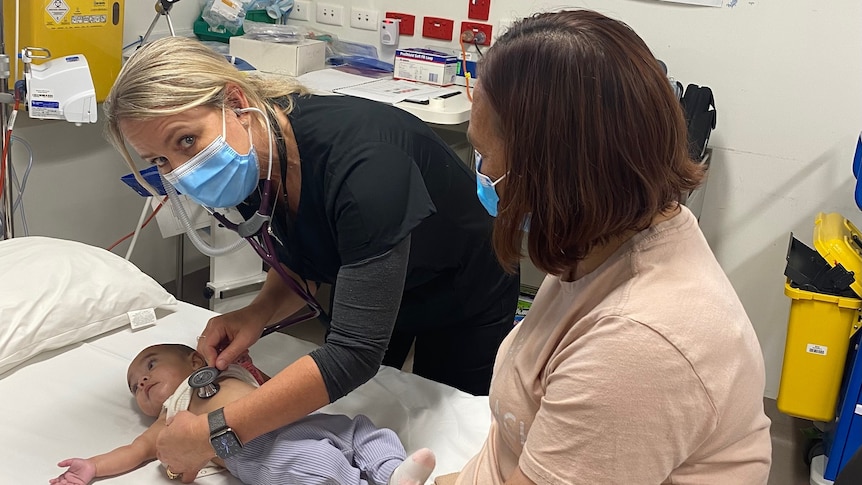
A man standing in a corridor, wearing a mask
Dr Matt Masel predicts the rural doctor shortage will only get worse.(Supplied: Dr Matt Masel)

Matt Masel, president of the Rural Doctors Association of Queensland, said it reflected a lack of longer-term planning over time.

Dr Masel is a partner in a GP practice in Goondiwindi, almost 300 kilometers south-west of Brisbane. He said the increasing cost of locums was a sign the health system was not working.

“We’re seeing doctors coming out of medical schools where 50 per cent used to choose general practice and only about 15 per cent do now,” he said.

“That means this problem is only going to be worse in a few years’ time unless we really make those choices to go into general practice and rural practice more attractive.”

Dr Masel said the increasing cost of locums would put it out of reach for many GP clinics in the bush.

.

Categories
US

Pelosi’s Taiwan trip leaves Asian countries nervously awaiting China’s response : NPR

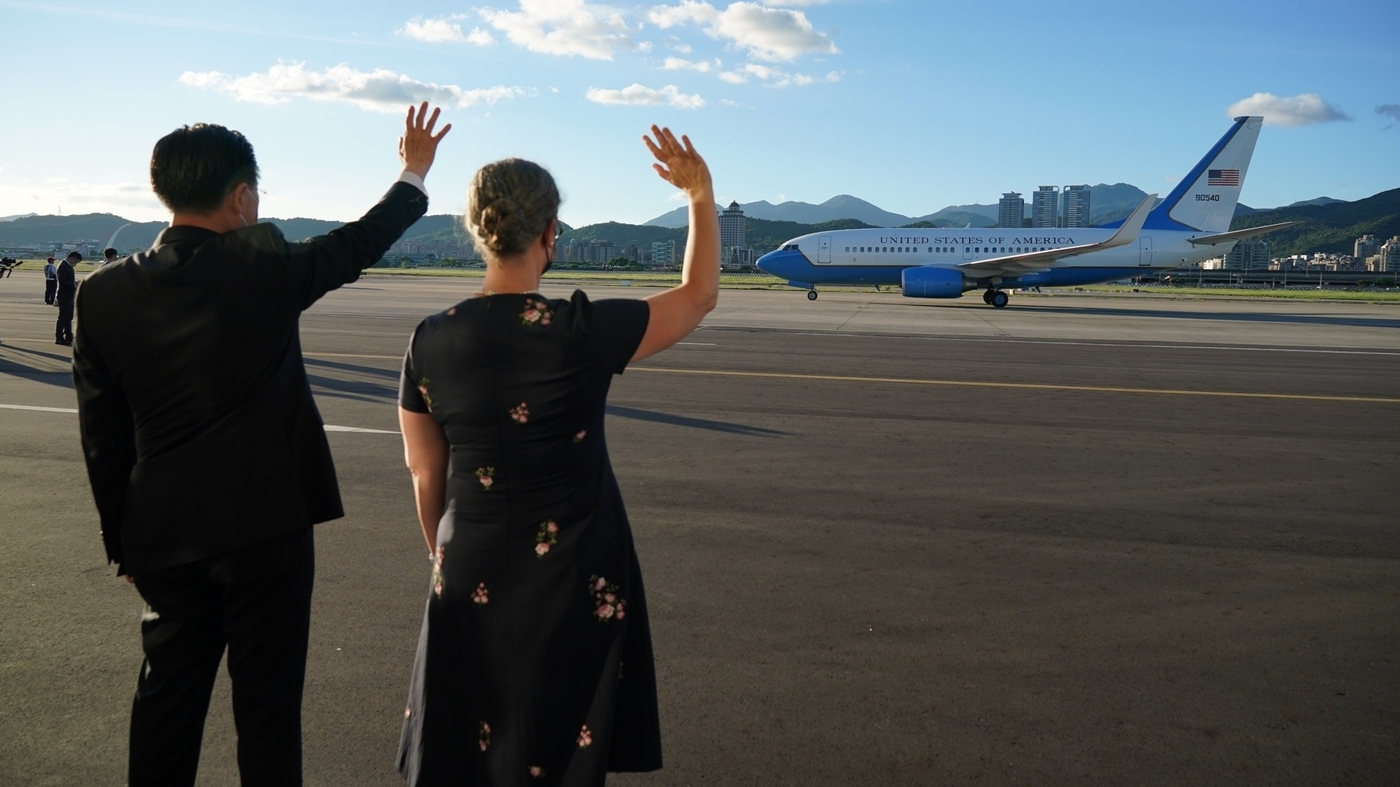
A plane carrying House Speaker Nancy Pelosi and her delegation departs Taipei on Wednesday.

Taiwanese Foreign Ministry/Handout/Anadolu Agency via Getty Images


hide caption

toggle caption

Taiwanese Foreign Ministry/Handout/Anadolu Agency via Getty Images


A plane carrying House Speaker Nancy Pelosi and her delegation departs Taipei on Wednesday.

Taiwanese Foreign Ministry/Handout/Anadolu Agency via Getty Images

When House Speaker Nancy Pelosi arrived late Tuesday night in Taiwan, its tallest building — iconic landmark Taipei 101 — lit up with words of welcome, blinking “Thank you” and “TW ♥ US”

While Pelosi’s visit delighted people in Taiwan, it enraged Beijing and set the region on edge over what China might do in retaliation. From the Philippines to Singapore, countries are worried about the status quo could turn from tension to conflict.

“What countries in this region know is that China cannot do nothing — it will look weak,” says Singaporean veteran diplomat and academic Kishore Mahbubani. “China has no choice but to react,” he says, adding, “at the same time, China doesn’t want to start World War III.”

China views Taiwan as a breakaway island that should be ruled by the mainland. The US follows an intentionally vague “One China” policy, which views Taiwan as an independent entity that should eventually be integrated into China.

Pelosi has long been a critic of China and an advocate for Taiwan’s democracy. She was the first House speaker to visit in 25 years, as US officials generally avoid any moves that could touch off a military conflict — China versus Taiwan, and possibly, the US

Southeast Asia especially feels the strain of living in the shadow of the US-China rivalry. “Governments will be very cautious” talking about cross-Taiwan Strait relations, “for fear of how China will react,” says Manila-based maritime expert Jay Batongbacal.

He says the region does not want to become “an arena of major power conflict,” and countries would not like to be seen as taking sides.

For that reason, governments in Southeast Asia have stuck to mild statements about the importance of the US and China avoiding “any miscalculation and further escalation of tensions,” as the Philippines Foreign Affairs Ministry put it. Indonesia has called on “all parties to refrain from provocative actions that may worsen the situation.”

China announced fresh live-fire drills in six locations near Taiwan within hours of Pelosi’s arrival on the self-governed island of 23 million. His military maneuvers have restricted air space and water routes around Taiwan, and an anxious region is watching.

Japan complained to Beijing that the area overlaps with its exclusive economic zone, while Taiwan called the move “a challenge to the international order.”

The live drills — more aggressive than usual exercises — should have been anticipated, according to Dewi Fortuna Anwar, an analyst at the Indonesian Institute of Sciences, a government research agency. She calls Pelosi’s trip “dangerously provocative” and says it came at a time when tensions were already high in the region.

Anwar says with Russia invading Ukraine, “We are all very nervous.” The prospect of China moving on Taiwan, replicating events in Europe, looms over Asia, she says.

Anwar says the Taiwan visit by such a high-ranking US official flouted the one-China policy that many countries adhere to when they conduct business with Taiwan, but refrain from sending their senior-most figures. “It’s a matter of face for China,” she says, and this “is spitting in their face.”

Anwar questions what the endgame is for the United States: “Does it want an open war with China over Taiwan?”

Because war is so “unthinkable,” says De La Salle University international studies professor Renato Cruz de Castro in Manila, regional governments don’t tend to game out the geostrategic significance of Taiwan. His own government focuses instead, he says, on more manageable issues like how to evacuate the 142,000 overseas Filipino workers from Taiwan in the event of armed conflict.

Across the South China Sea, Beijing is flexing its muscle, accused of intimidating fishers, interfering with other nations’ ships and occupying islands claimed by its smaller neighbors, including Vietnam and the Philippines.

Being “dragged into a US-China conflict over Taiwan is pretty high on the list of anxieties for most US allies and partners,” says Gregory Poling with the Center for Strategic and International Studies. Pelosi’s visit, he says “will be seen as, at best, unnecessarily risky to most regional governments.”

That said, countries of the region “do not want the US to seem a paper tiger” — which he says would only embolden further “bullying” by China.

But Batongbacal believes Pelosi’s visit was neither reckless nor deserving of China’s threat of military action, which he called “excessive” and “disproportional.” Beijing, he says, is “hyping what should be a minor event.”

Pelosi provided China “an opportunity to instigate” a confrontation, he says, and China’s rhetoric sounded like “it was spoiling for a fight.”

That’s an outcome no one wants.

“There will be no winners in a military conflict,” Anwar says. “We are much too integrated now. If you disrupt trade in the Taiwan Strait and the South China Sea, the whole economy of Southeast Asia will be destroyed.”