This would build on the work done in the interim free-trade deal with India whereby architects, engineers and accountants will be recognized in each other’s countries.
In an interview with The Sun-Herald and The Sunday AgeO’Connor said “we do have to be more sophisticated in measuring people’s competencies” from overseas.
O’Connor said while it was reasonable to ensure skilled migrants had the necessary training and knowledge to undertake their jobs in Australia, “I’m sure we could get better at that”.
He said this could include “bridging training” for migrants so that they can more quickly begin work in their field of expertise.
“I think maybe there’s some work to be done about assessing competencies and reviewing whether the current set of assumptions… are really fair to those people who are seeking application,” O’Connor said.
But he insisted standards would not be dropped, highlighting aged care as an area where “we need to be serious about the integrity of people’s capabilities”.
“This is not making widgets,” he said. “When we’re talking about jobs that will be looking after people in care, we have to be extra careful, frankly.”
O’Connor said a lot of the jobs shortages across the nation had been brought about by the COVID-19 pandemic, but argued they were also caused by the previous government’s lack of investment in skills and training and its refusal to give JobSeeker and JobKeeper to temporary visa holders.
“Everywhere we look there are shortages: the traditional trades, advanced manufacturing, retail, tourism, the tech industry, aged care, doctors, nurses,” he said.
“There isn’t a sector or professional trade where you could say that we’ve got an optimal supply. It’s quite remarkable where we find ourselves.”
loading
Despite the “big job” ahead, O’Connor said he was optimistic about getting something done because there was a “resolve” from unions, employer groups and the Labor government to address the crisis.
O’Connor said the solution was not a “binary choice” between skilled migration and training the local workforce because both were needed.
He said Labor would do more to train the local workforce and crack down on the exploitation of foreign workers.
“So we’re not going to leave people behind. But of course, we understand that skilled migration plays its part and will always play its part – and right now, there are acute shortages,” he said.
O’Connor also highlighted more support for energy and climate jobs, getting women into male-dominated industries and vice versa and reversing the decline in apprenticeship completion rates.
ACTU president Michele O’Neil did not rule out the peak union body supporting an increase in skilled migration, but said any rise should include an independent verification of the claimed shortages and evidence of qualifications to ensure Australian standards are upheld.
“Too many employers claim skill shortages when what’s really going on is a shortage of jobs with fair pay and conditions,” she said.
“They look first to bringing in visa workers instead of providing skills and training to workers in Australia.”
“With Peter Dutton’s Liberals sliding into far-right irrelevance and Labor now a centre-right party of tax cuts for the wealthy, the Greens welcome the opportunity to attend this important summit and gain community support for our plans to make workers’ lives better, funded by stopping stage three tax cuts,” Bandt said.
“Australia is in a full-blown inequality crisis, with low wages and incomes and the cost of living rising, and the government must intervene to fix it.”
The Morning Edition newsletter is our guide to the day’s most important and interesting stories, analysis and insights. Sign up here.
The renewables industry has exploded in Victoria, with ambitious energy targets set by the state government and an abundance of job opportunities in the fledgling sector to be realised.
Key points:
Renewable Energy proponents and the state government are predicting more than 6,000 new jobs in Gippsland
Australian Renewables Academy hopes to harness lower-than-average work participation rates to fill the workforce
Training for the new workforce needs to begin quickly so locals can be placed in jobs
Gippsland, in south-eastern Victoria, has been touted as the golden child of the renewable energy industry.
The region has windy seas, extensive land resources, and existing grid infrastructure in the Latrobe Valley thanks to its coal mining legacy.
Thousands of jobs are set to be created during both construction and operational phases in the switch to renewable energies.
But in a job market crying out for people to fill 86,000 vacancies in rural and regional Australia, doubt remains on the ability to fill roles in the new industry.
In Australia, the labor force participation rate sits at 67 per cent, while in Gippsland, the rate is lower, varying between local government areas.
training gap
A recent renewable energy conference held in the region attracted interest overseas and nationwide interest.
Bernadette O’Connor, of Australian Renewables Academy (ARA), heads up a local organization tasked with training the workforce needed to work on renewables.
Ms O’Connor said mediocre participation rates should be seen as an opportunity to bring more people into the workforce.
The group has intentions to retrain skilled workers in the move away from the coal, oil and gas industries.
“We need to look at who’s existing in the sector to transition across to the renewable energy industry,” Ms O’Connor said.
“[We look at] what level and what skills. Who is not in the sector, but could be in the sector, because they’ve got skills that could transition.”
Australian Renewables Academy director Bernadette O’Connor presenting at the the Gippsland New Energy Conference.(Supplied)
The federally funded ARA identifies entry level jobs and determines which people could be recruited with basic training.
Given offshore wind is in its infancy in Australia, skills and knowledge to train the workforce in the new technology will likely come from overseas initially.
Ms O’Connor said the industry was evolving at a fast pace, and communication around the sector’s resourcing needs was imperative.
“If we can have really good teachers who know how to teach and know how to facilitate learning, partnering with industry who know what the industry needs, then that would be the ideal scenario,” Ms O’Connor said.
Shift in thinking
Historically, the offshore oil and gas industry in Gippsland has attracted fly-in fly-out workers from across the country, but the number of interstate workers have dropped in the past few years, according to unions.
As offshore assets have been sold off or decommissioned in Bass Strait, FIFO workers have needed to look elsewhere.
In 2017 when the Hazelwood Power Station closed, 700 Latrobe Valley workers were left without jobs. At the time, it was suggested the lucrative roles often brought more than $100,000 into the household budget.
When it was operational, Hazelwood fed 1.65 gigawatts (GW) into the grid.
The Star of the South offshore wind project will alone generate 2.2GW.
After Hazelwood’s closure, there was little talk of renewable projects setting up in the region to take advantage of existing grid infrastructure.
Victoria bets big on offshore wind
For years, community groups and environmentalists have touted the potential for renewables in Gippsland, but efforts were dampened when the former state government’s investment in private companies attempting to find clean ways to use coal came up empty handed.
Five years on, hundreds descended on the Gippsland New Energy Conference last week, a forum to present pipeline projects and investment opportunities in renewables.
At a packed theater in Sale, Victorian Energy Minister Lily D’Ambrosio received an enthusiastic response when she spoke of the state’s ambitious targets.
They include supplying 13GW of offshore to the energy grid by 2050 and for the state to produce 50 per cent of its power from renewables by 2050.
While offshore wind drew the most buzz, solar was also a key player, with eight solar farms in the pipeline or operational across the region.
community concerns
However, renewable projects were not entirely met with open arms.
Friends of Nooramunga Coastal Reserve did not want turbines along the “pristine” coastline, while farmers in Giffard did not want above-ground pylons erected on their land.
Fishers are also concerned about not being able to use waters in the construction phase of offshore wind farms and said they needed to be compensated.
A panel which discussed how renewable energy companies should engage with communities affected by infrastructure put forward that communities should be provided with clear information that would indicate which aspects communities could and couldn’t have influence over.
Woodside farmer Rosemary Irving fought against the Bass Link in the early 2000s.
She told the ABC she wouldn’t be overly happy to have underground cables through her property, but preferred them over the above-ground pylons expected to be built by Ausnet Services.
“If we’ve got to have renewable energy the best practice to date is to have the turbines out to sea and the cables underground, which causes no disturbance to anybody,” Ms Irving said.
“It’s not fair for landholders to have overhead cables.”
Energy sector ‘exploding’
At this stage, Star of the South has committed to underground cabling while other proponents have not, while Ausnet Services would construct the transmission lines.
It has not yet committed to whether they will be above or below-ground, but underground cables are much more expensive.
Offshore wind farms in Gippsland will include turbines standing at 196 metres, drilled and grafted into the seabed.
Flotation Energy plans to build the 1.5GW Seadragon project off the Gippsland Coast.
Flotation’s chief operating officer Tim Sawyer said Seadragon’s location was closest to Exxon Mobil’s offshore assets.
He said it was chosen in hope of using existing or decommissioned platforms, the Barry’s Beach terminal and other infrastructure.
“We can potentially reuse some of those assets whether that is a platform itself for a substation, whether that is shore crossings, easements for existing pipelines,” Mr Sawyer said.
“We can potentially reroute electrical cables along existing easements to reduce some of that disturbance.
“But it also extends to personnel that may be transitioning out of the oil and gas industry and retraining.”
The construction stage alone for Seadragon is estimated to employ 1,000 workers, while up to 250 jobs will be ongoing in operational maintenance.
Businesses encouraged to take part
During the event in Sale, Ms D’Ambrosio encouraged local businesses hoping to get into the sector to register with the Industry Capability Network.
She said her department was in the process of mapping out the supply chain.
The first offshore wind project set to be up and running is the Star of the South, which aims to feed power into the grid by 2028.
That’s the same year Energy Australia’s Yallourn Power Station in the Latrobe Valley is due to close.
As part of its decommissioning agreement, Energy Australia is required to build a 350 megawatt (MW) battery at the site to store surplus energy.
AGL, which runs the nearby Loy Yang A power station has plans to build 200MW battery.
Gippsland Climate Change Network chairman Darren McCubbin, who described the sector as exploding, organized the event.
He praised the state government’s targets and acknowledged protesters, encouraging business to take notice of the community throughout consultation periods.
“These are once-in-a-lifetime alterations to our infrastructure… There are going to be enormous challenges with that, there are clearly communities concerned about it.
“It will be a much more abundant and cheap electricity.”
Your iPhone offers a built-in Health app through which you’re able to track your health and fitness, monitor medical conditions, and access records from supported hospitals. Now, with iOS 16, you also have the ability to manage your medications.
Apple’s iOS 16 arrives in the fall, but early adopters can check it out now via the public beta. Download it and you’ll have the ability to add and track each of your medications, set reminders, and even learn about possible interactions between different medications that you take. Here’s how the new feature works.
Add Medications
In the Health app, swipe down the summary screen and tap Add a Medication under the Set Up Medications section. You can also click Browsethen select Medications under Health Categories and choose Add a Medication.
Start typing the name of your medication. If you see a match, tap the appropriate listing. Make sure you select not just the name but the correct dosage, if listed. If the medication doesn’t appear among the results, tap the camera icon to take a picture of it.
Tap the Get Started button and position the medication in the frame of the camera as instructed. If the medication is identified through the scan, tap the correct match. Again, be sure to select the correct name and dosage, if available.
Some medications are available in multiple forms, so you may be asked to choose between a topical cream, tablet, oral solution, or capsule form. If the dosage was not included when you added the medication, the next screen will ask you to choose the medication strength. Select the correct dosage and tap Next.
Any standard, FDA-approved medications should be identified by a search or scan. However, if you can’t find your meds, you can also manually add the name. To do this, tap Search by Name to add the medication, then tap Next.
If you manually add a medication because it can’t be identified by search or scan, you are asked to choose the medication type, such as capsule, liquid, cream, drops, or spray. You are then asked to choose the unit of measurement, eg, mg, g, or mL.
Set Frequency and Time
After you have entered a medication, you are then asked how often you take the medication and at what time of day. Tap Frequency and select the interval; At Regular Intervals, On Specific Days of the Week, As Needed. Then choose a start date and tap donate.
Select Add a time under Time of Day and enter the time that you take the medication. You can add more than one time if you take it more than once per day. Tap the 1 tablet link (assuming the medication is in tablet form) to change how many doses of the medication you take at each interval, then tap Next.
Confirm Shape and Color
You will need to confirm the shape and color of the pill you take. Tap the shape that best matches how the medication looks, then tap Next. Select the color that best matches the medication.
You can also assign a specific background color for the medication, if you need to differentiate one medicine from another, or to simply better highlight the image. Tap Next when finished.
Finalize Medication
Confirm the name, dosage, and schedule for the medication. If you need to change any details, tap the Back arrow at the upper left until you reach each previous screen. Otherwise, you can add optional details at this summary screen. When done, tap Next.
The next screen informs you of any potential interactions as you add more medications to the list. Select any of the displayed items that you use to see if there are any interactions between them and your medications. When finished, tap donate. You can then tap Add Medication if you need to add another medication.
Track Your Medications
Once everything has been added, you can view all the medications you take from the Summary screen. Check the Log section to see when you need to take each medication. The Your Medications section will display the names, dosages, and frequencies of the medications you take. You can also check drug interactions from the Interactions section.
Tap a specific medication to see its summary screen. If you need to change the schedule, tap the Edit link next to Schedule and enter a new interval and time. Swipe down further to see the details you entered. Tap Edit to modify any of these details.
Further down is the About section, which displays information about the medication. Tap side effects to read about any potential side effects for that medication.
You can edit the list of medications to remove any or change their order. Tap the Edit link next to Your Medications, then select the trash can icon next to any you no longer take and wish to remove. That medication is then added to the archived list in case you need to add it back to the active list in the future.
To modify the order in which the medications are listed, press down on the hamburger icon next to a specific listing and then drag and drop it up or down.
When it’s time to take one of your scheduled medications, your iPhone will remind you with a visual notification and audio tone. Tap the notification to see the scheduled medications. Tap the Taken button to indicate that you took a medication or choose the skipped button to indicate that you skipped the dose for now.
The Logged section of the Summary screen will display any medications you have taken for the day and indicate the time you took them.
Olivia Newton-John revealed in her autobiography the devastating details of her first cancer diagnosis and why she kept it from her daughter Chloe Lattanzi.
The beloved Aussie icon, who died on Monday aged 73, penned a memoir in 2017 and opened up about her battle with cancer which started in 1992.
In it, she said she’d found a lump during a self-examination of her breasts and pushed her doctor to run several tests which came back negative – until the final one.
Olivia Newton-John (pictured) revealed in her autobiography the devastating details of her first cancer diagnosis and why she kept it from her daughter Chloe Lattanzi
On July 3, 1992, Olivia’s husband at the time, Matt Lattanzi, now 63, was contacted by her doctor as the pair changed flights in Seattle.
Dr. Phillips said he wished to see Olivia in person, alluding to the bad news, but Matt kept the possible diagnosis a secret from her as it was already a day of heartache.
Olivia’s father, Brinley, had been very ill with liver cancer when he died on July 3.
The beloved Aussie icon, who died on Monday aged 73, penned a memoir in 2017 and opened up about her battle with cancer which started in 1992. Olivia is pictured performing in 1992
She had visited him on his sickbed only days before but had to leave for Los Angeles to attend rehearsals for her world tour.
‘I told him I’d be back soon but all night long on that plane ride home I cried and cried,’ Olivia wrote in her book. ‘In my heart, I knew I would never see my father again — and I was right.’
She went on to reveal in her memoir, Don’t Stop Believing, the moment her daughter Chloe Lattanzi, 36, found out her mother had breast cancer at the age of six.
On July 3, 1992, Olivia’s husband at the time, Matt Lattanzi, 63, was contacted by her doctor as the pair changed flights in Seattle. . Phillips said he wished to see Olivia in person, alluding to the bad news of her, but Matt kept the possible diagnosis a secret as it was already a hard day for her
The young girl had ‘lost her best friend Colette to cancer’, so Olivia chose to keep the diagnosis a secret from her at first, despite having announced it publicly.
Unfortunately, on Chloe’s first day back at school in Australia, she found out the devastating news from her peers.
Olivia wrote: ‘When I picked Chloe up after her very first day, she was crying.
‘”Mummy, Mummy! One of my friends said you have cancer. Is it true?” I held her, told her it was true, but that now I was better and the cancer was gone.’
She went on to reveal the moment her daughter Chloe Newton-John, 36, (right) found out her mother had breast cancer at age six from her friends at school. The young girl had ‘lost her de ella Colette’s best friend to cancer’, so Olivia chose to keep the diagnosis a secret from her at first
The Grease star went on to say her little girl had been crushed by the omission, telling her mother, ‘I would have taken care of you.’
She believed it was the start of the ‘trust issues’ Chloe struggled with later in life.
Olivia died peacefully in her home in Southern California on Monday morning, surrounded by family and friends.
It came after a brave and extraordinarily public decades-long battle with cancer in which she was diagnosed three times in 1992, 2013 and, for a final time, in 2017.
Olivia died peacefully in her home in Southern California on Monday morning, surrounded by family and friends. (Pictured with her husband John Easterling in a throwback photo she posted on Friday just three days before she passed away)
A shambolic Manchester United side conceded four goals in the opening 35 minutes in a 4-0 drubbing at Brentford on Saturday as their woeful start to the Premier League season continued.
United’s seventh successive away league defeat was assured long before the interval as Brentford took ruthless advantage of a catalog of errors by the visitors.
The route began in the 10th minute when United keeper David de Gea allowed a weak shot by Josh Dasilva to slip past him.
Things got worse for United eight minutes later when De Gea played the ball out to former Brentford player Christian Eriksen, who was caught in possession and Mathias Jensen slotted home.
When United’s defense failed to deal with a corner and Ben Mee glanced in a close-range header to make it 3-0, the Brentford fans were ecstatic while United’s new manager Erik ten Hag looked ashen-faced in his technical area.
Brentford’s fourth was a gem as Ivan Toney delivered a diagonal ball to Bryan Mbeumo from a counter-attack and Mbeumo calmly beat De Gea.
Ten Hag made three substitutions at half-time with Raphael Varane, Tyrell Malacia and Scott McTominay coming on, but despite a slight improvement United offered little fight.
Brentford’s fans serenaded their players with “Hey Jude” at the final whistle while United’s players looked crestfallen as they trudged off rock bottom of the table, having also lost their opener at home to Brighton & Hove Albion.
loading
It was the first time since 1960 that United have conceded at least six goals in their first two matches of a top-flight season and the first time they have lost their opening two matches since 1992 — when they went on to win the title.
This side, however, looks woefully inadequate to mount any kind of challenge and Ten Hag, who was taunted by the Brentford fans, appears to have a huge job on his hands.
The Dutchman is the first Manchester United manager to lose his first two games in charge since John Chapman in 1921.
“It’s easy to dismantle this United side, just be organized and fight and you’re there,” said former United player and Sky Sports pundit Gary Neville.
For Brentford, whose starting line-up cost in the region of 55 million pounds ($93.75 million) compared to the more than 400 million pounds ($681.5 million) of United’s, have picked up four points in their first two games.
Fans continued to protest against club owners the Glazers as Manchester United lost 4-0 to Brentford.(Getty Images: Offside/Mark Leech)
The crushing defeat will do nothing to soothe the feelings of Manchester United fans, already angry at club owners the Glazer family.
Poor results and a perceived failure to sign the right players to revamp the team in the off-season had left fans continuing long-standing calls for the Glazers to sell the club.
loading
United fans on social media are trying to organize a boycott of next week’s home game against long-time rivals Liverpool, using the hashtag Empty Old Trafford.
In other Premier League action, defending champions Manchester City swept to the top of the table, thumping newly-promoted Bournemouth 4-0 to emphasize the gulf between them and neighbors United.
City under manager Pep Guardiola have scored six times and are yet to concede in two games this campaign, as they bid for a fifth Premier League title in six seasons.
Arsenal are the big improvers so far this season, sitting second to City on goal difference after their 4-2 win over Leicester City.
New signing Gabriel Jesus marked his home debut with a brilliant performance, scoring twice and setting up two more.
Southampton and Leeds ended 0-0, as did Fulham and Wolves and Brighton’s match against Newcastle, while Everton lost 2-1 to Aston Villa.
In a new series, NBN News is highlighting the efforts to rebuild the flood-ravaged Northern Rivers community. Here, Olivia Grace-Curran and Gracie Richter are looking at whether Lismore’s historic homes can be relocated.
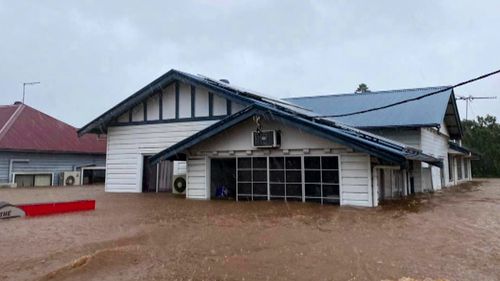
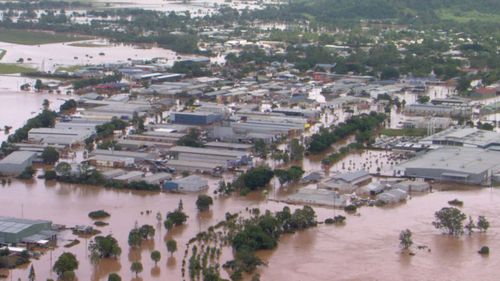
Historic, hundred-year-old homes in flood-ravaged Lismore would be shifted to safer pastures in a proposal which would allow residents to live in their beloved houses and out of harm’s way, while preserving the town’s cultural heritage.
Lismore South resident Harper Dalton-Earles is spearheading community group Relocate Lismore Homes and believes it is an option that has been largely left out of conversations surrounding the future of the flood-prone region.
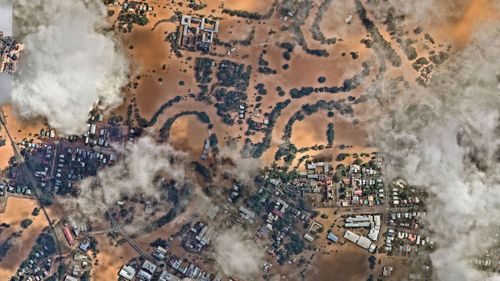
The extent of the flooding across Lismore as seen from above at the beginning of March. (Mark Stehl)
“I care deeply about what happens to our historical homes and the cultural value they add to the region,” Dalton-Earles told 9News.
“I don’t think the whole of town should be relocated – but I definitely think that the people in the worst flood-affected areas should be offered the option to relocate their homes.
“There’s places for buybacks, land swaps and some people want to raise their houses – all of these things should be on the table.
“My concern is there is no discussion about relocating our historic homes to higher ground.”
The flood-affected residents want options – some would like to see a land swap and to relocate their houses.
Others are calling for a buyback, like Queensland’s $750 million scheme, to help rebuild, sell, or flood-proof their homes.
Race against time as double weather threat looms
Built in 1910, Dalton-Earles estimates his heritage home has experienced more than a dozen floods.
Unprotected by the levee bank, the property is impacted by just moderate flooding.
Extra height would have made no difference in this year’s disaster.
“It still would have flooded based on the February flood height – at the highest I could legally raise it,” he said.
“To realistically relocate this home I’m looking at about $45,000 – to raise it I’m looking at between $80,000 and $100,000.”
It’s now a race against time, with a negative Indian Ocean Dipole event underway and a 50 per cent chance of a third La Niña forming later this year.
“I’m renovating my kitchen with the fear that it could flood next month,” he said.
“If I raise the home, I could still have a shipping container or a car run into the side of it.”
The third-generation Lismore local says house relocation is not a new concept, but a part of the town’s history.
“Historically after every major flood, 1954 flood, the 1974 flood, houses have been relocated,” he told 9News.
“(My grandparent’s) house was relocated out of the flood plain to up in Goonellabah.”
Lismore City Council this week voted unanimously in favor of a motion to acknowledge flood-affected residents’ desire for house relocations, buybacks and land swaps, after originally voting against the submission in June.
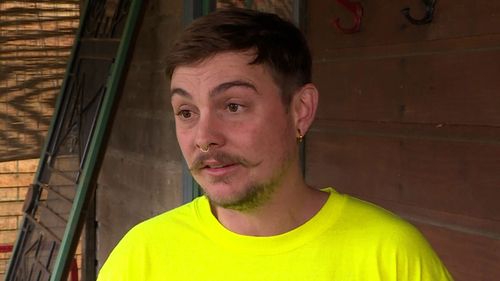
Harper Dalton-Earles is spearheading community group Relocate Lismore Homes. (9News)
Dalton-Earles says it’s a small win, but for now, bureaucratic red tape continues to hold him back from taking any action.
“We need a voice to discuss these ideas as a realistic option and the government needs to pay attention,” he said.
“I’ve done all of the research, I could literally (move my house) next week if the government on all levels were a part of this discussion and involved.
“Right now, it’s basically live here or be homeless – that’s the situation I’m faced with and many are faced with.”
The motion by Lismore Greens Councilor Adam Guise passed with an amendment for council to also lobby state and federal government agencies for their support.
“People need certainty and an understanding of what they’re to do with their flood-impacted lives,” Guise said.
“There will be people who will want to remain on the floodplain – or can’t leave the floodplain.
“We should be investigating alternative solutions such as house raising, floating houses on pontoons, and more flood-resilient designs, so we don’t have the waste or the damage that we’ve had in the past.”
Lismore Greens Councilor Adam Guise introduced a motion to acknowledge flood-affected residents’ desire for house relocations. (9News)
Guise says he is motivated by the threat of climate change and further severe weather.
“We can’t just rest on our hands and think this isn’t going to happen again or somehow think we’ve got time,” he said.
“For those of us currently living on the floodplain, a third La Niña keeps us awake at night,” Guise admitted.
“I dread what it would do…if we get another megaflood.
“I dread what it would do to the spirit of our town.
“It would absolutely break our town.
“Many people would be so broken, they would walk away.”
Lismore City Council has identified land in Goonellabah as a potential site to relocate flood-affected residents, but ultimately says the decision lies with the Northern Rivers Reconstruction Corporation.
Robyn wants her home back – but not where it is
Robyn Murray and her husband are living in Ballina while they wait for information to work out what is next.
“We’re all suffering with anxiety from the floods and we’re unsure as to where we are, what we’re going to do – we’re living in limbo,” she told 9News.
Murray is also interested in the possibility of shifting her older-style home to higher ground.
“We bought (our home) because it had so much character – an old Queenslander with French doors, all the beautiful trims that you get with the old Queenslanders,” she said.
“We would love it to be moved to an area where it doesn’t flood.
“It doesn’t deserve to be where it is.
“We just feel that the house deserves better.
“Moving it to higher ground would give us some piece of mind as well because we’re not young.
“Every time we feel a raindrop now, we stress.”
Robyn Murray wants to explore moving her home to higher ground. (9News)
The couple’s house, which is two meters off the ground, experienced 2.8 meters of water above the floorboards in this year’s big flood.
The thought of a potential third La Niña terrifies them.
“It scares the life out of me – just now, I’m very anxious talking to you about it,” she said.
“I want my home back, but I just don’t want to be there.
“I just don’t want to be in that location anymore.”
Floods in Lismore in February and March were the worst in decades. (Nine)
Fears families have no choice but to move back to danger zone
Jenna Breeze, her husband and their five-year-old daughter are living in Casino until they have enough information to make a decision on their future in Lismore.
“Our house is above the one-in-one-hundred-year level, it’s up on stilts… the water went to head-height inside the house,” she said.
“I don’t know if (the government) should be spending millions of dollars on flood mitigation.
“This has been happening in this town for like 200 years.”
The young family’s preference is a land swap – but fear they will have no option but to move back into the danger zone.
“I honestly think we won’t have a choice, we will have to move back in,” she said.
“We can’t rent anywhere else, we can’t buy anywhere else.
“There’s nowhere else to go other than to move away and remove ourselves from this community that we’re a part of.
“I just want to see a change and I feel like the town needs to move, maybe they keep the CBD where it is, but let’s move the residents up the hill.”
Lismore CBD was filled with debris after being impacted by a two floods in the same month. (Natalie Grono)
‘Who is leading us out of this?’
Crystal Lenane is ensuring East Lismore isn’t left out of the conversation.
“I’ve started the East Lismore Action Group,” she said.
“We’re not in the conversation at the moment.
It’s usually north and south.
“I think it should be fair across the board.
“We’ve all been impacted the same. We’ve all lost our homes.”
The local moved into the suburb with her family following the 2017 floods, assured it was flood-proof.
“Our street had never, ever been underwater – none of the houses,” she said.
Prior to this year’s disaster, the family had spent all of their savings on raising their home, not for flood purposes – but to construct a garage.
“We raised our floors to three meters, which is over two meters above what it was, and we still got a meter (of water) through our house,” she said.
“Are we going to put more money back into this property? We’re getting no direction.
“What is going to happen to Lismore? It’s all rumors – I’m hearing all different things everyday and it really needs to be cleared up.
“I don’t think it’s good enough.”
Lenane says the Resilience NSW debacle has made the situation even more unsettling for residents in limbo.
“It just seems like it’s a mess and no one is leading the ship. Who’s leading us out of this? I don’t know,” she said.
“I would like to know our options.
“After the floods, me and my husband were like, ‘We want to rebuild, we want to stay in the community’.
“Five months on, we’re losing that sense of community and I’m saying to my husband, ‘I want to go – I want to leave, I can’t invest back into this town when nobody is giving us any information. ‘”
Lismore residents are still desperate for answers months after their beloved towns went underwater. (9News)
The thought of returning home is ‘scary’
Jenny Gibbons would rather just say goodbye to her flood-ravaged home.
“I don’t even like going back there to fix things up – I just don’t like being there,” she said.
“I just feel like I haven’t got a home anywhere at the moment.
“I’ve got a lot of work ahead of me – and a lot of unknowns.”
Like many, she’s in limbo at the moment and is living with friends awaiting further information from the state government.
“I’m just waiting to find out what’s happening, what kind of land deals or swaps or whatever,” she said.
“I’d really like a buyback because I don’t want to be there anymore.
“The thought of going home is just really scary.
“I don’t even like going back there to fix things up – I just feel like I haven’t got a home anywhere at the moment.”
Her home, too, was supposed to be safe from a one-in-one-hundred-year flood.
“Got a meter above the one in one-hundred-year flood (mark),” she said.
“Been through floods there before, no problem at all.
“But this one just kind of came out of nowhere and kept on rising.”
It comes after an Upper House report into the February-March disaster laid bare the bungles.
The SES and Resilience NSW failed as lead agencies
A lack of integration between agencies slowed the rollout of support
The government and weather bureau did not comprehend the scale of the flooding
Community members had no option but to ignore advice and save lives themselves
A lack of a streamlined grants process led to frustration and trauma
The inquiry also made 37 recommendations, including:
The government considers a restructure of the SES and considers abolishing Resilience NSW
That a senior police officer be appointed to lead future recovery efforts
An overhaul of the grants process
Investment in supporting relocations and land swaps
The parliamentary inquiry also found the Bureau of Meteorology and other agencies were not prepared for, nor did they comprehend, the scale of the February-March floods.
It was told the data they were receiving and publishing was not accurate.
ALDI Australia is set to open a new pop-up dumpling truck – offering a takeaway feed for less than $1.50 per serve.
For one night only, diners can purchase six Urban Eats dumplings for a low price of just $1.44.
But the offer is only at the ALDI Bankstown Central car park in Sydney’s west between 5pm and 7pm on Friday, August 12.
For more ALDI related news and videos check out ALDI >>
A family of four can expect to enjoy a feed from just $5.76.
The gyoza flavors to choose from include the fan-favorite prawn and the new seasonal addition to the range – chicken.
Aldi Australia is set to open a new pop-up dumpling truck – offering a takeaway feed for less than $1.50 per serve. Credit: David Thomson Photography
The truck proves just how easy it is for Aussies to enjoy a “fakeaway” dinner any time of the week without breaking the bank.
“At a time when consumers are feeling the pinch, it’s rewarding to provide an option for people to still enjoy their Friday night rituals when they shop with us,” said Andrew King, ALDI’s Frozen Food Buying Director.
“The dumpling truck demonstrates how good food doesn’t have to hurt your pocket.
“You can dish up quick, delicious and affordable Friday dinners at home for less than $1.50 a serve.
The gyoza flavors to choose from include the fan-favorite prawn and the new chicken. Credit: David Thomson Photography
“We are so proud of our curated convenience range of frozen food items that have been developed by our trusted supplier partners and are a firm favorite with our customers for good reason.”
Shoppers can recreate the “restaurant-quality” meal at home with the supermarket chain’s dumpling range.
New research commissioned by ALDI found almost half (46 per cent) of Aussies are paying between $15 and $20 on a takeaway food order per person, at least $13.56 more than the cost of a serving from the range.
The truck proves just how easy it is for Aussies to enjoy a “fakeaway” dinner any time of the week without breaking the bank. Credit: David Thomson Photography
The truck will be pitched up at ALDI Bankstown Central, Chapel Road on Friday, August 12, from 5pm to 7pm, while stocks last.
The prawn will cost just 25c per gyoza while the chicken is priced at 23c per dumpling, which is the equivalent price of the individual dumplings or gyoza if bought direct from ALDI’s freezers.
7NEWS.com.au has not received any monetary benefit for this story
Meta-owned application, WhatsApp is working toward managing the phone number visibility when starting a chat with certain businesses, reported WABetaaInfo, the website that tracks the latest WhatsApp updates.
The feature of phone number sharing will be available for a future update of the app. The website also shared a screenshot of the update. In some situations, the app plans to ask its users if they wish to share their phone numbers when starting a chat with businesses.
In some cases, WhatsApp will automatically share and hide the customer’s phone number when they send a message to businesses via Click to WhatsApp ad. It is crucial to note that, all interactions with a WhatsApp ad will not be eligible for hiding the phone number, Times Now reports.
WABetaaInfo has written that when contacting a certain business and the phone number is hidden in that specific case, as it happens with the phone number sharing option for sub-groups of a community, customers will be able to choose to share the phone number with them. The feature is still in the under-development stage and its release date is yet to be announced.
WhatsApp is also working in a group setting for the approval of new participants.
Martha Stewart has responded to viral memes suggesting a budding relationship between her and Kim Kardashian’s ex, Pete Davidson.
Despite being snapped holding hands with the former Saturday night Live star at the White House Correspondents’ Association Dinner in April, the 81-year-old said she’s not about to become Davidson’s next love interest, reports the new york post.
“Pete Davidson is like the son I never had!” the famous domestic diva told the Daily Mail with a laugh at the opening of her first-ever restaurant at the Paris in Las Vegas on Friday.
However, even though a hot new relationship isn’t on the horizon, she said she enjoyed meeting the 28-year-old performer.
“He is a charming boy who is finding his way,” she said.
It might not be the last time eager fans get the chance to hear the pair together — with Stewart dropping an offer she extended to Davidson.
“I’ve invited him to come on my podcast and I look forward to hearing what he has to say,” she revealed.
Davidson split from Kardashian, his girlfriend of nine months, in early August, citing reasons including his filming schedule and Kardashian being busy raising her children and running her business.
“They have a lot of love and respect for each other, but found that the long distance and their demanding schedules made it really difficult to maintain a relationship,” a source told Page Six.
Stewart — who was married to publisher Andrew Stewart for 29 years before they called it quits in 1987 — is regularly the talk of social media with her thirst trap snaps.
The former model especially caught fans’ attention after posting a sultry selfie from her pool in 2020 — with users even suggesting she start an OnlyFans account.
However, for the time being, Stewart appears to be single, jokingly telling Chelsea Handler on her podcast recently that it’s been “a while” since she dated.
This article originally appeared in the New York Post and was reproduced with permission.
Seventeen-year-old David Popovici of Romania became the youngest swimmer to break the world swimming record in the men’s 100-meter freestyle, beating the mark set more than 13 years ago in the same pool.
Popovici touched in 46.86 seconds at the European championships to top the time of 46.91 set by Brazil’s César Cielo at the 2009 world championships, which also were held at Rome’s historic Foro Italico.
Popovici in lane four became the youngest swimmer ever to break the mark. (MaxSwims)
Cielo established his record on July 30, 2009, at the last major international meet to allow rubberised suits. It stood longer than any record in the event’s history, going back to 1905.
Now, it belongs to one of the sport’s budding stars.
READMORE:‘Mocked’ All Blacks take down world champions
READMORE:Veteran NRL referee’s shock grand final confession
READMORE:Roosters star in hot water over dangerous hit
“There was no rush and I had to be extremely patient about the world record,” Popovici said. “It has hurt but it’s always worth it and I feel fine right now. It felt great and it’s very special to break this record which was set here in 2009 by César Cielo.”
David Popovici of Team Romania celebrates after picking up Gold in the Men’s 100m Freestyle Final. (Getty)
Cielo still holds the record in the 50 free, which is among eight men’s long-course standards that remain from the rubber-suit era. Five of those were set at those supercharged 2009 worlds.
Popovici went out in 22.74 and set the record by going 24.12 on the return lap to easily beat Hungarian butterfly specialist Kristóf Milák by 0.61. Italy’s Alessandro Miressi claimed the bronze in 47.63.
“This was a brilliant race, a joy to swim next to David,” Milák said. “David is a fantastic swimmer, I think the same crazy genius of the freestyle that I am in the butterfly. It’s great that his name will hit the headlines for long, long years.”
Popovici poses with his gold medal. (Getty)
Popovici’s emergence sets up a potentially huge showdown at the 2024 Paris Olympics, where American star Caeleb Dressel — winner of five gold medals at last summer’s Tokyo Games — will come in as the reigning gold medalist in the 100 free.
Popovic had his coming-out at this year’s worlds in Budapest, sweeping golds in the 100 and 200 free. He didn’t get a chance to swim the 100 against Dressel, who dropped out of the event for health reasons before the final.
Milák, world record-holder in the 200 fly, hopes to also be part of the freestyle mix in Paris.
“My goal is very clear,” the Hungarian said. “I just want to reach a level in this event to arrive to Paris 2024 with the capability of swimming at a time somewhere very close to 47 seconds.”
For a daily dose of the best of the breaking news and exclusive content from Wide World of Sports, subscribe to our newsletter byclicking here!
The backstories and controversies that have ignited feuds involving athletes