The latest update to Google Meet paves the way to do more than just get work done in video meetings, with support for YouTube, Spotify, UNO, and more.
About APKInsight: In this “APK Insight” post, we’ve decompiled the latest version of an application that Google uploaded to the Play Store. When we decompile these files (called APKs, in the case of Android apps), we’re able to see various lines of code within that hint at possible future features. Keep in mind that Google may or may not ever ship these features, and our interpretation of what they are may be imperfect. We’ll try to enable those that are closer to being finished, however, to show you how they’ll look in the case that they do ship. With that in mind, read on.
Right now, Google Meet is angled as a business/education-first service, with some steep limitations for using it with a free Google Account. But in the coming weeks/months, Google Meet is going to be replacing Duo to become the company’s primary app for video calling and conferencing.
In the meantime, Google Meet is continuing to add new features which should be seamlessly carried over to its new home within the app we currently call “Duo” — yes, it can be a bit confusing. One such in-progress feature, spotted today in the latest update (version 2022.07.24, rolling out now via the Play Store), will help make Google Meet more of a fun place to hang out — a “Hangout Meet,” if you will.
When it launches, you’ll be able to “live share” one of a handful of apps with your friends, family, or colleagues. These include business-ready options like GQueues to-do lists, delightful games like UNO and Kahoot, and streaming apps like YouTube. Each of the apps even has an icon inside Google Meet.
GQueues
Task manager for teams
Heads Up!
Play Charades with friends!
Kahoot!
Host and play engaging learning games
Spotify
Users can listen to their favorite music and/or podcasts
ONE!™
The Classic Game at your Fingertips
Youtube
Watch videos with others
Rather than introducing these apps/games directly into the video call, Google Meet is integrating with the Android app for each. When you decide to use live sharing, Google will “take your call to a third-party app,” and make sure your group sticks together. Unfortunately, this means that live sharing will only be available for those on Android, with no support for iOS or Web.
Available only for Android mobile users
For games like UNO!, Google Meet will likely create a new lobby and anyone who wants to join can do so with a single tap; it’s not clear how Google Meet will keep media apps like YouTube and Spotify in sync across call participants. Similar third-party services (of questionable legality) involved live-streaming a browser window of an app like YouTube or Netflix to everyone in the call.
Instead, Google’s approach seems to involve remotely controlling the various players. To that end, there are in-app “toasts” that suggest it will be possible to remotely pause/resume whatever is being shared.
{participant_name} paused the content
{participant_name} summarized the content
Thanks to JEB Decompiler, from which some APK Insight teardowns benefit.
FTC: We use income earning auto affiliate links. More.
Brisbane coach Chris Fagan is thrilled Will Ashcroft chose to be nominated to join the Lions as a father-son selection.
Ashcroft, widely viewed as the best player in this year’s draft pool, informed the Lions of his decision on Thursday.
The prolific young midfielder is the son of 318-game Brisbane great Marcus Ashcroft.
Fagan says Ashcroft is an “outstanding” footballer and an “incredible” professional for someone so young.
Subscribe to the SEN YouTube channel for the latest videos!
“I’ve had a big smile on my face all day,” the Lions mentor told sports day.
“He’s trained a fair bit with us, played some games in our reserves… he’s a wonderful person and he’s an outstanding footballer.
“He’s a real professional for his age – he’s incredible, really.
“I’ve been very, very hopeful that he would make that call and I’m so glad that he has.
“Obviously with Marcus playing 300 games for the club, it’s fantastic to continue the family tradition.
“He’s got a younger brother by the name of Levi who’s a pretty good little footballer too. Maybe they’ll all be in Brisbane colors eventually, which would be great.
“We’re incredibly grateful that he’s made the call to come to us.”
Fagan was asked if Ashcroft is currently at the level to play in Brisbane’s AFL side.
“It puts a lot of pressure on the kid if you answer yes to that question,” he replied.
“On what we saw in the reserves game he played against the Swans, it wouldn’t have been beyond the realms of possibility this year that if he was our player right now that he would’ve played at least some games.
“I think he’s a pretty special talent.”
Ashcroft, 18, averaged 28 disposals, eight tackles and five clearances across the two VFL games this year.
CheckMate is a weekly newsletter from RMIT FactLab which recaps the latest in the world of fact checking and misinformation, drawing on the work of FactLab and its sister organisation, RMIT ABC Fact Check.
You can read the latest edition below, and subscribe to have the next newsletter delivered straight to your inbox.
CheckMate August 5, 2022
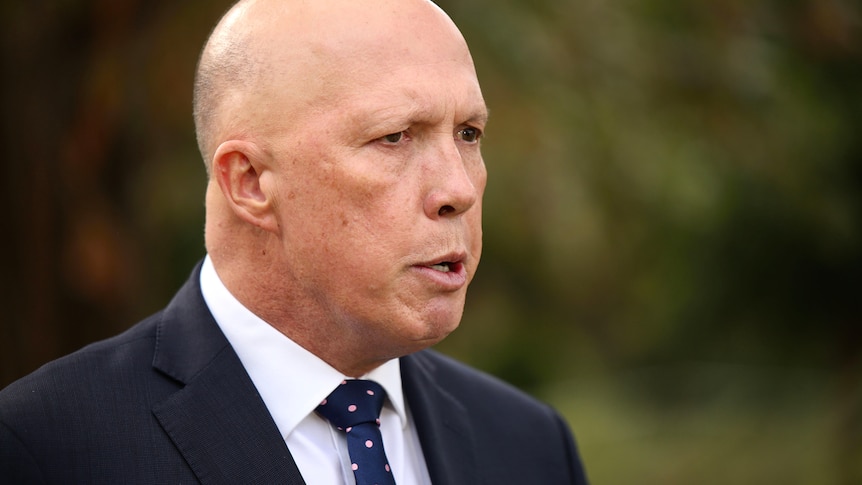
This week, we examined a claim by Opposition Leader Peter Dutton that the soon-to-be-axed cashless debit card was well received by trial participants and led to a significant drop in gambling.
We also investigate whether the global outbreak of monkeypox means the virus has become “airborne”, and debunk claims that COVID-19 vaccinations are weakening our immune systems and driving higher reinfection rates.
Peter Dutton hailed the ‘success’ of the cashless debit card. But how successful was it?
Not quite right: Peter Dutton has been talking up the results of a survey on the cashless debit card, but the majority said the program had made life “worse.”(ABC News: Matt Roberts)
As Prime Minister Anthony Albanese’s government gets to work on delivering its election promises, legislation to scrap the cashless debit card (CDC) program is set to become one of the first bills debated by the new parliament.
The Coalition, however, says it still “strongly supports” the program, which quarantines 50-80 per cent of a welfare recipient’s payments (depending on jurisdiction and circumstance) on a card that cannot be used on drugs, alcohol or gambling.
“Research from the University of Adelaide showed that the cashless debit card led to a 21 per cent decrease in gambling and 45 per cent of people believed it had improved their lives,” Opposition Leader Peter Dutton told parliament last week.
But that’s not quite what the research says.
The January 2021 report referenced by Mr Dutton was commissioned by the former Coalition government and involved a survey of CDC participants across the program’s first three trial sites.
Despite his claim that 45 per cent of participants “believed [the card] had improved their lives”, the report found just 15 per cent said it had made life “better”, while 17 per cent reported no difference.
Meanwhile, 56 per cent of those surveyed said the program had made life “worse.”
More broadly, only 21 per cent of those surveyed said the CDC had made a “positive difference” on quality of life for themselves, their family, friends and wider community.
As for gambling, the report “found some evidence of reductions … as a direct outcome of the CDC” — though it does not state gambling was reduced by 21 per cent, as Mr Dutton claimed.
According to the report, 14.4 per cent of participants gambled in the 12 months prior to the introduction to the CDC while 11 per cent were still gambling post-introduction.
The authors noted, however, that “most of the reported change since the introduction of the CDC came from the ‘once a month or less’ very low frequency gambling category, who reported that they typically shifted from ‘gambling very infrequently’ to ‘not gamble at all’.”
“We believe the numbers on reported gambling activity lack in statistical significance, probably due to under-reporting by those who gamble more regularly,” the researchers explained.
Mr Dutton’s figure of 21 per cent appears to relate to the report’s findings on the perceived impact of the cashless debit card on gambling among trial participants.
Asked whether the rollout of the CDC had helped “with reducing gambling problems” — for themselves personally, their family, their friends or where they lived — 21 per cent of survey participants said it had made a positive difference.
Of those, 35 per cent said the difference was for themselves personally, a figure that equates to 7 per cent of participants overall.
Monkeypox is spreading, but is it airborne?
As the global monkeypox outbreak gathers pace, a number of popular social media posts have variously asserted that the virus is, or is not, “airborne”.
Adding to the confusion, last week the World Health Organisation’s African office tweeted — then deleted — to video that claimed “monkeypox is not airborne.”
So, what does the evidence say?
The WHO defines airborne transmission as “the spread of an infectious agent caused by the dissemination of droplet nuclei that remain infectious when suspended in air over long distances and time”.
Such viruses may have a preference for airborne transmission but still spread through other means.
Importantly, there is a distinction — much debated during the COVID-19 pandemic — between smaller droplets (aerosols) that remain in the air and larger respiratory droplets (spray) that fall to the ground quickly.
According to the Department of Health, monkeypox spreads through close contact with lesions (rashes, blisters or sores), contaminated objects and also bodily fluids, including respiratory droplets.
“Transmission through respiratory droplets (for example, coughing or sneezing) is less common and usually only happens if there is prolonged face-to-face contact,” its website explains.
You are probably not going to get monkeypox by being in the same space as somebody who has it, one expert said.(CDC: Cynthia S.)
Notably, one preprint study being shared online has found that some air samples — taken from isolation rooms for monkeypox patients in the UK — contained low levels of “replication competent” virus able to grow in a cell culture.
That, however, is not necessarily something to worry about — or at least not outside of healthcare settings where, for example, changing the sheets may send particles into the air.
A virologist at the Australian National University who studies poxviruses, David Tscharke, told CheckMate: “Just because you can show the virus is in the air, it doesn’t magically mean that you can be infected, because every different virus requires a different amount to be in the air for you to be able to catch it.”
He added: “We actually don’t know what that amount is [for monkeypox]but the shape of the epidemic suggests that there needs to be quite a lot.”
That’s because the current epidemic had so far been largely confined to men who have sex with men, Professor Tscharke explained.
“If the virus was transmissible via aerosols in a way that SARS-CoV-2 [the virus that causes COVID-19] is transmitted, the epidemic would have to be bigger right now. And it would have to have moved out of that community,” he said.
“By walking past somebody who has this, or being in the same space, it probably means you’re not going to get it.”
Professor Tscharke noted that while some older studies certainly suggested aerosol spread was possible, it is “not considered to be a major route”, and the evidence in the latest outbreak so far suggests it is “unlikely” that this has changed.
Also, Christopher Fairley, a professor of public health with Monash University, told CheckMate there was a difference between airborne particles and airborne transmission, and that monkeypox was “not an easy virus to spread.”
He said the UK study’s finding of monkeypox DNA on surfaces was important but “not something that translates into transmission”, noting that “if” airborne transmission was occurring in the current outbreak “it must be very rare”.
“The very low rate of transmission in household contacts and virtual absence of transmission to health care workers is strong evidence of this.”
Indeed, a 16-country study during the current outbreak (April-June) found that 98 per cent of cases were gay or bisexual men, with 95 per cent of transmission suspected to have occurred through sexual activity.
This fact, coupled with news that a number of children have contracted the disease, has led to stigmatisation, exacerbated by misinformation that wrongly suggests sexual activity is the only way the virus spreads.
No, COVID-19 reinfections are not increasing due to rising vaccinations
The COVID reinfection rate has nothing to do with vaccines and is largely the result of new subvariants, experts said.(AAP: Lukas Coch)
Infectious disease experts have shot down claims spreading online that repeated COVID-19 vaccinations have led to weaker immune systems and higher rates of reinfections.
“The more covid 💉 the worse the reinfection rate seems to be. Is that what you see?” one post reads.
Another says: “The more shots, the sicker the people get because of lower immune systems. The more injections, the more infections and transmissions.”
But as RMIT FactLab recently found, those claims are false.
According to experts, there was no correlation between COVID-19 vaccinations and reinfections.
Infectious disease physician Paul Griffin, an associate professor at the University of Queensland, explained to FactLab that there was “no reduction in the immune system by being vaccinated.”
“The attempt of vaccination is to train or prime the immune system to be able to respond more quickly and more effectively against the virus without the risk of having the disease itself.
“[The reinfection rate is] largely driven by the new [Omicron] subvariants BA.4 and BA.5 that are not only more infectious, but evade protection from past infection and to a degree from vaccination,” Professor Griffin said.
Epidemiologist Catherine Bennett, of the Institute for Health Transformation at Deakin University, also dismissed the claim, saying: “[There is] no basis to this bizarre link being made.”
Law enforcement is responding to Mall of America due to reports of shots fired.
Bloomington Police confirmed to 5 EYEWITNESS NEWS at around 4:30 pm that multiple units were at the mall working an “active incident” on the northwest side.
We are currently working an active incident inside Mall of America on the northwest side. Numerous officers are on scene. We will update when we have more information.
The mall confirmed that it is on lockdown, saying there is an “isolated incident in a tenant space.”
Mall of America is currently under lockdown. There is a confirmed isolated incident in a tenant space. Please remain in the closest secure location until the lockdown has been lifted. Please stay tuned for additional updates.
Mall of America remains under lockdown following a confirmed isolated incident. For all guests, please stay in the closest secure area until the lockdown is lifted.
Plastic letters arranged to read “Inflation” are placed on Chinese Yuan banknote in this illustration taken, June 12, 2022. REUTERS/Dado Ruvic/Illustration
Register now for FREE unlimited access to Reuters.com
Register
LONDON, Aug 3 (Reuters) – Major developed and emerging market central banks around the globe delivered nearly 1,200 basis points in interest rate hikes in July alone, ramping up their fight against multi-decade high inflation with Canada surprising markets with an outsized move.
Central banks overseeing five of the 10 most heavily traded currencies delivered 325 basis points of rate hikes between them last month. This brings the total volume of rate hikes since the start of the year across G10 central banks to 1,100 basis points.
However, July’s tally was less than the 350 basis points seven central banks delivered in June.
Register now for FREE unlimited access to Reuters.com
Register
“We’ve reached peak hawkishness of the central banks,” Christian Kopf, head of fixed income portfolio management at Union Investment, told Reuters.
Reuters Graphics Reuters Graphics
“Central banks have made it clear that they will not overdo it with the rate hikes,” Kopf said, adding that it was also the message conveyed by US Federal Reserve chair Jerome Powell.
July was dotted with some eye catching moves. Canada emerged as the chief hawk, stunning markets by delivering the first 100-basis-point rate increase among the world’s advanced economies in the current cycle, lifting its key policy rate to 1.5%.
New Zealand delivered its sixth straight interest rate rise and signaled it remained comfortable with its planned aggressive tightening path to restrain runaway inflation. read more
And then of course the big one: The Fed delivered its second straight 75-basis-point rate hike, reinforcing its commitment to contain red-hot inflation running at 40-year highs. read more
There was no let up for policymakers in emerging markets, where inflation had been on a tear for much longer than in developed economies.
Nine out of 18 central banks delivered 850 bps of rate hikes in July. In total, emerging market central banks have raised interest rates by 5,265 bps year-to-date – nearly double the 2,745 bps for the whole of 2021, calculations show.
“Emerging market central banks remain more worried about inflation than growth,” BofA’s David Hauner said in a recent note to clients.
ReutersGraphics
Hungary moved twice in July, jacking up its base rate by 300 basis points to 10.75% with borrowing costs into double-digit territory for the first time since late 2008 – and flagging more hikes ahead. read more
Colombia and Chile piled in with a 150 bps and 75 bps hike respectively, though emerging market uber-hawk Brazil, which has lifted rates to 13.25 bps already in June, took a breather.
However, emerging markets have also seen cuts with Russia reducing interest rates ratcheted up to 20% in the wake of its Feb. 24 invasion of Ukraine, which sparked sweeping sanctions. read more
Inflation pressures would remain a headache for policy makers, said Tobias Adrian, director at the Monetary and Capital Markets Department at the International Monetary Fund (IMF).
“The magnitude of the inflation has been a surprise to central banks and markets, and there remains substantial uncertainty about the outlook for inflation,” Adrian wrote in a blog on Monday.
“Inflation risks appear strongly tilted to the upside,” Adrian said, adding there was a substantial risk that price pressures were becoming entrenched and expectations unanchored.
Register now for FREE unlimited access to Reuters.com
Register
Reporting by Karin Strohecker and Vincent Flasseur in London, Additional reporting by Dhara Ranasinghe; Editing by Jacqueline Wong
Our Standards: The Thomson Reuters Trust Principles.
A Twitch streamer has completed the commonly referred to hardest challenge in video games, the Halo 2 deathless LASO, and won $20,000 (£16,500) a month after it was issued.
Streamer JerValiN has spent the last few weeks grinding out the nightmarish challenge, finally completing it yesterday (August 3). Issued by YouTuber MoistCr1TiKaL in June, this run of Halo 2 requires the player to beat it in LASO (Legendary All Skulls On) without dying, which is both the hardest in-game difficulty and with all Skull modifiers, making the game even harder.
Players hoping to complete the challenge also couldn’t do it by save-loading, which would essentially let them go back to a previous checkpoint right before they think they might die. The only change here is that the Envy skull isn’t equipped, which changes Master Chief’s flashlight for an active camouflage device that doesn’t have a visible timer – a huge benefit for the run.
The full seven and a half hour stream can be found here, with JerValiN completing the challenge in an eye-watering six hours, 29 minutes and 44 seconds.
Halo 2. Credit: Microsoft
“So there you go,” said JerValiN after the victory. “We fucking did it, we got it. I had a lot of pressure, I felt I had to be the first one to do it. I felt like it wouldn’t have been right if it wasn’t me.”
Here the streamer appears to be referring to his 2020 run of Halo 2 Anniversarywhich was also LASO and deathless as well, but with the Envy skull (via pc gamer).
As highlighted by the bounty Google Doc, the challenge must be streamed in full with the saved video linked, otherwise the win won’t count, which is what JerValiN did.
I did it! Halo 2 LASO, deathless. congratulations, @Jervalin 🏆
Praise for the achievement came from across the Halo community, as franchise senior community manager John Junyszek tweeted: “He did it! Halo 2 LASO, deathless. Congratulations, JerValiN.”
“Jervalin is actually an absolute King. I was sweating watching him and his family from him coming in to celebrate after he completed it was the most wholesome thing I’ve seen in years, ”said halovfx.
In other news, an upcoming world of warcraft mobile spin-off has reportedly been canceled over an internal company dispute.
There’s an extra edge to being in a crowd these days. Once we might have asked, will this crowd jostle or crush me? Now we ask, will this crowd make me sick? Will this crowd kill me? As new waves of Covid and new variants keep coming, we wonder: will we ever feel truly comfortable in crowds again?
Richard Tognetti, artistic director of the Australian Chamber Orchestra, has spent the last few years thinking about crowds. From his home in Sydney, the musician and composer has been working on a new production with director Nigel Jamieson called The Crowd and I, which pairs footage of crowds – everything from Black Lives Matter protests to Spain’s annual mass tomato fight – with a live orchestra playing in time.
Tognetti himself is not particularly fond of crowds. “I have a personal dislike of being in them,” he said. “I have been to some arena concerts and would choose not to go again. I saw the Rolling Stones in an arena show but I would rather have seen them at the Enmore.”
What about when he was young? “I was never in the moshpit – I didn’t want to break my arm. That would be the main thing.”
A decade in the making, The Crowd and I is split into 13 chapters, with footage from around the world of every kind of crowd: a swarm at Coachella, sprawling refugee camps, packed commuter trains, drone footage of protests and close encounters with riots . Some footage was captured by the likes of artist Ai Weiwei and cinematographer Jon Frank, who worked closely with the ACO on The Reef.
Tognetti compiled the soundtrack, zipping between Chopin, Sibelius and Beethoven to modern US composer Morton Feldman and even his own. Each piece gives rise to a different flavor of emotion in the viewer; To handle the dramatic switches in mood between the chapters, the ACO have expanded its ranks for the performance and will feature brass and woodwinds, live electronics and vocalists from the Song Company.
The performance, which starts in Canberra on Saturday before touring, promises to be intensely emotional and thought-provoking – like the best of the ACO’s work over the last few decades, including 2005’s Luminous, made with photographer Bill Henson.
‘Like any good art, the more preachy it is, the less room there is for poetry’ … Richard Tognetti, centre. Photograph: ACO
Throughout the performance the crowds shapeshift: sometimes they are threatening, sometimes celebratory, sometimes uplifting, sometimes dangerous. There is a spectacular clip of a moshpit – hundreds of young bodies hurtling towards each other, colliding without malice – which is accompanied by an original Tognetti composition titled Mosh Maggot. But the most affecting chapter (among many) is Tide, which includes CCTV footage of George Floyd’s murder and the subsequent Black Lives Matter marches across the world.
“When you see the footage, it’s overwhelming,” says Tognetti. “The marches spread like a tidal wave throughout the world. We didn’t want to imbue the music with operatic drama – we didn’t need to. Like any good art, the more preachy it is, the less room there is for poetry.”
Also overwhelming, even after all these years, is seeing footage of the Cronulla riots, filmed by photojournalist Craig Greenhill. “Some people may say ‘I’ve already seen this, I don’t need to see this again.’ And I’m like, ‘Oh yes you do’,” says Tognetti. “No one is innocent – no one is free from blame.”
The show’s genesis was in 2008 when Tognetti was given funding to “dream up wicked and wild things. I wanted to do something on crowds and put it together really quickly – but what it lacked was an overarching directorial vision and so Jamieson came on board.” The two men picked the work up again during the 2020 lockdown and found that “the last 3% that takes 99% of the money and the time. It’s been a couple of years of crafting and chiselling away.”
The Crowd and I have changed over the decade: “It started off with a more misanthropic bent – crowds are scary, mobs are dangerous. It was easier to be dark than light.” In the final version, there is an interplay of both: yes, crowds can be dangerous and scary – but as we’ve learned in the pandemic, we also often need and crave communal experience.
Any fear of crowds also hits the bottom line of artists such as Tognetti. The arts need the crowd to survive.
“I hope people continue to buy tickets and please turn up!” he says. “Not to just the gold-plated and big theatrical events but to the ecology – underneath all the smaller shows and venues, or all the undergrowth won’t be here in five years. You have to support it.”
The Crowd and I is touring to Canberra (August 6), Melbourne (August 7-8), Sydney (August 9-14) and Brisbane (August 15).
Between them, West Coast’s Josh Kennedy and Fremantle’s David Mundy have played 663 games of the AFL and kicked 874 goals for their clubs.
It’s difficult to imagine WA footy without them.
When Mundy made his debut for the Dockers in 2005, several of his current teammates were still in nappies.
Josh Kennedy was traded to the West Coast at the end of the 2007 season for dual-Brownlow medalist Chris Judd. Despite Judd’s star power, the Eagles would comfortably say today they go the better end of the deal.
Because as well as being outstanding athletes, both Kennedy and Mundy are outstanding blokes.
Playing just one more season could see Mundy admitted into the exclusive 400-game club.
But in announcing his retirement, Mundy said he wasn’t tempted to chase individual glory.
“They’re very individual goals. I’m the kind of character where they’re very much secondary,” he said.
“I take a lot of pride in the fact that I’m walking out with a little bit left in the tank. I’d feel really guilty if I’d hung around and walked out a crippled, broken old man.”
When asked what he wanted his legacy at the club to be, the 37-year-old responded with characteristic humility which has made him a fan favorite for the best part of two decades.
“I don’t need to be remembered. I just came in, played my part and did my role,” he said.
Humility and decency are traits he shares with Kennedy, who will bow out as the Eagles’ greatest goalkicker with at least 704 to his name to go with 11 he kicked at Carlton prior to the 2007 trade which brought him home to WA.
In his 15 years at the club, he was part of a team that played in eight finals series, two grand finals and won the 2018 premiership.
Looking beyond retirement from the AFL, the Northampton product said he planned to give back to the community by establishing a JK Foundation.
“It will help to facilitate programs to find what they want to aspire to and then build an environment around them where they feel supported,” Kennedy said.
“I think the resources in the metro area compared to regional — obviously regional miss out a far bit in those resources.
“So if I can bridge that gap between city and country kids that’s kind of what I want to do.”
Even in his playing days, Kennedy has made time to help through the community through his ambassadorial role at MSWA and fundraising for his stricken hometown after it was left devastated by Cyclone Seroja last year.
Kennedy will play his final AFL game in front of a home crowd at Optus Stadium on Sunday when the Eagles take on Adelaide.
One lucky reader of The West Australian will take home a piece of club history by winning Kennedy’s match-worn jumper.
To enter the competition to win Kennedy’s match-worn guernsey, look for the unique code on today’s front page and enter it online at thewest.com.au/jk by noon on Monday.
And Freo fans don’t fret — we’re planning something big to mark Mundy’s retirement soon.
Responsibility for the editorial comment is taken by WAN Editor-in-Chief Anthony De Ceglie
Queensland police say they are questioning three people, including the suspected shooter, over a triple fatality at a cattle property in Bogie in north Queensland.
Three people were found dead and a man was critically wounded after the shooting on the cattle property near Collinsville on Thursday morning.
The injured man, who was airlifted to Mackay Hospital with a gunshot wound to his abdomen, is in a serious but stable conditionafter undergoing surgery late yesterday.
Police said they were still working to determine a motive for the shooting but are questioning three people.
Police issued an emergency declaration yesterday under the Public Safety Preservation Act for an area at Shannonvale Road, south-east of Collinsville, which remains in place.
Nearby residents have been advised to stay away from the area and multiple crime scenes have been established.
The three people who died and the injured man are all from the same family but the police did not confirm their identities.
Mackay District Superintendent Tom Armitt said police were searching an “extensive” farming area that is “hilly and heavily forested”.
A man was flown to Mackay Hospital with critical injuries after suffering a gunshot wound to the abdomen.(ABC News: Melissa Madison)
Fox News congressional correspondent Chad Pergram reports on Sen. Kyrsten Sinema’s efforts to alter Democrats’ controversial tax and spending bill ahead of vote.
A letter sent to House and Senate leadership from 230 economists argues that the Infrastructure Reduction Act is expected to contribute to skyrocketing inflation and will burden the US economy, contrary to President Biden and Democrats’ claims.
The economists wrote in the letter first obtained by Fox News Digital that the US economy is at a “dangerous crossroads” and the “inaptly named ‘Inflation Reduction Act of 2022’ would do nothing of the sort and instead would perpetuate the same fiscal policy errors that have helped precipitate the current troubling economic climate.”
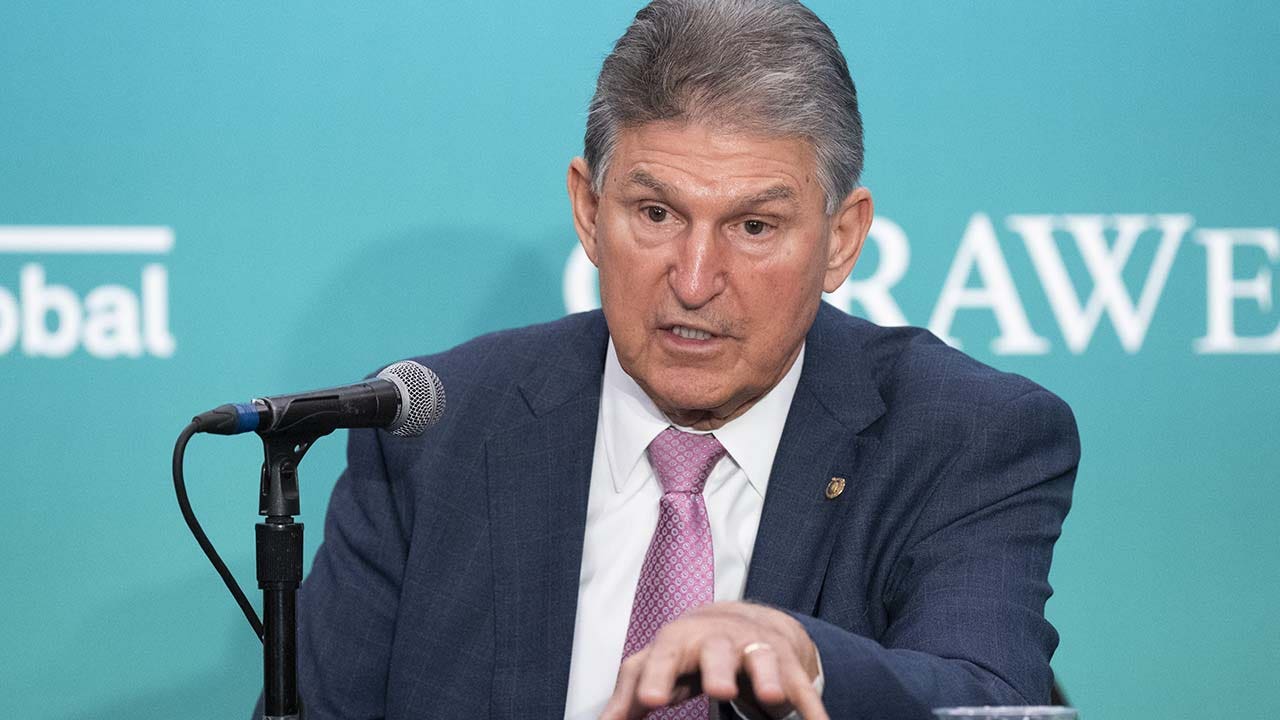
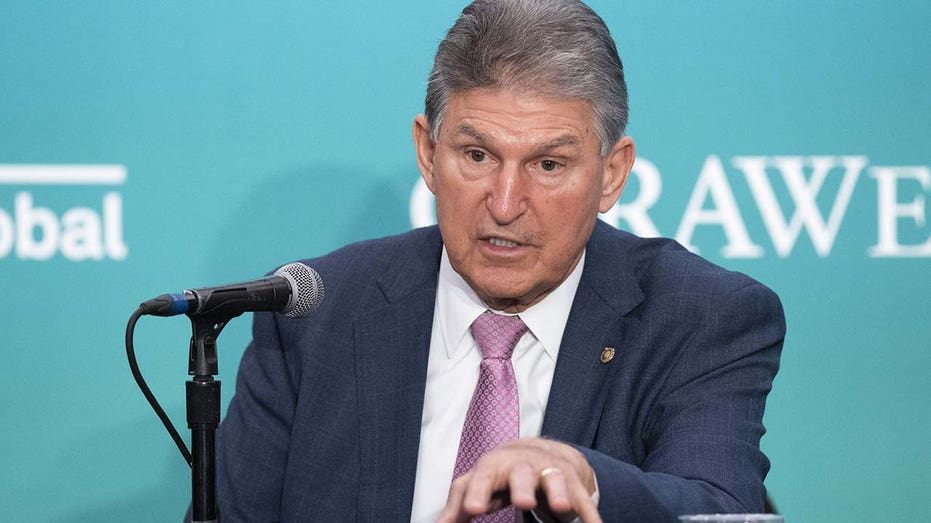
Sen. Joe Manchin, DW.Va., announced last week he reached an agreement with Senate Majority Leader Chuck Schumer, DN.Y., on the $739 billion reconciliation package after more than a year of negotiations among Democrats.
The economic experts point to the $433 billion in proposed government spending, which they argue “would create immediate inflationary pressures by boosting demand, while the supply-side tax hikes would constrain supply by discouraging investment and draining the private sector of much-needed resources. “
Sen. Joe Manchin, DW.Va., announced last week that he reached an agreement with Senate Majority Leader Chuck Schumer, DN.Y., on the $739 billion reconciliation package after more than a year of negotiations among Democrats. (F. Carter Smith/Bloomberg via/Getty Images)
They also write that of “particular concern” is the corporate minimum tax that they say will undercut efforts to restore functioning supply chains.
In addition, the bill’s prescription drug provisions “would impose price controls that threaten healthcare innovation, creating a human health toll that would add to the financial woes that Americans are already experiencing.”
A few of the notable signers include Nobel laureate Vernon Smith, former Chair of the Council of Economic Advisers Kevin Hassett, former Director of the Office of Management and Budget Jim Miller and Robert Heller, former president of the Federal Reserve Board 1986-1989.
In addition, professors from the University of Chicago, Princeton University, Duke University, the University of Virginia, Columbia University and the University of Notre Dame, among others, were listed on the letter dated Aug. 3.
The experts conclude that although they agree with an “urgent” need to address inflation, Manchin’s bill is a “misleading label” applied to legislation that would achieve the “opposite effect.”
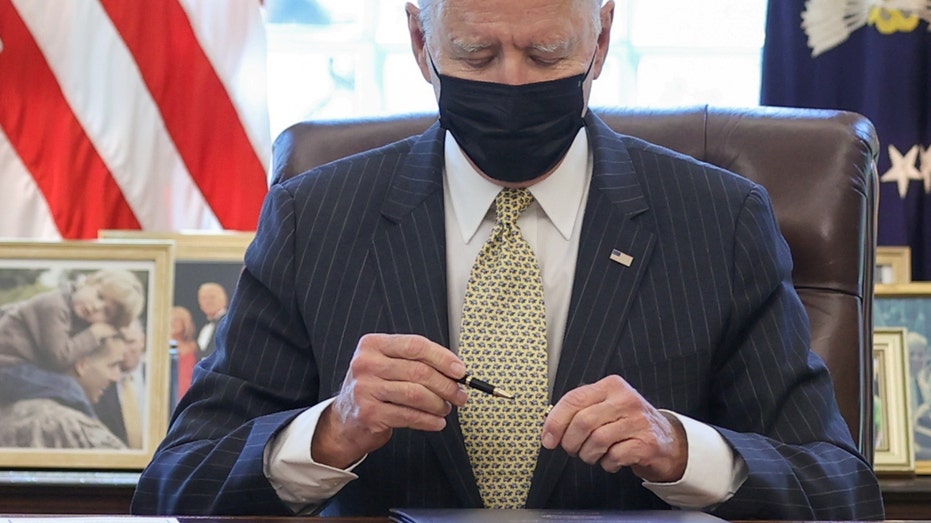
President Biden urged Congress to pass the bill during a virtual roundtable Thursday. “My message to Congress is this: Listen to the American people,” he said. (Jonathan Ernst/File Photo/Reuters)
The letter was sent to Schumer, Senate Minority Leader Mitch McConnell, R-Ky., House Speaker Nancy Pelosi, D-Calif., and House Minority Leader Kevin McCarthy, R-Calif.
WHITE HOUSE SLAMS REPUBLICANS FOR TRYING TO ‘OBSTRUCT’ THE PASSAGE OF THE $739B ‘ANTI-INFLATION PLAN’
Schumer has touted the Inflation Reduction Act as an immediate solution to inflation, which reached a new 40-year high last month.
“The Inflation Reduction Act will lower inflation, lower the costs of prescription drugs, close loopholes long exploited by big business who pay no or little taxes,” Schumer said Thursday on the Senate floor.
In addition, Biden urged Congress to pass the bill during a virtual roundtable Thursday. “My message to Congress is this: Listen to the American people,” he said.
“This is the strongest bill you can pass to lower inflation, continue to cut the deficit, reduce health care costs, tackle a climate crisis and promote America’s energy security and reduce the burdens facing working-class and middle-class families,” Biden continued. .
However, Republicans are less enthusiastic about the more than $700 billion spending and tax package.
Senate Minority Leader Mitch McConnell told Fox News that the bill raises taxes and “calling it an inflation reduction bill is rather laughable.” (J. Scott Applewhite) (AP Pictures)
McCarthy told Fox News on Wednesday that “Democrats have no plans to solve all the problems they created” and Manchin’s bill is not the solution.
CLICK HERE TO GET THE FOX NEWS APP
In the Senate, McConnell stated this week that most of his colleagues were “somewhat shocked” about Manchin’s reversal of previous positions. He continued, telling Fox News that the bill raises taxes and “calling it an inflation reduction bill is rather laughable.”
“Democrats are catastrophically out of touch with what American families actually care about. Their approval ratings show it. And their reckless taxing and spending spree proves it, as well,” McConnell said in a statement this week.
The Senate is set to agree on Saturday to vote on a procedural motion to move the bill forward. It is still unclear if Sen. Kyrsten Sinema, D-Ariz., Will support the legislation, and her vote for her is necessary for final passage of the bill under reconciliation rules that would allow a majority to pass.
Democrats previously touted a letter from 126 economists supporting Manchin’s bill.