Categories
Sports

Ollie Hoare wins epic Commonwealth Games 1500m final for Australia | Commonwealth Games 2022

Jake Wightman gave his all in a Commonwealth 1500m final for the ages. This time, though, the familiar formula did not quite work as Ollie Hoare swooped at the last to win Australia’s first middle-distance gold at these Games since Herb Elliott in 1958.

Hoare promised to buy the legendary Elliott, who is now 84, to drink. It will surely be quite some celebration.

However, Wightman had no regrets after his bold attempt to win three major titles in a summer – at the worlds, Commonwealths and Europeans – fell short. Two weeks ago in Eugene the 28-year-old Scot had stunned everybody by kicking for glory with 200m remaining and then holding on for a famous world title.

This time, though, when he repeated the trick his pursuers were ready – and his legs were a little more heavy. And while he still led with 50m to go, he was passed first by the Kenyan Timothy Cheruiyot and then by Hoare, who got up right before the line to win in a Commonwealth Games record of 3:30.12. Cheruiyot took silver in 3:30.21 with Wightman 0.32 back in third.

“That was as good as I could have done,” said Wightman. “I didn’t want to be a pedestrian and be running for minor medals. I wanted to make a statement but I didn’t feel anywhere near as good as I did a couple of weeks ago.

“I knew when I went I was going to have a tough home straight but hoped everyone else would be feeling the same,” he added. “Initially I was pretty disappointed but, if I told myself I would come back two weeks after winning the world champs and in a similar field pick up a bronze, I’d be pretty happy. It’s mentally so tough to come back from that.”

Scotland's Jake Wightman after finishing third.
Scotland’s Jake Wightman after finishing third. Photograph: Tom Jenkins/The Observer

The bookies might have made Wightman the odds-on favourite. But he, like the rest of us, knew this was a 1500m final suffused with class and doubts. Three of the first four in last year’s Olympics were in the field, along with Hoare who had had several notable performances this season before bombing out in the semi-finals of the worlds. This was to prove the sweetest of redemptions.

There was no hanging around as Kenya’s Abel Kipsang pulled the field round the first lap in a rapid 54 seconds, with Cheruiyot in close order. But Wightman looked well-placed before he made his move on the back straight. “It was a bit instinctive,” he said. “I wanted to get to the bend in the lead again. I knew I wasn’t as fresh. I was hanging on in the home straight, as opposed to feeling strong. I felt pretty vulnerable.”

Hoare, meanwhile, was reveling in a stunning victory. When asked for his thoughts on him, he replied simply: “Holy shit.”

Ollie Hoare celebrates after his victory.
Ollie Hoare celebrates after his victory. Photograph: Tom Jenkins/The Observer

“The race went out quick straightaway,” he said once he had recovered his composure. “But I’ve been training for a fast race and I ran 3:47 in Oslo for a mile so I knew I had the strength there. It was just about making the kick at the right time.”

“I went through on the inside with a lap to go and I saw Jake next to me and I started to panic because he’s the world champion. And you can hear the Scottish roar in the stadium. But I tried to hold my composure. And then, with 100 meters to go, when I got out to lane three, it was all about holding form and just running like bloody hell.”

Sign up to The Recap, our weekly email of editors’ picks.

But it was only in the last five meters that he finally got up as Cheruiyot stumbled.

“I could tell I had him because he couldn’t gauge where anybody else was,” said Hoare. “So he was in a very volatile position, even if you’re of his caliber. And I saw that he was starting to lock up and I knew I had more juice in the tank. I thought: not today. I’m going for it today. And I was able to come through at the end.”

Elsewhere on the final morning of the athletics there was hammer gold for England in the form of Nick Miller, whose modest throw of 76.43m was good enough against a weak field.

Categories
US

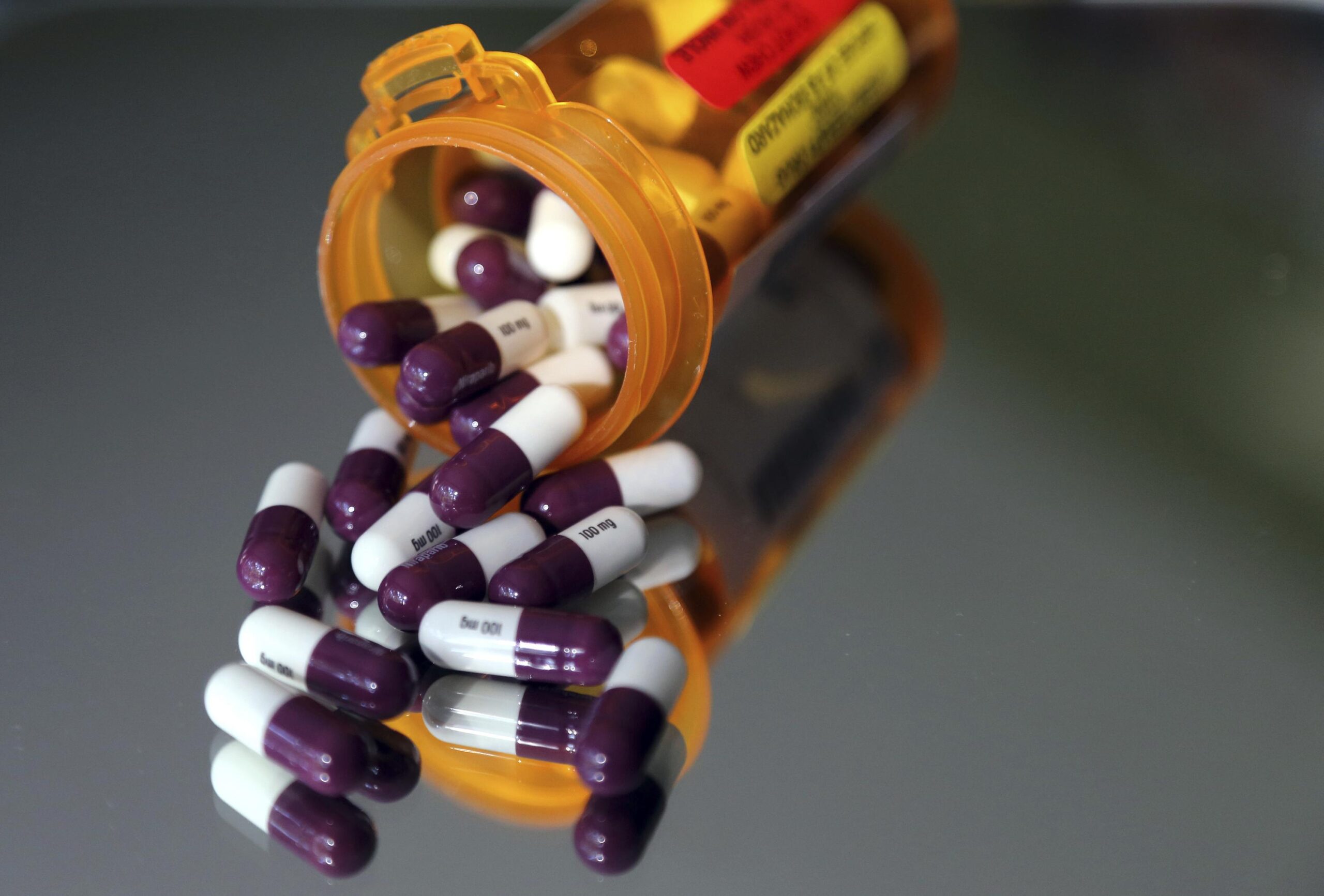
Senate parliamentarian OKs most of Dems’ drug price controls

WASHINGTON (AP) — The Senate parliamentarian narrowed Democrats’ plan for curbing drug prices but left it largely intact Saturday, Democrats said, as party leaders prepared to start moving their sprawling economic bill through the chamber.

Elizabeth MacDonough, the chamber’s rules arbiter, also gave the green light to clean air provisions in the measure, including one limiting electric vehicle tax credits to those assembled in the US, Democrats said.

The nonpartisan official’s rulings came as Democrats planned to begin Senate votes Saturday on their wide-ranging package addressing climate change, energy, health care costs, taxes and even deficit reduction. Party leaders have said they believe they now have the unity they will need to move the legislation through the 50-50 Senate, with Vice President Kamala Harris’ tiebreaking vote.

MacDonough said provisions must be removed that would force drugmakers to pay rebates if their prices rise above inflation for products they sell to private insurers. Pharmaceutical companies would have to pay those penalties, though, if their prices for drugs bought by Medicare rise too high.

Dropping penalties on drugmakers for increasing prices on private insurers was a clear setback for Democrats. The decision reduces incentives on pharmaceutical companies to restrain what they charge, increasing costs for patients.

Erasing that language will cut the $288 billion in 10-year savings that the Democrats’ overall drug curbs were estimated to generate — a reduction of perhaps tens of billions of dollars, analysts have said. But other restrictions on rising pharmaceutical costs survived, including letting Medicare negotiate costs for the drugs it buys, capping seniors’ out-of-pocket expenses and providing free vaccines.

The surviving pharmaceutical provisions left Democrats promoting the drug language as a boon to consumers at a time when voters are infuriated by the worst inflation in four decades.

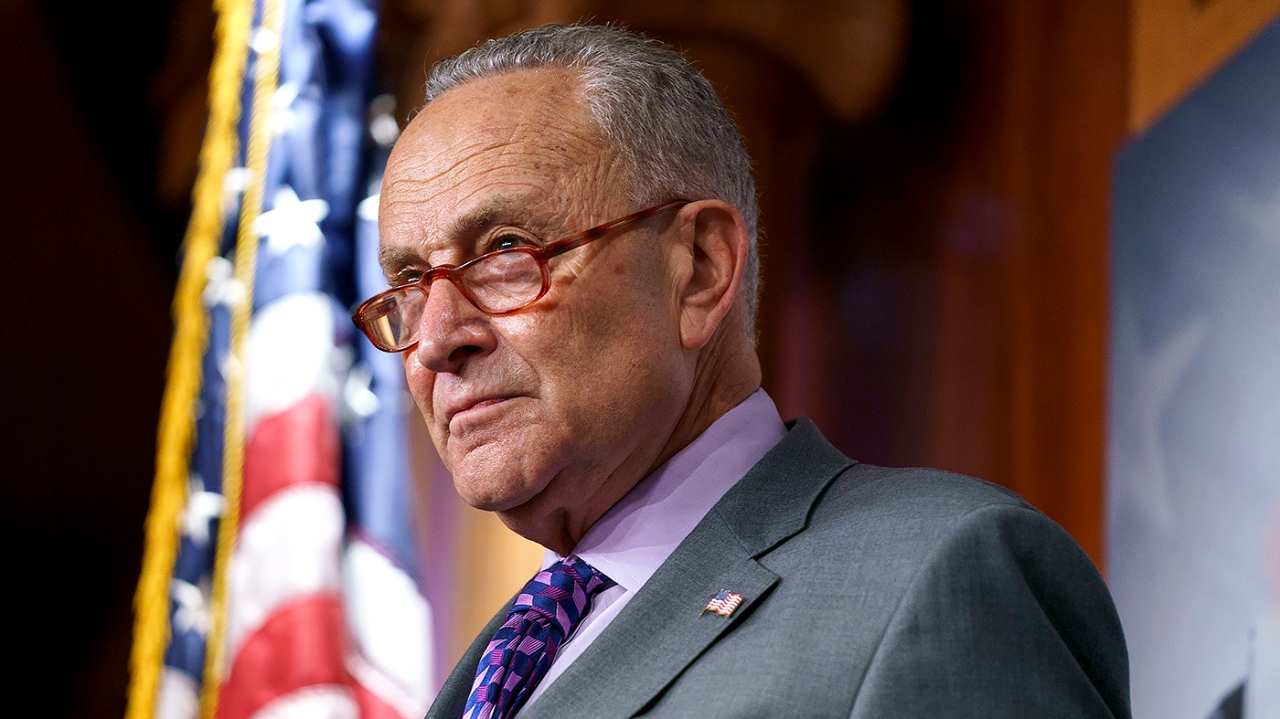
“This is a major victory for the American people,” Senate Majority Leader Chuck Schumer, DN.Y., said in a statement. “While there was one unfortunate ruling in that the inflation rebate is more limited in scope, the overall program remains intact and we are one step closer to finally taking on Big Pharma and lowering Rx drug prices for millions of Americans.”

Senate Finance Committee Chairman Ron Wyden, D-Ore., said that while he was “disappointed” the penalties for higher drug prices for privately insured consumers were dropped, “the legislation nevertheless puts a substantial check on Big Pharma’s ability to price gouge.”

The parliamentarian’s decision came after a 10-day period that saw Democrats resurrect top components of President Joe Biden’s domestic agenda after they were seemingly dead. In rapid-fire deals with Democrats’ two most unpredictable senators—first conservative Joe Manchin of West Virginiathen Arizona centrist Kyrsten Sinema — Schumer pieced together a broad package that, while a fraction of earlier, larger versions that Manchin derailed, would give the party an achievement against the backdrop of this fall’s congressional elections.

The parliamentarian signed off on a fee on excess emissions of methane, a powerful greenhouse gas contributor, from oil and gas drilling. She also let stand environmental grants to minority communities and other initiatives for reducing carbon emissionssaid Senate Environment and Public Works Committee Chairman Thomas Carper, D-Del.

She approved a provision requiring union-scale wages to be paid if energy efficiency projects are to qualify for tax credits, and another that would limit electric vehicle tax credits to those cars and trucks assembled in the United States.

The overall measure faces unanimous Republican opposition. But assuming Democrats fight off a nonstop “vote-a-rama” of amendments — many designed by Republicans to derail the measure — they should be able to muscle the measure through the Senate.

House passage could come when that chamber returns briefly from recess on Friday.

“What will vote-a-rama be like. It will be like hell,” Sen. Lindsey Graham of South Carolina, the top Republican on the Senate Budget Committee, said Friday of the approaching GOP amendments. He said that in supporting the Democratic bill, Manchin and Sinema “are empowering legislation that will make the average person’s life more difficult” by forcing up energy costs with tax increases and making it harder for companies to hire workers.

The bill offers spending and tax incentives for moving toward cleaner fuels and supporting coal with assistance for reducing carbon emissions. Expiring subsidies that help millions of people afford private insurance premiums would be extended for three years, and there is $4 billion to help Western states combat drought.

There would be a new 15% minimum tax on some corporations that earn over $1 billion annually but pay far less than the current 21% corporate tax. There would also be a 1% tax on companies that buy back their own stock, swapped in after Sinema refused to support higher taxes on private equity firm executives and hedge fund managers. The IRS budget would be pumped up to strengthen its tax collections.

While the bill’s final costs are still being determined, it overall would spend more than $300 billion over 10 years to slow climate change, which analysts say would be the country’s largest investment in that effort, and billions more on health care. It would raise more than $700 billion in taxes and from government drug cost savings, leaving about $300 billion for deficit reduction — a modest bite out of projected 10-year shortfalls of many trillions of dollars.

Democrats are using special procedures that would let them pass the measure without having to reach the 60-vote majority that legislation often needs in the Senate.

It is the parliamentarian’s job to decide whether parts of legislation must be dropped for violating those rules, which include a requirement that provisions be chiefly aimed at affecting the federal budget, not imposing new policy.

___

Associated Press writer Matthew Daly contributed to this report.

.

Categories
Technology

Brilliant iPhone app stops websites from demanding that you download their apps

I rarely visit Reddit on my phone because of the pop-ups telling me to download the Reddit app. This is especially frustrating because I already have the app. Unfortunately, Reddit isn’t the only site guilty of this behavior. Several of the most popular sites on the internet pull the same stunt, including TikTok, LinkedIn, and Twitter. If you’re as tired of these “open in app” pop-up panels as I am, you need to check out the new iOS app Banish.

Banish app blocks “open in app” pop-ups

Last month, mobile developer Alex Zamoshchin explained on Product Hunt that he too was fed up with “open in app” pop-ups. Inspired by Hush, an iOS extension that blocks cookies, Zamoshchin decided to build his own extension to block pop-up banners.

Banish for Safari launched on the App Store in early July. Nearly a month later, Zamoshchin has updated the extension numerous times to block even more “open in app” pop-ups and banners. Here are some of the sites the developer has focused on:

  • reddit.com
  • twitter.com
  • linkedin.com
  • tiktok.com
  • instagram.com
  • quora.com
  • medium.com
  • Google com
  • calendar.google.com
  • docs.google.com
  • maps.google.com
  • yelp.com

There are a few steps that you’ll need to take in order to get Banish up and running on your iPhone or iPad. First, download the app from the App Store. Banish for Safari costs $1.99, so you will have to pay for the privilege to eliminate those annoying pop-ups.

Once the app is installed, go to your Settings app, tap on Safariand go to Extensions. From this menu, you will need the “Allow These Content Blockers” to be for Banish, and make sure it says “On” next to Banish under “Allow These Extensions.”

In order to do so, tap on Banish in the Extensions menu, tap the toggle to make it go green, and under “Permissions for Banish” make sure to choose “Allow.”

This isn’t a foolproof method, but if you prefer to use Safari on your iPhone, it should make browsing the internet far less annoying.


More iPhone coverage: For more iPhone news, visit our iPhone 14 guide.

Categories
Sports

Football news 2022: Mohamed Buya Turay misses wedding, brother steps in

A footballer missed his own wedding day in order to report to a new team.

Mohamed Buya Turay wasn’t there on his big day as he was agreeing to a different type of contract instead, The Sun reports.

The Sierra Leone international signed for Swedish side Malmo this summer after a spell in China.

And Malmo were so keen for the 27-year-old to link up with the squad as soon as possible they made him miss his own wedding.

Although Turay made sure bride Suad Baydoun wasn’t on her own – by sending his brother to take his place instead.

The forward was unveiled as a Malmo player on July 22, with Turay’s wedding taking place a day earlier, minus the groom.

Luckily the happy couple had cleverly taken wedding photos before the star was forced to jet to Sweden.

Turay hilariously told Swedish outlet Afton Bladet: “We got married on July 21 in Sierra Leone.

“But I wasn’t there because Malmo asked me to come here earlier.

“We took the pictures in advance. So it looks like I was there but I wasn’t. My brother had to represent me at the wedding itself.”

Turay admitted that he still hasn’t been reunited with his now wife.

He continued: “I will try to get her to Sweden and Malmo now so she can be close to me. She will live here with me.”

The forward is now hoping he will be around to make it on the plane for his honeymoon.

But he is eyeing a league title triumph beforehand.

Turay concluded: “First we have to win the league and then I go on my honeymoon.”

The forward made his Malmo debut in the Europa League qualifying stages in midweek.

This article was originally published by The Sun and reproduced with permission

.

Categories
US

Senate rules official strikes part of Democrats’ drug pricing measures

Democrats’ sweeping economic package was narrowed somewhat on Saturday after a ruling from a top Senate rules official struck one of the provisions aimed at lowering prescription drug prices.

The Senate parliamentarian, an official who determines whether provisions meet the chamber’s complicated budget rules, struck down part of a provision that would limit drug companies’ price increases to the rate of inflation.

Senate Democrats had proposed requiring drug companies to pay rebates back to the government if their prices rose faster than the rate of inflation, both in Medicare and in the private health insurance market.

The parliamentarian allowed the provision to stand in Medicare but struck it for people with private health insurance, such as those who get coverage through their jobs, a substantial chunk of the population.

Still, as expected, the parliamentarian allowed to stand Democrats’ signature drug pricing measure, which would for the first time allow Medicare to negotiate lower drug prices on some drugs.

The parliamentarian also allowed to stand Democrats’ clean energy tax package. Other parts of the package are still awaiting rulings, including a $35 cap on what patients have to pay out of pocket for insulin.

“Democrats have received extremely good news: for the first time, Medicare will finally be allowed to negotiate prescription drug prices, seniors will have free vaccines and their costs capped, and much more,” Senate Majority Leader Charles Schumer (DN.Y.) said in a statement. “This is a major victory for the American people. While there was one unfortunate ruling in that the inflation rebate is more limited in scope, the overall program remains intact and we are one step closer to finally taking on Big Pharma and lowering Rx drug prices for millions of Americans.”

The provisions are being judged on whether they have a sufficiently substantial impact on the federal budget. The rules stem from the special procedure Democrats are using for their package to avoid a GOP filibuster called budget reconciliation.

The end result is that the drug pricing savings included in the package are even more focused on seniors on Medicare and largely do not touch people with private health insurance.

Categories
Technology

A super-useful Google Search hack just got a smart update

One of the best search hacks for finding things easily in Google Search is about to get a lot better. Being able to search using quotes in Google Search has been one of the best ways to find specific phrases or words in a webpage or document for years. But now, Google will highlight where the quoted phrase or word appears. This should let you see exactly where it appears on the page much more easily.

Searching with quotes in Google Search just got a lot easier

quote search in Google Search
As you can see in the image above, Google now bolds the words or phrases you search for in quotes in Google Search. Image source: Google

Previously, when you searched for a quoted phrase in Google Search, you’d be greeted by various URLs and snippets about pages that might include that phrase or word. This made it easier to find exact quotes in documents and other material, or even just to find out where you might have read that phrase the first time. Now, searching for quotes in Google Search is about to improve.

The change that Google is making is very simple. The results will still show the same as they always have. However, Google will now provide a more detailed snippet underneath each URL. The snippet is where Google provides additional context for each URL it displays in Google Search. If you search for “best dog treats,” you’ll see a snippet under each URL that outlines what it is about.

Google detailed the new change in a blog post this week. According to the post, snippets will show you the quoted phrase you searched for in bold letters. Additionally, it will provide some context about where that bit of text is found on the page. The company included a nice example of how quotes in Google Search look now, which we’ve included above.

Why did Google change things?

Google Search on iPad
Unfortunately, the new Google Search results for quoted searches only appear to work on the desktop site. Image source: Teerasan/Adobe

Well, the previous way that Google did things was perfectly fine. However, when you searched for quotes in Google Search, it didn’t provide the context of where or how the phrase was used. This made it difficult to pinpoint exactly why that page might be showing under your results.

However, with the new method, Google has bolded the word. Making it easier to pick out the contextual inclusion for the phrase. Google’s Yonghao Jin says search results didn’t previously show this because the phrase was often included in parts of the page that weren’t considered helpful in snippets.

However, Google says people value seeing where the quote they searched for appears on the page. As such, the company has initiated this new change. Unfortunately, it’s only available on the desktop. So if you search for quotes on mobile, you’ll still need to find them on the page yourself.

Google listed other changes to Google Search earlier this year, so make sure to check those out, too.

Categories
US

Senate rules official strikes part of Democrats’ drug pricing measures

Democrats’ sweeping economic package was narrowed somewhat on Saturday after a ruling from a top Senate rules official struck one of the provisions aimed at lowering prescription drug prices.

The Senate parliamentarian, an official who determines whether provisions meet the chamber’s complicated budget rules, struck down part of a provision that would limit drug companies’ price increases to the rate of inflation.

Senate Democrats had proposed requiring drug companies to pay rebates back to the government if their prices rose faster than the rate of inflation, both in Medicare and in the private health insurance market.

The parliamentarian allowed the provision to stand in Medicare but struck it for people with private health insurance, such as those who get coverage through their jobs, a substantial chunk of the population.

Still, as expected, the parliamentarian allowed to stand Democrats’ signature drug pricing measure, which would for the first time allow Medicare to negotiate lower drug prices on some drugs.

The parliamentarian also allowed to stand Democrats’ clean energy tax package. Other parts of the package are still awaiting rulings, including a $35 cap on what patients have to pay out of pocket for insulin.

“Democrats have received extremely good news: for the first time, Medicare will finally be allowed to negotiate prescription drug prices, seniors will have free vaccines and their costs capped, and much more,” Senate Majority Leader Charles Schumer (DN.Y.) said in a statement. “This is a major victory for the American people. While there was one unfortunate ruling in that the inflation rebate is more limited in scope, the overall program remains intact and we are one step closer to finally taking on Big Pharma and lowering Rx drug prices for millions of Americans.”

The provisions are being judged on whether they have a sufficiently substantial impact on the federal budget. The rules stem from the special procedure Democrats are using for their package to avoid a GOP filibuster called budget reconciliation.

The end result is that the drug pricing savings included in the package are even more focused on seniors on Medicare and largely do not touch people with private health insurance.

Categories
Technology

Mario Kart 8 DLC Leaks Hint At Rest Of New Courses

Nintendo hasn’t revealed what the majority of mario kart 8‘s new courses will be, but players think they already know thanks to some clues reportedly left in the latest DLC files. Dataminers say the latest update contains a ton of leftover music references that hint at what 14 of the remaining 32 courses will be.

“Nintendo left then song prefetches to many future dlc courses in the BGM.bars of wave 2,” dataminer Fishguy6564 wrote on Twitter Thursday night. The discovery, apparently made by YouTube account recordreader, led to a list of music tracks pointing to various courses from past games in the Mario Kart series that would presumably appear in future DLC.

The full list is:

  • Peach Gardens (DS)
  • Boo Lake of Broken Pier (GBA)
  • Alpine Pass (3DS)
  • Berlin Byways (Tour)
  • Waluigi Stadium (GCN)
  • Merry Mountain (Tour)
  • Rainbow Road (3DS)
  • Amsterdam Drift (Tour)
  • Singapore Speedway (Tour)
  • Los Angeles Laps (Tour)
  • Sunset Wilds (GBA)
  • Bangkok Rush (Tour)
  • Vancouver Velocity (Tour)
  • Maple Treeway (Wii)

Combining this apparent new info with Fishguy’s past datamining of the first DLC wave revealed a pretty thorough portrait of what types of courses could be coming in the future.

A lot of the courses are from toursthemobile Mario Kart spin-off. That’s not terrible news considering that the MK8 versions of many of those have been excellent so far. But players did quickly point out that if accurate, this means there are only two more Nintendo DS stages coming, and since one of them is Peach Gardens, not all of the fan-favorites like Airship Fortress, Luigi’s Mansion, and DK Summit will make the cut.

Fans will still have to wait a bit to see if these leaks get confirmed and how the rest of the question marks will be filled in. MK8‘s Booster Course Pass will add the remaining 32 new courses between now and the end of 2023.

Categories
US

Senate on track to take key vote Saturday to advance Democrats’ sweeping health care and climate bill

The package is the product of painstaking negotiations and will give Democrats a chance to achieve major policy objectives ahead of the upcoming midterm elections. Senate Democrats are using a special process to pass the package without Republican votes.

Once the legislation has passed in the Senate, it would next need to be approved by the House of Representatives before President Joe Biden could sign it into law.

The Senate is expected to take the first procedural vote to proceed to the bill sometime on Saturday. A simple majority is required for the motion to proceed.

Democrats control the narrowest possible majority and only 50 seats in the Senate, but are expected to be united to advance the bill in the initial procedural vote.

Arizona Sen. Kyrsten Sinema on Thursday night offered critical support after party leaders agreed to change new tax proposals, indicating she would “move forward” on the sweeping economic package.
West Virginia Democratic Sen. Joe Manchin has also played a key role in shaping the legislation — which is only moving forward after Manchin and Senate Majority Leader Chuck Schumer announced a deal at the end of July, a major breakthrough for Democrats after earlier negotiations had stalled out.
Senate Democrats only need a simple majority for the final passage of the bill since they are using a process known as reconciliation, which allows them to avoid a Republican filibuster and corresponding 60-vote threshold.
In order to pass a bill through the reconciliation process, however, the package must comply with a strict set of budget rules. The Senate parliamentarian must decide whether the provisions in the bill meet the rules to allow Democrats to use the filibuster-proof budget process to pass the legislation along straight party lines.

In a key ruling, the parliamentarian, Elizabeth MacDonough, has allowed a major component of the Democrats’ prescription drug pricing plans to move ahead — giving Medicare the power to negotiate the prices of certain prescription drugs for the first time.

But MacDonough narrowed another provision aimed at lowering drug prices — imposing penalties on drug companies if they increase their prices faster than inflation. Democrats had wanted the measure to apply both to Medicare and the private insurance market. But the parliamentarian ruled the inflation cap could only apply to Medicare, a Democratic aid said.

Still, Democrats hailed the ruling, with Schumer saying that “the overall program remains intact.”

Democrats are waiting on new cost estimates from the nonpartisan Congressional Budget Office to see how the ruling affects their deficit projections. It’s likely that the curtailed drug provision would somewhat limit the package’s deficit reduction.

Meanwhile, MacDonough ruled to keep intact several climate measures from the Environmental and Public Works Committee in the reconciliation bill, including a methane fee that would apply to oil and gas producers leaking the potent greenhouse gas methane above a certain threshold.

Earlier Saturday, Senate Finance Chair Ron Wyden of Oregon announced that the clean energy tax portion of the bill “adheres to Senate rules, and important provisions to ensure our clean energy future is built in America have been approved by the parliamentarian.”

Schumer has yet to decide the exact time he plans to kick off debate this weekend, according to a senior Democratic aide. The timing of that vote is key because it will kick off the process and will determine when the bill will ultimately get its final vote. If Schumer waits to hold that first vote to open debate, he could push back the rest of the votes on the bill until later Saturday or even all day Sunday.

The reason why Democratic leaders haven’t decided yet is that they were waiting for the parliamentarian’s rulings. While they don’t need her to rule before the first procedural vote, the goal of Democrats is to make any changes she requests before the process begins, the aid said. As a result, the timing of votes on amendments and final passage of the bill is very much in flux.

What happens after the bill faces its first key vote

If the first procedural vote to proceed to the bill gets the backing of all 50 members of the Democratic caucus, which it is expected to, there would then be up to 20 hours of debate evenly divided between the two parties, though some of that time could be yielded back to speed up the process.

Following time for debate, there would be a process colloquially referred to on Capitol Hill as a “vote-a-rama” — a marathon series of amendment votes with no time limit that must run its course before a final vote can take place.

Republicans will be able to use the vote-a-rama to put Democrats on the spot and force politically tough votes. The process typically stretches overnight and into the early hours of the next morning. It’s not yet clear exactly when the vote-a-rama will begin, but it could start as early as Saturday evening. If that happens, a final vote could potentially take place as soon as the early hours of Sunday morning.

The House is poised to come back to take up the legislation on Friday, August 12, according to House Majority Leader Steny Hoyer’s office.

How the bill addresses the climate crisis

For a party that failed to pass major climate legislation over 10 years ago, the reconciliation bill represents a major, long-fought victory for Democrats.

The nearly $370 billion clean energy and climate package is the largest climate investment in US history, and the biggest victory for the environmental movement since the landmark Clean Air Act. It also comes at a critical time; This summer has seen punishing heat waves and deadly floods across the country, which scientists say are both linked to a warming planet.

Analysis from Schumer’s office — as well as multiple independent analyzes — suggests the measures would reduce US carbon emissions by up to 40% by 2030. Strong climate regulations from the Biden administration and action from states would be needed to get to Biden’s goal of cutting emissions 50% by 2030.

The bill also contains many tax incentives meant to bring down the cost of electricity with more renewables, and spur more American consumers to switch to electricity to power their homes and vehicles.

Lawmakers said the bill represents a monumental victory and is also just the start of what’s needed to combat the climate crisis.

“This isn’t about the laws of politics, this is about the laws of physics,” Democratic Sen. Brian Schatz of Hawaii told CNN. “We all knew coming into this effort that we had to do what the science tells us what we need to do.”

Key health care and tax policy in the bill

The bill would empower Medicare to negotiate prices of certain costly medications administered in doctors’ offices or purchased at the pharmacy. The Health and Human Services secretary would negotiate the prices of 10 drugs in 2026, and another 15 drugs in 2027 and again in 2028. The number would rise to 20 drugs a year for 2029 and beyond.

This controversial provision is far more limited than the one House Democratic leaders have backed in the past. But it would open the door to fulfilling a longstanding party goal of allowing Medicare to use its heft to lower drug costs.

Democrats are also planning to extend the enhanced federal premium subsidies for Obamacare coverage through 2025, a year later than lawmakers recently discussed. That way they wouldn’t expire just after the 2024 presidential election.

To increase revenue, the bill would impose a 15% minimum tax on the income large corporations report to shareholders, known as book income, as opposed to the Internal Revenue Service. The measure, which would raise $258 billion over a decade, would apply to companies with profits over $1 billion.

Concerned about how this provision would affect certain businesses, particularly manufacturers, Sinema has suggested that she won changes to the Democrats’ plan to stop back how companies can deduct depreciated assets from their taxes. The details remain unclear.

However, Sinema nixed her party’s effort to tighten the carried interest loophole, which allows investment managers to treat much of their compensation as capital gains and pay a 20% long-term capital gains tax rate instead of income tax rates of up to 37%.

The provision would have lengthened the amount of time investment managers’ profit interest must be held from three years to five years to take advantage of the lower tax rate. Addressing this loophole, which would have raised $14 billion over a decade, had been a longtime goal of congressional Democrats.

In its place, a 1% excise tax on companies’ stock buybacks was added, raising another $74 billion, according to a Democratic aid.

This story has been updated with additional developments.

CNN’s Manu Raju, Ella Nilsen, Tami Luhby, Katie Lobosco and Melanie Zanona contributed to this report.

.

Categories
Technology

Samsung’s New Phone Repair Kits Are Better Than Nothing

Samsung officially introduced its repair kit program in the US this week. Now, anyone who owns one of the handful of Galaxy phones covered by the program can order the parts, tools, and instructions needed to fix their devices themselves.

The company first announced its repair program in April. Thanks to some laws in Europe that require devices to indicate how repairable they are, similar legislation that secures consumers’ rights to repair their own phones, laptops, and gadgets feels all but inevitable in the US. Companies like Samsung and Apple are eager to get ahead of it and set the tone for what device repairability will mean. Problem is, now that these companies have unveiled their repair kit programs, it appears they offer more of a morsel of reparability than a full buffet.

Each Samsung Galaxy repair kit includes the tools, spare parts, and step-by-step instructions needed to fix broken screens, charging ports, and glass-backed chassis.

Photography: Samsung

Samsung has only made repair kits available for some of its products, namely the Galaxy S20 and Galaxy S21 phones, and the Galaxy Tab 7+. That’s seven devices total, out the hundreds of Samsung gadgets still in service. What’s more, only certain parts of each device can be repaired: The screen, charging port, and back panel glass. (Galaxy Tab owners can also replace the battery.) While Samsung’s repair kit rollout is limited, it’s been a smoother process so far than when Apple introduced its repair program in April. Apple’s kits were expensive, unwieldy, and often more bother than they were worth.

Samsung, along with Google (which makes available parts and tools for its Pixel phones) has partnered with the right-to-repair advocacy group iFixit. It’s a good partnership and a step toward a more repairable future. But for now that future is only manifesting in fits and starts. If Samsung, Apple, and other companies want to build out a robust self-repair program before the regulatory hammer comes down, they’ll have to step up their efforts.

Here’s some more news from the Gear desk.

Hey Alexa, Sweep My Floor

Say what you will about Amazon, but there’s no denying that it’s just a big ol’ hungry bear that wants to gobble up everything around it. The latest entity to slide screaming into Amazon’s gaping maw is iRobot, the company that makes Roomba vacuums. Amazon will be absorbing the company for a chill $1.7 billion in cash, which seems like chump change against its $3.9 billion feast of OneMedical last month. (That’s right, Amazon is a health care provider now too.)

Sure, there are all sorts of privacy implications from this acquisition, especially when you consider that Amazon may soon own the map of your home’s floor plan collected by the sensors on iRobot’s vacuums. But hey, just think of the other possibilities: Ring cameras in your robot lawn mower! Flying Dustbuster drones that listen to your conversations! Truly anything will be possible.

Clubhouse Subdivides Itself

Remember Clubhouse? The audio-based social network took off in 2020 during the early days of the pandemic, when it provided relief from the isolation and Zoom fatigue many of us were feeling. (Ha ha, glad that’s over, right?) Since admission to the app was invite-only, it lent the Clubhouse experience a sense of exclusivity that made it feel exciting. Soon, Clubhouse became the go-to virtual meet space for Silicon Valley bigwigs to delight each other with their collective presence. Then the app opened up to the general public, and its appeal fizzled faster than a warm La Croix.

Now, Clubhouse is trying to recapture some of its old cool by making parts of itself exclusive again. A new feature lets users split rooms off into multiple Clubhouses (Clubs house?) that will enable them to keep their conversations private. Clubhouse is taking applications to create “Houses” now but will be rolling them out on a case-by-case basis.

Clearly Clubhouse is hoping that these smaller, more curated experiences lure users back from the many other, much more popular audio chat services. when announcing the feature on Twitter, Clubhouse CEO Paul Davison wrote, “The best social experiences are not open to everyone. They are small and curated. This is what creates intimacy, trust, and friendship.”

Instagram NFT’s

After a controversial move to prioritize its TikTok clone Reels in user’s feeds, Instagram is digging in on another buzzy online trend: NFTs. In May, Instagram CEO Adam Mosseri announced that the social platform would dip its toes into the then-piping-hot NFT waters. Of course, the NFT market has cooled off considerably since May. Still, this week Meta CEO Mark Zuckerberg announced that his company is expanding its plan to enable NFTs across Instagram in more than 100 countries. The feature will let users create posts as NFTs, and buy or sell them using digital wallets.

Speaking of non-fungible assets …

Take an NFT, It’ll Last Longer

The hallmark of NFTs has always been that they’re digital. Artists minting their works as NFTs create a marker on a blockchain that indicates that a work is an original. Otherwise, the piece itself is as infinitely re-creatable as any online GIF. (OK, it’s actually way more complicated than that, so here’s a guide explaining exactly how NFTs work.)

Now, thanks to companies like Infinite Objects and Tokenframe, you can take that digital art and stick it on your wall. This week on the Gadget Lab podcast, WIRED’s Lauren Goode and Michael Calore talk about the weird world of NFTs and how physical frames for digital art might make the whole thing more approachable for the uninitiated.

content

This content can also be viewed on the site it originates from.

.