Categories
Entertainment

New record label raises profile of forgotten female composers | Music

LIza Lehmann, Alice Mary Smith and Adela Maddison were British composers of the 19th and early 20th centuries, but few today will know their names, let alone their music. Now they have been singled out by a new classical record label dedicated to raising the profile of female composers, many of whom have never been recorded and whose works have been “lost over time”.

The label, which is called La Boîte à Pépites (the jewel box), will discover and record compositions that have rarely, if ever, been heard before, yet deserve “a good position in the standard musical repertoire”.

Recent research by Donne, a charitable foundation focused on gender inequality within the music industry, found that only 747 out of almost 15,000 works performed by 100 orchestras from 27 countries in 2020-2021 were composed by women – a total of 5%.

Asked why female composers are overlooked, Gabriella Di Laccio, a soprano and founder of the Donne Foundation, told the observer: “There are several reasons. One very important one is ignorance of the repertoire. People in positions to include this music either don’t have time or their focus is not directed to learning what is available.

“Also, there is a fear of audiences not coming and, I’m sorry to say, prejudice. Unfortunately, we’ve been raised to believe that only men were genius composers. The unconscious bias is still present, which is very surprising.”

The new label has been founded by French cellist Héloïse Luzzati, who says that unearthing and studying original manuscripts has enabled researchers to “exhume” some extraordinary compositions. “Too few of them are published and therefore even fewer recorded,” she said.

The label’s first release, to be launched in the UK on 30 September, is devoted to French composer Charlotte Sohy, who died in 1955. Luzzati described her music as “amazing… impressionist… with the colors of Ravel, Debussy or Chausson”.

Asked why it has been ignored, she said: “If she had been a man, her music would have been known.”

A 3CD boxset features world premiere recordings of piano, chamber and orchestral works, performed by the National Orchestra of Avignon-Provence, among others.

In the sleeve notes, Alexis Labat, the orchestra’s executive director, writes: “The classical repertoire for symphonic formations covers over four centuries, and almost all of it is devoted to men … How can we explain this incredible deficit of women composers in our concert seasons and our recordings?”

Luzzati said: “A few years ago, the question of the role of women in the history of music began to gain a certain importance in my life as a musician. How could I have spent so many years without ever having played a piece composed by a woman?”

It inspired her to establish the project “Elles – Women Composers”, promoting female composers through a festival and a video channel.

The new record label is “expanding this mission” with a series of albums, each devoted to a single female composer. Its initial release in France in April proved “huge for someone who is unknown”, Luzzati said.

Extensive research is yet to be done into various British composers, including Lehmann, who wrote hundreds of solo and ensemble songs, many of which were well-received in their day.

Scholar Derek Hyde has described her as one of the three “most outstanding women songwriters” of the 19th century.

Luzzati said that Lehmann has been unjustly forgotten. She praised her emotion of her music, noting that “the quality of the writing is extraordinary”.

Next year, she plans to launch a music publishing-house: “Today, for example, we can hear Sohy’s music but, if a musician wants to play it, they must first write to us. You cannot find sheet music on a website or in a sheet music store. Editing works that are not yet published is essential to rehabilitate the works of female composers.”

She believes that, through such “positive discrimination”, forgotten female composers will finally be appreciated – eventually doing away with the need for their own record label. “Today this is not yet the case and there is still so much music of female composers to discover.”

Katherine Cooper, classical editor of Presto Music, who will be selling the recording, said: “I can’t think of another label solely devoted to female composers. It’s a great idea that someone is amplifying that and dedicating themselves to it. They are shining light on a lot of composers that are really poorly represented, if they’re represented at all.”

Categories
Australia

Shedding colonial ties can take time, but the TikTok clock is ticking

Labor’s Senate President Sue Lines (who last week said we should ditch the Lord’s Prayer at the opening of each day’s sitting) directed Thorpe to say the oath properly. Thorpe did so, but in a tone of such naked sarcasm that no one could mistake her in her contemplation.

It was a stunt, sure. But it is pretty wild that Australian parliamentarians are made to declare allegiance to the Queen.

And while Liz may never have donned a pith helmet herself, it’s undeniable she is the figurehead of an ex-colonial power which has a great deal of blood on her hands. The confrontation of this history means even royal tours these days are fraught.

William and Kate's tour of the Caribbean was called “tone deaf”.

William and Kate’s tour of the Caribbean was called “tone deaf”.Credit:Getty

Once, royals could rely on polite silence when visiting the Commonwealth outposts their forebears exploited. No more – in March, when Prince William and his wife Kate, our future queen, took an eight-day tour of Belize, Bahamas and Jamaica, it wasn’t all flag-waving children and military parades.

In Belize, they faced protests. In Jamaica, the prime minister told the Cambridges his country would be “moving on” to become a republic (just as Barbados did in 2021), and in the Bahamas a government committee urged the royals to make a “full and formal apology for their crimes against humanity”. Yikes.

loading

We are living through an exciting period when history is being re-examined, and there is a heightened awareness of the damage wrought by colonialism.

In 2021, Scott Morrison’s government announced that the words “young and free” would be swapped for “one and free” in the national anthem (interestingly, the change was made by proclamation of the governor-general, the Crown’s representative).

It now seems astonishing how easily Aboriginal history was erased when the anthem was proclaimed in 1984 (again, by the governor-general).

Living royals are not the only ones feeling insecure – historical figures are also falling victim to this spirit of reappraisal, a trend that has picked up speed following the Black Lives Matter protests of 2020.

Winston Churchill is still venerated by many politicians, and seen, by older generations at least, as a symbol of anti-fascist defiance and patriotic heroism.

Illustration by Reg Lynch

Illustration by Reg LynchCredit:Sydney Morning Herald

New biographies change the lens – a 2021 book on Churchill by Geoffrey Wheatcroft portrays Churchill as “not just a racist but a hypocrite, a dissembler, a narcissist, an opportunist, an imperialist, a drunk, a strategic bungler, a tax dodger, a neglectful father, a credit-hogging author, a terrible judge of character and, most of all, a masterful mythmaker”, in the words of the New York Times. oof.

Another recent biography by Tariq Ali argues that the post-war veneration of Churchill represents a nostalgia for empire.

Churchill led the fight against Nazi Germany, and saved the world from fascism.

But there is no doubt he was racist – he used the n-word and he called Chinese people “pigtails”.

loading

Ali points out that in 1937 the great man said indigenous people in North America and Australia had been colonized by a “stronger race, a higher-grade race”.

The BBC coverage of the current Commonwealth Games has been tinged with skepticism, with one studio presenter asking her sports panel: “What does the Commonwealth mean in modern society?”

The diversity of the new parliament has been much commented upon.

Lidia Thorpe and Chandler-Mather are Greens politicians, and Thorpe is Indigenous, but perhaps the real “diversity” they represent is their relative youth. Thorpe is 48, a member of Generation X, and Chandler-Mather is just 30, a Millennial with a more relaxed concept of masculinity.

After he was chastised for his nude neck, he posted a TikTok video highlighting the fact that his question, once he was allowed to ask it, had been about public housing.

Likewise, the new teal independents are largely Gen X women.

They look young compared to the older male politicians who have traditionally dominated our politics, in their suits.

And their ties, of course.

The Opinion newsletter is a weekly wrap of views that will challenge, champion and inform your own. Sign up here.

Categories
US

Adams condemns Texas governor for busing migrants to New York

Adams said migrants were being forced onto buses — even if they wanted to go to destinations other than New York. Some were falsely told they would be taken to their desired destination, only to find themselves bound for New York, he said.

“Some of the families are on the bus that wanted to go to other locations, and they were not allowed to do so. They were forced on the bus,” Adams said. “Our goal is to immediately find out each family’s needs and give them the assistance they want.”

The city estimated last week that 4,000 asylum seekers have entered its shelter system since late May. Adams pointed to the influence when he revealed last month that the city violated state law by failing to timely place indigent families in city shelters.

Abbott has ordered the Texas Division of Emergency Management to charter buses to transport migrants from Texas to both New York and Washington, DC, where thousands of new arrivals have been sent since April.

“Because of President Biden’s continued refusal to acknowledge the crisis caused by his open border policies, the State of Texas has had to take unprecedented action to keep our communities safe,” Abbott said in a statement.

“In addition to Washington, DC, New York City is the ideal destination for these migrants, who can receive the abundance of city services and housing that Mayor Eric Adams has boasted about within the sanctuary city,” the statement said. “I hope he follows through on his promise of welcoming all migrants with open arms so that our overrun and overwhelmed border towns can find relief.”

Fourteen people were dropped off at the bus station morning Sunday, after three days of travel. Adams said officials expected 40 people to be on the bus, but others appear to have gotten off at other stops along the route.

“It is unimaginable what the governor of Texas has done, when you think about this country, a country that has always been open to those who were fleeing persecution,” Adams said. “We’ve always welcomed them. And this governor is not doing that in Texas. But we are going to set the right tone of being here for these families.”

The migrants who wish to remain in New York will be placed in shelters if needed, while volunteers will attempt to assist those who want to travel to other cities where family members are awaiting them.

Adams repeated his plea for federal aid to deal with the influence of asylum seekers.

“We need help, and we’re reaching out to the federal government to tell them that we need help,” he said. “We’re going to get through this.”

Abbott recently invited Adams and DC Mayor Muriel Bowser to the southern border — an invitation that Adams declined.

The mayor said Texas officials have not communicated about the busing push, and his administration has not been informed when buses are leaving or been given information about the passengers.

“It’s unfortunate that the governor of Texas isn’t coordinating,” he said. “They’re not giving us any information.”

Adams declined to call for any changes to federal immigration policy, saying he was focused on getting assistance to provide for arriving migrants.

“What Gov. Abbott is doing is cruel, misleading people,” said Manuel Castro, commissioner of the Mayor’s Office of Immigrant Affairs. “But we won’t fall for these scare tactics, and we are going to make sure asylum seekers have the resources and support they need here in New York.”

Categories
Technology

Use Your iPhone’s Hidden Microphone Effects to Improve Your Audio in FaceTime, Zoom, and Other Video Calling Apps « iOS & iPhone :: Gadget Hacks


Being seen clearly is an essential part of any video call you’re on, but being heard is equally important. Lousy audio from your side can ruin the experience for others on the call if they can’t understand you or hear the sounds they need or want to hear. To improve your audio feed during FaceTime, Google Meet, Instagram, WhatsApp, Zoom, and other video calls, unlock your iPhone’s hidden audio filters.

Mic Mode processing was first introduced in iOS 15, iPadOS 15, and macOS Monterey, alongside Video Effects, as a new FaceTime feature. But you can use it in almost any audio and video calling app as long as it adds support.

With the hidden Mic Mode effects, Apple gives you control over how the audio processor interprets the signal from the microphones on your devices. The effects use machine learning to either dampen ambient sounds around you to isolate your voice or include even more audio around you without any distracting echoes.

There are three modes that you can choose from:

  • Standard (default): This uses standard digital signal processing (DSP) for audio, the same processing available for all apps on your device.
  • Voice Isolation: This prioritizes your speech and removes unwanted ambient noise such as typing on keyboards, mouse clicks, lawn mowers, construction work, etc. Use it when your voice is the only important thing others need to hear. It’s most useful during group video conferences and work meetings where you don’t need to highlight sounds around you.
  • Wide Spectrum: This minimizes audio processing to capture your voice and all sounds around you better but still includes echo cancellation to keep calls smooth. Use it when you want others on the video call to feel like they’re right there with you. It’s most helpful when chatting with family, so they don’t miss out on anything, and when conducting music and other audio-based lessons, such as teaching someone to play guitar or understand music history.

Which Apps Support Mic Mode?

Any app that uses the Voice over Internet Protocol background mode automatically supports Mic Mode without any code changes, but only for video calls.

That means it won’t work in audio-only calls or when recording video in a camera app. So for apps like FaceTime, Google Meet, Skype, and Zoom, you can use Mic Mode in any video conference. But for other apps that don’t focus on video conferencing, like Instagram and WhatsApp, you’d only be able to use it for video calls — not for audio messages or stories.

When recording video stories in apps like Facebook, Instagram, or Snapchat, the Video Effects tool may work but Mic Mode will be unusable. Developers can manually disable support in their apps, and those who don’t use the VoIP background mode can incorporate the feature.

Which Devices Support Mic Mode?

Mic Mode works on any iPhone running iOS 15 or later with an A12 Bionic or newer chip. The chip requirements are the same for iPad, and you should be running iPadOS 15 or later. It is also available on 2018 Mac models or newer running macOS Monterey 12 or later. You can see the complete list of compatible Apple devices at the end of this article.

How to Enable Mic Mode Effects in Supported Apps

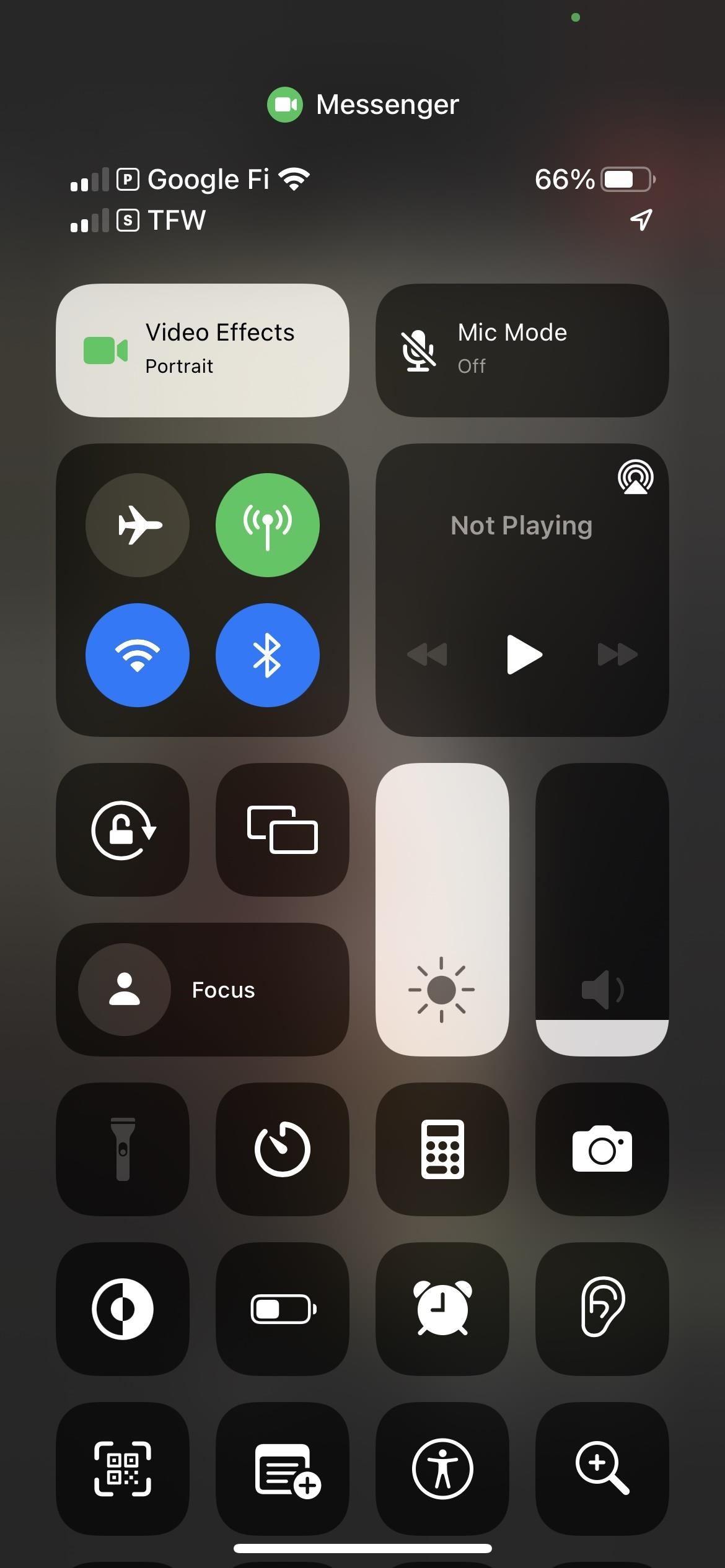
Start a video call or conference in whatever app you usually use for it, then open Control Center. If the app supports “Video Effects” and/or “Mic Mode,” you’ll see two new buttons at the top for them. By default, Mic Mode is always set to “Standard” and has to be switched by you manually — apps can’t change it for you.

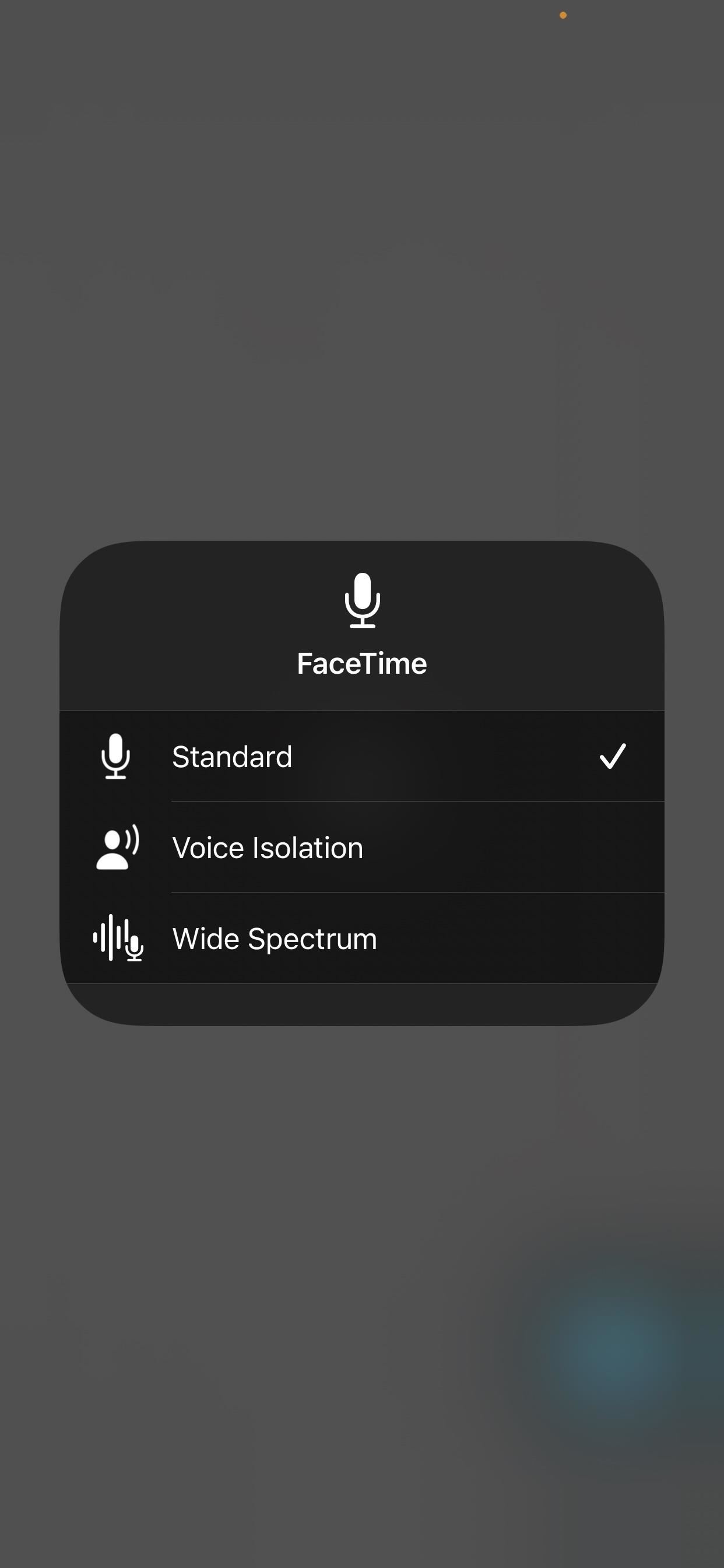
To change modes, tap “Mic Mode,” and a new menu with the different options will appear. Choose between “Voice Isolation,” “Wide Spectrum,” or “Standard.” Then, tap on the background to return to Control Center’s main screen, and you should see your selected filter named inside the Mic Mode button. Exit Control Center, and continue your call with better audio.

Tap the Mic Mode button (left) to switch to a different audio filter (right).

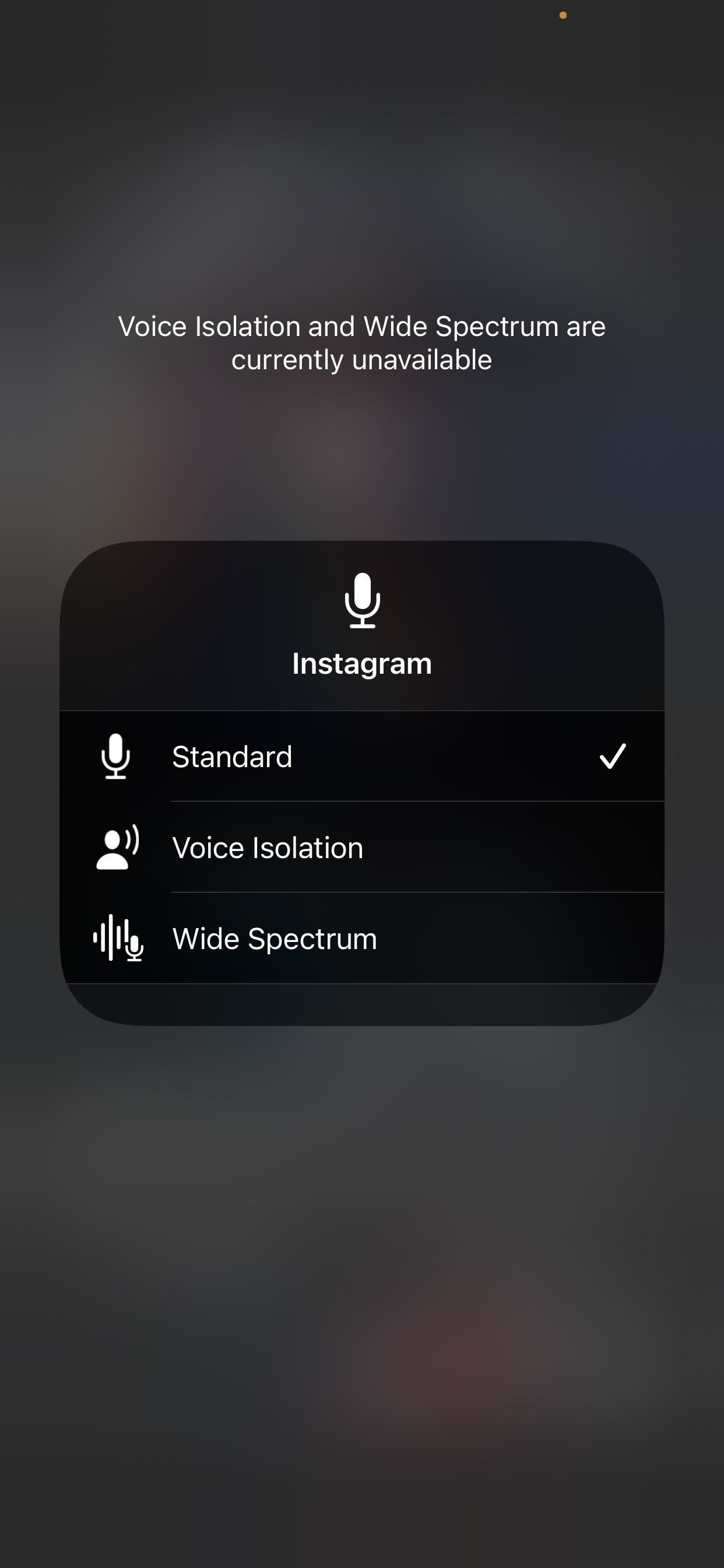
An app may support Video Effects but not Mic Mode, in which case the Mic Mode button would display “Off,” and nothing would happen when you tap it. In some cases, you’ll see “Standard,” but you won’t be able to choose a different audio filter when you open the Mic Mode selector. Instead, you’ll get a “Voice Isolation and Wide Spectrum are currently unavailable” alert.

When Mic Mode is disabled (left) and when Standard is only available (right).

All Apple Devices That Support Mic Mode

  • iPhone SE (2nd generation and later)
  • iPhone XR
  • iPhone Xyes
  • iPhone Xyes Max
  • iPhone 11
  • iPhone 11Pro
  • iPhone 11 ProMax
  • iPhone 12mini
  • iPhone 12
  • iPhone 12 Pro
  • iPhone 12 ProMax
  • iPhone 13mini
  • iPhone 13
  • iPhone 13 Pro
  • iPhone 13 ProMax
  • iPad mini (5th generation and later)
  • iPad (8th generation and later)
  • iPad Air (3rd generation and later)
  • iPad Pro 11-inch (all generations)
  • iPad Pro 12.9-inch (3rd generation and later)
  • MacBook Air (2018)
  • MacBook Pro (13-inch, 2018)
  • MacBook Pro (15-inch, 2018)
  • Mac mini (2018)
  • iMac (21.5-inch, 4K, 2019)
  • iMac (27-inch, 5K, 2019)
  • MacBook Air (2019)
  • MacBook Pro (13-inch, 2019)
  • MacBook Pro (15-inch, 2019)
  • MacBook Pro (16-inch, 2019)
  • Mac Pro (2019)
  • iMac (27-inch, 5K, 2020)
  • MacBook Air (2020)
  • MacBook Air (M1, 2020)
  • MacBook Pro (13-inch, 2020)
  • MacBook Pro (13-inch, M1, 2020)
  • Mac mini (M1, 2020)
  • MacBook Pro (14-inch, M1 Pro, 2021)
  • MacBook Pro (14-inch, M1 Max, 2021)
  • MacBook Pro (16-inch, M1 Pro, 2021)
  • MacBook Pro (16-inch, M1 Max, 2021)
  • iMac (24-inch, M1, 2021)
  • MacBook Air (M2, 2022)
  • MacBook Pro (13-inch, M2, 2022)
  • MacStudio (2022)

Spatial Audio in FaceTime

In addition to Mic Mode, another way to change your FaceTime audio settings is Spatial Audio. This feature spreads out voices to make it sound like they are coming from the direction each person is positioned on the screen.

This audio mode is activated by default as long as your device is compatible and works with AirPods (2nd generation), AirPods (3rd generation), AirPods Pro, and AirPods Max.

Spatial Audio is compatible with the same iPhone and iPad models listed above running iOS and iPadOS 15 or later, but only with Mac computers with Apple Silicon running Monterey 12 or later, listed below.

  • MacStudio (2022)
  • MacBook Pro (14-inch, 2021)
  • MacBook Pro (16-inch, 2021)
  • iMac (24-inch, M1, 2021)
  • Mac mini (M1, 2020)
  • MacBook Air (M1, 2020)
  • MacBook Pro (13-inch, M1, 2020)


Keep Your Connection Secure Without a Monthly Bill. Get a lifetime subscription to VPN Unlimited for all your devices with a one-time purchase from the new Gadget Hacks Shop, and watch Hulu or Netflix without regional restrictions, increase security when browsing on public networks, and more.

Buy Now (80% off) >

Other worthwhile deals to check out:

Cover photo and screenshots by Brenda Ramirez/Gadget Hacks

Categories
Entertainment

SBS Emerging Writers’ Competition: Arani Ahmed extract

Janey was pointing at Melissa. “You can’t play with us today, you’re different,” she said, at first meaning the clothes we were wearing. I looked at the translucent white of her pointing arm, over to the rough tan of Melissa, then back down at the brown of my hands.

Author Arani Ahmed.

Author Arani Ahmed.

I was darker than Melissa, but I wasn’t aware of it at school. Everyone around me, the kids from my neighbourhood, my teachers, had made me believe that I looked like them because they were all that I saw reflected at me. I spoke in the way of any child brought up in Sydney’s western suburbs, and I brought sandwiches to school in a red lunch box but more often than not had $2 in my pocket for a meat pie from the canteen.

Melissa looked at us, at me, and said, “I’m different? But what about…” Janey nodded, and I made a slight shake of my head. We three glanced at each other, our minds struggling with a thought that was raw, unjust, and under-prepared. Melissa scrunched up her face, turned and galloped away, wiping tears from her eyes.

Later that day, I would go home and catch my reflection in the bathroom mirror above the sink. Large, brown eyes, small lips, big ears, hair stretched back into a glossy black ponytail, frazzled ends along my hairline.

Looking back at me was a face I didn’t recognize, in more ways than one. My hands turned on the tap, and lines of dark brown freckles dotted my skin. These I mistook for dirt and so I scrubbed. I washed once, twice, I washed three times. But when I was done my hands were the same.

My crush that year was a boy named Ryan, the first in a series of skinny gay boys and later queer men that I would fall for, repeatedly and consistently. He had Nick Carter hair, parted in the middle and falling into his eyes, and a piercing in his right ear lobe. I used to kick him under the table. I have used to blush and ignore me.

Others gossiped that he was gay, because of his piercing: “Don’t you know? That’s why it’s in the right.” That made him, somehow, all the more enticing. I would go on to spend my high school years joking that I was “a gay man trapped in a woman’s body”.

These were the only words I had at that age. Inaccurate and hurtful today, I would say them flippantly, an idea so far-fetched in my corner of the world that everyone excused its meaning.

Twenty years later, when I first, with honesty, let the word “transgender” form on my lips, it felt right in one language, and pushed me further away from the other. I had spent years grappling with pieces of a broken tapestry, trying to draw connections with what memories would surface and break through. I tried to translate that word and my thoughts, to lay down those feelings in a way I could share with my family, but there was no common ground or history I could grasp. I’d never seen a “me” before that encompassed all parts of that whole.

The fight took place on two fronts; two worlds thought to be incompatible but which comprised the fundamental parts of me. If neither part could exist, then how could I exist?

Two worlds thought to be incompatible but which comprised the fundamental parts of me. If neither part could exist, then how could I exist?

It was only important that I didn’t fail. To tell my parents was to take that battle from inside and let it culminate on the surface of my body. At the heart of it was the knowledge that I existed as an extension of those around me. If I transformed my body, I would also be transforming the fundamental parts of my ma, my dad and my brother.

When I did open my world to them, we were sitting in the living room of my childhood home. I stumbled through broken Bengali and imprecise English, attempting to untangle a truth I had only ever learned to hide.

Papa, after sitting silently, intently, seriously, while I stammered my way through half-formed sentences and waves of emotion said to me, “I wish you would have told me earlier. I could have supported you.” And in that moment, when my heart was open and bare, I had a lurching, impossible thought: Okay. Let’s go back then. Let’s go back and try again.

loading

It would take a few more years until I recognized myself in my reflection, still learning to love. Standing over the bathroom sink I looked at the lines of freckles along my arms, up to my face and my own patches of beard. I let that wide-eyed child hold my hand, remembering what they had learned.

I rubbed the shaving gel on my face and let the razor pull down to reveal my brown, queer skin.

Between Two Worlds: 30 Powerful Voices from the SBS Emerging Writers’ Competition (Hardie Grant), judged by Tara June Winch and Behrouz Boochani, is out now.

The Booklist is a weekly newsletter for book lovers from books editor Jason Steger. Get it delivered every Friday.

Categories
Australia

Former rugby union star’s pledge to ‘not stand in the way’

Almost as soon as his victory became apparent, Pocock began to shape the debate on climate. He was the first of the crossbenchers to indicate he would support the Albanese government’s 43 per cent emissions reduction target, saying while he wanted a more ambitious goal, the “community wants to see us banking some gains”.

His pragmatism squeezed the Greens, who risked being seen as an obstructionist if they too didn’t back it in. As the first two weeks of the new parliament drew to a close on Thursday, the Albanese government had chalked up a major victory – its landmark bill to legislate the target passed the lower house, with the Greens agreeing to vote for it after securing drafting changes to ensure the 43 per cent target was a floor and not a ceiling.

David Pocock at a Stop Adani Coal Mine protest on the lawns at Parliament House in 2019.

David Pocock at a Stop Adani Coal Mine protest on the lawns at Parliament House in 2019.Credit:Dominic Lorrimer

Pocock is now preparing to test his influence when the bill hits the Senate in September. He has teamed up with Tasmanian crossbenchers Jacqui Lambie and Tammy Tyrrell in drafting an amendment that will require the federal government to show how its policies align with Australia hitting the target.

The move is a postscript to his first speech; he won’t stand in the way, but neither will he be a rubber stamp.

Pocock is, of course, no stranger to the national spotlight. His sporting prowess and social activism have been traversed in countless newspaper profiles, features and TV interviews over the years. He was famously arrested in 2014 for chaining himself to a tractor in protest against a new coal mine in northern NSW, and together with now-wife Emma made headlines when in 2010 they boycotted signing their marriage certificates until same-sex marriage was legalized.

David Pocock and fellow activist farmer Rick Laird chained to a digger.

David Pocock and fellow activist farmer Rick Laird chained to a digger.

It is all the more striking, then, that Pocock in person is extremely reserved. A self-described introvert, he says he spoke to more people on the campaign trail than he has in the past decade.

“I’m not great at small talk,” he says in an interview with the herald and The Age. “But talking about issues that are interesting and that I believe in, I love it.”

He lacks the bombastic, brash personality that has helped catapult others onto the Senate crossbench and is cut from a decidedly different cloth to the mercurial and unvarnished Lambie or One Nation’s Pauline Hanson. Quiet and contemplative, his sentences from him are punctuated by long pauses as he converts thoughts into words.

“One of the downsides is that it can come across as arrogance because you’re a little bit quieter than people expect and maybe seem aloof. But sometimes you just don’t want to talk,” he says.

loading

Lambie, for what it’s worth, says Pocock will be no pushover in the Senate, but confesses she was among the many skeptics who doubted he would make it.

“I told him ‘I admire you, but there’s no way you’ll win’,” she said, relaying a chat she had with Pocock after he announced his campaign. “We’re all still laughing about it.”

As candidates go, Pocock was a unicorn that political strategists dream of finding, capable of peeling votes away from both Liberals and Labor. His profile of him was established, his progressive bona fides well-known and his rugby career would help endear him to conservative voters not rusted on to the Liberal Party, or so the thinking went.

But history and precedent were stacked against him – no independent had ever disrupted the major-party duopoly and won an ACT Senate seat. A confluence of circumstances cracked open a window of possibility. As the bell tolled on the last parliament, a series of scandals and policy missteps had beleaguered the Morrison government and the Liberals were on the nose around the country.

In the ACT – where Labor has been in power for two decades at a territory level (in more recent times, in formal coalition with the Greens), Liberal Senator Zed Seselja’s ultra-conservative brand of politics was seen as a particular weakness, including by some in his own party. If ever Pocock was going to run, this was the election to do it.

Prime Minister Anthony Albanese speaking to independent ACT Senator David Pocock ahead of last week's parliamentary State of Origin touch rugby game.

Prime Minister Anthony Albanese speaking to independent ACT Senator David Pocock ahead of last week’s parliamentary State of Origin touch rugby game.Credit:alex ellinghausen

“I had a bunch of people in Canberra last year hassling me, saying a lot of people might not think this, but we really do: there is a pathway for an independent senator if we can get the right candidate,” Pocock says.

“I thought, if I don’t actually just have a crack at this I’m going to regret it. I didn’t want to be sitting around after the election or in a few years, thinking ‘I wonder what would have happened if I had run?’”

By securing more than 20 per cent of first preferences, Pocock leapfrogged Seselja into the second Senate spot, upending four decades of political lore that ACT voters would only ever send one Liberal and one Labor senator to the red chamber.

His political career marks the next chapter for the Zimbabwean boy who dreamt of playing for the Springboks but became a Wallaby instead. Widely lauded as one of rugby’s greatest ever players, Pocock officially retired from international competition in 2020, having played 83 tests for Australia, including as captain for the 2012 season.

Does he miss it?

“Not really. I loved it. It was a childhood dream and I really enjoyed it. I played my first professional game in 2006 [and my last in] 2020. So, long enough,” he says.

Nonetheless, he pulled on a Queensland jersey (borrowed from Canberra Raiders veteran Josh Papalii) this week as he took to the field for the Parliamentary Friends of Rugby League’s annual State of Origin touch football match. Albanese, an avid NRL fan who had been drafted for the NSW team, called it the “greatest scandal” since South Sydney legend Greg Inglis chose the maroon jersey over the blues.

loading

It has only fueled speculation inside the Canberra press gallery that Pocock will again emerge from retirement for the annual “pollies v press” rugby match. Will he join the likes of Nationals MP Barnaby Joyce, a fixture in the politicians’ side, and lace up his boots once again?

“I’ve had a few calls,” he says.

“I don’t know what position [Joyce] plays. We could be a good combo. That’s the great thing about sport, it brings people together.”

The Morning Edition newsletter is our guide to the day’s most important and interesting stories, analysis and insights. Sign up here.

Categories
US

Sour views on economy keep Biden approval on issues down: POLL

With the midterm elections three months away, Americans maintain a sour view on the state of the economy and are pessimistic about its future course, with President Joe Biden’s approval rating across a range of issue areas continuing to suffer, according to a new ABC News/ Ipsos poll.

More than two-thirds (69%) of Americans think the nation’s economy is getting worse — the highest that measure has reached since 2008, when it was 82% in an ABC News/Washington Post poll. Currently, only 12% think the economy is getting better and 18% think it is essentially staying the same.

Americans’ views of Biden’s handling of the economic recovery remain overwhelmingly negative — and are virtually unchanged from the same poll in early June, with only 37% of Americans approving of the job the president is doing and 62% disapproving in the latest ABC News /Ipsos poll, which was conducted using Ipsos’ KnowledgePanel.

The president’s rating on inflation is even worse, with 29% of Americans saying they approve, while 69% disapprove. This number is also unchanged since June.

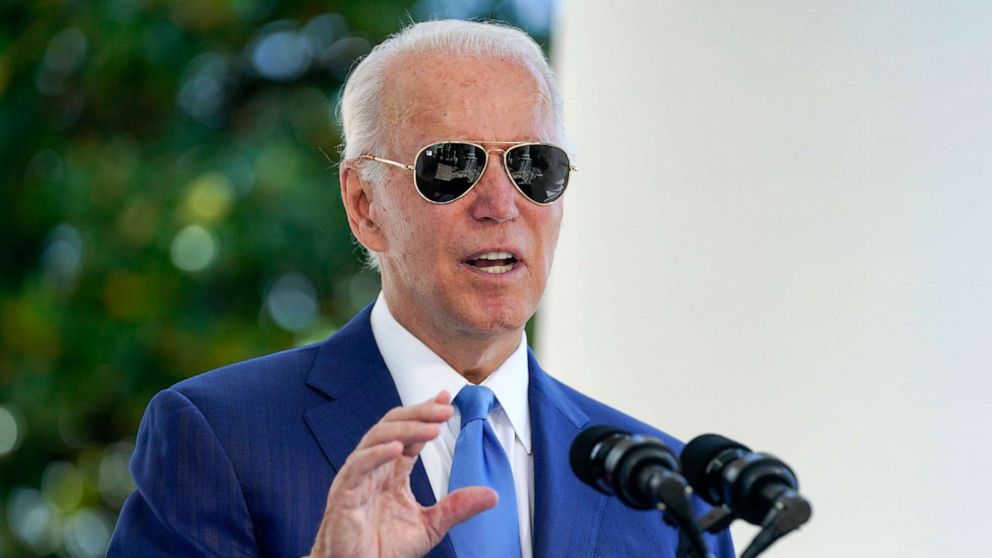
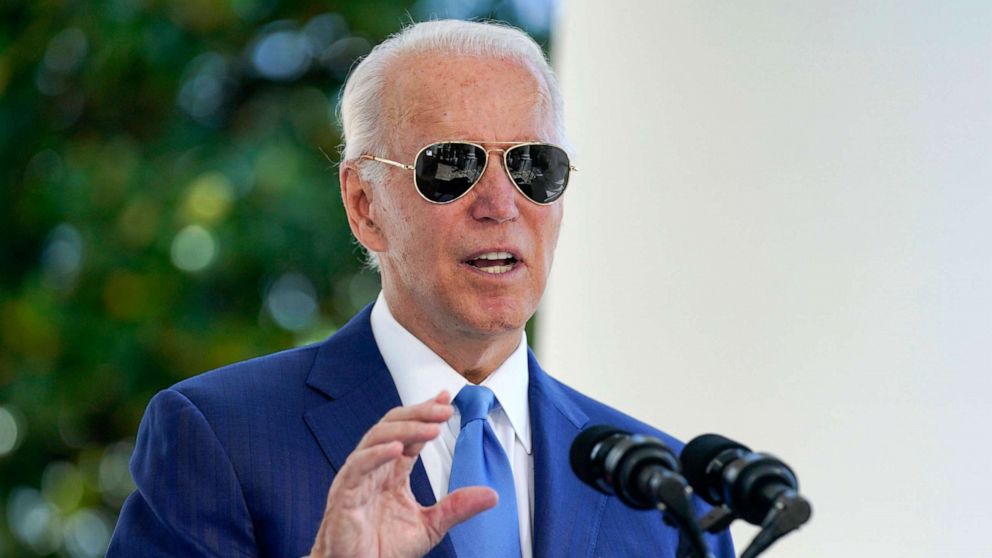
PHOTO: President Joe Biden speaks before signing two bills aimed at combating fraud in the COVID-19 small business relief programs, Aug. 5, 2022, at the White House in Washington.

President Joe Biden speaks before signing two bills aimed at combating fraud in the COVID-19 small business relief programs, Aug. 5, 2022, at the White House in Washington.

Evan Vucci/AP

The only area where Biden sees some improvement in this poll is on his handling of gas prices. Just over one in three Americans (34%) approve of the president’s handling of gas prices — up seven points since June.

This comes as the country has seen the average cost for a gallon of gas come down — price drops celebrated by the White House.

The low confidence in Biden’s handling of the economy and inflation comes on the heels of Friday’s jobs report, which showed that 528,000 jobs were added in July, according to the Bureau of Labor Statistics. Americans also saw the unemployment rate go down to 3.5%.

In a statement released Friday, Biden touted the July jobs report, saying that it shows that his administration is “making significant progress for working families.”

When asked how enthusiastic they were about voting in November, the poll found that 75% of Republicans are either very or somewhat enthusiastic about voting, compared to 68% of Democrats and 49% of independents. In ABC News/Ipsos polls conducted in April and June this year, Republicans were more likely to report that they were very enthusiastic about voting than Democrats. That gap has narrowed to five points in this August poll.

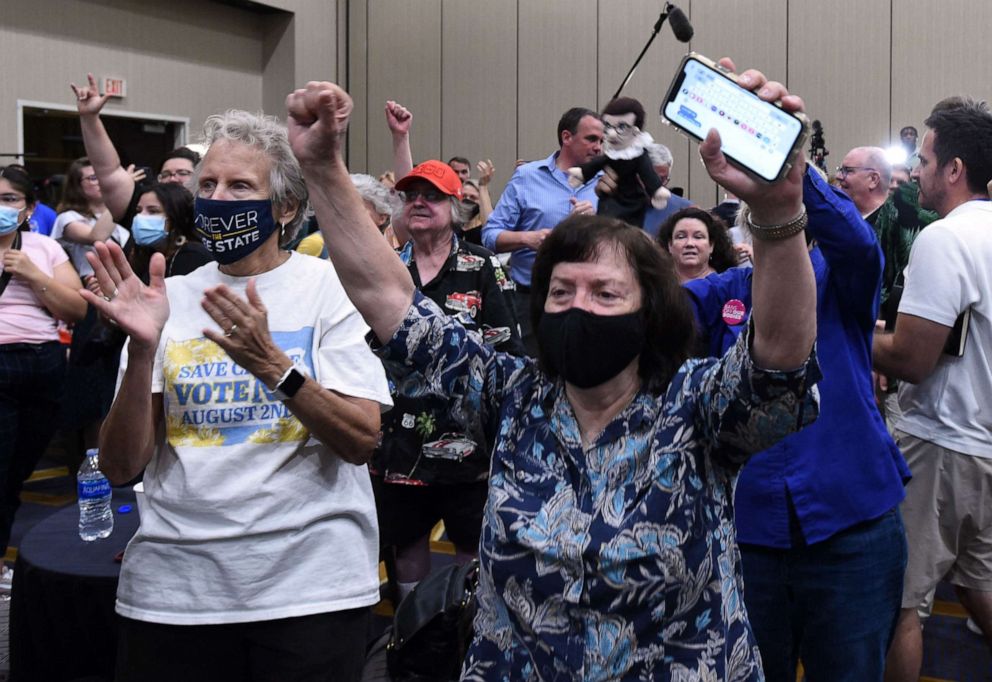
PHOTO: Supporters cheer, as the proposed Kansas Constitutional amendment fails, as they watch the call from the networks during Kansas for Constitutional Freedom primary election watch party in Overland Park, Kansas, August 2, 2022.

Supporters cheer, as the proposed Kansas Constitutional amendment fails, as they watch the call from the networks during Kansas for Constitutional Freedom primary election watch party in Overland Park, Kansas, August 2, 2022.

Dave Kaup/AFP via Getty Images

There are other glimmers of hope for the Democrats in the latest ABC News/Ipsos poll when it comes to the potential impact abortion could have on how voters cast their ballots this November.

The poll asked voters which candidate they would support if one favored keeping abortion legal and available and the other candidate supported limiting abortion except to protect the mother’s life. About half of Americans (49%) would be more likely to support the candidate who would keep access to legal abortion compared to the 27% of Americans who would be more likely to support the candidate who favors limiting abortion. Meanwhile, 22% of Americans say that abortion would not have an impact on how they would vote.

This comes after voters in the deep red state of Kansas voted to preserve the right to an abortion in the state’s constitution, shocking the country in the first state-level test since the Supreme Court overturned Roe v. Wade.

In a statement from Biden on the defeat of Kansas’s abortion amendment, he called on Congress to “listen to the will of the American people and restore the protections of Roe as federal law.”

This ABC News/Ipsos poll was conducted using Ipsos Public Affairs’ KnowledgePanel® August 5-6, 2022, in English and Spanish, among a random national sample of 665 adults. Results have a margin of sampling error of 4.2 points, including the design effect. Partisan divisions are 29-25-40 percent, Democrats-Republicans-independents. See the poll’s topline results and details on the methodology here.

ABC News’ Ken Goldstein and Dan Merkle contributed to this report.

Categories
Technology

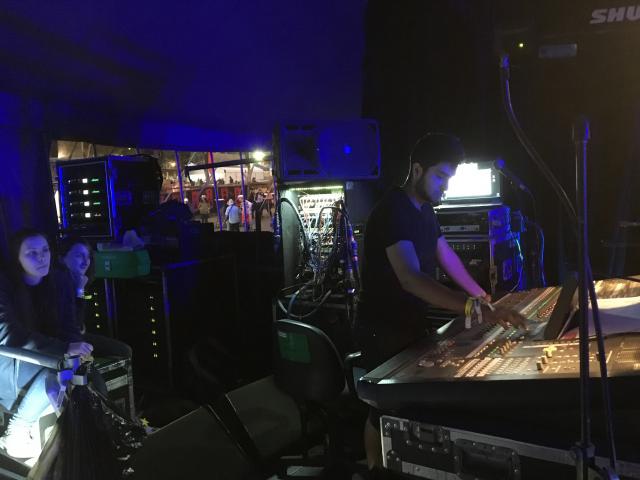
Muster roadies do student soundcheck

TAFE and James Nash students will have the chance to learn first hand how to work as sound and lighting technicians for the 2022 Gympie Music Muster.

The Gympie Music Muster enhances its community engagement again this year, giving opportunities for young students to get hands-on educational experiences.

The Muster welcomes Year 11 and 12 Certificate III tourism students from James Nash State High School and Diploma of Music – Sound Production TAFE Queensland students from Brisbane, who will gain experience in hospitality, service and live music production.

After eight years of studying the Muster as a tourism event, this will be the first year that James Nash State High School students will be working Back Stage at the Muster, with the experience being invaluable to their studies.

“A new competency we’ve added this year is addressing protocol requirements, and it specifically lists musical artists as some of the people to work with,” business and technologies head of department at James Nash State High School Karen Swift said.

“There is no better opportunity for our local students to get first-hand tourism industry work experience than by working in artist services at the Muster.”

The students are excited about applying their skills in a real situation, with their teacher supporting them throughout the experience.

“The true value of this experience is in the opportunity to step up and show their skills beyond the school room walls and set timetables,” Ms Swift said.

Also getting hands-on experience at the Muster, is a TAFE Queensland Brisbane (Southbank) sound production class – this relationship with the Gympie Music Muster stretches back 25 years and as part of its community support the Muster also contributes the supply of accommodation and meals to students.

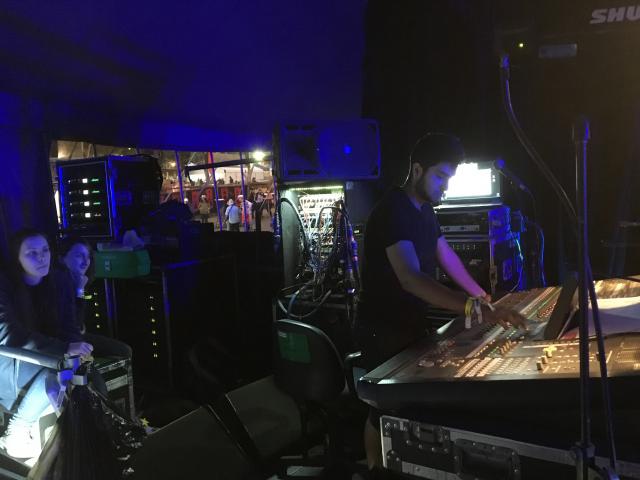
A dozen students will work alongside experienced audio and lighting engineers across the Muster’s stages, to gain invaluable practical experience.

“Former teacher Ian Taylor instigated the program in 1996 to provide students with the opportunity to work alongside industry audio professionals gaining insight into the operation of large-scale festivals, as well as understanding of how audio systems are managed from small to large concert stages, ” teacher Heath Storrie said.

The students camp onsite and are involved in the installation of audio, lighting, vision and backline prior to the Muster, they assist with microphone set-up, patching, artists and backline changeovers and gain invaluable insight into live mixing practices during the festival, and assist with bump-out.

“By participating in all of these aspects, the students are provided with a very realistic hands-on experience of the event production industry,” Mr Storrie said.

He said the students gain invaluable networking and employment contacts, with some of the current professional working crew and even touring crew having graduated from this course. in years past.

Mr Storrie himself completed the course in 1999 and has worked as a member of the audio production crew on-and-off since 2011.

The Gympie Music Muster will run across the weekend of 25-28 August at the Amamoor Creek State Forest and is supported by the Gympie Regional Council and Queensland Government via Tourism and Events Queensland and is a feature on the It’s Live! in Queensland events calendar.

Categories
Entertainment

Once Upon a Time in Hollywood star Clu Gulager dies age 93

Clu Gulager, a veteran actor known for his roles in the NBC series Virginian and the 1985 horror-comedy The Return of the Living Dead, has died of natural causes. He was 93 years old.

Gulager’s son, John, shared a photo of his father on his Facebook as a tribute. Filmmaker Sean Baker, who directed Gulager on the 2015 feature tangerineconfirmed the news of his death on Twitter.

READMORE: Jewel reveals her tour bus caught fire: ‘We saved the guitar’

READMORE: Footloose cast: Then and now

Diane Goldner, Gulager’s daughter-in-law, also shared a family statement on Facebook confirming the news, saying that he died “surrounded by his loving family.”

“Clu was as caring as he was loyal and devoted to his craft, a proud member of the Cherokee nation, a rule-breaker, sharp and astute and on the side — always — of the oppressed. He was good-humored, an avid reader, tender and kind. Loud and dangerous,” reads the statement. “He was shocked that he lived, for even a day after Miriam Byrd-Nethery, the love of his life, died 18 years ago.”

Gulager’s acting career stretched across seven decades, beginning with small guest performances in 1950s television series. A mainstay of TV Westerns, Gulager starred as Billy the Kid in NBC’s The Tall Man for its two-season run and took a regular role in the network’s Virginian for four of its nine seasons. He also had a role in Peter Bogdanovich’s The Last Picture Show in 1971.

READMORE: Anne Heche in a ‘stable condition’ after fiery car crash

In the 1980s, Gulager was reintroduced to a new generation of viewers with prominent roles in horror films. The actor starred alongside Vera Miles in 1984’s The Initiation. A year later, he could be seen in Dan O’Bannon’s The Return of the Living Dead and Jack Sholder’s A Nightmare on Elm Street 2: Freddy’s Revenge.

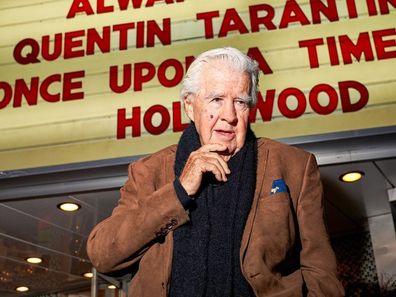
Gulager was a favorite of director Quentin Tarantino, whose 2019 film Once Upon a Time in Hollywood marked the actor’s final screen credit. The actor played a book shop owner in Tarantino’s film. In his private life, Gulager was a regular moviegoer at Tarantino’s New Beverly Cinema in recent years.

Born William Martin Gulager in Holdenville, Okla. on Nov. 16, 1928, Clu’s father was a former actor and a cowboy entertainer. After serving in the US Marine Corps in the 1940s, Gulager attended Northeastern State University and later Baylor University, beginning his venture into acting.

Clu Gulager
Clu Gulager appeared in Quentin Tarantino’s film Once Upon a Time in Hollywood. (Matt Oswalt/Twitter)

READMORE: The reason Kim Kardashian and Pete Davidson broke up revealed

Gulager’s first screen credit is listed as a 1955 episode of the variety series Bus. After a series of guest appearances on TV shows, Billy the Kid on The Tall Man marked his first major role, acting opposite Barry Sullivan as Pat Garrett. Although the NBC series was short-lived, Gulager quickly found himself back in the saddle as a regular cast member on Virginian only a few years later.

In 1964, Gulager played a major role in Don Siegel’s The Killersacting alongside a cast that included Lee Marvin, Angie Dickinson, John Cassavetes and Ronald Reagan (in his final film role).

Gulager also directed his own short film, A Day With the Boyswhich was nominated for the Palme d’Or for best short film at the 1969 Cannes Film Festival.

Later in his career, Gulager was directed by his son, John Gulager. The pair collaborated on the horror-comedy film series festival and 2012’s Piranha 3DD.

Gulager wed fellow actor Miriam Byrd-Nethery in 1960. The two remained married until Byrd-Nethery’s death in 2003. He is survived by his sons, John and Tom; their partners, Diane and Zoe; his cherished grandson Clu Mosha; dedicated fans and decades of extraordinary students.

For a daily dose of 9Honey, subscribe to our newsletter here.

Howard Kleinberg

Celebrity chef dies at 46 after suffering heart attack

Categories
Australia

ADHD can have a significant impact on people’s lives — even when you’re an adult

Janine Falcon is in her 50s, but for most of her life she had no idea the things she struggled with were common symptoms for people with ADHD.

“I remember thinking once, ‘Oh, I wish I could go to the doctor and say, listen, I’m having focus problems, can you give me Ritalin? Please can I have Ritalin?'” she says.

“But I also figured: you don’t have ADHD, you’re not sitting around jittery, you’re not hyperactive in the least … they are going to laugh at you and say get out of my office, you’re wasting my time.”

Space to play or pause, M to mute, left and right arrows to seek, up and down arrows for volume.

PlayAudio.  Duration: 29 minutes 5 seconds

All in the Mind explores ADHD in adulthood

ADHD – attention deficit hyperactivity disorder – is not a behavioral condition; it’s not a mental illness, or even a specific learning disability.

It’s a developmental impairment of the brain’s self-management system or executive function – your ability to stay organized, keep focused, and self-regulate.

While many people can struggle with these skills, people with ADHD can experience problems with executive function all the time.

It can manifest itself in many ways and can have a significant impact on people’s lives.

For Janine, being chronically late was a major way ADHD impacted her.

“When I worked in an office, oh my God, I never got to work on time,” she says.

“I felt it was something I couldn’t help, but deep down you think there’s something wrong with you if you can’t help being late, and so you kind of avoid that thought.”

ADHD Adult brain
The brain on the left shows activity in healthy subjects, versus the decreased brain activity of a person living with ADHD on the right.(Wikimedia Commons: Zametkin et al)

Monash University professor of cognitive neuroscience Mark Bellgrove says it’s generally thought ADHD involves a fundamental disruption to neurotransmission.

“Principally that’s around two neurochemicals: dopamine and noradrenaline,” he says.

“These chemicals in the brain are very important for helping us regulate our alertness, our attention, but also for helping us control our behavior to make sure it’s appropriate for whatever context we might be in.

“We think in ADHD that dopamine and noradrenaline levels in the brain are probably reduced.”

.