Categories
Australia

Lismore floods buyback scheme details revealed by Northern Rivers Reconstruction Corporation chief executive David Witherdin

The government set up the Northern Rivers Reconstruction Corporation in April to lead the reconstruction effort in the Northern Rivers. It is charged with co-ordinating the planning, rebuilding and construction work of essential services, infrastructure and housing.

Witherdin said his team was still finalizing the details of the buy-back scheme, and the number of houses it would target, but senior government ministers had been briefed on it.

The corporation had also been working closely with the federal government, which is expected to co-fund the reconstruction plans.

The buy-back scheme would be voluntary, Witherdin said, and based on the pre-flood value of properties. Other affected home-owners would be offered funding to rebuild their properties using more flood-resilient materials and design, or to raise their homes.

loading

According to the Lismore City Local Flood Plan, only 60 per cent of houses in the flood-prone areas of Lismore are raised above the one-in-100-year flood level, although this year’s flood was more than two meters higher than that.

Hundreds of people had to be rescued from their rooftops and four people died on February 28, when the Wilsons River reached 14.4 meters – a height which was not predicted in flood bulletins until it was too late for people to leave.

“Even once we’ve worked through this program, after a number of years, I think it’s highly likely people will choose to remain [in the flood-prone area],” Witherdin said, adding the government had a responsibility to warn those people of any impending flood and evacuate them early.

“We will be able to install early warning systems that really do give that community some peace of mind in the future.”

Residents living in and moving into flood-prone areas would also be provided with better information about the risks they face, and the risks they pose to rescuers if they do not evacuate during a flood.

On Saturday, community leaders said the demand for a buy-back scheme was likely to be high, and the challenge would be meeting that demand.

“Lots of people are ready to go,” Resilient Lismore co-ordinator and local councilor Elly Bird said. “They’re just waiting to see what the government will deliver before they decide what they’ll do.”

Houses bought under the scheme would be demolished and the zoning changed on the land to prevent any future development.

Much of the flood-affected parts of Lismore are low socioeconomic areas, where housing is most affordable. Witherdin said the provision of more affordable housing in flood-free parts of the Northern Rivers would also form part of the scheme, to address those needs.

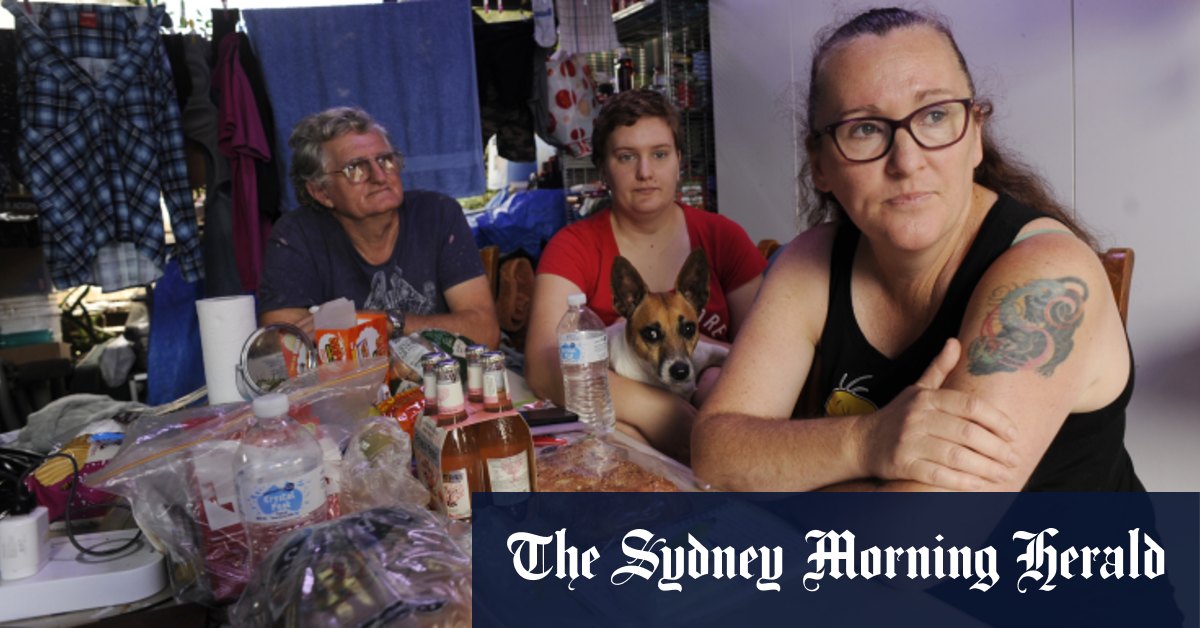
South Lismore residents Rita and Johan Spek said they were living in limbo waiting to find out if they would be able to sell their house to the government.

The February 28 flood was the first one to enter their house, which they bought 30 years ago. For the past four months, they have been living in the home’s outdoor barbecue area and sleeping in a van out the front, with their adult daughter.

“We don’t want to be here any more,” Rita said. “We definitely want the buy-back as soon as possible… [the flood] could be higher next time.“

Categories
US

DC lightning strike survivor had been fundraising for refugees

All day long, the tall, leafy tree had been a source of shade and comfort for Amber Escudero-Kontostathis.

Amid 90-some degree heat, she’d spent hours canvassing tourists in front of the White House for donations to help refugees in Ukraine, her family said. As she finished her shift on Thursday last week, a storm gathered overhead, thickening with clouds, rain and thunder.

That Thursday happened to be her 28th birthday, her family said. So while Amber waited for her husband to pick her up for a celebratory dinner, she sought shelter once again from the same tree, huddling with three others under its outstretched branches, according to her family and authorities.

Three people dead after lightning strike Thursday near White House

One was Brooks Lambertson, a young and rising bank vice president from Los Angeles. There was Donna Mueller, 75, a retired teacher, and her husband of Ella James Mueller, 76, who came from Wisconsin to Washington to celebrate their 56th wedding anniversary. And there was Amber, a young woman from California whose travels in the Middle East teaching English had kindled a desire to help those stricken by war and poverty in that region.

They were strangers brought to that precise spot on the east side of the Lafayette Square, at that precise moment for different reasons — business, vacation, a passion to help.

just before 7pm, it was at that spot—under a leafy tree about 100 feet from a statue of President Andrew Jackson — that lightning struck.

Experts would later record a strike in the area as six individual surges of electricity that hit the same point in the space of half a second. If the electricity struck the tree first, experts said, it would have sent hundreds of millions of volts coursing through it before passing into the bodies of those gathered beneath it.

“It shook the whole area,” an eyewitness later recounted. “Literally like a bomb went off, that’s how it sounded.”

the strike left all four grievously wounded. Secret Service and US Park Police — who keep the park in front of the White House under constant patrol — ran to help.

On Friday morning, police announced the elderly couple from Wisconsin had died. Later that night, the banker from Los Angeles also passed away, police said.

Amber would be the sole survivor.

What happens when lightning strikes — and how to stay safe

The lightning strike stopped Amber’s heart, said her brother Robert F. Escudero. Two nurses, who happened to be visiting the White House on vacation and saw the Secret Service running to help her, immediately started giving her CPR and managed to restore her pulse, he said.

The lightning strike left her unable to walk and caused severe burns along the left side of her body and arm, her family said. That’s the side her bag de ella was on, carrying the iPad she used to sign people up for refugee donations.

Her parents rushed to Washington from California, and her mother has documented her fight to recover on Facebook. The lightning strike left Amber struggling at first to breathe, her mother, Julie Escudero, wrote. But by Friday, nurses were able to take her off the ventilator.

The lightning also damaged her short-term memory. She was scared and confused about what happened to her. “We definitely do not want her to remember the incident right now,” her mother de ella wrote on Facebook. But every time she wakes up, her mother de ella wrote, she asks what happened to her, is she going to die and will she be able to walk? Her family de ella said one thing she has been particularly worried about is her work fundraising for refugees.

She had majored in international studies in college and traveled to Morocco and the United Arab Emirates, according to her brother and her work profile. She spent a year teaching English in Jordan and soon after began fundraising for nonprofits. She started working in Washington last year for a group called Threshold Giving and focused especially on fundraising for the International Rescue Committee, a global relief agency.

“The first thing she told me when we FaceTimed is, ‘I need to get back to work on Saturday,’” Robert Escudero said. “She’s worried about raising money for the refugee kids. She asked me ‘Who’s going to get the money for them if I’m not out there?’”

A friend started a GoFundMe page to raise money for her medical bills. So her brother de ella said he promised Amber he’d work with Threshold Giving in the coming days to also create a way for people who learn about her survival story to donate to refugees.

The one thing her family has not yet broached with her is the fate of the others who were with her that night under the tree.

“She is starting to realize there were others and she wants to know how they are doing and what she did wrong,” her mother said in a Facebook post on Sunday. “She cares so much for others, it will be hard for her.”

On Sunday, many signs of the fatal lightning strike were still visible at Lafayette Square.

A tree bore streaks of charred bark, cracks and a large gash in the main trunk where the wood remained warped like a bruise. Folks passing through Lafayette Square paused at the tree to stare at the scars.

One of them was Cal Vargas, a childhood friend of Lambertson, who died. He brought a wreath and bouquet of white flowers to lay at the base of the tree. Vargas and Lambertson had been friends since kindergarten and grew up together in Folsom, Calif., where they shared a passion for sports and the Sacramento Kings.

“He was an amazing individual,” Vargas said quietly. “He always had a smile on his face, he always looked at the bright side of things.”

Earlier on the day the lightning struck, Lambertson, 29, had arrived in Washington on a business trip from Los Angeles. He was passing time before a dinner reservation when he got caught in the storm, Vargas said.

In a phone interview, Lambertson’s father, who The Washington Post is not identifying by name to protect his privacy, said his son was “probably the best human being that I know.” He said his son’s kindness, generosity and humility “showed up in everything he did, in all his interactions with people.”

He worked at City National Bank as a vice president managing sponsorships for the company. He had done marketing for the NBA’s Los Angeles Clippers, and graduated from California Polytechnic State University in San Luis Obispo, according to a statement from the bank.

The elderly Wisconsin couple who also died that day were celebrating their 56th wedding anniversary, family members said.

Donna Mueller, 75, and her husband, James Mueller, 76, had been high school sweethearts before marrying. James had owned a drywall business for decades while his wife de ella worked as a teacher, according to one of their daughters-in-law, who also spoke on the condition of anonymity to protect her privacy de ella.

The couple lived in Janesville, Wis., about 70 miles west of Milwaukee, and had five grown children, ten grandchildren and four great-grandchildren. “Both would do anything for their family and friends,” relatives said in a statement.

The odds of someone being killed by lightning are extremely rare. In the past decade, only an average of 23 people in the United States have died each year.

Multiple fatalities are even more rare. Before last week’s strike, the last time three people died in a single incident was more than 18 years ago on June 27, 2004, when three people in Georgia were struck under trees at Bedford Dam State Park, said John Jensenius, a specialist at the National Lightning Safety Council.

Because lightning tends to strike tall objects, experts warn that taking shelter under a tree during a thunderstorm is highly dangerous. When a tree is hit by the electrical charge, moisture and sap in the tree easily conducts the electricity, carrying it to the ground around the tree, experts say.

“When lightning strikes a tree, the charge doesn’t penetrate deep into the ground, but rather spreads out along the ground surface,” Jensenius said. “That makes the entire area around a tree dangerous, and anyone standing under or near a tree is vulnerable.”

For that and other reasons, Amber’s survival has felt miraculous, her family said. If it hadn’t happened right in front of the White House where secret service agents are stationed. If the two nurses who revived her hadn’t been on vacation and seen what happened.

Saturday night, Amber was finally able to take a few steps on her own, her family said. She was supposed to start a master’s program in international relations this fall at Johns Hopkins University — the latest step in her work trying to help refugees and those suffering abroad.

“She’s an amazing, strong-willed person. And ella she has such a heart for others, ”her brother de ella said. “So the goal now is to get her walking again by the time classes start in a few weeks.”

Magda Jean-Louis contributed to this report.

Categories
Business

Dr Zac Turner on how microwaving food, microplastics can affect your health

Welcome to Ask Doctor Zac, a weekly column from news.com.au. This week, Dr Zac talks about microplastics and whether they can affect your health.

QUESTION: Hi Dr Zac, my new girlfriend is vegan and I thought when we first started dating she would complain about my diet choices, but it turns out what she actually gets upset about is how I store my food.

After our third date she raided my fridge and started spruiking all this nonsense about how my health and fertility is impacted by me living on takeaway food reheated in plastic containers in the microwave. She even had a go at me for drinking water from a reused water bottle – I thought I was doing good drinking two liters of water a day.

Should I believe her, or is this a red flag? Chris, 35, Sydney

ANSWER: Hi Chris, I recommend you get your eyes checked for color blindness, as this is a green flag not a red one.

Many vegans have a more comprehensive knowledge of nutrition compared to others as they have to think more about the food they eat. I recommend you take more note of what your partner tells you about food – you’ll most likely learn a thing or two. But always remember if something sounds fishy, ​​get a second opinion from your doctor.

I believe your girlfriend is referring to microplastics.

These are tiny plastics (so small you can’t see them) which are derived from petrochemicals extracted from oil and gas products. A number of these tiny plastics are toxic, and contain carcinogenic chemicals which can cause cancer. Some are even mutagenic, which means they can damage DNA.

Laboratory tests have shown microplastics can cause damage to human cells, including both allergic reactions and cell death. A few have shown a connection to infertility, however, they are not concrete.

Tiny plastics derive from plastic as it weathers and ages. Almost 400 million tonnes of plastics are produced each year. If you consider how many things in our world are packed in plastic, including food and drink, you will realize how much of a ticking bomb this could be.

Microplastics enter the body through either ingesting or inhaling, and end up in various organs. When you heat food in your plastic takeaway containers, you are potentially leaching microplastics into your meal. Not only is the food you are eating most likely nutritionally inferior, you could also be eating troublesome plastics.

Drinking from a disposable plastic bottle may also lead to chemical leaching and toxicity over time. It’s more likely if your bottle becomes heated, by putting it in the sun, as this will increase the level of microplastics being leached. I recommend you swap your single-use plastic bottle for a metal bottle or more durable plastic or smash-proof glass one.

Microplastics aren’t a conspiracy – they are prevalent in all of our lives and are nearly impossible to escape entirely. One study even discovered 90 per cent of table salt is contaminated with microplastics.

Investigating microplastics levels in Australian homes, a study found that 42 per cent of collected dust was microplastics. An easy way to minimize plastics in your home is by having hard surfaces, like polished wood floors, instead of carpet. You should also vacuum weekly to reduce dust levels in your home.

Now I need to say that the studies are not conclusive, and it has not been proven to cause harm to humans, however research is indicating that it will soon become fact.

Follow in the footsteps of your partner, I advise you to eat fresh, real food! Plant-based alternatives are generally always better for you and the environment.

Heat your food up in non-plastic containers and buy your produce with as little plastic wrapping as possible. Farmers’ markets and local fruit and veg shops are always a safer bet.

Got a question:[email protected]

Dr Zac Turner has a Bachelor of Medicine and Bachelor of Surgery from the University of Sydney. He is both a medical practitioner and a co-owner of telehealth service, Concierge Doctors. He was also a registered nurse and is also a qualified and experienced biomedical scientist along with being a PhD candidate in Biomedical Engineering

.

Categories
Technology

Microsoft launches .NET Community Toolkit

Credit: Dreamtime

Microsoft has officially launched the .NET Community Toolkit, providing developers with a collection of helpers and APIs for .NET developers, agnostic of any UI platform.

Redmond said an updated release of the MVVM (model-view-model) Toolkit is the biggest new feature in the toolkit.

A spin-off of the Windows Community Toolkit, .NET Community Toolkit 8.0.0 was announced August 4, following a preview phase that began in January.

Included with the MVVM Toolkit are new source generators intended to greatly reduce boilerplate code for setting up an application leveraging MVVM. These generators have been rewritten to run faster than before. Writing observable properties has been simplified, C# development enhanced, and messenger APIs have been improved for MVVM applications as well.

The .NET Community Toolkit 8.0.0 also brings improvements to the diagnostics package. The toolkit can be accessed from GitHub.

.

Categories
Entertainment

Angelina Jolie and Brad Pitt’s ‘never-ending war’

Next month will mark the six-year anniversary of Angelina Jolie shocking the world by filing for divorce from Brad Pitt.

But despite being declared legally single in 2019, the exes are still no closer to reaching a custody agreement for their children – even as they reach college age.

“It appears that Angelina is determined that Brad should never get 50/50 custody,” one source familiar with the legal battle told Page Six. “And there are some who say that she won’t rest until the kids are legally adults, so Brad will never have shared custody.”

The couple have six children together: Maddox, 21, Pax, 18, Zahara, 17, Shiloh, 16, and twins Knox and Vivienne, both 14.

It’s just the latest except in a seemingly never-ending war.

French estate center of bitter war

“Angelina makes a constant stream of attacks on Brad. And she deliberately sold her disputed share of their vineyard to a buyer she knew he didn’t want,” a friend of Pitt claimed.

Pitt has been seen on red carpets around the world recently for the premiere of his latest movie Bullet Trainbut he apparently can’t escape the long reach of his ex-wife.

In legal papers in June, Pitt, 58, claimed that Jolie, 47, intentionally “sought to inflict harm on” him by selling her interests of the Chateau Miraval wine brand to Russian businessman Yuri Shefler, the founder of Stoli Vodka.

Pitt said they had agreed to never sell their respective shares without the other’s permission. He also asked for a trial by jury.

“It’s his baby. He’s very proud of it and he’s put all of the revenue from the business into the vineyard and Miraval studios,” said a Hollywood friend, noting that the Correns, France, vineyard estate also houses a recording studio.

“Unfortunately, Angelina sold her part, which was contrary to their agreement, to somebody they had both turned down before,” the friend added, as Pitt had previously said no to a deal with Stoli.

And then there was the recent news that lawyers for Jolie sent process servers to the SAG Awards in February, hoping to catch Pitt off-guard with a subpoena for Miraval matters at the event. (He did not attend.) Sources claim this was another example of Jolie trying to create a public scene to exacerbate the situation.

In April, Page Six reported that Jolie had allegedly unleashed “a desperate fishing expedition” by suing the FBI under the name “Jane Doe” to find more about its investigation into an alleged 2016 private-jet altercation incident involving Pitt and their son Maddox, and why FBI agents didn ‘t charge the actor.

An anonymous call was made to authorities, which triggered the FBI investigation, but the case was closed on November 22, 2016, with no charges of wrongdoing. Days later, Jolie filed for divorce.

Dispute over psychologist

Page Six is also told that things became tense earlier this year when Pitt’s legal team believed that Jolie’s lawyers attempted to have their court-approved child psychologist sanctioned by the California Attorney-General’s office based on her perception that the doctor had sided with Pitt, concluding that Pitt should have 50/50 custody of the children.

Psychologist Stan Katz, who spoke to the Jolie-Pitt minor children for the custody case, is currently under a non-criminal investigation by the California Attorney-General’s office, per a filing submitted to the Superior Court of California and seen by Page Six.

Dr Katz is not believed to have had any complaints made about him in his 30-year career.

However, another insider with knowledge of the issues had stressed that Jolie had nothing to do with the investigation.

Meanwhile, one highly placed legal insider told Page Six that only one or both of the parties involved in the case could make a complaint. A friend of Pitt’s confirmed it was not him.

The filing noted that: “The Court finds the Petitioner (Jolie) has filed a notice of non-opposition and Respondent (Pitt) has taken no position.”

Dr Katz declined to comment. Page Six also contacted the AG’s office. The scope of the investigation is not known, and it’s unclear whether the investigation is still ongoing.

‘It was a technicality’

After years of back and forth, Pitt was granted joint custody of his minor children in May 2021.

Judge John Ouderkirk however, was subsequently disqualified from the case for not sufficiently disclosing business relationships with Pitt’s lawyers – so it was back to square one for the custody case.

Another source familiar with the case said: “Everything is at a standstill. Last year was a real rollercoaster. Brad was given 50/50 custody in a lengthy, detailed judicial decision. Then the appellate court vacated the decision based on something having nothing to do with the substance of the case.

“It was an internal dispute between the judges and the private judges in California, nothing to do with the custody agreement. It was a technicality. It’s unclear where things stand right now.”

Meanwhile, Pitt is not believed to be close to his and Jolie’s oldest child, they are Maddox, who turned 21 on Friday.

Asked how often the actor gets to see the other children, the source familiar with the case said: “He gets to see them, but he still doesn’t have 50/50. But he’s trying to ride it out.

Both Jolie and Pitt’s reps were unavailable for comment.

Jolie-Pitt brood grows up

The former couple have six children. Maddox currently studies biochemistry at Yonsei University in Seoul, South Korea. Pax, 18, is believed to be continuing with his schooling from him, and 17-year-old Zahara is about to begin college.

Jolie announced in an Instagram post that Zahara will be attending the historically black Spelman College in Atlanta this year.

“Zahara with her Spelman sisters!” the Eternals star captioned an image of her daughter surrounded by fellow students.

Daughter Shiloh, 16, showed off her hip-hop dance moves back in June in a now-viral clip set to Doja Cat’s Vegas.

Pitt joked about it at the Bullet Train premiere: “I don’t know where she got it from. I’m Mr Two-Left-Feet here.” He also said that Zahara’s acceptance of her to college “brings a tear to the eye”.

It’s a new side of the Oscar winner, who also shares 14-year-old twins Vivienne and Knox with Jolie, as he has previously been so protective about his kids he rarely talked about them.

Pitt has been on the promo trail for Bullet Traintraveling to Paris, Berlin and London over the past month.

In Germany, the actor hit the red carpet wearing a skirt that he co-designed with Haans Nicolas Mott.

When asked why he wore the skirt, Pitt told Variety: “I don’t know! We’re all going to die, so let’s mess it up.”

The Hollywood friend said the answer is simple: “Brad travels regularly, but this was his first major event for a few years and he had a lot of fun with it.”

But “fun” doesn’t mean romance right now. Pitt is “not currently dating anyone,” said the Hollywood friend. “He’s gone on dates over the past couple of years, but he’s not dating anyone currently.”

Instead, Pitt is spending time on his art, architecture and hanging out with friends. He will appear in the Damien Chazelle-directed drama Babylon with Margot Robbie and Olivia Wilde, which opens on Christmas Day.

“He’s in a good place,” said the Hollywood friend. “He had a good break in Europe. He seems refreshed and relaxed.”

This story originally appeared on Page Six and is republished here with permission

.
Categories
Sports

John Steffensen savages Rohan Browning over ‘amateur hour’ relay debacle: Commonwealth Games 2022

Former Aussie 400m star John Steffensen has blasted Australia’s relay debacle at the Birmingham Commonwealth Games as “amateur hour”.

Australia looked on track to qualify for the final of the 4x100m but it all fell apart at the final change when Rohan Browning tripped over his own feet and hit the deck.

It was a disappointing result after the team of Josh Azzopardi, Jacob Despard, Jack Hale and Browning crashed out.

After an impressive showing, the commentators were stunned by the moment.

“The last change only has to be clean,” McAvaney started to say before Tamsyn Manou shrieked in the commentary box as Browning hit the deck.

“Oh he’s fallen over. I can’t believe it. I cannot believe it. A disaster for the Australians. I’ve never seen anything quite like it to be truthful.”

“That was awful,” Manou added.

“He looks devastated. Rohan would not have been able to do a lot of this training, he would have been focusing on getting his body right. He just really stumbled when he took his acceleration phase.”

There were suggestions Browning struggled with not starting in the blocks or that he wasn’t confident starting on the bend rather than on the straight.

One who wasn’t looking for excuses was 2006 Commonwealth Games 400m gold medalist and Olympic 4x400m relay silver medalist John Steffensen.

“If that was a final, I’d kind of accept it because you really want to push your relay change zone passovers,” he said on Channel 7.

“You really want to push them out a bit, you want to take a bit more risk because you’re running against the best, or some of the best in the world, in the Commonwealth.

“But that was amateur hour last night. To see what happened with Rohan, I do not know what was going through his brain.

“Accidents happen, mistakes happen track and field, yes, I get it.

“But it’s one of those things, I’ve done it (many) times in training. Sometimes you want to push, you really push the barriers and the angle you want to come out of your drive because that’s how you go fast.

“In training you sort of go low, low and you will sort of work your way back up. Then you find a comfortable position that you can take off from.”

Former Olympic 100m sprinter turned Channel 7 presenter Matt Shirvington said he knew how Browning felt, having been in a similar position in the 2006 Commonwealth Games 4x100m final.

In that final, Australia appeared headed for a medal but Shirvington took off a touch early and Adam Miller couldn’t catch him to pass the baton.

Shirvington said Browning would be “gutted.”

“Rohan more than most of them because the other boys have been there waiting to compete,” Shirvington told Channel 7.

“Rohan knows that coming into this he was going to have quite a bit of speed, he’s in good shape.

“I have been there before, I’ve been there a couple of times.

“I have been there at a packed MCG at the Commonwealth Games at the same change in the final and we haven’t made it happen.”

Browning did admit he was “gutted” soon after, apologizing to his teammates, who were on the team specifically for the relay.

“I’m so sorry. I know these boys put in so much work. In my years in athletics, nothing like this has ever happened and, hopefully, it never happens again.

“I just caught my toe and slipped. It has never happened before in training or in races.”

Teammate Jack Hale was quick to console Browning both after the race and in the post-match interviews.

“It’s a relay. There are so many variables and these things happen. It is what it is,” Hale told Channel 7.

Browning finished sixth in the individual 100m final, falling just 0.06 seconds short of a bronze medal at the Alexander Stadium in Birmingham.

It was the closest Australia has got to winning a medal in the men’s blue ribbon event since Matt Shirvington’s lightning time of 10.03 still wasn’t enough for him to get a medal at the 1998 Games.

Australia has never won a medal in the men’s event since the Commonwealth Games changed the distance to 100m in 1970. Now we have to wait at least four more years.

.

Categories
Australia

NSW Liberal Party state conference meets right next to Sydney knife show

Despite his purging, Camenzuli clearly has some sway within the party.

Meanwhile, in a bit of a coup, the faction did manage to secure an endorsement from John Howard for their preferred pick for president, phil argy.

Credit:Joe Bank

strong economy

We’ve been keeping close tabs on former prime minister Scott Morrison’s forced readjustment to the indignity of backbench life. In the latest episode, a forlorn-looking Morrison was spotted flying from Canberra to Melbourne last Friday, shuffling into seat 6F (a window seat) on a Qantas economy flight with his suits in a dry-cleaning bag. It’s quite the step down from Shark One, as the prime ministerial plane was known in the Morrison years.

And just to increase the indignity, he had to squeeze past rookie Labor MP Carina Garlandseated on the aisle, who didn’t look all too thrilled about getting up to let him through.

Still, it wasn’t all bad. In Melbourne, Morrison managed to get some quality time with “Jen and the girls,” catching the Van Gogh exhibition at the Lume gallery, which he described as “absolutely magical.”

Cry me to Rio

CBD brought word last week of the hottest Friday lunch date in town – an $85 a head luncheon held by the Melbourne mining club, with a special address from Rio Tinto’s chief executive, Australia Kellie Parker.

Parker was drafted following the mining giant’s destruction of 46,000-year-old Indigenous rock shelters at Juukan Gorge back in 2020, and it seems the aftershocks of that act of cultural vandalism are still being felt… in a way.

When the chief executive was asked about her legacy during the lunch, Parker, a 20-plus-year veteran of Rio, got all emotional.

“The events at Juukan were tragic for not only the PKKP [local Aboriginal community] and traditional owners and Indigenous Australians but so tragic for our employees,” she said.

“What drives me every day is making sure that I can build that pride back… and that people want to wear the Rio Tinto shirt and be proud. That’s what drives me.”

Won’t somebody spare a thought for the poor Rio Tinto employees!

Forster Entry

Berlin techno den Berghain is notoriously the hardest nightclub in the world to get into, and Liberal Party stalwart Christine Forster, sister of Tony Abbott, was no exception to the list of wannabe entrants. she and wife Virginia Flitcroft were unceremoniously denied entry during a recent holiday with the usual: “Nein!”

Unusually, though, the pair talked back. “Que? Are we too old, too lesbian, too Australian? they asked. It worked – they were ushered inside, where they danced for hours on the techno floor.

“It was fabulous,” Forster confirmed.

The Morning Edition newsletter is our guide to the day’s most important and interesting stories, analysis and insights. Sign up here.

Categories
US

Senate Passes Climate and Tax Bill After Marathon Debate

WASHINGTON — The Senate passed legislation on Sunday that would make the most significant federal investment in history to counter climate change and lower the cost of prescription drugs, as Democrats banded together to push through major pieces of President Biden’s domestic agenda over unified Republican opposition.

The measure, large elements of which appeared dead just weeks ago amid Democratic divisions, would inject more than $370 billion into climate and energy programs. Altogether, the bill could allow the United States to cut greenhouse gas emissions about 40 percent below 2005 levels by the end of the decade.

It would achieve Democrats’ longstanding goal of slashing prescription drug costs by allowing Medicare for the first time to negotiate the prices of medicines directly and capping the amount that recipients pay out of pocket for drugs each year at $2,000. The measure would also extend larger premium subsidies for health coverage for low- and middle-income people under the Affordable Care Act for three years.

And it would be paid for by substantial tax increases, mostly on large corporations, including establishing a 15 percent corporate minimum tax and imposing a new tax on company stock buybacks.

Initially pitched as “Build Back Better,” a multi-trillion-dollar, cradle-to-grave social safety net plan on the order of the Great Society, Democrats scaled back the legislation in recent months and rebranded it as the Inflation Reduction Act. It was projected to lower the federal deficit by as much as $300 billion over a decade, though it remained to be seen whether it would counter inflation or lower costs for Americans in the long term.

Passage of the measure was a major victory for Mr. Biden and Democrats, who are battling to maintain their slim House and Senate majorities in November’s midterm congressional elections. Facing unanimous opposition by Republicans, who have used filibusters to block many elements of their domestic agenda, Democrats took full advantage of the Senate’s special budget rules to force through as much of it as they could with the support of all 50 members of their caucus.

The final tally was 51 to 50, with Vice President Kamala Harris casting the tiebreaking vote. The House planned to interrupt its summer break to reconvene briefly on Friday to clear the measure, sending it to Mr. Biden for his signature.

“Today, Senate Democrats sided with American families over special interests, voting to lower the cost of prescription drugs, health insurance, and everyday energy costs and reduce the deficit, while making the wealthiest corporations finally pay their fair share,” Mr. Biden said in a statement.

The Senate vote was the culmination of more than a year of hard-fought negotiations between the party’s progressive core, which demanded a transformational plan that would touch every aspect of American life, and a conservative-leaning flank that sought a much narrower package. Those talks played out against the backdrop of a 50-50 Senate in which any single defection could have killed the effort — and nearly did, several times.

“The caucus overwhelmingly is focused on what’s in this bill — not what’s not in the bill, even though every one of us would want more — because what’s in the bill is so incredible,” Senator Chuck Schumer of New York, the majority leader, said in an interview. “You had to thread the needle.”

Approval came after a weekend session featuring an all-night voting marathon that stretched for 16 hours, in which Republicans repeatedly tried and failed to derail the legislation, and Democrats united to beat back nearly all of their efforts.

Republicans did succeed in forcing the removal of a $35 cap on insulin prices for patients on private insurance, challenging it as a violation of Senate rules in a vote that Democrats were all but certain to use as a political weapon against them ahead of the midterms. The insulin price cap for Medicare patients remained untouched in the bill, with the potential to help millions of seniors.

As part of its landmark climate and energy initiative, which would put the Biden administration within reach of its aim to cut emissions roughly in half by 2030, the bill would offer tax incentives to steer consumers to electric vehicles and lure electric utilities toward renewable energy sources. like wind or solar power. It also includes millions of dollars in climate resiliency funding for tribal governments and Native Hawaiians, as well as $60 billion to help disadvantaged areas that are disproportionately affected by climate change.

For Democrats, passage of the measure capped a remarkably successful six-week stretch that included final approval of a $280 billion industrial policy bill to bolster American competitiveness with China and the largest expansion of veterans’ benefits in more than two decades. But unlike those bills, the tax and climate legislation passed the evenly divided Senate along party lines, condemned by Republicans as federal overreach and reckless spending at a time when prices remain high across the country.

The measure fell far short of Mr. Biden’s original vision for the plan and the $2.2 trillion measure that the House passed in November. To accommodate the demands and concerns of two holdouts, Senators Joe Manchin III of West Virginia and Kyrsten Sinema of Arizona, Democrats jettisoned billions of dollars for child care, paid leave and public education and set aside plans to roll back key elements of the 2017 Republican tax overhaul.

Credit…T. J. Kirkpatrick for The New York Times

But the final package contained a series of proposals that Democrats have labored for decades to push through. If enacted, it would be the most significant climate law ever put in place in the United States, investing hundreds of billions of dollars over 10 years in tax credits for manufacturing facilities for things like electric vehicles, wind turbines and solar panels, and $30 billion for additional production tax credits to accelerate domestic manufacturing of solar panels, wind turbines, batteries and critical minerals processing. It would also impose a fee to penalize excessive emissions of methane, a greenhouse gas.

The legislation would allow Medicare to negotiate the cost of up to 10 prescription drugs initially, beginning in 2026, and give seniors access to free vaccines. Coupled with a three-year extension of expanded health care subsidies first approved last year as part of the $1.9 trillion pandemic aid law, the package amounts to the largest change to national health policy since the passage of the Affordable Care Act.

To finance much of the plan, the measure would institute a new 15 percent corporate minimum tax that would apply to the profits that companies report on their financial statements to shareholders, known as book income. It would impose a new 1 percent tax on corporate stock buybacks beginning in 2023. The measure would also pour $80 billion into the IRS to bulk up the agency’s enforcement arm and crack down on wealthy corporations and tax evaders. That provision is estimated to raise $124 billion over a decade.

“When I come to the end of my service in the Senate, I’ll look back on the passage of this bill as one of the most significant things that I’ve had an opportunity to work on,” said Senator Tina Smith, Democrat of Minnesota and one of the many climate hawks who pushed for the legislation.

Congressional Republicans hammered the bill as an exorbitant spending package with damaging tax hikes that would inflict more pain on the nation’s economy at a perilous moment. While outside analysis suggested the legislation would reduce the federal budget deficit by the end of the decade and have a limited impact on federal spending, Republicans continued to brand it a “reckless tax and spending spree.”

“Democrats’ policies have torn down the savings, the stability and the lifestyles that families worked and sacrificed for years to build up,” Senator Mitch McConnell of Kentucky, the minority leader, said on Sunday. “The effect of this one-party government has been an economic assault on the American middle class.”

It was the second time in less than two years that Democrats muscled through a sprawling spending package without any Republican support, following passage of the $1.9 trillion pandemic aid package last year. Since inflation skyrocketed in the months after that measure became law, Republicans warned that Democrats were exacerbating the economic stress facing American families by passing the legislation.

Credit…Haiyun Jiang/The New York Times

Senator Lindsey Graham of South Carolina, the top Republican on the Budget Committee, announced Saturday evening that he had “thought long and hard about how to explain this to the American people, and the only thing I can tell you is insanity is defined as doing the same thing and expecting a different outcome.”

But there was little Republicans could do to stop passage once Mr. Manchin and Ms. Sinema said they would support it. Democrats moved the bill under the special process known as reconciliation, which shields budget measures from filibusters.

There was a price for Mr. Manchin’s and Ms. Sinema’s support, however.

Mr. Manchin ensured that the interests of his coal-producing state were reflected in the final bill. In addition to securing separate commitments to complete construction of a natural gas pipeline in West Virginia and votes on a measure to help fast-track permits for energy infrastructure, he fought to include tax credits for carbon capture technology and requirements for new oil drilling leases in Alaska’s Cook Inlet and the Gulf of Mexico.

Ms. Sinema extracted her own concessions, including $4 billion to help Western states combat historic drought levels and the preservation of a tax break that allows venture capitalists and hedge fund managers to pay substantially lower taxes on some of their income than other taxpayers.

She also preserved a valuable deduction known as bonus depreciation, used by manufacturers when they purchase equipment, that they could have lost or seen diluted under the new corporate minimum tax rules. And on Sunday afternoon, just as the measure appeared on a glide path to approval, she insisted on yet another change, backing a Republican proposal to shield hedge fund and portfolio companies from being hit by the minimum tax.

The concessions frustrated liberals, particularly Senator Bernie Sanders, the Vermont independent and Budget Committee chairman who had pushed for spending as much as $6 trillion on the domestic policy package. He proposed changes to the measure during the all-night voting session, though most Democratic senators opposed them in order to protect the final product.

By Sunday afternoon around 3:30, staff aides wiped away tears as they watched the final vote on the floor. Democratic senators whooped with joy and hugged one another after the gavel fell, making a point of thanking and acknowledging Mr. Manchin and Ms. Sinema.

“This is pretty nearly a political miracle to negotiate with a caucus that is as diverse as we have, from Bernie to Manchin,” said Senator Brian Schatz, Democrat of Hawaii, who openly wept on the Senate floor during the final vote. “This thing got killed and got revived and got killed and got revived — all the way to the end.”

Reporting was contributed by Luke Broadwater, Lisa Friedmann, stephanie lai, Alan Rapport Sheryl Gay Stolberg and Jim Tankersley.

Categories
Business

Wall Street slides on jobs data

Higher wages can cause companies to raise prices for their own products to sustain profits, which can lead to something economists call a “wage-price spiral.”

To be sure, some market watchers also pointed to numbers within Friday’s employment report suggesting the jobs market may not be as strong as the overall numbers imply. The number of people with multiple jobs rose by more than half a million, for example, said Brian Jacobsen, senior investment strategist at Allspring Global Investments.

“That was mostly from people who already have a full-time job and then the second job is part-time,” he said. “Maybe this is more superficially impressive than substantively impressive.”

Wall Street’s clearest moves came from the bond market, where Treasury yields shot higher immediately after the release of the jobs data. The two-year Treasury yield, which tends to track expectations for Fed action, jumped to 3.23 per cent from 3.05 per cent late Thursday. The 10-year yield, which influences rates on mortgages, rose to 2.84 per cent from 2.69 per cent.

Wall Street is coming off the best month for stocks since late 2020, a rally driven mostly by what had been falling yields across the bond market. The hope on Wall Street had been that the economy was slowing enough to get the Fed to ease up on its rate hikes.

Higher mortgage rates had cut into the housing industry, in particular, after the Fed raised its short-term rates four times this year. The last two increases were triple the usual size, and the Fed has raised its benchmark overnight rate from nearly zero by 2.25 percentage points.

“Today’s print, coming in much stronger than anticipated, complicates the job” of the Federal Reserve, Rick Rieder, BlackRock’s chief investment officer of global fixed income, said in a statement. He said the assumption now becomes the Fed raising short-term rates by another 0.75 percentage points next month, unless next week’s highly anticipated report on inflation “shows some dramatic weakness, which seems highly unlikely at this point.”

Traders scrambled to place bets for bigger hikes coming out of the Fed’s next meeting. They have flipped their expectations from a day earlier and now largely expect the Fed to hike by 0.75 percentage points, instead of by half a point.

Such increases hurt investment prices in the near term, and they raise the risk of recession further down the line because they slow the economy by design.

Such expectations also mean the two-year Treasury yield remains above the 10-year yield. That’s unusual, and some investors see it as a sign of a recession hitting the economy within the next year or two.

loading

On Friday, Warner Bros. Discovery fell 16.5 per cent for the biggest loss in the S&P 500 after reporting weaker results for the latest quarter than analysts expected. Monster Beverage lost 5.2 per cent after it reported weaker profit than expected, though its revenue was stronger than forecast.

Smaller company stocks also weathered the turbulent trading to notch gains. The Russell 2000 index rose 15.37 points, or 0.8 per cent, to close at 1,921.82.

In overseas stock markets, India’s Sensex rose 0.2 per cent after the Reserve Bank of India raised its benchmark interest rate by a half percentage point to 5.4 per cent.

Japan’s Nikkei 225 rose 0.9 per cent, while Germany’s DAX fell 0.6 per cent.

Categories
Technology

MultiVersus hitbox, hurtbox systems getting “big overhaul”

Time for things to feel more fair.

Multi Versus hitbox, hurtbox systems will receive a “big overhaul”, according to game director Tony Huynh.

For those unaware, a character’s hitbox is an invisible barrier around a character that determines if the character is colliding with something, and the hurtbox is a similar barrier that determines places that a player can have damage inflicted upon them.

Huynh provided the information in response to a fan on Twitter, saying some hitboxes and hurtboxes aren’t aligned or working as desired.

“We’ll be looking at Finn in sections, we are working on a big overhaul of our hitbox/hurtbox system so don’t want too many moving parts,” the director wrote.

Fans on Reddit are complaining about Finn and his moveset, with numerous instances of Finn managing to get hits when he shouldn’t technically be able to.

Originally planned for 10 August here in Australia, Multi Versus‘ first season has been delayed indefinitely — likely to implement fixes like the ones Huynh has highlighted.

Multi Versus is available on Windows PC, Xbox One, Xbox Series S, Xbox Series X, PS4 and PS5. We previewed it here and have criticized its microtransations right here.

This article may contain affiliate links, meaning we could earn a small commission if you click-through and make a purchase. Stevivor is an independent outlet and our journalism is in no way influenced by any advertiser or commercial initiative.