Categories
US

Armed man who was at Capitol on Jan. 6 is fatally shot after firing into an FBI field office in Cincinnati

The man who fired a nail gun into an FBI Cincinnati building Thursday before he was killed by officers was at the Capitol on Jan. 6, officials said.

Two officials familiar with the matter identified the suspect as Ricky Walter Shiffer.

Officers fatally shot the suspect after failing to negotiate with him, Ohio State Police spokesman Lt. Nathan Dennis told reporters.

The man raised a gun and officers opened fire, Dennis said.

It wasn’t clear if he fired, Dennis said, nor was it clear who fired the fatal shot. The man was pronounced dead at the scene, which Dennis described as a rural area off Interstate 71.

No officers were injured and a potential motive is still under investigation, Dennis said.

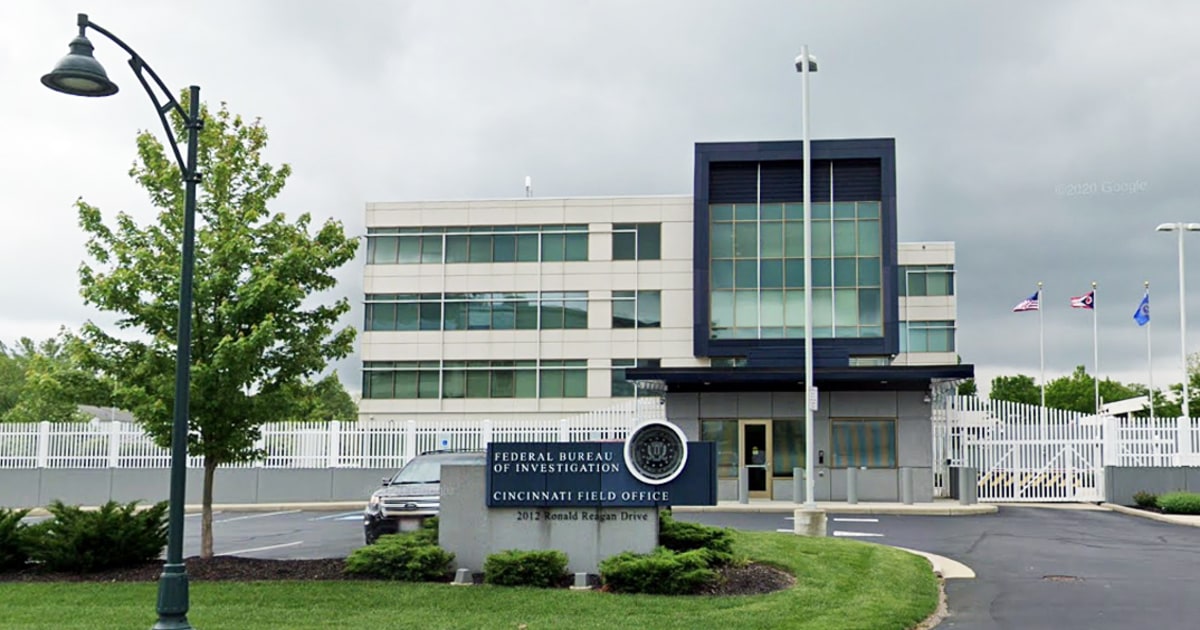
Earlier, two law enforcement sources told NBC News that a man armed with an AR-15 style rifle got inside the FBI building and fired a nail gun toward personnel before fleeing in a car.

“At approximately 9:15 EST, the FBI Cincinnati Field Office had an armed subject attempt to breach the Visitor Screening Facility (VSF),” FBI Cincinnati said in a statement. “Upon the activation of an alarm and a response by armed FBI special agents, the subject fled northbound onto Interstate 71.”

Image: FBI field office
FBI field office in Cincinnati, Ohio.Google

Clinton County Emergency Management Agency alerted that Interstate 71 was closed in both directions in the area of ​​the standoff at 1 pm The agency issued an update around 5 pm saying “law enforcement operations and response has ended.”

“Law enforcement has traded shots with a male suspect who is wearing a gray shirt and body armor,” the agency said in an initial statement, warning people nearby to stay inside and lock their doors. Ohio State Highway Patrol said the suspect had fired shots from a Ford Crown Victoria while he was being pursued by police.

Brian Murphy, a former official at the Department of Homeland Security and the FBI who’s now an executive at the open source intelligence firm Logically, told The Associate Press on Wednesday that his company has observed a large uptick in threats against FBI personnel and facilities on social media platforms since the FBI’s search of former President Donald Trump’s Mar-a-Largo home.

FBI Director Christopher Wray on Wednesday decried Trump supporters who have been using violent rhetoric against law enforcement in the wake of the search.

“I’m always concerned about threats to law enforcement,” Wray said. “Violence against law enforcement is not the answer, no matter who you’re upset with.”

This is a breaking news story. Please check back for updates.

Associated Press and Antony Planas contributed.

Categories
Business

Domino’s retreats from Italy having failed to conquer the home of pizza | Italy

Domino’s Pizza has pulled out of the Italian market after failing in its mission to conquer the home of pizza.

The US fast food chain’s departure from Italy after seven years followed a period in which the business was badly hit by the coronavirus pandemic, which in turn forced traditional Italian pizzerias to adopt their own delivery services.

The company set out with ambitious plans of opening 880 outlets across the country by 2030, hoping that it could win over Italian customers with pizza topped with pineapple. It got as far as opening 29 branches, all of which have now been closed.

Franchise holder ePizza filed for bankruptcy in April this year and all outlets stopped delivery services from 20 April, according to the Italian food website Agrodolce, which first reported the story earlier this month.

Domino’s first foray into Italy was in Milan in 2015, before venturing to other cities including Turin, Bologna, Parma and the capital, Rome.

It did not, however, make it to Naples, the southern city where pizza margherita was created.

“It would have been very strange if [Domino’s] had worked here,” said Gino Sorbillo, who owns a pizzeria in the city. “Naples is a very particular market – it wins on tradition, identity… it wouldn’t have worked if the only goal was to make money.”

Domino’s Pizza was brought to Italy by the entrepreneur Alessandro Lazzaroni. The move followed a similarly brave culinary exploit years earlier when McDonald’s opened its first store in Bolzano in 1985.

Sign up to First Edition, our free daily newsletter – every weekday morning at 7am

Lazzaroni said at the time that Italians were “very picky about food” but believed “the two great excellences” of Italian quality and American food delivery prowess could come together and be successful.

The Domino’s venture had some initial success but ultimately could not compete, not even on price – given that a pizza in an Italian restaurant can cost as little as €5 (£4.22), on top of the widespread availability of shops serving tagliatelle pizza (pizza by the slice) for even less.

That said, Lazzaroni, an ex-general manager of Burger King in Italy, now works for Crazy Pizza, a restaurant owned by the former Formula One team boss Flavio Briatore on Rome’s plush Via Veneto where a humble margherita costs €15.

Categories
Technology

Samsung has this week launched the latest foldable devices in the Galaxy Z Series | Western Advocate

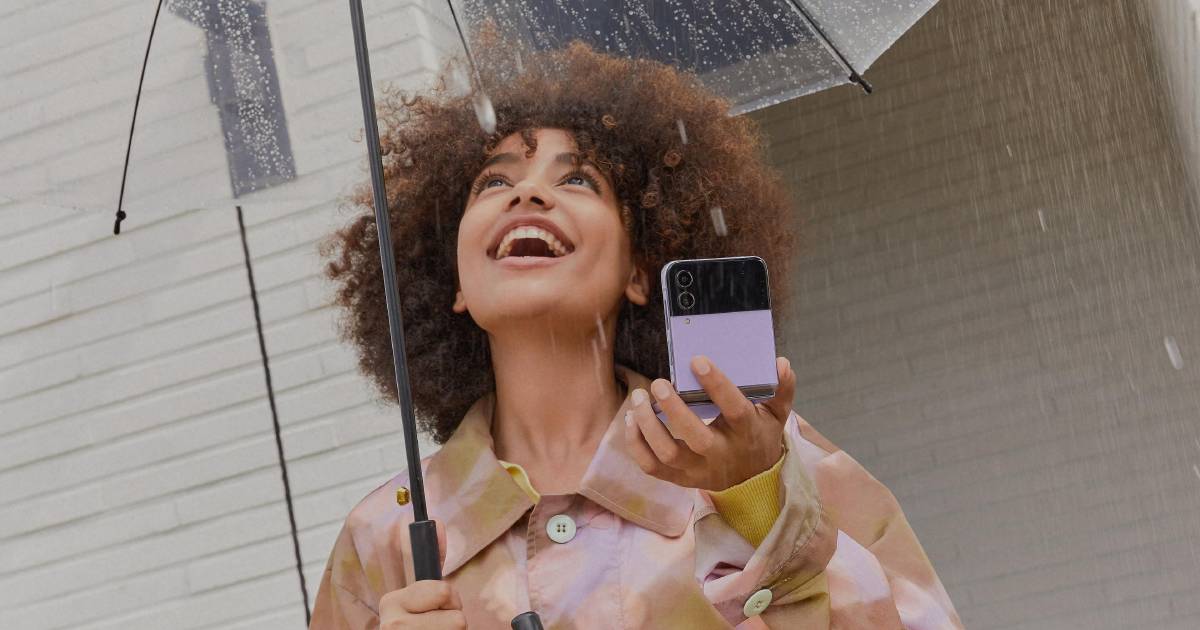
Flip phones are back, but not as we’ve ever known them. Photo: Supplied

This is branded content for Samsung

Samsung Electronics has today delighted fans with the announcement of their latest generation of premium, foldable smartphones and wearables within the Galaxy Series.

The latest additions to the Galaxy family includes a range of Galaxy Watches, buds and the highly anticipated smartphones, featuring the latest foldable technology.

The Galaxy Flip4 and Galaxy Fold4 have been long awaited by eager and curious consumers, and they challenge everything preconceived about the possibilities of hand-held tech.

The Galaxy Flip4 features an upgrade thanks to a larger screen and enhanced performance, all with the unrivaled portability and style that Samsung is renowned for.

Available in 128GB, 256GB and 512GB and in four beautiful colours, including the iconic new Bora Purple, Pink Gold, Graphite and Blue, the Flip4 redefines the art of self-expression through a powerful design that slips right into your back pocket.

The Galaxy Flip4 retails from $1,499 and comes in either the base or Bespoke model, for a more personalized experience.

Its cousin in the Galaxy series, the Galaxy Fold4, pushes all limits in smartphone technology, pairing convenience with luxury where other manufacturers have compromised.

As one of Samsung’s most premium designs, the Z Fold4 provides the ultimate one-hand experience with a slim, reengineered hinge for the thinnest, lightest Galaxy Fold yet.

The Z Fold4 provides the ultimate one-hand experience with a slim, reengineered hinge for the thinnest, lightest Galaxy Fold yet. Photo: Supplied

The Galaxy Fold4 gives consumers the best of both worlds, with an extra large immersive screen to work with that folds in half, providing portability, and dual screen capabilities that allow for seamless integration between apps.

“The new Galaxy Z Series range is the generation of foldables that will see the category become mainstream. Adoption cues are steadily growing from the volume of foldable devices ‘in the wild’, increasing consumer online search trends, indication of purchase intent, app optimization and more,” said Garry McGregor, Vice President of Mobile Experience division at Samsung Australia.

“We know there’s been a doubling in consideration for foldables among 18 to 45 year olds, and generation Z specifically showing a colossal 273% increase since last year.

“Without a doubt foldables have more than emerged, they’ve arrived and have a bright future.

“The foldables market is predicted to continue its rapid growth, more than doubling in 2023, and the fact Samsung Australia has maintained year-on-year pricing we see this being very much the case in this market,” said Mr McGregor.

The Galaxy Fold4 comes in Phantom Black, Beige or Greygreen and offers multiple memory options, with 256GB, 512GB and 1TB memory variants. The Galaxy Fold4 retails from $2,449, and both Z series smartphones are available for pre-order from August 11, 2022.

Samsung foldables are engineered to be strong, with Gorilla Glass Victus and aircraft-grade strength Armor Aluminum. Photo: Supplied.

But smartphones weren’t the only gadgets unveiled in the latest product lineup.

Samsung’s expanded Galaxy Watch 5 Series and Galaxy Buds2 Pro also made their Australian debut this week.

The Galaxy Watch5 Pro is a brand new addition to the range, with toughness and durability at its core. Made with the adventurous athlete in mind, it acts as the perfect sidekick to an active lifestyle. The Watch5 on the other hand, is a customizable addition to enhance everybody’s everyday life.

“We know there is a clear desire for an ecosystem of connected products. That is why we are especially excited for our latest additions to the Galaxy portfolio of wearables as well as the all new Watch5 Pro,” said Mr McGregor.

“They offer our customers supreme audio and improved health and well-being functionality – bringing the best of the best.

“It is a very exciting time for the category and with the full support from our partners, offering complete ranges of color skews, memory variants at the best value, we know our customers in Australia are going to love these new devices.”

Pre-orders for all devices begin on August 11, with on-sale launching on September 2. Retailers have various different pre-order offers, with fantastic savings to be made.

The Galaxy Z Series smartphones will be available from the Samsung eStore and Experience Stores, as well as all Samsung retail and telco partners.

For more information about the latest Samsung Galaxy devices, including the Z Series, visit https://www.samsung.com/au/smartphones/galaxy-z/

This is branded content for Samsung

Categories
Entertainment

Princess Charlotte’s ‘best type of uncle and auntie’ – not Meghan Markle or Prince Harry

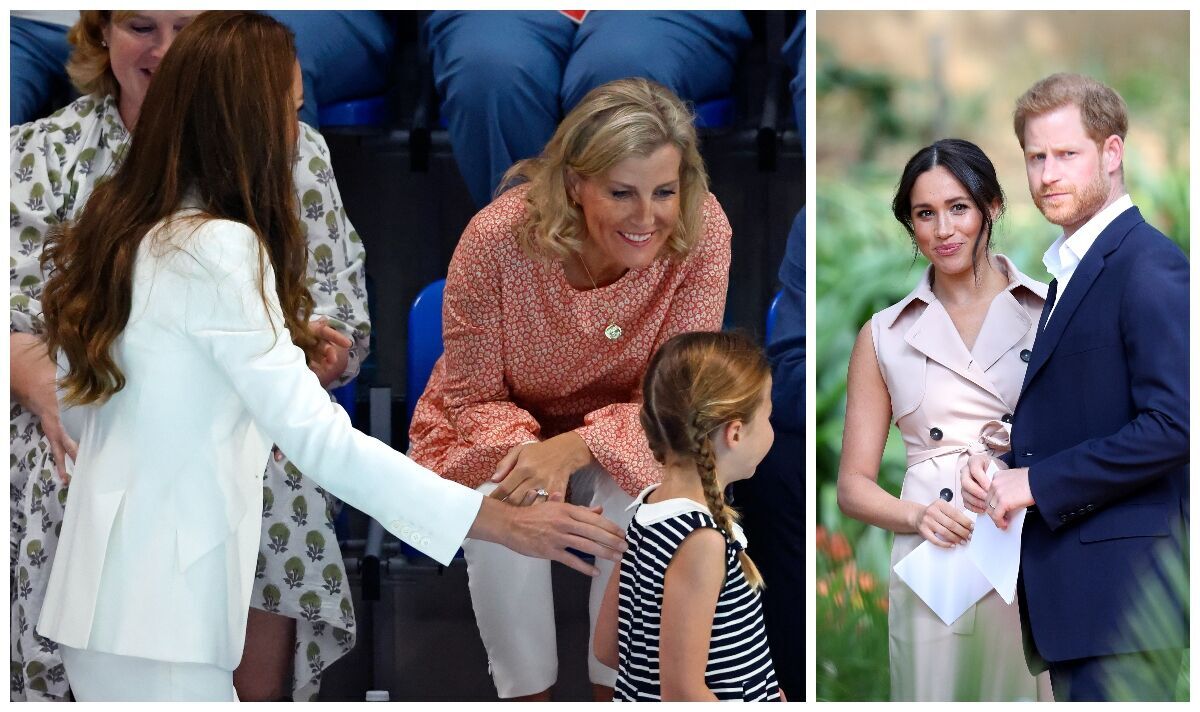
The Countess could be seen marveling over the seven-year-old Princess Charlotte.

What was their body language like as an extended family?

Judi James, a professional body language expert, spoke exclusively to Express.co.uk to explain, and even said that Charlotte has the “best type of uncle and auntie” in Sophie and Edward, not her actual aunt and uncle, ie, Prince Harry and Meghan Markle.

Judi said: “Edward, Sophie and their children look like such a warm, welcoming and fun group with their body language.

READ MORE: Expert spots subtle clue Duchess is ‘faking it’ with her body language

“As Kate, William and Charlotte arrive to take their seats in front, Sophie and Edward are defined as the best type of uncle and auntie, going out of their way to make the Cambridges know they are surrounded by fond family members.

“Sophie’s welcome to little Charlotte is to lean right forward to get as close to her height as possible to create rapport rather than sitting upright and smiling down on her.

“She looks totally engaged with Charlotte here.

“Her dimpled smile and eye-gaze signal she’s delighted to be seeing her again,” the expert suggested.

DON’T MISS:

Judi opined: “Sophie not only performs what is called an ‘act of inconvenience’ by leaning low to welcome Charlotte, but she also sends signals of similar effort greeting William.

“Holding her right arm out in a mimed hug that may or may not become a full hug, she goes out of her way with her own pose to register affection for her nephew here.”

Princess Charlotte was adorable as she pulled different faces during the Games.

This was a special treat for the Princess, as she missed out on the Euro 2022 Women’s Final on Sunday.

The young Princess wore a Rachel Riley black and white dress.

The dress retailed for just £39.

Meanwhile, Kate wore a jaw-dropping Alexander McQueen white suit.

The Duchess of Cambridge had previously worn this suit during her Caribbean royal tour.

Categories
Australia

more councils to ditch in-home help

Yarra councillor Stephen Jolly said council officers were going to recommend axing in-home aged care services, with elected members to consider the issue in two weeks.

loading

“It is clear from what they are saying that they are of the view that the economy of scale is such that we shouldn’t keep it in house,” he said. “But for all other councils, [outsourcing] has been a disaster for people who access the services and we have to take that into account.”

Jolly said Boroondara and Mornington Peninsula exiting aged care showed that elderly residents risked being left without care if private providers took over.

“If there is one council to stand against the trend and stand for high-quality services kept in house, it should be Yarra,” he said. “I am hopeful that we don’t go down that path, I don’t think it would be good for everyone.”

A council spokeswoman said a decision had not been made on the provision of aged care, which has a forecast budget of $6 million in the next financial year.

loading

“Like many other councils across the local government sector, [Yarra] is currently considering the impacts of national aged care reforms on its services,” she said.

Gay Ochiltree, 86, gets help with cleaning for an hour every fortnight through the council. She is concerned about private providers taking over.

“The stories are horrifying,” she said. “I would live and I would manage but I wouldn’t like it. I know people can get left high and dry and if you don’t have family – some people don’t – it is really, really difficult.”

An aged care worker at the City of Port Phillip said the council was getting ready to exit in-home aged care.

loading

“They are going to stop the aged care services within one to two years,” said the worker, who wanted to remain anonymous. “It’s so sad for the residents, the council is just neglecting them. It’s started happening slowly, services get shortened, standards go down.”

Port Phillip Mayor Marcus Pearl denied the council was going to end its home aged care services.

“No discussion has occurred at this time as to an exit from these services,” he said. “Our council provides a range of services for older people in our municipality.”

Stonnington, in Melbourne’s south-east, has 664 elderly residents receiving in-home aged care and gets more than $3 million a year from the federal government to administer care through about 50 staff.

A spokesman for the council said it was considering its options.

“As the new Australian government continues to assess aged services provision, the City of Stonnington is monitoring changes and discussing with federal government departments that provide funding,” the spokesman said.

“Ensuring that ongoing quality service provision of in-home care and support is available to older people in Stonnington will be central to any future decisions.”

A federal government spokesman said the decision to relinquish CHSP funding was an individual council decision.

“The Australian government cannot direct Victorian councils to continue delivery of CHSP services,” he said. “However, it is important to note that the Australian government has not encouraged Victorian councils to cease delivering CHSP services.”

The Morning Edition newsletter is our guide to the day’s most important and interesting stories, analysis and insights. Sign up here.

Categories
US

AG Garland approves move to unseal Trump Mar-a-Lago search warrant, defends DOJ

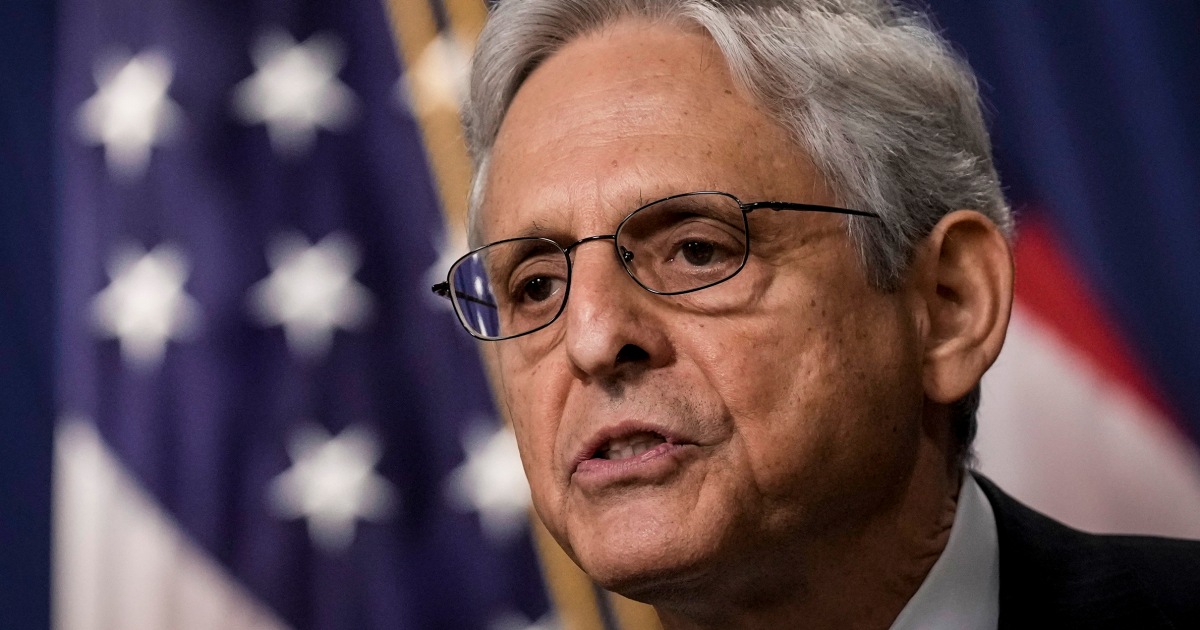
WASHINGTON — Attorney General Merrick Garland said Thursday that he “personally approved the decision to seek a search warrant” for former President Donald Trump’s Mar-a-Lago resort and that the Justice Department filed a motion earlier in the day to make the warrant public.

Speaking about his decision at a brief news conference, Garland said the department “does not take such actions lightly” and first pursues “less intrusive” means to retrieve material. Garland noted that it was Trump’s “right” to reveal Monday’s FBI search of his property and that all Americans are entitled to a presumption of innocence.

Garland added that the Justice Department has asked to make public the property receipt detailing what agents found inside the Trump property.

Trump received a federal grand jury subpoena this spring for sensitive documents the government believed he retained after his departure from the White House, a source familiar with the matter confirmed.

Garland’s nod to “less intrusive” avenues for recovery of documents appeared to be a reference to the subpoena and suggested that Trump had not turned over all of the material sought by the Justice Department.

Trump defended himself in a statement posted to his Truth Social media platform after Garland’s remarks, claiming that his lawyers were “cooperating fully” and had developed “very good relationships” with Justice Department officials.

“The government could have had whatever they wanted, if we had it,” he wrote. “Out of nowhere, and with no warning, Mar-a-Lago was raided” by “VERY large numbers of agents, and even ‘safecrackers.’ They got way ahead of themselves. Crazy!”

Conservative journalist John Solomon first reported Thursday afternoon that Trump was sent the subpoena months before the FBI searched his Mar-a-Lago home in Florida on Monday.

The source familiar with the matter, who spoke on the condition of anonymity, said the subpoena was related to documents that Trump’s legal team discussed with Justice Department officials at a previously reported meeting on June 3.

The federal officials who went to Mar-a-Lago for the June meeting were “coming down to retrieve the documents that were being requested” in the subpoena, the source familiar with the matter said, adding that the meeting was arranged with the Trump team’s understanding that turning over relevant documents that day would fulfill the subpoena.

Citing “two sources briefed on the classified documents” sought in the subpoena, The New York Times reported Thursday that federal officials were prompted to search Mar-a-Lago because uncollected material was particularly sensitive to national security.

The source familiar with the matter told NBC News that Trump’s lawyers last heard from the Justice Department before the FBI search shortly after the June meeting, when federal officials asked for additional security in the storage facility where documents were held. Trump’s team added a second lock to the basement storage area, the source said.

During Thursday’s remarks, Garland also defended the Justice Department against “unfounded” attacks made by Trump and his allies.

“I will not stand by silently when their integrity is unfairly attacked,” he said. “Every day they protect the American people from violent crime, terrorism and other threats to their safety while safeguarding our civil rights.”

FBI Director Christopher Wray, who was appointed by Trump, echoed those sentiments in a statement Thursday night.

“Unfounded attacks on the integrity of the FBI erode respect for the rule of law and are a serious disservice to the men and women who sacrifice so much to protect others. Violence and threats against law enforcement, including the FBI, are dangerous and should be deeply concerning to all Americans,” he said.

“Every day I see the men and women of the FBI doing their jobs professionally and with rigor, objectivity, and a fierce commitment to our mission of protecting the American people and upholding the Constitution. I am proud to serve alongside them,” Wray added .

Earlier this week, Trump attacked the FBI in a Truth Social post, with similar remarks from his allies.

“Everyone was asked to leave the premises, they wanted to be alone, without any witnesses to see what they were doing, taking or, hopefully not, ‘planting,’” he wrote. “Why did they STRONGLY insist on having nobody watching them, everybody out?”

Newsmax CEO Chris Ruddy, a friend of the former president, said that while the two men had not discussed the investigation, “my guess is he’s pretty shocked.” Ruddy echoed Trump’s attacks on the FBI, calling the search a “publicity stunt” and depicting the Justice Department as politicized.

“Unfounded attacks on the integrity of the FBI erode respect for the rule of law and are a serious disservice to the men and women who sacrifice so much to protect others. Violence and threats against law enforcement, including the FBI, are dangerous and should be deeply concerning to all Americans. Every day I see the men and women of the FBI doing their jobs professionally and with rigor, objectivity, and a fierce commitment to our mission of protecting the American people and upholding the Constitution. I am proud to serve alongside them.”

Garland’s appearance Thursday followed an outpouring of criticism from Justice Department officials and alumni who faulted him both for his reticence amid the unprecedented search of an ex-president’s home and for failing to defend federal agents from unfounded claims that they had planted evidence.

A former Justice Department official told NBC News: “In a normal investigation, secrecy is important and justified. But when you’re talking about sending dozens of FBI agents into the bedroom of the former president of the United States to go through his drawers, you need to explain what’s going on.”

If not, this person added, “everyone will assume the worst.”

“This is a completely unprecedented move by US law enforcement, and I’m frankly astonished that no one has bothered to explain or justify it in any way.”

The White House was not given advance notice of Garland’s remarks, a senior White House official said.

Garland on Thursday put the onus on Trump to reveal more about the search, deflecting criticism that the Justice Department has been overly secretive. Under the motion filed by prosecutors, Trump now has two choices: He can allow the warrant to be made public, or he can keep it secret and risk appearing as if he has something to hide.

“I thought it was both completely appropriate and absolutely brilliant to ask the president’s lawyers to weigh in on a decision to unseal,” said Chuck Rosenberg, a former US attorney and FBI official who has worked in Democratic and Republican administrations. “If there’s no there, you would expect the president to agree.”

Representatives and attorneys for Trump did not immediately respond to requests for comment about whether he planned to fight Garland’s motion to unseal the search warrant.

The Justice Department’s motion does not seek to make public the affidavit of probable cause, which includes the FBI’s justification for searching Mar-a-Lago.

According to the court filing, a federal judge signed off on the search warrant last Friday. The filing notes that Trump and his lawyers have copies of both the warrant and a “redacted Property Receipt listing items seized pursuant to the search” — and that they can object to the public release of those documents.

“Given the intense public interest presented by a search of a residence of a former President, the government believes these factors favor unsealing the search warrant” and related materials, the filing says. “That said, the former President should have an opportunity to respond to this Motion and lodge objections, including with regards to any ‘legitimate privacy interests’ or the potential for other ‘injury’ if these materials are made public.”

The next step is for Justice Department officials to meet with Trump’s lawyers and determine whether he intends to fight disclosure of the warrant and the property receipt, according to an order Magistrate Judge Bruce Reinhart issued Thursday. The Justice Department must file a notice by 3 pm ET Friday to inform the judge of the Trump team’s intentions.

An irony of the investigation is that it centers on paper records. As president, Trump had an aversion to reading briefing material that staff members would hand him, former administration officials said. David Shulkin, the former veterans affairs secretary, said that when he would meet with Trump in the Oval Office or an adjacent private dining room where the ex-president often worked with the TV tuned to Fox News, he was struck by the absence of paperwork .

“President Trump never wanted any paper from us,” Shulkin said. “I would go into his office initially and say, ‘Mr. President, I have a briefing for you.’ And he would literally, with his hands, push it back and say, ‘I don’t want that.’ He didn’t want to read any of that stuff. When you go into the Oval Office, my recollection of President Trump was there wasn’t a paper anywhere. His desk from him was a Diet Coke and nothing else. ”

John Kelly, a former Trump White House chief of staff, said he would instruct Cabinet secretaries to brief Trump in person. “I would say this to members of the Cabinet,” Kelly told NBC News. “Rather than give him something to read, tell him.”

Kelly, the longest-serving chief of staff of Trump’s presidency, said that when he took the job in the summer 2017 he was told that Trump had been briefed on the Presidential Records Act and its requirement that documents be preserved.

He also said he would speak to Trump about the importance of retaining records. The message did not sink in, Kelly said, and aides would on occasion retrieve crumpled or torn pieces of paper from a wastebasket and try to piece them back together so they could eventually be turned over to archivists.

Still, Trump plainly valued some of the paper records that got to his desk. He would open a drawer of the Resolute Desk in the Oval Office and show guests the letter he got from former President Barack Obama when he left office in January 2017, a former White House official said. Or he would show visitors an executive order or a letter he had gotten from North Korean leader Kim Jong Un.

At his home in Mar-a-Lago, he would greet guests at dinnertime and have an aid retrieve an executive order to show them, the person said, speaking on condition of anonymity to discuss Trump’s practices.
Categories
Business

Wall Street flounders and ASX set to drop as markets mull over inflation ‘victory’

Australian shares are set to falter as global markets ponder whether the worst rate hikes are over.

Wall Street had mixed results overnight, with the Dow Jones closing flat, the S&P500 down 0.1 per cent, and the tech-heavy Nasdaq off 0.6 per cent.

Wall Street surged the previous day when US markets rose after the world’s biggest economy released its latest inflation data.

The data showed price hikes were starting to ease, which might soften concerns about another big rate hike of up to 0.75 per cent next month.

However, San Francisco Fed president Mary Daly said it was too early to “declare victory” on inflation despite the better figures.

Ms Daly also said a 0.5 per cent rate hike in September was currently her “baseline”, and jobs and worker data that would be out soon also needed to be taken into consideration.

With Wall Street now retracting its flush of optimism, ASX 200 futures were also down in early-morning indications.

They were down 1.5 per cent by 7am AEST.

Oil up as people switch from costly gas

US 10-year Treasury yields have risen slightly in an indication that markets too are still betting on rate hikes.

“Financial markets initially reacted positively to [US inflation] data that showed inflation in the US is moderating, but gains then whittled away on concerns the market may have overreacted,” ANZ noted.

“At close, the Euro Stoxx 50 had gained 0.2 per cent, the FTSE 100 dropped 0.5 per cent, while the S&P 500 and the Dow Jones were largely unchanged.

“The yield on the US 10y note jumped 11bp higher to 2.89 per cent.”

.

Categories
Technology

Samsung has this week launched the latest foldable devices in the Galaxy Z Series | Liverpool City Champion

Flip phones are back, but not as we’ve ever known them. Photo: Supplied

This is branded content for Samsung

Samsung Electronics has today delighted fans with the announcement of their latest generation of premium, foldable smartphones and wearables within the Galaxy Series.

The latest additions to the Galaxy family includes a range of Galaxy Watches, buds and the highly anticipated smartphones, featuring the latest foldable technology.

The Galaxy Flip4 and Galaxy Fold4 have been long awaited by eager and curious consumers, and they challenge everything preconceived about the possibilities of hand-held tech.

The Galaxy Flip4 features an upgrade thanks to a larger screen and enhanced performance, all with the unrivaled portability and style that Samsung is renowned for.

Available in 128GB, 256GB and 512GB and in four beautiful colours, including the iconic new Bora Purple, Pink Gold, Graphite and Blue, the Flip4 redefines the art of self-expression through a powerful design that slips right into your back pocket.

The Galaxy Flip4 retails from $1,499 and comes in either the base or Bespoke model, for a more personalized experience.

Its cousin in the Galaxy series, the Galaxy Fold4, pushes all limits in smartphone technology, pairing convenience with luxury where other manufacturers have compromised.

As one of Samsung’s most premium designs, the Z Fold4 provides the ultimate one-hand experience with a slim, reengineered hinge for the thinnest, lightest Galaxy Fold yet.

The Z Fold4 provides the ultimate one-hand experience with a slim, reengineered hinge for the thinnest, lightest Galaxy Fold yet. Photo: Supplied

The Galaxy Fold4 gives consumers the best of both worlds, with an extra large immersive screen to work with that folds in half, providing portability, and dual screen capabilities that allow for seamless integration between apps.

“The new Galaxy Z Series range is the generation of foldables that will see the category become mainstream. Adoption cues are steadily growing from the volume of foldable devices ‘in the wild’, increasing consumer online search trends, indication of purchase intent, app optimization and more,” said Garry McGregor, Vice President of Mobile Experience division at Samsung Australia.

“We know there’s been a doubling in consideration for foldables among 18 to 45 year olds, and generation Z specifically showing a colossal 273% increase since last year.

“Without a doubt foldables have more than emerged, they’ve arrived and have a bright future.

“The foldables market is predicted to continue its rapid growth, more than doubling in 2023, and the fact Samsung Australia has maintained year-on-year pricing we see this being very much the case in this market,” said Mr McGregor.

The Galaxy Fold4 comes in Phantom Black, Beige or Greygreen and offers multiple memory options, with 256GB, 512GB and 1TB memory variants. The Galaxy Fold4 retails from $2,449, and both Z series smartphones are available for pre-order from August 11, 2022.

Samsung foldables are engineered to be strong, with Gorilla Glass Victus and aircraft-grade strength Armor Aluminum. Photo: Supplied.

But smartphones weren’t the only gadgets unveiled in the latest product lineup.

Samsung’s expanded Galaxy Watch 5 Series and Galaxy Buds2 Pro also made their Australian debut this week.

The Galaxy Watch5 Pro is a brand new addition to the range, with toughness and durability at its core. Made with the adventurous athlete in mind, it acts as the perfect sidekick to an active lifestyle. The Watch5 on the other hand, is a customizable addition to enhance everybody’s everyday life.

“We know there is a clear desire for an ecosystem of connected products. That is why we are especially excited for our latest additions to the Galaxy portfolio of wearables as well as the all new Watch5 Pro,” said Mr McGregor.

“They offer our customers supreme audio and improved health and well-being functionality – bringing the best of the best.

“It is a very exciting time for the category and with the full support from our partners, offering complete ranges of color skews, memory variants at the best value, we know our customers in Australia are going to love these new devices.”

Pre-orders for all devices begin on August 11, with on-sale launching on September 2. Retailers have various different pre-order offers, with fantastic savings to be made.

The Galaxy Z Series smartphones will be available from the Samsung eStore and Experience Stores, as well as all Samsung retail and telco partners.

For more information about the latest Samsung Galaxy devices, including the Z Series, visit https://www.samsung.com/au/smartphones/galaxy-z/

This is branded content for Samsung

Categories
Entertainment

Issey Miyake obituary | fashion

The 1960s often attempted to imagine the future of clothes – take a look at the designer Hardy Amies’ wardrobe for Stanley Kubrick’s film 2001: A Space Odyssey, period pieces unmistakably from 1968. But while Amies clad Kubrick’s space hostesses in hard-seamed mod shifts , Issey Miyake was working on his first “constructible clothes” – knit pieces to be layered together at whim. Their seemingly simple shapes are soft, and their novel synthetic yarns sympathetic. They haven’t dated a day, and still look like they might be the future.

Miyake, who has died aged 84, always said he was not interested in fashion, only in design for living. He cared about relationships between people and the cloth enfolding and enwrapping their bodies, about cloth’s fibers and techniques. His simplicity of him referred back, to the ancient principles of Japanese clothing, rectangles off the loom folded and tacked together into garments, and forward, to computer-controlled processes for his 2000 line A-PoC (A Piece of Cloth), which extruded tubular fabric that wearers could cut out into seamless garments.

Miyake regarded craft skills and developing chemistry and technology with equal curiosity – his polyester Bao Bao bags are hard plaques on a mesh backing, tough but flexible like samurai armour. He was an early adopter of digital design for large-scale manufacture by computerized machinery. The more precise and perfect the repeatable process, the closer it came to craft.

His most successful concept, Pleats Please, owed its crimped, tree-bark-like aesthetics to ancient Greek linen garments as imitated by Mariano Fortuny, with his draped 1910s gowns, and its relative affordability to new pleating machines that superheat-bake texture into polyester with a memory.

Models display a Pleats Please dress as part of Issey Miyake's autumn-winter 1995 ready-to-wear collection in Paris.
Models display a Pleats Please dress as part of Issey Miyake’s autumn-winter 1995 ready-to-wear collection in Paris. Photograph: Patrick Kovarik/AFP/Getty Images

Miyake’s hundreds of pleated costumes for William Forsythe’s The Loss of Small Detail at Frankfurt Ballet in 1991 fed into the experiment too, and at the line’s 1993 launch, dancer models extracted every joule of kinetic energy out of swirling those garments; Irving Penn joyfully photographed them. In turn, Miyake outfits became gala favorites with ballerinas and classical musicians, guaranteed not to crush when the conductor hugged them. Architects appreciated him too. His most celebrated repeat customer was Apple’s Steve Jobs, who specified to the millimeter the sleeve length of the many black turtlenecks he ordered.

Miyake investigated and delighted in materials, saying: “Material for clothing is limitless: anything can make clothing.” That included the wood cellulose of his 1963 student designs for the Toyo Rayon company; pineapple fiber and rubber; paper, rattan and bamboo – a traditional craftsman wove these into the Miyake bodice that Artforum magazine put on its cover in 1982, the first garment it had deemed worthy of the honour.

A star-like creation for Issey Miyake during the 1999-2000 autumn-winter ready-to-wear collections.
A star-like creation for Issey Miyake during the 1999-2000 autumn-winter ready-to-wear collections. Photograph: Pierre Verdy/EPA

Above all, he had unusual respect for materials derived from fossil fuels, seeing plastic, nylon and all the polys not as cheap disposable substitutes for natural substances, but as themselves having unique properties – polyfibres he developed with adventurous manufacturers were machine-washable, uncrushable , stretchy and kind to skin. Hi-tech production processes reduce yarn as well as fabric waste; his garments from him were visually timeless and made to last physically. Miyake never thought of hydrocarbons as infinite resources to burn. Their complex chemistry and potential uses were precious – the heat of long-gone suns made clothes and ingredients for his water-themed perfumes, starting with L’Eau d’Issey in 1992. In the 21st century, his Tokyo Reality Lab recycled plastic bottle tops into durable, wearable cloth.

The Lab was the project of Miyake’s lively old age, after he handed over design responsibility for eight main lines, including décor, and the running of international sales and stores, to personally chosen successors through the 2000s (his firm remains privately owned). Besides being a crucial research and development facility, and a liaison base with craftworkers, machinery-makers, suppliers and digital experimenters, it was an academy of design, where staff who had been with him since he opened his original design studio in 1970 shared expertise with young recruits. His longtime favorite word of him, and practice, was monozukurithe making of things, which meant so much more than manufacturing.

A-PoC Le Feu, by Issey Miyake and Dai Fujiwara, 1999, an example of Miyake's A-PoC (A Piece of Cloth) concept – extruded tubular fabric that wearers could cut out into seamless garments.
A-PoC Le Feu, by Issey Miyake and Dai Fujiwara, 1999, an example of Miyake’s A-PoC (A Piece of Cloth) concept – extruded tubular fabric that wearers could cut out into seamless garments. Photograph: Yasuaki Yoshinaga/A-PoC Le Feu, Issey Miyake

Miyake never expected to reach old age. He was born in Hiroshima, the son of an army officer and a teacher, and evacuated to a nearby small town during the second world war. At 8.15am on 6 August 1945, he was at primary school when he saw the flash of the atomic bomb that destroyed Hiroshima. Seven-year-old Miyake set out alone for the family house, 2.3km from the blast center, searching among the heaped dead and dying for his mother.

She had survived, badly burned, and died three years later, after nursing him through osteomyelitis, the radiation disease he contracted, which lamed him. What sustained Miyake growing up in an impoverished, slowly rebuilding city was painting – too poor to buy brushes, he worked with his fingers – and the Peace Bridge there, with Isamu Noguchi’s profound concrete balustrade symbolizing the future, which he crossed on his way to painting classes. Older fellow students at Hiroshima Kokutaiji high school, some of whom died young of radiation sicknesses, told Miyake about Noguchi, who became his hero (and later, friend) of him. Miyake thought he would die young too, so he took a risk on being a designer.

Images in his sister’s magazines interested him in clothes, but it was not a possible subject of male study in 1950s Japan, and to placate his father he took graphic design at Tama Art University in Tokyo. As a student he wrote in 1960 to the secretariat for the World Design Conference, held in Japan that year, wanting to know why clothes were not part of its programme.

Growing up just outside Hiroshima, Issey Miyake witnessed the atomic bomb explosion in 1945 in his city, aged 7. His mother died three years later, after being badly burned, and he suffered from radiation-related diseases.
Growing up just outside Hiroshima, Issey Miyake witnessed the atomic bomb explosion in 1945 in his city, aged 7. His mother died three years later, after being badly burned, and he suffered from radiation-related diseases. Photograph: Kim Kyung Hoon/Reuters

There was nowhere to study couture, so once Japan permitted travel abroad on a tiny budget, he went to Paris in 1965 for a course at the Chambre Syndicale de la Haute Couture, and interned for Guy Laroche and Hubert de Givenchy. The important Parisian education, though, was the student protests of 1968, revolting against the haute-bourgeoisie, usual customers for couture. Miyake sided with the students, wanting to make clothes, both wilder and more useful, for ordinary people, unconstrained by age, size, gender or fit.

Miyake went on to New York in 1969 as an assistant for Geoffrey Beene, to learn about mass production. But in 1970, another bout of radiation-related disease returned him to Tokyo for treatment, where friends loaned him the money to start Miyake Design Studio. In his remarkable first show in Tokyo, a model stripped off many layers until nude, a scandal that alarmed his sponsors and made clear his originality.

In 1973, he began to show in Paris, distinctively different from other Japanese designers arriving there. His regular collections of sculptured, high-end clothes were spectacular, but the real fun came with a change of focus to volume production ready-to-wear lines through the 1990s. They brought him nearer his ideal, unfashionable customers of him.

As well as the Reality Lab, Miyake in “retirement” set up Japan’s first design museum, 21_21 Design Sight, in Tokyo, with the architect Tadao Ando, ​​its enfolding steel roof based on a piece of cloth. Miyake’s own creations have been exhibited and collected by museums, including in London, New York and Paris. Japan awarded him its Order of Culture in 2010.

Miyake kept the sorrows of his childhood private until 2009, and remained secretive about his personal life: his closest companions were his work collaborators, especially the studio president, Midori Kitamura, a former model.

Issey Miyake, designer and maker, born 22 April 1938; died 5 August 2022

Categories
Australia

Kangaroo Island wildlife sanctuary rebounds from bushfires to create citizen science ocean tours

Is adventure tourism, with a science bent, the new way to attract travellers?

From tracking echidna poo, trapping mosquitoes, or counting face masks on beaches, citizen science is helping boost scientific records and data.

But it is not just for locals. A new style of tourism encourages people to involve themselves in landscapes and wildlife while visiting locations, rather than just taking in the sights.

In South Australia, Kangaroo Island is known for its unique and abundant wildlife.

But 25,000 koalas and 50,000 farm animals perished in the fatal Black Summer bushfires of 2019-2020.

Two people also lost their lives.

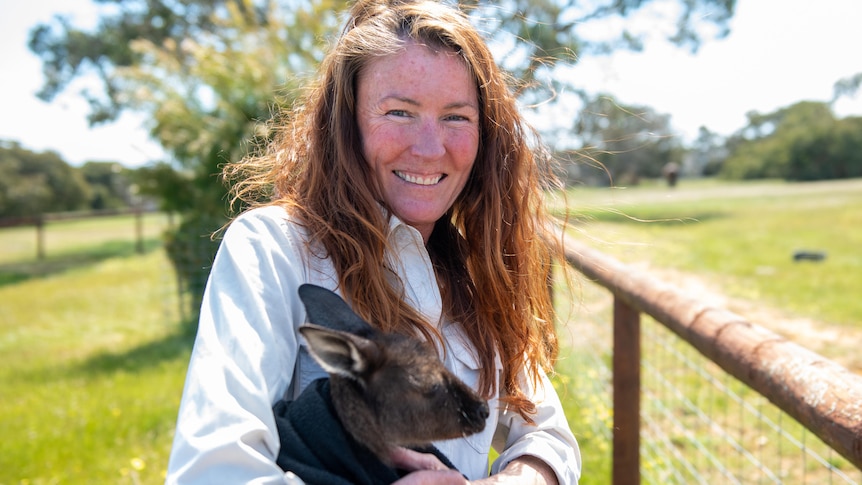
Roanna Horbelt has been rescuing native orphaned animals at her Wildlife Land Trust Sanctuary for the past decade. She said the fires tested her mettle of her.

Woman smiling holding a kangaroo in a blanket, standing in a meadow.
Roanna Horbelt and rescued kangaroo Choco on Kangaroo Island, SA.(ABC Movin’ To The Country: Tony Hill)

“We were out in the fire grounds the whole time and you see horrible things, but we didn’t focus on that at all,” she said.

“I don’t have one picture. We focused on the positive things.

“We focused on the live animals, and we had about …150 to 200 kangaroos in the sanctuary at that stage, where it really was a sanctuary.”

Tourism that helps wildlife

Ms Horbelt and her partner, Phil Smith, saw an opportunity to give back to the animals not just through rehabilitation but through research and conservation.

They started an ocean tourism operation taking small group boat trips to the remote north-western coastline of Kangaroo Island to introduce people to the astounding diversity of animals, landscape, and geology.

Man with arm around woman, both smiling wearing matching t-shirts.
Roanna Horbelt and Phil Smith are partners in business and in life.(ABC Movin’ To The Country: Tony Hill)

The tourists, along with active citizen scientists, contribute to data monitoring and collection programs by taking photos, noting locations and animals, and making new discoveries.

Kangaroo Island Dolphin Watch coordinator Tony Bartram said, surprisingly, not much was known about dolphins.

“People think we know a lot, because dolphins are on T-shirts, in movies, on TV, all the rest, but they’re actually listed as data deficient,” he said.

“Getting baseline data about all species of dolphins is incredibly important.”

Mr Bartram said this area of ​​Kangaroo Island was the perfect place to conduct these tours.

Two women standing outdoors in a rural setting, leaning on a fence and smiling.
Halina Baczkowski meets Roanna Horbelt on Movin’ To The Country.(ABC Movin’ To The Country: Tony Hill)

“It’s not like being in Queensland. In South Australia, the marine environment is largely unexplored,” he said.

Mr Bartram had high hopes for the project.

“It’s important to us because it gives us a greater data flow, but also it means that we’re getting to places we haven’t been able to get to before,” he said.

“The limits on the research we’ve done so far are the limits on us and how far we travel, not on the dolphins.”

It’s not just dolphins tourists get to see. They have also spotted whales and ospreys previously not thought to inhabit the area.

Whale tale on display out of the ocean.
One of many stunning whale flukes captured off the coast of Kangaroo Island on Roanna’s tours.(ABC Movin’ To The Country: John Natoli)

Seeing a whale’s tail, known as a fluke, is the money shot. The unique markings help to identify the whale.

The more cameras the better, according to Ms Horbelt.

“The data they collect is vital. It’s not easy to get a fluke of a whale or a fin because the animals move very quickly,” she said.

‘Bloody hard work’ pays off

Another citizen scientist, Sue Holman, has documented ocean life around the island for eight years and was amazed at the data coming back from the tours.

“There are only seven recorded [osprey] nests around the island and they didn’t believe there were any up that end of the north coast at all, no nests,” she said.

“This is new data. This is cutting-edge stuff that we really want to show… there are nests up there that no-one knows about.”

.