It’s called the silly season for a reason but this is just getting stupid.
A dramatic series of events played out in Formula One overnight – and at this point nothing has been resolved.
Watch Every Practice, Qualifying & Race of the 2022 FIA Formula One World Championship™ Live on Kayo. New to Kayo? Start your free trial now >
The circus began when Fernando Alonso stunned Alpine by revealing he was fleeing the team to join Aston Martin, which needed a new driver after Sebastian Vettel’s retirement.
That left Alpine with egg on its face and in an attempt to remove said egg the fourth-ranked outfit announced it was promoting Australian young gun Oscar Piastri to the vacant seat.
Piastri, who has served as Alpine’s reserve driver this season after winning back-to-back F2 and F3 championships, is destined to join the grid in 2023 and appeared to have his future decided when this release was posted just after 2am (AEST).
But less than two hours later Piastri embarrassed Alpine further by rubbishing its claim he had agreed to the promotion.
“I understand that, without my agreement, Alpine F1 have put out a press release late this afternoon that I am driving for them next year,” Piastri said. “This is wrong and I have not signed a contract with Alpine for 2023. I will not be driving for Alpine next year.”
But that’s only half the story.
The other uncomfortable development for Aussie racing fans were reports Piastri is on a collision course with his compatriot Daniel Ricciardo.
Ricciardo last week re-affirmed his commitment to McLaren but has endured the rockiest of times as Lando Norris’ partner in recent years.
It appears Piastri – and his manager Aussie F1 legend Mark Webber – read the tea leaves and were eyeing off Ricciardo’s seat before they knew Alonso was about to make room at Alpine.
There was even a report that claimed they had a deal in place with the British manufacturer, which will no doubt be tested in court if Alpine believes it breaches its agreement with the 21-year-old from Melbourne.
Oscar Piastri began racing go-carts in Victoria at age 11.Source: Herald SunPiastri has enjoyed a sparkling junior career.Source: Supplied
Piastri has been made to bid his time as Alpine’s reserve driver this year, despite winning three consecutive titles in a stellar junior racing career.
F1 commentator Martin Brundle had predicted last month the Aussie would find a way to the 2023 grid.
“Piastri has got to be in F1 next year whatever it is and whatever comes his way he has got to take it,” Brundle said.
“He has to outperform whatever he gets as Mark Webber did at Minardi and (Ayrton) Senna did at Toleman for example.
“It won’t be easy for Oscar but it’s not out of the question.”
There was speculation he could be loaned to Williams as a replacement for underperforming Canadian Nicholas Latifi but Alonso’s exit has created a domino effect that’s left the only three Aussies to race at the top level since the early 1990s suddenly at odds.
Thousands of NSW students are nervously awaiting the results of their selective school tests following a significant overhaul of the admissions process.
Key points:
About 4,000 parents have signed an online petition against the change
Some parents say they would have approached the admissions process differently if they had been informed about the change
Education expert and parents worry the new policy will put more pressure on families to undertake extra tutoring
Last month, NSW Education Minister Sarah Mitchell announced up to 20 per cent of places at selective schools would be set aside for disadvantaged students.
North Sydney resident Bruce Fan is one of many parents now worried their children may miss out on a spot at their dream school due to the new policy.
Mr Fan started an online petition calling on the government to scrap the new policy and redo the public consultation.
“It is unfair that the policy has been retrospectively implemented on the students who have already sat the tests this year,” he said.
Bruce Fan says the government should increase the number of places at selective schools rather than reserving existing places for disadvantaged students.(Supplied)
Mr Fan said the online petition was not about stopping the government from helping the disadvantaged groups but urging the government to invest more funding into the public education system.
“I firmly believe that we need to support the disadvantaged communities and students, but this quota is not the right solution,” he said.
“The government should set up more selective schools in lower socio-economic areas.”
Kellyville resident Yashwant Desai, one of more than 4,000 signatories to the petition, said he too believed the change was unfair.
“It’s not giving everyone a fair go,” said Mr Desai, whose children have already been accepted into a selective school.
“What the government is doing is just for political advantage and to gain the most sympathetic votes.
“Why are only selective schools being targeted?” he asked, echoing Mr Fan’s call for the government to invest more in public schools where disadvantaged students lived.
Yashwant Desai said students work hard for the selective school test and deserve a fair process.(Supplied)
Changes intended to make selective schools fairer
Selective high schools are designed to cater for the needs of gifted students, or those with high potential, by providing specialized teaching methods and materials.
The 49 selective schools in NSW often outperform expensive private schools and dominate HSC leaderboards.
But the only way to get into one is to compete with thousands of other students on the state-run entry tests.
In 2023, 15,660 students applied for 4,248 places.
A spokesperson for the NSW Department of Education told the ABC in an email the changes were based on an extensive 2018 NSW government review about making the overall system fairer.
Ten per cent of the reserved places will be for low socio-educational advantage students, 5 per cent for Aboriginal students, 2.5 per cent for rural and remote students, and 2.5 per cent for students with a disability.
The new equity placement model replaces previous provisions for disadvantaged students in the scoring and placement process in a more transparent way, the spokesperson said.
The NSW government defines the disadvantaged group based on the Index of Community Socio-educational Advantage (ICSEA) that scales the social-educational backgrounds of a school’s students, such as parents’ occupation and education, rather than school wealth.
Parents angry about timing
In 2022, the NSW selective school’s entrance test was held on March 31.
All participating families then had to choose up to three schools in order of preference and finalize their choices by April 24.
Because the policy was announced in July, the students who took the test this year were not able to take into account the change when they were choosing their school preferences.
The NSW Education Department received nearly four times as many applications as there were places at selective schools this year. (ABC News: Ian Cutmore)
Hurstville resident Carrie Zhang’s son is one of the students who might be affected.
Ms Zhang explained the family’s choice of schools was made strategically, and would be jeopardized by the new procedure.
She said her son might now miss out on his “safety net” school.
“The government changed the rules after the test and the window period that we can change our choice of schools,” she said.
“If we knew earlier, we may change our strategy to pick schools that require lower admission scores.”
The government says any remaining reserved places not taken up by disadvantaged students will be offered to general applicants.
But Ms Zhang said this wasn’t good enough.
“My son’s ranking will go down,” she said.
“We have been forced [to accept it] and have no choice.”
Changes to make schools ‘more equitable’
The NSW Education Department’s 2018 review found disproportionately few applications to selective schools were coming from students from low socio-economic backgrounds, aboriginal students, those with a disability and students from rural and remote areas.
Penrith Selective High School Principal Mark Long told the ABC the policy would see a broadening of students attending his school.
“I’m really happy that all of the work by so many people over a long period of time is now in policy and will allow schools, and school leaders and school communities, to really serve the broader communities in NSW,” he said.
Christina Ho says only about 2 per cent of applicants to NSW selective schools come from disadvantaged backgrounds. (ABC RN: Sophie Kesteven )
Associate Professor Christina Ho, an education expert at the University of Technology Sydney, said the policy was a big step forward in solving the imbalance in selective schools.
“Across the fully selective schools in New South Wales, about 2 per cent come from disadvantaged backgrounds, the lowest quarter of the socio-educational advantage,” she said.
“And given that these are public schools, I think the government is right to be concerned about that and to try to make the schools more equitable.”
Changes could make ‘problematic phenomenon’ worse
However, Dr Ho said she was concerned the policy might exacerbate the “problematic phenomenon” of after-class tutoring.
The 2018 review found that students from families who could afford after-class tutoring and coaching performed better on the test.
“It actually worries me a lot how much money and time some of the families are spending on tutoring centres, especially when the children are not actually learning any new content,” Dr Ho said.
“I do worry if this policy is going to increase that anxiety among families because they feel that the competition is even higher now than it was before.”
Mr Fan said some of his friends’ families were already consulting with the coaching centers and appeared likely to assign their children more homework.
“There will be more competition among students, and their parents will let them take more coaching classes when the demand increases,” he said.
The Department of Defense (DOD) failed to retain text messages from a number of its top officials relating to the Jan. 6, 2021, Capitol riot because it wiped their phones during the transition, a watchdog group that sued for the records disclosed Tuesday.
American Oversight filed a public records request for the communications of former acting Defense Secretary Chris Miller and former Army Secretary Ryan McCarthy in the days after the attack on the Capitol.
But they were informed during litigation that the records were not preserved.
“DOD and Army conveyed to Plaintiff that when an employee separates from DOD or Army he or she turns in the government-issued phone, and the phone is wiped. For those custodians no longer with the agency, the text messages were not preserved and therefore could not be searched,” the agencies wrote in a March court filing.
The disclosure follows news that numerous officials at the Department of Homeland Security (DHS) also had their messages erased during the transition, including former acting Secretary Chad Wolf and his deputy Ken Cuccinelli. Both had their phones reset following the inauguration, losing any texts from Jan. 6 in the process.
The inspector general at DHS also notified Congress last month that text messages from Jan. 5 and Jan. 6 were “erased” as part of a device replacement program.
The Secret Service contains any text messages that might be missing were lost through a software transition.
The effort to obtain Pentagon texts could have shed light on why the National Guard faced delays in getting approval to go to the Capitol as it was under siege.
The suit sought the military leaders’ communications with former President Trump, former Vice President Mike Pence and Trump’s chief of staff Mark Meadows. The request also asked for communications from Kash Patel, Miller’s chief of staff; Paul Ney, the Defense Department general counsel; and James E. McPherson, the Army’s general counsel.
Patel was also subpoenaed by the House committee investigating the Jan. 6 attack on the Capitol.
American Oversight sent a letter to Attorney General Merrick Garland to investigate, noting that each officer’s phone appears to have been wiped after their records request was filed.
“DOD has apparently deleted messages from top DOD and Army officials responsive to pending FOIA requests that could have shed light on the actions of top Trump administration officials on the day of the failed insurrection,” Heather Sawyer, the groups executive director, wrote in the letter, referring to the Freedom of Information Act.
“American Oversight accordingly urges you to investigate DOD’s actions in allowing the destruction of records potentially relevant to this significant matter of national attention and historical importance.”
The Pentagon did not immediately respond to a request for comment, while the Justice Department declined to comment.
It’s the second time in less than a week that Garland has been called upon to intervene in a Jan. 6-related matter.
Senate Judiciary Committee Chairman Dick Durbin (D-Ill.) penned a letter to the attorney general last week asking him to review what he called “the destruction of evidence” at DHS. Durbin also asked Garland to “step in and get to the bottom of what happened to these text messages and hold accountable those who are responsible.”
Lettuces have crossed the $10 mark, milk prices are being bumped up by the major supermarkets and strawberries are $6 a punnet.
Nearly everywhere you look, the price of food and other farmed goods is on the rise.
You would be forgiven for thinking this must be a great time for Australian farmers, preferably while gazing out the window at gentle rain.
Not remove.
Prices on the rise
Understanding what’s driving the price of any commodity can be a mind-bending exercise at the best of times.
The current situation is broadly due to a number of issues, the first of which has to do with the nature of the Australian growing season.
Australian vegetables come from different parts of the country depending on season. At the moment the primary supplier is Queensland.
Earlier this year some of its growing regions were smashed by two floods in 11 weeks.
Queensland’s Lockyer Valley flooded earlier this year and destroyed large vegetable crops.(Supplied: Lockyer Valley Regional Council)
Belinda Frentz is a herb grower on the state’s Gold Coast and deputy chair of Australia’s peak body representing vegetable growers, AUSVEG.
She said the damage to crops caused already high prices to climb even further.
“When you get a loss of that magnitude, it’s not the price that’s significant, it’s the production loss that’s associated with that,” Ms Frentz said.
“Anything that increases in price is usually associated with a loss somewhere in the supply chain.
“When we’re processing less than half of the volumes that we usually would, obviously the demand for that product increases exponentially and there’s just not the availability of the products.”
Farmers with hidden costs
Like every industry, farming has costs. There are start-up costs, such as the price of crop seed for the year, the cost of land, or the price of buying livestock.
Then there are input costs, things like fertilizer, fuel, chemicals, water and labour.
In short, they are the products necessary to do business — similar to fixed costs for personal budgets, such as rent and electricity.
These costs fluctuate naturally, but recent world events have thrown a spanner into the works.
Common fertilizer, urea, jumped from $750 a tonne in 2021 to $1,300 in 2022.(Rural ABC: Clint Jasper)
Fertilizer costs began to spike in mid-2021 when China announced restrictions on exports, but the war in Ukraine has driven that price even higher.
The price of fuel has also been abnormally high, particularly for diesel, which is not just used in tractors, but also fuels the trucks that haul produce from the farm to processors, wholesalers and supermarkets.
The ongoing global hangover from the pandemic has also slowed Australian imports of these commodities to a crawl.
Creating a perfect storm
While each of these costs may have been manageable on their own, together they have created a perfect storm.
Ms Frentz said the costs were eating into what little profits many producers were making.
“We all know what our costs of production are and we know that they’ve increased,” she said.
Belinda Frentz says flood damage to crops caused already high prices to climb further.(Supplied: Belinda Frentz)
“I think the new pricing of fresh [food] will be around the input pressure costs that we’ve got, and that we can’t do anything about.
“Like everybody at the moment under household pressures about the cost of living, growers are experiencing that across the board.
“For us to be sustainable, we have to be profitable.”
A tale of two growers
But with prices so high, how much of that money is actually making it back into the pockets of growers?
Melbourne-based wholesaler Michael Piccolo believed the situation had divided growers into two distinct groups.
“You’ll get a certain grower that doesn’t have the yield, so basically whatever they’re producing is only covering the cost of production,” Mr Piccolo said.
“Then you’ll have a grower who has a full crop and they just base their sales on what’s going on around the Australian market.
Melbourne vegetable wholesaler Michael Piccolo believes the market is over inflated.(Supplied: Michael Piccolo)
“Certain markets like Melbourne, Brisbane and Sydney will compete against each other, so when one sets a price, everyone else has to follow suit.”
Mr Piccolo also believes that, while input costs are a large part of current costs, it is competitive bidding from buyers that is driving up prices.
“I think it’s a contributing factor. My opinion, though, is that it’s a bit too inflated and we’re about 20-30 per cent above where we really need to be.”
When will prices come down?
The good news is that relief is on the horizon.
Mr Piccolo believes prices will fall as the season shifts away from Queensland growers and back towards those in southern Australia.
“The changeover of seasons happens around September to October, so a lot of these products that we have to purchase from Queensland start to come down during the Victorian season,” he said.
“My prediction is that we’ll start to see prices reduce more towards the mid-to-end of September, and then the Victorian growing season will kick in.
“However, I can’t see it making it’s way back down to the prices we’ve gotten used to,
“I think it will probably settle around at 10 to 20 per cent above what we are traditionally used to pay.”
VMware has released patches for multiple vulnerabilities, one of which is deemed to be critical with a common vulnerabilities scoring system (CVSS) version 3 rating of 9.8 out of 10.
The critical bug allows attackers with network access to the user interface to get administrative access without authentication.
Three VMware products – Workspace One Access, Identity Manager and vRealize Automation – are vulnerable, and require patching for the vulnerability found by Petrus Viet of VNG Security.
I have found vulnerabilities CVE-2022-31656 and CVE-2022-31659 leading to unauthenticated remote code execution affecting many #VMware products, such as Workspace ONE. Technical writeup and POC soon to follow.
Viet also found a remote code execution vulnerability in the same products, affecting the Java database connectivity (JDBC) driver they all use.
An attacker could use the flaw, with a CVSSv3 score of 8.0 and VMware rating of ‘important’, to run code remotely.
The attacker would need administrative and network access, however.
It is also possible to remotely attack VMware One Access and Identity Manager using a structured query language injection (SQLi) vulnerability, Viet found.
Again, that flaw requires administrator and network access to exploit, and carries a CVSSv3 rating of 8.0.
A total of 10 flaws are getting patches, with the following VMware products affected:
Workspace ONE Access
Workspace ONE Access Connector
IdentityManager
Identity Manager Connector
vRealize Automation
CloudFoundation
vRealize Suite Lifecycle Manager
“It is extremely important that you quickly take steps to patch or mitigate these issues in on-premises deployments,” VMware said.
This is the RIGHT way to chop an onion: Why this simple yet ‘life-saving’ trick for saying the veggie super fine has taken the internet by storm
A Melbourne nutritionist has shared a handy hack for finely saying an onion
Melanie Lionello demonstrated the trick in a video that amassed 11million views
She said the hack is ‘life-changing’ and won’t make your eyes water
Melanie makes slices from the root to the stem all the way around the onion
She then turns the onion on the side and makes a series of thin vertical cuts
By Louise Allingham For Daily Mail Australia
Published: | Updated:
A foodie has shared her simple, fuss-free hack for saying an onion in under 30 seconds.
Cookbook author and nutritionist Melanie Lionello demonstrated the ‘literally life-changing’ trick she said will ‘save so many tears’ in a now-viral clip.
The Melbourne cook, who heads From My Little Kitchen, chopped the stem off a whole onion and placed in on a chopping board with the root facing upwards.
Scroll down for video
Melbourne foodie and nutritionist Melanie Lionello has gone mega viral with her simple way to chop and onion in under 30 seconds that won’t make your eyes water
After taking the onion skin off, she makes multiple slices the whole way around the onion from the root to the stem with each cut meeting in the centre.
Melanie then turns the onion on its side and makes a series of thin vertical cuts starting at the stem and making her way up to the root.
She was left with finely diced pieces of onion perfect for cooking and dry eyes.
‘I was today years-old when I learned that I could say an onion like this. Please tell me that I’m not the only one,’ she said in an Instagram video.
The cookbook author chopped the stem off a whole onion, placed in on a chopping board with the root facing upwards and made multiple slices the whole way around the vegetable
Melanie then turns the onion on its side and makes a series of thin vertical cuts starting at the stem and making her way up to the root
The video has racked up more than 11.4 million views on the platform as well as hundreds of thankful comments.
‘THIS IS A GAME CHANGER,’ one viewer exclaimed.
‘Wow I’m trying this, never cut an onion like this but it looks so easy!’ wrote another.
‘I like chopping onions like this. It saves my eyes from tearing up,’ said a third.
‘Cut it in half first so you have it firmly on a flat surface will make it safer to do, you may cut yourself doing it whole,’ a fourth recommended.
Why do onions make you cry?
Onions contain a chemical compound and an enzyme that mix to release an irritating gas when the onion is cut.
This helps keep the bulb from getting eaten by animals as it grows in the ground.
Onions make your eyes burn for the same reason they make you cry: thanks to the combination of that chemical compound and the enzyme that synthesize when an onion is cut.
This creates syn-propanethial-S-oxide, a volatile gas that makes your eyes burn and fill with tears.
Here’s how the process works:
The onion contains both the chemical precursor to the gas and an activating enzyme that floats in onion cells in little walled-off areas (vacuoles).
An onion gets sliced, diced or bitten into.
The precursor and enzyme mix, creating an unstable chemical irritant.
At room temperature, this irritant quickly becomes a gas that spreads through the air.
The gas triggers pain receptors in the eyes and nose designed to protect you from chemicals, smoke and other dangers.
The tear glands (lacrimal glands) in the eyes then make tears to wash away the irritant.
The Sydney apartment where two Saudi sisters were mysteriously found dead has gone back on the rental market, with a disclaimer from the real estate agent.
In June, Asra Abdullah Alsehli, 24, and Amaal Abdullah Alsehli, 23, were found dead in separate beds in their Canterbury apartment during a welfare check.
Police said there were no obvious signs of injury or forced entry and called the deaths “unusual.” Neither homicide nor suicide has been ruled out.
The Canterbury Road apartment has now been listed for rent again but prospective tenants have been notified of the recent deaths.
“A crime scene has been established and it is still under police investigation,” the listing reads.
“According to the police, this is not a random crime and will not be a potential risk for the community.”
John Barilaro inquiry
The parliamentary inquiry into former deputy premier John Barilaro’s controversial trade job appointment will summarize public hearings this morning.
Investment NSW CEO Amy Brown, who oversaw the recruitment process for the US-based role, will front the inquiry for a second time.
She first gave evidence five weeks ago but a lot of new information has come to light since then.
The opposition says it plans to question her about her discussions with Trade Minister Stuart Ayres and why she decided the original preferred candidate, Jenny West, was unsuitable.
Labor has previously called for Ms Brown to be stood down.
Goulburn firefighter wins gold
Ellen Ryan has won Australia’s first-ever gold medal in the women’s lawn bowls singles.(Supplied: Bowls Australia)
NSW firefighter Ellen Ryan has made Commonwealth Games history, claiming gold with a two-shot victory in lawn bowls.
The Goulburn brigade member became the first Australian in her sport to win a gold medal in Britain and the first to claim the women’s singles crown.
The 25-year-old got her first taste of the sport in 2008 and made her senior debut for Australia in 2017, narrowly missing out on a spot in the Commonwealth Games team a year later.
Five years on, she’s living out that dream of wearing the green and gold on the world stage.
Rooty Hill station assault
Blacktown’s mayor has publicly condemned violence after three teenage boys allegedly assaulted an off-duty police officer and Blacktown City councilor on Monday.
The teenaged trio were allegedly involved in an assault at Rooty Hill train station, which ended in a 60-year-old chief inspector allegedly being struck multiple times to the head with a bike seat pole.
Mayor Tony Bleasdale said the alleged attack was absolutely despicable and also involved one of the most respected members of the Blacktown City community, Councilor Bob Fitzgerald.
Three teenagers have been charged and police are urging witnesses to come forward.
Two Federal Aviation Administration employees in the Raleigh-Durham International Airport Tower told the Raleigh-Wake County 911 dispatcher that the surviving pilot reported his co-pilot jumped out of a plane last week before making an emergency landing.
The body of Charles Hew Crooks, 23, was found the evening of July 29 in a Fuquay-Varina backyard, hours after the plane landed at Raleigh-Durham International Airport. Crooks was one of two pilots on the CASA 212-200 airplane.
“This is from Raleigh Airport,” an FAA employee said in a recording obtained Tuesday by WRAL News. “We have a pilot who was inbound to the field. His co-pilot jumped out of the aircraft. He made impact to the ground and here are the coordinates.”
The recording, a communication between those at the airport and 911 dispatchers, lasts about 13 minutes.
“He said he jumped out of the aircraft,” an FAA employee said. “His co-pilot jumped out without the parachute so he might have impact to the ground.”
Wake County Emergency Management Chief of Operations Darshan Patel said the initial 911 call came in around 2:30 pm Friday, July 29 from RDU. Patel said the call is what prompted the search for Crooks. Flight logs show the emergency landing happened at 2:48 pm
The FAA employees tried to tell what happened.
“I am sure the pilot is going to be shaken up,” an FAA employee said. “I have no idea.
“He literally just said, ‘My pilot just jumped out.'”
Crooks didn’t have a harness or parachute.
Patel told WRAL News, “Once the aircraft had landed, it was reconfirmed based on a report the pilot said the second person in the aircraft had exited the aircraft prior to landing.”
“I guess at this point in time, all we can do is a recovery,” an FAA employee said. “I know. I don’t know. This is the craziest thing ever.”
NTSB takes over the investigation
The National Transportation Safety Board announced Tuesday it is taking over the investigation into Crooks’ death.
The news comes a day after the Federal Aviation Administration said it would lead the investigation.
The RDU Police Department said it had interviewed the surviving co-pilot, whose name was not made public. RDU police have not released the incident report, citing the ongoing investigation. Airport police turned over the interview to the FAA and NTSB.
Preliminary information indicates that the airplane sustained substantial damage to the landing gear and fuselage, according to the NTSB.
The NTSB will determine the scope of its investigation after more information is gathered. The board is not conducting any interviews as of Tuesday.
WRAL News has also requested interviews with the FAA and RDU Police.
Patel said 80-plus people were involved in the search for Crooks.
“At the beginning, it was quite a large search area, and we wanted to make sure we use our resources effectively but also efficiently to do what we could for this individual,” Patel said.
Several law enforcement entities were involved in the search for Crooks, including Wake County Emergency Management, the town of Cary, the town of Holly Springs, the town of Fuquay-Varina and the North Carolina State Highway Patrol.
‘It was kind of an all hands on deck for the folks who were in that area,’ Patel said.
Authorities discovered Crooks’ body around 7 pm Friday, July 29 in the backyard of a Fuquay-Varina home. A neighbor who heard a noise flagged down officers in the area. Officers found Crooks with no signs of a harness or parachute.
WRAL News is working to determine what the two pilots’ mission was on July 29. Both pilots were working at the time for Rampart Aviation. The company has not responded to WRAL News’ multiple requests for comment.
The fundraising documents went to great lengths to sell the convertible structure to investors. It said the company had sold convertibles in mid-2020 to raise $10 million, and build a bridge to a Series B raise one year later.
Tech wipe out
The raise comes at a time when interest rate changes force investors to shut their checkbooks, shunting IPO candidates to unlisted markets and unlisted equity hopefuls to debt/convertibles.
In Spaceship’s case, its tech-heavy investment portfolios have dusted off big losses for the financial year, thinning out its revenue-generating funds under management. It’s also faced the challenge of turning customers acquired via paid marketing into revenue generators.
Its superannuation product, GrowthX did -19.5 per cent in the 12 months to June 30, while its investment product Voyager lost 47 per cent.
The poor performance sent Spaceship’s funds under management 14 per cent lower in the June quarter alone. It’s also sent some clients packing, but it had $48 million net inflows for the quarter.
Spaceship expected to make $9 million revenue (on an annualized basis) on its $1.01 billion funds under management, its pitch to potential investors said. The company said Spaceship’s regulatory skirmishes hadn’t turned off clients, and inflows were holding up despite it dialing back on paid client acquisition.
It had 219,000 active client accounts and 133,000 chargeable members, and grew paying superannuation customers from about 10,000 to 18,000 at June end. It recently added a fixed monthly fee for Voyager customers over $100 in their accounts, a much lower threshold than the previous $5000.
“Nonetheless, Spaceship has still not achieved the scale required to be cashflow positive, so the funds we raise now are needed to continue supporting the Company on the pathway to that milestone,” the raising documents said.
Xenoblade Chronicles 3 introduce a variety of changes to the series’ combat system, the first of which is a dynamic class system. With 19 different classes in the game (in addition to the starting six), there are a ton of ways to build your party especially when you factor in fusion arts and skills. While a few classes are unlocked automatically, the majority of them need to be unlocked through sidequests, and some of the later ones can be particularly tricky to find. We’ll help guide you through the process of unlocking every class in Xenoblade Chronicles 3.
Story-Based Classes
Ethel – Flash Fencer
This one is automatically in Chapter 3, although Ethel won’t be able to join your party until much later in the game. To recruit her de ella permanently, recruit Camuravi and then take him to the lab in Colono Omega, which is in the Aetia Region, Upper.
You’ll automatically get a handful of classes without doing anything.Nintendo
Valdi – War Medic
Unlocked automatically in Chapter 3, simply follow the story and complete the required quests.
Riku & Manana – Yumsmith
Unlocked automatically in Chapter 3 as part of the story.
Juniper – Stalker
Unlocked automatically in Chapter 4 after visiting Colony Tau.
Ghondor – Martial Artist
Unlocked automatically in Chapter 5 after completing the events in the Agnus Prison.
Hidden Classes
Always keep an eye out for yellow question marks on the map, as they’ll lead to Hero Quests.Nintendo
Zeon – Guardian Commander
Founded in the Aetia Region. Complete the story events in Colony 30, then go back to Colony 9 and complete the Hero Quest called “Where The Heart Is.”
Teach – Thaumaturge
Nintendo
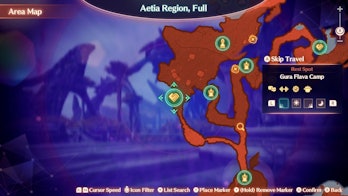
Founded in the Aetia Region. After Chapter 2 liberate Colony Gamma, then complete the Hero Quest “Going Beyond Power.” To start the quest look for a yellow question mark in Alfeto Valley, just north of the Gura Flava Camp rest spot.
Gray – Full Metal Jaguar
Nintendo
Founded in the Aetia Region. Follow the story until you unlock Valdi and the ability to climb. After this head to the Kamos Guidepost landmark in the south of Aetia. Head straight north and climb the purple flowers, then find the yellow question mark on the map to start the “A Gray Matter” Hero Quest.
Isurd – Strategos
Found in the Pentelas Region. Follow the story and liberate Colony Lambda in Chapter 4. After this a yellow question mark should appear in the colony, so head into Isurd’s office and complete the “Unwavering Resolve” Hero Quest.
Ashera – Lone Exile
Found in the Syra Hovering Reefs. Follow the story until you have to infiltrate Castle Keves. In the Castle Keves region look for a yellow question mark just outside of the castle gates. Head there and complete the “Wrath of Ashera” Hero Quest.
Alexandria – Raider
Nintendo
Founded in the Fornis Region. This class has multiple steps to unlock that need to be done in Chapters 3 and 4. First, you’ll need to see the event with Alexandria and Agnian Soldiers found right the Dies Arch landmark, like usual it will be a yellow question mark. After this event, you’ll have four new question marks added to your map, all of which are a squad of Agnian soldiers that need to be defeated. Three of the teams will be in the Fornis Region, while the fourth is at the start of the Pentales Region.
Defeat all four and you’ll have new info you need to talk about at a camp. Once you’ve done that a new question mark will appear by Colony Iota. Head there and you’ll get the quest “Her Reasons de Ella,” and once that’s completed you’ll finally recruit Alexandria and the Raider class.
Monica – Lost Vanguard
Found in The City. Once you’ve unlocked the City and completed the first bit of story there, you can wander around the location and start collecting rumors by examining NPCs with the yellow “i” icon over their head. Once you have the “Guernica Vandham” rumor head to a camp and discuss it, which will then unlock the “Vandham’s Heir” Hero Quest.
Fiona – Signifier
Nintendo
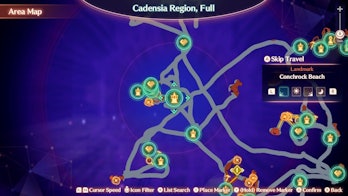
Founded in the Cadensia Region. Once you arrive in the Eryth Sea, head to the West side and find the Conchrock Beach rest spot. Go to the yellow question mark nearby and complete the “Transparent Dreams” Hero Quest.
Merman – Soulhacker
Nintendo
Founded in the Cadensia Region. The first step is finding an event where the party sees Colony 15 walking through the Eryth Sea. For us, this happened around the Hargan Point Camp. After this a yellow question mark will be added nearby, so head there and start the series of quests to liberate Colony 15. Eventually the “Doing It My Way” Hero Quest will pop up as you complete the questline.
Miyabi – Troubadour
Follow the main story through Chapter 6 up until the party gets ready to head to the Cloudkeep. At this point, you’ll unlock the “Side Story: Mio” quest which you can do instead. Follow the quest events and at the end, you’ll unlock Troubadour.
Cammuravi – Seraph
Nintendo
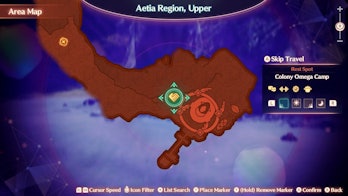
First complete “Side Story: Mio,” and once that’s done head back to the Aetia Regoin, Upper, and go to the Colony Omega Camp rest spot. There’ll be a yellow question mark just to the south that lets you start the “A Twist of Fate” Hero Quest that unlocks Camuravi.
Segiri – Machine Assassin
This one’s found in the Aetia Region, Upper. This is easily the most complex class to unlock in the game, as it has multiple steps. During Chapter 4 you’ll automatically get the “Imminent Illusions” quest during the story, so complete that. Head back to Colony 4 and complete as many quests there as you can, including “Rousing Bolearis.” Eventually, a new quest called “Severed Connection” will pop up just outside of Colony 4, and that’s the one you need to make sure you complete.
After all this head to the city and search for rumors until you find the “A ‘Novel’ Book” rumor, then head to a camp and discuss it. This will unlock the “Writer’s Block” quest, which is fairly lengthy and sends you all over Aionios. Complete this and finally travel to Colony Omega in Aetia Region, Upper. There will be a yellow question mark that lets you start the “Inhumanity” Hero Quest and finally unlocks Segiri.
Post Game Classes (Spoilers)
Nia – Lifesage
After beating the game, load your cleared save file and return to the Cloudkeep. Find the yellow question mark on the map to recruit the hero.
Melia – Royal Summoner
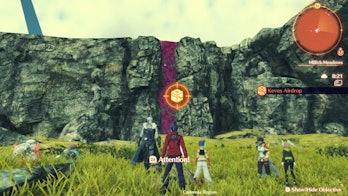
After beating the game load your cleared save file and travel to the main gate of Keves Castle. Once again find the yellow question mark to recruit the hero.
Xenoblade Chronicles 3 is currently available on Nintendo Switch.