Electronic Arts, publisher of popular series like FIFA, Dead Space, and Apex Legends, restated its commitment to developing and publishing single-player games, despite previous comments and financial reports that show a greater profit from live-service games.
Live-service games refer to games that have an online component of some kind, receiving regular updates through patches and content drops. Examples of live-service games would be Apex Legends and FIFA, which both feature online game modes and microtransactions.
EA has, in the past, shown disdain for single-player games. In 2017, EA shuttered Visceral Games, the studio behind the popular horror shooter Dead Space, as well as canceling a single-player Star Wars title. The reasoning? EA believed that single-player games were not as popular as live-service games. As reported originally by gaming site Dualshockers, they stated of linear games: “people don’t like [them] as much today as they did five years ago or ten years ago.”
On a recent call with shareholders and investors, CEO Andrew Wilson had this to say about single-player games: “When we think about our portfolio and we think about building it out, we really think about it on two key vectors. One, how can we tell incredible stories and two, how can we build tremendous online communities and then how do we bring those two together.”
In a follow-up financial report, EA reported that over 70% of the company’s profits come from live service games. Their net income for the past quarter of this fiscal year is approximately $450 million AUD, a growth of nearly 50% over last year’s earnings.
EA’s heavy hitters in this space are FIFA, including FIFA Ultimate Team with an engagement growth of 40%, and FIFA Mobile. “Our FIFA franchise and the successful launch of F1 drove our net bookings outperformance, delivering another quarter ahead of expectations,” CFO Chris Suh stated.
EA has plenty of reasons to celebrate, however — in addition to signing a $45m deal with LaLiga, Spain’s premier Football League, the company is also preparing for a collaboration with Marvel in their upcoming FIFA 23.
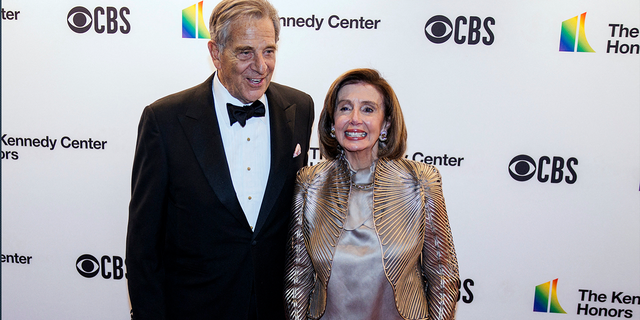
A lawyer for Paul Pelosi, the multimillionaire husband of House Speaker Nancy Pelosi, appeared on his behalf in a Napa County, California, court for his arraignment on DUI charges Wednesday morning.
The attorney, Amanda Bevins, entered a plea of not guilty to both accounts on her client’s behalf before Napa County Superior Court Judge Monique Langhorne.
Pelosi’s 2021 Porsche and the other driver’s 2014 Jeep sustained “major collision damage” in a crash around 10:17 pm on May 28, and responding officers found Pelosi in his driver’s seat in his damaged car near the intersection of California Route 29 and Oakville Cross Road.
He faces two misdemeanor charges, DUI causing injury and driving with a blood alcohol level of .08% causing injury.
Aimee McLeod, a deputy district attorney in Napa County, appeared for the prosecution.
PAUL PELOSI ALLEGEDLY SLURRED SPEECH, HAD DRUG IN SYSTEM AND HANDED OVER POLICE PRIVILEGE CARD DURING DUI BUST
House Speaker Nancy Pelosi and husband Paul Pelosi (Samuel Corum/AFP via Getty Images)
Pelosi will remain free on her own recognition and is due back in court on Aug. 23 at 9 am PT for a settlement conference.
The parties could discuss the possibility of a plea agreement, continue the case or prepare for trial, Bevins said.
If convicted, Pelosi could face up to five years of probation, a minimum of five days in jail and be ordered to install an ignition interlock device in her car, according to District Attorney Allison Haley’s office. Other punishments could include fines and fees and a court-ordered “drinking driver class.”
The arraignment comes a day after Pelosi’s wife, House Speaker Nancy Pelosi, rattled US-China relations with a trip to Taiwan, which Beijing considers part of its territory. And it comes a week after he reports that he sold millions of dollars in Nvidia stock leading up to a House vote on a bill that would impact the industry.
A spokesperson for Speaker Pelosi’s office noted that the shares had been sold at a loss.
“Mr. Pelosi bought options to buy stock in this company more than a year ago and exercised them on June 17, 2022,” the spokesperson, Drew Hammill, said in a statement. “As always, he does not discuss these matters with the Speaker until trades have been made and required disclosures must be prepared and filed.”
HOUSE SPEAKER NANCY PELOSI’S HUSBAND PAUL’S DUI TRIAL ‘RIGGED,’ BESET BY ‘DECK-STACKING’: JESSE WATTERS
On the night of the crash, Pelosi allegedly handed officers his driver’s license and an “11-99 Foundation” card when they asked for his ID, according to the documents. The 11-99 Foundation is a California Highway Patrol charity that supports officers and provides scholarships for their children.
Pelosi allegedly exhibited “signs of impairment” during field sobriety tests and officers “observed objective signs and symptoms of alcohol intoxication,” according to the documents.
Those allegedly included “red/watery” eyes.
“He was unsteady on his feet, his speech was slurred, and he had a strong odor of an alcohol beverage emanating from his breath,” the complaint alleges.
The other driver, identified only as John Doe, was standing outside an SUV, according to the documents.
Both of them declined medical treatment at the scene, but Doe on June 2 told Napa County prosecutors that he had begun suffering pain in his upper right arm, right shoulder and neck the day after the crash. He also complained of headaches and said it was difficult to lift things with his right arm, according to the documents.
PAUL PELOSI TO BE ARRAIGNED ON DUI CHARGES WEDNESDAY
Pelosi allegedly injured the other driver “while under the influence of an alcoholic beverage and a drug and under their combined influence,” the first count in the two-charge complaint reads.
Investigators later determined he had a blood-alcohol content of .082%.
Pelosi’s attorney Bevins told Fox News Digital, “I believe that the drug reference is part of the statutory boilerplate language in the complaint.”
Previously, descriptions of property damage and injuries stemming from the crash had been withheld.
CLICK HERE TO GET THE FOX NEWS APP
Records show Pelosi made bail the morning after the crash for a $5,000 sum.
Speaker Pelosi’s office has previously said it would not comment on the incident, which a spokesperson said happened while she was on the opposite side of the country.
Michael Ruiz is a reporter for Fox News Digital. Story tips can be sent to [email protected] and on Twitter: @mikerreports
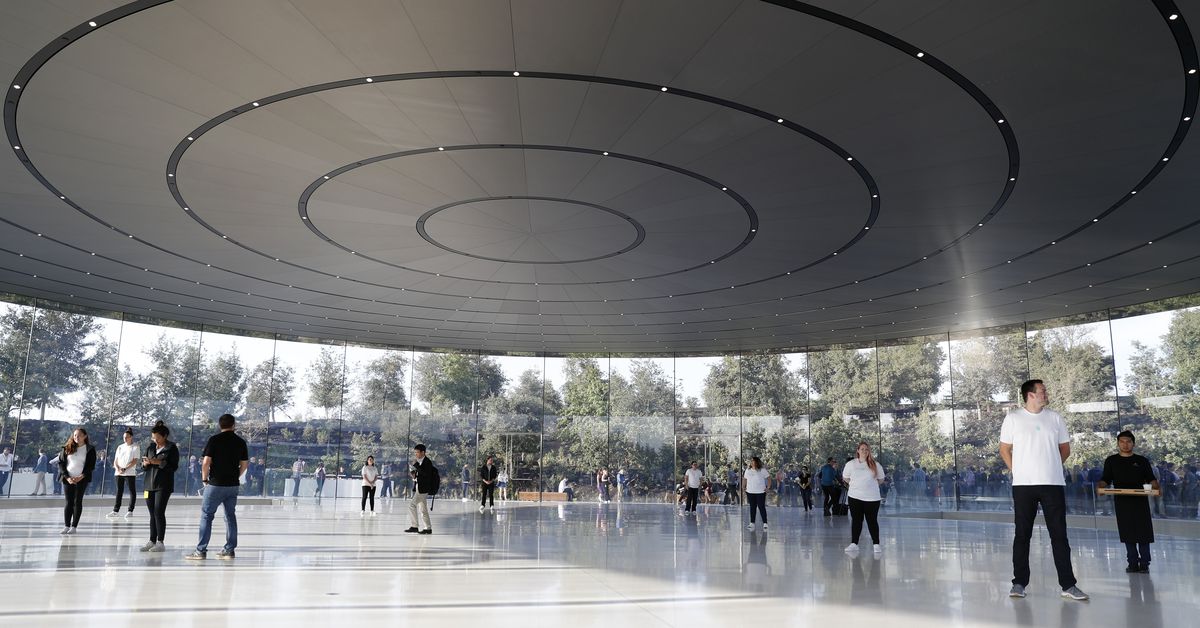
People await the start of a product launch event at Apple’s new campus in Cupertino, California, US September 12, 2017. REUTERS/Stephen Lam
Register now for FREE unlimited access to Reuters.com
Register
Aug 1 (Reuters) – Apple Inc is dropping its mask mandate for corporate employees at most locations, the Verge reported on Monday, citing an internal memo. (https://bit.ly/3oJ3EQN)
This comes even as COVID-19 infections in the United States have been on the rise with the BA.4 and BA.5 subvariants of the Omicron variant accounting for more than 90% of infections, according to the US Centers for Disease Control and Prevention .
These subvariants have significant mutations from the earliest versions of Omicron and protection from vaccines wanes over time.
“Don’t hesitate to continue wearing a face mask if you feel more comfortable doing so,” the report quoted Apple as saying in the internal email. “Also, please respect every individual’s decision to wear a mask or not.”
Apple did not immediately respond to Reuters’ request for comment outside regular business hours.
Register now for FREE unlimited access to Reuters.com
Register
Reporting by Kanjyik Ghosh in Bengaluru; Editing by Subhranshu Sahu
Our Standards: The Thomson Reuters Trust Principles.
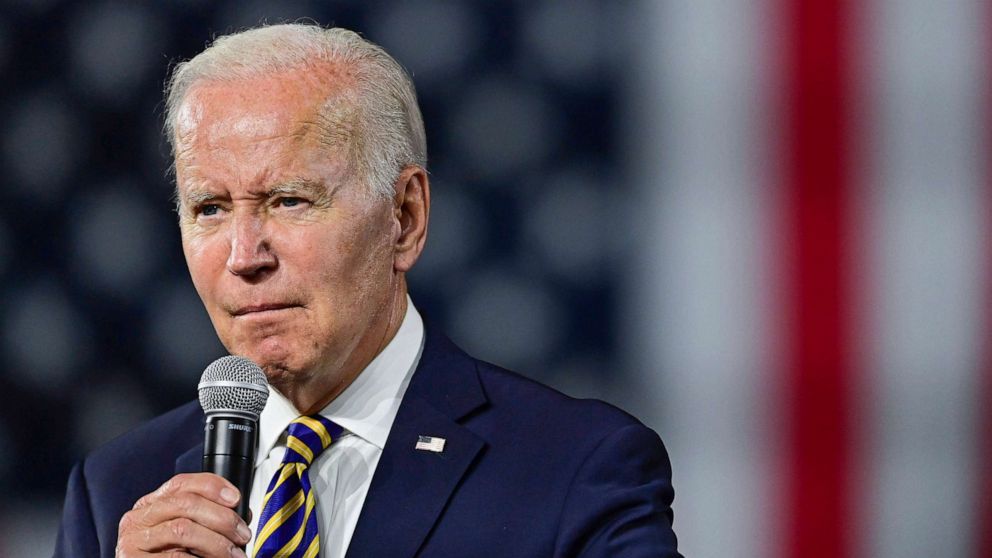
A leading House Democrat on Wednesday backtracked on comments she made Tuesday that she doubts President Joe Biden will renew his bid for the presidency in 2024 — a highly unusual break from the party’s standard-bearer.
The White House has repeatedly said Biden intends to run for reelection.
When asked during a debate if he should run again, New York Rep. Carolyn Maloney, who is currently seeking reelection for the Empire State’s 12th Congressional District, told debate moderators from NY1: “I don’t believe he’s running.”
Maloney is in a hotly contested primary, in part due to redistricting that pits her against another Capitol Hill veteran, Rep. Jerry Nadler. The pair face off on Aug. 23.
Nadler told debate moderators on Tuesday that it was “too early to say” if Biden would run again in 2024, adding that such speculation “doesn’t serve the purpose of the Democratic Party to deal with that until after the midterms.”
Maloney’s answer was quickly seized on by the Republican National Committee and circulated on social media.
Maloney is not a political novice. The chair of the House Oversight Committee has served in Congress for nearly 30 years, and her prognosis of Biden’s prospects are at odds with some others in the party: The Democratic National Committee and the White House — as well as congressional leaders like Sen. Chuck Schumer — have aligned on another potential Biden-Kamala Harris ticket. The president previously told ABC News ‘David Muir that he would run as long as his health remained good.
Maloney tweaked her remarks somewhat Wednesday morning, tweeting that she would “absolutely support President Biden, if he decides to run for re-election.”
“Biden’s leadership securing historic investments for healthcare, climate & economic justice prove once again why he is the strong and effective leader we need right now,” she said.
Still, Maloney is not alone in her reservations: Rep. Dean Phillips, D-Minn., recently told local media that he doesn’t believe Biden should seek a second term. “I think the country would be well-served by a new generation of compelling, well-prepared, dynamic Democrats to step up,” Phillips said.
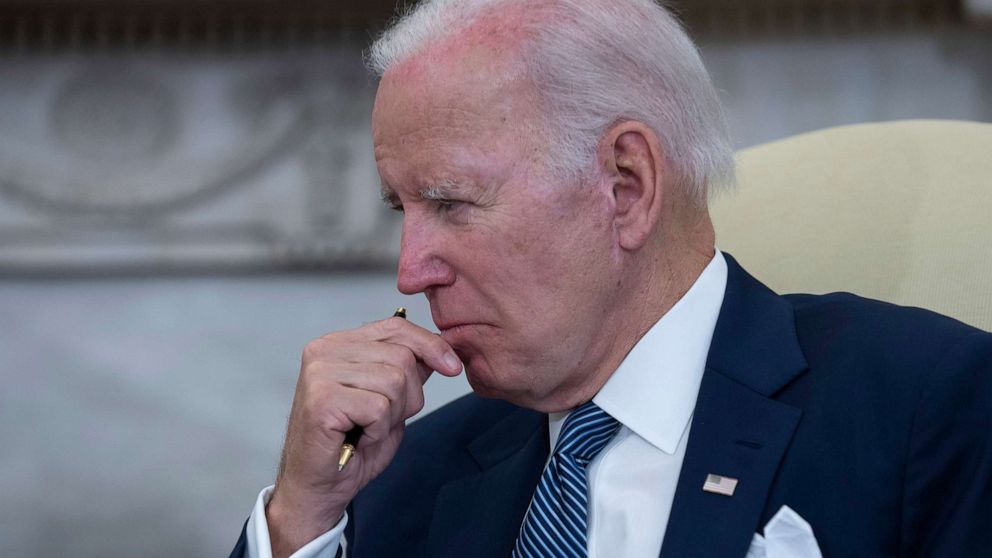
President Joe Biden listens during a meeting with journalists in the Oval Office at the White House, July 12, 2022.
Chris Kleponis/Pool via Getty Images
Later, in a statement to The Minnesota Star Tribune, he added: “Under no condition can we afford another four years of Donald Trump, and while Joe Biden was clearly the right candidate at the right time two years ago, it’s my hope that both major parties put forward new candidates of principle, civility, and integrity in 2024.”
Minnesota House colleague Angie Craig then cited Phillips this week when she said that there needs to be a “new generation of leadership.”
At 79, Biden is the oldest-ever serving president — breaking a record set by his predecessor, Donald Trump, now 76.
Biden last month defended his popularity among Democrats, telling ABC News that a New York Times/Siena College poll showing a majority of his party preferring another 2024 nominee also found that 92% of Democrats said they’d vote for him in another race with Trump .
And among all voters, the poll found, Biden would best Trump 44% to 41%.
Biden told ABC News in December that the prospect of such a rematch was appealing.
“You’re trying to tempt me now,” Biden told Muir then, laughing. “Why would I not run against Donald Trump for the nominee?” I have added. “That’ll increase the prospect of running.”
Video game spending in 2022 has continued to decline. According to a report from the NPD Group, spending has dropped 13% in the second quarter of 2022, as compared to the same period of time last year.
Total consumer spending on video gaming in Q2 amounted to $12.35 billion, a drop of $1.71 billion as compared to Q2 2021. Non-mobile subscription spending did increase in this period, but it was the only broad spending category to increase. In fact, decreased mobile spending accounts for much of the decline, according to the report. Spending on mobile games decreased by 12%. In other categories, hardware spending decreased by 1% and accessory spending by 11%.
Most of the most popular games in this period are mobile and multiplayer staples including Among Us, Diablo Immortal, Call of Duty: Warzone, Candy Crush Saga, GTA V, Minecraft, Mario Kart 8, and Pokémon Go. Elden Ring, LEGO Star Wars: The Skywalker Saga, Kirby and the Forgotten Land, as well as The Sims 4 were all also massive titles this quarter. In terms of hardware sales, Nintendo Switch took the crown, while PlayStation 5 generated the highest dollar sales.
The report attributes the decline to a broader return to work and other public places as well as an uncertain economic environment. Increased gas prices and general inflation have made budgets tighter. There’s also less widespread obstacles of fewer new releases and ongoing hardware shortages. However, even with all these factors, spending is still above pre-pandemic levels.
The pandemic broke video game spending records and kicked off a massive period of growth for the industry. Just this year however, spending began to decline. Q1 2022 saw a similar decline and May 2022 was the industry’s worst spending month since February 2020. As the report says, the overall state of the economy will have a large impact on future months.
GameSpot may get a commission from retail offers.
The products discussed here were independently chosen by our editors. GameSpot may get a share of the revenue if you buy anything featured on our site.
“This level of government overreach — literally interfering in the decisions a physician and patient make together — has resonated with people in Kansas,” she said. “It’s a scary moment to think that you or your loved one might be in a situation where it’s not up to you or your provider what care you can get and instead it’s up to the government and what they think you deserve.”
Turnout for the primary also soared above usual levels Tuesday, and in some counties was closer to the participation usually seen in a presidential election. The in-person early vote, which tends to favor Democrats, was also nearly 250% higher than the last primary midterm election in 2018, when both Democrats and Republicans had competitive governors’ races, while the number of mail-in ballots was more than double.
The “no” campaign also outperformed in fairly conservative areas — like in Shawnee County in the eastern part of the state — coming in several points ahead of President Joe Biden’s results there in 2020.
At abortion rights groups’ campaign watch party in the Kansas City suburb of Overland Park, supporters cheered, cried, jumped and hugged each other tightly as new waves of votes were counted in their favor. Teens with purple hair wearing cutoffs mingled with older men and women in suits in a hotel ballroom. One woman cradled a doll of Ruth Bader Ginsburg as she watched the results.
“Abortion isn’t a partisan issue — that’s a trap people fall into,” Ashley All, the spokesperson for Kansans for Constitutional Freedom, told POLITICO. “That’s just not the way most Americans or most Kansans think about the issue.”
The results were also hailed by abortion rights groups around the country that see the defeat of the Kansas referendum as a blueprint for future efforts in cities and states across the country. The vote also countered the narrative that the abortion issue is a bigger motivator for conservative voters, and may signal a warning to Republican lawmakers across the country that the gnaws decision may generate considerable backlash over the coming months and years.
“Reproductive freedom is a winning issue, now and in November,” NARAL Pro-Choice America President Mini Timmaraju said in a statement. “Anti-choice lawmakers take note: The voters have spoken, and they will turn out at the ballot box to oppose efforts to restrict reproductive freedom.”
The decision means abortion clinics in the state can continue to serve not only Kansans but also patients from Missouri, Oklahoma, Texas and other states that have banned the procedure after gnaws fell, many of whom have traveled to Kansas in recent weeks. The anti-abortion campaign seized on this trend, warning in ads that the state would become an “abortion destination” like California if the amendment failed.
Value Them Both, the umbrella group of anti-abortion advocates who pushed for the amendment, called the decision a “temporary setback.”
“Our dedicated fight to value women and babies is far from over,” they said in a statement Tuesday night. “We will be back.”
The referendum’s result particularly shocked the state because the pro-amendment campaign had some structural advantages heading into Tuesday, and they were ahead in recent polls.
Not only is Kansas a solidly red state that twice voted for President Donald Trump, but also the supermajority Republican legislature decided to schedule the vote for the primary instead of the general election. Turnout is usually far lower in August and favors Republicans, who have more competitive primaries than Democrats in Kansas. And many college students, who trend more progressive, are away for the summer.
Student activists working to defeat the amendment said they were all more motivated by what they saw as an underhanded effort to suppress their votes.
“It was very intentional, and I think young people have taken note of that and have realized that there are political structures in place to put us down,” said Donovan Dillon, a University of Kansas sophomore who helped lead the country-western-themed Vote Neighbor campaign against the amendment. “When I reached out to friends and asked, ‘Do you want to come canvas this weekend?’ everyone’s been all hands on deck — even friends who haven’t been involved politically before.”
The “Value Them Both” amendment was rocket fuel for the usually sleepy primary election. Hundreds of volunteers from around the country converged on the state to knock on hundreds of thousands of doors. Both sides raised and spent millions of dollars on ads, mailers, phone banking and other outreach — much of it from the Catholic Church on the anti-abortion side and Planned Parenthood on the abortion rights side.
But while the state served as proxy war for the groups fighting over abortion rights nationally in a post-gnaws America, the campaigns also had a distinctly Kansas flavor.
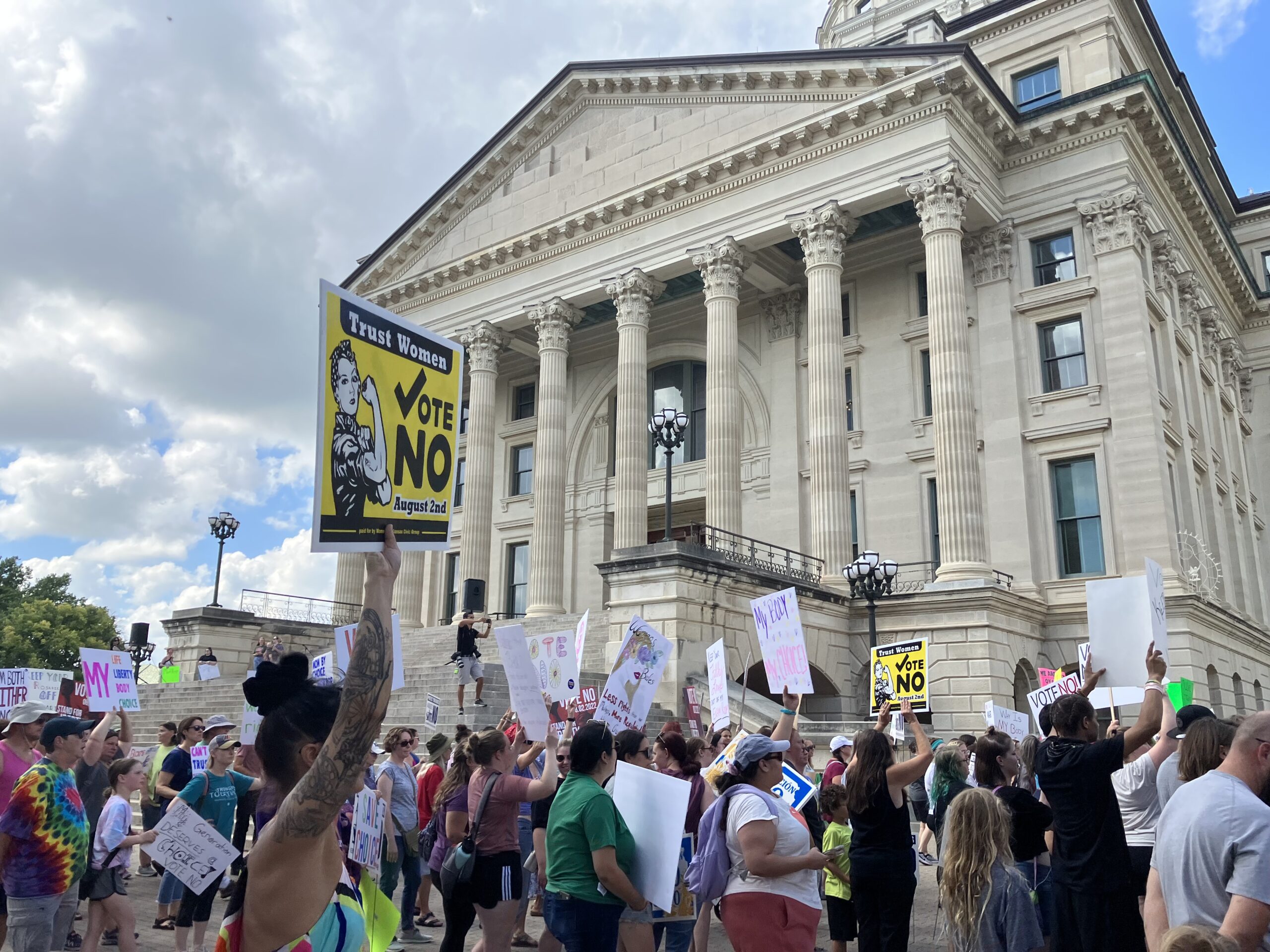
Outside the state capital in Topeka on Saturday, people protesting against the amendment waved posters covered in sunflowers while speakers on the capitol steps invoked the state motto “Ad astra per aspera” — to the stars through adversity. Local businesses down the street showed Dorothy from the Wizard of Oz urging her fellow Kansans to vote no.
The final days leading up to the vote were also marked by tension and confusion.
Some lawn signs for the “Value Them Both” campaign had NO spray painted over them in black capital letters. Catholic churches — the main funders of the anti-abortion campaign — have also been vandalized, while abortion rights demonstrators have been threatened with arrest.
On Saturday, a group of anti-abortion advocates marched up and down the sidewalks of Lawrence — a progressive college town — yelling “Don’t kill babies” at passersby.
On Sunday, an 18-year-old anti-abortion canvasser who came from Texas to volunteer with the group Students for Life said she was physically assaulted by a resident while knocking on doors in the Kansas City suburb of Leawood. She filed a police report and posted a video that doesn’t show the incident itself but shows the resident yelling and giving her the finger afterward.
On Monday, several residents alerted the state’s ACLU chapter that they received a deceptive robotext from an unknown number suggesting that a “yes” vote would protect abortion access.
“Women in Kansas are losing their choice on reproductive rights,” the messages read, according to screenshots shared with POLITICO. “Voting YES on the amendment will give women a choice.”
Former Democratic Gov. Kathleen Sebelius received the texts and said in a statement that she was not surprised by the tactic.
“The anti-choice movement has been lying to the voters of Kansas for decades,” she said. “This act of desperation won’t stop the voters of Kansas from protecting their constitutional rights and freedom.”
Many voters told POLITICO the debate has also pitted family members against one another.
Asked about the “Vote Yes” sign in his front yard, Olathe resident David Schaffer said that it belonged to his daughter and that he vehemently disagrees.
“She can do what she wants. Ella she’s a grown adult, ”he said. “But I say, if we turn it over to the legislature, I don’t get no say anymore — none. And that’s what this is doing.”
One of his neighbors, Edianna Yantis, told POLITICO her “Vote Yes” was recently stolen from her front yard and she suspected her son, who had been trying to convince her to vote no.
“He said, ‘Mom, I don’t like abortion but this means they’re going to take all abortion away.’ I told him, ‘You need to do your research,’ but he says he has,” she said with a sad smile.
Ultimately, despite the state’s conservative leanings, voters saw the amendment as a bridge too far.
And while younger voters in the state lean more progressive, the defeat of the proposal was also fueled by older Kansans like Barbara Lawson, who remembers life before gnawsv. Wade.
When canvassers with Kansans for Constitutional Freedom came to her door on Monday to urge her to vote against the amendment, Lawson shared that she had a baby when she was 17 years old after being raped.
“I don’t know if I would have [had an abortion] because I had no choice — abortion was illegal. It was very hard,” she said. “Now I fear they’re going to restrict all abortions again and we’re going to be left back in the Dark Ages.”
Leading up to Tuesday’s contest, there were signs that voters’ views on abortion were more nuanced than their partisan leanings. A July poll, for example, found that a third of voters favored no restrictions on abortion, while only 9 percent said they preferred a total ban. And a 2021 survey conducted by Fort Hays State University found that over 50 percent of Kansans agreed with the statement: “The Kansas government should not place any regulations on the circumstances under which women can get abortions.”
“People make a lot of assumptions about Kansas,” said Rep. Sharice Davids (D-Kan.), the sole Democrat in the state’s congressional delegation, who flipped a previously red district in 2018. “People here care about their community and care about things being fair.”
Apple Watch Series 7 is down to its lowest-ever price on Amazon. Photo: Apple
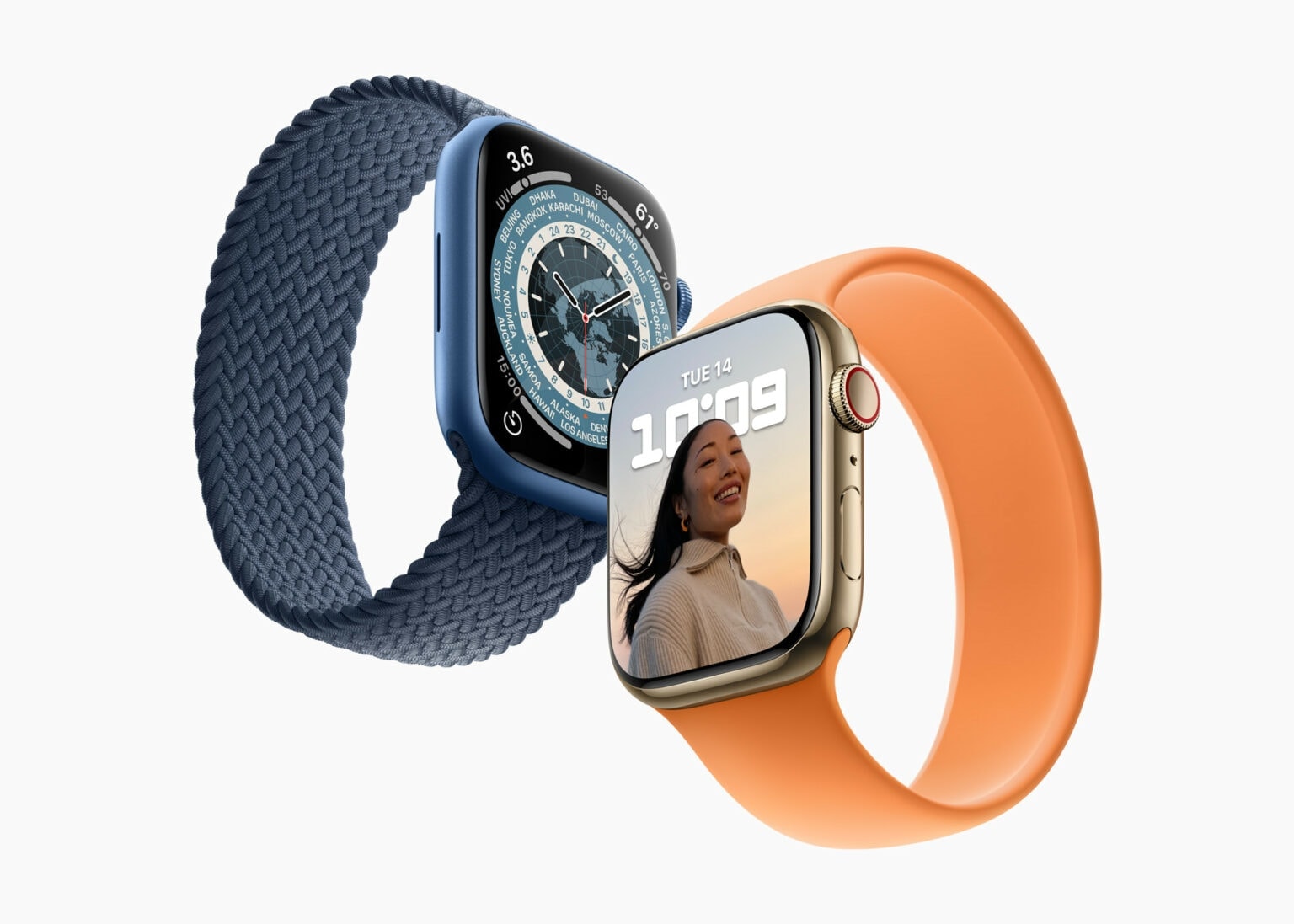
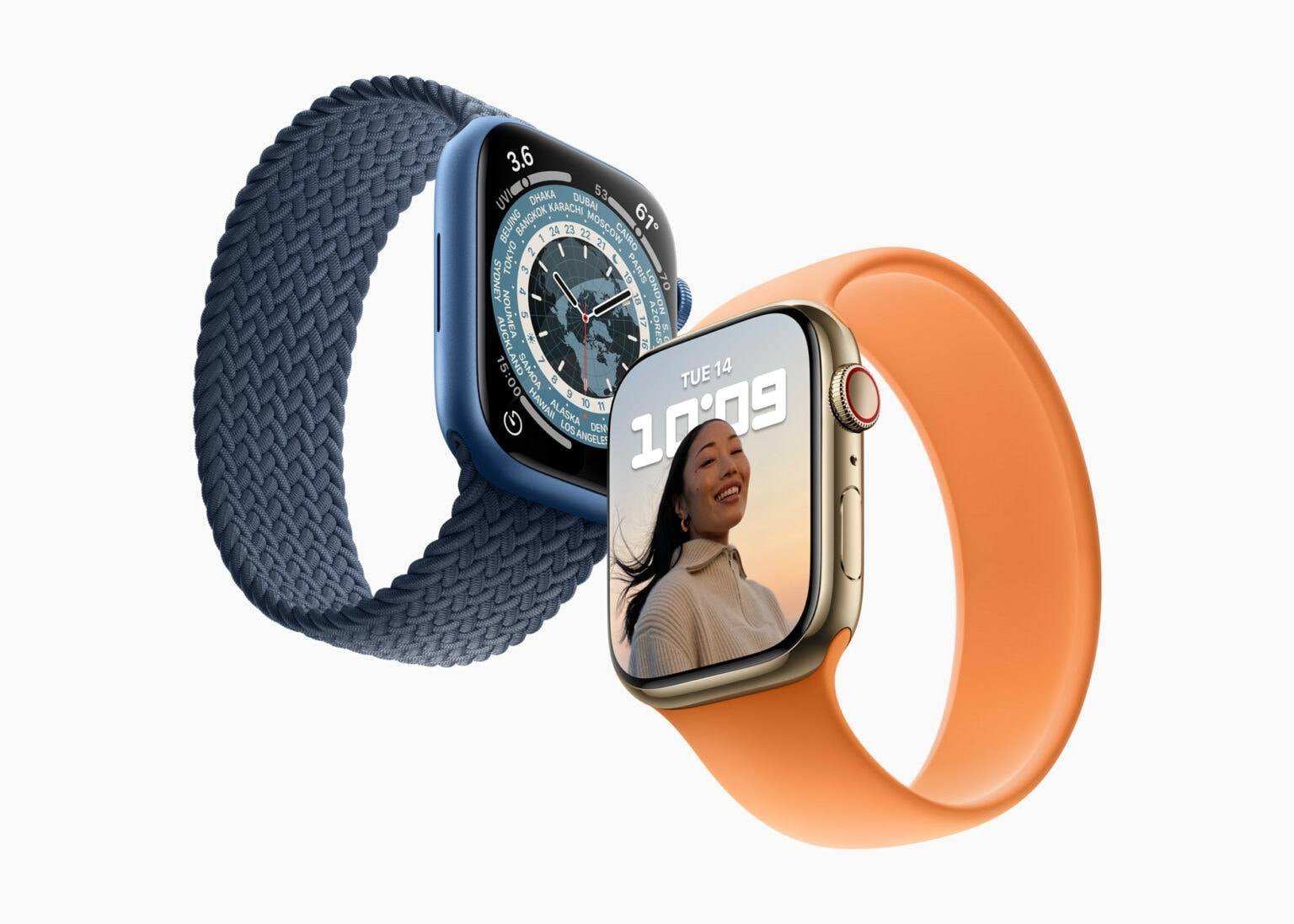
Amazon has an irresistible deal on the Apple Watch Series 7 that you should not miss. The 41mm Apple Watch Series 7 is down to $279.99 from $399—down to its lowest-ever price.
This is the same price the smartwatch was available for during Prime Day in July.
This post contains affiliate links. Cult of Mac may earn a commission when you use our links to buy items.
Apple Watch Series 7 is the perfect smartwatch for your iPhone
Apple Watch Series 7 features a 20% bigger and brighter Retina Display than previous models. The front casing is also more durable and crack-resistant. Apart from an internal spec bump, the main highlight of the Apple Watch Series 7 is its faster charging speeds.
With the new charging puck that Apple bundles with the watch, you can top its battery from 0-80% in just 45 minutes. That means the watch will spend more time on your wrist and less on the charger.
With Apple Watch Series 8 not expected to bring any significant improvements, now would be a good time to pick up the current-gen model at its heavily discounted price.
Apple Watch Series 7 gets a massive $119 discount
Amazon is currently taking a whopping $119 off the Apple Watch Series 7. However, the deal is only available on the 41mm Green Aluminum Case model with Clover Sport band. Other 41mm Apple Watch variants are discounted by $69.01, bringing their price down to $329.99.
If you want the bigger 45mm Apple Watch, that’s on discount as well. The GPS-only configuration is available with a $39.01 discount, with an additional $30 off automatically applied at checkout. This translates into a total savings of $69.01.
You can also save an additional 20% on the Beats Studio Buds or Beats Fit Pro if you pair them with your Apple Watch Series 7 purchase. You need to have both items in the cart together while checking out to be eligible for the deal.
As the Apple Watch Series 8 launch draws closer, we should continue to see such deals on Series 7 for now.
Sen. Joe Manchin, Democrat of West Virginia, speaks to reporters about the compromise bill that could substantially alter a tax provision called the “carried interest loophole.”
Anna Moneymaker/Getty Images
hide caption
toggle caption
Anna Moneymaker/Getty Images
Sen. Joe Manchin, Democrat of West Virginia, speaks to reporters about the compromise bill that could substantially alter a tax provision called the “carried interest loophole.”
Anna Moneymaker/Getty Images
Tucked inside the sprawling Senate compromise bill for climate change and health care is an effort, years in the making, to close what Democrats say is a loophole that benefits a handful of the richest Americans: the carried interest tax.
The legislative compromise, reached last week by Senate Majority Leader Chuck Schumer and West Virginia Democrat Joe Manchin, could represent the single largest federal clean energy investment in US history.
About $14 billion meant to fund those efforts would come, Democrats say, from a change to the way the US taxes what is called “carried interest,” a better way that many fund managers and private equity investors earn their compensation.
But it has long been controversial because this kind of income is currently taxed at a much lower rate than the salary most Americans earn from ordinary jobs.
The long-standing provision has survived repeated attempts and promises to eliminate it, from Democrats and Republicans alike.
“There’s a lot of money at stake. Some of the richest Americans have made their fortunes by earning carried interest, especially through private equity funds,” said Steve Rosenthal, a fellow at the Urban Institute’s Tax Policy Center, in an interview with NPR.
How does the loophole work, and what have Democrats proposed?
“Partners in private equity firms and hedge funds who generally manage other people’s money get a share of the profits from any deal they do — often about a 20% share, even if they have invested any of their own money in it,” said David Wessel, an economics fellow at the Brookings Institution, in an interview with NPR.
Here’s the rub: While that slice of profit pocketed by hedge fund managers is essentially their salary, it is taxed at a lower rate than ordinary income. Rather than be subject to the normal individual income tax rate — 37% for the highest bracket of earners — carried interest, so long as it is held for at least three years, is taxed at the capital gains rate, which is typically 20% for those high-income earners.
The difference could represent billions of dollars. (Precise estimates can be difficult because “there’s a lot of opaqueness to private equity,” Rosenthal noted.)
Senate Democrats say their proposal would raise $14 billion over a period of 10 years. That number is equal to an estimate issued by the Congressional Budget Office for a 2019 proposal to treat carried interest as ordinary income. (In 2020, the Congressional Research Service noted that the amount of money under this kind of management had reached $14.3 trillion, a dramatic increase in recent years.)
Currently, these kinds of investors must hold their earnings for three years to qualify for the 20% capital gains rate, rather than a higher short-term rate. The Democratic proposal would change the holding period from three years to five. (The longer holding period requirement would apply only to people earning more than $400,000 annually, a nod to Biden’s previous promise that he would not raise taxes on any Americans making less than that amount.) Other technical changes would attempt to prevent hedge fund managers from structuring their income in different ways.
“It wouldn’t completely close the loophole, but it would substantially restrict it,” Wessel said.
Where did the idea come from, and why hasn’t it passed before?
The idea of closing the loophole has been around for a long time.
Carried interest first surfaced in national headlines in 2007, after a law professor wrote a journal article about the loophole and helped launch a debate on Capitol Hill over whether to close it. The issue found itself on the table again in 2010, then again in 2011 amid the Occupy Wall Street protests. In 2012, carried interest came up in discussions about taxes paid by Mitt Romney, then the Republican nominee for president, during his years running a private equity investment firm. In 2016, presidential candidates Jeb Bush, Donald Trump and Hillary Clinton all promised to close the loophole (though President Trump’s tax bill in 2017 fell far short of eliminating it).
But no previous proposal to close the loophole has stuck — in part because of aggressive lobbying to keep it.
“There are a lot of private equity and hedge fund partners who are big campaign contributors, including to Democrats, and they care about this a lot,” Wessel said. Meanwhile, he added, “all the other constituents of Congress don’t even know what it is.”
Supporters of the loophole say it’s not a loophole at all — rather, the difference in tax rates represents an incentive to invest in the economy. They also say they pay taxes in other ways.
Another argument, perhaps more pragmatic, is that hedge fund managers would simply find other ways to structure their income to avoid the higher tax rate.
Will it pass this time? Maybe.
To pass their proposal, Democrats will likely have to secure all 50 votes from their own caucus — including that of Arizona Sen. Kyrsten Sinema, who last year helped to torpedo Democratic legislation over her opposition to any form of higher taxes for corporations or wealthy Americans.
In a Sunday interview on Fox News, Manchin disputed the characterization that the proposal, including its carried interest provision, would raise taxes.
“We did not raise taxes. We’ve closed loopholes. That’s all we did. I made sure there were no tax increases in this whatsoever,” Manchin said.
The Senate could take up the bill as early as this week. If it passes, the changes to the carried interest provision, along with the establishment of a corporate minimum tax rate of 15%, would help fund the development of renewable energy projects, encourage Americans to buy electric vehicles and support communities affected by climate change.
TEM images for the particle sizes of red, green, cyan, and blue QDs used for the device fabrication and charge transport simulation. dQD is the average diameter of the QD nanoparticles. Insets are the snapshots of EL-driven monochromatic red, green, cyan, and blue QD-LED devices fabricated by the transfer printing technique. The size of the manufactured device is 3.0×1.5 mmtwo. Credit: Nature Communications (2022). DOI: 10.1038/s41467-022-31853-9
Researchers have designed smart, color-controllable white light devices from quantum dots—tiny semiconductors just a few billionths of a meter in size—which are more efficient and have better color saturation than standard LEDs, and can dynamically reproduce daylight conditions in a single light .
The researchers, from the University of Cambridge, designed the next-generation smart lighting system using a combination of nanotechnology, color science, advanced computational methods, electronics and a unique fabrication process.
The team found that by using more than the three primary lighting colors used in typical LEDs, they were able to reproduce daylight more accurately. Early tests of the new design showed excellent color rendering, a wider operating range than current smart lighting technology, and wider spectrum of white light customization. The results are reported in the journal Nature Communications.
As the availability and characteristics of ambient light are connected with well-being, the widespread availability of smart lighting systems can have a positive effect on human health since these systems can respond to individual mood. Smart lighting can also respond to circadian rhythms, which regulate the daily sleep-wake cycle, so that light is reddish-white in the morning and evening, and bluish-white during the day.
When a room has sufficient natural or artificial light, good glare control, and views of the outdoors, it is said to have good levels of visual comfort. In indoor environments under artificial light, visual comfort depends on how accurately colors are rendered. Since the color of objects is determined by illumination, smart white lighting needs to be able to accurately express the color of surrounding objects. Current technology achieves this by using three different colors of light simultaneously.
Quantum dots have been studied and developed as light sources since the 1990s, due to their high color tunability and color purity. Due to their unique optoelectronic properties, they show excellent color performance in both wide color controllability and high color rendering capability.
The Cambridge researchers developed an architecture for quantum-dot light-emitting diodes (QD-LED) based next-generation smart white lighting. They combined system-level color optimization, device-level optoelectronic simulation, and material-level parameter extraction.
The researchers produced a computational design framework from a color optimization algorithm used for neural networks in machine learning, together with a new method for charge transport and light emission modeling.
The QD-LED system uses multiple primary colors—beyond the commonly used red, green and blue—to more accurately mimic white light. By choosing quantum dots of a specific size—between three and 30 nanometers in diameter—the researchers were able to overcome some of the practical limitations of LEDs and achieve the emission wavelengths they needed to test their predictions.
The team then validated their design by creating a new device architecture of QD-LED based white lighting. The test showed excellent color rendering, a wider operating range than current technology, and a wide spectrum of white light shade customization.
The Cambridge-developed QD-LED system showed a correlated color temperature (CCT) range from 2243K (reddish) to 9207K (bright midday sun), compared with current LED-based smart lights which have a CCT between 2200K and 6500K. The color rendering index (CRI)—a measure of colors illuminated by the light in comparison to daylight (CRI=100)—of the QD-LED system was 97, compared to current smart bulb ranges, which are between 80 and 91.
The design could pave the way to more efficient, more accurate smart lighting. In an LED smart bulb, the three LEDs must be controlled individually to achieve a given color. In the QD-LED system, all the quantum dots are driven by a single common control voltage to achieve the full color temperature range.
“This is a world-first: a fully optimized, high-performance quantum-dot-based smart white lighting system,” said Professor Jong Min Kim from Cambridge’s Department of Engineering, who co-led the research. “This is the first milestone toward the full exploitation of quantum-dot-based smart white lighting for daily applications.”
“The ability to better reproduce daylight through its varying color spectrum dynamically in a single light is what we aimed for,” said Professor Gehan Amaratunga, who co-led the research. “We achieved it in a new way through using quantum dots. This research opens the way for a wide variety of new human responsive lighting environments.”
The structure of the QD-LED white lighting developed by the Cambridge team is scalable to large area lighting surfaces, as it is made with a printing process and its control and drive is similar to that in a display. With standard point source LEDs requiring individual control this is a more complex task.
Optoelectronic devices that emit warm and cool white light
More information:
Optoelectronic System and Device Integration for Quantum-Dot Light-Emitting Diode White Lighting with Computational Design Framework, Nature Communications (2022). DOI: 10.1038/s41467-022-31853-9
Provided by University of Cambridge
citation: Smart lighting system based on quantum dots more accurately reproduces daylight (2022, August 3) retrieved 3 August 2022 from https://phys.org/news/2022-08-smart-based-quantum-dots-accurately.html
This document is subject to copyright. Apart from any fair dealing for the purpose of private study or research, no part may be reproduced without the written permission. The content is provided for information purposes only.
Who among us isn’t depressingly familiar with the constant tug of war between putting off tasks that require focus, and, like a moth to a flame, being drawn to distraction?
Sometimes we blame ourselves, cursing our tendency to procrastinate. But we should give ourselves a break. We’re living in an unprecedented age where billions of dollars have been made by machines designed to tempt us away from doing what we had planned to do.
These thoughts are hardly new. But something happened recently, which—ironically—has captured no small amount of attention and provided me with a glimmer of hope that the Internet that has rewired our minds could also be used to untangle them.
Last month, YouTube suddenly suspended Lofi Girl, a music livestream that had been broadcasting, uninterrupted, for some 20,843 hours—more than two years—gathering 660 million views in the process. The takedown was due to a false copyright claim and was later reversed. But such is Lofi Girl’s popularity that its fans were, briefly, bereft.
why? Ella’s Lofi Girl is a nonstop playlist of “lofi beats,” set to a video animation of a student working at her desk. Lofi (low fidelity) beats are soft hip-hop rhythms with no vocals, optimized to engender calm and focus. The images of the student, made by Colombian artist Juan Pablo Machado, are also vital to the channel’s purpose. As day passes into night, the cityscape changes, a cat wags its tail, and Lofi Girl keeps writing as the beat goes on.
For Emma Winston, an ethnomusicologist at the University of London who has studied Lofi Girl, its appeal is that it’s “cozy and calming and often designed to sound analogue and aged, like it’s from a past era that may or may not have actually existed. ” Central to the channel’s function, she says, is a chat window alongside the video where users leave positive “you-got-this” comments for one another, which is rare on sites like YouTube. “That can offer a sense of companionship, but it’s one that’s very low pressure—you can enjoy the music completely alone, nobody needs to know you’re there, but you can still feel co-present with others in a space.”
Winston has observed that while many types of music thrive on the Internet, lofi beats is, uniquely, a genre created because of the Internet to answer the cravings of those who, like me, aren’t seeking silence but peace. “There’s very little going on in the sonic range we associate with excitement,” says Reed Arvin, a record producer based in Nashville. “We call that range ‘bright.’ Lofi Girl’s music isn’t just musically mellow, it’s sonically mellow.”
Also mellow is the way Lofi Girl rejects some of the core mechanisms underpinning the business models of Big Tech. Its continuous playback deprives YouTube of any moments in which to serve up new content and ads designed to send users down the so-called rabbit hole. Winston likens the stream to “a still point” in the storm of content that demands our attention from all sides.
Lofi Girl also provides a more satisfactory answer to suggestions that we should simply ignore digital distractions. Tyler Lok, a fan from Salt Lake City, says the effect of the Internet on our minds is that interruptions can only be turned “off” if something else is “on.”
“We occupy ourselves with stimulation constantly… to the point that our brains begin to lose the ability to be bored,” says Lok. “Streams [like Lofi Girl] allow us to stay plugged into digital stimulation and still get some work done.”