A shambolic Manchester United side conceded four goals in the opening 35 minutes in a 4-0 drubbing at Brentford on Saturday as their woeful start to the Premier League season continued.
United’s seventh successive away league defeat was assured long before the interval as Brentford took ruthless advantage of a catalog of errors by the visitors.
The route began in the 10th minute when United keeper David de Gea allowed a weak shot by Josh Dasilva to slip past him.
Things got worse for United eight minutes later when De Gea played the ball out to former Brentford player Christian Eriksen, who was caught in possession and Mathias Jensen slotted home.
When United’s defense failed to deal with a corner and Ben Mee glanced in a close-range header to make it 3-0, the Brentford fans were ecstatic while United’s new manager Erik ten Hag looked ashen-faced in his technical area.
Brentford’s fourth was a gem as Ivan Toney delivered a diagonal ball to Bryan Mbeumo from a counter-attack and Mbeumo calmly beat De Gea.
Ten Hag made three substitutions at half-time with Raphael Varane, Tyrell Malacia and Scott McTominay coming on, but despite a slight improvement United offered little fight.
Brentford’s fans serenaded their players with “Hey Jude” at the final whistle while United’s players looked crestfallen as they trudged off rock bottom of the table, having also lost their opener at home to Brighton & Hove Albion.
loading
It was the first time since 1960 that United have conceded at least six goals in their first two matches of a top-flight season and the first time they have lost their opening two matches since 1992 — when they went on to win the title.
This side, however, looks woefully inadequate to mount any kind of challenge and Ten Hag, who was taunted by the Brentford fans, appears to have a huge job on his hands.
The Dutchman is the first Manchester United manager to lose his first two games in charge since John Chapman in 1921.
“It’s easy to dismantle this United side, just be organized and fight and you’re there,” said former United player and Sky Sports pundit Gary Neville.
For Brentford, whose starting line-up cost in the region of 55 million pounds ($93.75 million) compared to the more than 400 million pounds ($681.5 million) of United’s, have picked up four points in their first two games.
Fans continued to protest against club owners the Glazers as Manchester United lost 4-0 to Brentford.(Getty Images: Offside/Mark Leech)
The crushing defeat will do nothing to soothe the feelings of Manchester United fans, already angry at club owners the Glazer family.
Poor results and a perceived failure to sign the right players to revamp the team in the off-season had left fans continuing long-standing calls for the Glazers to sell the club.
loading
United fans on social media are trying to organize a boycott of next week’s home game against long-time rivals Liverpool, using the hashtag Empty Old Trafford.
In other Premier League action, defending champions Manchester City swept to the top of the table, thumping newly-promoted Bournemouth 4-0 to emphasize the gulf between them and neighbors United.
City under manager Pep Guardiola have scored six times and are yet to concede in two games this campaign, as they bid for a fifth Premier League title in six seasons.
Arsenal are the big improvers so far this season, sitting second to City on goal difference after their 4-2 win over Leicester City.
New signing Gabriel Jesus marked his home debut with a brilliant performance, scoring twice and setting up two more.
Southampton and Leeds ended 0-0, as did Fulham and Wolves and Brighton’s match against Newcastle, while Everton lost 2-1 to Aston Villa.
In a new series, NBN News is highlighting the efforts to rebuild the flood-ravaged Northern Rivers community. Here, Olivia Grace-Curran and Gracie Richter are looking at whether Lismore’s historic homes can be relocated.
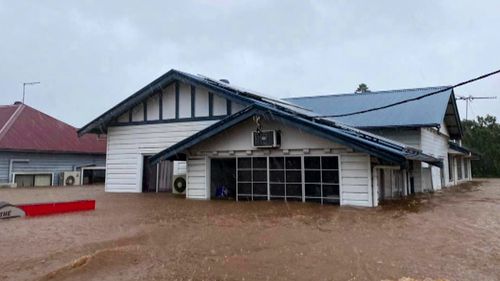
Historic, hundred-year-old homes in flood-ravaged Lismore would be shifted to safer pastures in a proposal which would allow residents to live in their beloved houses and out of harm’s way, while preserving the town’s cultural heritage.
Lismore South resident Harper Dalton-Earles is spearheading community group Relocate Lismore Homes and believes it is an option that has been largely left out of conversations surrounding the future of the flood-prone region.
The extent of the flooding across Lismore as seen from above at the beginning of March. (Mark Stehl)
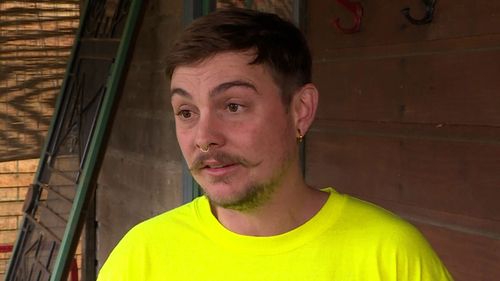
“I care deeply about what happens to our historical homes and the cultural value they add to the region,” Dalton-Earles told 9News.
“I don’t think the whole of town should be relocated – but I definitely think that the people in the worst flood-affected areas should be offered the option to relocate their homes.
“There’s places for buybacks, land swaps and some people want to raise their houses – all of these things should be on the table.
“My concern is there is no discussion about relocating our historic homes to higher ground.”
The flood-affected residents want options – some would like to see a land swap and to relocate their houses.
Others are calling for a buyback, like Queensland’s $750 million scheme, to help rebuild, sell, or flood-proof their homes.
Race against time as double weather threat looms
Built in 1910, Dalton-Earles estimates his heritage home has experienced more than a dozen floods.
Unprotected by the levee bank, the property is impacted by just moderate flooding.
Extra height would have made no difference in this year’s disaster.
“It still would have flooded based on the February flood height – at the highest I could legally raise it,” he said.
“To realistically relocate this home I’m looking at about $45,000 – to raise it I’m looking at between $80,000 and $100,000.”
It’s now a race against time, with a negative Indian Ocean Dipole event underway and a 50 per cent chance of a third La Niña forming later this year.
“I’m renovating my kitchen with the fear that it could flood next month,” he said.
“If I raise the home, I could still have a shipping container or a car run into the side of it.”
The third-generation Lismore local says house relocation is not a new concept, but a part of the town’s history.
“Historically after every major flood, 1954 flood, the 1974 flood, houses have been relocated,” he told 9News.
“(My grandparent’s) house was relocated out of the flood plain to up in Goonellabah.”
Lismore City Council this week voted unanimously in favor of a motion to acknowledge flood-affected residents’ desire for house relocations, buybacks and land swaps, after originally voting against the submission in June.
Harper Dalton-Earles is spearheading community group Relocate Lismore Homes. (9News)
Dalton-Earles says it’s a small win, but for now, bureaucratic red tape continues to hold him back from taking any action.
“We need a voice to discuss these ideas as a realistic option and the government needs to pay attention,” he said.
“I’ve done all of the research, I could literally (move my house) next week if the government on all levels were a part of this discussion and involved.
“Right now, it’s basically live here or be homeless – that’s the situation I’m faced with and many are faced with.”
The motion by Lismore Greens Councilor Adam Guise passed with an amendment for council to also lobby state and federal government agencies for their support.
“People need certainty and an understanding of what they’re to do with their flood-impacted lives,” Guise said.
“There will be people who will want to remain on the floodplain – or can’t leave the floodplain.
“We should be investigating alternative solutions such as house raising, floating houses on pontoons, and more flood-resilient designs, so we don’t have the waste or the damage that we’ve had in the past.”
Lismore Greens Councilor Adam Guise introduced a motion to acknowledge flood-affected residents’ desire for house relocations. (9News)
Guise says he is motivated by the threat of climate change and further severe weather.
“We can’t just rest on our hands and think this isn’t going to happen again or somehow think we’ve got time,” he said.
“For those of us currently living on the floodplain, a third La Niña keeps us awake at night,” Guise admitted.
“I dread what it would do…if we get another megaflood.
“I dread what it would do to the spirit of our town.
“It would absolutely break our town.
“Many people would be so broken, they would walk away.”
Lismore City Council has identified land in Goonellabah as a potential site to relocate flood-affected residents, but ultimately says the decision lies with the Northern Rivers Reconstruction Corporation.
Robyn wants her home back – but not where it is
Robyn Murray and her husband are living in Ballina while they wait for information to work out what is next.
“We’re all suffering with anxiety from the floods and we’re unsure as to where we are, what we’re going to do – we’re living in limbo,” she told 9News.
Murray is also interested in the possibility of shifting her older-style home to higher ground.
“We bought (our home) because it had so much character – an old Queenslander with French doors, all the beautiful trims that you get with the old Queenslanders,” she said.
“We would love it to be moved to an area where it doesn’t flood.
“It doesn’t deserve to be where it is.
“We just feel that the house deserves better.
“Moving it to higher ground would give us some piece of mind as well because we’re not young.
“Every time we feel a raindrop now, we stress.”
Robyn Murray wants to explore moving her home to higher ground. (9News)
The couple’s house, which is two meters off the ground, experienced 2.8 meters of water above the floorboards in this year’s big flood.
The thought of a potential third La Niña terrifies them.
“It scares the life out of me – just now, I’m very anxious talking to you about it,” she said.
“I want my home back, but I just don’t want to be there.
“I just don’t want to be in that location anymore.”
Floods in Lismore in February and March were the worst in decades. (Nine)
Fears families have no choice but to move back to danger zone
Jenna Breeze, her husband and their five-year-old daughter are living in Casino until they have enough information to make a decision on their future in Lismore.
“Our house is above the one-in-one-hundred-year level, it’s up on stilts… the water went to head-height inside the house,” she said.
“I don’t know if (the government) should be spending millions of dollars on flood mitigation.
“This has been happening in this town for like 200 years.”
The young family’s preference is a land swap – but fear they will have no option but to move back into the danger zone.
“I honestly think we won’t have a choice, we will have to move back in,” she said.
“We can’t rent anywhere else, we can’t buy anywhere else.
“There’s nowhere else to go other than to move away and remove ourselves from this community that we’re a part of.
“I just want to see a change and I feel like the town needs to move, maybe they keep the CBD where it is, but let’s move the residents up the hill.”
Lismore CBD was filled with debris after being impacted by a two floods in the same month. (Natalie Grono)
‘Who is leading us out of this?’
Crystal Lenane is ensuring East Lismore isn’t left out of the conversation.
“I’ve started the East Lismore Action Group,” she said.
“We’re not in the conversation at the moment.
It’s usually north and south.
“I think it should be fair across the board.
“We’ve all been impacted the same. We’ve all lost our homes.”
The local moved into the suburb with her family following the 2017 floods, assured it was flood-proof.
“Our street had never, ever been underwater – none of the houses,” she said.
Prior to this year’s disaster, the family had spent all of their savings on raising their home, not for flood purposes – but to construct a garage.
“We raised our floors to three meters, which is over two meters above what it was, and we still got a meter (of water) through our house,” she said.
“Are we going to put more money back into this property? We’re getting no direction.
“What is going to happen to Lismore? It’s all rumors – I’m hearing all different things everyday and it really needs to be cleared up.
“I don’t think it’s good enough.”
Lenane says the Resilience NSW debacle has made the situation even more unsettling for residents in limbo.
“It just seems like it’s a mess and no one is leading the ship. Who’s leading us out of this? I don’t know,” she said.
“I would like to know our options.
“After the floods, me and my husband were like, ‘We want to rebuild, we want to stay in the community’.
“Five months on, we’re losing that sense of community and I’m saying to my husband, ‘I want to go – I want to leave, I can’t invest back into this town when nobody is giving us any information. ‘”
Lismore residents are still desperate for answers months after their beloved towns went underwater. (9News)
The thought of returning home is ‘scary’
Jenny Gibbons would rather just say goodbye to her flood-ravaged home.
“I don’t even like going back there to fix things up – I just don’t like being there,” she said.
“I just feel like I haven’t got a home anywhere at the moment.
“I’ve got a lot of work ahead of me – and a lot of unknowns.”
Like many, she’s in limbo at the moment and is living with friends awaiting further information from the state government.
“I’m just waiting to find out what’s happening, what kind of land deals or swaps or whatever,” she said.
“I’d really like a buyback because I don’t want to be there anymore.
“The thought of going home is just really scary.
“I don’t even like going back there to fix things up – I just feel like I haven’t got a home anywhere at the moment.”
Her home, too, was supposed to be safe from a one-in-one-hundred-year flood.
“Got a meter above the one in one-hundred-year flood (mark),” she said.
“Been through floods there before, no problem at all.
“But this one just kind of came out of nowhere and kept on rising.”
It comes after an Upper House report into the February-March disaster laid bare the bungles.
The SES and Resilience NSW failed as lead agencies
A lack of integration between agencies slowed the rollout of support
The government and weather bureau did not comprehend the scale of the flooding
Community members had no option but to ignore advice and save lives themselves
A lack of a streamlined grants process led to frustration and trauma
The inquiry also made 37 recommendations, including:
The government considers a restructure of the SES and considers abolishing Resilience NSW
That a senior police officer be appointed to lead future recovery efforts
An overhaul of the grants process
Investment in supporting relocations and land swaps
The parliamentary inquiry also found the Bureau of Meteorology and other agencies were not prepared for, nor did they comprehend, the scale of the February-March floods.
It was told the data they were receiving and publishing was not accurate.
ALDI Australia is set to open a new pop-up dumpling truck – offering a takeaway feed for less than $1.50 per serve.
For one night only, diners can purchase six Urban Eats dumplings for a low price of just $1.44.
But the offer is only at the ALDI Bankstown Central car park in Sydney’s west between 5pm and 7pm on Friday, August 12.
For more ALDI related news and videos check out ALDI >>
A family of four can expect to enjoy a feed from just $5.76.
The gyoza flavors to choose from include the fan-favorite prawn and the new seasonal addition to the range – chicken.
Aldi Australia is set to open a new pop-up dumpling truck – offering a takeaway feed for less than $1.50 per serve. Credit: David Thomson Photography
The truck proves just how easy it is for Aussies to enjoy a “fakeaway” dinner any time of the week without breaking the bank.
“At a time when consumers are feeling the pinch, it’s rewarding to provide an option for people to still enjoy their Friday night rituals when they shop with us,” said Andrew King, ALDI’s Frozen Food Buying Director.
“The dumpling truck demonstrates how good food doesn’t have to hurt your pocket.
“You can dish up quick, delicious and affordable Friday dinners at home for less than $1.50 a serve.
The gyoza flavors to choose from include the fan-favorite prawn and the new chicken. Credit: David Thomson Photography
“We are so proud of our curated convenience range of frozen food items that have been developed by our trusted supplier partners and are a firm favorite with our customers for good reason.”
Shoppers can recreate the “restaurant-quality” meal at home with the supermarket chain’s dumpling range.
New research commissioned by ALDI found almost half (46 per cent) of Aussies are paying between $15 and $20 on a takeaway food order per person, at least $13.56 more than the cost of a serving from the range.
The truck proves just how easy it is for Aussies to enjoy a “fakeaway” dinner any time of the week without breaking the bank. Credit: David Thomson Photography
The truck will be pitched up at ALDI Bankstown Central, Chapel Road on Friday, August 12, from 5pm to 7pm, while stocks last.
The prawn will cost just 25c per gyoza while the chicken is priced at 23c per dumpling, which is the equivalent price of the individual dumplings or gyoza if bought direct from ALDI’s freezers.
7NEWS.com.au has not received any monetary benefit for this story
Meta-owned application, WhatsApp is working toward managing the phone number visibility when starting a chat with certain businesses, reported WABetaaInfo, the website that tracks the latest WhatsApp updates.
The feature of phone number sharing will be available for a future update of the app. The website also shared a screenshot of the update. In some situations, the app plans to ask its users if they wish to share their phone numbers when starting a chat with businesses.
In some cases, WhatsApp will automatically share and hide the customer’s phone number when they send a message to businesses via Click to WhatsApp ad. It is crucial to note that, all interactions with a WhatsApp ad will not be eligible for hiding the phone number, Times Now reports.
WABetaaInfo has written that when contacting a certain business and the phone number is hidden in that specific case, as it happens with the phone number sharing option for sub-groups of a community, customers will be able to choose to share the phone number with them. The feature is still in the under-development stage and its release date is yet to be announced.
WhatsApp is also working in a group setting for the approval of new participants.
Martha Stewart has responded to viral memes suggesting a budding relationship between her and Kim Kardashian’s ex, Pete Davidson.
Despite being snapped holding hands with the former Saturday night Live star at the White House Correspondents’ Association Dinner in April, the 81-year-old said she’s not about to become Davidson’s next love interest, reports the new york post.
“Pete Davidson is like the son I never had!” the famous domestic diva told the Daily Mail with a laugh at the opening of her first-ever restaurant at the Paris in Las Vegas on Friday.
However, even though a hot new relationship isn’t on the horizon, she said she enjoyed meeting the 28-year-old performer.
“He is a charming boy who is finding his way,” she said.
It might not be the last time eager fans get the chance to hear the pair together — with Stewart dropping an offer she extended to Davidson.
“I’ve invited him to come on my podcast and I look forward to hearing what he has to say,” she revealed.
Davidson split from Kardashian, his girlfriend of nine months, in early August, citing reasons including his filming schedule and Kardashian being busy raising her children and running her business.
“They have a lot of love and respect for each other, but found that the long distance and their demanding schedules made it really difficult to maintain a relationship,” a source told Page Six.
Stewart — who was married to publisher Andrew Stewart for 29 years before they called it quits in 1987 — is regularly the talk of social media with her thirst trap snaps.
The former model especially caught fans’ attention after posting a sultry selfie from her pool in 2020 — with users even suggesting she start an OnlyFans account.
However, for the time being, Stewart appears to be single, jokingly telling Chelsea Handler on her podcast recently that it’s been “a while” since she dated.
This article originally appeared in the New York Post and was reproduced with permission.
Seventeen-year-old David Popovici of Romania became the youngest swimmer to break the world swimming record in the men’s 100-meter freestyle, beating the mark set more than 13 years ago in the same pool.
Popovici touched in 46.86 seconds at the European championships to top the time of 46.91 set by Brazil’s César Cielo at the 2009 world championships, which also were held at Rome’s historic Foro Italico.
Popovici in lane four became the youngest swimmer ever to break the mark. (MaxSwims)
Cielo established his record on July 30, 2009, at the last major international meet to allow rubberised suits. It stood longer than any record in the event’s history, going back to 1905.
Now, it belongs to one of the sport’s budding stars.
READMORE:‘Mocked’ All Blacks take down world champions
READMORE:Veteran NRL referee’s shock grand final confession
READMORE:Roosters star in hot water over dangerous hit
“There was no rush and I had to be extremely patient about the world record,” Popovici said. “It has hurt but it’s always worth it and I feel fine right now. It felt great and it’s very special to break this record which was set here in 2009 by César Cielo.”
David Popovici of Team Romania celebrates after picking up Gold in the Men’s 100m Freestyle Final. (Getty)
Cielo still holds the record in the 50 free, which is among eight men’s long-course standards that remain from the rubber-suit era. Five of those were set at those supercharged 2009 worlds.
Popovici went out in 22.74 and set the record by going 24.12 on the return lap to easily beat Hungarian butterfly specialist Kristóf Milák by 0.61. Italy’s Alessandro Miressi claimed the bronze in 47.63.
“This was a brilliant race, a joy to swim next to David,” Milák said. “David is a fantastic swimmer, I think the same crazy genius of the freestyle that I am in the butterfly. It’s great that his name will hit the headlines for long, long years.”
Popovici poses with his gold medal. (Getty)
Popovici’s emergence sets up a potentially huge showdown at the 2024 Paris Olympics, where American star Caeleb Dressel — winner of five gold medals at last summer’s Tokyo Games — will come in as the reigning gold medalist in the 100 free.
Popovic had his coming-out at this year’s worlds in Budapest, sweeping golds in the 100 and 200 free. He didn’t get a chance to swim the 100 against Dressel, who dropped out of the event for health reasons before the final.
Milák, world record-holder in the 200 fly, hopes to also be part of the freestyle mix in Paris.
“My goal is very clear,” the Hungarian said. “I just want to reach a level in this event to arrive to Paris 2024 with the capability of swimming at a time somewhere very close to 47 seconds.”
For a daily dose of the best of the breaking news and exclusive content from Wide World of Sports, subscribe to our newsletter byclicking here!
The backstories and controversies that have ignited feuds involving athletes
Baby corals have been successfully spawned and grown for the first time by an Australian farm in a process that could one day help restore the Great Barrier Reef.
Key points:
Monsoon Aquatics has recorded the first spawning of a coral species at its Bundaberg aquaculture facility
The worldwide aquarium industry is reportedly worth $4 billion
Commercial industry could lead reef restoration of the Great Barrier Reef
Monsoon Aquatics operates Australia’s largest dedicated land-based coral farm at Burnett Heads near Bundaberg, where the company recorded the first spawning event of Homophyllia australis last November.
Almost 10 months later, the company has been able to grow baby corals in captivity, hailing the spawning event with success.
“That’s a species of coral which is basically only found from around Pancake Creek up to the Whitsunday area and Swains Reef, and so it’s unique to this southern Great Barrier Reef area,” company director Daniel Kimberley said.
Daniel Kimberley operates Australia’s largest land-based coral farm.(ABC Wide Bay: Johanna Marie)
Craig Humphrey from the Australian Institute of Marine Science’s national sea simulator said it was a “significant achievement”.
“If there’s a decline in the reef… these things could be bred in captivity to supply the market,” he said.
From the reef to the aquarium
Monsoon Aquatics is one of 39 active license holders in Queensland’s commercial coral fishery who can target a broad range of specialty corals to be sold to aquariums and hobbyists.
According to Queensland Fisheries, there was 100 tonnes of coral harvested from the Great Barrier Reef in the 2020-21 financial year.
A sample of coral at the Monsoon Aquatics facility in Bundaberg.(Supplied: Monsoon Aquatics)
“If you were to look at the reef as a whole, it’s a fraction of what’s out there,” Mr Kimberley said.
“The worldwide aquarium industry is worth over $US4 billion.
“A lot of that product is coming out of Indonesia and Vietnam and Tonga and Fiji and places like that, so there’s still huge scope for Australia to grow in that space.”
Mr Kimberley said successfully spawning and growing corals in captivity would mean a reduced reliance on harvesting wild corals.
“It’s about producing corals for our current ornamental market beyond what we can take from the wild, what we can harvest under quota,” he said.
The worldwide aquarium industry is worth billions of dollars.(ABC Wide Bay: Johanna Marie)
The life of coral
Footage shows the coral releasing eggs which are then fertilized and develop into larvae before eventually growing into baby coral.
“They start morphing into essentially what looks like a little slug, and that little slug will float around in the water column until it senses the particular substrate and habitat where it wants to settle,” Mr Kimberley said.
“It will then go to the bottom, stick onto the rocks, and then start to form its first mouth and tentacles and become a coral.”
The eggs develop into larvae, and eventually grow into coral.(Supplied: Monsoon Aquatics)
Coral spawns around the same time every year in both the wild and in captivity.
“It’s the change in water temperature, day length and the phase of the Moon, so in general it occurs just after a full moon in November and December,” Mr Humphrey said.
reef restoration
A report by the Australian Institute of Marine Science (AIMS) found there has been a rapid recovery of coral on the Great Barrier Reef from past storms and bleaching events, but it has come at the expense of a diversity of coral species.
Mr Kimberley believes commercial enterprise should be leading reef restoration projects, and spawning coral in captivity was the way of the future.
A scientist is led around the Great Barrier Reef in Queensland, as part of a monitoring project.(Supplied: Australian Institute of Marine Science)
“The really exciting thing for us is that it’s the first steps towards habitat restoration. And one day being a part of the solution to replant the Great Barrier Reef,” Mr Kimberley said.
“I think to drive these changes in these restorations… it needs to be commercially viable and driven by industry.”
Mr Humphrey says researchers are exploring it as a possibility.
“If you do culture them in a lab or in aquaculture setting, how do you get them out to the reef? And how do you retain them within the reef,” he said.
“There’s a whole range of research being undertaken in all those areas.”
Someone on $45,000 receives a tax benefit of 19.5 per cent – income tax of 32.5 per cent plus the 2 per cent Medicare Levy, minus the 15 per cent contributions tax your fund pays on the money.
Chapman points out that for those with incomes up to $42,016, there is also a super co-contribution scheme, under which for each added dollar of after-tax contributions put into a fund, the government contributes a matching 50 cents. The government’s co-contribution is capped at $500.
If your income exceeds $42,016, the co-contribution from the government progressively reduces and cuts out at $57,016.
However, those on lower incomes are more likely to have more immediate uses for their refund, including paying bills, Chapman says.
Fast track home deposit
Glen Hare, financial planner and co-founder of Fox and Hare, says parking your tax refund in superannuation under the federal government’s First Home Super Saver Scheme can be a good way to fast-track getting on the first rung of the property ladder.
Under the scheme, first-home buyers can save for a home deposit in a quarantined area of their super account, where the money is earmarked for the purchase of property and benefits from concessional tax rates.
The amount that can be held inside super under the scheme increased from $30,000 to $50,000 on July 1.
The limit on annual contributions for a home deposit that can be parked in excess of $15,000. They must be personal voluntary contributions, rather than compulsory payments made by your employer.
Start a share portfolio
Chris Brycki, founder of online investment adviser Stockspot, says a tax refund is an excellent way to start investing for your future in the sharemarket.
A good starting point for newbies is to purchase an exchange-traded fund (ETF), whose units are bought and sold on the Australian Securities Exchange.
ETFs provide broad exposure to market returns without having to worry about trying to pick winning stocks.
ETFs are available that track the returns and prices of all sorts of markets, not just Australian shares. They include overseas equities and even commodities, such as gold – and have low management fees.
“There is no need to constantly watch the market or know which shares to buy and sell, as ETFs are meant to be ‘set and forget’ investments,” Brycki says.
On the precipice of release day, Cult of the Lamb’s creative director Julian Wilton was still pinching himself: “I haven’t taken it in yet, because my priority has been getting the game out,” he told ABC Arts.
“I was refreshing the Steam store page yesterday, and watching the numbers continue to go up… this is in a totally different league to our previous games.”
In the year since his studio Massive Monster’s fourth game was announced at the European trade fair Gamescom, Cult of the Lamb has become one of the most keenly anticipated video games of 2022.
Ahead of its global release on Friday, pre-orders alone had driven the Melbourne-made indie to the top of the sales charts on digital video game marketplace Steam.
At its Gamescom debut in August 2021, Cult of the Lamb immediately distinguished itself from other games. The announcement trailer focused on narrative and aesthetic rather than the mechanics of gameplay; In stunning cell animation, it dramatized the game’s titular protagonist as it escapes the sacrificial altar to start its own cult of adorable animal followers, exacting revenge in the name of a mysterious entity known as The One Who Waits.
Cult of the Lamb is animated by Half Giant, an Australia studio.(Supplied: Massive Monster)
Set to a groovy, ethereal beat by First Nations musician and producer Narayana Johnson (who wrote the game’s soundtrack), the trailer triggered a flurry of activity on social media that has continued to grow in the year leading up to Friday’s release.
When Massive Monster released a demo of Cult of the Lamb a few months after its trailer, it was clear that the game’s blend of creepy and cute ran deeper than its aesthetic: it combines action-packed dungeons and tightly designed combat with gentler gameplay such as fishing, community building and home decoration elements inspired by titles such as 2020’s smash hit, Animal Crossing: New Horizons.
It’s a game that puts fun first, welcoming in a wide variety of players without sacrificing (no pun intended) the strategic edge and replayability of a challenging title.
Speaking to ABC Arts ahead of the global launch, Wilton graciously ascribed the game’s reception to the marketing campaign by the game’s US-based publisher (“Devolver Digital really know how to do their job!”). But the game’s early success also has something to do with his studio’s respect for the breadth and diversity of the people who play video games.
Julian Wilton, the creative director of Massive Monster, won an Australian Game Developer Award in 2019.(ABC Arts: Kate Disher-Quill)
Making approachable games
Massive Monster’s first official title was 2018’s The Adventure Pals, but the studio’s three co-directors have been working together for more than a decade, since they met online as teens.
Making approachable games has been a guiding principle for their collaborations from the get-go.
Wilton met art director James Pearmain and design director Jay Armstrong through chat forums dedicated to Adobe Flash, a piece of computer software used to make games and animated shorts.
Widely proliferated, free, and easy to use, Flash was the backbone of the creative internet in the 00s, and Wilton was drawn to it from his teenage years.
The online Flash game community encouraged “jumping in and making something weird, and people would check it out,” Wilton says.
This community allowed all three developers to hone their sense of the kind of mechanics that people could pick up quickly.
Rather than offering complex narratives or high skill thresholds, successful Flash games were generally short in length, and designed to be played for fun by anyone with an internet connection; for a small, browser-based game, approachability is key.
Wilton enjoyed early success through this community with a Flash game called Angry Bees, which was published on popular video game website Miniclip, earning the then-teenager a cool $20,000 (which promptly saw his PayPal account shut down for suspicious activity).
These formative experiences with the Flash game community led to a game design approach that Wilton describes as iterative, unprecious, and audience-led.
In fact, the way the Massive Monster team worked together in the early stages of Cult of the Lamb sounds less like the work of three software developers and more like a band jamming together, layering different approaches and ideas until something sticks.
However their goal was clear: they wanted to make a strategic video game based on layered systems that offered players lots of ways to play and replay – something more complex than their previous adventure games, Never Give Up (2019) and The Adventure Pals. Crucially, however, it had to be fun first, challenge second.
The Adventure Pals (2018) is a platform adventure game about friendship and exploration.(Supplied: Massive Monster)
“We always like to make things very accessible and easy to pick up. When we make a game, we want your grandma to be able to pick it up and play with it – or at least to have fun with it,” Wilton says.
“It’s important to us to make things approachable and casual.”
Bringing roguelikes to a broader audience
Despite its mass appeal, the gameplay in Cult of the Lamb was initially inspired by a genre that is notoriously challenging: the roguelike. The term is named for the 1985 computer game Rogue, and refers to video games that share a set of challenging gameplay features.
Typically in a roguelike game, the player journeys through a series of randomly generated rooms fighting enemies to gain power-ups, weapons and loot, becoming stronger as they go — but when they die, they die permanently, and any new run will see the player starting again with none of their previous spoils, at square one.
Because roguelikes reset the character’s skills with each death, they particularly reward the player’s strategy; really skilled roguelike players become so familiar with the kinds of enemies and opportunities that can arise, and the frequency with which they do, that they can strategise their way through each unique run based on percentages, making strategic decisions and taking risks as they go.
As a result, playing roguelikes can be incredibly rewarding; however, they are also notoriously unapproachable to new players.
In the last 10 years, the roguelike genre has seen a resurgence through titles such as the hugely popular Darkest Dungeon and Binding of Isaac. At the same time, the genre has seen pushback from players who are left out due to these games’ high barrier to entry.
For someone unfamiliar with the genre, playing a roguelike can be punishing – they take a long time to start feeling fun.
Cult of the Lamb isn’t the first recent indie hit to remix the roguelike for a broader audience and find success. In 2018, Supergiant Games’ Hades swept awards season with the story of Zagreus, son of Hades, whose repeated attempts to escape the underworld reveal new aspects of the story, in addition to skills and weapons.
Hades, by Supergiant Games, was released in 2018. (Supplied: Supergiant Games)
By using narrative to motivate a player through each ‘failure’, Supergiant Games found a way to make the roguelike appealing to an audience who cared more for story than strategy.
The game also featured a ‘god mode’ that increased the player’s defenses every time they died; it meant that the assistance they received was commensurate to their personal skill level, and evened out as their skills improved (rather than making the game easier by removing elements of gameplay completely).
Difficulty modes for everyone
Like Hades, Cult of the Lamb draws on the challenge and replayability of the roguelike, while offering accessibility and difficulty modes that help open the game up to more players.
While there are some differences in Cult of the Lamb’s four difficulty settings that are discernible to the player – you have fewer health points in harder modes, for example – there are also subtle assistive aspects built into the game’s standard mode that respond directly to player behavior .
“The game tries to figure out if the player is struggling, and adjusts the combat or the dungeons accordingly,” Wilton explains.
“[But] in the two harder modes, those settings are turned off.”
Knowing that they wanted the game to break through to wider audiences, Massive Monster chose to treat these assistive aspects as the game’s standard; the ‘unassisted’ challenge of a typical roguelike is available for players who want it, but on an opt-in basis.
Combined with accessibility options that allow players to turn off flashing lights, camera motion, and alter the size of the text, these design decisions offer a highly customizable game experience.
Play how you want
Cult of the Lamb also welcomes in a broader player base by facilitating play styles that favor less combat and more community building.
While the core gameplay is the same for every player — venture out to a dungeon, combat enemies, return with supplies, build your community with those supplies — the game supports a range of methods for approaching these challenges.
Cult of the Lamb is set in the Evermoon Forest, a mythical place ruled by warring cults and dark magic.(Supplied: Massive Monster)
Spending time developing your cult can generate resources that make each dungeon run easier, and visiting neighboring villages offers the opportunity to gather resources through trade or quests, minimizing the player’s time in combat.
Massive Monster took a similar approach to darker elements of the gameplay, too – the player can be a relatively benevolent leader or a vicious tyrant.
“Our approach is: it’s okay if some of that dark stuff is there, so long as we’re not forcing any of this stuff on the players,” says Wilton.
Video games are for everyone
Cult of the Lamb’s design is founded on a deep respect for the diverse reality of video game players.
In the 2022 Digital Australia report from the Interactive Games and Entertainment Association, a survey found that 17 million Australians play video games. Of those surveyed, 46 per cent identified as female, and 1 per cent as non-binary.
The age range of players is also more diverse than video games’ youthful reputation would suggest: the average age of a video game player in Australia is 35, and 42 per cent of adults who are 65 years and older also play video games.
Not only do a wide variety of people play games, but they play for a wide variety of reasons, including socialisation, creativity, and relaxation.
This is reflected in the sales charts; Alongside Cult of the Lamb, the top-charting games on Steam in August include university management simulator Two Point Campus and cat adventure game Stray, as well as more aggressive, action-packed games such as Elden Ring and Rust.
With over 60,000 pre-orders on the Steam store alone, Massive Monster’s approachable design looks like a winning strategy – but even if it wasn’t, Wilton wouldn’t want to make games any other way.
“I also designed the medium difficulty mode after my own skill level,” he says.
A banned Teletubbies sketch—titled The Lion and The Bear—has been revealed after decades.
An uncensored version of the sketch, which is from 1997, has been released on YouTube, reports The Sun.
teletubbies was a beloved British children’s television program about four colorful characters — Tinky Winky, Laa-Laa, Dipsy and Po — who roamed around a grassy floral landscape whenever they weren’t hanging out in their earth house, the Tubbytronic Superdome.
The original series ran from 1997 to 2001.
Anyone who watched the show might remember that it was funny, colourful, and educational, but typically not scary.
However, one teletubbies sketch which was broadcast in 1997 was actually so terrifying that it was banned in countries around the world.
“The Lion and The Bear” was a sketch about two cardboard cutout characters who were, unsurprisingly, a lion and a bear.
The Bear arrived first, followed by the lion, who was chasing her.
In the original sketch, the Teletubbies were terrified by the arrival of the Bear who creepily repeated the same sentence several times.
“I’m the Bear, I’m the Bear, and I’m coming!” she repeated.
After she appeared on screen, she continued rhyming in her terrifying voice.
“I’m the Bear, I’m the Bear, with brown fuzzy hair. I’m hiding from the Lion but he doesn’t know where,” she said.
Then the “scary” Lion arrived.
“I am the scary Lion, with big scary teeth. I’m scary on the top and I’m underneath,” he growled.
This dialogue was followed by a dramatic chase scene across the green hills while Laa-Laa told his fellow Teletubbies to hide.
These scenes proved to be too traumatizing for young viewers and were called out by parents for not being “age appropriate.”
One review from 1997 even dubbed the scene as “the greatest horror film of all time.”
Four years later, the BBC edited the sketch to make it more child-friendly.
In the censored sketch, many of the original elements had been changed.
Now the Teletubbies appeared excited about the arrival of the Bear. The Bear’s voice had also been edited to sound less scary and the threatening music was swapped out for something more upbeat.
Instead of being scared by the Bear, the Teletubbies now giggle at her presence.
They continue to laugh all the way through and celebrate when the Lion chases the Bear far away, instead of running away themselves.
This article originally appeared in The Sun and was reproduced with permission.