As David Popovici has accelerated past his older rivals in the pool this summer, it seemed inevitable that the skinny 17-year-old would threaten world records, the only surprise when he broke the 100m freestyle mark in Rome on Saturday was that he got so quick so fast
On Friday, the Romanian had become only the fourth man in history to swim under 47sec as he set a European record to win his semi-final at the European Championships in Rome.
Stream Over 50 Sports Live & On-Demand with Kayo. New to Kayo? Start your free trial now >
That was more than half a second faster than his gold-medal time at the World Championships in June.
On Saturday, he was even quicker, swimming 46.86sec to slice 0.05sec off the record set by Brazilian Cesar Cielo in the 2009 World Championships, also in Rome, in the era of buoyant body suits.
“Yesterday I said that the European record was just one step in the right direction – and I was right. There was no rush and I had to be extremely patient about the world record, ”he said after his victory about him.
In the World Championships in Budapest, Popovici outpaced Caeleb Dressel, who had swum the fastest 100m in a textile suit, in the heats.
The Olympic champion withdrew from the competition before the semis.
Romania’s David Popovici set a new world record in the men’s 100m freestyle. (Photo by Alberto PIZZOLI / AFP)Source: AFP
“It’s nice being able to say that I am the fastest to ever do it and it’s a good thing to know I clashed with all of the titans of this race.”
His coach, Adrian Radulescu said that he was too surprised by the speed of Popovici’s progress.
“It’s amazing that it is happening so early,” said Radulescu, just 32.
Asked on Thursday what makes him successful, Popovici acknowledged that success comes at a price.
“When Erling Haaland, a football player, was asked the same question, he replied ‘hard work’ So, it’s just really a lot of hard work and a lot of sacrifice and it all comes down to the question of how badly do you want Item; and I really do want it, badly!”
“What are you willing to do that others aren’t? This includes living a completely different lifestyle.”
This summer, Popovici has dominated the World Championships and the European Junior Championships in his home town, Bucharest.
After Rome he plans to head to the world junior championships in Lima
“Really, all I want to get out of this meet and out of world juniors in Peru is simply having fun. The medals, the records, everything, the good times are simply a bonus. If we manage to have fun, that’s very satisfying,” he said.
Not everyone might share his idea of fun.
“Everything in sports is fun. Getting extremely tired and then wanting to vomit,” he said.
“Having all sorts of lactate problems… that’s fine. It’s not fun at the time but after half an hour you don’t want to kill yourself anymore and you feel as if its all worth it.”
Popovici was nine when he joined the swimming club where Radulescu coaches.
Popovici is just 17 years of age. (Photo by Alberto PIZZOLI / AFP)Source: AFP
“He wasn’t the easiest to train, he was mostly looking for fun, to skip his turn… But there was something special about him, he was very competitive.”
“He must have been ten years old, we were organizing a competition for swimmers of the same age,” recalled the coach.
“A 25-meter swim and the last one was eliminated… Each time, David finished second last. Ahead of him, they wanted to prove that they were good, they got tired. In the final race, the other survivor was so tired, David won.”
Popovici is unusually thin for a top swimmer.
“David has a keen sense of water,” said Radulescu.
“It’s not about how much force you can generate, but how you can put it into the speed you develop. So, yes, he is very thin, but he has enough strength to swim at higher speeds.”
But, added, the coach, Popovici’s physique will change.
“He’ll be 18 in September, his body will grow, evolve to a man’s size. It’s a challenge… to get the right balance between strength and efficiency.”
Popovici already has a nickname: ‘The Magician’.
“I was passionate about magic when I was younger, the card tricks and illusions and stuff but not anymore. It was a little hobby before swimming,” I explained.
“But yes, some people have called me The Magician because of what I do in the pool but again, I don’t think it represents me. I like to think of myself as a simple guy who just swims fast.”
Sharon Shillingsworth and Deidre Bolt are sisters in their 50s but have only just met for the first time.
WARNING: This story contains details of an Aboriginal person who has died and has been used with the permission of family.
Their separation was influenced by intergenerational trauma which stemmed from their father’s experiences as a child of the Stolen Generations.
It took the women years to track each other down, and while they had been connecting over the phone, a face-to-face meeting had eluded them until now.
It was a pivotal moment for both women; Ms Shillingsworth said she held her sister de ella for what she felt like “the longest time”.
Their father, John Carroll, was one of up to 600 Aboriginal boys who lived in the notorious Kinchela Boys Home in Kempsey on the NSW Mid North Coast.
The institution operated under the authority of the state’s Aborigines Protection Board and forcefully removed Indigenous children from their families and communities from 1924 to 1970.
The Kinchela Boys Home in Kempsey opened in 1924 and operated up to 1970.(Supplied: Kinchela Boys Home Aboriginal Corporation)
Like many of the boys in the home, Mr Carroll’s life was plagued with psychological and physical trauma from the abuse he endured in the institution.
Ms Shillingsworth said the trauma her father suffered at the home affected his adult life.
“He was in a lot of turmoil, he basically drank to numb the pain; it was just heartbreaking learning what he went through,” she said.
Her father left her mother and later had three other children with another partner, one of whom was Ms Bolt.
‘They were lost’
While the siblings knew of each other’s existence, they had never had the opportunity to meet or contact each other until after Mr Carroll’s death in 2016.
“Our brother Neil hired a solicitor to find us; we had known about them [John, Neil and Deidre] and they had known about us, but they were lost,” Ms Shillingsworth said.
A list of boys who were in the Kinchela Boys Home is displayed at the healing forum, including Deidre and Sharon’s father.(ABC News: Arianna Levy)
The solicitor managed to track down the siblings and connected them through Facebook.
“We’ve been talking over the phone for a few years now but had never seen each other face to face,” Ms Bolt said.
Ms Shillingsworth said with her sister living in Forster-Tuncurry and herself living “in the scrubs of Trundle” in central west NSW, linking up while also working six days a week was difficult.
“We were getting old too, I’m 57 and Deidre’s 53, we knew something had to happen soon,” Ms Shillingsworth said.
The meeting was facilitated by a charity set up to help the survivors of the Kinchela Boys Home and their families.
Operating with a collective goal of healing the trauma and intergenerational trauma suffered in the home, Kinchela Boys Home Aboriginal Corporation (KBHAC) holds annual healing forums to help survivors and their descendants connect.
Boys were stripped of their names and given numbers at Kinchela Boys Home.(Supplied: National Museum of Australia/Katie Shanahan)
When KBHAC heard of the sisters’ desire to connect, they organized a meeting point in Coffs Harbour.
“I jumped at the opportunity; I thought this is my chance now. If this union is ever going to happen, it’s going to happen now,” Ms Shillingsworth said.
KBHAC chief executive Tiffany McComsey said emotions in anticipation of the meeting were high, and that Ms Shillingsworth was “so excited and nervous at the same time.”
“They ended up meeting in the foyer the next day, very naturally, a lot of tears were shed but it was a beautiful moment” Ms McComsey said.
Ms Bolt said the meeting had been “a long time coming”.
“We walked up and gave each other a big cuddle, I was just so relieved and happy to finally meet my sister,” she said.
‘A hidden scar’
Gumbaynggirr and Dunghatti man, Uncle Richard Campbell was given the number 28 in the Kinchela Boys Home.(ABC News: Arianna Levy)
KBHAC is now seeking to transform the heritage-listed boys home into a living museum and healing center to allow for the loss and grief experienced by survivors and their descendants to be processed.
Secretary and Kinchela survivor Uncle Richard Campbell said the sisters’ experience of separation was an example of the domino effect of ongoing suffering and mental anguish endured by survivors.
He says the work KBHAC is doing, not just with survivors, but in education is vital in telling the stories of what happened to the Stolen Generations.
“This is about healing the nation and also significantly the Macleay valley where this hidden scar continues to cause pain,” Mr Campbell said.
Last week the Reserve Bank of Australia announced a year-long research project with the Digital Finance Cooperative Research Center to explore “use cases” for a central bank digital currency (CBDC). Here is what’s going on.
What is a CBDC and how is it different from cryptocurrency?
Banknotes are a physical form of money we exchange for goods and services. And we’re increasingly making digital transactions, whether tapping credit cards or smartphones. ATM use is down about a third in three years, the RBA says.
Now, the RBA and counterparts around the world are studying new digital forms of money that central banks themselves might issue. Research will examine uses of CBDC for commercial banks – the wholesale market – and a retail version the public may one day use.
Cryptocurrencies, by contrast, are decentralized, unlike “fiat currencies” produced and regulated by governments. Bitcoin and ethereum are among prominent digital currencies relying on cryptography to secure transactions.
To curb price volatility of cryptos, stablecoins have been created to mimic “fiat currencies” by anchoring value to assets such as the US dollar. The failure of TerraUSD and other stablecoins reflects the sector’s infancy. CBDCs might fill the gap.
“A fully realized central bank digital currency has the promise to bring the regulatory certainty and power of digital assets to a place that’s coupled with the trust and faith that we have in money that’s issued by the Reserve Bank today,” said Michael Bacina, a partner at Piper Alderman and a fintech specialist.
Why is the RBA getting involved?
Partly exploratory. “I don’t think it’s inevitable” that the bank will issue CBDCs, says the RBA deputy governor, Michele Bullock.
“In terms of day-to-day payments that touch you and [me] and our friends and family, it’s not clear to us what the case for it is,” she says. “We have banknotes. We have lots and lots of digital money alternatives [including] fast payment now.
“I think we just need to keep our toes in it, and not be at the bleeding forefront.”
Australia weekend signup
The focus will be less on the technology itself but rather settling on design principles of how decentralized such currencies might be, while maintaining standards of protecting privacy that the public can accept.
“Do you put limits on the amount of money people can have in this? Does the central bank issue it directly, or [as] we do with banknotes issue CBDCs via existing banks,” Bullock says. “I don’t think anyone’s come to a complete consensus.”
Is there an appetite?
If an Australian Securities and Investments Commission report on investor behavior released on Thursday is any guide, the market for digital currencies is growing rapidly.
Its survey of 1,053 investors found that cryptocurrencies were second only to Australian shares in terms of most common asset held, at 73% and 44%.
In terms of the value of the holdings, cryptos were also on a par with residential investment properties.
An ASIC survey of 1053 retail investors found their holdings of cryptocurrencies were on a par with resident housing investments, with only their holdings of Australian shares larger. pic.twitter.com/uF7e4iJtgk
Andreas Furche, the chief executive of the Digital Finance Cooperative Research Centre, notes the RBA’s ongoing caution.
“It’s not something that’s a done deal,” Furche says. “It’s not clear yet whether from the RBA perspective this is going to fit or be useful or not.”
The trial will be “ring-fenced” with only registered parties taking part. It will, though, be open in another sense: “We don’t have a preconceived outcome.
“Those of us who build or discuss or provide infrastructure aren’t necessarily the innovators that build new kinds of market infrastructure, business models or whatever on that infrastructure,” Furche says. “If we just make that assessment based on what we can think of ourselves, we’re not going to get anywhere.”
QuickGuide
How to get the latest news from Guardian Australia
Show
Photograph: Tim Robberts/Stone RF
He says the rise of stablecoins indicates there’s an opportunity to meet people’s interest in digital currencies without the exposure to as much volatility.
“Despite the name, [stablecoins] are often still fraught with risk because they’re not necessarily backed 100%,” he says. CBDCs, based on a national currency, are an “ultimate stablecoin”.
What do market participants say?
Chloe White, an independent consultant and formerly Treasury’s representative on the Council of Financial Regulators examining cryptos, says blockchain and the ecosystems that are building around it will continue to function and grow whether governments issue CBDCs or not.
“What we see happening in cryptocurrency markets at the moment very much mirrors what we see in the traditional system,” White says. “You have a so-called real economy where people are transacting goods … and then you have a financial layer wrapped around” with derivatives, insurance and so on.
There may even be national security reasons for having CBDCs and not missing out on emerging technologies and new ways of doing business.
“China, in particular, seems quite determined to want to leverage this technology in some way,” she says. “And there’s barely a corner of the world that you can point at that has influence and economic power that’s not looking at these issues in some way.”
Bacina says the fintech world is evolving faster than the internet at its genesis. “It’s the same as we could not predict Netflix and we could not predict Amazon’s next-day delivery when the internet was being invented and rolled out.
“There are no wires to be put down, and that physical infrastructure to be connected – it’s already there.
“We’re talking about the ability to automate things like bank guarantees, and other slow, manual processes which currently drive up compliance costs.”
As for who might benefit from the RBA and Digital Finance Cooperative Research Center study, Bacina says participants may learn as much as the institutions.
“It’s a six- or seven-way street,” he says. Interest will focus on “deep analysis of systems contracts, regulatory interfaces – that kind of analysis doesn’t occur very often”.
The latest Apex Legends season, entitled Hunted, launches today. In addition to the new Legend Vantage, a King’s Canyon health-focused revamp, and a major level-cap increase, the season will, as always, offer up a new battle pass. The Hunted Battle Pass will offer a variety of hunting-themed skins and cosmetics for Wraith, Caustic, Bangalore, Horizon, and Vantage. These include new reactive weapon skins and some flashy skydiving emotes. You can check out what Respawn/Respawn Vancouver have cooked up for the new battle pass, below.
As usual, the Hunted Battle Pass comes in two variants, including a free one, that will net you a variety of older skins, Apex Packs and more. If you want the new Hunted goodies, you’ll need to spend 950 Apex Coins for the Premium Pass. You can also spend 2800 Apex Coins to get the Premium Battle Pass Bundle, which allows you to skip ahead 25 levels.
Haven’t been keeping up with Apex Legends’ Hunted season? Here’s the rundown on the new Legend…
“Vantage has learned everything the hard way. Born to a wrongfully-convicted criminal who gave birth to her alone on the barren ice planet Págos, Vantage can weather any storm. Accompanied only by her small winged companion Echo and forced to live off a hostile land, she became the ultimate survivalist and an expert sharp shooter. Meet the youngest person to join the Apex Games, Vantage.”
Passive: Spotter’s Lens — read tactical information on enemy squads at a distance, Vantage always has the upper hand with critical intel like Legend name, Shield rarity, team size and range.
Tactical: Echo Relocation — Echo is at the ready to help her reposition herself in a fight. Using her modified jetpack and targeting system, Vantage can launch herself towards Echo’s position and take the high ground.
Ultimate: Sniper’s Mark – There’s nowhere to hide from Vantage’s custom sniper rifle, which reveals enemies with its scope and with its ammunition: a successful hit highlights opposing squads for 10 seconds accompanied by a diamond marker, and damage scales up with each hit.
Apex Legends can be played on PC, Xbox One, Xbox Series X/S, PS4, PS5, and Switch. The Hunted season kicks off today.
These are dark days for movie stars. The new Brad Pitt action-comedy Bullet Train took $30.1m (£24.6m) on its opening weekend in the US – a solid enough figure to top the domestic box office chart, but unspectacular given the film’s $90m budget and Pitt’s star power. One of the few actors who can still “open” a film, Pitt represents an increasingly endangered breed: the movie star who refuses to do TV.
Another TV holdout, Tom Cruise, continued his hot streak with Top Gun: Maverick, which recently surpassed Titanic at the US box office, although the film’s very success is being heralded as the end of an era, with Cruise lionized variously as “the last movie star” and “the last movie star standing in a changing Hollywood”. Meanwhile, obituaries declare the “death of the movie star” and “RIP to the movie star”.
If the movie star is not exactly dead, they are certainly enjoying the hammiest of death scenes, like Marlon Brando’s virtuoso farewell in The Young Lions: stumbling after being shot and rolling headlong down a hill, before being stopped by a branch, looking stunned and blinking incredulously, then toppling into a watery ditch.
Brad Pitt in Bullet Train. He is one of the few stars to have resisted TV in recent years. Photograph: Sony/Scott Garfield/Allstar
The A-list is a shrinking paddock of aging thoroughbreds. All five films in the top 100 this year that might be called “star vehicles” – Cruise in Top Gun: Maverick, Pitt in Bullet Train‚ Sandra Bullock in The Lost City, Mark Wahlberg in Father Stu and Jennifer Lopez in Marry Me – feature leads who found fame in the 90s, with an average age of 56. The 2010s seem to have produced fewer certifiable movie stars than any previous decade. Chris Pratt, Benedict Cumberbatch, Adam Driver and Jennifer Lawrence have had substantial careers out of superhero spandex, with Lawrence speeding through her ingenue phase to win an Oscar at 22 and now enjoying the twilit semi-retirement from the grind that an Academy Award buys you . Even so, after a trio of failures from 2016 to 2018 – Red Sparrow, Mother! and Passengers – the Hollywood Reporter published a piece titled: “If Jennifer Lawrence Ca n’t Open a Movie, Who Can Ella?”
“There are no movie stars any more,” said the Avengers actor Anthony Mackie in a clip that did the rounds on Twitter. “Anthony Mackie isn’t a movie star; The Falcon is a movie star. And that’s what’s weird. It used to be, with Tom Cruise and Will Smith and Stallone and Schwarzenegger, when you went to the movies, you went to go see the Stallone movie; you went to go see the Schwarzenegger movie. Now you go see X-Men. So, the evolution of the superhero has meant the death of the movie star.” Chris Evans has enjoyed playing against type in Knives Out and The Gray Man, but almost every Avengers cast member who came to fame through the series has struggled to make it outside the Marvel bubble.
Of course, reports of the death of the movie star are to be taken with a pinch of salt. Part of it is the natural process of “aging out” that occurs periodically in Hollywood, as one generation hands over to another. “Glamor is on life support and is not expected to live,” declared Joan Collins at the end of the 60s, as the star system – by which studios signed actors to exclusive seven-year contracts, giving them lessons in manners, diction, acting, riding, walking, dancing, singing and fencing – finally crumbled. It made way for the young Turks who followed – Jack Nicholson, Robert Redford, Steve McQueen, Dustin Hoffman, Robert De Niro, Al Pacino – who in turn paved the route for the stars of the 80s and 90s.
But who can deny that a subtle sapping of movie-star power is at work when the producers of the 2022 Oscars invited sports stars including Tony Hawk, Shaun White, Kelly Slaterand the Williams sisters on to the podium to present awards, banishing Samuel L Jackson, Elaine May, Liv Ullmann and Danny Glover to the untelevised Governors awards to pick up honorary Oscars?
Throughout most of the 90s, the big question hanging over George Clooney’s career was whether he could break out from TV and make it in the movies. Today, Keanu Reeves has just signed up for a TV show (executive-produced by Leonardo DiCaprio), joining Harrison Ford, Dakota Fanning, Jude Law, Emma Stone, Amy Adams, Meryl Streep, Jonah Hill, Julia Roberts, Sean Penn and Matthew McConaughey in completing the reverse exodus, from the ever-more convulsive movie business to the relative sanctuary of TV. Clooney topped the list of highest-paid movie stars in 2017 – not for any role, but for selling the tequila brand he co-founded for $1bn.
“The business has changed entirely,” Roberts told the New York Times in April, upon the release of the mini-series Gaslit (which also stars Penn). “When I started, I felt like you did a movie and if it did well then you might get offered a couple of other movies and might have more choice and you’d get paid a little bit more on the next one. There were incremental shifts in opportunity and it made more sense. Now, it’s made more of air; maybe it doesn’t feel as sturdy when you’re going along. I felt pretty sure-footed about the choices I was making. You don’t have those incremental markers any more, it doesn’t seem like.”
Jennifer Lawrence, who won an Oscar for her performance opposite Bradley Cooper in 2012’s Silver Linings Playbook, was one of only a handful of actors to skirt with movie-star status in the 2010s. Photograph: Snap Stills/Rex Features
The causes of this volatility are multifarious and far-reaching. These days, studios rely almost exclusively on superhero movies and other branded franchises – for which they can just as easily cast newcomers as stars – to draw crowds into cinemas. Amazon paid $465m for its production of The Lord of the Rings, a spin-off with no stars attached, while subscriptions to streaming services have changed how everyone in Hollywood gets paid.
Most workers are better off – it is a seller’s market – but the power of the megastars is dimming. Last year, Scarlett Johansson got into a fight with Disney after the studio decided to stream Black Widow on Disney+ on the day of its cinema release, so retaining up to $50m it might have owed the actor, depending on the film’s box-office performance . This spat is but the most public of a series of tussles between studios and stars as actors try to determine their worth in the branded-franchise era. Henry Cavill has ended his run as Warner Bros’ Superman, while Chris Pine and Chris Hemsworth have walked away from Star Trek 4, after contract talks actors broke down over their pay.
So, how much is a star worth? This has always been a dark science. “As far as the film-making process is concerned, stars are essentially worthless and absolutely essential,” said the screenwriter William Goldman after the collapse of the star system. Freed from the studios for the first time, actors were able to negotiate multimillion-dollar deals. For 1989’s Batman, Jack Nicholson took a $6m paycheck and a cut of the box office and merchandise sales, ultimately netting about $60m. The nearest recent equivalent is Robert Downey’s Jr’s $10m fee for Iron Man 2, but that was negotiated only after the success of the first film, for which he took home $500,000. Even actors as established as Downey Jr are only as valuable as the superheroes they play. In another role, his price would plummet.
Jack Nicholson as the Joker in Batman. I have made about $60m from the film. Photograph: Snap/Rex Features
Streaming has only further muddied the waters. Before the pandemic, everyone in Hollywood engaged in the weekly anxious ritual of poring over the weekend’s box office, to determine the week’s winners and losers. Now, the streamers pore over viewership data, keeping score of streaming-app sign-ups and retention rates and measuring unconventional metrics such as mentions on social media as they try to determine the quicksilver quality that is a star’s worth.
But the connection between star and quarterly subscription rate is even more nebulous than that between star and weekly box office returns. When big movies hit HBO Max, downloads of its app spike, a recent study found. One agent recently confided that some of their more famous clients prefer the streamers’ secrecy around ratings because it avoids the bright glare of flopping at the box office.
From the stars’ point of view, the connection between their work and their worth has been muffled. They might not be paid as exorbitantly for their successes, but nor are they blamed so harshly for their failures. Indeed, they are buffeted by the same economic forces as the rest of us. “When we were content to gaze up at movie stars on a screen that seemed bigger than life, the exchange was fairly simple,” wrote the critic Ty Burr in Gods Like Us, his 2012 history of movie stardom. “We paid money to watch our daily dilemmas acted out on a dreamlike stage, with ourselves recast as people who were prettier, smarter, tougher, or just not as scared.”
Studio-era stars such as James Dean longed for their work to be valued artistically – as is increasingly the case with celebrity actors. Photograph: Snap/Rex Features
Today, celebrities attuned to social media are much closer to their audiences. The internet has brought a “marked devaluation of the traditional movie star”, Argued Burr, conspiring to strip movie stars of their mystique and marking what he calls “the triumph of celebrity socialism. The means of the production of stardom are at last in the hands of the people.”
The gods have become mortal. One benefit is that it has returned a level of artistry to discussion of their work. Spend much time on the fan sites and you will find – in place of the advice columns, beauty tips, fashion features and recipes that used to fill the fan magazines in the studio era – earnest discussion of a star’s acting chops: their “dedication” , “commitment” and “transformation” for a given role. Buzzwords, to be sure, but Brando, James Dean and Montgomery Clift would have killed for such treatment, longing to be seen as Laurence Olivier, not Clark Gable.
“Today, actors and actresses float across and around stardom,” wrote the film historian Janine Basinger in The Star Machine, her 2007 history of the star system. She identified the rise of something she called “the neo-star”: the actor who threads the needle between typecasting and character acting. The description fits Driver, Lawrence and Cumberbatch, all of whom have moved between big branded franchises and Oscar-bound film projects.
The old-school, Klieg-lit movie star may soon die, but behold, by the light of a million smartphones the neo-star is born.
Brisbane took a gigantic step towards locking in a top eight berth after a Selwyn Cobbo hat trick helped seal a 28-10 win over the Newcastle Knights.
Adam Reynolds was full of praise for his young winger afterwards – one of his tries coming off a pinpoint chip kick from the halfback.
“I just thought I’d throw one over the top for him there and he was good enough to finish it off,” Reynolds said post-match.
READMORE:Veteran NRL referee’s shock grand final confession
READMORE:Roosters star in hot water over dangerous hit
READMORE:Hynes makes passionate plea after big win
Reynolds and Cobbo have formed a charmed connection, as the former Rabbitohs star has done with plenty of his new teammates.
“He makes me look good,” Cobbo said about his captain.
Reynolds’ addition to the team has done so much, both on the field and off – and now, with this win, they’re all-but-assured of finals football for the first time since 2019 – an eternity in Broncos years.
Selwyn Cobbo dives over to score for the Broncos. (Getty)
They were below their best for large parts of tonight’s win at Suncorp Stadium, especially after the break, where they’d walked into the sheds with an 18-0 lead.
“We don’t want to go through those flat patches, we’ve got some big games coming up that will be a better test for us,” Reynolds said afterwards.
“Tonight was a step in the right direction.”
Despite a clear gulf in class, some awful errors and bad decision-making prevented Brisbane from extending their lead, before the Knights pulled two tries back in quick succession to make it an eight point game with 15 minutes left.
Stream the NRL premiership 2022 live and free on9Now
Instead, Cobbo scored his second and third tries of the evening, putting the full time margin back to the same as it was after 40 minutes.
“We just need to be better – there’s periods there where we go error, error, seven tackle set, those sorts of things. We don’t mean to do it, but obviously it’s going to hurt us in the big games,” Reynolds said.
Brisbane still have a bit of work to do to ensure they get a home final this year – and a win next week against the Storm will go a long way to locking that in.
With both the Eels and Roosters only narrowly below them in seventh and eighth, there’s a world where the Broncos need to win all of their games to nab a top six finish, let alone top four.
But with Reynolds’ kicking on song, Wally Lewis Medal winner Patrick Carrigan soon to return and with a backline full of confidence, they’ll be feeling good.
Corey Oates was at his barnstorming best, while returning fullback Te Maire Martin gave them some much-needed stability at the back.
For the Knights, there’s no real danger of getting the wooden spoon, but not much else to play for either – as their performance showed.
For a daily dose of the best of the breaking news and exclusive content from Wide World of Sports, subscribe to our newsletter byclicking here!
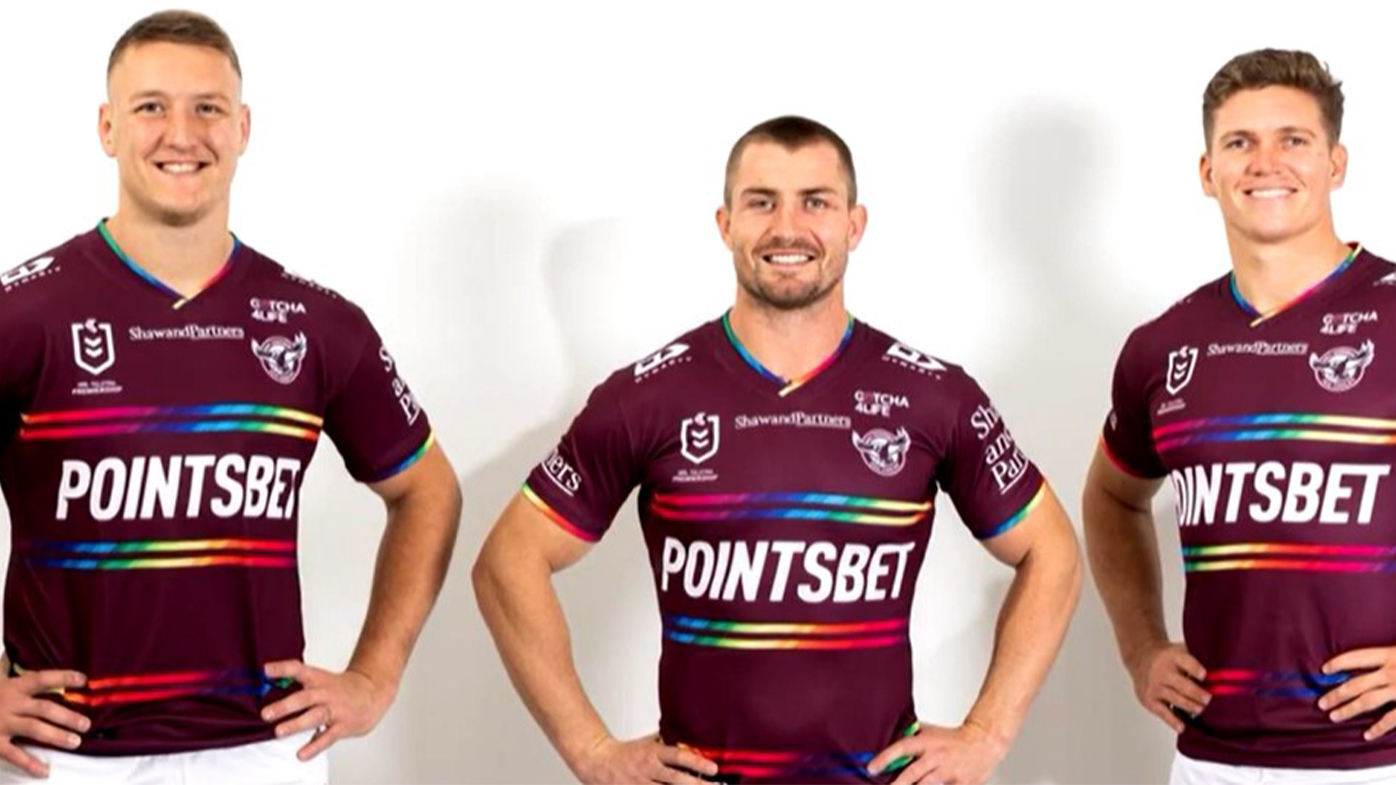
Uniform controversies that have rocked sport around the world
Gavin Carfax-Foster, a former executive chef at Dedes Waterfront Group where he oversaw menus at venues including Deckhouse, Watergrill and View by Sydney, is dishing up hundreds of ready meals each week since the launch in June of Westbourne Lane.
The former executive chef at Dedes Waterfront Group, Carfax-Foster was responsible for the menus at venues including Deckhouse, Watergrill and View by Sydney.
The business is rolling out home delivery to the inner west with plans to expand across Sydney, catering to busy parents and professionals who want restaurant-quality food they can eat at home.
“Many of us are working longer hours and have less time to prepare meals,” he said. “Also working parents who are time poor. Our meals take the stress out of planning and cooking.”
His ready meals for two to four people include slow-cooked meats, Sri Lankan fish curries and classics such as shepherd’s pie, pork and fennel meatballs and pasta bakes.
“We specialize in really simple but classic food that people want to eat every day,” he said.
Australian ready meals manufacturer Beak & Johnston supplies more than a million meals each week under brands such as Simmone Logue, Strength Meals Co, Latina and Pasta Master.
The company’s chief commercial officer Shannon O’Connell said high protein and nutritionally balanced meals, including vegan and plant-based, were driving growth.
“Household penetration is at record levels, yet consumers still only buy into the category once in six weeks, demonstrating the ongoing opportunity that exists to continue growth,” she said. “Over the recent COVID-19 lockdowns there was a shift in demand for family-sized meals, specifically those that are more difficult or time-consuming to make from scratch such as a quiche, pie or lasagne.”
My Muscle Chef distributes more than half a million ready high-protein meals each week, according to the company’s chief executive Tushar Menon.
“While we still cater to a range of young people looking to refuel after their workouts, our customer profile has shifted significantly in recent years with more working professionals and young families buying My Muscle Chef,” he said.
loading
Patrick Kelleher, who runs a commercial property business in Manly, eats My Muscle Chef ready meals each week, usually opting for meat-based dishes while his wife and four children prefer pasta recipes.
“Family life and work life fill up the week and weekends so less time spent sourcing, preparing and cooking food the better,” he said.
Kelleher said the brand’s ready meals were “quick, healthy, filling and very convenient”.
“I have tried and tested many but a number fell short on criteria, mainly taste and variety,” he said.
Menon said customers wanted ready meals that were convenient and helped them achieve health goals such as weight loss, calorie control and muscle gain.
loading
“Programs like master chef have opened people’s eyes to cuisines from other cultures, different cooking techniques, and ingredients that wouldn’t traditionally have been part of the weekly shop or found on restaurant menus,” he said.
Coles’ brands of ready meals include Coles Kitchen, the plant-based Natures Kitchen, premium label Coles Finest and Coles Perform, a range of high-protein ready meals.
A Coles spokeswoman said shoppers purchased ready meals as a “midweek solution to feed the family” or as an affordable alternative to cooking from scratch, minimizing food waste and managing different dietary requirements and taste preferences.
“We know people are leading busy lives and are seeking a convenient meal solutions that give them time back, without compromising on taste or nutrition,” she said.
Butter chicken, spaghetti bolognese, lasagne and cottage pie are the most popular ready meals sold by Woolworths, but the supermarket giant is set to expand its range to include international cuisine.
loading
Woolworths Food Company managing director Guy Brent said the company regularly reviewed recipes to improve the quality and nutritional content of ready meals to “make them taste as close as possible if they were made from scratch in the home kitchen”.
“When you factor in the time needed to prep, cook, clean up as well as utilities used, time-poor customers love convenient solutions that allow them more time to get on with more exciting parts of life,” he said.
The Morning Edition newsletter is our guide to the day’s most important and interesting stories, analysis and insights. Sign up here.
A new game known very simply as Squirrel With a Gun has gone viral after some gameplay clips showed the playable squirrel terrorizing the world with guns. There are a lot of amazing video games out there. Some of them tell incredible stories. Some have incredibly engaging gameplay. Some even push the boundaries of entertainment as we know it thanks to the ever-evolving nature of this medium. And some just love to be absolutely absurd and create whacky fantasies that feel like a trip. Over the last decade or so, a lot of indie games about animals have popped up such as Goat Simulator, Untitled Goose Gameand the slightly more earnest and critically acclaimed cat game, Stray.
There’s now a new entry in the animal video game genre thanks to Squirrel With a Gun. This game has been going viral because, as you may expect, you play as a squirrel who can wield a gun. One video that went viral shows the squirrel wielding a normal-sized pistol and mugging a human who decides to run away before ripping and falling over. Another video shows the squirrel using a mini-uzi, but not to kill anyone. The squirrel is able to fire it and use its recoil to essentially fly. It’s truly amazing and it’s coming to Steam.
— Squirrel with a Gun (Dan DeEntremont) (@QuiteDan) May 15, 2022
The game doesn’t have a release date right now, but it’s hard to imagine creator Dan DeEntremont not getting some extra support from a publisher or something after all of the attention this game has gotten on social media. Only time will tell what else you can get up to in the game, but from some screenshots on the game’s Steam page it looks like there will be agents to chase after you and you can pick up other objects like bricks and hurl them around. Needless to say, this is the kind of chaos we all need in the gaming world right now.
would you play Squirrel With a Gun? Let me know in the comments or hit me up on Twitter @Cade_Onder.
Anthony Tzaneros and Poppy O’Neil Tzaneros.Credit:Wes Nell
Tzaneros, who makes up half of the Poco Designs firm with her mum Charlotte O’Neil, bought the Rush Street terrace for $2.1 million, taking possession of it one week before her 30th birthday.
In keeping with her family’s property developer roots, she undertook a renovation before the three-bedroom house hit the market on Thursday with Bresic Whitney’s Maclay Longhurst. Buyers are being given a $3.25 million guide ahead of the September 10 auction.
Kensington’s fashionable digs
Fashion stylist Nicole Bonython-Hines and her husband Peter Hines are scaling down from their Queen Anne Federation home in Kensington.
Bonython-Hines, who has worked for titles like fashion, she and Harper’s Bazaarhas set a September 10 auction for the family home, known as Aberfoyle, and a guide of $3.75 million through Ballard’s James Ball.
The Federation house Aberfoyle in Kensington goes up for auction on September 10.Credit:
Nicole Bonython-Hines has worked for publications like Vogue, Elle and Harper’s Bazaar.
The couple have been Kensington locals for more than 20 years, buying their Todman Avenue home in 2008 for $1.725 million, and commissioning a redesign by Tribe Design Studio in 2018.
The pre-spring market debut coincides with that of the Bronte home of futurist Simon Corah and interior designer Monique Corah.
James Ball and co-agent Alexander Phillips, of PPD, have a $17 million guide on the three-level residence overlooking Bronte Beach.
Whale Beach’s new high
Whale Beach’s house price record has stood at $13.1 million for a decade since billionaire climate change activist Geoff Cousins sold on the beachfront, and despite the soaring records claimed in Palm Beach (now $27.5 million) and even Newport ($24.5 million). But no more.
The Whale Beach house of John Grant has set a $14.1 million suburb record.Credit:
Early childcare entrepreneur Matt McLellan, a former partner at Ironbridge, and his partner Rosemary Armstrong have claimed the local crown, buying the getaway of venture capitalist John Grant for $14.125 million.
loading
The oceanfront reserve house – sold by LJ Hooker’s David Edwards and BJ Edwards – is set at the end of the prized north-facing cul-de-sac Malo Road.
It was previously owned by 60 minutes′ star reporter Jana Wendt and her husband Brendan Ward, until they sold in 2005 for $5.9 million.
Expect the record to be well and truly smashed once work is complete on Jen Hawkins’ clifftop house, when it is expected to settle to its mystery $30 million buyer.
McLellan and his business partner Sean Muffet own the Bristol Group, which with some 15 early childcare centers in its portfolio surely ranks among the largest non-listed group of its kind.
Wenkart’s healthy interests
Medico mogul Dr Thomas Wenkart and family are already big fans of the grand homes of Killara’s best street, Springdale Road, with a family compound of three houses in a row on a 6300 square meter parcel complete with tennis court and swimming pool.
The landmark art deco residence on Killara’s Springdale Road sold for $12.15 million.Credit:
So what’s another, picked up recently by the Wenkart family’s corporate interests for $12.155 million?
The landmark art deco mansion, sold by Black Diamondz’s Monika Tu, offers more to the founder, chief and chairman of Macquarie Health Corporation than just another grand home with a tennis court and swimming pool.
It’s positioned next to Macquarie’s Dalcross Wellness Hospital, one of 13 private hospitals owned by the company across Sydney and Melbourne.
Drummoyne’s top flip
The Drummoyne residence known as Ocean’s Mansion is up for sale with a $14 million guide.Credit:
Antonio Muollo, 23, founded the GetFish seafood delivery business.Credit:Yianni Aspradakis
Six months after Get Fish director Antonio Muollo, 23, and his dad Tony Muollo, owner of De Costi retail outlet at the Sydney Fish Markets, took the keys to their $13.125 million waterfront home in Drummoyne, it’s back up for sale.
The five-bedroom residence with an 18-meter mooring, pool and slipway last sold in September for well above the then $10 million guide.
loading
But throw in $855,000 stamp duty on the purchase and the almost $14 million total is what is being asked this time around, through Cobden Hayson’s Daniel Patterson.
Patterson said the Muollos are returning to the east, where they have owned their Vaucluse family home since buying in 2009 for $5 million.
Andrew then swapped places with Sean Lemmens, who’d been sent to man Tom Stewart as a defensive forward. Lemmens quietened Stengle – and Andrew had his moments of him too – but the damage was done.
But the best player for the Cats was Jeremy Cameron, who again roamed far and wide for his 21 possessions and three goals. Mark Blicavs was immense, too, and he often stood Suns co-captain Touk Miller at center bounces and around the ground.
The indefatigable Miller was still his side’s best player – he finished with 36 possessions – but it was a fascinating duel, and Blicavs was superb too, later moving into the ruck after Rhys Stanley was mysteriously substituted.
The Suns were also dying of self-inflicted wounds. Decimated by injuries in defense, where they’ve lost their best ball-users in Lachie Weller and Wil Powell, their turnovers were frequent, and punished instantly. Even Miller gave one up to Max Holmes.
loading
A brighter spot was Izak Rankine, who – if he wasn’t already eye-catching enough – had dyed his hair peroxide blond for the occasion. Rankine is the subject of feverish trade speculation; his two goals from him showed why Suns teammates are pleading with him to stay.
The Suns kicked three quick goals to start the third quarter, but the ball remained camped down in Geelong’s forward line for the rest of the term, the final inside-50 count of 72–43 a measure of the Cats’ dominance.
With just one home and away match against West Coast to come, Geelong looks perfectly balanced. Patrick Dangerfield played with his old explosive energy, and while Hawkins continues to amaze – he had four direct assists – Cameron is their real trump card.
But as has been pointed out many times now, it’s the growth of less heralded players and a faster, more adventurous game plan – one worthy of their immense collective talent – that have the Cats primed for their best tilt at a flag in a decade.
Gold Coast Suns 2.2 4.2 7.2 9.5 (59) gelong 7.3 11.5 15.9 17.11 (119) GOALS – Gold Coast Suns: Rankine 2 Day Hollands Davies Anderson Lukosius Witts Flanders. Gelong: Stengle 3 Cameron 3 Miers 2 Holmes 2 Blicavs 2 Parfitt 2 C Guthrie Menegola Hawkins Tuohy. BEST – Gold Coast Suns: Miller Ellis Anderson Witts Ainsworth Rankine. Gelong: Cameron Blicavs Guthrie Holmes Stengle Dangerfield. INJURIES – Gold Coast Suns: Day (knee) Rankine (shoulder). Gelong: Stanley replaced by O’Connor. Umpires: Stephens Howorth Whetton.
VOTES
J Cameron (G) 8 T Miller (GCS) 8 M Blicavs (G) 8 C Guthrie (G) 7 P Dangerfield (G) 7
Wobbly Dockers beat Eagles to secure home final
Fremantle have secured an AFL home final after overcoming a bad case of the goalkicking wobbles to post a 24-point win over West Coast in a spiteful western derby.
All-in melees and individual tit-for-tats were common throughout Saturday night’s rain-affected match at Optus Stadium but Fremantle booted 4.11 to 2.3 after half-time to secure the win in front of 53,816 fans.
Sean Darcy contests a ruck with Nic Naitanui.Credit:AFL Pictures
The result means Fremantle can’t finish lower than sixth, and they can still secure a prized top-four berth if they beat GWS next week and other results fall their way.
Dockers ruckman Sean Darcy won the Glendinning-Allan Medal as best field for his 16-disposal, 57 hit-out effort.
Blake Acres (29 disposals, one goal), Will Brodie (28 possessions, seven clearances), and David Mundy (25 disposals, eight clearances) dominated in the midfield courtesy of Darcy’s dominance.
But despite snaring the win, doubts still remain about Fremantle’s ability to thrive in the wet.
The Dockers entered the match having lost to Gold Coast, Collingwood and Melbourne in slippery conditions this year and they were unable to put West Coast to the sword despite the Eagles missing 10 first-choice players.
Fremantle’s wayward goalkicking ensured West Coast remained within striking distance for most of the match. But it was the defensive duo of Tom Barrass and Shannon Hurn that truly epitomized West Coast’s fighting spirit.
Barrass (20 disposals, 12 marks) restricted Rory Lobb to just 0.1 from seven disposals, while Hurn racked up 28 touches and nine rebound 50s.
Lobb was subbed out late in the match after aggravating his right shoulder injury in the third quarter.
The match was a willing contest befitting a derby with a huge melee breaking out in the opening quarter in what will no doubt result in a flurry of ends.
Caleb Serong was target No.1 early on, with Jack Redden doing his best to ruffle the feathers of the Fremantle star. The tactic worked a treat, with Serong the core culprit when Fremantle gave away a 50-metre penalty that led to a goal on the line to Redden.
Redden gave away a 50m penalty of his own late in the opening term to gift a goal to Andrew Brayshaw. Jackson Nelson targeted Brayshaw at every opportunity, with the fancy Brownlow Medal visibly frustrated at times.
loading
An early downpour ensured the first half was played in slippery conditions and the Dockers led by four points at the long break.
Fremantle dominated the third term but their return of 2.8 meant the 17-point margin was still within reach for West Coast.
However, with Darcy dominating the ruck, the Eagles couldn’t work their way back into the match despite fighting right until the end.