Categories
US

Gabby Petito’s parents announce wrongful death lawsuit against Moab police over Brian Laundrie 911 call

NEWYou can now listen to Fox News articles!

If you or someone you know is the victim of domestic abuse, please call the National Domestic Violence Hotline at 800-799-7233.

FIRST ON FOX: Lawyers for Gabby Petito’s parents announced Monday that they will file a $50 million wrongful death lawsuit against the Moab Police Department, two officers who interacted with her just days before her death and two former leaders.

The family alleges that Moab officers Eric Pratt and Daniel Robbins failed to properly handle a 911 call in which a witness claimed he saw Brian Laundrie hitting Petito and trying to steal her phone and drive off without her in the middle of downtown Moab.

Fox News Digital was first to report the Aug. 12, 2021, domestic 911 call last year. Roughly two weeks after Moab police pulled over the couple in the entranceway to Arches National Park, Laundrie is believed to have bludgeoned Petito and strangled her to death at a Bridger-Teton National Forest campground in Wyoming, where they’d traveled as part of their cross-country van-life road trip.

“Had the officers involved had training to implement proper lethality assessment and to recognize the obvious indicators of abuse, it would have been clear to them that Gabby was a victim of intimate partner violence and needed immediate protection,” Brian Stewart, a lawyer for the family, said in a statement.

GABBY PETITO’S MOTHER SLAMS BRIAN LAUNDRIE’S NOTEBOOK CONFESSION

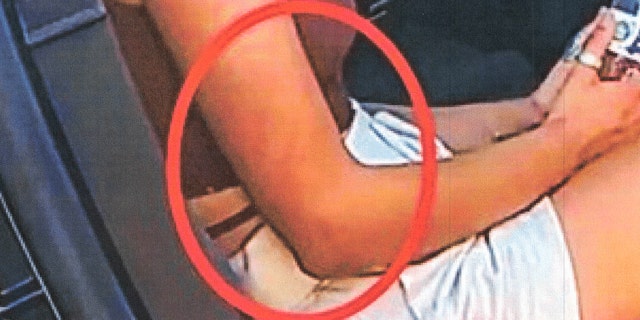
He also said a previously undisclosed photo of Petito taken during the incident shows “a close-up view of Gabby’s face where blood is smeared on her cheek and left eye, revealing the violent nature of Brian’s attack.” It also shows that she was “grabbed across her nose and mouth, potentially restricting her airway.”

In a news conference announcing the lawsuit Monday, Petito’s parents appeared remotely via Zoom.

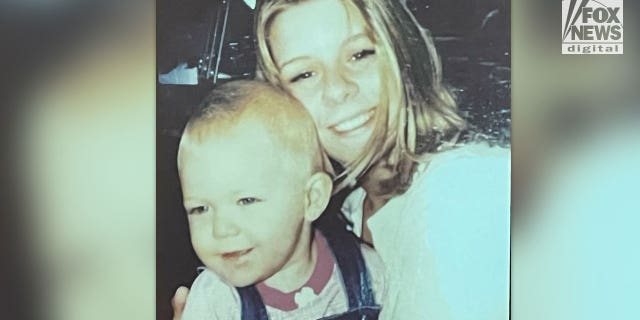
Nichole Schmidt, her mother, used an image of a very young Petito as her avatar for the call.

Nichole Schmidt used an image of a very young Petito in her lap as her avatar during the virtual news briefing.

Nichole Schmidt used an image of a very young Petito in her lap as her avatar during the virtual news briefing.
(Hunter Richards for Fox News Digital)

The notice of claim, filed Friday but made public Monday, names Pratt and Robbins, former Moab Police Chief Bret Edge, and former Assistant Chief Braydon Palmer.

Edge went on leave shortly after the Petito case seized national headlines and then briefly returned to the department. He was succeeded on the job by the city’s new chief, Jared Garcia, in May.

Attorneys for Gabby Petito's family say new photo evidence shows injuries she sustained before the Moab 911 call.

Attorneys for Gabby Petito’s family say new photo evidence shows injuries she sustained before the Moab 911 call.
(Parker + McConkie)

When reached for comment, he said only, “I am no longer with the Moab Police Department.”

The text of the complaint particularly focuses on Pratt’s actions during the stop. He had seniority over Robbins, a relatively new officer, and on the bodycam video he appeared reluctant to charge Petito with a crime. He had apparently determined that she was the aggressor, not Laundrie.

“Officer Pratt called Assistant Chief Palmer to seek assistance on how to handle the situation,” the filing reads. “Chief Palmer instructed Officer Pratt to carefully read the assault statute and decide whether the situation satisfied the statute. Officer Pratt Googled the statute. After reading only the first half of the statute, Officer Pratt decided – incorrectly – that Utah law only recognizes assault if the perpetrator intended to cause bodily injury.”

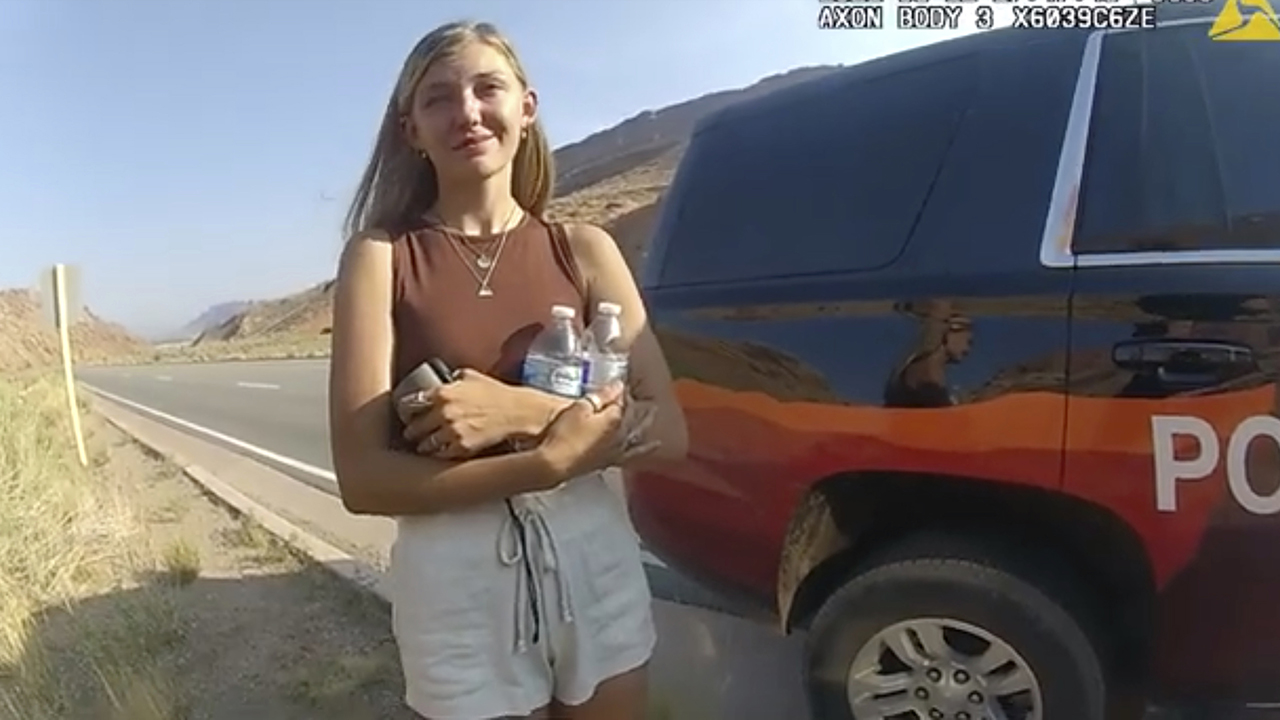
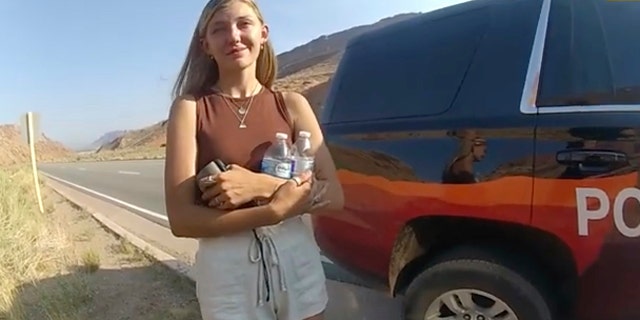
This police camera video provided by The Moab Police Department shows Gabrielle "Gabby" Petito talking to a police officer after police pulled over the van she was traveling in with her boyfriend, Brian Laundrie, near the entrance to Arches National Park on Aug. 12, 2021.

This police camera video provided by The Moab Police Department shows Gabrielle “Gabby” Petito talking to a police officer after police pulled over the van she was traveling in with her boyfriend, Brian Laundrie, near the entrance to Arches National Park on Aug. 12, 2021.
(The Moab Police Department via AP)

An independent investigation into Moab’s response to the call “concluded that the officers made several mistakes and could not rule out that Gabby’s murder might have been prevented if the officers had handled the situation properly,” the filing reads.

The Moab Police Department drew scrutiny after a pair of bodycam videos, from Officers Pratt and Robbins, emerged showing its response to the Petito-Laundrie dispute, in which police made no arrests or citations despite a Utah statute requiring one to be issued in domestic violence incidents. After interviewing both Petito and Laundrie, as well as another witness, officers ruled out domestic violence and deemed the incident a “mental health break.”

Petito appeared visibly shaken throughout the entire encounter and told officers that Laundrie had grabbed her face while gesturing toward her neck. But the officers appeared to rule her the aggressor – and they seemed reluctant to arrest the diminutive, distressed woman at the time. But they also didn’t appear to even view Laundrie as a potential suspect despite the 911 caller alleging that he was an aggressor.

Price, Utah, Police Capt. Brandon Ratcliffe conducted the review, and he made a number of recommendations, including placing both Pratt and Robbins on probation and implementing increased training programs.

Moab has not provided Fox News Digital with any documents, comment or confirmation that any of these recommendations had been followed.

The department’s website, however, shows that Moab has added several officers in the last year and was hiring a new detective to be the department’s domestic violence specialist.

Moab Mayor Joette Langianese, who was elected months after the incident, did not immediately respond to requests for comment.

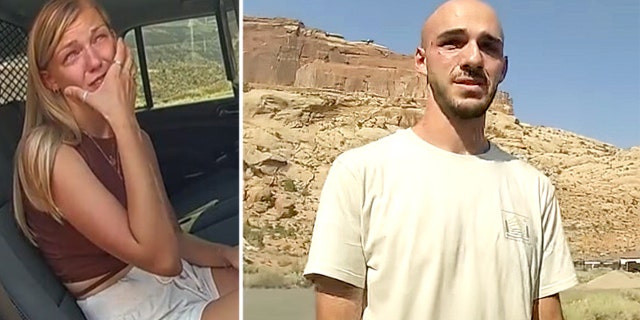
Screengrabs from police bodycam in Moab, Utah, on Aug. 12, 2021 show the couple following a domestic violence call.

Screengrabs from police bodycam in Moab, Utah, on Aug. 12, 2021 show the couple following a domestic violence call.
(Moab P.D.)

Petito’s parents, Joseph Petito and Nichole Schmidt, as well as her stepparents, Tara Petito and Jim Schmidt, have retained the Parker and McConkie law firm in Utah to handle the case. The firm in 2020 successfully represented the family of Lauren McCluskey, a 21-year-old University of Utah student who repeatedly asked for help from campus police before a 37-year-old man shot her outside her dorm in 2018. That case resulted in a $13.5 million settlement with the school.

“The purpose of this lawsuit is just one part of the family’s broader effort to raise awareness and education, to protect victims of domestic violence and to help make sure that our governmental institutions are held to account and that they are given the resources and training that they need to do their jobs,” Stewart said at a news briefing Monday.

Attorneys for the Petito and Schmidt families announced a notice of claim against Moab police at a news briefing in Salt Lake City Monday, Aug. 8. From left to right, Brad Park, Steven Jensen, Brian Stewart, Jim McConkie.

Attorneys for the Petito and Schmidt families announced a notice of claim against Moab police at a news briefing in Salt Lake City Monday, Aug. 8. From left to right, Brad Park, Steven Jensen, Brian Stewart, Jim McConkie.
(Hunter Richards for Fox News Digital)

“We believe that these officers were negligent, and their negligence contributed to Gabby’s death,” Stewart told reporters, later adding: “They did not understand the law and did not apply the law properly in Gabby’s situation.”

The new filing also reveals that Petito called her parents during the stop, and they wanted her to fly home and get away from Laundrie. They even offered to pay for a ride to Salt Lake City and a flight home, but hearing that police were involved, they “accepted Gabby’s assurances that she would continue her trip,” the document reads.

BRIAN LAUNDRIE FOUND: PARENTS MAY HAVE JUST MISSED UNCOVERING REMAINS THEMSELVES

Steve Bertolino, an attorney for Laundrie’s parents, said their son had not told them about the Moab incident, and they only learned of it when Fox News Digital exposed the Moab 911 call last September.

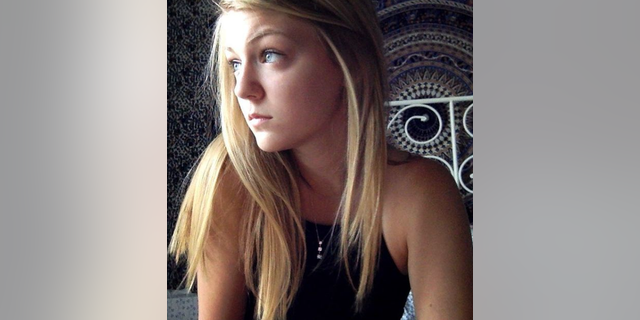
Gabby Petito in an undated photograph.

Gabby Petito in an undated photograph.
(North Port Police)

GABBY PETITO HOMICIDE: TIMELINE OF DISAPPEARANCE WITH BRIAN LAUNDRIE

“I don’t know that they did everything wrong,” he said of the officers. “Everybody assumes it was a judgment call. People don’t deserve to get arrested because they got in a fight with someone that they love.”

Laundrie later confessed to the killing in a handwritten note found near his remains in the Myakkahatchee Creek Environmental Park, where the FBI said he killed himself after sneaking out from under the nose of North Port police in Florida.

CLICK HERE TO GET THE FOX NEWS APP

Following their daughter’s death, Petito’s parents and stepparents created a nonprofit in her honor, the Gabby Petito Foundation, to raise awareness surrounding domestic violence and missing persons.

“I think Gabby’s story has touched a lot of people, and she’s saving lives,” Petito’s mother, Nichole Schmidt, said in a statement. “I get people messaging me all the time that they were inspired by her to get out of a relationship.”

The Petito and Schmidt families are also suing Laundrie’s parents in two separate Florida cases.

“All we can hope is that Gabby’s legacy will be a positive one,” Jim Schmidt said during the news briefing. “That people will see her de ella and they her and possibly compare maybe what they’re going through in their life de ella and make a positive change.”

The family is urging anyone who finds themselves trapped in an abusive relationship to speak up and seek help.

“Reach out if you can,” Nichole Schmidt said during the briefing, wiping tears from her eyes. “Reach out to someone.”

“There are people that care,” added Petito’s father, Joseph Petito. “People should know there are people out there who will do whatever they can to help.”

If you or someone you know is the victim of domestic abuse, please call the National Domestic Violence Hotline at 800-799-7233.

Categories
Technology

A better and fairer NHMRC – Croakey Health Media

The National Health and Medical Research Council (NHMRC) funds most of the health and medical research conducted in Australia – and hence pays the salaries of most of our health and medical researchers.

Recently, a decline in the level of NHMRC funding has meant that fewer grant applications are being funded and this, along with an assessment system which allows bias and chance to influence the outcomes of applications, is leading to a de-moralized and depleted medical research workforce, according to Professor Tony Blakely, from the Melbourne School of Population and Global Health at the University of Melbourne.

In the article below, originally published in The Conversation, Blakely discusses how the NHMRC could improve the way in which it awards grants in order to support our health and medical research workforce improve the value that their work delivers to the Australian community.


Tony Blakely writes:

Most health research in Australia is funded by the National Health and Medical Research Council (NHMRC), which distributes around $800 million each year through competitive grant schemes. An additional $650 million a year is funded via the Medical Research Future Fund, but this focuses more on big-picture “missions” than researcher-initiated projects.

Ten years ago, around 20% of applications for NHMRC funding were successful. Now, only about 10–15% are approved.

Over the same ten-year period, NHMRC funding has stayed flat while prices and population have increased. In inflation-adjusted and per capita terms, the NHMRC funding available has failed by 30%.

As growing numbers of researchers compete for dwindling real NHMRC funding, research risks becoming “a high-status gig economy”. To fix it, we need to spend more on research – and we need to spend it smarter.

Increased funding needed

To keep pace with other countries, and to keep health research a viable career, Australia first of all needs to increase the total amount of research funding.

Between 2008 and 2010, Australia matched the average among OECD countries of investing 2.2% of GDP in research and development. More recently, Australia’s spending has fallen to 1.8%, while the OECD average has risen to 2.7%.

When as few as one in ten applications is funded, there is a big element of chance in who succeeds.

Think of it like this: applications are ranked in order from best to worst, and then funded in order from the top down. If a successful application’s ranking is within say five percentage points of the funding cut-off, it might well have missed out if the assessment process were run again – because the process is always somewhat subjective and will never produce exactly the same results twice.

So 5% of the applications are “lucky” to get funding. When only 10% of applications get funding, that means half of the successful ones were lucky. But if there is more money to go around and 20% of applicants are funded, the lucky 5% are only a quarter of the successful applicants.

This is a simplistic explanation, but you can see that the lower the percentage of grants funded, the more of a lottery it becomes.

This increasing element of “luck” is demoralizing for the research workforce of Australia, leading to depletion of academics and brain drain.

The ‘application-centric’ model

As well as increasing total funding, we need to look at how the NHMRC allocates these precious funds.

In the past five years, the NHMRC has moved to a system called “application-centric” funding. Five (or so) reviewers are selected for each grant and asked to independently score applications.

There are usually no panels for discussion and scoring of applications – which is what used to happen.

The advantages of application-centric assessment include (hopefully) getting the best experts on a particular grant to assess it, and a less logistically challenging task for the NHMRC (convening panels is hard work and time-consuming).

Disadvantages of application-centric assessment

However, application-centric assessment has disadvantages.

First, assessor reviews are not subject to any scrutiny. In a panel system, differences of opinion and errors can be managed through discussion.

Second, many assessors will be working in a “grey zone”. If you are an expert in the area of ​​a proposal, and not already working with the applicants, you are likely to be competing with them for funding. This may result in unconscious bias or even deliberate manipulation of scores.

And third, there is simple “noise”. Imagine each score an assessor gives is made up of two components: the “true score” an application would receive on some unobservable gold standard assessment, plus or minus some “noise” or random error. That noise is probably half or more of the current variation between assessor scores.

So how do we reduce the influence of both assessor bias and simple “noise”?

First, assessor scores need to be “standardized” or “normalized”. This means rescaling all assessors’ scores to have the same mean (standardisation) or same mean and standard deviation (normalisation).

This is a no-brainer. You can use a pretty simple Excel model (I have done it) to show this would substantially reduce the noise.

Second, the NHMRC could use other statistical tools to reduce both bias and noise.

One method would be to take the average ranking of applications across five methods:

  • with the raw scores (ie as done now)
  • with standardized scores
  • with normalized scores
  • dropping the lowest score for each application
  • dropping the highest score for each application.

The last two “drop one score” methods aim to remove the influence of potentially biased assessors.

The applications that make the cutoff rank on all the methods are funded. Those that are always beneath the threshold are not funded.

Applications that make the cut on some tests but fail on others could be sent out for further scrutiny – or the NHMRC could judge them by their average rank across the five methods.

This proposal won’t fix the problem with the total amount of funding available, but it would make the system fairer and less open to game-playing.

A fairer system

Researchers know any funding system contains an element of chance. One study of Australian researchers found they would be happy with a funding system that, if run twice in parallel, would see at least 75% of the funded grants funded in both runs.

I strongly suspect (and have modeled) that the current NHMRC system is achieving well below this 75% repeatability target.

Further improvements to the NHMRC system are possible and needed. Assessors could provide comments, as well as scores, to applicants. Better training for assessors would also help. And the biggest interdisciplinary grants should really be assessed by panels.

No funding system will be perfect. And when funding rates are low, those imperfections stand out more. But, at the moment, we are neither making the system as robust as we can nor sufficiently guarding against wayward scoring that goes under the radar.


See here for Croakey’s archive of stories on medical research

Categories
Entertainment

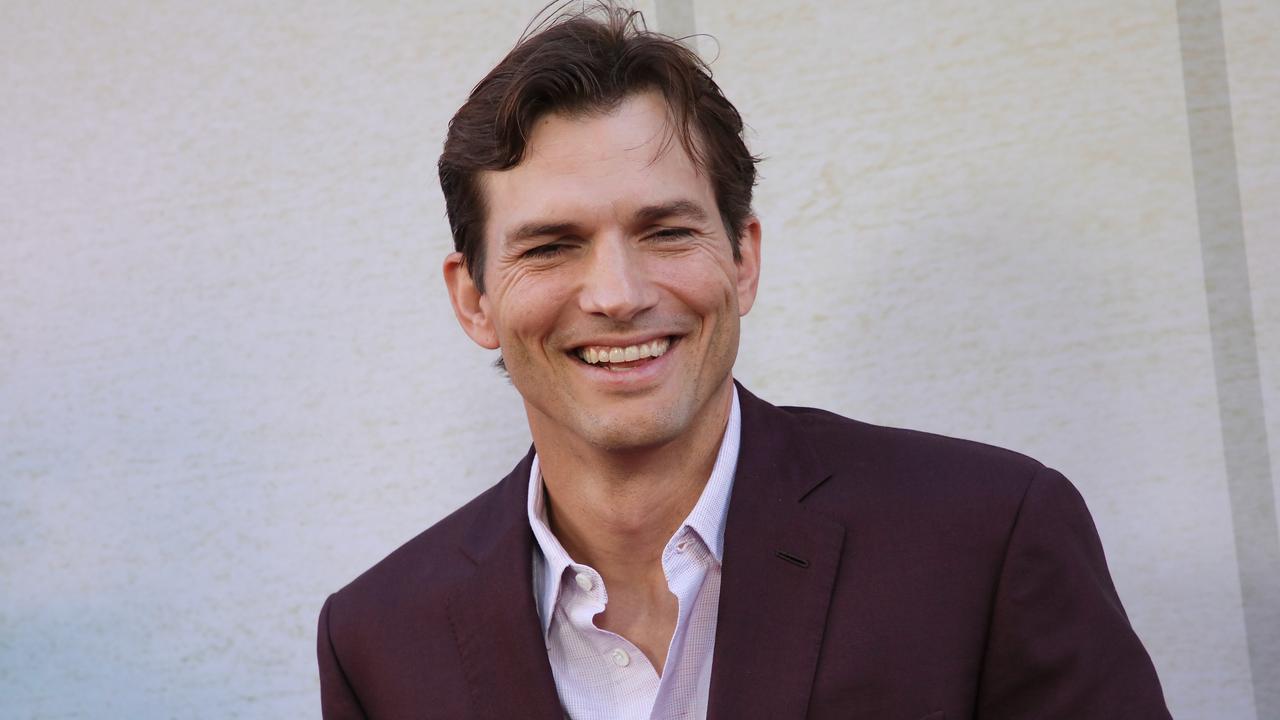
Ashton Kutcher reveals secret health battle

Ashton Kutcher has revealed that an auto-immune disorder left him without the ability to see, hear or walk.

“Like two years ago, I had this weird, super rare form of vasculitis that, like, knocked out my vision, it knocked out my hearing, it knocked out, like, all my equilibrium,” Kutcher, 44, said in a sneak peek of Running Wild with Bear Grylls: The Challenge obtained by Access Hollywood.

The That ’70s Show alum said it took him about a year to build each sense back up again, Page Six reported.

Vasculitis is a very rare auto-immune disorder that can cause inflammation of the blood vessels, resulting in restricted blood flow. There are many types of vasculitis, but most affect at least one organ.

“You don’t really appreciate it until it’s gone,” Kutcher shared.

“Until you go, ‘I don’t know if I’m ever going to be able to see again, I don’t know if I’m ever going to be able to hear again, I don’t know if I’ I’m ever going to be able to walk again.’

“[I’m] lucky to be alive,” he added.

Now fully recovered from his terrifying health scare, the No Strings Attached actor said he does not let any challenge stand in his way of success.

“The minute you start seeing your obstacles as things that are made for you, to give you what you need, then life starts to get fun, right?” said Kutcher, who shares two children with his wife Mila Kunis.

“You start surfing on top of your problems instead of living underneath them.”

This story was originally published by Page Six and has been reproduced with permission

.

Categories
US

Trump wanted Pentagon generals to be like second world war Nazis, book says | donald trump

During his time in the Oval Office, Donald Trump wanted the Pentagon’s generals to be like Nazi Germany’s generals in the second world war, according to a book excerpt in the New Yorker.

In an exchange with his former White House chief of staff John Kelly, a retired Marine Corps general, Trump reportedly complained: “You fucking generals, why can’t you be like the German generals?”

Kelly asked which generals, prompting Trump to reply: “The German generals in World War II.”

According to the excerpt published by the New Yorker from The Divider: Trump in the White House, by Peter Baker and Susan Glasser, an incredulous Kelly pointed out that Nazi leader Adolf Hitler was almost assassinated by one of his own generals.

“No, no, no, they were totally loyal to him,” Trump replied, apparently unaware of Claus von Stauffenberg’s plot in July 1944 to kill Hitler with a bomb inside his Wolf’s Lair field headquarters.

Kelly reportedly told Trump that there were no American generals who observed total loyalty to a president. Instead, they swear, like all military personnel, to “support and defend the constitution of the United States against all enemies, foreign and domestic.”

The stunning back-and-forth came during a dispute touched off by Trump’s admiration for military parades, gleaned in part by personally observing Bastille Day celebrations thrown in France by that country’s president, Emmanuel Macron.

Trump stubbornly wanted a similar military parade to mark the Fourth of July independence day holiday. But his cabinet staff was less enthusiastic, and it became a point of contention.

According to the excerpt, a French general overseeing the 2017 Bastille Day parade in Paris turned to one of his American counterparts in Trump’s delegation and said: “You are going to be doing this next year.” The idea was seeded.

Trump, on his return to Washington, hatched a plan for the “biggest, grandest military parade ever for the Fourth of July.” But the plans went down badly with Trump’s cabinet staff.

“I’d rather swallow acid,” the defense secretary and former Marine Corps general, James Mattis, is reported to have said, offering that a similarly grandiose military parade was unfeasible in part because of the cost and the fear that tanks would tear up the streets of Washington.

But Trump was already formulating his vision, telling Kelly: “Look, I don’t want any wounded guys in the parade. This doesn’t look good for me.”

According to the publication, the subject came up repeatedly. With each pushback, Trump’s admiration for the military advisers which he used to fawningly refer to as “my generals” cooled.

In one exchange involving Kelly and Paul Selva, then vice-chairman of the joint chiefs of staff, Trump appeared surprised that the former military men were not supportive.

Selva, who had grown up in António de Oliveira Salazar’s Portuguese dictatorship, informed Trump that “parades were about showing the people who had the guns. And in this country, we don’t do that.” I added: “It’s not who we are.”

“So, you don’t like the idea?” Trump responded.

“No,” Jungle said. “It’s what dictators do.”

In a statement to the magazine, Trump said: “These were very untalented people and once I realized it, I did not rely on them, I relied on the real generals and admirals within the system.”

Categories
Technology

Final Fantasy XIV Gets New “Starter Guide” Animated Video Series Teaching You the Ropes

News

Today Square Enix released a series of animated “starter guide” videos dedicated to its super-popular MMORPG Final Fantasy XIV.

Today Square Enix released a series of animated “starter guide” videos dedicated to its super-popular MMORPG Final Fantasy XIV.

The videos focus on a new player named Kaz as he’s guided through his first steps in Eorzea by the scholar Mayra.

The series includes seven videos and it’s available in English, German, and French. Interestingly, Japan has its own completely different series released a few days ago.

You can watch it all below and learn the ropes of Final Fantasy XIV.

If you’re interested, below you can read a full description for each episode directly from the press release.

  • Series Introduction – Join veteran adventurer Mayra as she guides new player Kaz to the world of FINAL FANTASY XIV.
  • Episode 1: The Adventure Begins – Kaz creates his character and takes his first steps in Eorzea. Mayra introduces Kaz to the map and different quest types so he can enjoy the main story without getting lost.
  • Episode 2: Meet Your FATE – Mayra introduces Kaz to class quests and how he can unlock different classes starting at level 10. Kaz encounters his first FATE, an open world encounter where everyone nearby can take part.
  • Episode 3: Hall of the Novice – Kaz learns how to organize his cluttered inventory and discovers the Recommended Gear feature. Mayra takes Kaz to the Hall of the Novice where he gets a crash course on party combat and a new set of gear.
  • Episode 4: Do Your Duty – Putting his newly acquired skills to the test, Kaz teams up with Mayra to form a light party with the Duty Finder to tackle his first dungeon. Kaz learns how dungeon rewards are distributed via Need, Greed, and Pass.
  • Episode 5: Trial by Fire – Kaz forms his own party and takes on his first trial: an epic boss battle. As his renown from him grows, Kaz is recruited by one of three Grand Companies of Eorzea, and unlocks his very own chocobo mount at level 20.
  • Episode 6: The End of the Beginning- Mayra regales Kaz with all he has learned so far and all he still has to look forward to in the Free Trial… and beyond!

Final Fantasy XIV is currently available for PlayStation 4, PS5, and PC. The Endwalker expansion has been released a few months ago and you can read our recent review.

You can also read more about the changes planned for the longer term, including a refresh of the graphics, and about the upcoming update 6.2 “Buried Memory,” which will introduce the “Island Sanctuary” feature and more.

Incidentally, the traditional seasonal event Moonfire Faire is about to begin in the next few days.

Categories
Entertainment

Judith Durham, voice of the Seekers and Australia’s first global pop queen | Music

Judith Durham’s talent shone brightly across the Australian music landscape, her powerful bell-like voice, unpretentious nature and stoicism in the face of adversity securing her countless loyal fans.

Durham, who has died in Melbourne aged 79, was the distinctive voice of the Seekers, the folk-singing quartet who became an international sensation from 1964 until 1968, when Durham left to forge a solo career as a jazz singer. The band healed their rifts and reunited in recent times, reigniting enthusiasm for the Seekers and introducing younger audiences to the music of their parents’ generation.

In their short time together the Seekers, including Keith Potger, Athol Guy and Bruce Woodley, became Australia’s first international supergroup. Multiple hits, including I’ll Never Find Another You and The Carnival Is Over, put them at the top of the Australian and UK charts, and for six months in 1966 they were outselling the Beatles and Rolling Stones. They became the first Australian band to have a US No 1 with their biggest hit, the theme song for the film Georgy Girl, which was nominated for an Academy Award. The Seekers sold more than 50m records and still hold the record for the largest concert audience in Australia after more than 200,000 attended their 1967 concert at Melbourne’s Myer Music Bowl.

It was a meteoric rise to fame for the four Melburnians. What had begun as a 10-week stint on a cruise ship to London extended to four years and by that time Durham, who had a chronic health condition, was exhausted and struggling with her self-image. The Seekers were collectively named Australian of the Year in 1967, but the following year Durham gave the band notice that she planned to pursue a solo career. In later years she conceded she had had no idea how much her decision had affected her bandmates or their fans.

The Seekers perform on the UK TV show Sunday Night at the London Palladium in 1966.
The Seekers perform on the UK TV show Sunday Night at the London Palladium in 1966. Photograph: ITV/REX/Shutterstock

“I never thought for a million years that they would have thought that I turned my back on them… I thought everybody was feeling fine,” she told the ABC’s Australian Story program in 2019.

Judith Mavis Cock was born in Melbourne on 3 July 1943, the youngest of two daughters of William, a second world war aviator and DFC (Distinguished Flying Cross) recipient, and his wife, Hazel Durham. Judith’s sister Beverley Sheehan also became a jazz singer.

After leaving school, Judy Cock, as she then was, set her sights on a career as a classical pianist while dreaming of singing musical comedy or opera. However, a night sharing the stage with a jazz band at a dance when she was 18 led to her instant success as a gospel, jazz and blues singer. Opting to use her mother’s birth name for her, Durham went on to record her first EP for her at 19 with Frank Traynor’s Jazz Preachers.

On her first day working as a secretary at the J Walter Thompson advertising agency, Durham met an account executive, Athol Guy, who invited her to join him and his friends Keith and Bruce who were booked to sing acoustic four-part harmony folk and gospel at a Melbourne coffee shop that night. Although Durham sang with a few bands, she quickly became the Seekers’ Monday night regular.

In 1964, the band was invited to work their passage to London on board the SS Fair Sky, but as they cast off, the foursome had little idea of ​​the impact they would have or what they would find in the then music and fashion capital of the world.

“My trendsetting idol was the Queen, so I’d have my matching handbag and gloves,” Durham said in a 2019 interview. “I was, you know, not at all tuned into Carnaby Street.”

After leaving the Seekers in 1968, Durham approached the composer Ron Edgeworth in London and asked him to become her musical director and pianist. He later asked her to be his wife de ella and they married in Melbourne in 1969.

Together the couple formed a musical partnership, with Durham touring and recording around the world. Her one-woman show An Evening With Judith highlighted her vast singing range, from jazz to pop, country gospel and folk. From their base de ella on Queensland’s Sunshine Coast, Durham wrote and performed her own compositions and attended international jazz festivals.

Judith Durham performs with the Seekers in Canberra during their Golden Jubilee tour in 2013.
Judith Durham performs with the Seekers in Canberra during their Golden Jubilee tour in 2013. Photograph: Alan Porritt/AAP

In 1990, Durham sustained a fractured wrist and leg in a car accident that killed the driver of another car. The support she received from fans while recovering from her helped her decide to reconnect with her former band mates.

Much to the delight of their fans, old and new, the Seekers reunited in 1993 for the Silver Jubilee tour and, buoyed up by the response, continued to intermittently tour and record, selling out concert dates and making television appearances. However, during their 2013 Golden Jubilee tour, Durham had a brain hemorrhage, requiring six months of rehabilitation before resuming work. The Seekers would have celebrated their diamond anniversary this year.

In adopting her husband’s vegetarian, health-conscious lifestyle, Durham hoped to better manage her reduced lung capacity caused by bronchiectasis. Her authorized biography of her, Colors of My Life was released in 1994. Edgeworth died the same year after being diagnosed with motor neurone disease, prompting Durham to throw herself into raising the profile of MND.

In 1995, Durham and her bandmates each awarded the medal of the Order of Australia. In 2014 they were made Members of the Order.

Durham and Edgeworth, who were married for 25 years, chose not to have children. Durham is survived by her sister of her.

Judith Durham, singer; born 3 July 1943, died 5 August 2022.

Categories
US

Muslim killings in Albuquerque: 4 me were gunned down in New Mexico. Now some families are afraid to go get food

“Incredibly terrified. Panicked. Some people want to move from the state until this thing is over. Some people have moved from the state,” said Ahmad Assed, president of the Islamic Center of New Mexico.

“Businesses are closing… early. Students won’t leave their homes,” he said.

“It’s affecting people from coming over to the mosque to conduct their services, their prayers. So, in every aspect of daily life that we’re used to or accustomed to following, it’s impacted it in every way possible.”

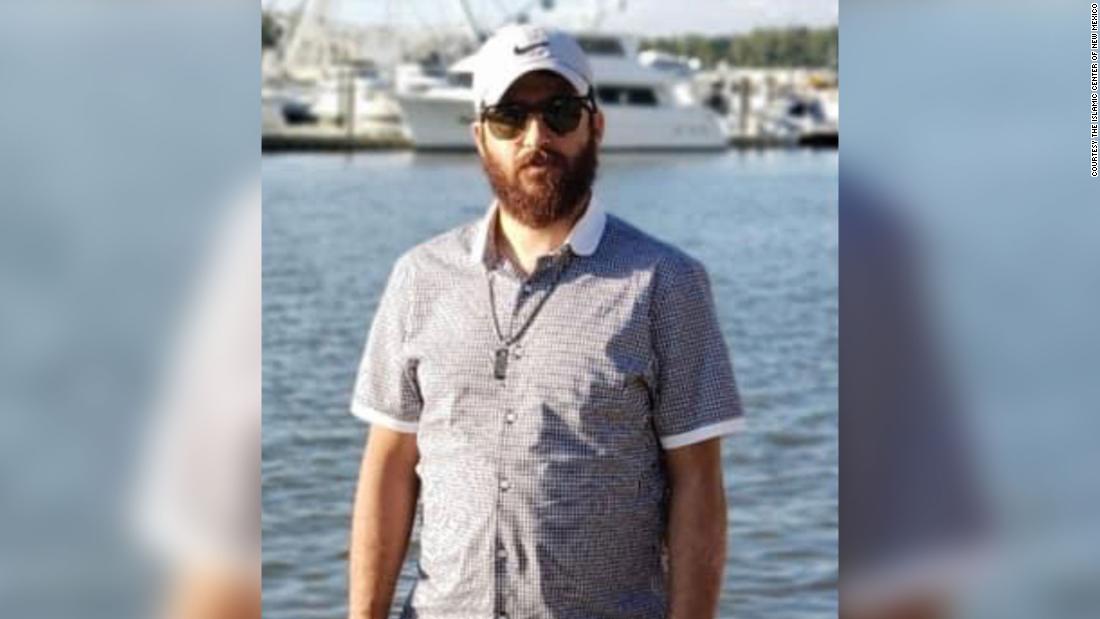
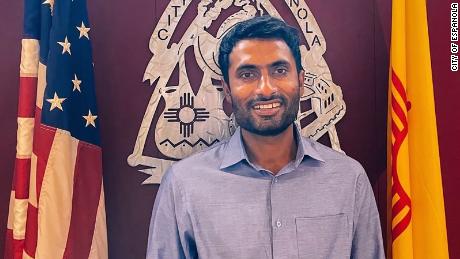
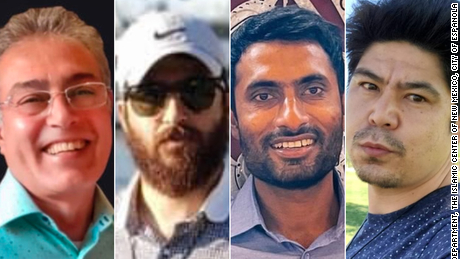
On Friday night, 25-year-old Naeem Hussain was found dead by Albuquerque police. He became the third Muslim man killed in the city within two weeks, and the fourth since November.

Hours before his death, Hussain — who just became a US citizen — attended a funeral for two of the other shooting victims. The young man expressed fear about the recent shootings, said Tahir Gauba, spokesperson for the Islamic Center of New Mexico.

While no description of his killer was available, Albuquerque police said Hussain’s death “may be connected” to the three previous killings of Muslim men from South Asia.

Those three men — Muhammad Afzaal Hussain, 27, Aftab Hussein, 41, and Mohammad Ahmadi, 62 — were all “ambushed with no warning, fired on and killed,” said Kyle Hartsock, deputy commander of Albuquerque Police Department’s Criminal Investigations Division .

All four victims were Muslim and of South Asian descent, investigators said.

Police are seeking “a vehicle of interest“That might be connected to the four killings. They tweeted a photo of the car, a dark gray or silver Volkswagen with four doors and tinted windows. Police said it might be a Volkswagen Jetta.
Anyone with information about the car or about the killings is asked to call the FBI at 1-800-CALL-FBI or contact Crime Stoppers at 505-843-STOP or CrimeStoppersNM.com.
“All information you provide will be anonymous and confidential,” the city of Albuquerque said. “There is a $20,000 reward from Crime Stoppers and a $10,000 reward from Council on American-Islamic Relations for information that leads to an arrest.”

‘They are afraid to go to school’

While police have not called the four killings hate crimes, “in my opinion, clearly it is hate driven.” Albuquerque Mayor Tim Keller said Monday.

“They are obviously targeting Muslim men, and they are happening right here in our own refugee community,” Keller told CNN.

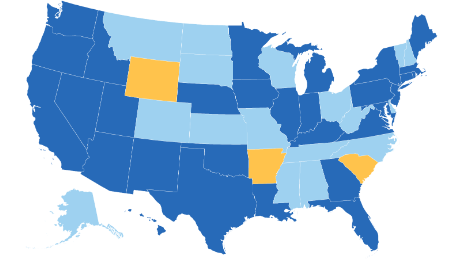
49 states and territories have hate crime laws -- but they vary

“We know that folks in our community, in the Muslim community especially, they are afraid to even leave their house, especially at night. They are afraid to pray. They are afraid to go to school,” the mayor said.

Keller said Albuquerque is not just “in a place of grieving right now, but also at a place of outrage.” But he said the community is determined to help.

“We have marshaled every resource to have now police presence at all our mosques during prayer time,” the mayor said. “We are even doing meal deliveries for families who are afraid to leave their house to get food.”

Assed, the mosque president, said he’s now among the many Muslims in New Mexico grappling with fear every day.

“I get in the car, and I’m watching every which way possible. I’m watching my side mirror. I’m looking in the back. I’m looking out for any sign of anything out of the ordinary,” he said.

“At the end of the day, we don’t have an alternative.”

A new US citizen who fled religious persecution is killed in America

Naeem Hussain migrated as a refugee from Pakistan in 2016 — fleeing persecution as a Shia Muslim — and had become a US citizen just last month, according to his brother-in-law, Ehsan Shahalami.

“He was the most generous, kind, giving, patient, and down-to-earth person that I could ever meet,” said Shahalami. “He was very hardworking. He shared whatever he made with his family from him back home.”

The young man, who opened his own trucking business this year, had plans to bring his wife over from Pakistan and buy some property in Virginia, Shahalami said.

“He had a lot of dreams, and he accomplished some of them,” Shahalami said. “His others of him were cut short by this heinous act.”

The day he was killed, Hussain attended a funeral for two other Muslim men who were recently killed in the city, said Tahir Gauba, director of public affairs with the Islamic Center of New Mexico.

Hussain went to a lunch at the mosque after the funerals and approached Gauba to ask if he had more information on the shootings, Gauba told CNN.

One of four Muslim men slain in potentially linked Albuquerque killings remembered as 'brilliant public servant'

“I’ve stopped by to say ‘hey, what’s going on?’ He was worried. I told him to be careful,” Gauba said.

“We thought after burial of these two young men (on Friday), we would have closure and move on and let law enforcement investigate,” Gauba said. “Waking up Saturday morning to his death, the whole community just feels helpless. There’s a lot of fear.”

“It’s driving everybody crazy,” Gauba added.

The killings have put the city’s Muslim community on edge as police investigate potential links between the attacks, all of which involved Muslim men of South Asian descent.

Two other Muslim men killed — Muhammed Afzaal Hussain and Aftab Hussein — were members of the same mosque, were both from Pakistan and were killed in southeast Albuquerque just days apart, according to police.

After their killings, police began investigating whether the November 7, 2021, slaying of Mohammad Ahmadi, a Muslim man from Afghanistan, was connected.

‘The fear is so strong’

As the investigation continues, the Islamic Center, where about 700 to 800 Muslims gather on Fridays, has been warning residents to be cautious.

“We urge everyone to take precautions and be aware of your surroundings including making sure that you are not being followed home and avoid walking alone at night,” the Islamic Center of New Mexico posted on Facebook. “This is especially true for our members living in the southeast part of the city where these killings have taken place.”

The recent killings of 4 Muslim men in Albuquerque have shaken the city.  Here's what we know

After Hussain’s killing Friday, New Mexico Gov. Michelle Lujan Grisham announced she will send additional state police to Albuquerque.

The city is also increasing police presence at mosques, Muslim-affiliated schools and the University of New Mexico, officials announced.

“We have heard from the community that the fear is so strong, there is a concern about even things like groceries and getting meals for certain folks in certain areas of town,” Albuquerque Mayor Tim Keller said in a weekend briefing, adding the city is helping with providing meals for those affected by the killings.

Gauba said Albuquerque has always felt like a welcoming community for Muslims, even after 9/11. “This is the first time we are feeling this kind of atmosphere,” he said. “We are in fear.”

CNN’s Raja Razek contributed to this report.

.

Categories
Technology

Coating Material Has the Potential to Preserve a Car’s Natural Color

Scientists have created a transparent protective coating material that can self-heal in 30 minutes when exposed to sunlight.

Coating Material Has the Potential to Preserve a Car's Natural Color.
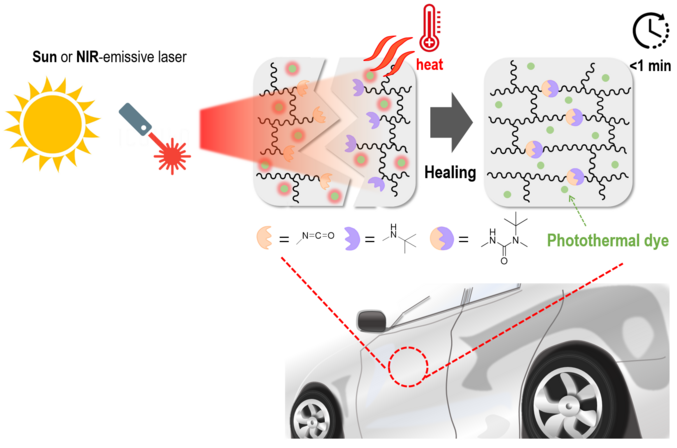
Self-healing mechanism of eco-friendly protective coating material for vehicles, including dynamic polymer network and photothermal dye. Image Credit: Korea Research Institute of Chemical Technology (KRICT)

The excellent durability of automotive coatings is the most important factor when it comes to protecting the surface of a vehicle. In addition, protective coating materials should be transparent and colorless so that the original color of the product can be seen. Yet, it is hard to ensure a self-healing function while satisfying all of these conditions.

High hardness and exceptional durability are accompanied by very poor self-healing performance in materials with free molecular movement, while the reverse is true for materials with high self-healing capacity but low durability.

Researchers from the Korea Research Institute of Chemical Technology (KRICT), led by Drs. Jin Chul Kim, Young Il Park, and Ji-Eun Jeong have created a transparent coating material that meets all of the aforementioned requirements, performs similarly to commercial protective coating materials, and can self-heal using only sunlight (Particularly near-infrared light in sunlight, in the wavelength range of 1,000 to 1,100 nm).

Surface scratches can be repaired using the self-healing protective substance in 30 minutes when exposed to sunlight. The study team used a spray-coating machine to coat a laboratory-scale model car to demonstrate the self-healing capabilities of the created coating material. The blemish vanished, and the surface of the coating material was restored after the model automobile spent around 30 minutes in midday sunlight.

The self-healing phenomenon’s guiding principle is that the surface temperature of the created material increases as sunlight is absorbed because light energy is transformed into thermal energy. The repeated dissociation and recombination of chemical bonds in the polymer structure is then enabled by the elevated surface temperature to self-heal a surface scratch.

The research team combined an already-existing commercial coating resin with a transparent photothermal dye and a dynamic chemical bond (Hindered urea structure) that can repeat the decomposition and recombination of the polymer structure so that dynamic chemical interaction can happen actively when exposed to sunlight.

Even though photothermal dyes have been used to study self-healing properties, most previous research has focused on inorganic compounds, which are challenging to use in industrial settings because coating materials need to be transparent. Additionally, the production of a photothermal effect in inorganic materials requires a significant quantity of light energy.

The research team used near-infrared light-absorbing transparent organic photothermal dyes. Near-infrared light can prevent large increases in the vehicle surface temperature because it is a long-wavelength energy source that makes up less than 10% of noon sunlight.

Additionally, organic photothermal dyes have several benefits for commercialization, including affordability, ease of paint blending, and the fact that their colorless inherent hue does not alter the product’s color.

Future applications for the self-healing material include coatings for construction materials, electrical equipment like computers and cellphones, and transportation applications. Additionally, it is anticipated that lowering the usage of dangerous organic solvents produced in huge quantities when repainting vehicles will help the world achieve carbon neutrality.

This research was published as an additional cover of the May 2022 issue of ACS Applied Polymer Materialsan international scientific and technological journal.

The developed technology is a platform technology that synthesizes self-healing coating materials using both inexpensive commercial polymer materials and photothermal dyes. It is expected to be widely used not only in automotive clearcoats but also in various applications.

Dr. Jin Chul Kim, Research Director, Korea Research Institute of Chemical Technology

Journal Reference:

Son, DH, et al. (2022) Fast, Localized, and Low-Energy Consumption Self-Healing of Automotive Clearcoats Using a Photothermal Effect Triggered by NIR Radiation. ACS Applied Polymer Materials. doi.org/10.1021/acsapm.1c01768.

Source: https://www.nst.re.kr/www/index.do

Categories
Entertainment

MAFS’ Daniel Holmes and Carolina Santos split – after Olivia Frazer and Jackson Lonie break up

Two Married at First Sight couples have called it quits in one night – with Daniel Holmes revealing he has broken up with Carolina Santos.

He shared the news on Instagram, just hours after Olivia Frazer and Jackson Lonie revealed they had split.

“I’m getting bombarded so much at the moment, considering all the articles outright know about the status of Carolina and I,” he wrote.

“I think it’s been obvious for a while we have gone our separate ways. There’s no right way to deal with these situations.

“I wish Carolina all the best and I know she feels the same for me. We had a very unique experience together full of every emotion possible, but life just has a different plan for us.”

Carolina had previously hinted at the end of their relationship, writing on Instagram: “Smile and no one will see how broken you are inside.”

Earlier on Monday night, Olivia and Jackson announced they were breaking up too.

“After a wonderful 10 months together we have decided to go our separate ways,” they said.

“There has always been a lot of love in our relationship and there will continue to be as we transition into a friendship.

“We have nothing but love and respect for one another, and no one is to blame for the end of this relationship. Simply a case of ‘almost perfect’.

“We hope you all can please show compassion as we navigate this privately.”

The pair were last seen together on Saturday as they attended a friend’s party, and they seemed to be getting their relationship back on track.

Olivia, 28, had taken a five-week trip to the UK after they hit the rocks when Jackson was seen getting close to another woman in Melbourne in May.

.

Categories
US

Photos suggest Trump blocked toilets with ripped-up White House documents | donald trump

Claims that Donald Trump periodically blocked up White House and other drains with wads of paper appear to be borne out in photographs leaked ahead of the publication of a new account of the 45th presidency.

On Monday, Axios published photos of folded-up paper, marked with Trump’s telltale handwriting, using his favored pen, a Sharpie, submerged at the bottom of various toilet bowls.

The photographs were released in advance of the publication of Confidence Man, a book by the Trump White House correspondent for the New York Times, Maggie Haberman, set for October.

Trump, described by Axios as “a notorious destroyer of Oval Office documents”, was the alleged flusher. But photographs of presidential White House toilet document dumps are possible evidence of a violation of the Presidential Records Act.

According to Haberman, the disposals occurred multiple times at the White House, and on at least two foreign trips. Most words are illegible, but one name that is clearly visible is that of the New York Republican congresswoman and potential 2024 running mate Elise Stefanik.

“That Mr Trump was discarding documents this way was not widely known within the West Wing, but some aides were aware of the habit, which he engaged in repeatedly,” Haberman writes, according to the outlet.

“It was an extension of Trump’s term-long habit of ripping up documents that were supposed to be preserved under the Presidential Records Act.”

In the forthcoming book, Haberman, whose reporting often drew angry reactions from Trump, also reveals that she was told that the ex-president has maintained contact with the North Korean leader, Kim Jong-un.

Letters from Kim – once described by Trump as “love letters” – were among 15 boxes of documents, letters, gifts and mementoes that turned up at Trump’s Mar-a-Lago estate a year after he left office.

According to an earlier Axios report, Haberman’s account of the Trump presidency is the one that “Trump fears most”. Several advisers are unhappy with his decision to talk to the reporter but he concluded that he could not help himself – despite once calling her a “maggot”.

“You have to be pretty desperate to sell books if pictures of paper in a toilet bowl is part of your promotional plan,” a Trump spokesperson, Taylor Budowich, told Axios in advance of Monday’s report.

“We know … there’s enough people willing to fabricate stories like this in order to impress the media class – a media class who is willing to run with anything, as long as it is anti-Trump,” Budowich added.