Categories
US

Indiana adopts restrictive abortion law, prompting economic fallout

Comment

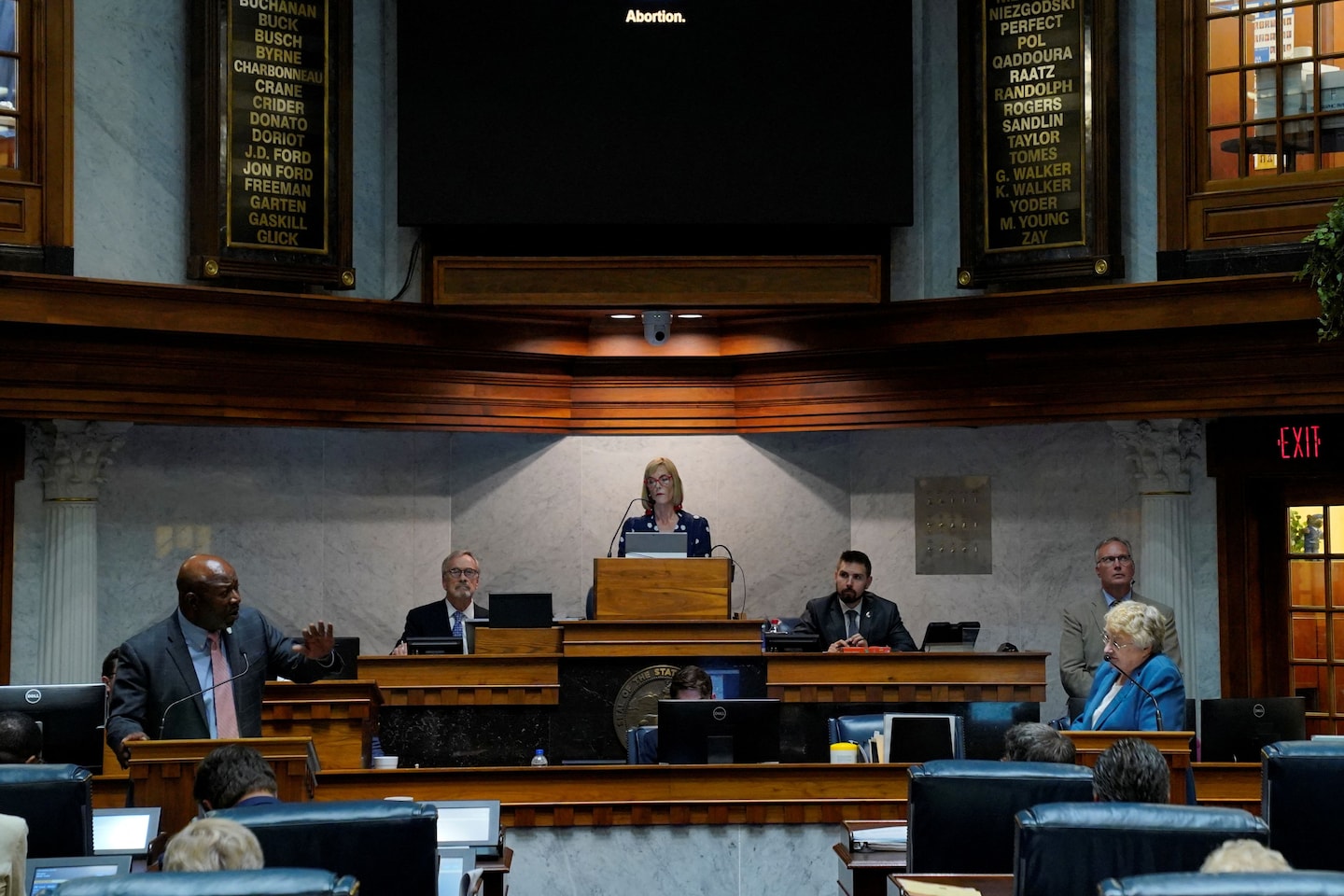
Indiana’s new sweeping ban on abortion produced immediate political and economic fallout Saturday, as some of the state’s biggest employers objected to the restrictions, Democratic leaders strategized ways to amend or repeal the law, and abortion rights activists made plans to arrange alternative locations for women seeking procedures.

The Indiana law, which the Republican-controlled state legislature passed late Friday night and Gov. Eric Holcomb (R) signed moments later, was the first state ban passed since the US Supreme Court struck down Roe v. Wade in June and was celebrated as a major victory by abortion foes.

On Aug. 5, Indiana lawmakers passed a near-total ban on abortion. The bill was signed into law by Gov. Eric Holcomb (R). (Video: Washington Post)

It also came just three days after voters in traditionally conservative Kansas surprised the political world by taking a very different tack, rejecting a ballot measure that would have stripped abortion rights protections from that state’s constitution.

The vote in Indiana capped weeks of fraught debate in Indianapolis, where activists demonstrated at the state Capitol and waged intense lobbying campaigns as Republican lawmakers debated how far the law should go in restricting abortion. Some abortion foes hailed the law’s passage as a road map for conservatives in other states pushing similar bans in the aftermath of the high court’s decision on gnawswhich had guaranteed for the past 50 years the right to abortion care.

The Indiana ban, which goes into effect Sept. 15, allows abortion only in cases of rape, incest, lethal fetal abnormality, or when the procedure is necessary to prevent severe health risks or death. Indiana joins nine other states that have abortion bans starting at conception.

The new law represents a victory for antiabortion forces, who have been working for decades to halt the procedure. But passage occurred after disagreements among some abortion foes, some of whom thought the bill did not go far enough in stopping the procedure.

After the legislation was signed into law, Eli Lilly, the pharmaceutical giant and one of the state’s largest employers, warned that such laws would hurt its employee recruiting efforts and said the company would look elsewhere for its expansion plans.

“We are concerned that this law will hinder Lilly’s — and Indiana’s — ability to attract diverse scientific engineering and business talent from around the world,” the company said in a statement issued Saturday. “Given this new law, we will be forced to plan for more employment growth outside our home state.”

See where abortion laws have changed

Salesforce, the tech giant with 2,300 employees in Indiana, had previously offered to relocate employees in states with abortion restrictions, though it didn’t respond on Saturday to a request for comment on the Indiana law.

The Indianapolis Chamber of Commerce also warned the ban was passed too quickly and without regard for how it will affect the state’s tourism industry.

“Such an expedited legislative process — rushing to advance state policy on broad, complex issues — is, at best, detrimental to Hoosiers, and at worst, reckless,” the chamber said in a statement, asking: “Will the Indy region continue to attract tourism and convention investments?”

Indiana lost out on 12 conventions and an estimated $60 million of business after it passed a religious freedom law in 2015, according to one local tourism industry estimate.

Indiana is the first state to ban abortion by legislature since the Supreme Court decision in June overturning Roe v. Wade. Other states enacted “trigger laws” that went into effect with the fall of Roe.

Indiana may be just the beginning. Abortion rights advocates estimate that abortion could be severely restricted or banned in as many as half of the 50 states.

An official at Indiana Right to Life, an Indiana anti-abortion group, said the new law will end 95 percent of abortions in Indiana and will close all Indiana abortion clinics” Sept. 15, the date the legislation takes effect, abortion activists go to court and get an injunction beforehand.

Indiana has considered abortion restrictions for years, though it remained a state where many in the region traveled for abortion care. Now, as many nearby states — including Ohio, Kentucky and West Virginia — also push for abortion bans, patients may have to travel hundreds of thousands in some cases for care, said Elizabeth Nash, a policy expert at the Guttmacher Institute, which supports abortion rights. “Patients in Ohio won’t be able to go to Indiana for access. They’ll have to get to, perhaps, Illinois or Michigan,” she said.

Passage of the Indiana measure occurred just weeks after national attention was focused on a 10-year-old girl who was raped in Ohio, where abortion is banned after six weeks, and traveled to Indiana to terminate the pregnancy.

Caitlin Bernard, the doctor who performed that abortion in Indianapolis, tweeted Saturday that she was “devastated” by the legislature’s action. “How many girls and women will be hurt before they realize this must be reversed? I will continue to fight for them with every fiber of my being,” she wrote.

Doctors are reluctant to work in anti-abortion states

The Indiana measure drew swift condemnation from national Democrats, who sought to cast Republicans as extreme on abortion — citing the Kansas vote earlier this week, where even rural, conservative parts of the state rejected changing the state’s constitutional right to an abortion.

The law is “another radical step by Republican legislators to take away women’s reproductive rights and freedom,” White House press secretary Karine Jean-Pierre said in a statement.

Democrats are hopeful, though, that they can use what happened in Indiana to cast the entire Republican Party as extreme on abortion.

“This has nothing to do with being ‘pro-life,’ ” tweeted California Gov. Gavin Newsom (D). “It’s about power and control.”

In Washington, Republican leaders have been largely silent on Republican-led states’ push to ban abortion. Polls consistently show that near-total abortion bans like the one in Indiana are unpopular with the general public.

So when Indiana Republicans ban abortion for an entire state, “they are effectively speaking for all Republicans,” said Martha McKenna, a Democratic political strategist, “and that’s why I have hope it’s a good issue for Democrats in November.”

Another political strategist, Jonathan Levy, who worked on the Kansans For Constitutional Freedom Campaign, which is opposed to limiting abortion rights, said the Kansas vote showed that extreme anti-abortion positions are “going to be rejected by Americans across the political spectrum. The American people want legislators to focus on how to keep food on the table, keep the economy afloat. They think the legislature’s priorities are out of whack,” he said.

Alongside the near-total abortion ban, Indiana Republicans also passed legislation they said was intended to support pregnant women and mothers, but critics pointed out much of the money was directed at propping up pregnancy crisis centers run by anti-abortion groups.

The passage of the bill left health providers and abortion counseling agencies struggling to figure out the full impact of the legislation.

Indiana University Health, a major health-care provider in the state, issued a statement saying it was trying to figure out what the ban meant for its doctors and patients.

“We will take the next few weeks to fully understand the terms of the new law and how to incorporate changes into our medical practice to protect our providers and care for people seeking reproductive health,” the health provider said in a statement.

Meantime, activists began discussing plans to raise funds and provide transportation for those seeking abortion access after the ban goes into effect, said Carol McCord, a former employee at Planned Parenthood.

“Since this is soon to be illegal in Indiana, we are looking for ways to help women travel to get services that they need,” she said. Indiana law was already considered restrictive compared with other states, so about 35 percent of women seeking abortions traveled out of state already, said Jessica Marchbank who serves as the state programs manager for the All-Options Pregnancy Resource Center in Bloomington.

Democratic state legislators began strategizing Saturday about how to respond, including considering repeal measures and organizing voters to elect legislators who favor abortion rights.

“This is a dark time for Indiana,” said state Sen. Shelli Yoder, an assistant Democratic caucus chair. “The plan going forward is to be sure we come out in November and vote out the individuals who supported something that only a tiny minority of Hoosiers wanted.”

Immediately, Yoder said in an interview that she and like-minded state legislators are contemplating action that could undo the impact of the new law, noting that the legislature has not been formally adjourned.

“We can come back and fix this,” she said, adding that legislators are at the early stage of plotting how to do that.

Katie Blair, the advocacy and public policy director of the American Civil Liberties Union in Indiana, said Saturday that her organization will examine legal action.

“You can guarantee that our legal team will be working with partners to evaluate every legal avenue available to defend abortion access here in Indiana,” Blair said in a statement.

In signing the legislation, Holcomb applauded the work of the lawmakers he had called into a special session this summer to find a way to restrict abortion, acknowledging disagreements among those opposed to abortion.

“These actions followed long days of hearings filled with sobering and personal testimony from citizens and elected representatives on this emotional and complex topic,” the governor said in a statement. “Ultimately, those voices shaped and informed the final contents of the legislation and its carefully negotiated exceptions to address some of the unthinkable circumstances a woman or unborn child might face.”
Categories
US

Democrats’ big climate, health care and tax package clears major Senate hurdle

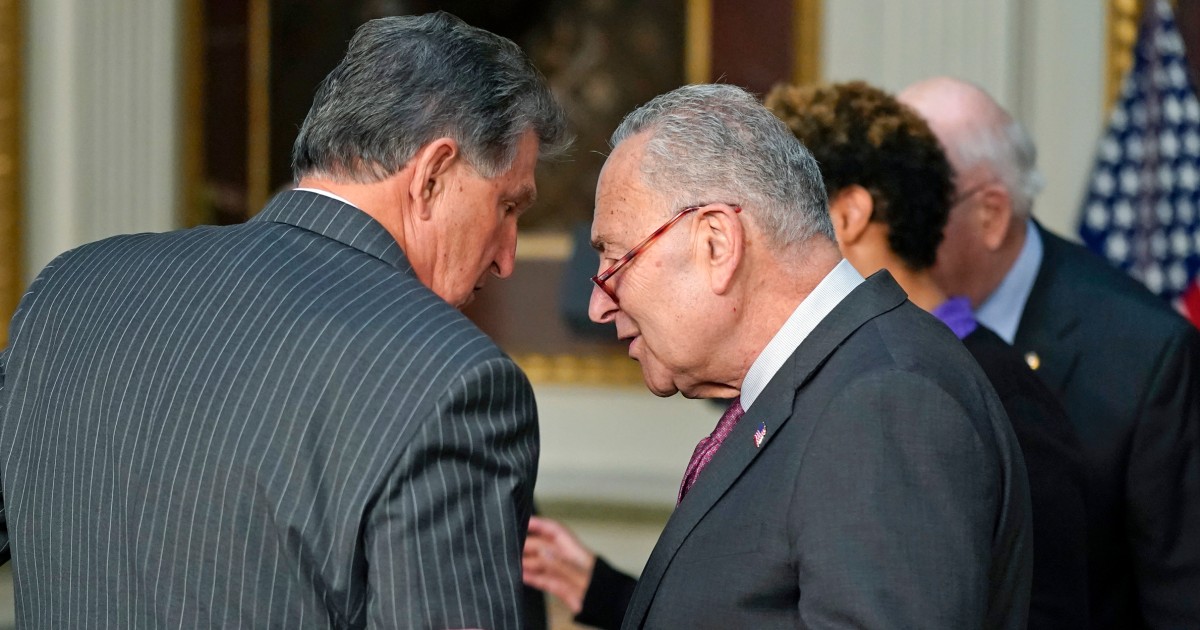
WASHINGTON — The Senate voted Saturday to advance a sweeping climate and economic bill with the support of all 50 Democrats, bringing long-stalled elements of President Joe Biden’s agenda one step closer to reality.

The procedural vote on the filibuster-proof package was 51-50, with all Republicans opposing the motion to begin debate and Vice President Kamala Harris casting the tie-breaking vote. If that support holds, it is enough to pass the bill through the Senate and send it to the House in the coming days.

The legislation, called the Inflation Reduction Act, includes major spending to combat climate change and extend health care coverage, paid for with savings on prescription drugs and taxes on corporations. It puts hundreds of billions of dollars toward deficit reduction.

“This is one of the most comprehensive and impactful bills Congress has seen in decades,” Senate Majority Leader Chuck Schumer, DN.Y., said on the floor before the vote.

“It’s going to mean a lot for the families and the people of our country,” Harris told NBC News as she arrived to break the 50-50 tie.

The procedural vote, during a rare weekend session, kicks off several hours of debate, followed by a “vote-a-rama” — a process in which senators can offer virtually unlimited amendments that require a simple majority of votes to adopt.

The legislation isn’t subject to the filibuster — it is being pursued through a special process called reconciliation, which allows Democrats to pass it on their own. But the process includes limits; policies included in the bill must be related to spending and taxes and the legislation has to comply with a strict set of budget rules. It’s the same process Democrats used to pass the American Rescue Plan in 2021 and Republicans used to pass the Trump tax cuts of 2017.

Before Saturday’s vote, the Senate parliamentarian ruled that key Democratic provisions on clean energy and allowing Medicare to negotiate prescription drug prices passed muster and could be included in the inflation package, Democratic leaders said.

“While there was one unfortunate ruling in that the inflation rebate is more limited in scope,” Schumer said, “the overall program remains intact and we are one step closer to finally taking on Big Pharma and lowering Rx drug prices for millions of Americans. ”

The Democrats-only package, which includes several pieces of Biden’s Build Back Better agenda, was long thought to be dead after Sen. Joe Manchin, DW.Va., rejected a larger bill in December. He cut a deal last week with Schumer, pleasantly surprising many of his Democratic colleagues from him, and has since been on a media blitz to sell it.

“It’s a red, white and blue bill,” Manchin said recently on MSNBC, calling it “one of the greatest pieces of legislation” and “the bill that we need to fight inflation, to have more energy.”

On Thursday, Sen. Kyrsten Sinema, D-Ariz., following a week of silence, signed off on the bill after securing some changes to it.

Sinema forced Democrats to remove a provision that would have limited the carried interest tax break, which enables wealthy hedge fund and investment managers to pay a lower tax rate.

“We had no choice,” Schumer told reporters.

Instead, it was replaced by a new 1% excise tax on stock buybacks that is expected to bring in $74 billion — five times as much as the carried interest provision, Schumer said. Sinema also secured $4 billion in funding for drought prevention in Arizona and other western states.

Before her changes, the nonpartisan Congressional Budget Office found that the bill would reduce the deficit by about $100 billion over a decade, with additional potential for $200 billion in revenue as a result of beefing up IRS resources for enforcement.

Senate Minority Whip John Thune, RS.D., promised “hard votes for the Democrats” in the vote-a-rama process.

“The question is, at the end, are those amendments going to be amendments actually that might change the bill? Could make it better. Might make it harder to pass in the House, who knows? Thune said Friday.

Some Democrats are worried about Republicans proposing poison pill amendments on contentious issues such as immigration and crime that could win a majority of votes in the Senate — picking off some moderates and vulnerable senators facing re-election this fall — but alienate other Democrats and disrupt the fragile deal.

“I certainly cannot support it, if extraneous provisions get adopted, particularly pejorative immigration provisions that have nothing to do with the health, welfare and security of the American people,” Sen. Bob Menendez, DN.J., said this week on MSNBC.

On Saturday, a handful of Senate Democrats took to Twitter and urged their colleagues to hold the line and vote down amendments that could jeopardize the package.

“I’ll vote NO on all amendments, even those I agree with,” tweeted Sen. Tina Smith, D-Minn. “This bill makes historic progress on climate action and lowering prescription drug costs. It has 50 votes, and we need to stick together to keep it that way.”

Sen. Cory Booker, DN.J., agreed with that strategy. “There are a number of us who have already tweeted that we’re going to be voting no on amendments that we like and we don’t like,” he told reporters Saturday.

“There is such a moral urgency … to get a bill across the line that’s going to deal with the existential threat of climate change. I think that’s motivating and I’m seeing even more unity than normal.”

Sen. Lindsey Graham, RS.C., said Friday the amendment process would be unpleasant. “What will vote-a-rama be like? It’ll be like hell,” he said.

Categories
US

Democrats’ big climate, health care and tax package clears major Senate hurdle

WASHINGTON — The Senate voted Saturday to advance a sweeping climate and economic bill with the support of all 50 Democrats, bringing long-stalled elements of President Joe Biden’s agenda one step closer to reality.

The procedural vote on the filibuster-proof package was 51-50, with all Republicans opposing the motion to begin debate and Vice President Kamala Harris casting the tie-breaking vote. If that support holds, it is enough to pass the bill through the Senate and send it to the House in the coming days.

The legislation, called the Inflation Reduction Act, includes major spending to combat climate change and extend health care coverage, paid for with savings on prescription drugs and taxes on corporations. It puts hundreds of billions of dollars toward deficit reduction.

“This is one of the most comprehensive and impactful bills Congress has seen in decades,” Senate Majority Leader Chuck Schumer, DN.Y., said on the floor before the vote.

“It’s going to mean a lot for the families and the people of our country,” Harris told NBC News as she arrived to break the 50-50 tie.

The procedural vote, during a rare weekend session, kicks off several hours of debate, followed by a “vote-a-rama” — a process in which senators can offer virtually unlimited amendments that require a simple majority of votes to adopt.

The legislation isn’t subject to the filibuster — it is being pursued through a special process called reconciliation, which allows Democrats to pass it on their own. But the process includes limits; policies included in the bill must be related to spending and taxes and the legislation has to comply with a strict set of budget rules. It’s the same process Democrats used to pass the American Rescue Plan in 2021 and Republicans used to pass the Trump tax cuts of 2017.

Before Saturday’s vote, the Senate parliamentarian ruled that key Democratic provisions on clean energy and allowing Medicare to negotiate prescription drug prices passed muster and could be included in the inflation package, Democratic leaders said.

“While there was one unfortunate ruling in that the inflation rebate is more limited in scope,” Schumer said, “the overall program remains intact and we are one step closer to finally taking on Big Pharma and lowering Rx drug prices for millions of Americans. ”

The Democrats-only package, which includes several pieces of Biden’s Build Back Better agenda, was long thought to be dead after Sen. Joe Manchin, DW.Va., rejected a larger bill in December. He cut a deal last week with Schumer, pleasantly surprising many of his Democratic colleagues from him, and has since been on a media blitz to sell it.

“It’s a red, white and blue bill,” Manchin said recently on MSNBC, calling it “one of the greatest pieces of legislation” and “the bill that we need to fight inflation, to have more energy.”

On Thursday, Sen. Kyrsten Sinema, D-Ariz., following a week of silence, signed off on the bill after securing some changes to it.

Sinema forced Democrats to remove a provision that would have limited the carried interest tax break, which enables wealthy hedge fund and investment managers to pay a lower tax rate.

“We had no choice,” Schumer told reporters.

Instead, it was replaced by a new 1% excise tax on stock buybacks that is expected to bring in $74 billion — five times as much as the carried interest provision, Schumer said. Sinema also secured $4 billion in funding for drought prevention in Arizona and other western states.

Before her changes, the nonpartisan Congressional Budget Office found that the bill would reduce the deficit by about $100 billion over a decade, with additional potential for $200 billion in revenue as a result of beefing up IRS resources for enforcement.

Senate Minority Whip John Thune, RS.D., promised “hard votes for the Democrats” in the vote-a-rama process.

“The question is, at the end, are those amendments going to be amendments actually that might change the bill? Could make it better. Might make it harder to pass in the House, who knows? Thune said Friday.

Some Democrats are worried about Republicans proposing poison pill amendments on contentious issues such as immigration and crime that could win a majority of votes in the Senate — picking off some moderates and vulnerable senators facing re-election this fall — but alienate other Democrats and disrupt the fragile deal.

“I certainly cannot support it, if extraneous provisions get adopted, particularly pejorative immigration provisions that have nothing to do with the health, welfare and security of the American people,” Sen. Bob Menendez, DN.J., said this week on MSNBC.

On Saturday, a handful of Senate Democrats took to Twitter and urged their colleagues to hold the line and vote down amendments that could jeopardize the package.

“I’ll vote NO on all amendments, even those I agree with,” tweeted Sen. Tina Smith, D-Minn. “This bill makes historic progress on climate action and lowering prescription drug costs. It has 50 votes, and we need to stick together to keep it that way.”

Sen. Cory Booker, DN.J., agreed with that strategy. “There are a number of us who have already tweeted that we’re going to be voting no on amendments that we like and we don’t like,” he told reporters Saturday.

“There is such a moral urgency … to get a bill across the line that’s going to deal with the existential threat of climate change. I think that’s motivating and I’m seeing even more unity than normal.”

Sen. Lindsey Graham, RS.C., said Friday the amendment process would be unpleasant. “What will vote-a-rama be like? It’ll be like hell,” he said.

Categories
US

Arizonans oppose billions in IRS funding as Sinema says she will support bill

Arizona residents are expressing their displeasure with the billions of dollars designated for boosting IRS enforcement as part of the massive Democrat-backed social spending and taxation bill agreed to by Sen. Kyrsten Sinema, D-Ariz., late Thursday evening.

Sinema announced she would “move forward” with the bill, officially called the Inflation Reduction Act, after previously signaling changes would have to be made in order for her to agree to support it.

Fox News Digital spoke to a number of residents on the streets of Arizona to get their take on the billions in IRS funding contained within the bill. They expressed displeasure that the federal government would commit such a large amount to “go after the little guy.”

“I don’t like that to tell you the truth, that portion of it,” said resident Willis Daychild, who said that he agreed with the aims of the bill overall. “They’re going to be out there trying to find all the people that have not filed their taxes. Usually the little guy, they’re the one’s getting their hands slapped for their taxes.”

KYRSTEN SINEMA SAYS SHE WILL SUPPORT MANCHIN-SCHUMER SPENDING BILL: HERE IS WHAT ARIZONANS HAD TO SAY

Senator Kyrsten Sinema, D-Ariz., departs from the US Capitol in Washington, DC, on October 28, 2021. <span class="copyright">MANDEL NGAN/AFP via Getty Images</span>” data-src=”https://s.yimg.com/ny/api/res/1.2/wGvsfyo1CAx3s6FOaoJ1pQ–/YXBwaWQ9aGlnaGxhbmRlcjt3PTcwNTtoPTM5Nw–/https://s.yimg.com/uu/api/res/1.2/6UaRzreLqWsCZvRAcIfJjQ–~B/aD03MjA7dz0xMjgwO2FwcGlkPXl0YWNoeW9u/https://media.zenfs.com/en/fox_news_text_979/b9b0d69667f382fd1ad22520c2c6804c”/><noscript><img alt=MANDEL NGAN/AFP via Getty Images” src=”https://s.yimg.com/ny/api/res/1.2/wGvsfyo1CAx3s6FOaoJ1pQ–/YXBwaWQ9aGlnaGxhbmRlcjt3PTcwNTtoPTM5Nw–/https://s.yimg.com/uu/api/res/1.2/6UaRzreLqWsCZvRAcIfJjQ–~B/aD03MjA7dz0xMjgwO2FwcGlkPXl0YWNoeW9u/https://media.zenfs.com/en/fox_news_text_979/b9b0d69667f382fd1ad22520c2c6804c” class=”caas-img”/>

Senator Kyrsten Sinema, D-Ariz., departs from the US Capitol in Washington, DC, on October 28, 2021. MANDEL NGAN/AFP via Getty Images

Resident Gary Kuznia agreed, arguing the IRS would use the money to “go after” less wealthy people rather than the rich.

“No, they’re just going to go after the little guy. They really will. And they’re never going to go after the rich people. Never. Or else they would have done it already because they’re not paying their fair share of taxes right now,” he said.

“Little guys like me — you know, I’m retired, and I hate to see that. I really do. I was an accountant all my life, and I don’t want to see that. And I hope they don’t They’re going to hunt the little guy, people who make less money, and make them pay. Because they have to pay for this bill. How are they going to pay for this bill?” I have added.

Resident Richard Carrillo said he supported the bill, but appeared hesitant about the IRS funding going to increase additional auditing. “I don’t know about the audits, but if it’s going to support and help people then I say yes,” he said.

SENATE AIDES HINT AT MANCHIN DISTRESS OVER SPENDING BILL BACKLASH, DESIRE TO AVOID ‘BUILD BACK BETTER’ MENTION

“No, no, no, not at all. I know taxes kind of make the US go round and round, but at this point there’s a lot of working class people that pay their dues, but I mean, they don’t need to be audited,” said resident Richard Carrillo. “That money can be spent somewhere else. So yeah I think that is a waste of money, giving it to the IRS so that they can give more audits and stuff like that.”

Another resident who wished to remain unnamed argued the money designated for the IRS was “too large” of an amount, and that taxes should be handled at a more local level rather than by the federal government.

The Senate is scheduled to reconvene Saturday to vote to begin debate on the bill, which is expected to pass with the support of every Democrat.

Categories
US

Tribe: California wildfire near Oregon causes fish deaths

HAPPY CAMP, Calif. — A wildfire burning in a remote area just south of the Oregon border appears to have caused the deaths of tens of thousands of Klamath River fish, the Karuk Tribe said Saturday.

The tribe said in a statement that the dead fish of all species were found Friday near Happy Camp, California, along the main stem of the Klamath River.

Tribal fisheries biologists believe a flash flood caused by heavy rains over the burn area caused a massive debris flow that entered the river at or near Humbug Creek and McKinney Creek, said Craig Tucker, a spokesman for the tribe.

The debris entering the river led to oxygen levels in the Klamath River dropping to zero on Wednesday and Thursday nights, according to readings from tribal monitors at a nearby water quality station.

A photo from the Karuk taken about 20 miles (32 kilometers) downstream from the flash flood in the tributary of Seiad Creek showed several dozen dead fish belly up amid sticks and other debris in thick, brown water along the river bank.

The full extent of the damage is still unclear but the tribe said late Saturday it appears the fish found dead 20 miles downstream were swept there after their deaths and that the fish kill isn’t impacting the entire river.

“We think the impact is limited to 10 or 20 miles of river in this reach and the fish we are seeing in Happy Camp and below are floating downstream from the ‘kill zone,’” the tribe said in an updated statement, adding it continues to monitor the situation.

The McKinney Fire, which has burned more than 90 square miles (233 square kilometers) in the Klamath National Forest, this week wiped out the scenic hamlet of Klamath River, where about 200 people lived. The flames killed four people in the tiny community and reduced most of the homes and businesses to ash.

Scientists have said climate change has made the West warmer and drier over the last three decades and will continue to make weather more extreme and wildfires more frequent and destructive. Across the American West, a 22-year megadrought deepened so much in 2021 that the region is now in the driest spell in at least 1,200 years.

When it began, the McKinney Fire burned just several hundred acres and firefighters thought they would quickly bring it under control. But thunderstorms came in with ferocious gusts that within hours had pushed it into an unstoppable conflagration.

The blaze was 30% contained on Saturday.

The fish kill was a blow for the Karuk and Yurok tribes, which have been fighting for years to protect fragile populations of salmon in the Klamath River. The salmon are revered by the Karuk Tribe and the Yurok Tribe, California’s second-largest Native American tribe.

The federally endangered fish species has suffered from low flows in the Klamath River in recent years and a parasite that’s deadly to salmon flourished in the warmer, slower-moving water last summer, killing fish in huge numbers.

After years of negotiations, four dams on the lower river that impede the migration of salmon are on track to be removed next year in what would be the largest dam demolition project in US history in an attempt to help the fish recover.

———

Flaccus reported from Portland, Oregon.

.

Categories
US

Former military officers urge Supreme Court to uphold affirmative action in colleges

A group of retired military heavyweights has urged the Supreme Court to uphold affirmative action in higher education when the justices review a legal challenge to race-conscious admissions policies at the University of North Carolina (UNC) and Harvard University.

The former officers argued in court papers that allowing colleges and service academies to consider race as a factor in admissions decisions helps the US military achieve its goal of cultivating a diverse officer corps, which they said accrues benefits both within the ranks and in overseas operations.

Prohibiting race-conscious admissions, on the other hand, would threaten to undermine national security, the group argued in an amicus brief signed by 35 former top military leaders, including the highest-ranking military officers under former Presidents Trump, Obama, George W. Bush and Clinton.

“History has shown that placing a diverse Armed Forces under the command of homogenous leadership is a recipe for internal resentment, discord, and violence,” the group wrote. “By contrast, units that are diverse across all levels are more cohesive, collaborative, and effective.”

When the Supreme Court hears arguments in the case in October, the focus will likely remain fixed on the interplay between diversity goals, higher education and limits that the Constitution places on the use of racial classifications to benefit minorities.

But as suggested by the former officers’ brief, as well as scholarship connecting diversity and improved military performance, the potential implications of the case could reach well beyond academia — perhaps as far as the battlefield.

“Historically, diverse and inclusive armies outperform their more exclusionary rivals in battlefield,” Jason Lyall, a professor of government at Dartmouth College and author of the book “Divided Armies: Inequality and Battlefield Performance in Modern War,” told The Hill.

“They typically record better casualty rates as well as lower desertion and defection even when outnumbered,” he added. “Because of their problem-solving skills, they are capable of more complex battlefield maneuvers, and so are more lethal and resilient, than less inclusive enemies.”

The legal dispute at issue arose after a conservative-backed group, Students for Fair Admissions (SFFA), sued UNC and Harvard over their use of affirmative action in admissions decisions. The group accused the schools of failing to pursue diversity goals through available race-neutral alternatives, as required under Supreme Court precedent.

SFFA suffered defeat in the lower courts, where judges rejected its arguments based on the landmark 2003 Grutter v. Bollinger decision and related cases. In Grutter, the court ruled 5-4 that colleges may use race as one factor in admissions decisions as a way to diversify student populations.

In court papers, SFFA urged the justices to overturn Grutter. That decision, it argued, defies the constitutional guarantee of equal protection under the law and has led college admissions officers to engage in “crude stereotyping” based on race.

SFFA, in its suit against Harvard, alleged that the school’s admissions policy discriminates against Asian Americans. The group argued that Harvard’s subjective “personal ratings” scores, which tended to reflect cultural stereotypes, had made it harder for Asian Americans to be admitted, compared to applicants of other races.

“Applicants who check the box for African American at Harvard and UNC, for example, receive a preference because of their race whether they grew up in poverty and went to failing schools, have parents who were multimillionaire executives, spent their formative years in Europe, are the direct descendants of slaves, or are second-generation immigrants from Africa,” SFFA wrote, urging the justices to upend nearly two decades of affirmative action precedent.

But the former military officers behind this week’s amicus brief cautioned the justices against such a move. Overruling Grutter and related Supreme Court precedent, they said, would make achieving the military’s diversity goals more difficult and impair military cohesion and effectiveness.

An attorney for SFFA did not respond when asked to comment on the potential national security implications of invalidating race-conscious admissions policies in higher education.

The retired officers in their brief argued that diversity in military leadership flows directly from diversity in higher education, with the bulk of military officers hailing from service academies such as the Army’s US Military Academy in West Point, NY, or Reserve Officer Training Corps programs housed at civilian universities.

“Diversity in the halls of academia directly affects performance in the theaters of war,” they wrote.

They added that the demands of recent US humanitarian missions — which included deployments to Haiti, Somalia and Latin America — underscore the need for diversity in the officer corps. That aim is no less critical in elite special forces units such as the Navy SEALs, which currently face a severe shortage of minority officers, they wrote.

“Life and death missions conducted by these units require diverse skills, including foreign language competence and knowledge of other cultures, along with the ability to collaborate and culturally empathize with vastly different individuals,” they wrote.

Among the signatories to the brief were former Joint Chiefs Chairmen Marine Gen. Joseph Dunford, Navy Adm. Michael Mullen, Air Force Gen. Richard Myers and Army Gen. Henry Shelton.

Categories
US

DC lightning strike by White House: Third deceased victim identified

Comment

DC police have identified the third person killed by a Thursday lightning strike near the White House as Brooks A. Lambertson, 29, a Los Angeles bank employee who was in the nation’s capital on business.

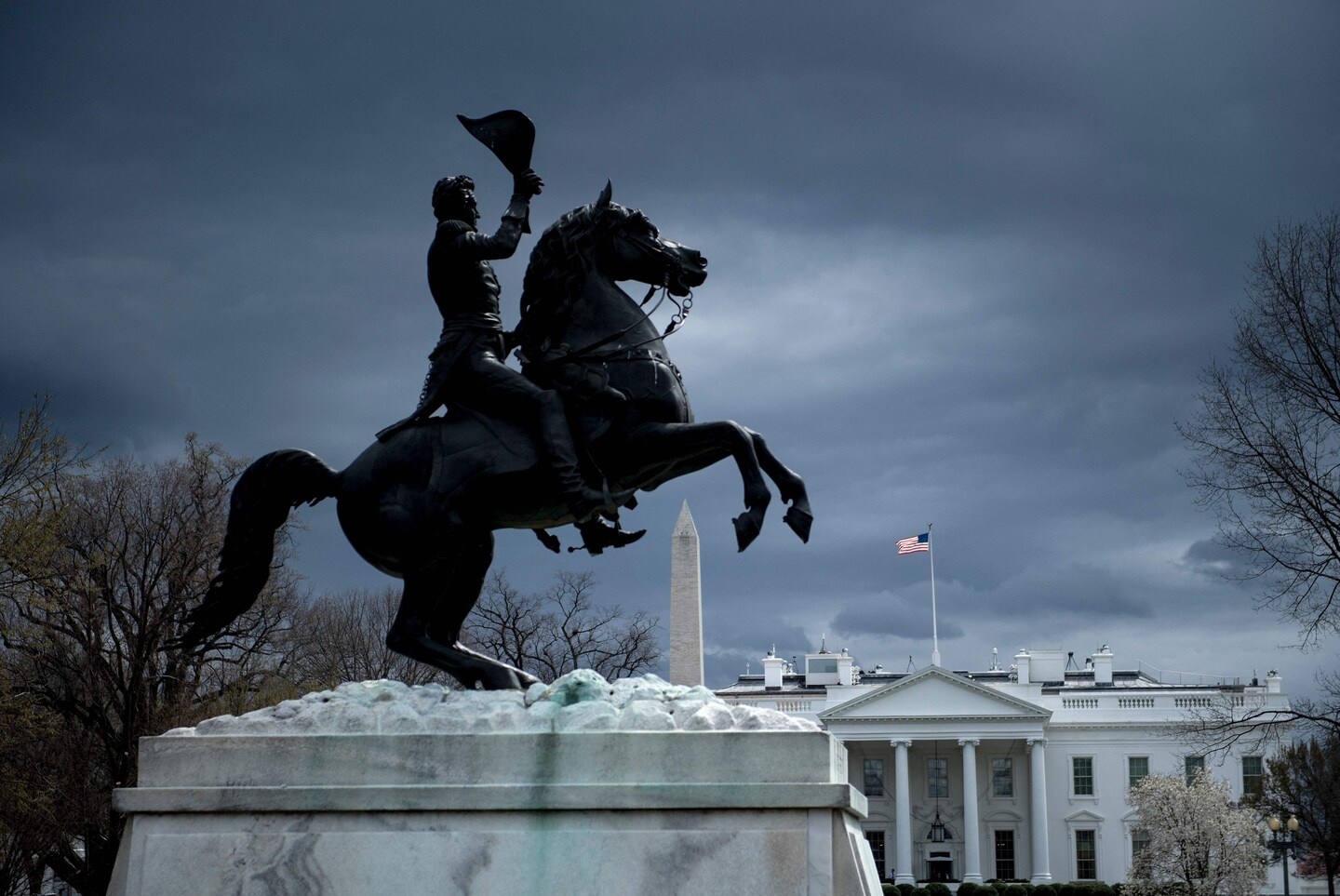
A husband and wife from Wisconsin, who were visiting the District to celebrate their 56th wedding anniversary, were also killed, police previously said. A fourth person was critically injured when the strike hit just before 7 pm Thursday, in a grove of trees in Lafayette Square, about 100 feet from a statue of President Andrew Jackson.

Lambertson died Friday, according to police.

Four critically injured after lightning strike near the White House

Lambertson’s father, who requested his name not be used as the family grieves because “it’s not about us,” said in an interview with The Washington Post on Saturday night that his son was “probably the best human being that I know.”

His son’s kindness, generosity and humility “showed up in everything he did, in all his interactions with people,” he said.

Lambertson’s family and his employer, City National Bank, said in a statement Saturday that he was in DC for his job as a vice president managing sponsorships for the company. Lambertson, who lived in downtown LA, previously worked in marketing for the NBA’s Los Angeles Clippers, according to the release.

Police offered few other details about Lambertson or additional information about the incident Saturday.

In a phone call, Lambertson’s father expressed gratitude to all the first responders and others who tried to help his son. They did everything that could be done, he said, and his son’s death de el “was not for lack of everybody doing their jobs.”

How lightning works — and how to stay safe when it’s in the area

“His sudden loss is devastating to all who knew him, and his family, friends and colleagues appreciate the thoughts and prayers that poured in from around the country,” the statement from Lambertson’s family and employer said.

A DC police spokeswoman said late Saturday that the department did not have an update on the condition of the fourth victim, who had been hospitalized after the strike.

This breaking story will be updated.

Categories
US

APD: Fourth Muslim man shot to death

A crime scene photographer documents the scene at Truman Street and Grand Avenue in Albuquerque after a Muslim man was killed late Friday night. (Liam DeBonis/Albuquerque Journal)

Another Muslim man has been shot to death — the fourth to be killed in a period of nine months and the third in the past two weeks.

The latest shooting happened late Friday night, just before midnight. An Albuquerque Police Department Spokesman said officers were called to the area near San Mateo and Copper NE for a shooting. When they arrived they found a man dead.

Investigators announced on Thursday that they believe there is a strong possibility that the men were targeted because of their race and religion.

Mohammad Ahmadi, 62, was killed on Nov. 7 behind the halal market he and his brother owned. Aftab Hussein, 41, was killed on July 26 in his apartment complex parking lot on Rhode Island NE, near Wyoming and Copper. Muhammad Afzaal Hussain, 27, was killed on Aug. 1 less than a block from his apartment in a neighborhood south of the University of New Mexico.

Saturday afternoon, APD officials held a news conference alongside leaders from the US Attorney’s Office, the 2nd Judicial District Attorney’s Office, the FBI, and the city of Albuquerque. They urged people to come forward and report any suspicious activity.

Deputy Chief Josh Brown said the department has consulted with the Muslim community and is increasing patrols in certain areas and establishing command posts. Multiple units throughout the department are working on the case.

• Do you have a question you want someone to try to answer for you? Do you have a bright spot you want to share?

We want to hear from you. Please email [email protected]

Categories
US

Breonna Taylor Raid Puts Focus on Officers Who Lie for Search Warrants

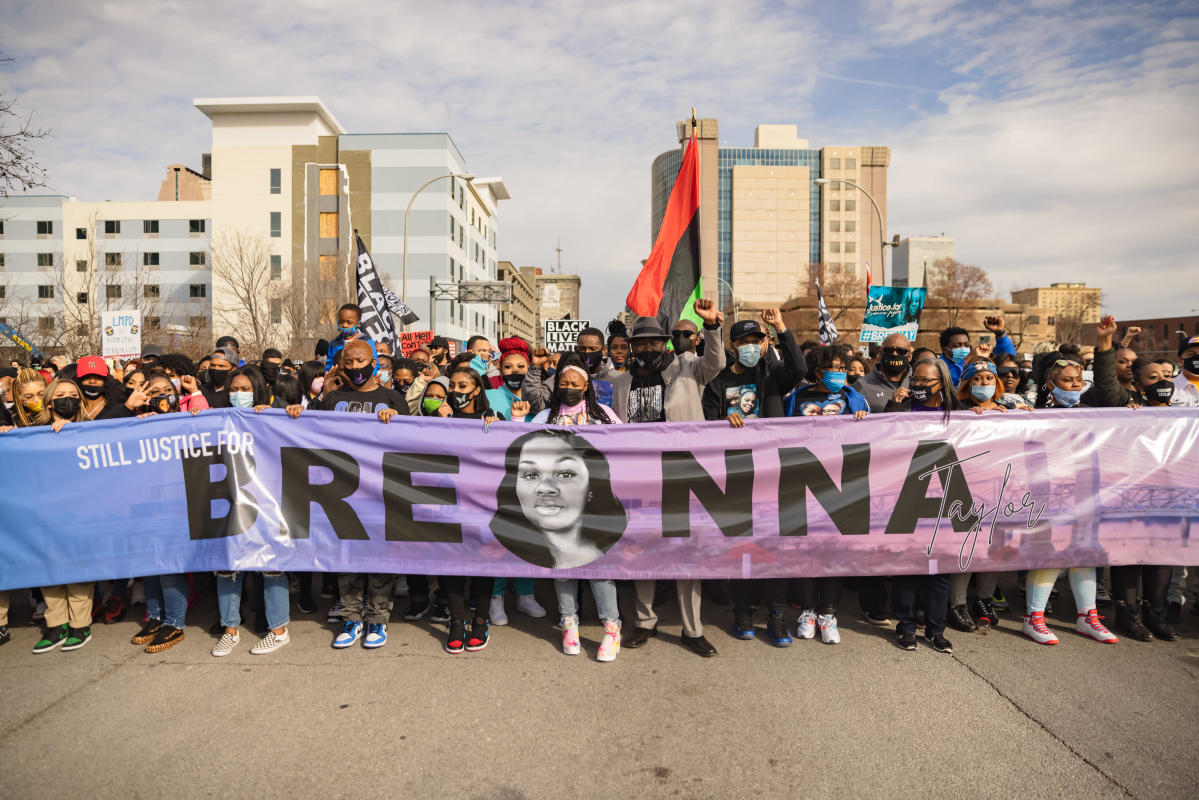
Protesters gather in downtown Louisville, Ky., on Saturday, March 13, 2021, to commemorate the anniversary of the killing of Breonna Taylor in a botched raid by Louisville police officers.  (Xavier Burrell/The New York Times)

Protesters gather in downtown Louisville, Ky., on Saturday, March 13, 2021, to commemorate the anniversary of the killing of Breonna Taylor in a botched raid by Louisville police officers. (Xavier Burrell/The New York Times)

On the day before police officers shot and killed Breonna Taylor in her apartment in Louisville, Kentucky, a detective tried to persuade her to judge that a former boyfriend of Taylor could be using her home to stash money and drugs.

The detective, Joshua Jaynes, said the former boyfriend had been having packages sent to Taylor’s apartment, and he even claimed to have proof: a postal inspector who had confirmed the shipments. Jaynes outlined all this in an affidavit and asked a judge for a no-knock warrant so that officers could barge into Taylor’s home late at night before drug dealers had a chance to flush evidence or flee. The judge signed off on the warrant.

But this week, federal prosecutors said Jaynes had lied. It was never clear whether the former boyfriend was receiving packages at Taylor’s home from her. And Jaynes, the prosecutors said, had never confirmed as much with any postal inspector. As outrage over Taylor’s death grew, prosecutors said in new criminal charges filed in federal court, Jaynes met with another detective in his garage and agreed on a story to tell the FBI and their own colleagues to cover up the false and misleading statements police had made to justify the raid.

Sign up for The Morning newsletter from the New York Times

Amid protests over Taylor’s killing, much of the attention has focused on whether the two officers who shot her would be charged. But the Justice Department turned most of its attention on the officers who obtained the search warrant, highlighting the problems that can occur when searches are authorized by judges based on police facts may have exaggerated or even concocted.

“It happens far more often than people think,” said Joseph C. Patituce, a defense lawyer and former prosecutor in Ohio. “We are talking about a document that allows police to come into the homes of people, oftentimes minorities, at all times of night and day.”

Taylor is far from the first person to die in a law enforcement operation authorized on what prosecutors said were police misstatements.

In Houston, prosecutors accused a police officer of falsely claiming that an informant had purchased heroin from a home in order to obtain a search warrant in 2019; officers killed two people who lived there during a shootout when they tried to execute the warrant, and only after that did the police chief at the time, Art Acevedo, say there were “material untruths or lies” in an affidavit for the warrant that led to the raid. The officer pleaded not guilty, and the case is still pending.

In Atlanta, police officers barged into a home and fatally shot a 92-year-old woman, Kathryn Johnston, in 2006 after an officer lied in a search warrant affidavit about an informant buying drugs from her home.

And in Baltimore, a federal judge sentenced a detective to 2 1/2 years in prison last month after prosecutors said he had lied in a search warrant affidavit about finding drugs in a man’s truck in order to justify a search of the man’s motel room.

Judges often rely solely on the sworn narrative of police officers who apply for warrants, meaning police can carry out potentially dangerous searches targeting innocent people before their affidavits are ever challenged.

The Supreme Court has ruled that when police knowingly or recklessly include false statements in search of warrant affidavits in cases in which there would otherwise be insufficient cause, any evidence recovered cannot be admitted in court. False statements often come to light if arrests are made, as defense lawyers challenge search warrants in court.

A number of deficient affidavits may never be closely scrutinized, legal analysts say, because defendants have agreed to plead guilty for other reasons.

In Louisville, Thomas Clay, a lawyer connected to the Breonna Taylor case, knows the issue from both sides.

Clay and a colleague, David Ward, once represented Susan Jean King, an amputee with one leg and a slight build who was accused of fatally shooting a former boyfriend at her home and then throwing his body into a river.

“This was his theory,” Ward said of the detective who took on the investigation as a cold case some eight years after the killing. “It was physically impossible for her to commit the homicide, drag her body out of her home and into her nonexistent car, and then take this large, 189-pound man and toss her body over a bridge and into the Kentucky River. ”

King’s lawyers claimed that the detective falsely implied in at least one of the search warrant affidavits that a .22-caliber bullet found in the floor of King’s home was one of the rounds that killed the man.

But it had already been established that the man died of .22-caliber bullets that lodged in his head without exiting, King’s lawyers noted, and they argued that the detective’s assertion was implausible. A judge agreed, saying that the detective had omitted exculpatory evidence from his search warrant affidavits of him.

Nonetheless, King entered an Alford plea to second-degree manslaughter — in which she pleaded guilty while maintaining her innocence — and was serving more than five years in prison when a man admitted the killing. She was ultimately exonerated.

In 2020, the state agreed to pay King a $750,000 settlement for malicious prosecution. Through his lawyer from him at the time, the detective, who had retired from the force by then, denied any wrongdoing.

Now, Clay is representing Jaynes, the detective accused of lying to obtain the search warrant for Taylor’s home.

“Search warrants are always fair game to be scrutinized, and they should be scrutinized,” Clay said, though he declined to discuss Jaynes’ case.

Jaynes pleaded not guilty to the federal charges Thursday and has said that he was relying in part on information from another officer when he prepared the affidavit.

Officers who provide false information under oath when preparing search warrant affidavits may take shortcuts, Clay said, because they believe they already know the outcome of the case but do not yet have enough evidence to support the warrant.

“The most extreme example is when they are just dishonest, even though they are under oath,” Clay said.

Ed Davis, a former Boston police commissioner, said the consequences of lying on a search warrant could be severe.

“It’s tragic when you see police falsify information to obtain a search warrant, and it is also dumb,” Davis said. “Every one of those search warrants can turn into a disaster.”

In Taylor’s case, the prosecutors said that another detective, Kelly Goodlett, whom the department moved to fire Thursday, had also added misleading information to the affidavit, saying that Taylor’s former boyfriend had recently used her address as his “current home address.” Prosecutors charged Goodlett with conspiring with Jaynes to falsify the warrant.

Jaynes has admitted that he did not personally verify the information about the packages with a postal inspector. He has said he was told by a sergeant about the packages and believed that it was enough to back up his claims in the affidavit.

“I had no reason to lie in this case,” he told a police board in Louisville that was considering his firing last year.

In the federal indictment against Jaynes, however, prosecutors charged that this claim, too, was false, and that the sergeant had actually told Jaynes twice that he did not know about any packages being sent to Taylor’s home for her former boyfriend.

The judge who signed off on the warrant for Taylor’s apartment, Judge Mary Shaw, declined to comment through an assistant Friday, noting that she could be called to testify in the criminal case against the officers. Shaw is up for reelection in November, and The Louisville Courier Journal reported that she was the only one of 17 incumbent Jefferson Circuit Court judges to face a challenger for her seat.

© 2022 The New York Times Company

Categories
US

Brittney Griner sentence irks Russian teammates

Women’s basketball in Russia used to offer an offseason dream for WNBA players — first-class treatment, million-dollar contracts, elite competition.

But as the WNBA and US government plead for the release of Phoenix Mercury star Brittney Griner — who was sentenced Thursday to nine years in a Russian prison after being convicted of drug possession and smuggling — the prospect of returning to Russia became a non-starter for her former teammates in Chicago.

Griner played under Sky coach James Wade for two seasons in Russia and won EuroLeague and Russian Cup titles with Sky stars Allie Quigley, Courtney Vandersloot and Emma Meesseman.

All three Sky players made an exodus when Russia invaded Ukraine in March, cutting short their season with UMMC Ekaterinburg. They returned to the US as the war shifted the political axis in the country.

Now, Griner’s former teammates and coaches — who describe her as a “gentle giant,” caring friend and quietly powerful force in women’s basketball — feel haunted by her absence as the Sky near the end of the WNBA regular season.

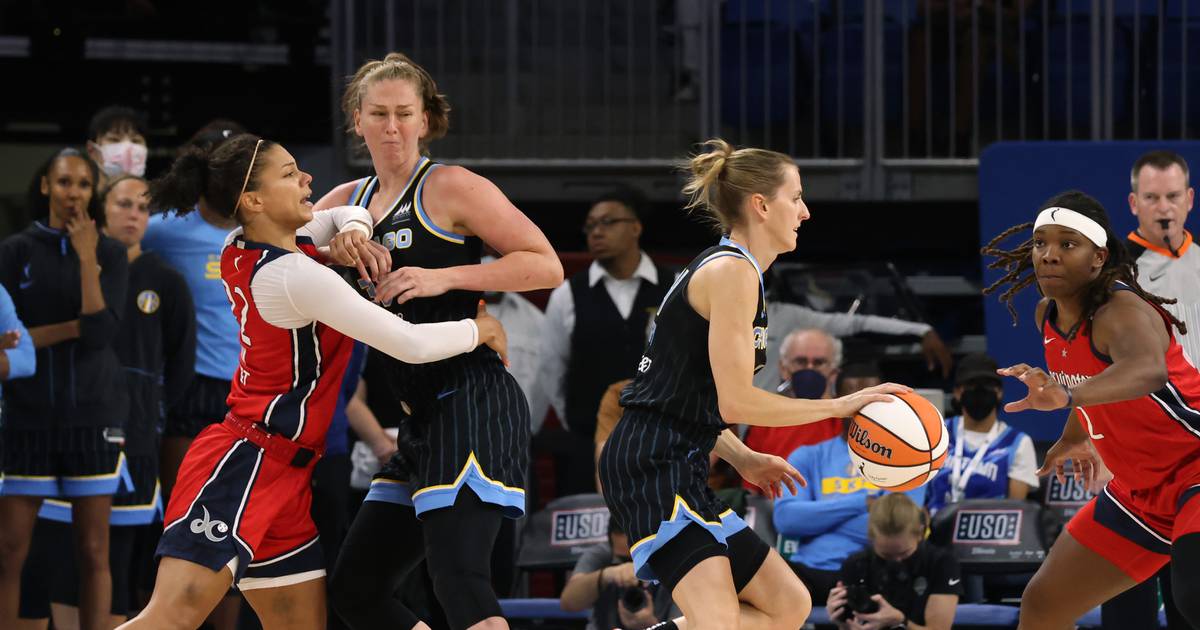
“It’s always at the top of your mind when you get up and when you go to sleep,” Wade said Friday before the Sky’s 93-83 victory against the Washington Mystics at Wintrust Arena. “This has been one of the darkest clouds we’ve had over the league that I can remember.”

Like every other game this season, Friday’s win was blanketed by the grief and anger brought on by Griner’s trial. Sky players wore shirts and hoodies bearing a portrait of Griner. Mystics players enacted a media blackout after the game, and Alysha Clark made a brief statement calling for Griner’s release of her and decrying Russia’s use of her as a “political pawn.”

For Sky players and coaches who carved out a life in Russia during offseasons, Griner’s ordeal paints a stark contrast to the treatment they received in the country before the invasion of Ukraine.

Wade noted that it’s easy to pass off the Griner verdict as the norm in the Russian legal system. But this isn’t part of the status quo for basketball players and coaches who frequent the Russian Premier League — especially in Yekaterinburg.

UMMC Ekaterinburg is the definition of a super team, compiling stacked rosters unencumbered by the salary cap to win 10 Russian championships and five EuroLeague titles in the last decade.

The team also can afford to shelter players from aspects of Russian life, allowing them to soak in the support of a rabid fan base without facing many realities of the country’s politics.

Quigley and Vandersloot both signed with teams in Russia the same year they married in the US, living without consequence for four seasons as a couple despite strict Russian laws against “LGBT propaganda.” In an Instagram post ahead of Thursday’s verdict, Vandersloot described Yekaterinburg as a “second home” for her and Quigley before the onset of the Ukrainian war.

While Russia battled cultural wars over human rights issues and free speech, players enjoyed a safe environment throughout the Premier League season.

“You always know Russian politics are different, but we lived a normal life there outside of politics,” Meesseman said. “We have (a) good relationship with the fans and they really took care of us. But at the same time, you just know that you can’t really talk about politics. It doesn’t really even happen. In America, everybody talks about politics, but over there it’s more difficult.”

Griner’s prosecution shattered the illusion of safety — and it could slam the door on an era of women’s basketball in Russia.

The EuroLeague in June suspended all Russian clubs, effectively closing off UMMC and other teams from their highest tier of competition.

Lucrative Russian contracts provided an attractive — and often necessary — financial supplement for star WNBA players. Griner reportedly signed a $1 million annual contract to play for UMMC, far eclipsing her three-year, $664,544 deal with the Mercury. But now, players throughout the WNBA, including the Sky’s top stars, aren’t risking a return.

Vandersloot signed a new contract with Sopron Basket in Hungary earlier this year. Quigley has yet to sign a new contract but refuses to return to Russia. Meesseman already planned to move to another team after her contract expired with UMMC. Now, the center knows she’ll never again play in the Russian league.

It was a necessary decision but one that saddens Meesseman and other former UMMC players.

“This is not the only image of Russia,” Meesseman said. “It’s one of the images, it’s one of the big images, it’s probably one of the only messages people in the US see. But we know behind the scenes. We know the people. … I can only hope it’s going to (open up) again for our players but also for Russian fans because they deserve it.”